Free Printable Describing a Setting Worksheets for Year 5
Master Year 5 describing a setting skills with Wayground's free printable worksheets and practice problems, complete with answer keys to help students develop strong writing organization and structure techniques.
Explore printable Describing a Setting worksheets for Year 5
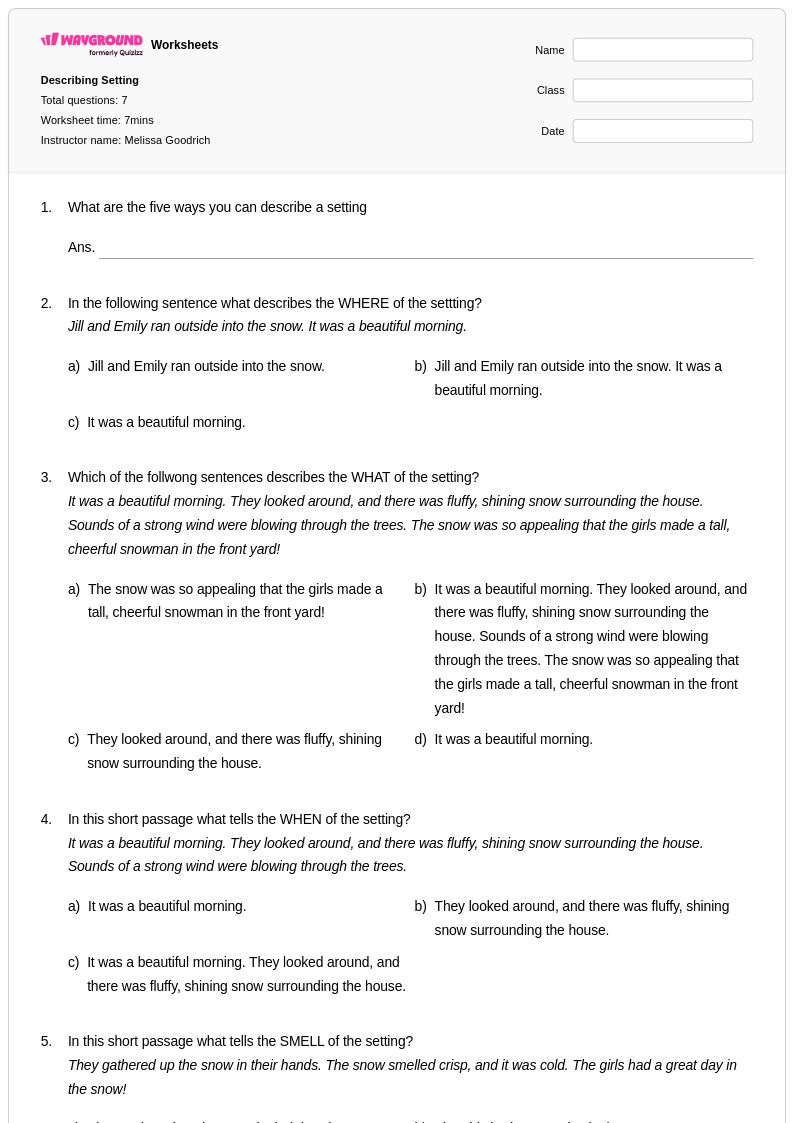
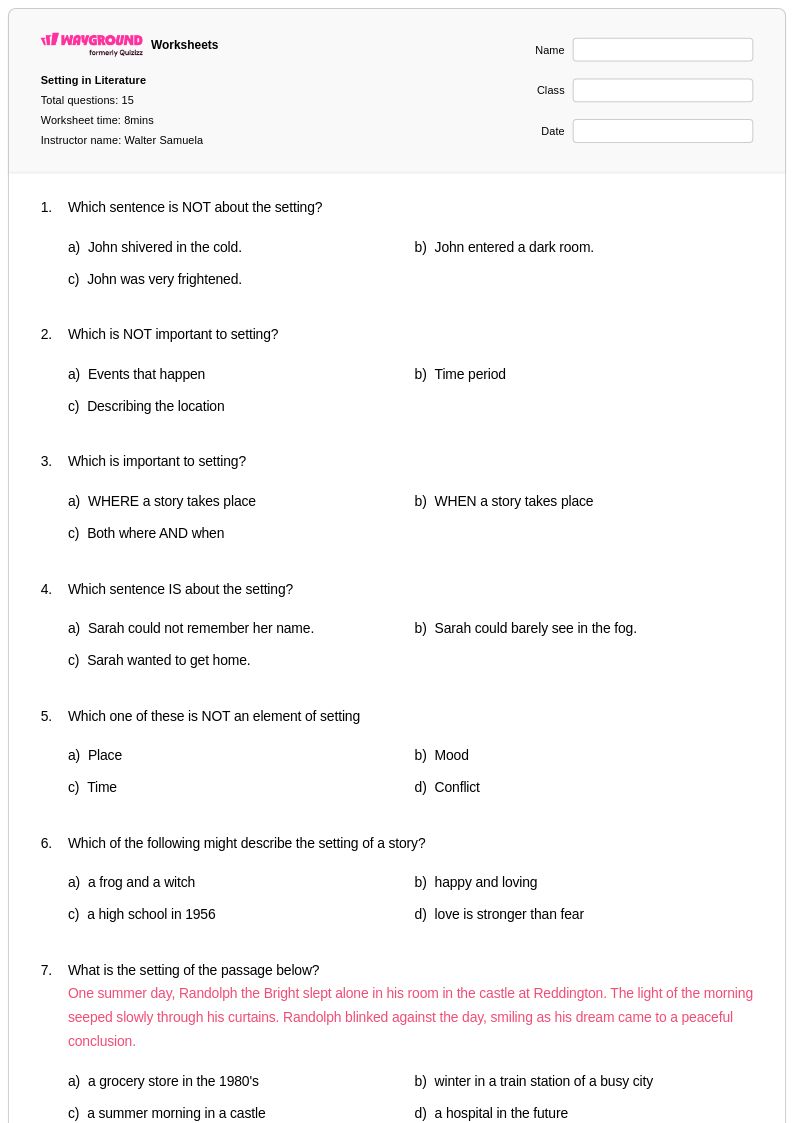
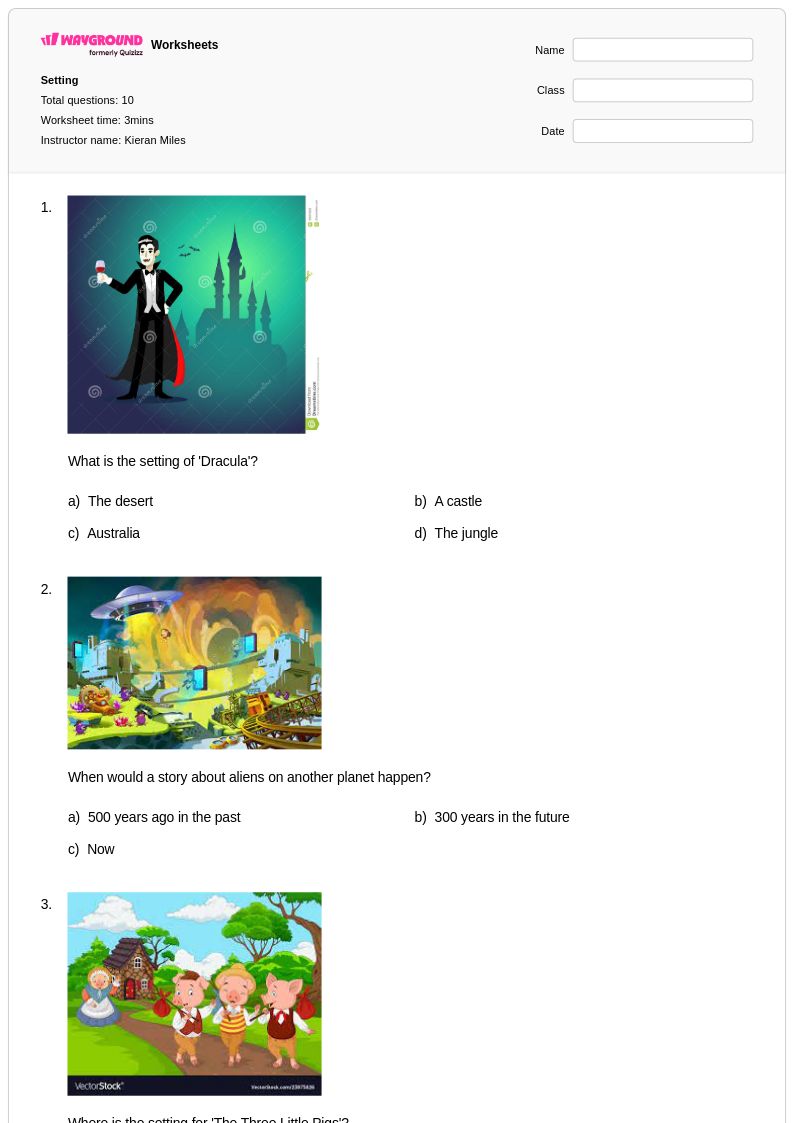
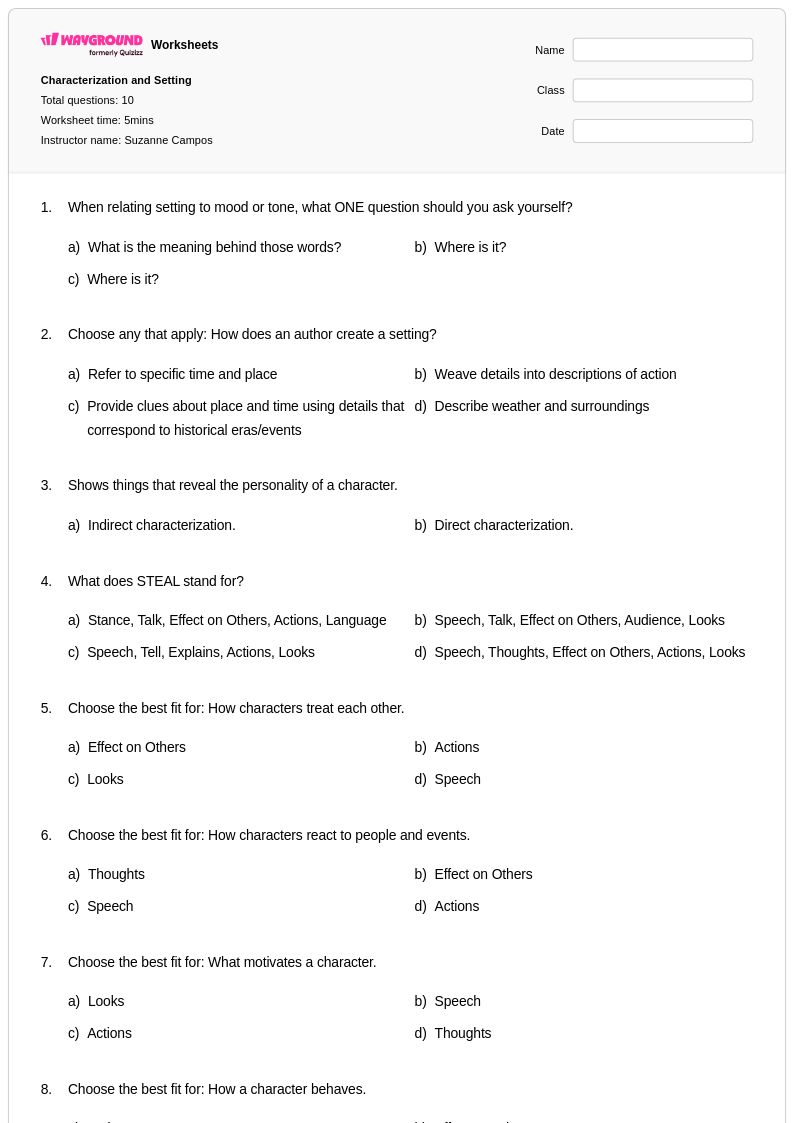
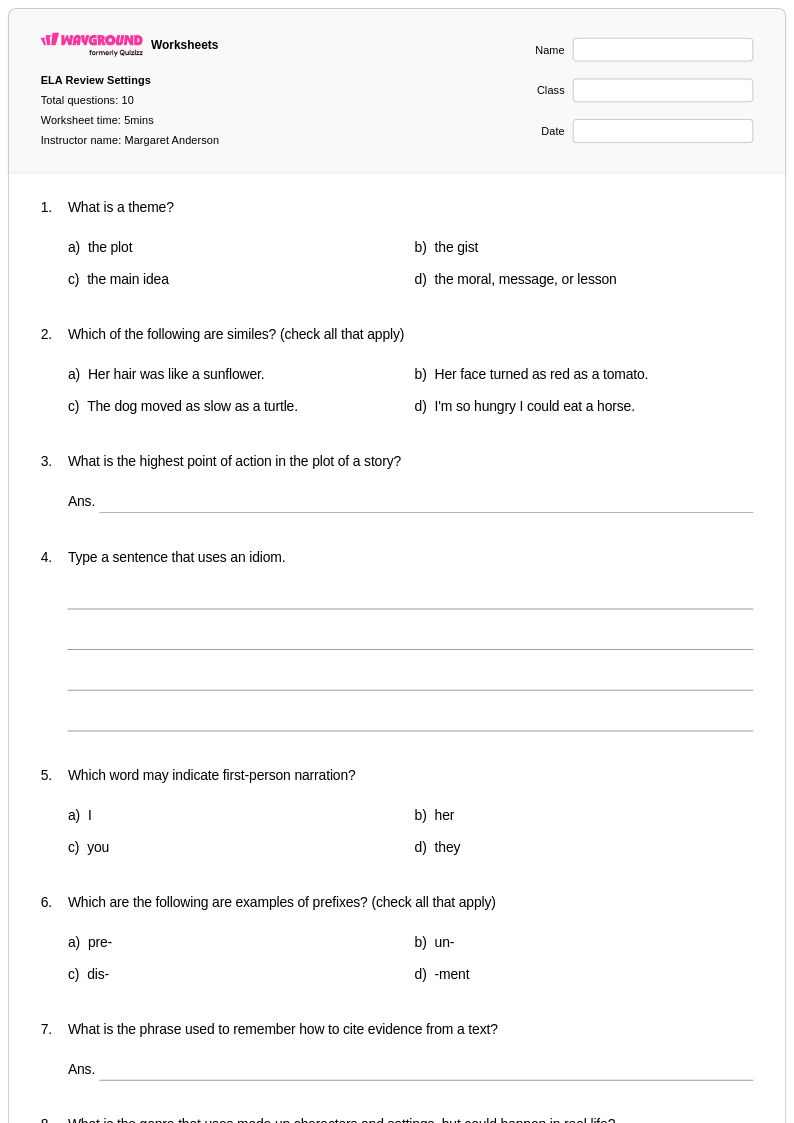
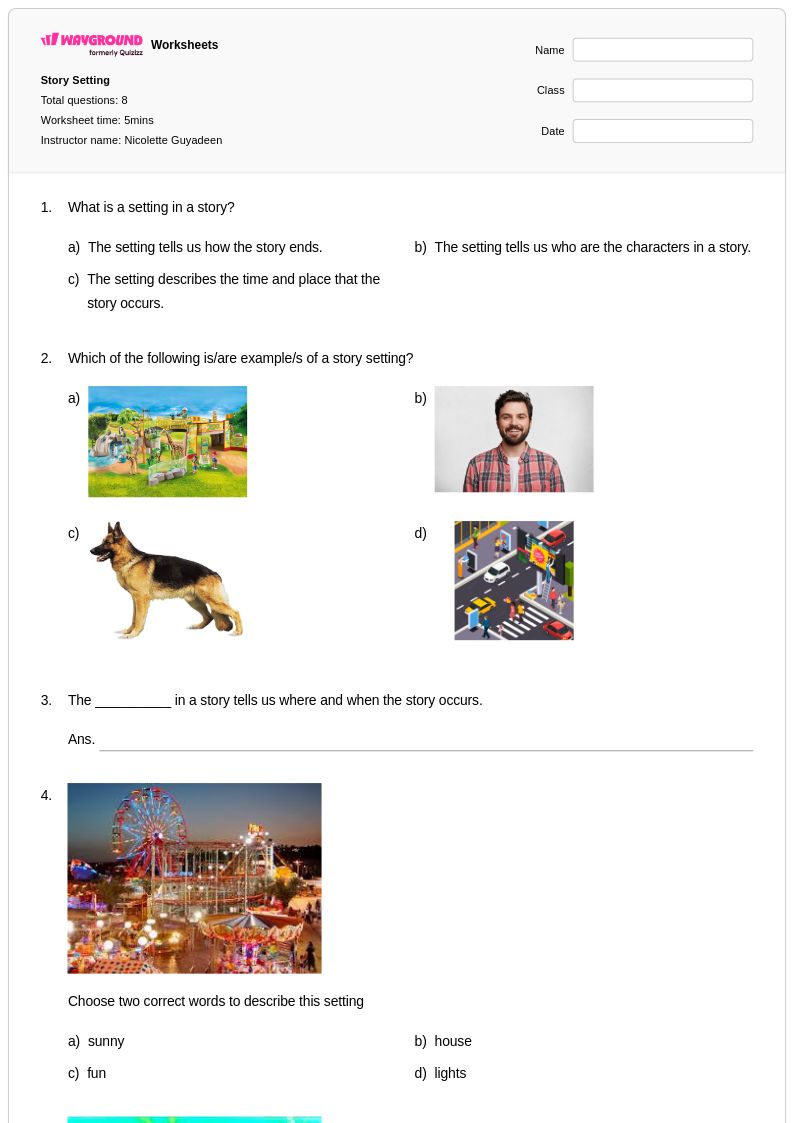
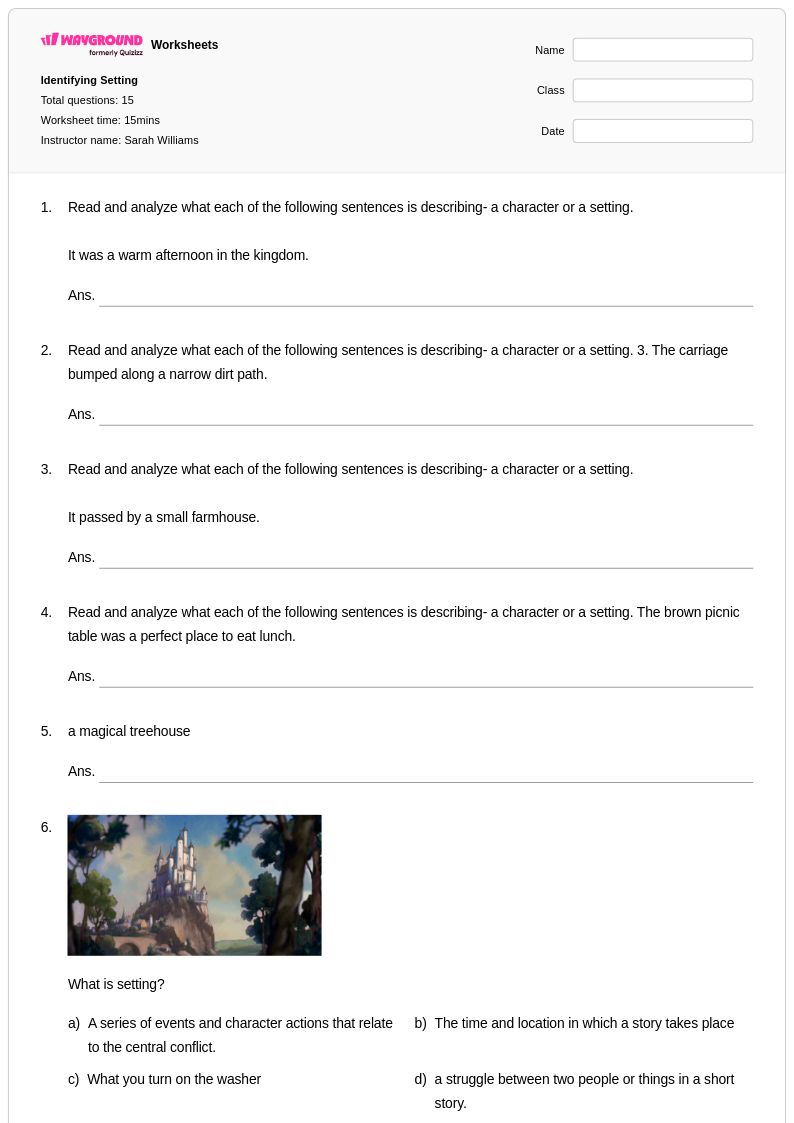
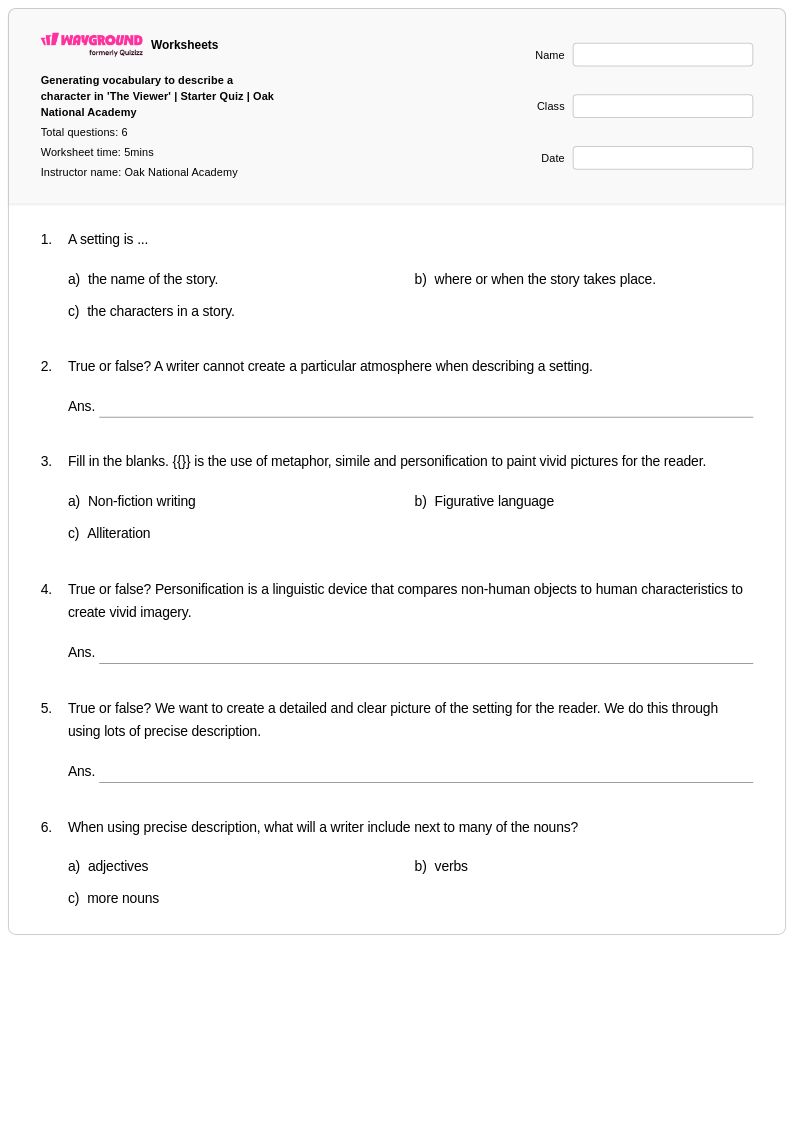
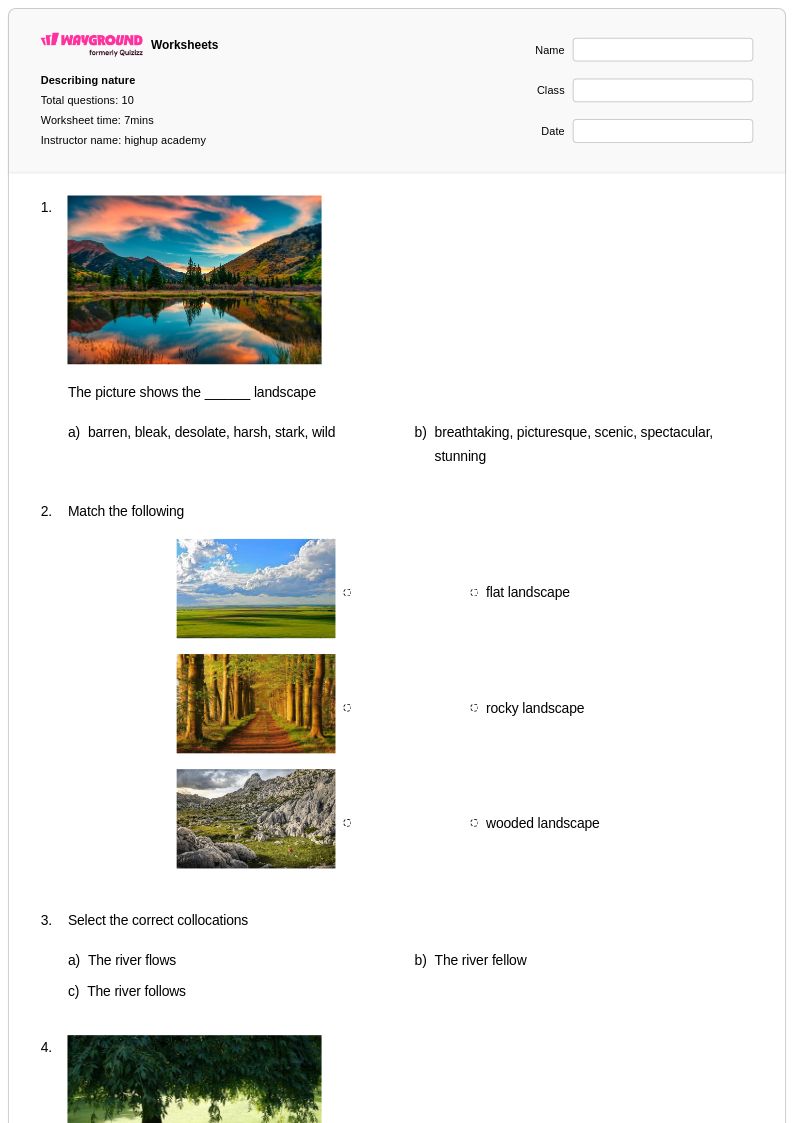
Describing a setting worksheets for Year 5 students through Wayground (formerly Quizizz) provide comprehensive practice in creating vivid, engaging environments for narrative and descriptive writing. These educational resources focus on helping fifth-grade writers develop essential skills in sensory details, spatial organization, and atmospheric description through structured exercises and creative prompts. Students work with practice problems that guide them through the process of selecting relevant details, organizing descriptive elements logically, and using precise vocabulary to bring settings to life. Each worksheet includes an answer key to support independent learning, and the free printables offer teachers flexible options for classroom instruction, homework assignments, or assessment preparation. The materials strengthen students' ability to establish mood, create visual imagery, and connect setting details to larger narrative purposes.
Wayground (formerly Quizizz) empowers educators with access to millions of teacher-created resources specifically designed for Year 5 writing instruction, including extensive collections focused on setting description and narrative structure. The platform's robust search and filtering capabilities allow teachers to quickly locate worksheets aligned with state writing standards and differentiated for various skill levels within their classrooms. Teachers can customize existing materials or create new practice exercises that target specific areas where students need additional support, whether for remediation of foundational descriptive writing skills or enrichment activities for advanced learners. The availability of both printable PDF formats and digital interactive versions provides instructional flexibility for diverse learning environments, while the comprehensive answer keys and detailed rubrics streamline grading and provide clear feedback pathways for student improvement in setting description techniques.
FAQs
How do I teach students to describe a setting effectively?
Effective setting description instruction begins with sensory awareness — teaching students to deliberately consider what a character sees, hears, smells, feels, and tastes in a given environment. From there, introduce spatial organization so students learn to move through a setting logically rather than listing details at random. Mood is the next layer: help students understand how word choice shapes atmosphere, and how the same location can feel threatening or welcoming depending on the language used. Structured practice moving from basic setting identification to weaving environmental details into narrative prose builds these skills progressively.
What exercises help students practice describing a setting?
Effective practice exercises include sensory detail charts where students categorize observations by sense, rewrite drills that ask students to transform flat setting descriptions into vivid ones, and mood transformation tasks where the same location is described in two contrasting emotional tones. Guided paragraph frames support early writers, while more advanced students benefit from exercises that require them to reveal character through environmental detail. Moving from isolated skill practice to full descriptive paragraphs ensures students can apply techniques independently in their own writing.
What mistakes do students commonly make when describing a setting?
The most common error is over-relying on visual details while ignoring sound, smell, touch, and taste, which produces flat, one-dimensional descriptions. Students also frequently list details rather than organizing them spatially or tying them to the narrative's mood, resulting in descriptions that feel disconnected from the story. A third common mistake is using generic adjectives like 'beautiful' or 'scary' instead of precise, concrete language that creates a specific image. Targeted feedback on these patterns, supported by structured revision exercises, helps students move toward more deliberate and effective descriptive writing.
How can I use a describing a setting worksheet in my classroom?
Describing a setting worksheets on Wayground are available as printable PDFs for traditional classroom use and in digital formats for technology-integrated learning environments, including the option to host them as a quiz directly on Wayground. Printable versions work well for focused writing instruction, homework assignments, and independent practice, while digital formats allow students to complete work on devices and give teachers immediate visibility into responses. The included answer keys make it straightforward to provide targeted feedback, whether you are using the worksheets for initial instruction, remediation, or enrichment.
How do I support struggling writers during setting description activities?
For students who struggle with descriptive writing, scaffolding is essential: sentence starters, sensory detail graphic organizers, and word banks reduce the cognitive load of generating language from scratch. On Wayground, teachers can apply accommodations such as Read Aloud, which supports students who need text read to them, and Reduced answer choices to lower task complexity for individual students. These settings can be configured per student without notifying classmates, so differentiation stays discreet and manageable.
How do I help advanced students go beyond basic setting description?
Advanced writers benefit from tasks that require setting to do narrative work beyond establishing place, such as using environmental details to reveal character psychology, foreshadow events, or create dramatic irony. Challenge these students with exercises that restrict them to indirect mood-setting — conveying tension or joy without naming the emotion explicitly. Comparative revision tasks, where students analyze a professional passage and then apply the same technique in their own writing, push them toward more sophisticated and intentional descriptive craft.