
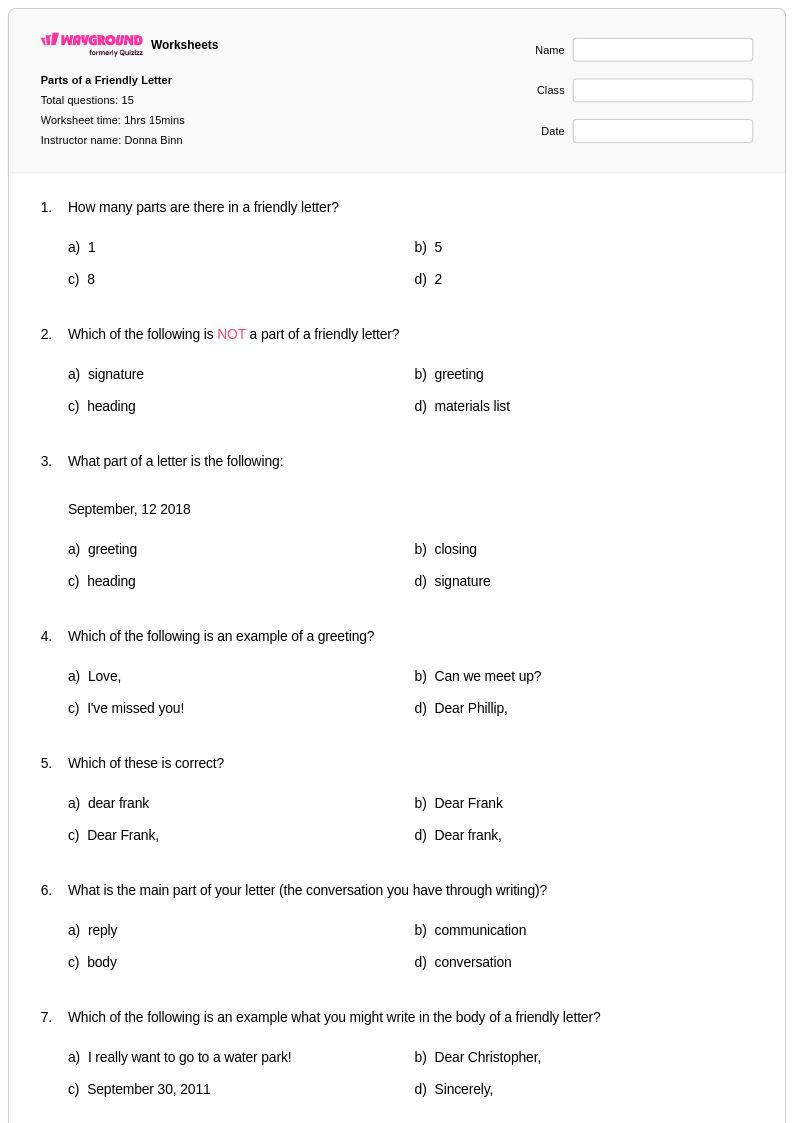
15 Q
5th
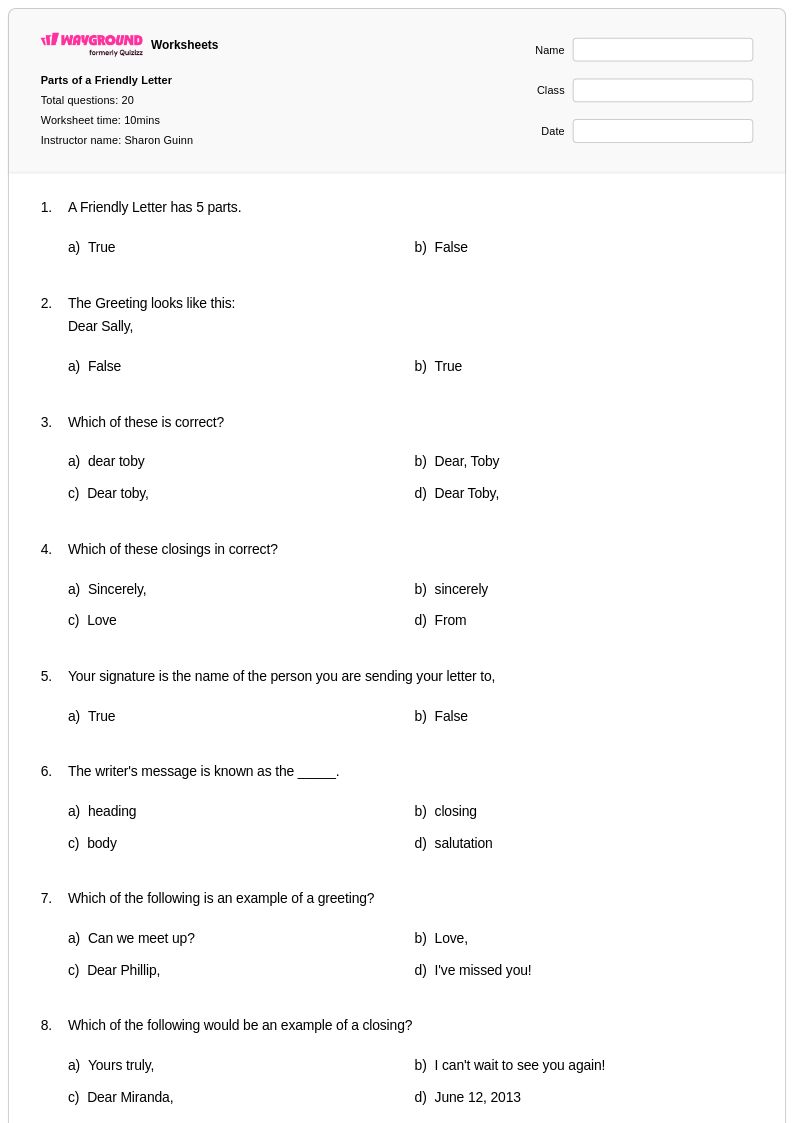
20 Q
3rd - 8th
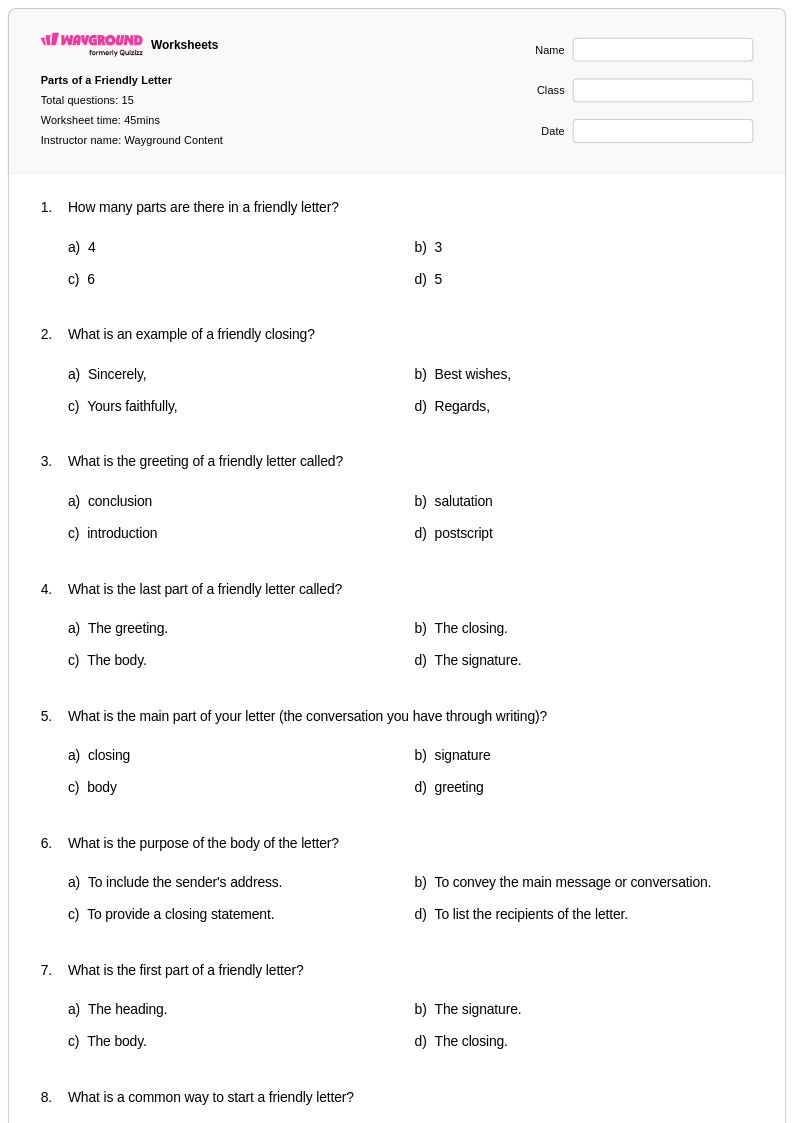
15 Q
5th
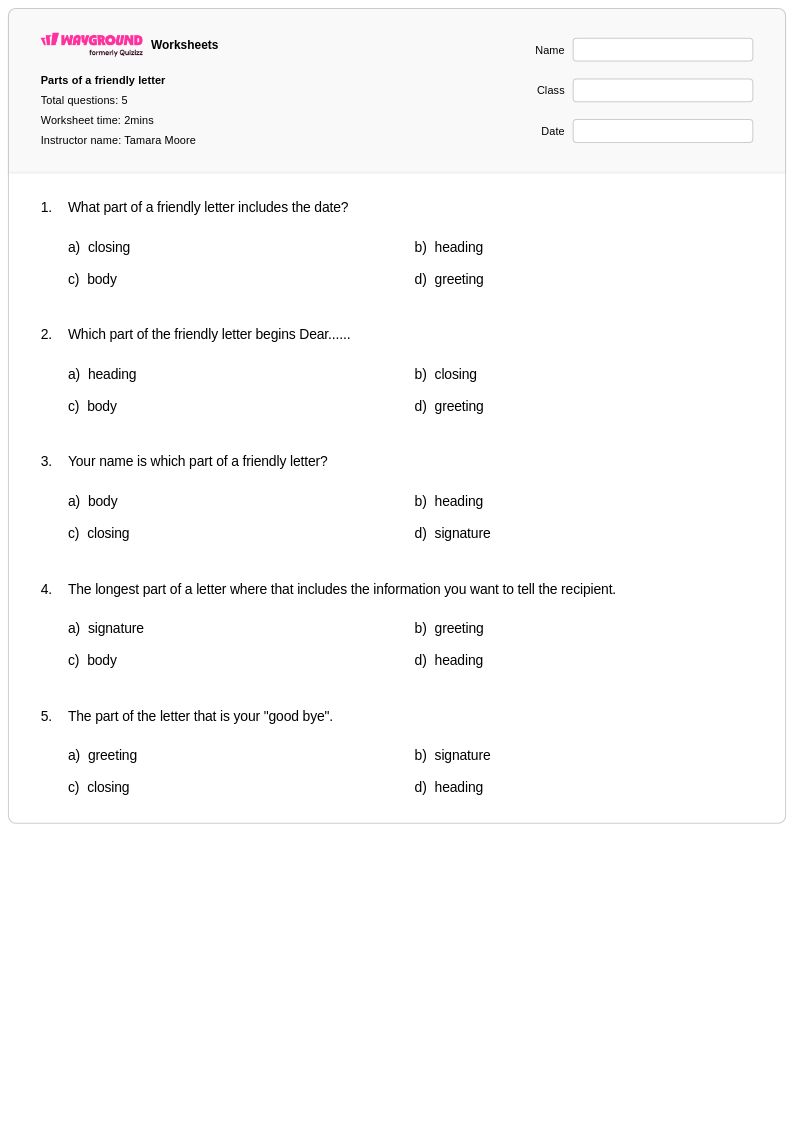
5 Q
1st - 5th
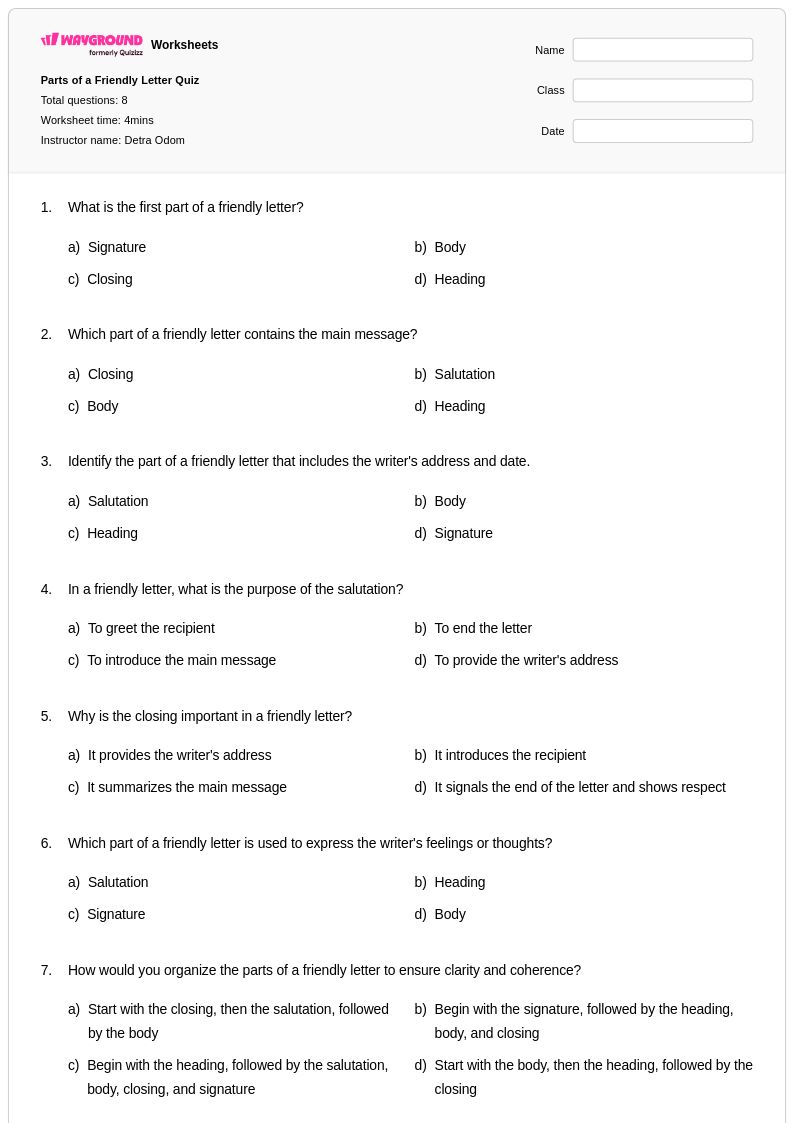
8 Q
5th
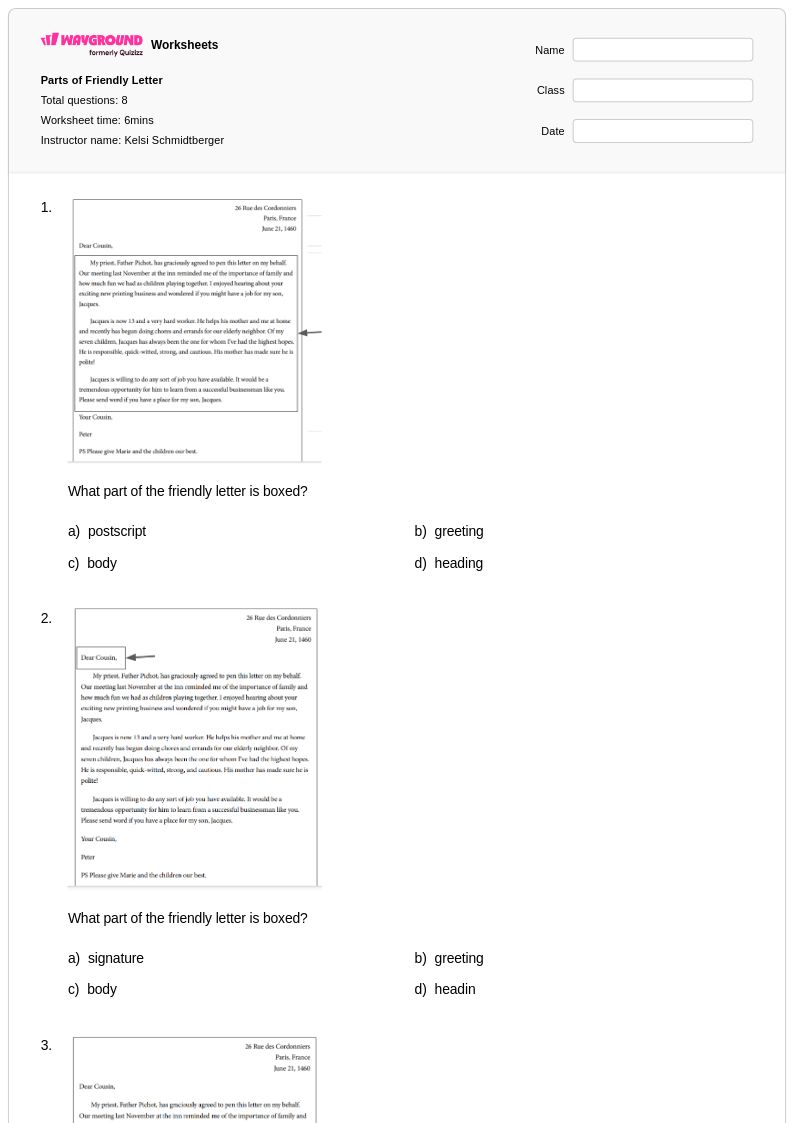
8 Q
5th
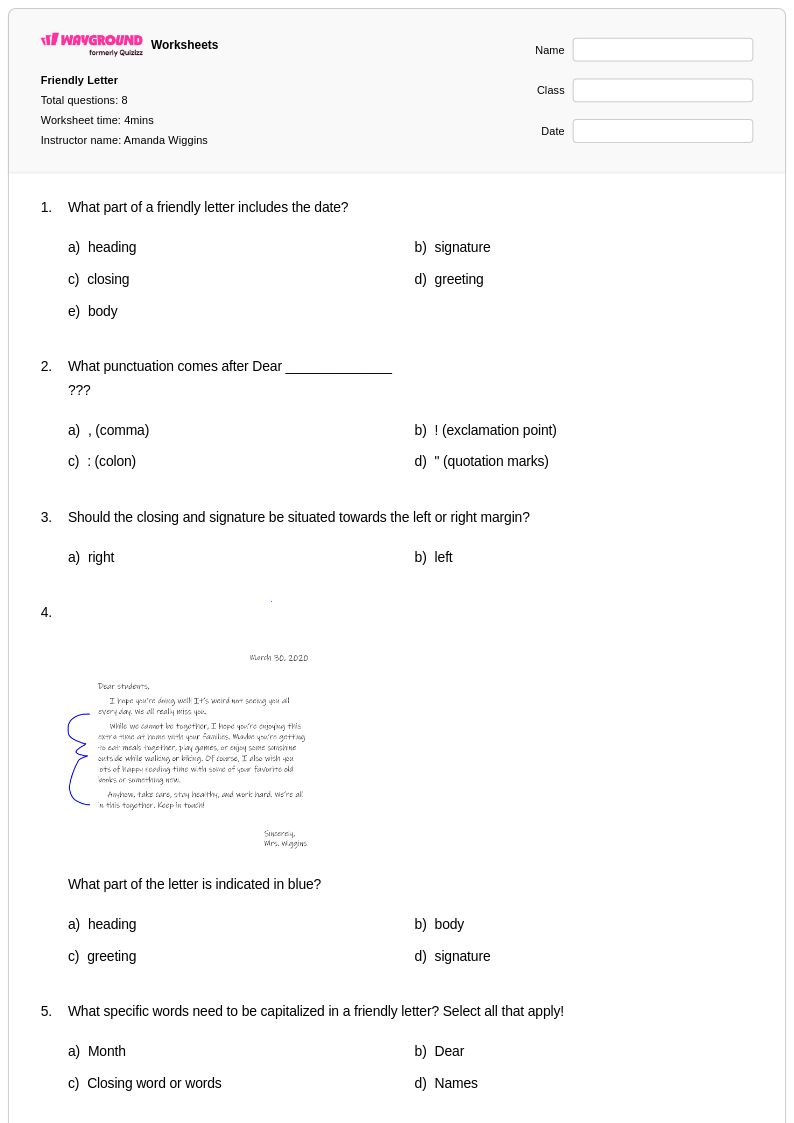
8 Q
5th - 6th
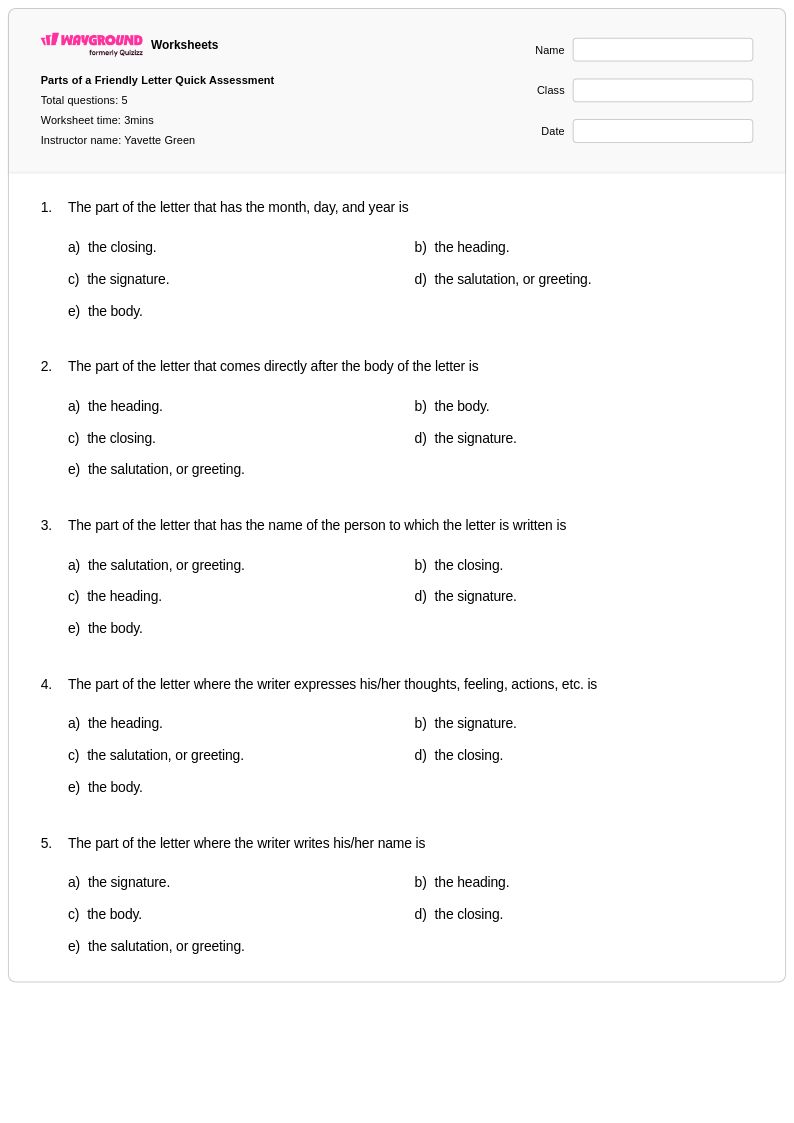
5 Q
1st - 5th
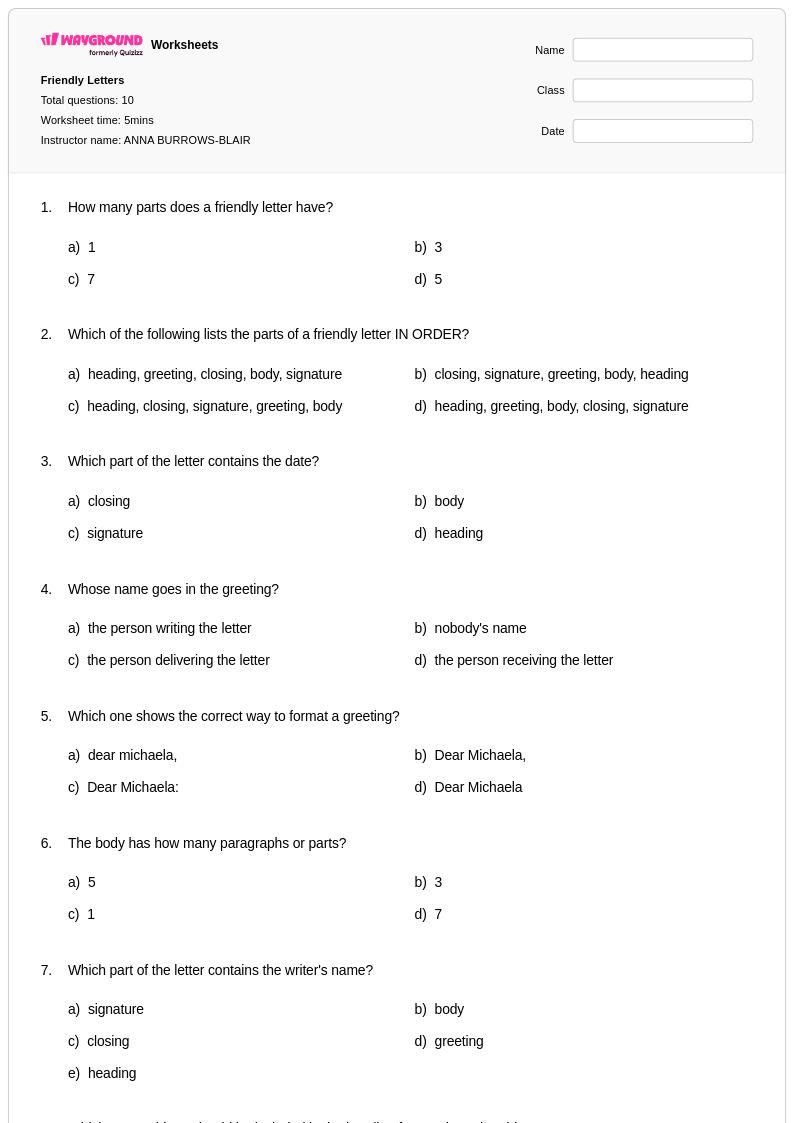
10 Q
4th - 12th
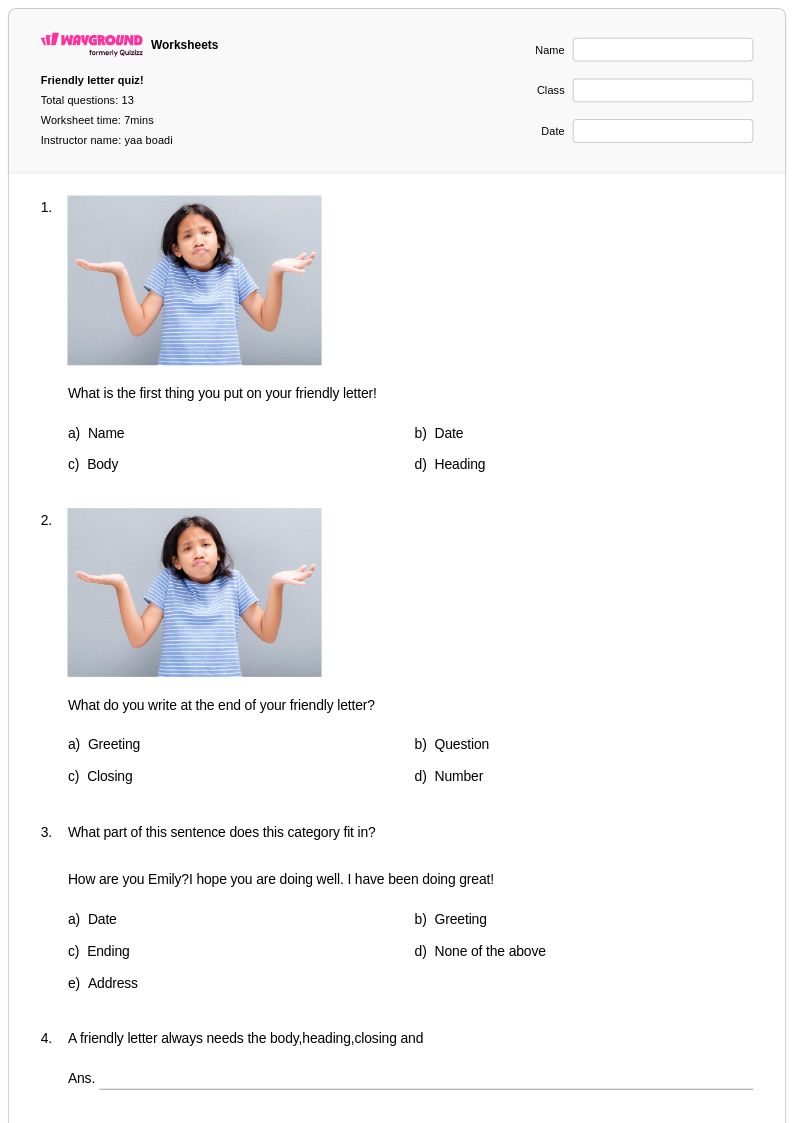
13 Q
5th - 7th
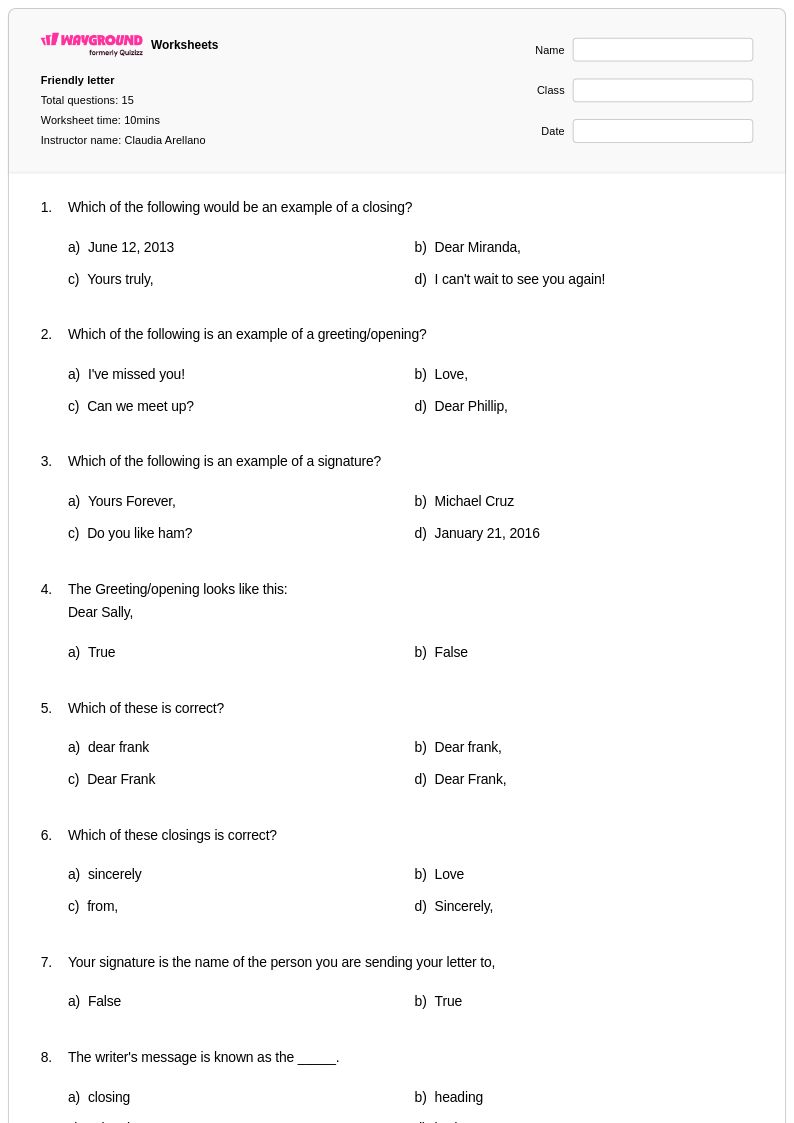
15 Q
5th
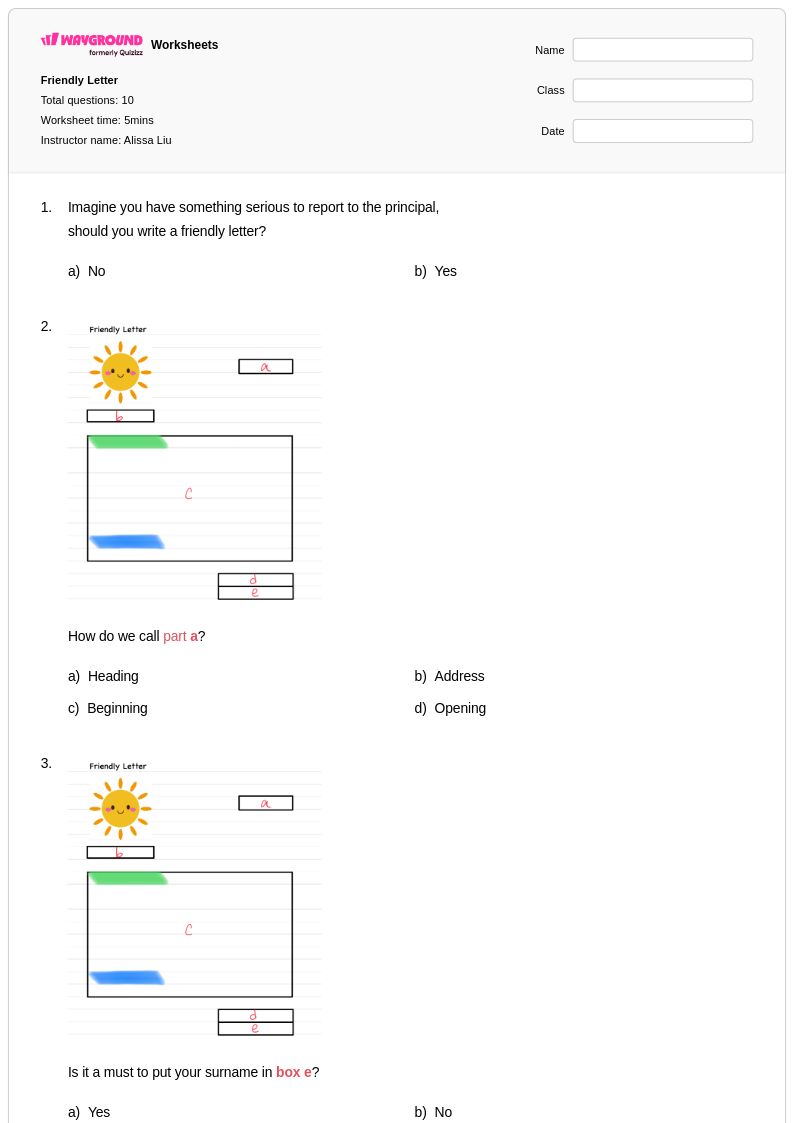
10 Q
1st - 5th
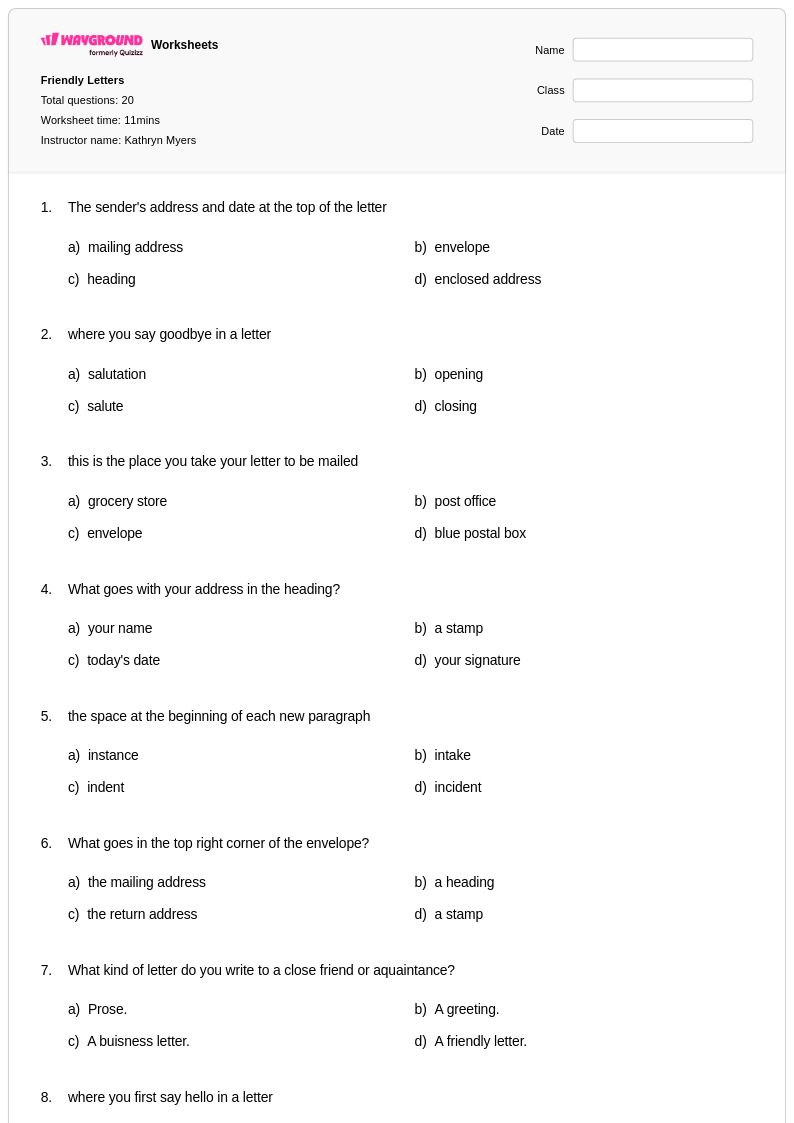
20 Q
3rd - 12th
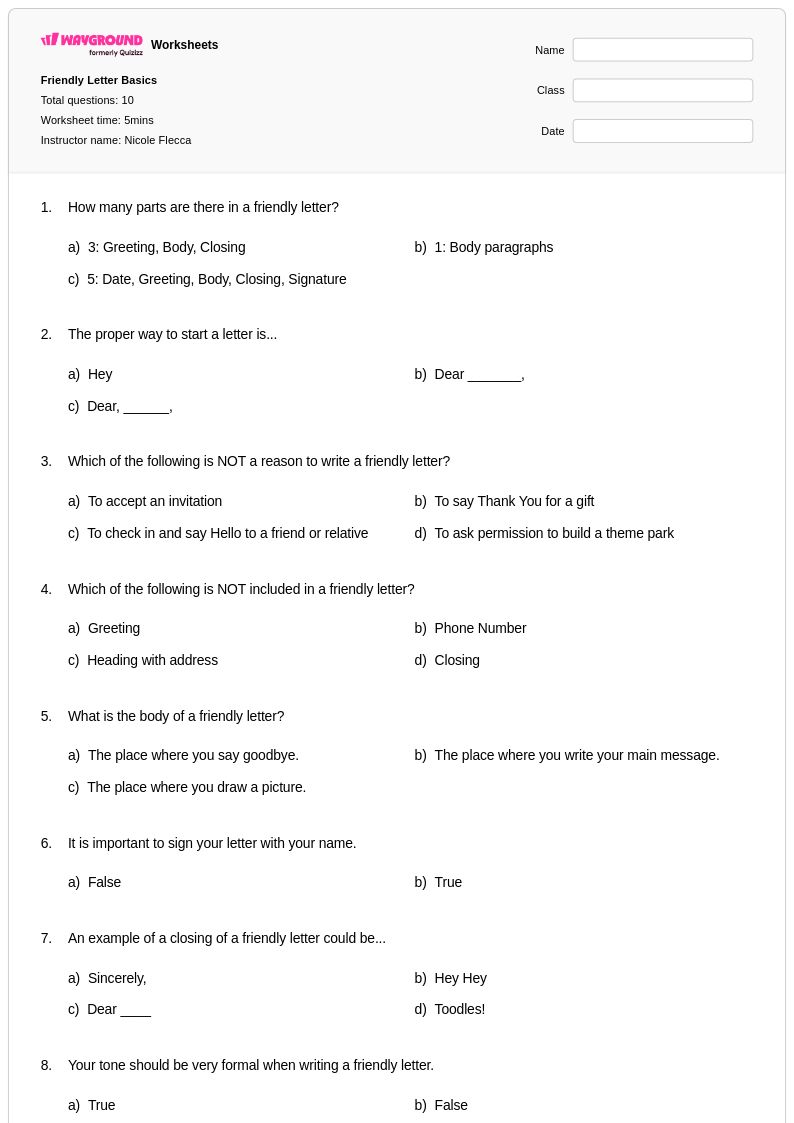
10 Q
3rd - 9th
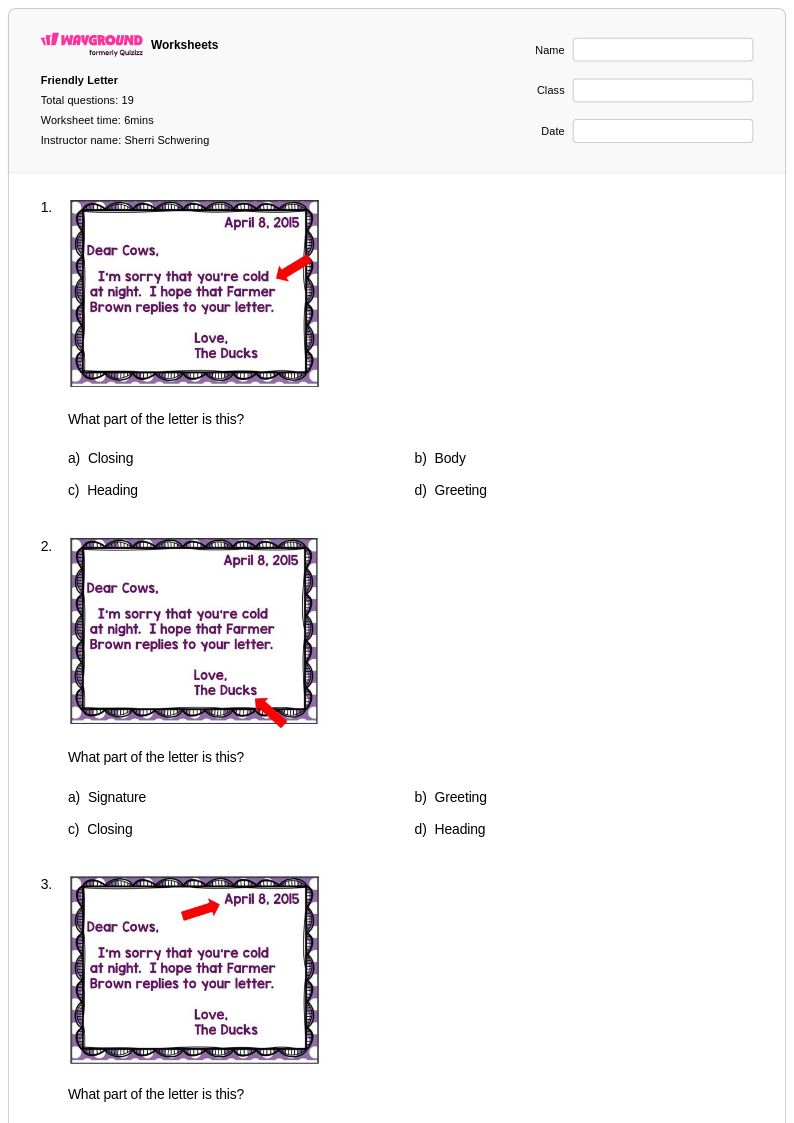
19 Q
4th - 5th
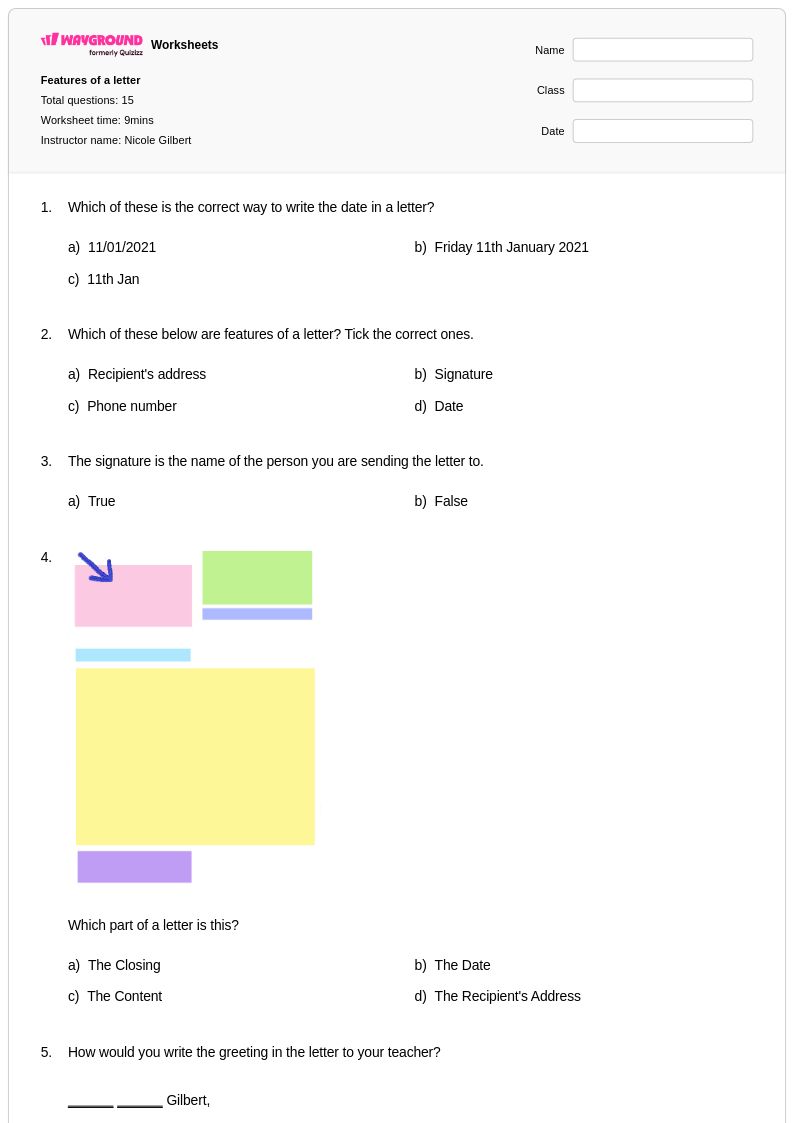
15 Q
5th - 6th
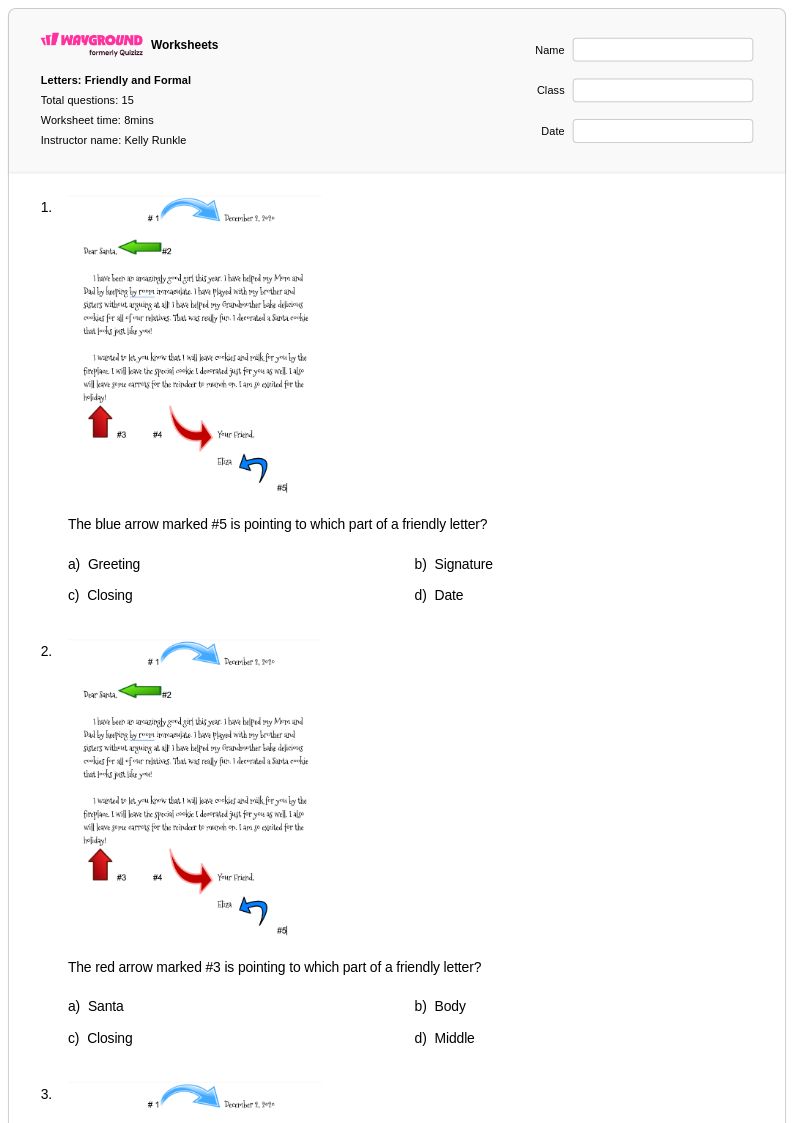
15 Q
4th - 6th
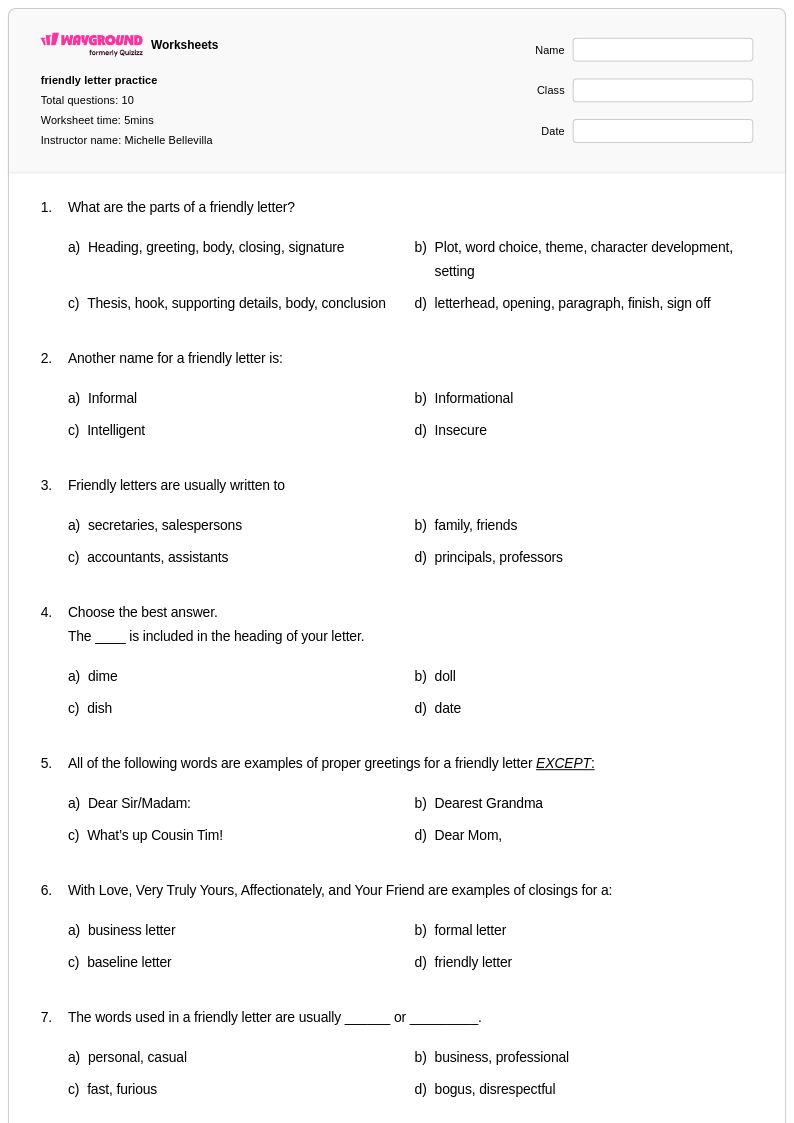
10 Q
1st - 12th
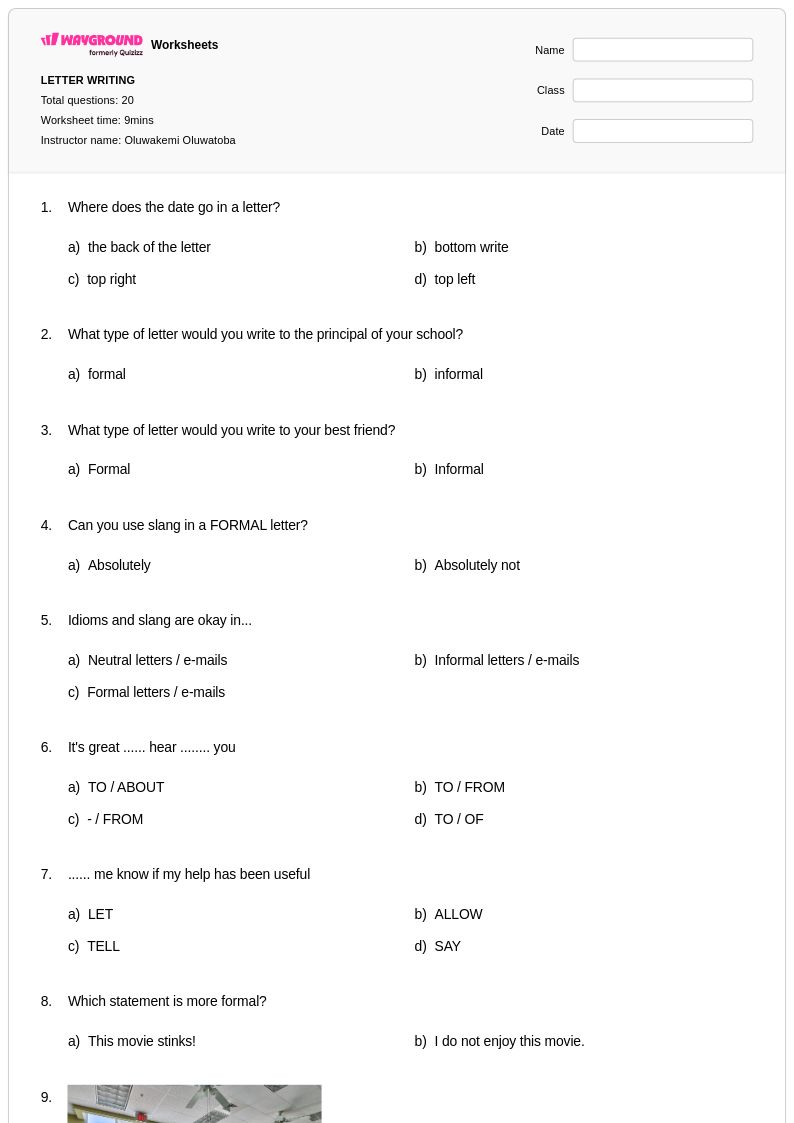
20 Q
5th
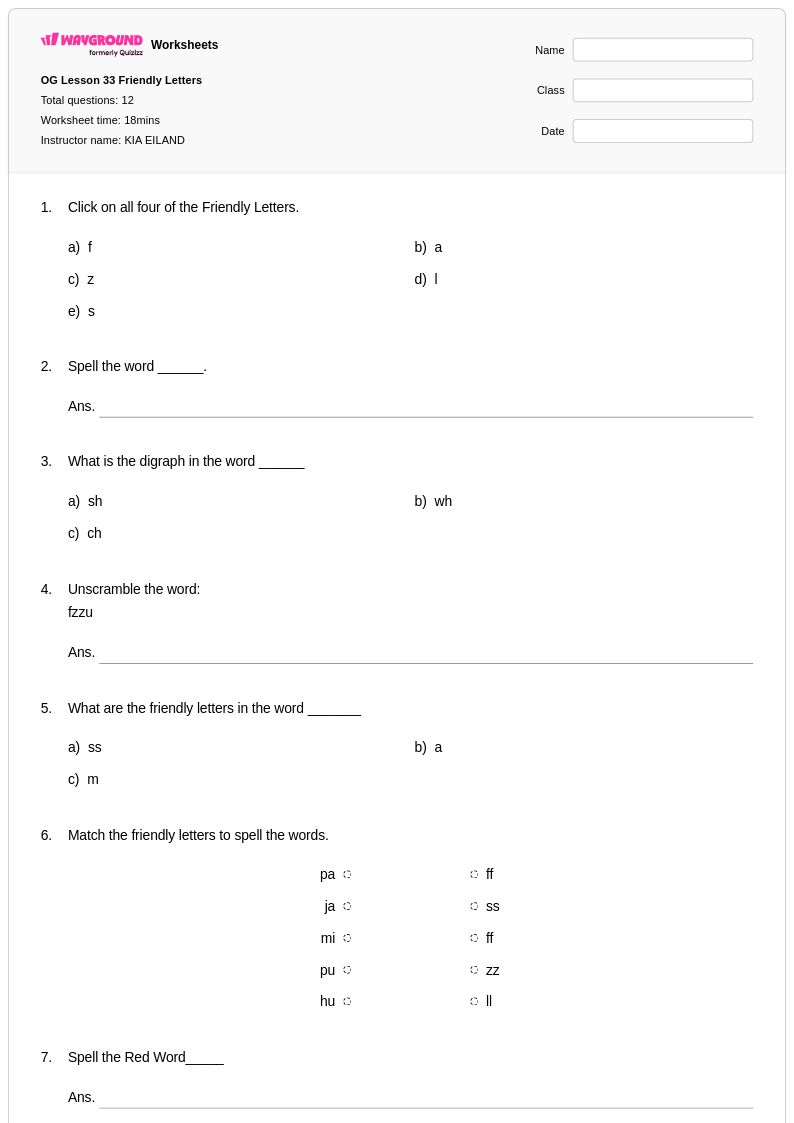
12 Q
1st - 5th
15 Q
3rd - Uni
13 Q
2nd - 6th
6 Q
4th - Uni
12 Q
4th - 5th
Explore Other Subject Worksheets for year 5
Explore printable Parts of a Friendly Letter worksheets for Year 5
Parts of a Friendly Letter worksheets for Year 5 students available through Wayground (formerly Quizizz) provide comprehensive instruction on the essential components that make personal correspondence effective and properly formatted. These expertly designed worksheets guide fifth-grade learners through identifying and organizing the five key elements of friendly letters: the heading with date and address, the greeting that welcomes the reader, the body containing the main message, the closing that wraps up thoughts, and the signature that personalizes the communication. Students develop critical writing organization skills as they practice placing each component in its correct position, understanding the purpose each part serves in creating meaningful personal communication. The collection includes varied practice problems that challenge students to recognize missing elements, correct formatting errors, and compose original friendly letters using proper structure, with accompanying answer keys that support both independent study and classroom instruction through free printable pdf formats.
Wayground (formerly Quizizz) empowers educators with millions of teacher-created resources specifically focused on writing organization and structure, offering robust search and filtering capabilities that help instructors quickly locate Year 5 friendly letter materials aligned to curriculum standards. The platform's differentiation tools allow teachers to customize worksheets based on individual student needs, providing options for remediation support for struggling writers and enrichment activities for advanced learners ready to explore more complex letter formats and purposes. These flexible resources are available in both printable and digital pdf formats, enabling seamless integration into diverse classroom environments whether students are learning in-person or remotely. Teachers can efficiently plan targeted skill practice sessions, assess student understanding of letter components, and provide immediate feedback using the comprehensive answer keys, ultimately supporting student mastery of fundamental communication skills that extend far beyond the classroom into real-world personal and professional correspondence.
FAQs
How do I teach the parts of a friendly letter to elementary students?
What exercises help students practice identifying the parts of a friendly letter?
What mistakes do students commonly make when formatting a friendly letter?
How can I differentiate friendly letter instruction for students at different skill levels?
How do I use Parts of a Friendly Letter worksheets from Wayground in my classroom?
At what grade level should students learn the parts of a friendly letter?