Free Printable Parts of a Friendly Letter Worksheets for Kindergarten
Kindergarten students explore the essential components of friendly letters with our free printable worksheets and practice problems, complete with answer keys to help young learners master basic letter-writing structure.
Explore printable Parts of a Friendly Letter worksheets for Kindergarten
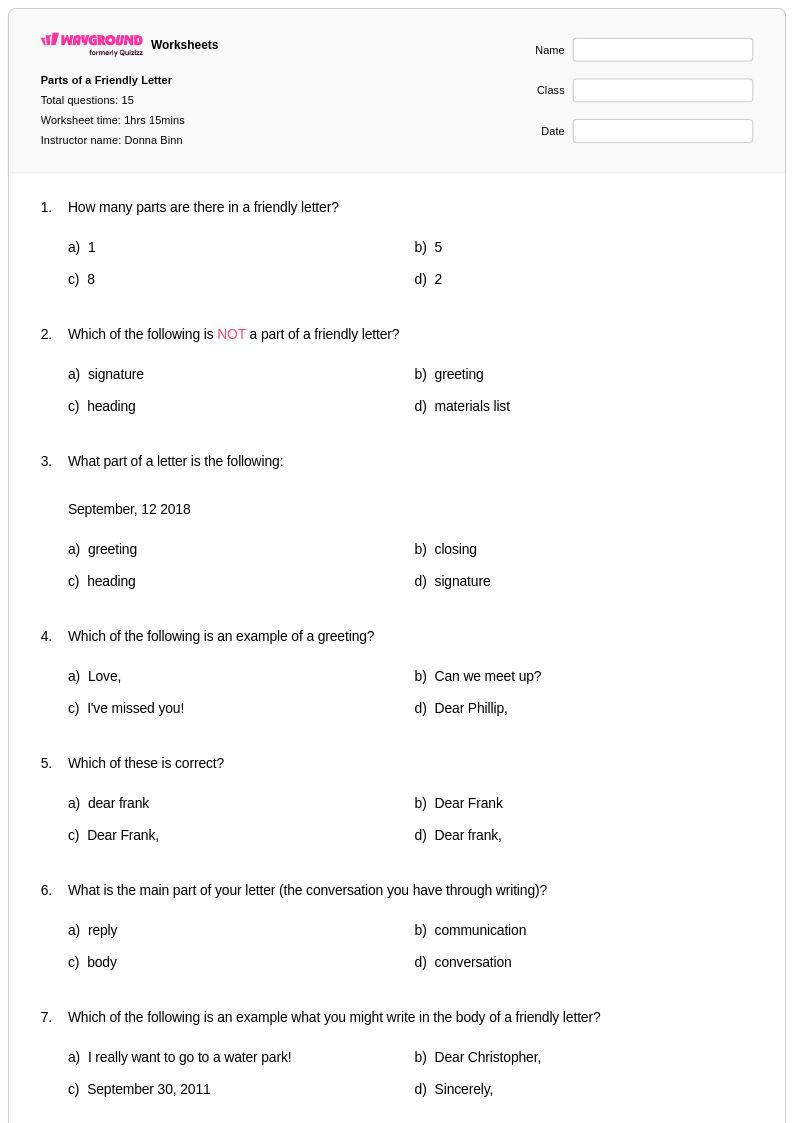
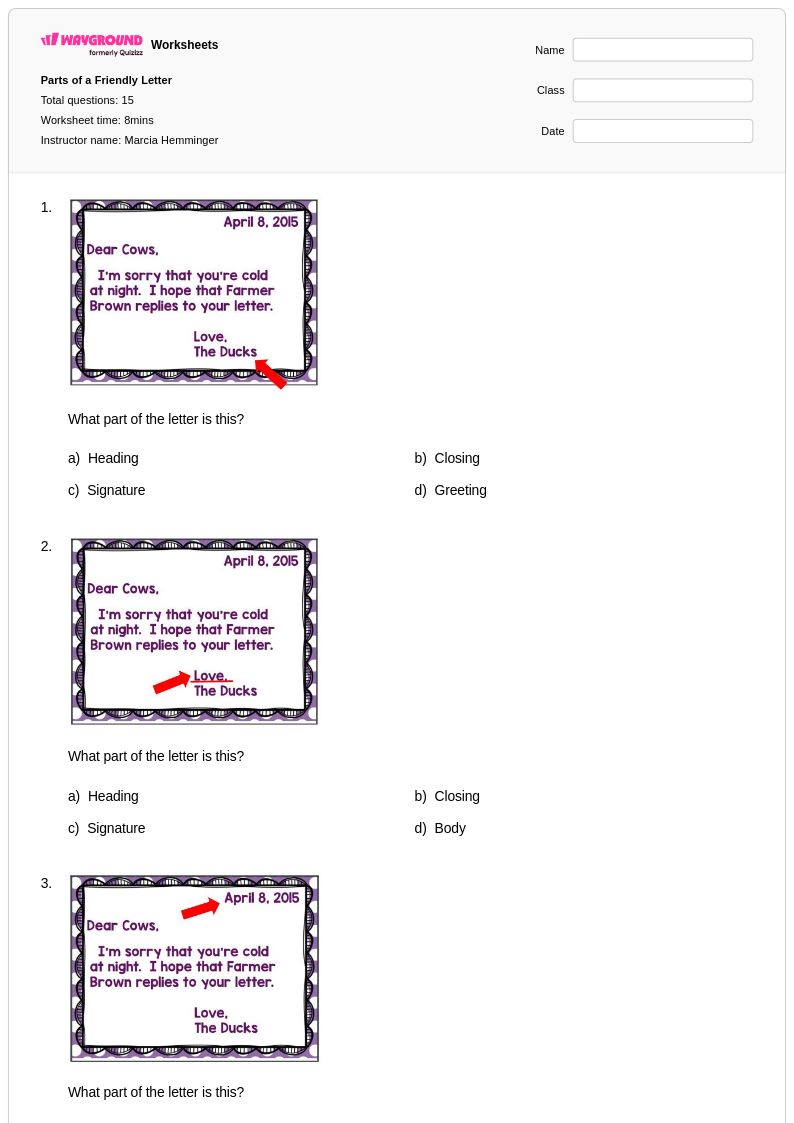
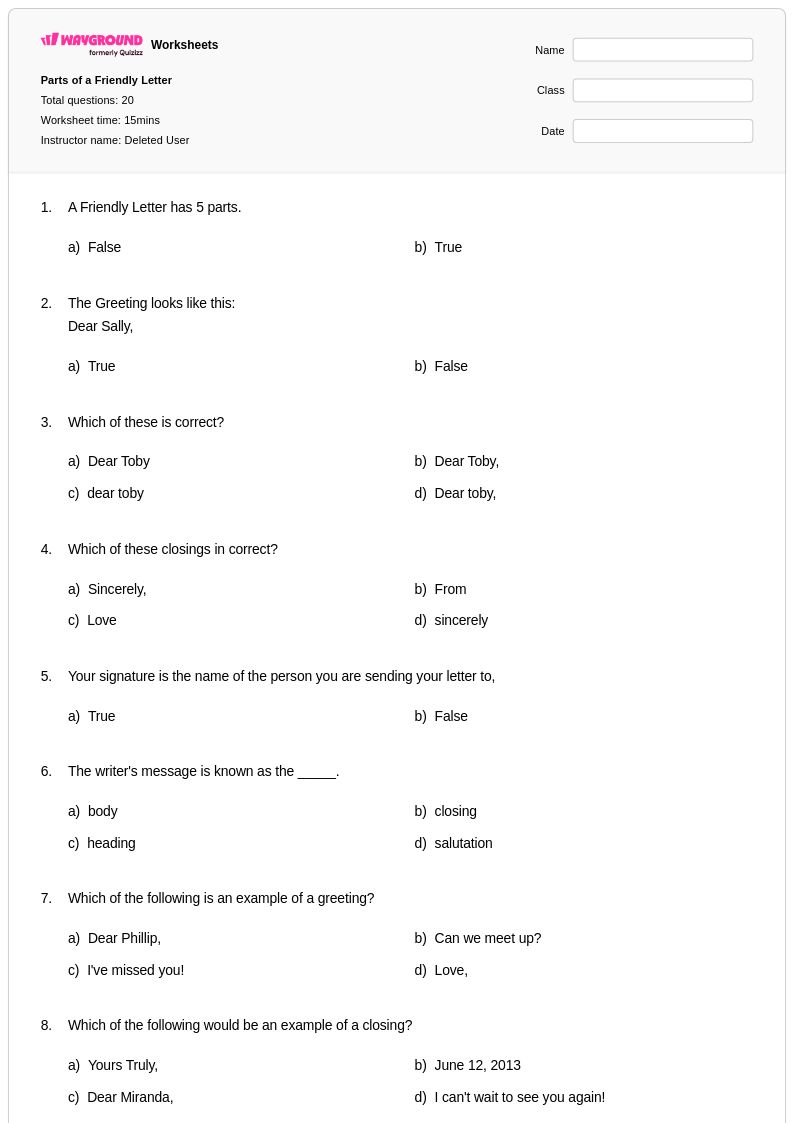
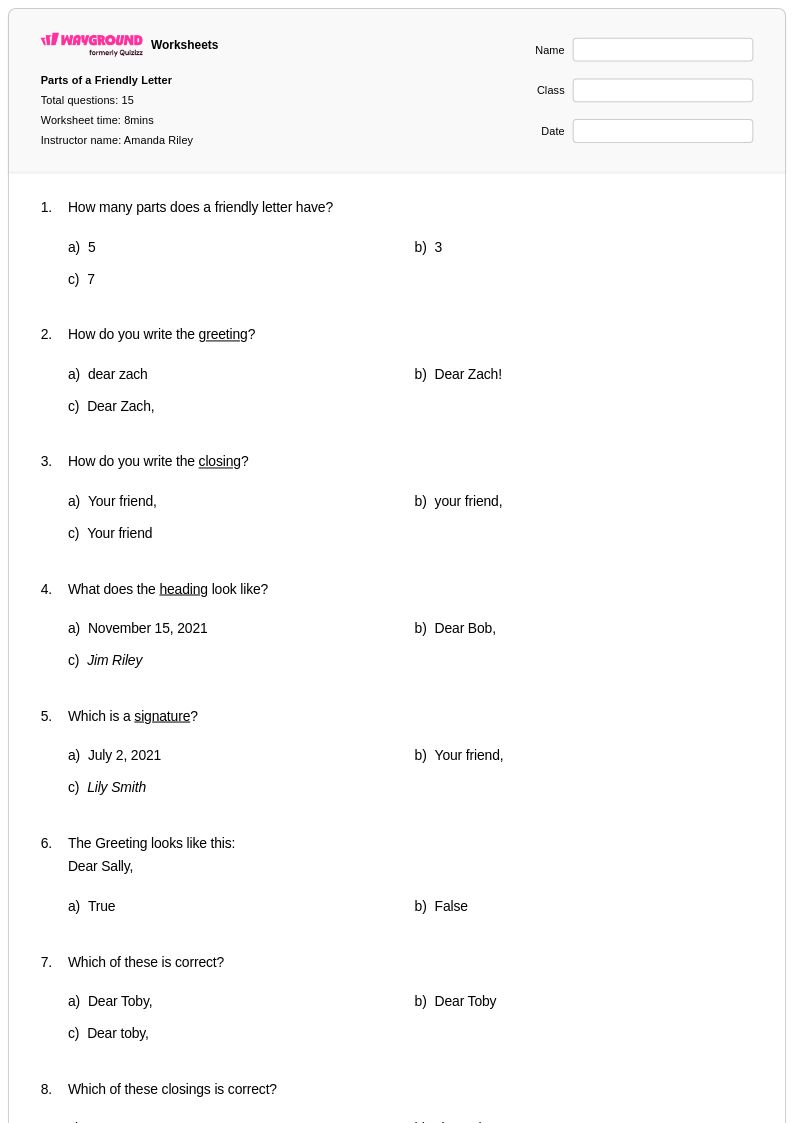
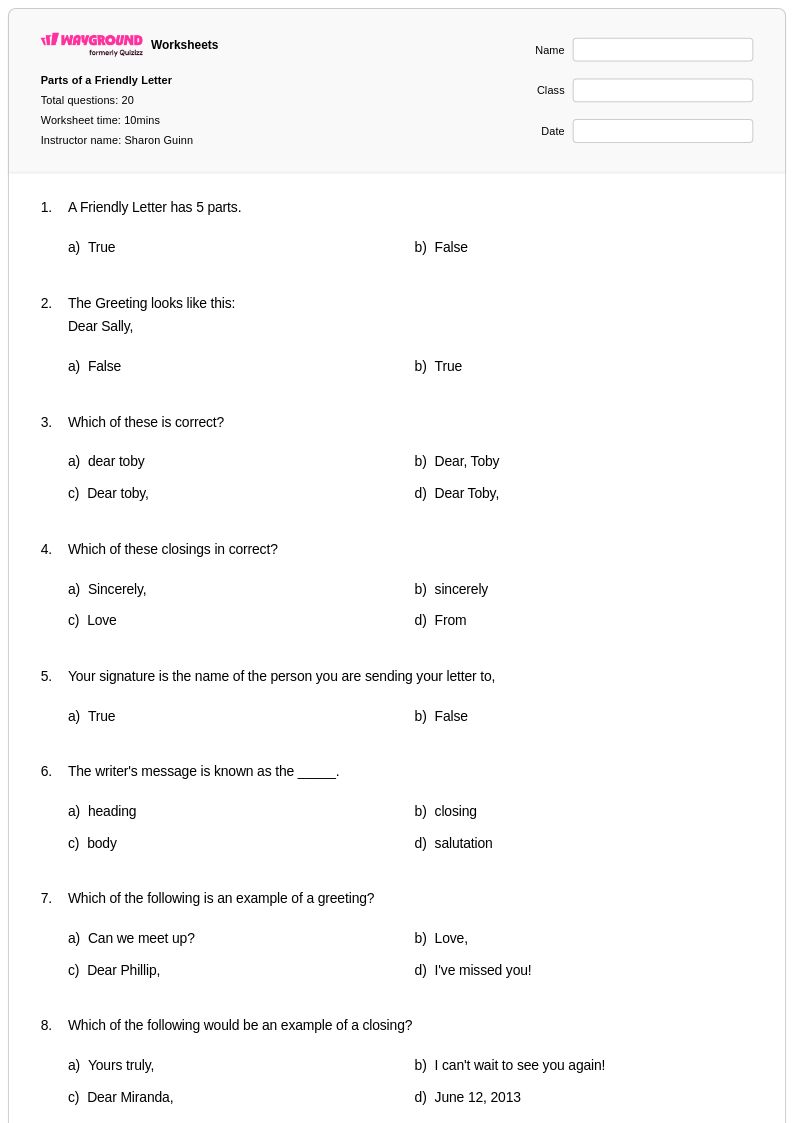
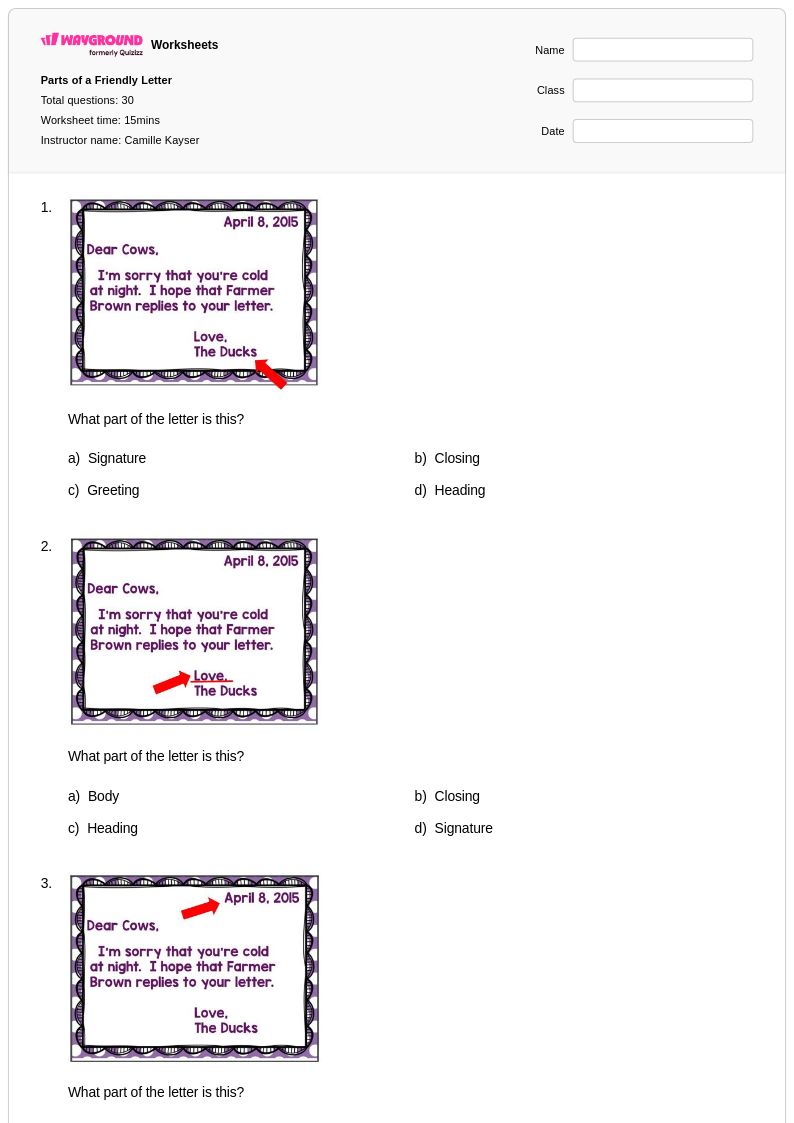
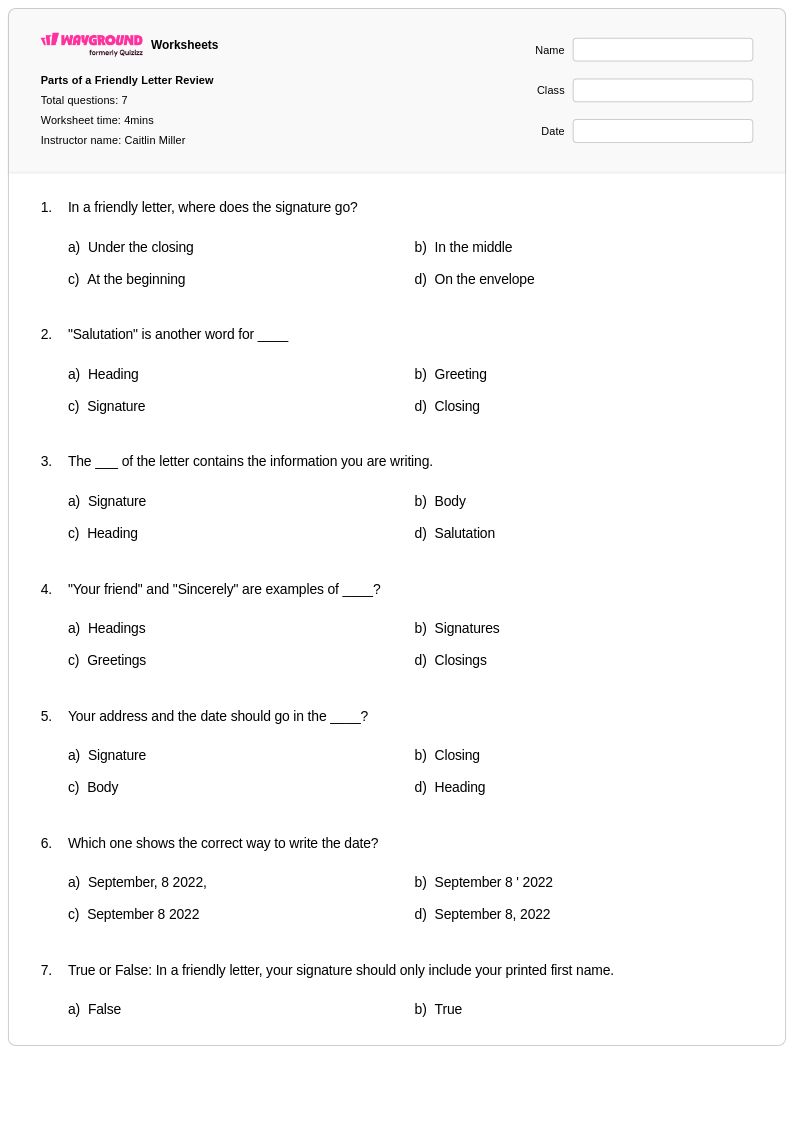
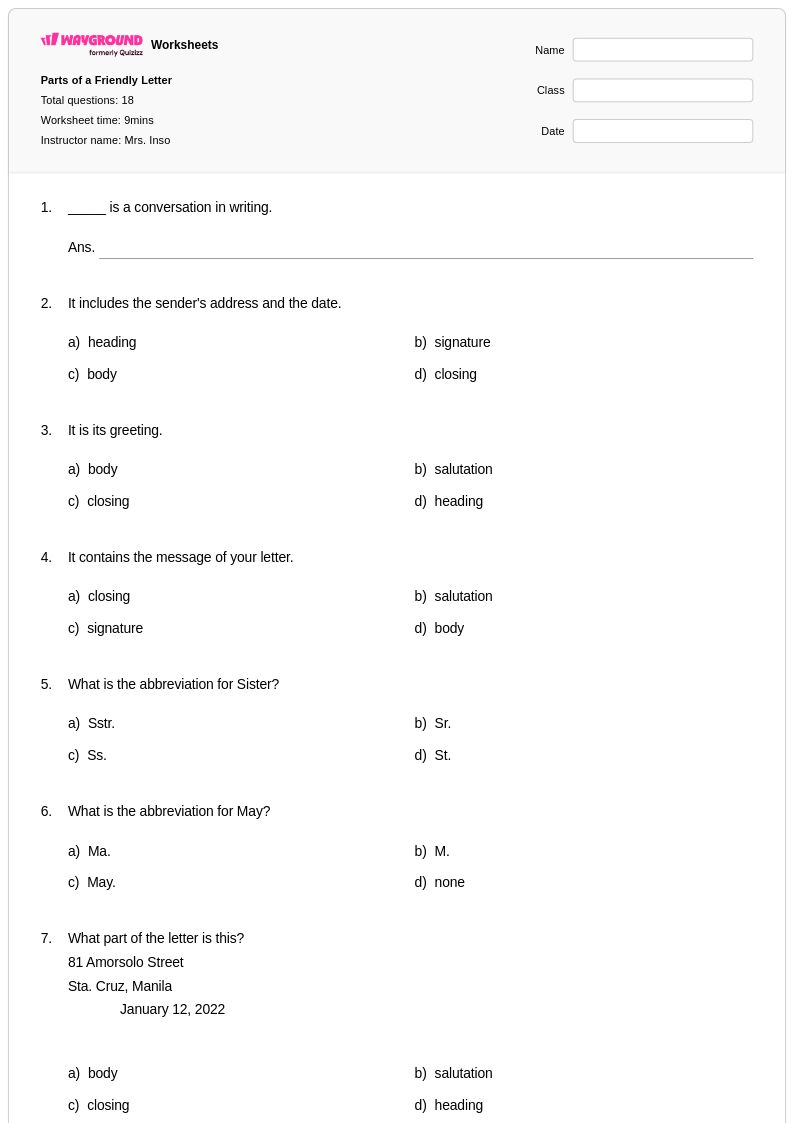
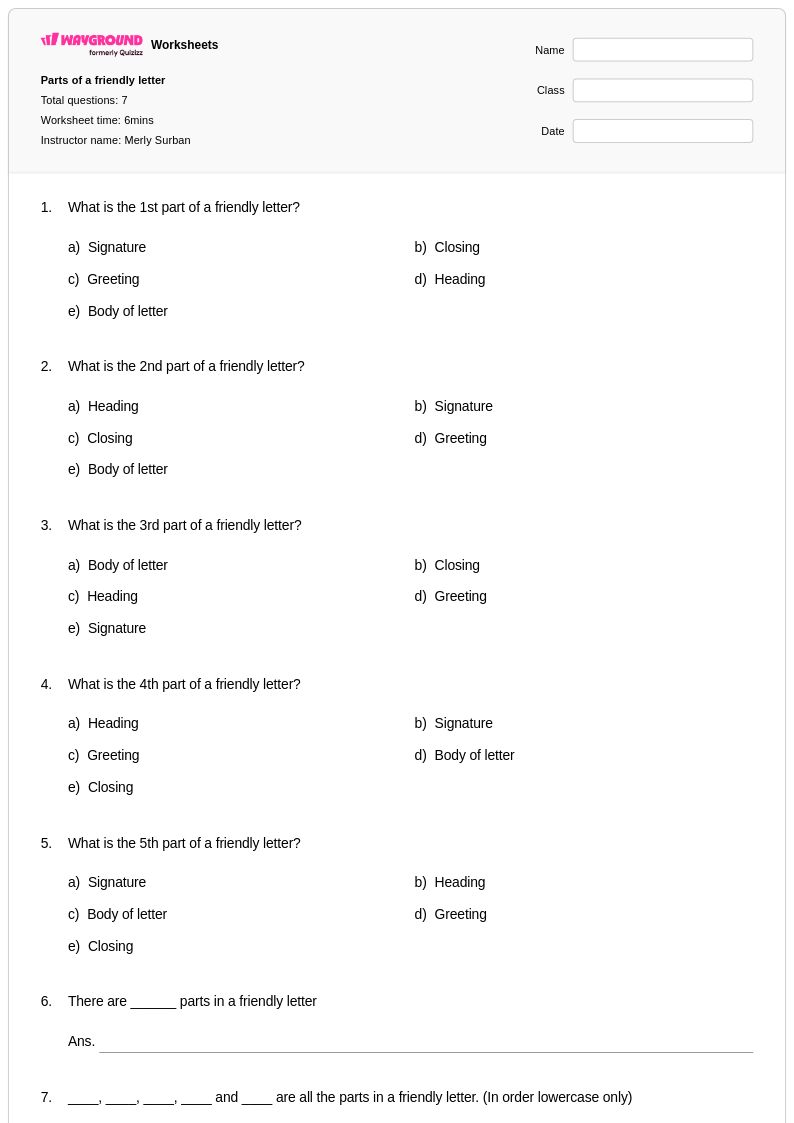
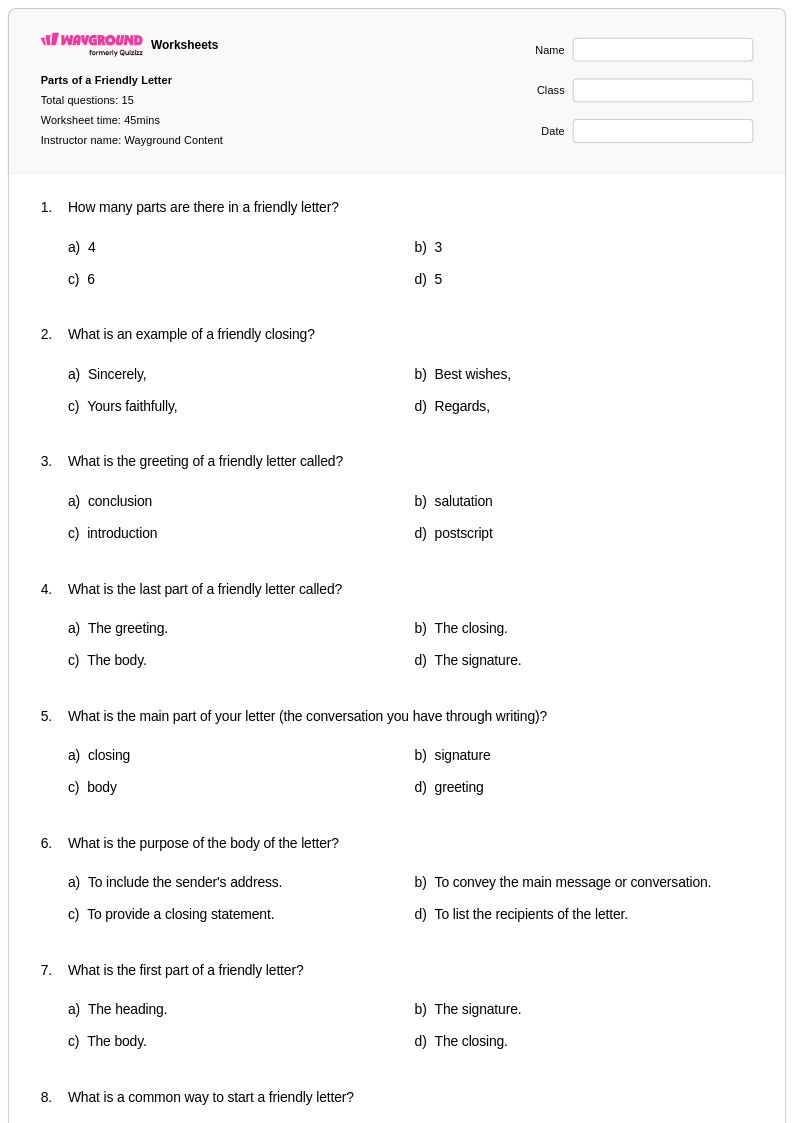
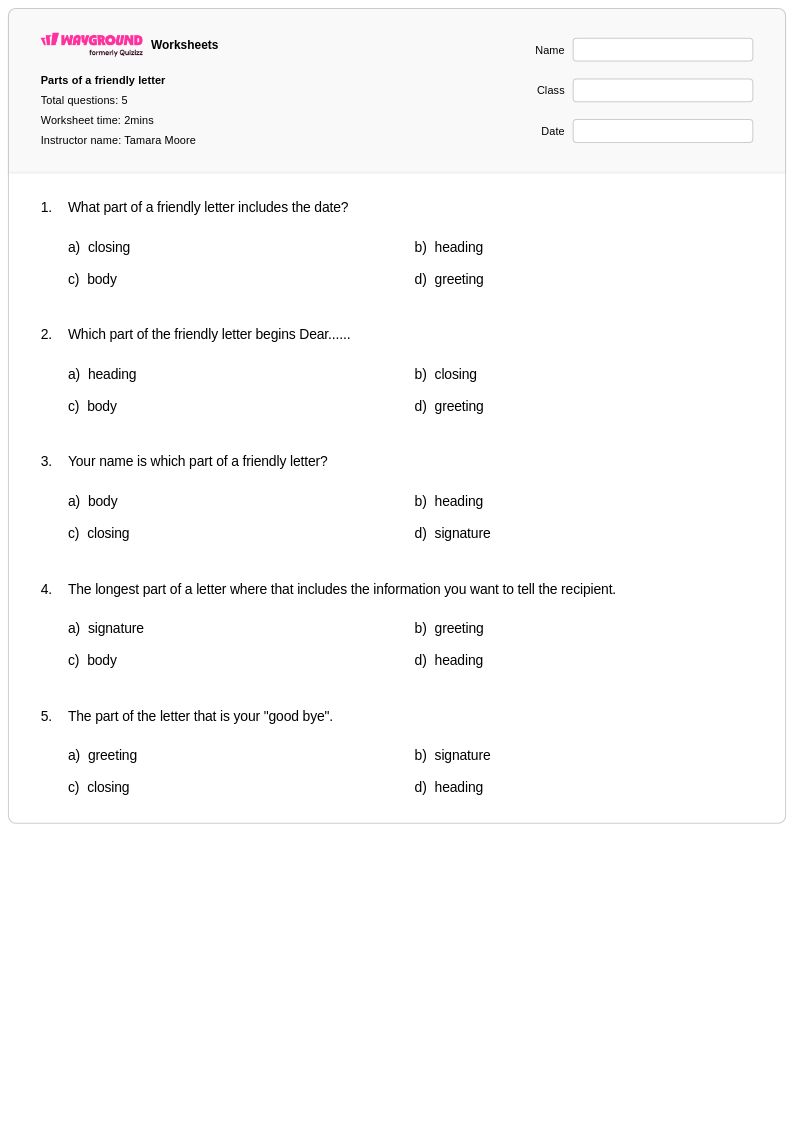
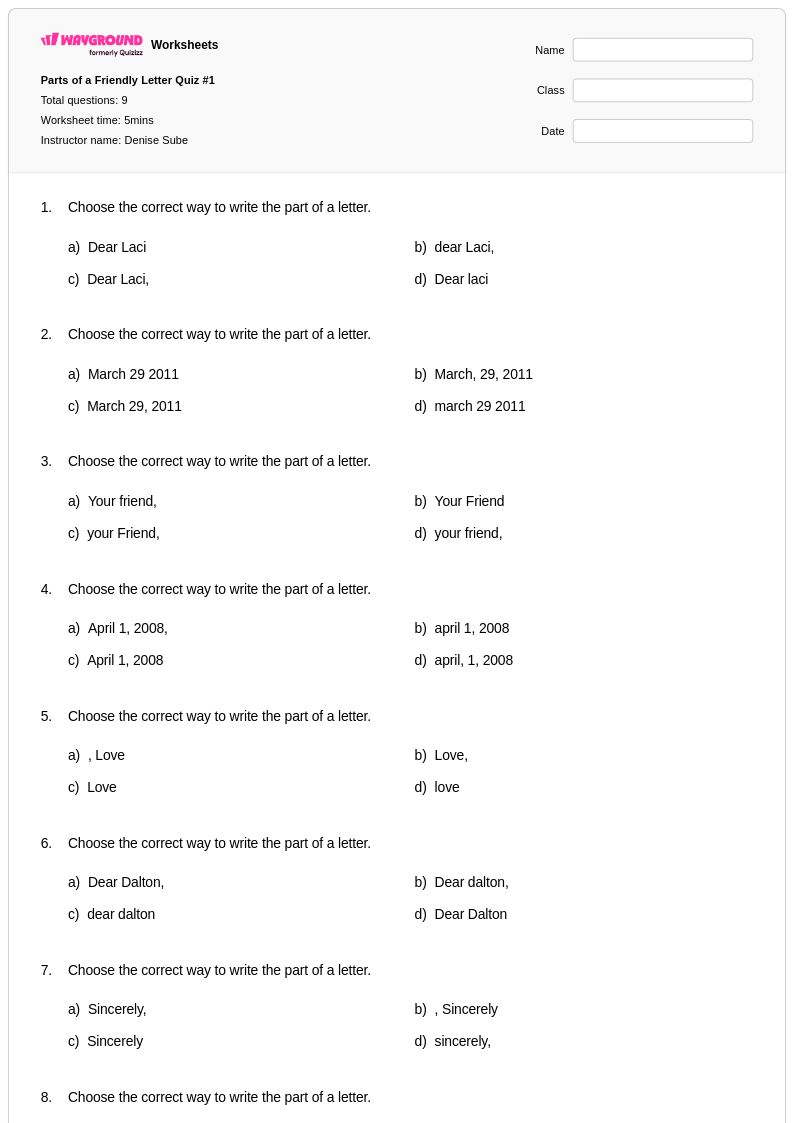
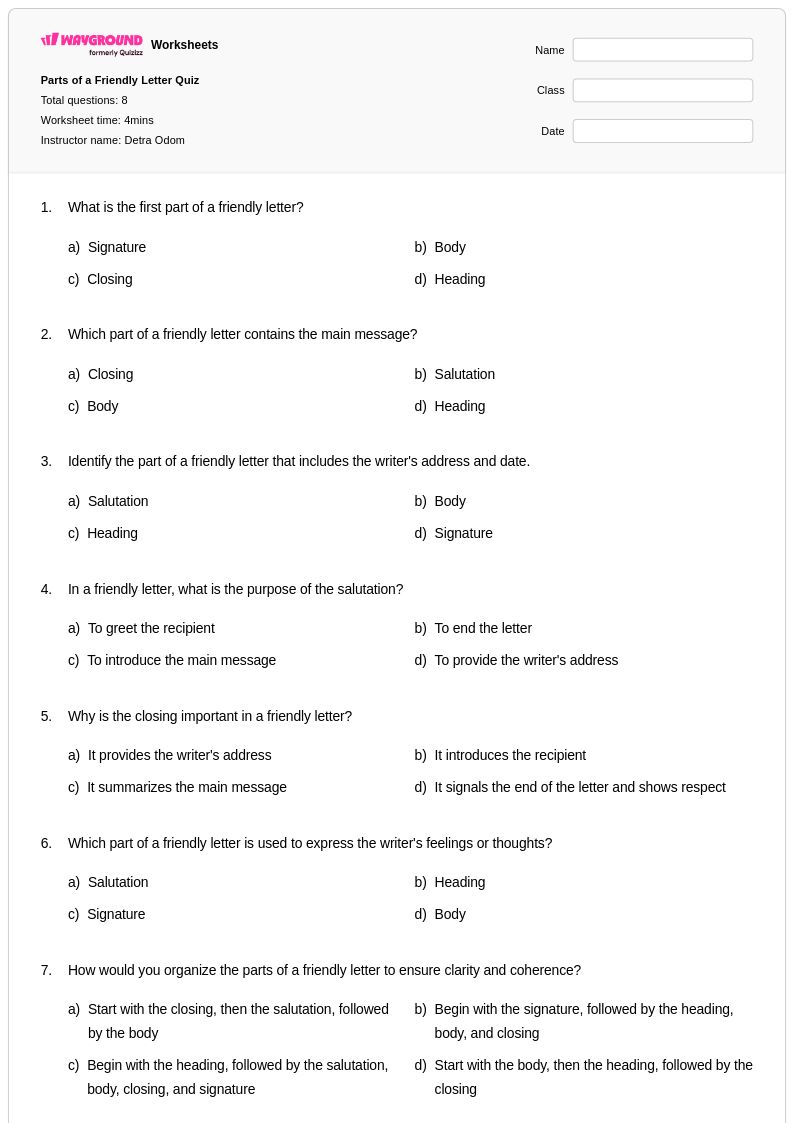
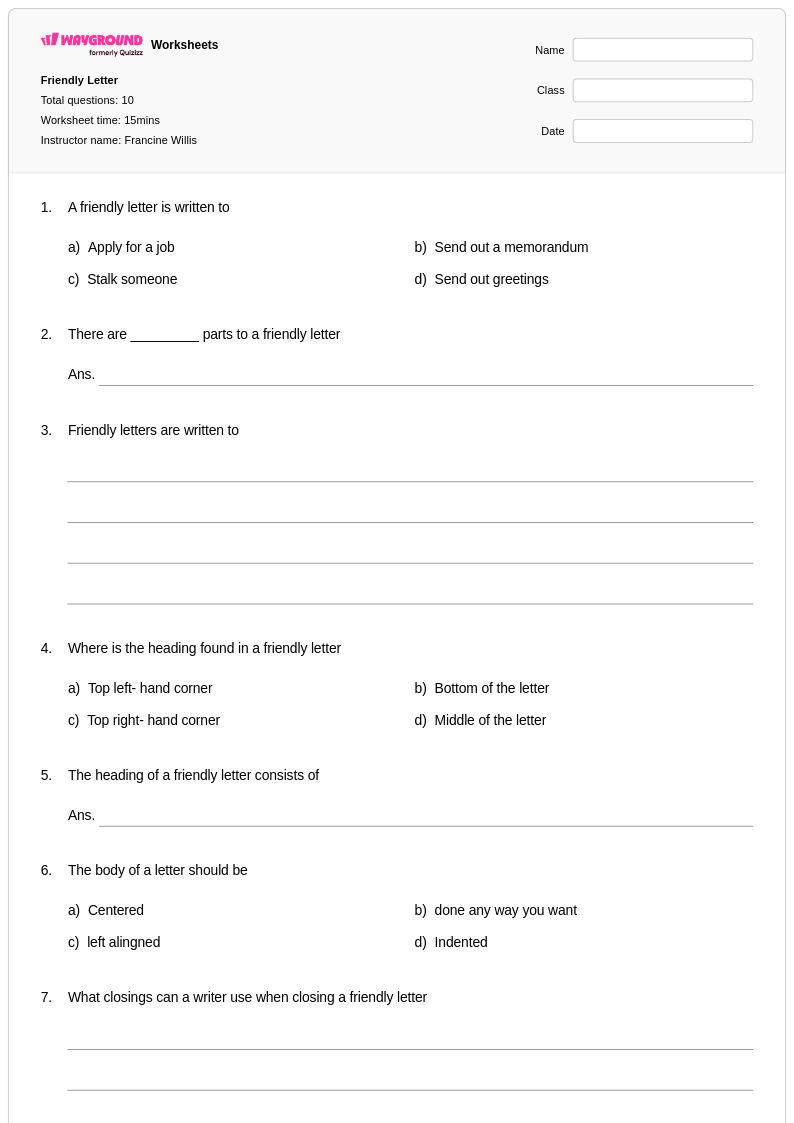
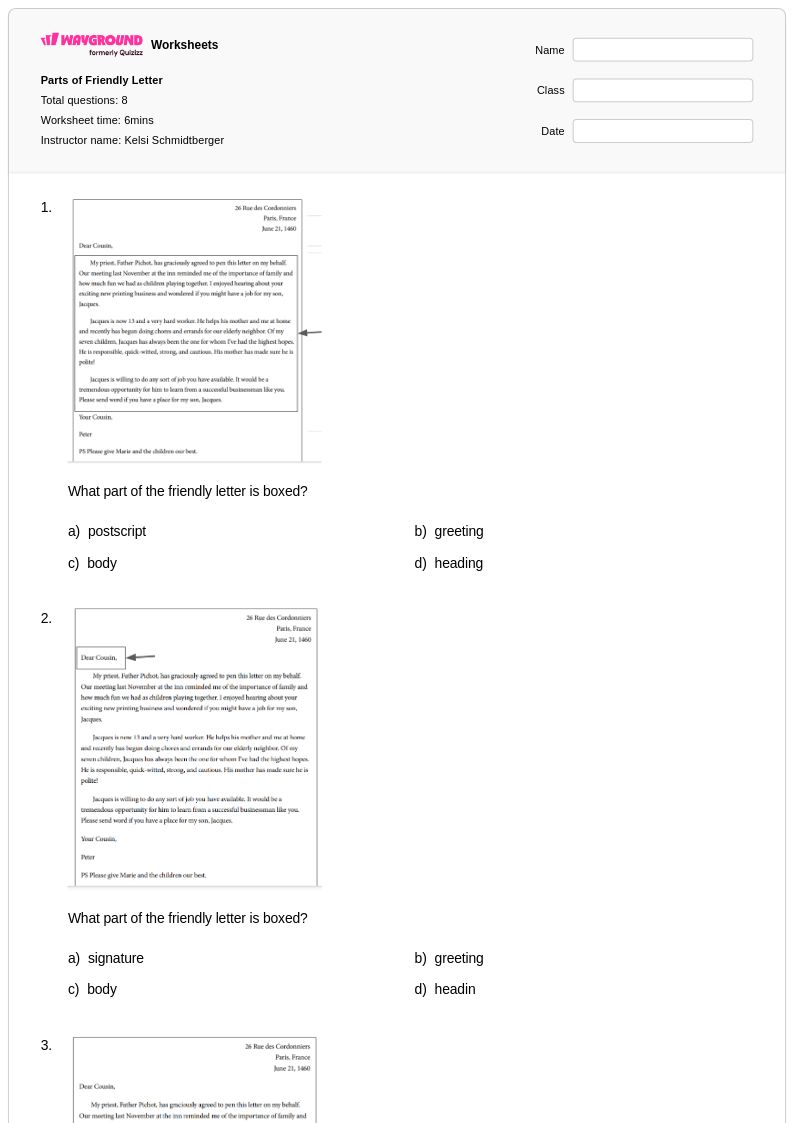
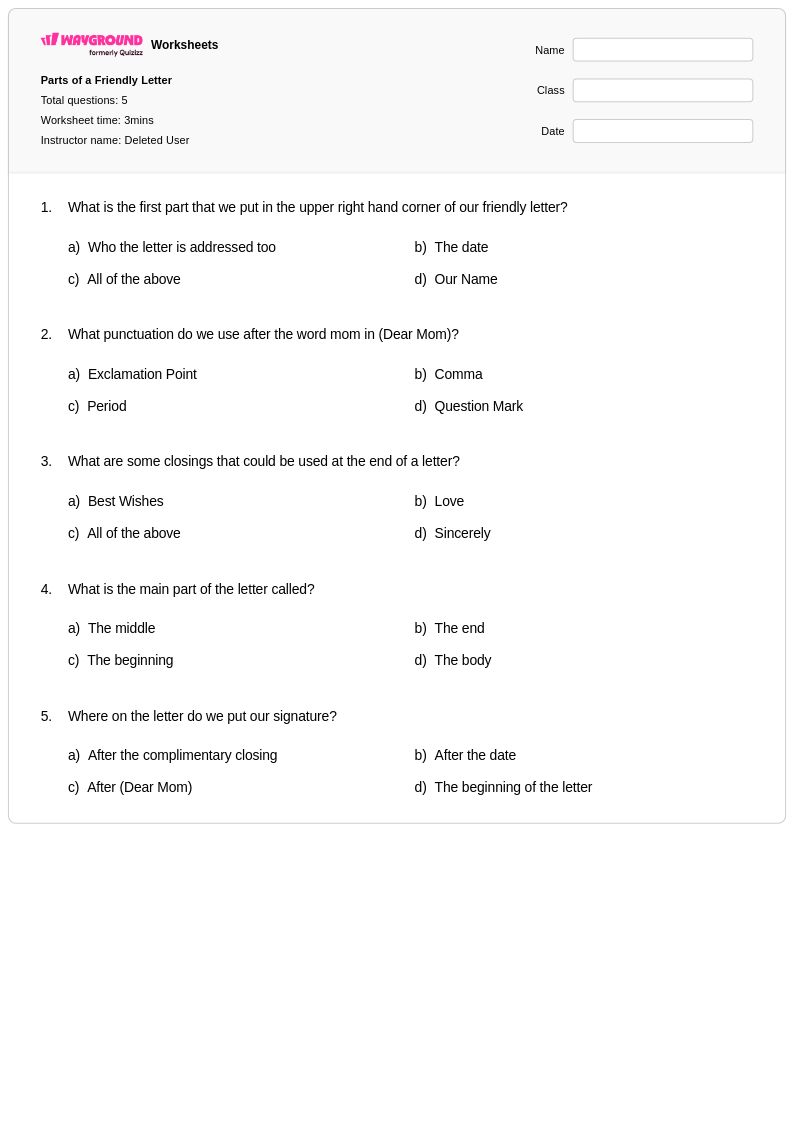
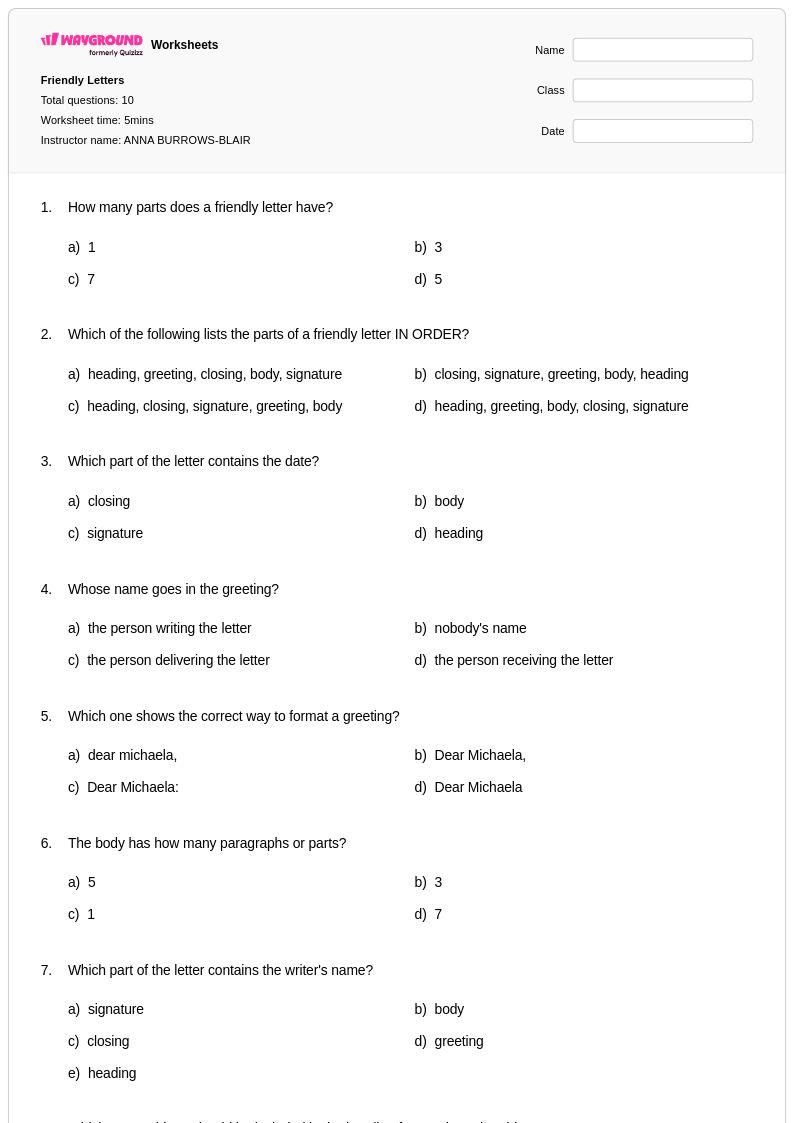
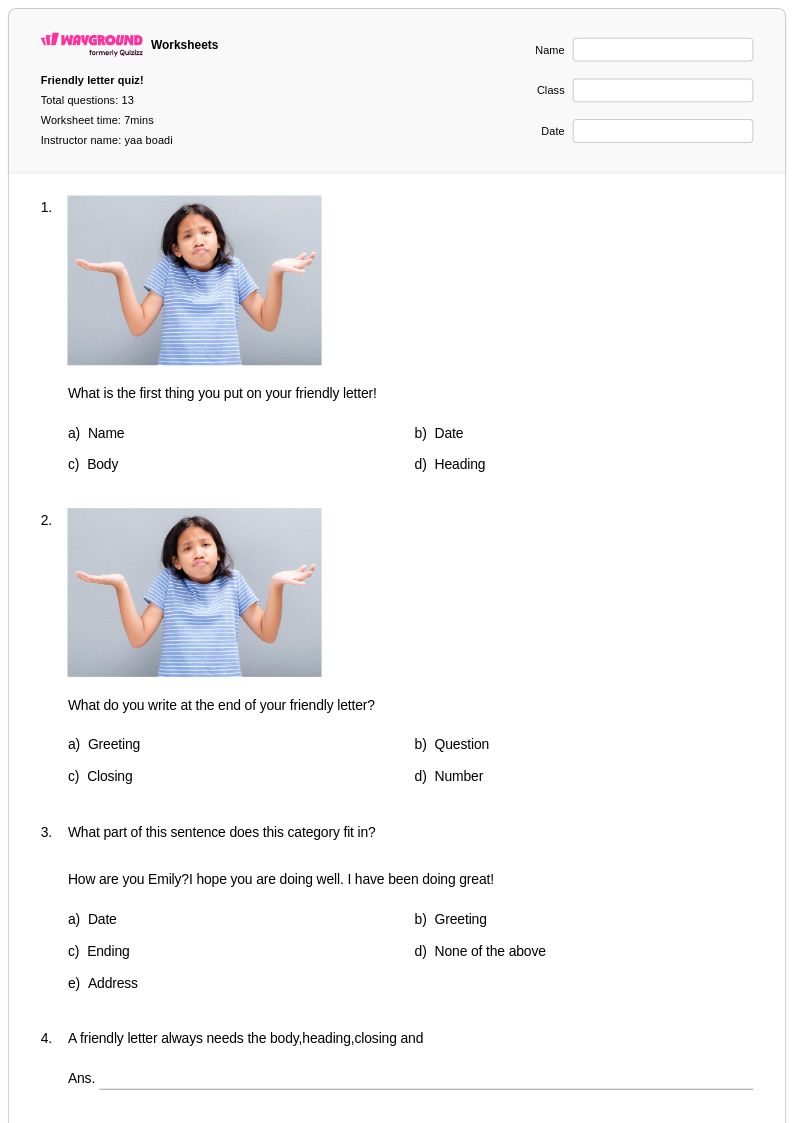
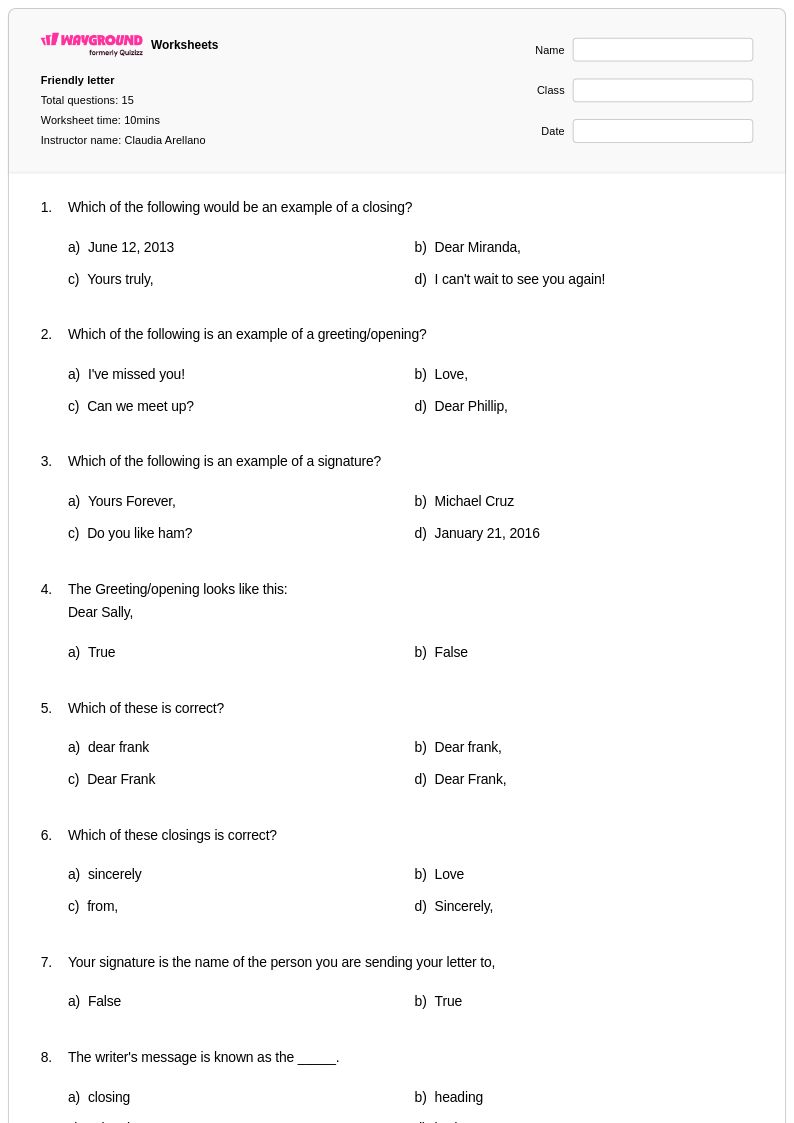
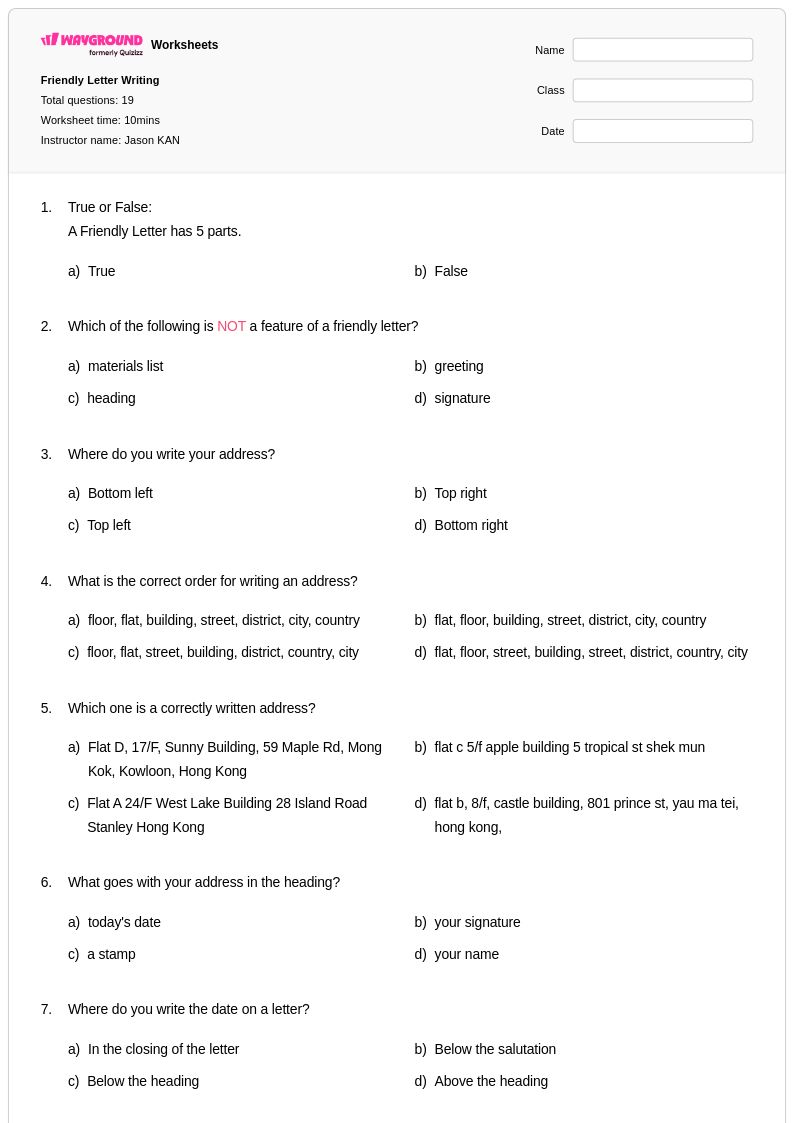
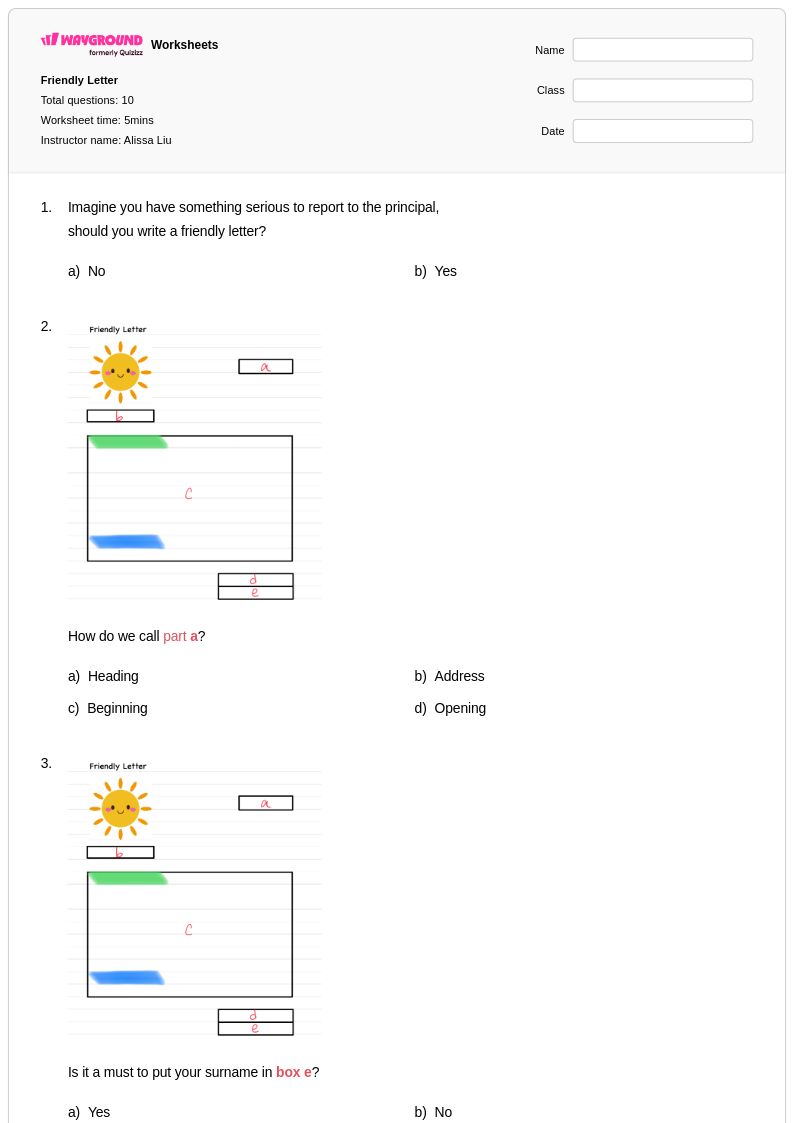
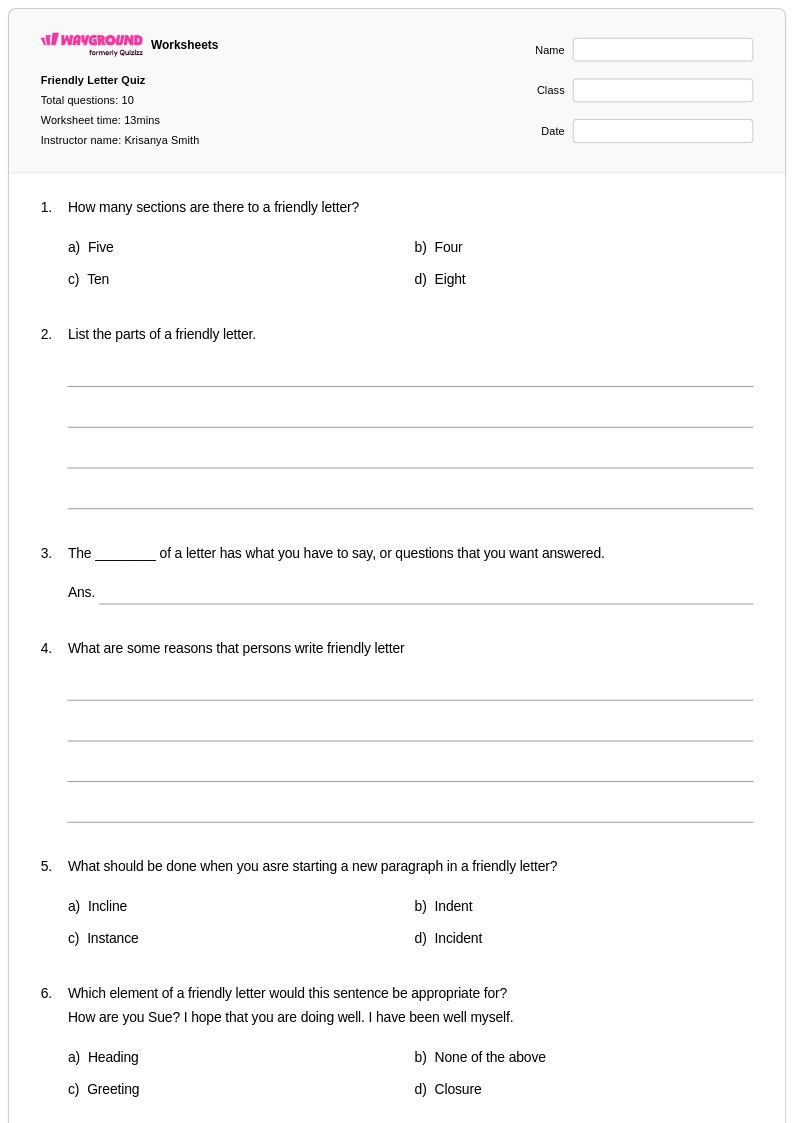
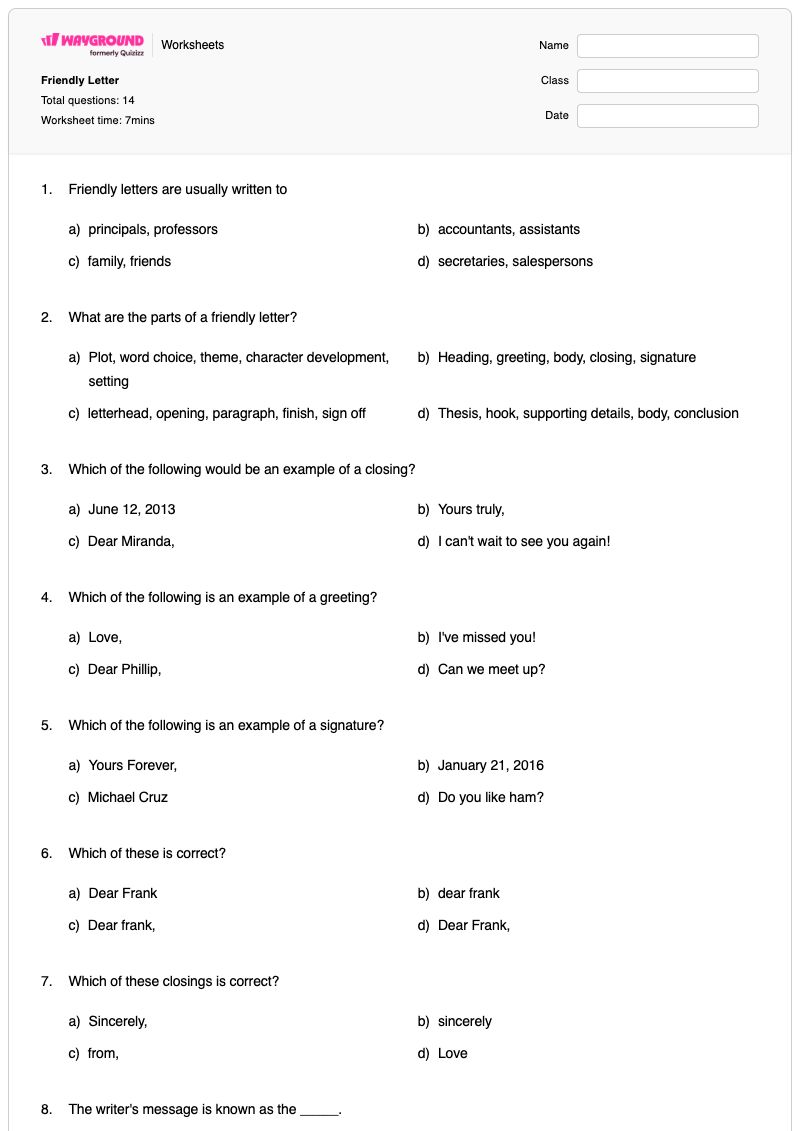
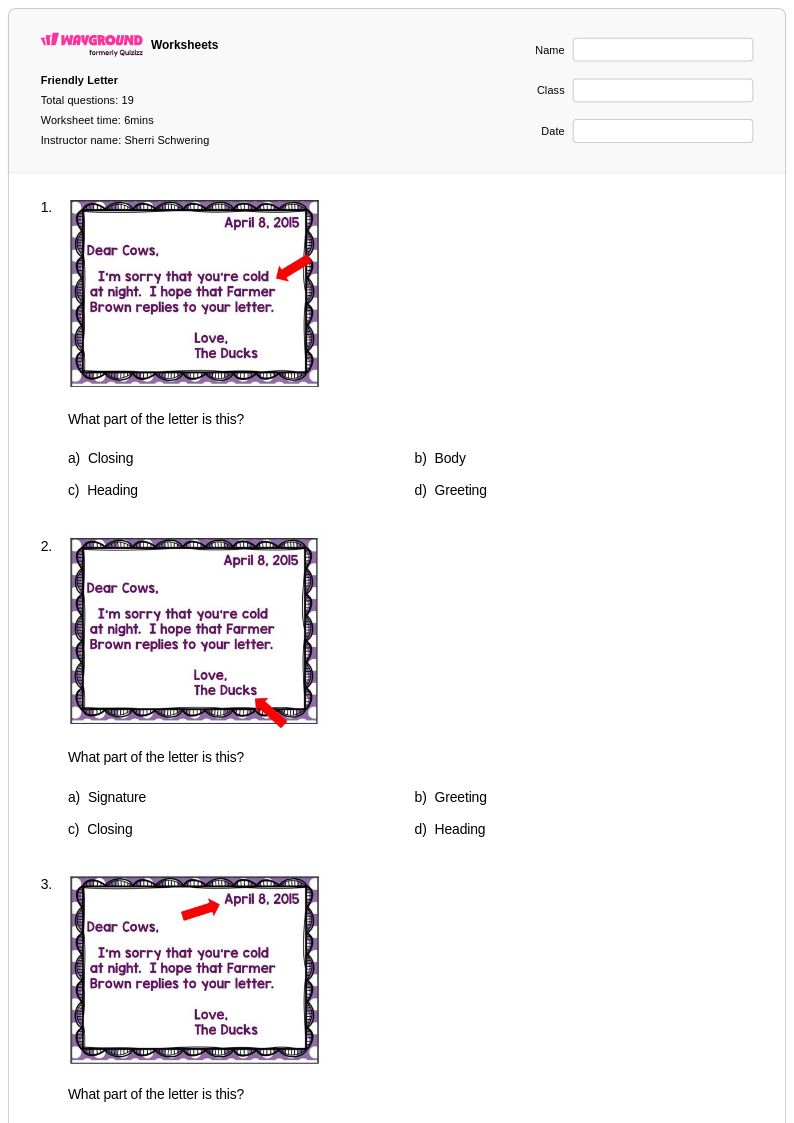
Parts of a friendly letter worksheets for kindergarten students available through Wayground (formerly Quizizz) introduce young learners to the fundamental components of personal correspondence in an age-appropriate and engaging manner. These educational resources focus on helping students identify and understand the five essential parts of a friendly letter: the date, greeting, body, closing, and signature. Through carefully designed practice problems and interactive activities, kindergarten students develop early writing organization skills while learning proper letter format and structure. The worksheets feature colorful illustrations and simple text that make learning accessible for beginning readers and writers, with accompanying answer keys that support both independent practice and guided instruction. These free printables serve as valuable tools for reinforcing classroom lessons about written communication and help establish foundational literacy skills that students will build upon throughout their academic journey.
Wayground (formerly Quizizz) empowers educators with an extensive collection of teacher-created resources specifically designed to support kindergarten writing instruction, including comprehensive materials focused on friendly letter components. The platform's millions of educational worksheets offer teachers robust search and filtering capabilities that enable quick access to grade-appropriate content aligned with early literacy standards. These differentiation tools allow educators to customize materials based on individual student needs, whether for remediation support or enrichment activities, while the flexible format options include both printable pdf versions for traditional classroom use and digital formats for interactive learning experiences. Teachers can seamlessly integrate these resources into their lesson planning to provide targeted skill practice, assess student understanding of writing organization concepts, and create meaningful opportunities for young learners to explore the structure and purpose of friendly letters in both formal instruction and independent practice settings.
FAQs
How do I teach the parts of a friendly letter to elementary students?
Start by introducing each of the five parts in sequence: the heading, greeting, body, closing, and signature. Use a mentor text or sample letter displayed on the board and label each section together as a class before asking students to identify parts independently. Anchor charts that keep all five components visible during writing time help students internalize the structure before they practice applying it on their own.
What exercises help students practice identifying the parts of a friendly letter?
Effective practice exercises include scrambled-letter-part sequencing tasks, where students reorder mixed-up sections into correct format, and gap-fill activities where students identify and supply missing components in a sample letter. Analyzing complete sample letters and labeling each part also reinforces conventional formatting expectations and builds familiarity with how each section functions in real correspondence.
What mistakes do students commonly make when formatting a friendly letter?
The most common errors include omitting the heading or writing it without a date, using an informal or missing greeting, and confusing the closing with the signature. Students also frequently write a single undifferentiated block of text rather than organized body paragraphs, and they often place the signature before the closing or skip one entirely. Targeted practice that isolates each component helps address these patterns systematically.
How can I differentiate friendly letter instruction for students at different skill levels?
For struggling writers, provide a partially completed letter template so students focus on one or two components at a time rather than the full format simultaneously. Advanced learners can be challenged to write multi-paragraph body sections with a clear purpose, tone shift, and transition between ideas. On Wayground, teachers can apply accommodations such as read-aloud support or reduced answer choices to individual students, allowing the same activity to serve the full range of learners without singling anyone out.
How do I use Parts of a Friendly Letter worksheets from Wayground in my classroom?
Wayground's Parts of a Friendly Letter worksheets are available as printable PDFs for traditional classroom use and in digital formats for technology-integrated or remote learning environments, and teachers can also host them as a quiz directly on Wayground. Each worksheet includes a detailed answer key, making them suitable for independent practice, guided instruction, or homework assignments. The platform's search and filtering tools allow teachers to quickly locate worksheets that align with specific writing standards or learning objectives.
At what grade level should students learn the parts of a friendly letter?
Friendly letter format is typically introduced in grades 2 through 4, when students are developing foundational writing organization skills and beginning to write for authentic audiences and purposes. Instruction often continues into grades 5 and 6 as students refine tone, paragraph structure, and the conventions of personal correspondence. The skill also appears in standardized writing assessments across elementary grade bands, making consistent practice important.