
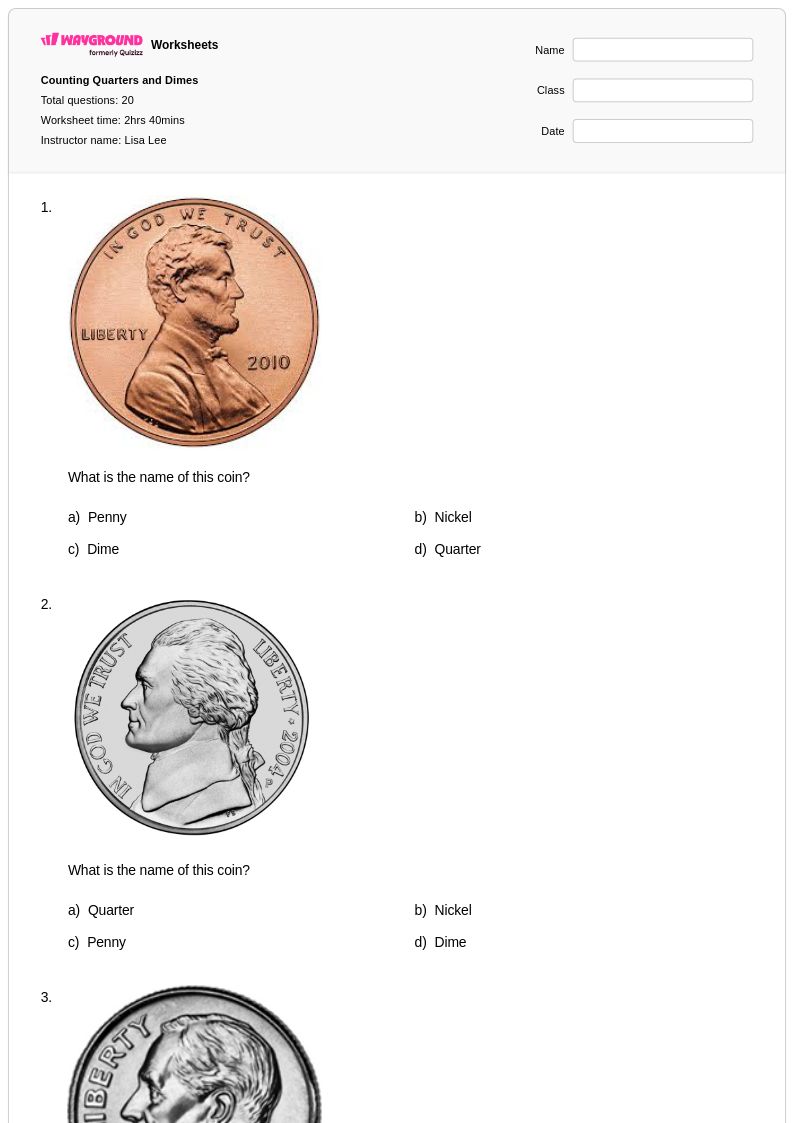
20 Q
2nd
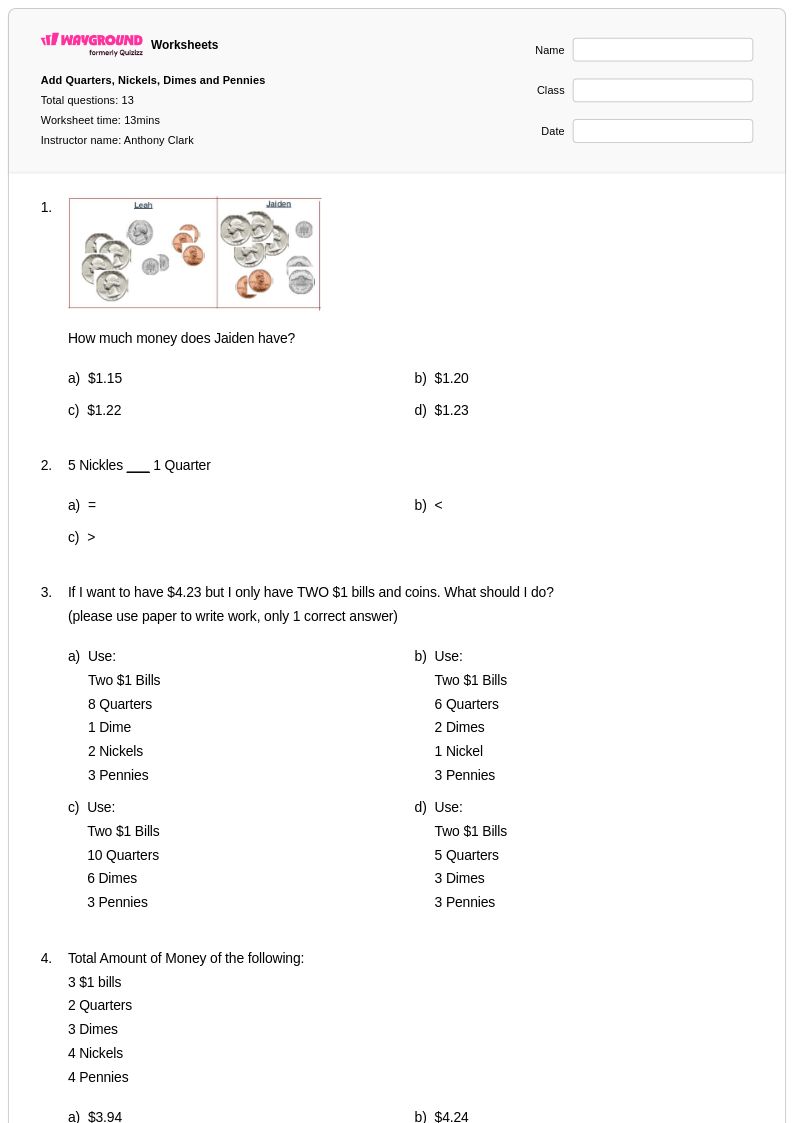
13 Q
2nd - Uni
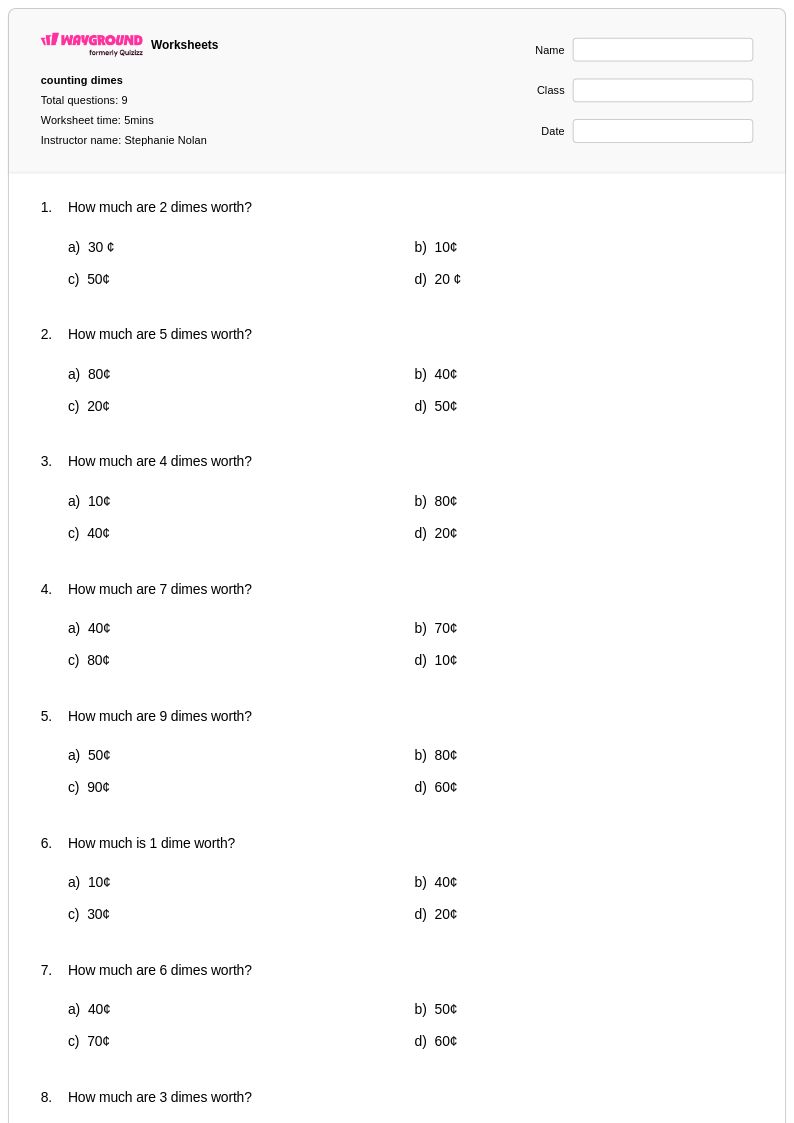
9 Q
KG - 2nd
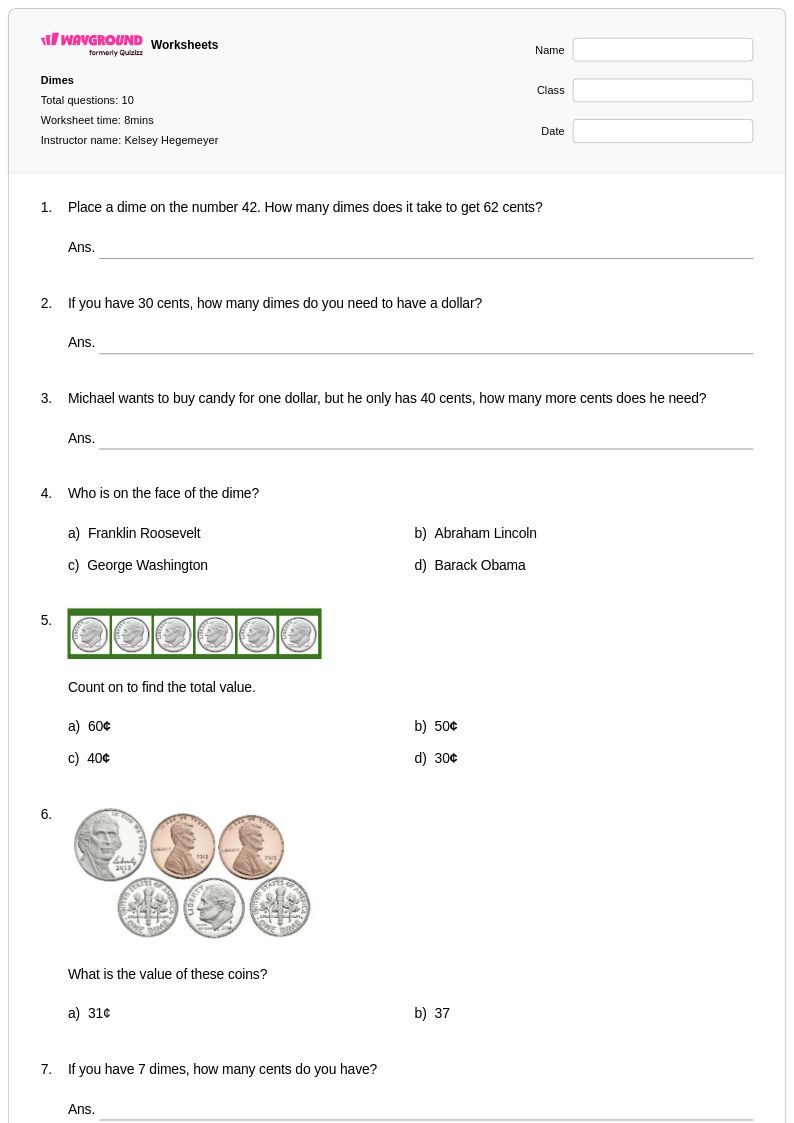
10 Q
2nd
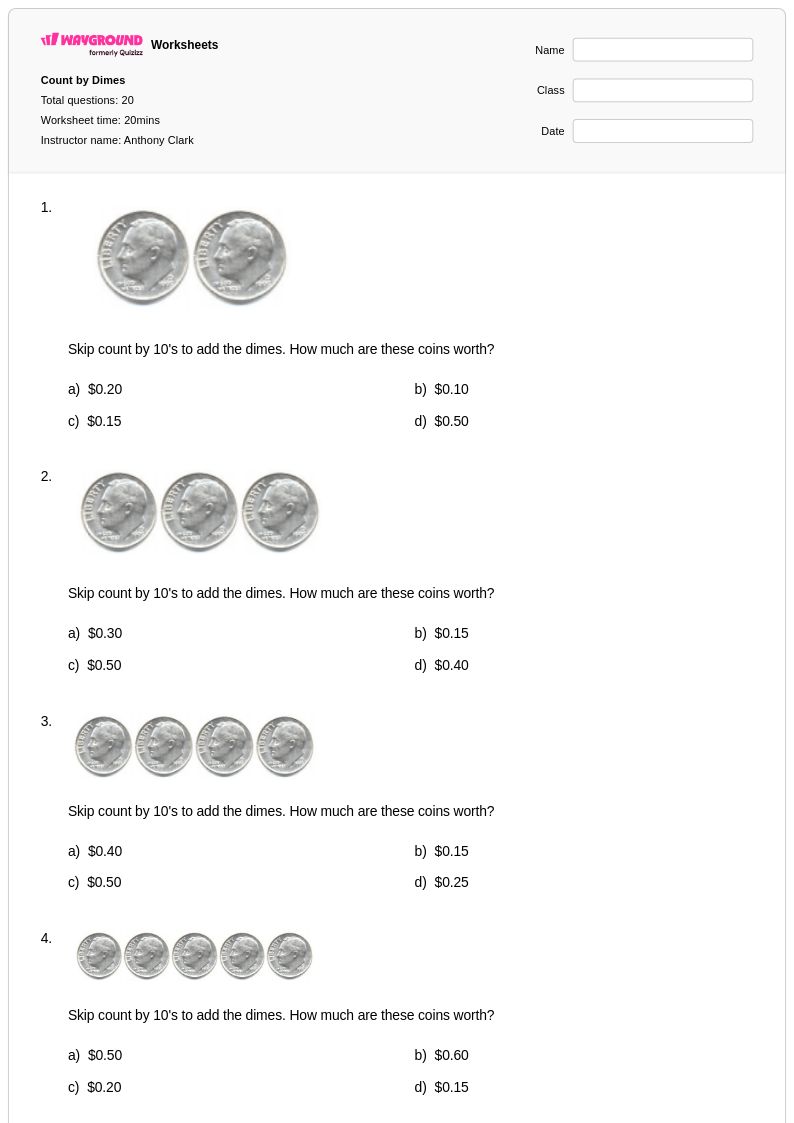
20 Q
1st - Uni
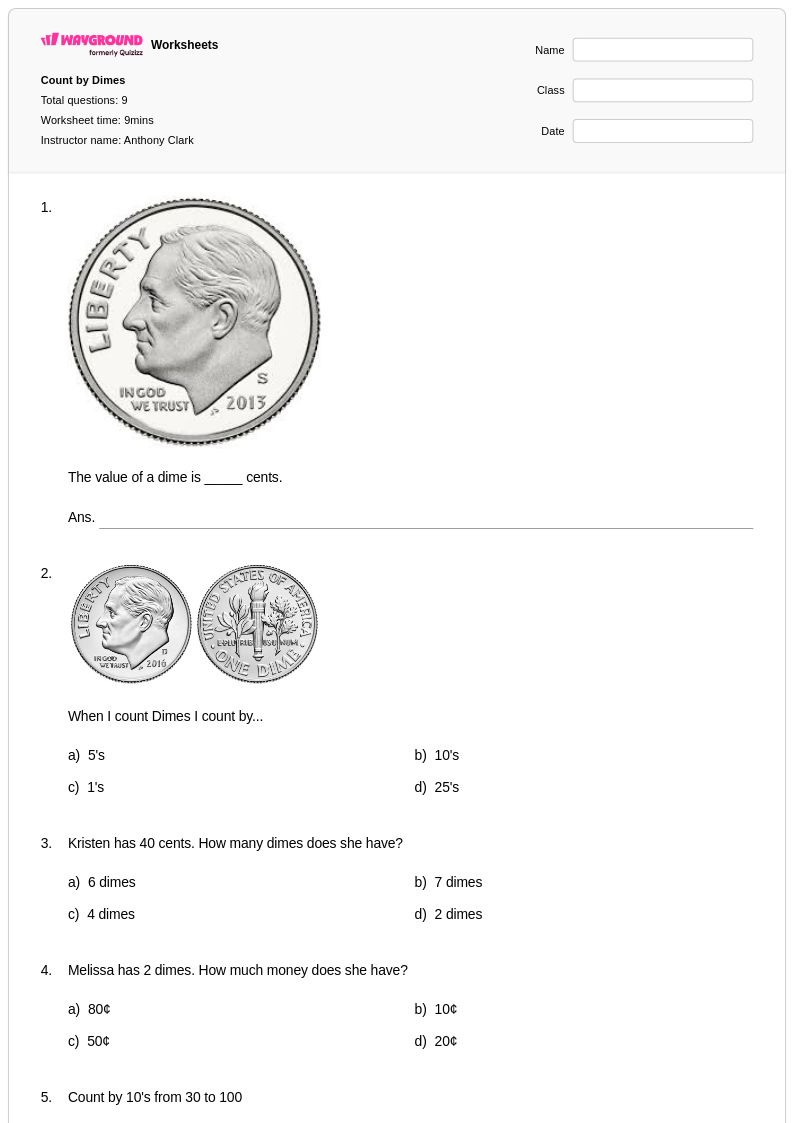
9 Q
1st - Uni
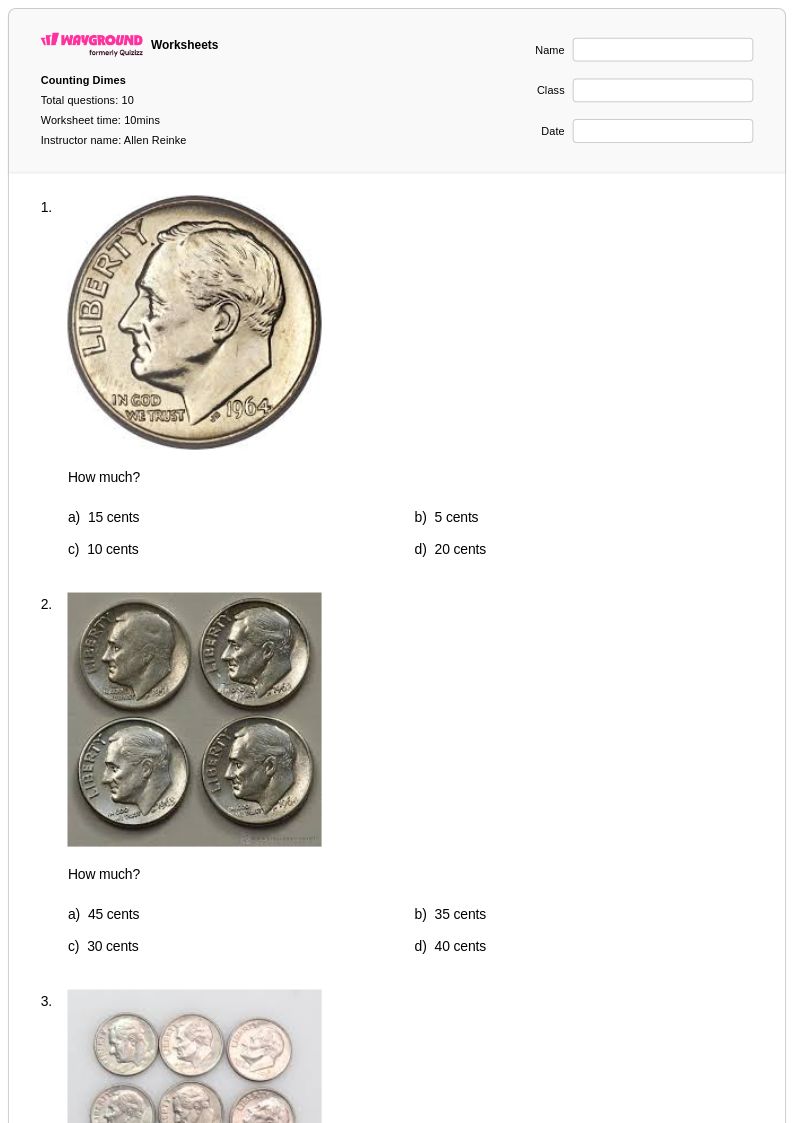
10 Q
KG - 2nd
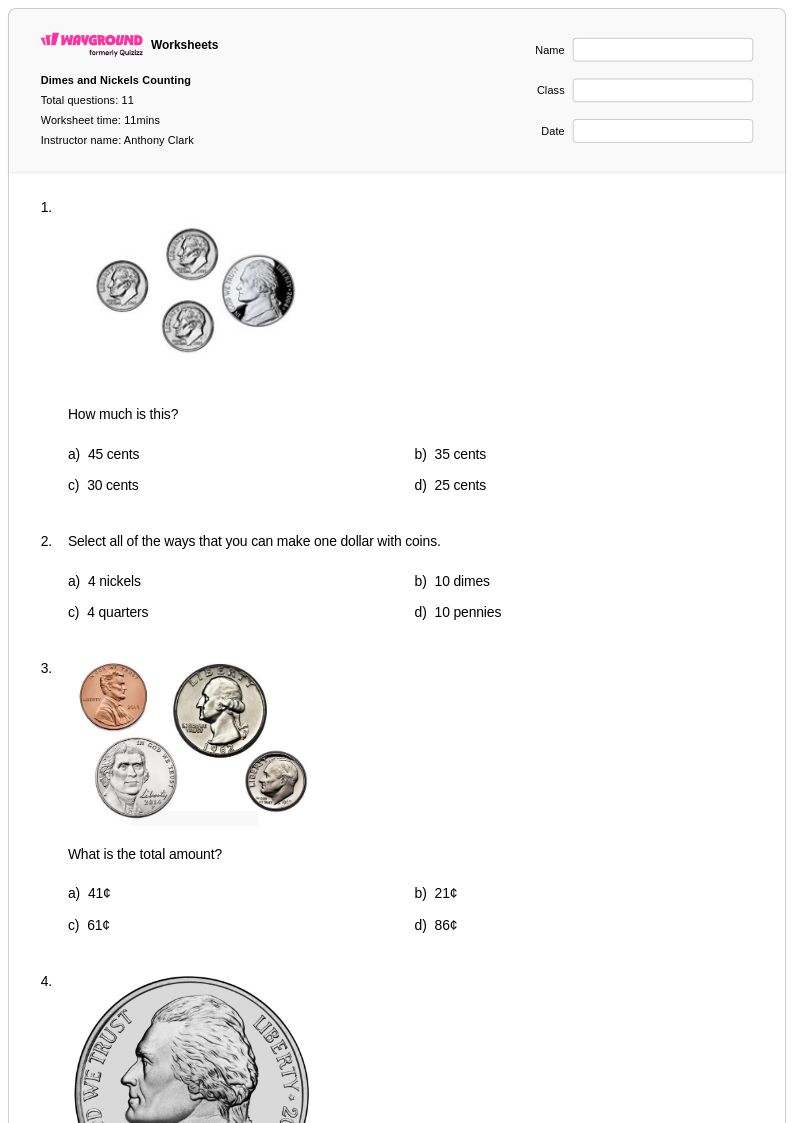
11 Q
2nd - Uni
20 Q
2nd - Uni
20 Q
1st - 2nd
20 Q
2nd
10 Q
2nd
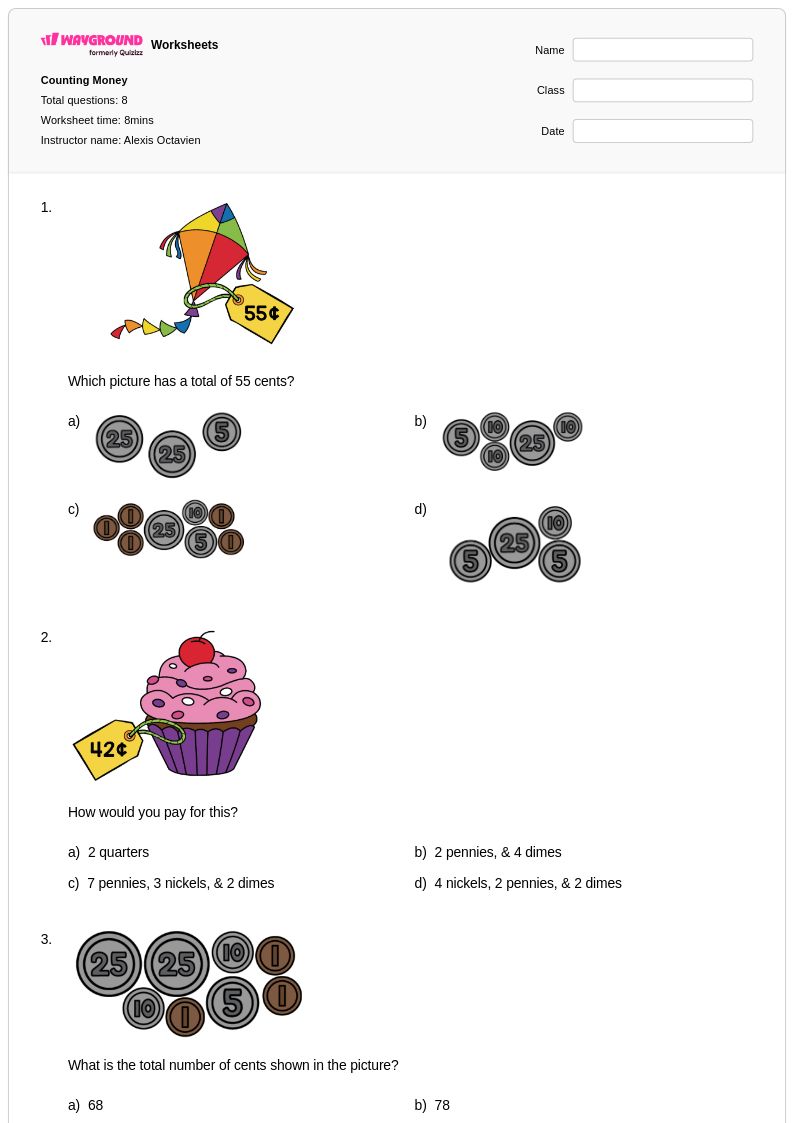
8 Q
2nd
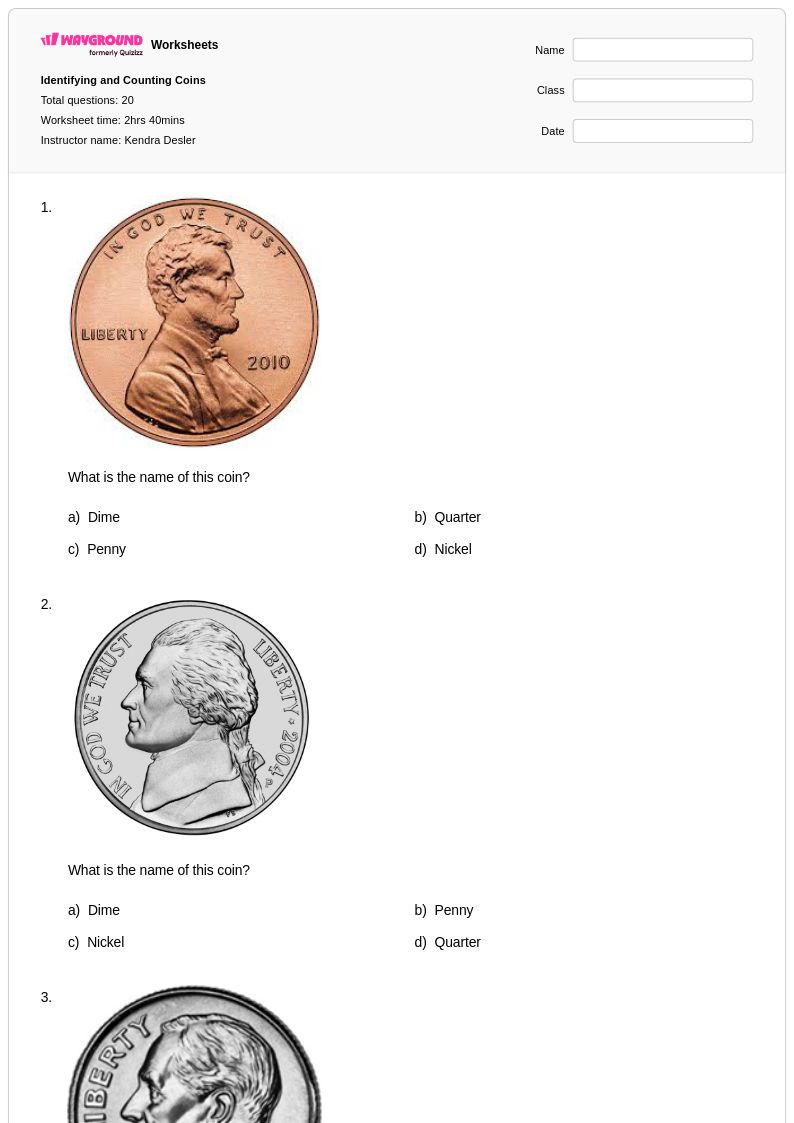
20 Q
2nd
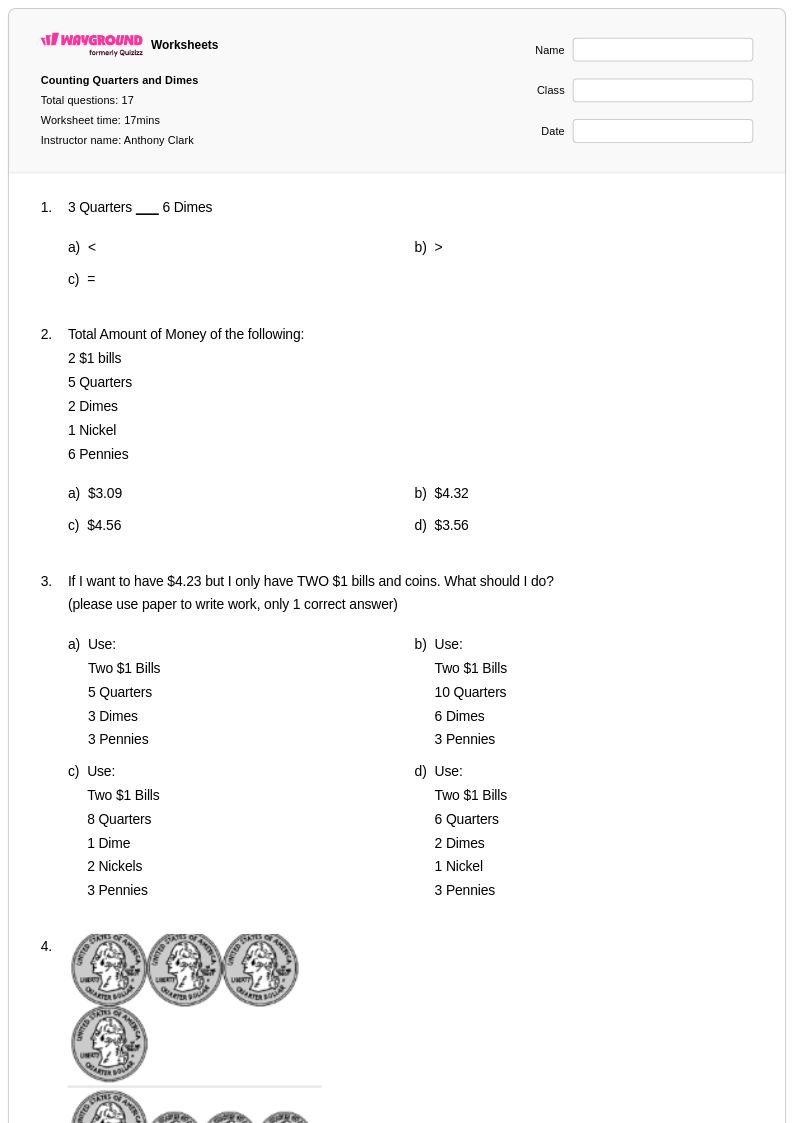
17 Q
2nd - Uni
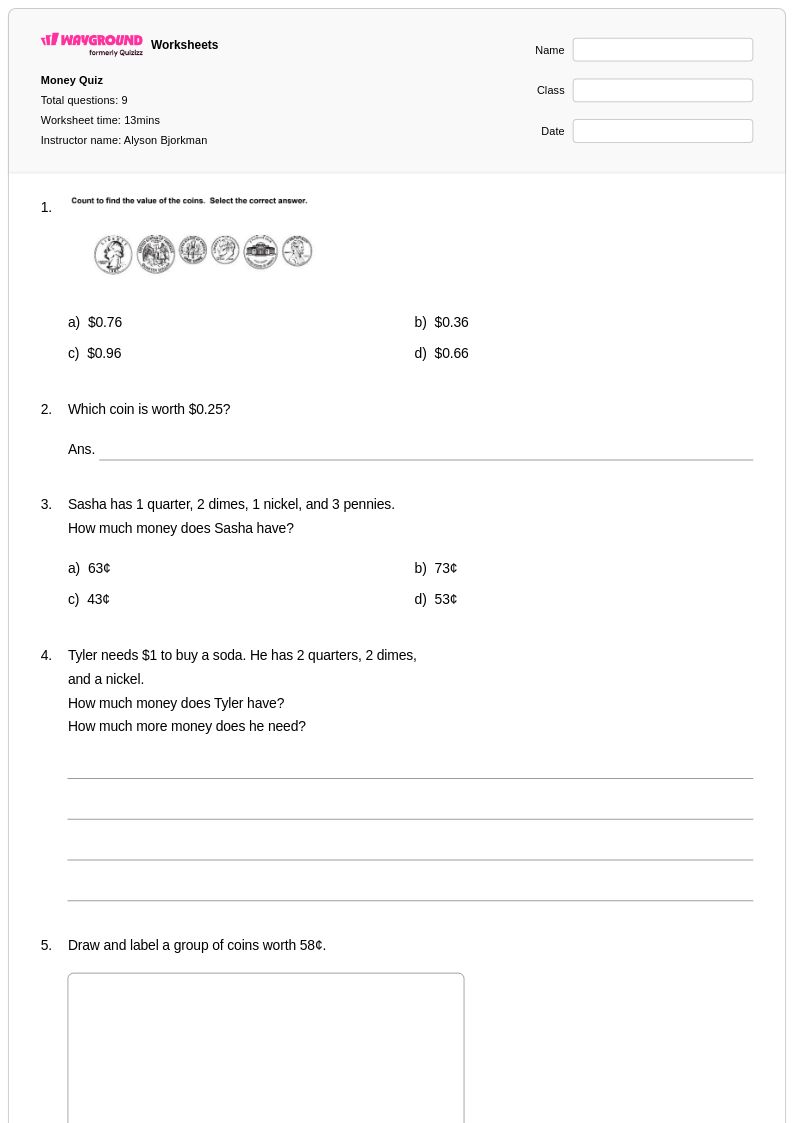
9 Q
2nd
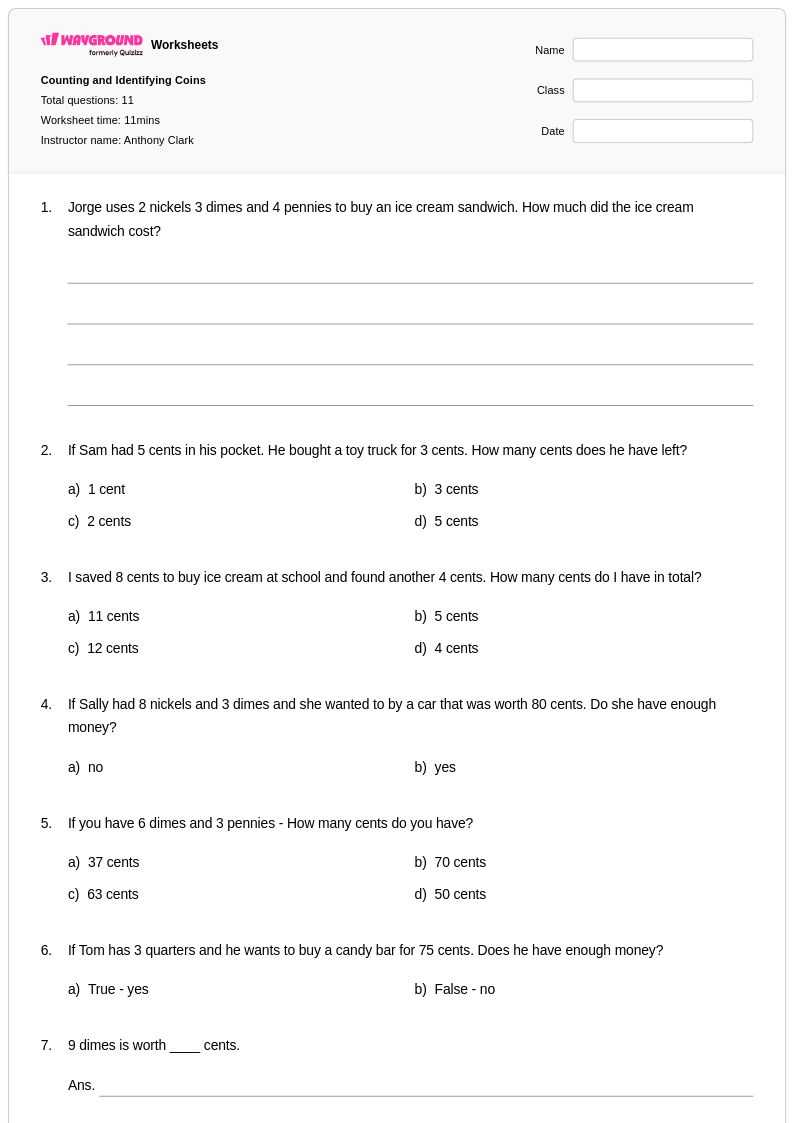
11 Q
2nd - Uni
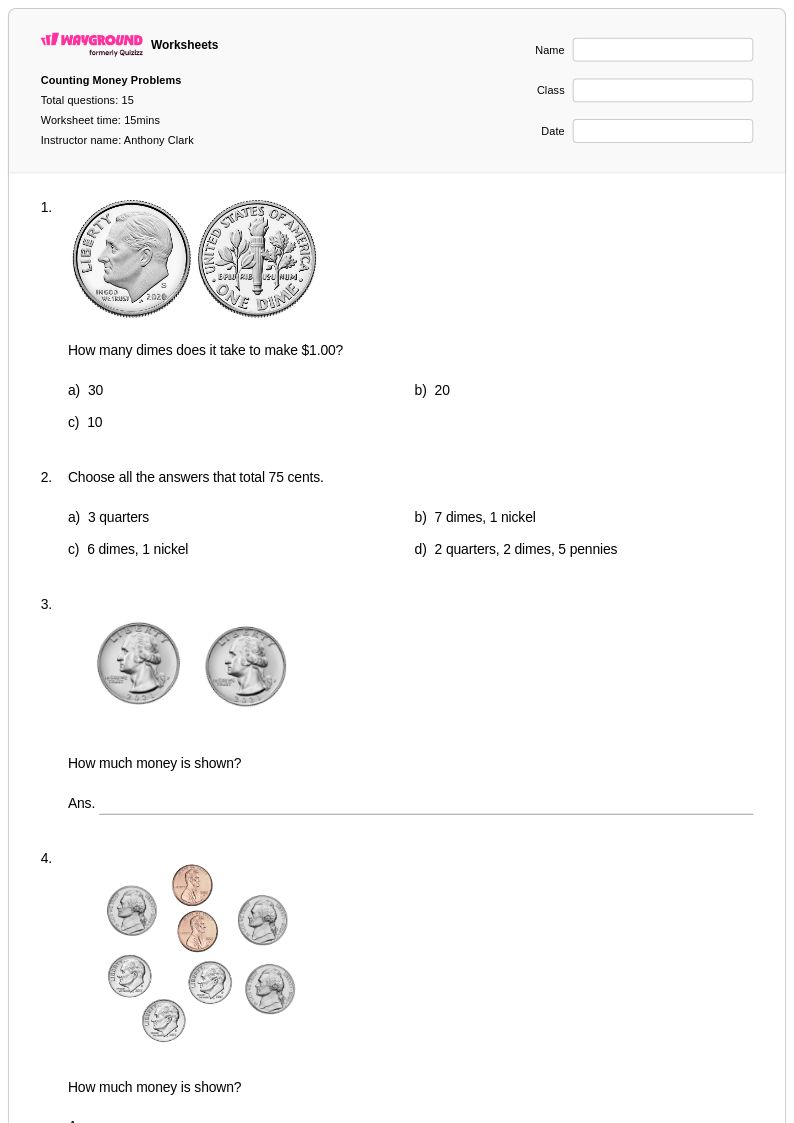
15 Q
2nd - Uni
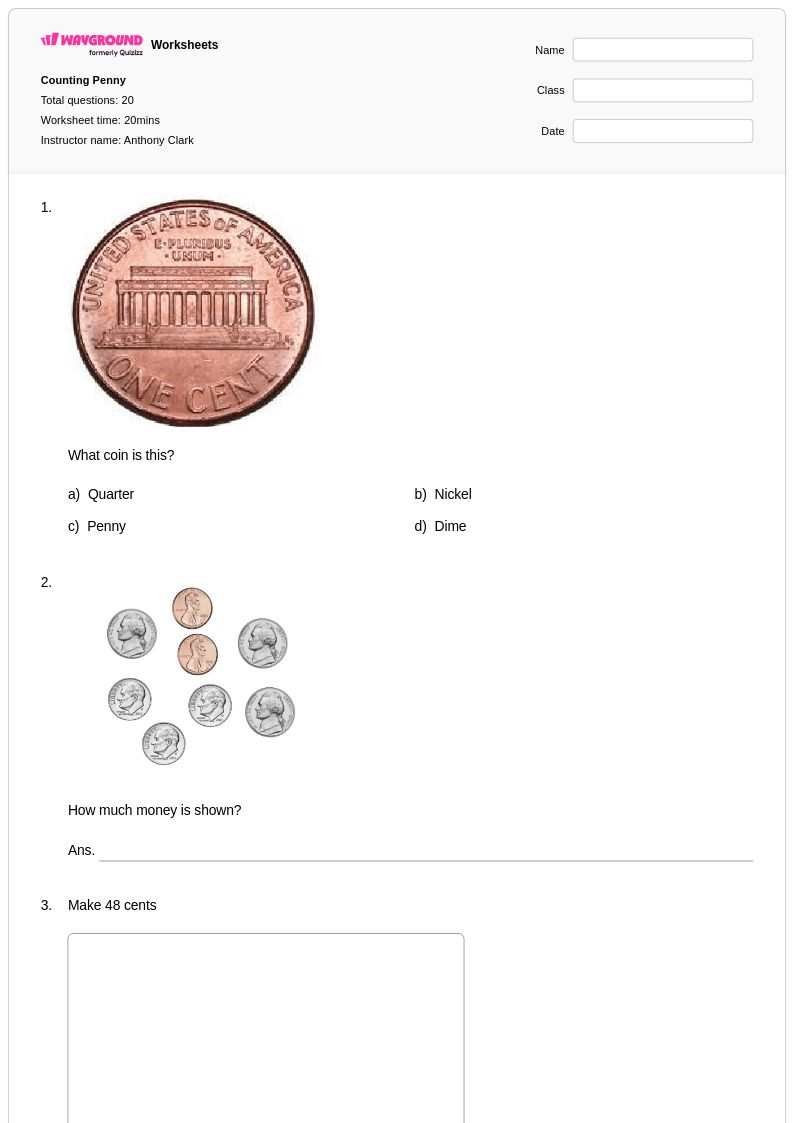
20 Q
2nd - Uni
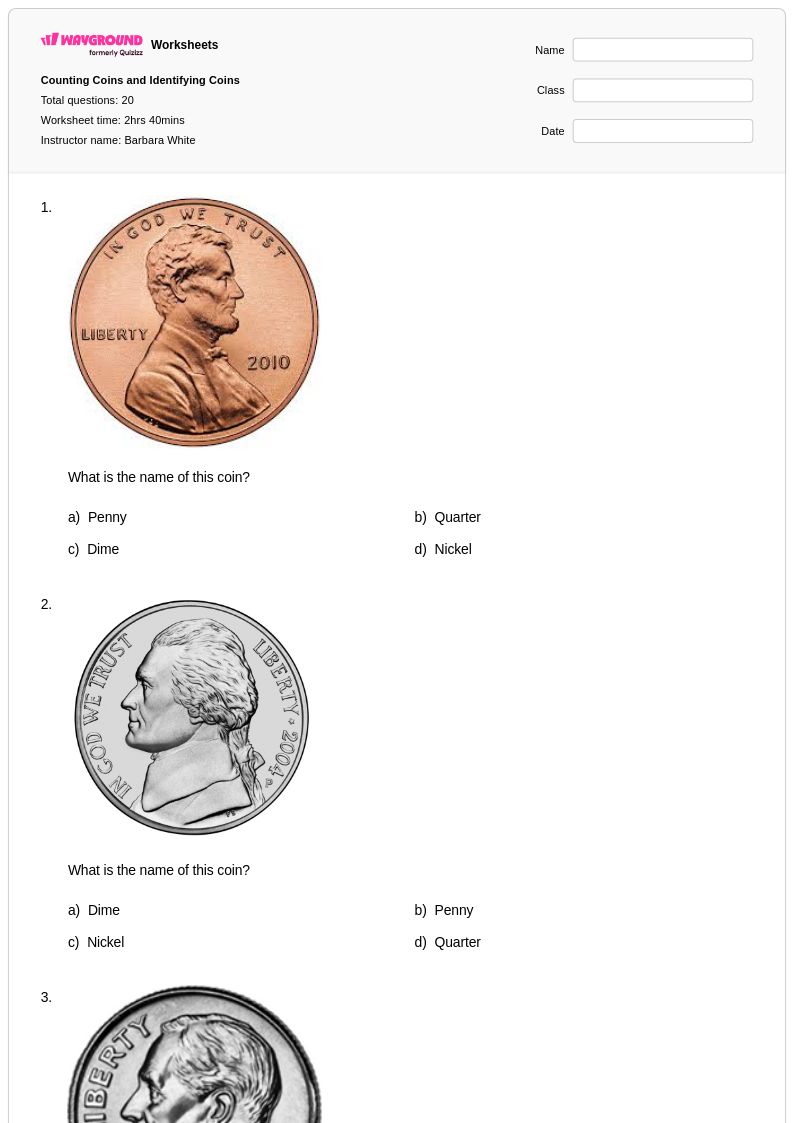
20 Q
2nd
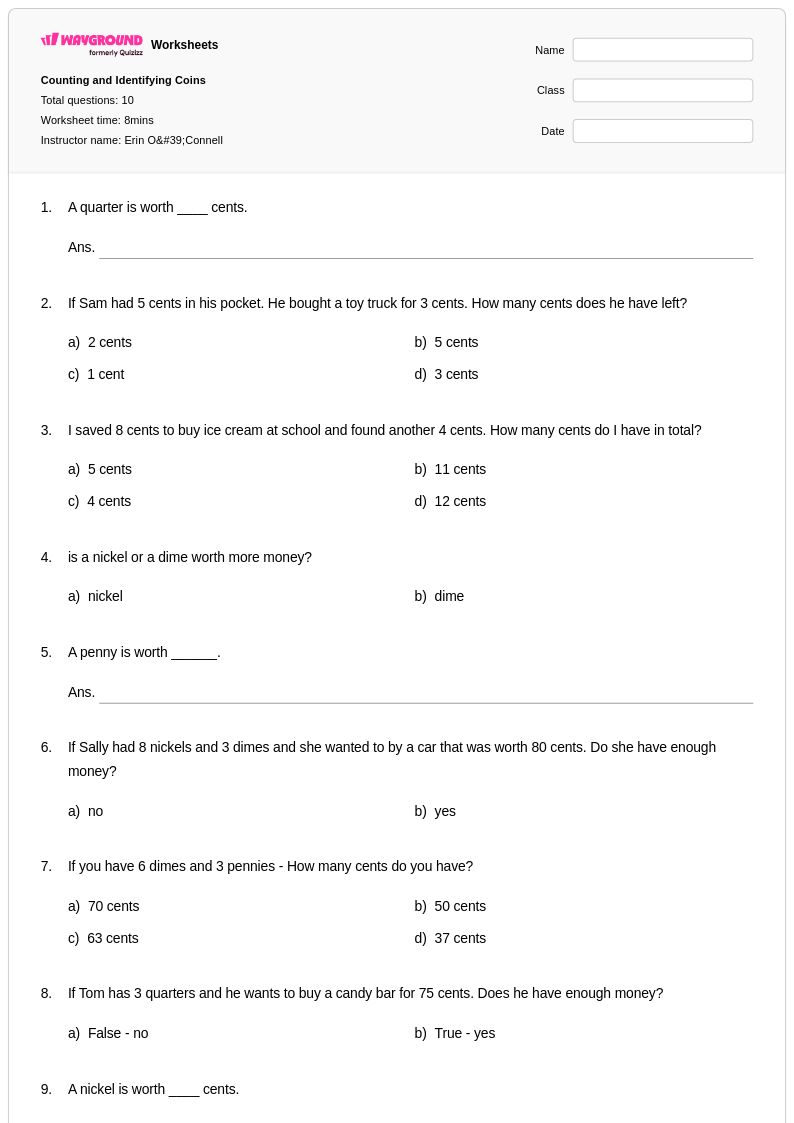
10 Q
2nd
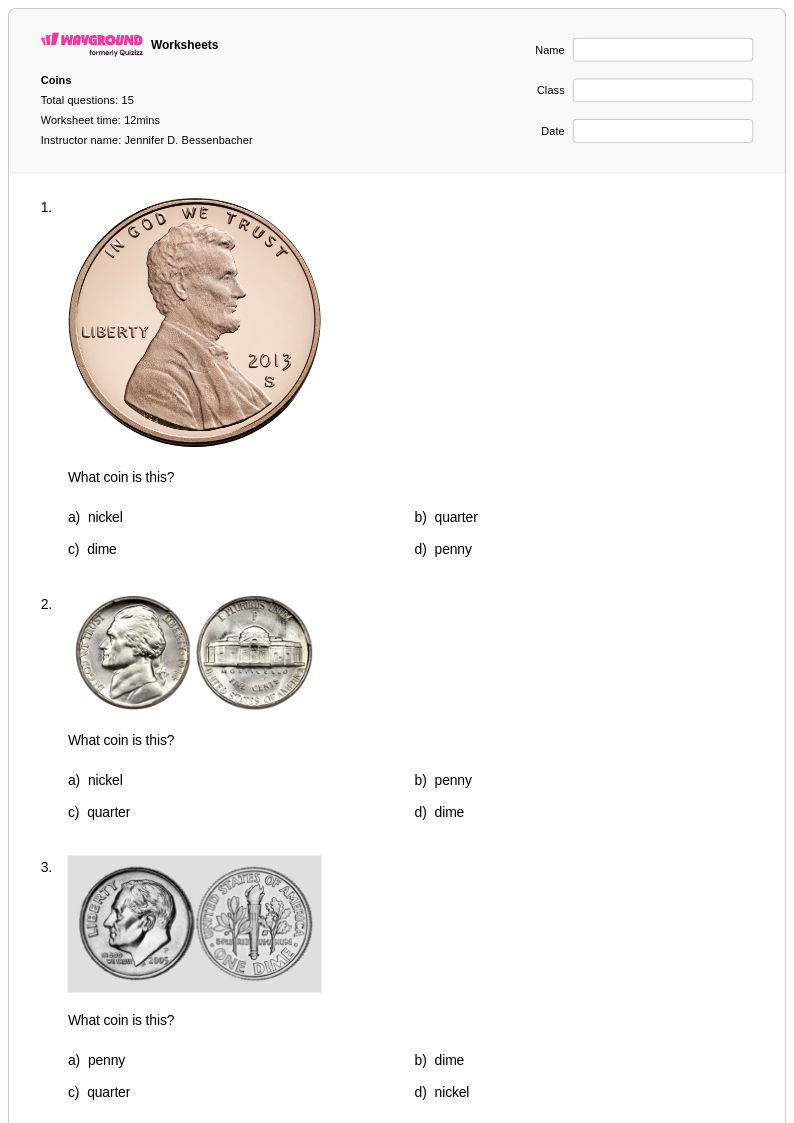
15 Q
2nd
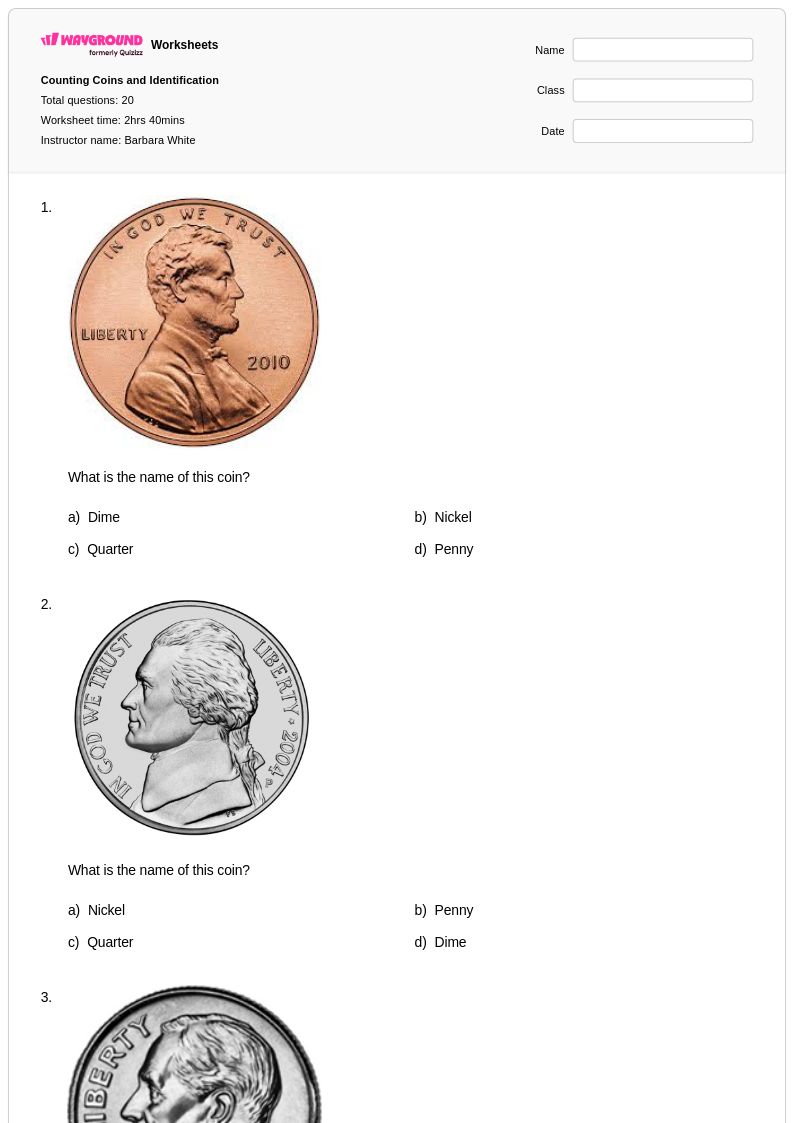
20 Q
2nd
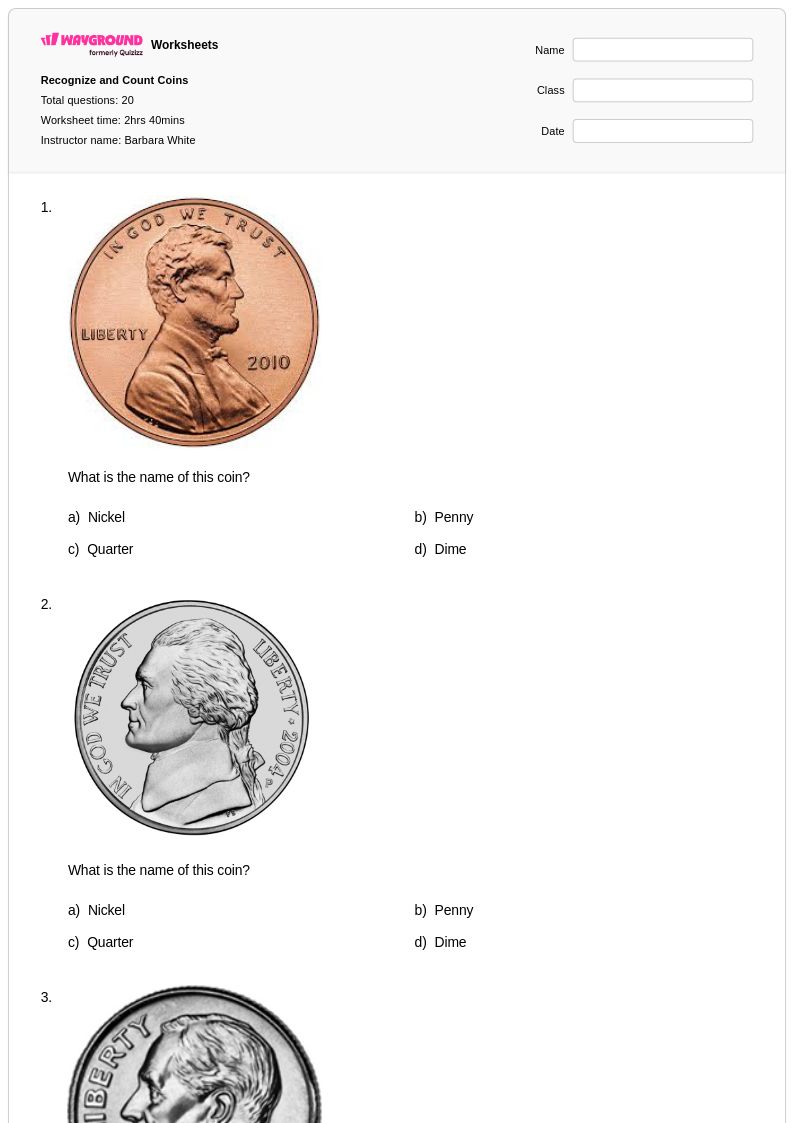
20 Q
2nd
Explore Dimes Worksheets by Grades
Explore Other Subject Worksheets for year 2
Explore printable Dimes worksheets for Year 2
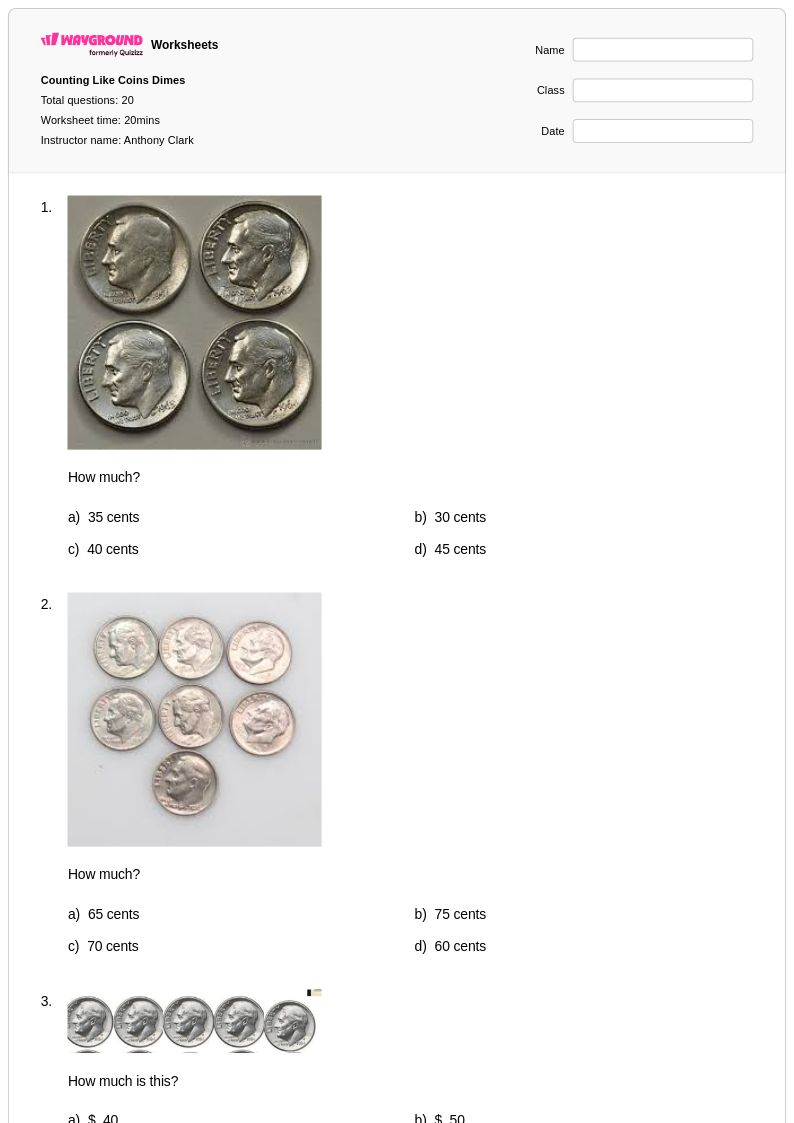
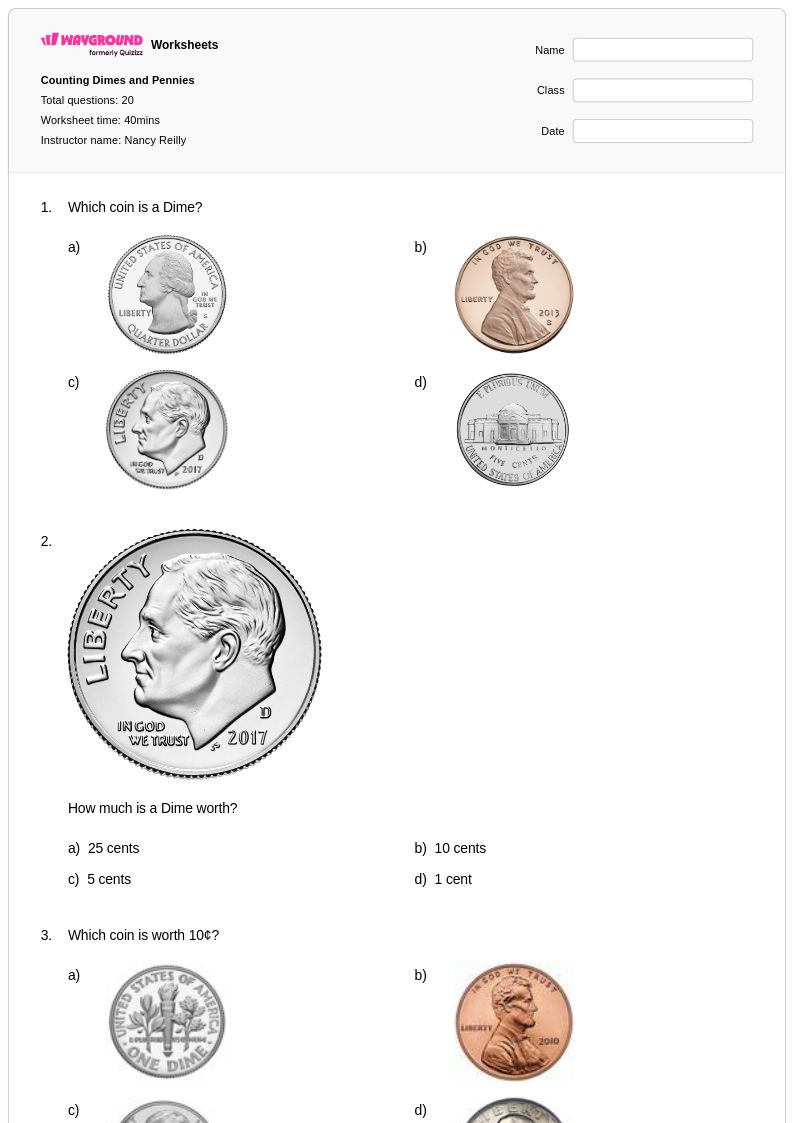
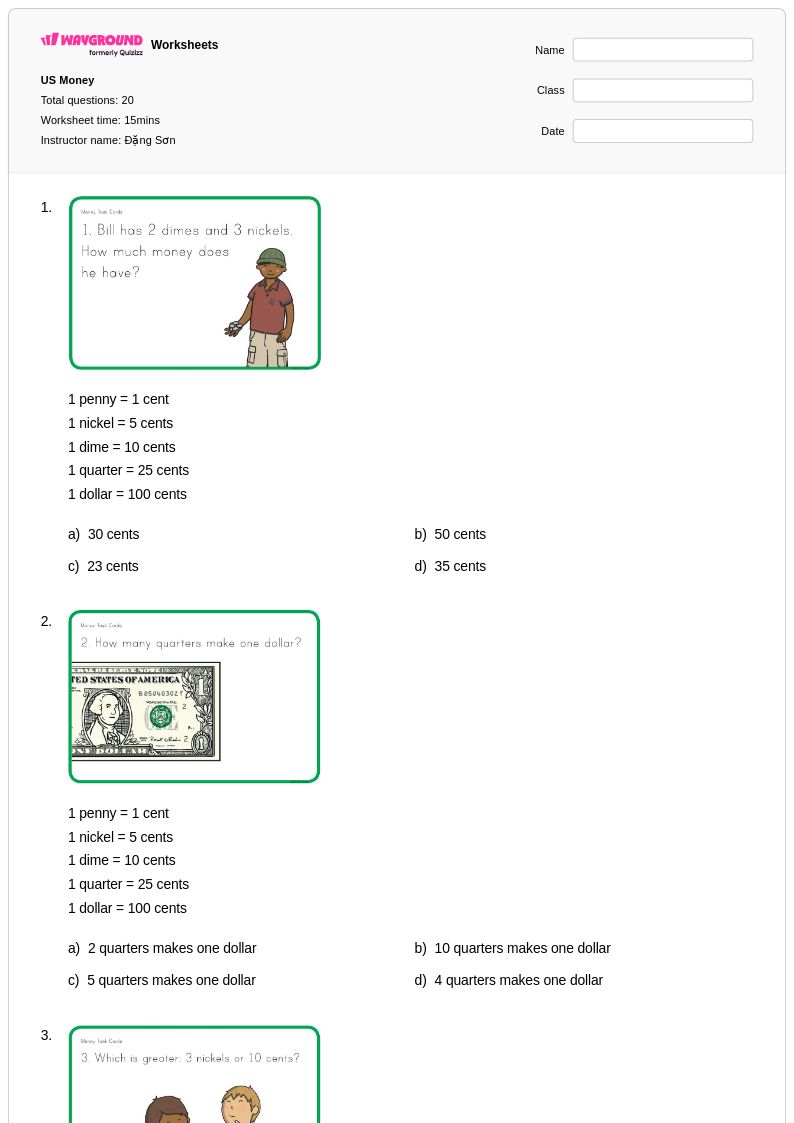
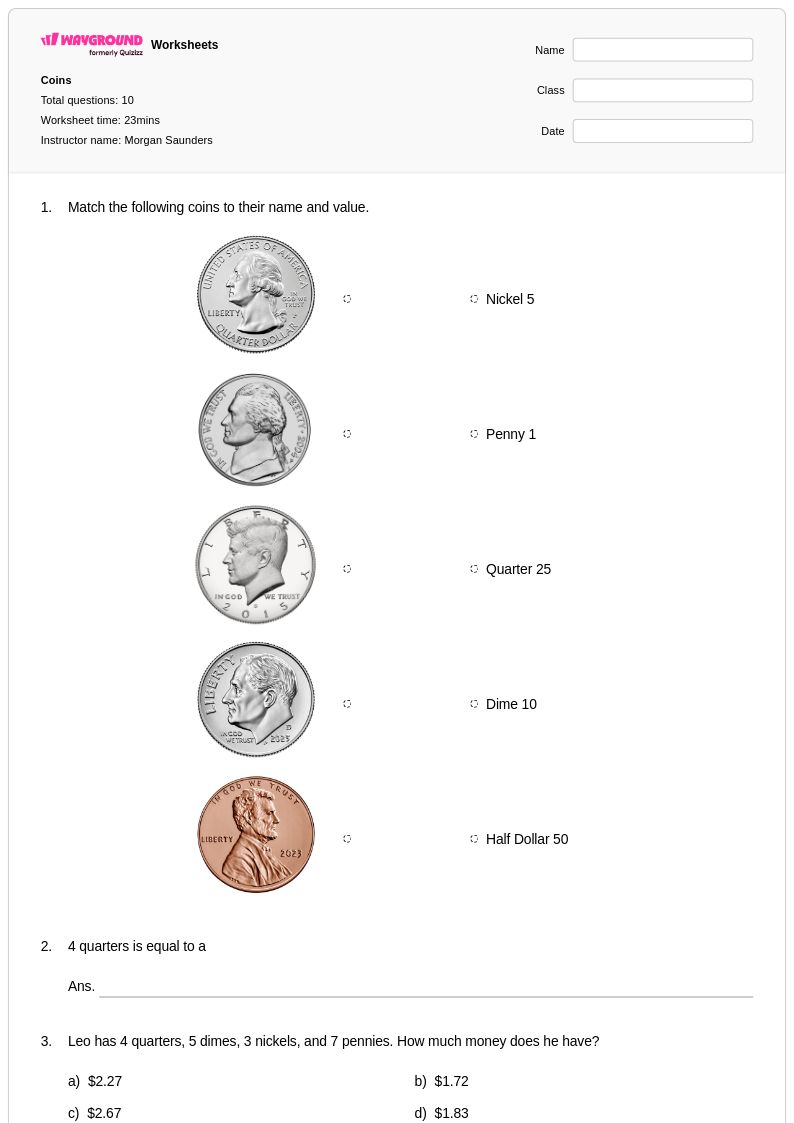
Dimes worksheets for Year 2 students available through Wayground (formerly Quizizz) provide essential practice in coin identification and money recognition skills that form the foundation of mathematical literacy. These comprehensive printables focus specifically on helping young learners distinguish dimes from other coins through visual recognition exercises, value identification activities, and hands-on counting practice problems. Each worksheet includes detailed answer key materials that enable both independent learning and guided instruction, while the free pdf format ensures easy classroom distribution and home practice opportunities. Students develop critical skills in observing coin characteristics, understanding the ten-cent value of dimes, and building confidence with money-related mathematics through structured, age-appropriate exercises.
Wayground (formerly Quizizz) empowers teachers with access to millions of educator-created dime identification resources that streamline lesson planning and support diverse learning needs in Year 2 mathematics instruction. The platform's robust search and filtering capabilities allow educators to quickly locate worksheets that align with specific curriculum standards and individual student requirements, while differentiation tools enable seamless customization for varying skill levels within the classroom. Teachers benefit from flexible formatting options, including both printable and digital pdf versions, making these resources ideal for traditional classroom activities, remote learning environments, and differentiated instruction approaches. This extensive collection supports effective remediation for struggling learners, provides enrichment opportunities for advanced students, and delivers consistent skill practice that reinforces dime recognition concepts across multiple learning contexts.
FAQs
How do I teach dimes in second grade?
What exercises help second graders practice working with dimes?
What mistakes do second graders make with dimes?
How do I use these Grade 2 dimes worksheets?
Is working with dimes part of Common Core math for Grade 2?
How can I support diverse learners with dimes practice in Grade 2?