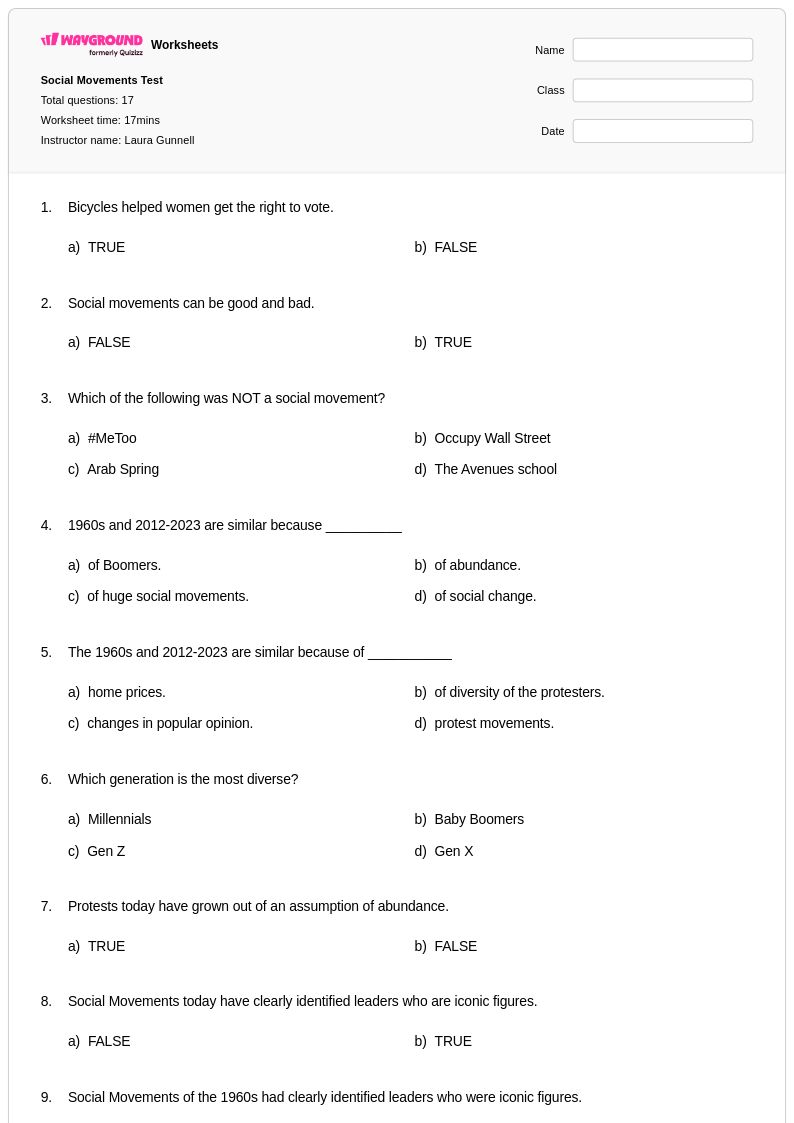
Enhance Year 9 students' understanding of diversity with Wayground's comprehensive collection of free Social Studies worksheets, featuring engaging printables, practice problems, and complete answer keys in convenient PDF format.
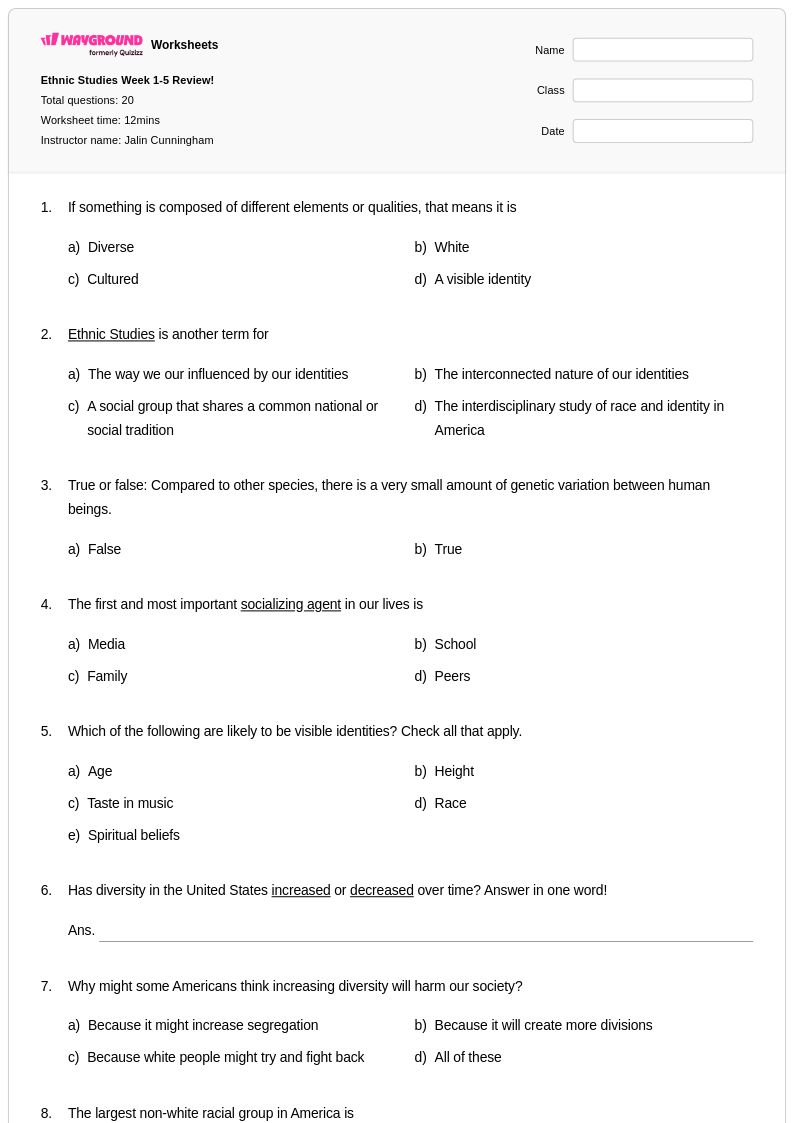
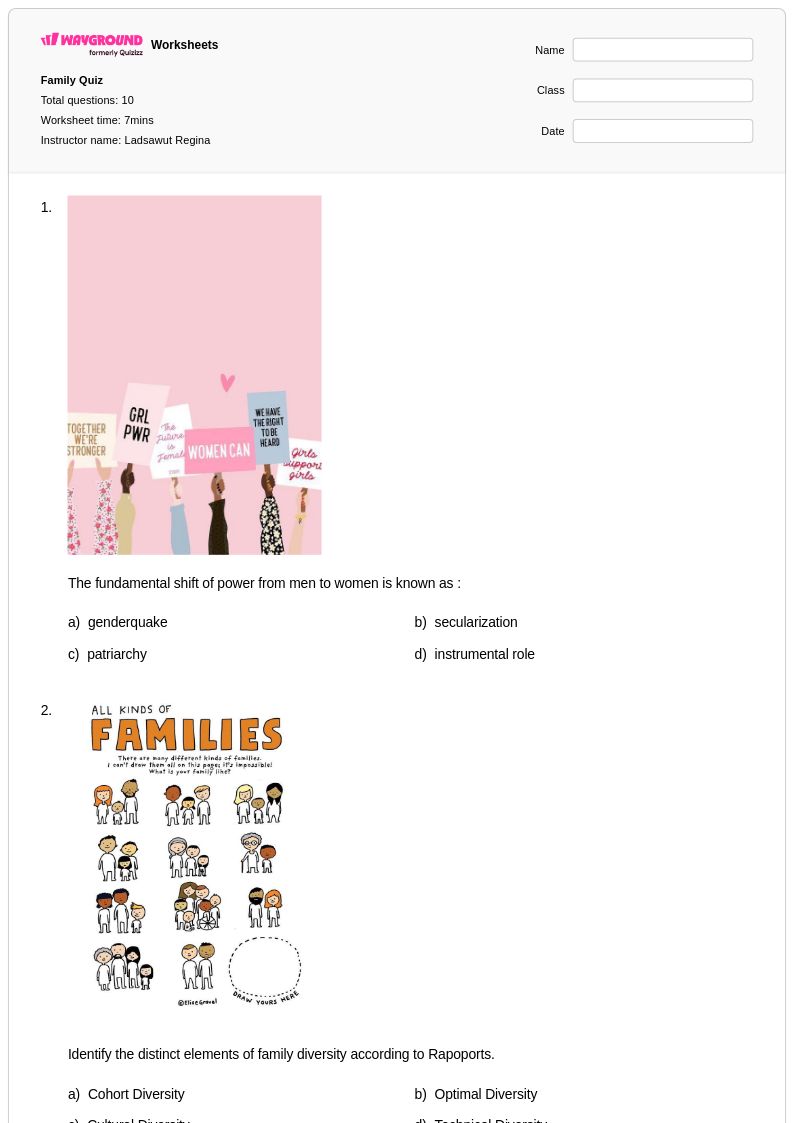
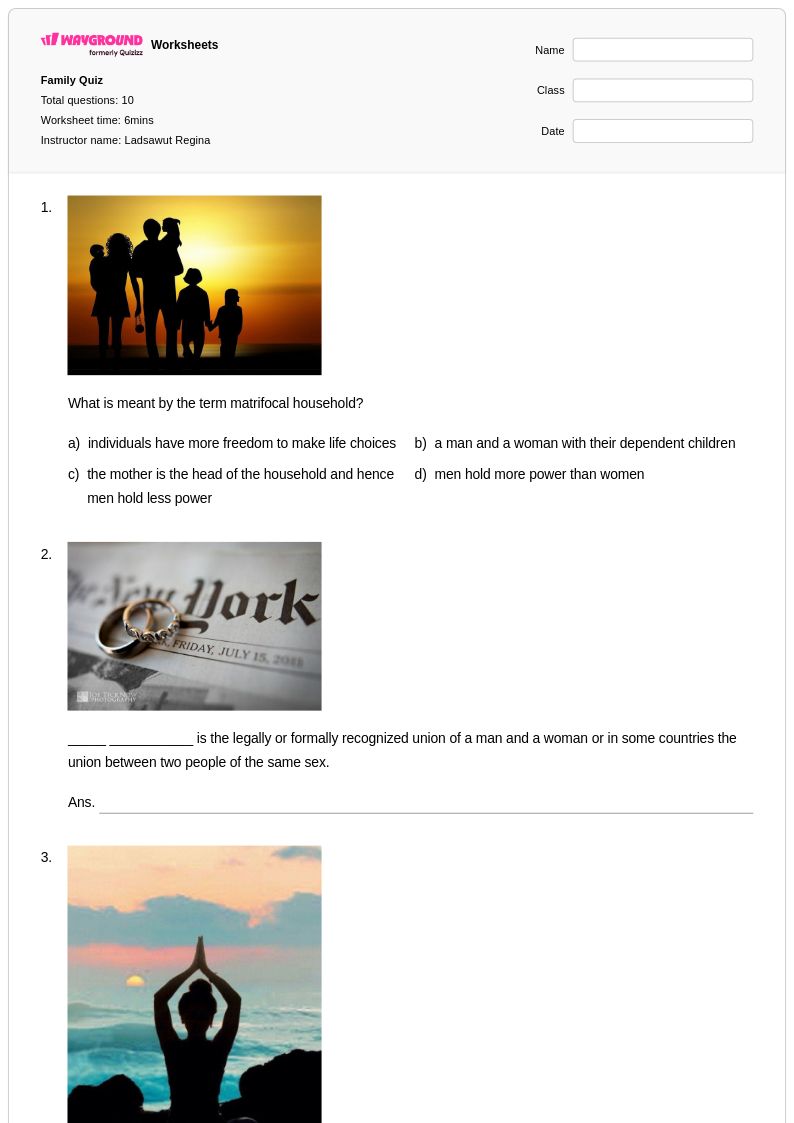
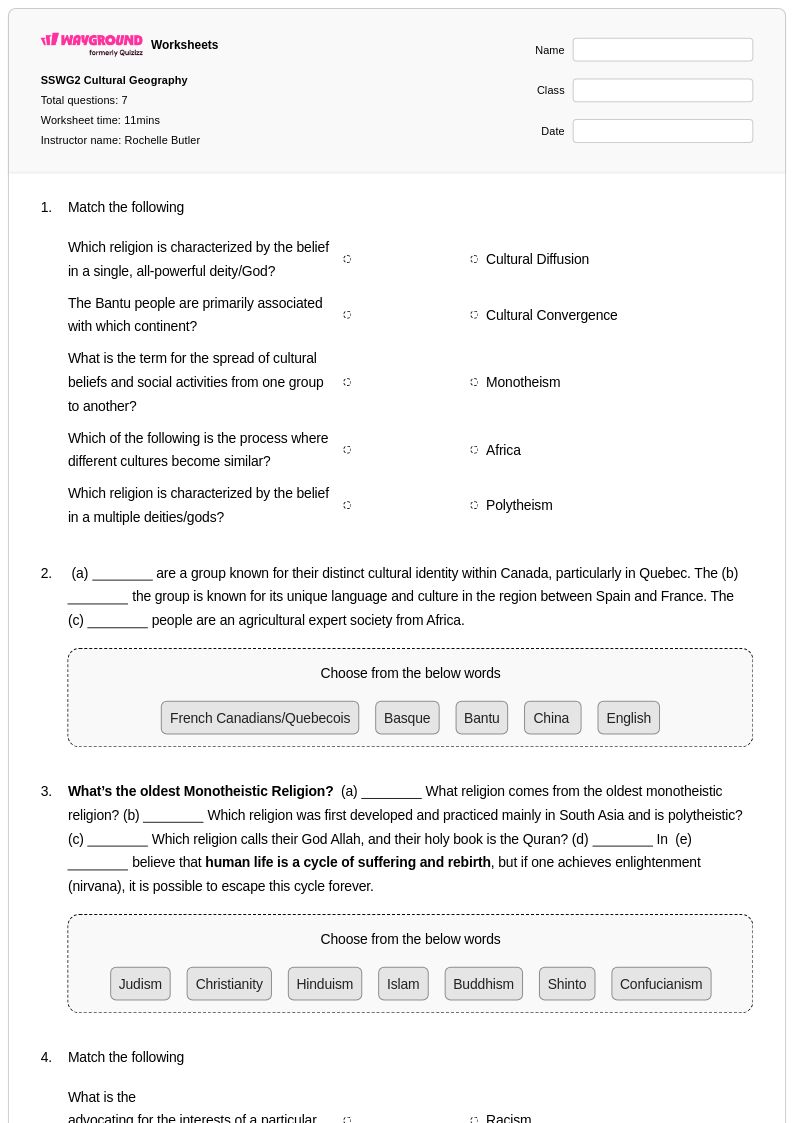
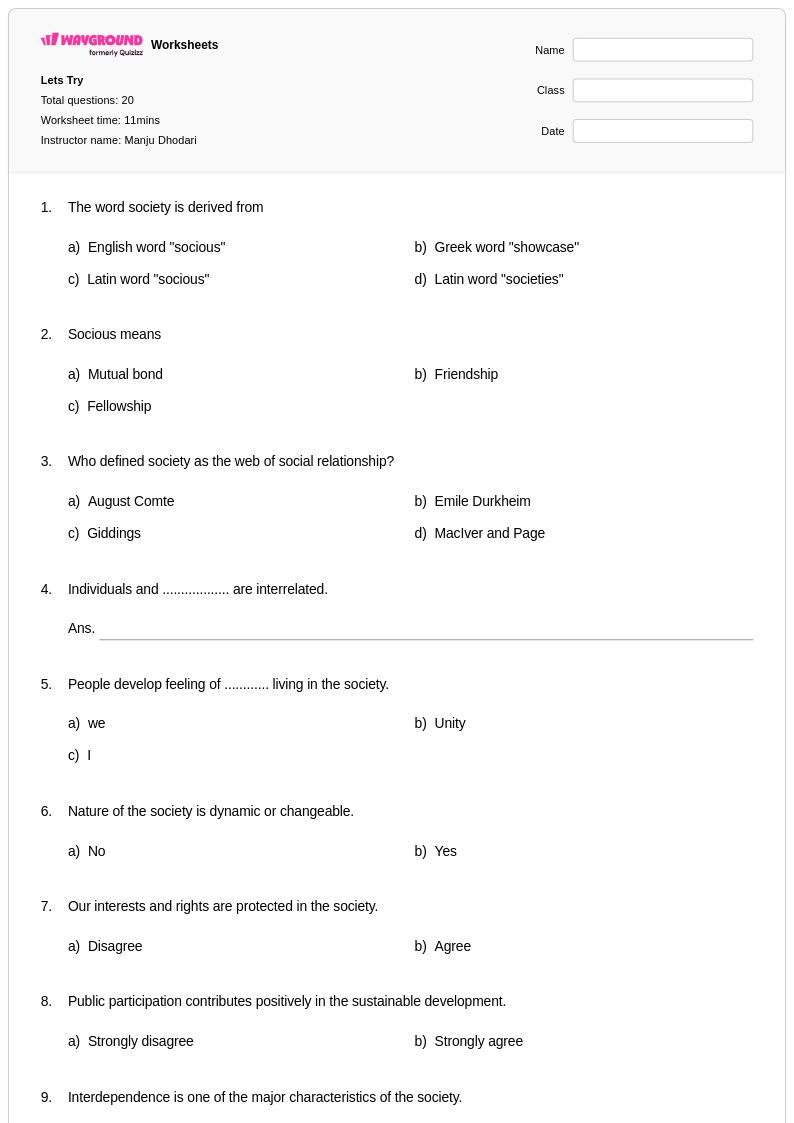
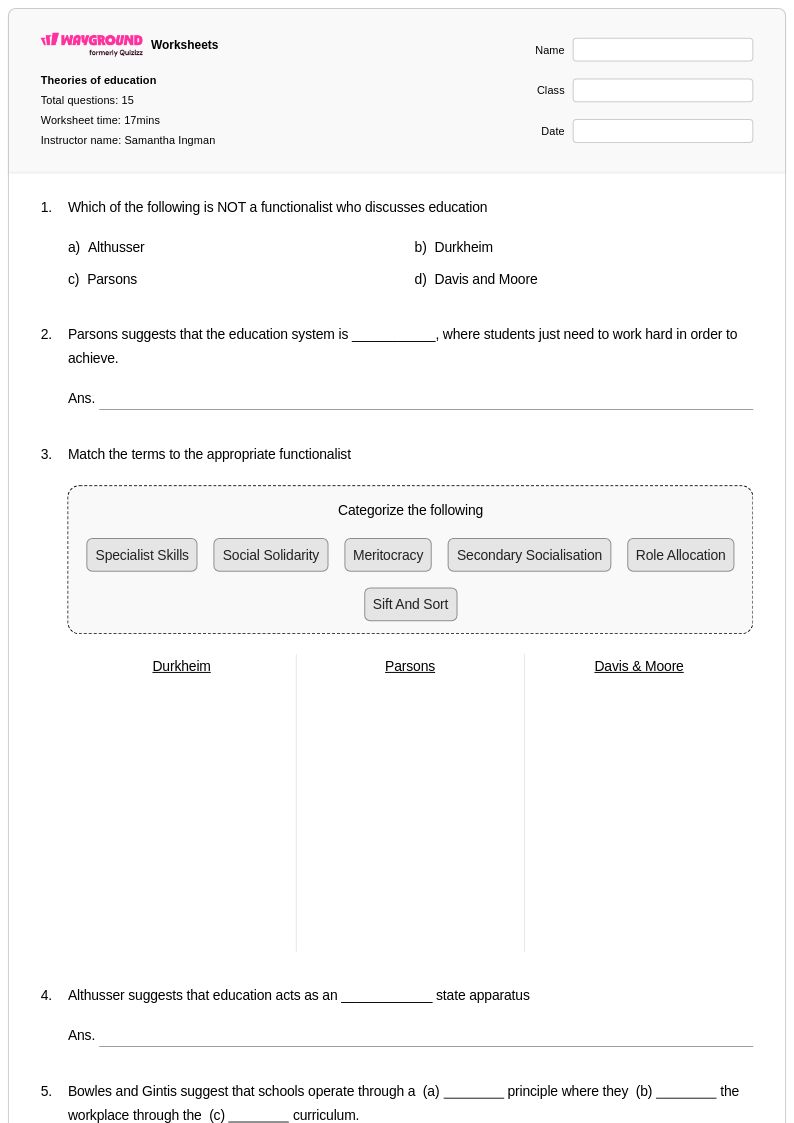
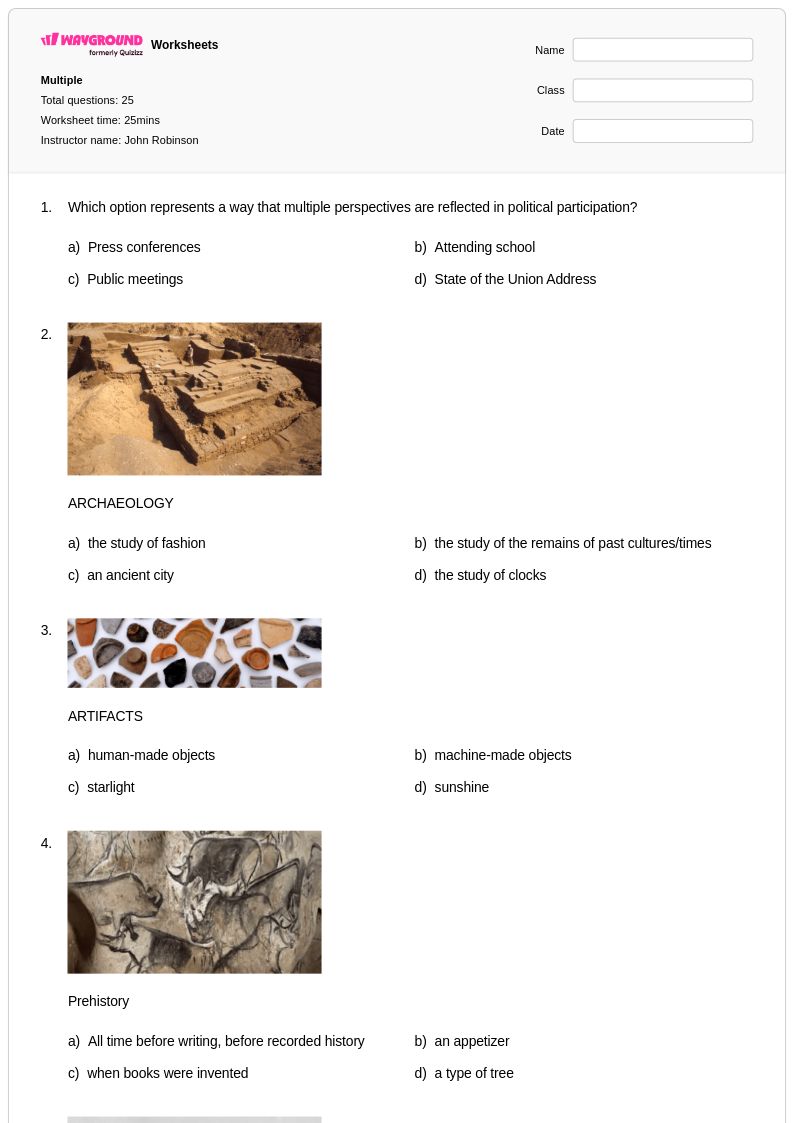
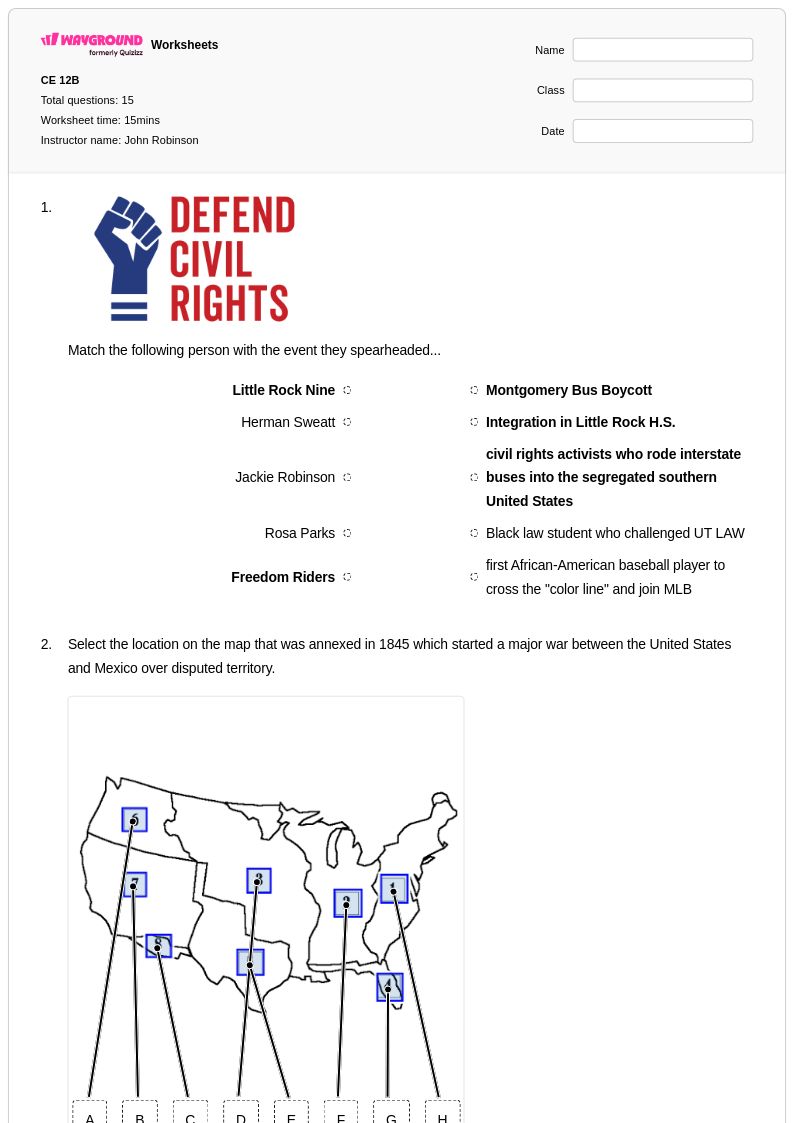
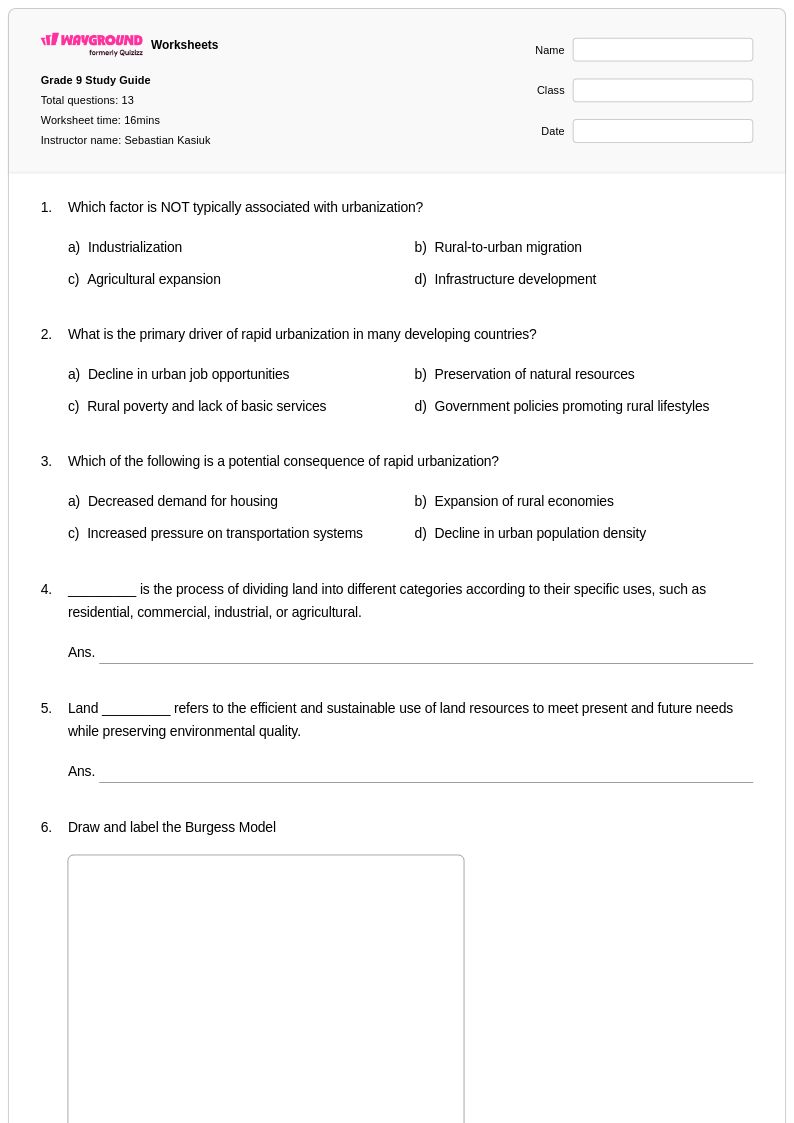
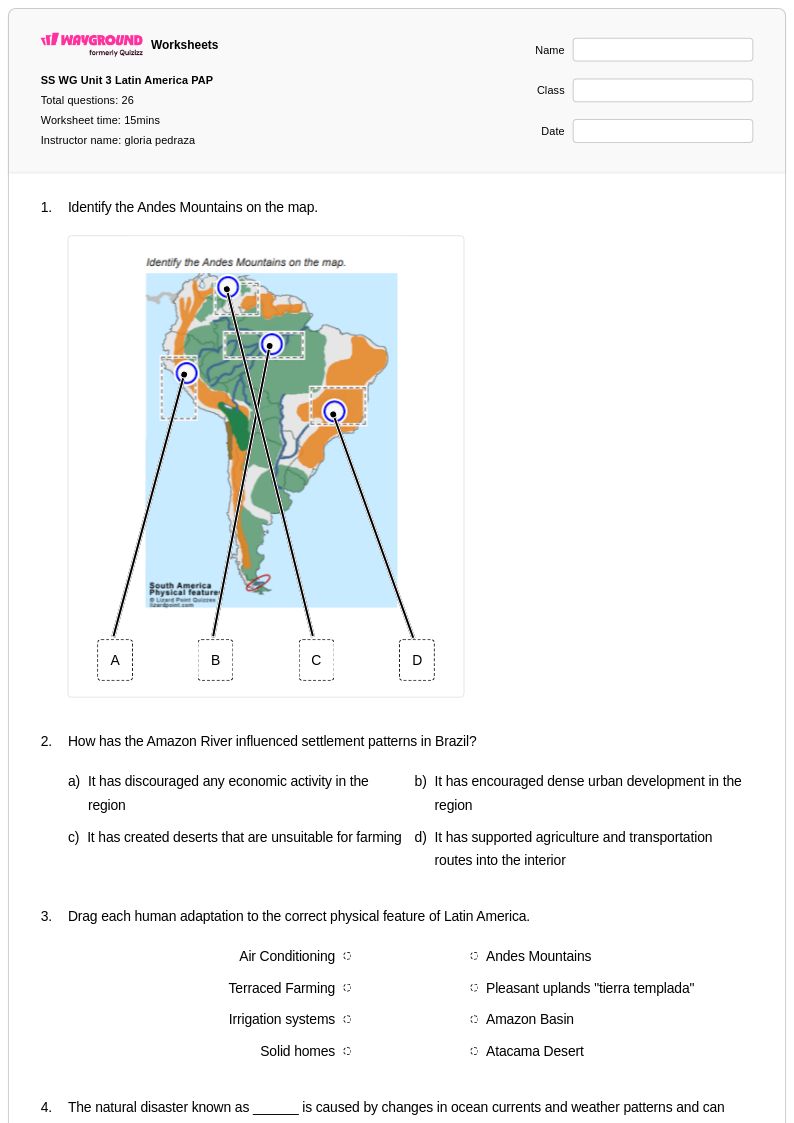
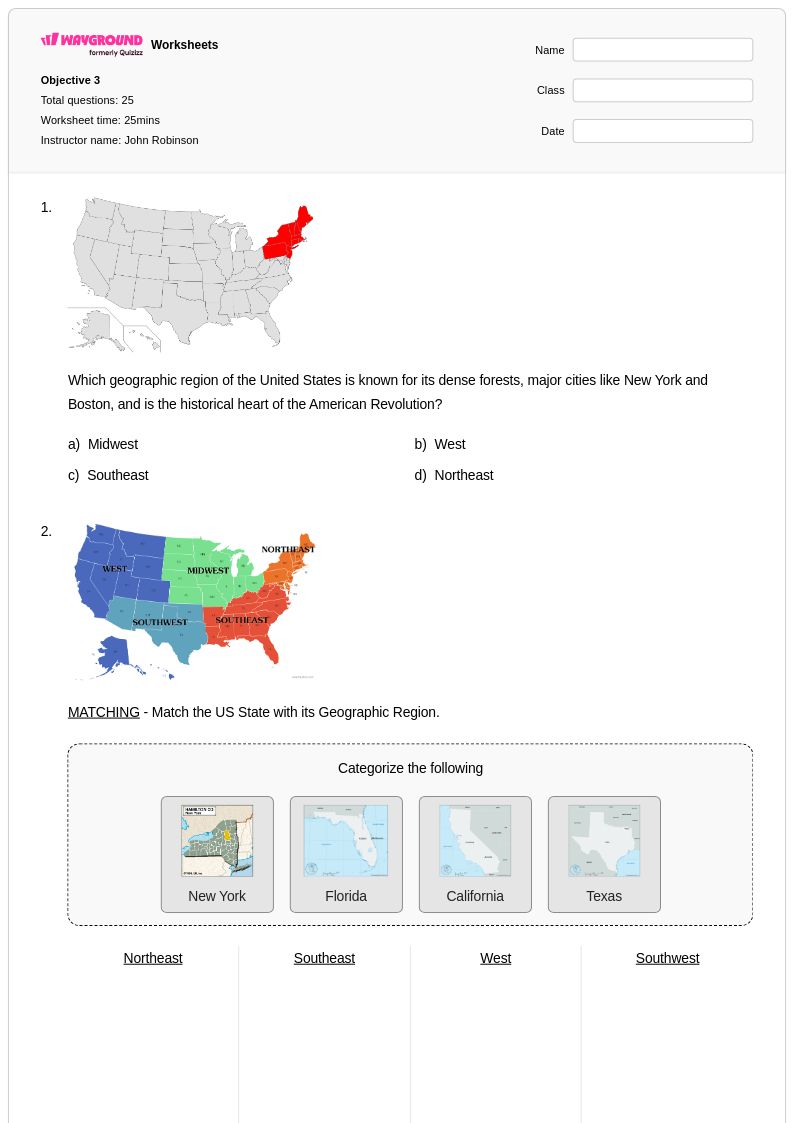
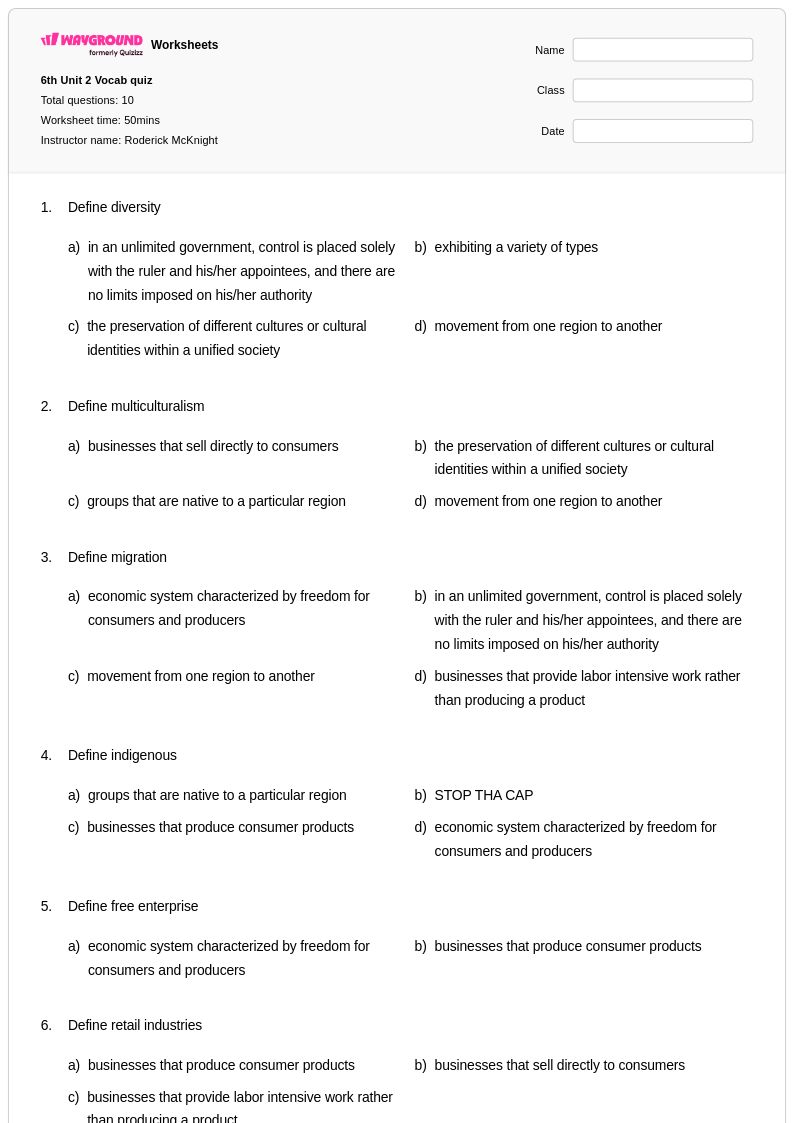
Diversity worksheets for Year 9 students available through Wayground (formerly Quizizz) provide comprehensive exploration of cultural variations, ethnic backgrounds, and multicultural perspectives within communities. These educational resources strengthen critical thinking skills by engaging students in analyzing different cultural practices, examining the benefits of diverse societies, and understanding how various ethnic groups contribute to community development. The worksheets include practice problems that challenge students to evaluate real-world scenarios involving cultural interactions, compare traditional customs across different populations, and assess the impact of immigration on local communities. Teachers can access complete answer key materials and free printable pdf resources that cover topics ranging from religious diversity and linguistic variations to socioeconomic differences and generational perspectives within modern societies.
Wayground (formerly Quizizz) supports educators with an extensive collection of teacher-created diversity worksheets, drawing from millions of educational resources specifically designed for Year 9 Social Studies instruction. The platform's advanced search and filtering capabilities allow teachers to locate materials that align with specific curriculum standards while providing differentiation tools to accommodate varying student ability levels. These customizable worksheets are available in both printable and digital pdf formats, enabling flexible implementation for classroom instruction, homework assignments, or independent study sessions. Teachers utilize these comprehensive resources for lesson planning, targeted remediation of cultural awareness concepts, enrichment activities for advanced learners, and ongoing skill practice that helps students develop nuanced understanding of how diversity shapes community identity and social dynamics.
FAQs
How do I teach diversity and cultural appreciation in the classroom?
Teaching diversity effectively means moving beyond surface-level celebrations of holidays or food and into structured exploration of cultural values, immigration experiences, religious traditions, and family structures. Start with students' own identities and expand outward to examine how different communities contribute to shared society. Primary sources, personal narratives, and comparative activities help students build genuine empathy rather than just awareness.
What topics should diversity worksheets cover to build real cultural competency?
Effective diversity worksheets should address immigration patterns, religious celebrations, language diversity, and family structures across different societies — not just surface facts, but the values and perspectives that shape each community. Worksheets that ask students to compare, analyze, and reflect on cultural differences build deeper understanding than simple identification activities. Topics connecting local communities to global contexts are especially effective at making diversity relevant to students' lived experience.
What common misconceptions do students have when learning about diversity?
A frequent misconception is that diversity means difference from a single 'default' culture, which reinforces the idea that some groups are normal and others are exotic. Students also tend to overgeneralize, treating all members of a cultural group as identical rather than recognizing individual variation within communities. Structured activities that examine intragroup diversity and challenge assumptions about what a culture 'looks like' help correct these patterns early.
How can I use diversity worksheets to support students with different learning needs?
Wayground's built-in accommodation tools allow teachers to assign Read Aloud support so that question text and content are audio-read for students who need it, and font sizes can be adjusted through Reading Mode for accessibility. Reduced answer choices can be enabled for individual students to lower cognitive load without singling them out in front of peers. These settings are saved per student and carry across future sessions, making differentiation practical for a topic like diversity that often involves complex vocabulary and abstract social concepts.
How do I use Wayground's diversity worksheets in my classroom?
Wayground's diversity worksheets are available as printable PDFs for traditional classroom use and in digital formats for technology-integrated environments, including the option to host them as a quiz directly on Wayground. Teachers can assign them as independent practice, small-group discussion starters, or formative assessments depending on the instructional goal. Each worksheet includes a complete answer key, so grading and feedback are straightforward whether the activity is completed on paper or on-screen.
How do diversity lessons connect to social studies standards?
Diversity is a core strand in most K-12 social studies frameworks, appearing in standards related to culture, civic identity, geography, and historical migration. Worksheets that address immigration patterns, religious traditions, and community structures align directly with NCSS themes such as Culture and Individual Development and Identity. Selecting materials that reference specific cultural practices and historical contexts — rather than abstract values — makes standard alignment more precise and instruction more effective.