Free Printable Divisibility Test Worksheets for Year 5
Year 5 divisibility test worksheets help students master rules for determining if numbers are divisible by 2, 3, 5, and 10 through engaging printables, practice problems, and comprehensive answer keys.
Explore printable Divisibility Test worksheets for Year 5
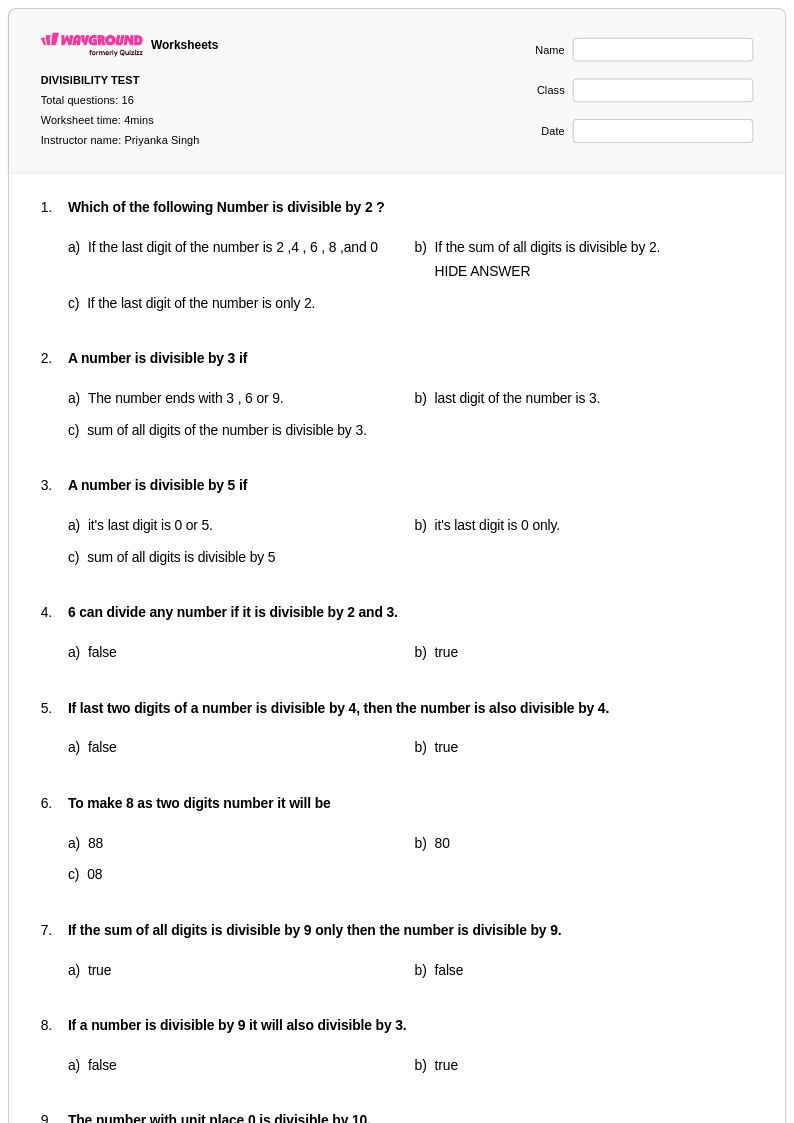
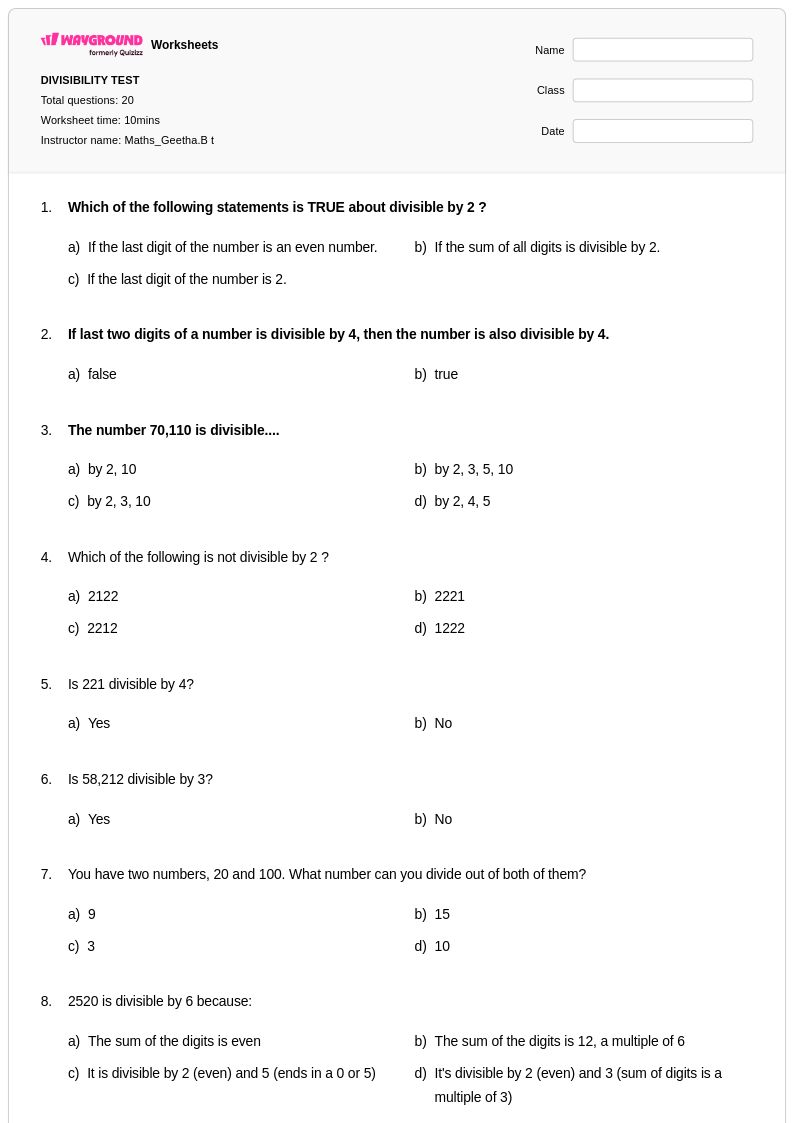
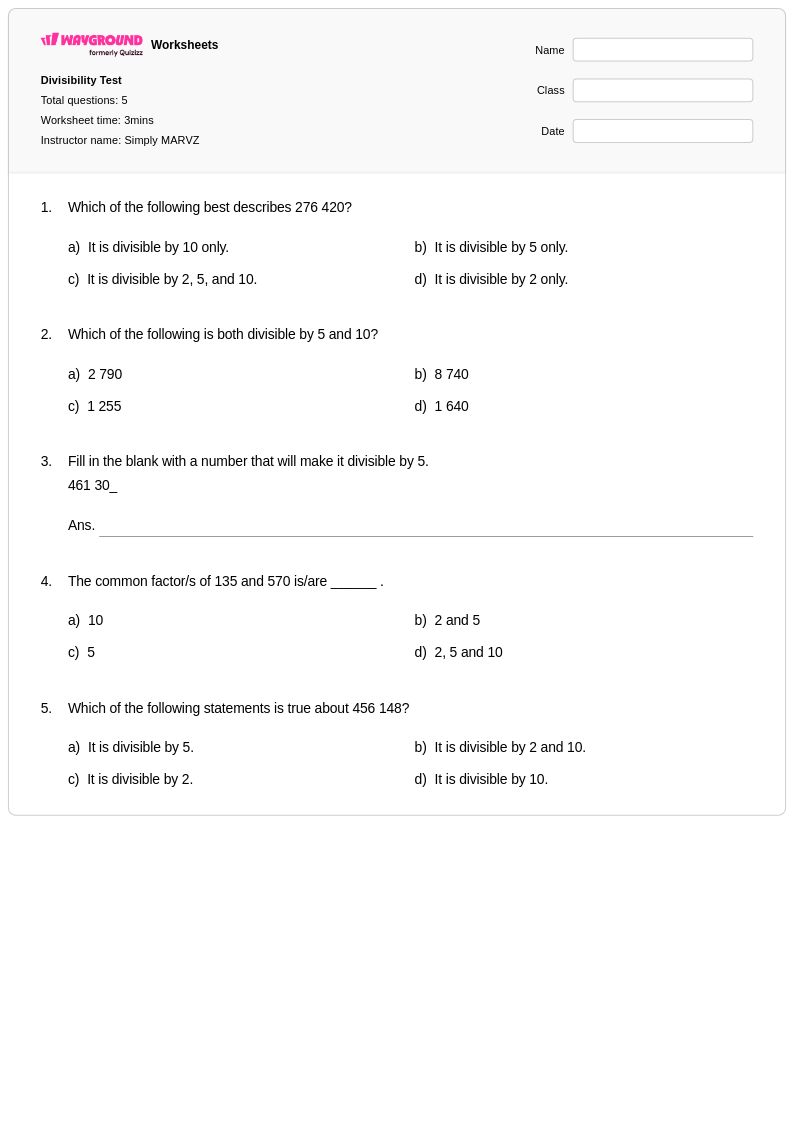
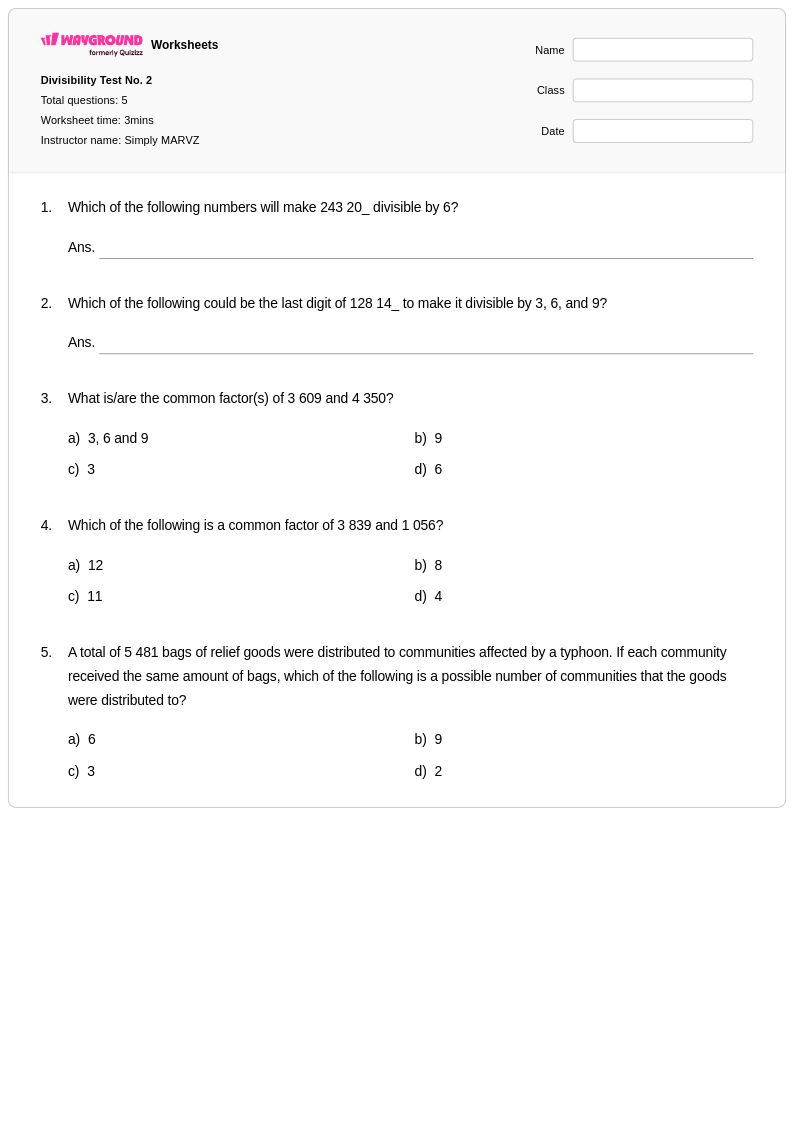
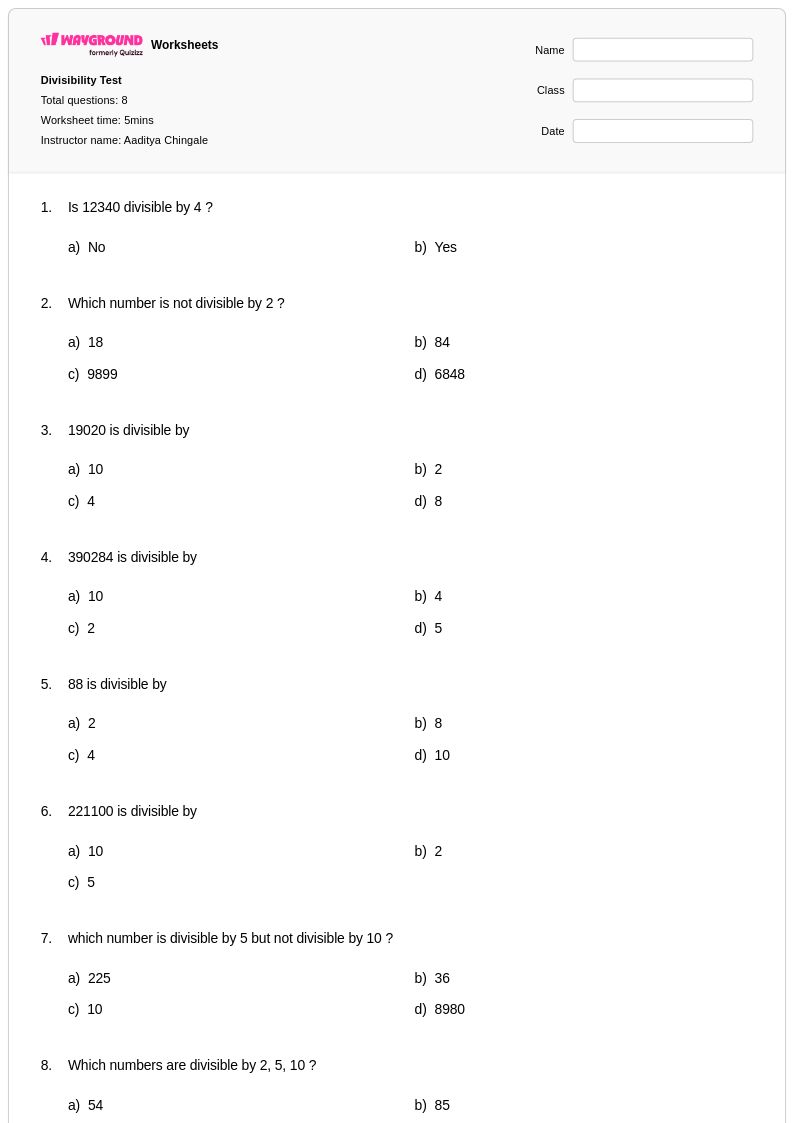
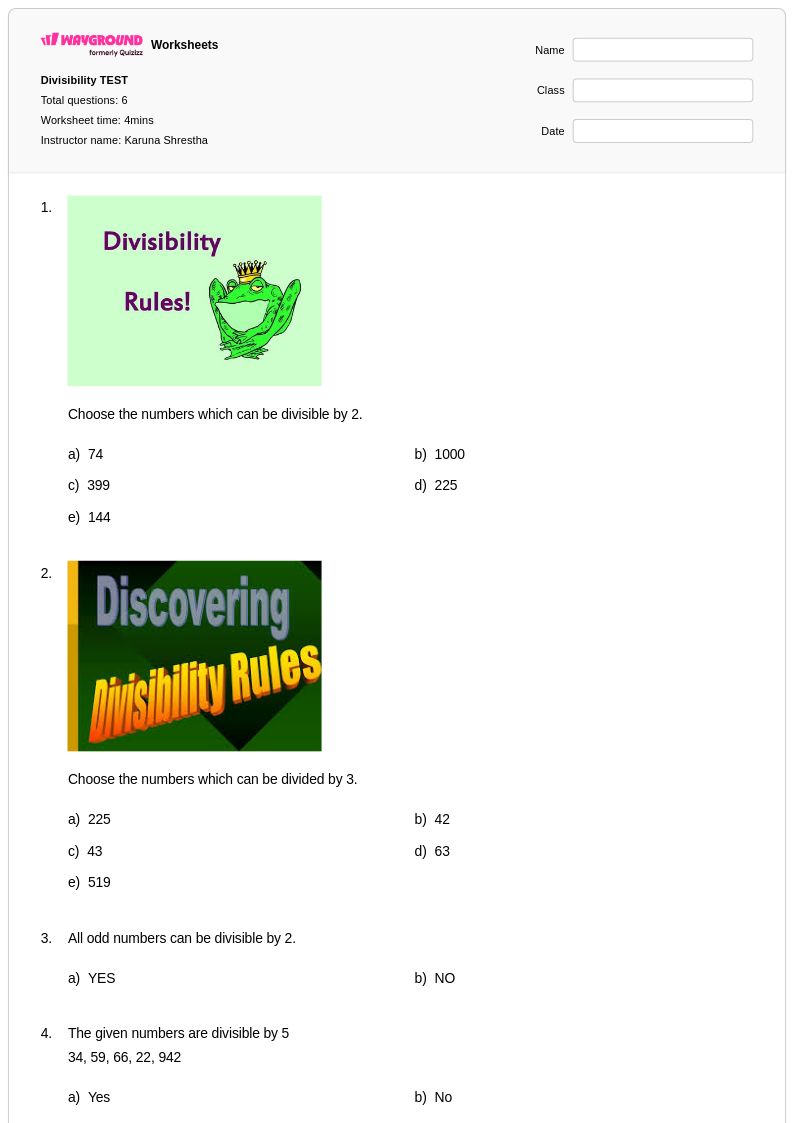
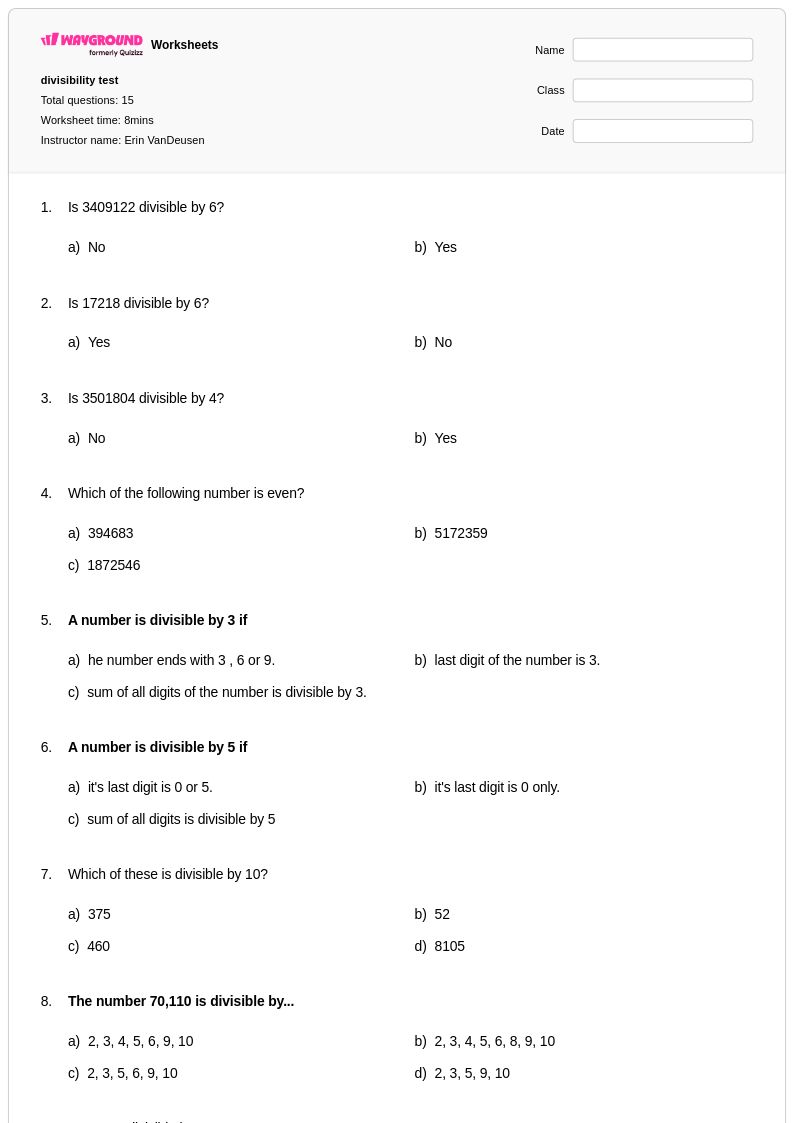
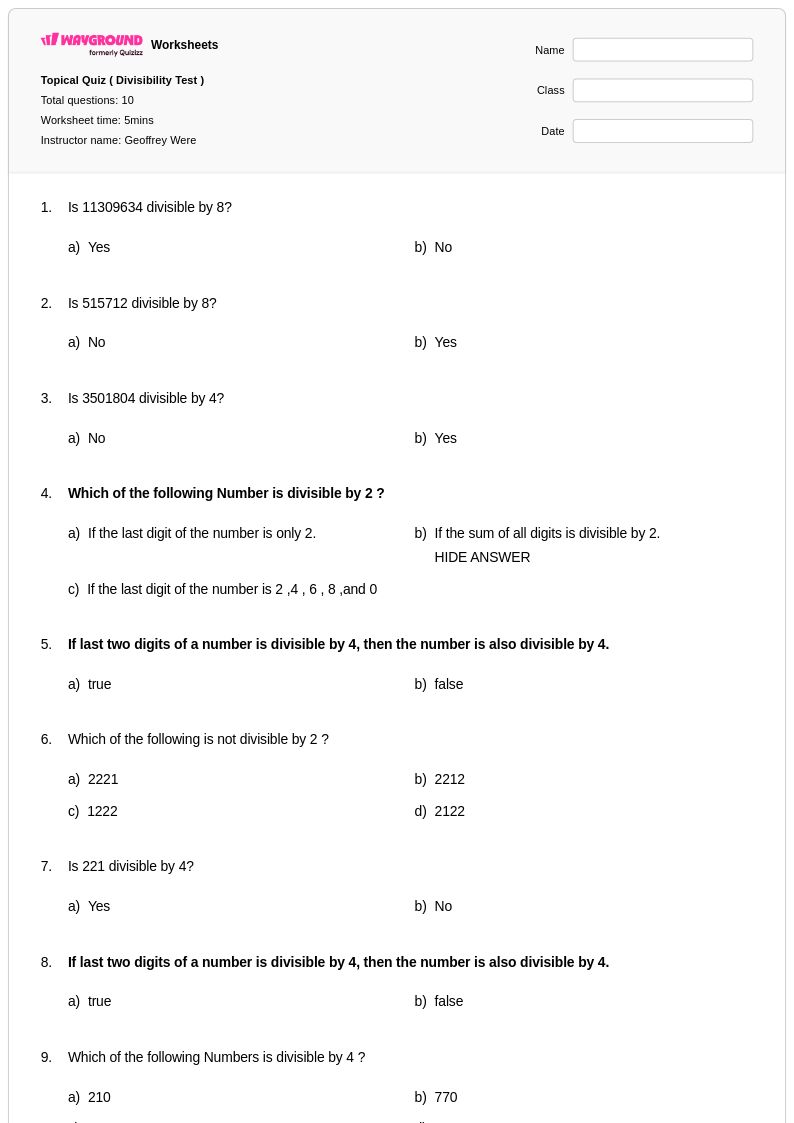
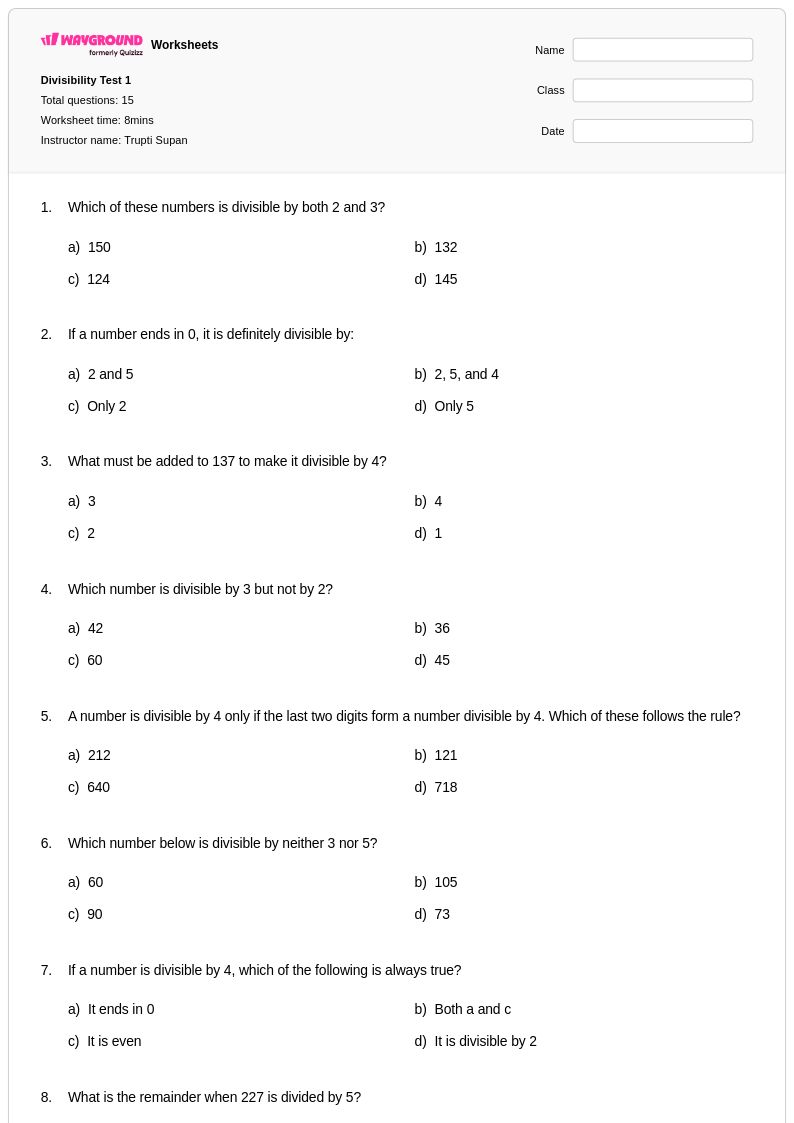
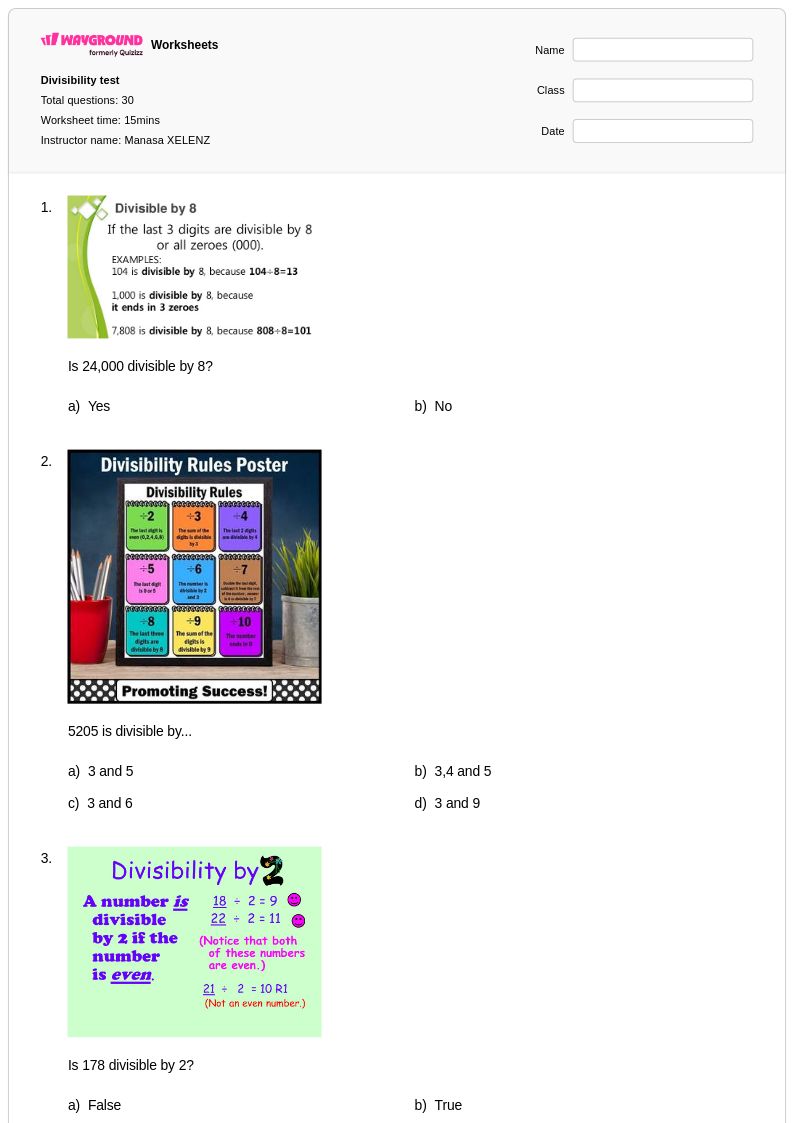
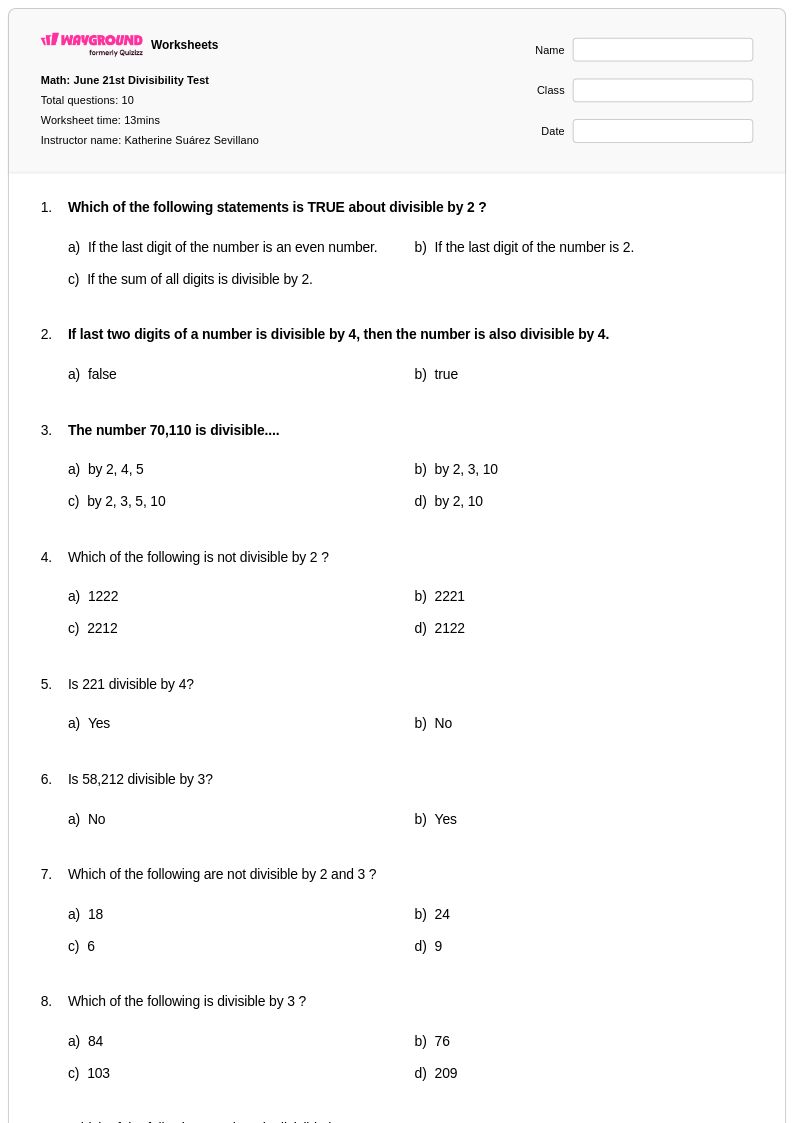
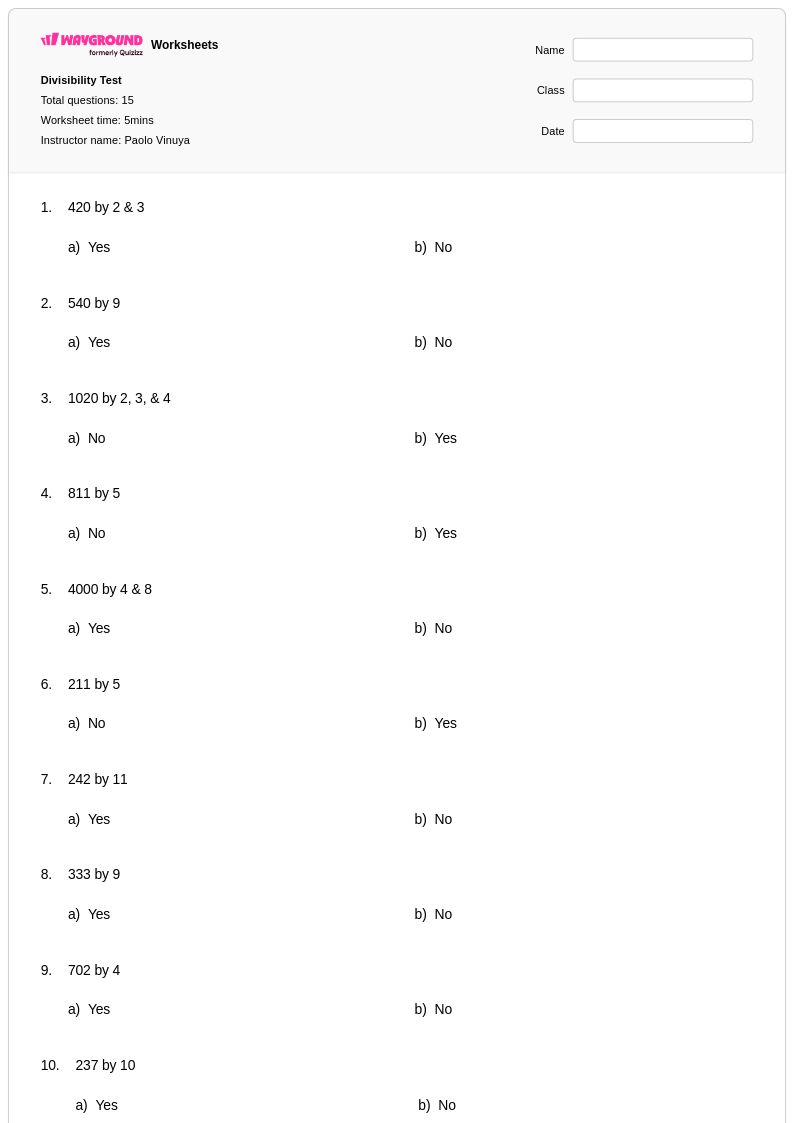
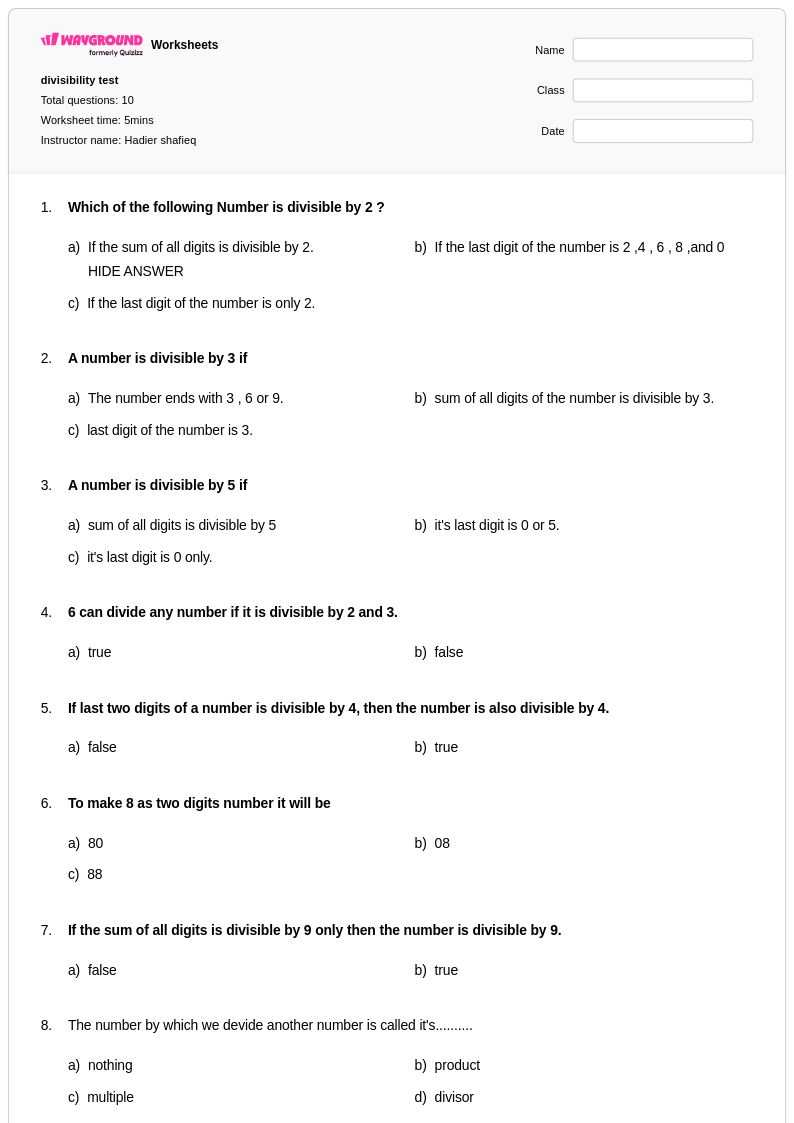
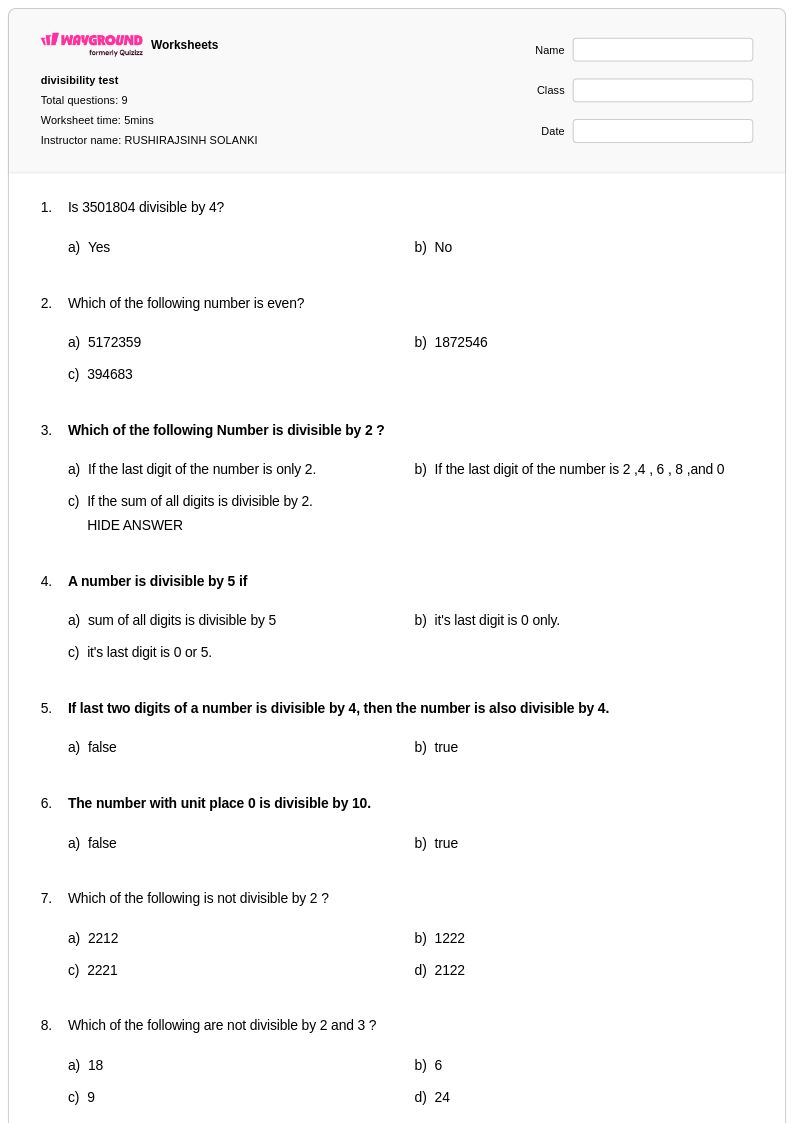
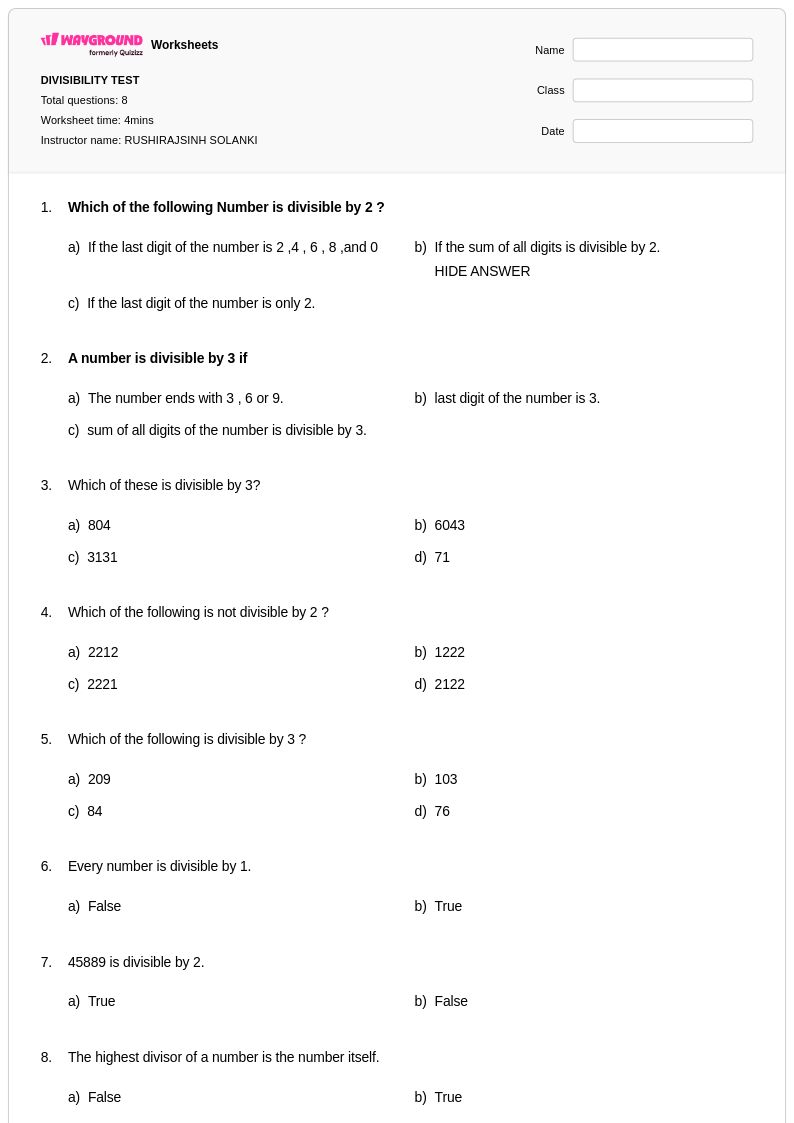
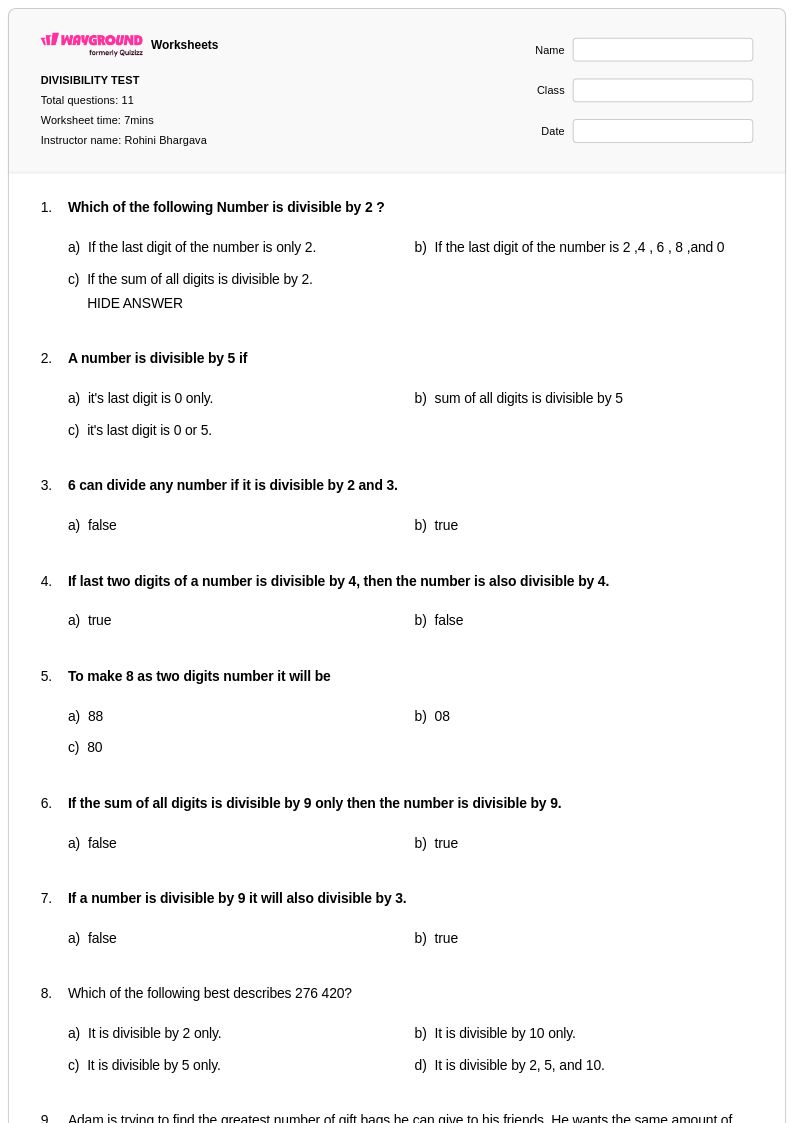
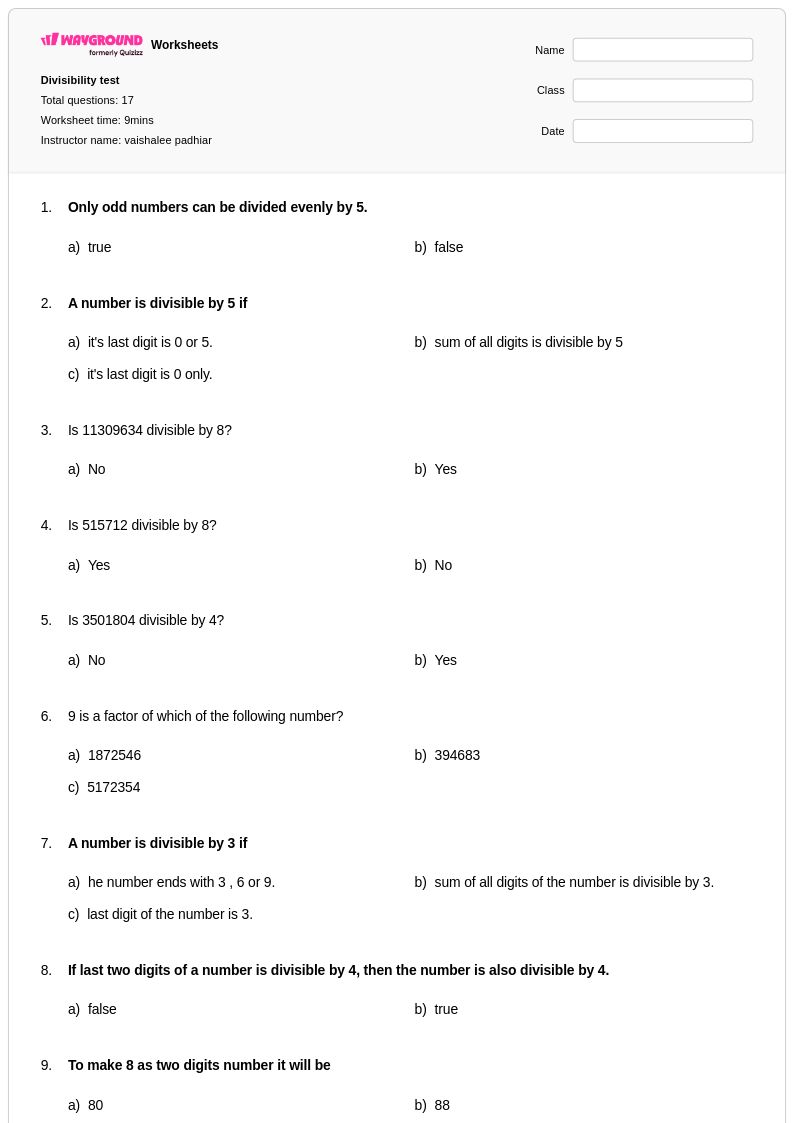
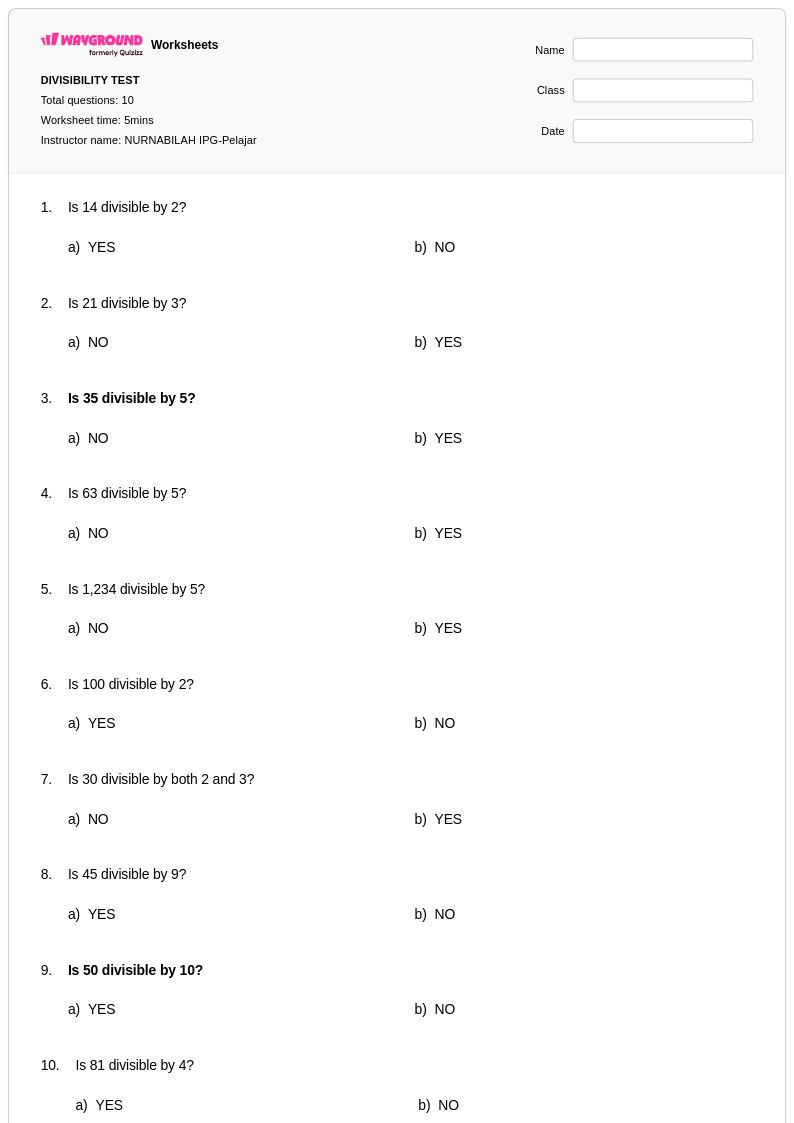
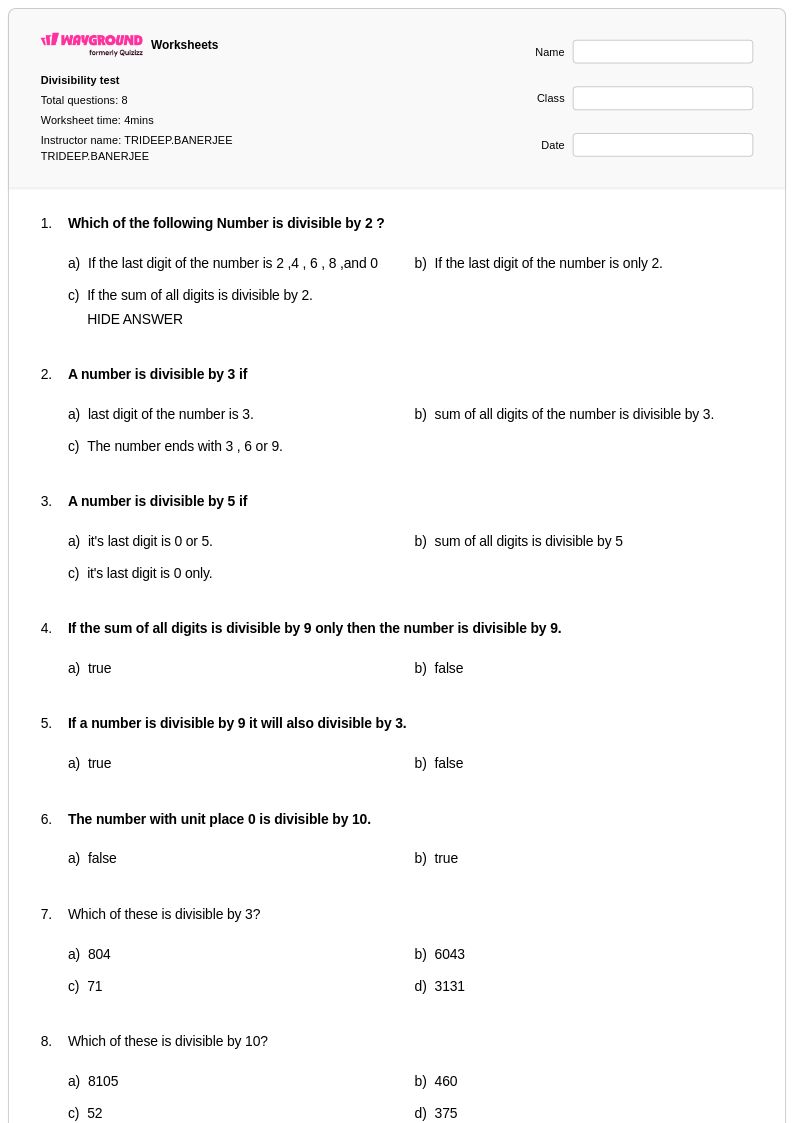
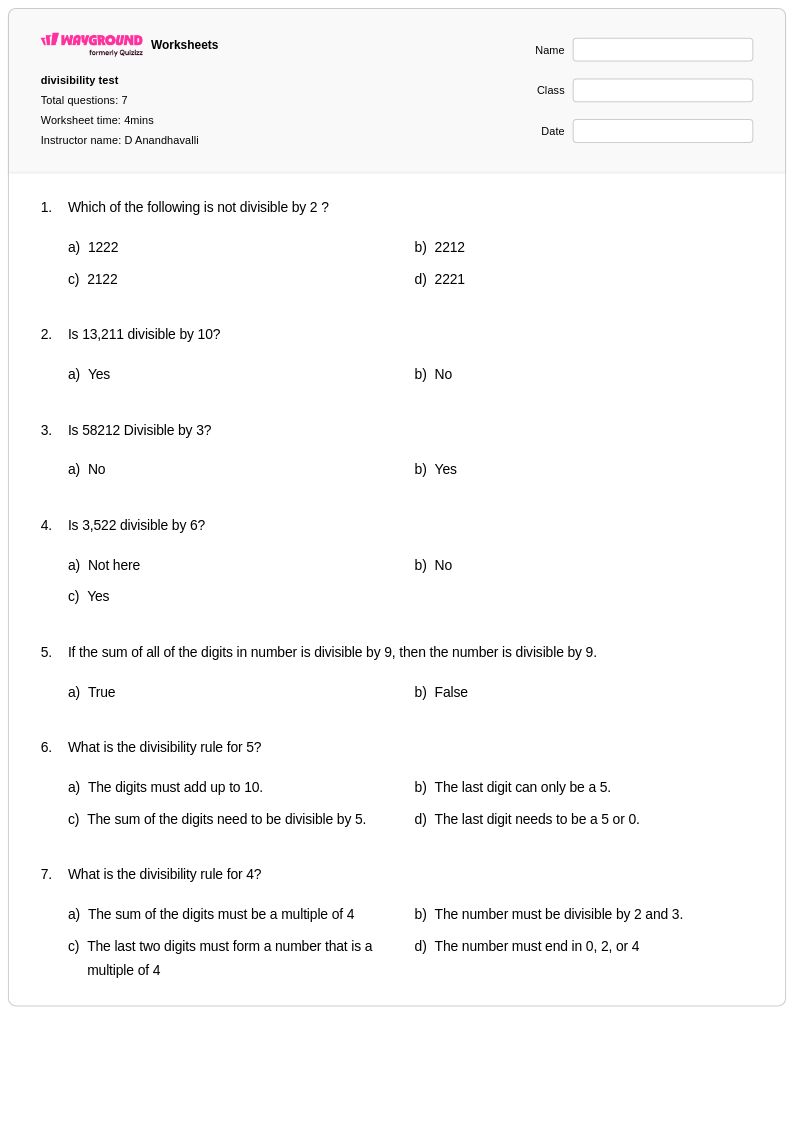
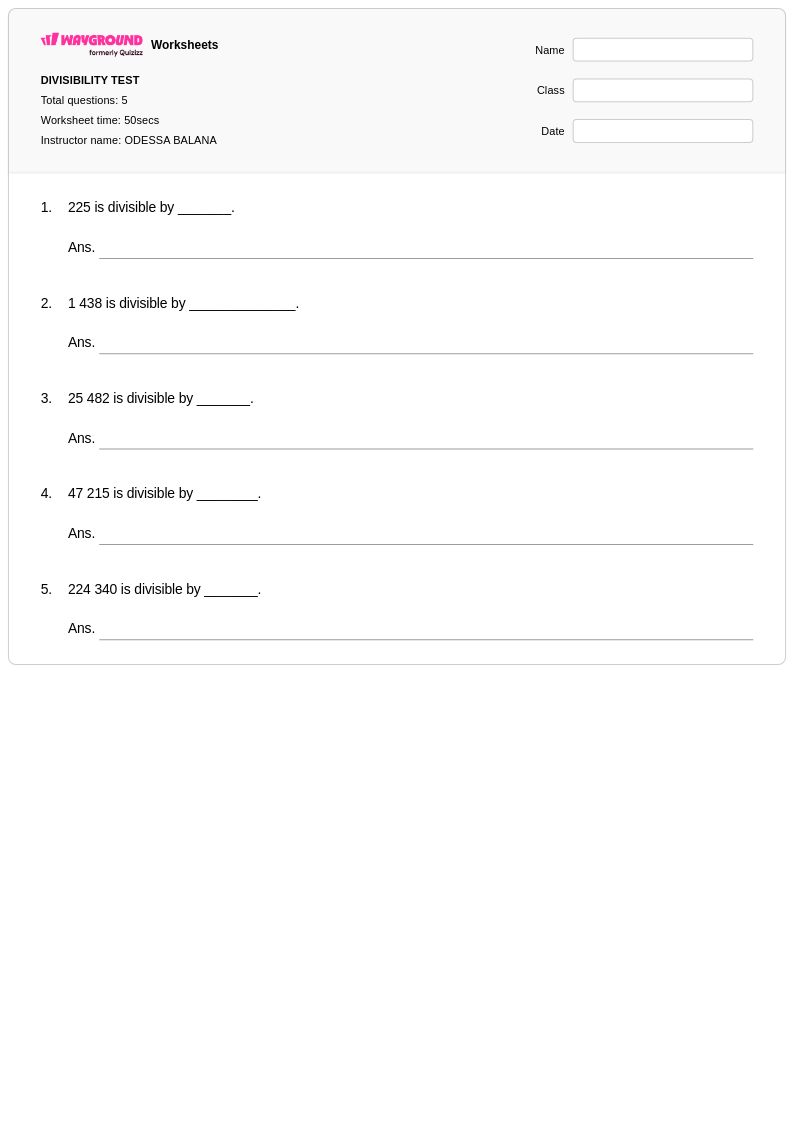
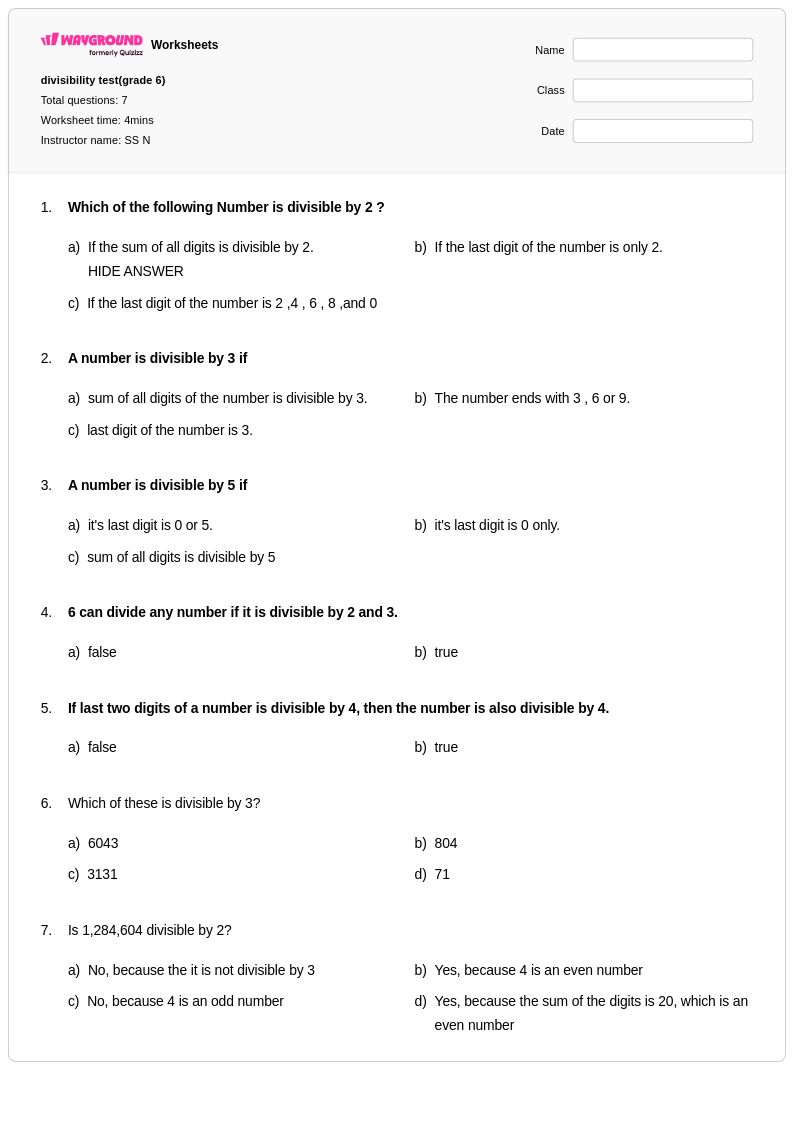
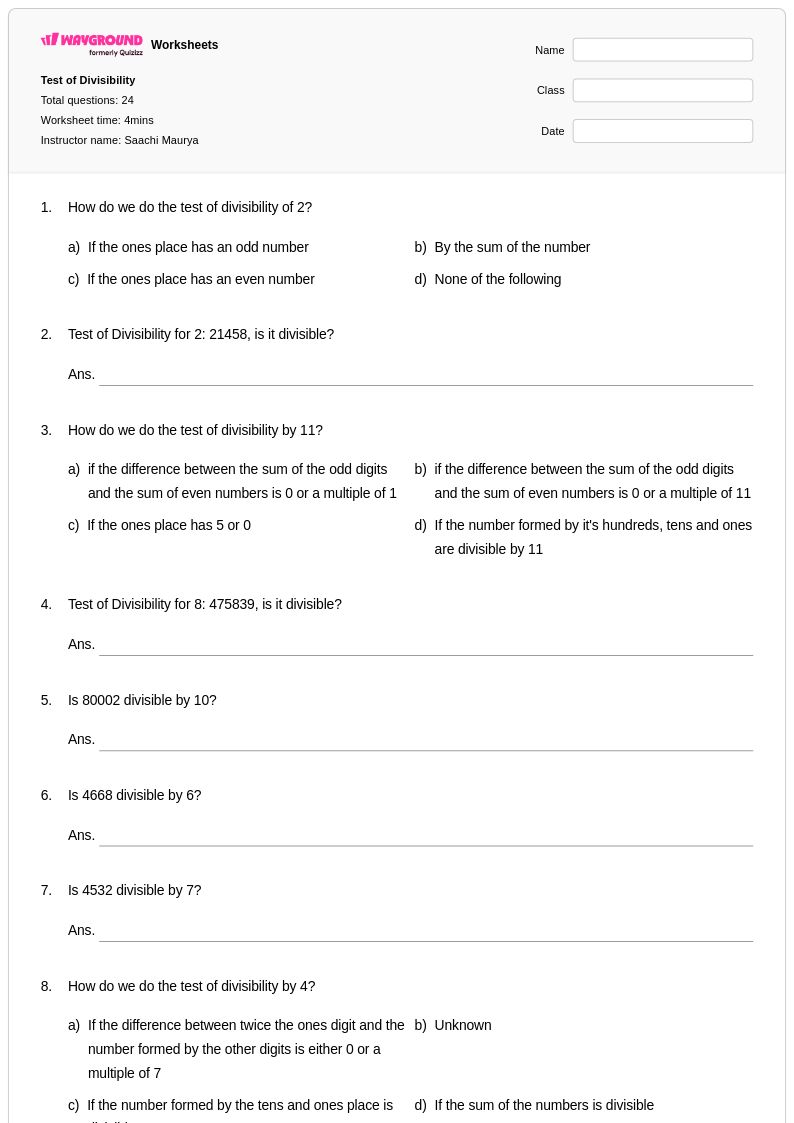
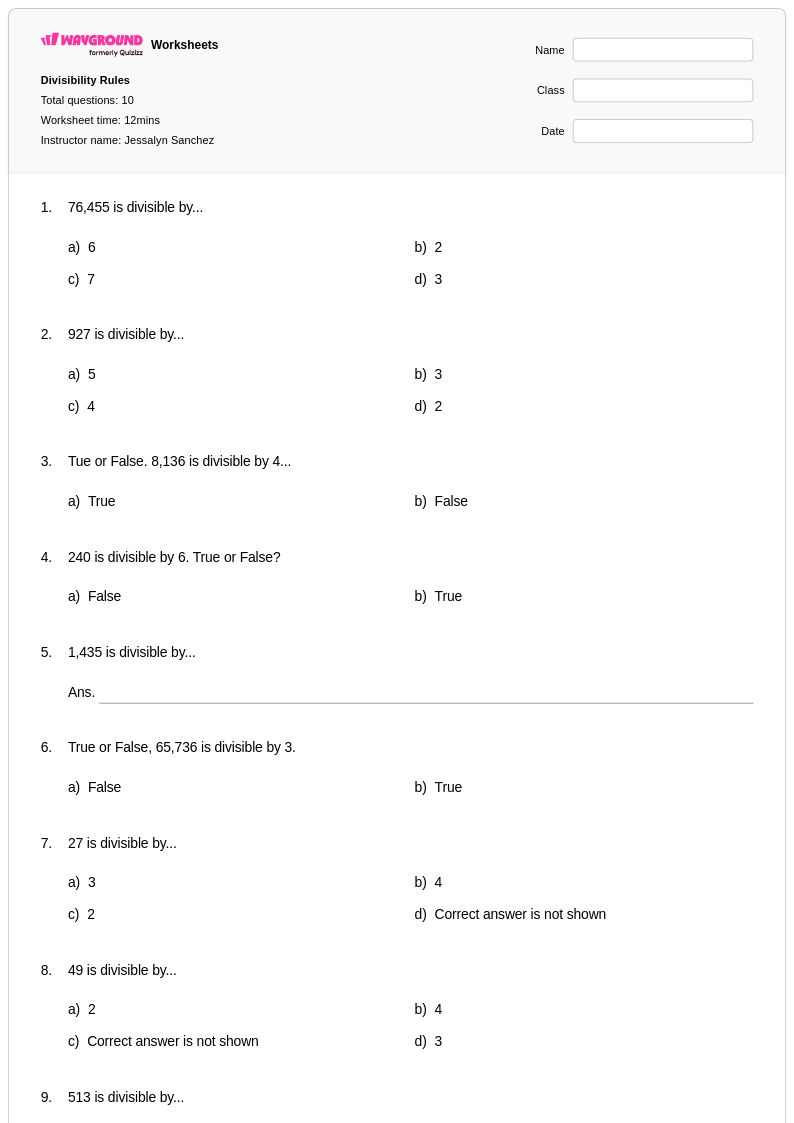
Year 5 divisibility test worksheets available through Wayground (formerly Quizizz) provide comprehensive practice with the fundamental rules that determine when one number can be divided evenly by another. These carefully crafted worksheets strengthen students' number sense and computational fluency by teaching them to quickly identify whether numbers are divisible by 2, 3, 4, 5, 6, 8, 9, 10, and other key divisors without performing lengthy division calculations. Students work through systematic practice problems that reinforce divisibility patterns, such as recognizing that even numbers are divisible by 2, numbers ending in 0 or 5 are divisible by 5, and numbers whose digits sum to multiples of 3 are divisible by 3. Each worksheet includes a complete answer key and is available as a free printable pdf, making it easy for educators to distribute these valuable mathematical tools to support both classroom instruction and independent practice.
Wayground (formerly Quizizz) empowers teachers with an extensive collection of divisibility test resources drawn from millions of teacher-created materials that have been refined through classroom use. The platform's robust search and filtering capabilities allow educators to locate worksheets that align with specific mathematical standards and match their students' varying ability levels, while differentiation tools enable customization of problem complexity and worksheet length. Teachers can access these resources in both printable pdf format for traditional paper-and-pencil work and digital formats for interactive learning experiences. This flexibility supports diverse instructional approaches, whether educators need materials for whole-class instruction, small group remediation sessions, or enrichment activities for advanced learners, ensuring that every Year 5 student can master these essential divisibility concepts that serve as building blocks for more complex mathematical reasoning.
FAQs
How do I teach divisibility rules to Grade 5 students?
By Grade 5, students should already know the rules for 2, 5, and 10 — so start there as a quick review, then push into the rules they find harder: divisibility by 4 (last two digits), by 8 (last three digits), and the combined rule for 6 (must satisfy both 2 and 3). The rule for 9 is a good anchor for the digit-sum concept because students can verify it quickly with numbers they know. Connecting each rule to a real use case — "this is how you check if a fraction simplifies by 3 before you do any division" — gives fifth graders a reason to care.
What exercises help Grade 5 students practice divisibility tests?
Multi-rule problems are the right challenge at this grade: give students a number and ask which divisors from a set (2, 3, 4, 5, 6, 9, 10) apply. This forces them to run through several rules systematically rather than testing one at a time. These worksheets reinforce exactly that — patterns like digit-sum for 3, endings for 5, and last-two-digits for 4 — and progress from straightforward identification to more complex multi-step scenarios.
What mistakes do Grade 5 students commonly make with divisibility tests?
The rule for 4 is the most common stumbling block: students check only the last digit instead of the last two, so they incorrectly flag numbers like 124 as not divisible by 4. A related error is confusing divisibility by 6 — students apply the rule for 2 or the rule for 3 but not both, missing that 6 requires both conditions. Targeted practice on these two rules specifically clears up most of the errors before they carry into fraction simplification.
How do I use Wayground's Grade 5 divisibility worksheets in my classroom?
Assign the worksheet as a digital quiz on Wayground for instant results, or print the PDF for paper practice — both formats include a complete answer key. Paper works especially well for warm-up or exit-ticket use when you want students off screens. If you go the printable route, the Wayground for Teachers app lets you scan student submissions for quick grading without re-entering scores manually.
How do divisibility rules fit into the Grade 5 Common Core math progression?
Grade 5 is where Common Core expects students to apply their understanding of factors and multiples to fraction operations — adding unlike fractions, simplifying, and finding common denominators. Divisibility rules are the practical tool that makes those steps efficient: a student who can quickly test whether 8 and 12 share a factor of 4 can simplify fractions without trial-and-error division. Mastering these rules in Grade 5 also sets up the formal GCF and LCM work that arrives in Grade 6.
How can I differentiate divisibility practice for my Grade 5 class?
For students still shaky on the foundational rules, create a version of the worksheet with wider font spacing and a larger font size — same problems, less visual crowding. English language learners benefit from the worksheet translation feature so they're not decoding instructions while also applying math rules. For students ready for more challenge, extend the same worksheet by asking them to explain in writing why a rule works, not just apply it.