Free Printable Double Consonants Worksheets for Year 2
Year 2 double consonants worksheets from Wayground help students master letter sound patterns through engaging printables, practice problems, and free PDF resources with complete answer keys.
Explore printable Double Consonants worksheets for Year 2
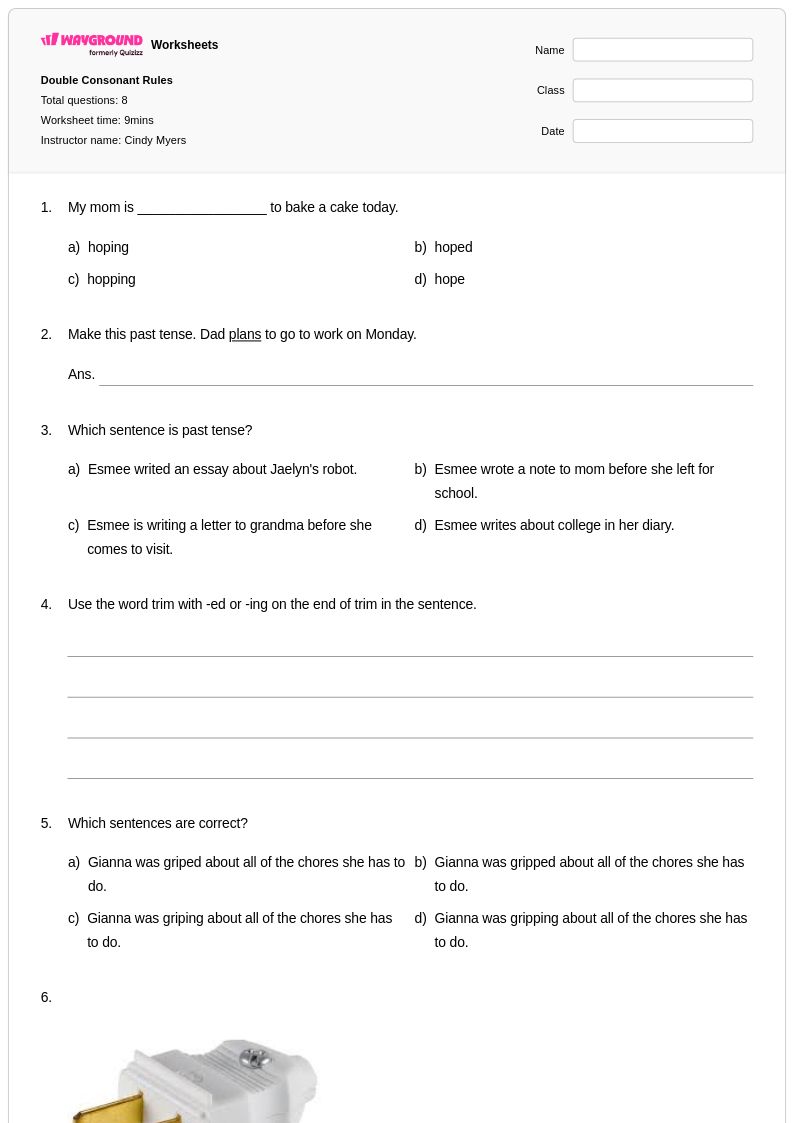
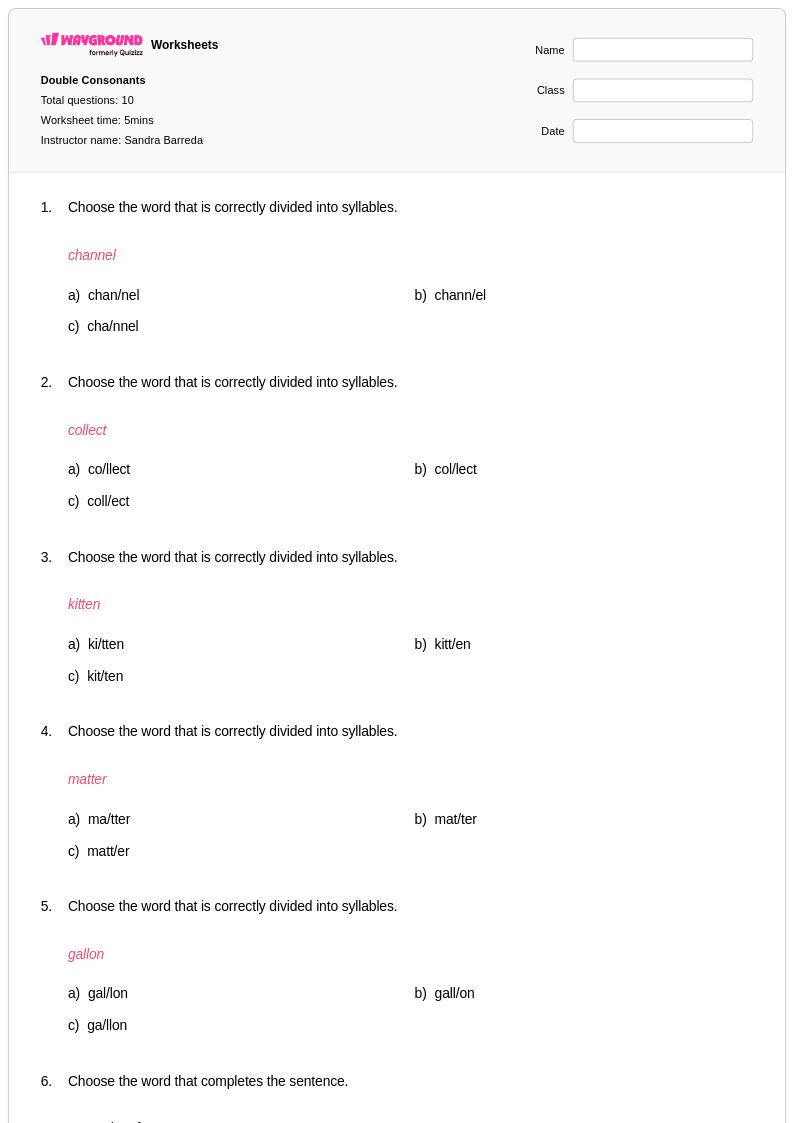
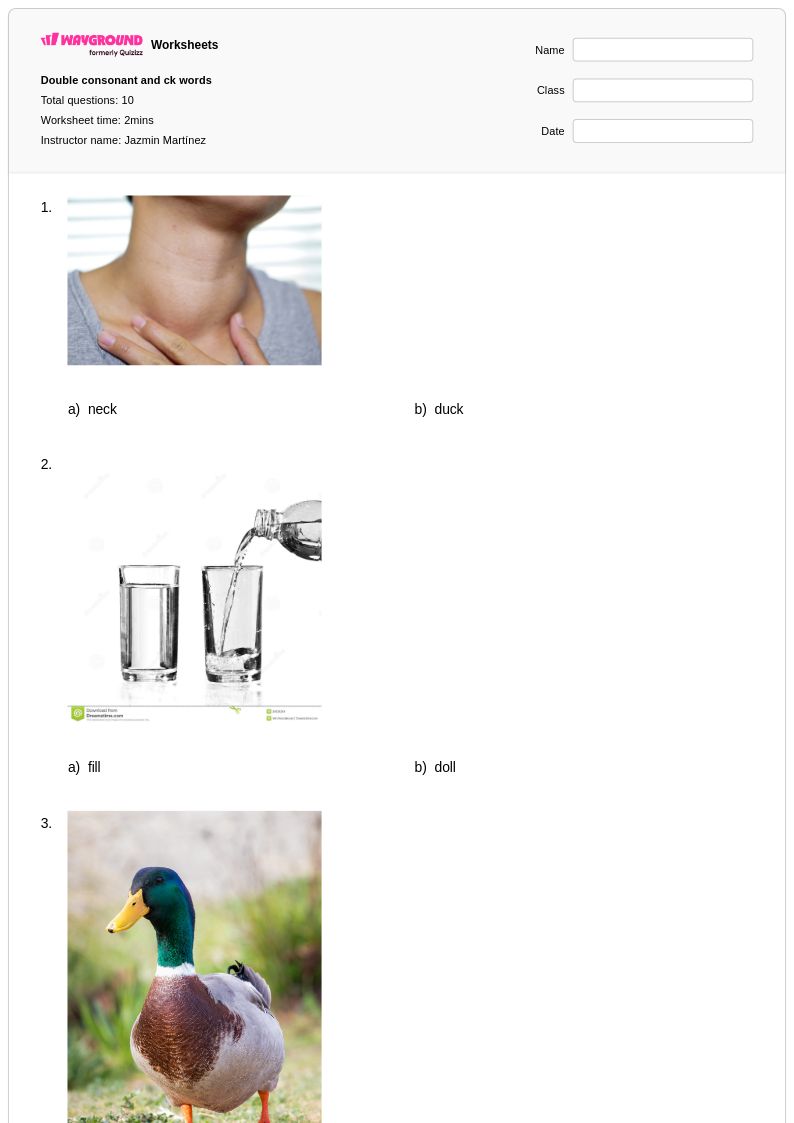
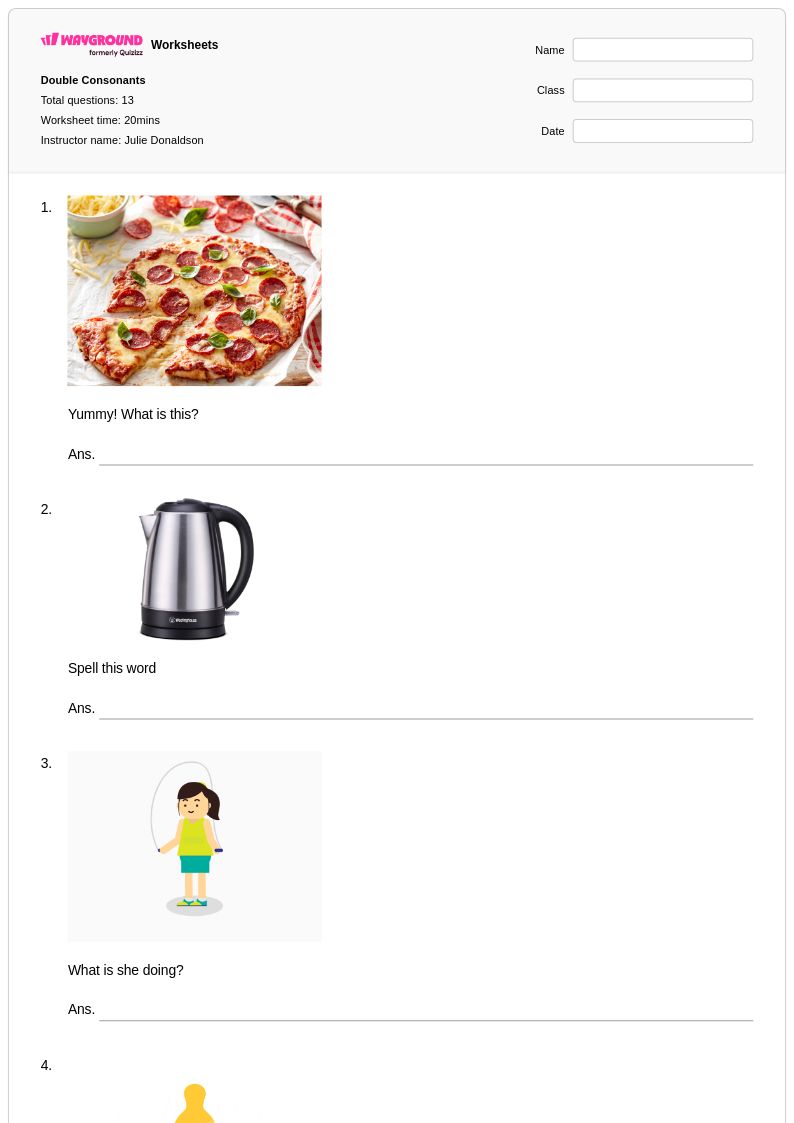
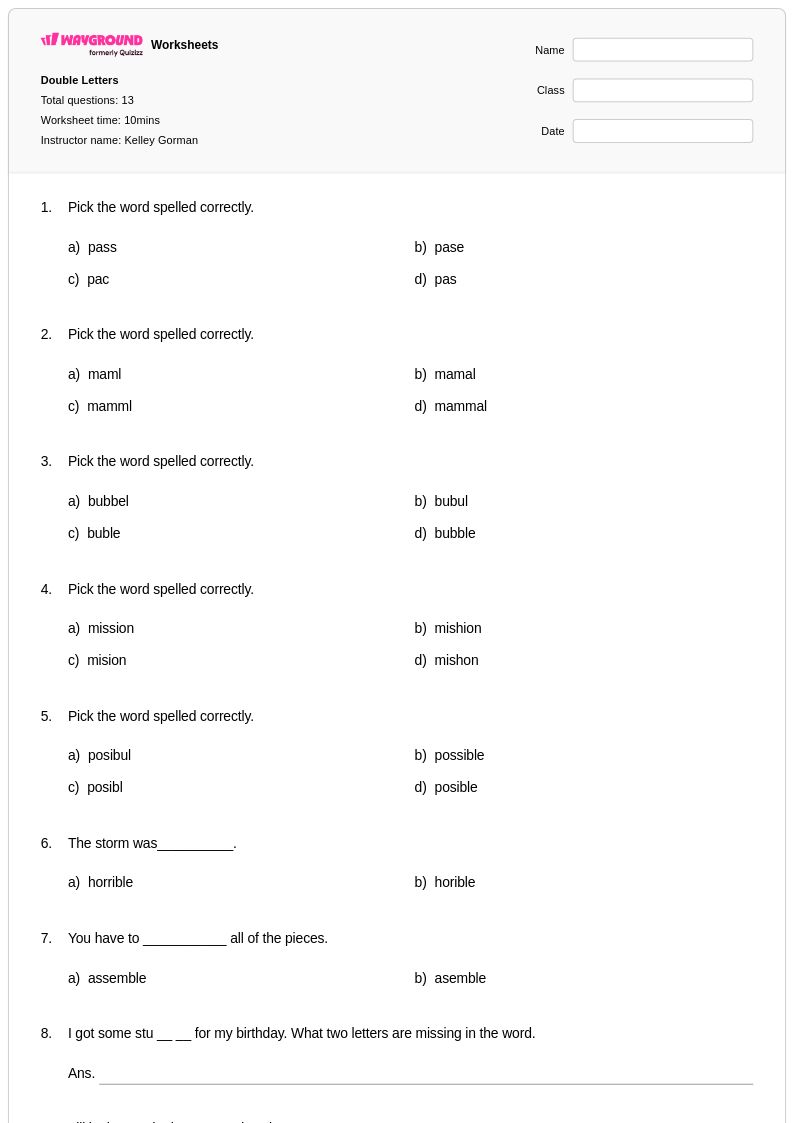
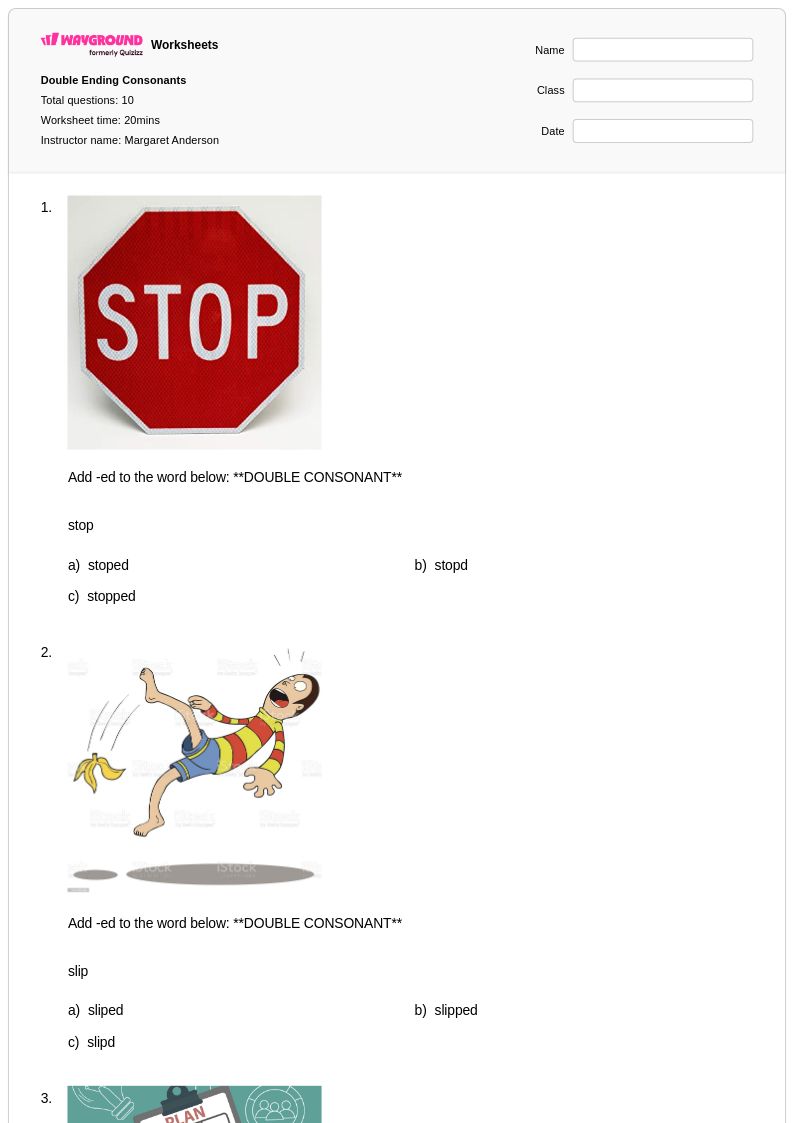
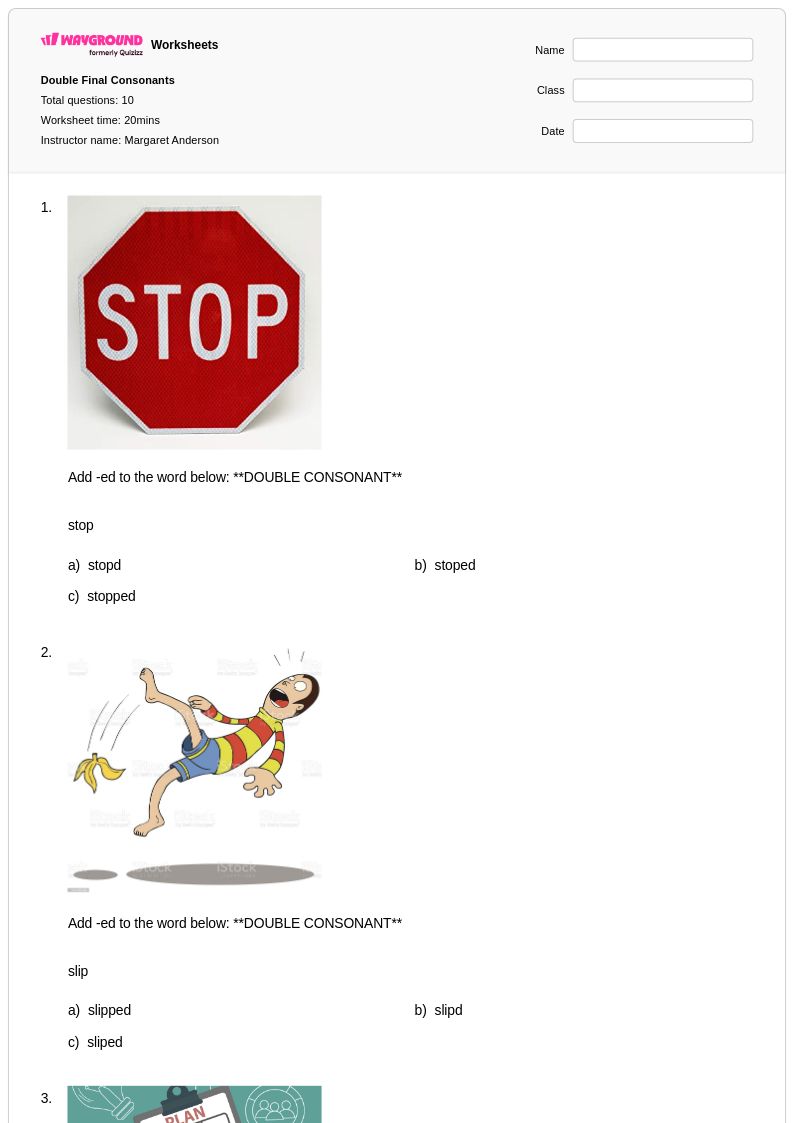
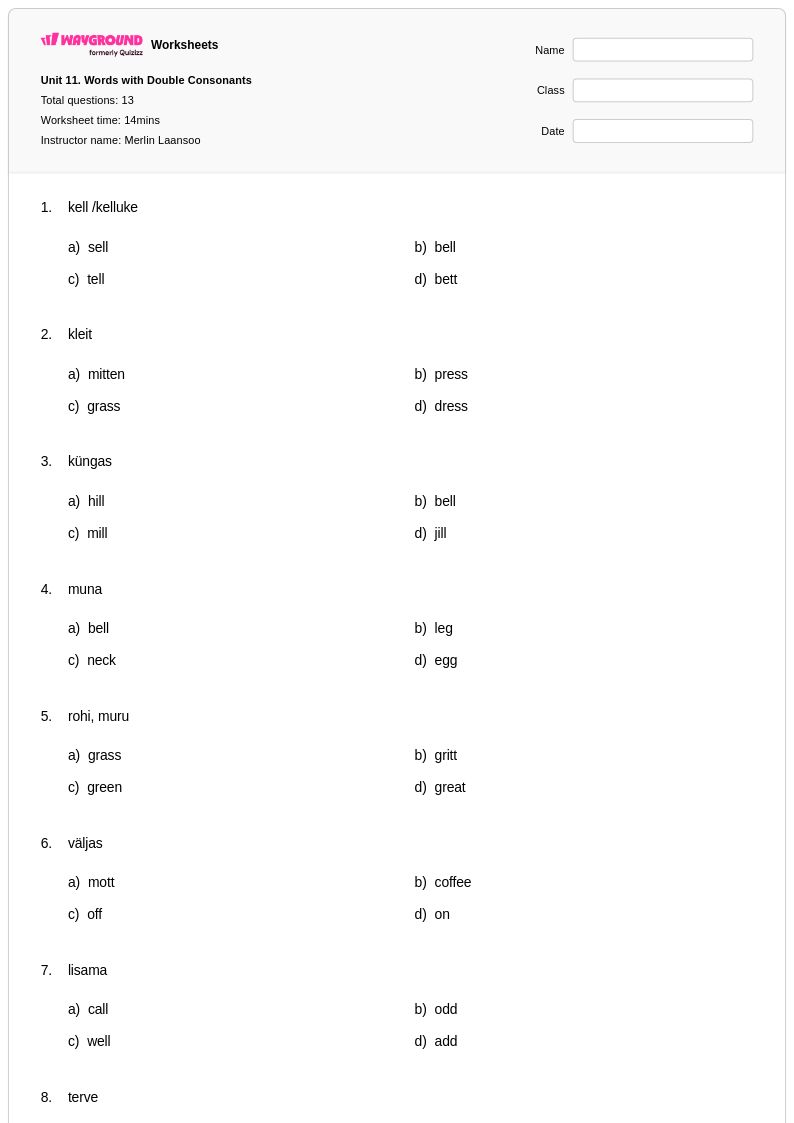
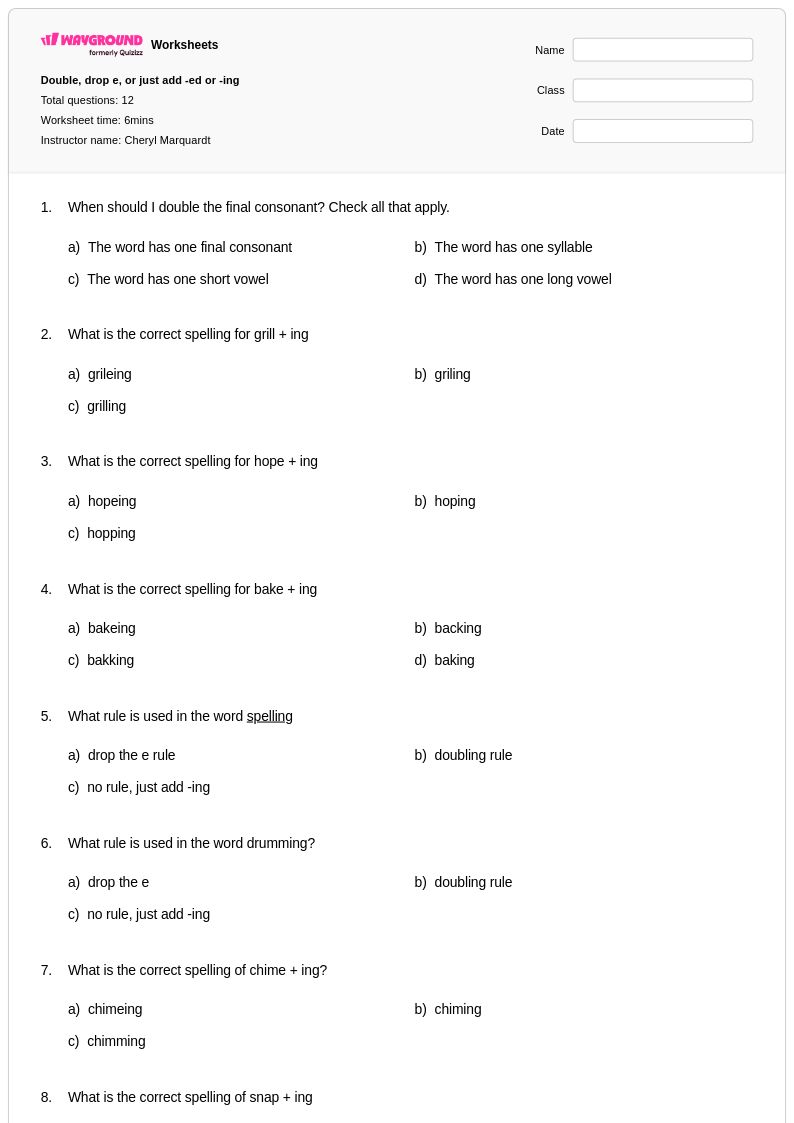
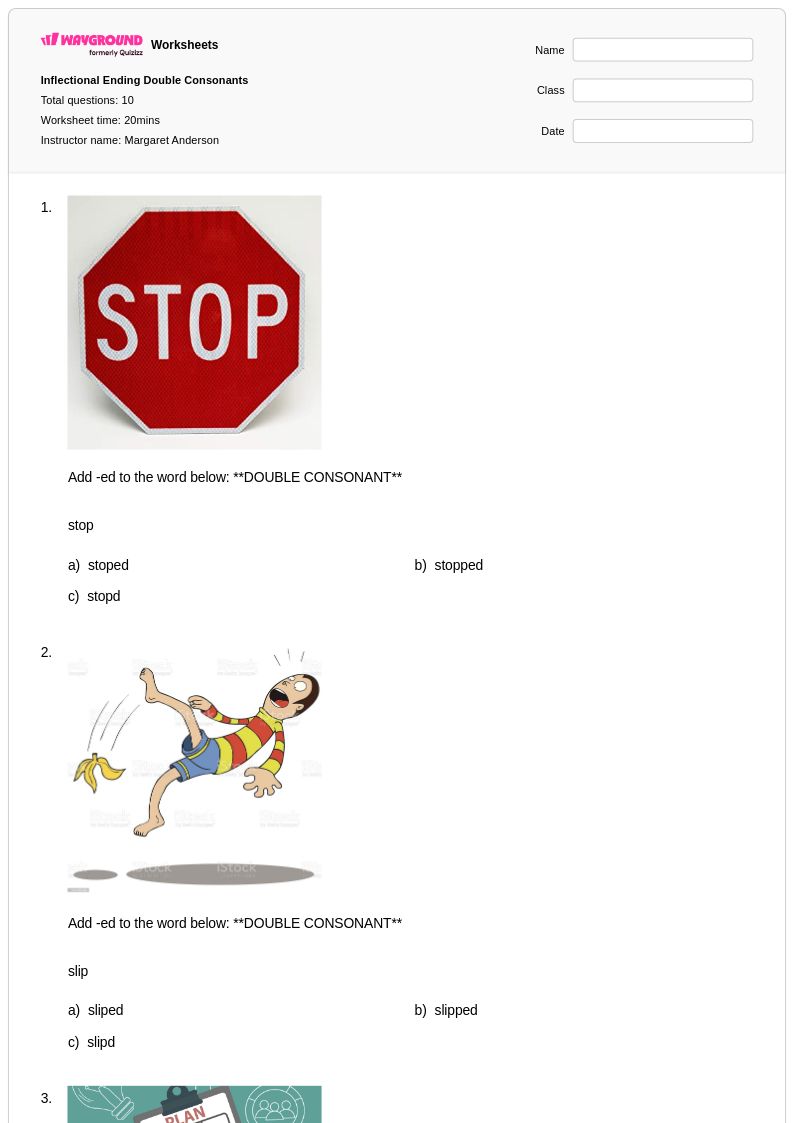
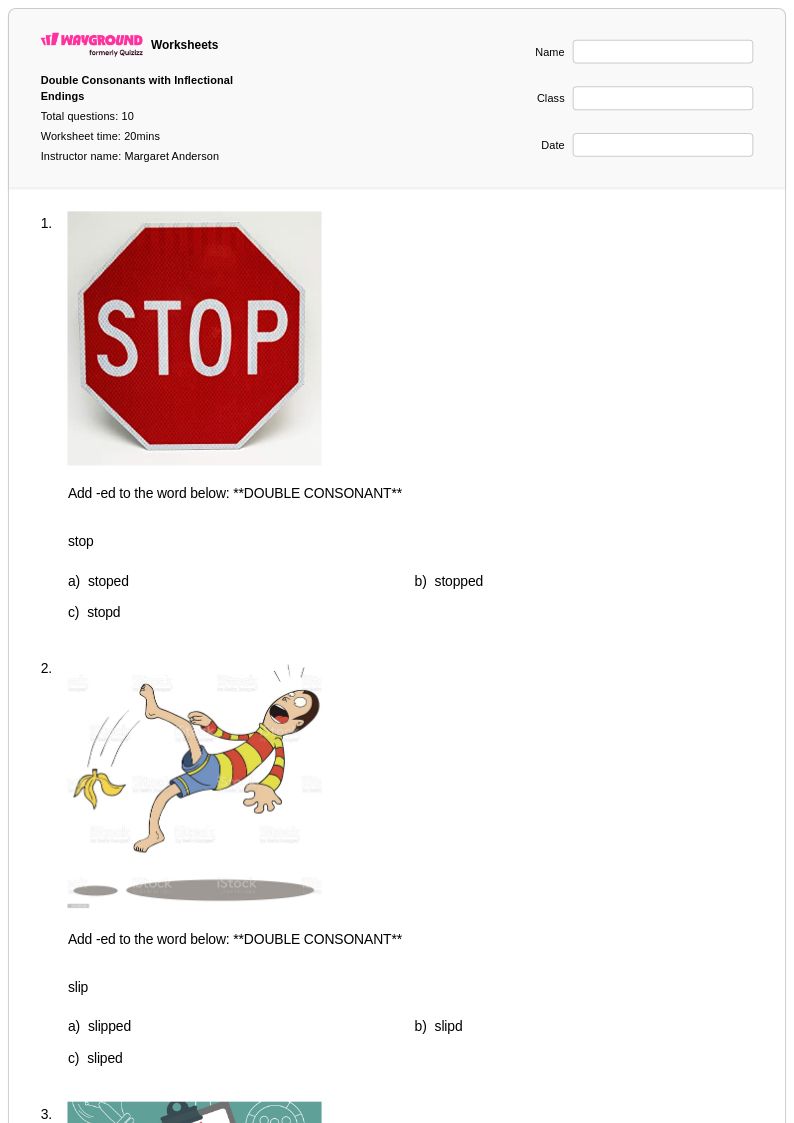
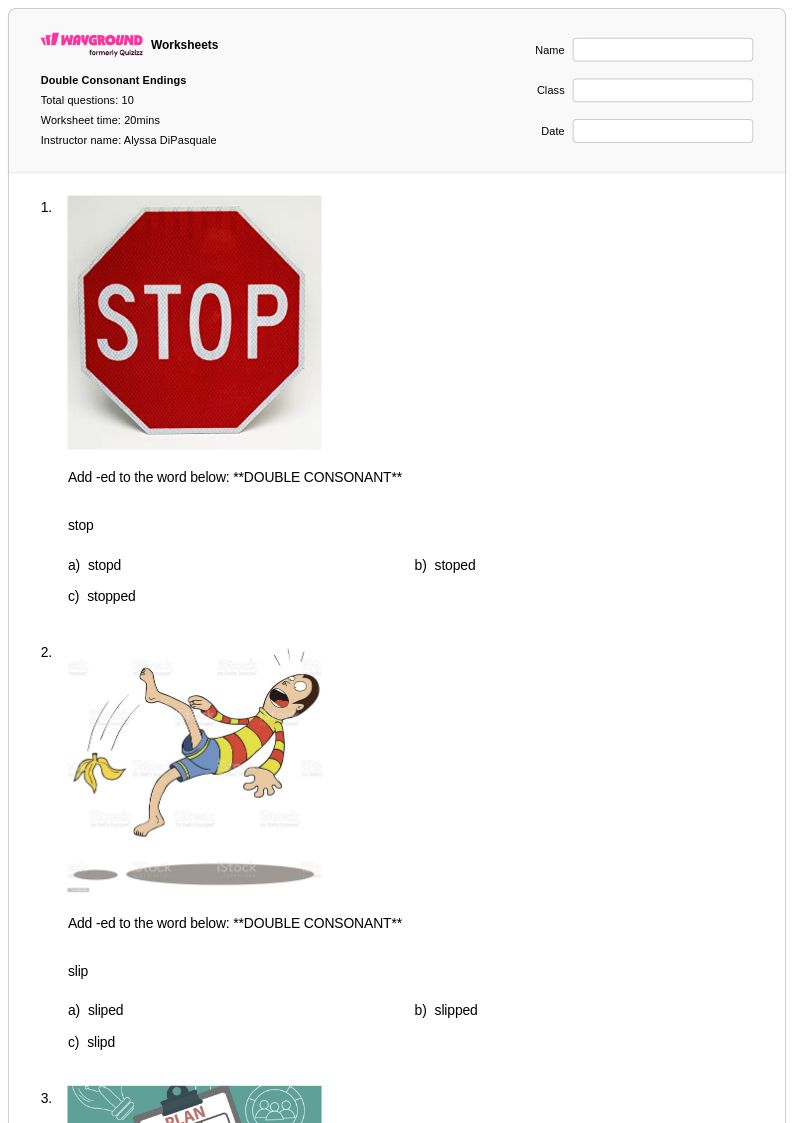
Double consonants worksheets for Year 2 students available through Wayground provide essential practice in recognizing and applying consonant doubling patterns in English spelling. These comprehensive printables focus on helping young learners understand when and why consonants are doubled in words like "rabbit," "spelling," and "running," building crucial phonetic awareness and spelling accuracy. The worksheets strengthen students' ability to decode words with double consonant patterns, improve their reading fluency, and develop confident spelling skills through systematic practice problems. Each resource includes an answer key to support independent learning and assessment, with free pdf downloads making these materials easily accessible for classroom and home use.
Wayground's extensive collection of double consonants worksheets draws from millions of teacher-created resources, offering educators powerful search and filtering capabilities to find materials perfectly aligned with Year 2 standards and individual student needs. The platform's differentiation tools enable teachers to customize worksheets for various skill levels, supporting both remediation for struggling readers and enrichment activities for advanced learners. Available in both printable pdf format and interactive digital versions, these resources seamlessly integrate into lesson planning while providing flexible options for skill practice, homework assignments, and assessment preparation. Teachers can efficiently locate standards-aligned materials that target specific double consonant patterns, ensuring comprehensive coverage of this fundamental phonics concept while accommodating diverse learning styles and classroom environments.
FAQs
How do I teach double consonants to early readers?
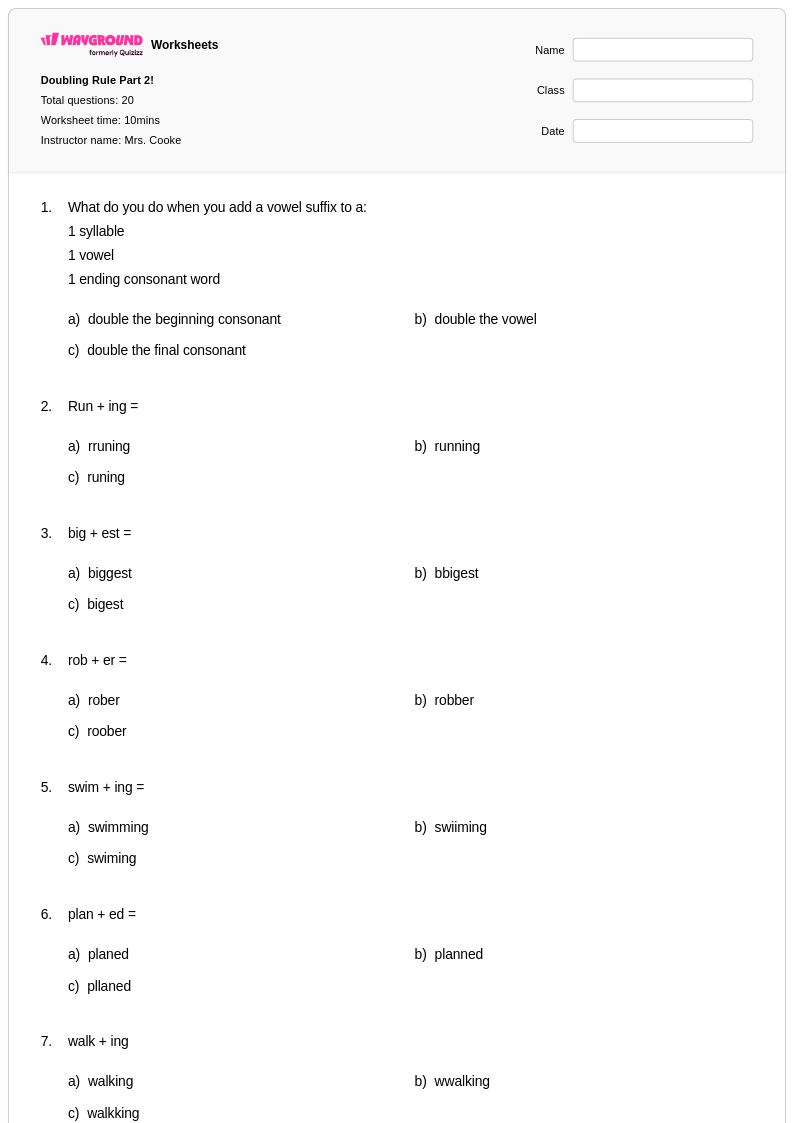
Start by helping students understand that doubled consonants usually appear in the middle of words and signal a short vowel sound in the preceding syllable, as in 'rabbit' or 'butter.' Use word sorting activities to help students contrast single versus double consonant spellings, then move to pattern recognition within connected text. Explicit instruction in common doubling rules, such as the floss rule (doubling f, l, and s after a short vowel at the end of a one-syllable word) and the 1-1-1 doubling rule for adding suffixes, gives students a reliable framework rather than requiring rote memorization.
What exercises help students practice double consonant spelling patterns?
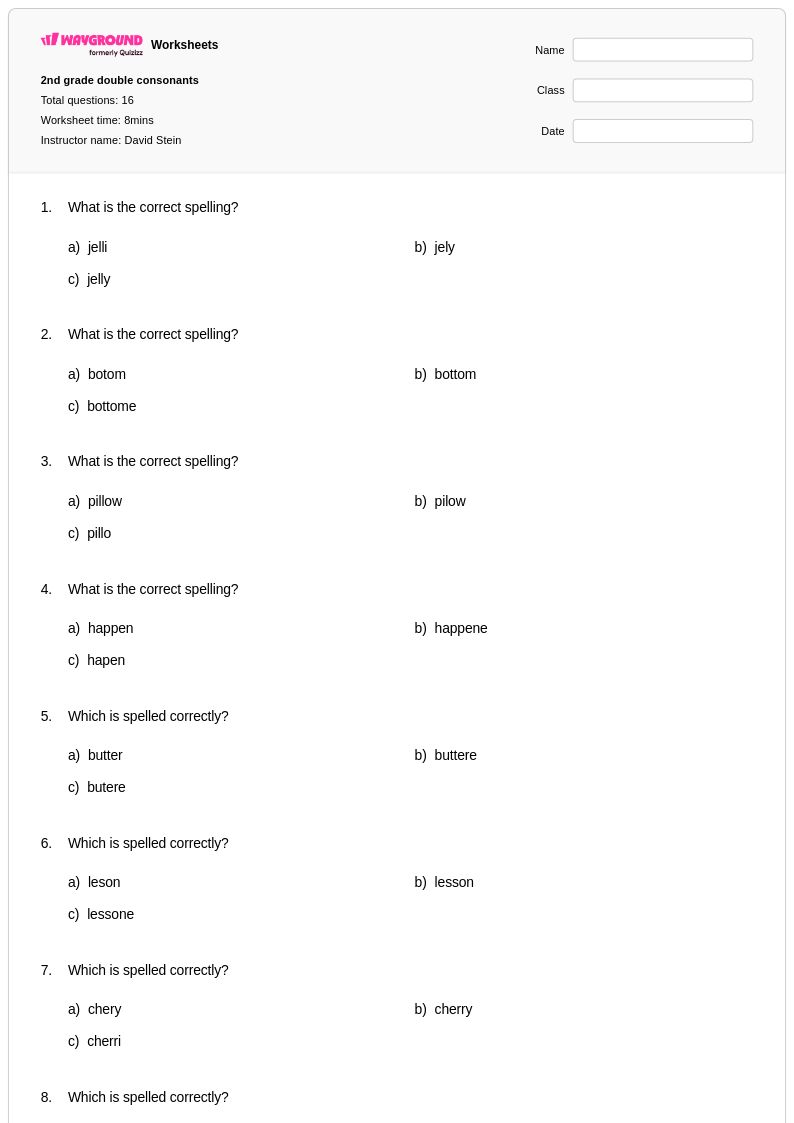
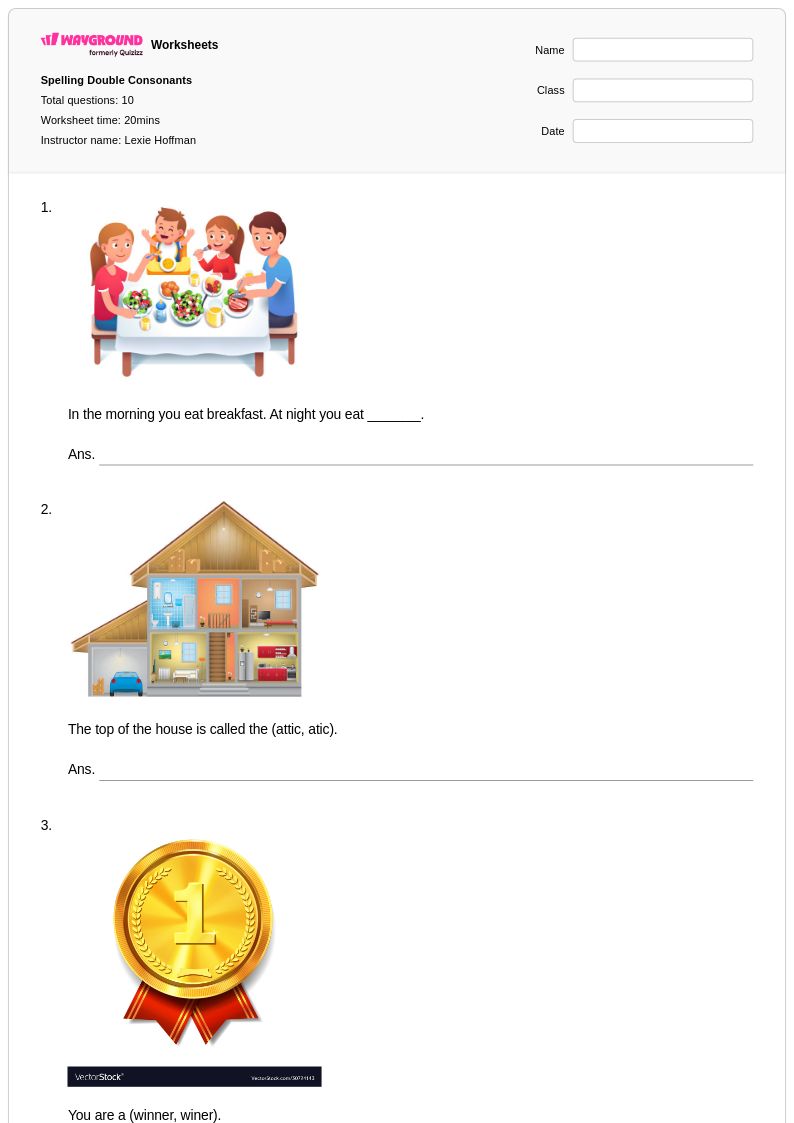
Effective practice exercises include word sorting by double consonant pattern (e.g., -ff, -ll, -ss, -tt, -bb), fill-in-the-blank activities where students choose between single and double consonant spellings, and dictation tasks using targeted word lists. Suffix-addition exercises, such as changing 'run' to 'running,' reinforce the doubling rule in context and connect phonics to morphology. Progressing from isolated word work to sentence-level and paragraph-level tasks builds automaticity and transfer.
What spelling mistakes do students commonly make with double consonants?
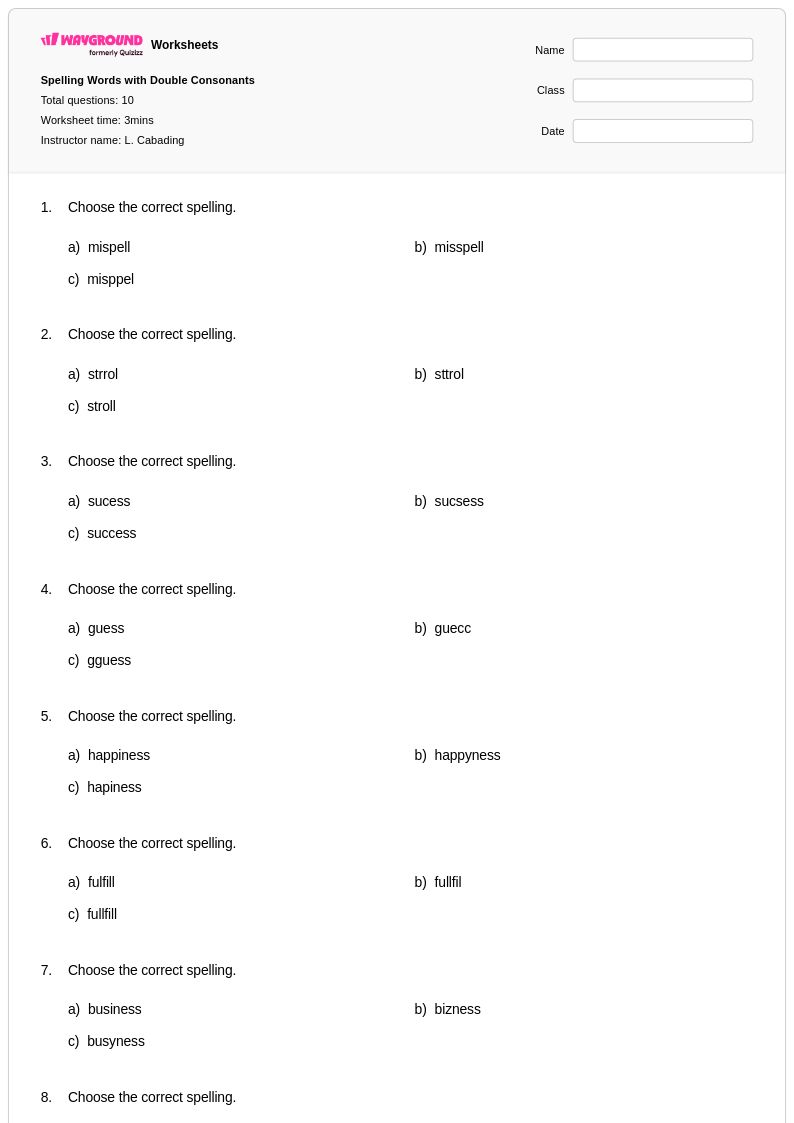
The most frequent error is under-doubling, where students write 'runing' instead of 'running' or 'rabit' instead of 'rabbit,' because the doubled letter produces only one audible sound. Students also confuse which consonants need doubling, particularly with the floss rule, omitting the second l in 'bell' or second s in 'miss.' A third common error is over-generalization, where students double consonants in words that don't require it, such as writing 'batter' for 'bater,' after learning the suffix doubling rule without fully understanding the conditions that trigger it.
How can I use double consonants worksheets in my classroom?
Double consonants worksheets on Wayground are available as printable PDFs for whole-class instruction, small-group phonics rotations, or independent seat work, and in digital formats for use in one-to-one device environments or as assigned homework. Teachers can host worksheets as a quiz on Wayground to collect student responses and review performance data in one place. Using the worksheets sequentially, beginning with identification exercises and advancing to spelling application tasks, allows teachers to scaffold instruction and provide targeted remediation where gaps appear.
How do I differentiate double consonant instruction for struggling readers and advanced learners?
For struggling readers, reduce cognitive load by focusing on one double consonant pattern at a time and using Wayground's reduced answer choices accommodation to narrow decision-making during digital practice. The Read Aloud feature can support students who benefit from hearing words as they work through identification exercises. Advanced learners can be challenged with suffix-addition tasks, multisyllabic word work, and exercises that require them to articulate the spelling rule in writing, deepening both phonics and metalinguistic awareness.
At what grade level should students master double consonant spelling patterns?
Double consonant patterns are typically introduced in first and second grade as part of foundational phonics instruction, with mastery expected by the end of second or third grade for most learners. The floss rule and basic doubled medial consonants are addressed in early phonics programs, while suffix-doubling rules are commonly taught in grades 2 through 4 as students begin working with inflectional and derivational morphology. Students who have not yet mastered these patterns by upper elementary may need targeted remediation before encountering multisyllabic word work.