Free Printable Double Final Consonant Worksheets for Year 3
Enhance Year 3 students' spelling skills with Wayground's free double final consonant worksheets, featuring engaging printables, practice problems, and comprehensive answer keys to master this essential phonics concept.
Explore printable Double Final Consonant worksheets for Year 3
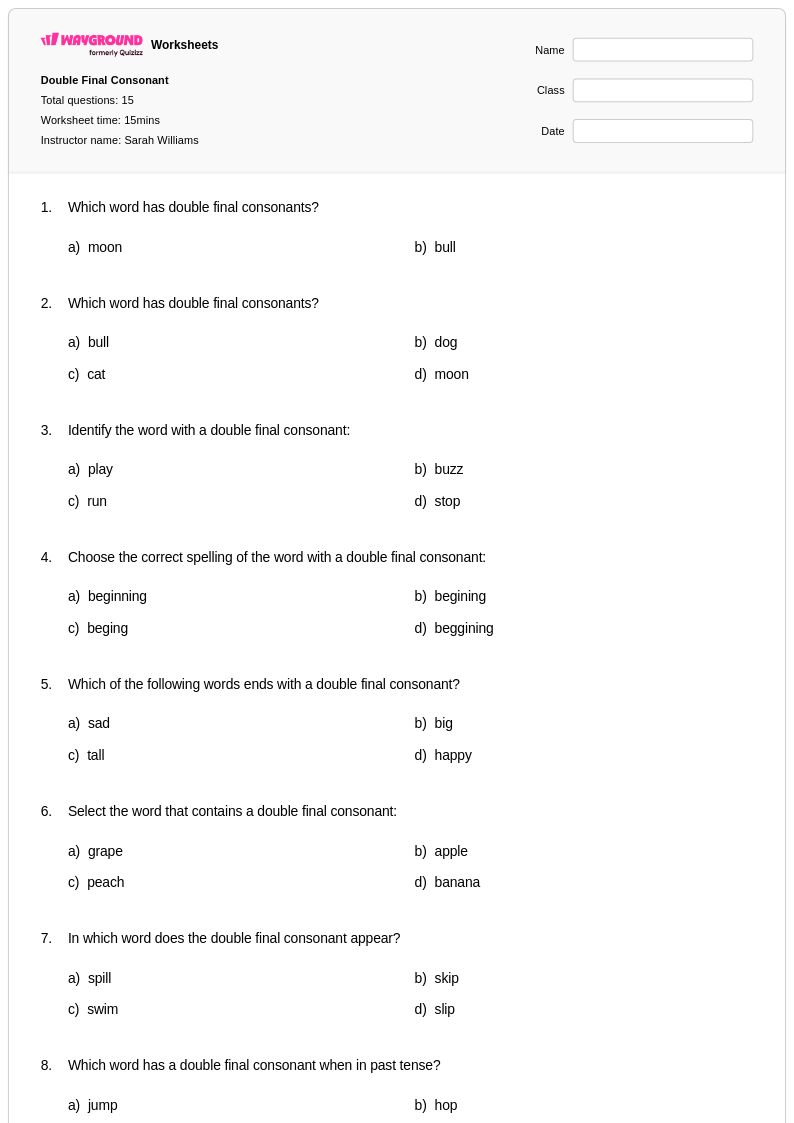
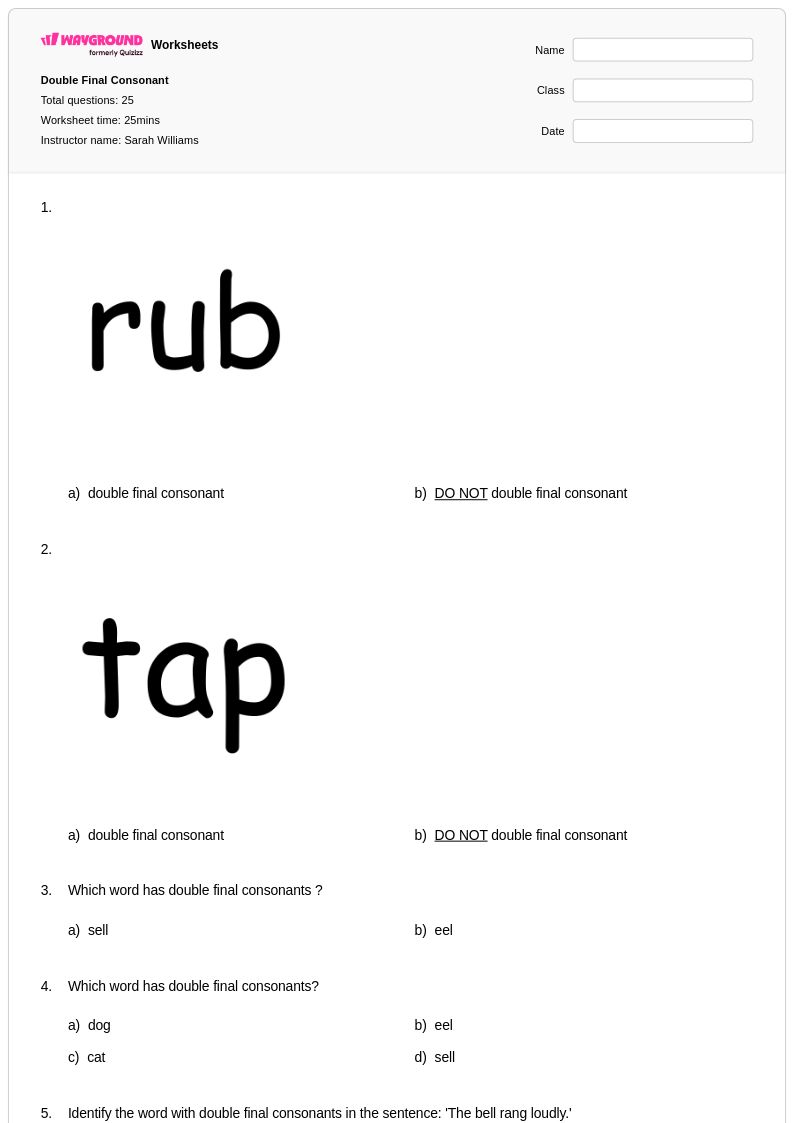
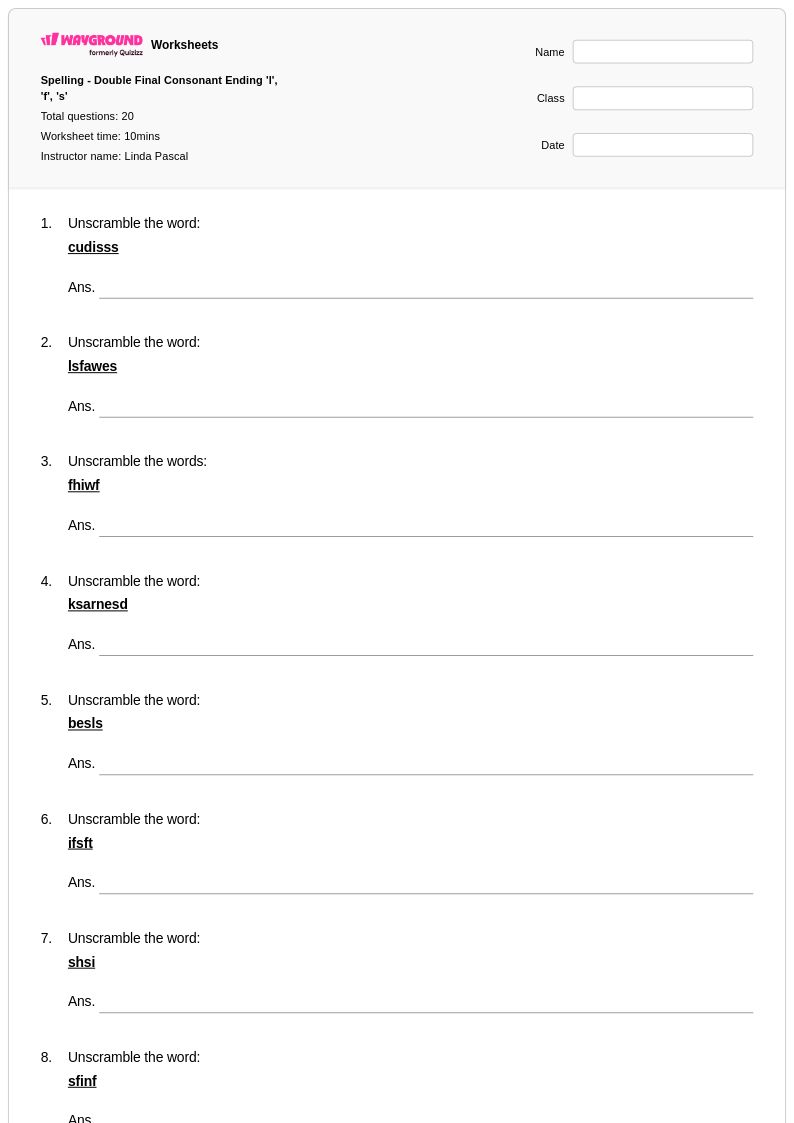
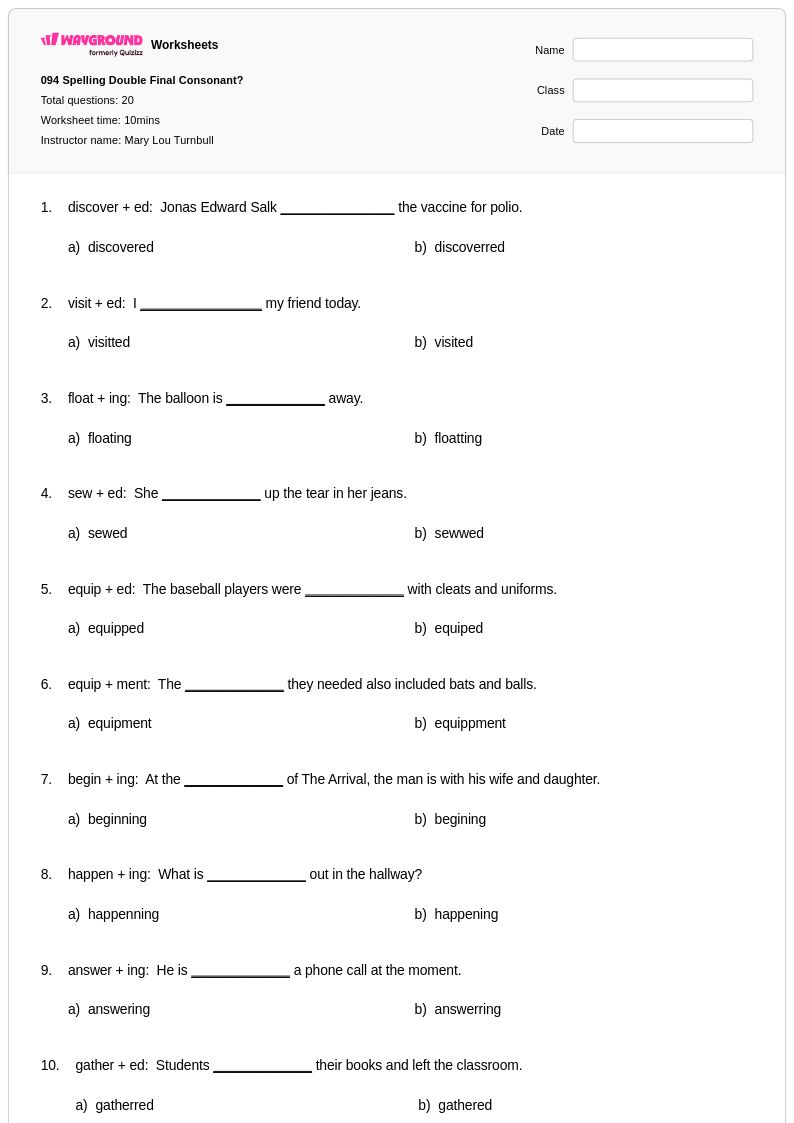
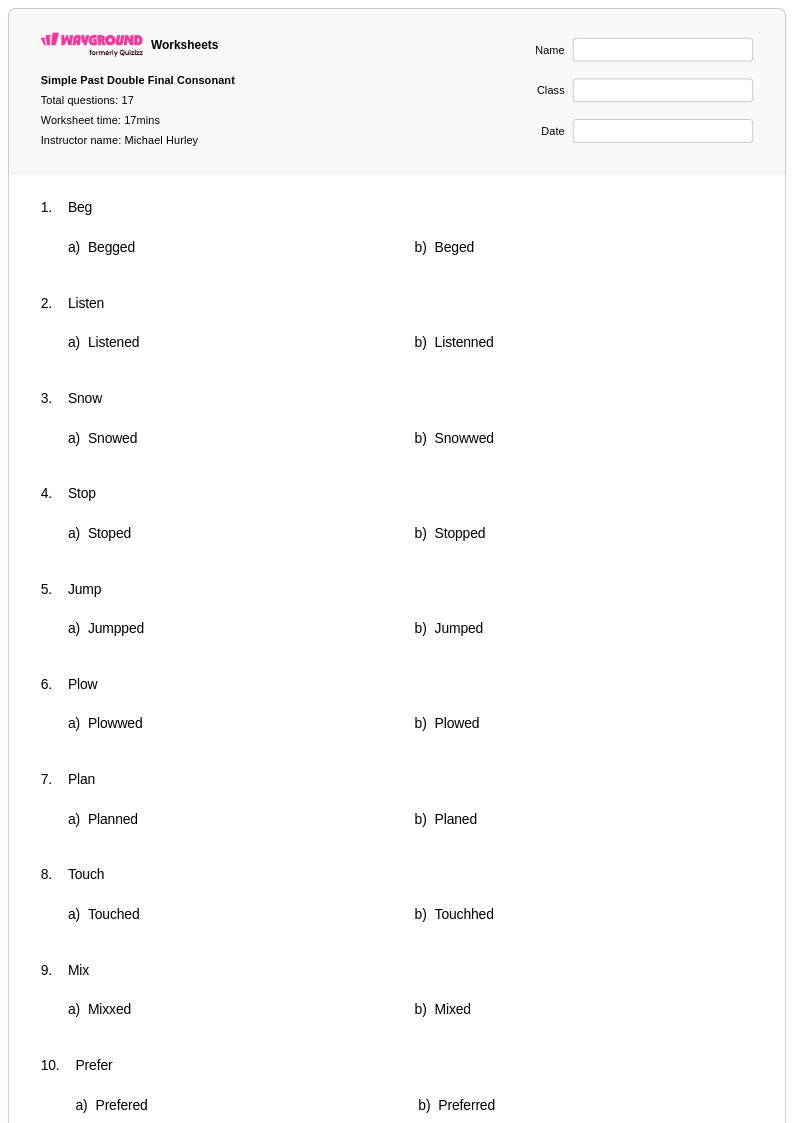
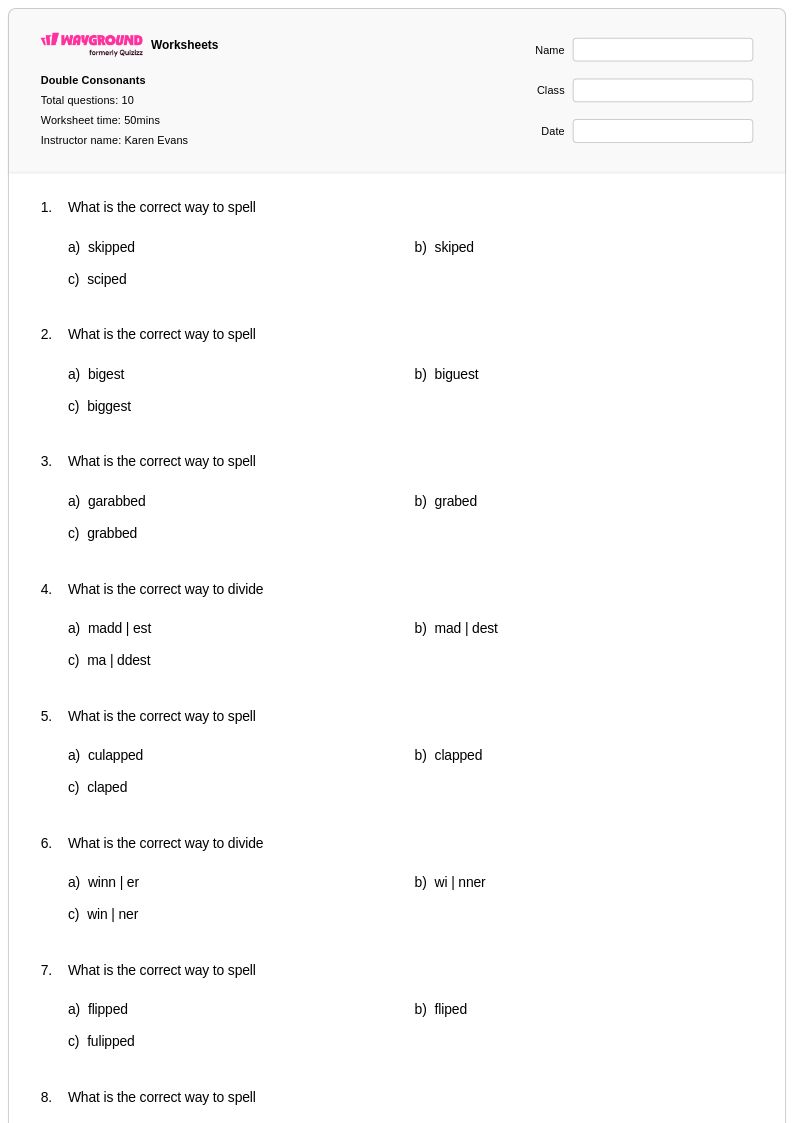
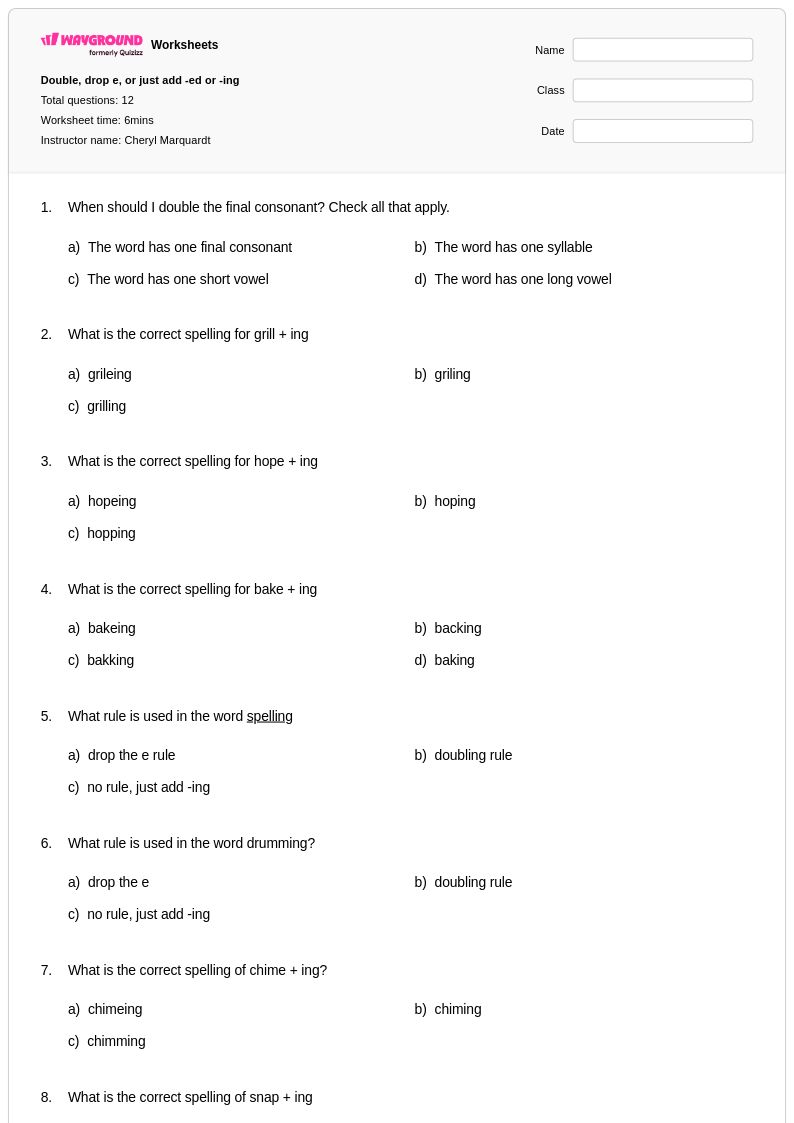
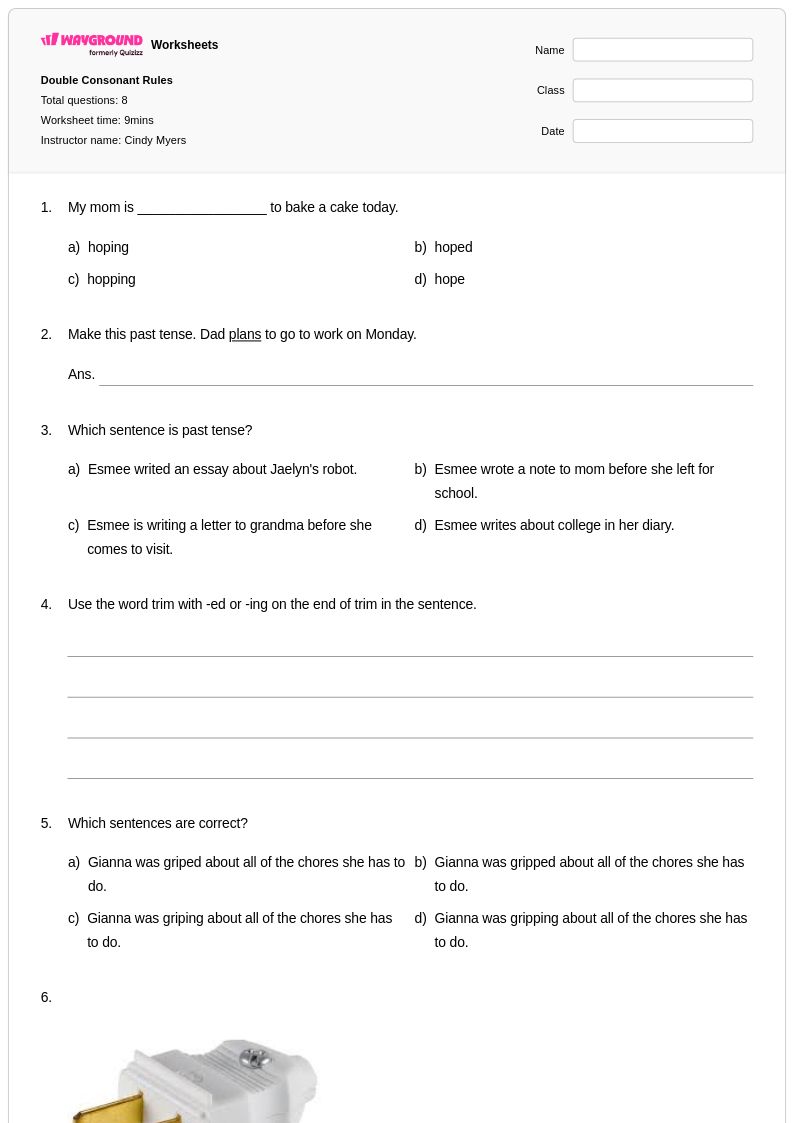
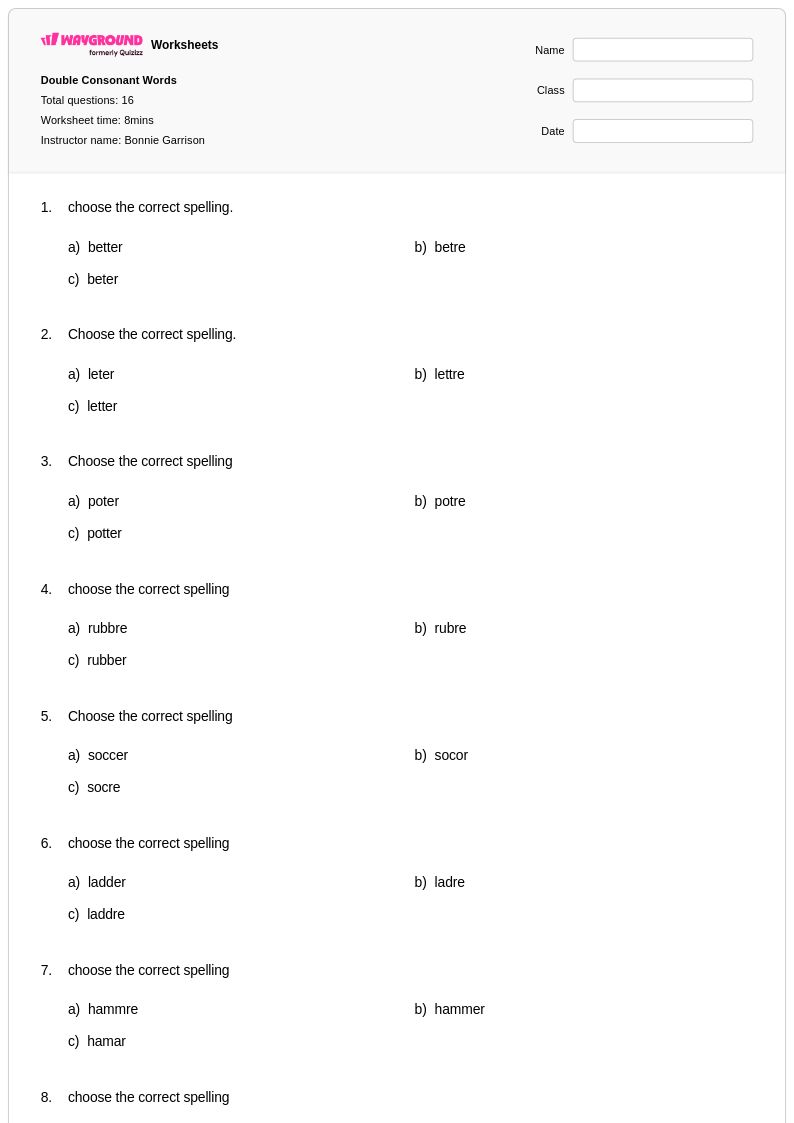
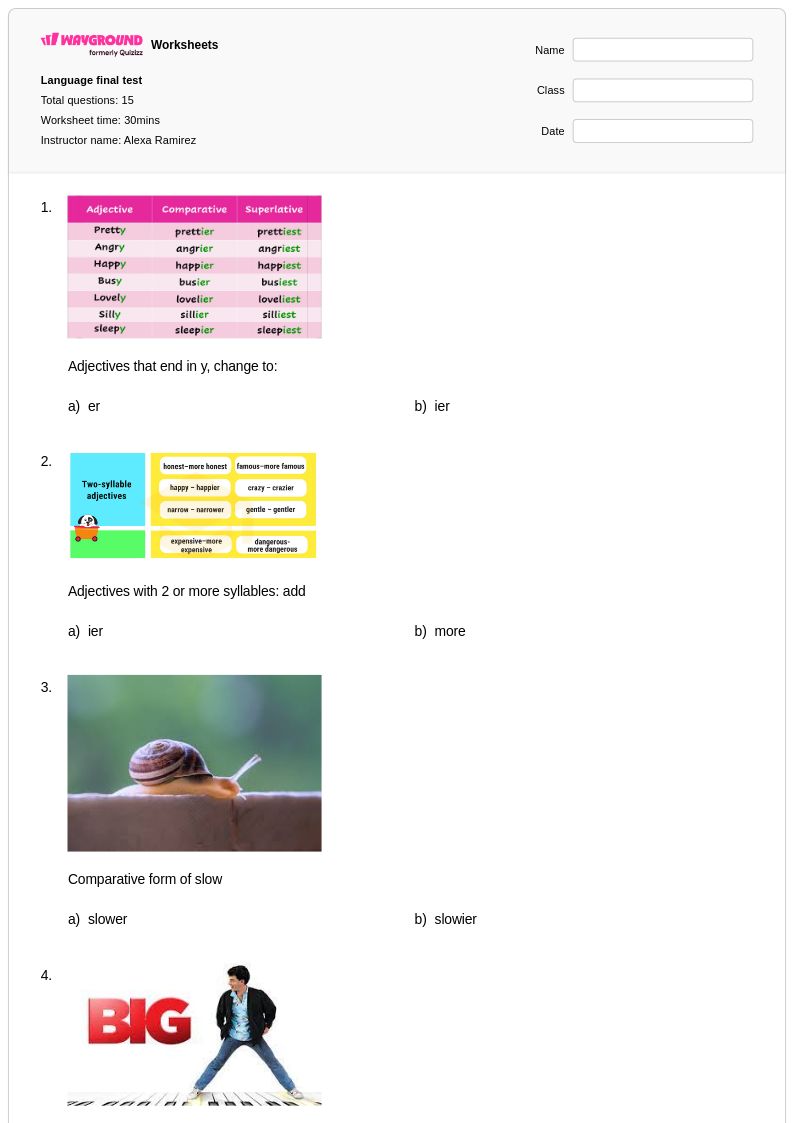
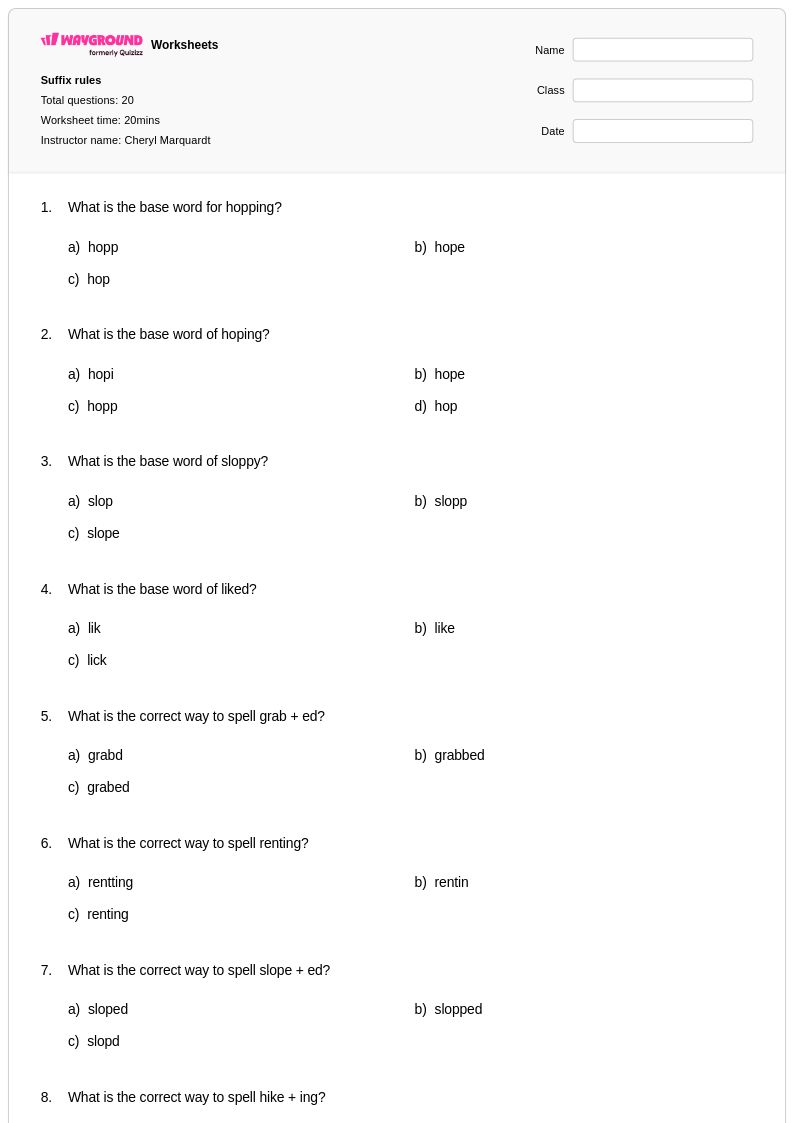
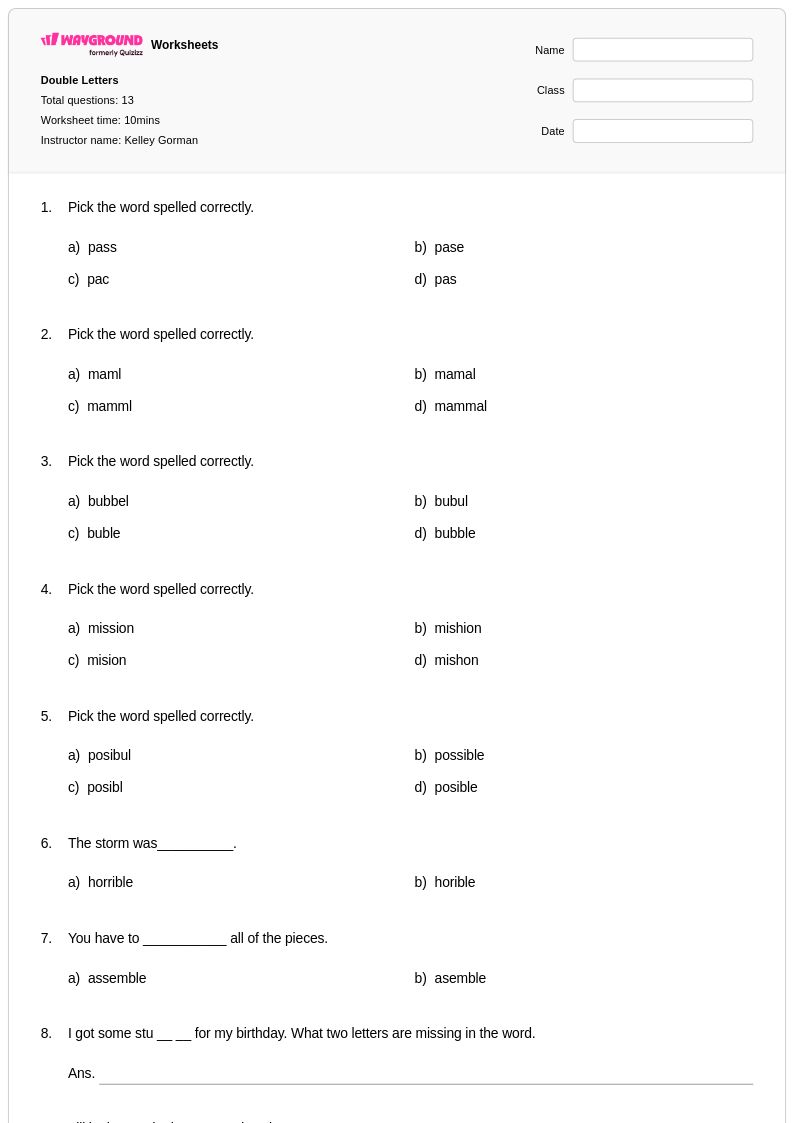
Double final consonant worksheets for Year 3 students available through Wayground (formerly Quizizz) provide systematic practice in one of English spelling's most important foundational rules. These comprehensive printables guide young learners through the process of identifying when to double the final consonant before adding suffixes like -ed, -ing, and -er to words such as "hop" becoming "hopped" or "run" becoming "running." The worksheets strengthen essential spelling skills by teaching students to recognize short vowel patterns in one-syllable words and apply the doubling rule consistently across various word families. Each practice problem reinforces pattern recognition while building automaticity in this crucial spelling convention, with accompanying answer keys allowing for immediate feedback and self-correction. These free resources systematically progress from simple identification exercises to more complex application tasks, ensuring students develop both understanding and fluency with double final consonant patterns.
Wayground's extensive collection of double final consonant worksheets draws from millions of teacher-created resources specifically designed to support Year 3 spelling instruction across diverse classroom needs. The platform's robust search and filtering capabilities enable educators to quickly locate materials aligned with specific learning standards and differentiate instruction based on individual student proficiency levels. Teachers can seamlessly customize these spelling worksheets to match their curriculum pacing and modify difficulty levels for targeted remediation or enrichment activities. Available in both printable pdf format for traditional classroom use and digital formats for interactive learning experiences, these resources provide flexible options for skill practice during whole-group instruction, independent work time, or homework assignments. The comprehensive nature of these materials supports effective lesson planning by offering structured progression through double final consonant concepts while providing multiple opportunities for meaningful practice and assessment.
FAQs
How do I teach the double final consonant rule to students?
Start by teaching the three conditions that trigger consonant doubling: the word ends in a single consonant, that consonant is preceded by a single vowel, and the final syllable is stressed. Introduce the rule with one-syllable words like 'run' becoming 'running' before moving to multisyllabic words like 'begin' becoming 'beginning.' Using word sorts and guided examples helps students internalize the pattern before applying it independently.
What exercises help students practice the double final consonant rule?
Effective practice exercises include suffix-addition tasks where students decide whether to double the consonant before adding -ed, -ing, or -er, as well as error-correction activities where students identify misspelled words. Progressing from basic identification exercises to complex application tasks ensures students build both recognition and production skills. Practice with high-frequency examples like 'stopped,' 'permitted,' and 'beginning' reinforces the rule in words students encounter regularly in writing.
What mistakes do students commonly make with double final consonant spelling?
The most common error is over-generalizing the rule by doubling consonants in words that end in two consonants or have an unstressed final syllable, such as writing 'oppenning' instead of 'opening.' Students also frequently fail to double when the rule does apply, especially in multisyllabic words like 'beginning' or 'permitted' where the stressed syllable is not the first. Explicitly teaching the stress-and-vowel conditions, rather than just a surface-level doubling rule, helps reduce both types of errors.
How do I use double final consonant worksheets effectively in my classroom?
Double final consonant worksheets work well for whole-group instruction, small-group practice, and individual skill reinforcement. On Wayground, these worksheets are available as printable PDFs for traditional classroom use and in digital formats for technology-integrated environments, and teachers can host them as a quiz directly on the platform. Using the worksheets progressively, starting with identification tasks before moving to application, helps scaffold student learning and allows for targeted intervention with struggling spellers.
How do I differentiate double final consonant instruction for students at different skill levels?
For struggling spellers, focus first on one-syllable words with clear CVC patterns before introducing multisyllabic words with stressed final syllables. Advanced students can be challenged with words that require distinguishing stressed from unstressed syllables, such as 'refer' versus 'offer.' Wayground supports individual student accommodations including reduced answer choices to lower cognitive load and read-aloud support for students who benefit from hearing words as they practice spelling patterns.
Why is mastering the double final consonant rule important for student writing?
The double final consonant rule governs the spelling of hundreds of common English words formed with verb and comparative suffixes, meaning errors with this pattern appear frequently in student writing across all subjects. Internalizing this orthographic rule reduces cognitive load during writing, allowing students to focus on composition rather than spelling decisions. Strong command of consonant doubling also supports reading fluency, as students learn to recognize how spelling patterns signal pronunciation and syllable stress.