

25 Q
6th - Uni
13 Q
9th

10 Q
6th - Uni
30 Q
5th - Uni
18 Q
9th - 12th
20 Q
9th - 12th
10 Q
1st - 12th
15 Q
7th - 12th
15 Q
7th - 12th
16 Q
9th
29 Q
9th

20 Q
9th - 12th
42 Q
9th - Uni
20 Q
9th - 12th
20 Q
4th - Uni
25 Q
9th - 12th
49 Q
9th - 12th

26 Q
9th
10 Q
9th - 12th
10 Q
8th - 9th
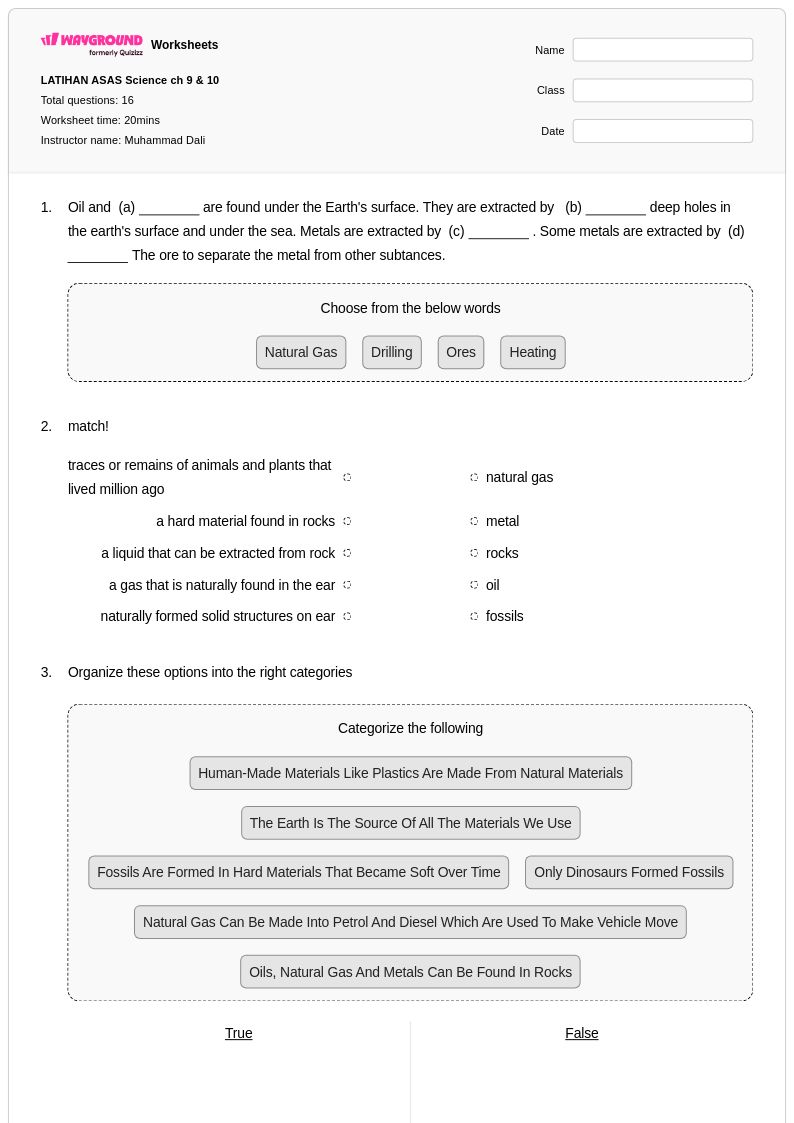
16 Q
3rd - Uni

42 Q
3rd - Uni
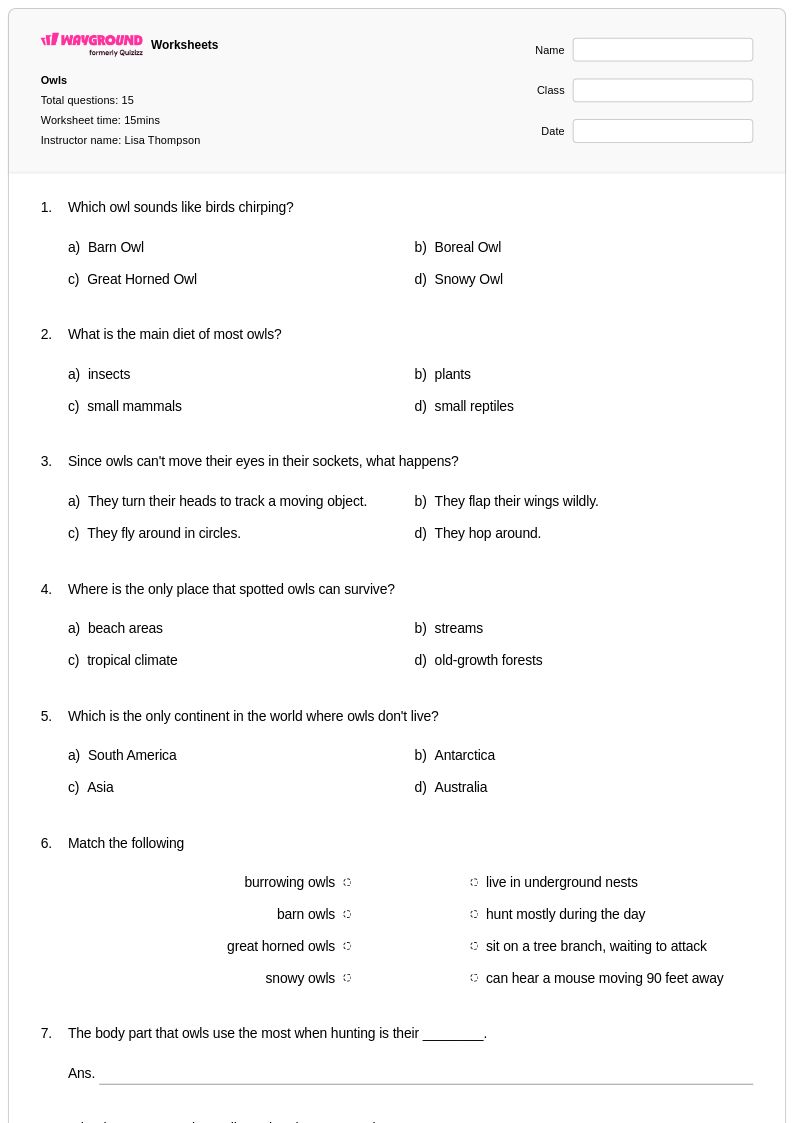
15 Q
2nd - Uni
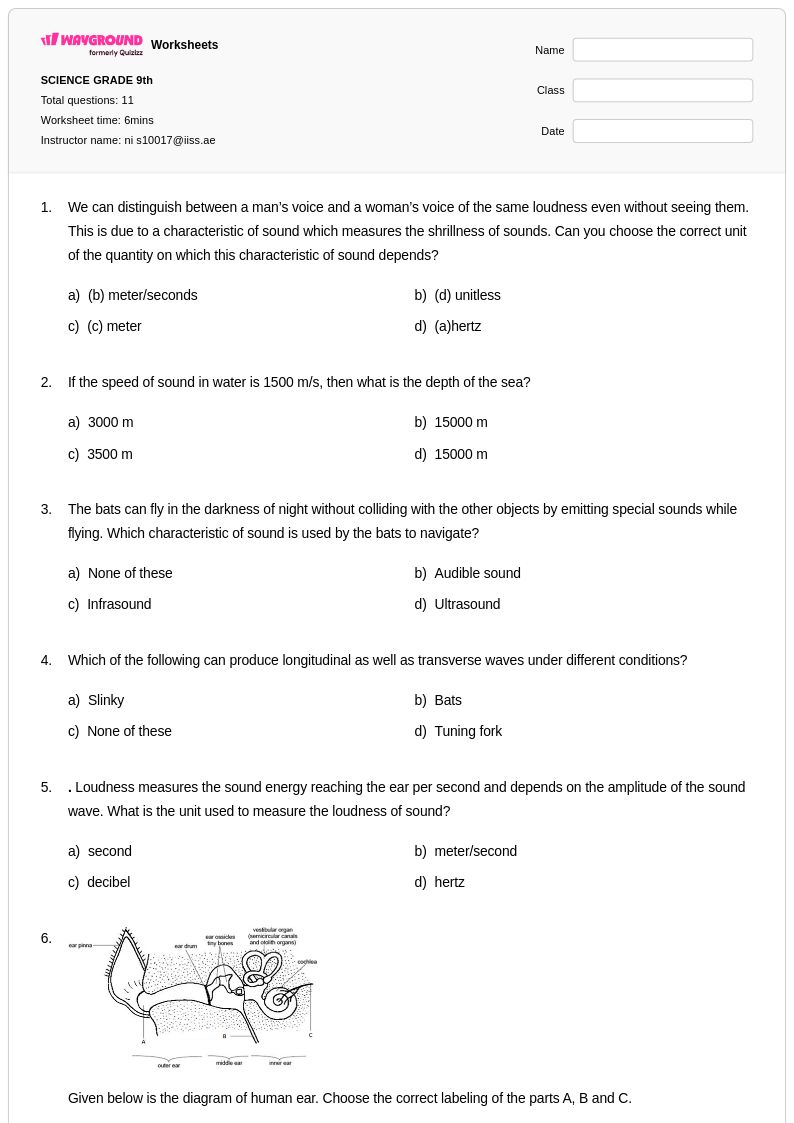
11 Q
9th
Explore Other Subject Worksheets for year 9
Explore printable Ear Notching worksheets for Year 9
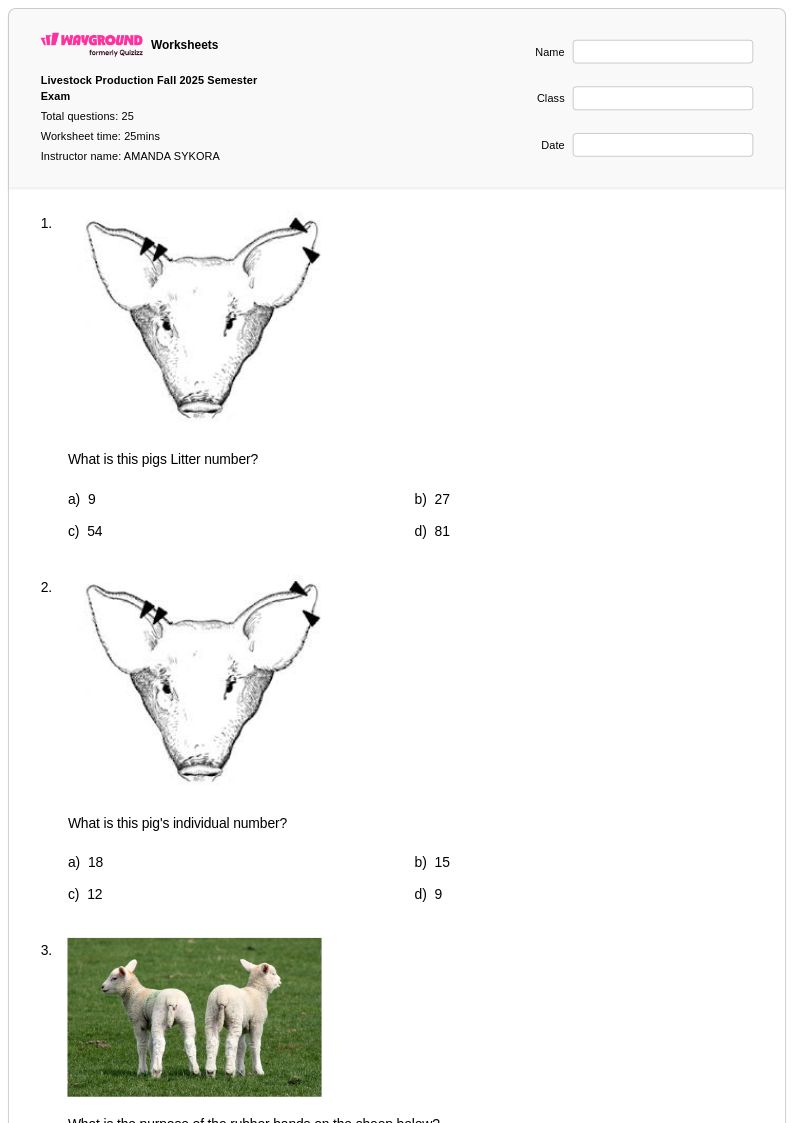
Ear notching worksheets for Year 9 life science students provide essential practice in understanding this fundamental livestock identification technique used in agricultural and veterinary sciences. These comprehensive worksheets available through Wayground (formerly Quizizz) help students master the systematic process of creating permanent identification marks on animal ears, enabling them to interpret notching patterns, understand their practical applications in animal husbandry, and connect this traditional method to modern agricultural practices. Students develop critical analytical skills as they work through practice problems that require them to decode existing notch patterns, create new identification systems, and evaluate the advantages and limitations of this identification method. Each worksheet collection includes detailed answer keys and is available as free printables in pdf format, allowing educators to seamlessly integrate these resources into their life science curriculum while providing students with immediate feedback on their understanding of this specialized agricultural technique.
Wayground (formerly Quizizz) empowers teachers with millions of educator-created resources specifically designed to support Year 9 life science instruction in specialized topics like ear notching. The platform's robust search and filtering capabilities enable teachers to quickly locate worksheets that align with agricultural science standards and match their students' specific learning needs. These differentiation tools allow educators to customize content complexity, modify practice problems, and adapt materials for diverse learning styles, ensuring that all students can successfully engage with this technical agricultural concept. Available in both printable and digital pdf formats, these worksheet collections support flexible lesson planning whether teachers need resources for in-class activities, homework assignments, or targeted remediation sessions. The platform's extensive customization options help teachers create enrichment opportunities for advanced students while providing additional skill practice and support for those who need extra reinforcement in understanding livestock identification systems and their role in modern agriculture.
FAQs
How do I teach ear notching to agricultural science students?
What practice problems help students get better at reading ear notch patterns?
What mistakes do students commonly make when calculating ear notch identification numbers?
How can I use ear notching worksheets to support different skill levels in my class?
How do I use ear notching worksheets from Wayground in my classroom?
How does ear notching connect to broader agricultural science and life science standards?