Free Printable Early Human Migration Worksheets for Year 5
Discover free Year 5 Early Human Migration worksheets and printables that help students explore ancient civilizations, migration patterns, and prehistoric societies through engaging practice problems with comprehensive answer keys.
Explore printable Early Human Migration worksheets for Year 5
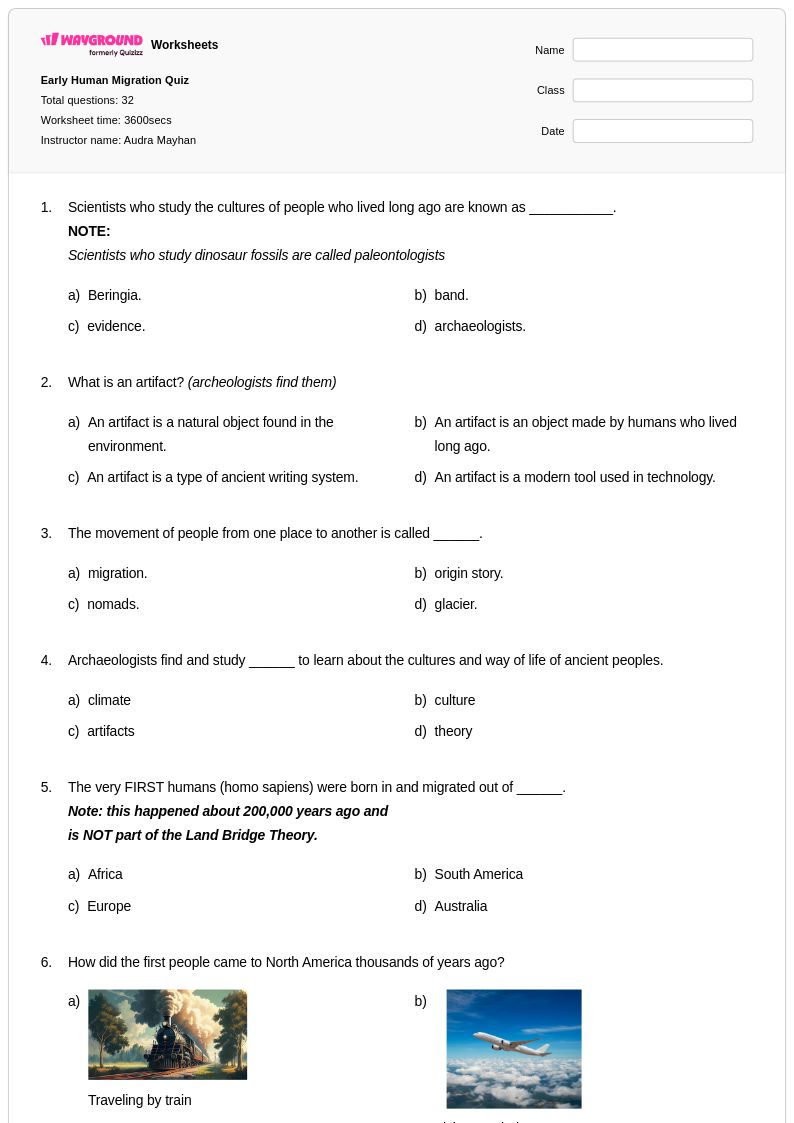
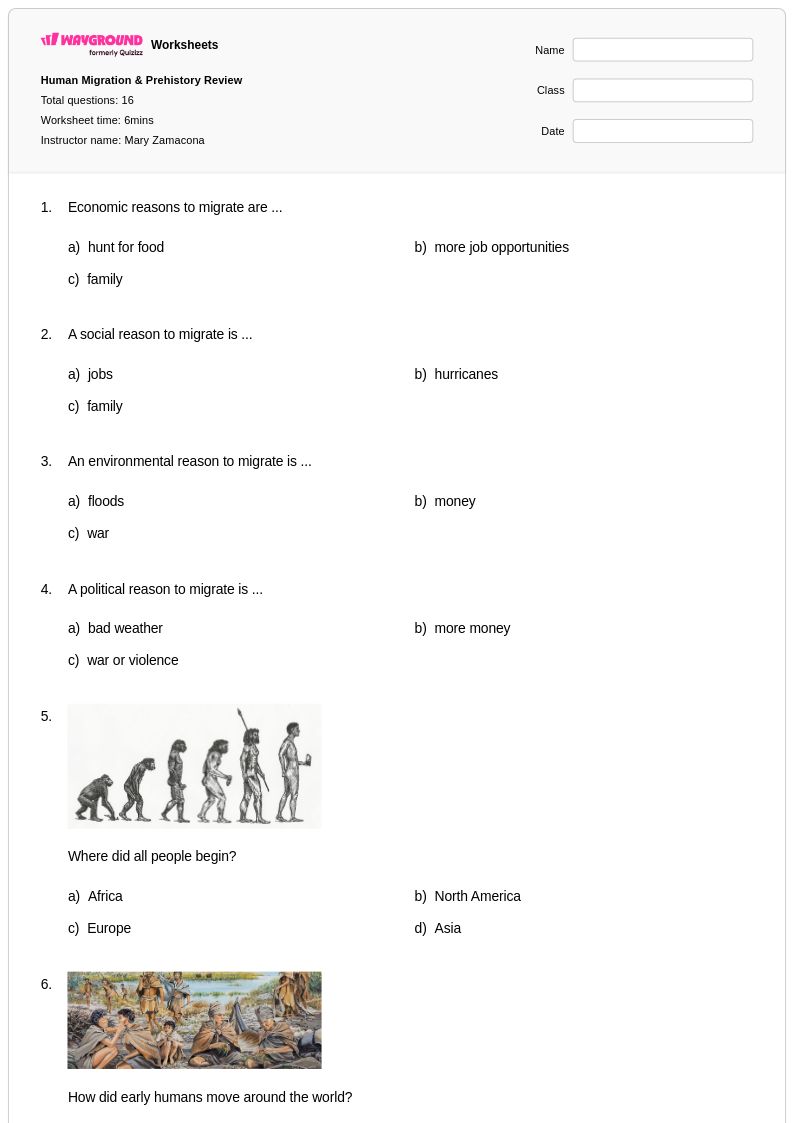
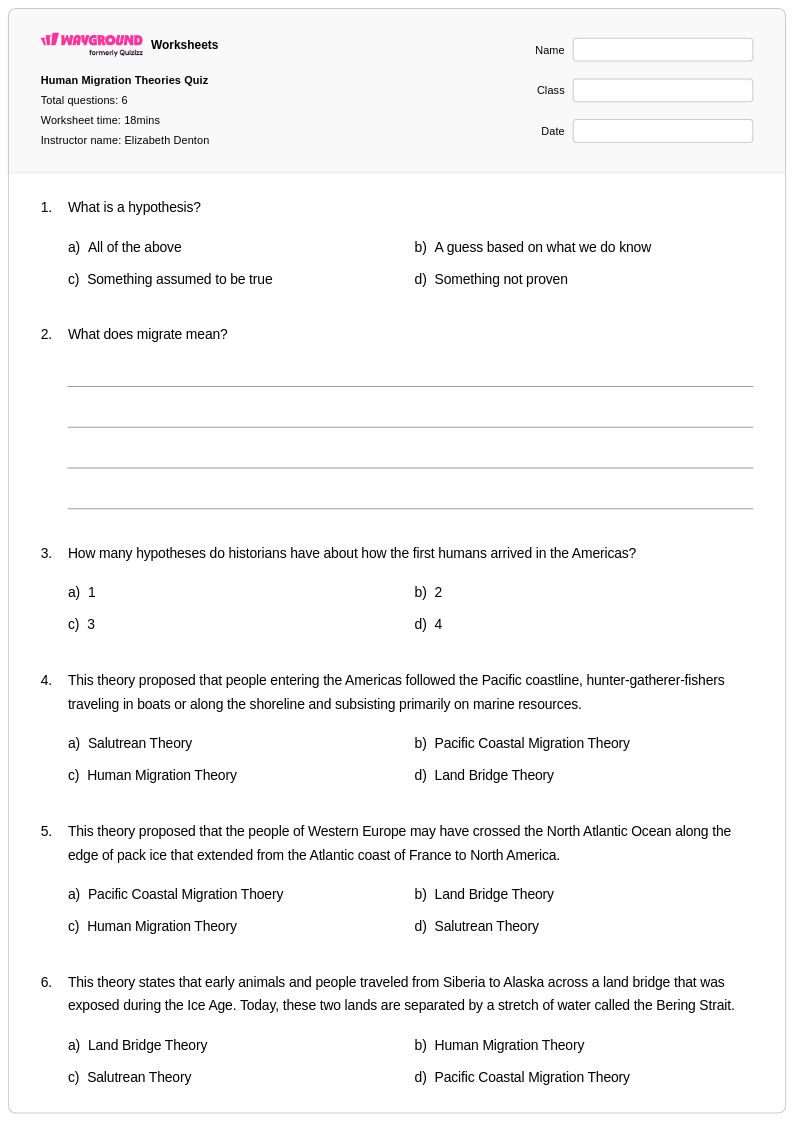
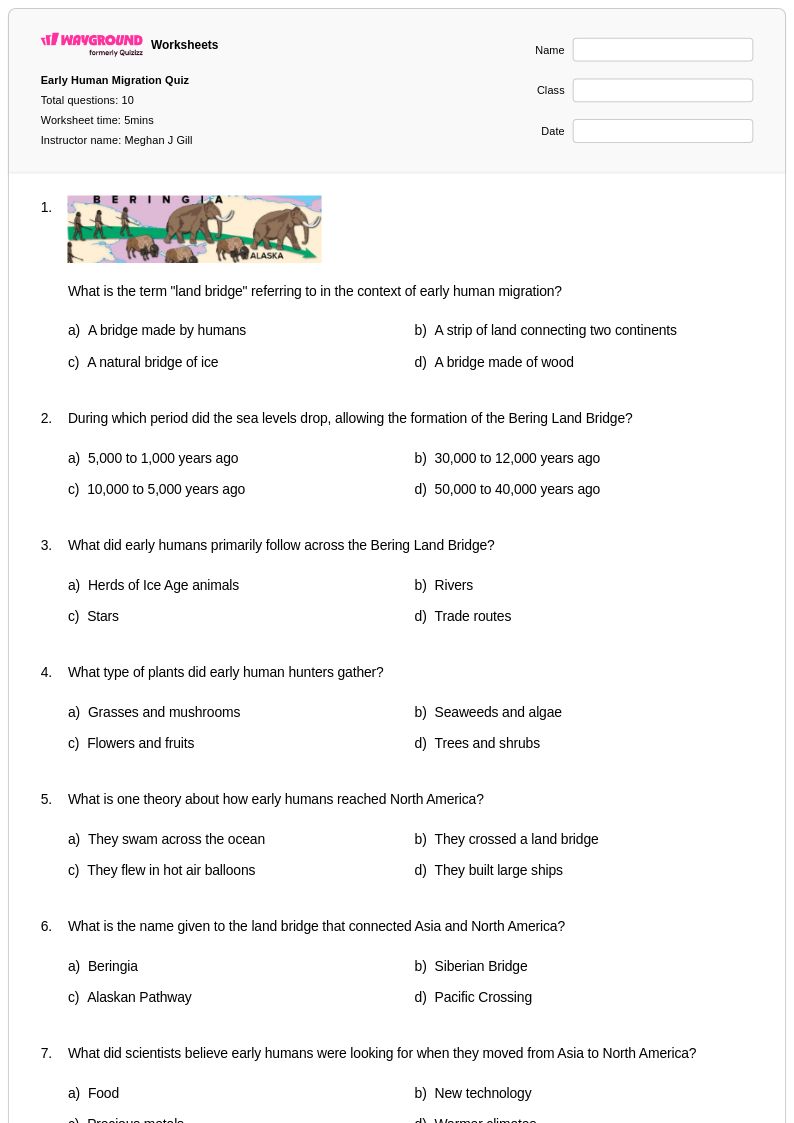
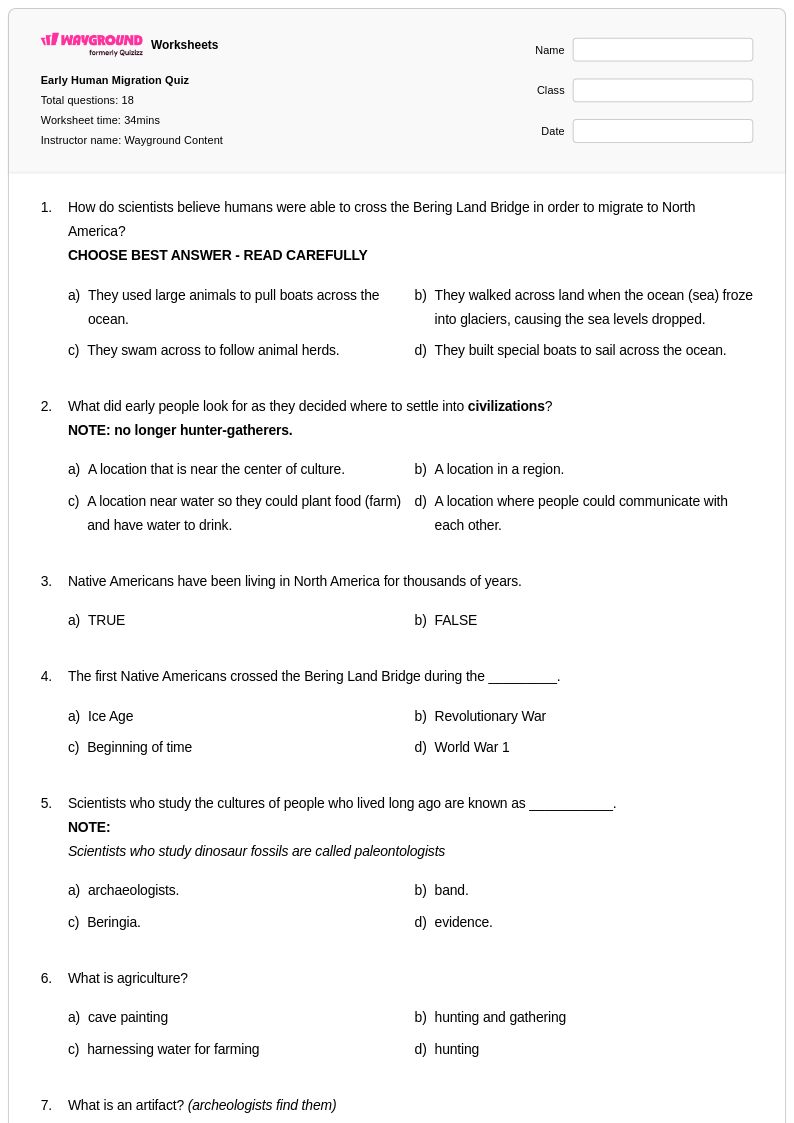
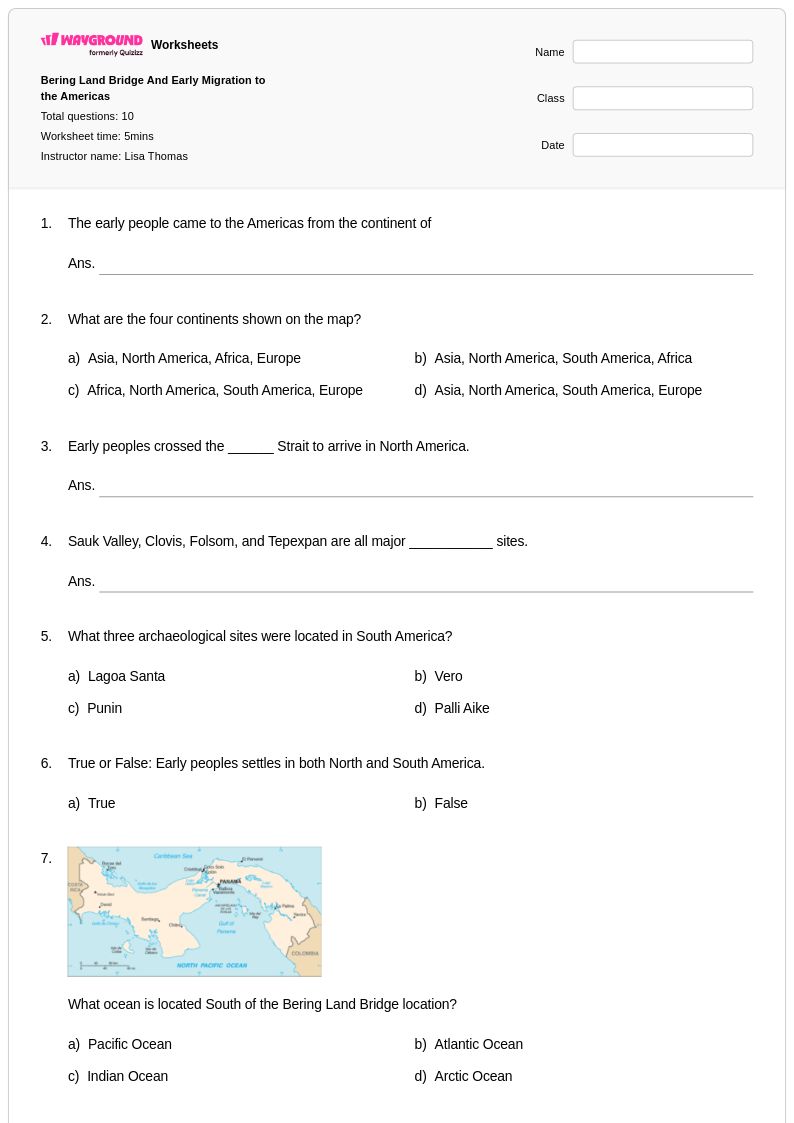
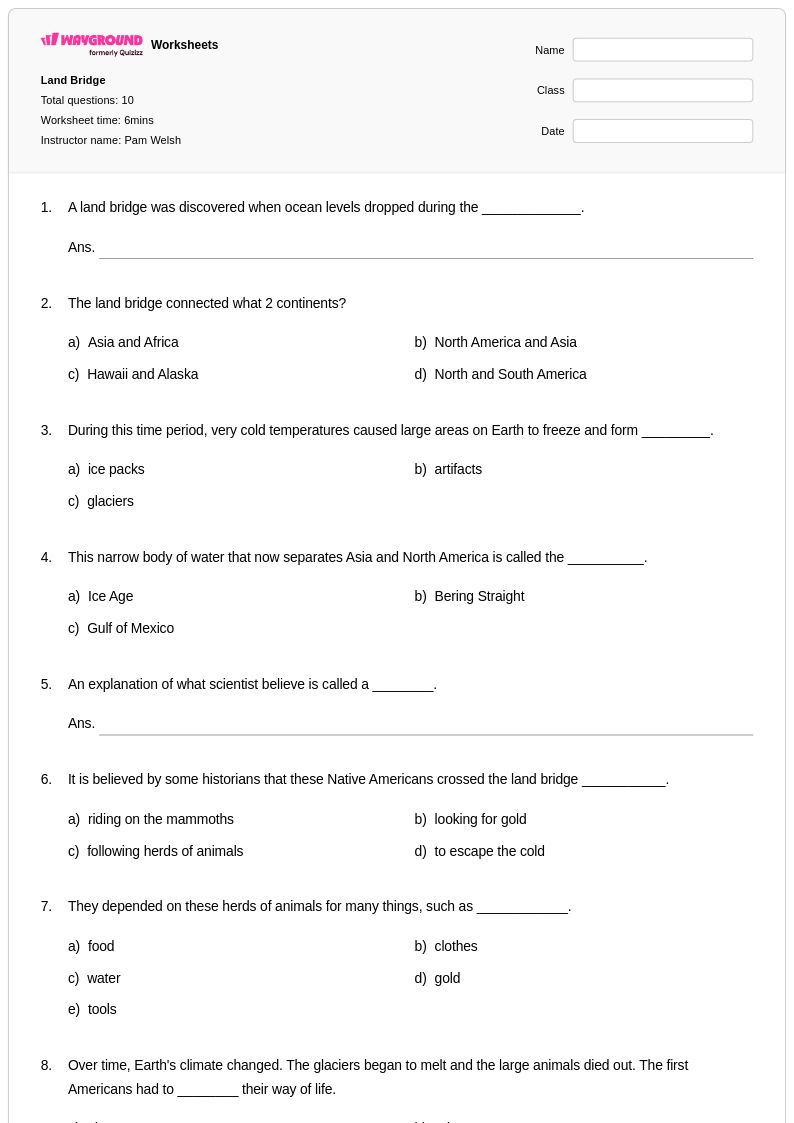
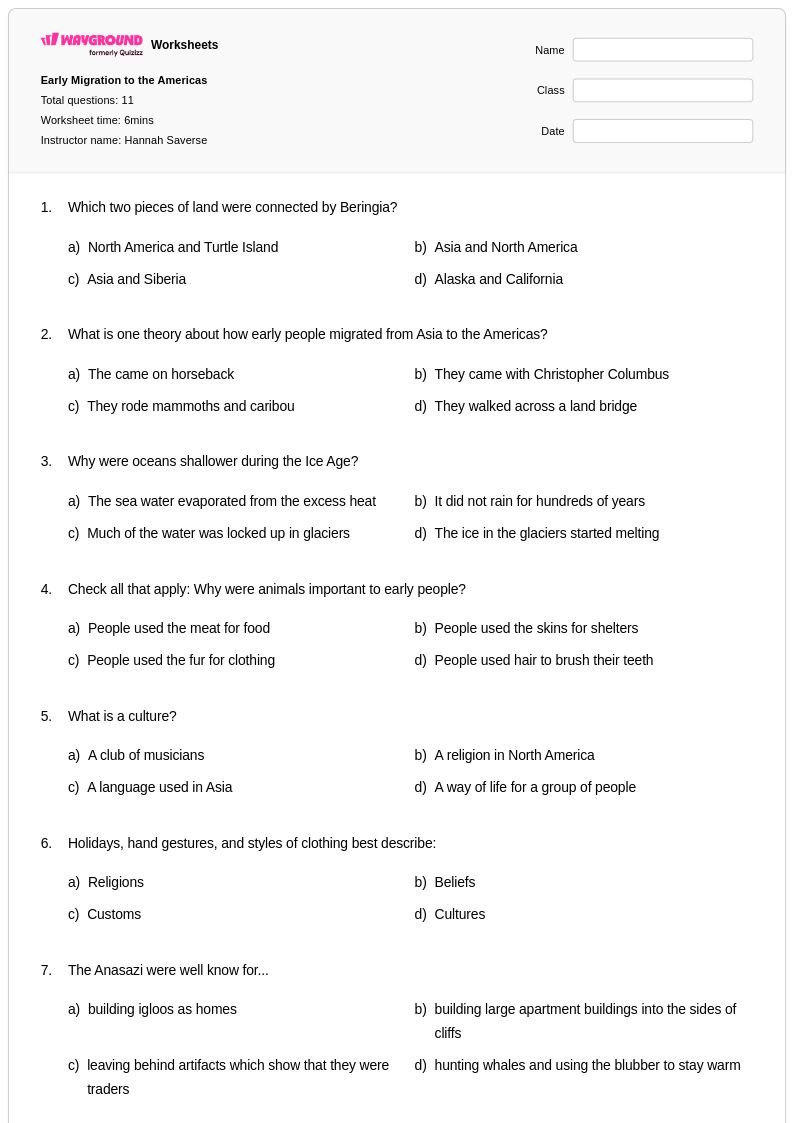
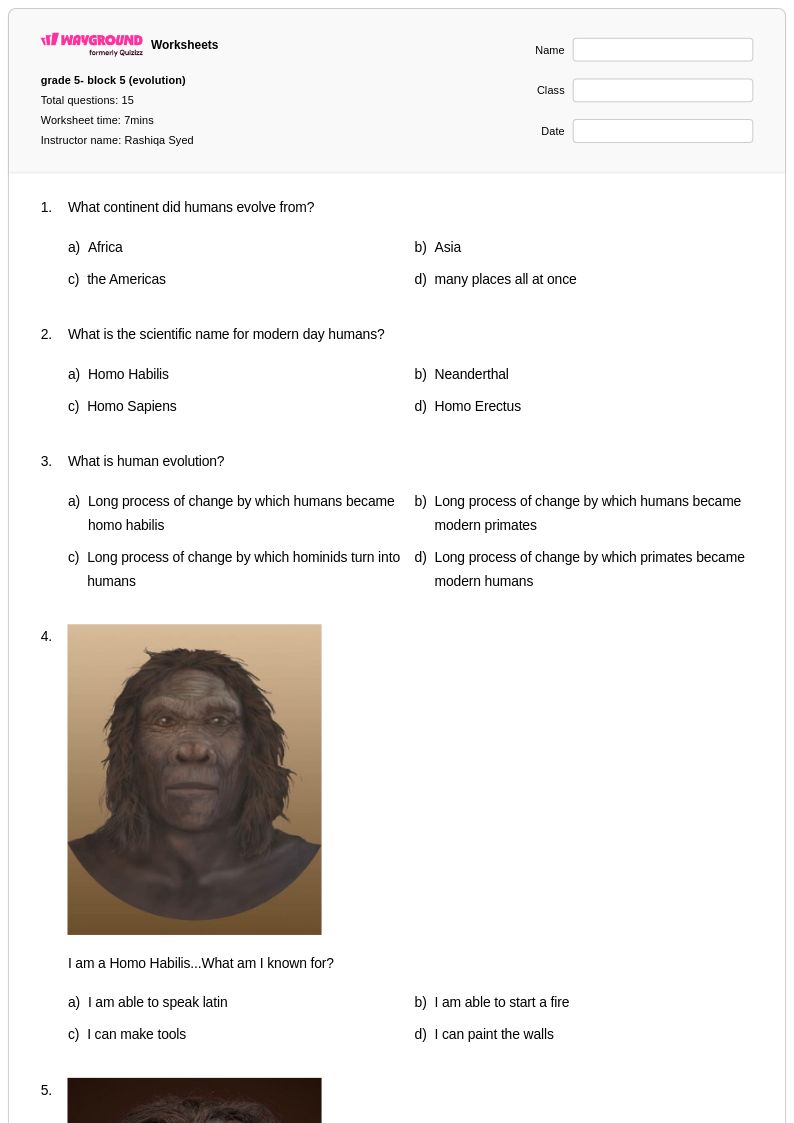
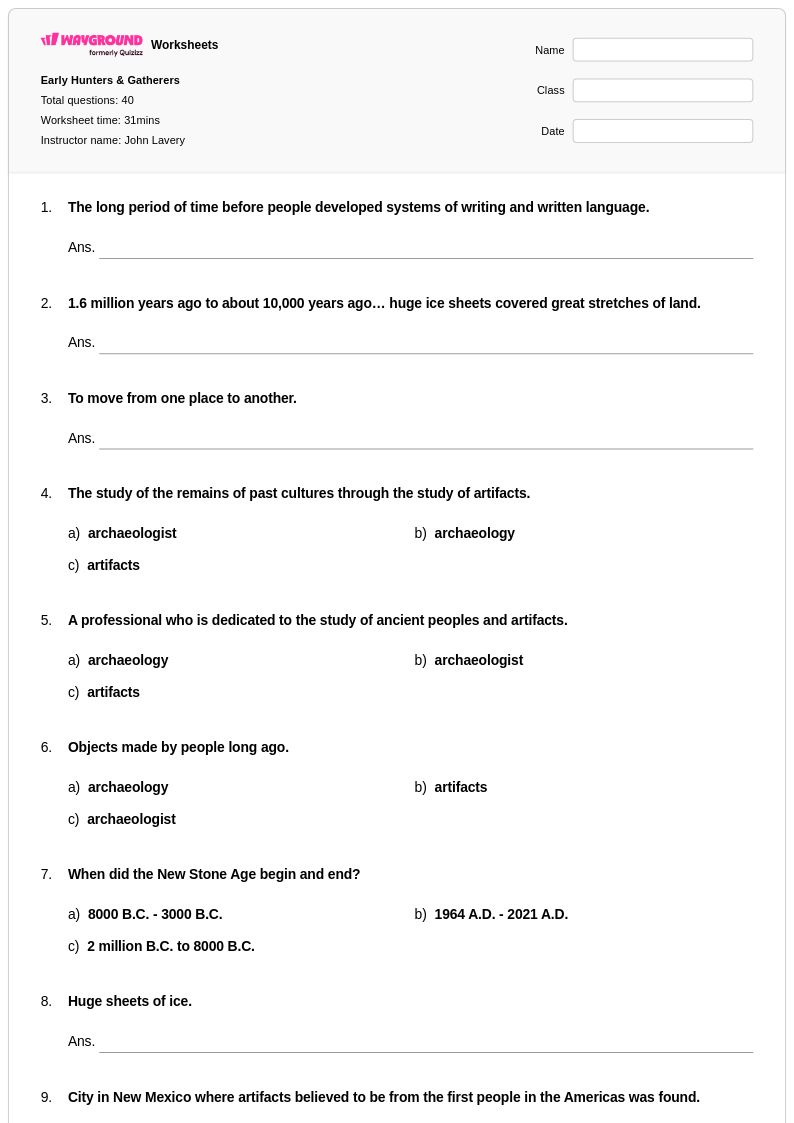
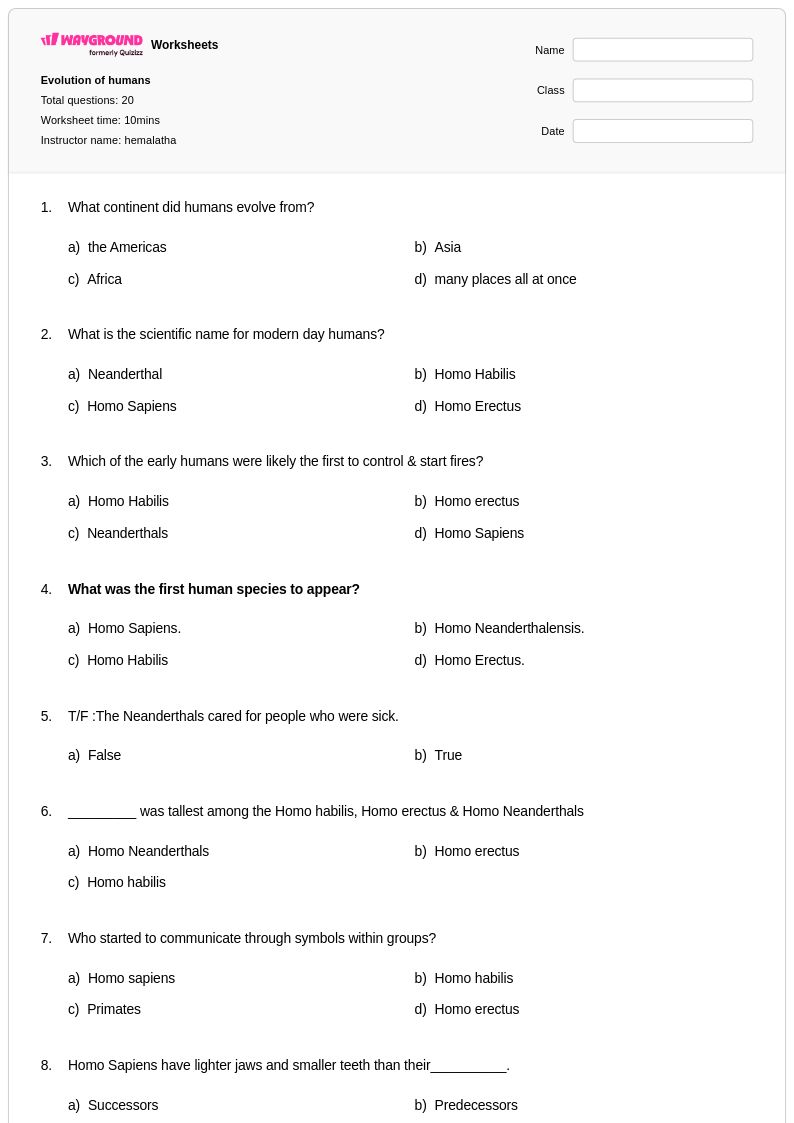
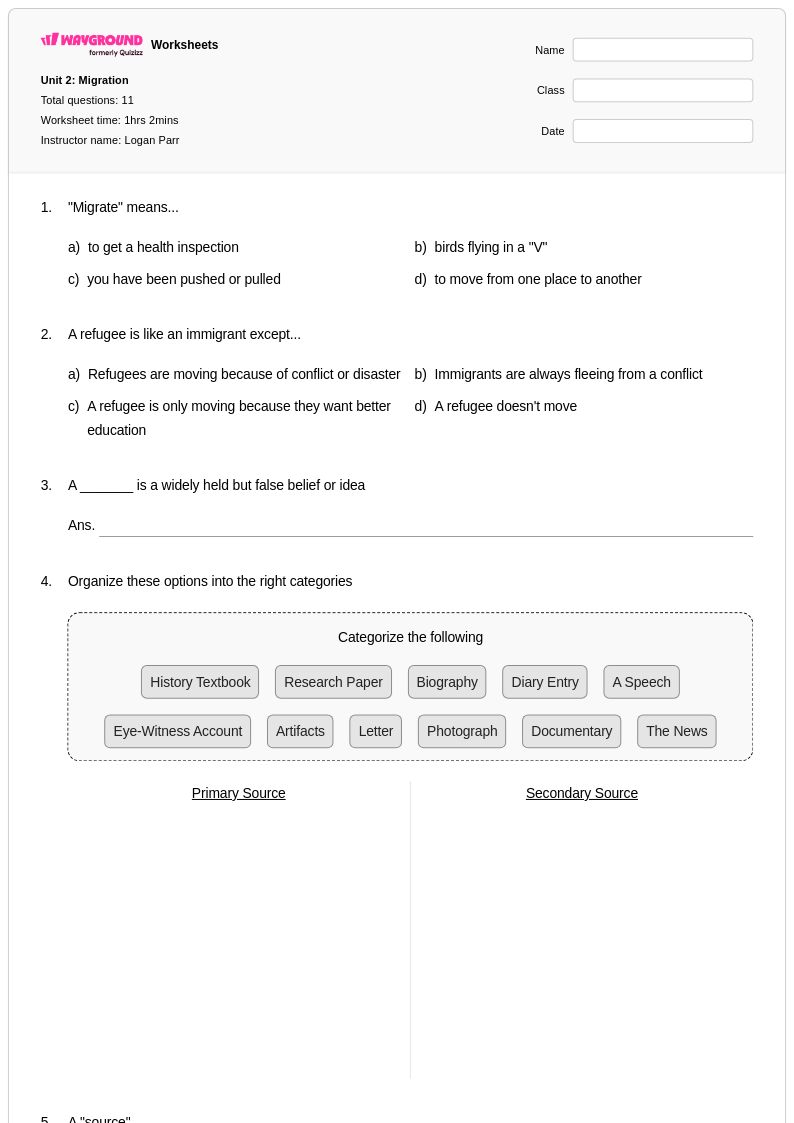
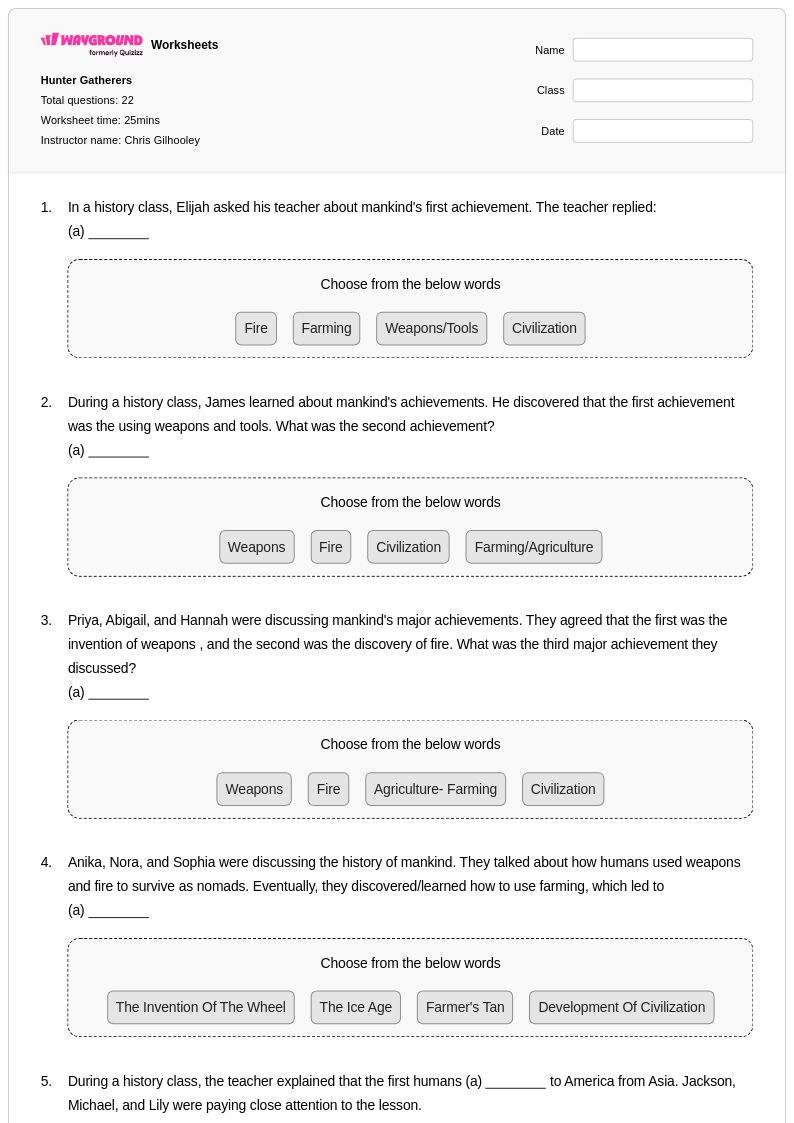
Early human migration worksheets for Year 5 students available through Wayground (formerly Quizizz) provide comprehensive exploration of humanity's earliest movements across continents and the factors that drove these monumental journeys. These educational resources strengthen critical thinking skills as students analyze archaeological evidence, trace migration routes on maps, and examine how early humans adapted to diverse environments from Africa to Asia, Europe, and eventually the Americas. The worksheets feature engaging practice problems that challenge students to connect climate changes, geographic barriers, and resource availability to migration patterns, while accompanying answer keys enable educators to facilitate meaningful discussions about human adaptation and survival strategies. Available as free printables and interactive digital formats, these materials help students develop spatial reasoning and chronological thinking skills essential for understanding how early human societies spread across the globe over thousands of years.
Wayground (formerly Quizizz) supports educators with an extensive collection of teacher-created resources focused on early human migration, offering millions of worksheets that can be easily located through robust search and filtering capabilities. The platform's standards-aligned materials enable teachers to differentiate instruction effectively, providing both foundational content for students who need additional support and enrichment activities for advanced learners ready to explore complex migration theories and archaeological discoveries. Flexible customization tools allow educators to modify worksheets to match their specific curriculum needs, while the availability of both printable pdf formats and digital interactive versions ensures seamless integration into any classroom setting. These comprehensive resources streamline lesson planning by providing ready-to-use materials for skill practice, targeted remediation of challenging concepts like cause-and-effect relationships in human migration, and extension activities that deepen students' understanding of how geography and climate influenced the development of early human civilizations.
FAQs
How do I teach early human migration to middle or high school students?
Teaching early human migration is most effective when students can connect environmental pressures to human decision-making. Start with the Out of Africa theory as a foundation, then layer in climate shifts, resource scarcity, and technological developments like tools and fire that enabled movement into new regions. Using migration maps alongside primary archaeological evidence helps students visualize the sequence and scale of prehistoric population movements. Connecting migration routes to the development of distinct cultural groups reinforces why geography and environment shaped early civilizations differently across continents.
What exercises help students practice analyzing early human migration patterns?
Map-based exercises are among the most effective tools for practicing early human migration, as they require students to trace routes, identify land bridge crossings such as Beringia, and connect movement patterns to environmental conditions. Structured analysis tasks that ask students to evaluate archaeological evidence, such as fossil records or tool distributions, build critical thinking alongside content knowledge. Practice problems that ask students to compare migration timelines across continents reinforce sequencing skills and deepen understanding of how early humans populated diverse environments.
What misconceptions do students commonly have about early human migration?
A frequent misconception is that early human migration was a single, linear event rather than a series of overlapping, multi-generational movements spanning tens of thousands of years. Students often conflate Homo sapiens migration with the movement of earlier hominid species, blurring the Out of Africa narrative. Another common error is assuming migration was purposeful or planned, when in reality it was largely driven by gradual environmental pressures and resource availability. Addressing these misconceptions directly through evidence-based activities helps students build a more accurate and nuanced understanding of prehistoric population movement.
How can I use early human migration worksheets to support different learners in my classroom?
Early human migration worksheets on Wayground are available as both printable PDFs and in digital formats, making them adaptable for traditional classrooms and technology-integrated learning environments alike. Teachers can host worksheets as a quiz on Wayground and apply student-level accommodations such as extended time, read-aloud support for struggling readers, and reduced answer choices to lower cognitive load for students who need it. These settings can be configured individually or for the whole class and are saved for reuse across future sessions, so differentiation does not require repetitive setup.
What key concepts should early human migration worksheets cover?
Effective early human migration worksheets should cover the Out of Africa theory, the role of land bridges such as Beringia in enabling migration to the Americas, and the environmental and climatic factors that pushed populations into new regions. Students should also engage with how early humans adapted to diverse environments and how those adaptations contributed to the development of distinct cultural groups. Connecting archaeological evidence, such as fossil distribution and tool assemblages, to migration patterns is essential for building analytical skills alongside factual knowledge.
How does studying early human migration connect to broader world history standards?
Early human migration is foundational to understanding why civilizations emerged where and when they did, making it a natural entry point for world history curricula. The topic intersects with geographic literacy, environmental history, and the development of cultural diversity, all of which appear across K-12 social studies standards. By tracing how prehistoric populations spread from Africa to every continent, students gain a long-view perspective on human adaptation, cultural diffusion, and the origins of the distinct societies they will study throughout the rest of the course.