Free Printable Earth's Seasons Worksheets for Kindergarten
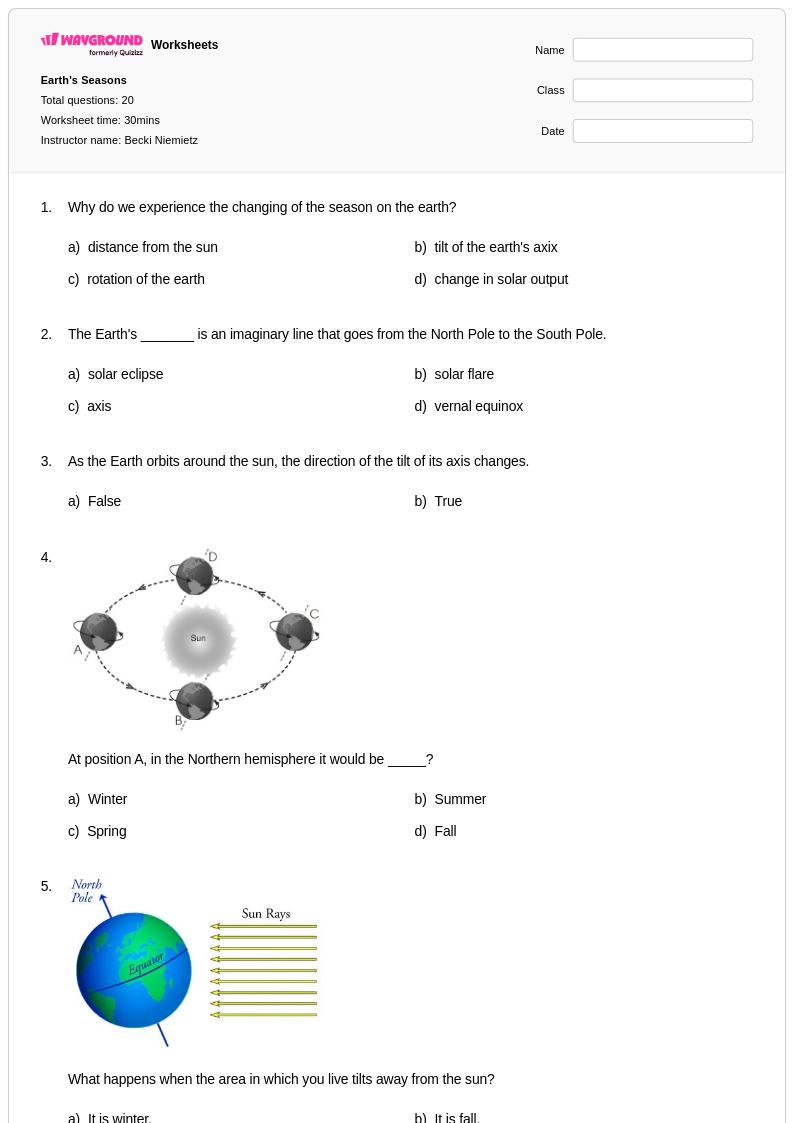
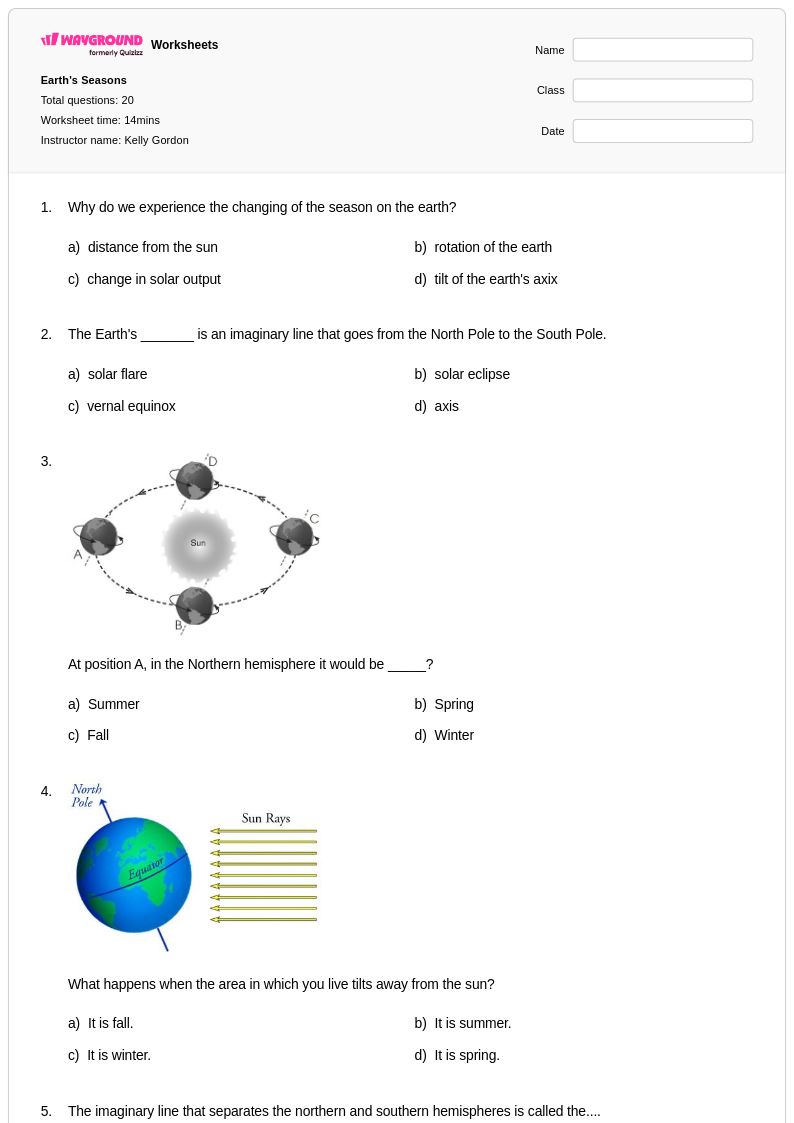
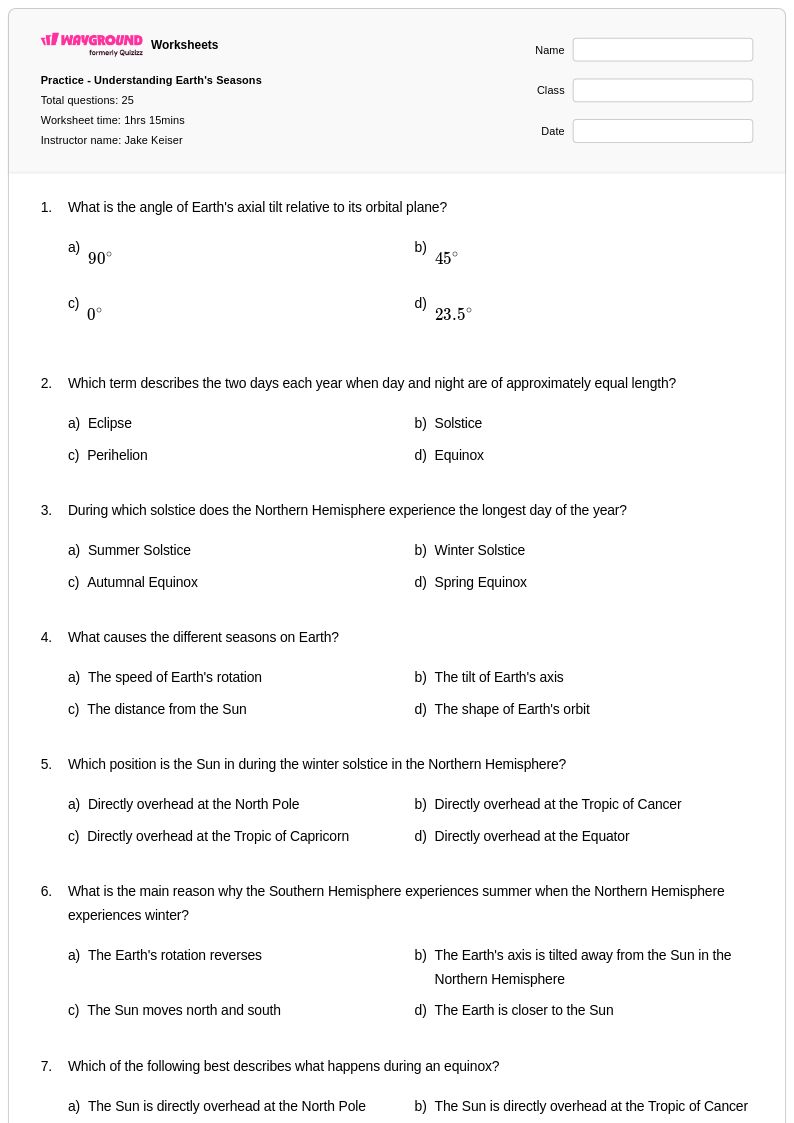
Kindergarten Earth's Seasons worksheets from Wayground help young learners explore seasonal changes through engaging printables, practice problems, and free PDF activities with comprehensive answer keys.
Explore printable Earth's Seasons worksheets for Kindergarten
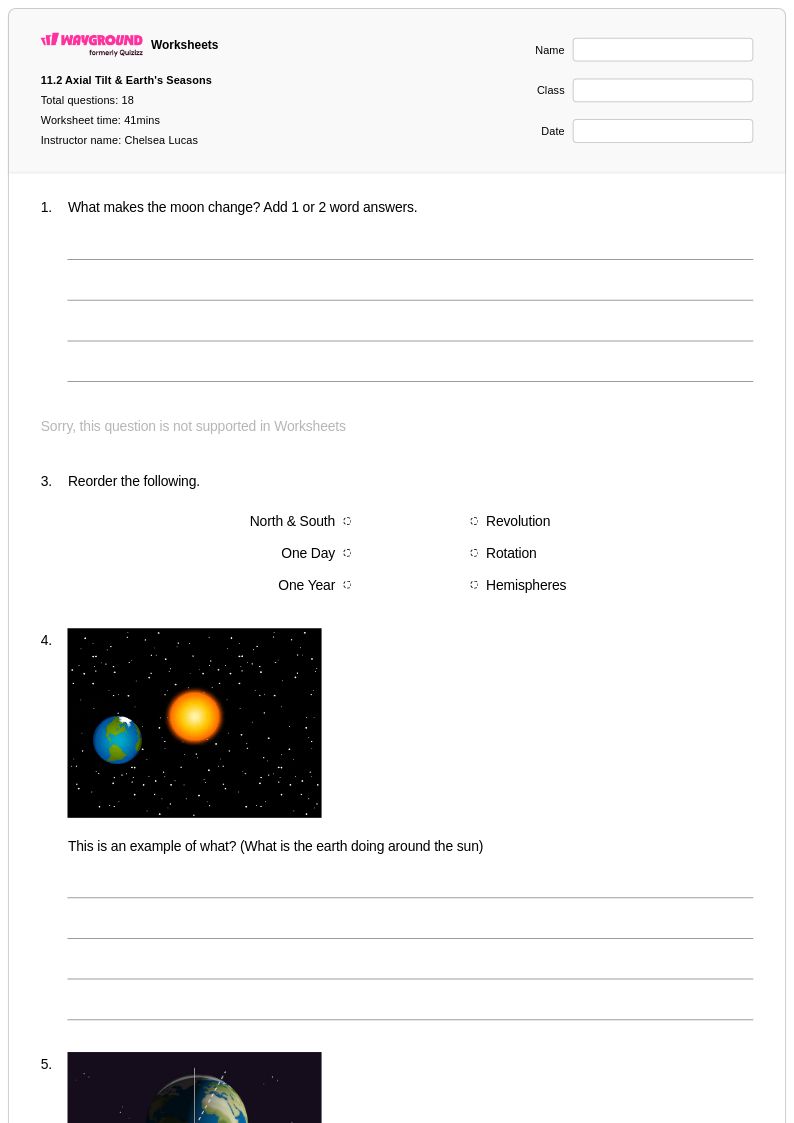
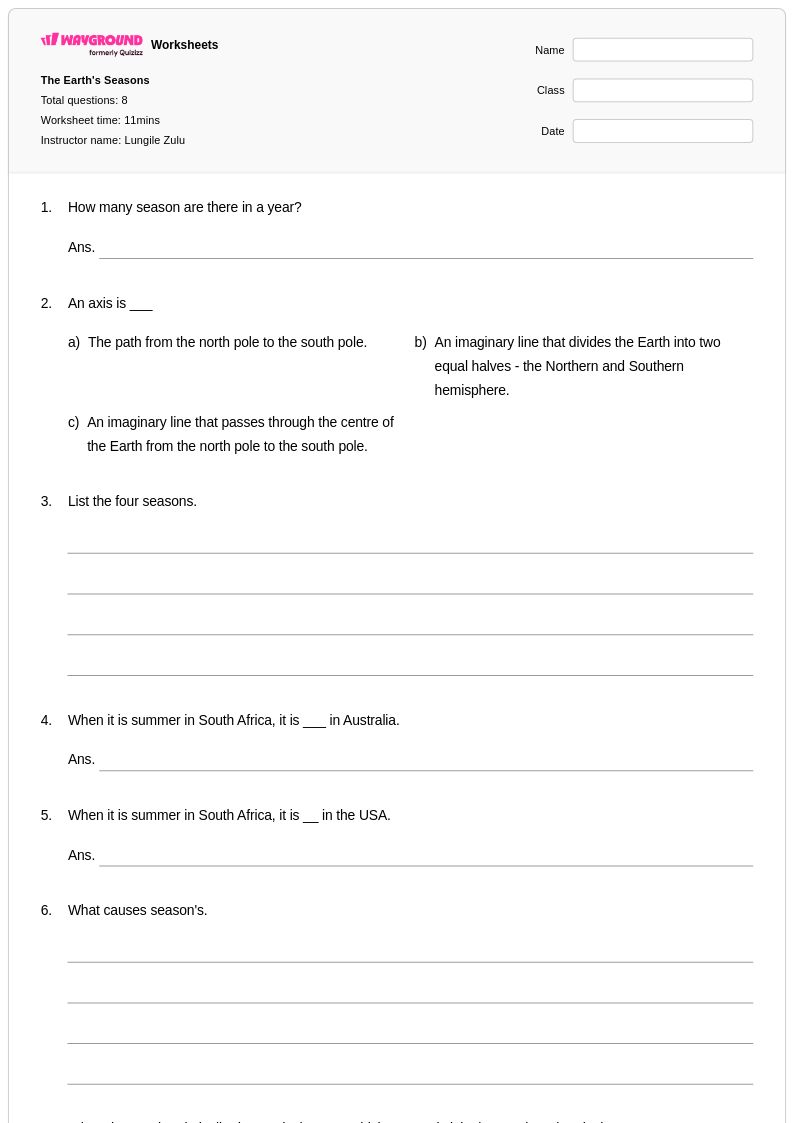
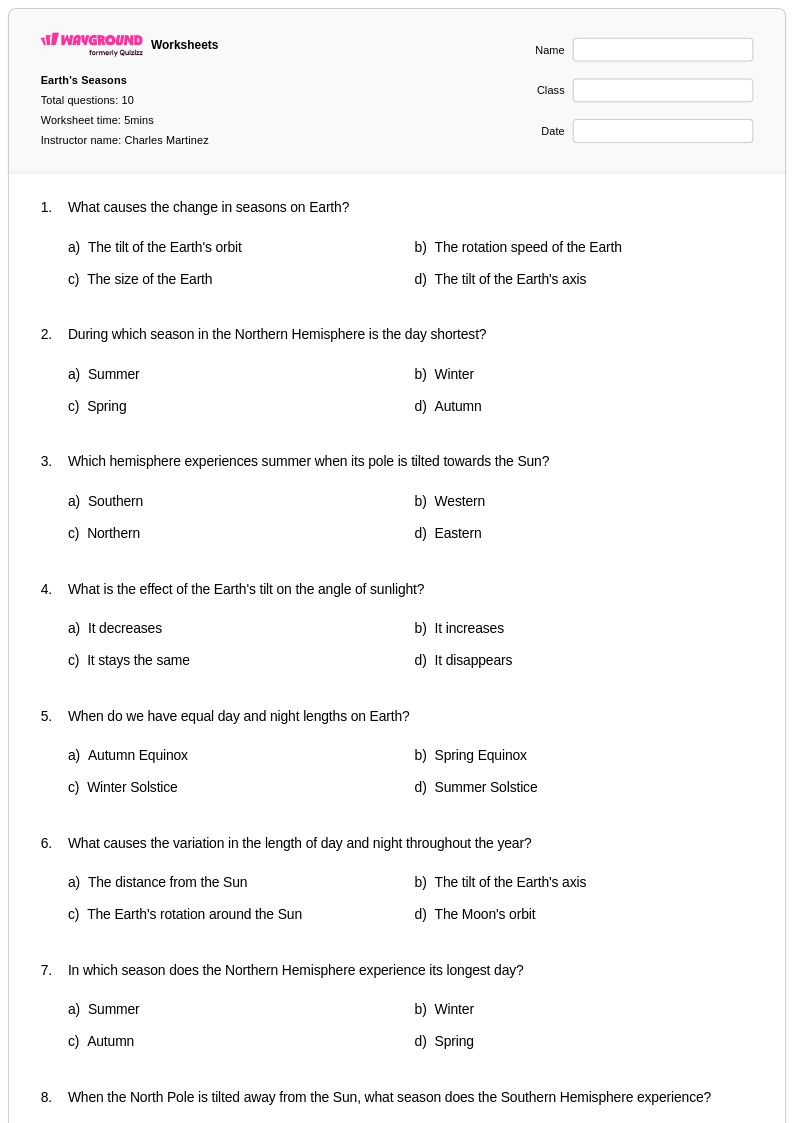
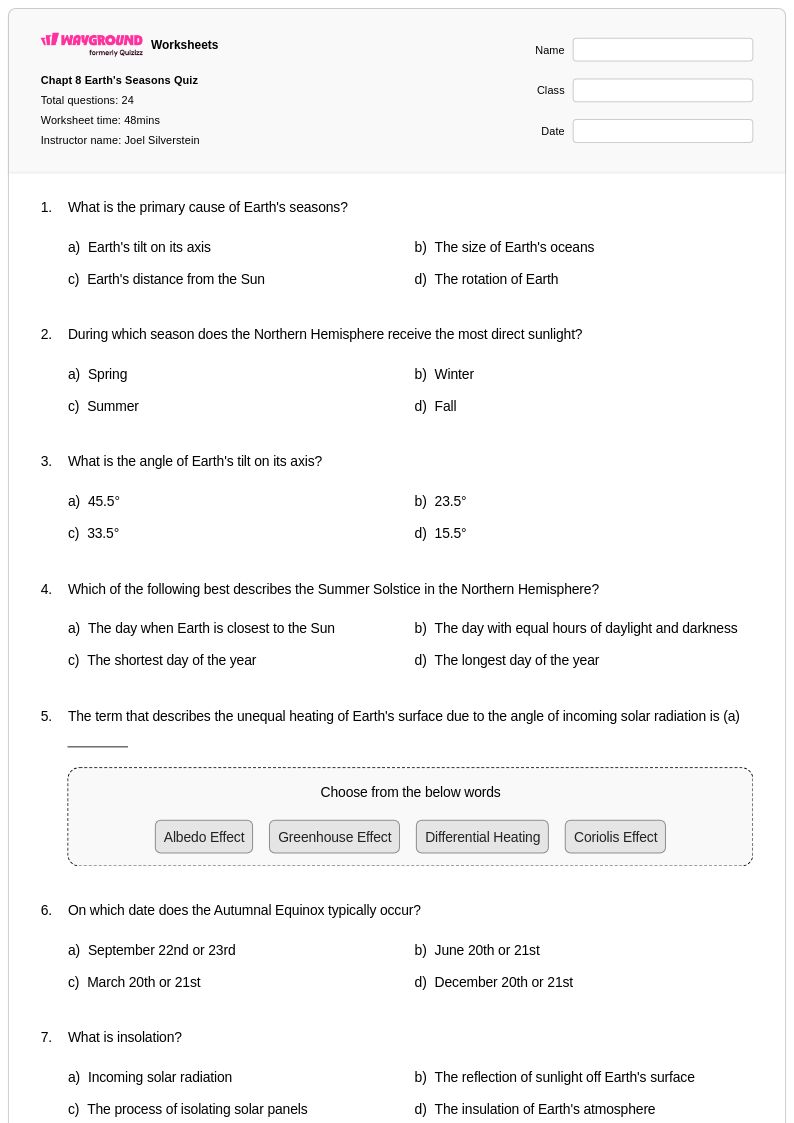
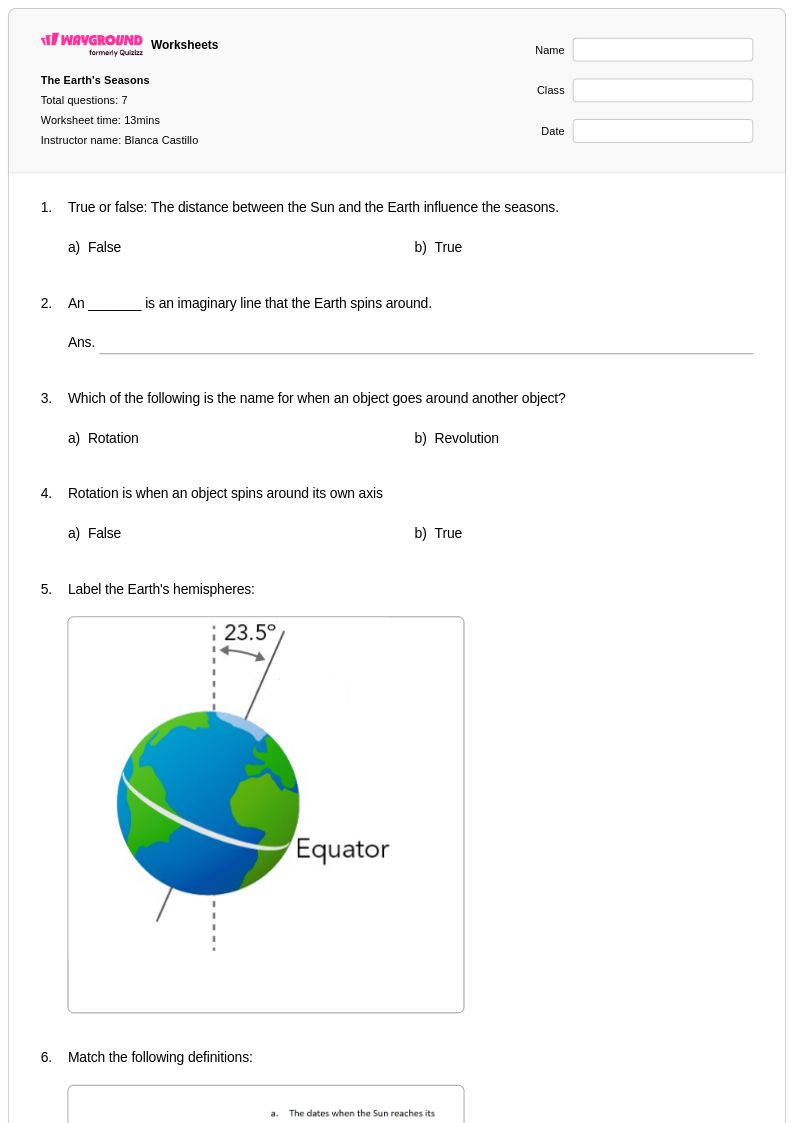
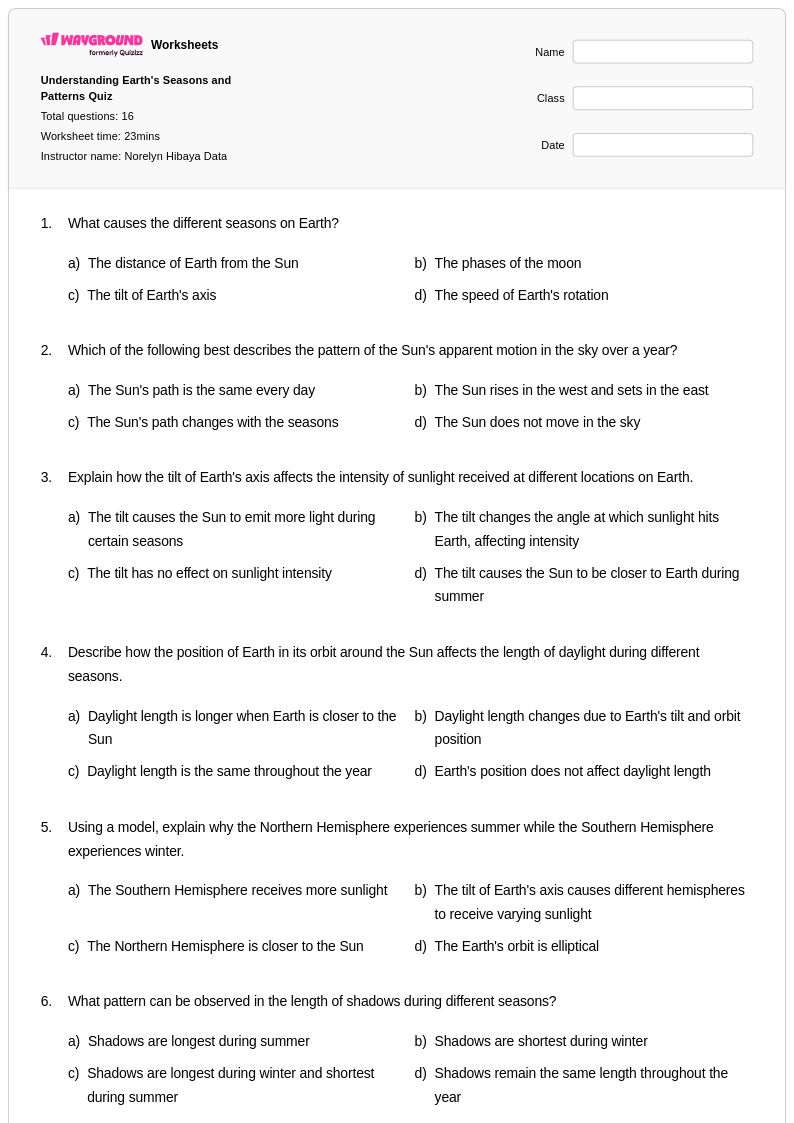
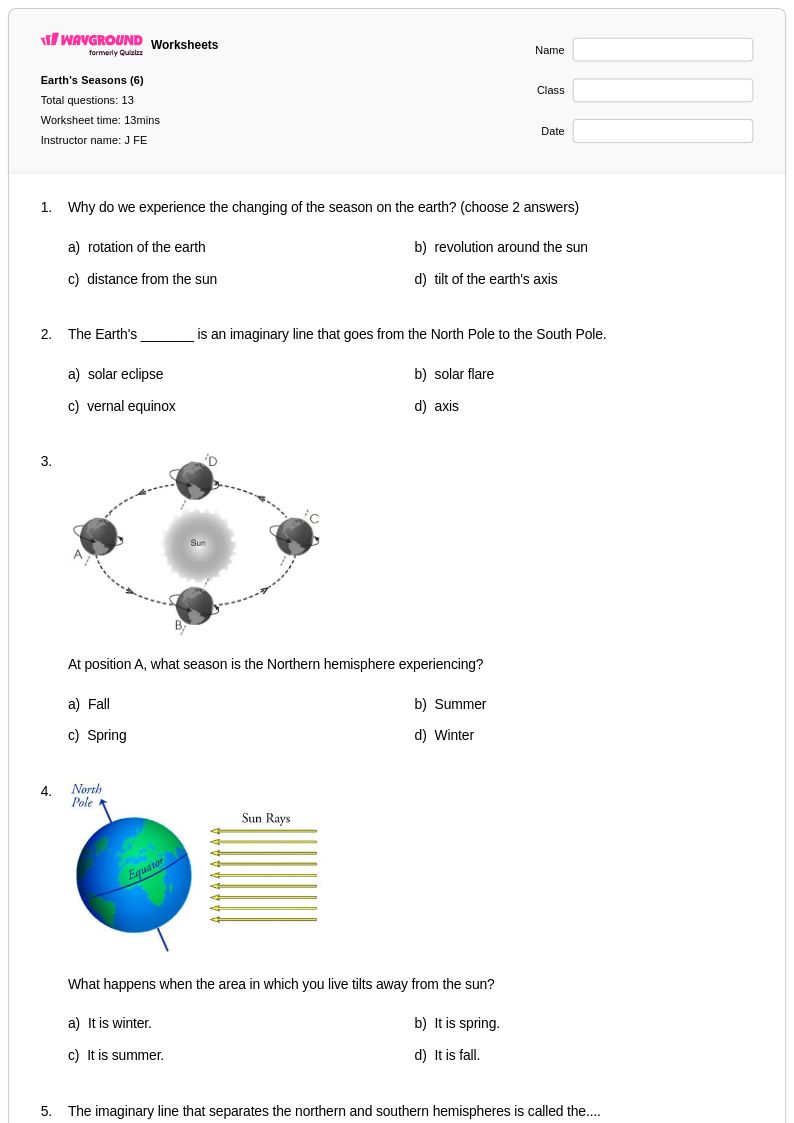
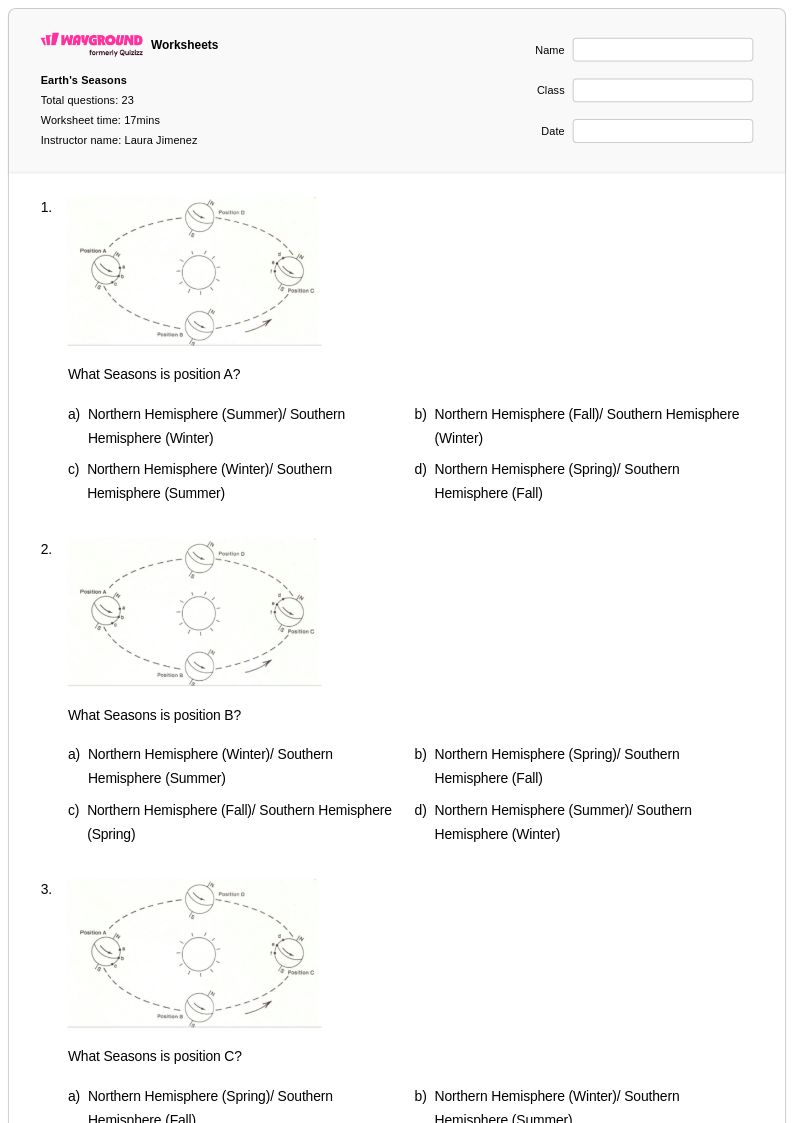
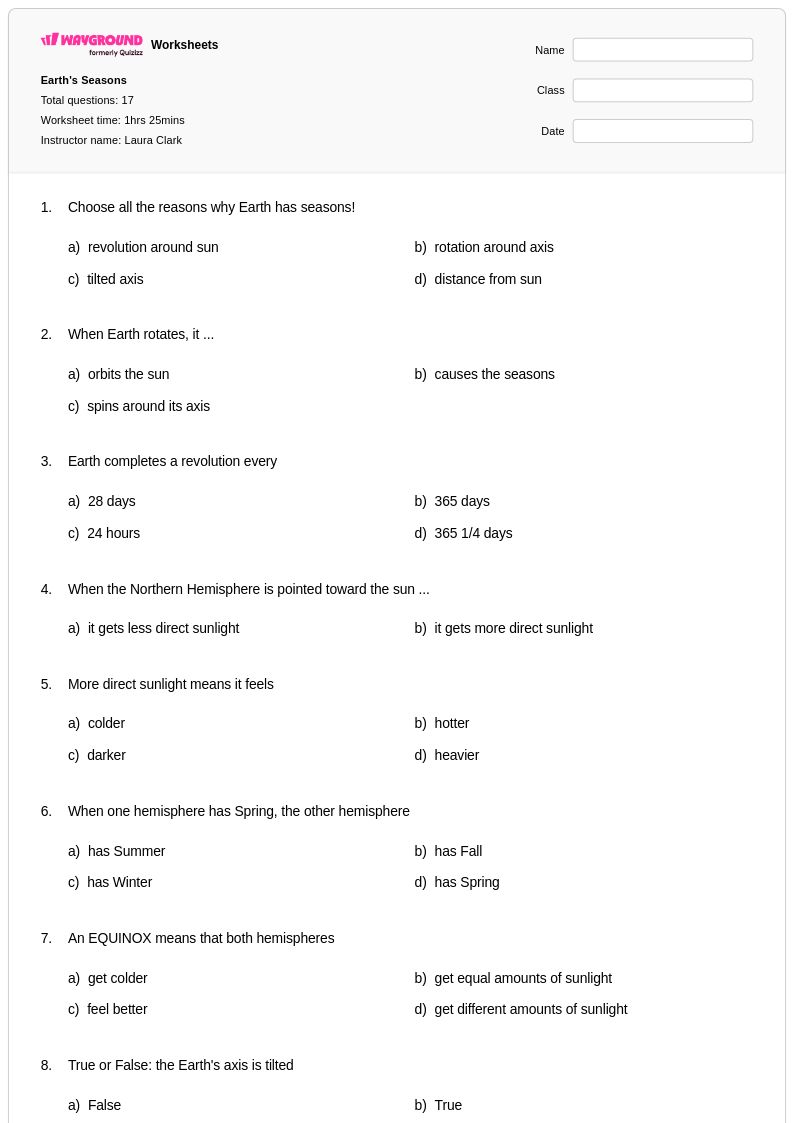
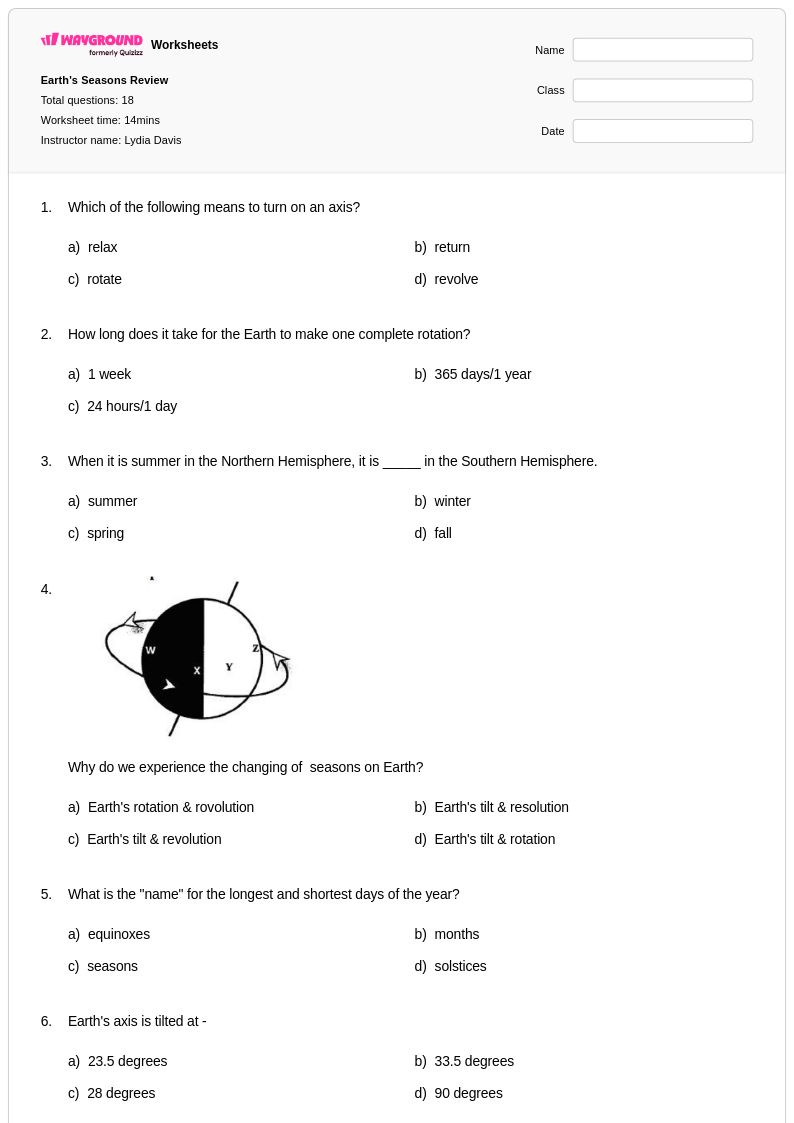
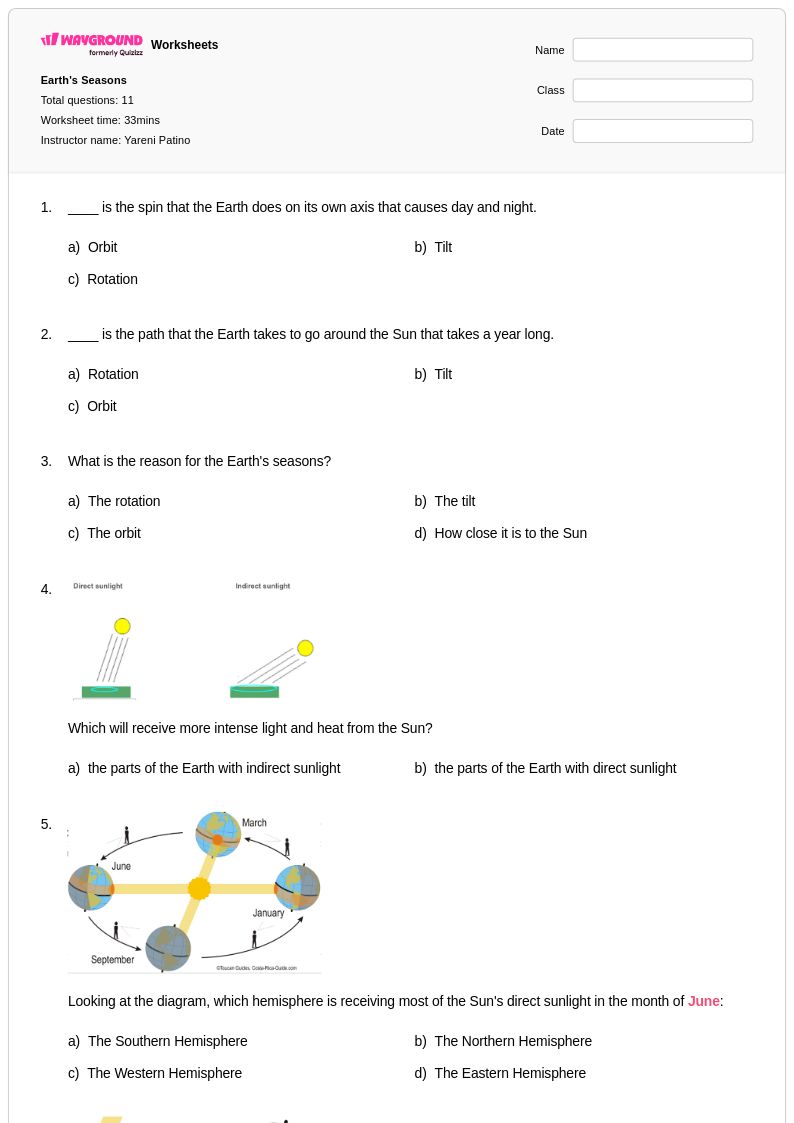
Earth's seasons worksheets for kindergarten students available through Wayground provide young learners with engaging, age-appropriate activities that introduce fundamental concepts about how our planet experiences different weather patterns and changes throughout the year. These carefully designed printables help kindergarteners develop observational skills while learning to identify seasonal characteristics such as temperature changes, weather patterns, and how plants and animals adapt to different times of year. The worksheet collection includes a variety of practice problems featuring visual recognition activities, simple matching exercises, and hands-on exploration tasks that strengthen early scientific thinking and vocabulary development. Each resource comes with a comprehensive answer key and is available as a free pdf download, making it easy for educators to incorporate seasonal science learning into their curriculum while supporting students' understanding of Earth's natural cycles.
Wayground (formerly Quizizz) empowers teachers with access to millions of educator-created resources specifically designed for kindergarten Earth's seasons instruction, featuring robust search and filtering capabilities that help instructors quickly locate materials aligned with early childhood science standards. The platform's differentiation tools allow teachers to customize worksheets based on individual student needs, while flexible formatting options provide both printable and digital pdf versions to accommodate diverse classroom environments and learning preferences. These comprehensive features streamline lesson planning by offering ready-to-use materials for skill practice, targeted remediation for students who need additional support, and enrichment opportunities for advanced learners, ensuring that all kindergarten students can successfully explore and understand the fascinating world of seasonal changes on Earth.
FAQs
How do I teach Earth's seasons in a way that clears up the common misconception about distance from the Sun?
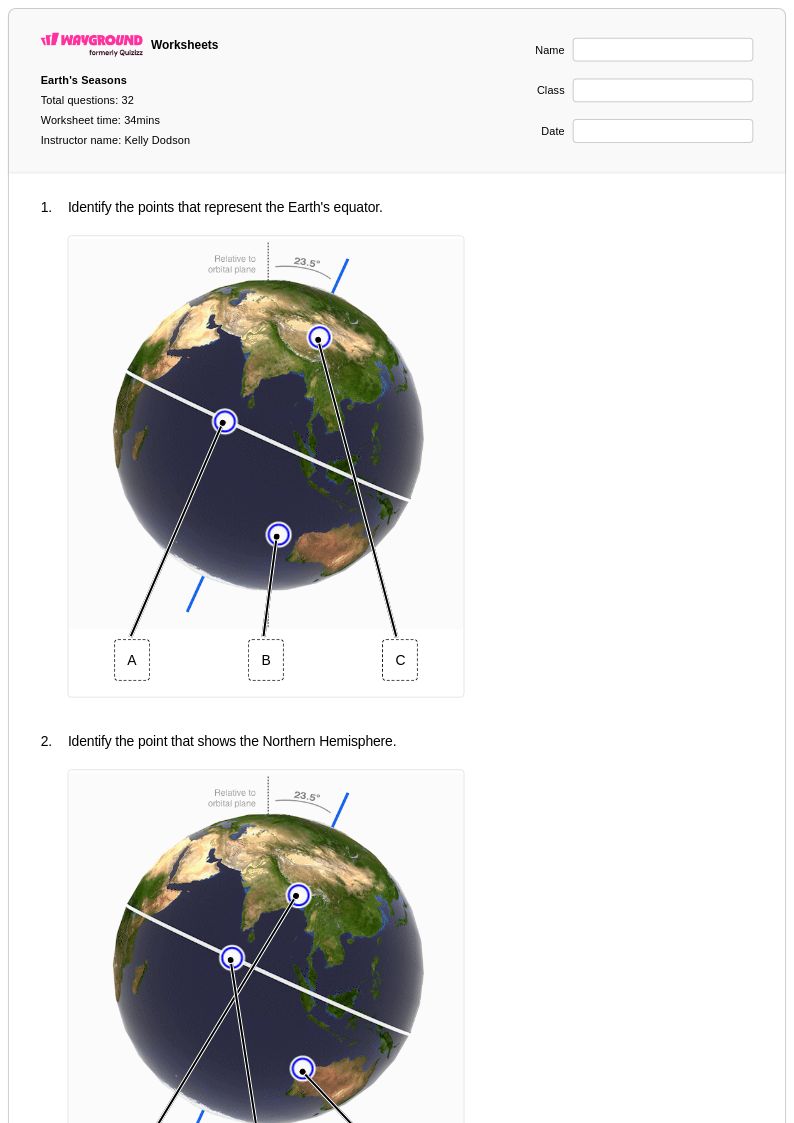
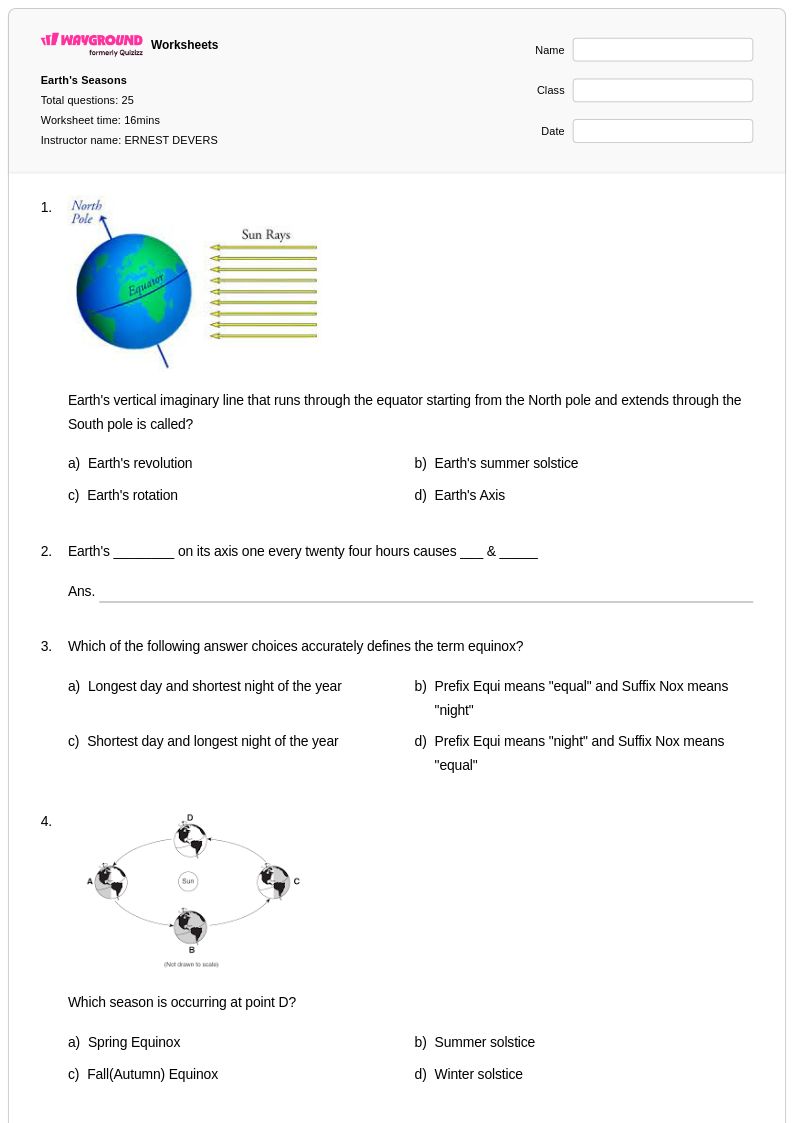
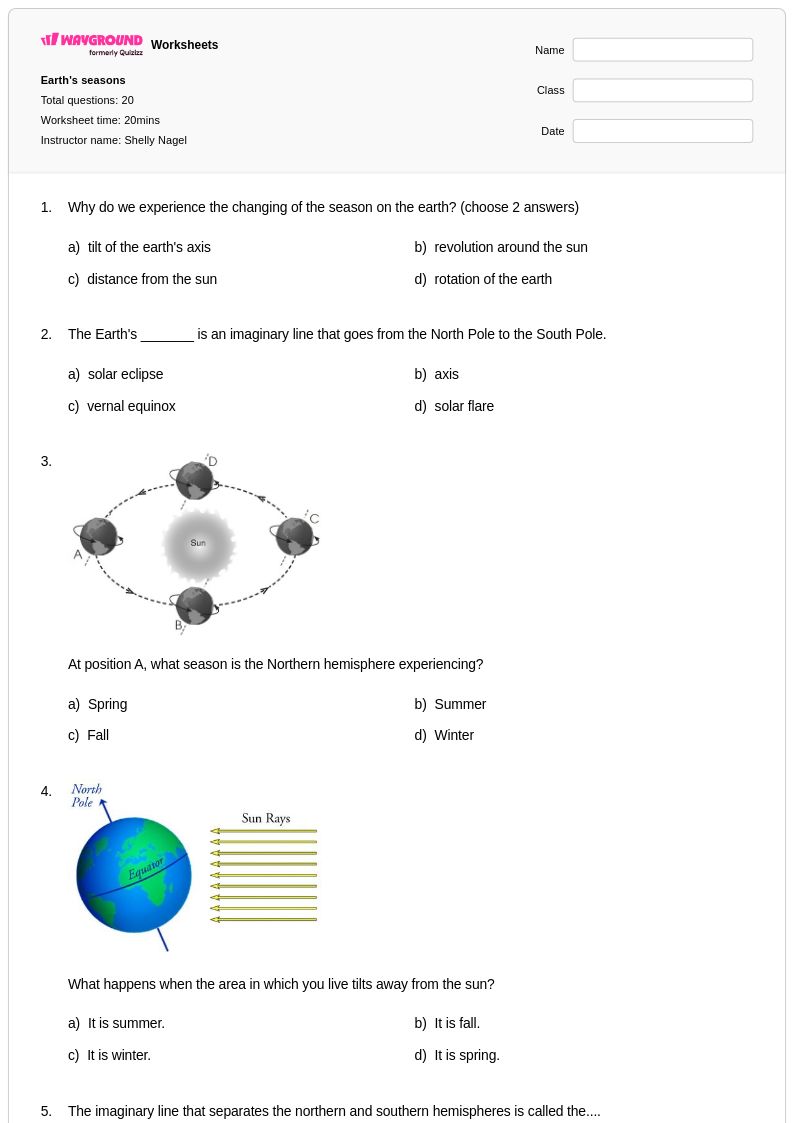
The most persistent misconception students hold is that Earth is closer to the Sun in summer, causing warmer temperatures. Teaching Earth's seasons effectively means leading with Earth's 23.5-degree axial tilt as the true driver of seasonal change, and explaining how tilt affects the angle and duration of sunlight hitting a given hemisphere. Using diagrams that show Earth's orbital position at the solstices and equinoxes, alongside data comparing daylight hours at different latitudes, helps students build an accurate mental model before misconceptions take hold.
What practice exercises help students understand why seasons are opposite in the Northern and Southern Hemispheres?
Exercises that ask students to label both hemispheres simultaneously during the June and December solstices are particularly effective, because they force students to apply tilt logic to both halves of Earth at the same time. Worksheet problems that compare seasonal conditions at the same latitude in opposite hemispheres, or that ask students to explain why Australia experiences summer in December, reinforce this concept through direct application. Having students match seasonal phenomena to hemisphere and month, rather than just memorizing names, builds transferable understanding.
What mistakes do students commonly make when answering questions about solstices and equinoxes?
Students frequently confuse the solstice with the point at which Earth is closest to or farthest from the Sun, rather than the point at which one hemisphere receives the most or least direct sunlight. Another common error is assuming that equinoxes produce exactly equal daylight everywhere on Earth, when in reality atmospheric refraction causes slight variations. Students also tend to conflate the equinox with the first day of a season in a meteorological rather than astronomical sense, which can lead to errors on assessments that require precise definitions.
How does Earth's axial tilt affect daylight hours and temperature across different latitudes?
Earth's 23.5-degree axial tilt causes the angle at which sunlight strikes the surface to vary throughout the year, with regions tilted toward the Sun receiving more direct, concentrated solar radiation and longer daylight hours. Near the equator, this variation is relatively small, which is why equatorial regions do not experience strong seasons. At higher latitudes, the effect is dramatic: polar regions can experience continuous daylight in summer and continuous darkness in winter, while mid-latitude regions see significant swings in both temperature and day length across the year.
How can I use Earth's Seasons worksheets from Wayground in my classroom?
Earth's Seasons worksheets on Wayground are available as printable PDFs for traditional classroom use and in digital formats for technology-integrated environments, making them flexible for in-class practice, homework, or assessment preparation. Teachers can also host the worksheets as a quiz directly on Wayground, giving students an interactive experience while automatically handling grading. Each worksheet includes a complete answer key, so teachers can use them efficiently without additional prep time.
How do I support students who are struggling to understand why seasons occur?
Students who struggle with Earth's seasons often benefit from slowing down on the foundational concept of sunlight angle before moving to orbital position or hemisphere comparisons. Wayground's differentiation tools allow teachers to modify content complexity for different learning levels, providing remediation support for students who need to revisit core Earth-Sun relationships. For students who need additional accessibility support, Wayground also offers accommodations such as read-aloud functionality and adjustable font sizes, which can be configured individually so that other students are unaffected.