Free Printable Water Cycle Worksheets for Kindergarten
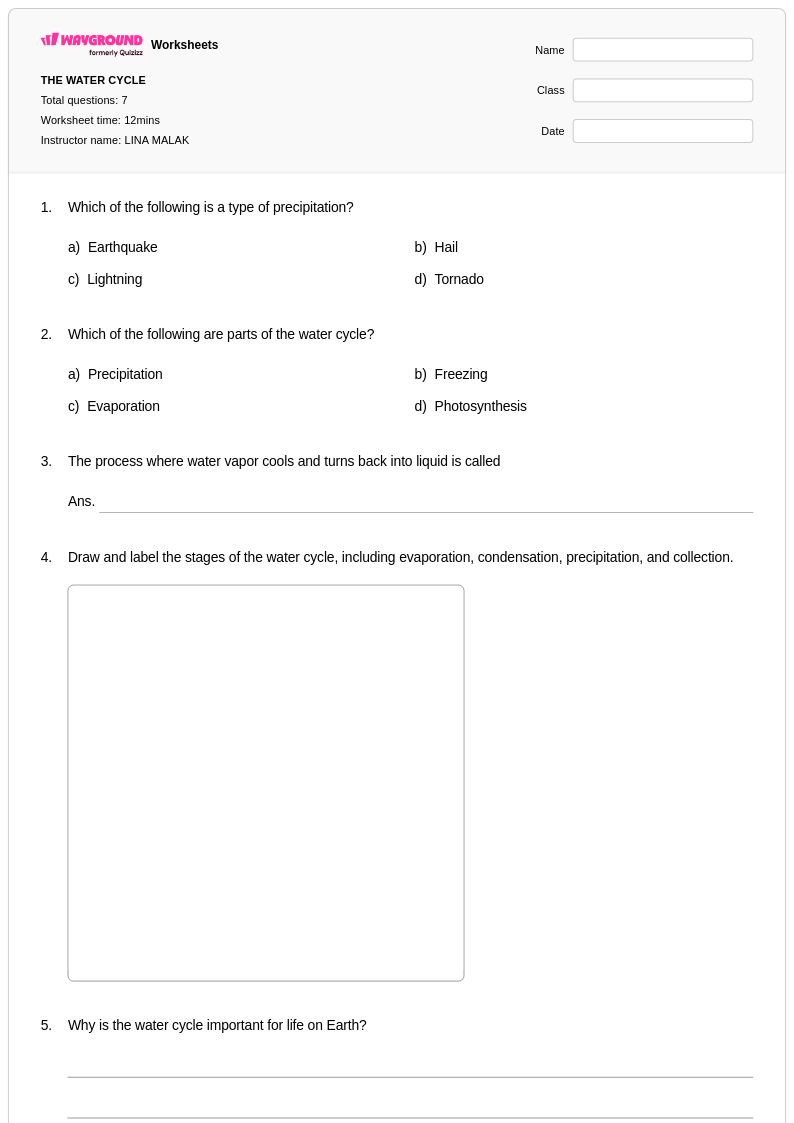
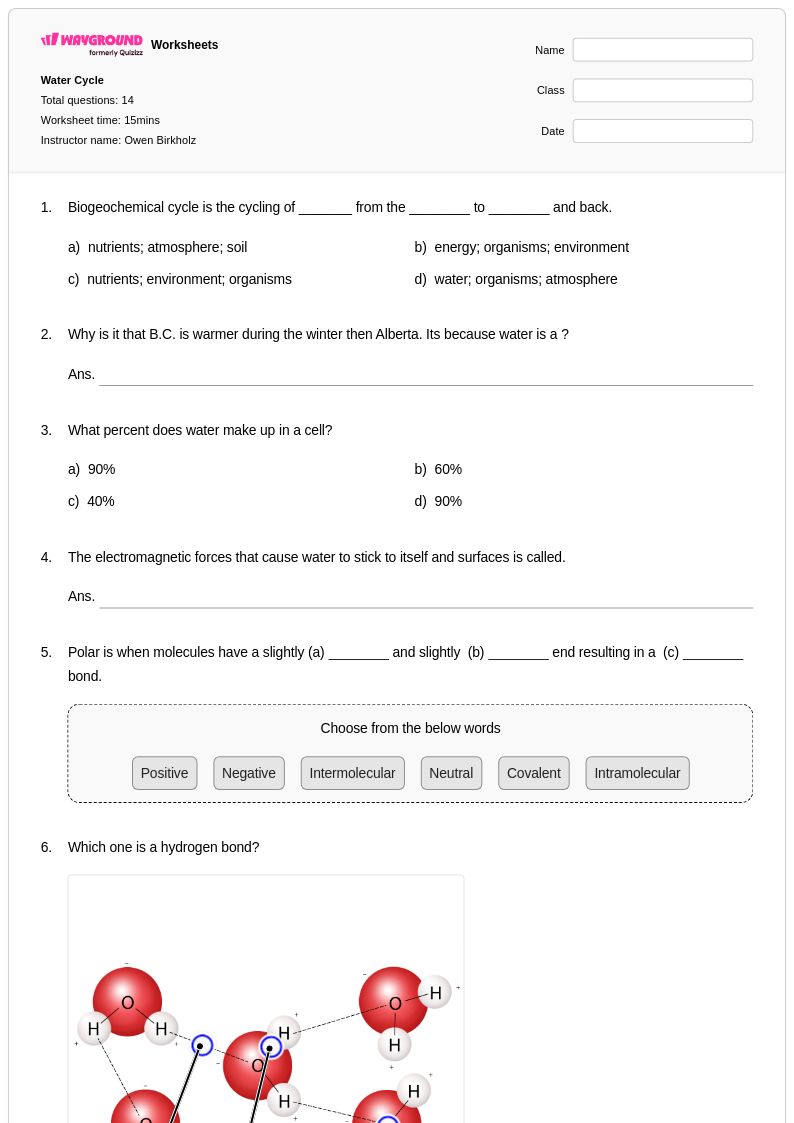
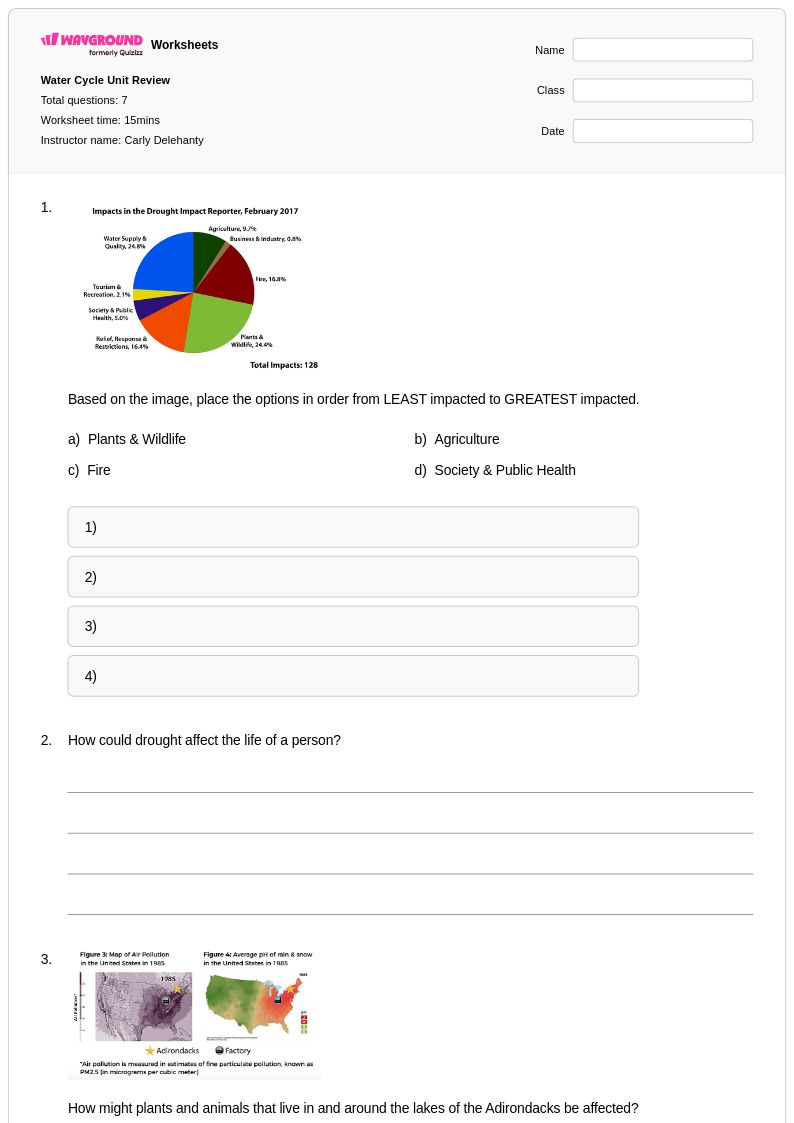
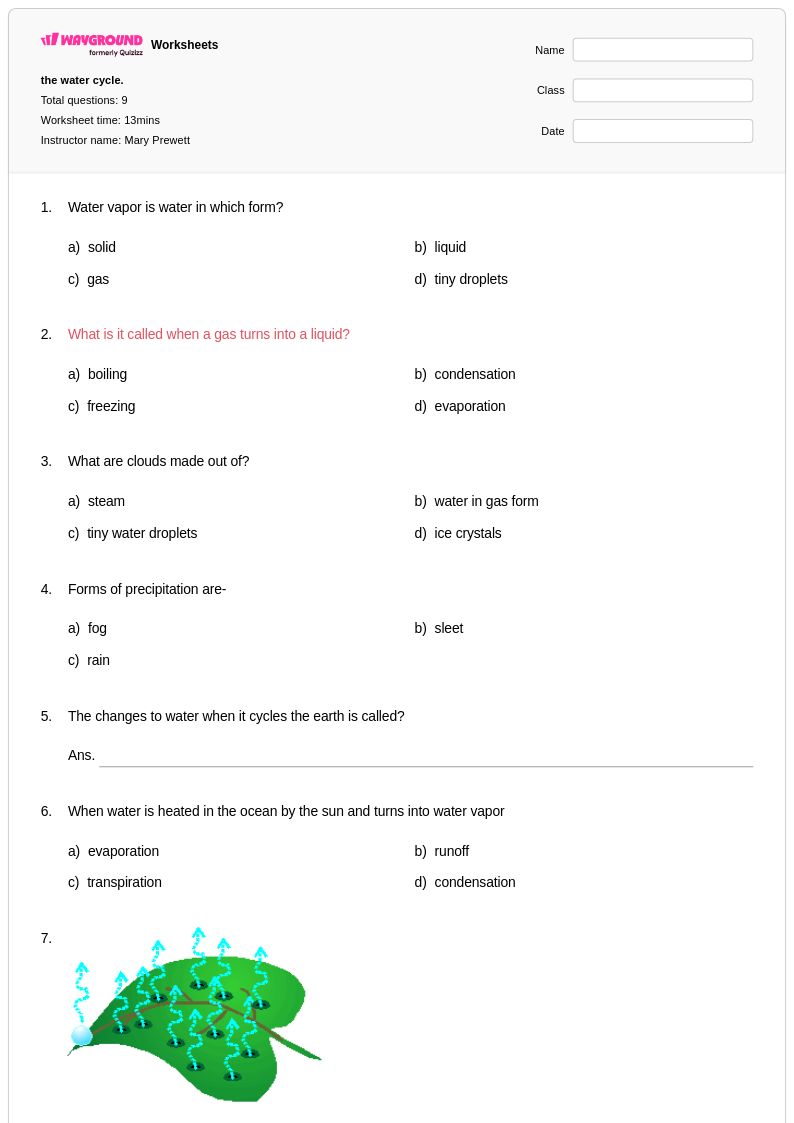
Free kindergarten water cycle worksheets and printables help young students discover how water moves through evaporation, condensation, and precipitation with engaging practice problems and answer keys.
Explore printable Water Cycle worksheets for Kindergarten
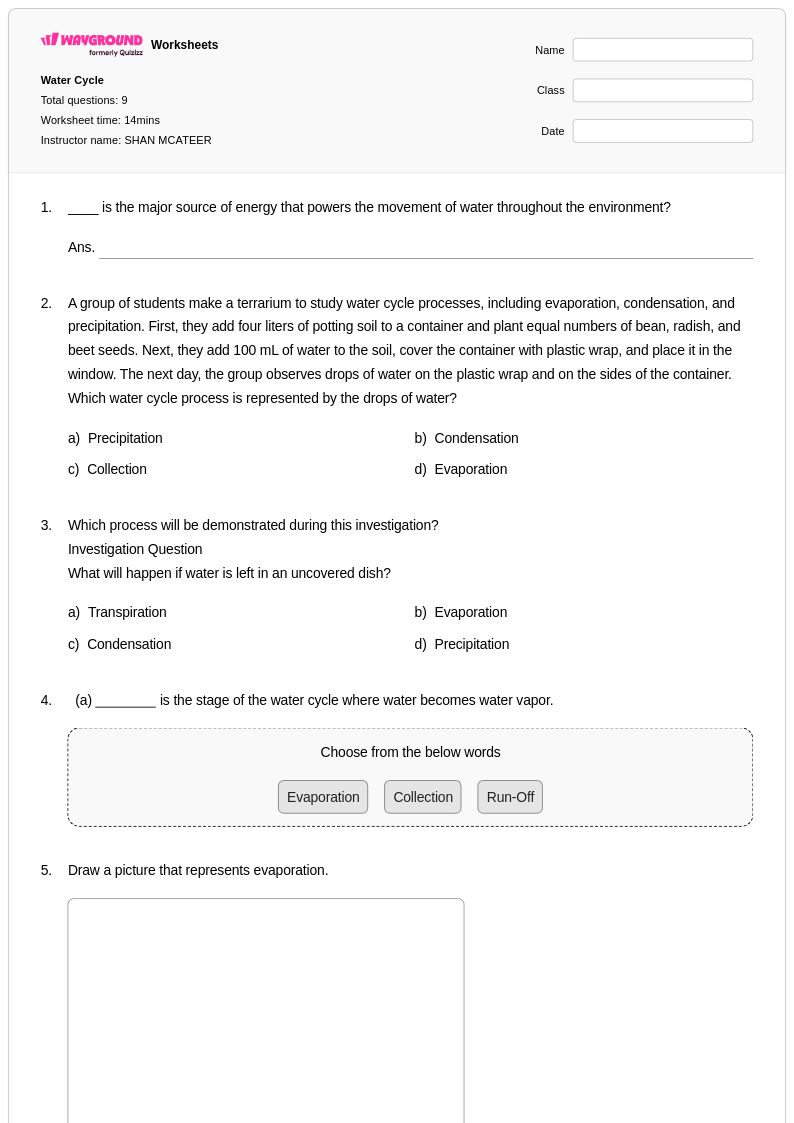
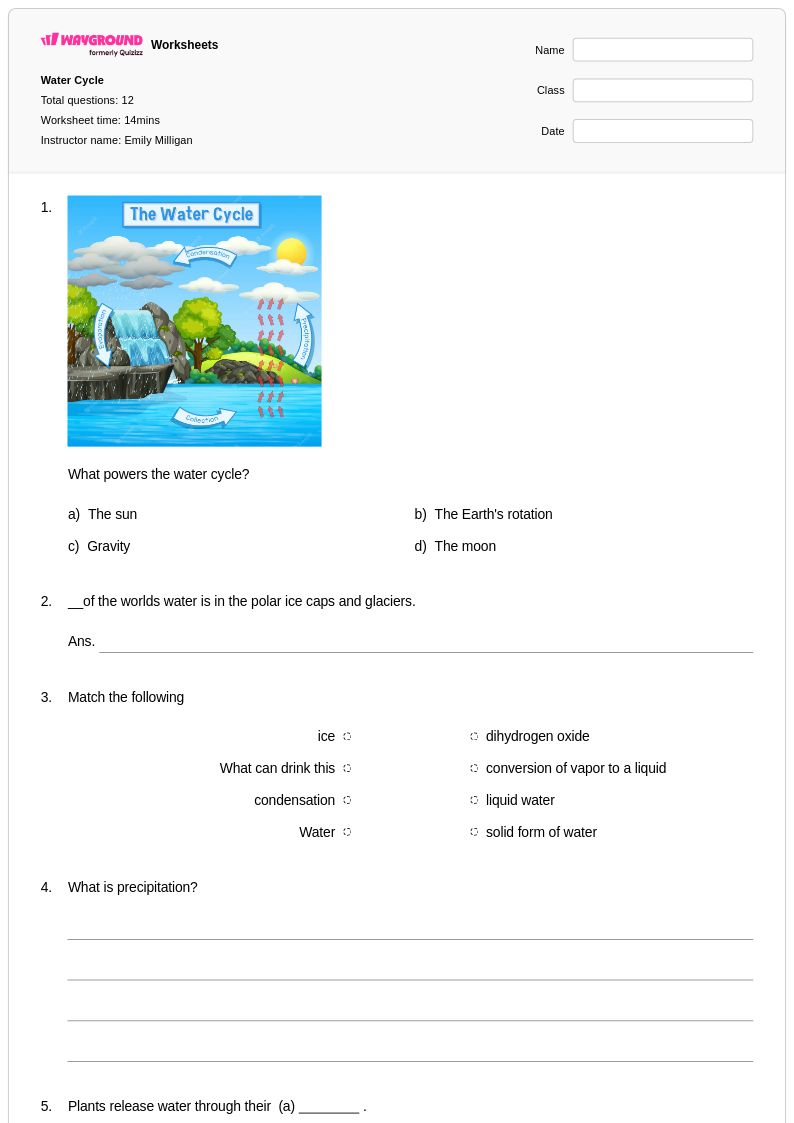
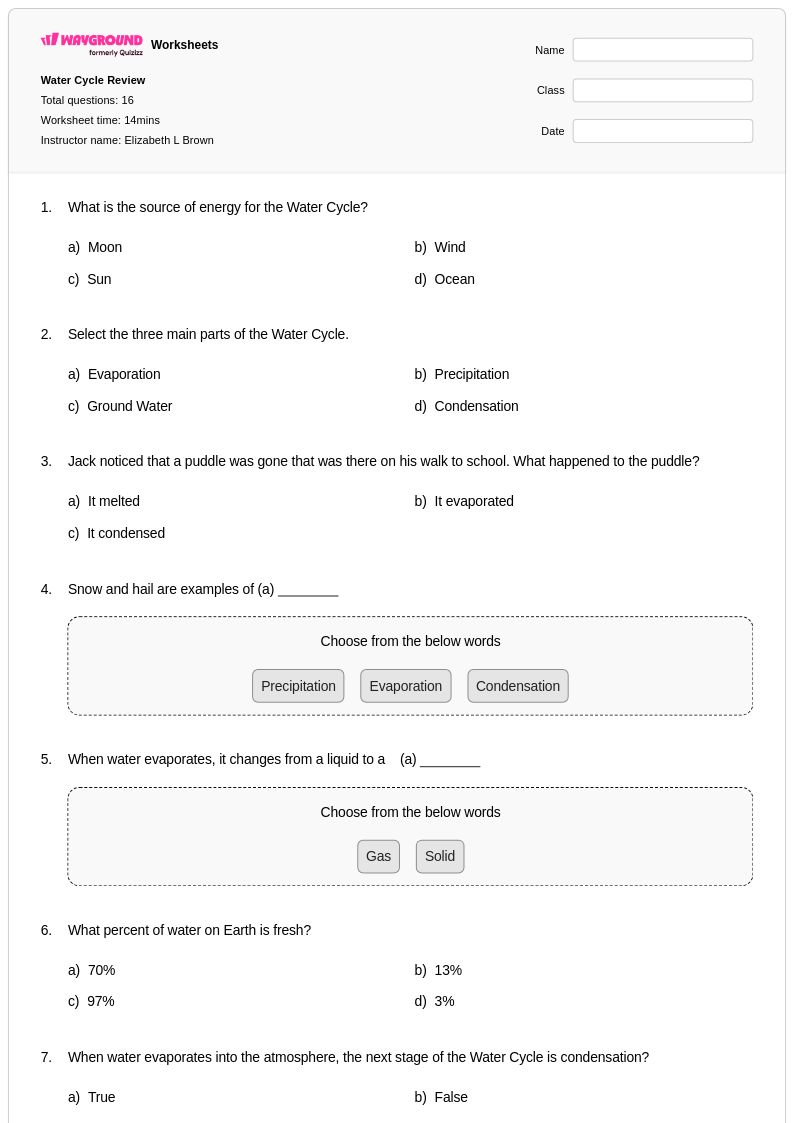
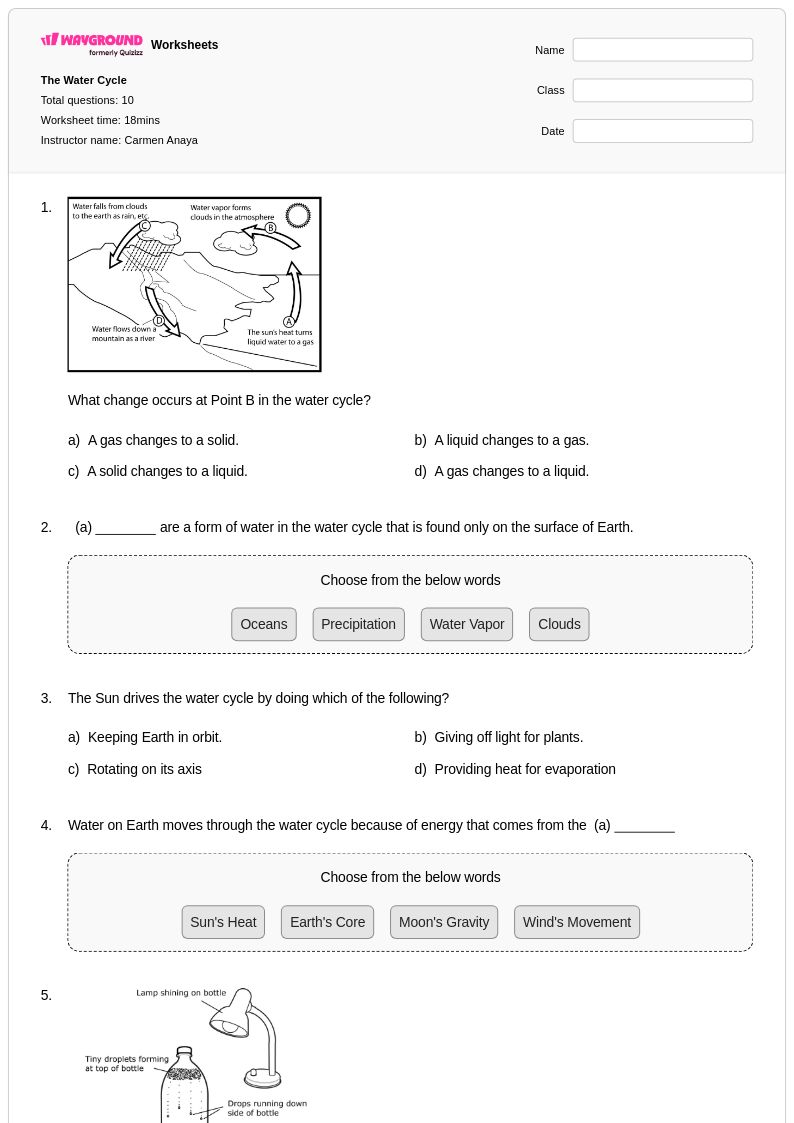
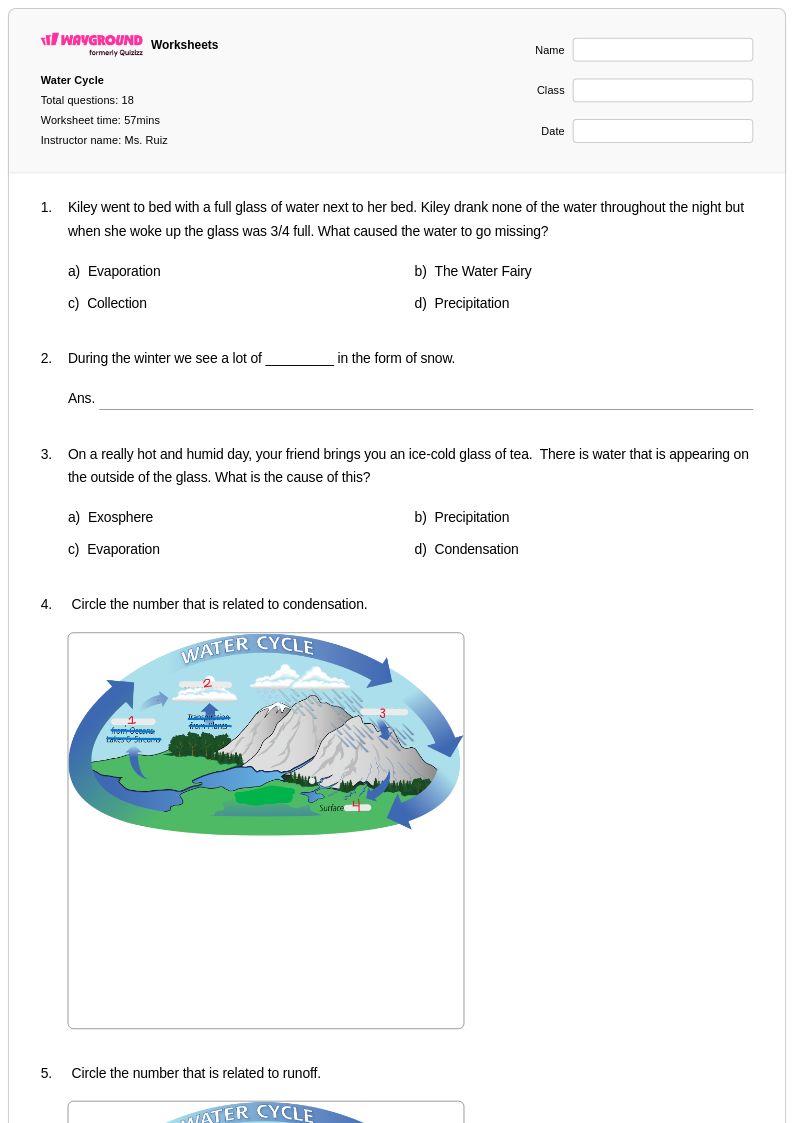
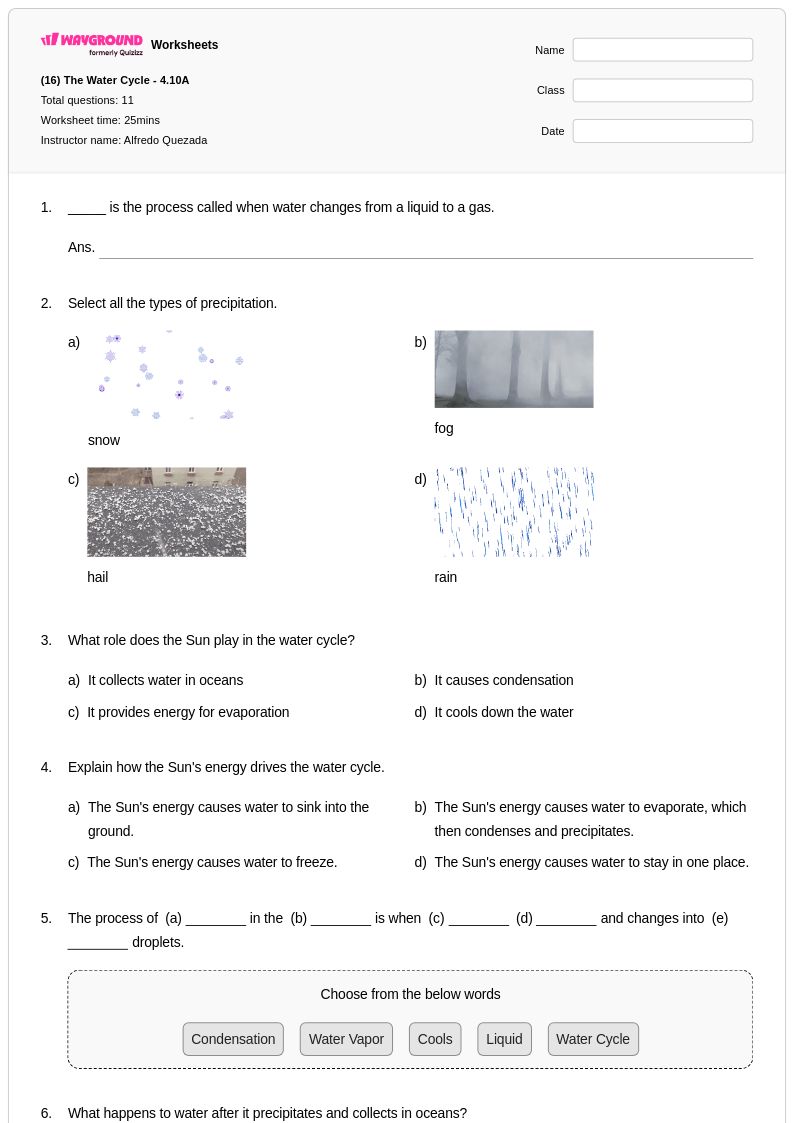
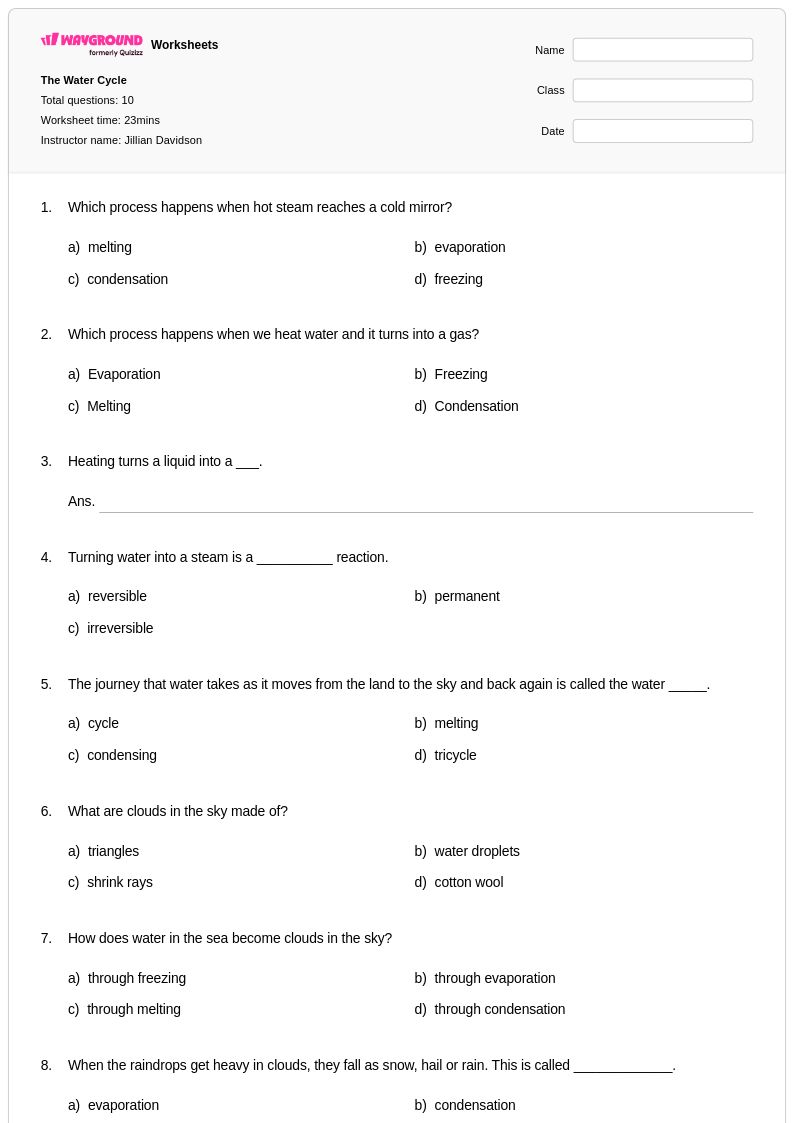
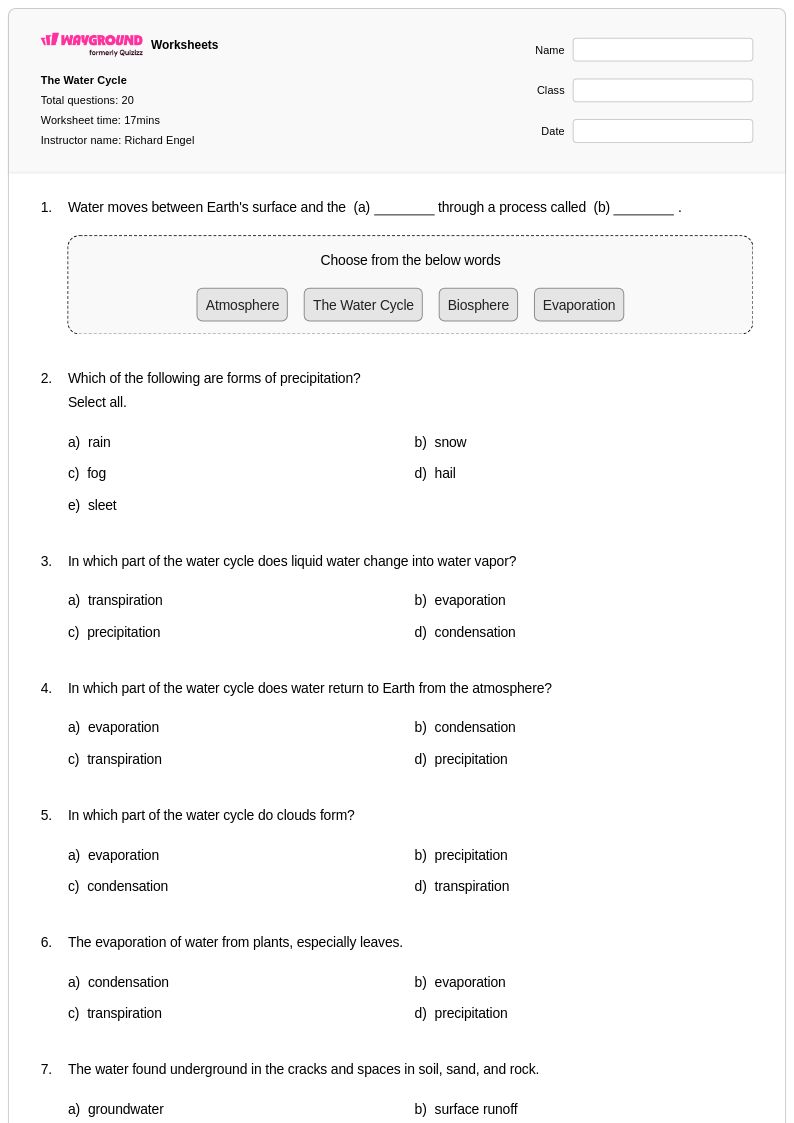
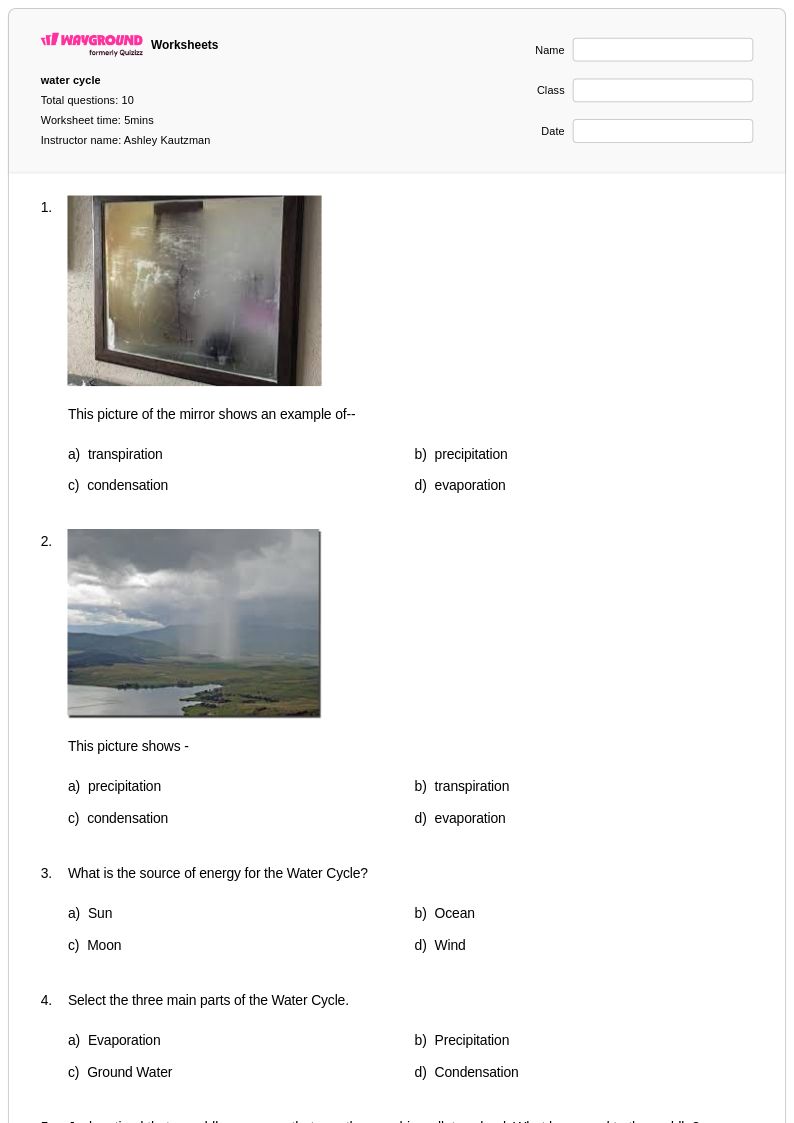
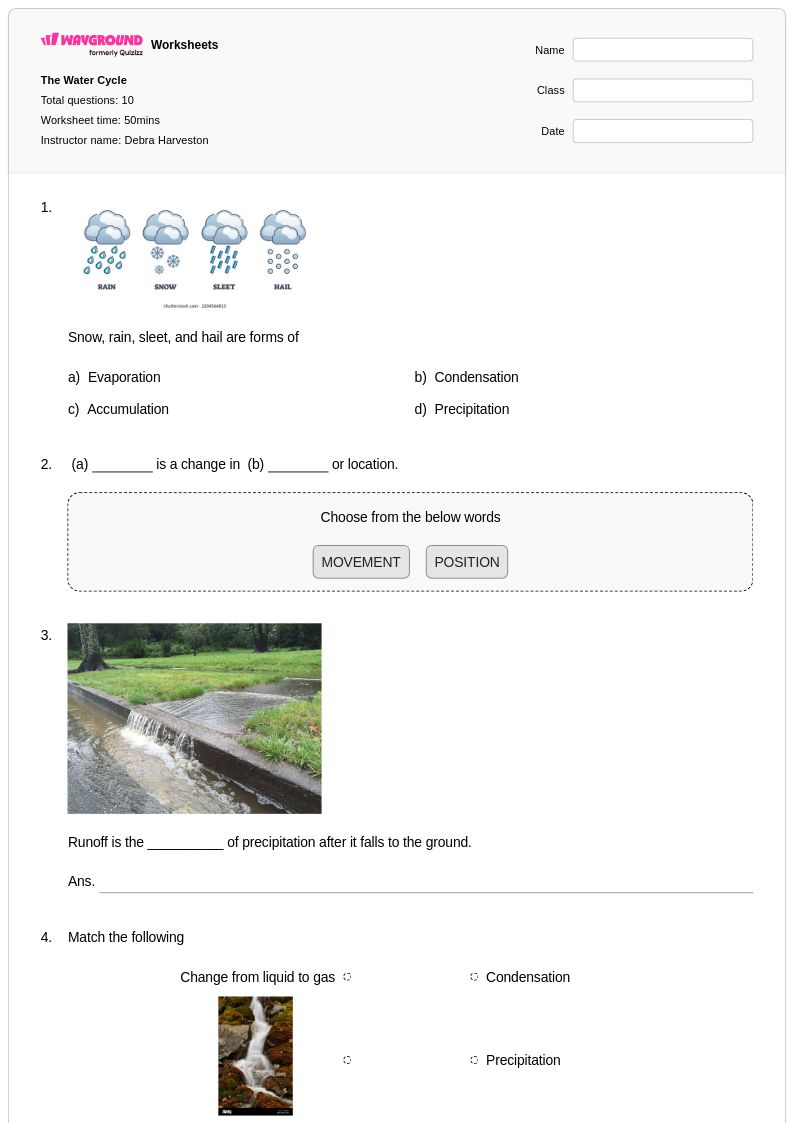
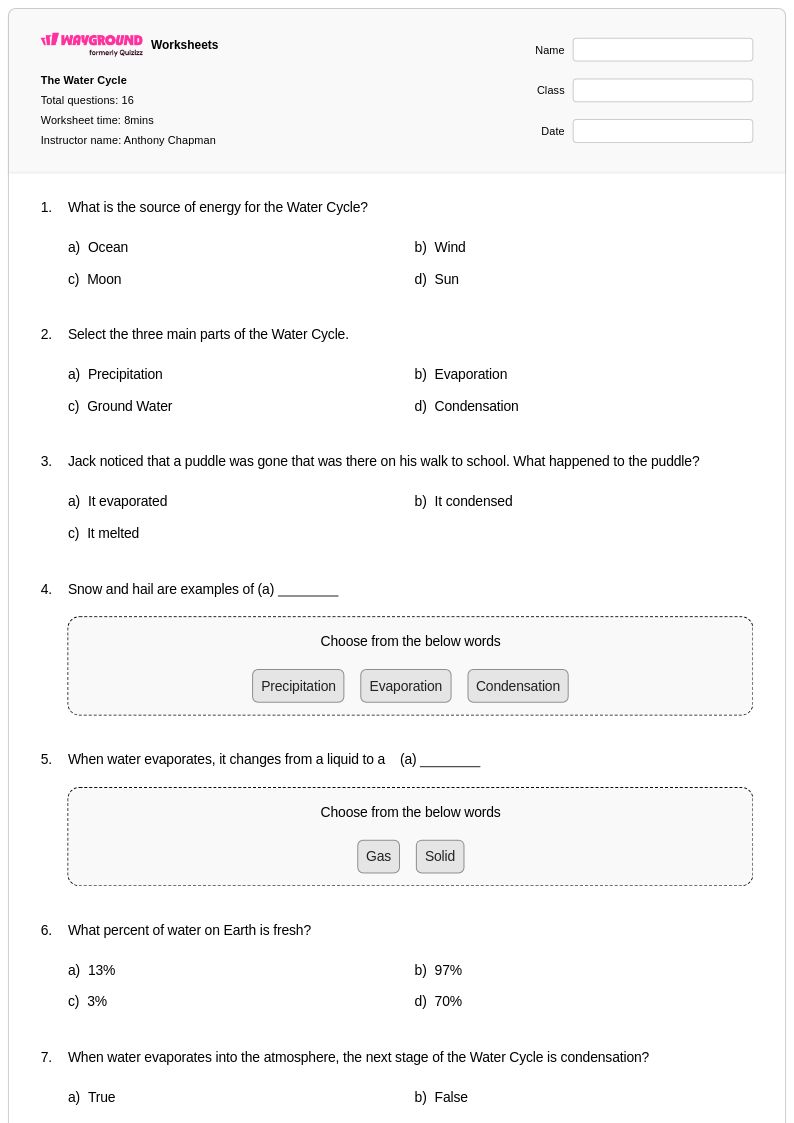
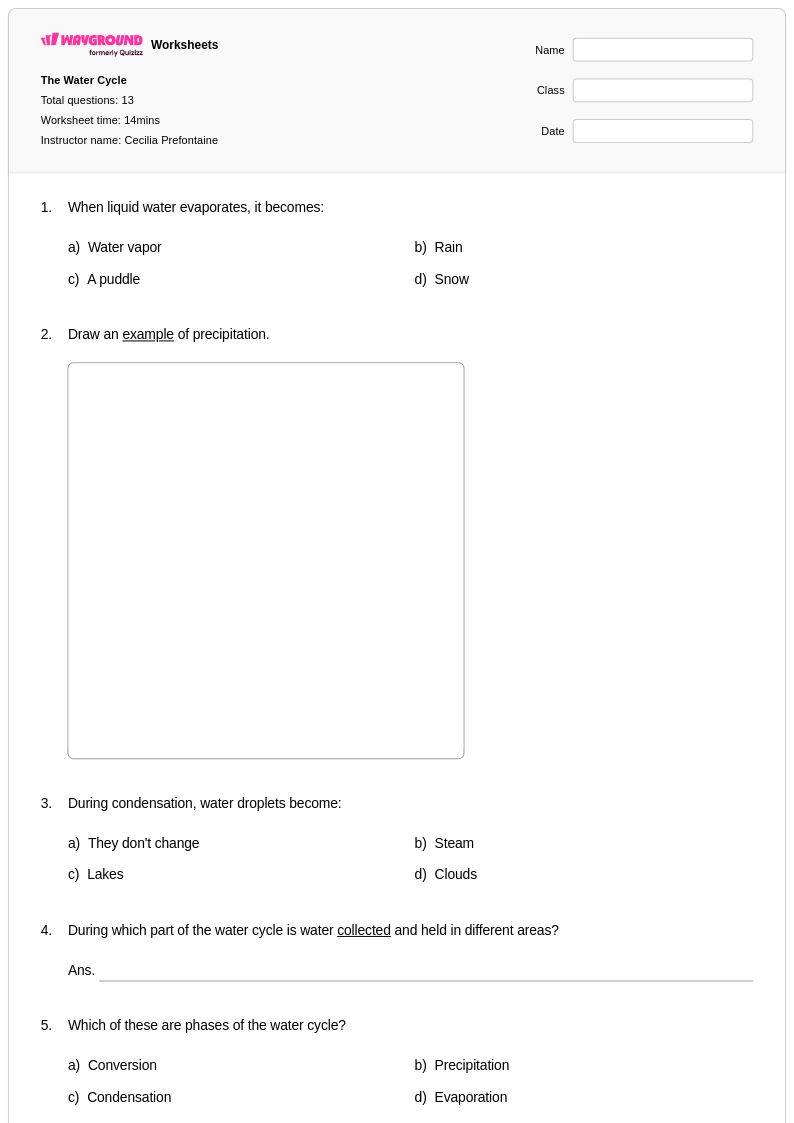
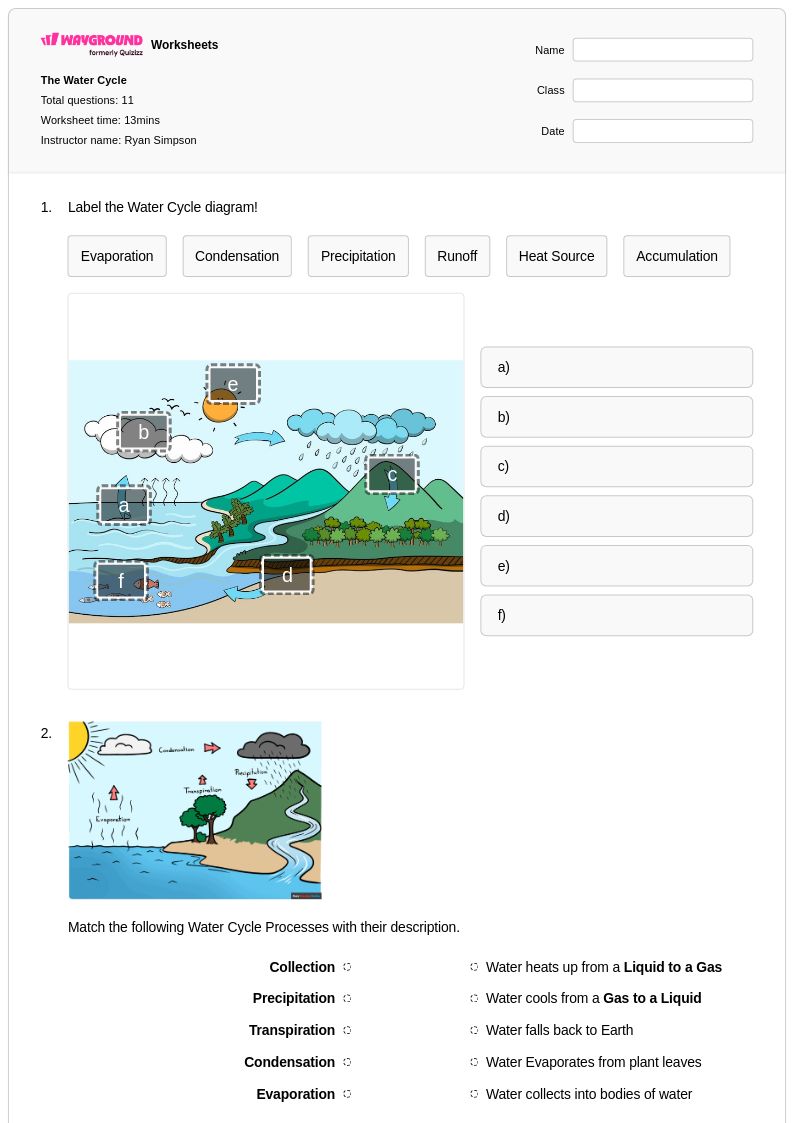
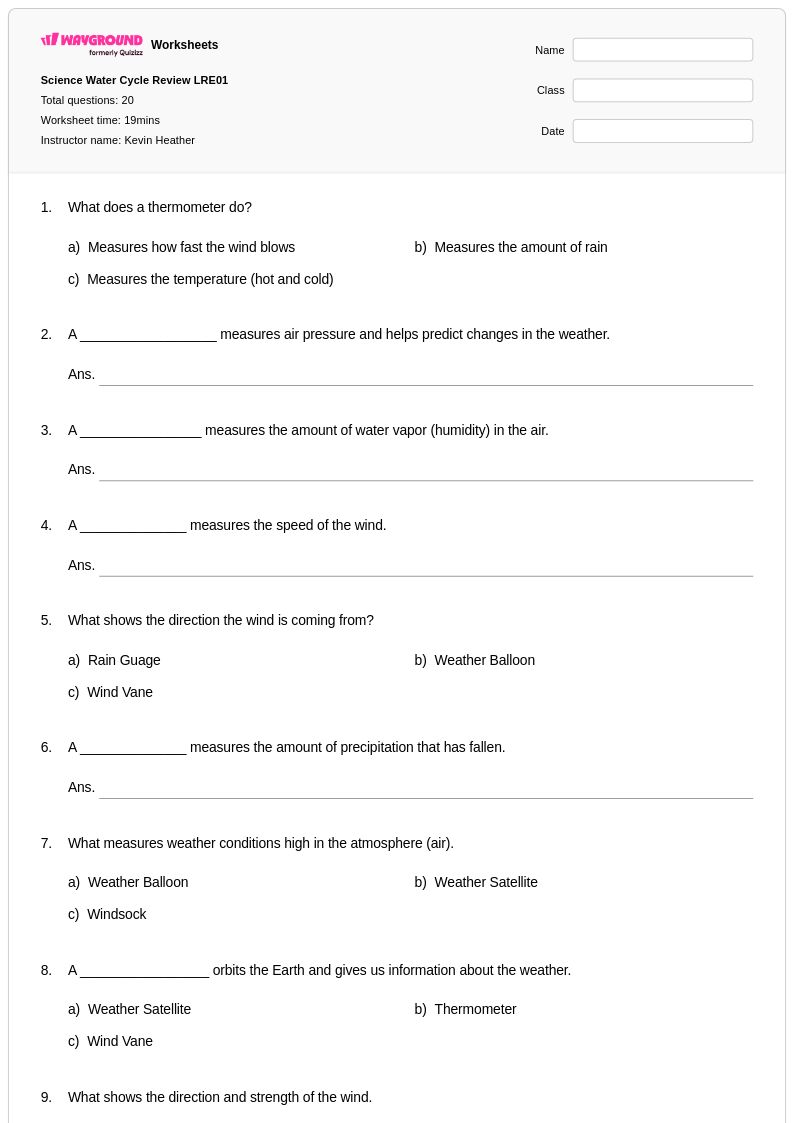
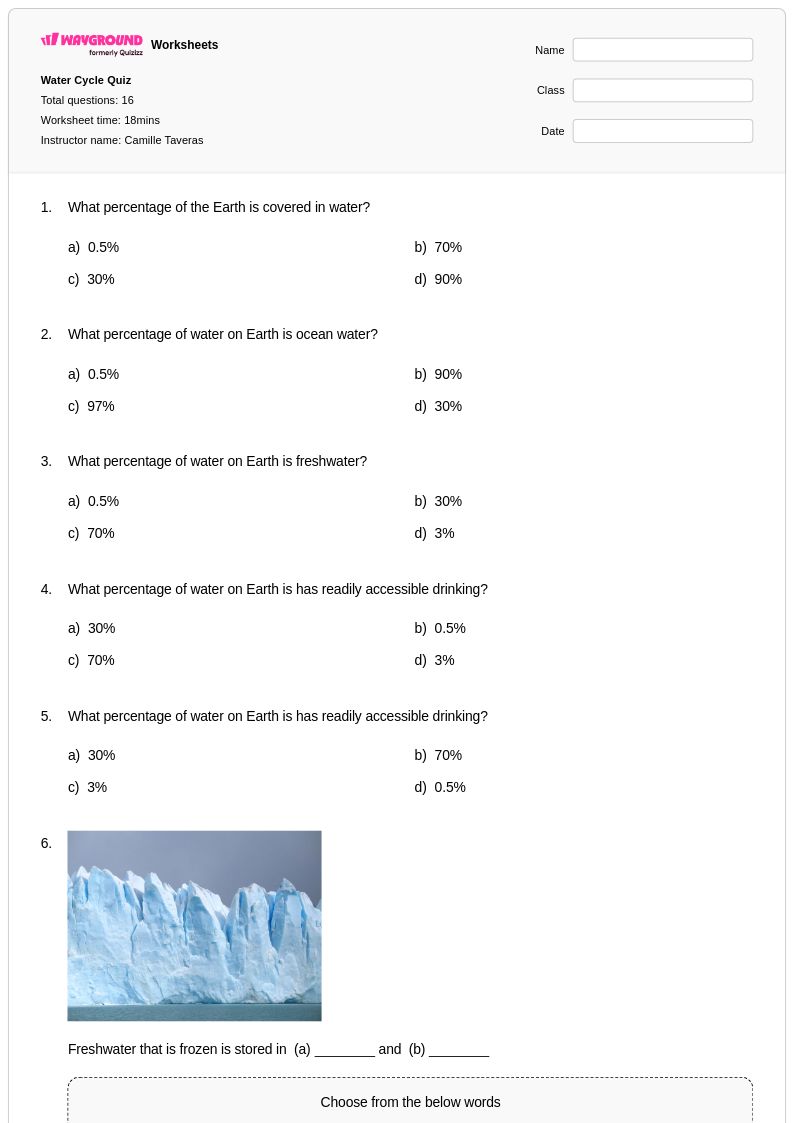
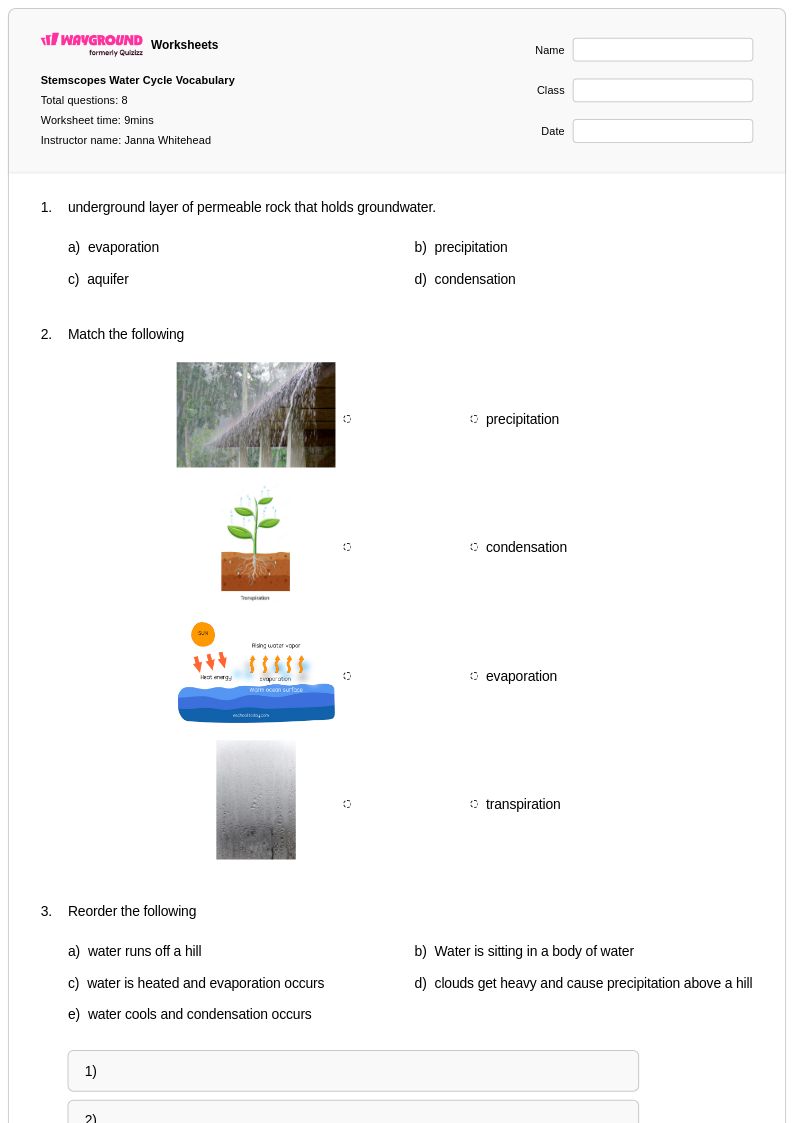
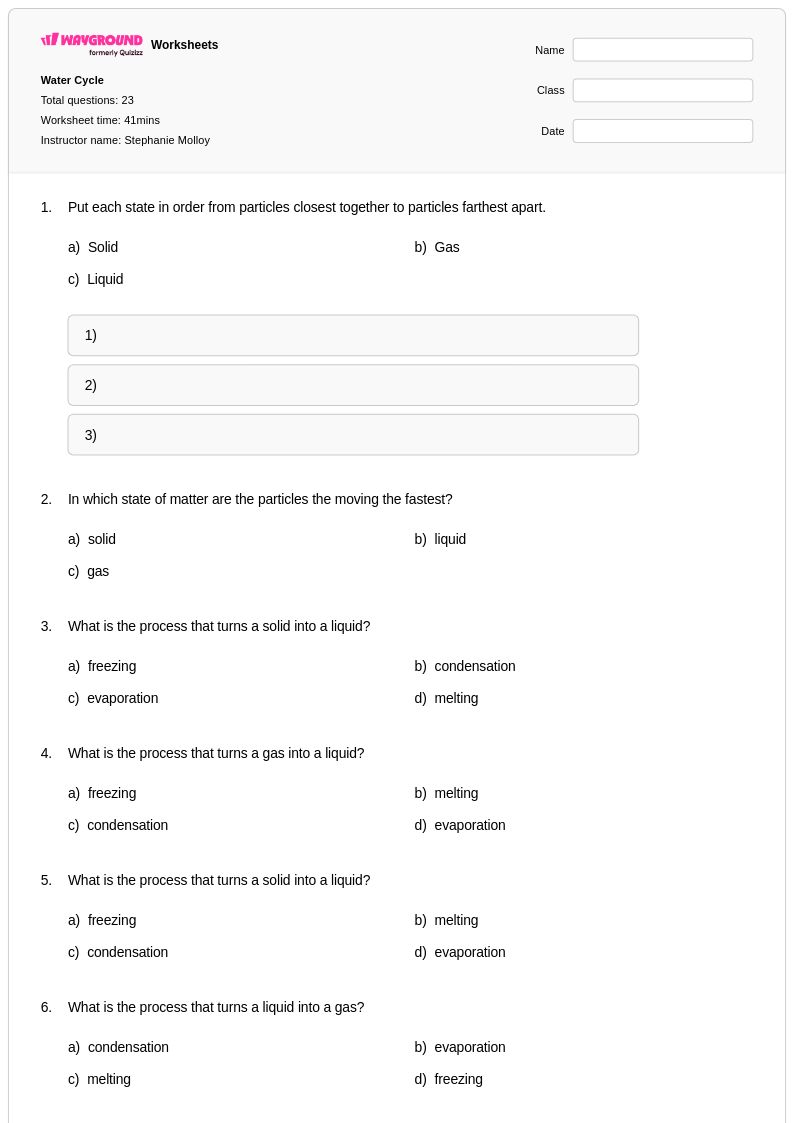
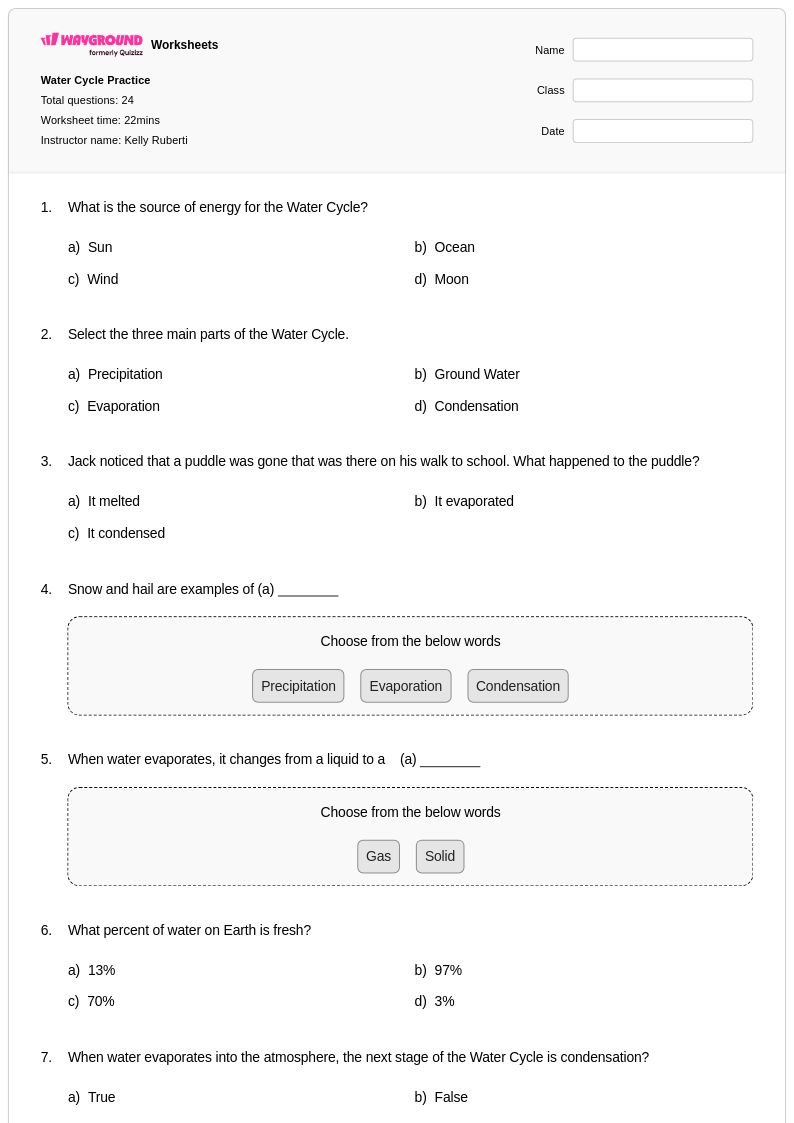
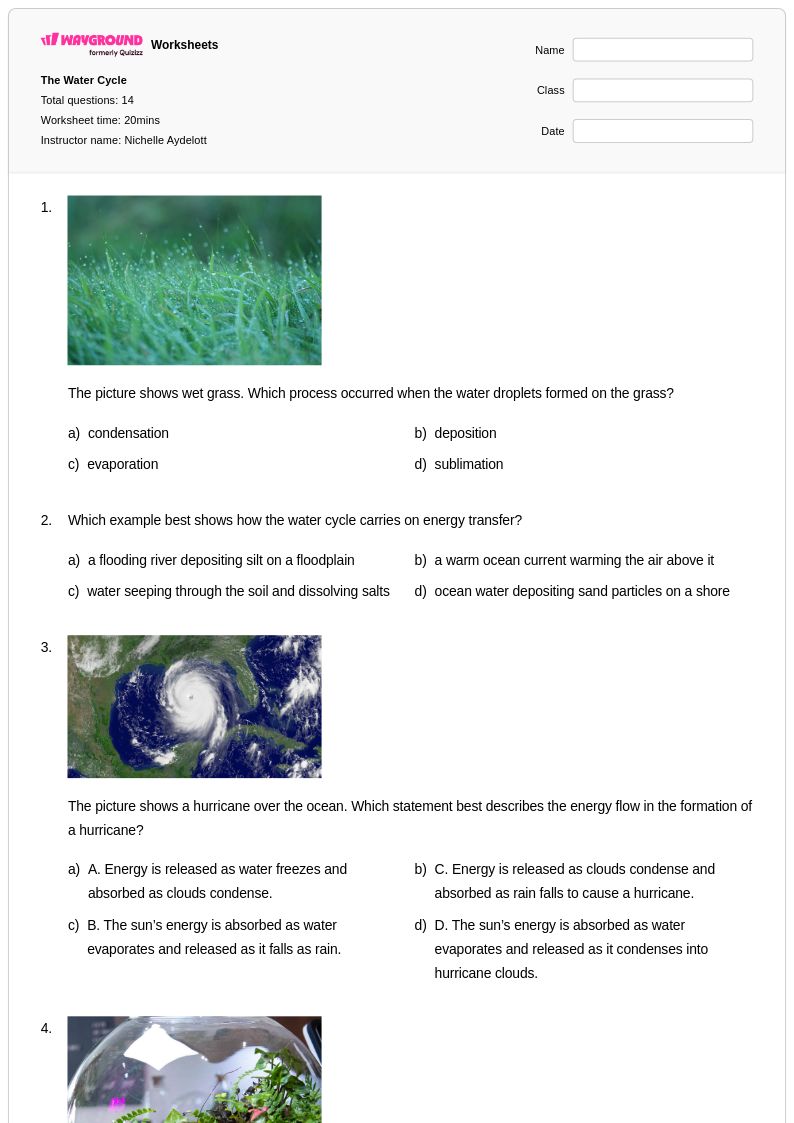
Water cycle worksheets for kindergarten students available through Wayground (formerly Quizizz) introduce young learners to the fundamental processes that move water through Earth's systems in age-appropriate and engaging ways. These educational resources focus on building foundational scientific observation skills while helping students recognize basic water cycle stages like evaporation, condensation, and precipitation through simple vocabulary and visual representations. The worksheets strengthen early science literacy by encouraging students to identify water in different states, observe weather patterns, and make connections between everyday experiences like rain and puddles with larger natural processes. Each printable resource includes clear answer keys for educators and provides free access to practice problems that reinforce learning through hands-on activities, coloring exercises, and basic sequencing tasks that align with kindergarten developmental abilities.
Wayground (formerly Quizizz) supports early childhood educators with an extensive collection of millions of teacher-created water cycle resources specifically designed for kindergarten classrooms. The platform's robust search and filtering capabilities allow teachers to quickly locate worksheets that match their specific lesson objectives and student needs, while standards alignment features ensure content meets early learning science benchmarks. Teachers benefit from comprehensive differentiation tools that accommodate diverse learning styles and abilities, plus flexible customization options that enable modifications for individual student requirements. These water cycle materials are available in both printable pdf formats for traditional classroom use and digital formats for interactive learning, making them invaluable for lesson planning, targeted remediation with struggling learners, enrichment activities for advanced students, and consistent skill practice that builds scientific thinking foundations in young children.
FAQs
How do I teach the water cycle to students?
Teaching the water cycle effectively means grounding each stage in observable, real-world examples before moving to abstract diagrams. Start with evaporation using a wet surface drying in sunlight, then connect condensation to dew or foggy mirrors. Once students can describe each stage in their own words, introduce labeling activities and process-sequencing tasks to reinforce the full hydrological cycle. Building vocabulary alongside visual models helps students retain the connections between evaporation, condensation, precipitation, and collection.
What exercises help students practice the water cycle?
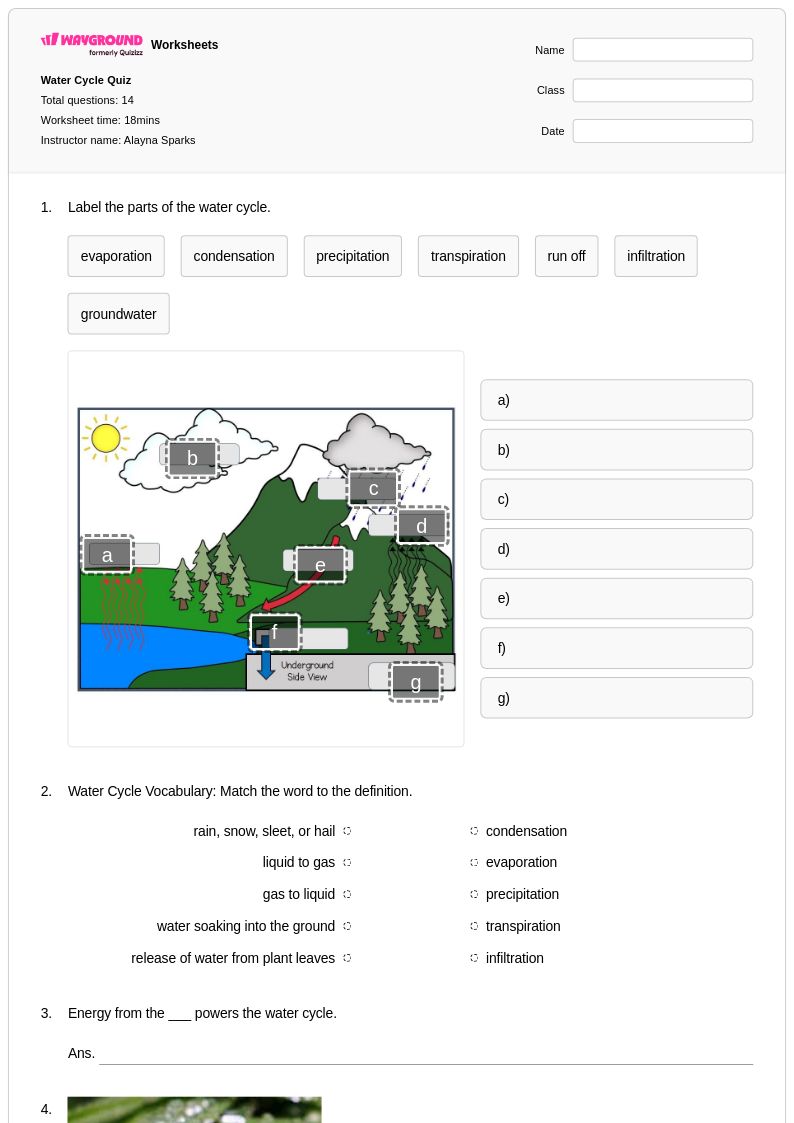
Effective practice exercises for the water cycle include diagram labeling tasks where students identify and annotate each stage, sequencing activities that ask students to order water cycle events, and short-answer questions that require explaining why each stage occurs. Fill-in-the-blank problems targeting vocabulary like transpiration, infiltration, and runoff build precise scientific language. Structured practice problems that connect each process to real-world scenarios, such as how precipitation feeds rivers or how solar energy drives evaporation, deepen conceptual understanding beyond simple memorization.
What mistakes do students commonly make when learning the water cycle?
One of the most common misconceptions is that water is created or destroyed during the cycle rather than continuously moving and changing states. Students also frequently confuse condensation with precipitation, not recognizing that condensation forms clouds while precipitation is the falling of water to Earth's surface. Another common error is omitting less visible stages like transpiration and infiltration, which means students develop an incomplete picture of how water moves through ecosystems and soil. Targeted practice on these specific stages helps correct these gaps before they solidify.
How do I use Wayground's water cycle worksheets in my classroom?
Wayground's water cycle worksheets are available as printable PDFs for traditional classroom use and in digital formats for technology-integrated environments, giving teachers flexibility for in-person lessons, homework assignments, or remote learning. Teachers can also host the worksheets as a live quiz directly on Wayground, making it easy to collect student responses and review class performance in real time. For classrooms with diverse learners, Wayground supports individual accommodations such as read aloud, extended time, and reduced answer choices, which can be configured per student without disrupting the rest of the class.
How can I differentiate water cycle instruction for students at different skill levels?
For students who need additional support, simplifying diagrams and pre-teaching vocabulary like evaporation and condensation before the full lesson reduces cognitive overload. Advanced learners benefit from extension tasks that explore watershed systems, the role of transpiration in the water cycle, or how climate affects precipitation patterns. On Wayground, teachers can apply individual accommodations such as reduced answer choices or read aloud for specific students, while the rest of the class works through standard settings, allowing meaningful differentiation without requiring separate lesson plans.
How does the water cycle connect to broader Earth science topics?
The water cycle is a foundational concept that connects directly to weather patterns, climate systems, erosion, ecosystems, and the distribution of freshwater resources. Understanding how evaporation, condensation, and precipitation drive atmospheric moisture helps students later grasp why certain regions receive more rainfall, how droughts develop, and how human activity can alter natural water movement. Teaching the water cycle with these connections in mind gives students a systems-level understanding of Earth science rather than treating it as an isolated process.