
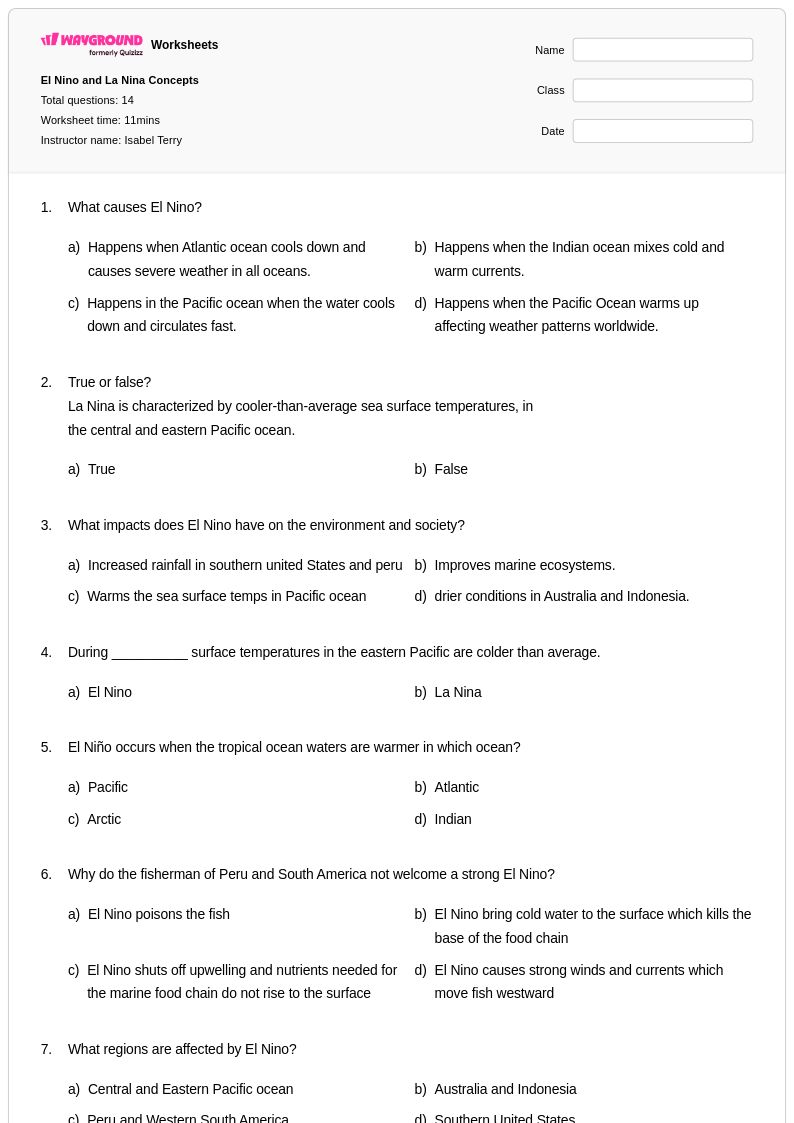
14 Q
9th - 12th
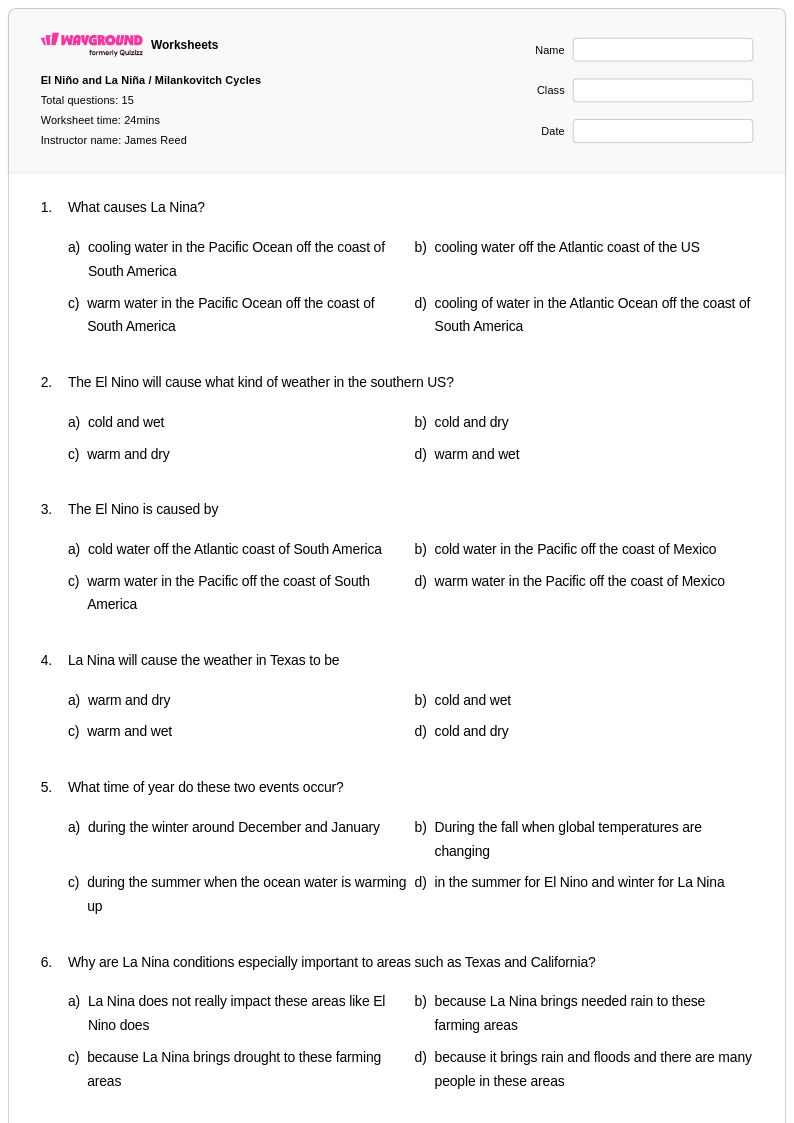
15 Q
9th - 12th
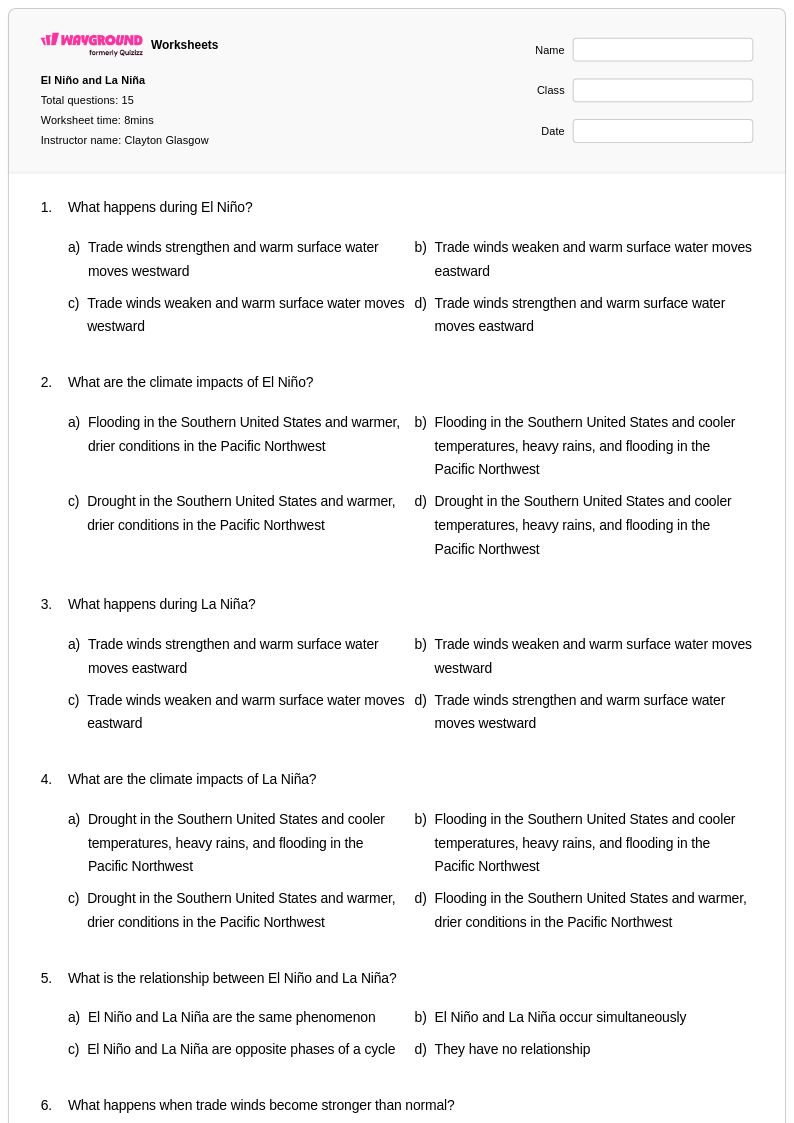
15 Q
9th - 12th
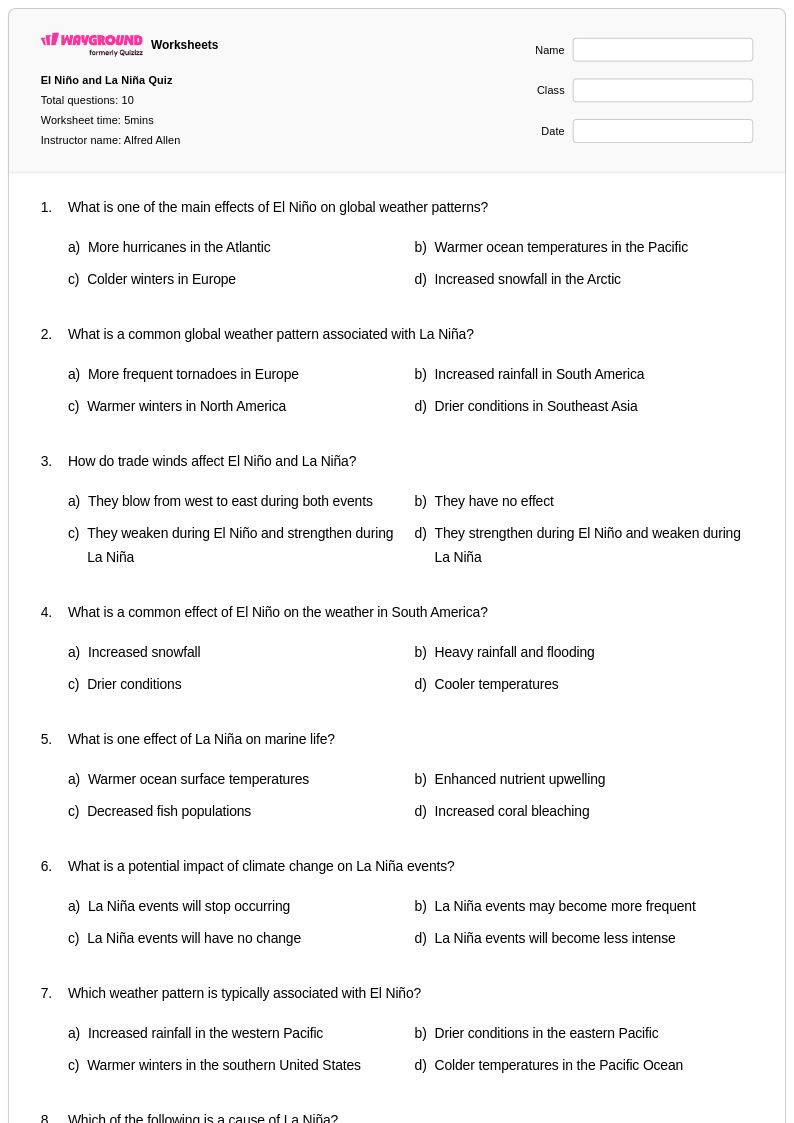
10 Q
9th - 12th
10 Q
9th - 12th

11 Q
9th - 12th
17 Q
9th - 12th
20 Q
10th
11 Q
10th
15 Q
9th - 12th
18 Q
10th

25 Q
10th - Uni
5 Q
9th - 12th
7 Q
10th - 12th
26 Q
8th - Uni
12 Q
9th - 12th
17 Q
8th - Uni
30 Q
9th - 12th
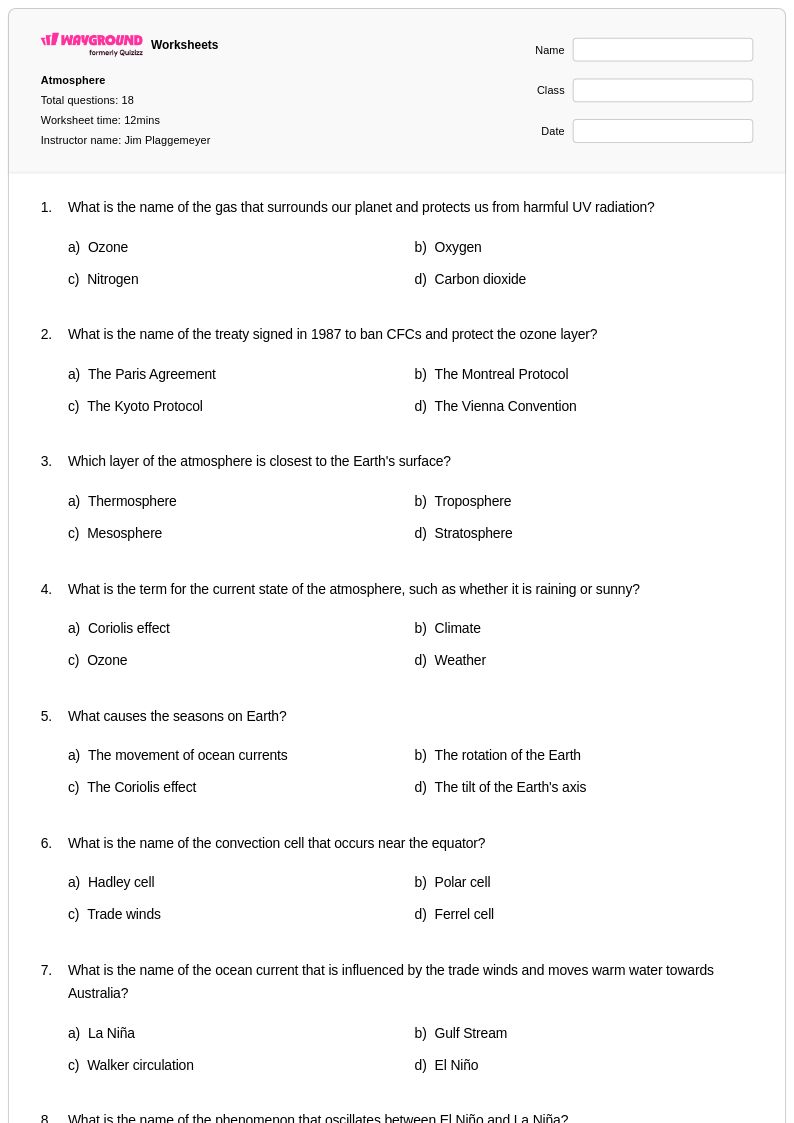
18 Q
9th - 12th
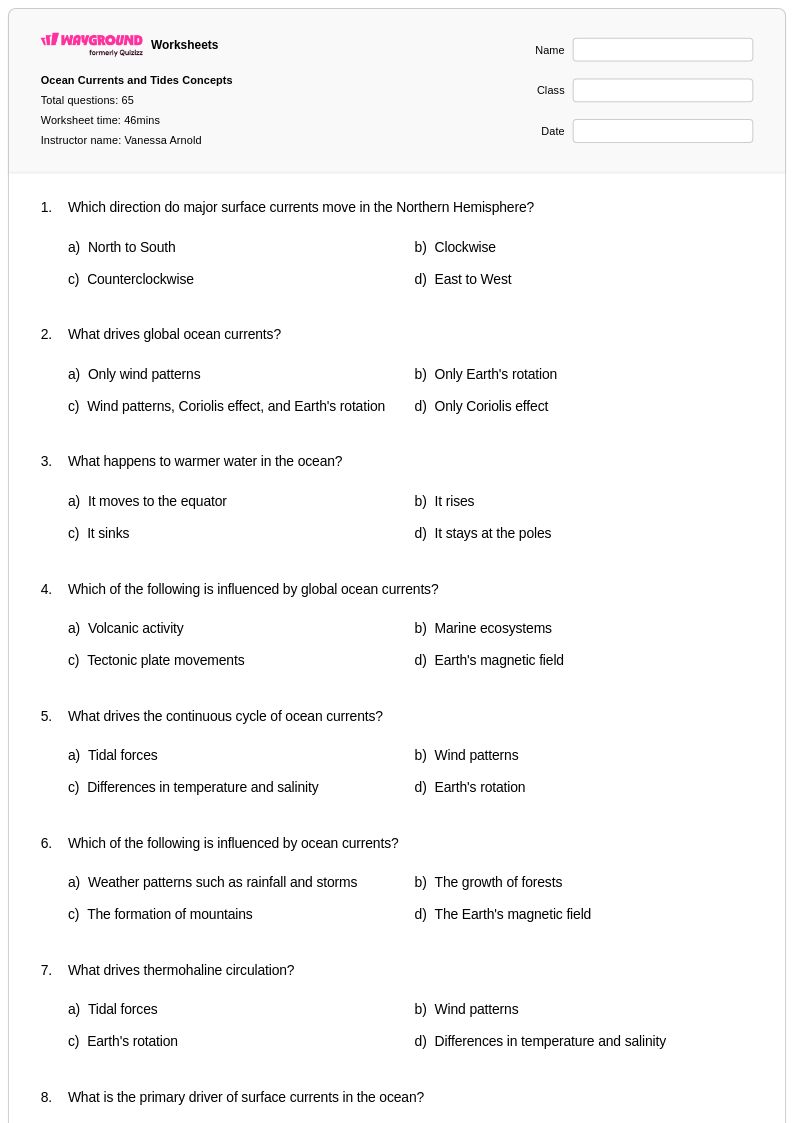
65 Q
9th - 12th
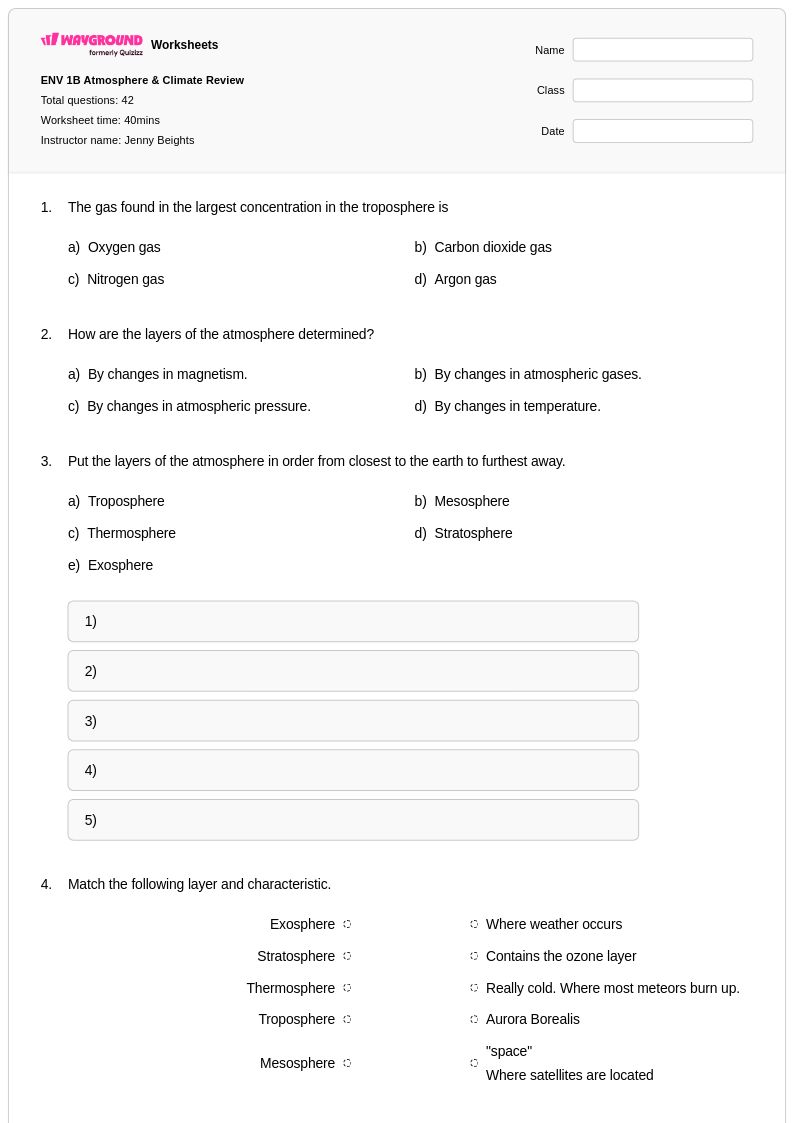
42 Q
9th - 12th
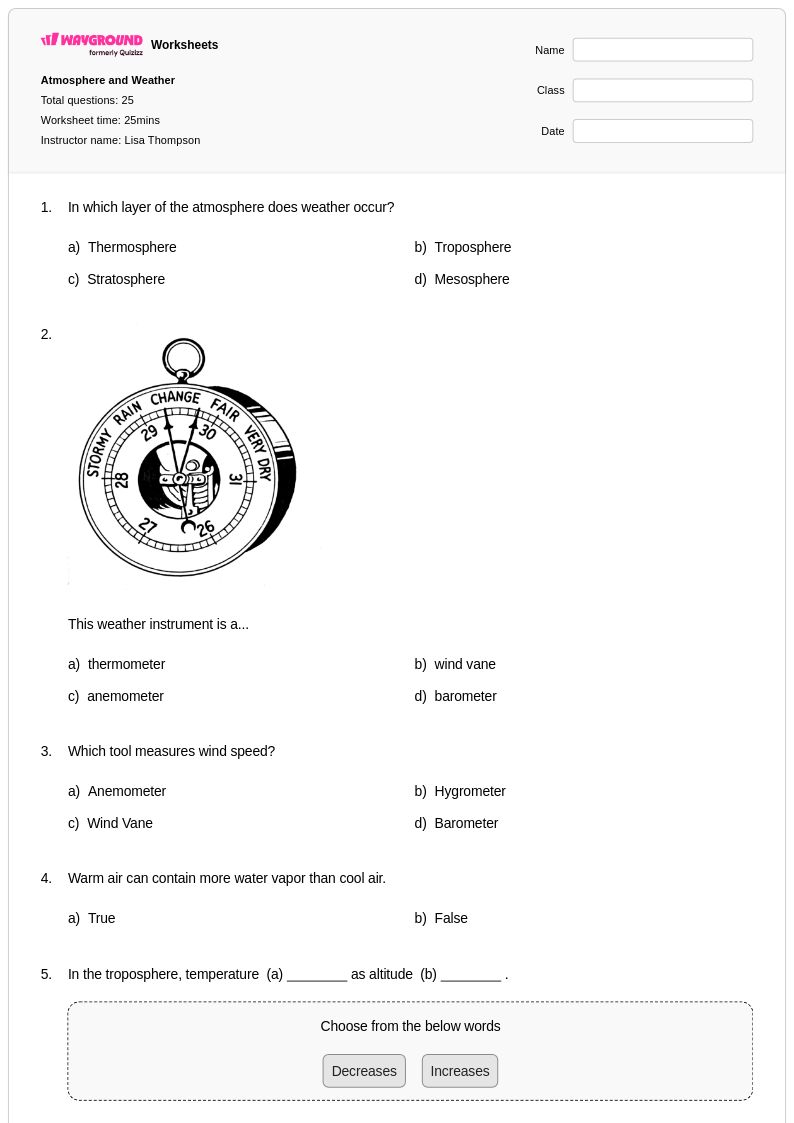
25 Q
7th - Uni
20 Q
10th
15 Q
6th - Uni
Explore Other Subject Worksheets for year 10
Explore printable El Niño and La Niña worksheets for Year 10
El Niño and La Niña worksheets for Year 10 students through Wayground (formerly Quizizz) provide comprehensive exploration of these critical oceanic-atmospheric phenomena that significantly impact global weather patterns and climate systems. These educational resources strengthen students' understanding of how sea surface temperature variations in the Pacific Ocean create cascading effects on precipitation, temperature, and extreme weather events worldwide. The worksheets feature detailed practice problems that challenge students to analyze data patterns, interpret climate graphs, and predict regional impacts of these oscillating climate cycles. Each resource includes answer keys and is available as free printables in pdf format, enabling students to master complex concepts about teleconnections, thermocline variations, and the Southern Oscillation Index through structured academic practice.
Wayground (formerly Quizizz) supports Year 10 science educators with millions of teacher-created El Niño and La Niña worksheet collections that streamline lesson planning and enhance student comprehension of these sophisticated Earth and Space Science concepts. The platform's robust search and filtering capabilities allow teachers to quickly locate materials aligned with specific learning standards, while differentiation tools enable customization for diverse learning needs and skill levels. These comprehensive worksheet libraries are available in both printable pdf formats and interactive digital versions, providing flexibility for classroom instruction, homework assignments, and assessment preparation. Teachers can effectively utilize these resources for targeted skill practice, remediation of challenging meteorological concepts, and enrichment activities that deepen students' understanding of how these Pacific Ocean phenomena influence global climate variability and regional weather extremes.