Free Printable Relative Dating Fossils Worksheets for Year 10
Year 10 relative dating fossils worksheets from Wayground help students master geological time principles through engaging printables, practice problems, and comprehensive answer keys that make learning Earth's fossil record accessible and effective.
Explore printable Relative Dating Fossils worksheets for Year 10
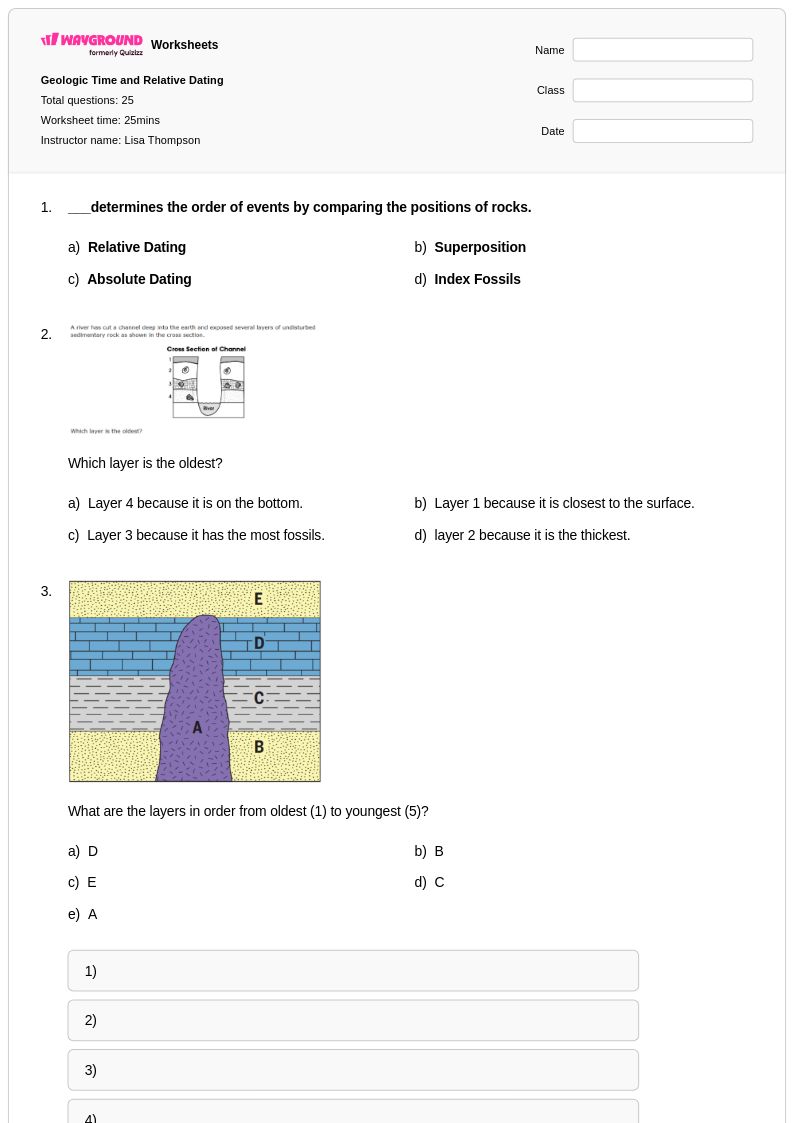
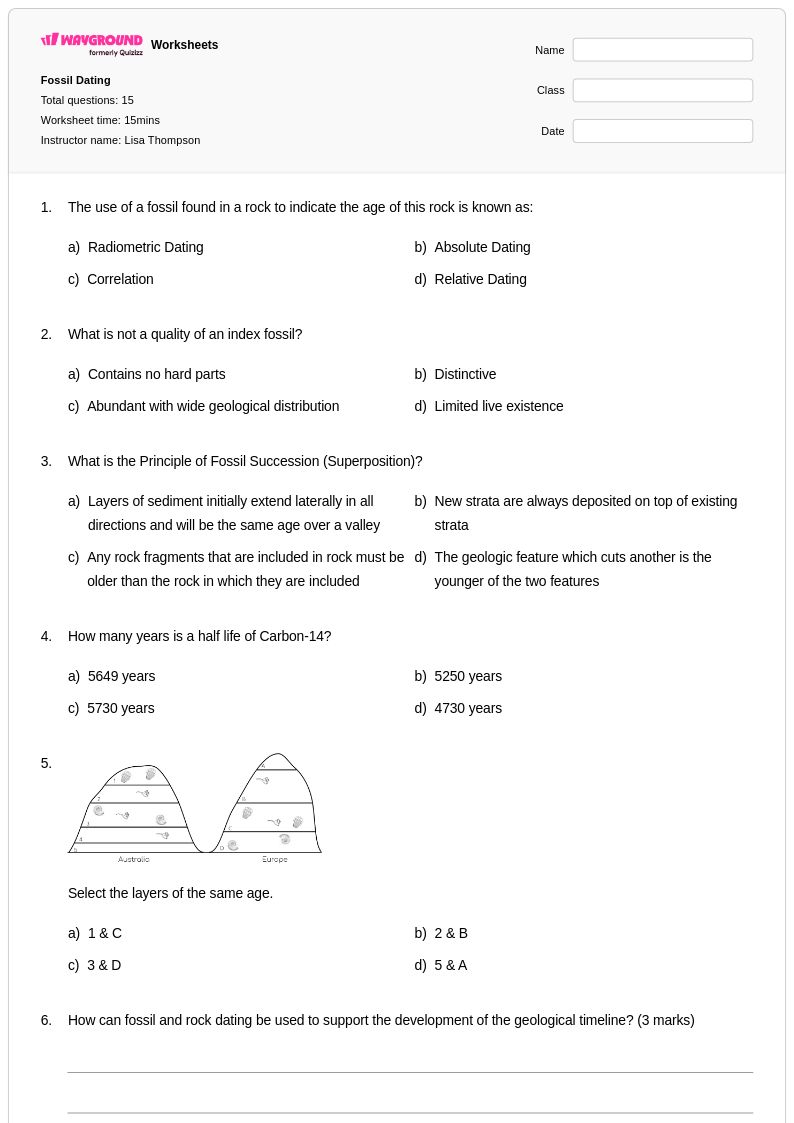
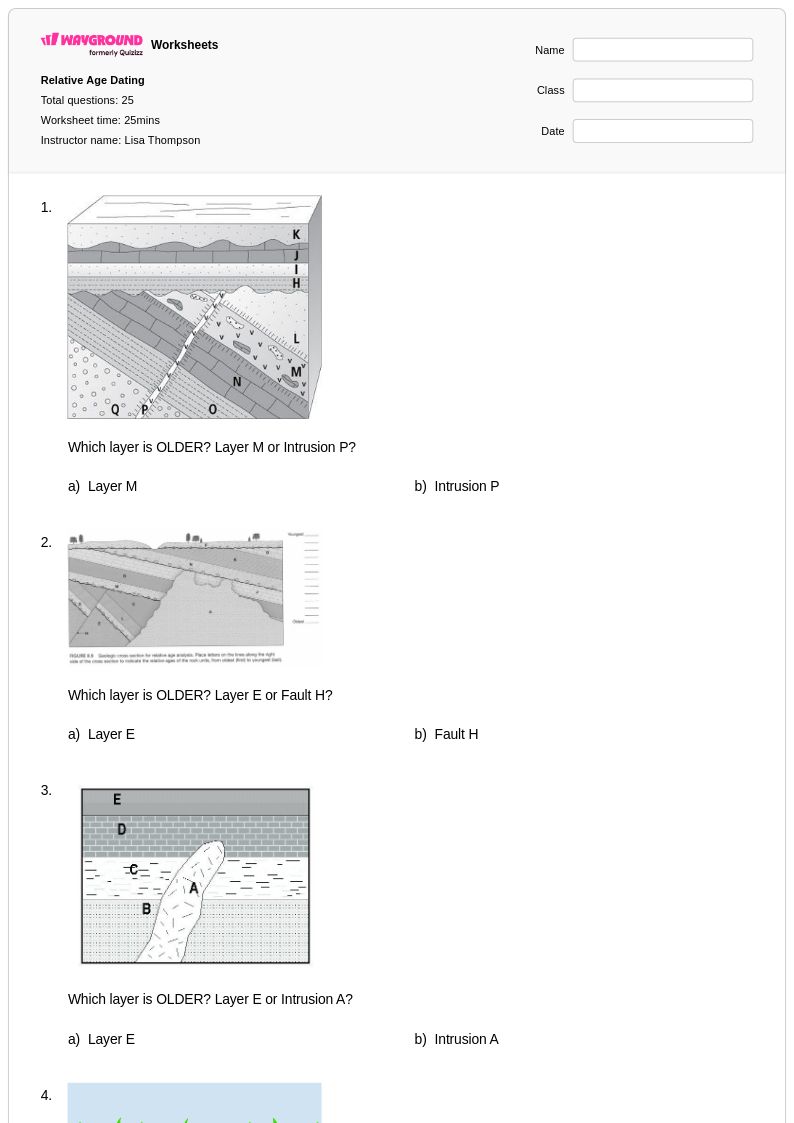
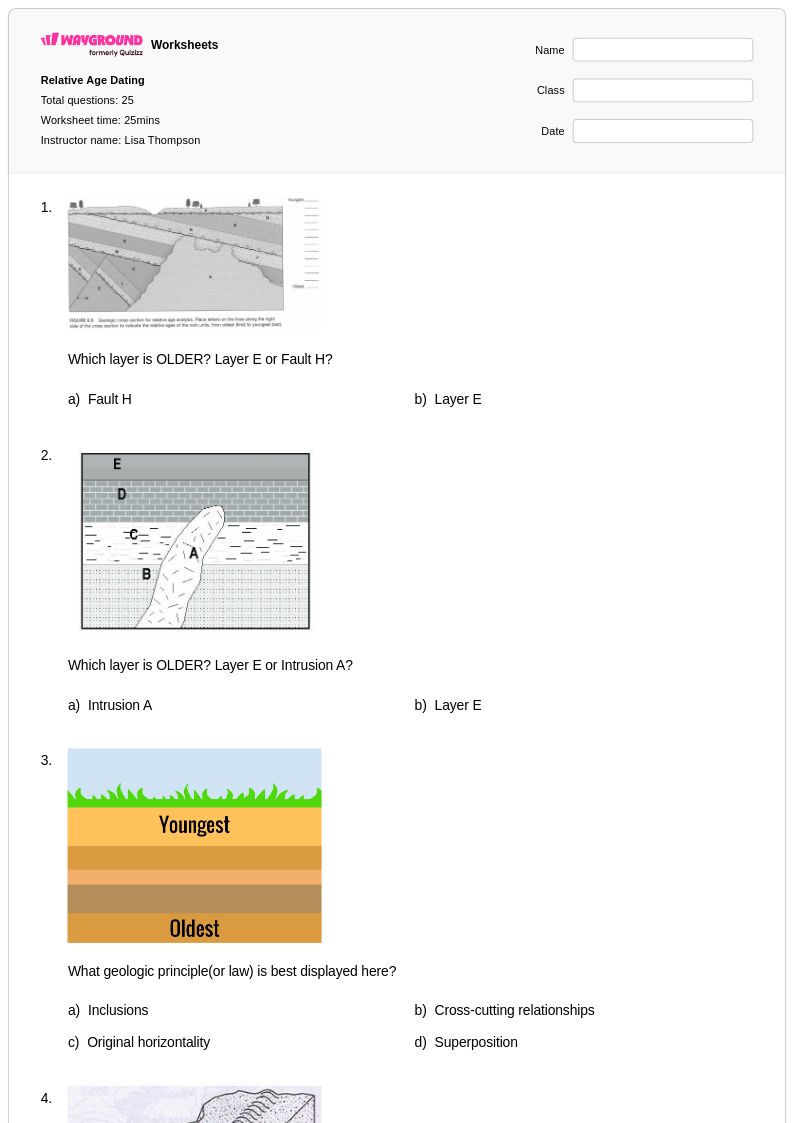
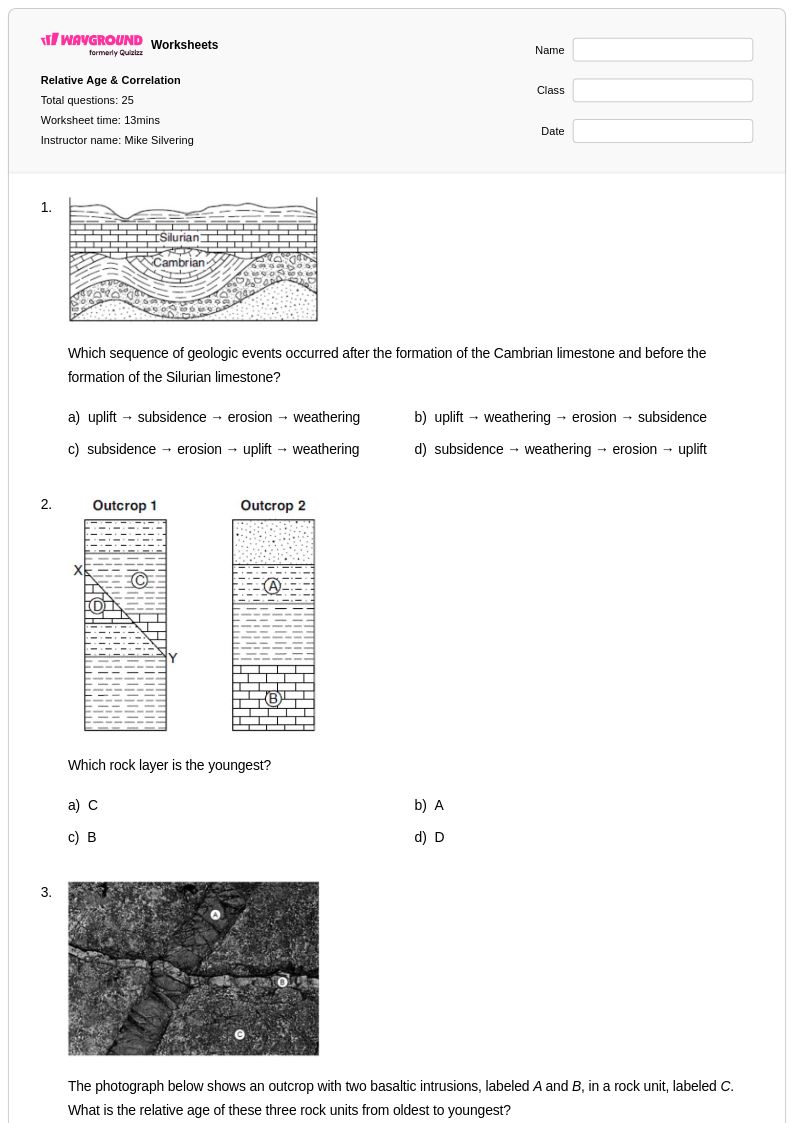
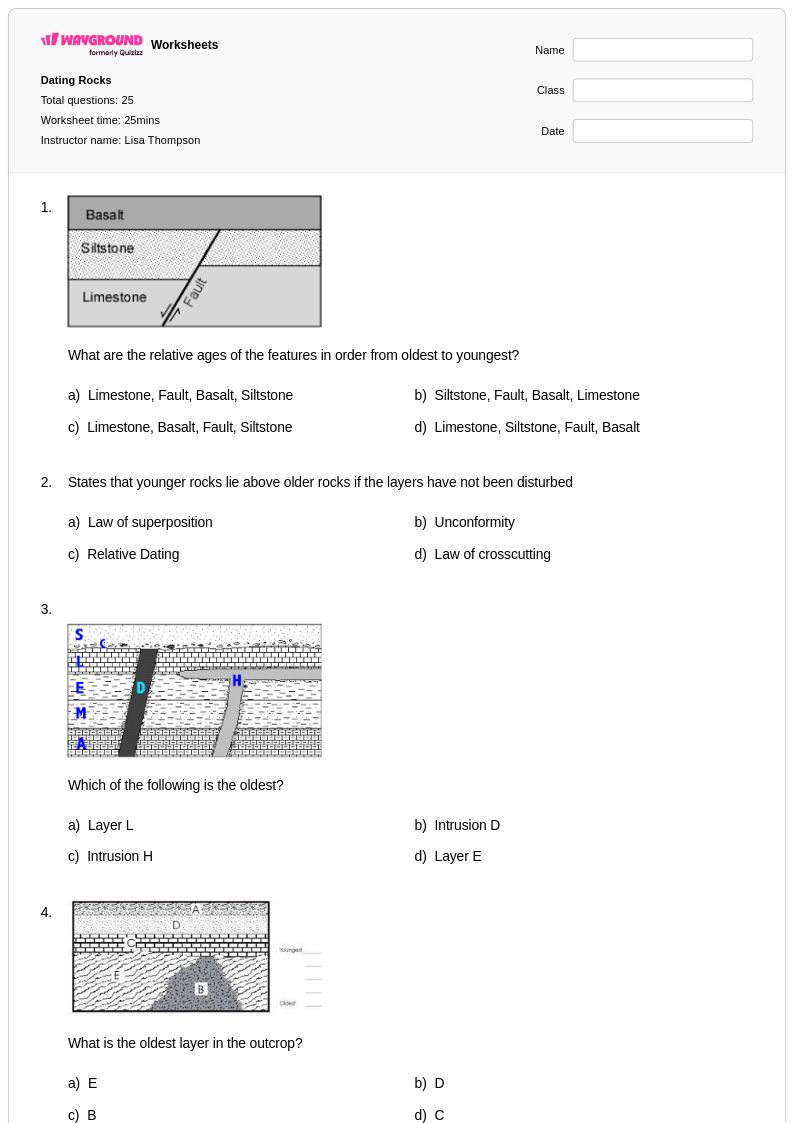
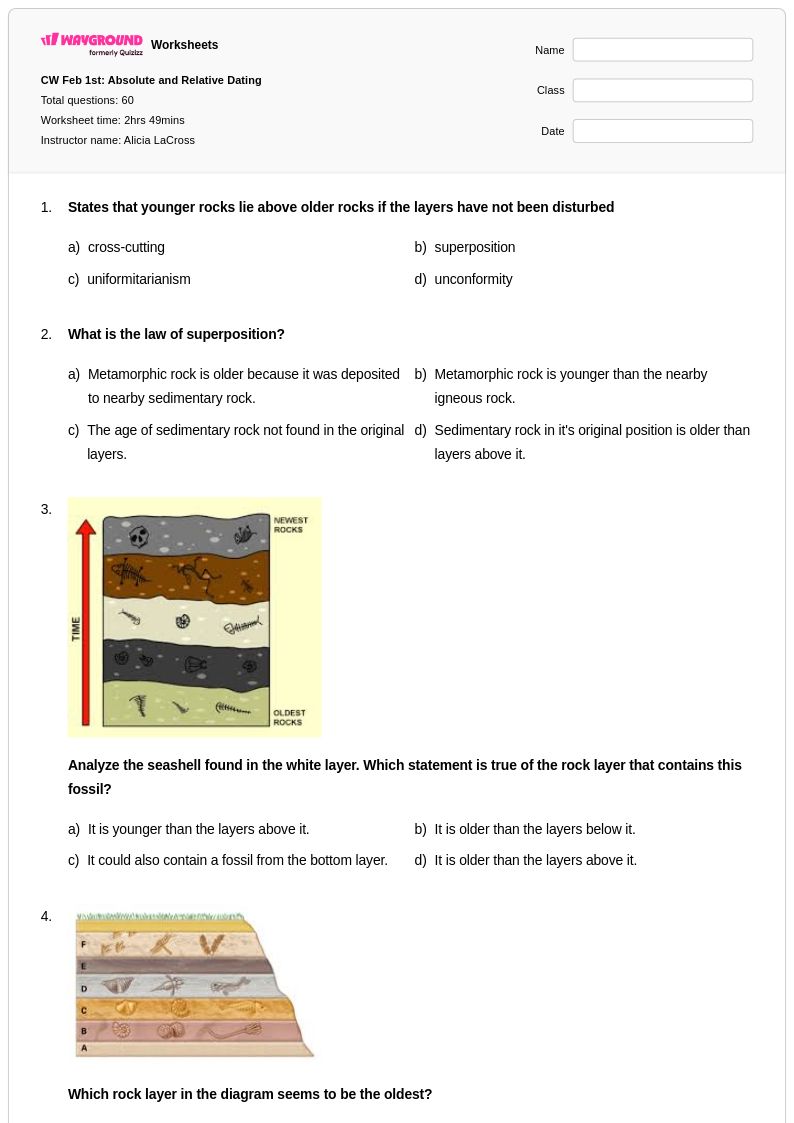
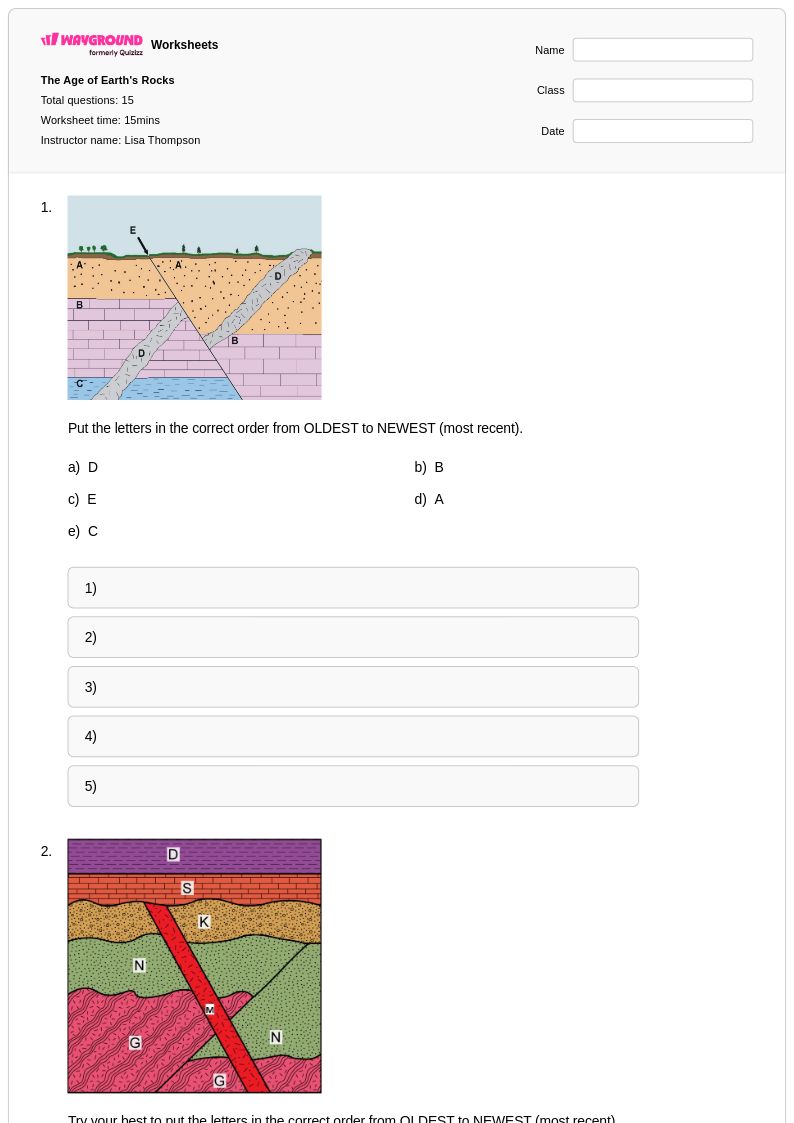
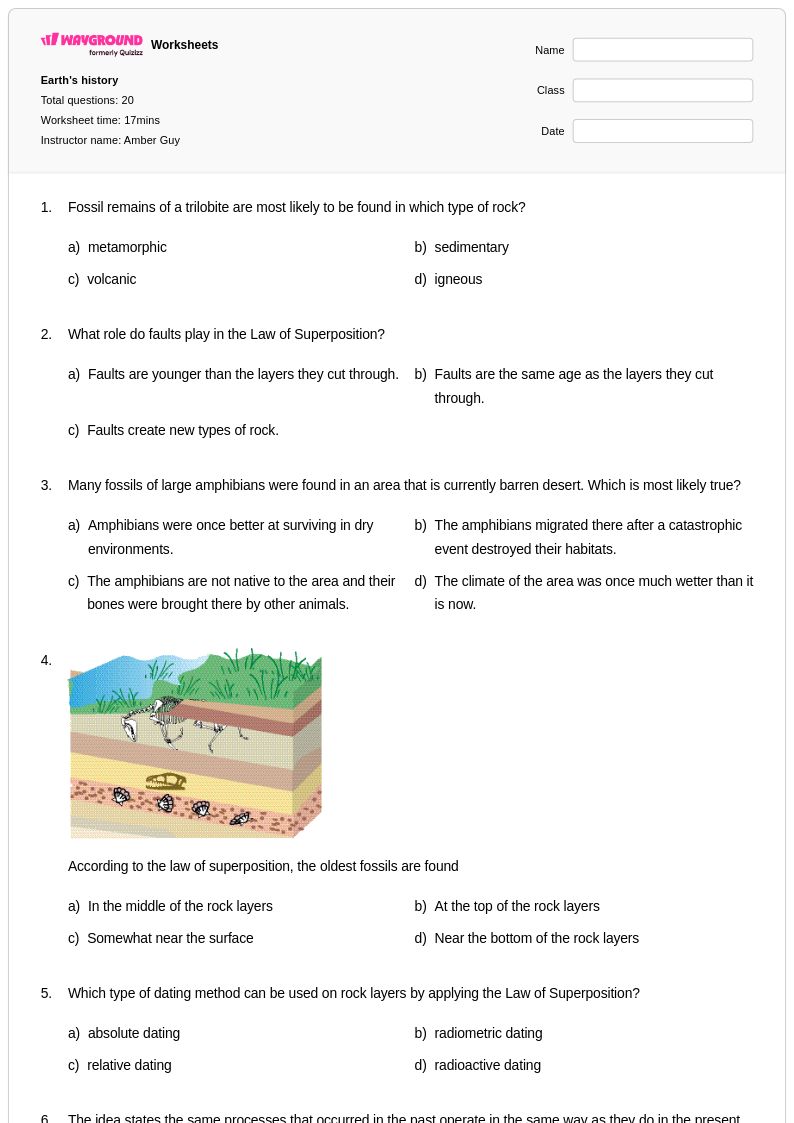
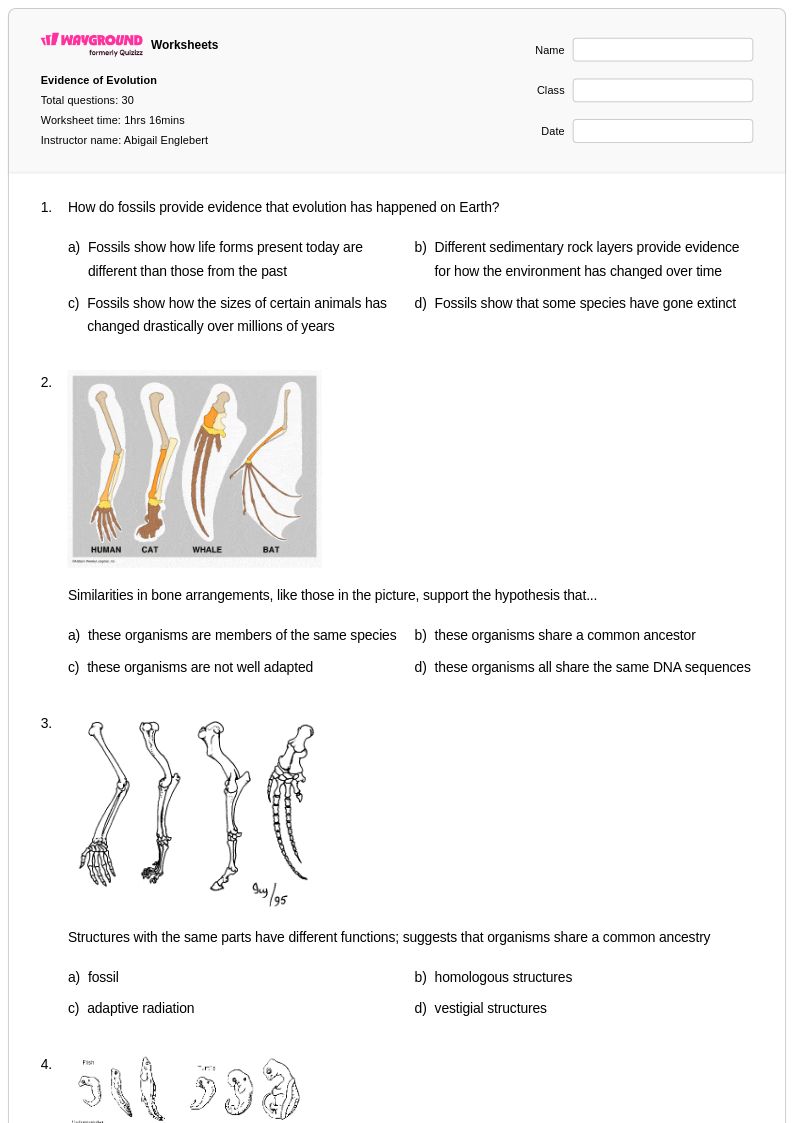
Relative dating fossils represents a fundamental concept in Year 10 Earth and Space Science, requiring students to master the principles of determining the age sequence of rock layers and fossilized organisms without calculating exact numerical ages. Wayground's comprehensive collection of relative dating fossils worksheets provides structured practice problems that guide students through analyzing stratigraphic sequences, applying the law of superposition, and interpreting index fossils to establish geological timelines. These free printable resources strengthen critical thinking skills as students examine cross-sections of rock formations, identify unconformities, and correlate fossil assemblages across different geographic locations. Each worksheet includes a detailed answer key that helps students verify their understanding of key principles such as original horizontality, cross-cutting relationships, and faunal succession, ensuring they can confidently apply these concepts to real-world geological scenarios.
Wayground, formerly Quizizz, empowers educators with millions of teacher-created resources specifically designed to support comprehensive instruction in relative dating fossils and broader Earth science concepts. The platform's advanced search and filtering capabilities allow teachers to quickly locate worksheets that align with curriculum standards and match their students' specific learning needs, whether for initial skill development, targeted remediation, or advanced enrichment activities. Teachers can customize these digital and printable pdf resources to differentiate instruction across diverse learning styles and academic levels, incorporating visual diagrams, data analysis exercises, and problem-solving scenarios that reinforce fossil interpretation skills. This extensive worksheet collection streamlines lesson planning while providing flexible tools for formative assessment, independent practice, and collaborative learning experiences that deepen students' understanding of geological time and Earth's evolutionary history.
FAQs
How do I teach relative dating of fossils to my students?
Start by grounding students in the foundational principles: the law of superposition (older layers are beneath younger ones), cross-cutting relationships, and the role of index fossils in correlating rock strata across locations. Use physical or printed diagrams of rock layer sequences and ask students to sequence geological events before introducing vocabulary. Building from visual interpretation toward abstract reasoning helps students internalize the logic of relative dating rather than memorizing rules in isolation.
What practice exercises help students get better at relative dating fossils?
The most effective practice involves interpreting annotated rock layer diagrams, sequencing geological events using cross-cutting relationships, and identifying index fossils within fossil assemblages. Exercises that require students to write out their reasoning, not just circle an answer, are especially useful for catching gaps in conceptual understanding. Varied problem types, such as matching, ordering, and scenario-based analysis, build both fluency and flexibility with these skills.
What mistakes do students commonly make when learning relative dating?
The most frequent error is confusing relative dating with absolute dating, leading students to assign specific numerical ages rather than chronological sequences. Students also frequently misapply the law of superposition when rock layers have been folded or overturned, failing to account for geological disturbance. A third common misconception is treating index fossils as age markers for exact dates rather than as tools for correlating time periods across different rock formations.
How do I use relative dating fossils worksheets in my classroom?
These worksheets work well as guided practice during instruction, independent review assignments, or formative assessment checkpoints within an Earth science unit on geological time. They are available as printable PDFs for traditional classroom use and in digital formats for technology-integrated environments, including the ability to host them as a quiz on Wayground. Answer keys are included with each resource, making them practical for self-paced or independent study settings as well.
How can I differentiate relative dating fossil activities for students at different levels?
For students who need additional support, simplify diagrams to fewer rock layers and provide a reference sheet of the core principles before they begin. Advanced students benefit from more complex scenarios involving unconformities, intrusions, and multiple cross-cutting events that require multi-step reasoning. On Wayground, teachers can apply accommodations such as read aloud support, reduced answer choices, or extended time to individual students without disrupting the experience for the rest of the class.
What is the difference between relative dating and absolute dating of fossils?
Relative dating determines the chronological order of geological events and fossil records by analyzing rock layer position and physical relationships, without assigning a specific numerical age. Absolute dating, by contrast, uses radiometric techniques such as carbon-14 or potassium-argon dating to assign an approximate age in years. In practice, students often encounter relative dating first because it requires observational reasoning skills rather than knowledge of decay rates or isotope chemistry.