
15 Q
7th - Uni
25 Q
11th - Uni
15 Q
11th - Uni
15 Q
9th - 12th
30 Q
11th
53 Q
11th
25 Q
8th - Uni
19 Q
6th - Uni
15 Q
6th - Uni
22 Q
11th
20 Q
7th - 12th
20 Q
9th - 11th
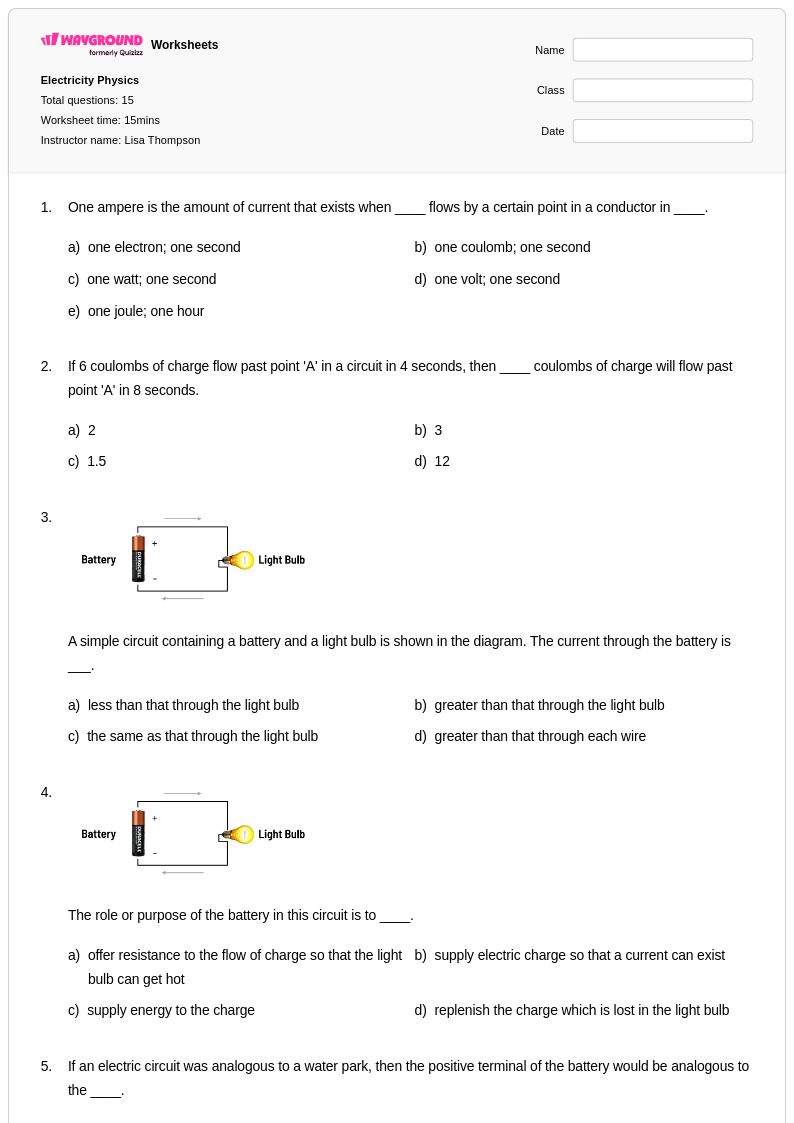
15 Q
11th - Uni
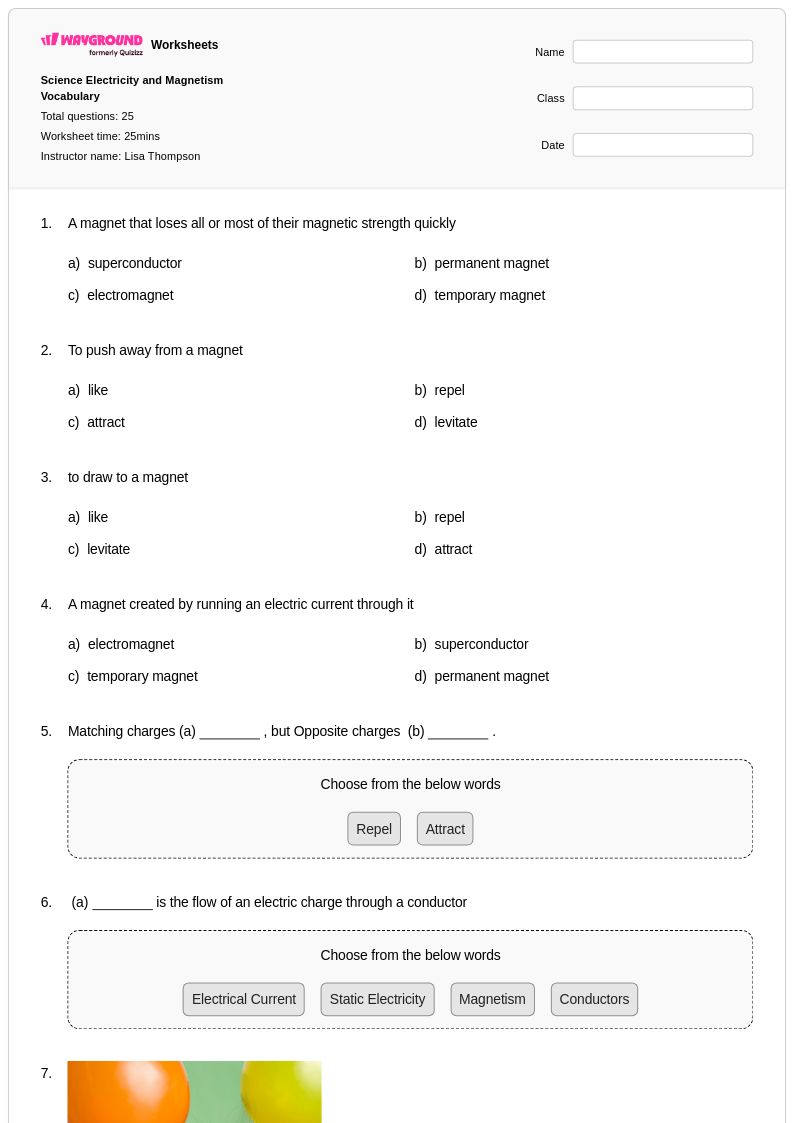
25 Q
5th - Uni
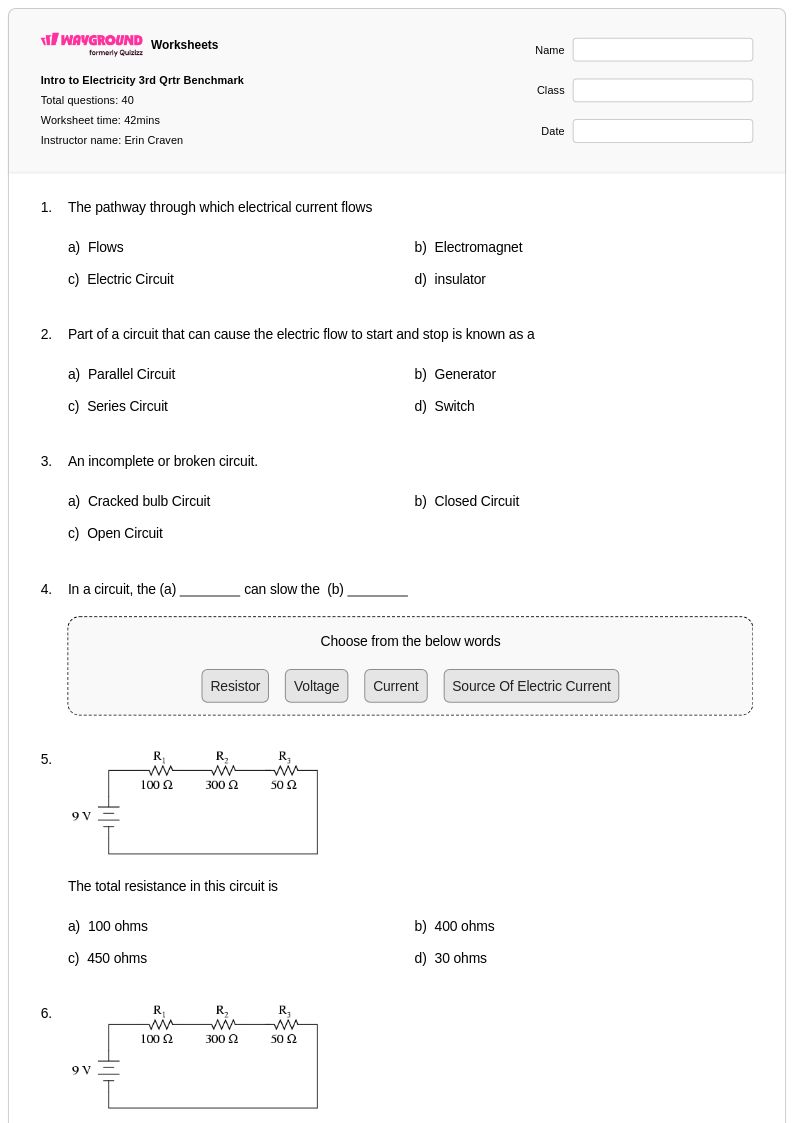
40 Q
9th - 12th
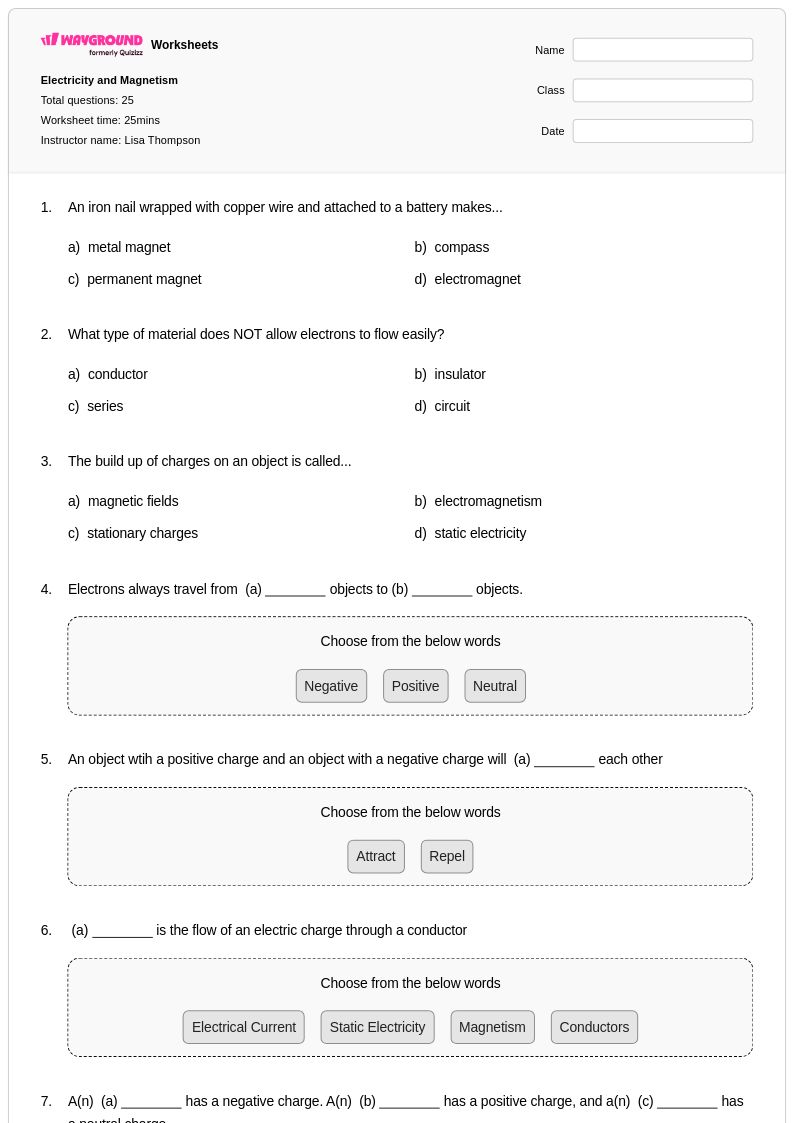
25 Q
8th - Uni
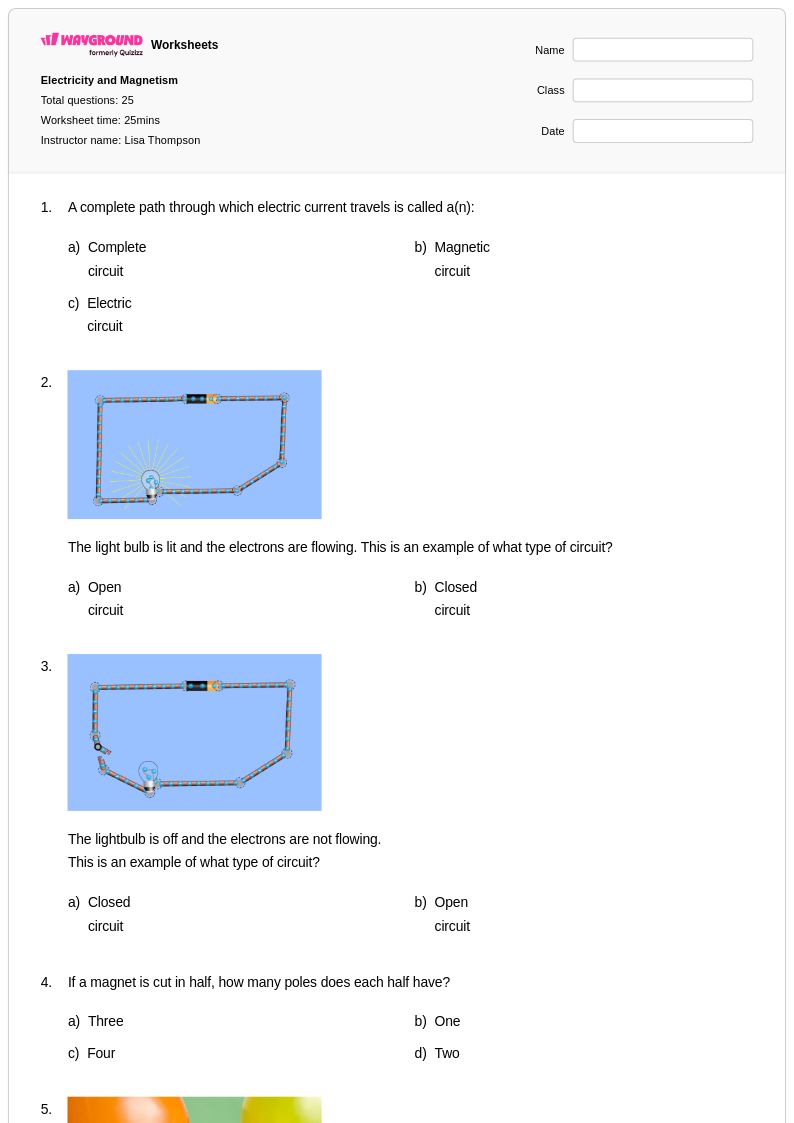
25 Q
5th - Uni
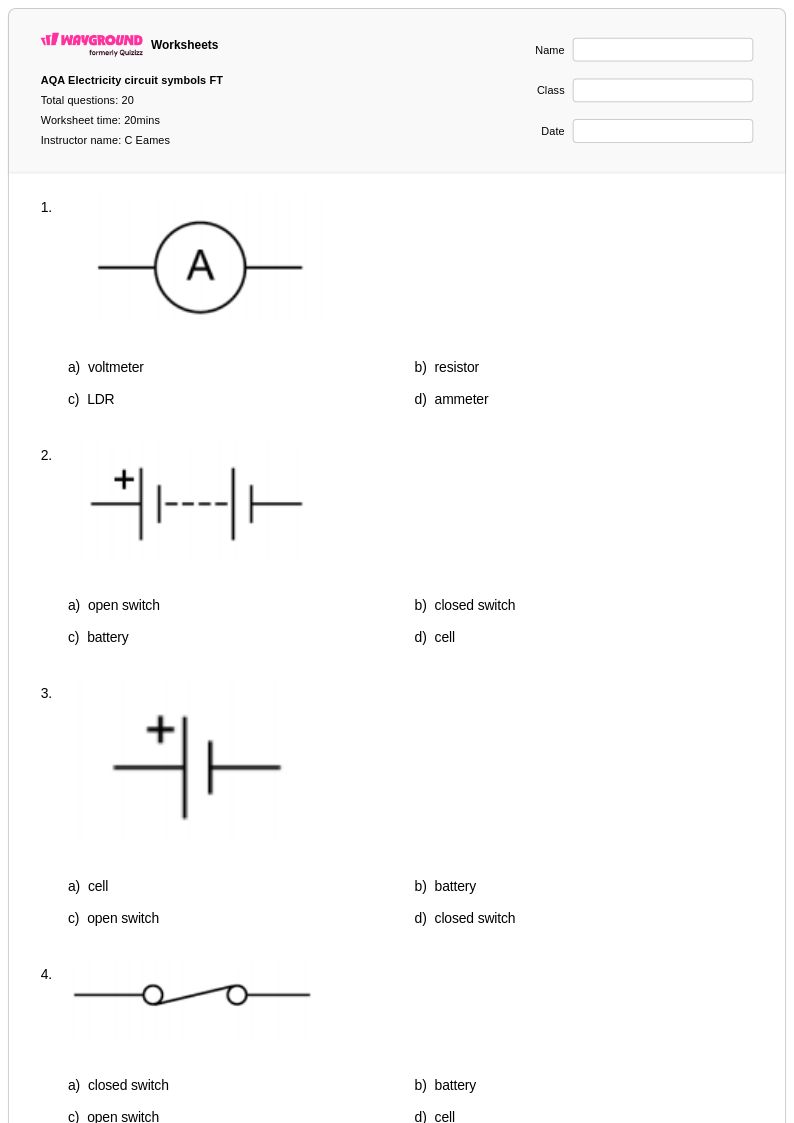
20 Q
5th - 12th
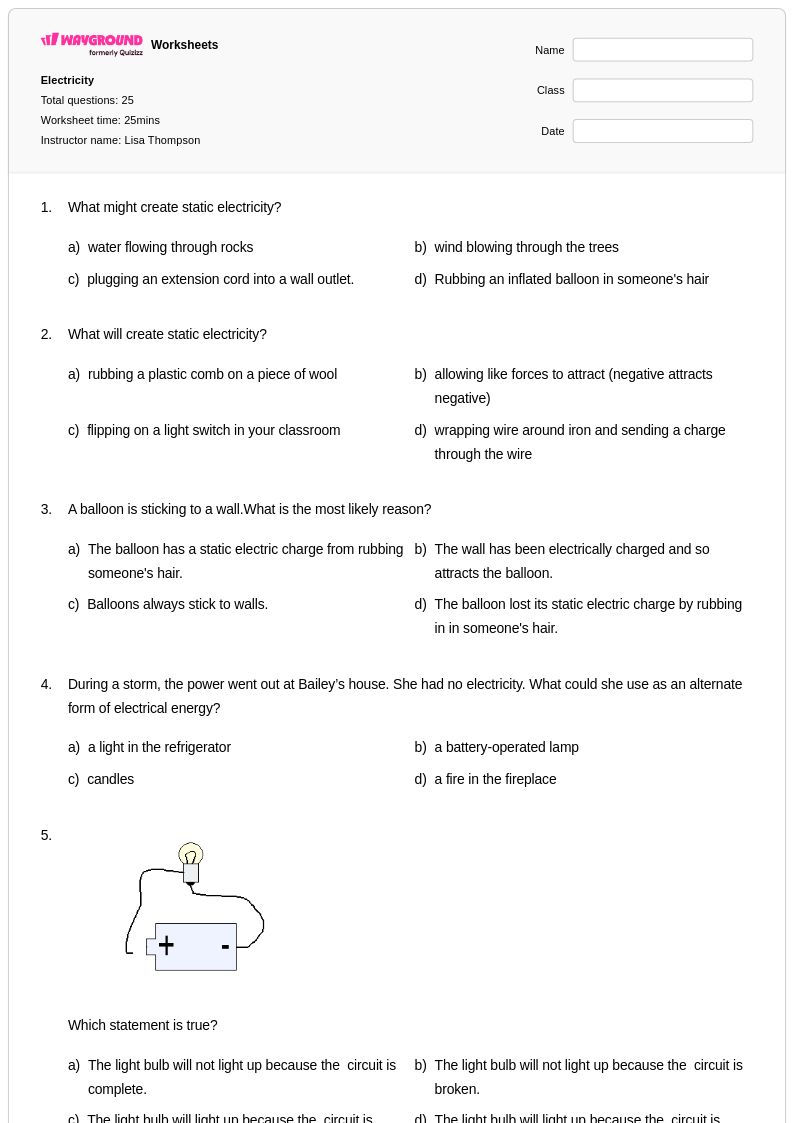
25 Q
5th - Uni
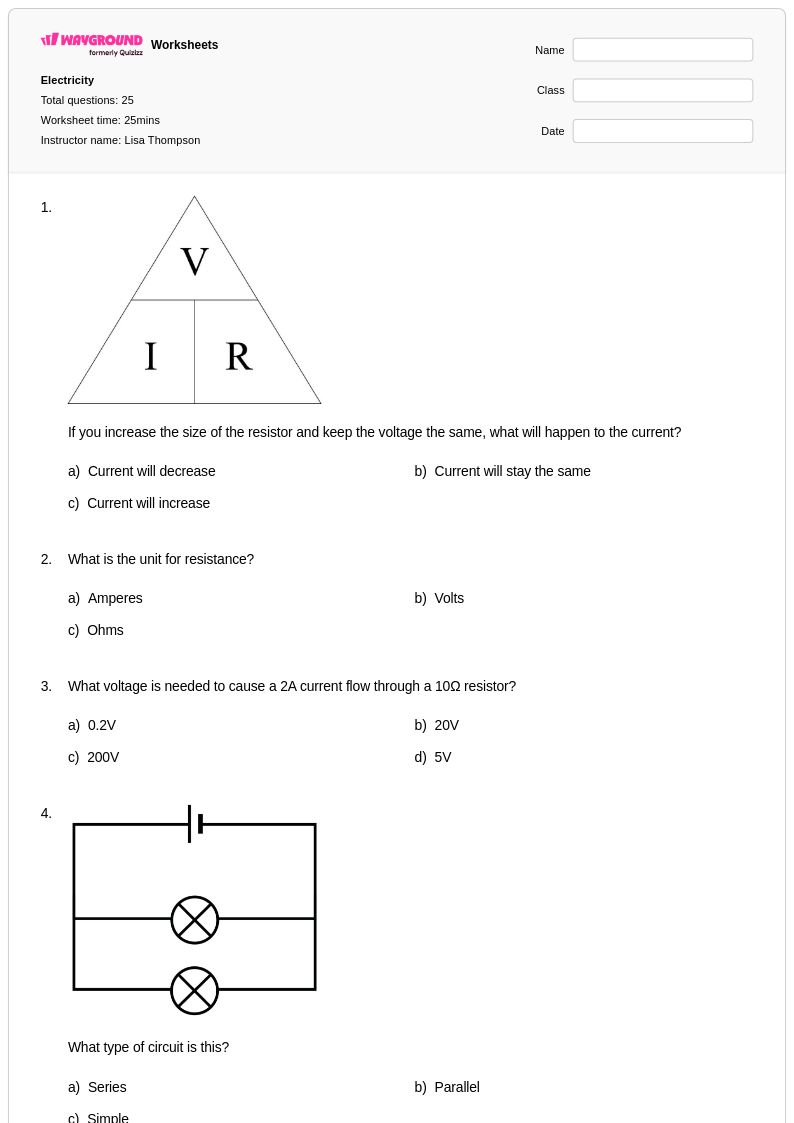
25 Q
5th - Uni
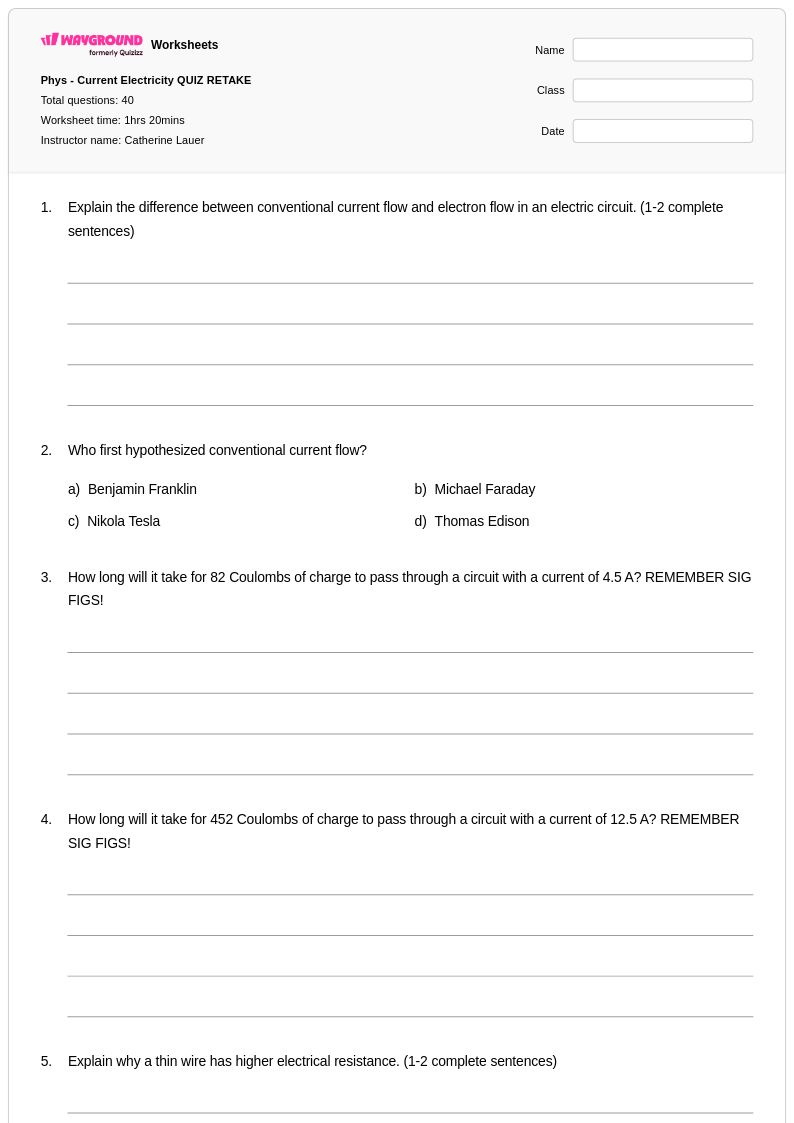
40 Q
11th
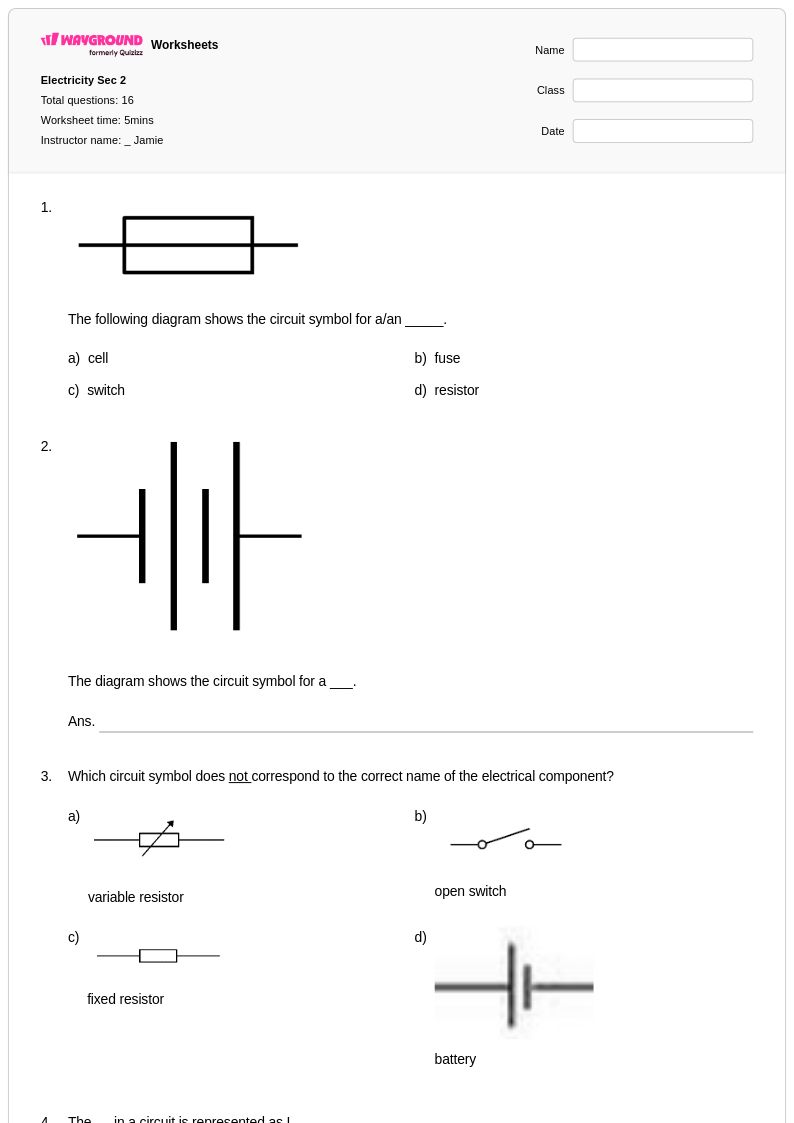
16 Q
9th - 12th
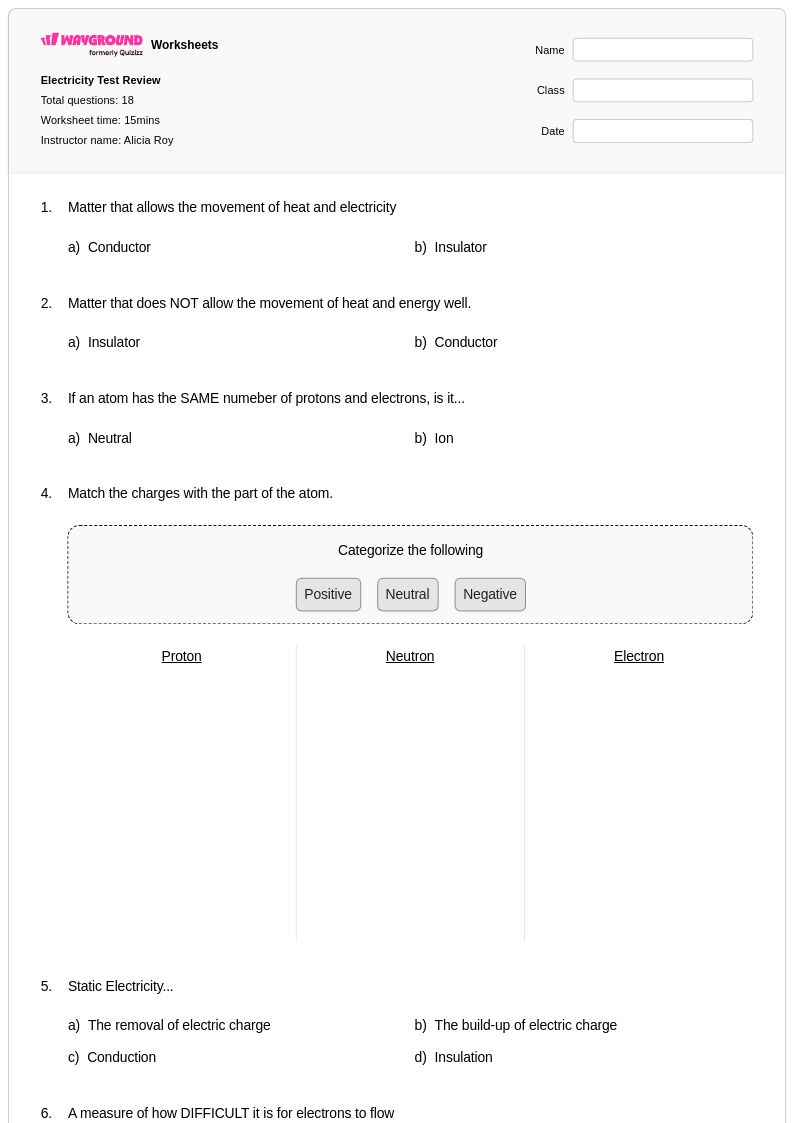
18 Q
6th - Uni
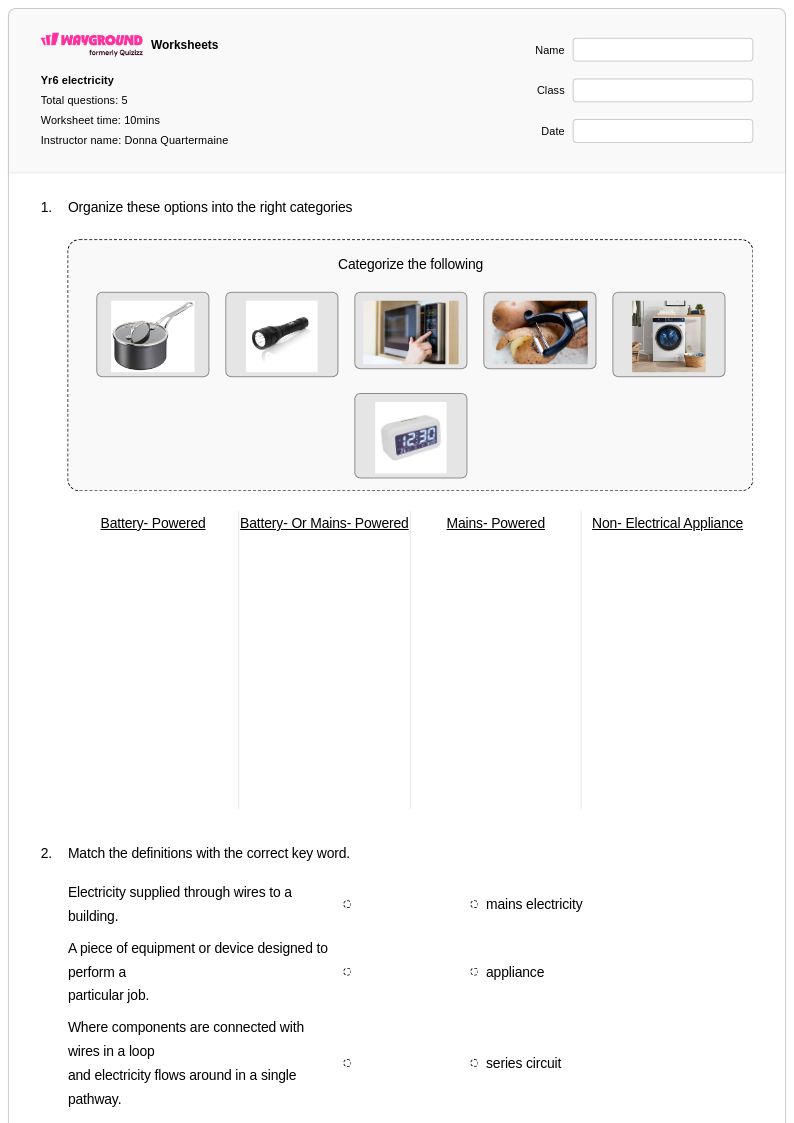
5 Q
6th - Uni
Explore Other Subject Worksheets for year 11
Explore printable Electricity worksheets for Year 11
Electricity worksheets for Year 11 students available through Wayground (formerly Quizizz) provide comprehensive coverage of advanced electrical concepts that form the foundation of upper-level physics study. These expertly designed resources guide students through complex topics including circuit analysis, Ohm's law applications, electrical power calculations, capacitance, and electromagnetic induction principles. Each worksheet systematically builds understanding through carefully sequenced practice problems that challenge students to apply theoretical knowledge to real-world scenarios, from analyzing series and parallel circuits to calculating electrical energy consumption. The collection includes detailed answer keys that support independent learning and self-assessment, while printable pdf formats ensure accessibility for both classroom instruction and homework assignments, making these free educational resources invaluable for mastering the quantitative and conceptual skills essential for advanced physics success.
Wayground (formerly Quizizz) empowers educators with millions of teacher-created electricity worksheets specifically aligned with Year 11 physics standards, featuring robust search and filtering capabilities that enable quick identification of materials matching specific learning objectives and skill levels. The platform's comprehensive differentiation tools allow teachers to customize worksheets for diverse learning needs, from remediation activities for students struggling with basic electrical concepts to enrichment challenges involving complex circuit design and analysis. Available in both digital and printable formats including downloadable pdfs, these resources seamlessly integrate into lesson planning workflows while supporting flexible instructional approaches such as flipped classroom models, collaborative problem-solving sessions, and individual skill practice. The standards-aligned content ensures that teachers can confidently select materials that reinforce curriculum requirements while the extensive collection provides ongoing support for formative assessment, targeted intervention, and accelerated learning pathways in electrical physics education.
FAQs
How do I teach electricity concepts to students who struggle with abstract ideas like current and voltage?
What worksheets help students practice Ohm's Law and circuit calculations?
What mistakes do students most commonly make when working with series and parallel circuits?
How can I use electricity worksheets to differentiate instruction for students at different skill levels?
How do I use Wayground's electricity worksheets in my classroom?
How do I assess whether my students actually understand electrical concepts versus just memorizing formulas?