Free Printable Emotional Awareness Worksheets for Year 12
Free Year 12 emotional awareness worksheets and printables help students develop crucial self-regulation skills through engaging practice problems, with comprehensive answer keys included for effective social studies learning.
Explore printable Emotional Awareness worksheets for Year 12
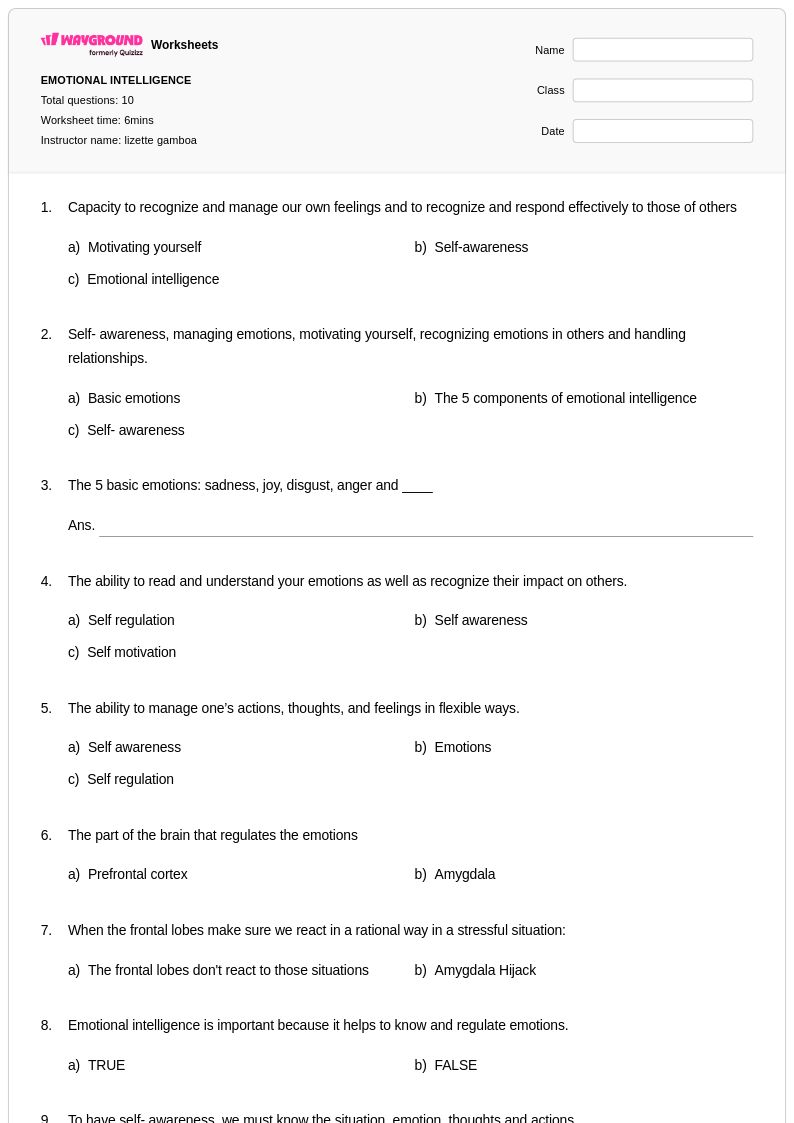
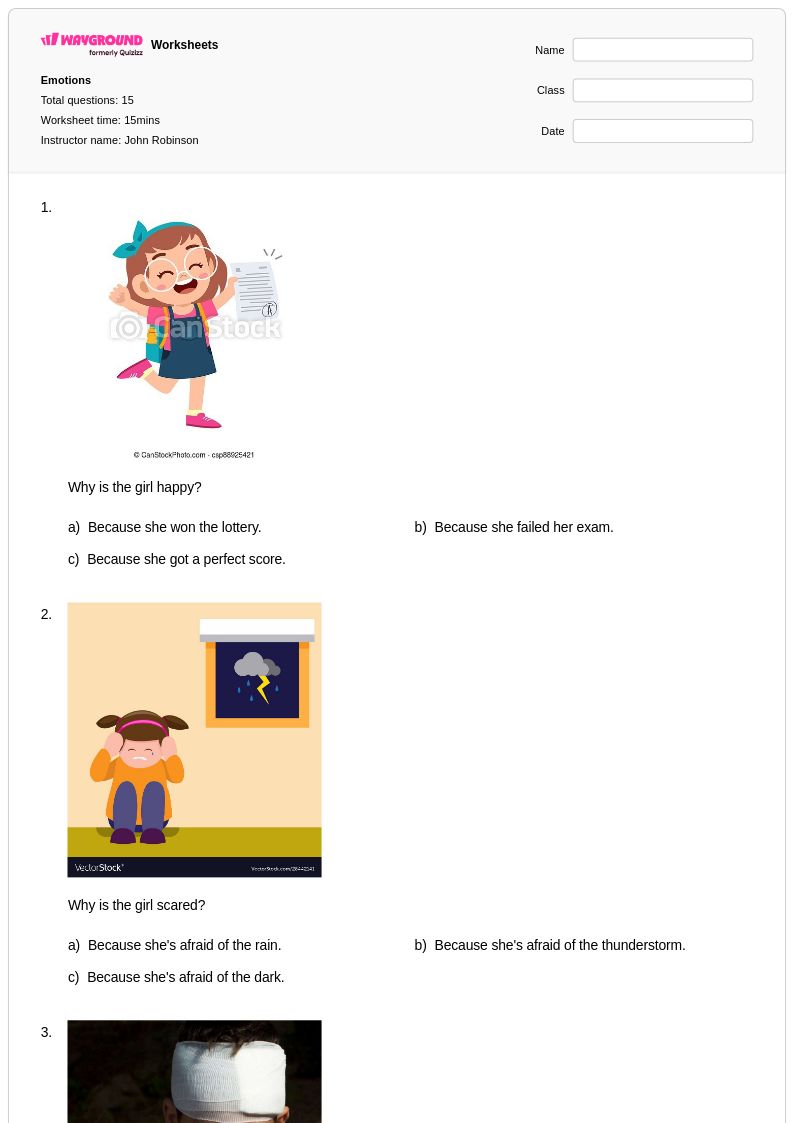
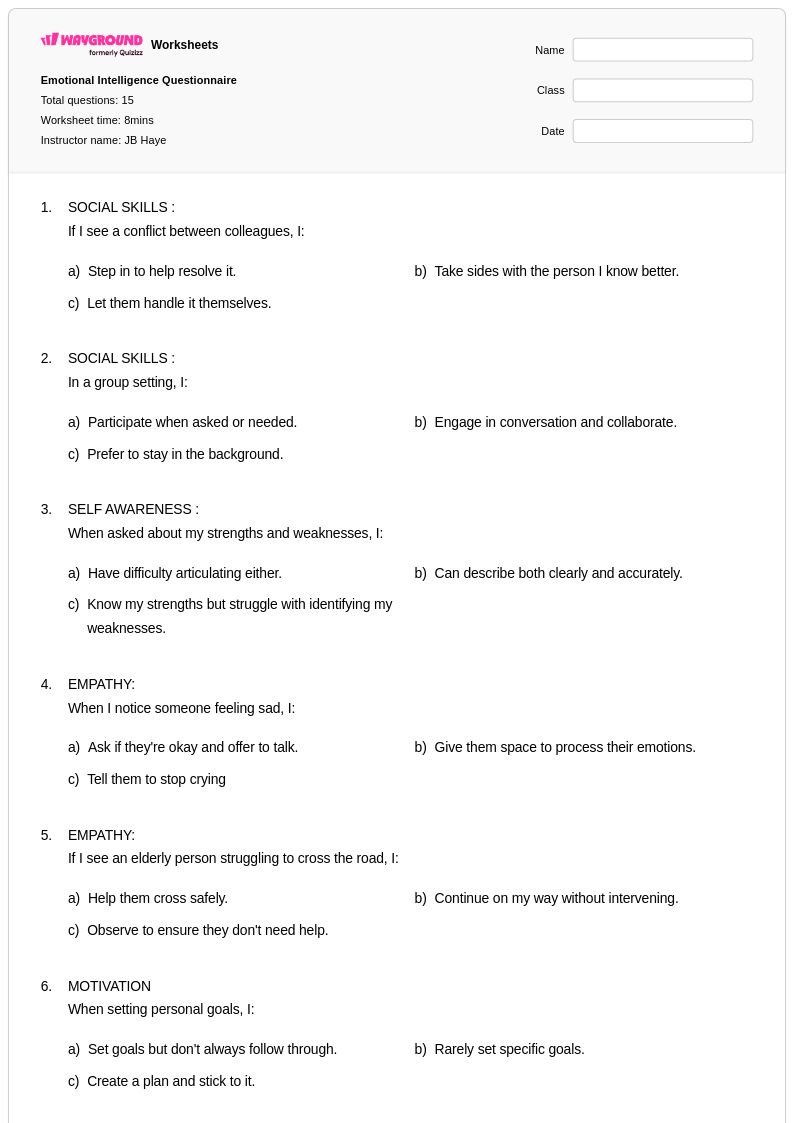
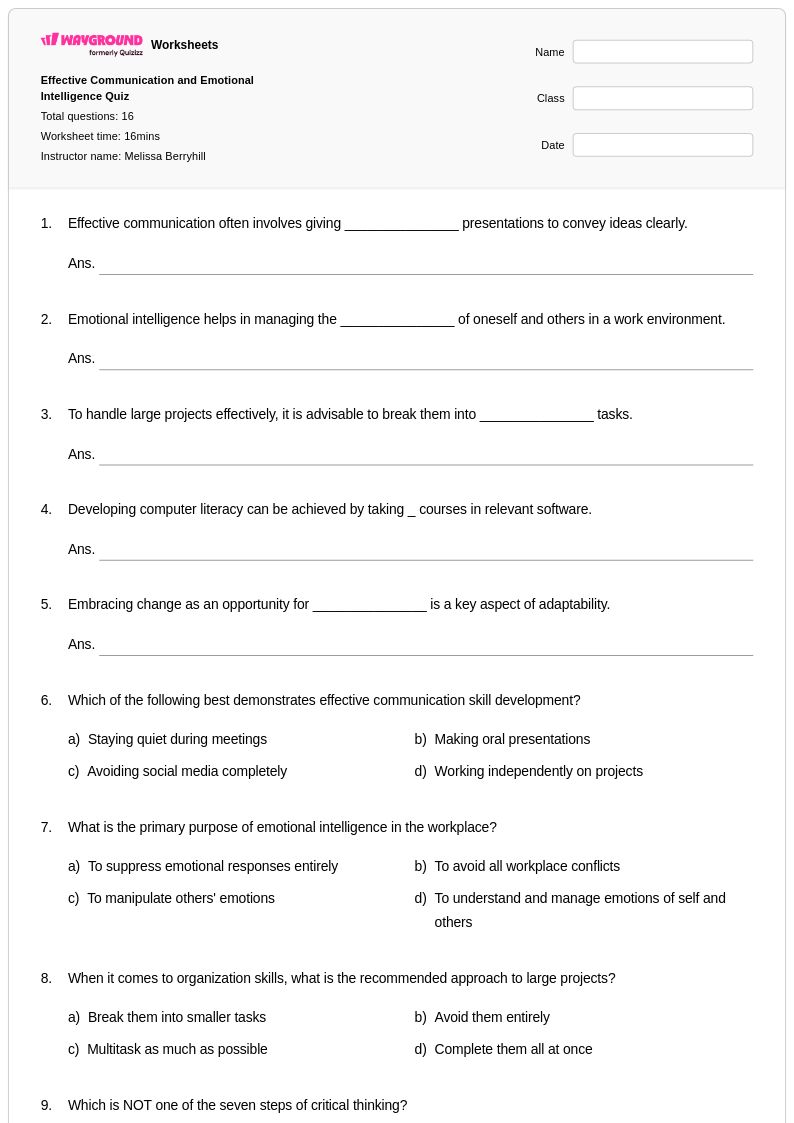
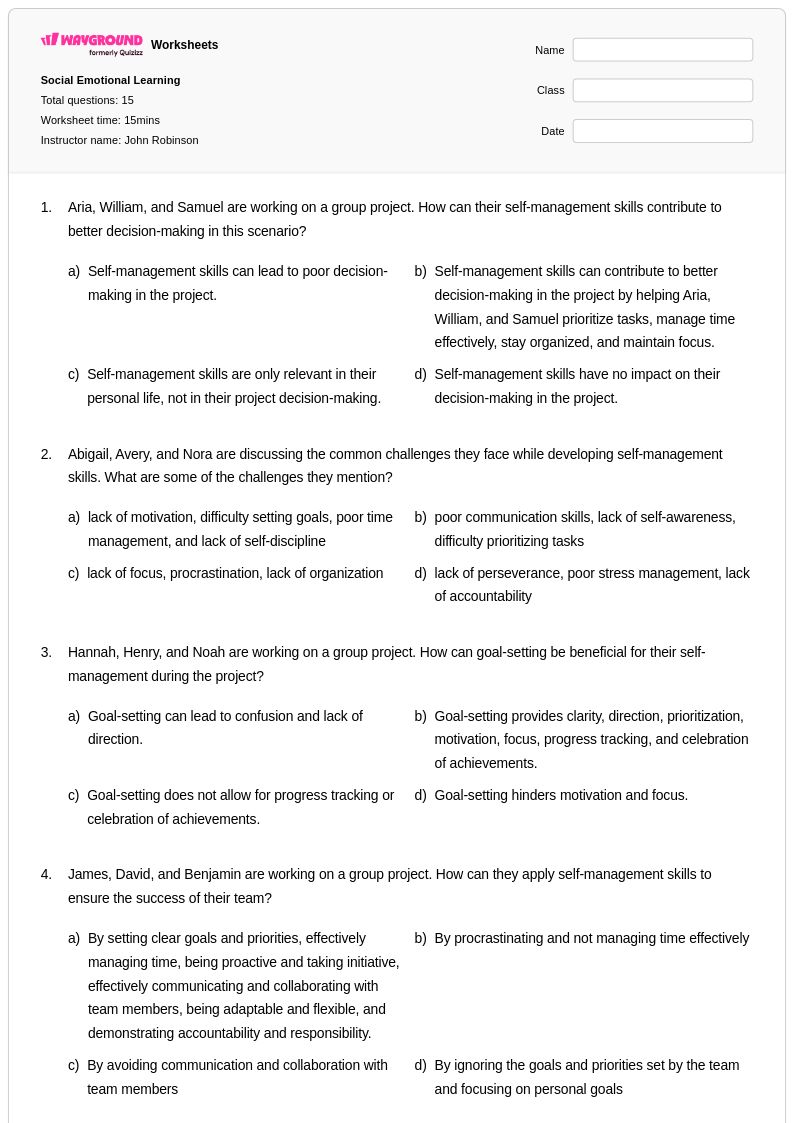
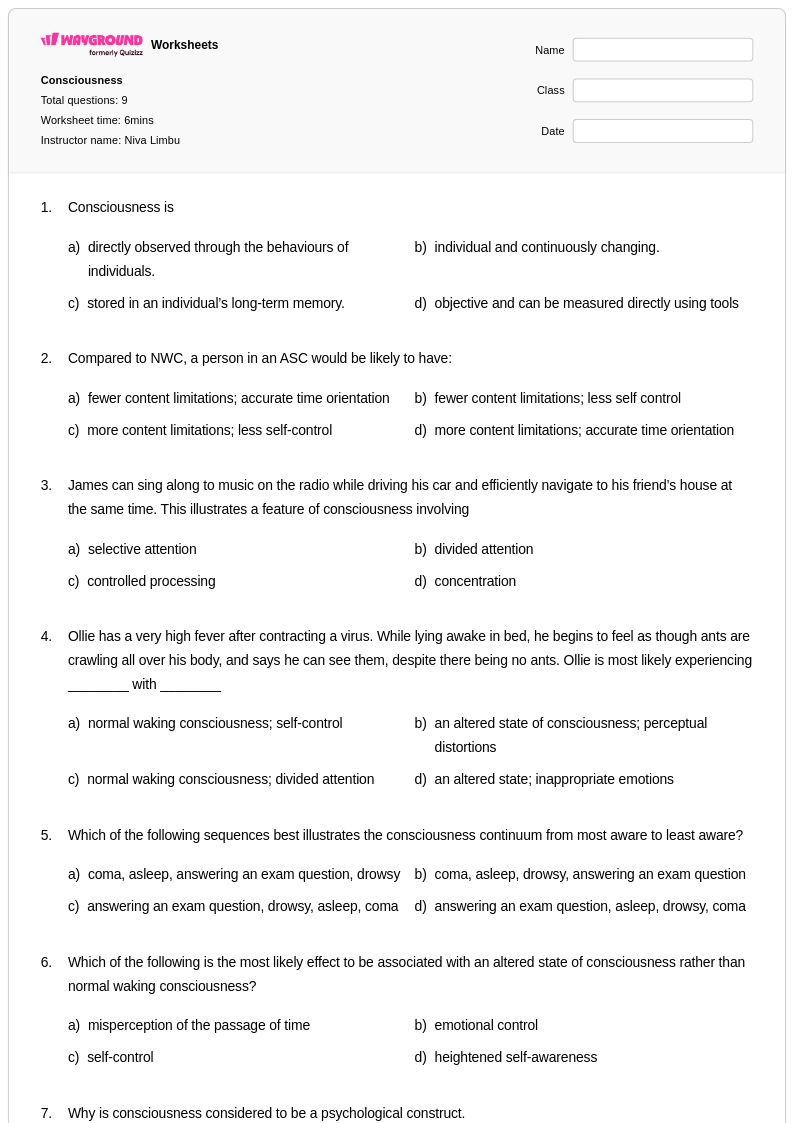
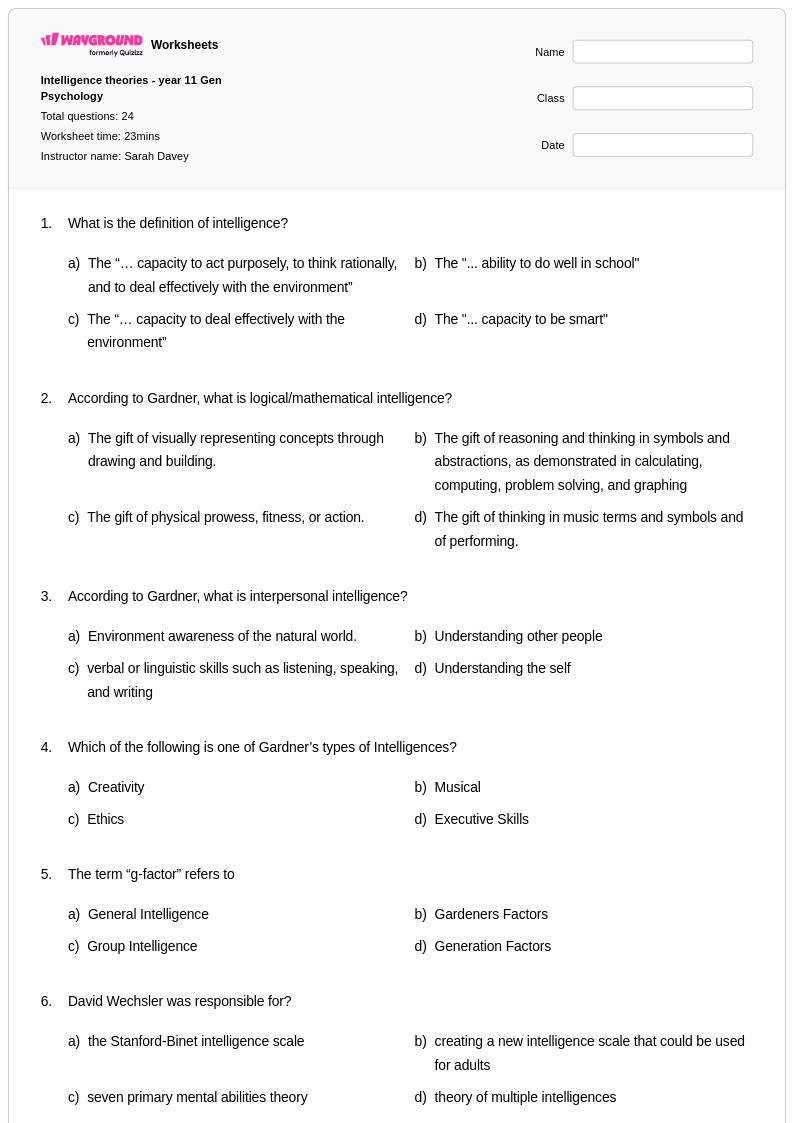
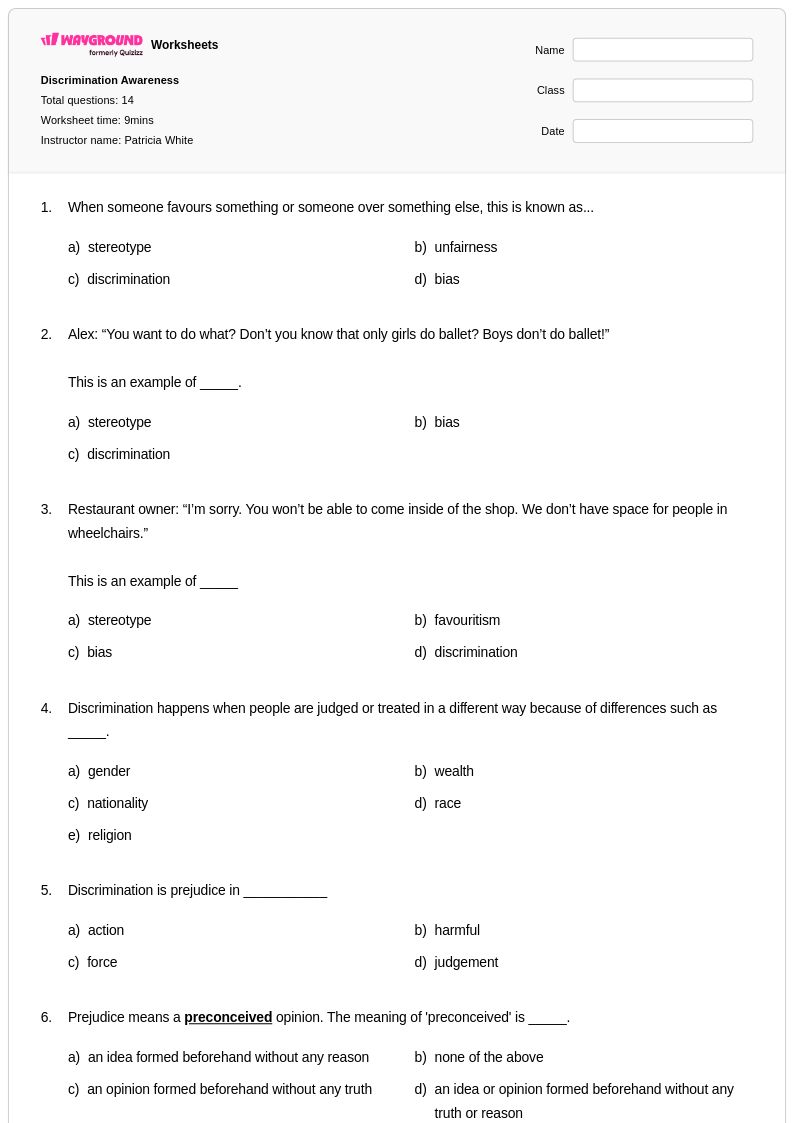
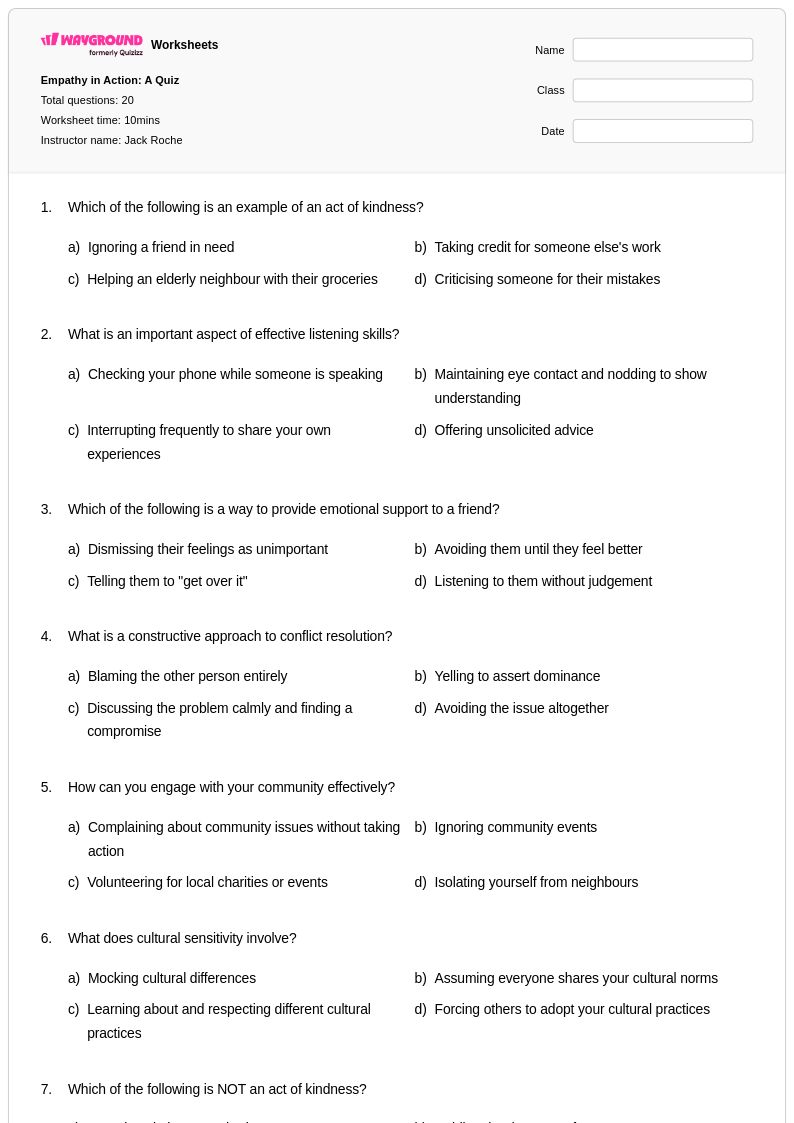
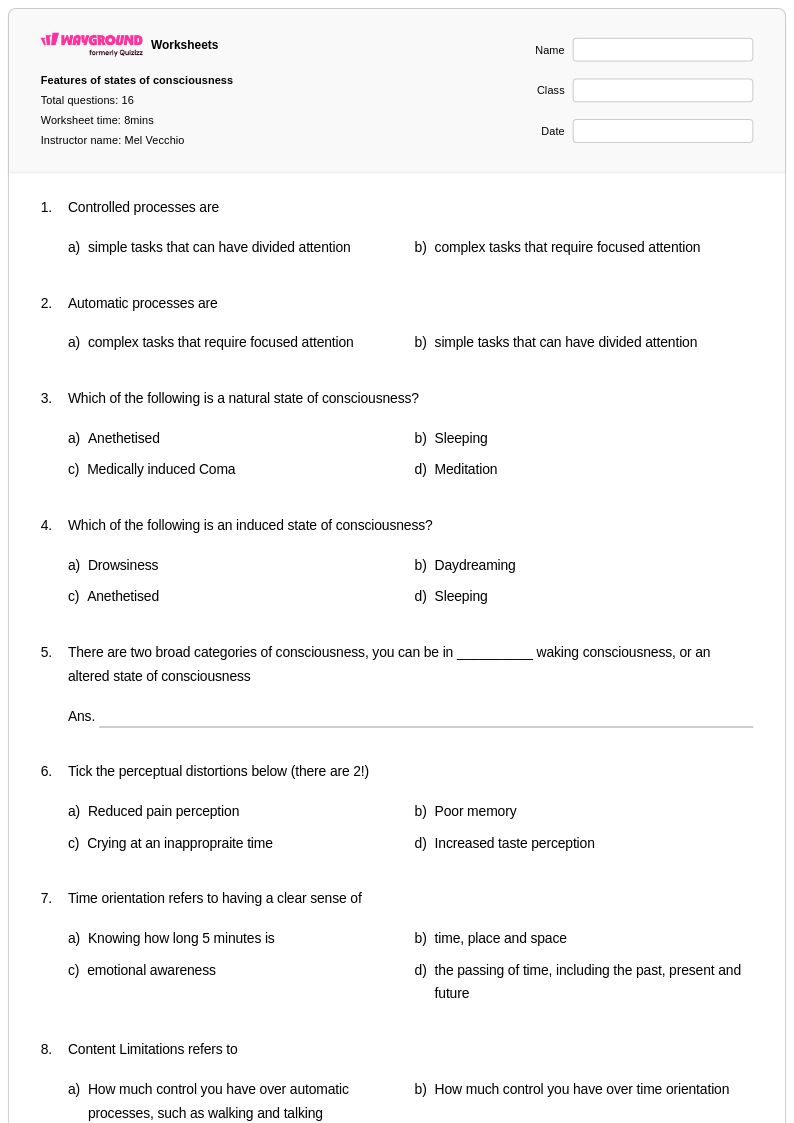
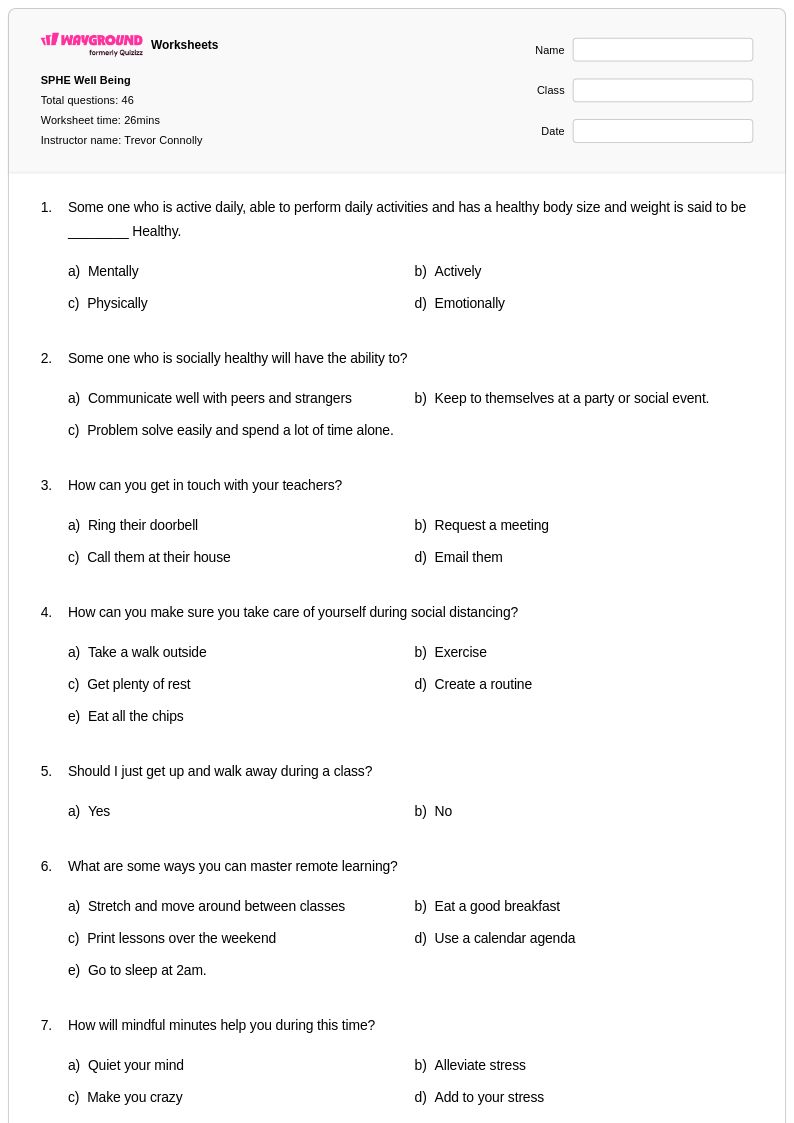
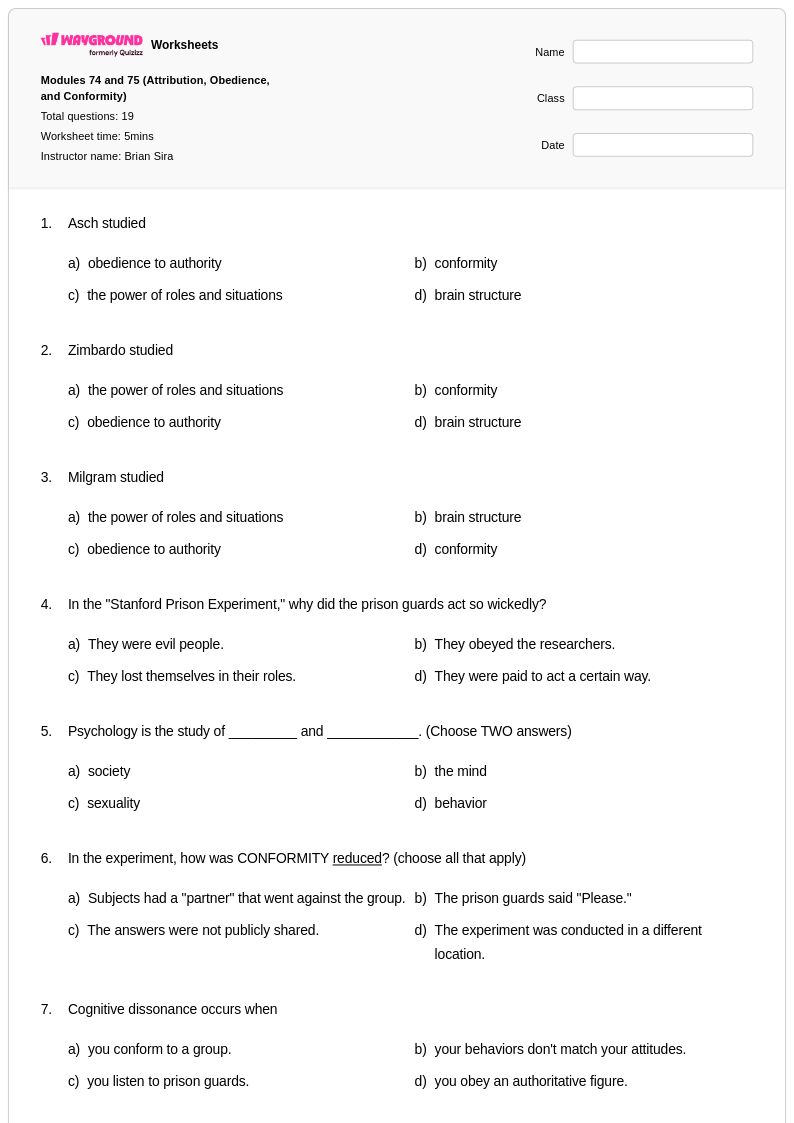
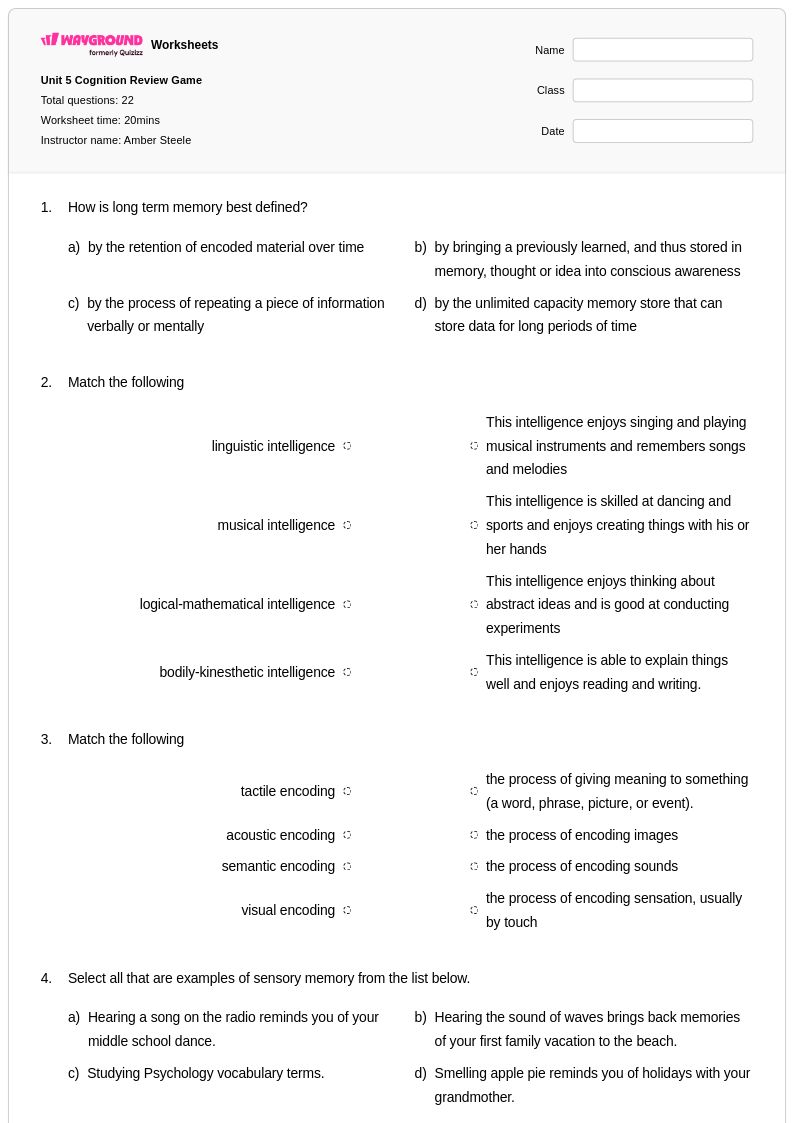
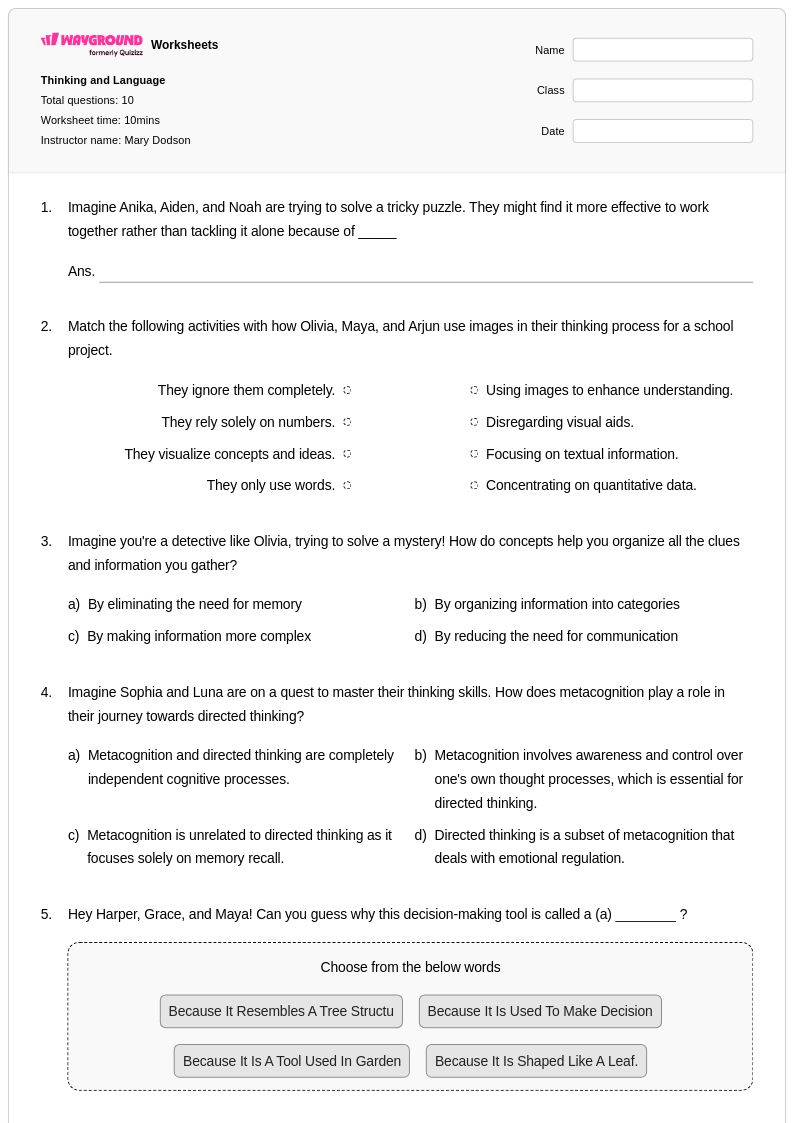
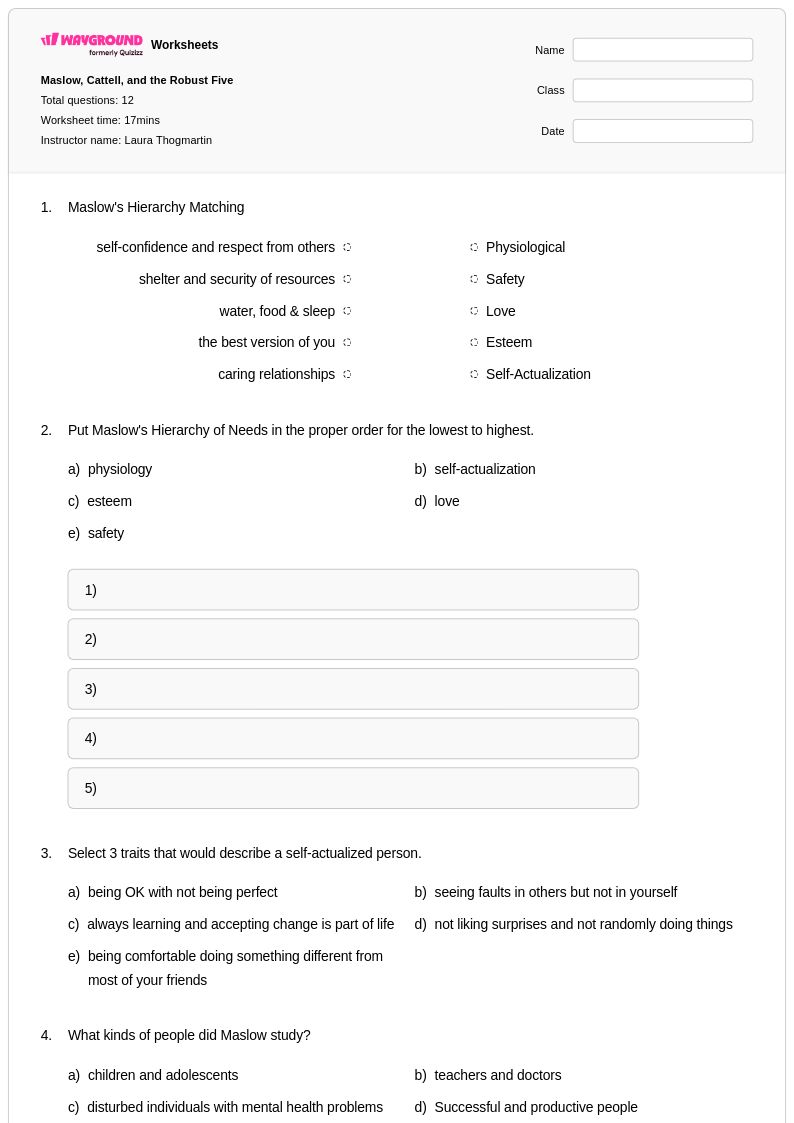
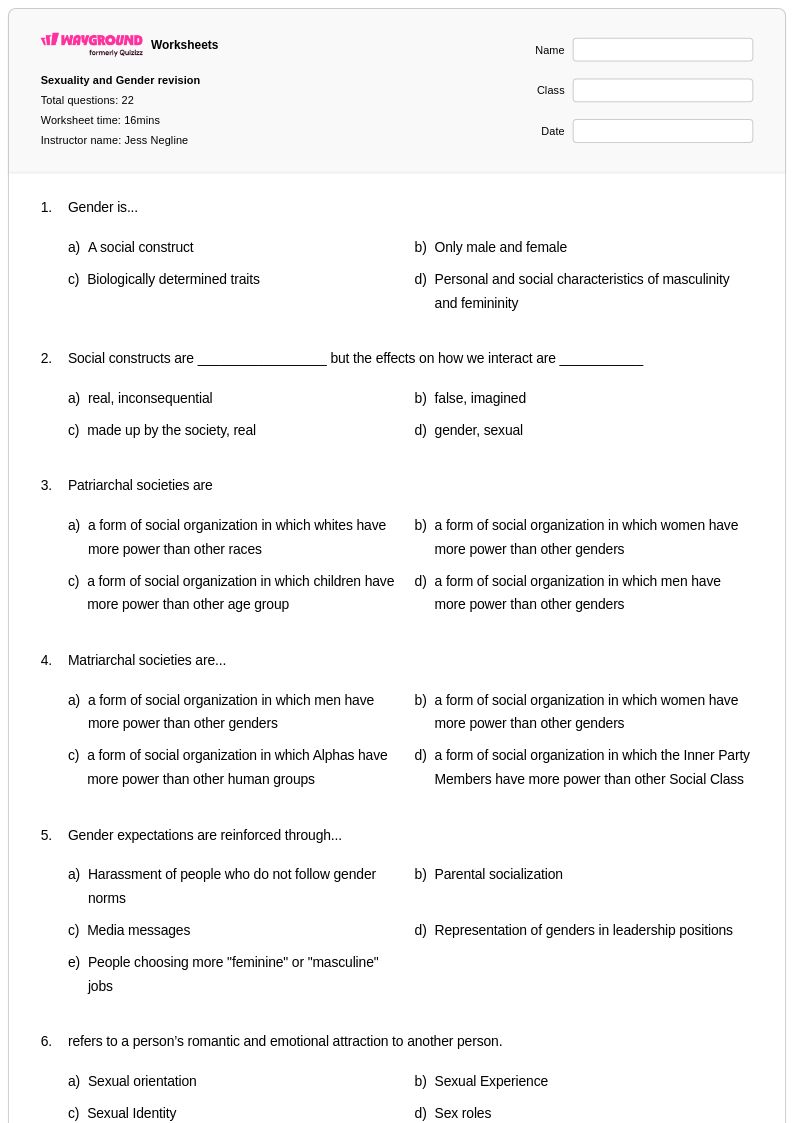
Emotional awareness worksheets for Year 12 students available through Wayground (formerly Quizizz) provide comprehensive resources designed to strengthen advanced social-emotional competencies critical for young adults transitioning into post-secondary education and careers. These carefully crafted worksheets focus on developing sophisticated skills such as recognizing complex emotional patterns, understanding the physiological and psychological components of emotional responses, and analyzing how emotions influence decision-making in academic, professional, and personal contexts. Students engage with practice problems that require them to identify emotional triggers, evaluate their own emotional intelligence, and develop strategies for managing intense emotions during high-stress situations. The collection includes printables with detailed answer keys that support independent learning, while free pdf resources ensure accessibility for diverse classroom environments and study preferences.
Wayground (formerly Quizizz) empowers educators with millions of teacher-created emotional awareness resources specifically curated for Year 12 social studies instruction, featuring robust search and filtering capabilities that allow teachers to quickly locate materials aligned with specific learning standards and curriculum requirements. The platform's differentiation tools enable instructors to customize worksheets based on individual student needs, whether providing additional scaffolding for learners requiring extra support or offering enrichment activities for advanced students ready to explore complex emotional scenarios. Teachers benefit from flexible formatting options, including both printable and digital pdf versions, making it seamless to integrate these resources into various instructional models from traditional classroom settings to hybrid learning environments. These comprehensive tools support effective lesson planning while providing targeted resources for remediation and skill practice, ensuring that all Year 12 students develop the emotional awareness competencies essential for success in their immediate academic pursuits and future endeavors.
FAQs
How do I teach emotional awareness to students?
Teaching emotional awareness starts with helping students build a feelings vocabulary and connect words to physical sensations and facial expressions. Effective strategies include guided reflection exercises, real-world scenario discussions, and role-playing activities that prompt students to identify and label emotions in themselves and others. Pairing these activities with structured worksheets gives students repeated, low-stakes opportunities to practice recognizing emotional triggers and developing empathy before applying those skills in live social situations.
What exercises help students practice identifying emotions?
Exercises that work best for practicing emotional identification include facial expression matching tasks, emotional trigger analysis scenarios, and reflective journaling prompts that ask students to connect an event to a feeling and a response. Worksheets that walk students through real-world social situations are especially effective because they anchor abstract emotional concepts to recognizable contexts. Repeated practice with varied scenarios helps students build the pattern recognition needed to identify emotions accurately and respond with empathy.
What common mistakes do students make when learning about emotional awareness?
A frequent misconception is that students conflate the emotion itself with the behavior it produces, for example, believing that feeling angry is the same as acting aggressively. Students also commonly mislabel complex or blended emotions, defaulting to simple categories like 'happy' or 'sad' when the situation calls for more nuanced language like 'frustrated' or 'anxious.' Worksheets that explicitly ask students to distinguish between feeling and behavior, and that introduce a broad feelings vocabulary, help correct both of these patterns.
How can I differentiate emotional awareness activities for students with different learning needs?
Differentiation for emotional awareness can include providing visual supports such as emotion charts or facial expression guides for students who struggle with abstract labeling, and offering extended reflection prompts for advanced learners who are ready to analyze emotional cause-and-effect in more complex scenarios. On Wayground, teachers can enable individual accommodations including Read Aloud so questions and scenarios are read to students who need audio support, reduced answer choices to lower cognitive load for struggling learners, and extended time for students who need additional processing time. These settings can be applied to specific students without notifying the rest of the class, keeping the experience seamless for everyone.
How do I use Wayground's emotional awareness worksheets in my classroom?
Wayground's emotional awareness worksheets are available as printable PDFs for traditional classroom use and in digital formats for technology-integrated learning environments, including the option to host them as a quiz directly on Wayground. Teachers can assign them as independent practice, use them to frame a class discussion around a specific emotional scenario, or deploy them as a formative check after a social-emotional learning lesson. Each worksheet includes a complete answer key, so grading and providing accurate feedback requires minimal additional preparation time.
How does emotional awareness connect to social studies education?
Emotional awareness is a foundational social competency that directly supports students' ability to understand diverse perspectives, analyze interpersonal conflicts, and engage constructively in community and civic contexts, all core components of social studies. When students can identify and manage their own emotional responses, they are better equipped to interpret historical events through a human lens, evaluate the motivations of individuals and groups, and participate meaningfully in classroom discussions about social issues. Building emotional intelligence alongside social studies content creates more empathetic and critically engaged learners.