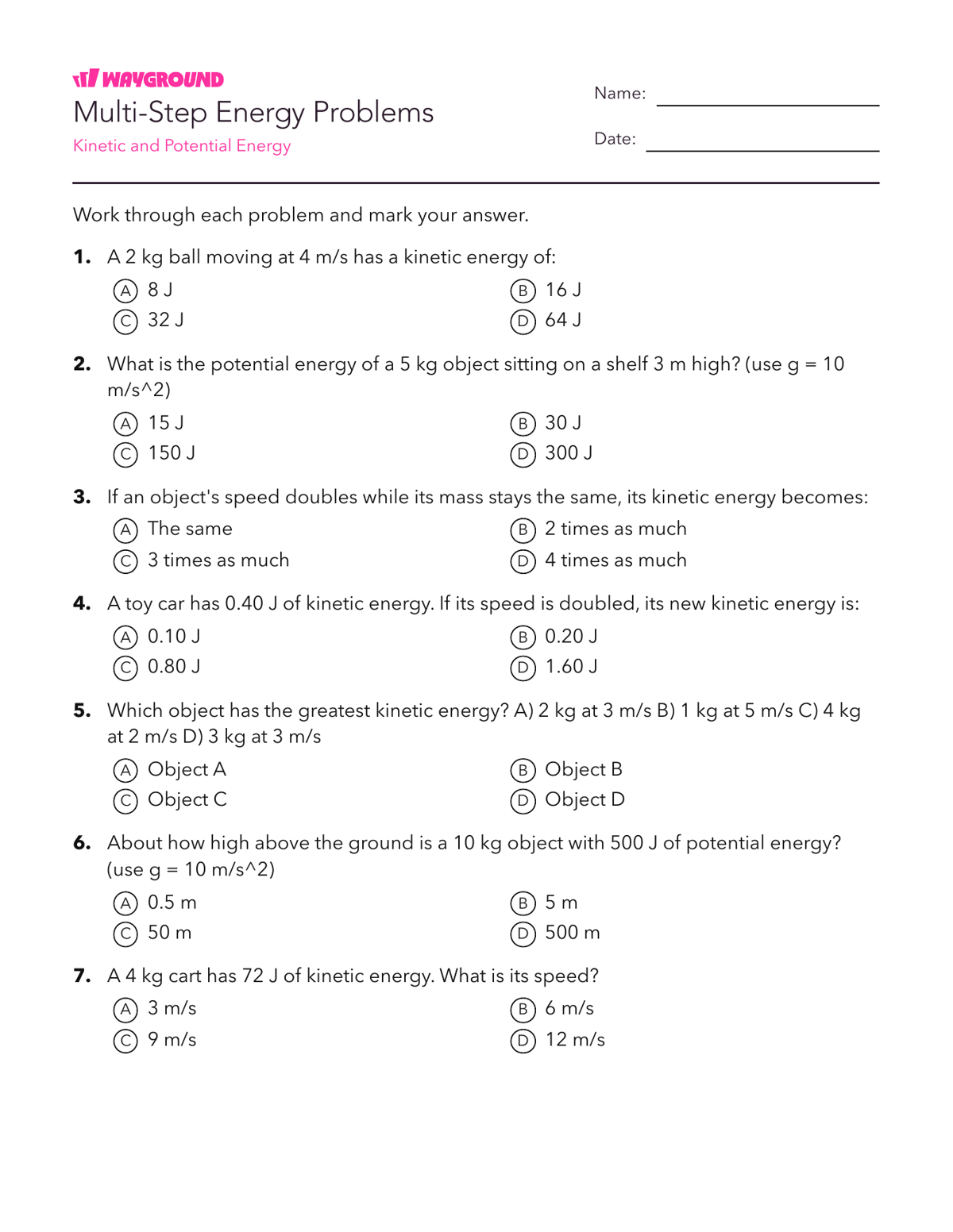
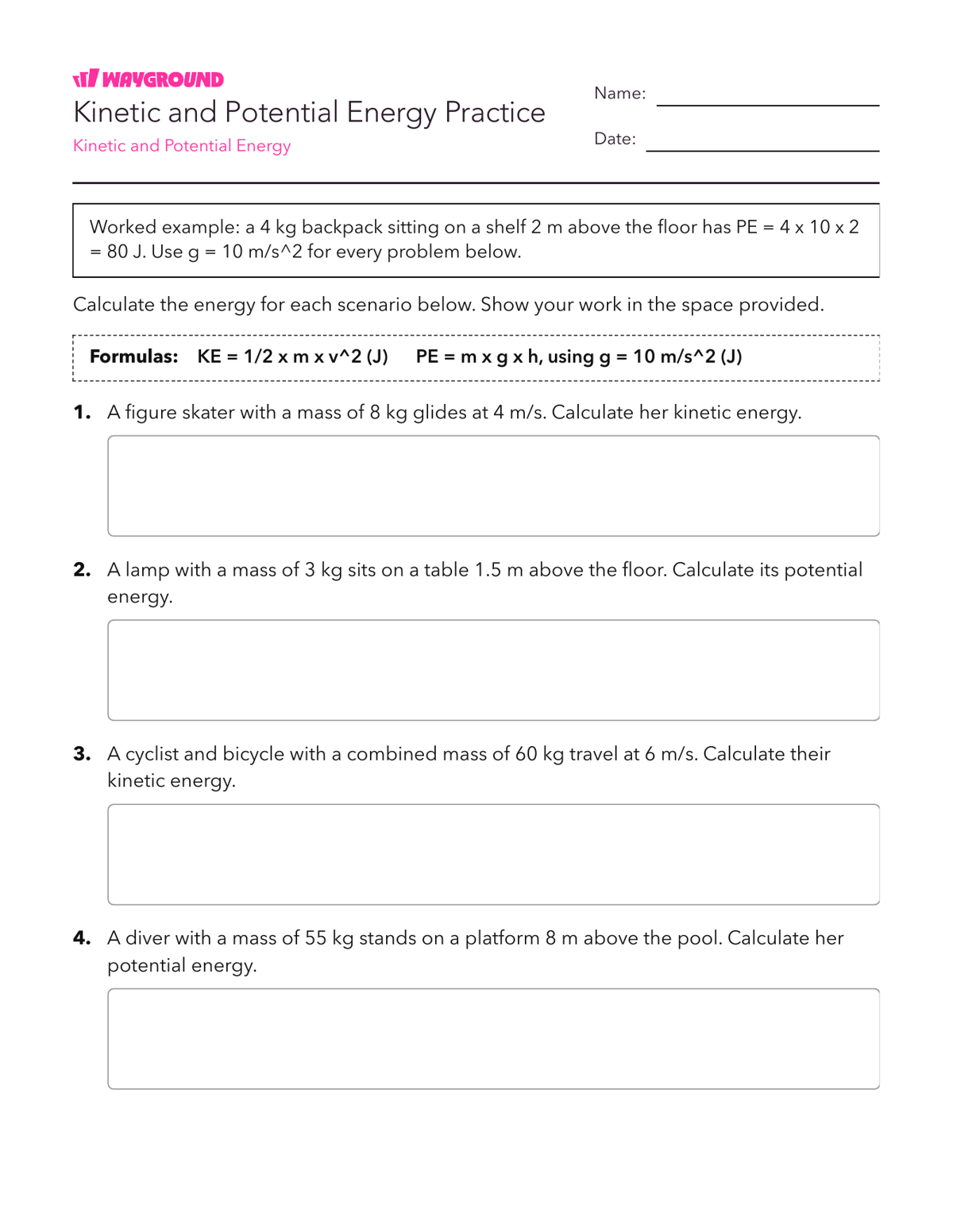
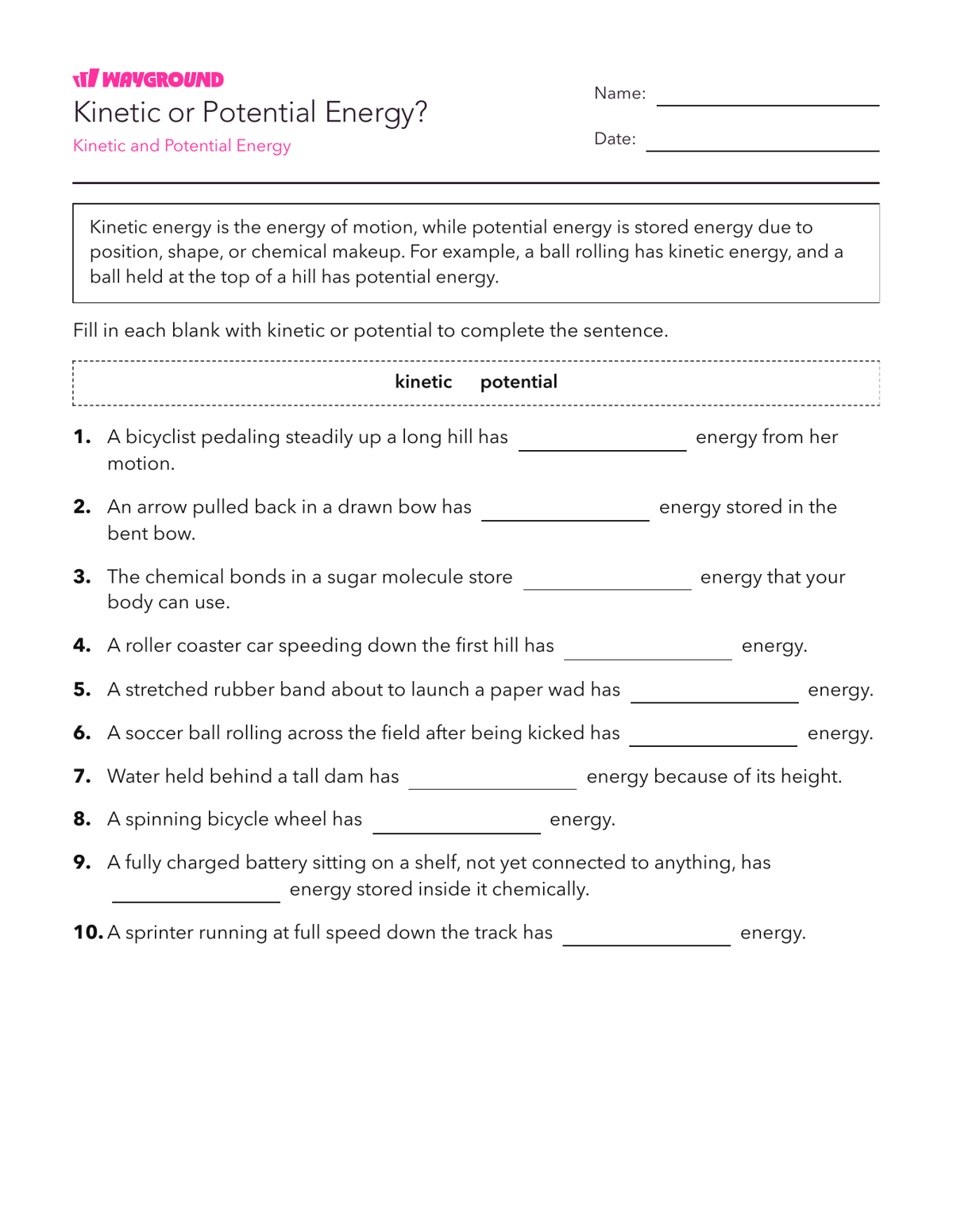
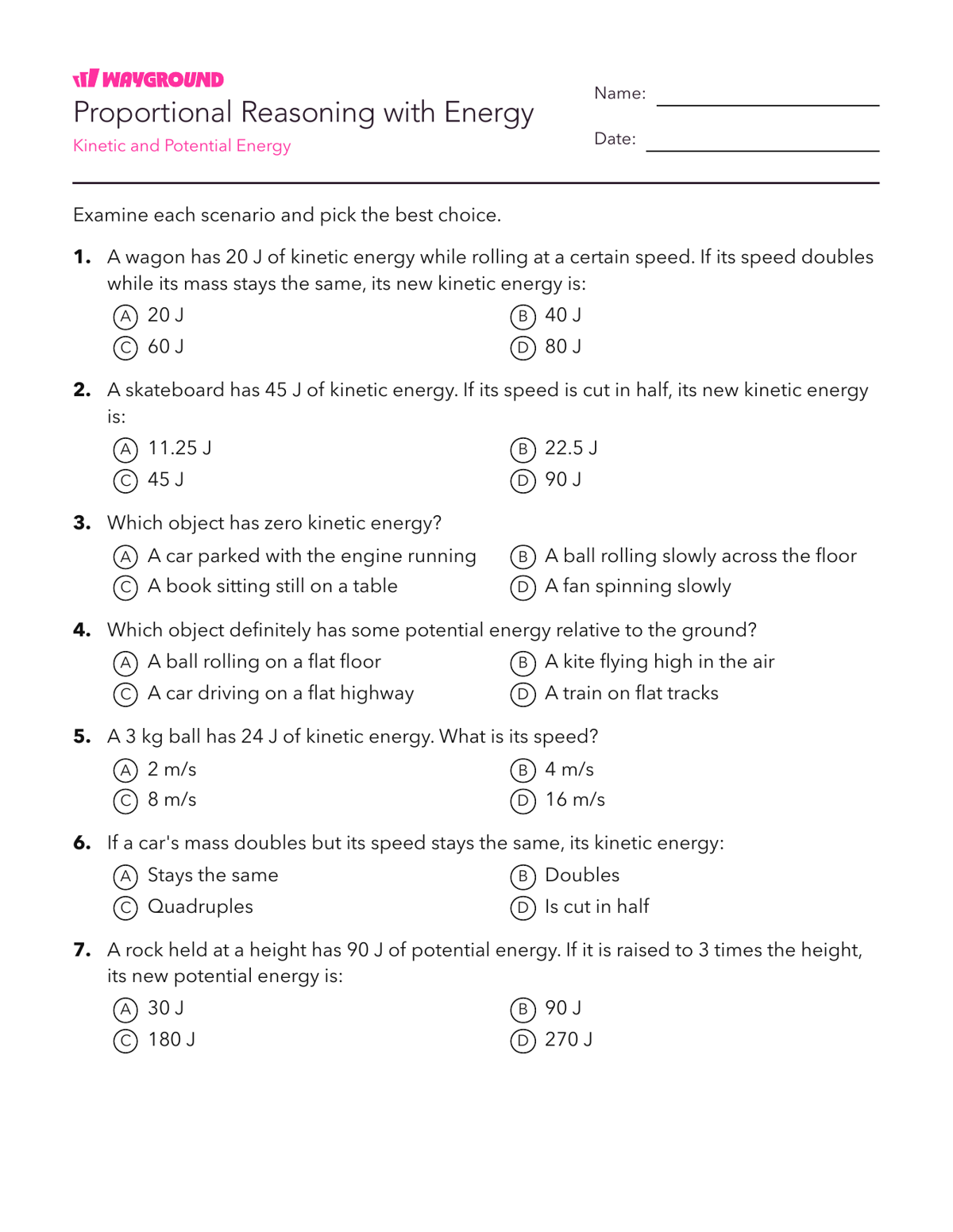
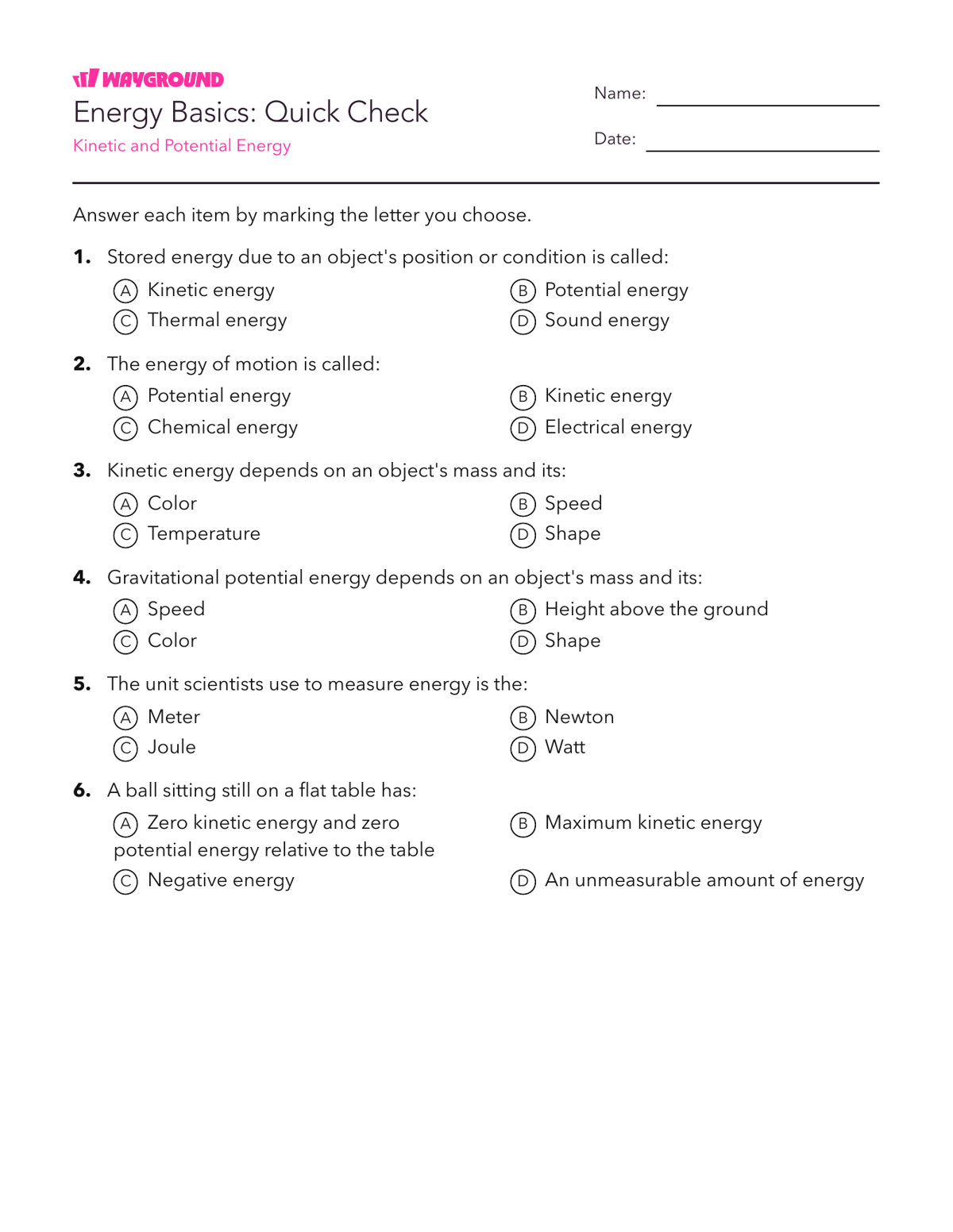
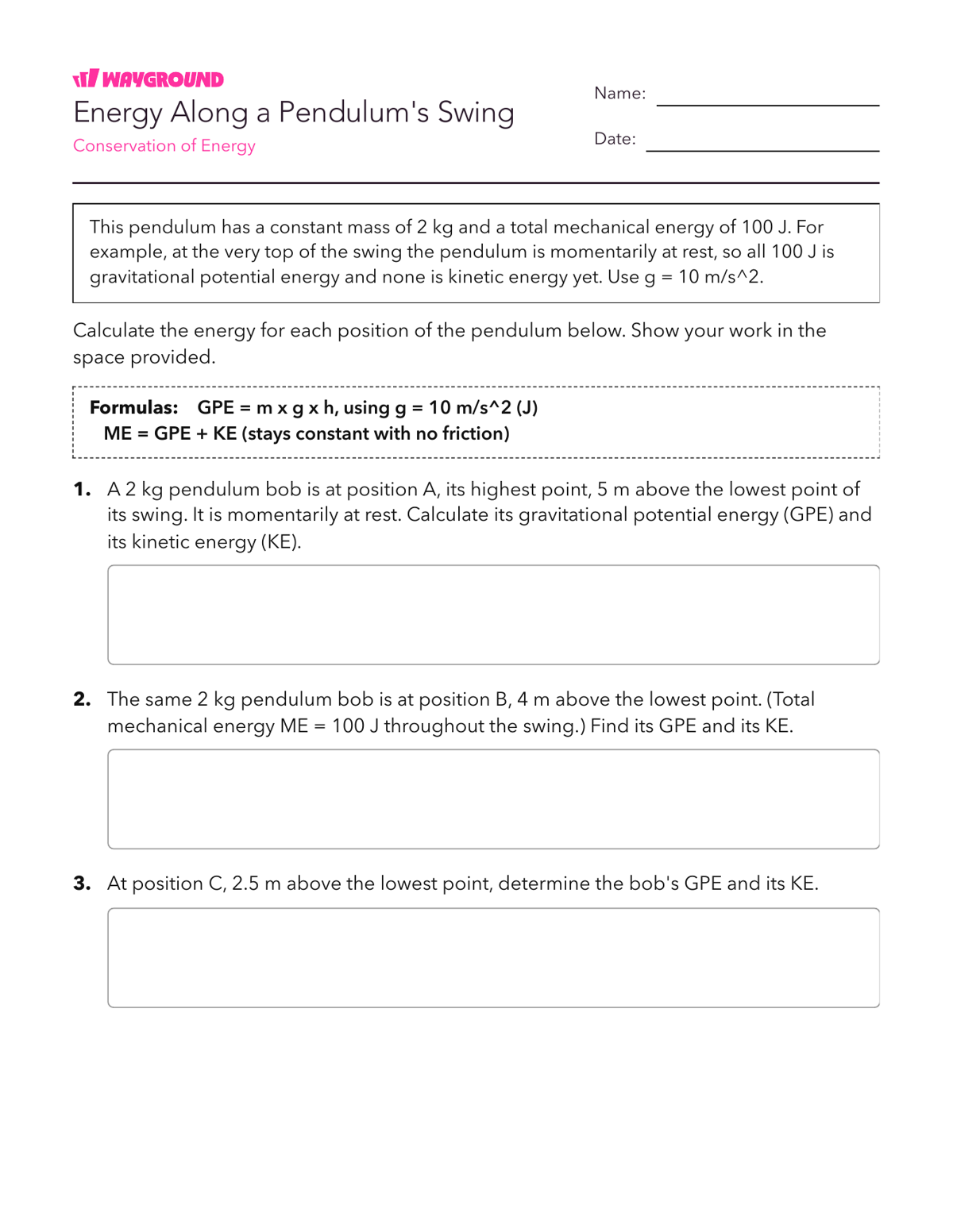
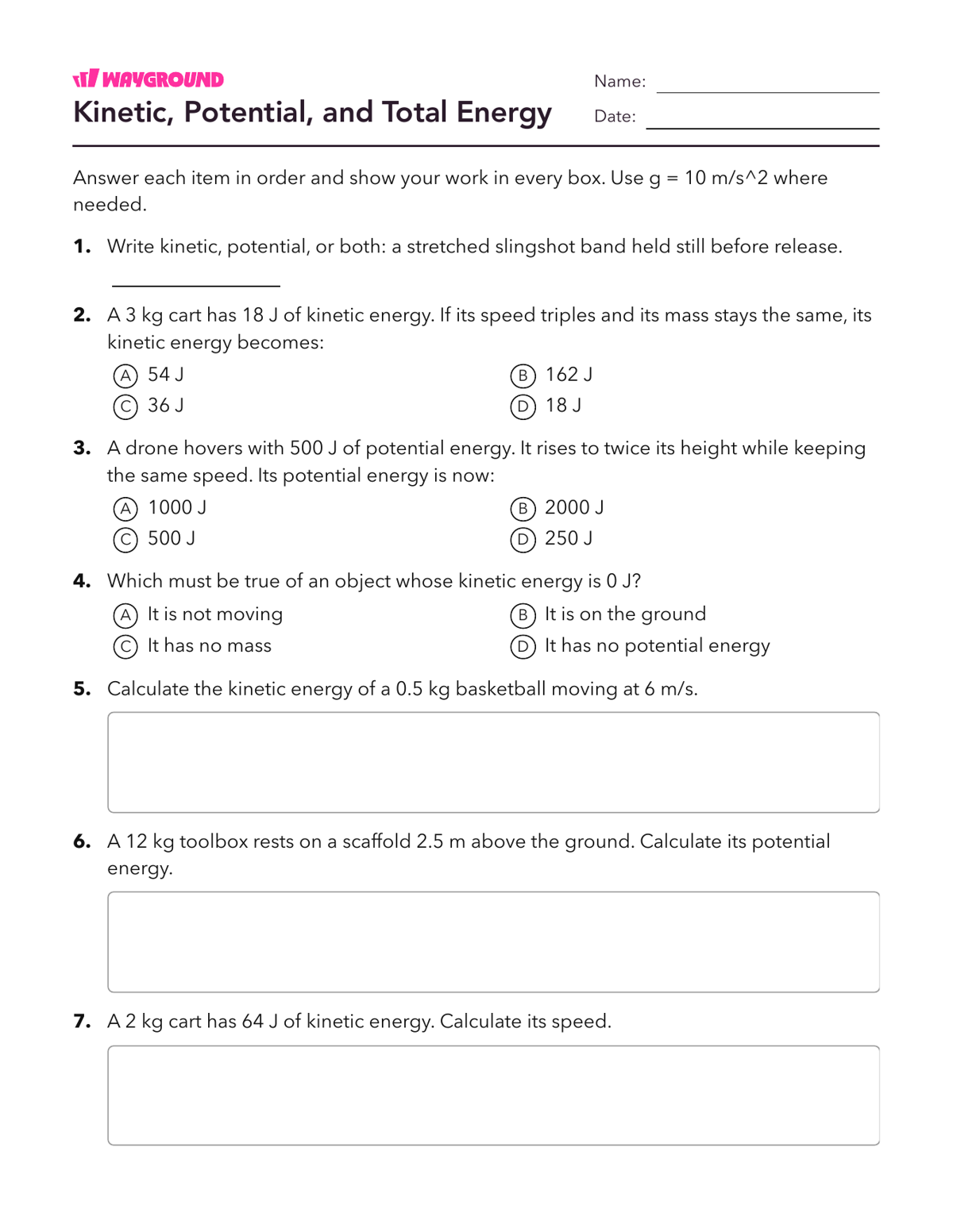
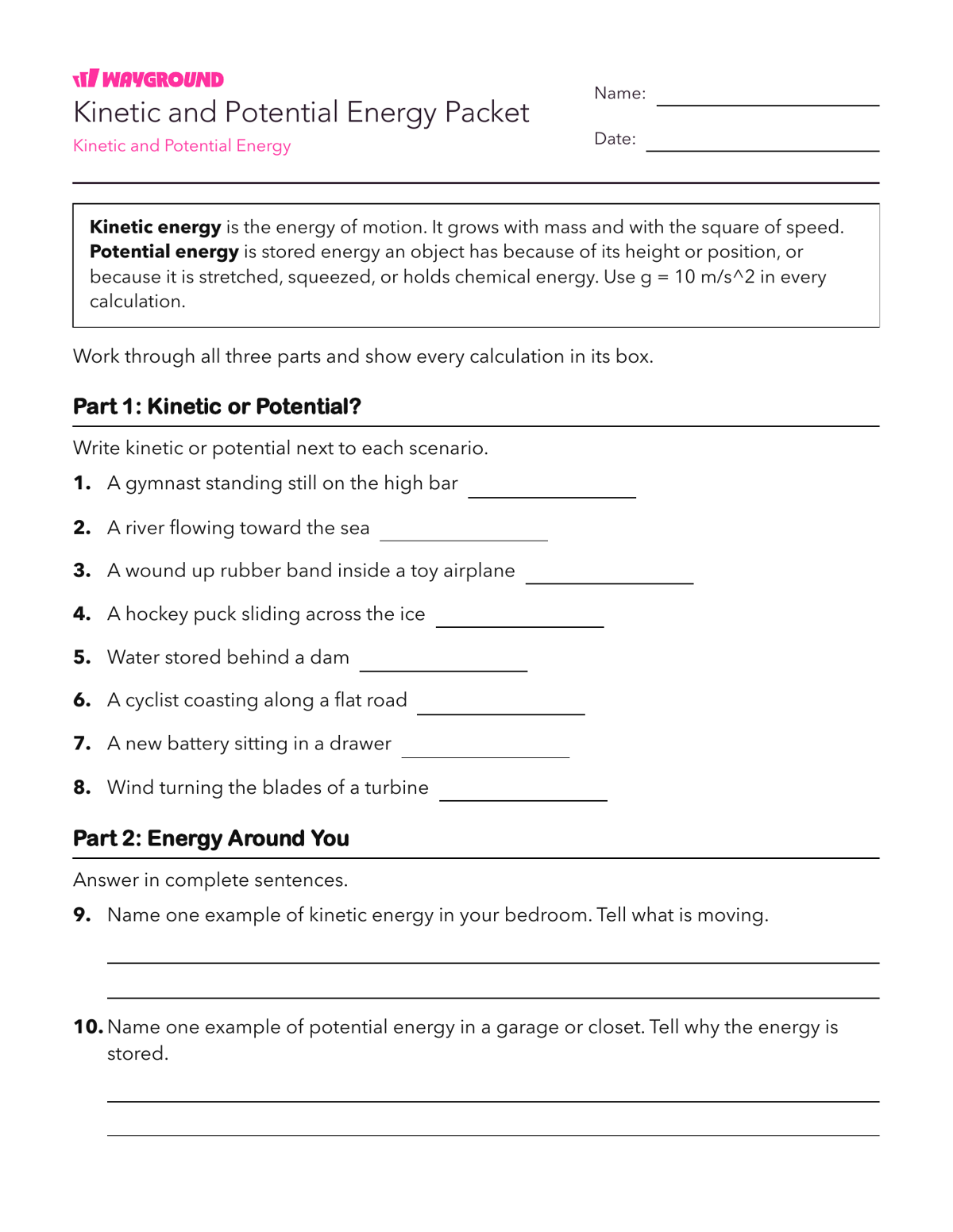
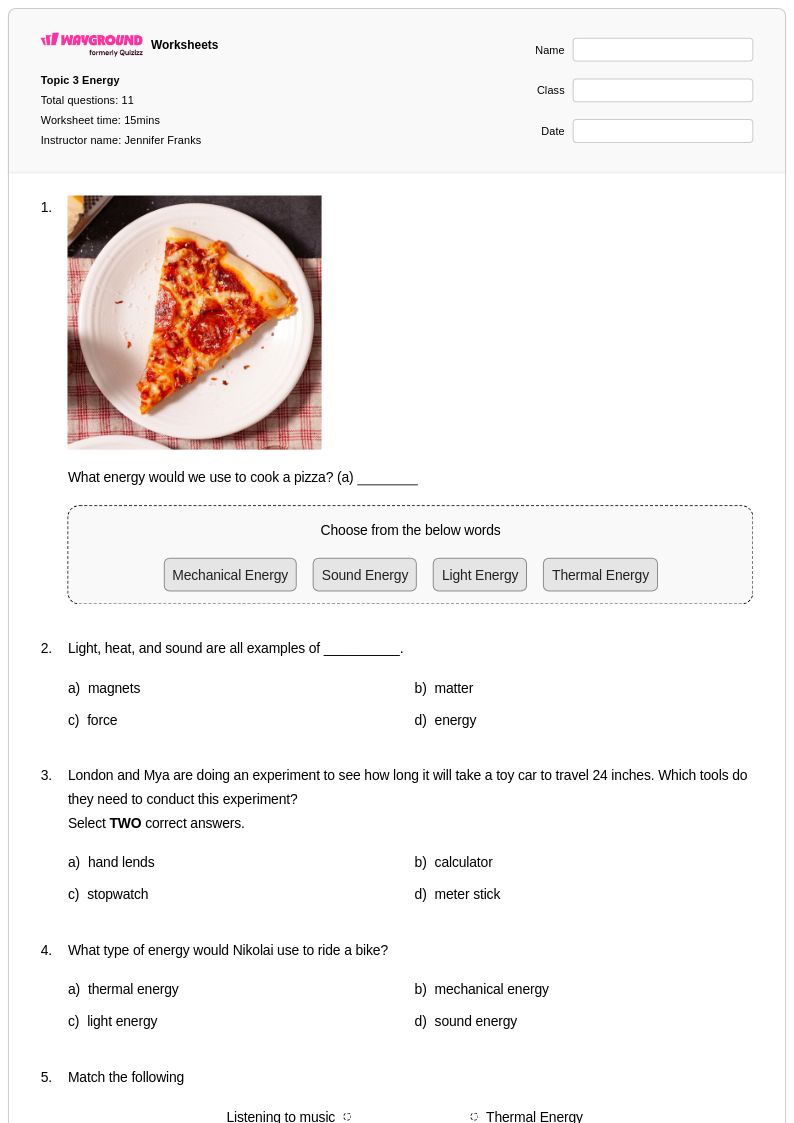
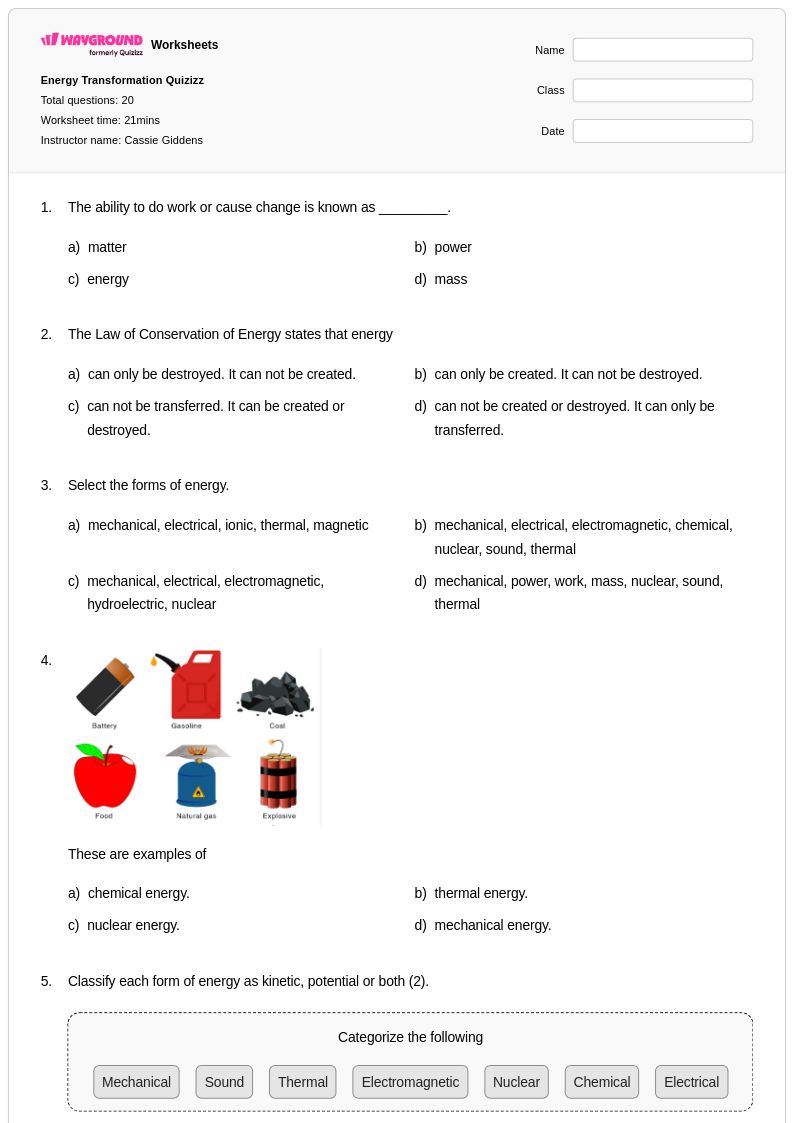
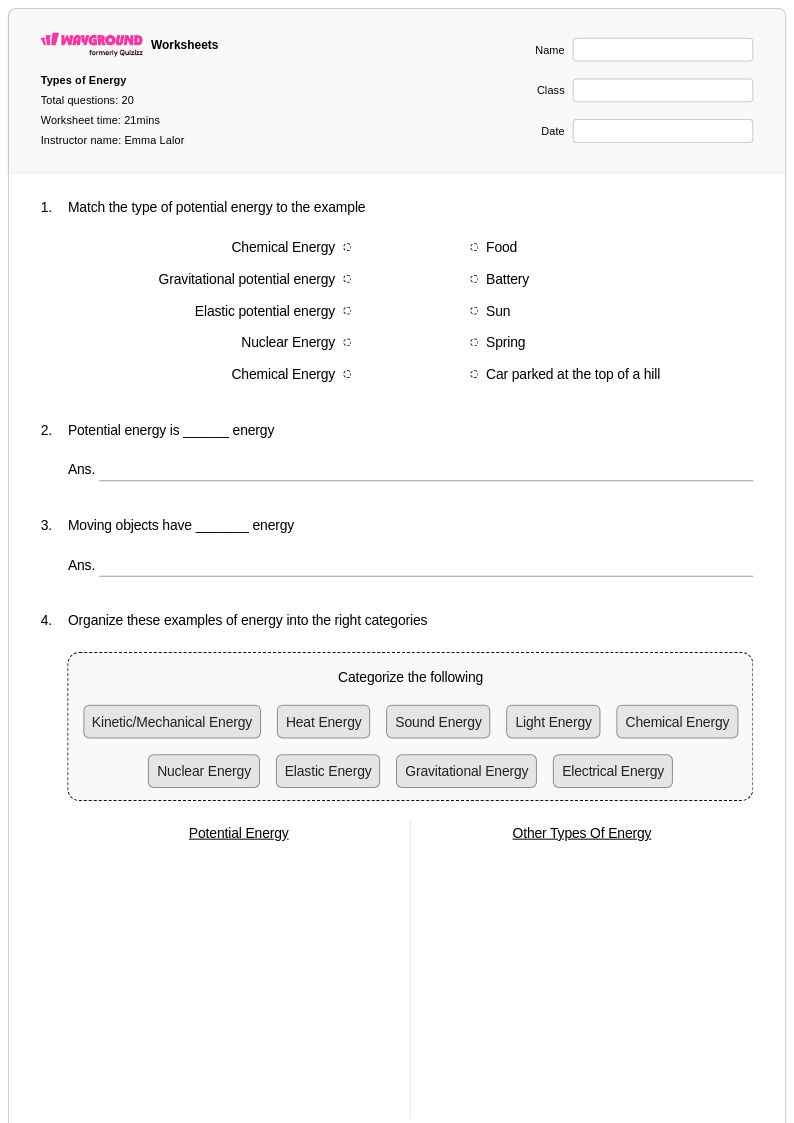
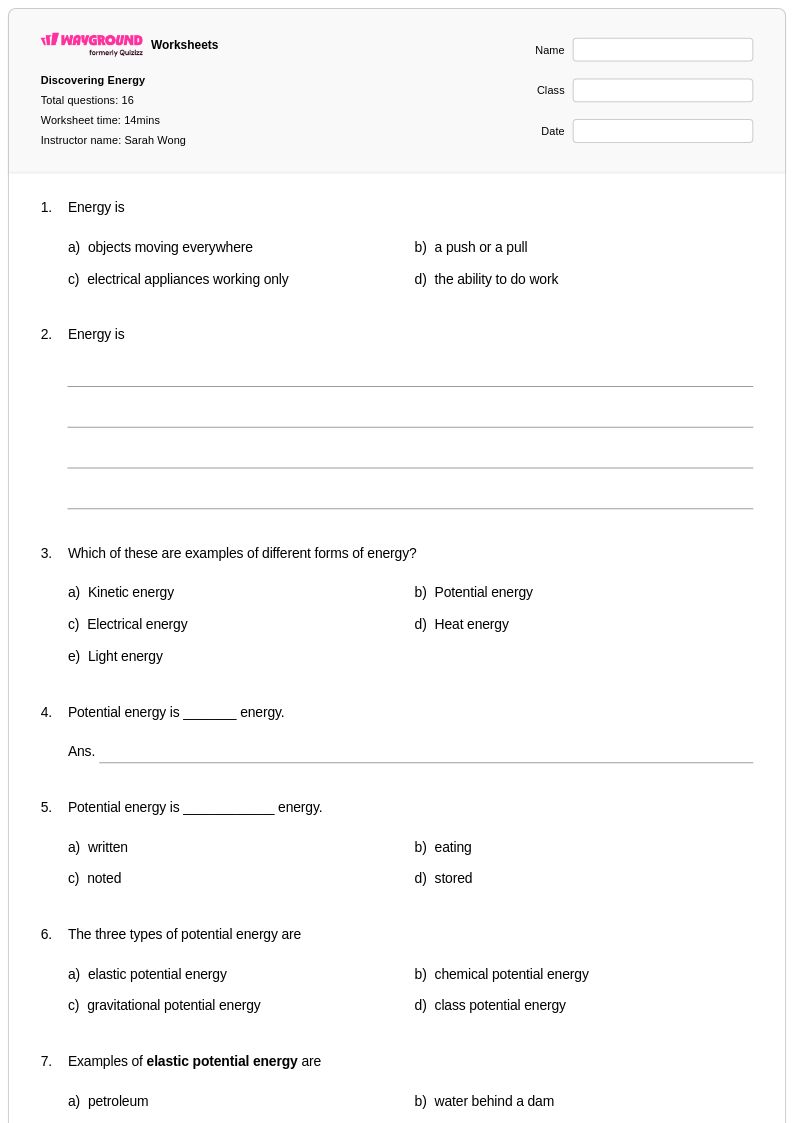
Explore Wayground's comprehensive collection of Year 8 energy worksheets and printables that help students master key physical science concepts through engaging practice problems, free PDF downloads, and complete answer keys.
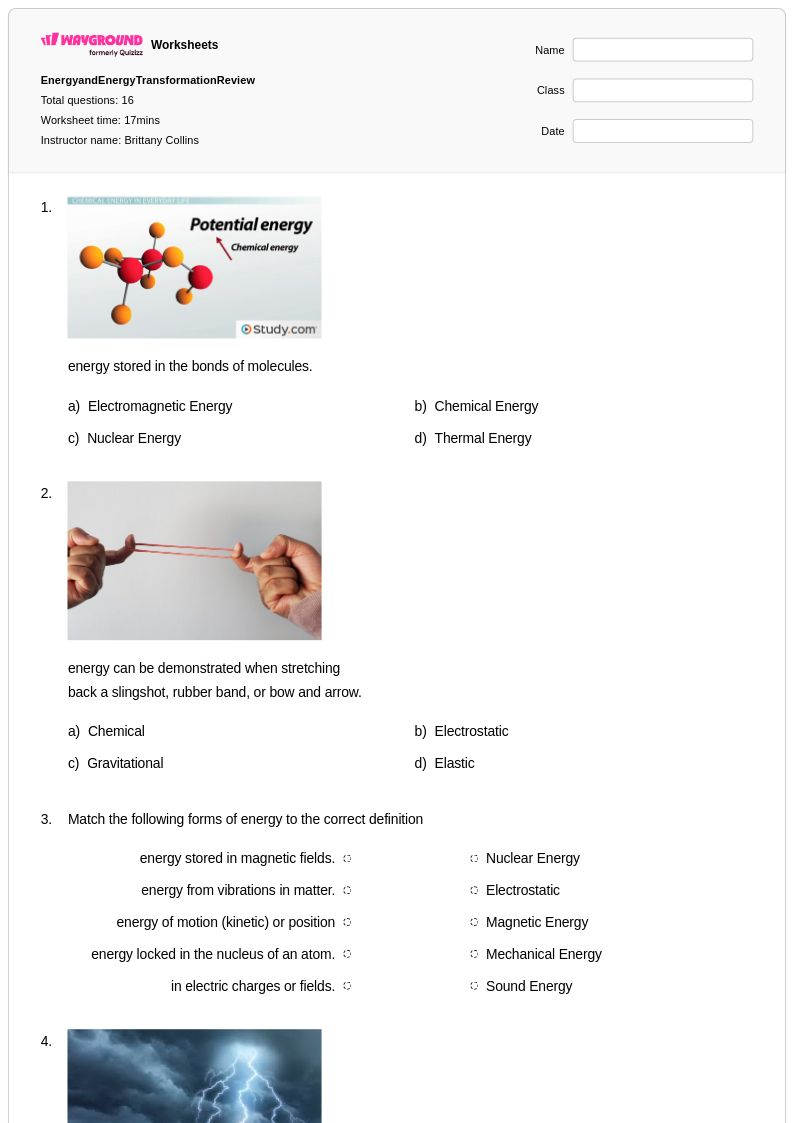
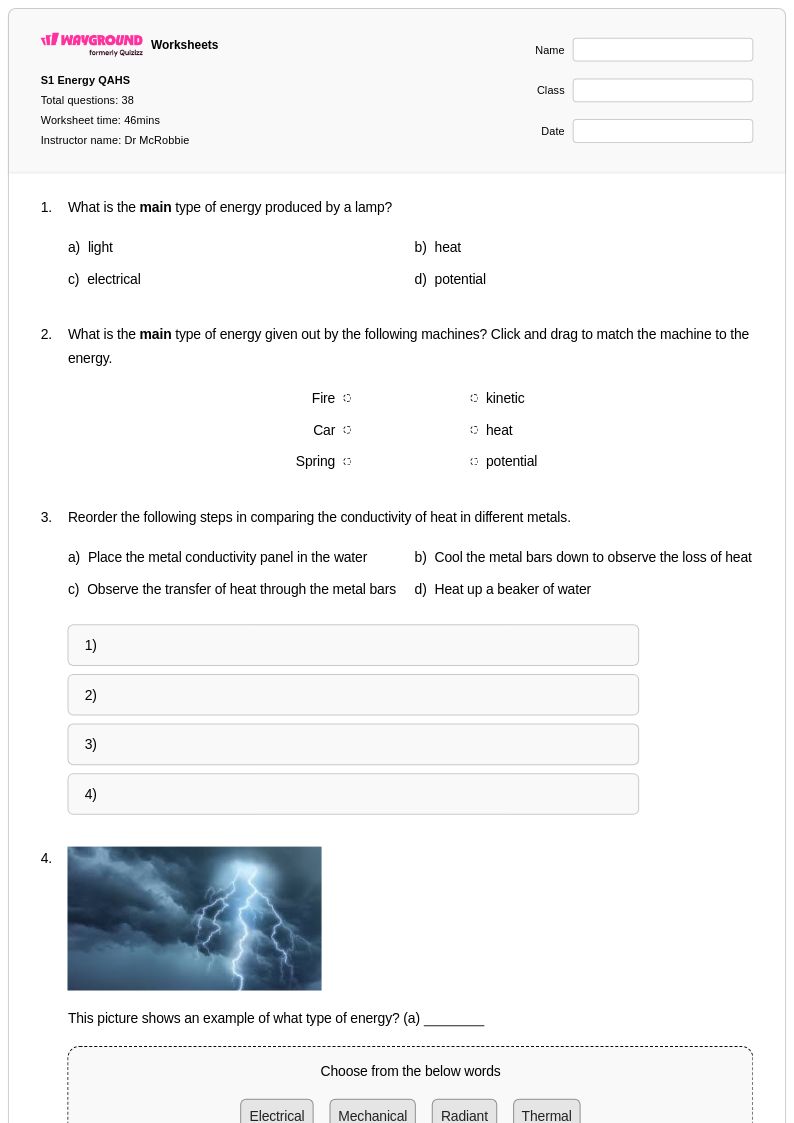
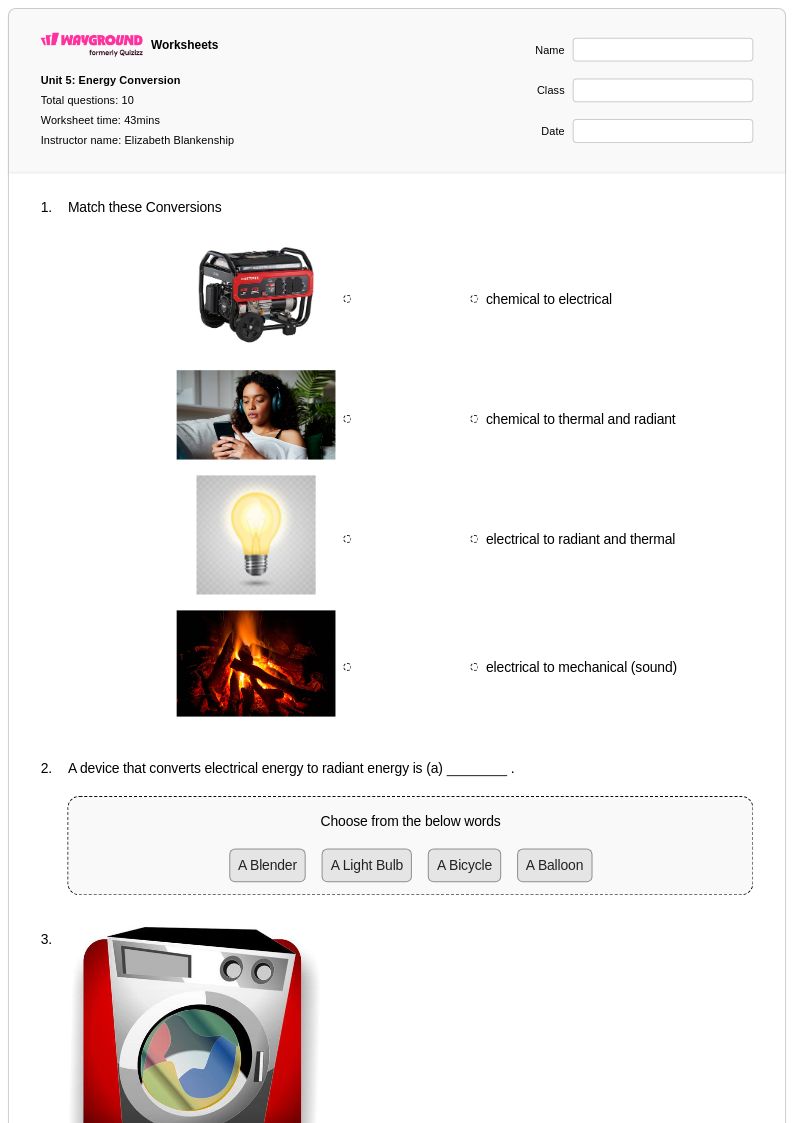
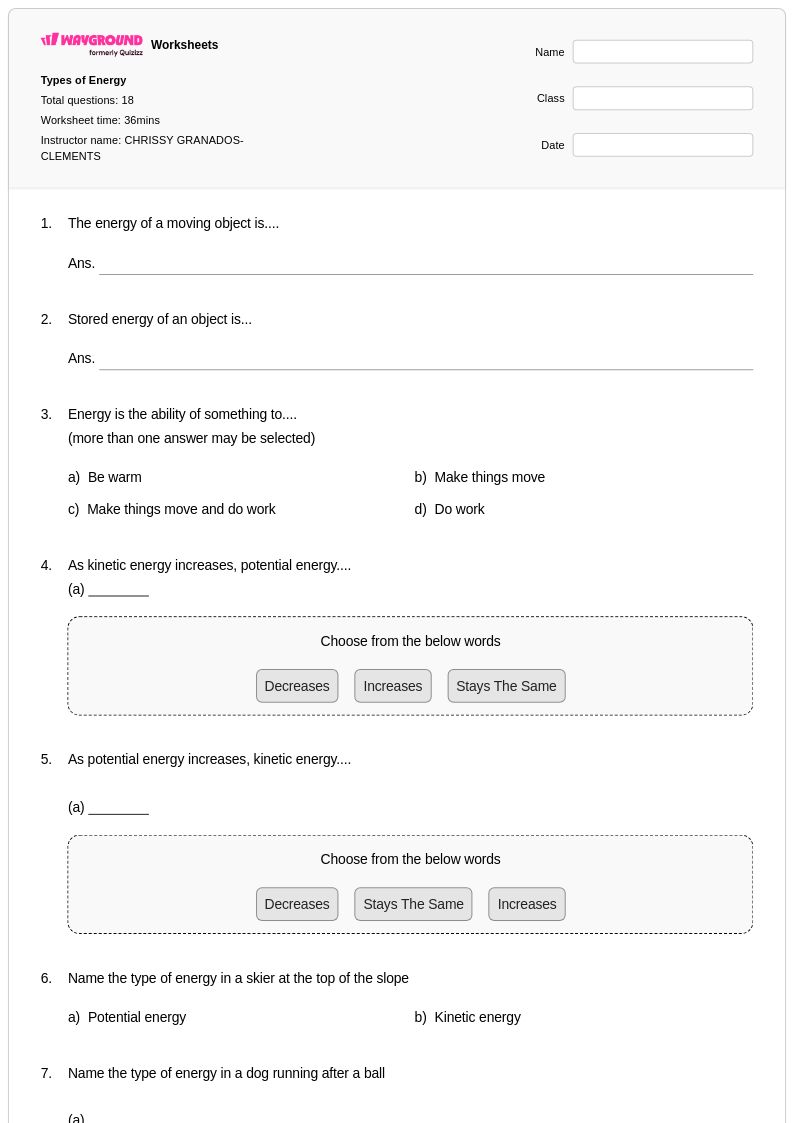
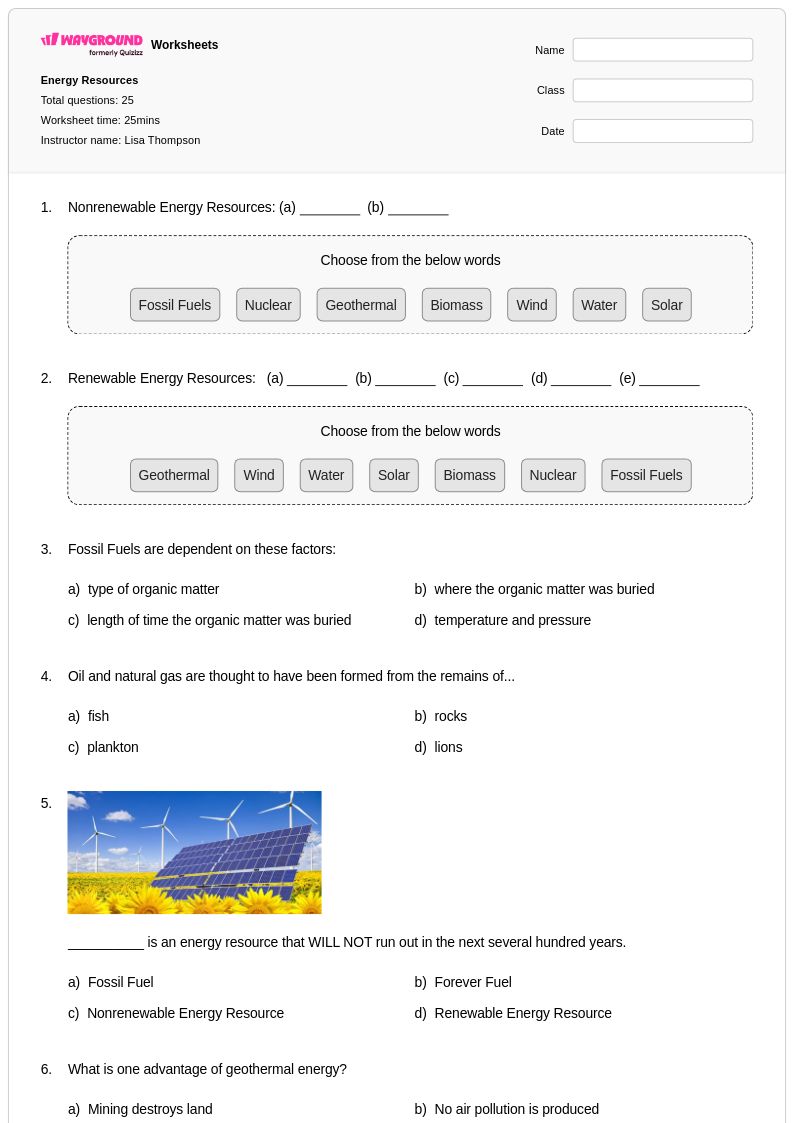
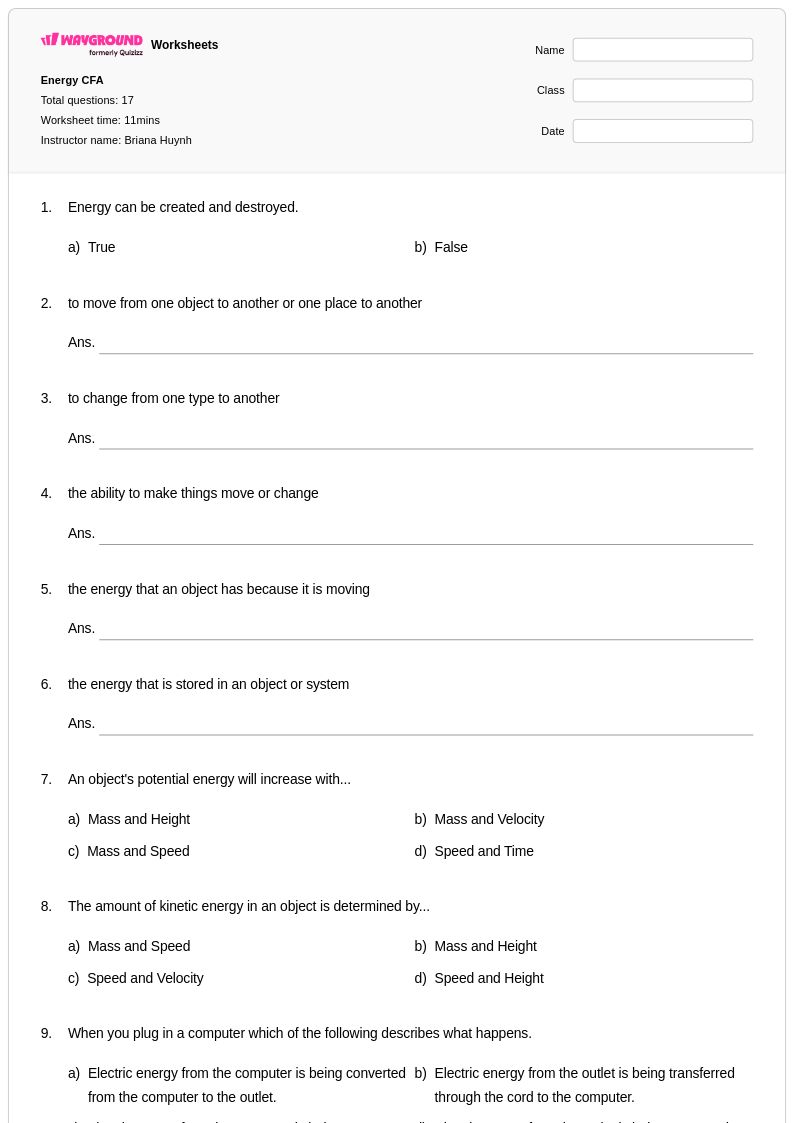
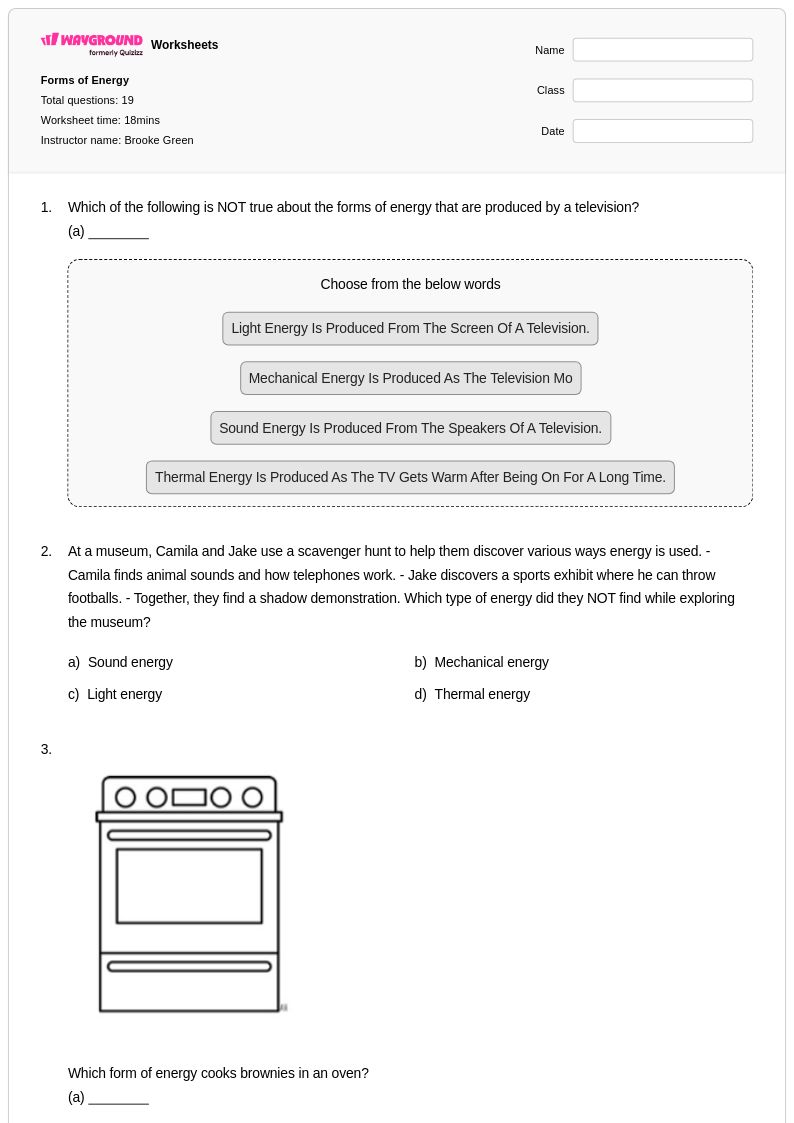
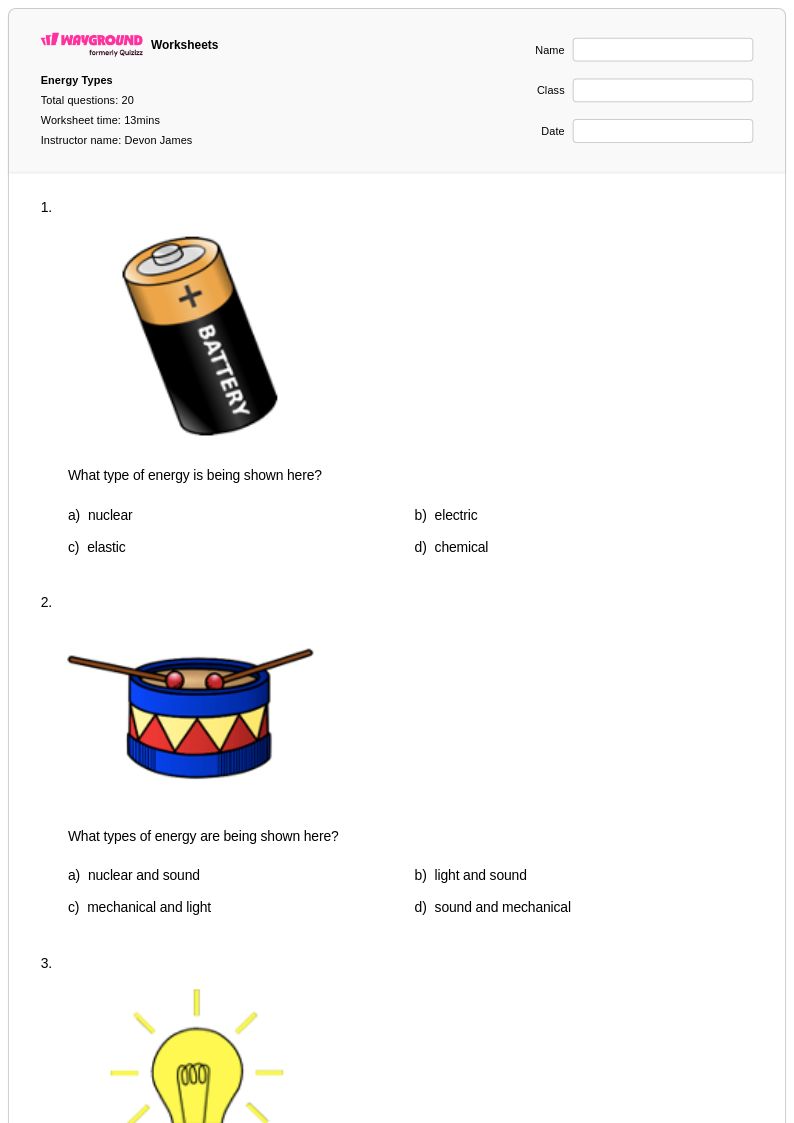
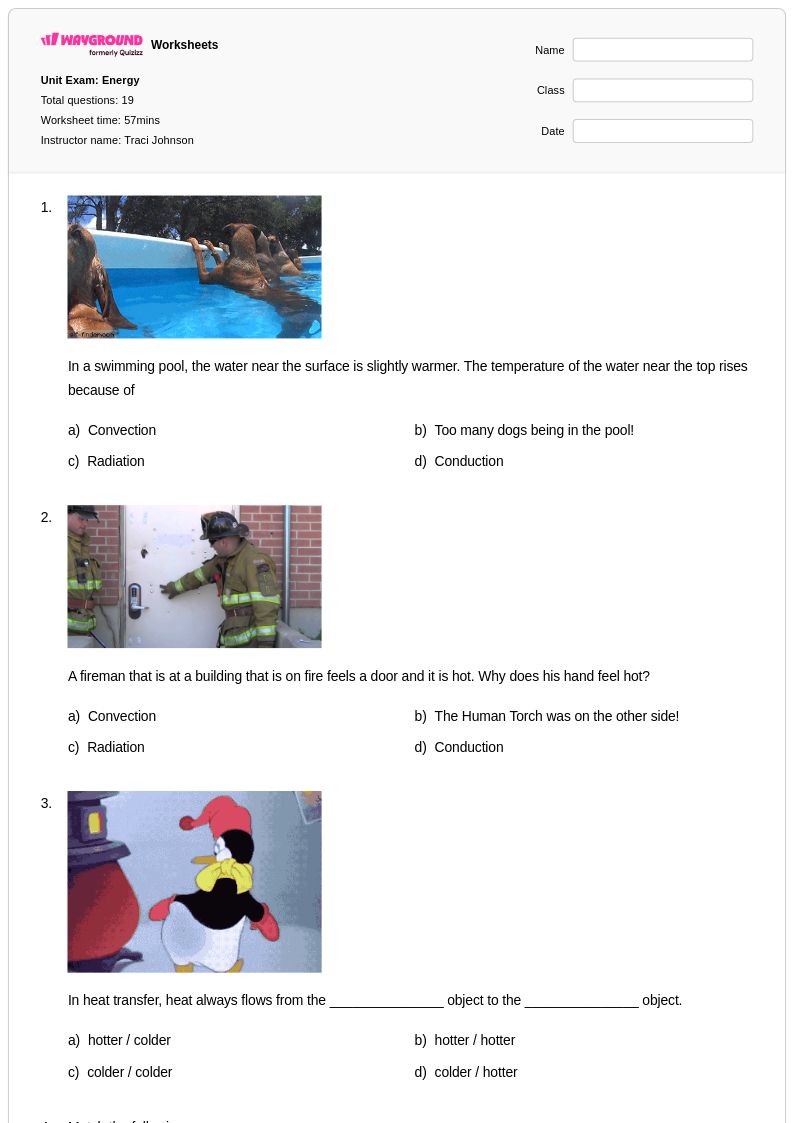
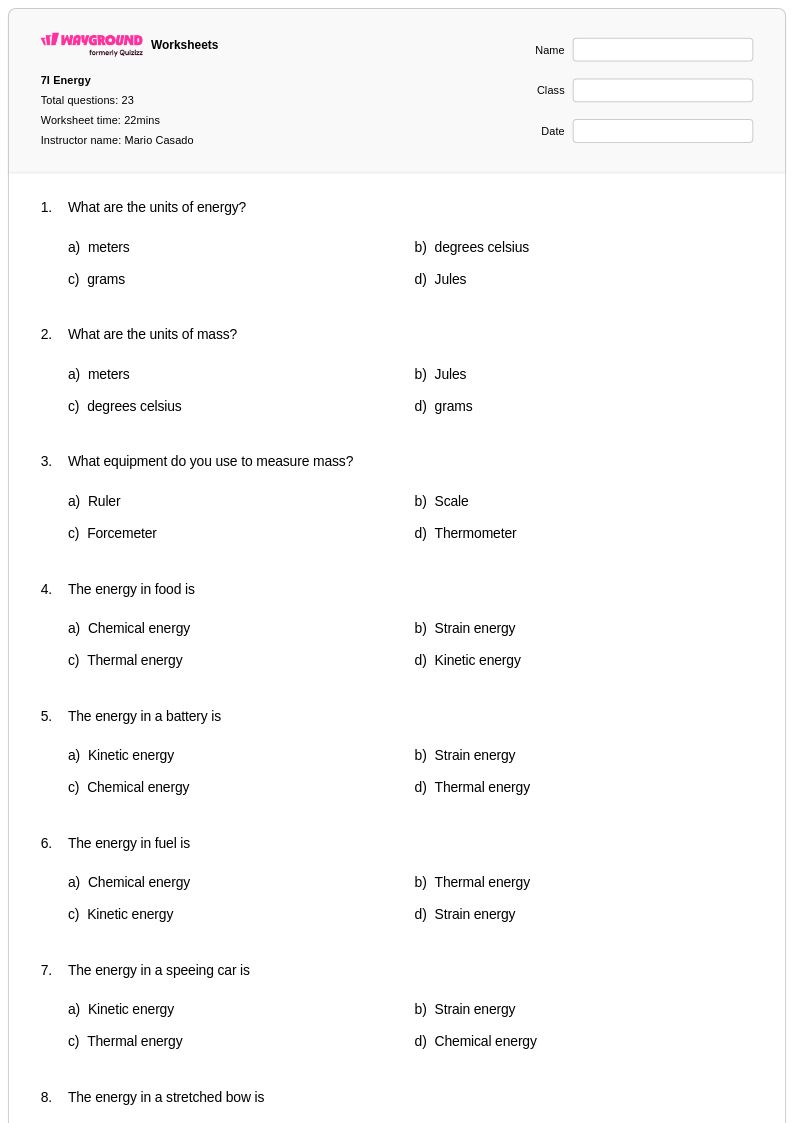
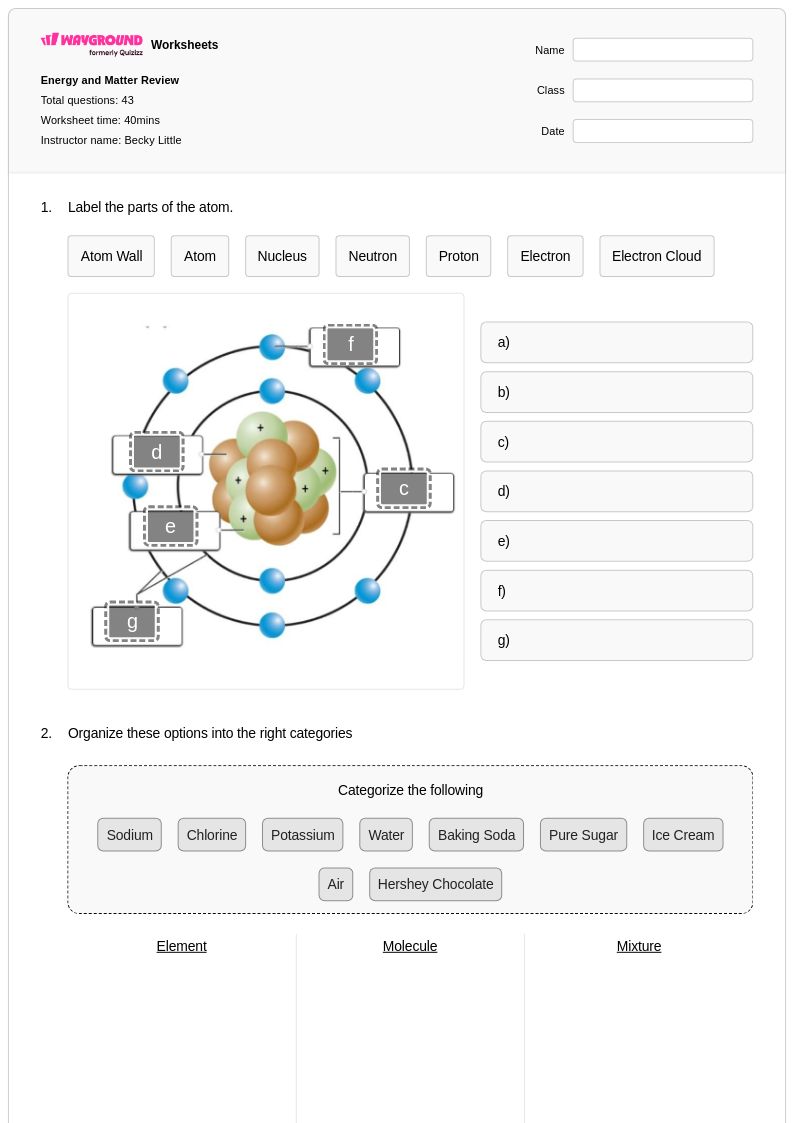
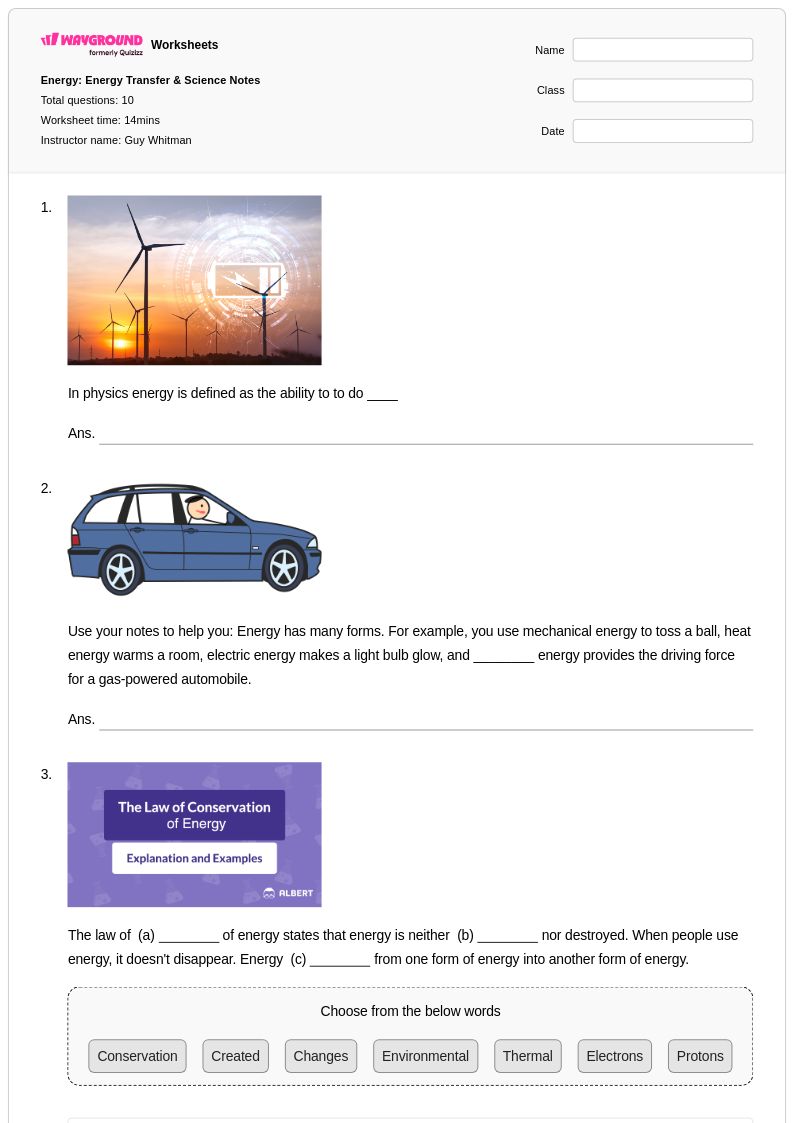
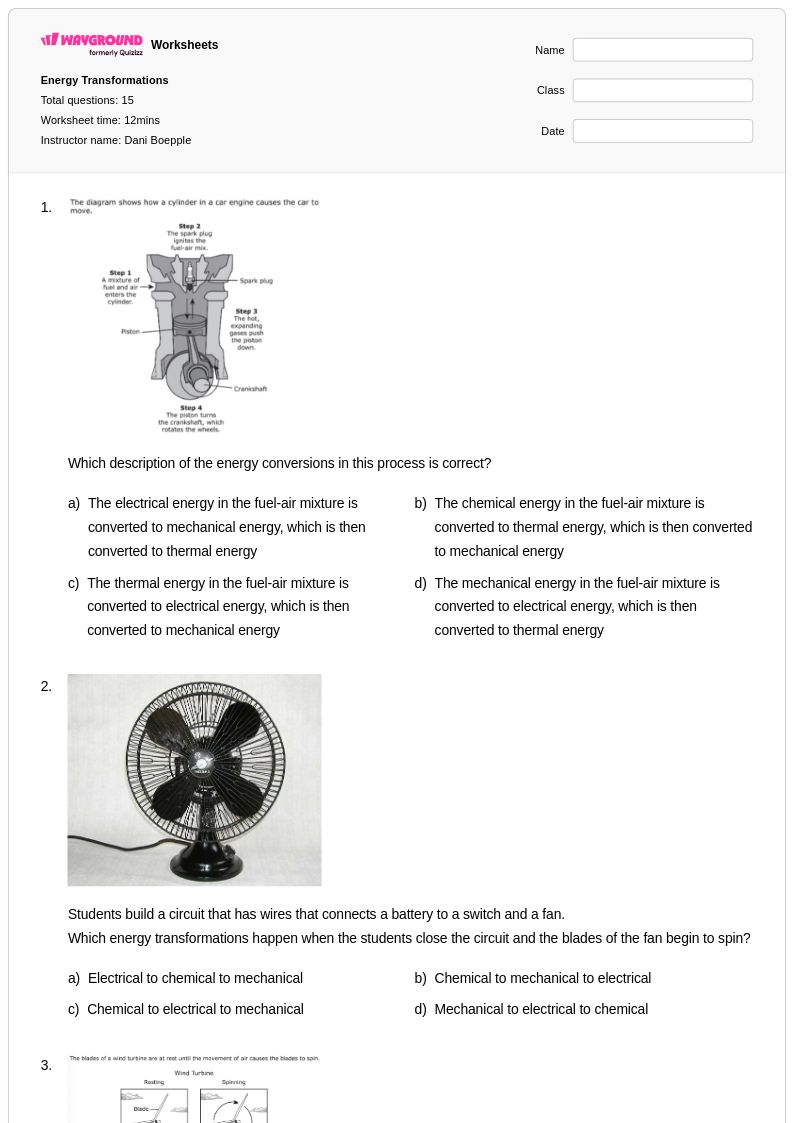
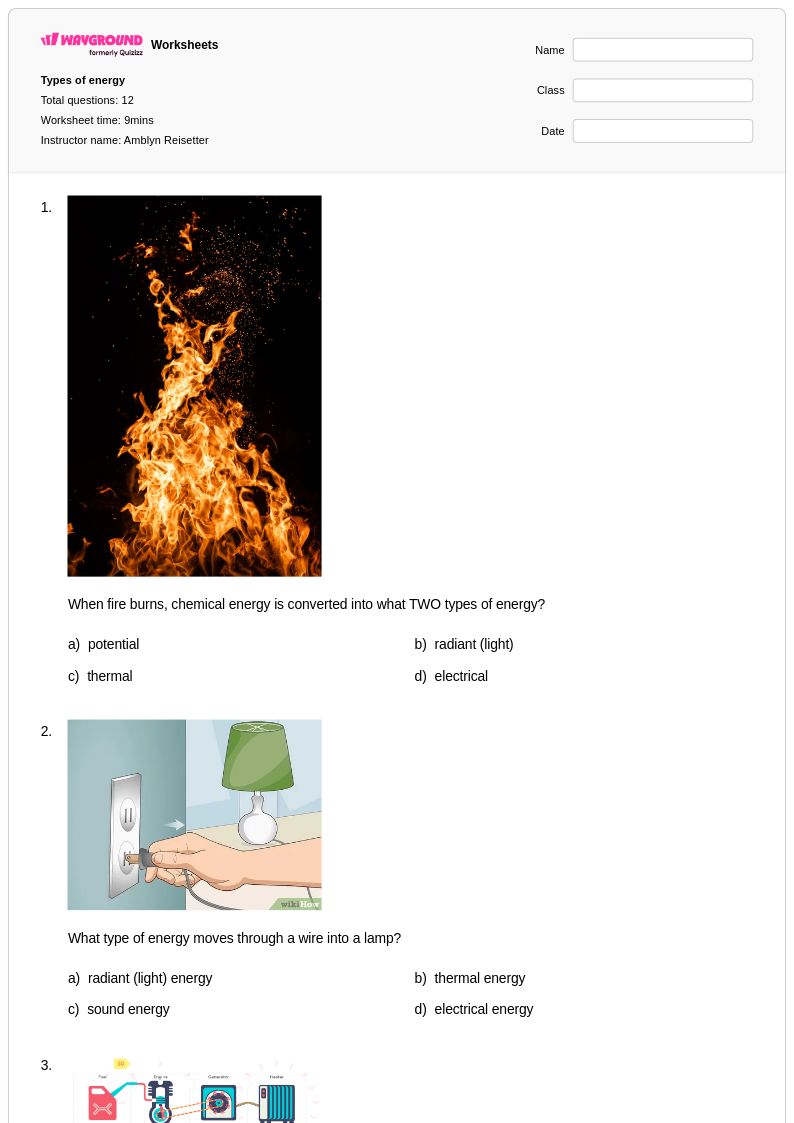
Year 8 energy worksheets available through Wayground (formerly Quizizz) provide comprehensive coverage of fundamental energy concepts that form the cornerstone of physical science education. These carefully designed resources help students master essential skills including identifying different forms of energy such as kinetic, potential, thermal, and electromagnetic energy, understanding energy transformations and conservation principles, and applying mathematical formulas to solve energy-related problems. The worksheet collection includes diverse practice problems that challenge students to analyze real-world scenarios involving energy transfer, calculate work and power relationships, and explore the connections between energy and motion. Each worksheet comes with detailed answer keys that support both independent study and classroom instruction, while the free printable format ensures easy access for teachers seeking quality supplemental materials in convenient pdf downloads.
Wayground (formerly Quizizz) empowers educators with an extensive library of millions of teacher-created energy worksheets specifically aligned with Year 8 physical science standards and curriculum requirements. The platform's advanced search and filtering capabilities allow teachers to quickly locate resources that match their specific instructional needs, whether focusing on mechanical energy, heat transfer, or energy efficiency concepts. Built-in differentiation tools enable educators to customize worksheets for diverse learning levels, supporting both remediation for struggling students and enrichment opportunities for advanced learners. The flexible format options, including both digital and printable pdf versions, streamline lesson planning while providing teachers with versatile resources for homework assignments, in-class practice, formative assessments, and targeted skill reinforcement activities that deepen student understanding of energy principles.
FAQs
How do I teach energy concepts in a physical science class?
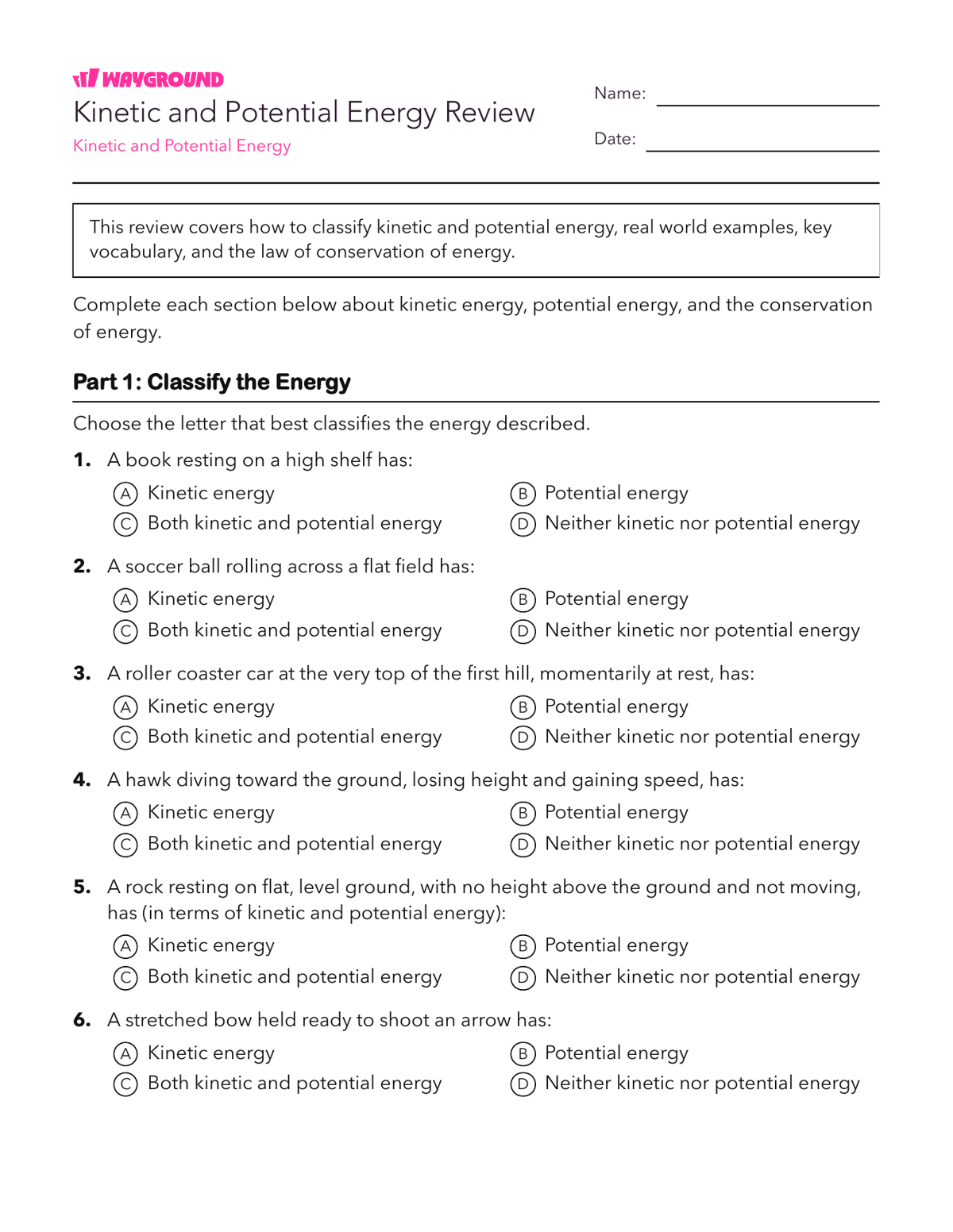
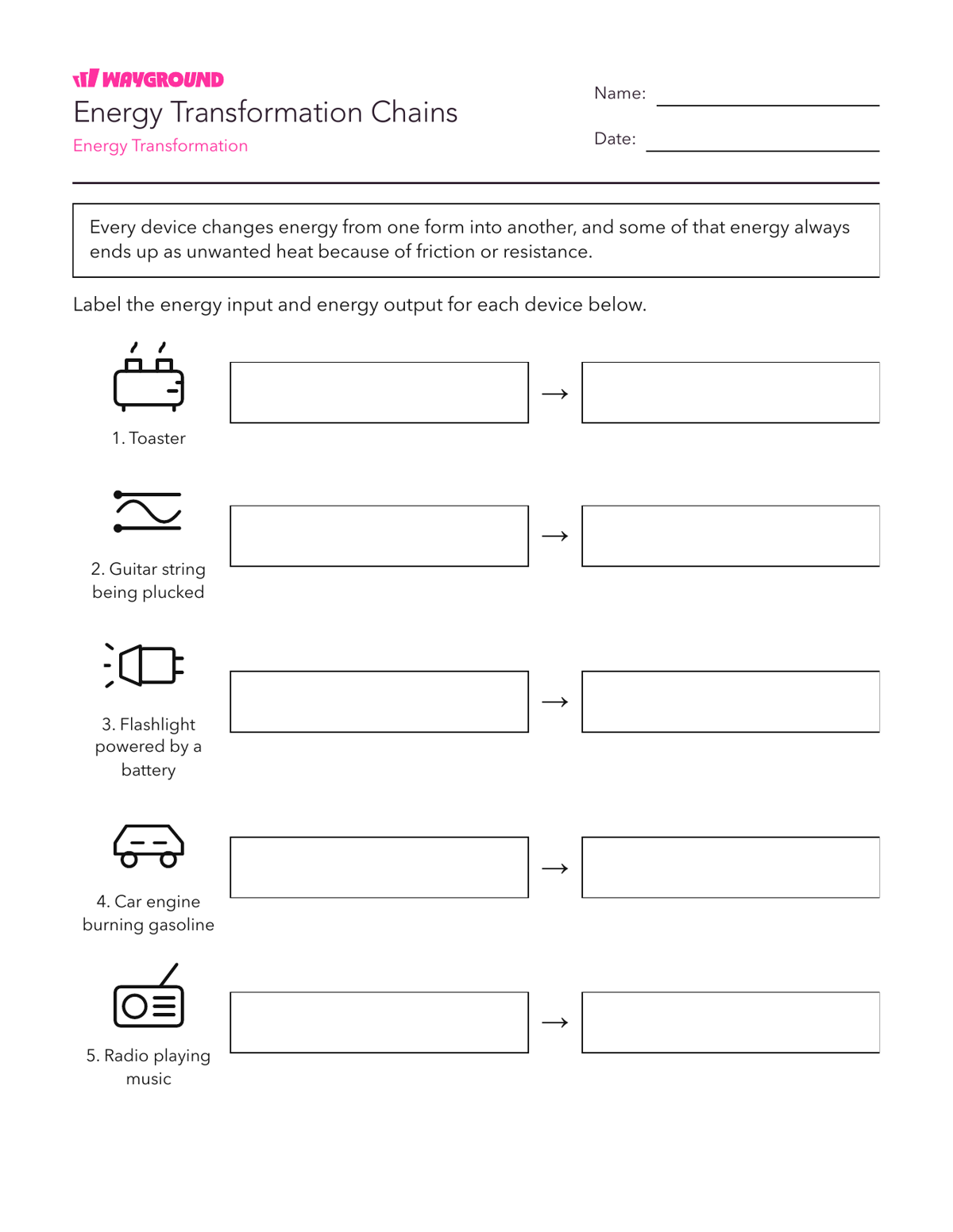
Start by anchoring instruction in observable phenomena — a rolling ball, a stretched rubber band, a warming cup of coffee — before introducing formal definitions of kinetic, potential, and thermal energy. Build toward conservation principles by having students trace energy transformations across systems rather than studying each energy type in isolation. This sequencing helps students see energy as a unified concept rather than a list of disconnected terms.
What exercises help students practice kinetic and potential energy calculations?
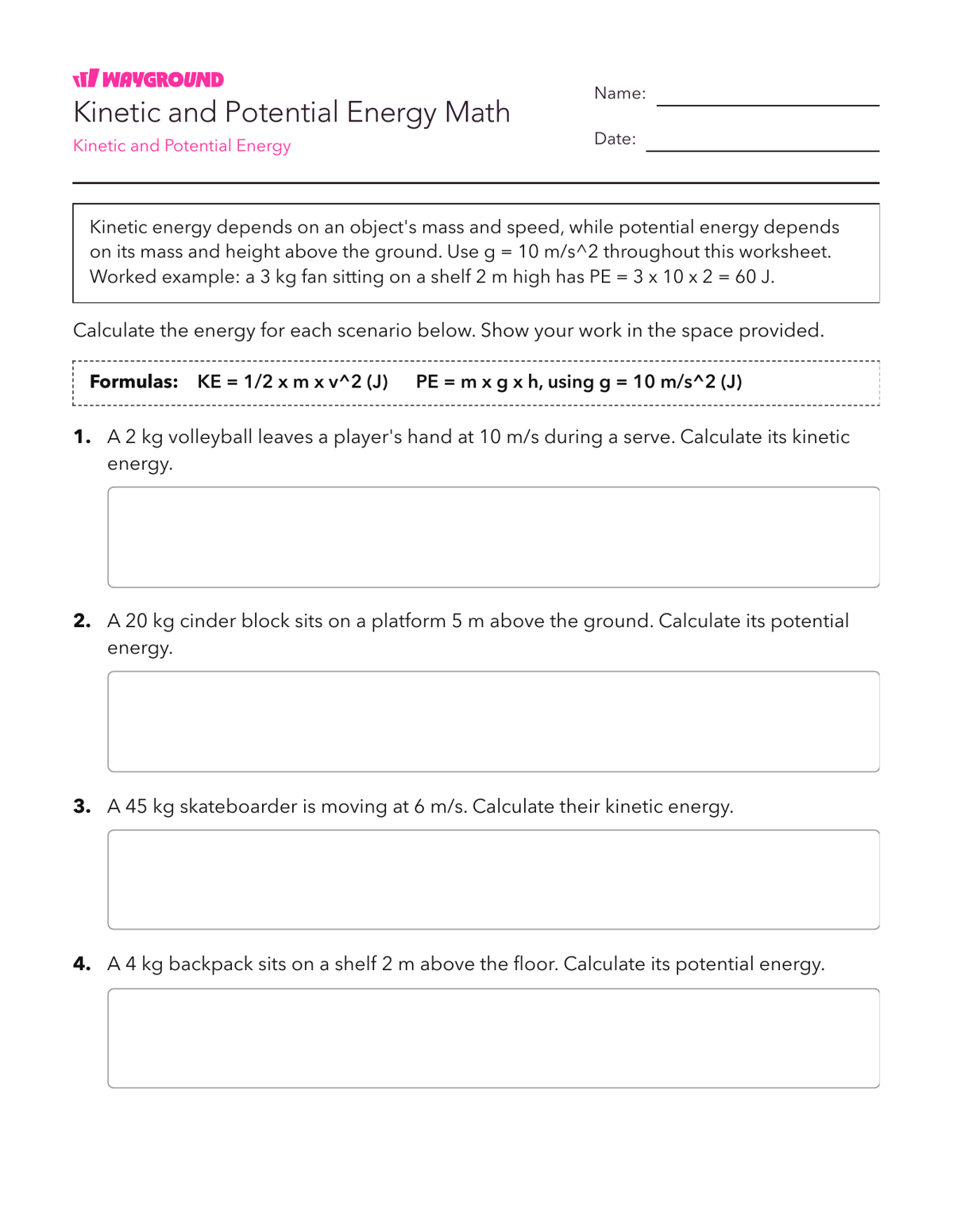
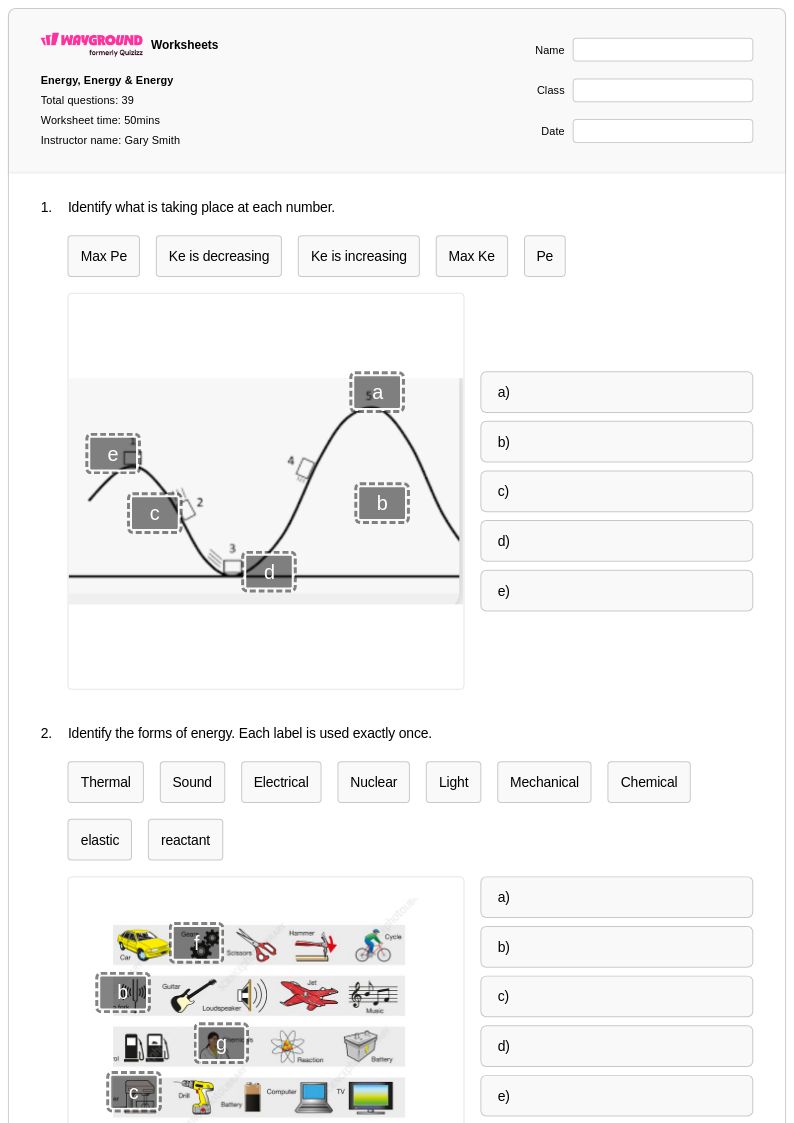
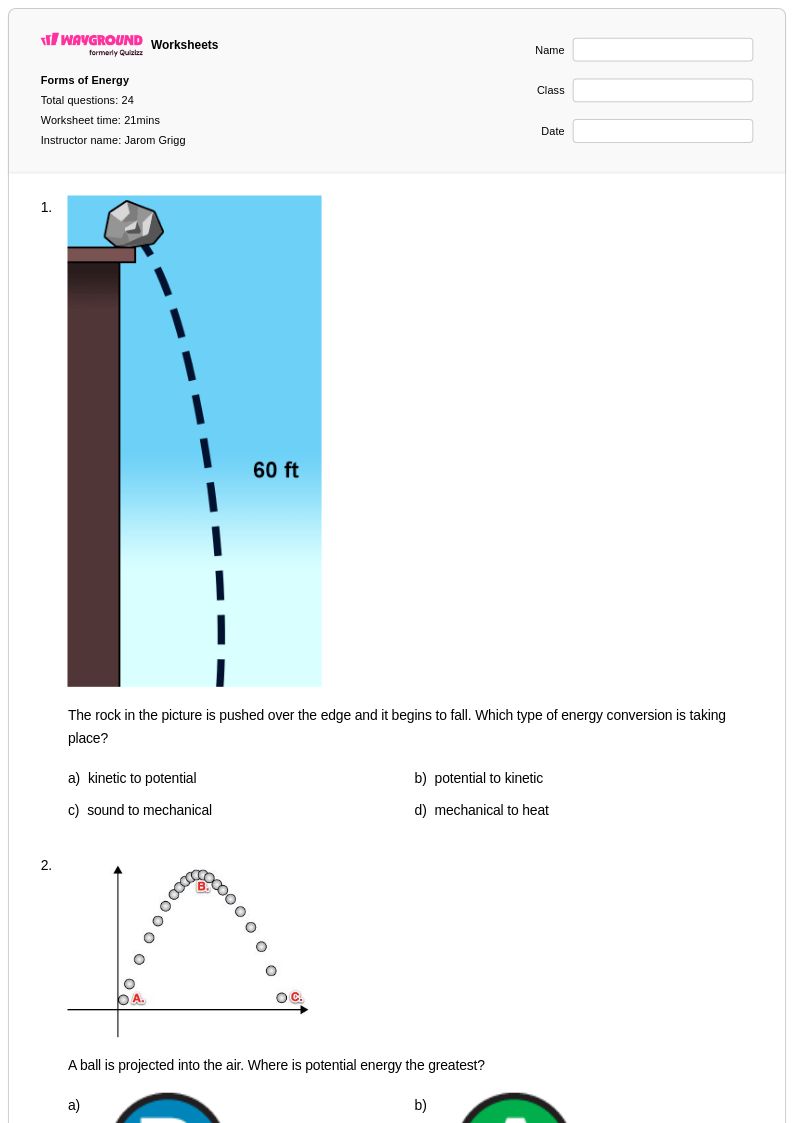
Students benefit most from problems that require them to calculate both kinetic energy (KE = ½mv²) and gravitational potential energy (PE = mgh) within the same scenario — such as a ball at different points along a ramp. This forces students to apply formulas in context and reinforces the relationship between the two forms rather than treating them as separate drills. Structured practice problems with scaffolded difficulty levels help build fluency before students tackle open-ended applications.
What mistakes do students commonly make when learning about energy transformations?
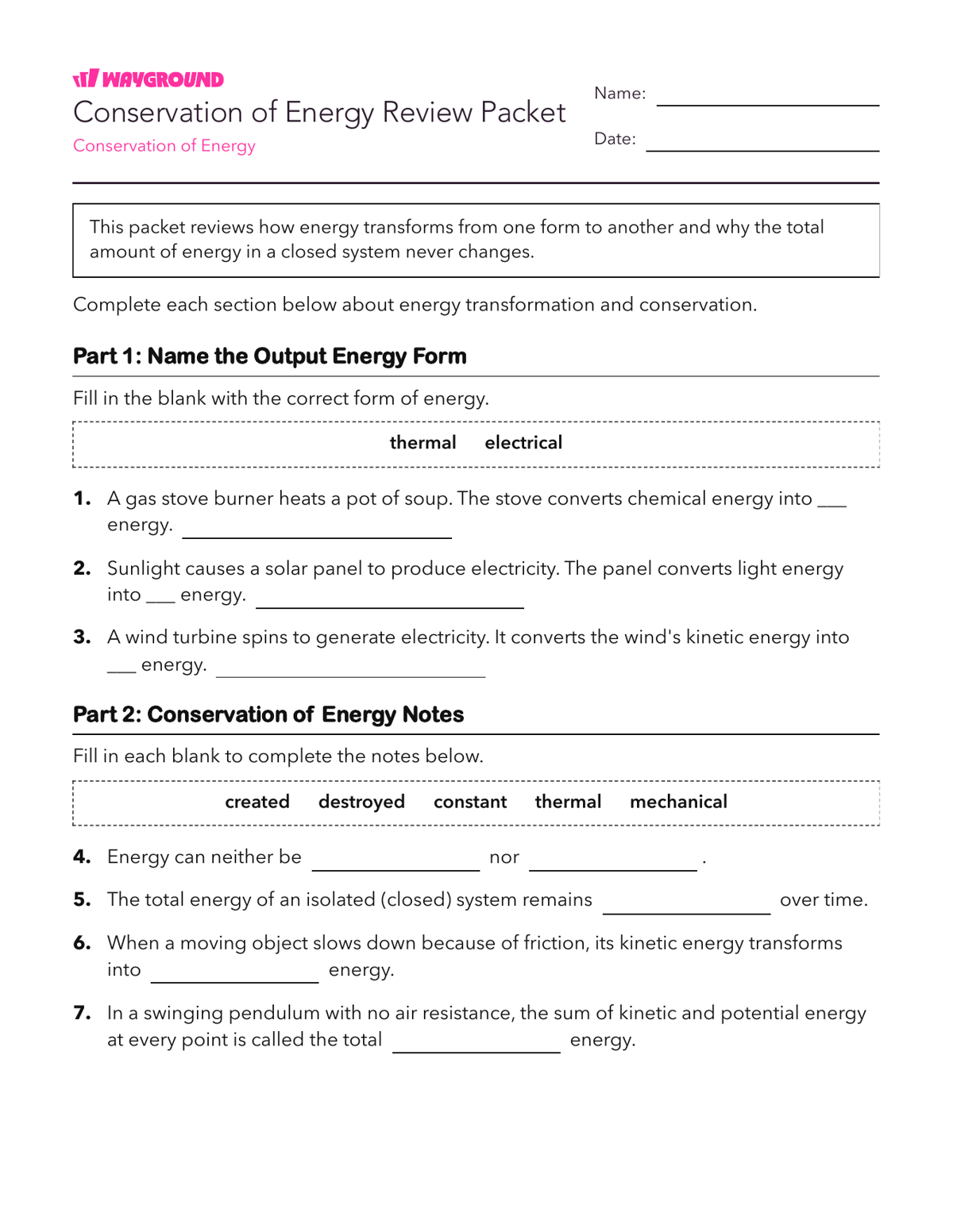
The most common misconception is that energy is 'used up' rather than transformed, which directly conflicts with the law of conservation of energy. Students also frequently confuse energy with force or power, using the terms interchangeably without understanding their distinct definitions. Explicitly addressing these errors during instruction — rather than waiting for assessment — significantly reduces how deeply these misconceptions become entrenched.
How do students typically struggle with the concept of mechanical energy?
Students often treat kinetic and potential energy as separate, unrelated quantities rather than understanding that mechanical energy is their sum within a system. A common error is failing to recognize that as an object falls, potential energy decreases by the same amount kinetic energy increases — they see the numbers changing without grasping the underlying exchange. Using energy bar charts or system diagrams alongside calculations can make this relationship more concrete and less abstract.
How do I use Wayground's energy worksheets in my classroom?
Wayground's energy worksheets are available as printable PDFs for traditional classroom use and in digital formats for technology-integrated learning environments, giving you flexibility regardless of your setup. You can also host them directly as a quiz on Wayground, which allows for streamlined assignment and review. Each worksheet includes a complete answer key, supporting both teacher-led instruction and independent student practice.
How can I differentiate energy worksheets for students with different learning needs?
On Wayground, teachers can apply student-level accommodations including extended time per question, read-aloud support for students who need audio access to content, and reduced answer choices to lower cognitive load for struggling learners. These settings can be assigned to individual students while the rest of the class receives default settings, and they carry over across future sessions automatically. This makes it practical to support IEP and 504 accommodations without creating separate assignment workflows.