Free Printable Environmental Studies Worksheets for Year 9
Year 9 Environmental Studies worksheets from Wayground offer comprehensive printables and practice problems that help students explore ecological concepts, pollution impacts, and sustainability solutions with detailed answer keys and free PDF resources.
Explore printable Environmental Studies worksheets for Year 9
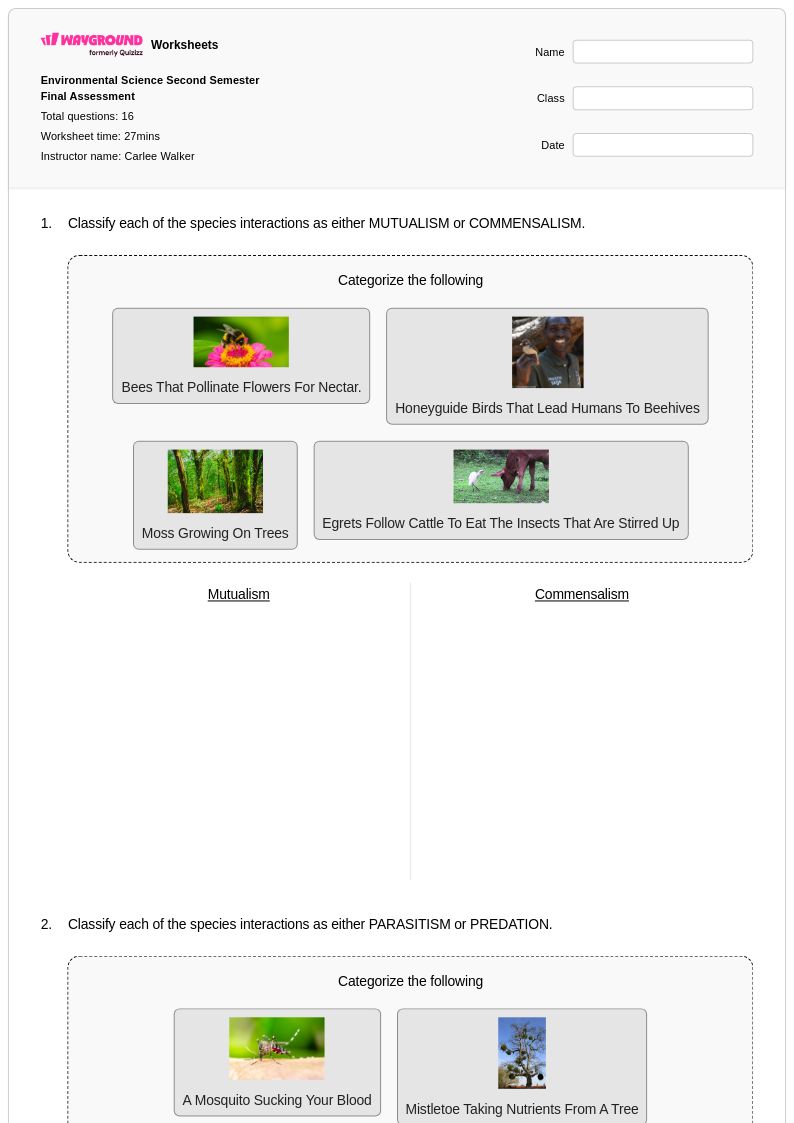
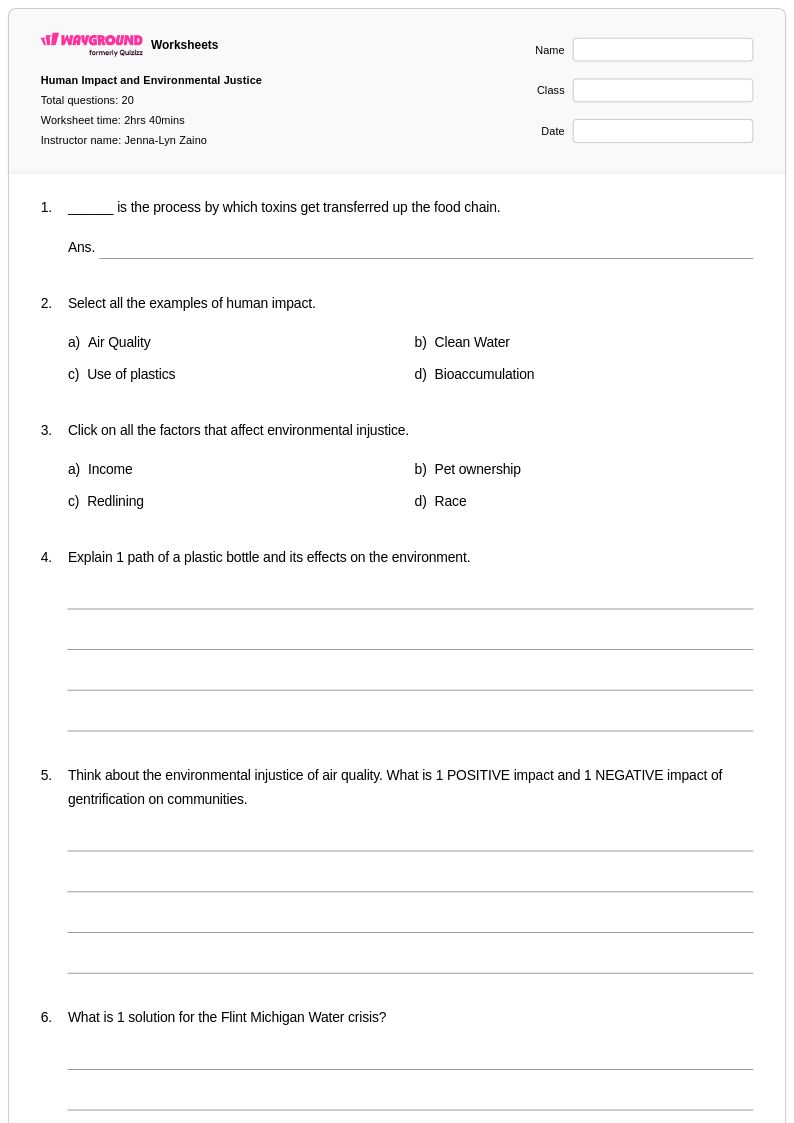
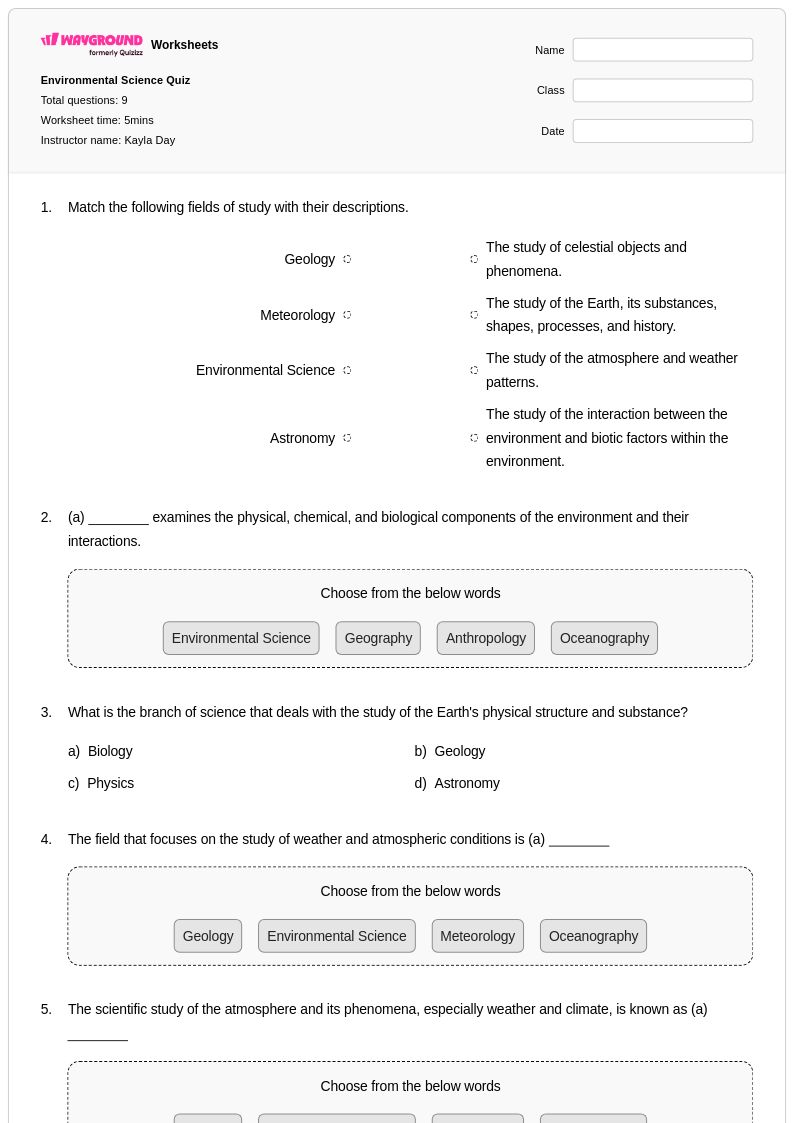
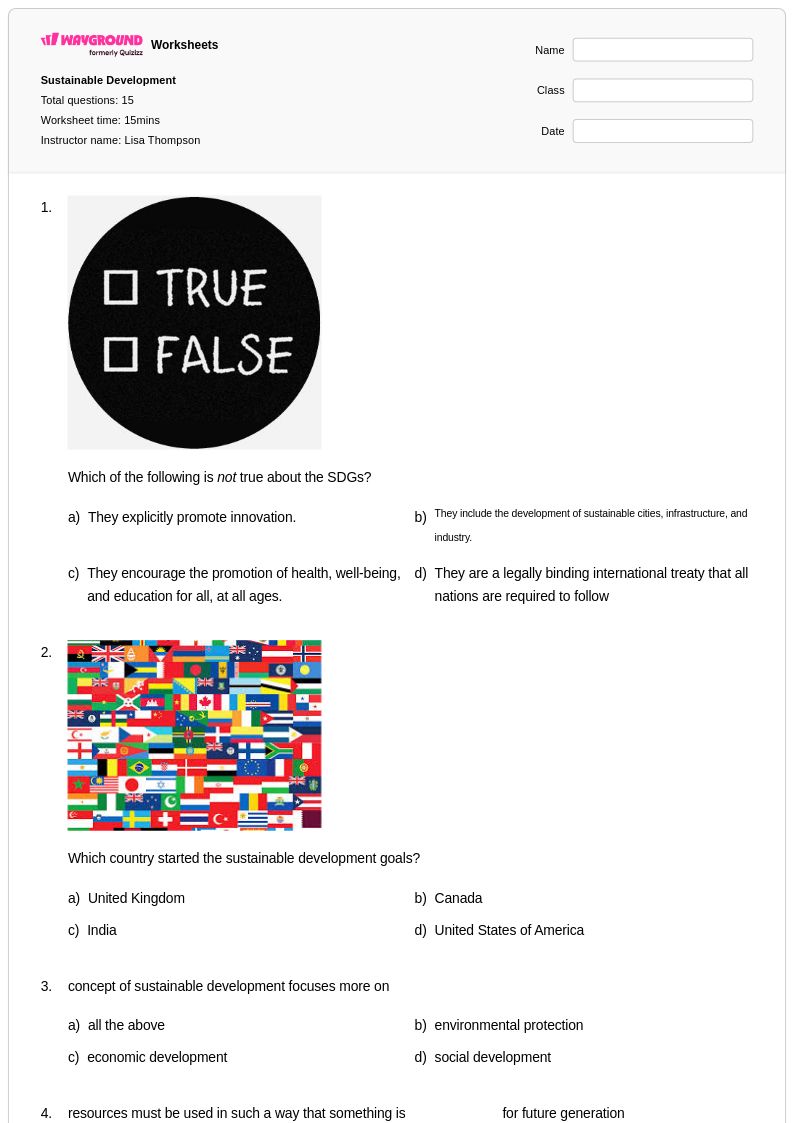
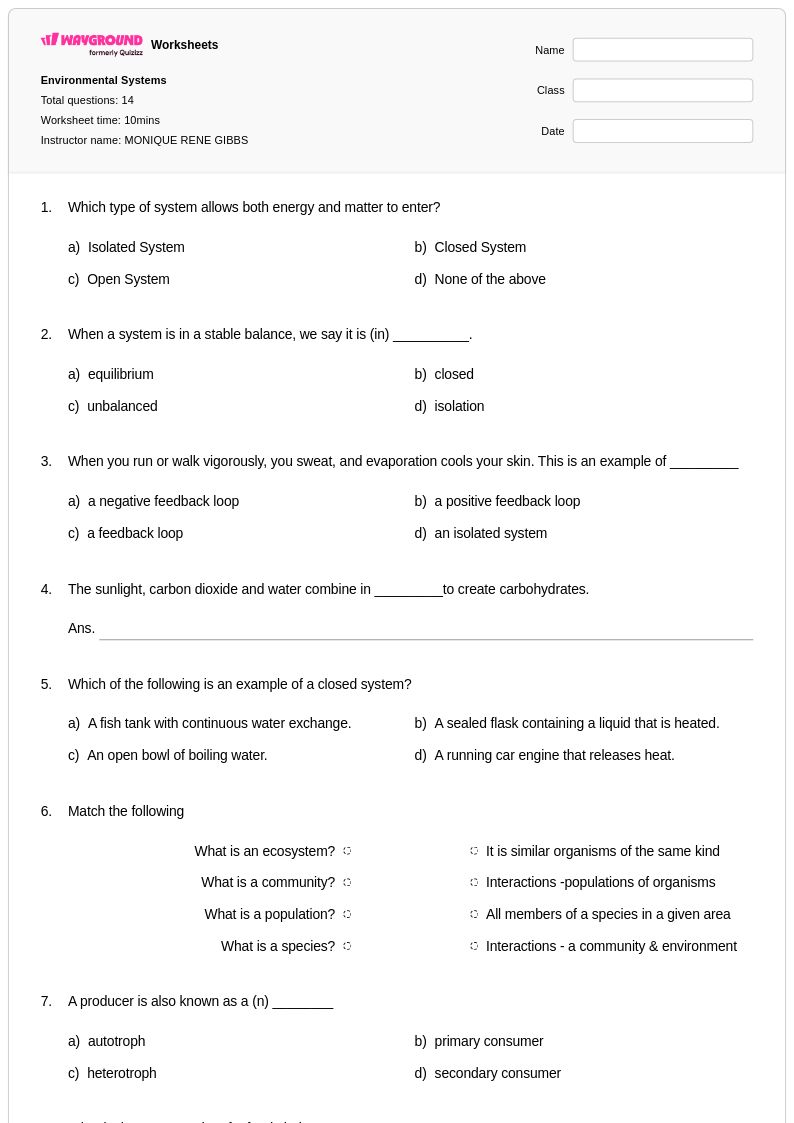
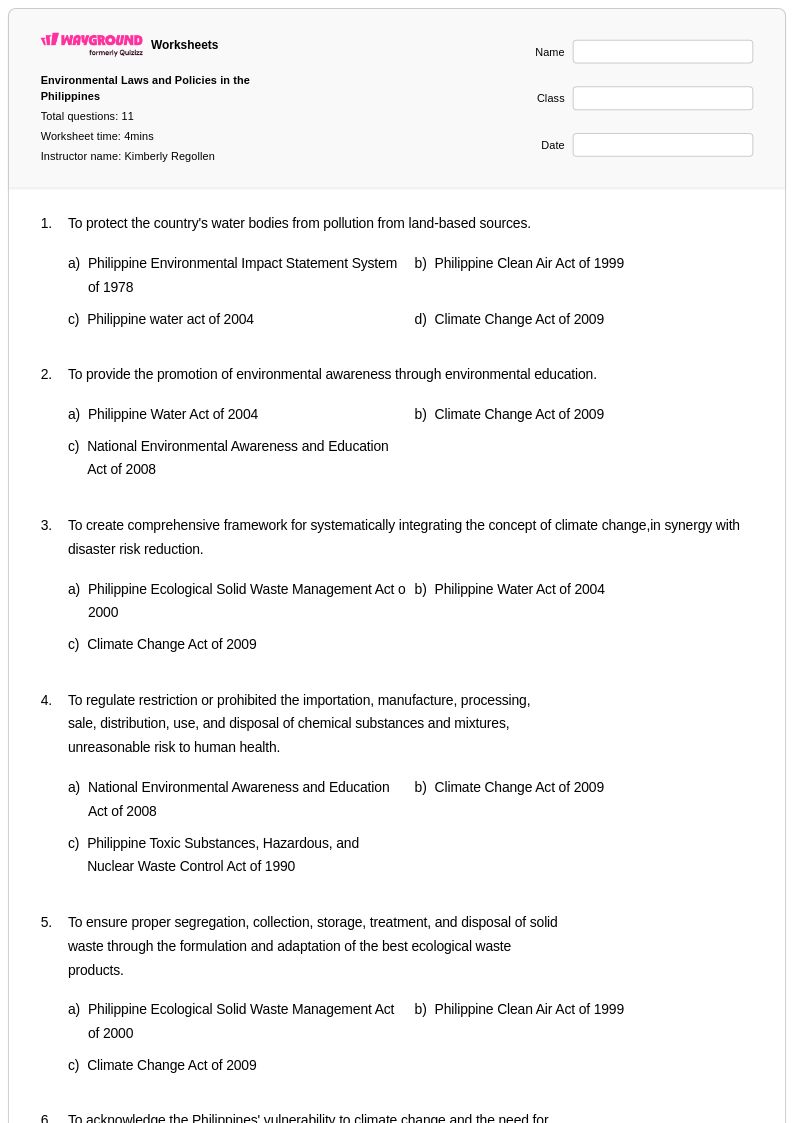
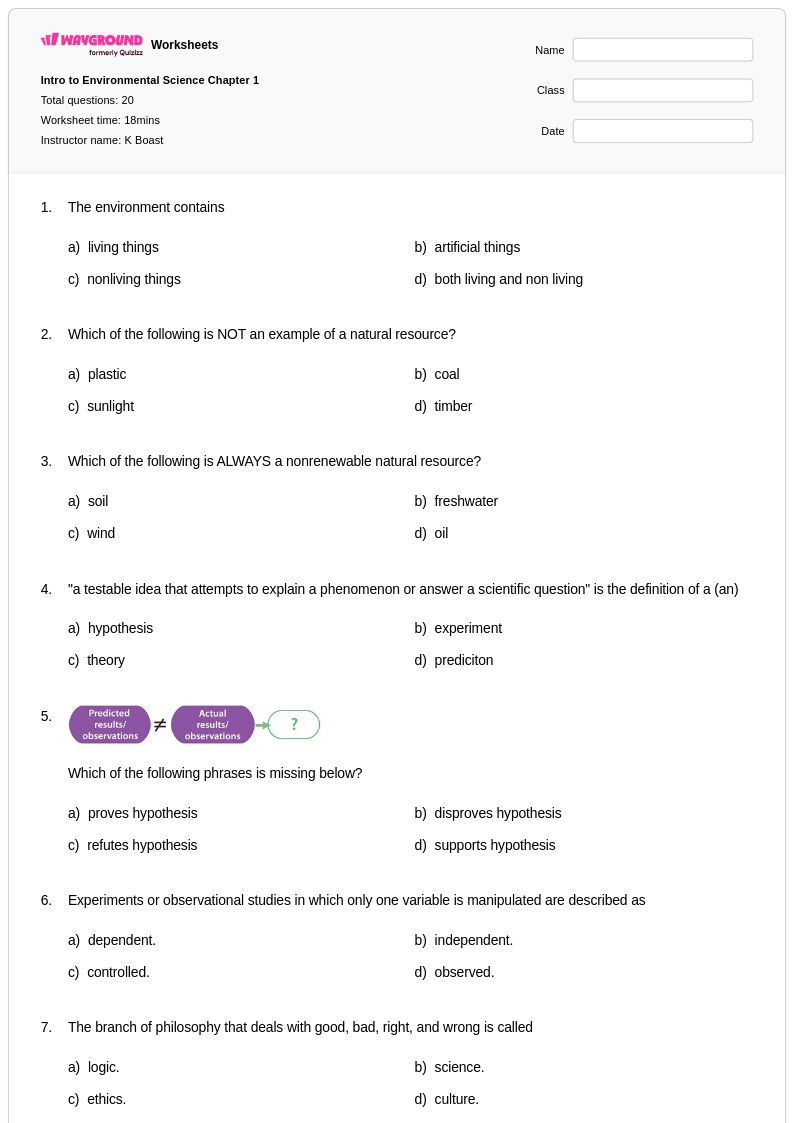
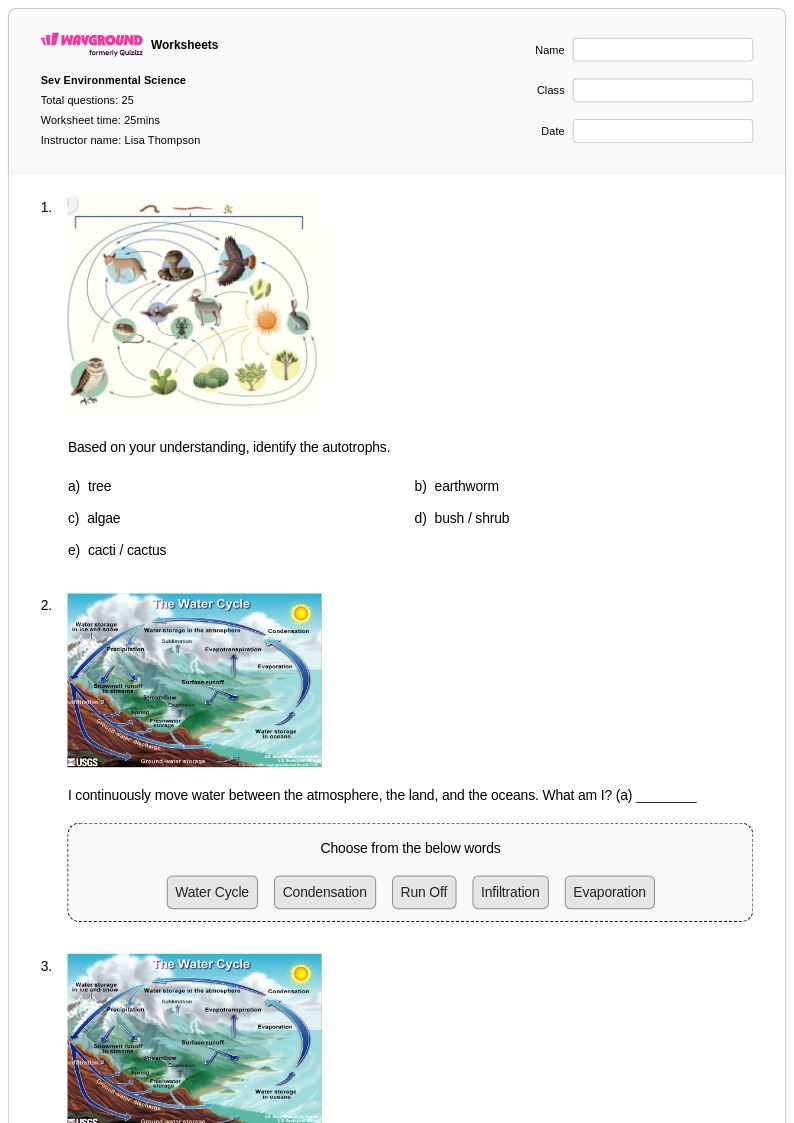
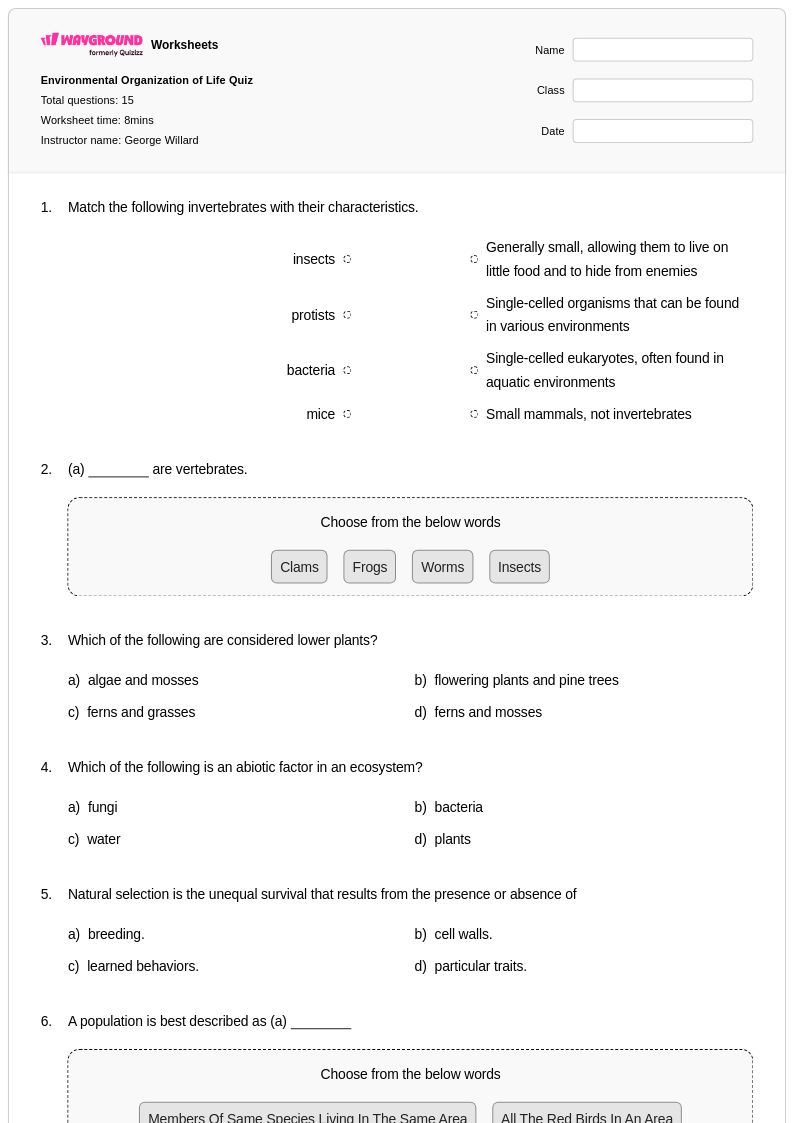
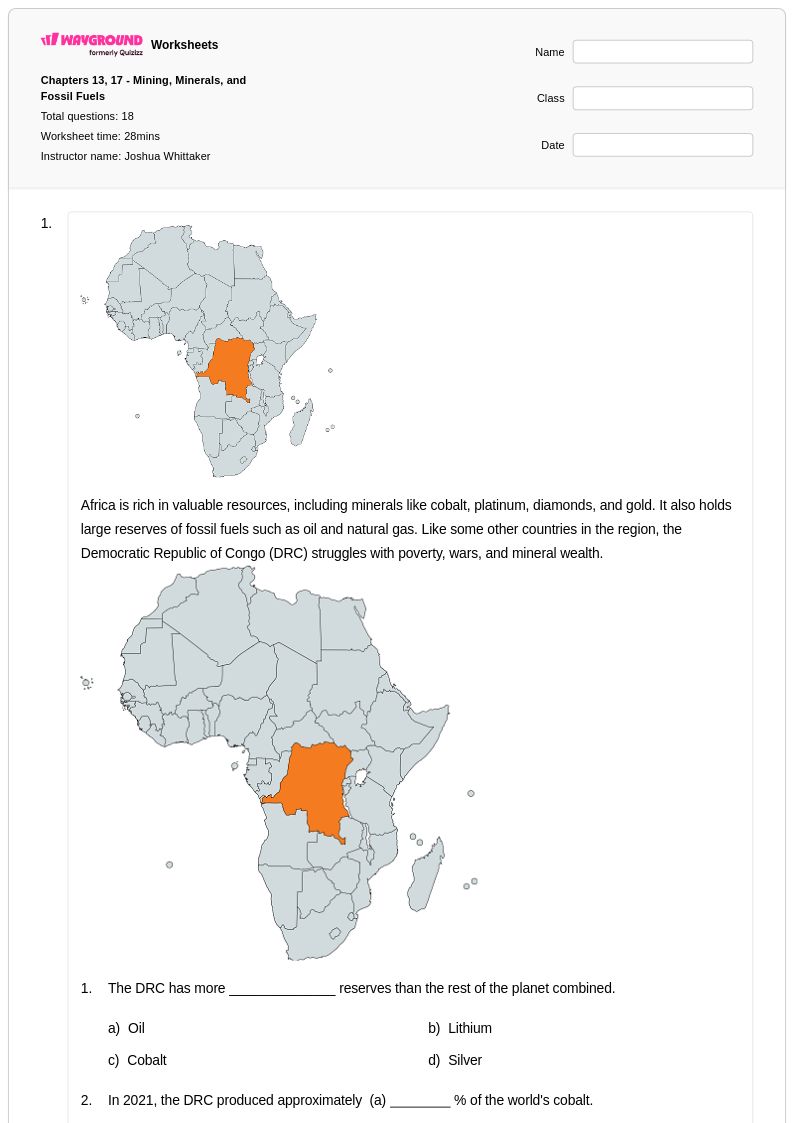
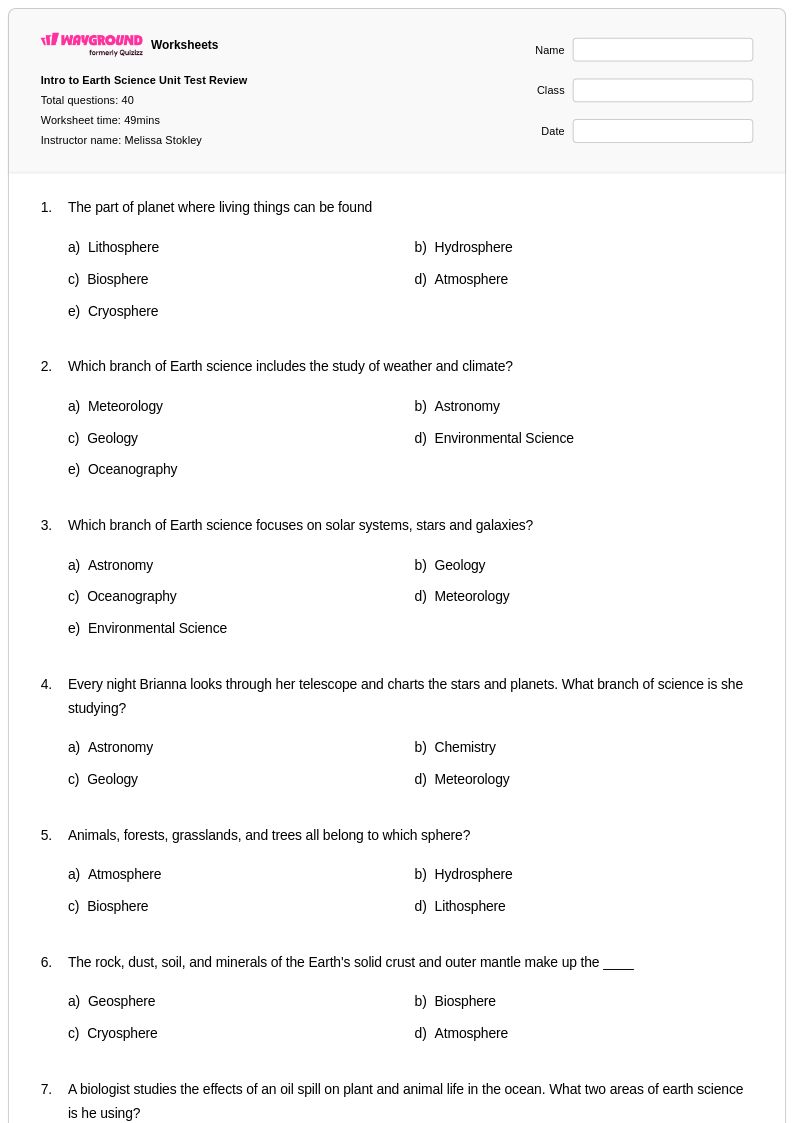
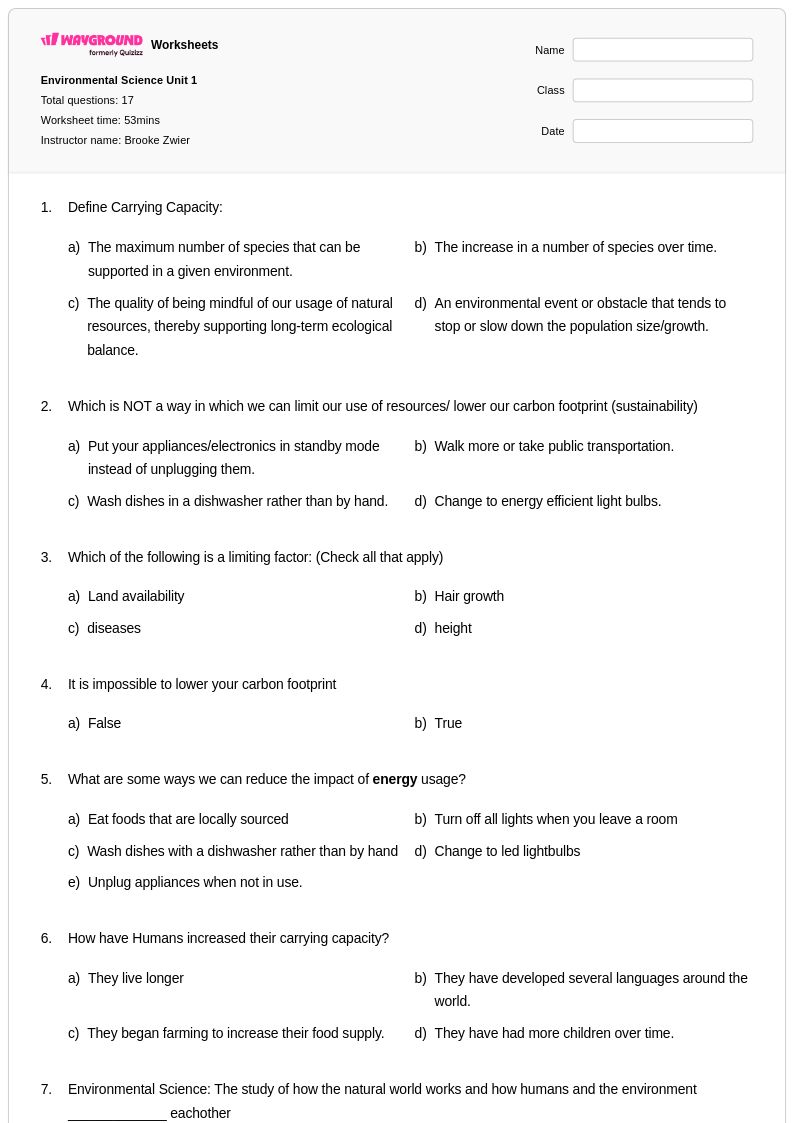
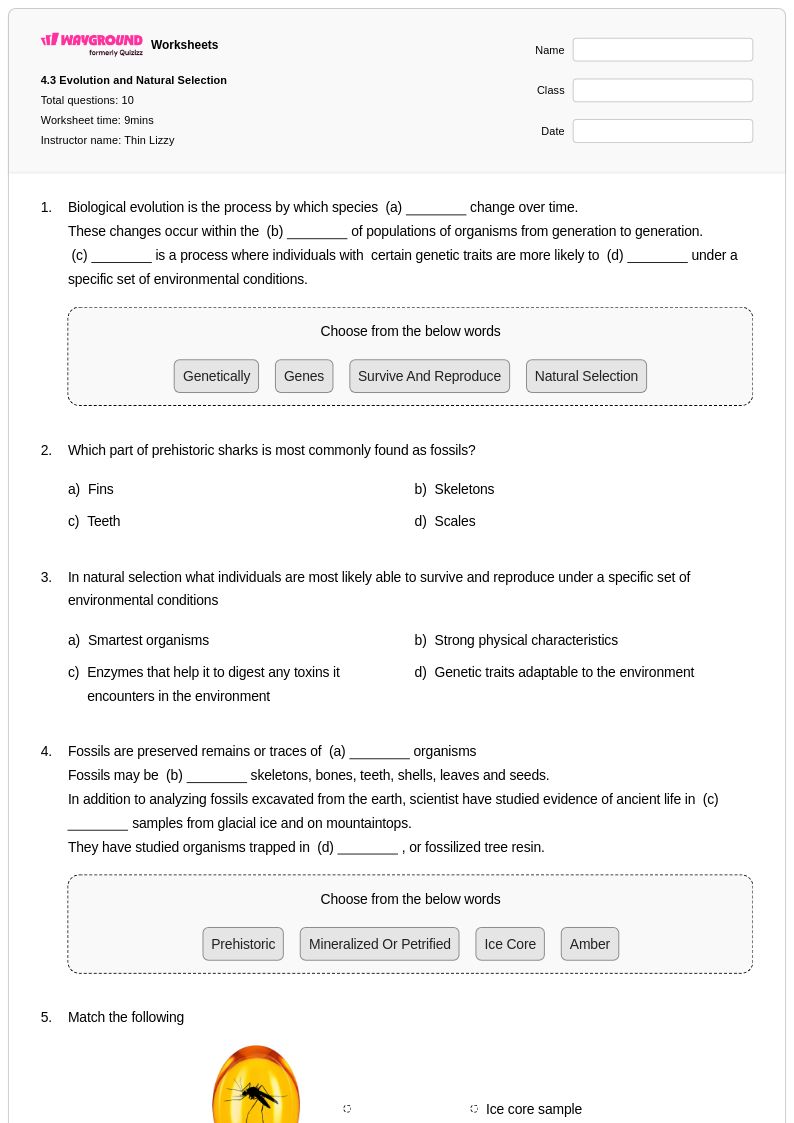
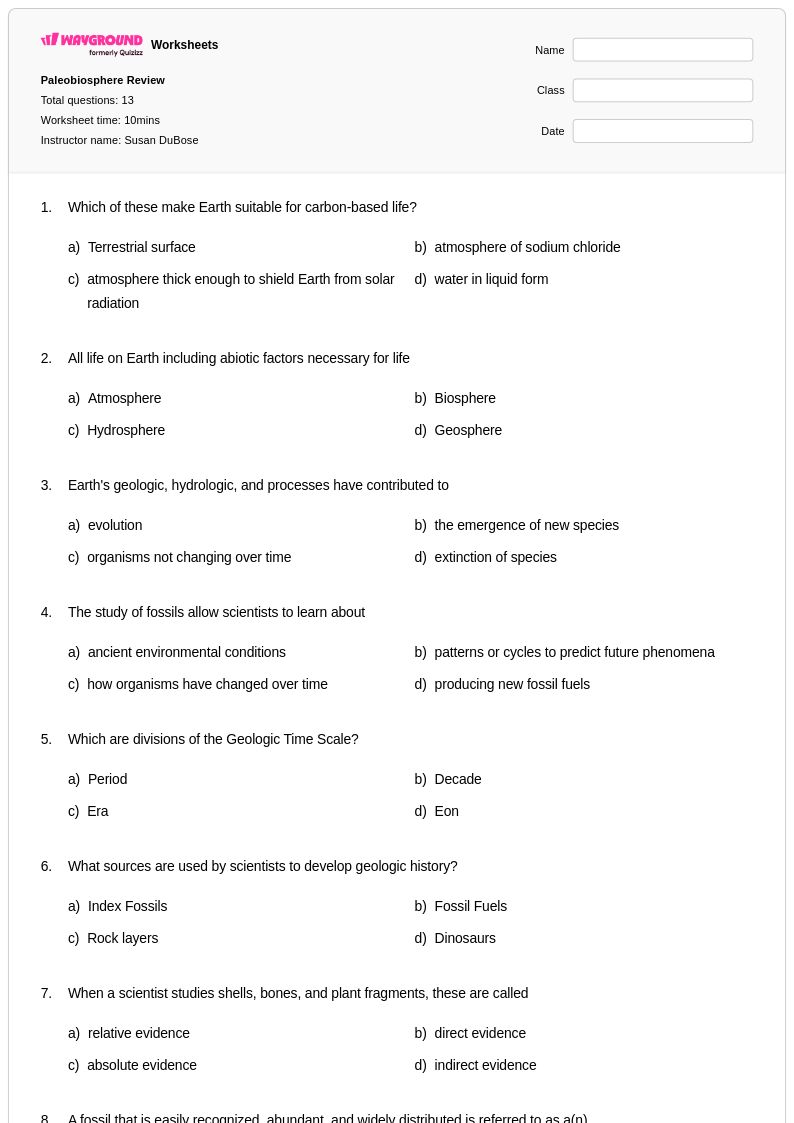
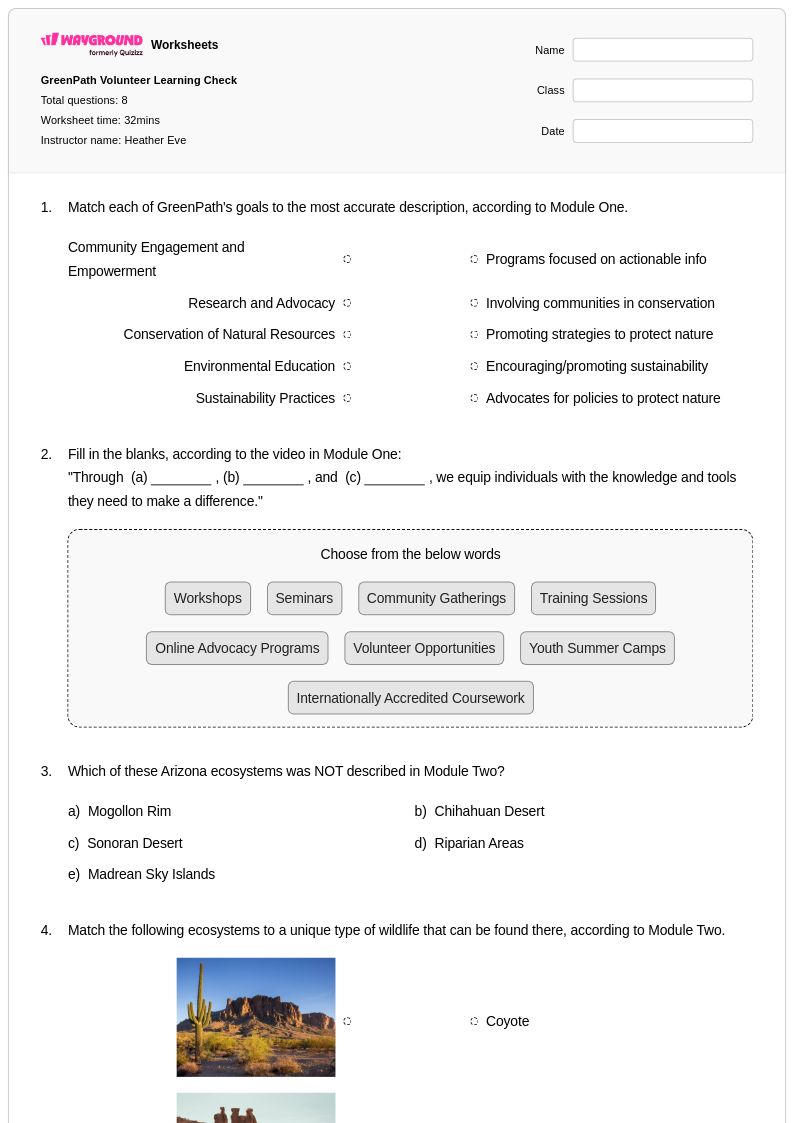
Environmental Studies worksheets for Year 9 students available through Wayground (formerly Quizizz) provide comprehensive coverage of critical ecological concepts and sustainability principles that form the foundation of modern environmental science education. These expertly designed resources help students develop essential analytical skills through engaging practice problems that explore topics such as ecosystem dynamics, biodiversity conservation, climate change impacts, pollution sources and mitigation strategies, renewable energy systems, and human environmental interactions. Each worksheet collection includes detailed answer keys that support both independent study and classroom instruction, while the free printable pdf format ensures accessibility for diverse learning environments and budget considerations.
Wayground (formerly Quizizz) empowers educators with millions of teacher-created Environmental Studies resources specifically aligned with Year 9 academic standards, featuring robust search and filtering capabilities that streamline lesson planning and curriculum alignment. The platform's differentiation tools enable teachers to customize worksheets for varying skill levels within their classrooms, supporting both remediation for struggling students and enrichment opportunities for advanced learners. These versatile materials are available in both printable and digital formats, including downloadable pdfs, allowing for seamless integration into traditional classroom settings, hybrid learning environments, or remote instruction scenarios while maintaining the flexibility needed for effective environmental science skill practice and assessment.
FAQs
How do I teach environmental studies in a way that feels relevant to students?
Environmental studies becomes most engaging when instruction connects to issues students can observe in their own communities, such as local air quality, water access, or land use changes. Anchoring lessons in real-world case studies and current ecological events helps students see the subject as urgent rather than abstract. Structuring units around a central question, like 'How do human decisions affect biodiversity?', gives students a framework for connecting topics like pollution, conservation, and climate change across the semester.
What exercises help students practice analyzing environmental data?
Data interpretation exercises are one of the most effective ways to build environmental literacy, requiring students to read graphs, evaluate trends, and draw evidence-based conclusions from scientific information. Practice problems that present real pollution data, species population charts, or carbon emissions graphs push students beyond recall and into genuine analysis. Pairing these exercises with short written response prompts, where students must explain what the data shows and what it implies for policy or conservation, deepens comprehension and builds argumentation skills.
What common misconceptions do students have about environmental studies topics?
One of the most persistent misconceptions is that environmental problems are too large for individual or local action to matter, which can lead to disengagement rather than critical thinking. Students also frequently conflate weather with climate, misunderstanding why a single cold day does not contradict long-term warming trends. Another common error is treating ecosystems as static rather than dynamic, leading students to underestimate how human activity disrupts feedback loops that sustain biodiversity and ecosystem services.
How can I assess whether students understand the relationship between human activity and natural systems?
Effective assessments for this topic ask students to trace cause-and-effect chains, for example, explaining how agricultural runoff leads to aquatic dead zones, or how deforestation affects regional precipitation patterns. Tasks that require students to evaluate proposed environmental solutions using scientific criteria reveal whether they understand tradeoffs, unintended consequences, and the difference between correlation and causation. Short scenario-based problems, where students must apply concepts to a novel ecological situation, are particularly useful for identifying gaps in systems-level thinking.
How do I use Wayground's Environmental Studies worksheets in my classroom?
Wayground's Environmental Studies worksheets are available as printable PDFs for traditional classroom use and in digital formats for technology-integrated or remote learning environments, so teachers can deploy them across multiple instructional contexts. You can also host any worksheet as a live or assigned quiz directly on Wayground, giving you built-in response tracking and instant feedback. Each worksheet includes a complete answer key, making them efficient tools for both guided instruction and independent practice without additional teacher preparation.
How can I differentiate Environmental Studies worksheets for students with different ability levels?
On Wayground, teachers can apply student-level accommodations including extended time per question, read-aloud support for students who need audio assistance, and reduced answer choices to lower cognitive load for learners who need it. These settings can be assigned to individual students without notifying the rest of the class, allowing differentiation to happen discreetly. Font size and display themes can also be adjusted through reading mode, which supports accessibility for students with visual processing needs. These accommodations are saved and automatically applied in future sessions, reducing setup time for recurring needs.