Free Printable Enzyme Activity Worksheets for Year 11
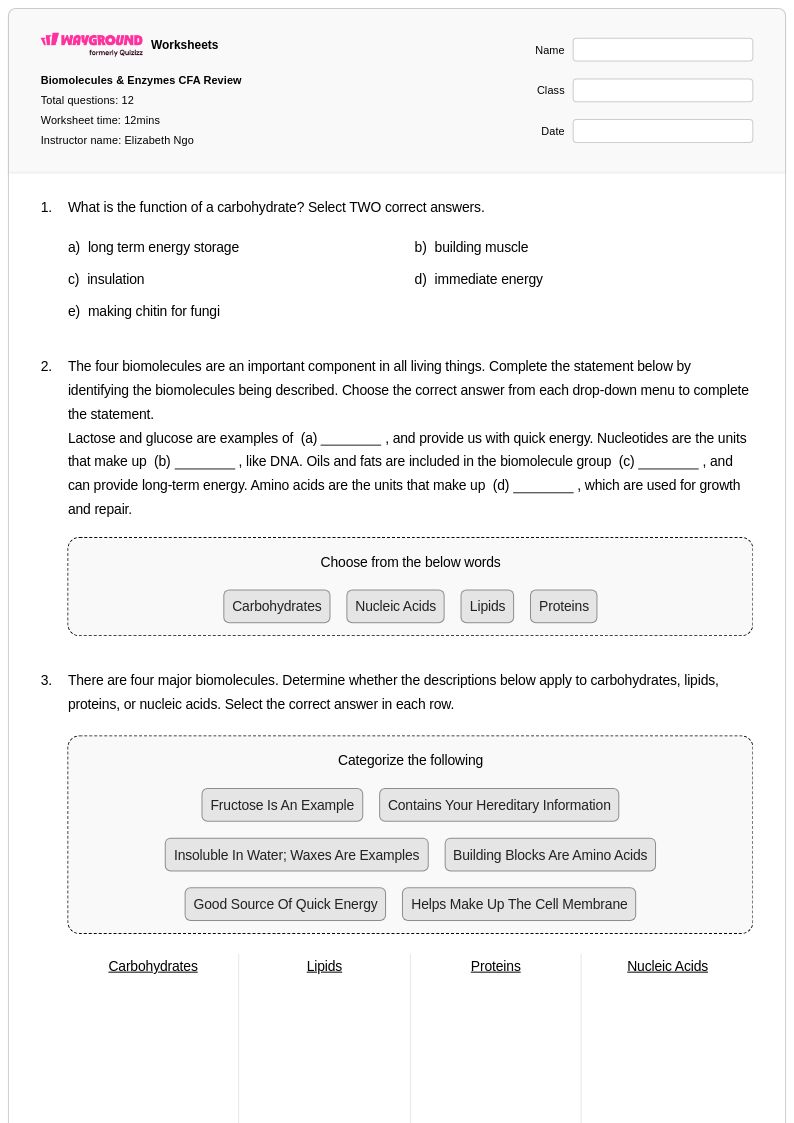
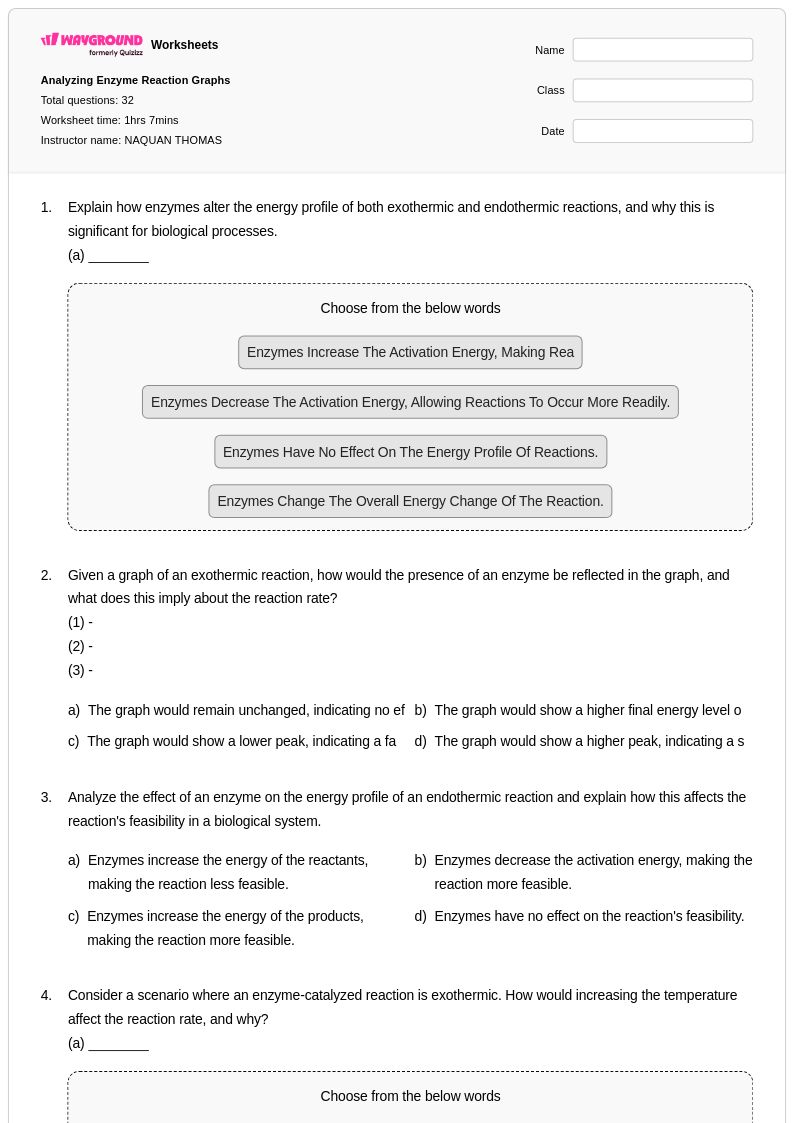
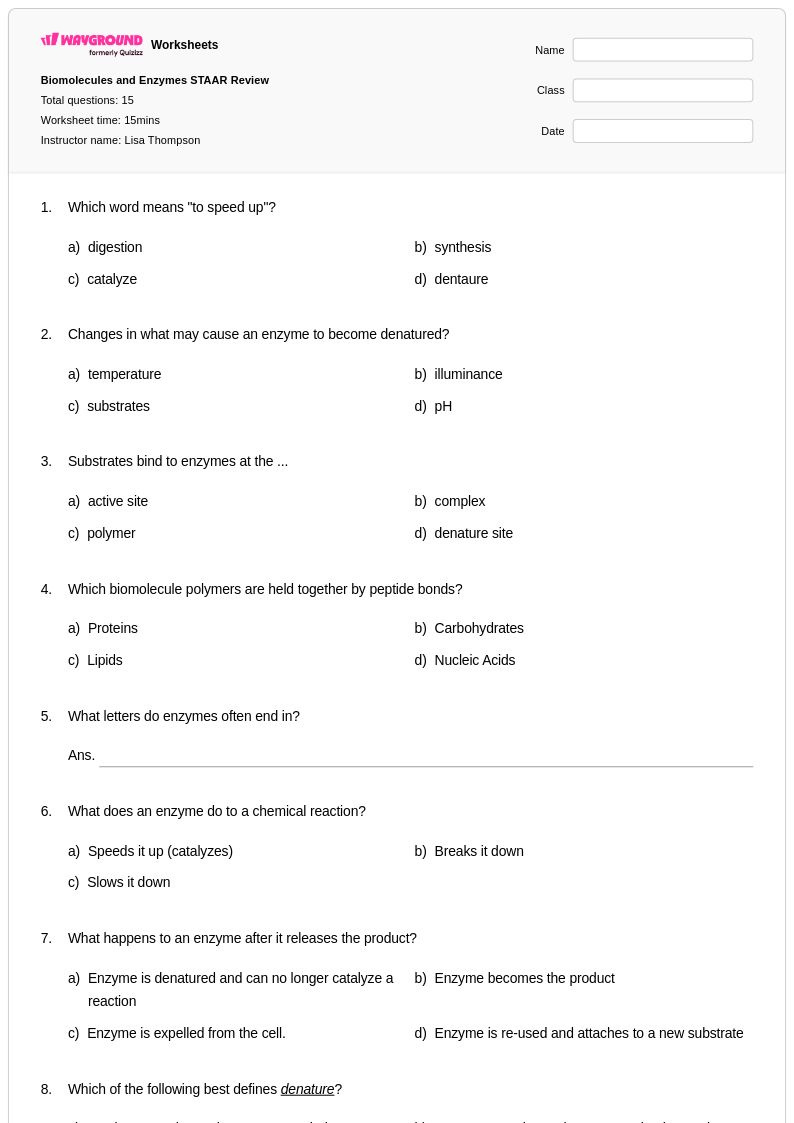
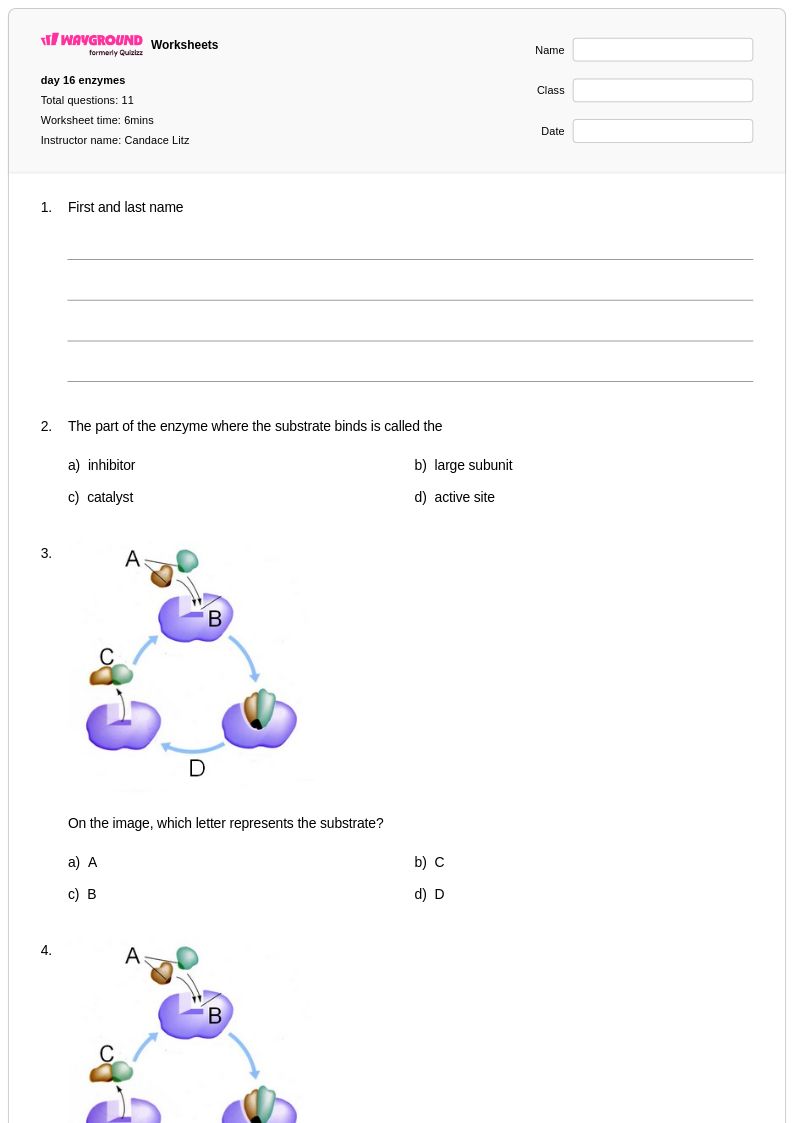
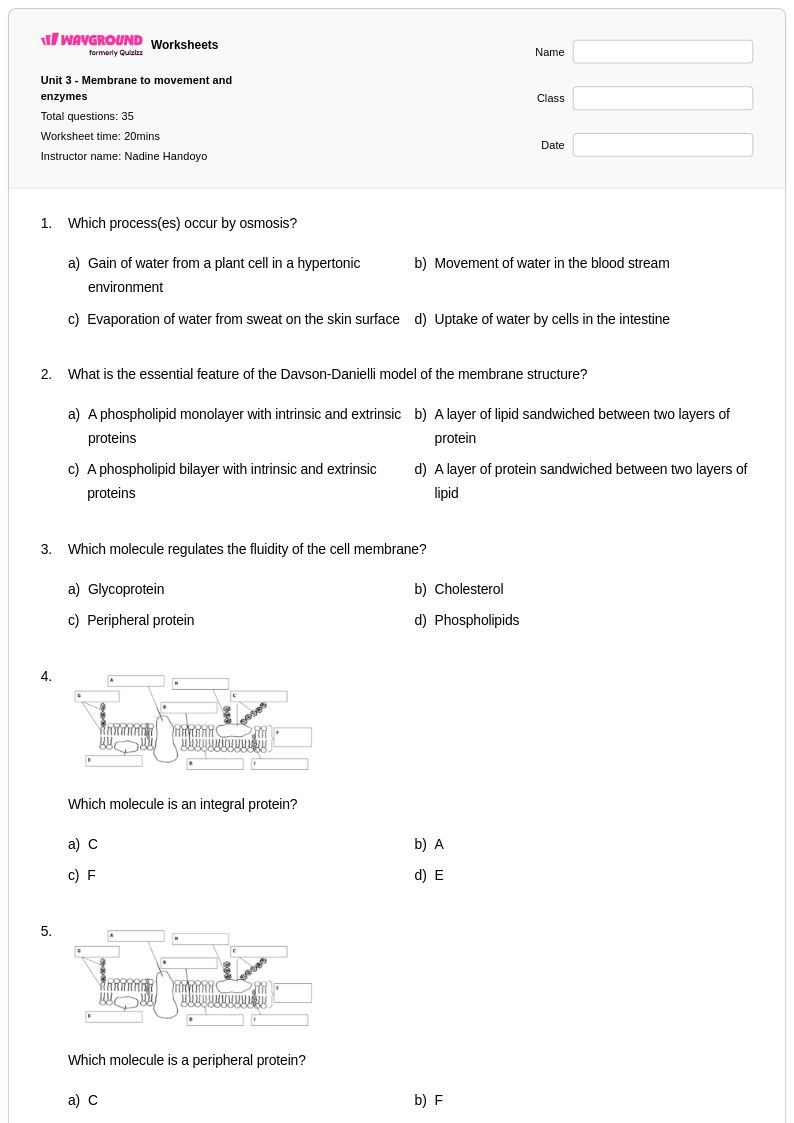
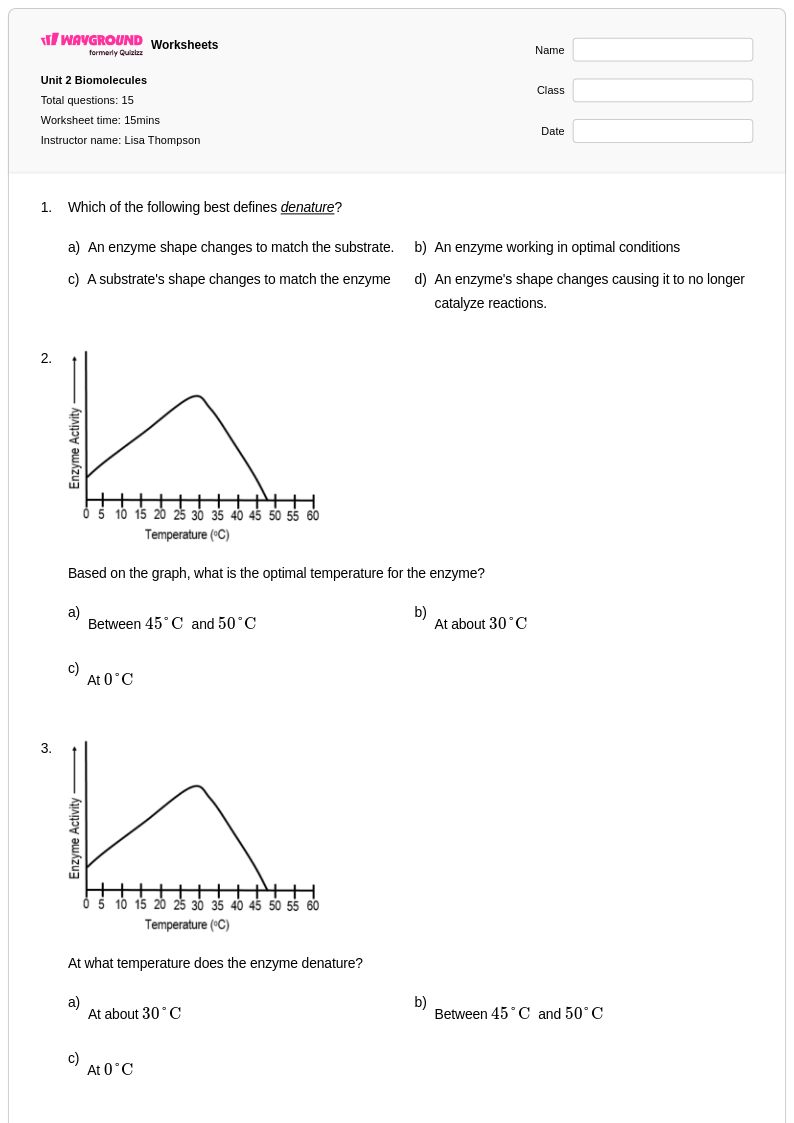
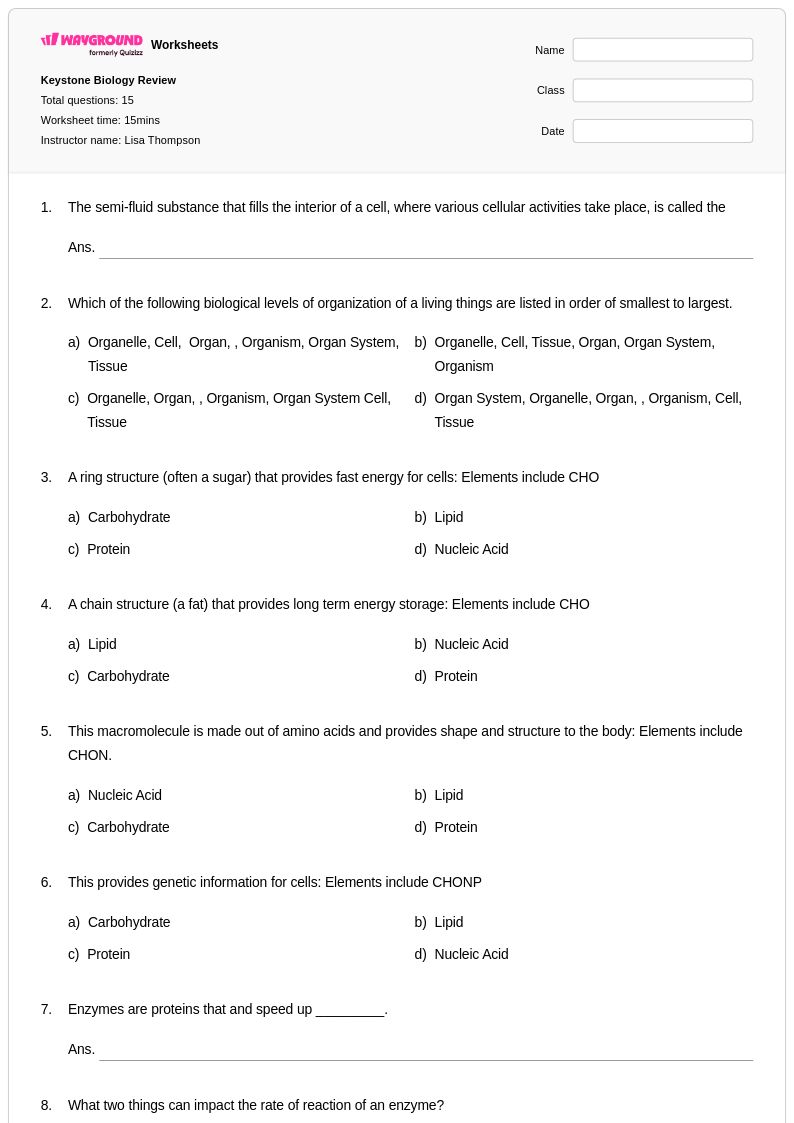
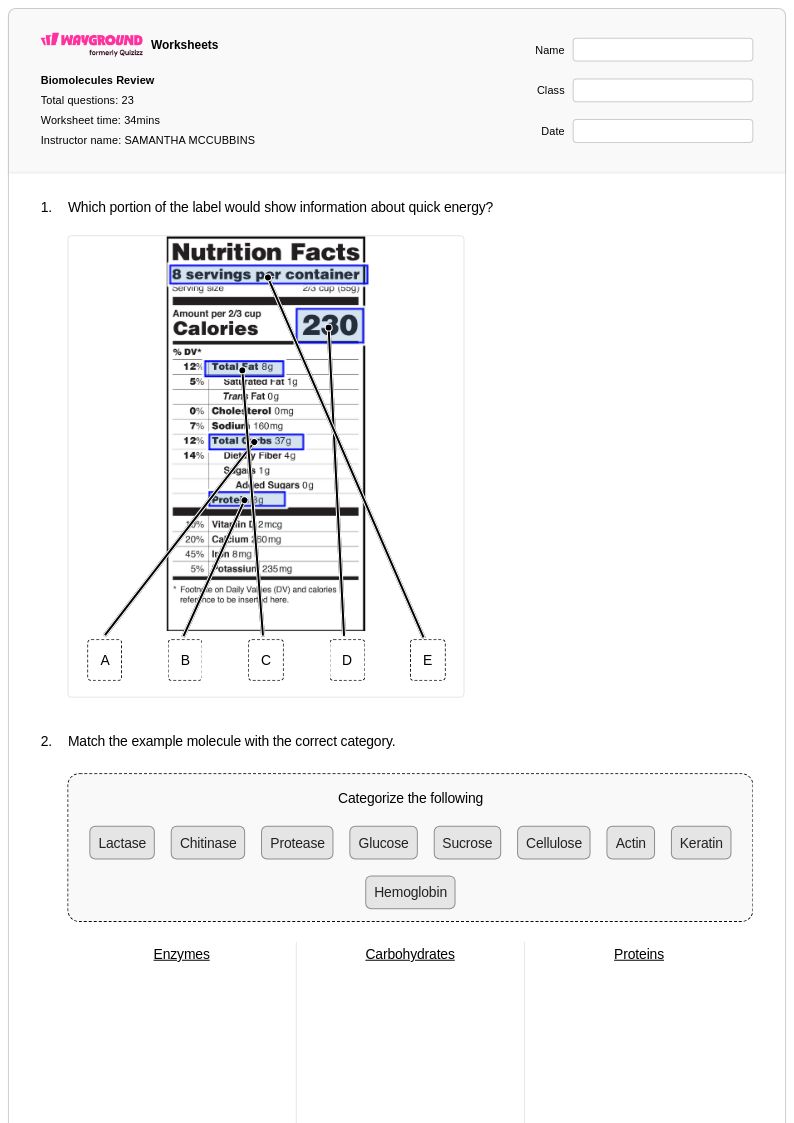
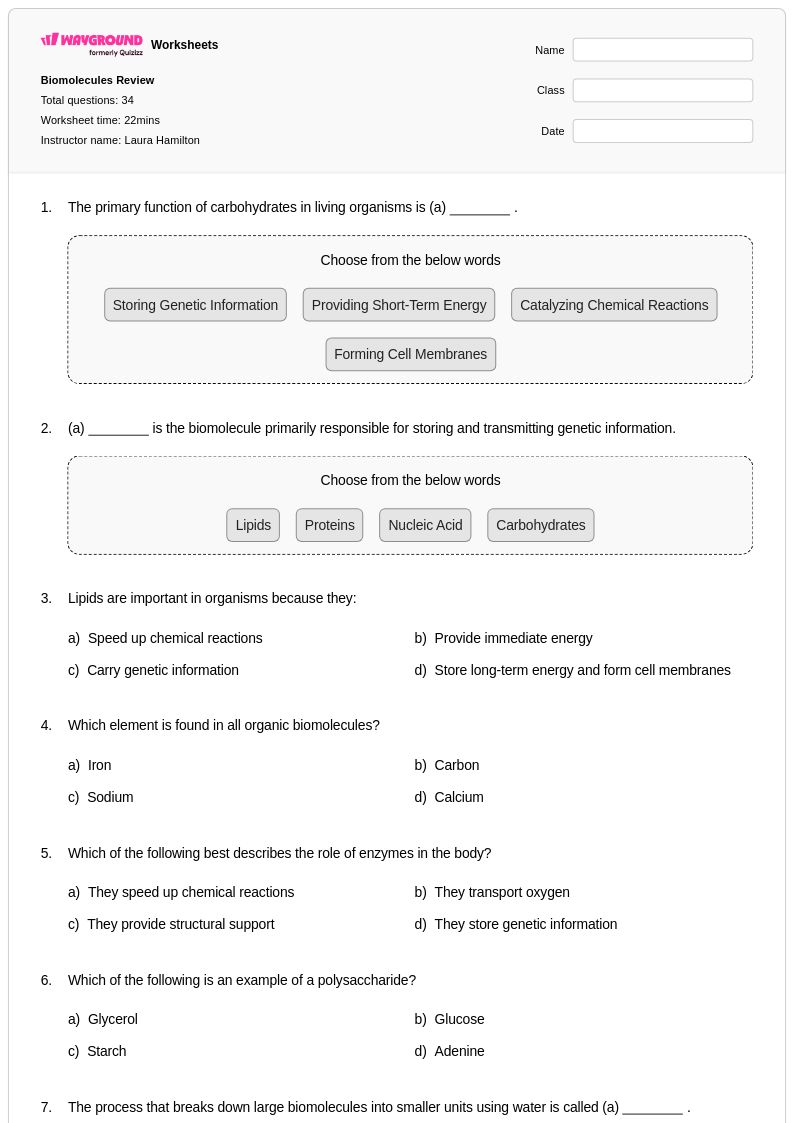
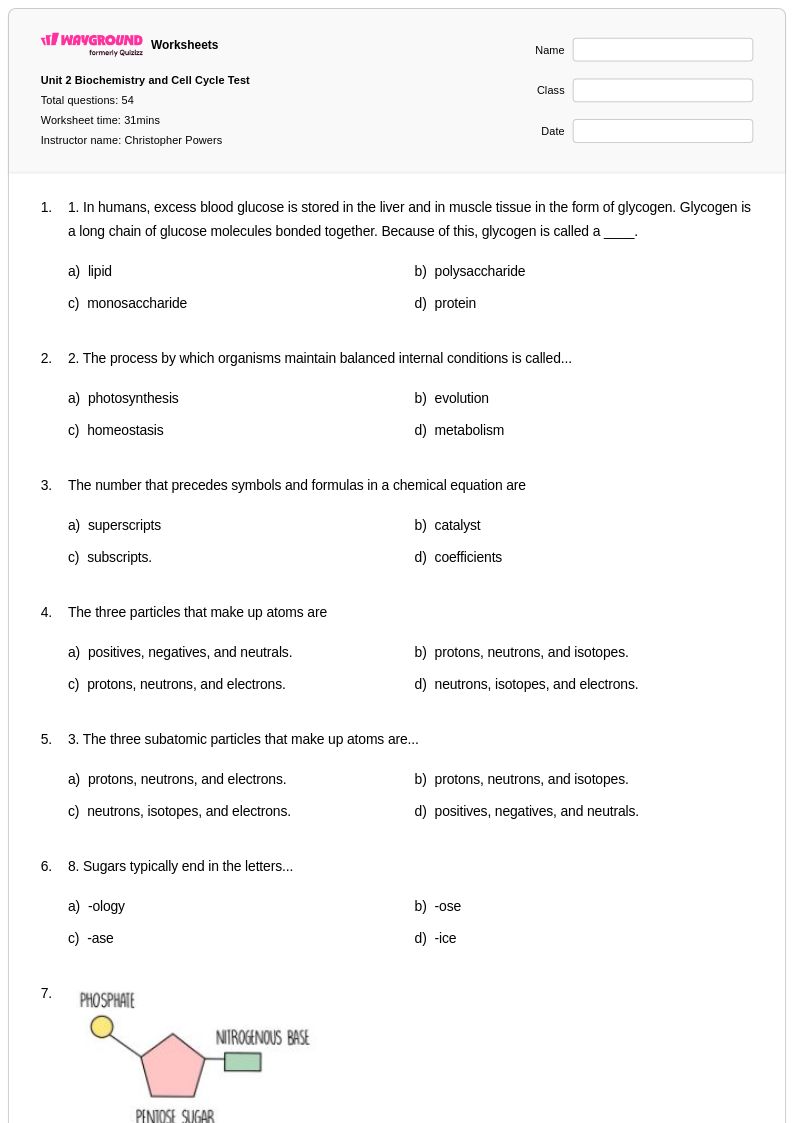
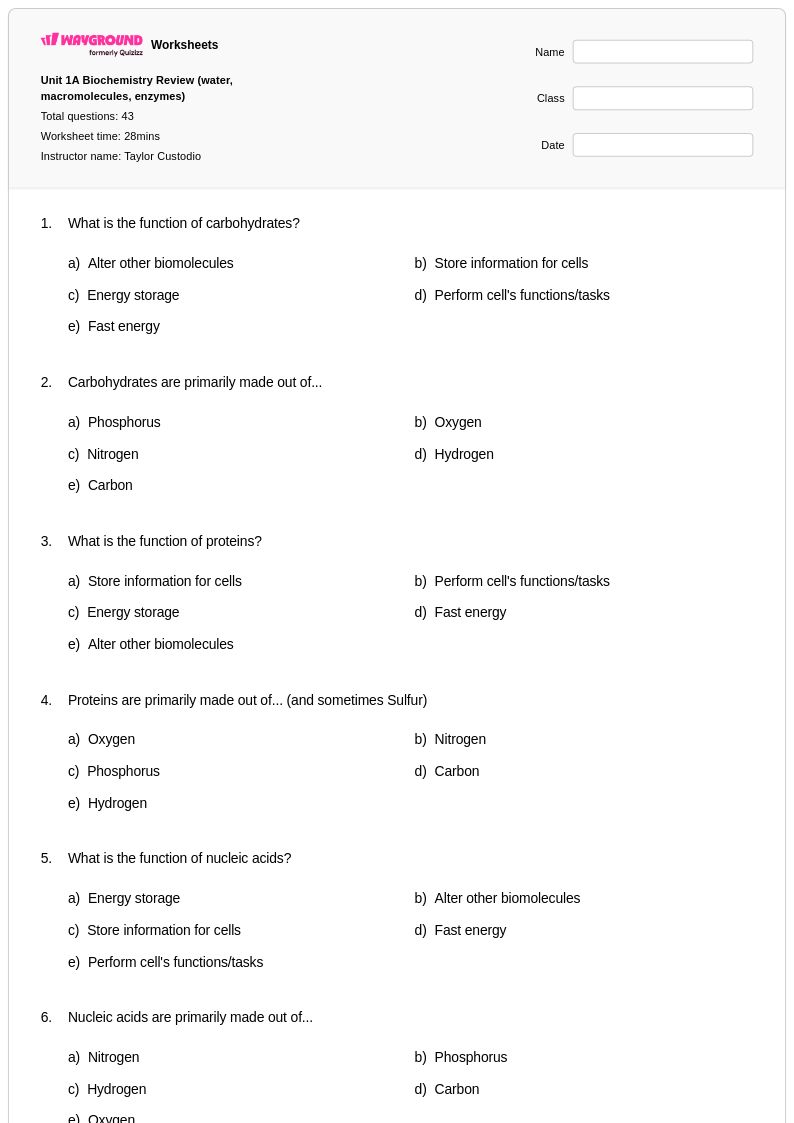
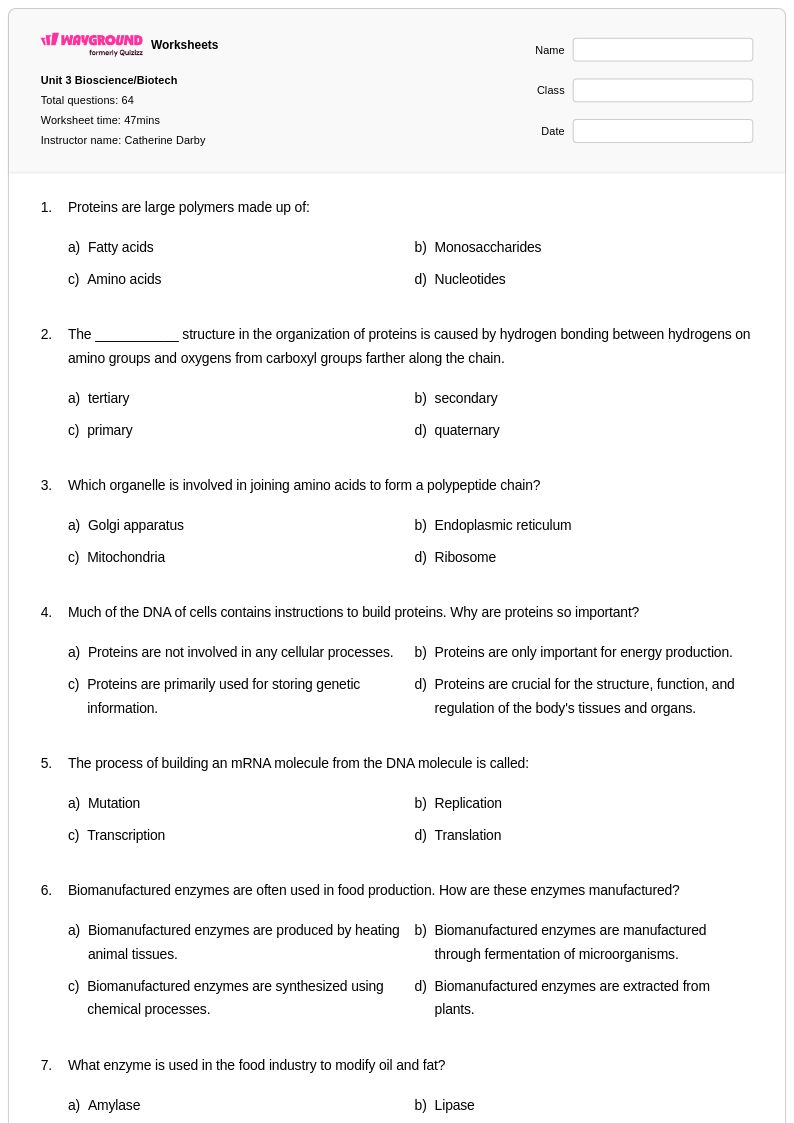
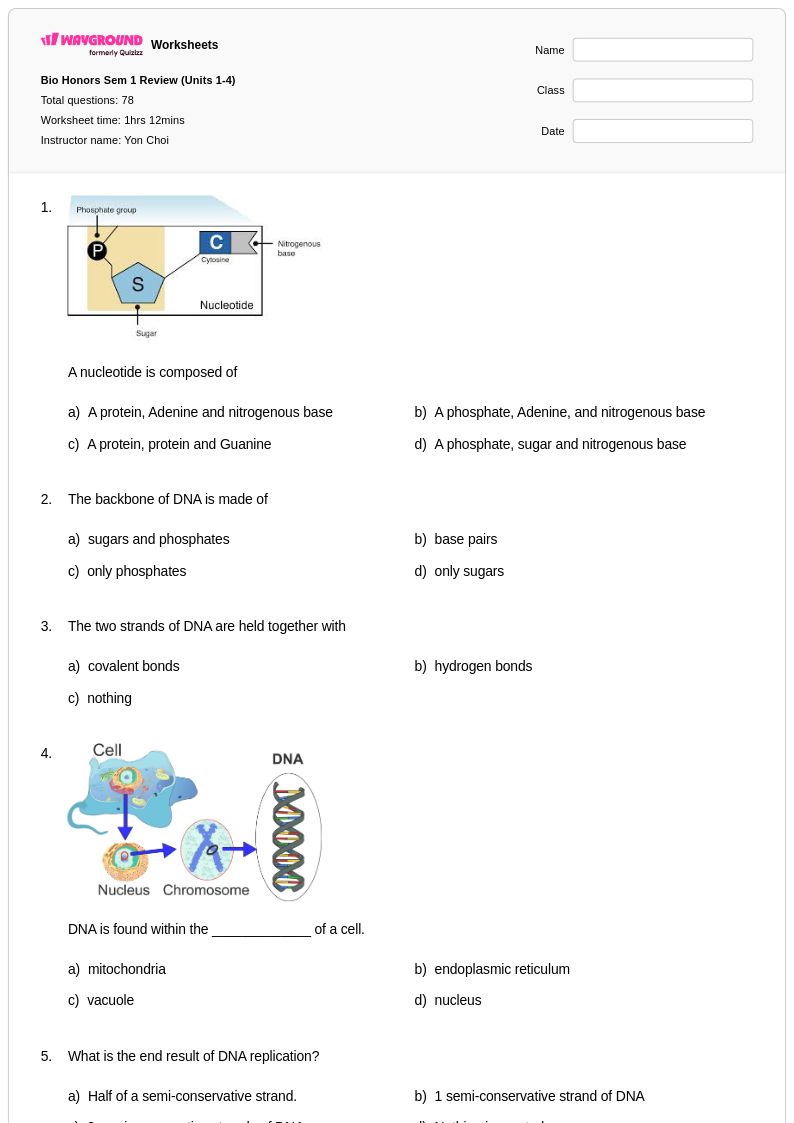
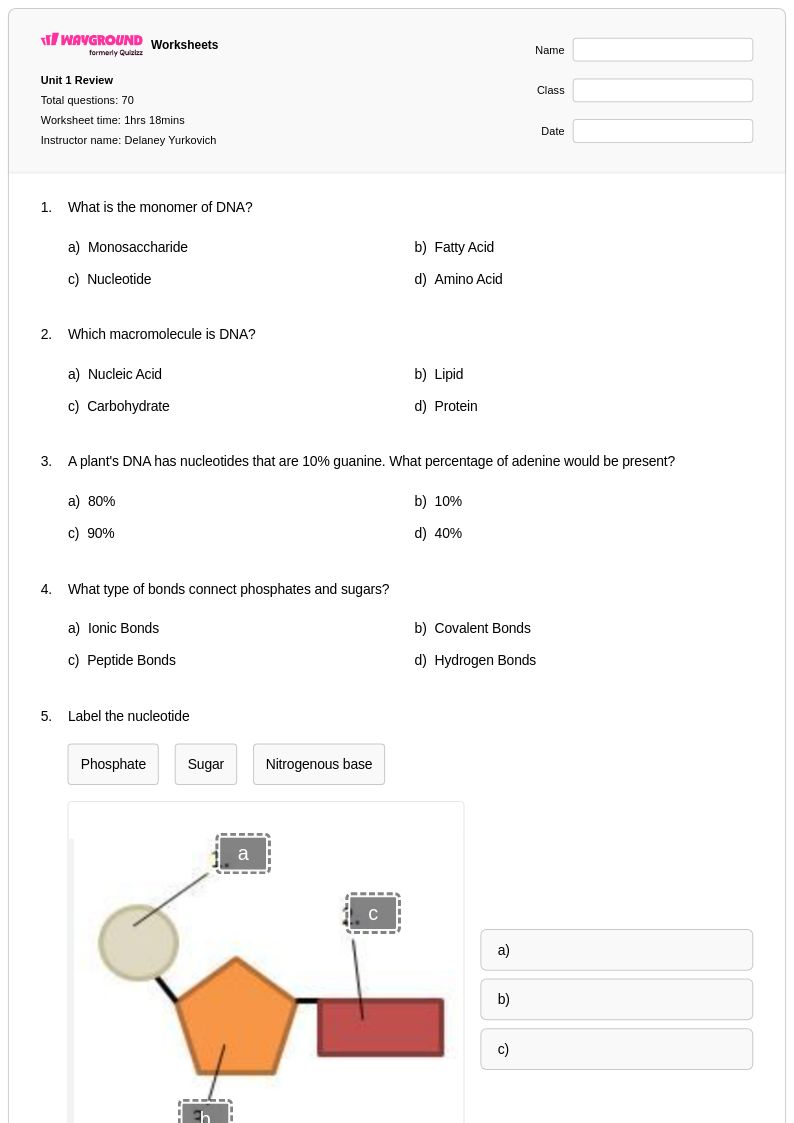
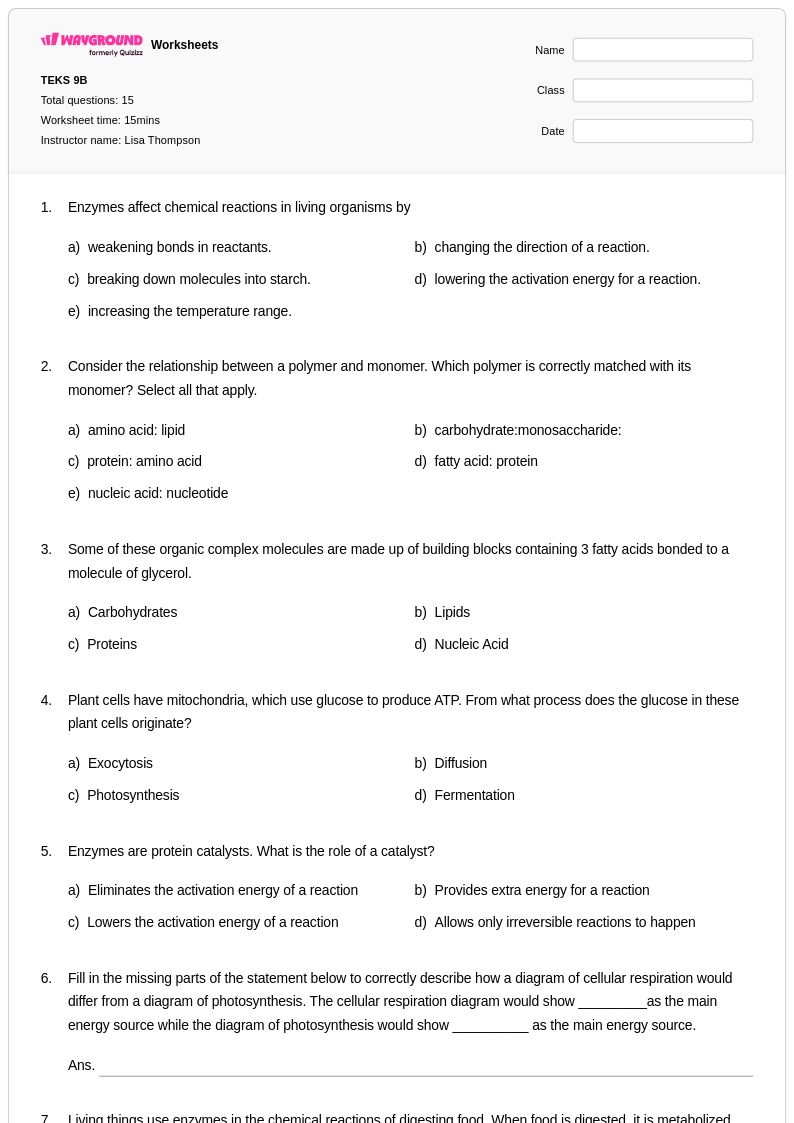
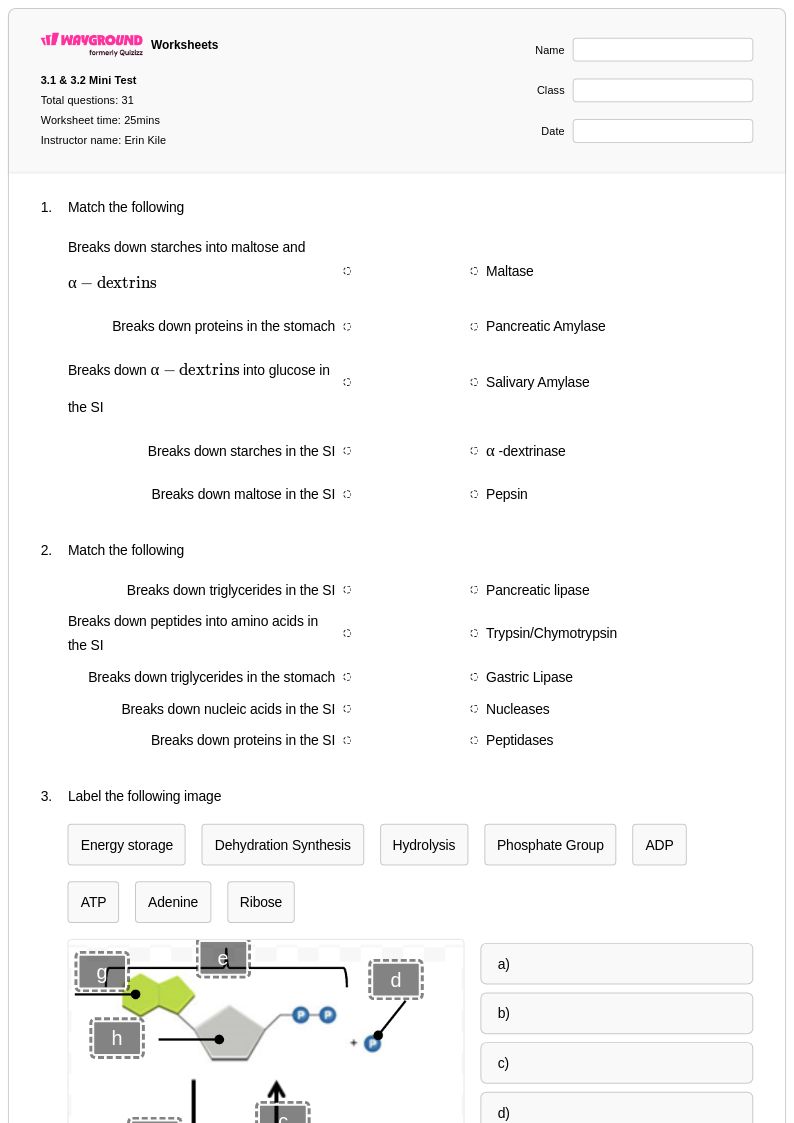
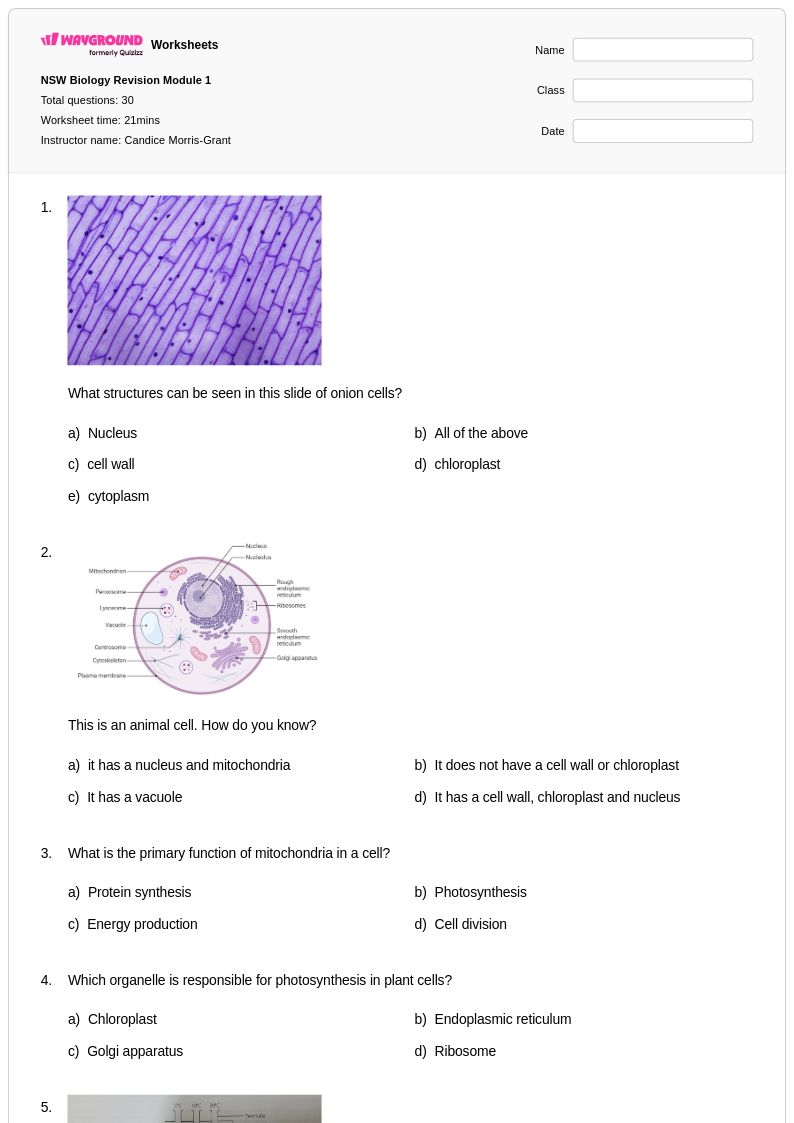
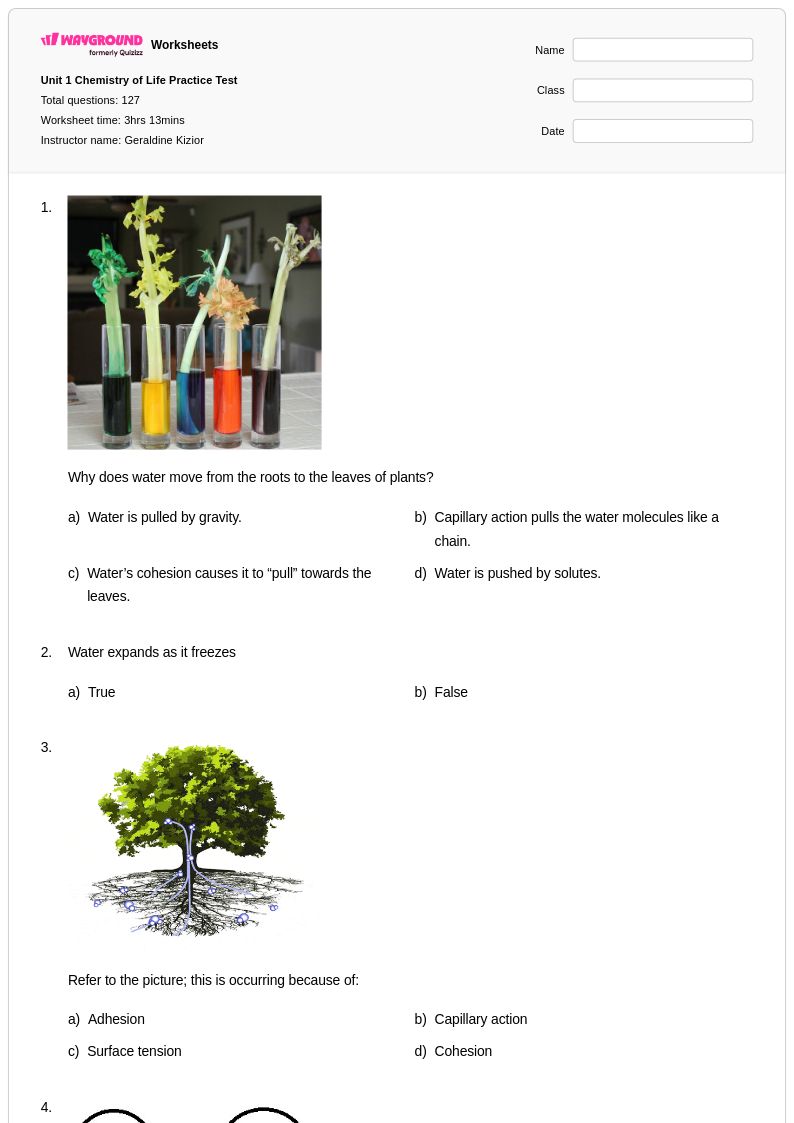
Year 11 enzyme activity worksheets from Wayground help students master catalytic processes through comprehensive printables, practice problems, and answer keys that explore reaction rates, substrate interactions, and enzymatic functions.
Explore printable Enzyme Activity worksheets for Year 11
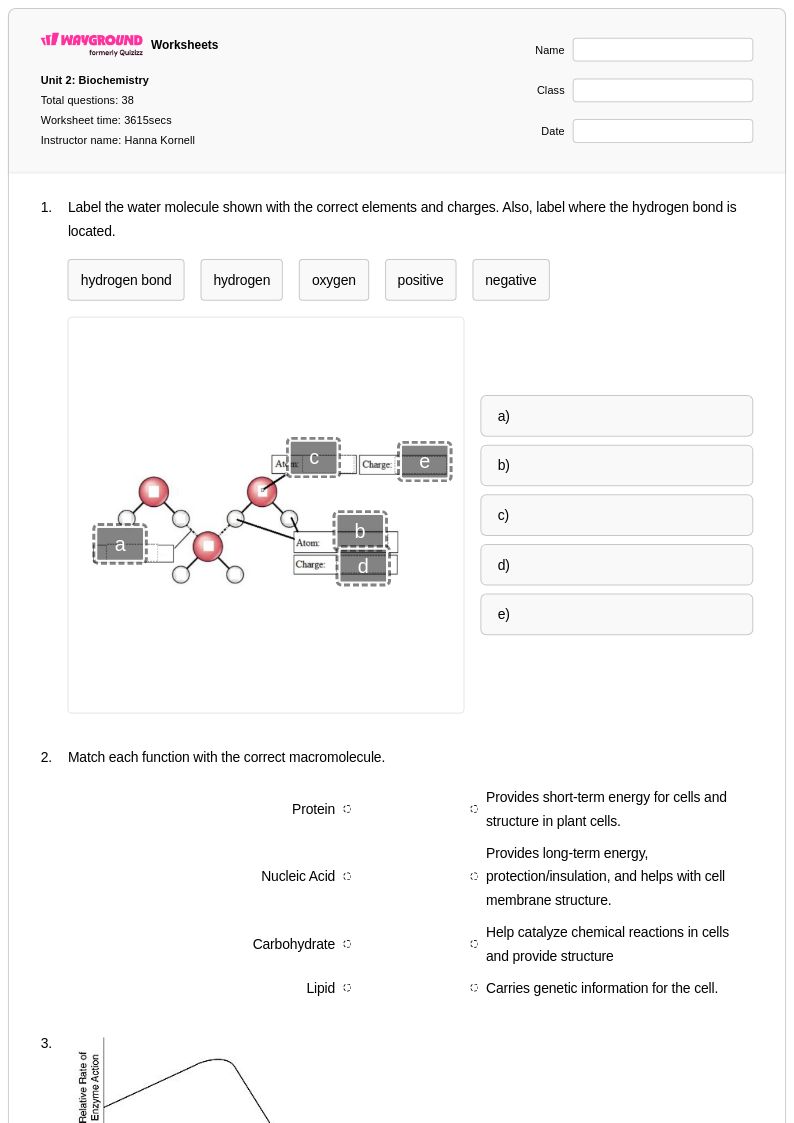
Enzyme activity worksheets for Year 11 students available through Wayground (formerly Quizizz) provide comprehensive coverage of this fundamental biochemistry concept that bridges molecular biology and metabolic processes. These expertly crafted resources guide students through the intricate mechanisms of enzyme function, including enzyme-substrate interactions, factors affecting reaction rates, competitive and non-competitive inhibition, and the relationship between enzyme structure and catalytic efficiency. Each worksheet collection strengthens critical analytical skills by presenting practice problems that require students to interpret enzyme kinetics graphs, calculate reaction rates, and predict how environmental changes impact enzymatic processes. The materials include detailed answer keys that support both independent study and classroom instruction, with many resources available as free printables in convenient PDF format for immediate classroom implementation.
Wayground (formerly Quizizz) empowers educators with access to millions of teacher-created enzyme activity resources that streamline lesson planning and enhance student comprehension of complex biochemical processes. The platform's robust search and filtering capabilities enable teachers to quickly locate materials aligned with specific curriculum standards and learning objectives, while built-in differentiation tools allow for seamless customization based on individual student needs and proficiency levels. These versatile worksheet collections are available in both printable and digital formats, including downloadable PDFs, making them ideal for traditional classroom instruction, homework assignments, laboratory preparation, and remote learning scenarios. Teachers can effectively utilize these resources for targeted skill practice, remediation of challenging concepts like enzyme inhibition mechanisms, and enrichment activities that explore real-world applications of enzymatic processes in medicine, industry, and environmental science.
FAQs
How do I teach enzyme activity to high school biology students?
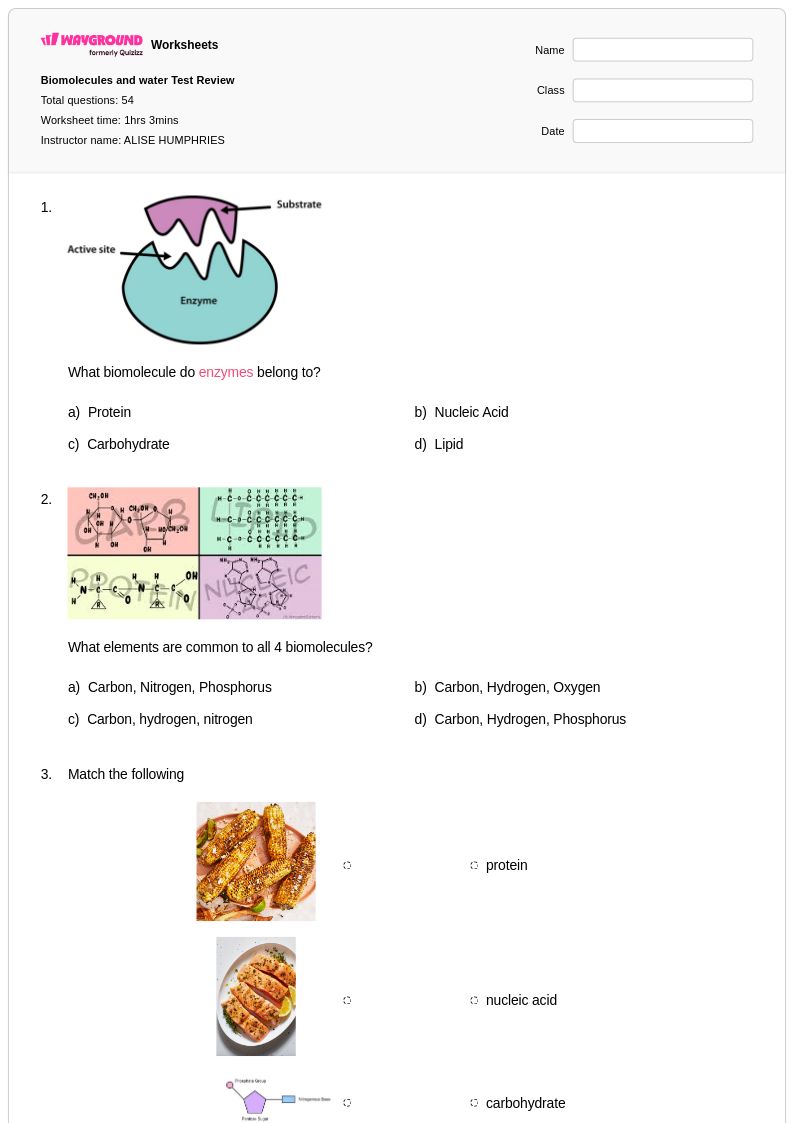
Start by grounding students in the lock-and-key and induced fit models before introducing enzyme kinetics. Use visual aids showing active site geometry, then layer in factors like temperature, pH, and substrate concentration that alter reaction rates. Connecting enzyme function to real-world examples — such as digestive enzymes or lactase deficiency — helps students see why these concepts matter beyond the textbook.
What types of practice problems help students understand enzyme kinetics?
Graph interpretation exercises are especially effective — students should practice reading Michaelis-Menten curves and identifying Vmax and Km values. Scenario-based problems that ask students to predict what happens when temperature or pH shifts beyond optimal range build analytical thinking. Problems involving competitive versus non-competitive inhibition round out a strong enzyme kinetics practice set.
What mistakes do students commonly make when learning about enzyme activity?
A frequent misconception is that enzymes are consumed during reactions — students need repeated reinforcement that enzymes are reused. Many also confuse competitive and non-competitive inhibition, particularly when interpreting graphs where Vmax or Km changes. Students often incorrectly assume that higher temperature always increases reaction rate, overlooking that temperatures above the enzyme's optimum cause denaturation.
How can I differentiate enzyme activity instruction for students with different ability levels?
For struggling students, focus first on the basic substrate-active site interaction before introducing inhibition or cofactors. Advanced learners can be challenged with enzyme kinetics calculations and multi-variable graph analysis. On Wayground, teachers can apply accommodations such as read aloud for students who need audio support, reduced answer choices to lower cognitive load, and extended time — all configurable per student without disrupting the rest of the class.
How do I use enzyme activity worksheets effectively in my classroom?
Enzyme activity worksheets on Wayground are available as printable PDFs for traditional classroom use and in digital formats for technology-integrated environments, including the option to host them as a quiz directly on Wayground. Printable versions work well for guided notes or lab follow-up activities, while the digital format supports self-paced review and immediate feedback. All worksheets include comprehensive answer keys, so they function equally well for in-class instruction, homework, or independent study.
How do cofactors and coenzymes fit into teaching enzyme activity?
Cofactors and coenzymes are often introduced after students understand basic enzyme-substrate interactions, since they add a layer of regulatory complexity. Cofactors are inorganic ions (such as zinc or magnesium) that stabilize enzyme structure, while coenzymes are organic molecules (such as NAD+ or FAD) that shuttle chemical groups during reactions. Clarifying this distinction early prevents students from conflating coenzymes with substrates, a common source of confusion on assessments.