Free Printable Equations with Infinite and No Solutions Worksheets for Year 10
Master Year 10 equations with infinite and no solutions through Wayground's comprehensive collection of free worksheets, featuring targeted practice problems, step-by-step examples, printable PDFs, and complete answer keys.
Explore printable Equations with Infinite and No Solutions worksheets for Year 10
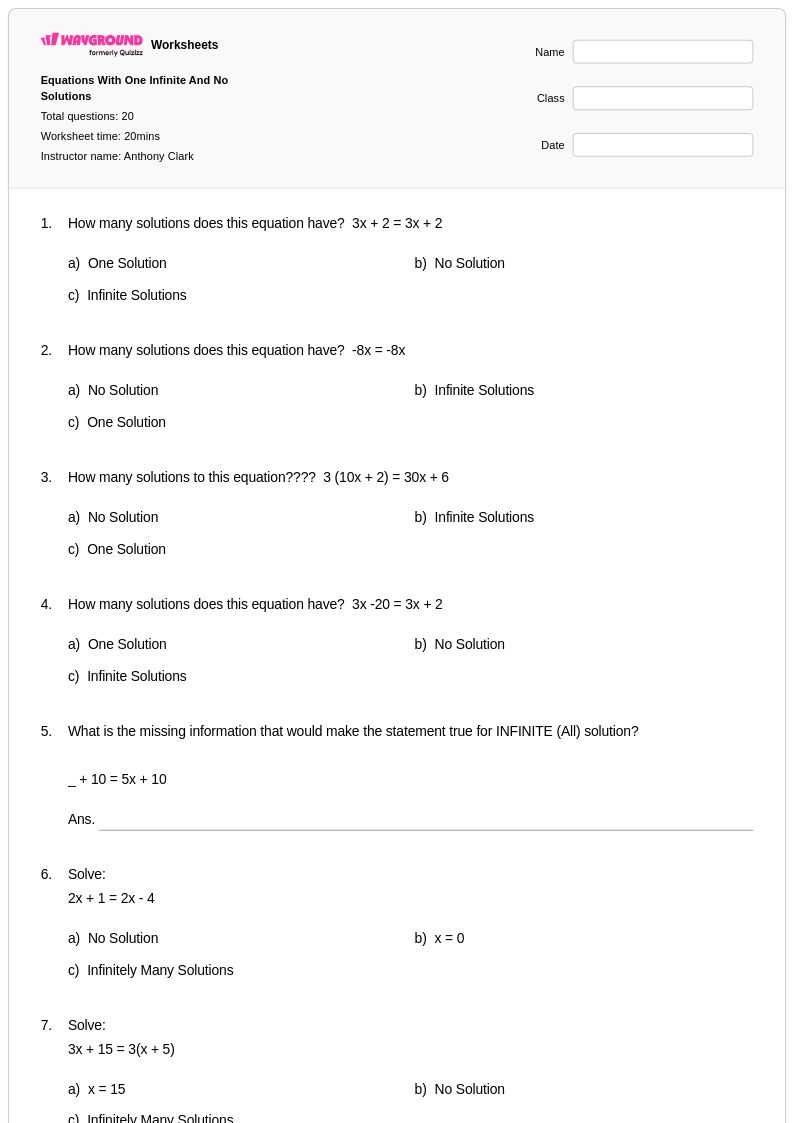
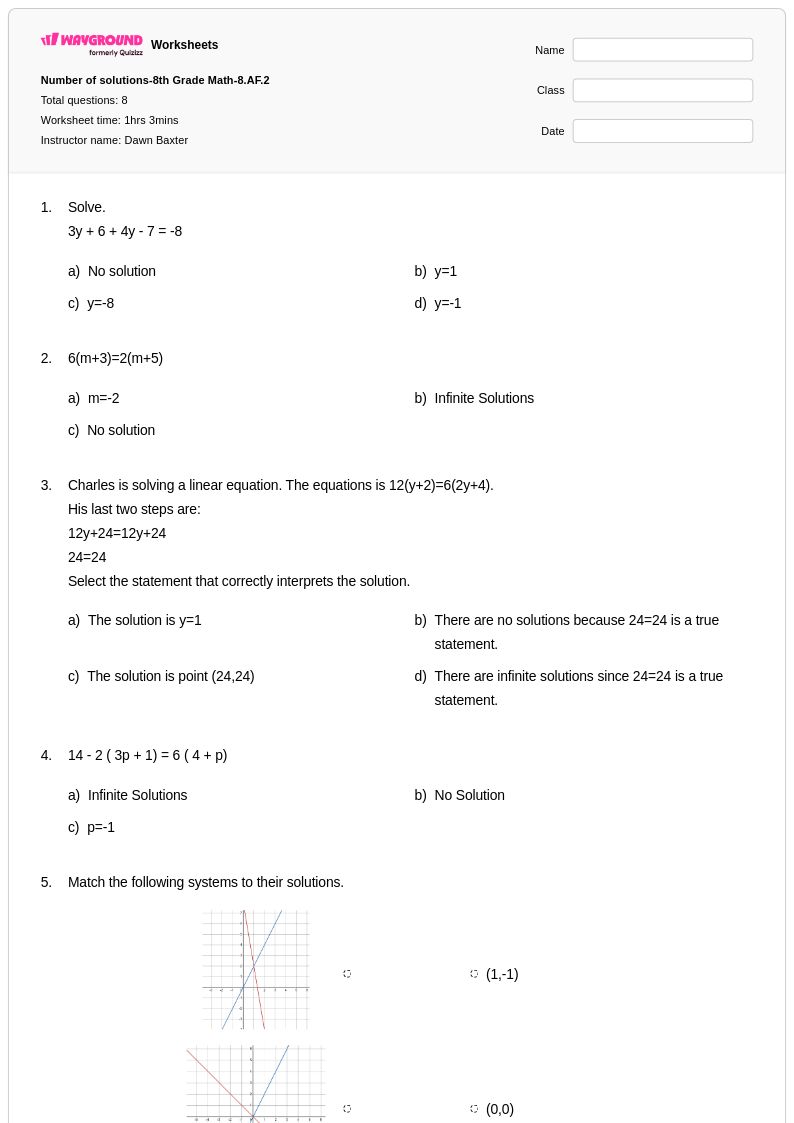
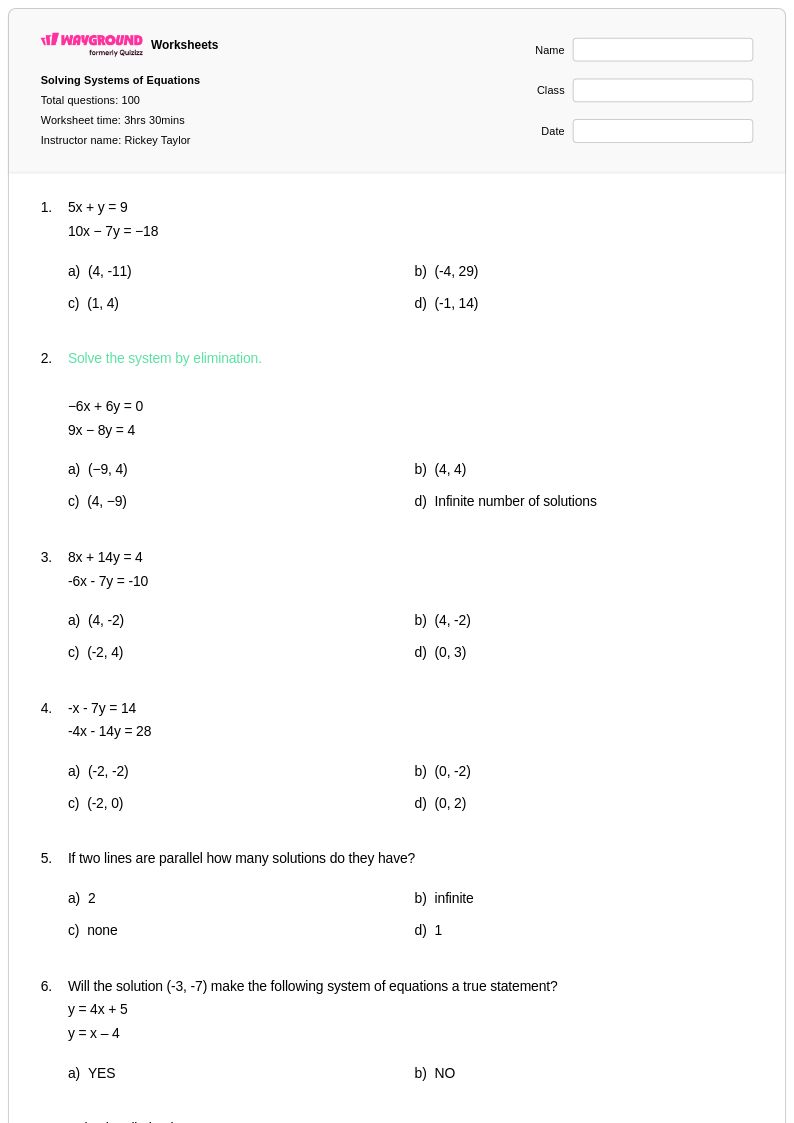
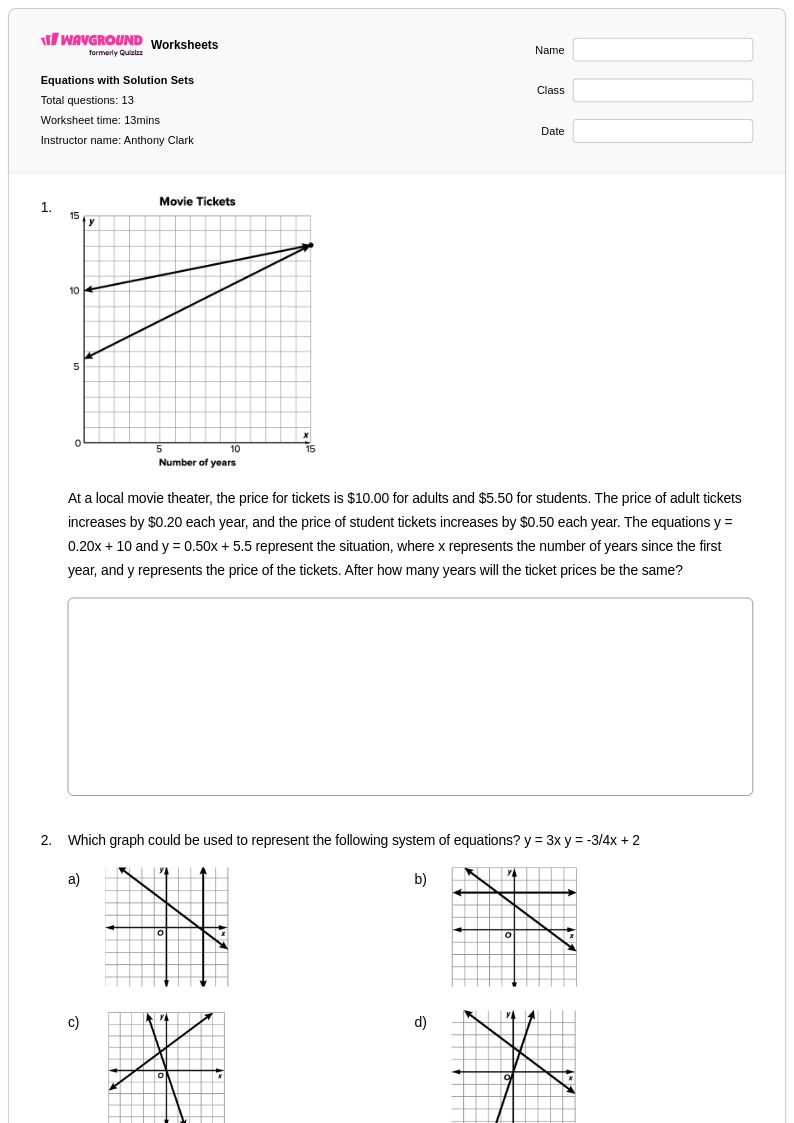
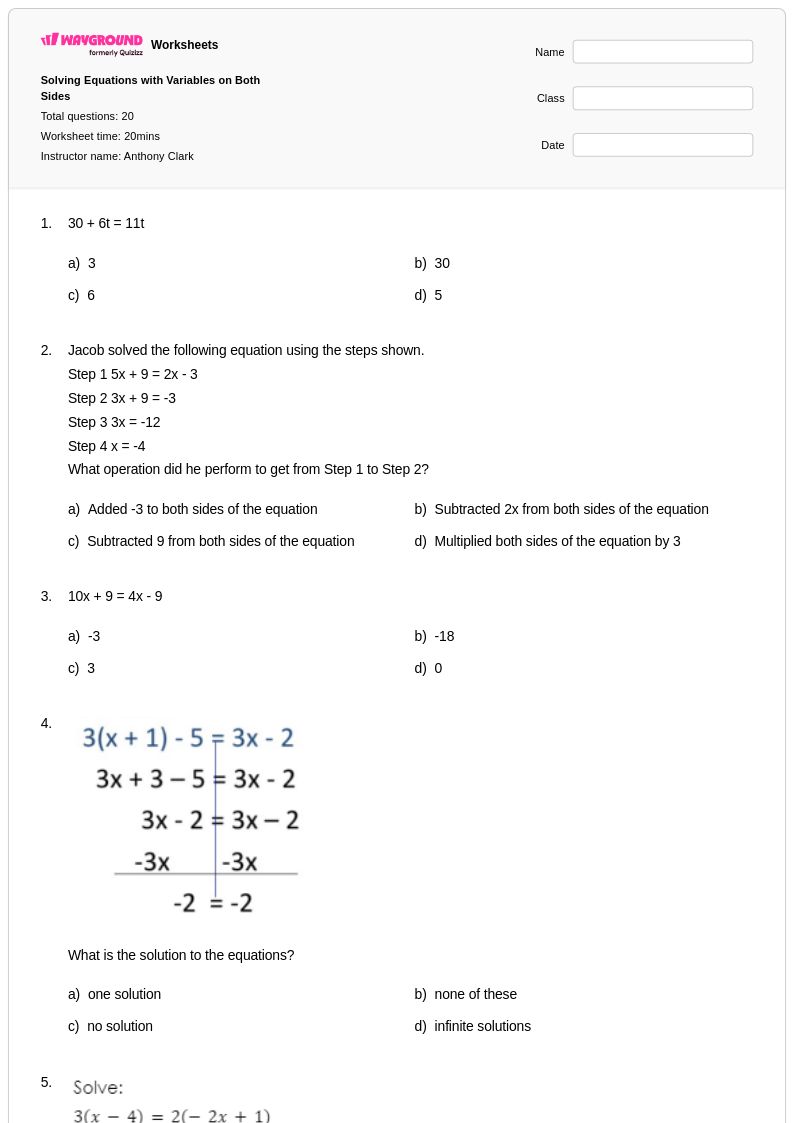
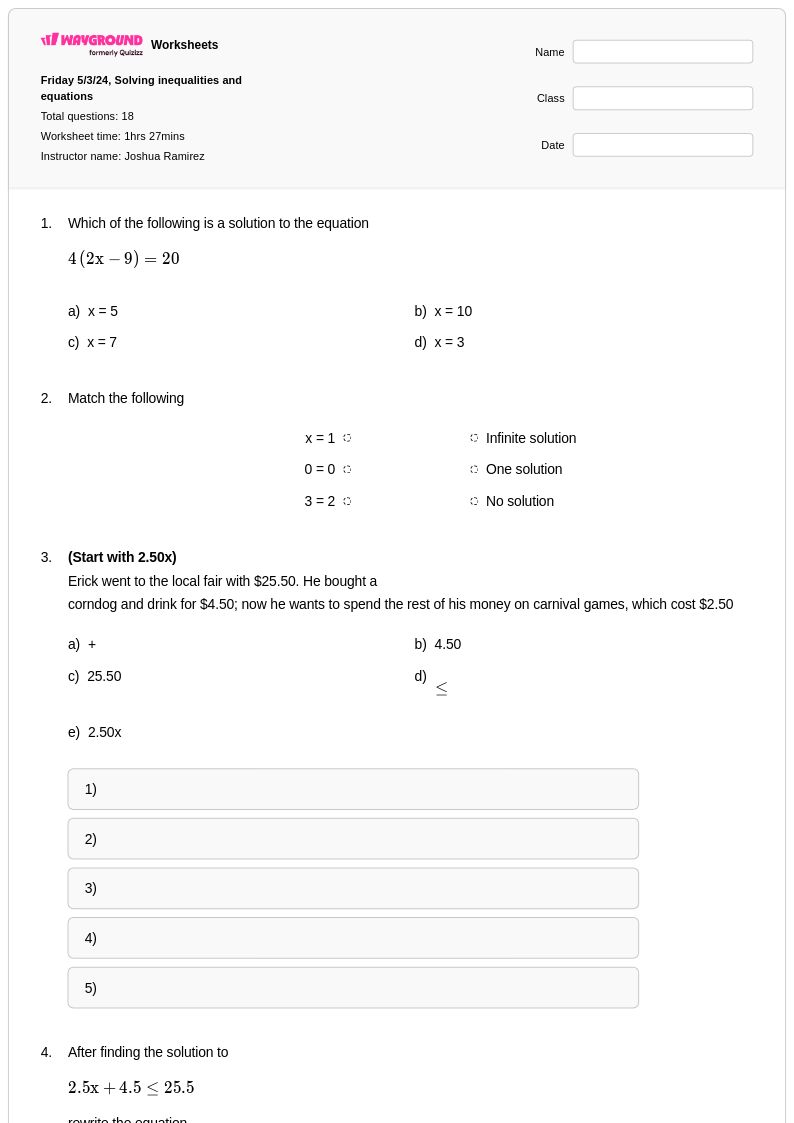
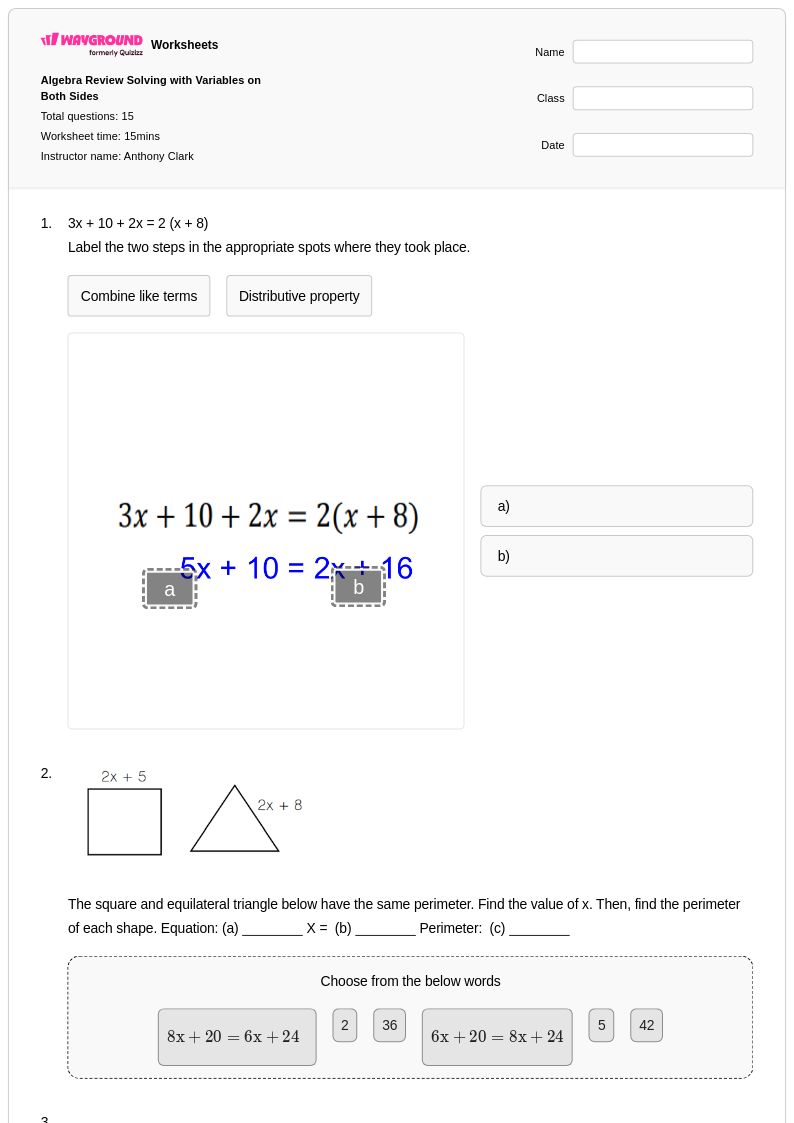
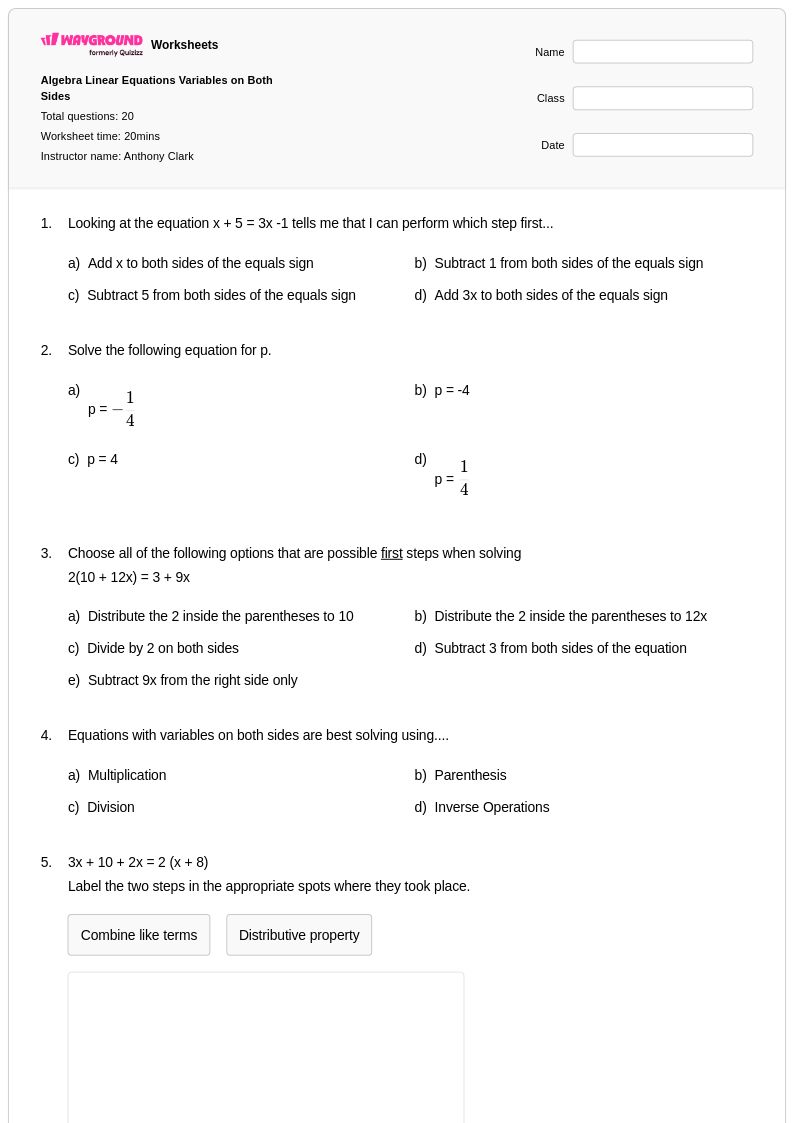
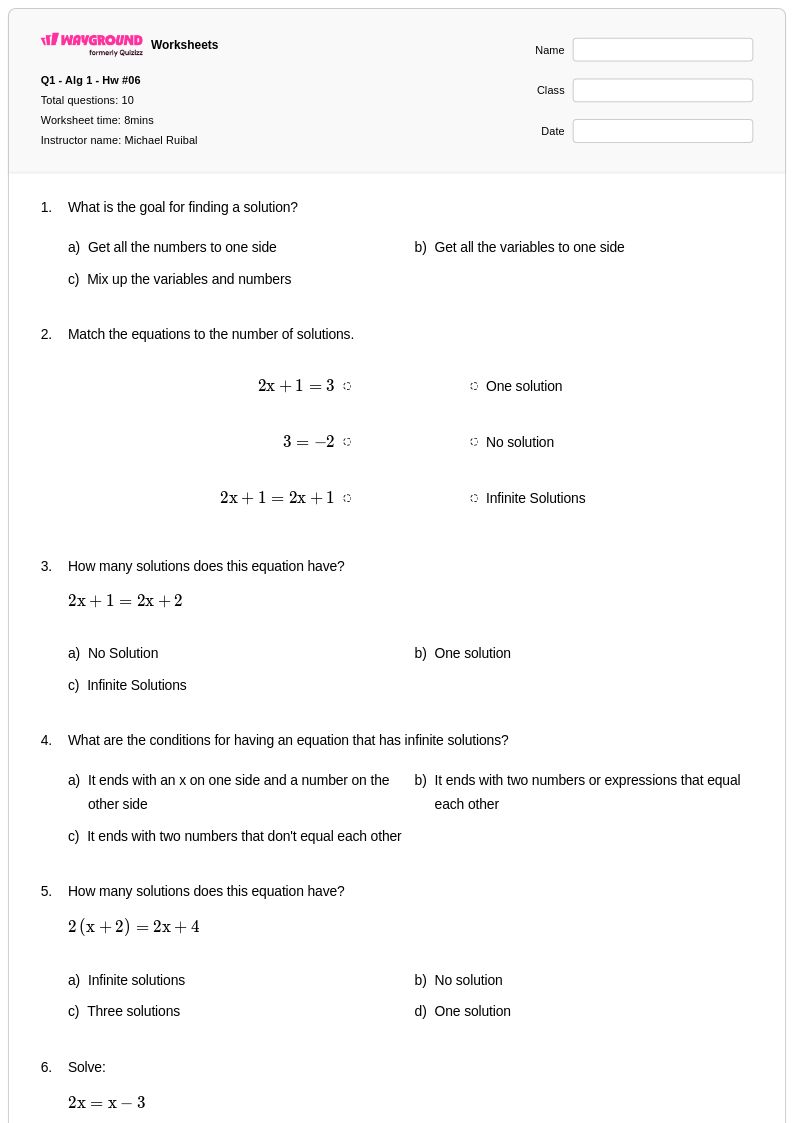
Equations with infinite and no solutions represent a critical concept in Year 10 algebra that challenges students to think beyond finding single numerical answers. Wayground worksheets focusing on this advanced algebraic topic provide comprehensive practice problems that guide students through identifying when linear equations have no solution, one solution, or infinitely many solutions. These carefully designed printables strengthen essential analytical skills by requiring students to manipulate equations, recognize contradictions like 0 = 5 that indicate no solution, and identify statements like 0 = 0 that confirm infinite solutions. Each worksheet includes a detailed answer key that explains the reasoning behind solution classifications, making these free resources invaluable for both independent practice and classroom instruction where students must develop conceptual understanding alongside procedural fluency.
Wayground supports mathematics educators with millions of teacher-created worksheet collections specifically designed for equations with infinite and no solutions at the Year 10 level. The platform's robust search and filtering capabilities allow teachers to quickly locate resources that align with curriculum standards while providing differentiation tools to meet diverse student needs. These customizable worksheets are available in both printable PDF format and interactive digital versions, enabling flexible implementation across various learning environments. Teachers can effectively use these resources for initial skill introduction, targeted remediation for students struggling with solution classification concepts, and enrichment activities that challenge advanced learners to create their own examples of equations with infinite or no solutions, thereby supporting comprehensive instructional planning throughout the algebra curriculum.
FAQs
How do I teach equations with infinite and no solutions at the Grade 10 level?
At Grade 10, students have seen linear equations before, so the teaching challenge is less about procedure and more about interpretation. The key move is slowing down at the moment the variable cancels and asking students to articulate what that means mathematically — not just label it. Push them to explain why 0 = 0 implies every real number is a solution, and why 0 = 5 implies none are. From there, connect to systems: a dependent system is just this same identity situation expressed with two equations, and an inconsistent system is the contradiction. That connection makes both topics click faster.
What exercises help 10th graders practice classifying equations by their solution type?
Three problem types build the skill progressively: classifying equations that are already simplified, simplifying multi-step equations and then classifying, and creating equations that produce a specified outcome. That third type — 'write an equation with no solution' — is particularly effective at Grade 10 because it requires students to reason about structure rather than just execute steps. Wayground's worksheets include answer keys that explain the classification reasoning, not just the final label, which helps students self-correct when they review.
What errors do 10th grade students commonly make when solving these equations?
The most persistent error is treating a false statement like 2 = 9 as a sign of a calculation mistake rather than a valid conclusion. Students will redo the problem two or three times looking for the 'real' answer. A subtler error at Grade 10 is correctly identifying the outcome but misclassifying it — writing 'one solution' when they mean 'infinite solutions' because they see a number (like 0 = 0) and interpret it as x = 0. Both errors are worth addressing with a brief whole-class discussion before independent practice begins.
How do I use Wayground's Grade 10 worksheets for this topic?
You can host the worksheet as a digital quiz on Wayground for on-screen completion, or print the PDF for paper practice — both formats cover the same problems. Every worksheet includes a complete answer key with the reasoning behind each classification spelled out. For paper submissions, the Wayground for Teachers app lets you scan student work to grade it quickly rather than checking each problem by hand.
How does this topic fit into the Grade 10 algebra curriculum under Common Core?
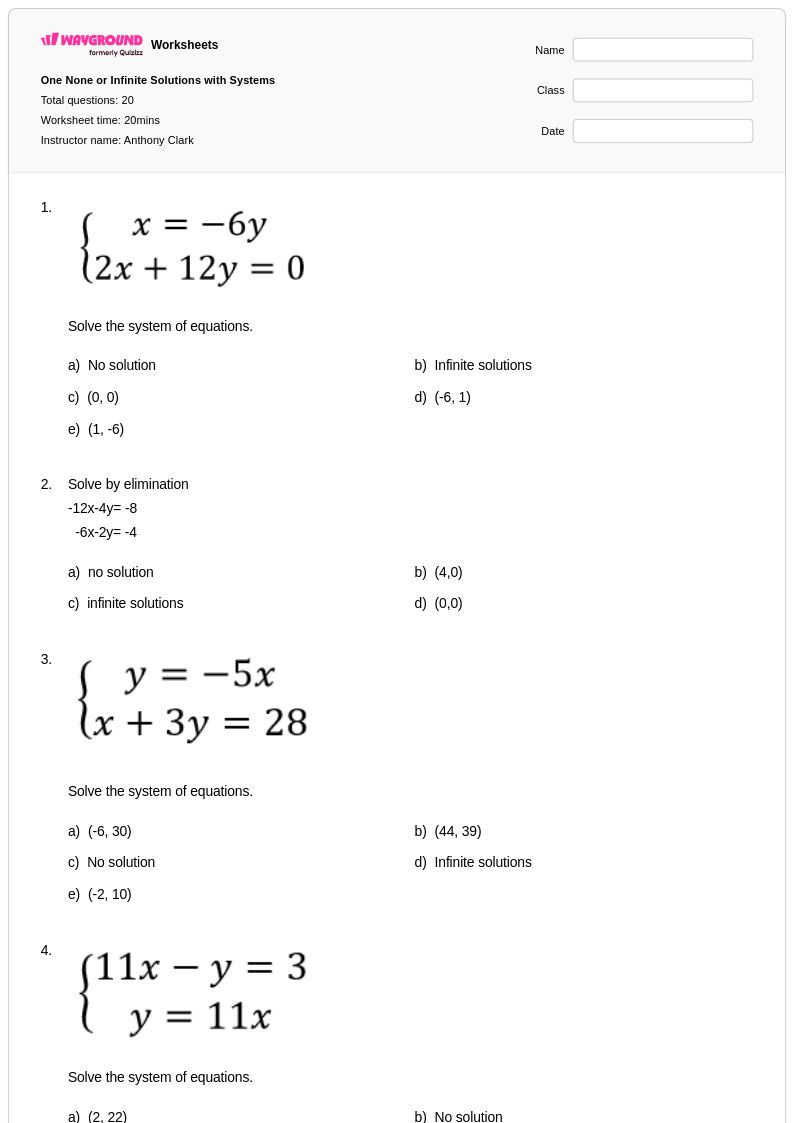
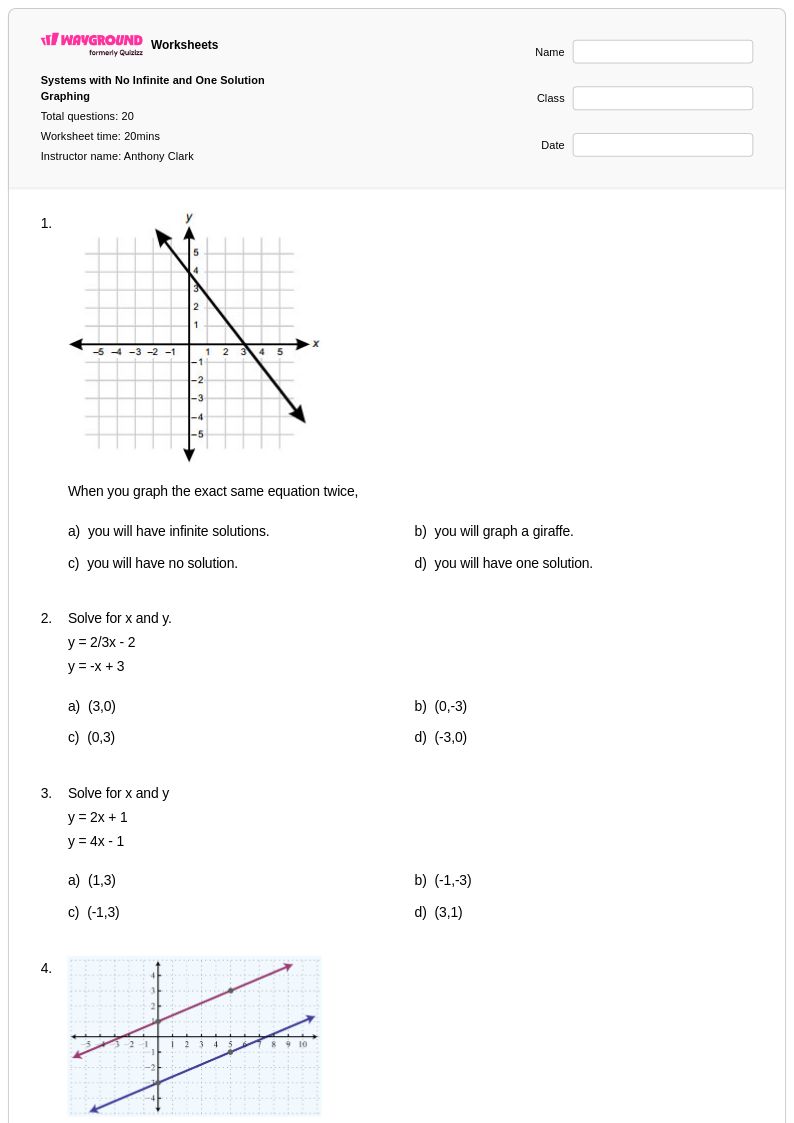
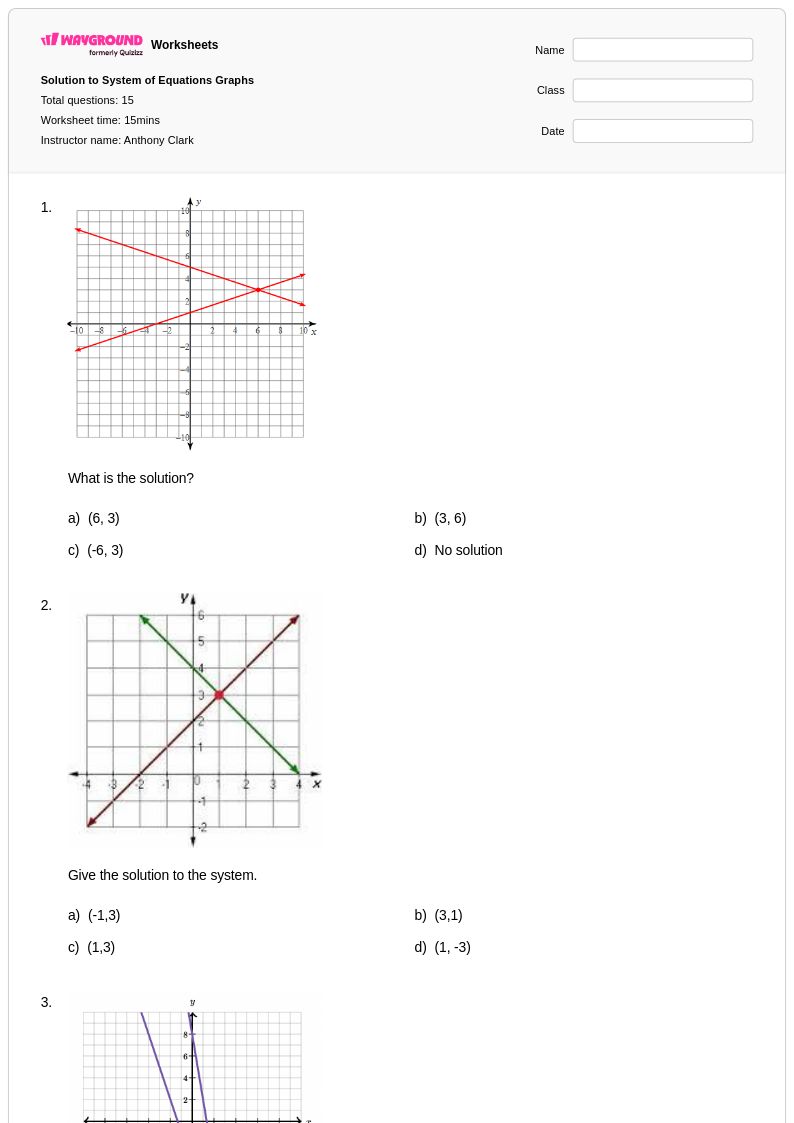
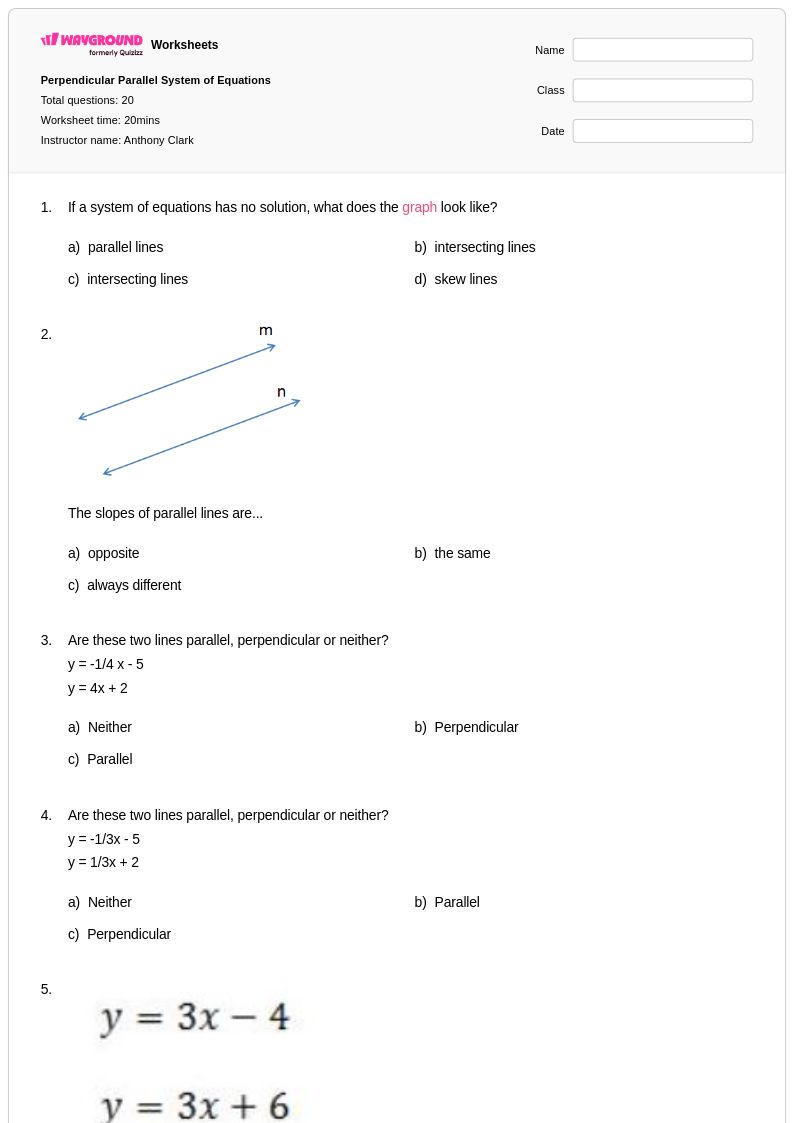
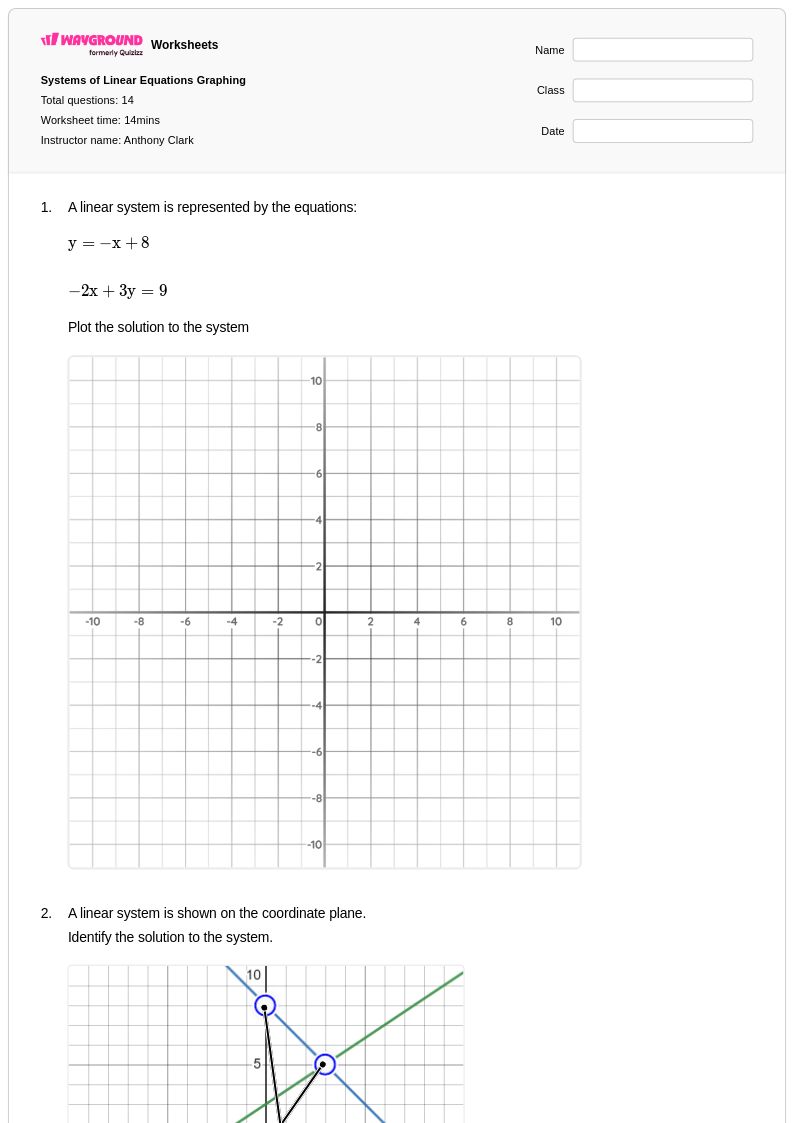
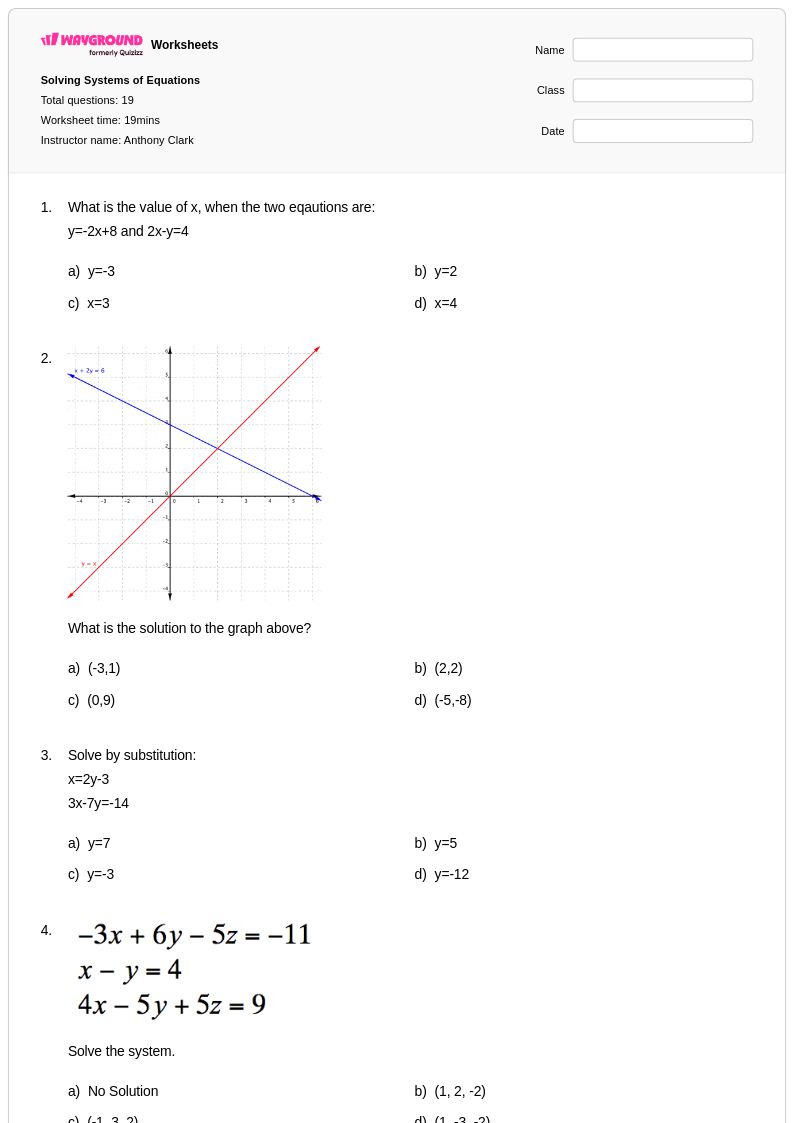
By Grade 10, Common Core expects students to reason about equations as statements that can be true for all values, no values, or one value — and to connect that reasoning to the structure of the equation itself, not just the result of solving. At this level, the concept extends naturally into systems of two linear equations, where students interpret infinite solutions as a dependent system (same line graphed twice) and no solution as an inconsistent system (parallel lines). Students who solidify this understanding in Grade 10 are better prepared for the function analysis and polynomial work that follows in later courses.
Can I differentiate this worksheet for students at different skill levels in my Grade 10 class?
Yes. For students who are still building confidence with multi-step algebra, Wayground lets you create an alternate version of the worksheet with a dyslexia-friendly font and larger text, which reduces visual processing load so they can focus on the math. For students who need more challenge, the most effective differentiation is assigning problems that require constructing equations with a specified solution type rather than just classifying given ones — that's a meaningful step up in difficulty without needing a separate worksheet entirely.