Free Printable Finding Polynomial Function From a Graph Worksheets for Year 10
Year 10 students can master finding polynomial functions from graphs with Wayground's free algebra worksheets, featuring comprehensive practice problems, printable PDFs, and detailed answer keys to strengthen graphical analysis skills.
Explore printable Finding Polynomial Function From a Graph worksheets for Year 10
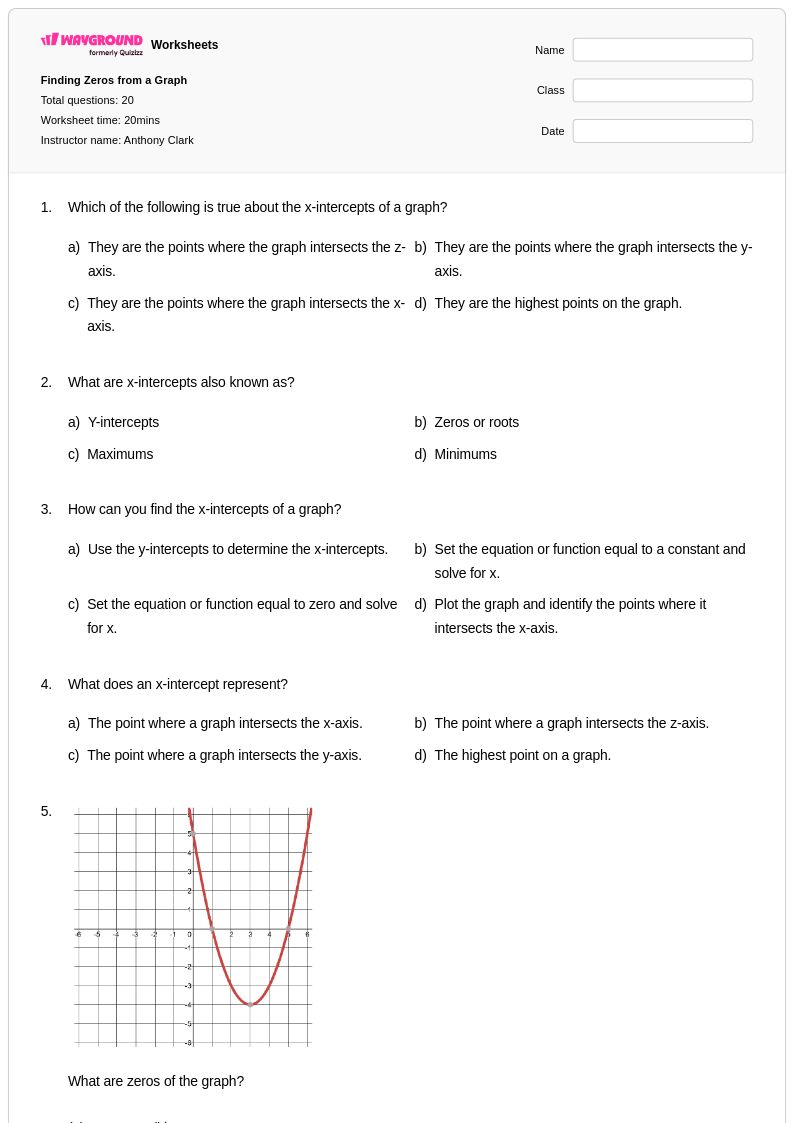
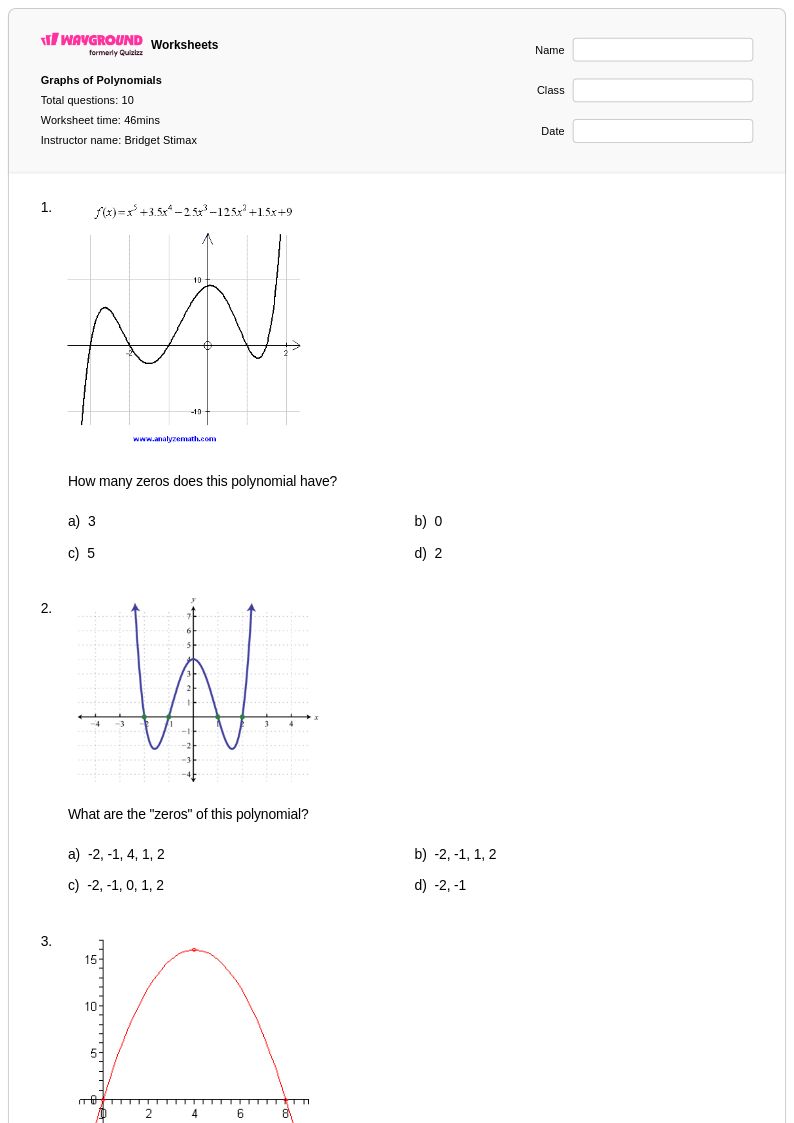
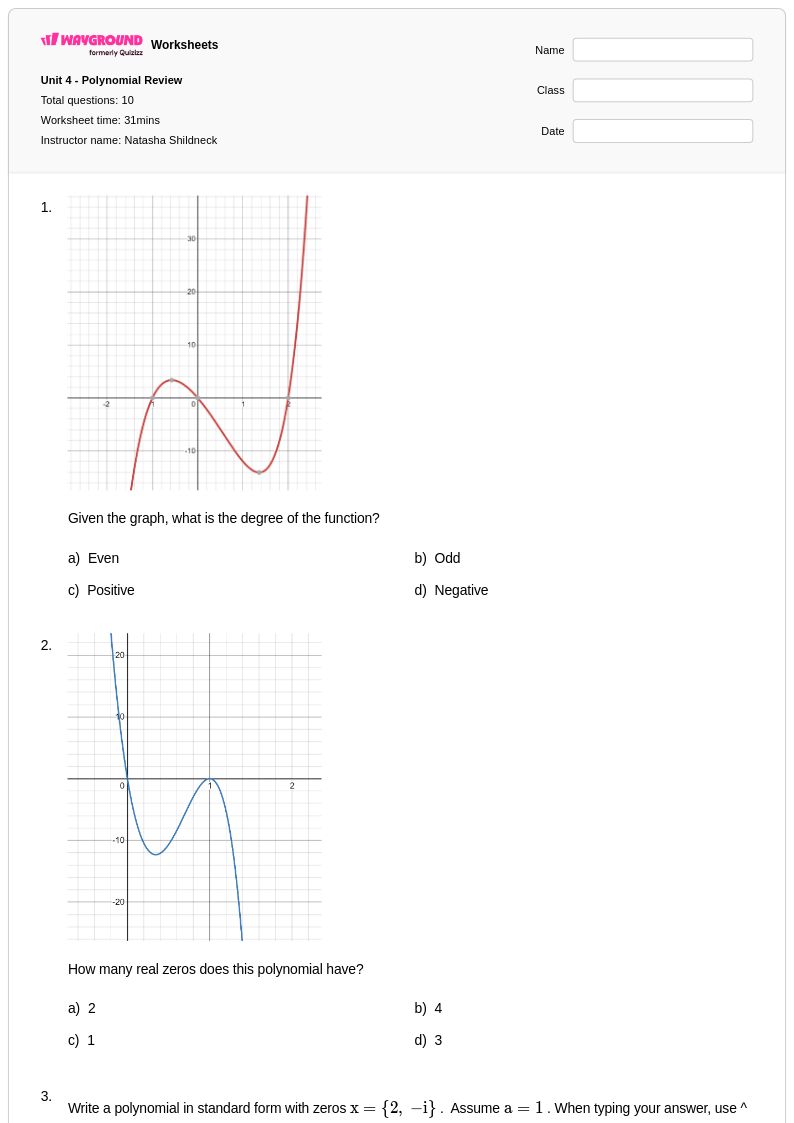
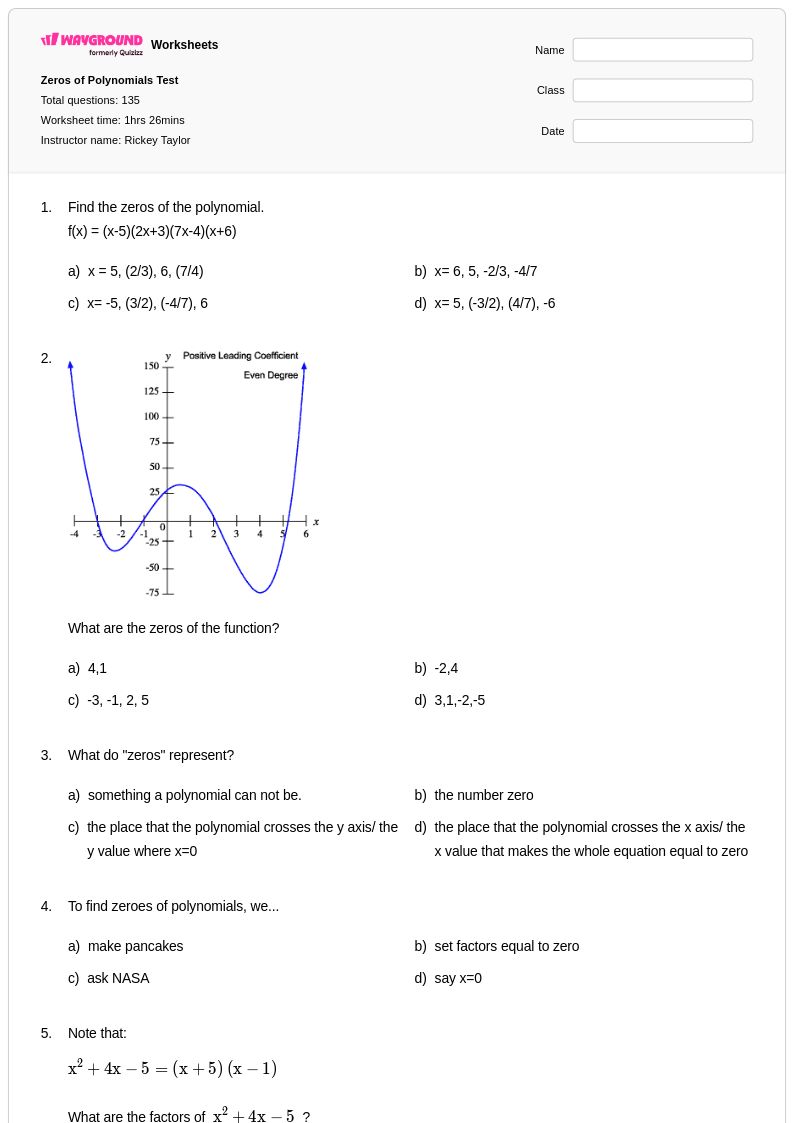
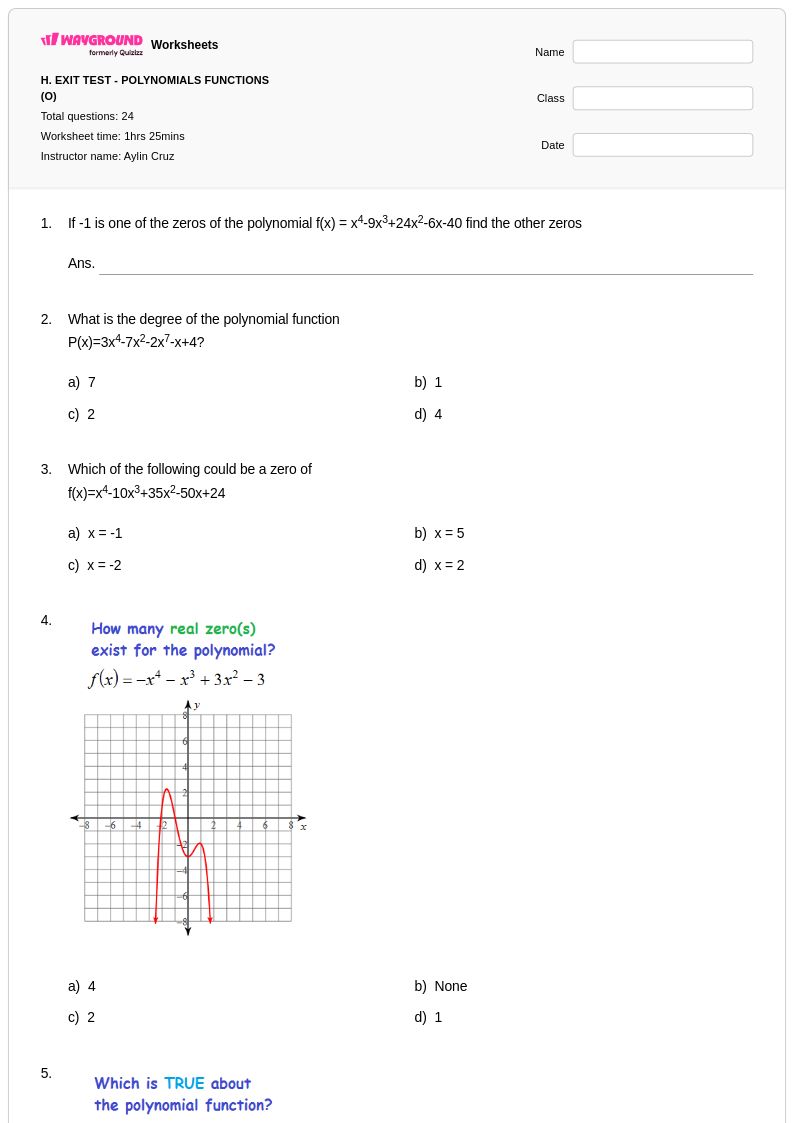
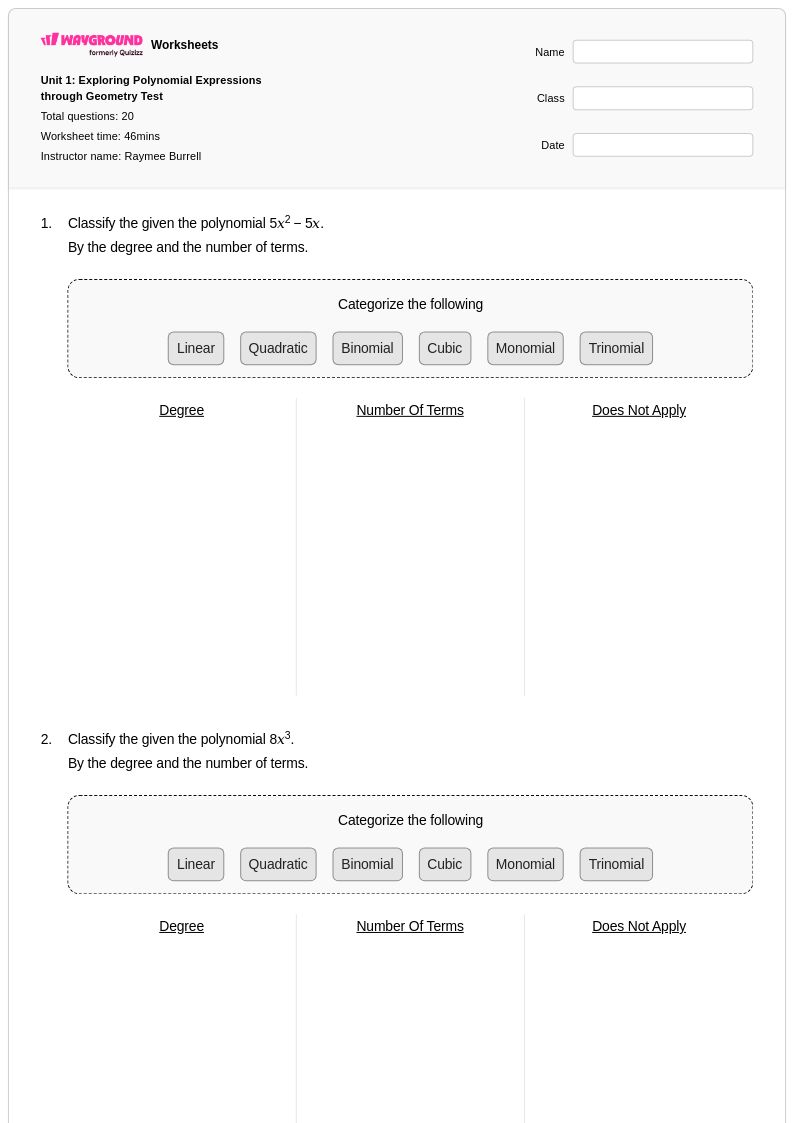
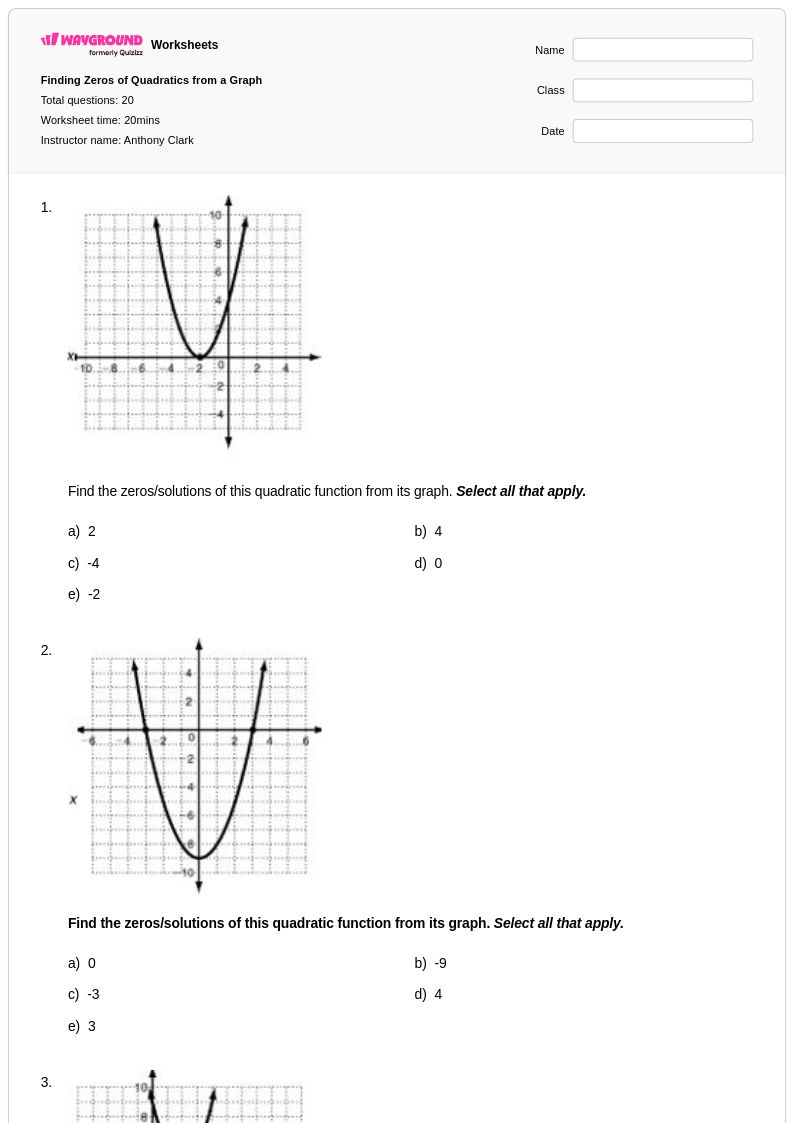
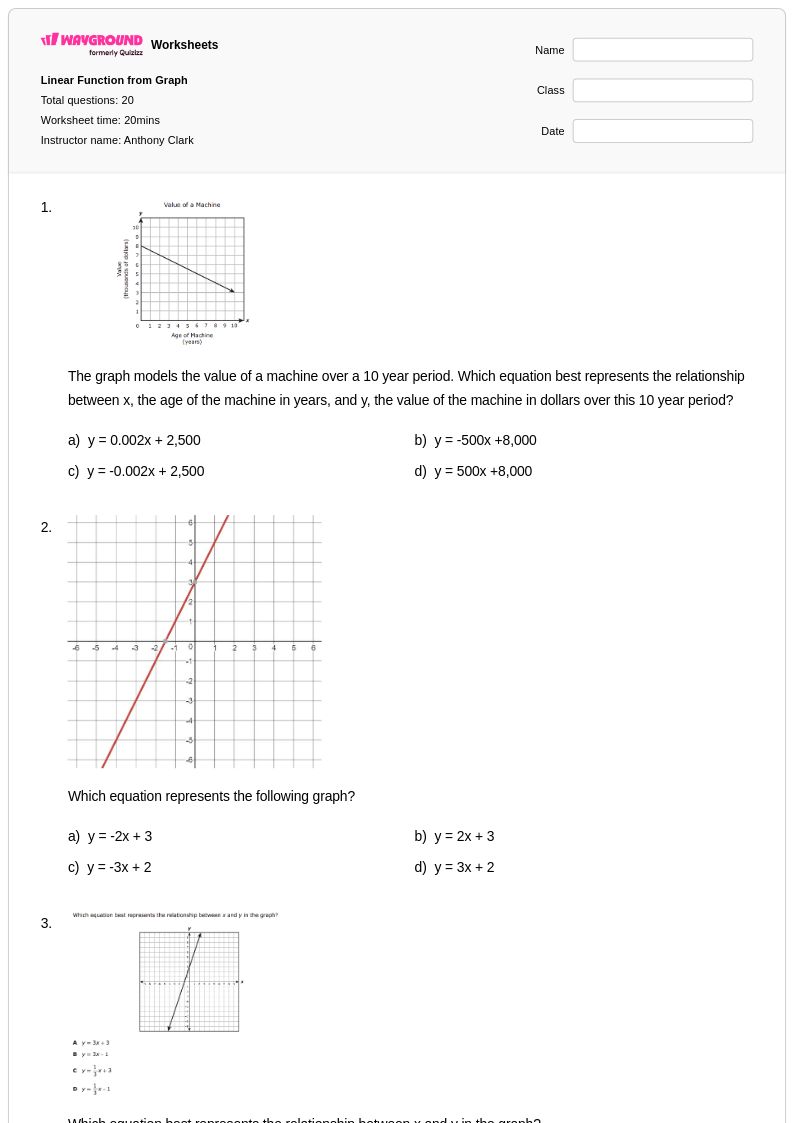
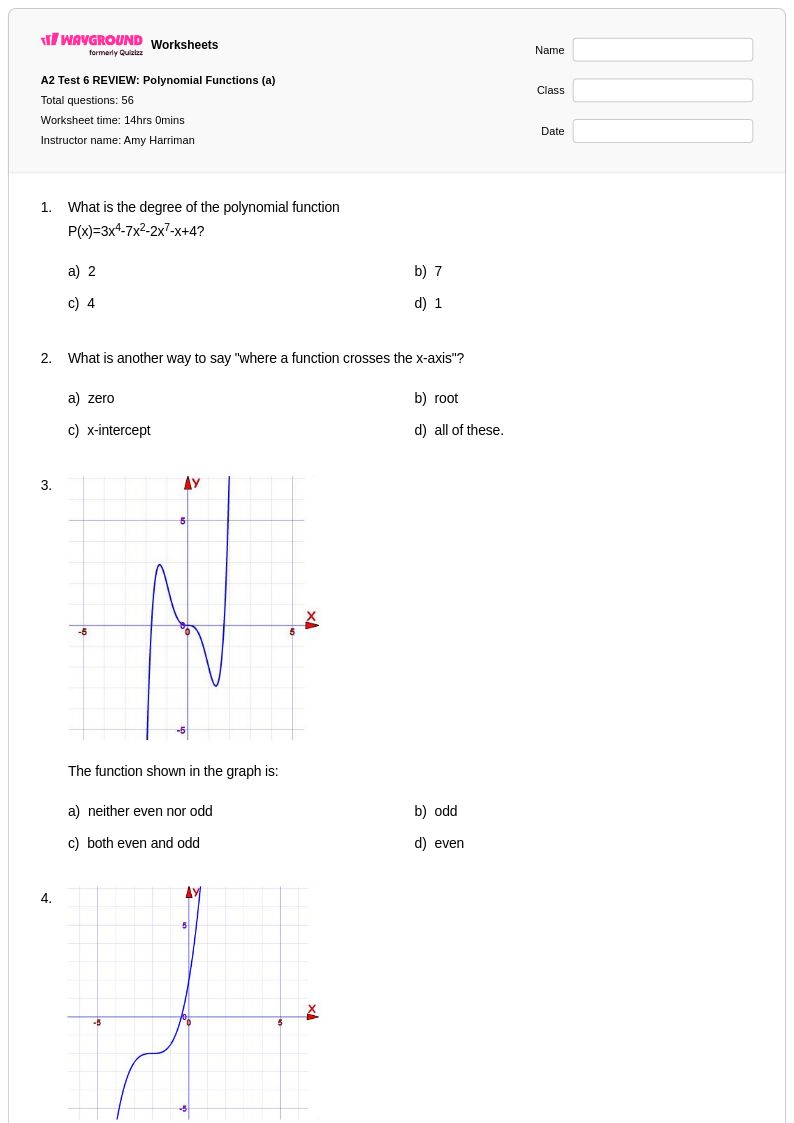
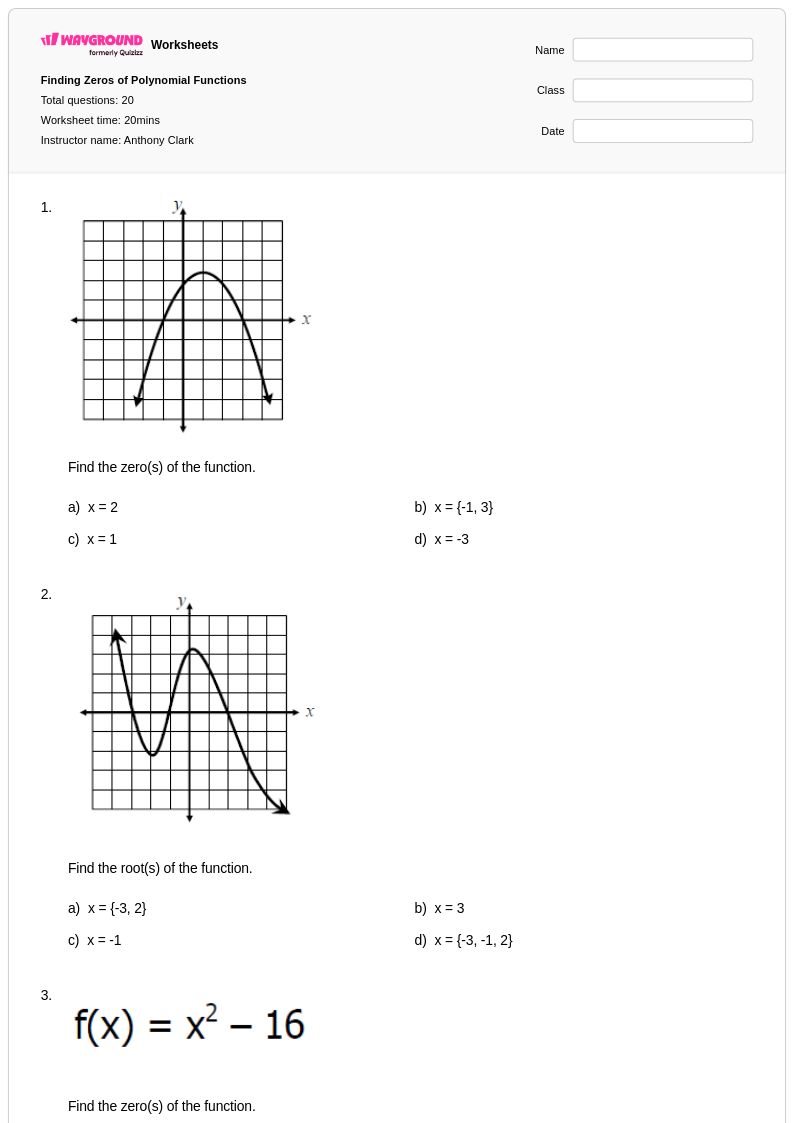
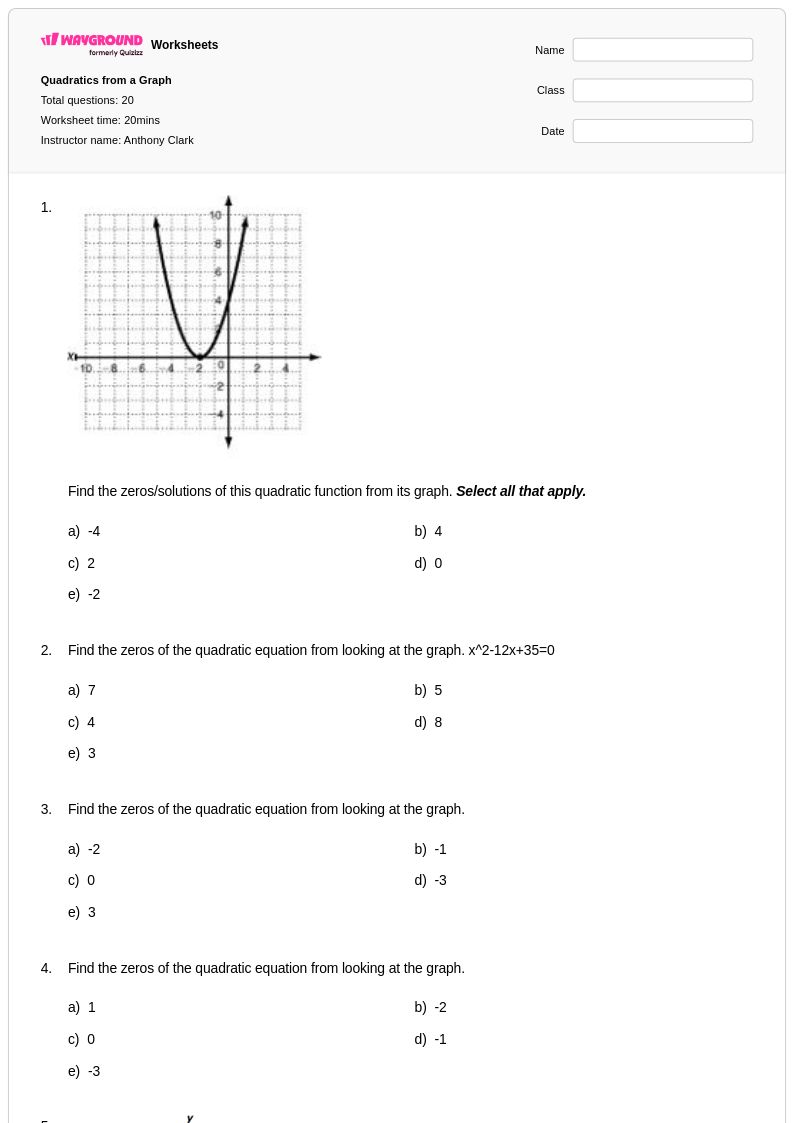
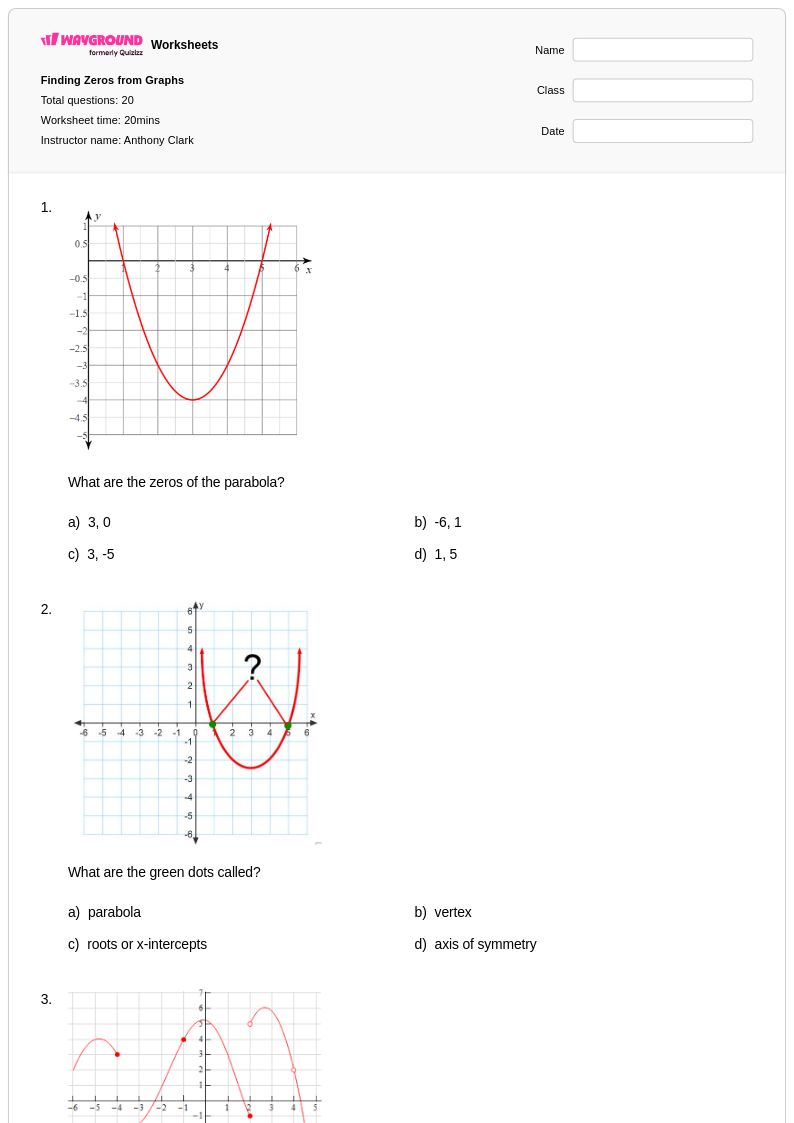
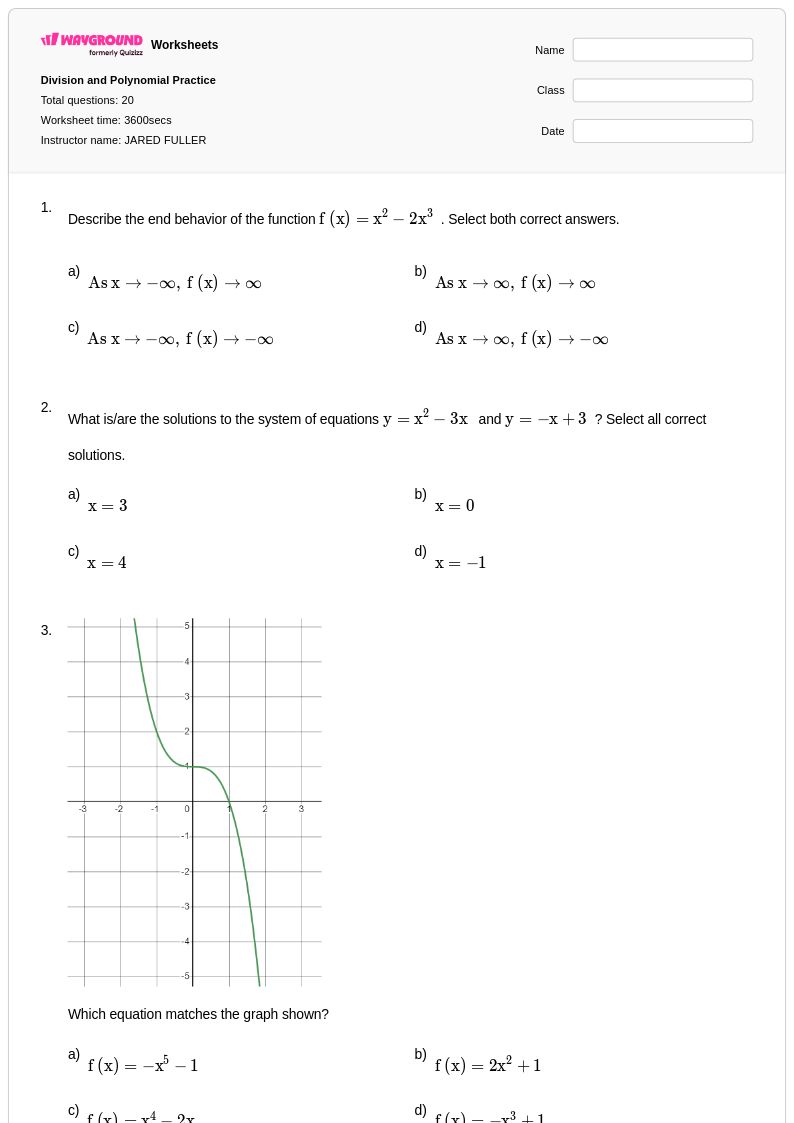
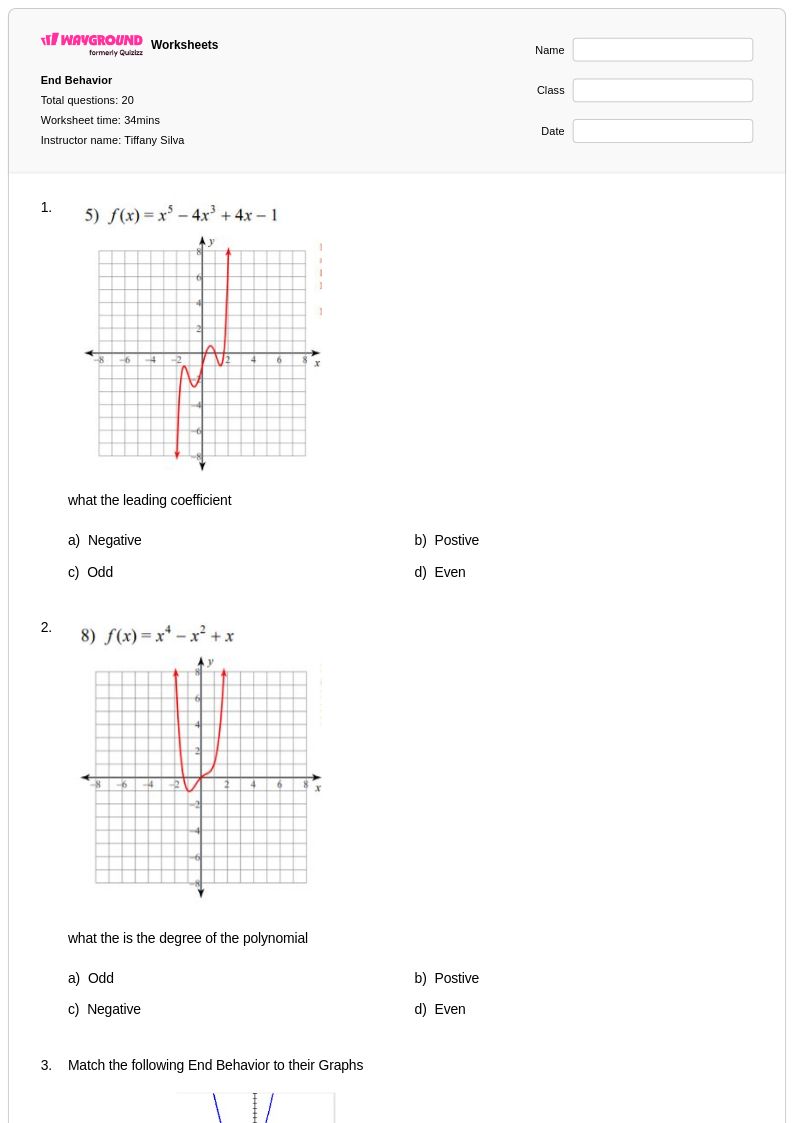
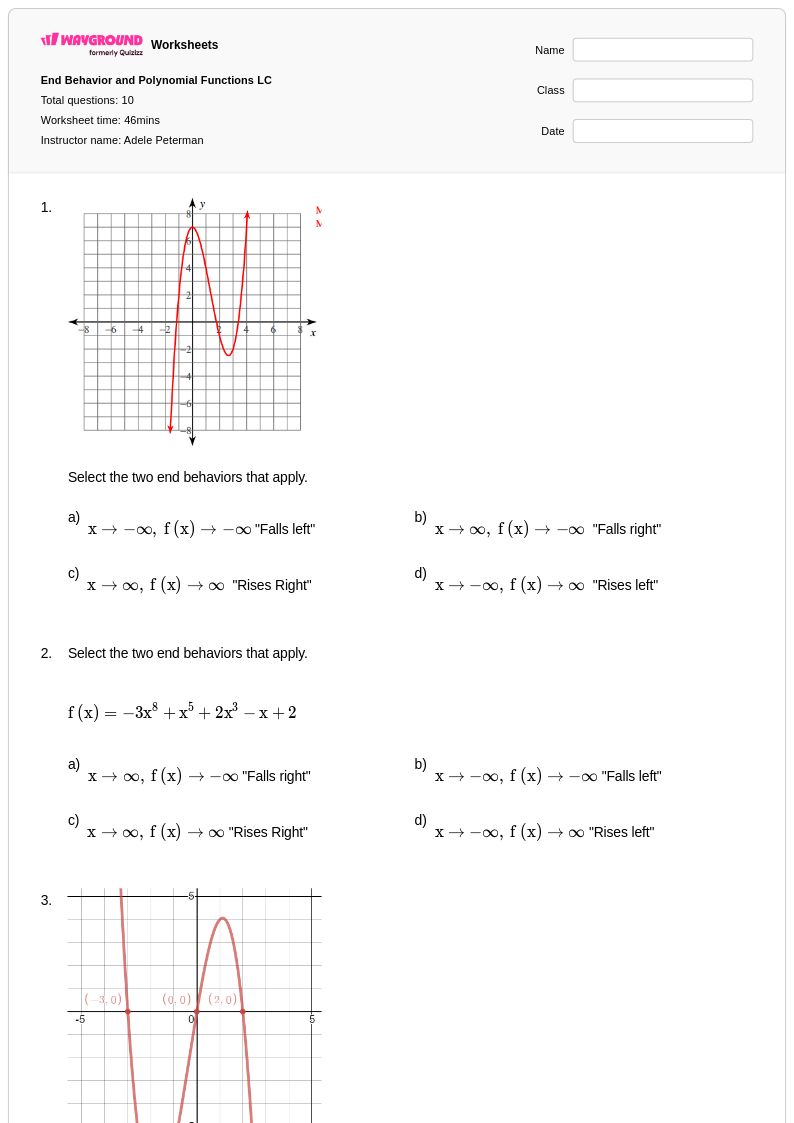
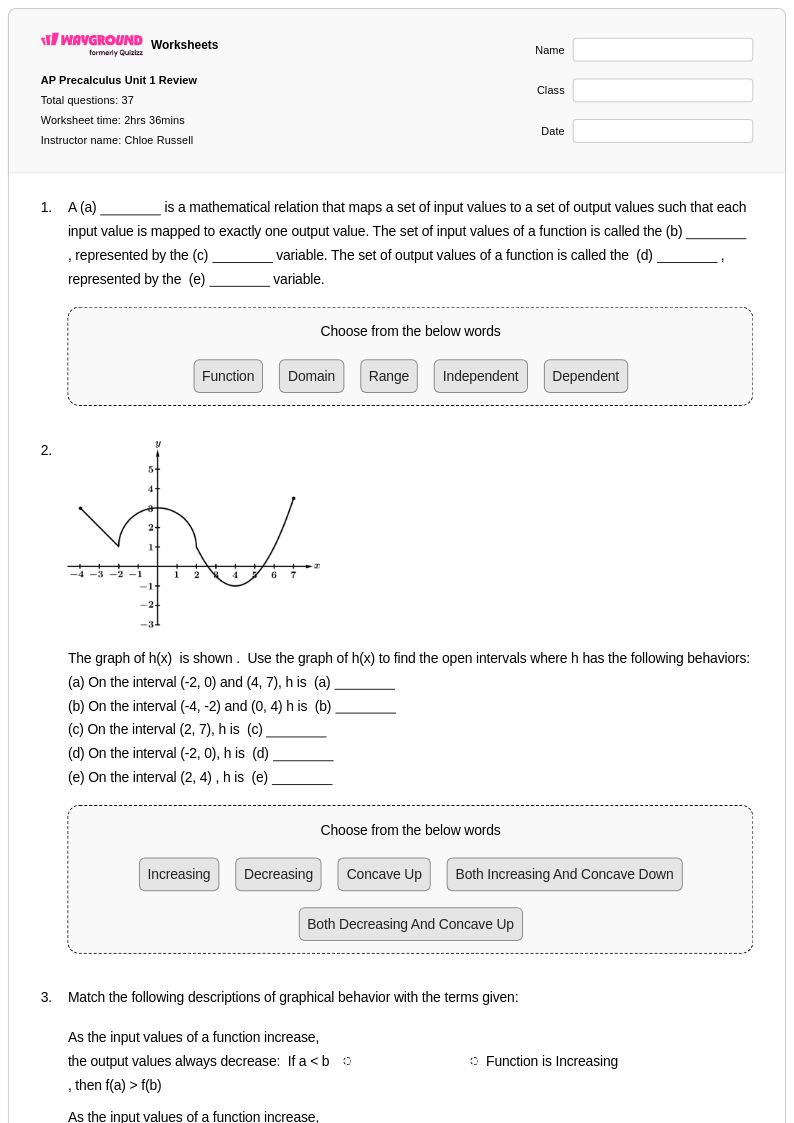
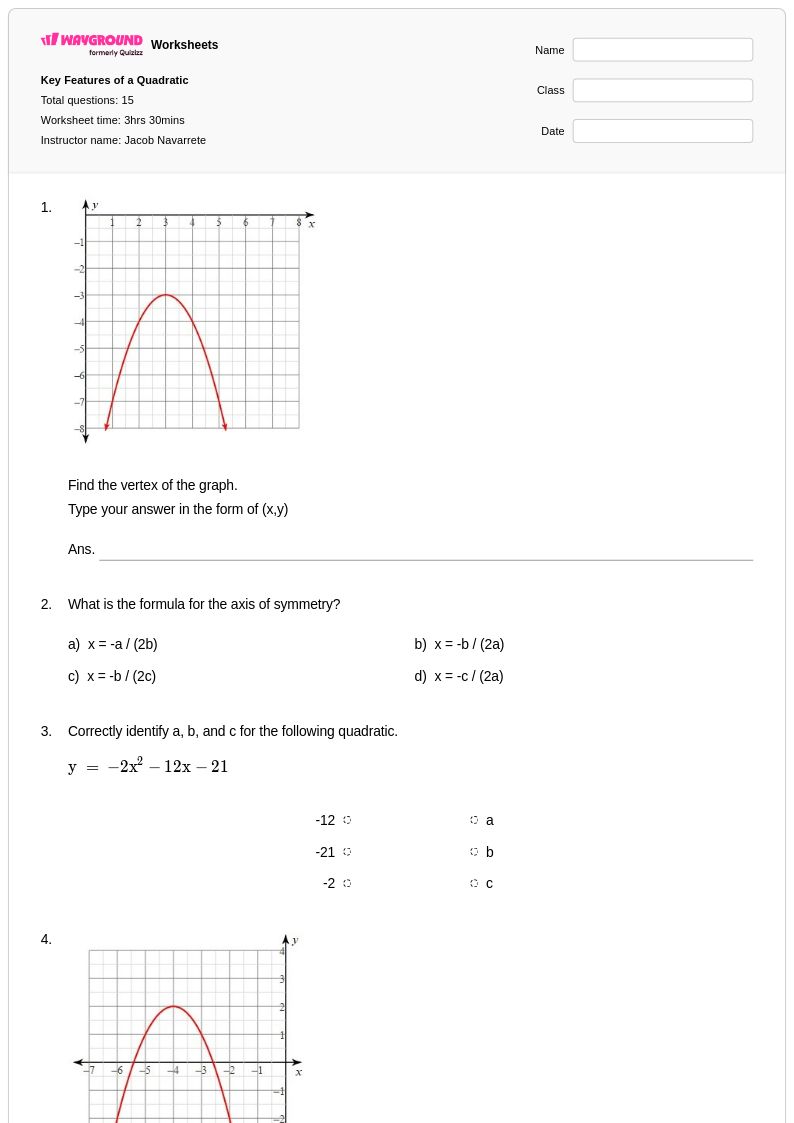
Finding polynomial function from a graph represents a critical skill in Year 10 algebra that bridges visual interpretation with algebraic reasoning. Wayground's comprehensive worksheet collection focuses on developing students' ability to analyze graphical representations and translate them into precise polynomial expressions. These carefully crafted resources strengthen essential skills including identifying key features such as intercepts, turning points, and end behavior, then using this information to determine degree, leading coefficient, and factored form. Students work through systematic practice problems that guide them from basic quadratic functions to more complex higher-degree polynomials, with each worksheet including a complete answer key to support independent learning and self-assessment. The free printable materials provide structured pathways for mastering this challenging concept through progressive skill-building exercises.
Wayground's extensive library of teacher-created resources transforms how educators approach polynomial function instruction through millions of professionally developed worksheets that address diverse learning needs. The platform's robust search and filtering capabilities enable teachers to quickly locate materials aligned with specific curriculum standards while offering differentiation tools that accommodate varying skill levels within Year 10 classrooms. These customizable worksheet collections are available in both printable pdf format and interactive digital versions, providing flexibility for traditional paper-based practice or technology-enhanced learning environments. Teachers leverage these comprehensive resources for targeted skill practice, remediation support for struggling learners, and enrichment opportunities for advanced students, while the detailed answer keys and step-by-step solutions facilitate efficient grading and meaningful feedback that accelerates student understanding of polynomial function concepts.
FAQs
How do I teach 10th graders to find a polynomial function from its graph?
At Grade 10, students should be moving beyond simple quadratics into cubics and quartics, so the teaching emphasis shifts to multiplicity and leading coefficient. A reliable sequence: identify all zeros and their multiplicities from the graph's crossing/bouncing behavior, write the factored form with an unknown leading coefficient a, then substitute the y-intercept to solve for a. Stress that end behavior confirms their answer — if the sign of a is wrong, the ends of the graph will point the wrong direction.
What practice problems work best for 10th graders on this topic?
Problems that require students to determine a non-unit leading coefficient are the most valuable at this level — they force students to use a known point rather than defaulting to a = 1. Also effective: graphs where one zero has multiplicity 2 and another has multiplicity 1, so students must distinguish crossing from bouncing behavior. Mixing in a few problems where the function is given and students must verify it matches the graph builds the reverse-direction reasoning that deepens understanding.
What mistakes do 10th graders commonly make when writing polynomial functions from graphs?
Multiplicity errors are the most frequent: students write (x − r) for every zero regardless of whether the graph crosses or bounces, missing the squared factor at a tangent zero. A second common error is forgetting to solve for the leading coefficient — students write the factored form and stop, leaving a = 1 by default. Remind students that the factored form is incomplete until they've verified the leading coefficient against a known point on the graph.
How do I use these Grade 10 worksheets in my class?
You can assign them as a digital quiz on Wayground — useful for in-class practice with automatic response collection — or print the PDFs for paper-based work. For schools managing screen time, the printable route keeps practice fully offline. The Wayground for Teachers app lets you scan and grade printed submissions, and every worksheet includes a complete answer key for self-assessment or class review.
How does finding polynomial functions from graphs fit into the 10th grade Common Core progression?
By Grade 10, Common Core expects students to work fluently with polynomial expressions and understand the relationship between zeros and factors. Reading a polynomial function from its graph is where that algebraic knowledge meets graphical interpretation: students apply the Factor Theorem (a zero at x = r means (x − r) is a factor) and use end behavior to constrain the leading coefficient. This skill bridges the earlier work on quadratic functions and the later study of polynomial division and the Fundamental Theorem of Algebra.
How can I differentiate this practice for a mixed-ability Grade 10 class?
Assign simpler graphs — cubics with three distinct integer zeros and a = 1 — to students still building confidence, and reserve graphs with repeated zeros or fractional leading coefficients for students ready for a challenge. On Wayground, you can configure extended time per question for students who need it, and apply the dyslexia-friendly font or adjusted font size when printing, all without changing the experience for the rest of the class.