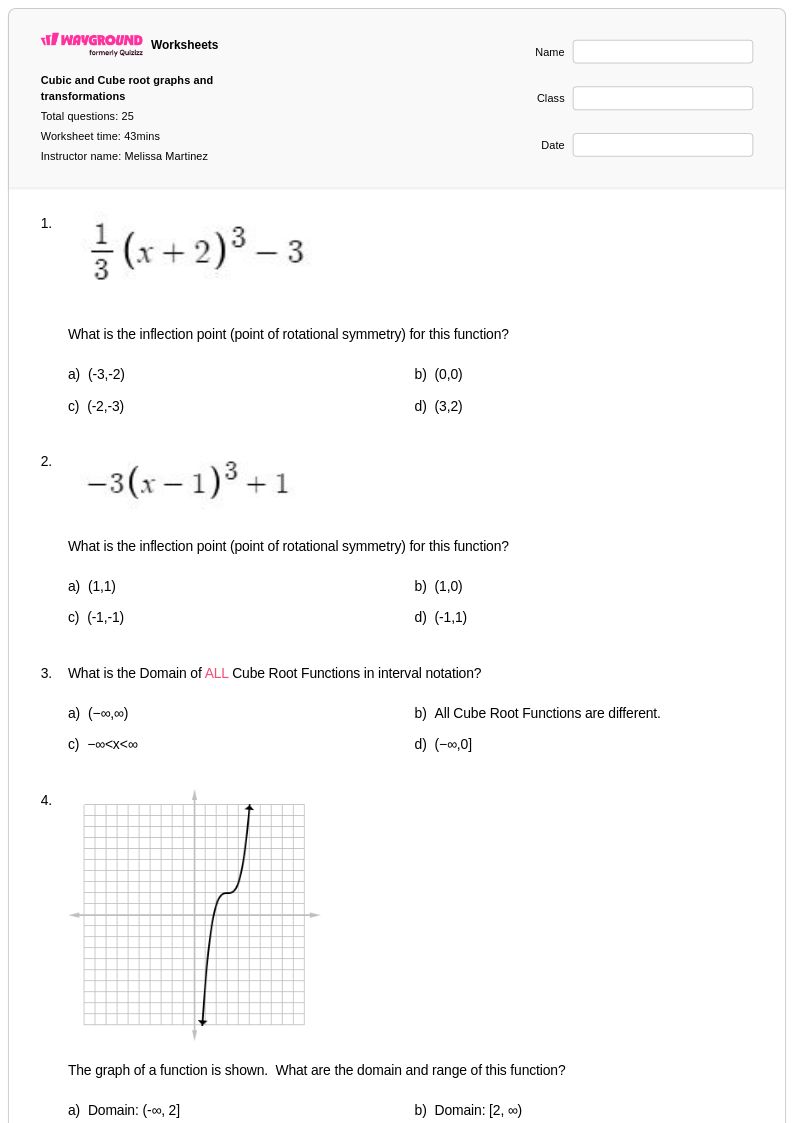
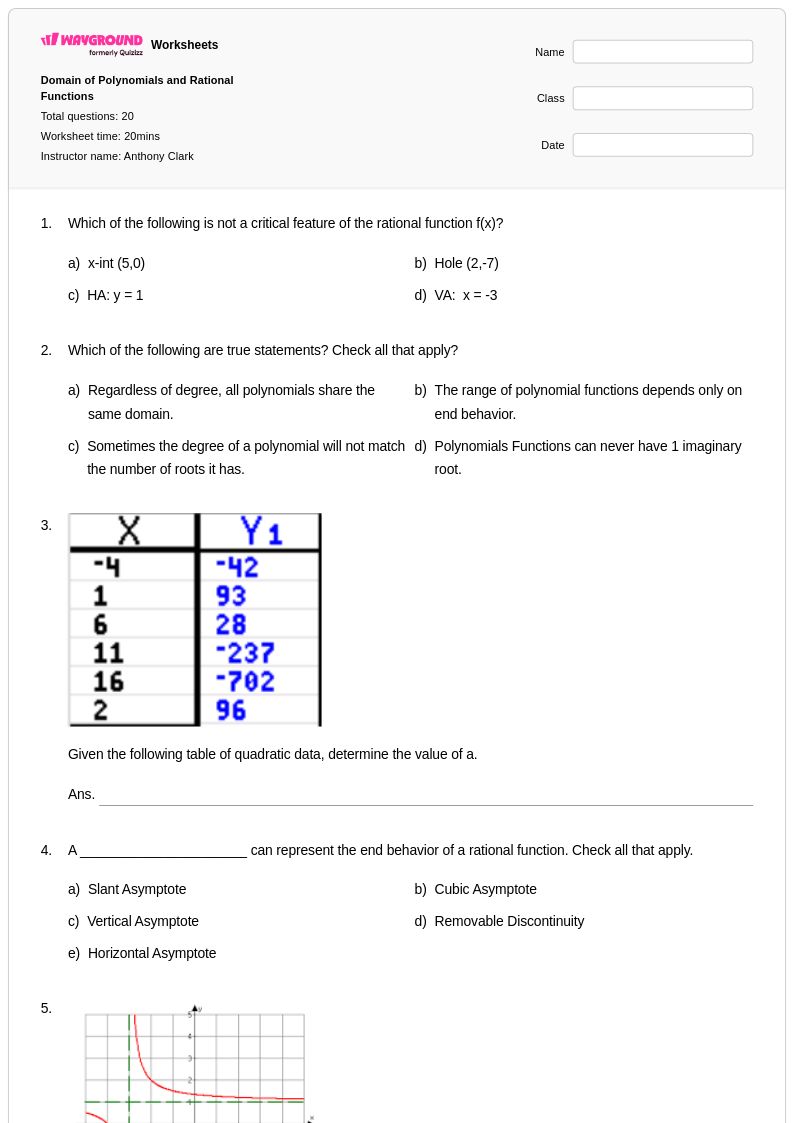
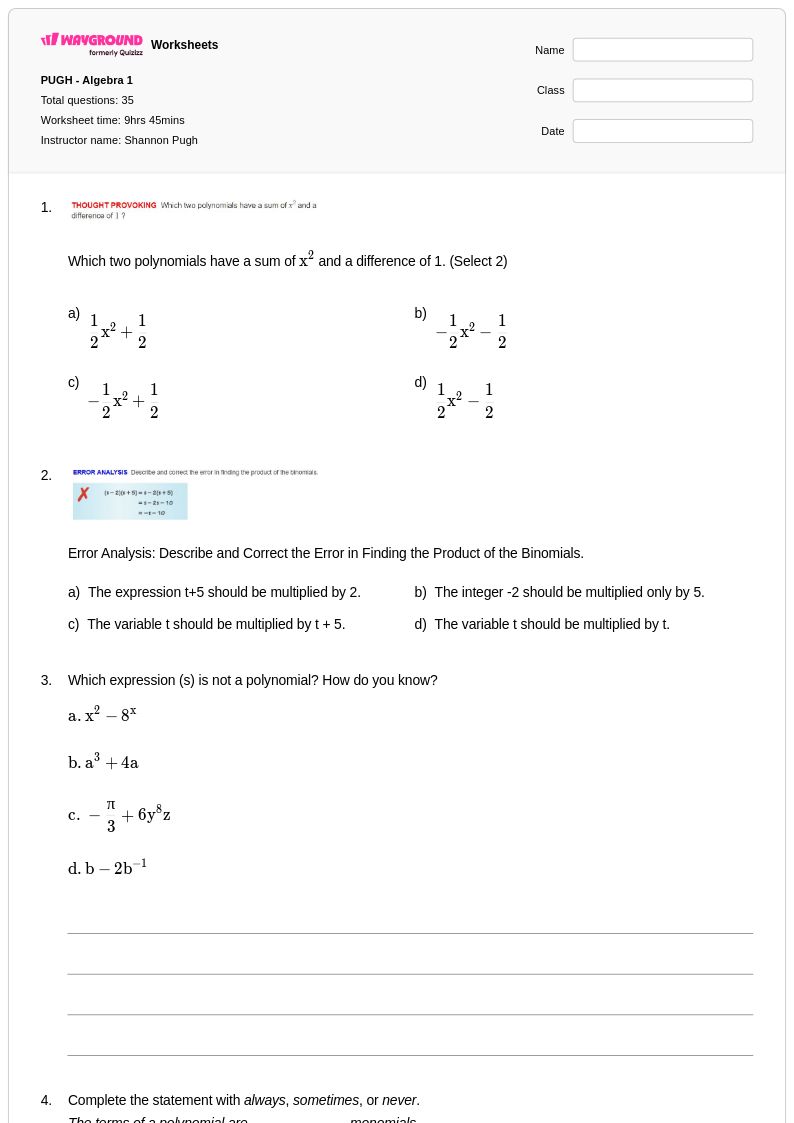
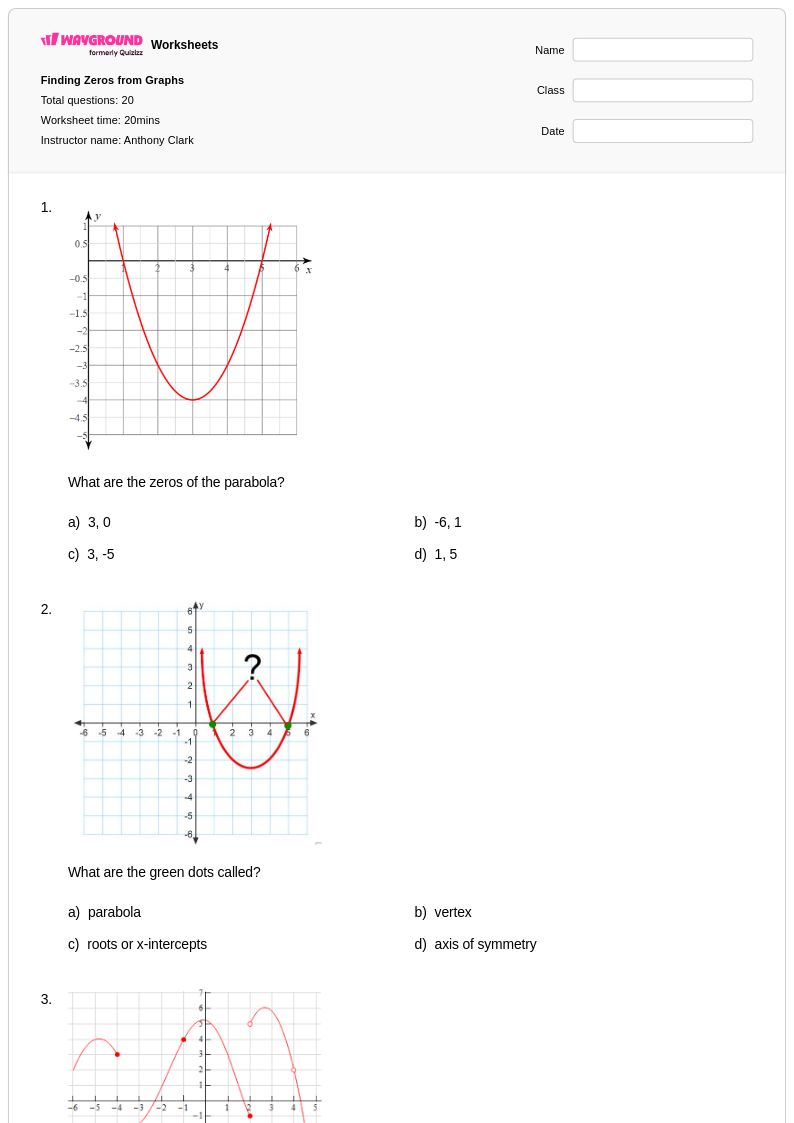
Free Printable Finding Polynomial Function From a Graph worksheets
Master finding polynomial functions from graphs with Wayground's comprehensive collection of free worksheets, featuring step-by-step practice problems, printable PDFs, and complete answer keys to strengthen algebraic reasoning skills.
Explore printable Finding Polynomial Function From a Graph worksheets
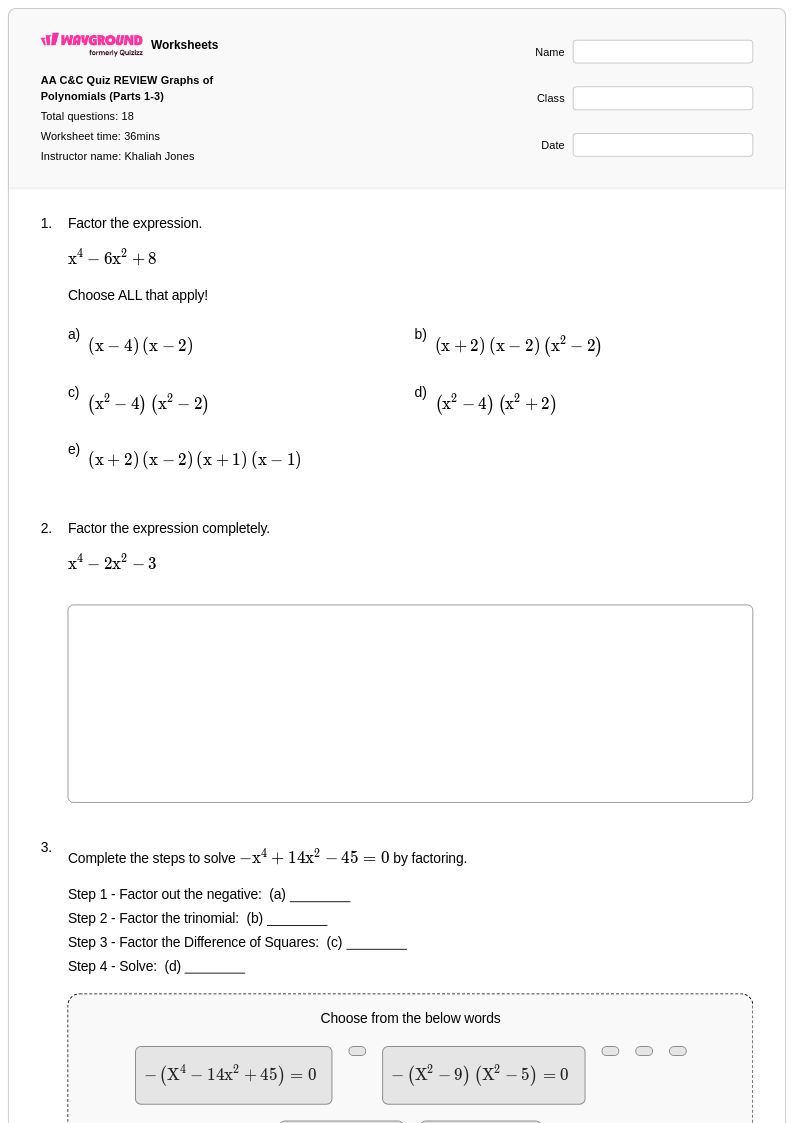
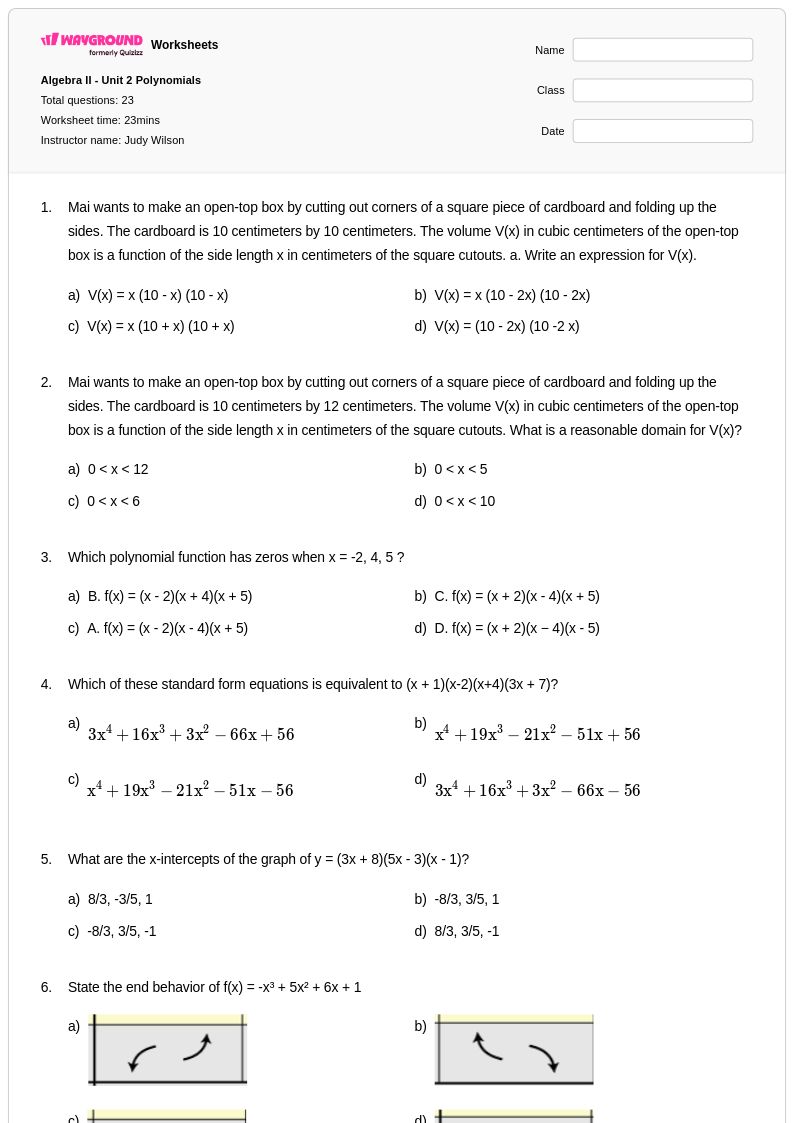
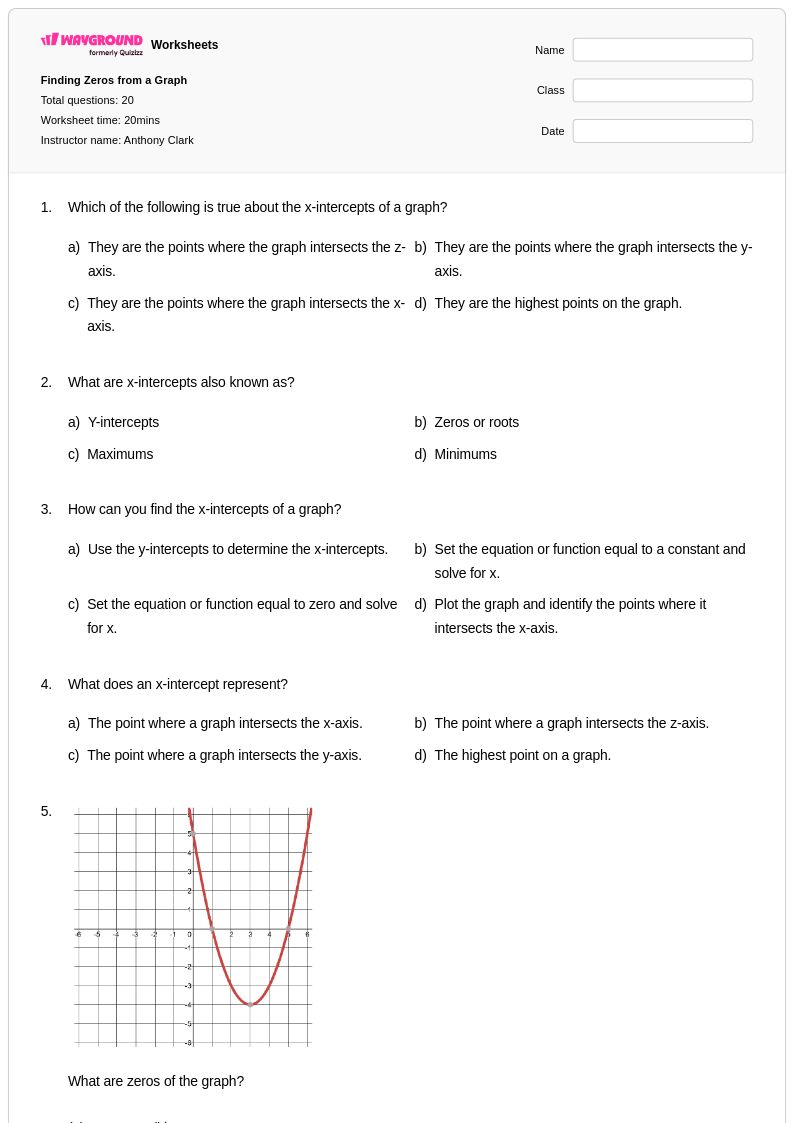
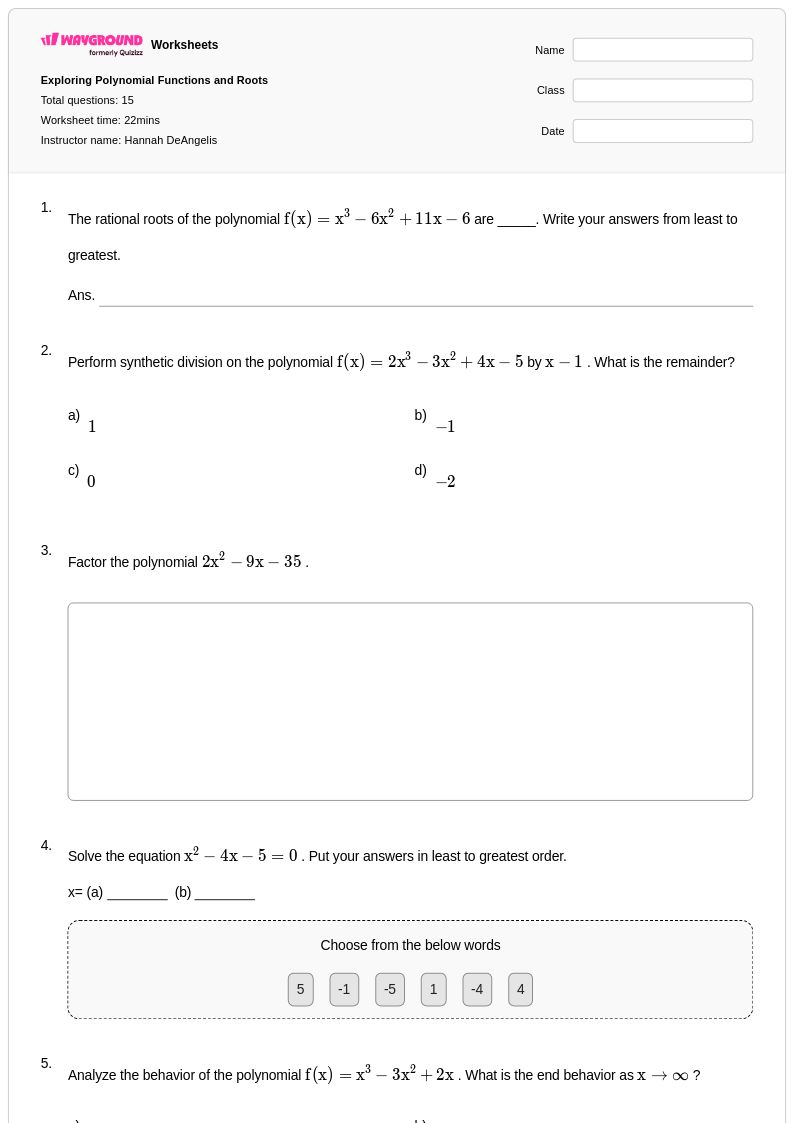
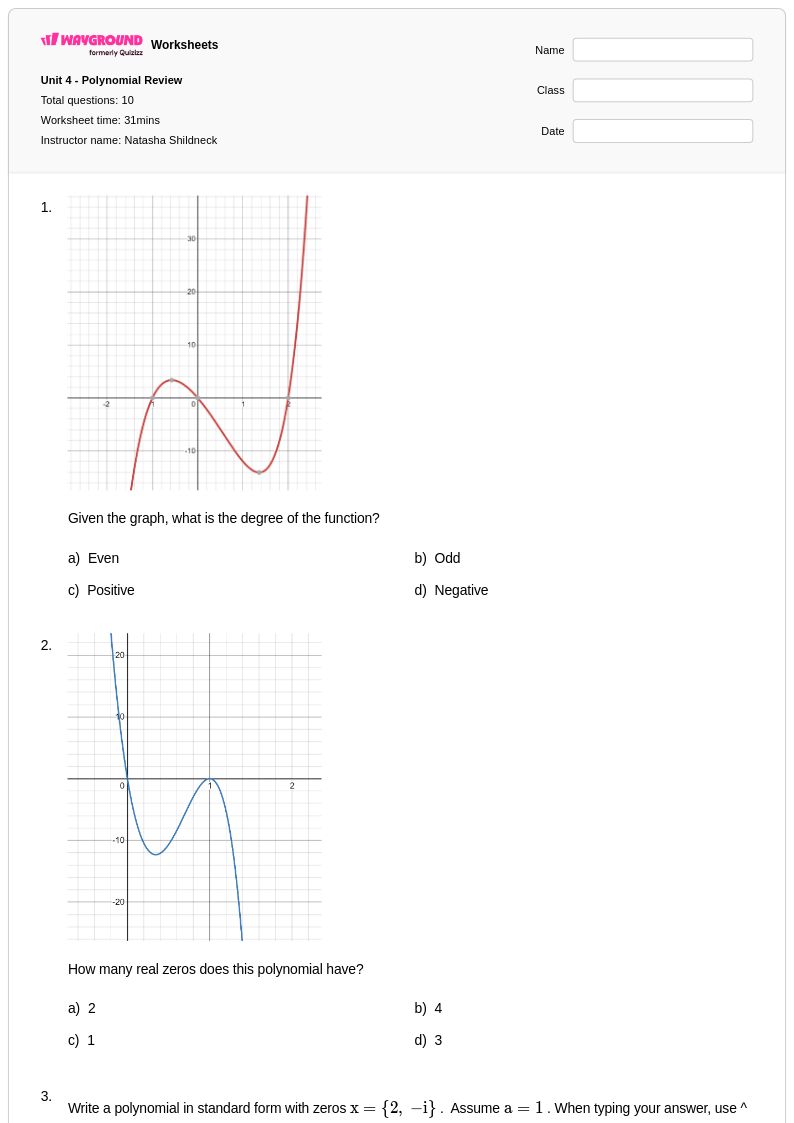
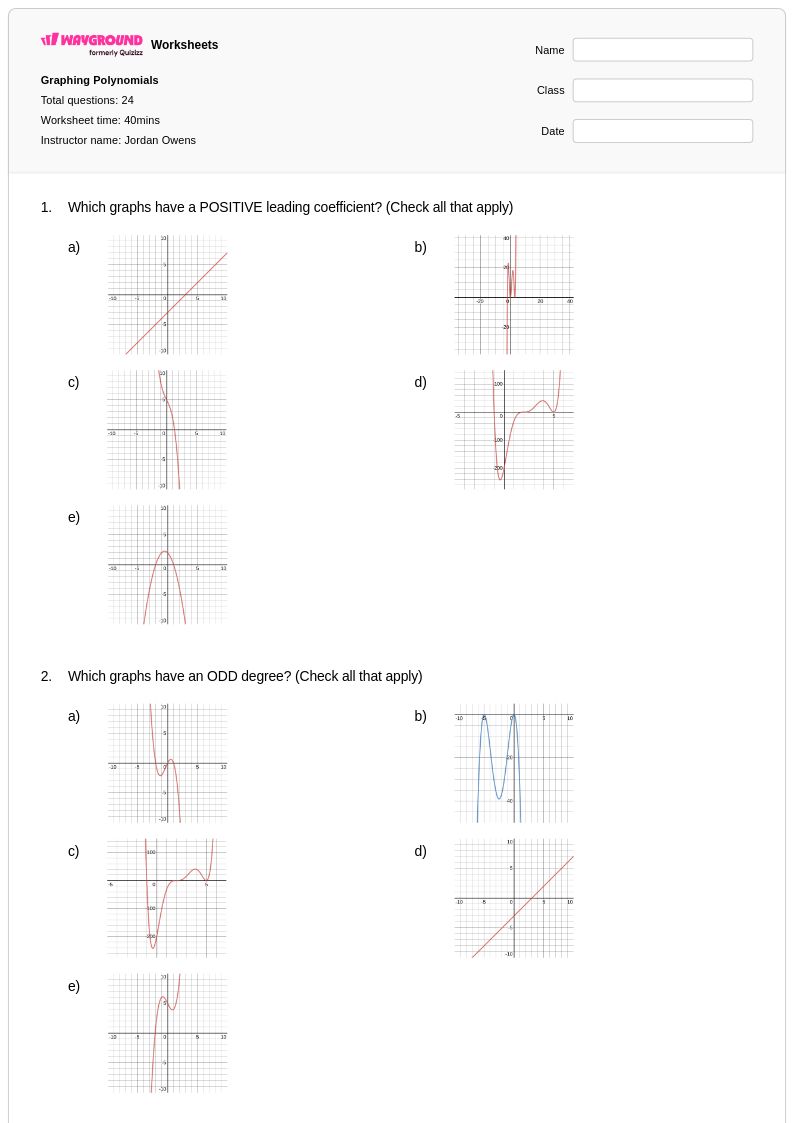
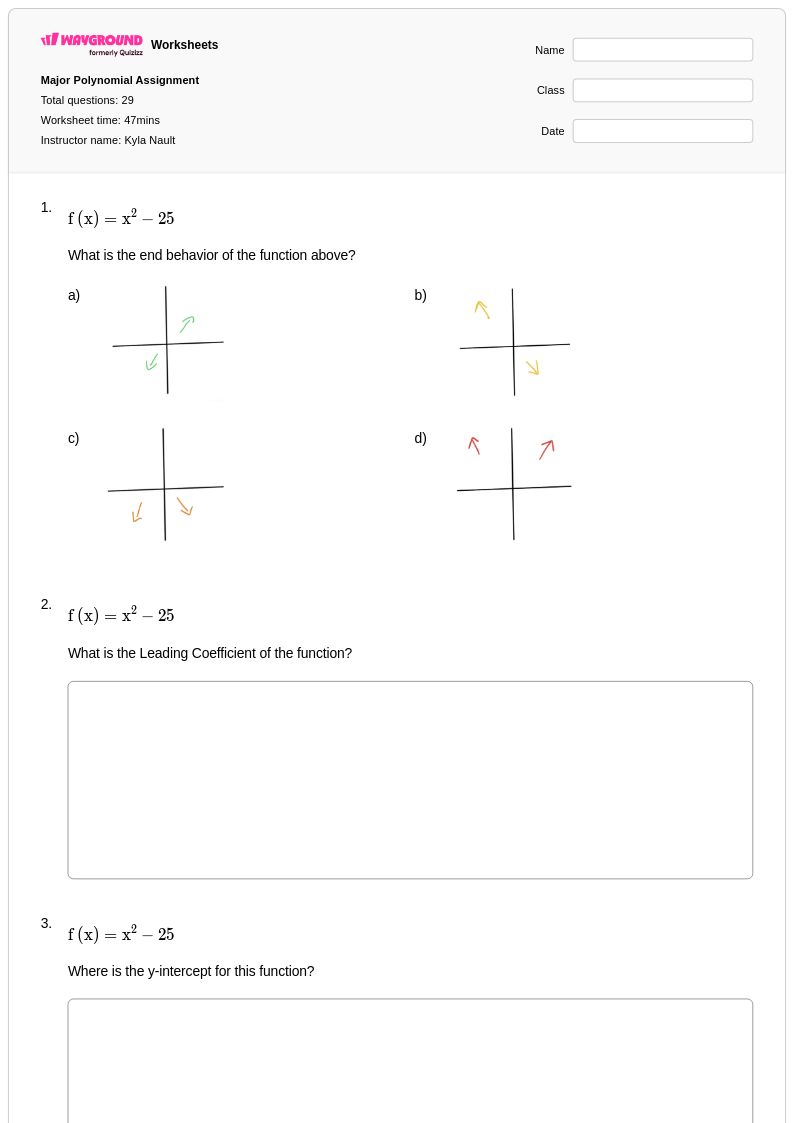
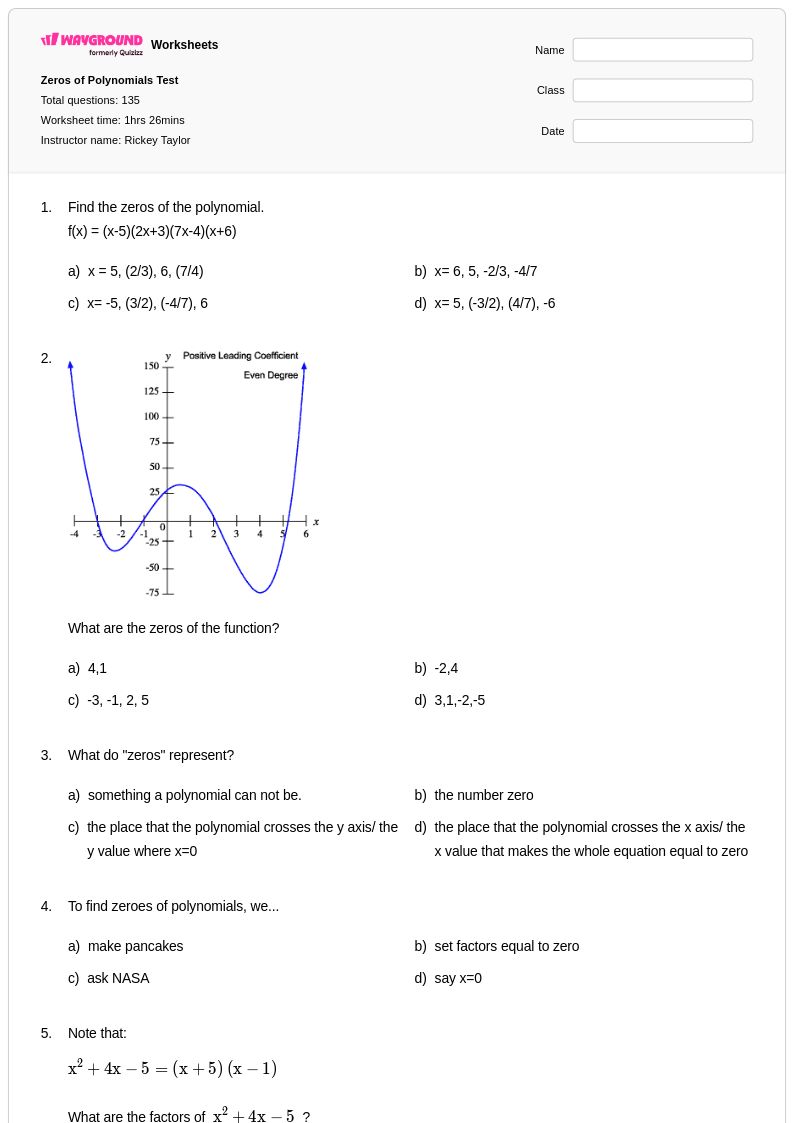
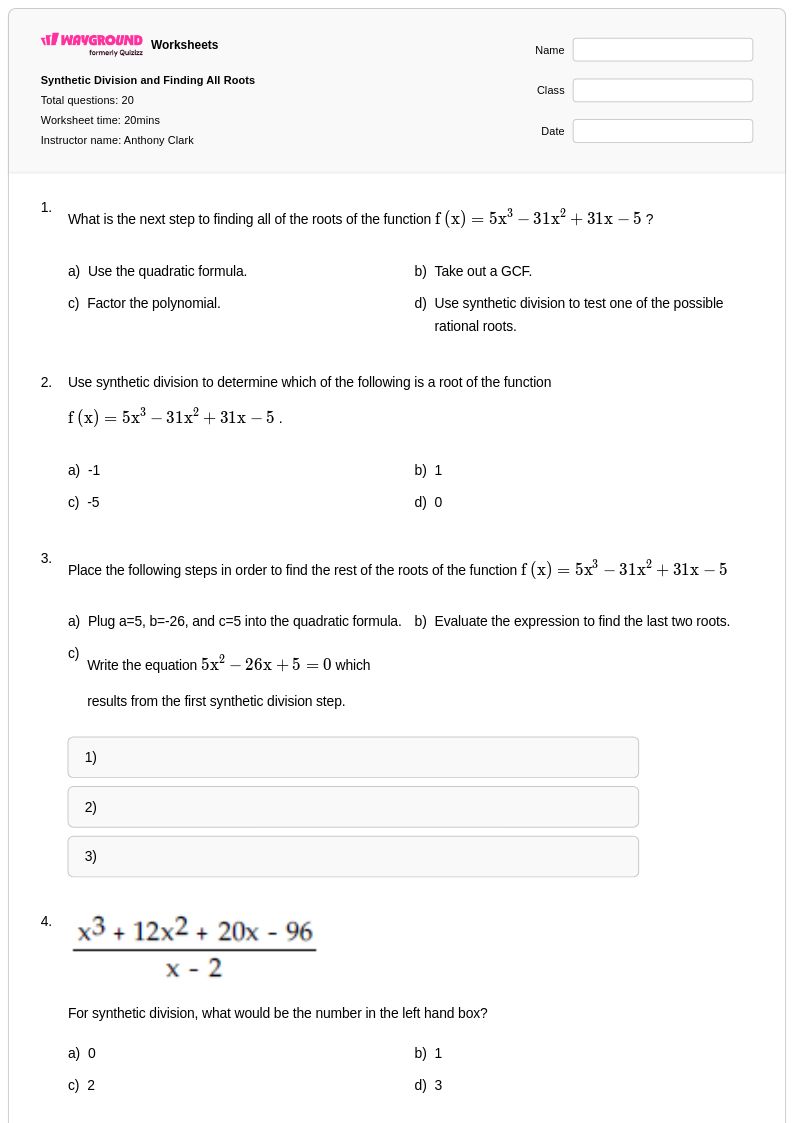
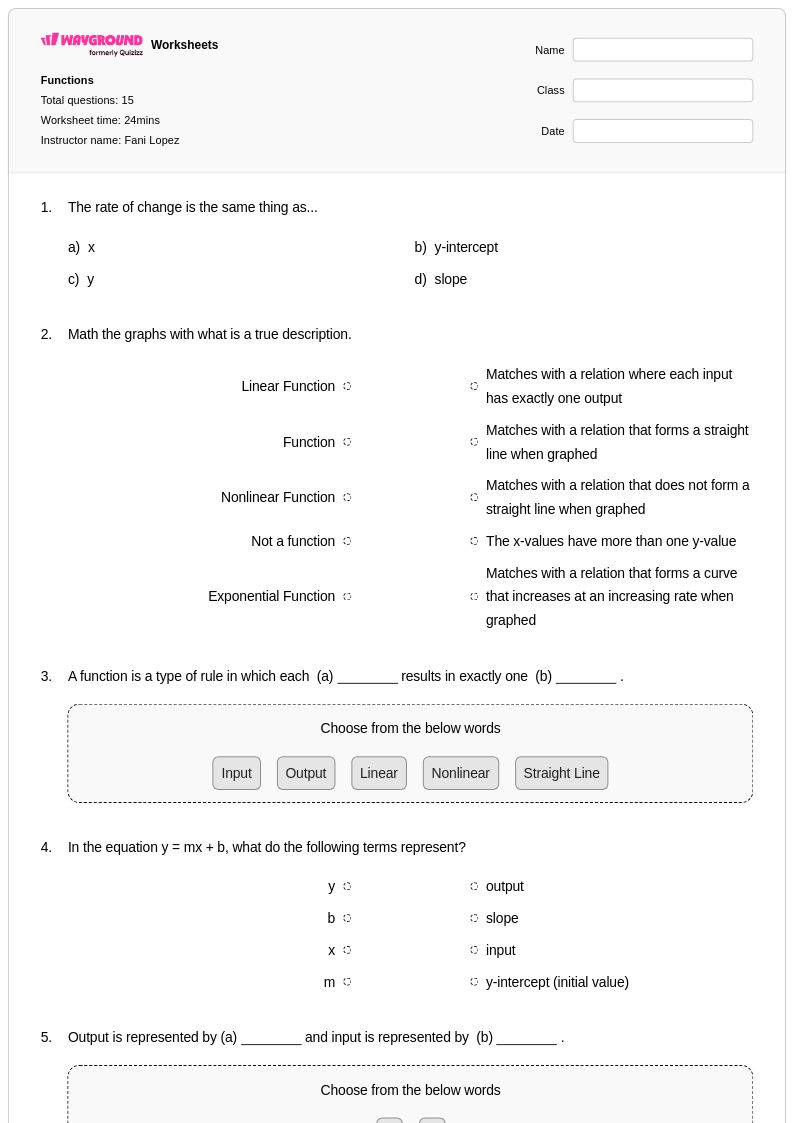
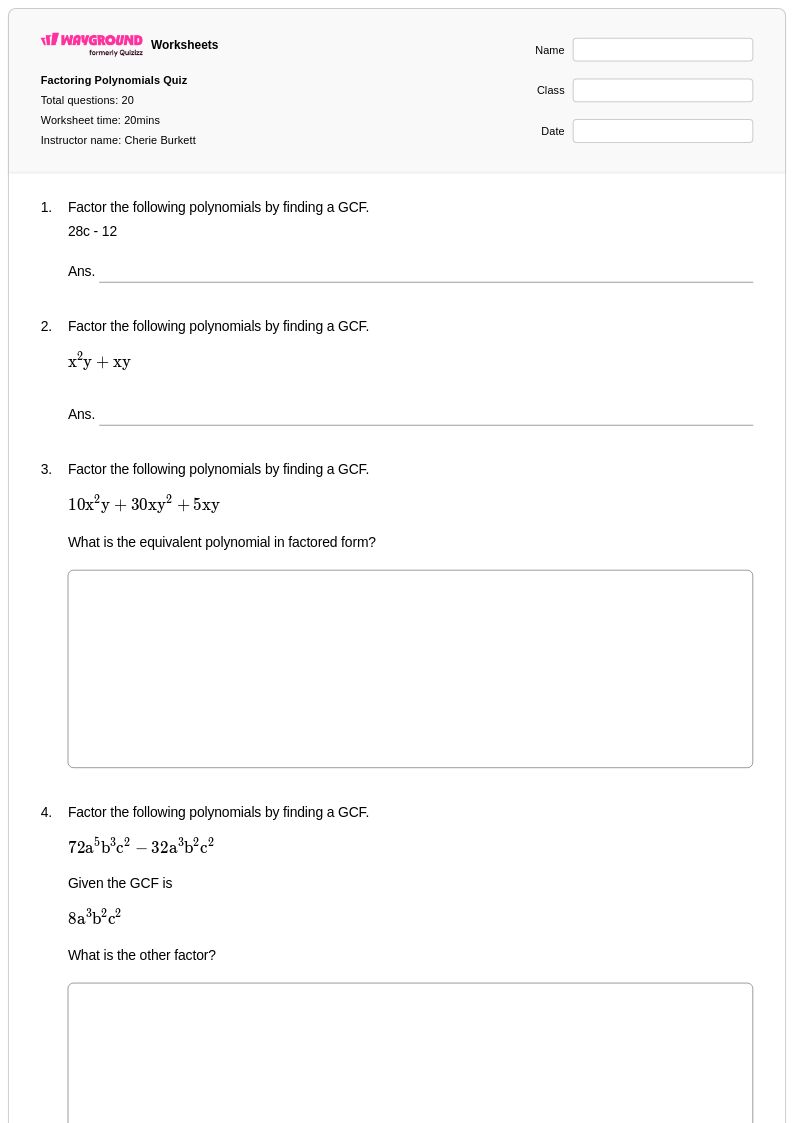
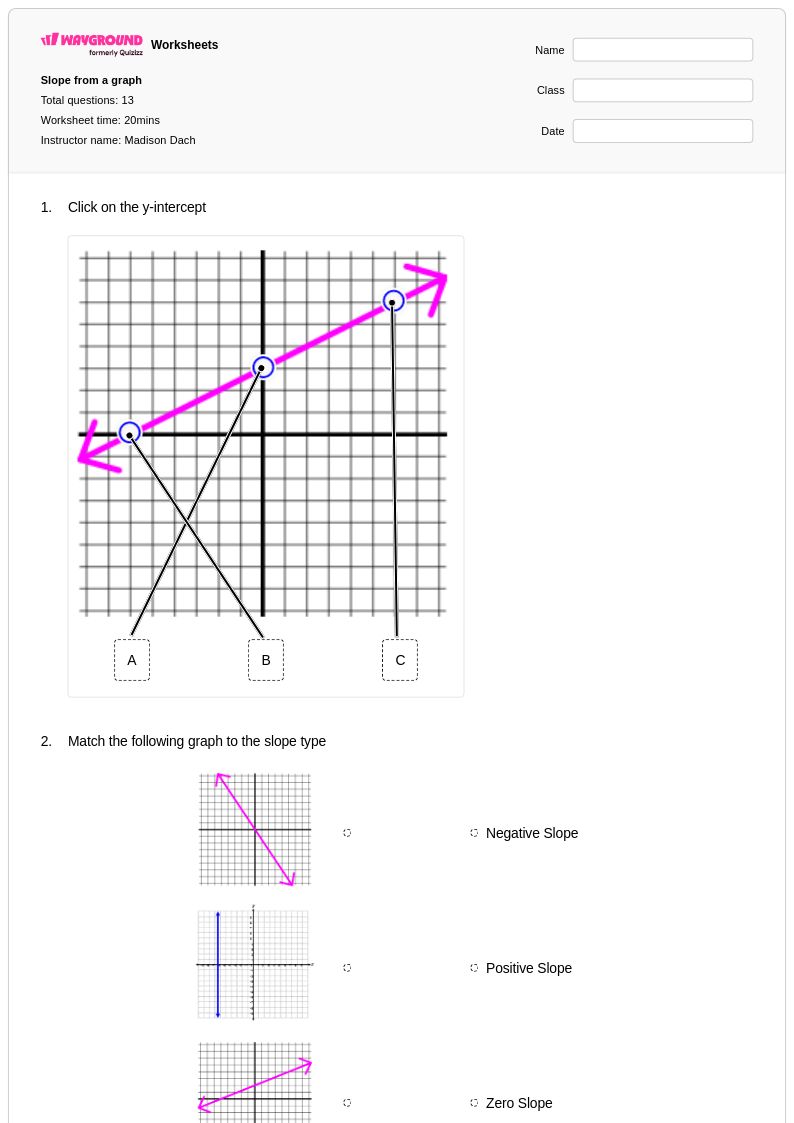
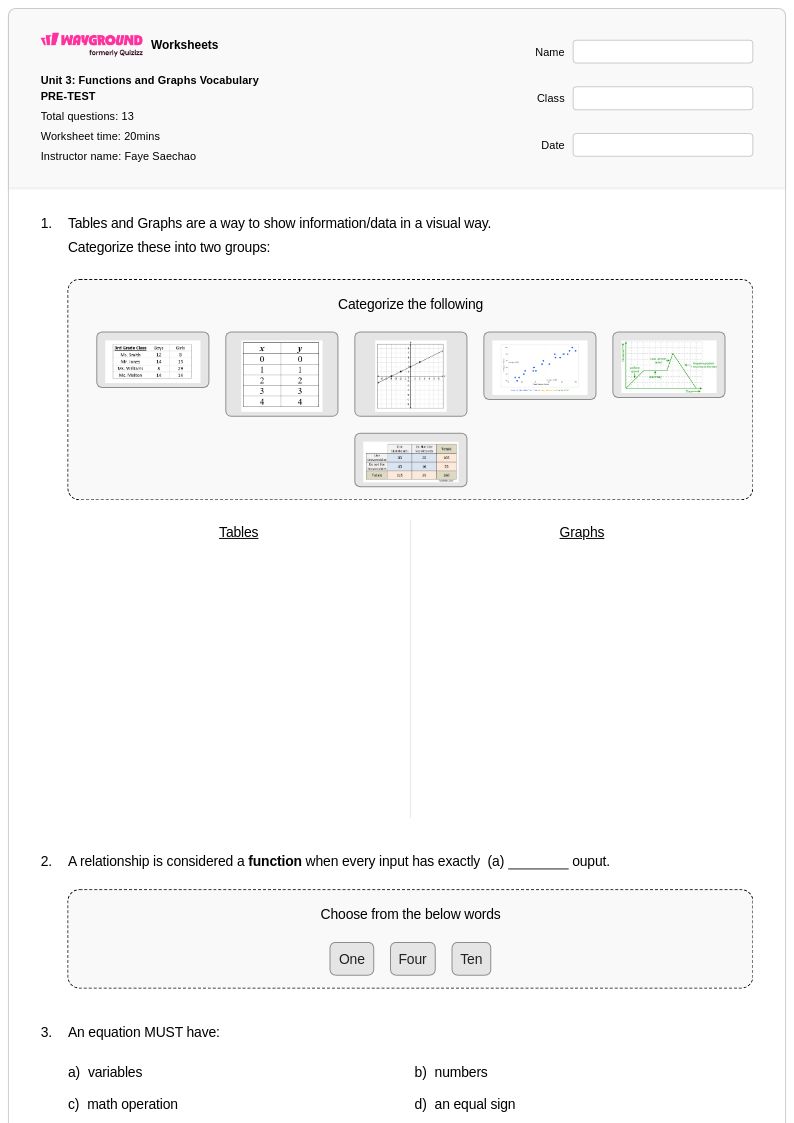
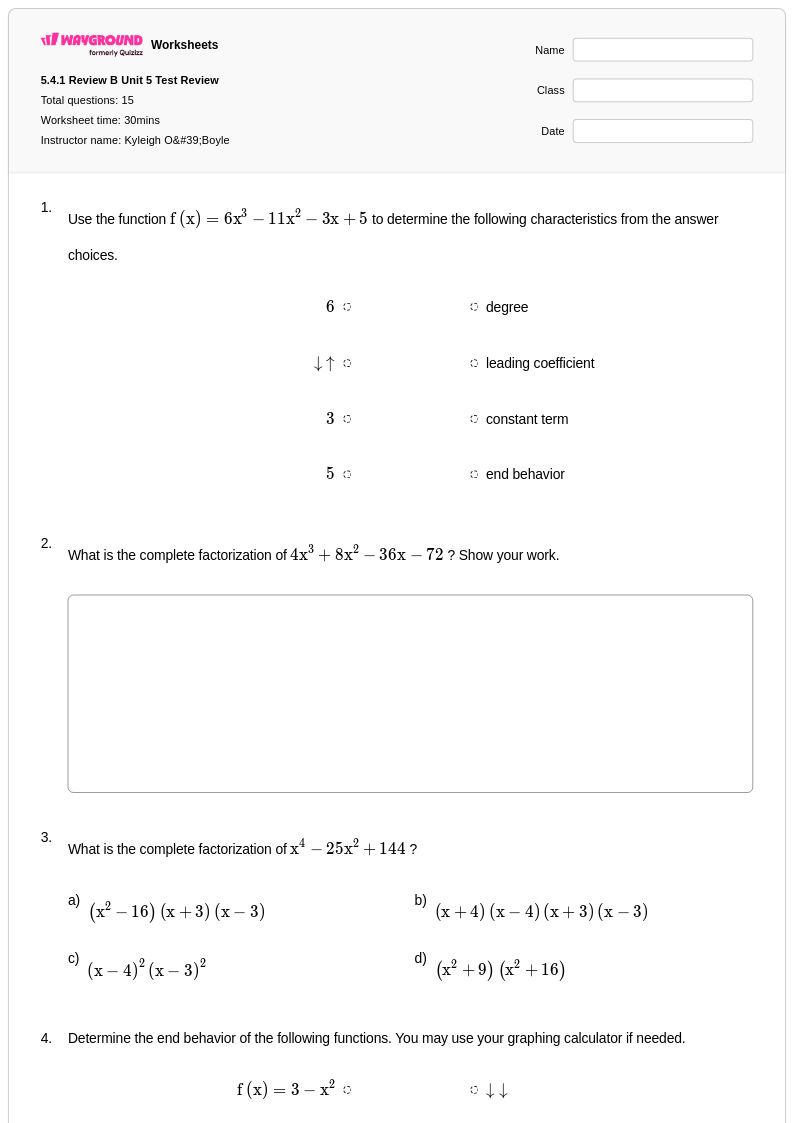
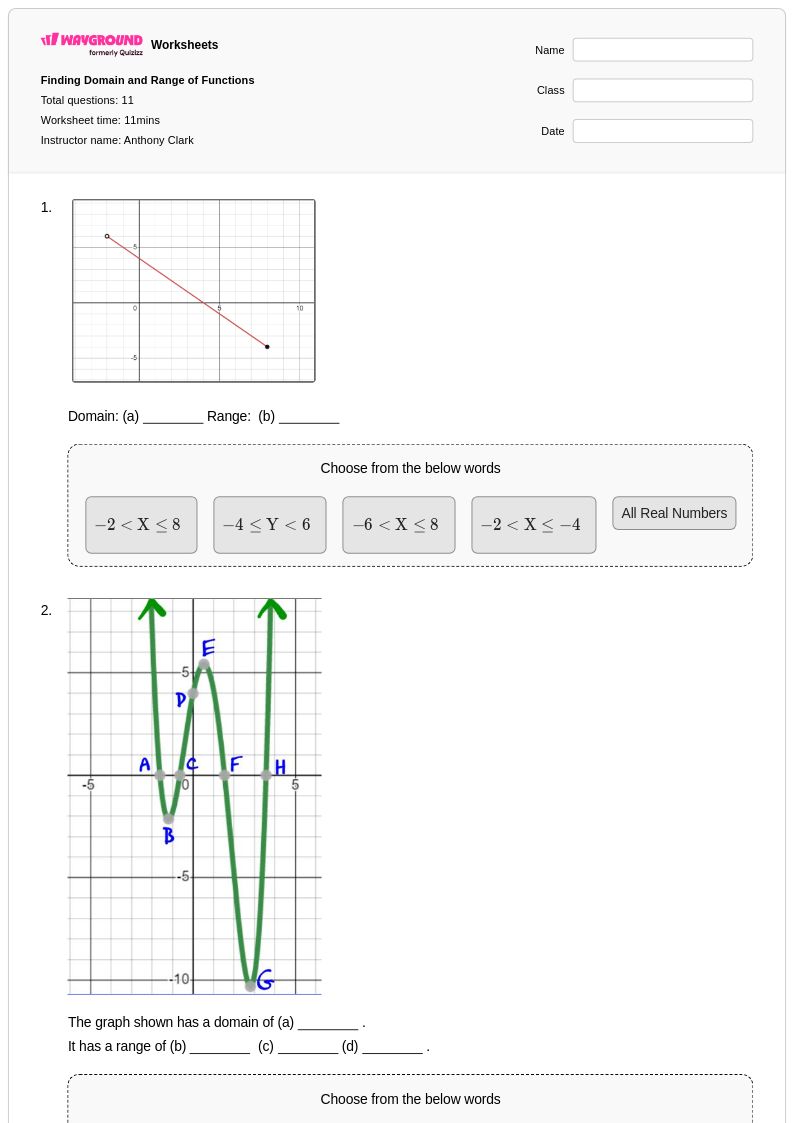
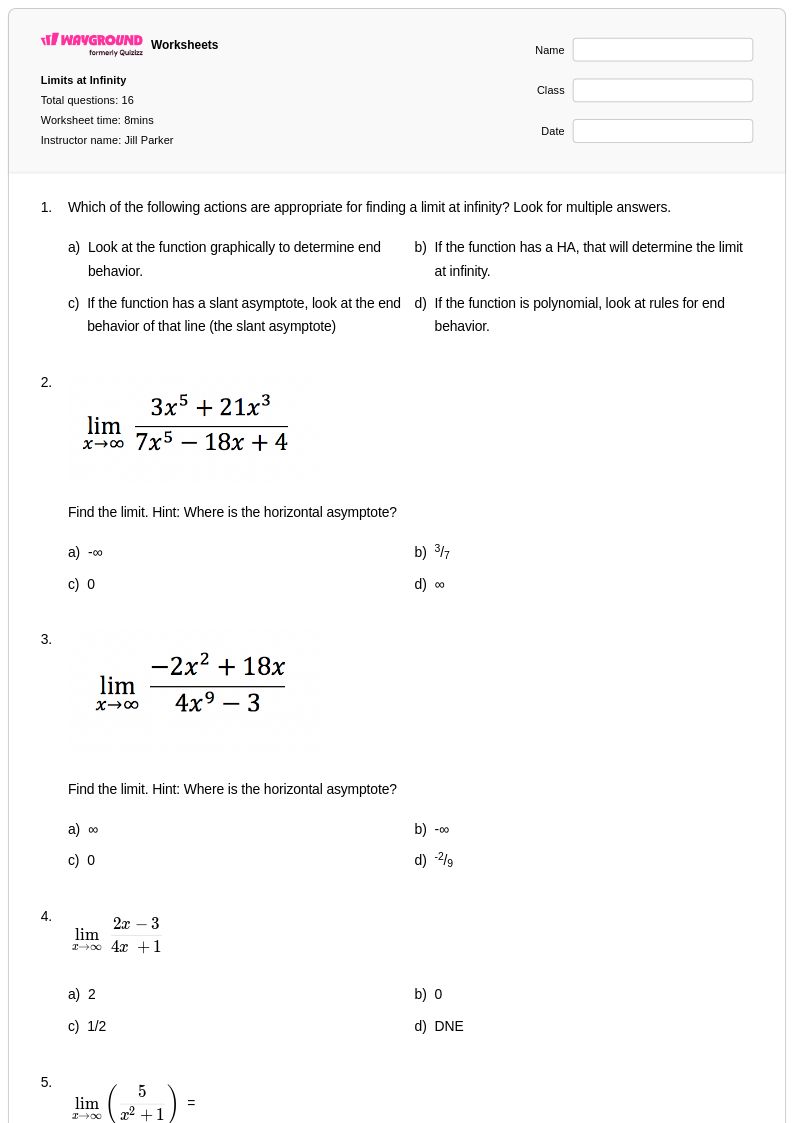
Finding polynomial function from a graph worksheets available through Wayground (formerly Quizizz) provide comprehensive practice in one of algebra's most challenging analytical skills. These expertly designed worksheets guide students through the systematic process of examining key features of polynomial graphs—including x-intercepts, y-intercepts, end behavior, turning points, and degree—to construct the corresponding algebraic function. Students develop critical thinking abilities as they work through practice problems that require identifying factors from zeros, determining leading coefficients from end behavior, and writing functions in both factored and standard forms. Each worksheet collection includes detailed answer keys that break down the step-by-step reasoning process, making these free printables invaluable resources for both independent study and classroom instruction in polynomial analysis.
Wayground (formerly Quizizz) supports mathematics educators with millions of teacher-created resources specifically focused on polynomial function identification and graphical analysis. The platform's robust search and filtering capabilities allow teachers to quickly locate worksheets that match their specific instructional needs, whether targeting foundational concepts or advanced polynomial manipulation techniques. These differentiation tools enable educators to select appropriate complexity levels for diverse learners, while the flexible customization options allow for modifications that align with curriculum standards and pacing guides. Available in both printable pdf format and interactive digital versions, these worksheet collections streamline lesson planning while providing targeted practice for skill remediation, concept reinforcement, and academic enrichment in polynomial function analysis.
FAQs
How do I teach students to find a polynomial function from its graph?
Start with the zeros. Have students identify each x-intercept and write a corresponding linear factor, then determine multiplicity by observing whether the graph crosses or just touches the x-axis at that point. From there, they use end behavior to figure out the sign of the leading coefficient and the degree. Only after those two steps should they attempt to pin down the exact leading coefficient — typically by substituting a known point (like the y-intercept) into the factored form and solving. Teaching it in that sequence prevents students from guessing at the function before they've gathered enough information from the graph.
What exercises help students practice identifying polynomial functions from graphs?
The most effective practice moves from recognition to construction. Begin with exercises where students simply identify degree and end behavior, then add problems requiring them to list zeros and write the factored form, and finally assign problems where they must determine the leading coefficient using a given point. Mixing in reverse problems — given a function, sketch the graph — also sharpens the skill because students have to think about the relationship in both directions.
What mistakes do students commonly make when writing a polynomial function from a graph?
Three errors come up repeatedly. First, students ignore multiplicity — they write a single factor for a zero where the graph bounces, missing the squared (or even-powered) factor. Second, they assume the leading coefficient is 1 without checking a point, which produces a function with the right shape but wrong scale. Third, they confuse degree with the number of turning points, forgetting that a degree-n polynomial has at most n−1 turning points, not exactly that many.
How do I use these worksheets in my classroom?
These worksheets are available as printable PDFs and as digital quizzes hosted on Wayground, so you can assign them however your class runs. The digital format lets students work interactively and submits responses automatically; the printable route works well for focused, paper-based practice, and you can grade physical submissions using the Wayground for Teachers app by scanning or capturing student work. Every worksheet includes a complete answer key, so students can self-check when working independently.
How does finding polynomial functions from graphs fit into the high school math curriculum?
Under Common Core, students first build fluency with quadratic functions — factoring, identifying zeros, interpreting graphs — before extending those ideas to higher-degree polynomials. Reading a polynomial function from its graph sits at the far end of that progression: it requires students to synthesize everything they know about zeros, factors, multiplicity, and end behavior into a single algebraic expression. It also sets up later work with rational functions and curve-fitting, where the same graph-reading logic applies in more complex contexts.
How can I differentiate this practice for students at different levels?
For students who are still building confidence, reduce the complexity of the graphs — stick to quadratics or cubics with integer zeros and a leading coefficient of 1 so they can focus on the factoring logic without getting lost in the arithmetic. For students ready for a challenge, use graphs with irrational zeros, repeated roots of higher multiplicity, or a non-integer leading coefficient that requires careful substitution to find. On Wayground, you can also apply the dyslexia-friendly font or adjust font size on the worksheet itself, and enable Read Aloud for students who need question text read to them during digital sessions.