
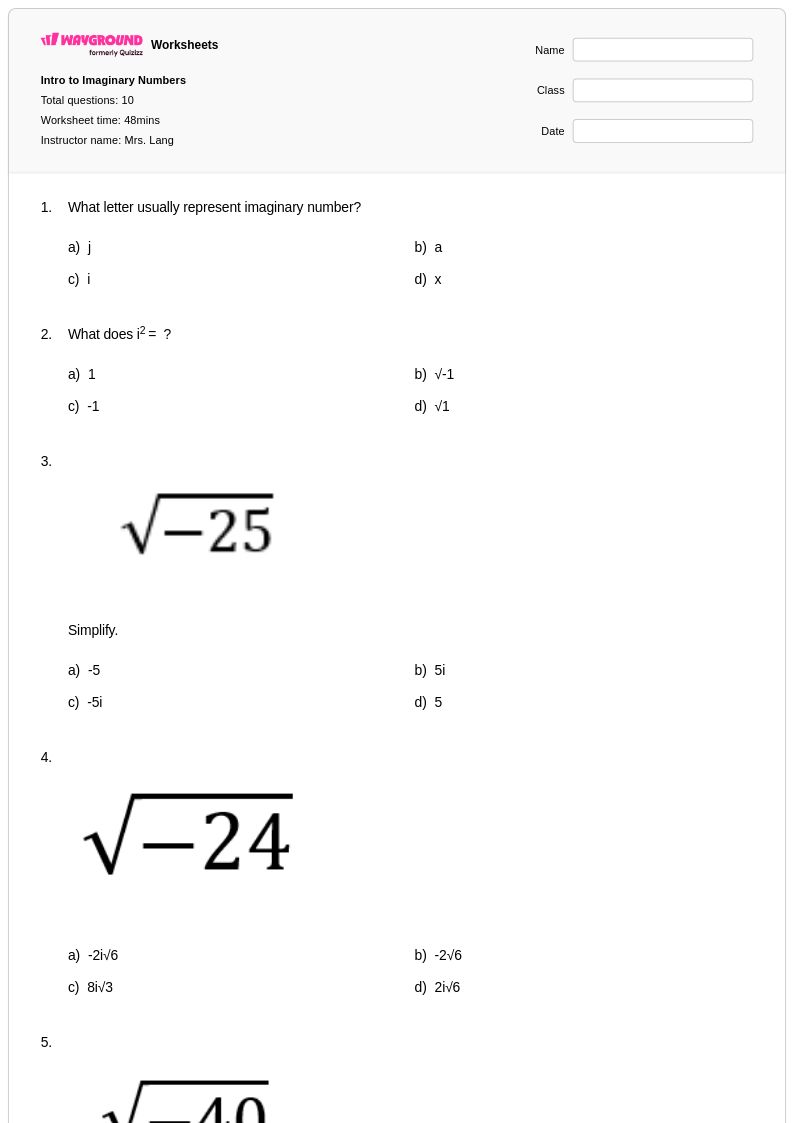
10 Q
11th
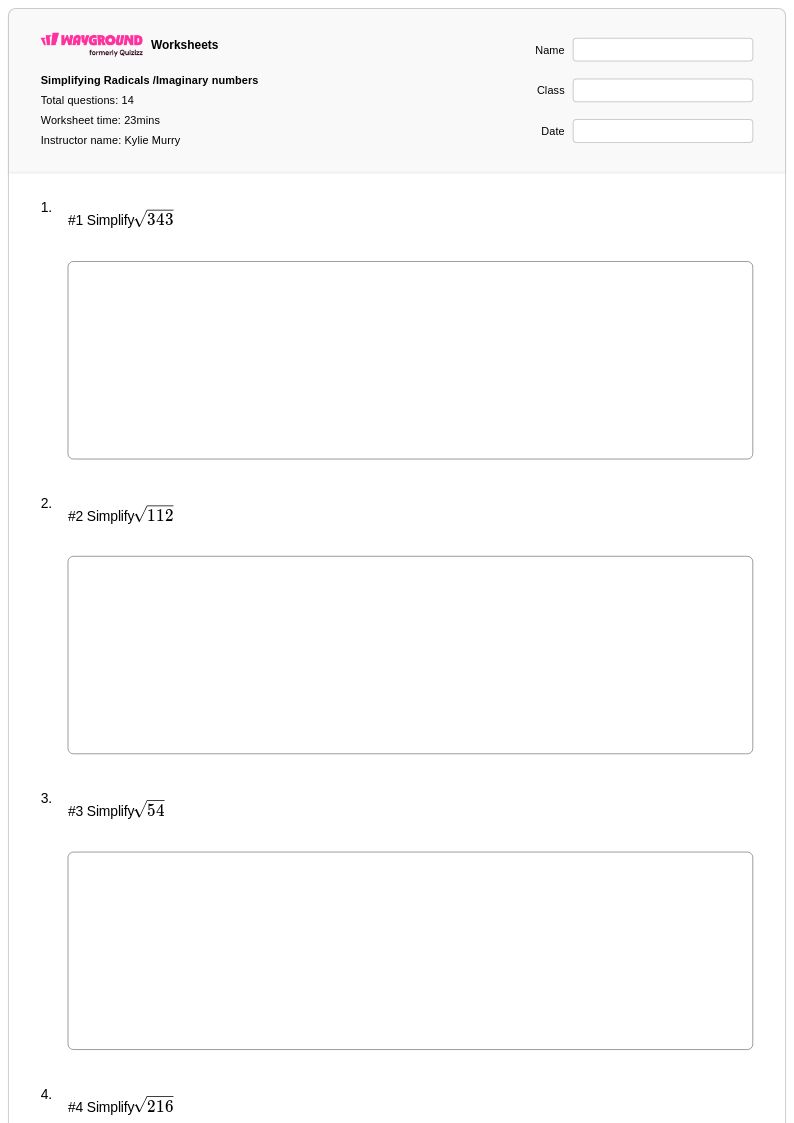
14 Q
9th - 12th
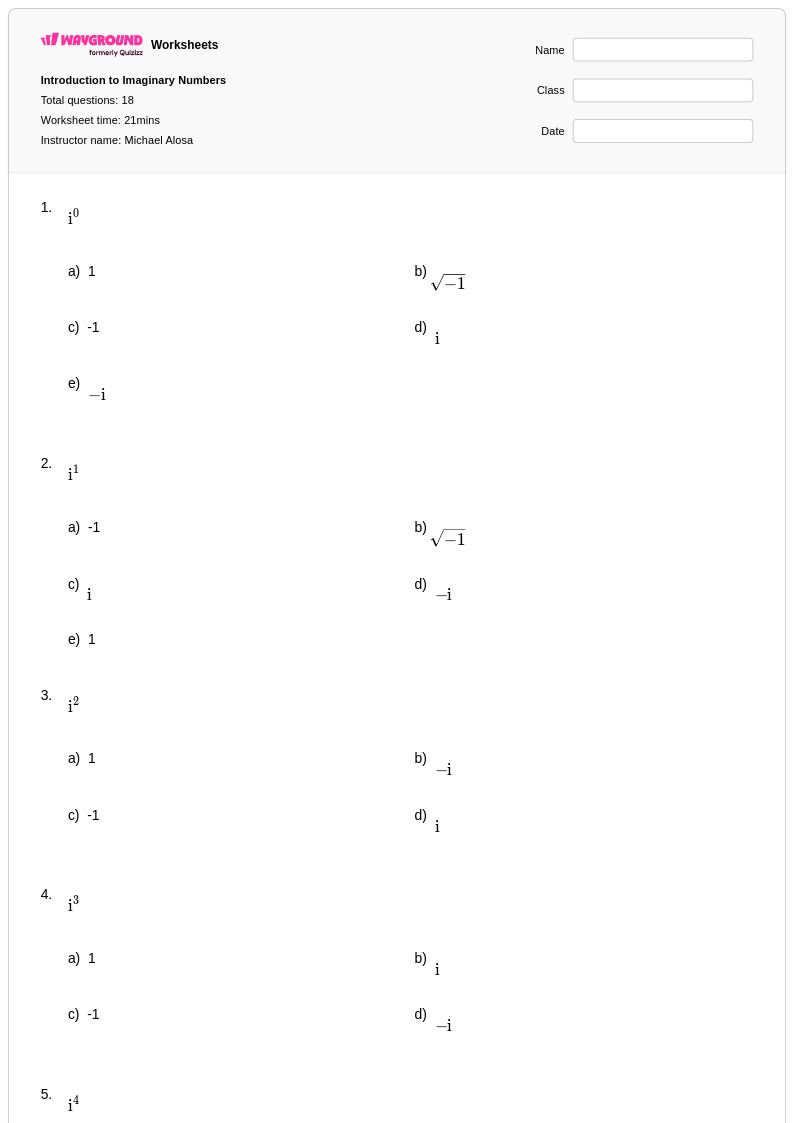
18 Q
10th
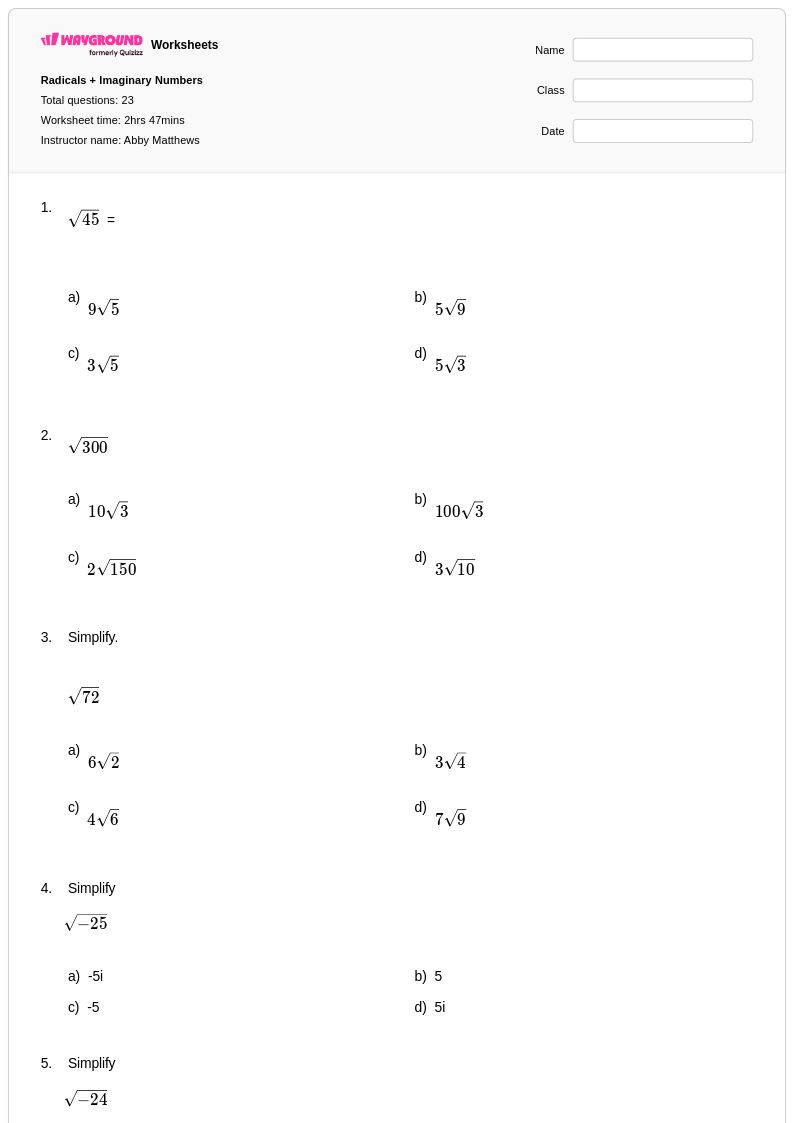
23 Q
9th - Uni
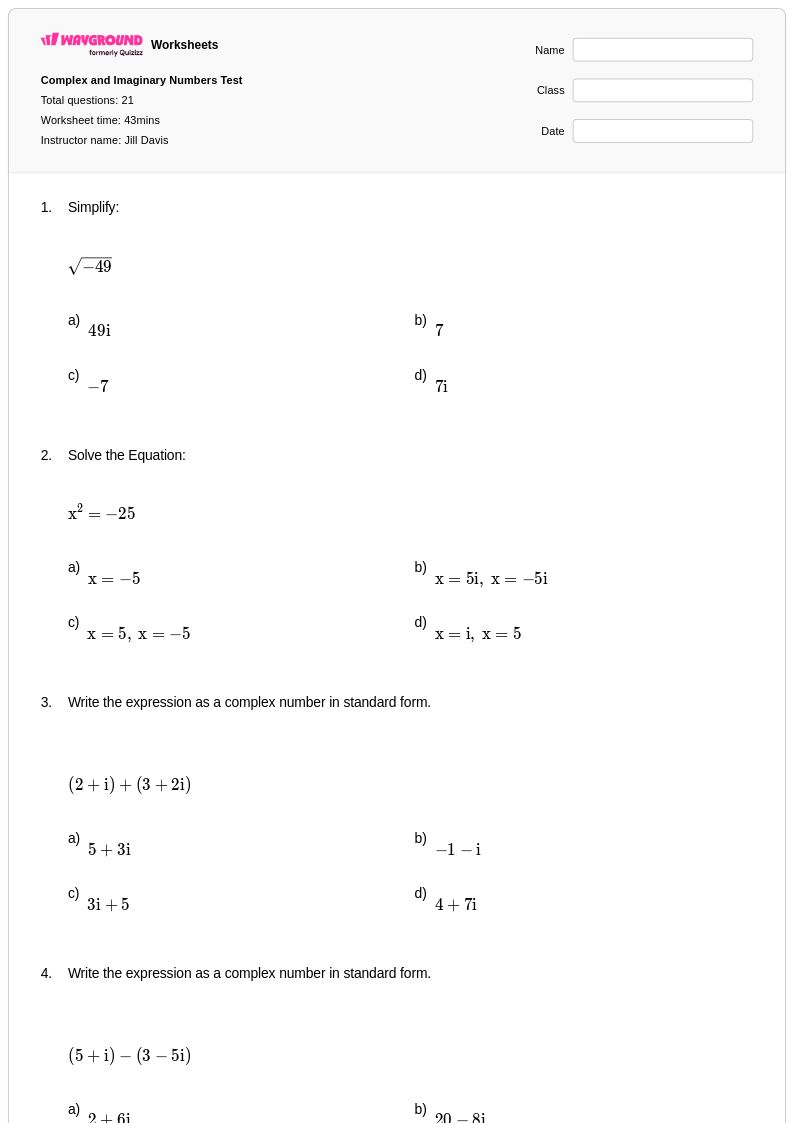
21 Q
11th
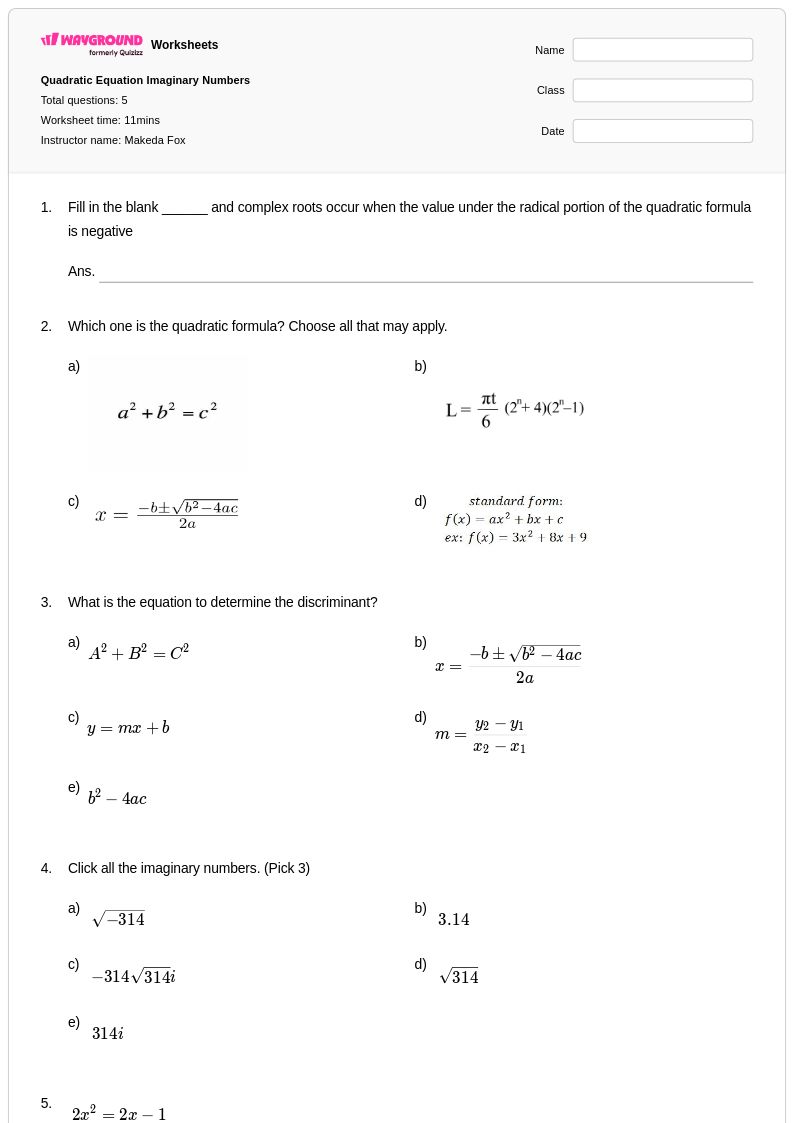
5 Q
10th
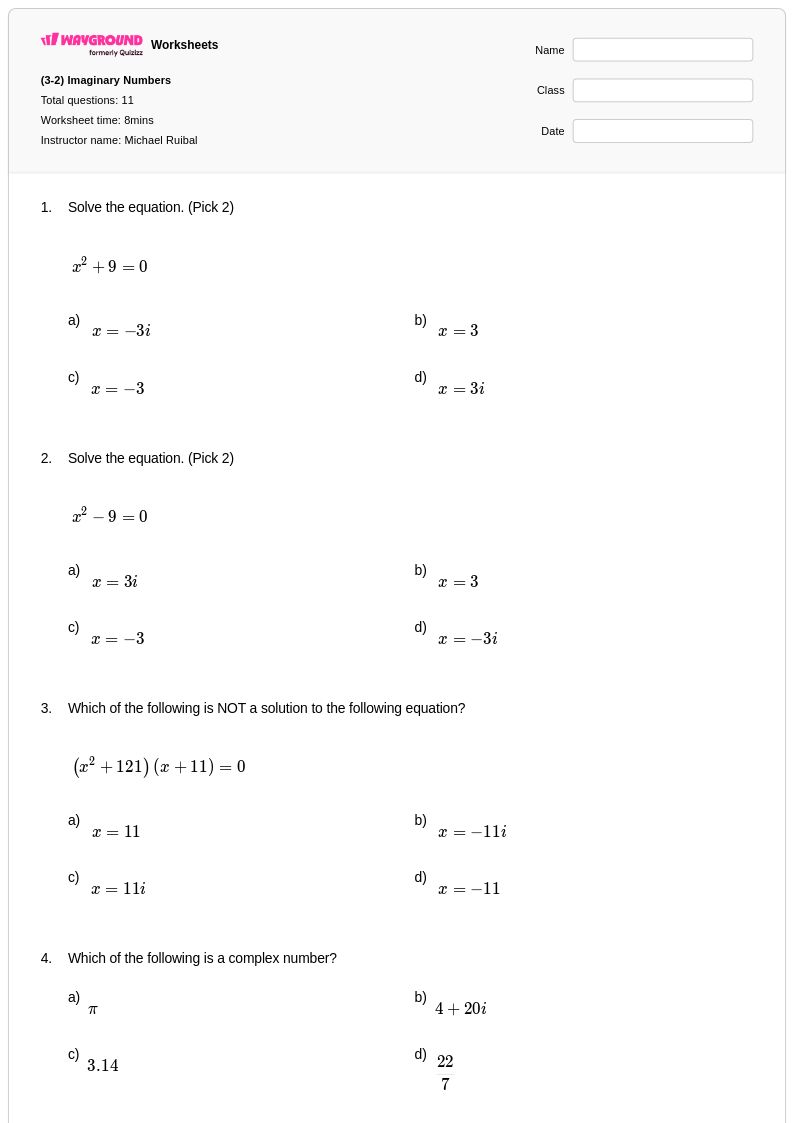
11 Q
10th - 12th
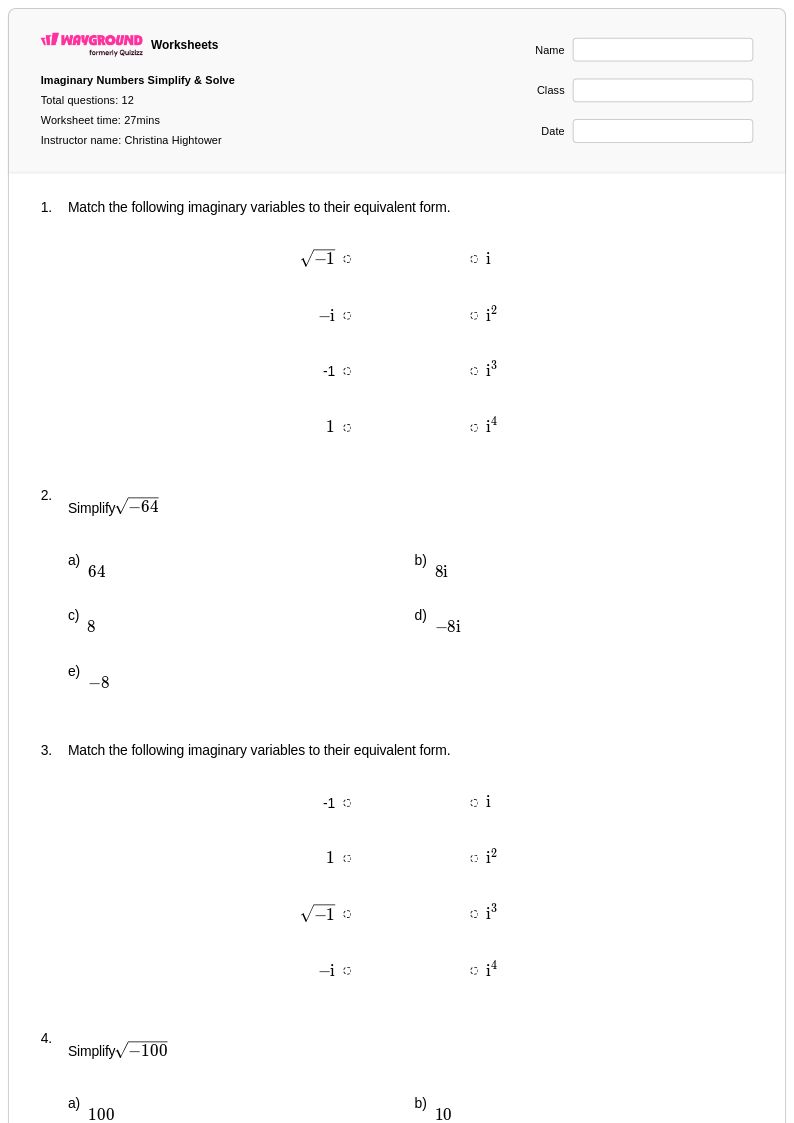
12 Q
9th - 12th
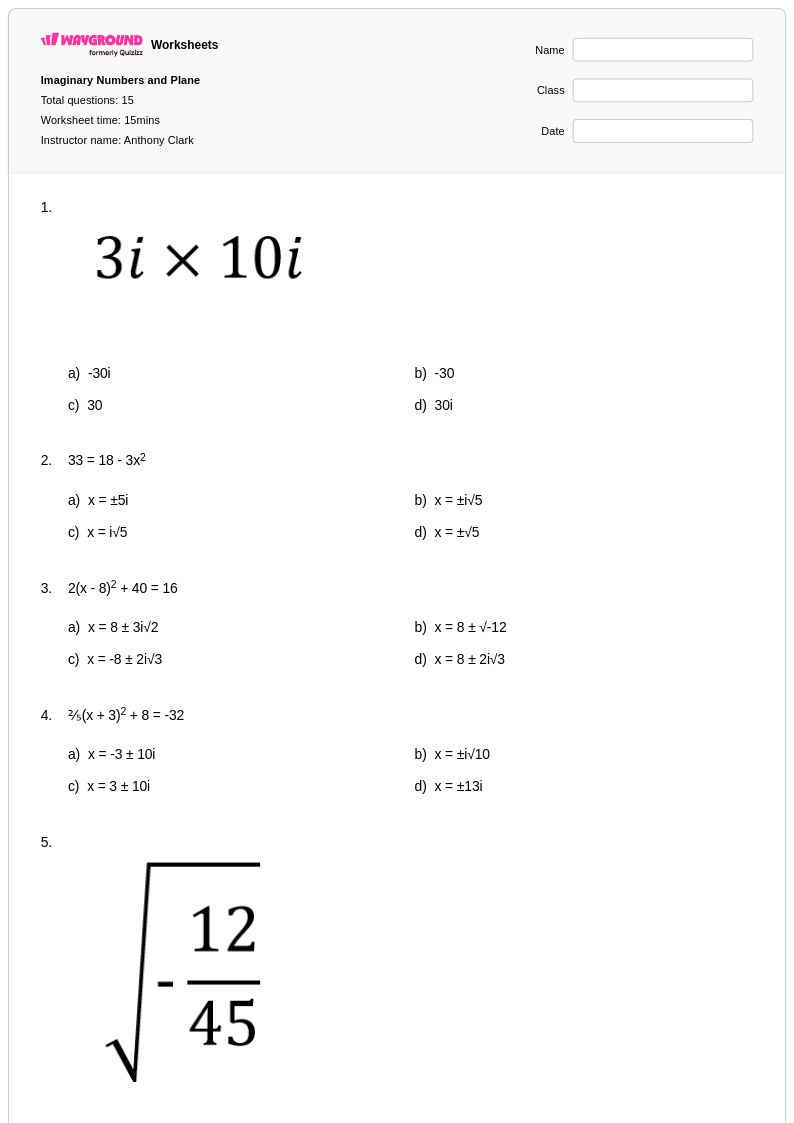
15 Q
10th - Uni
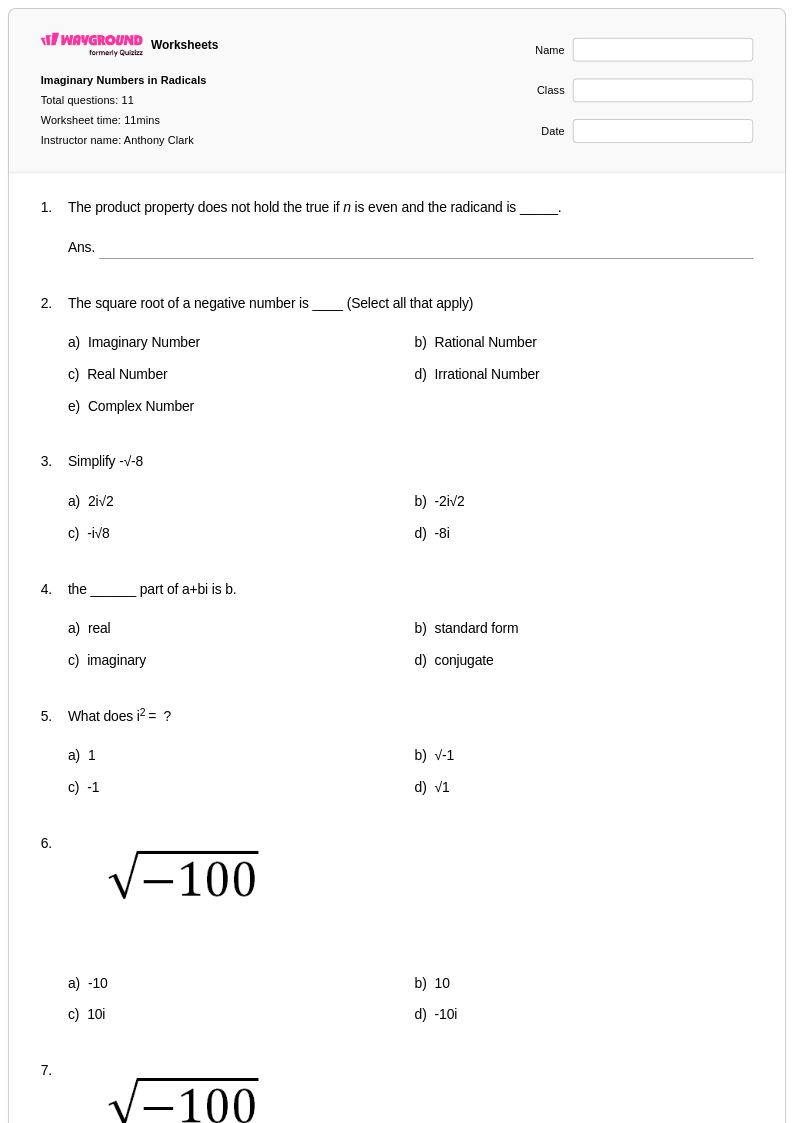
11 Q
10th - Uni
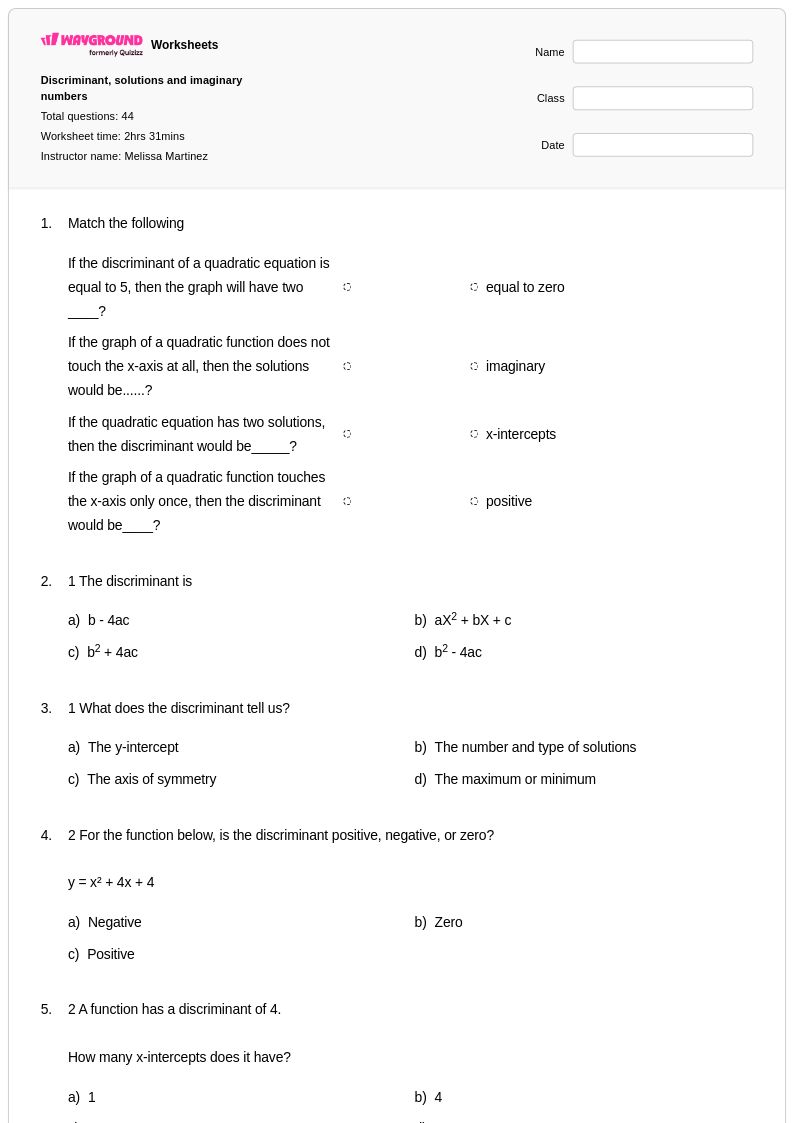
44 Q
9th - 12th
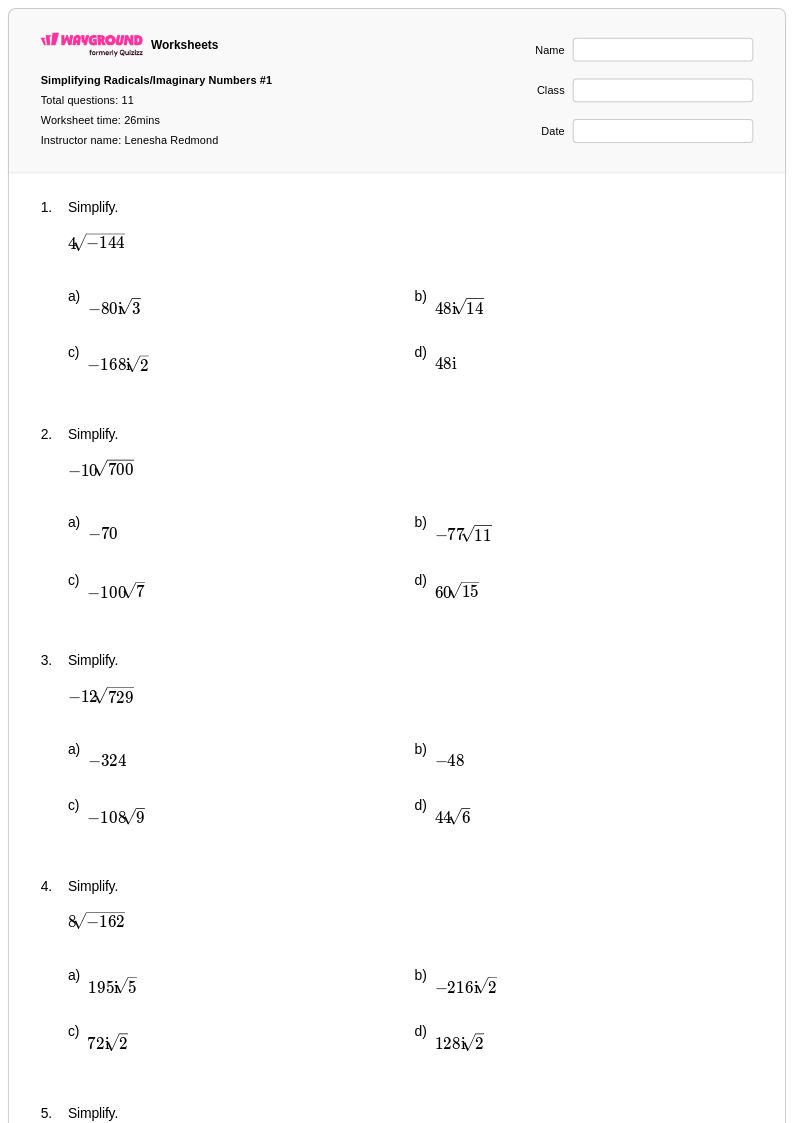
11 Q
9th - 12th
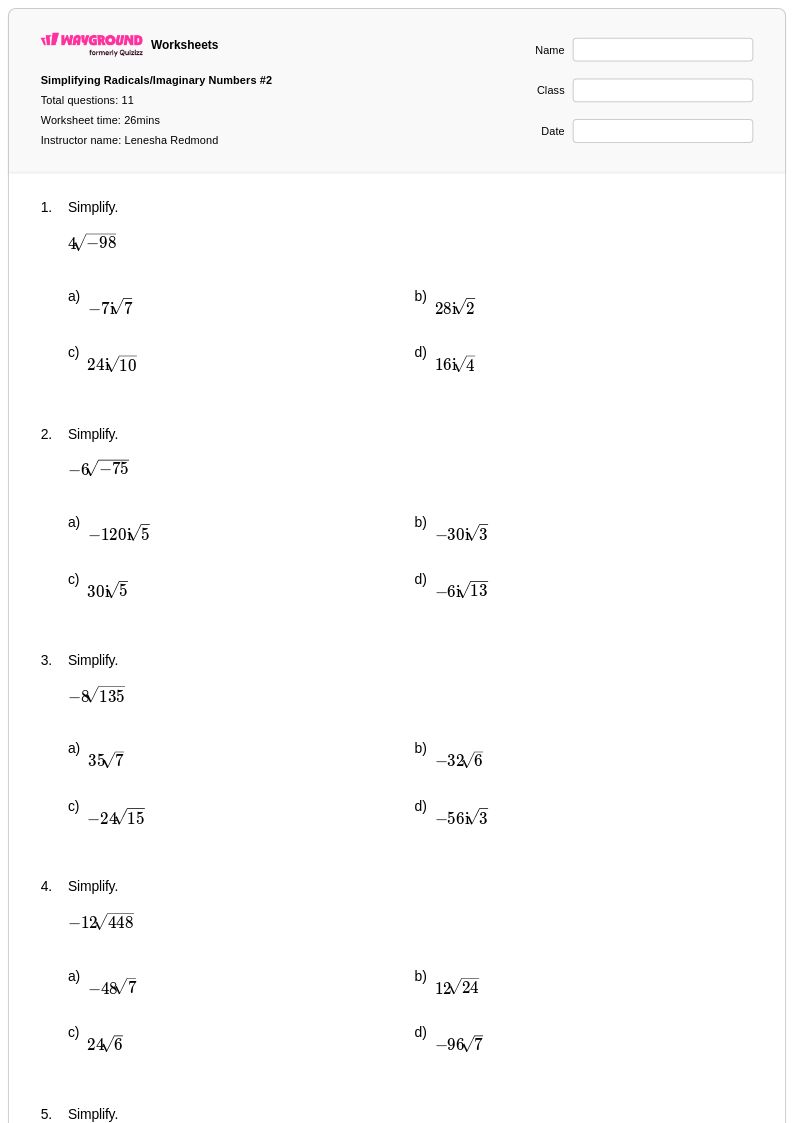
11 Q
9th - 12th
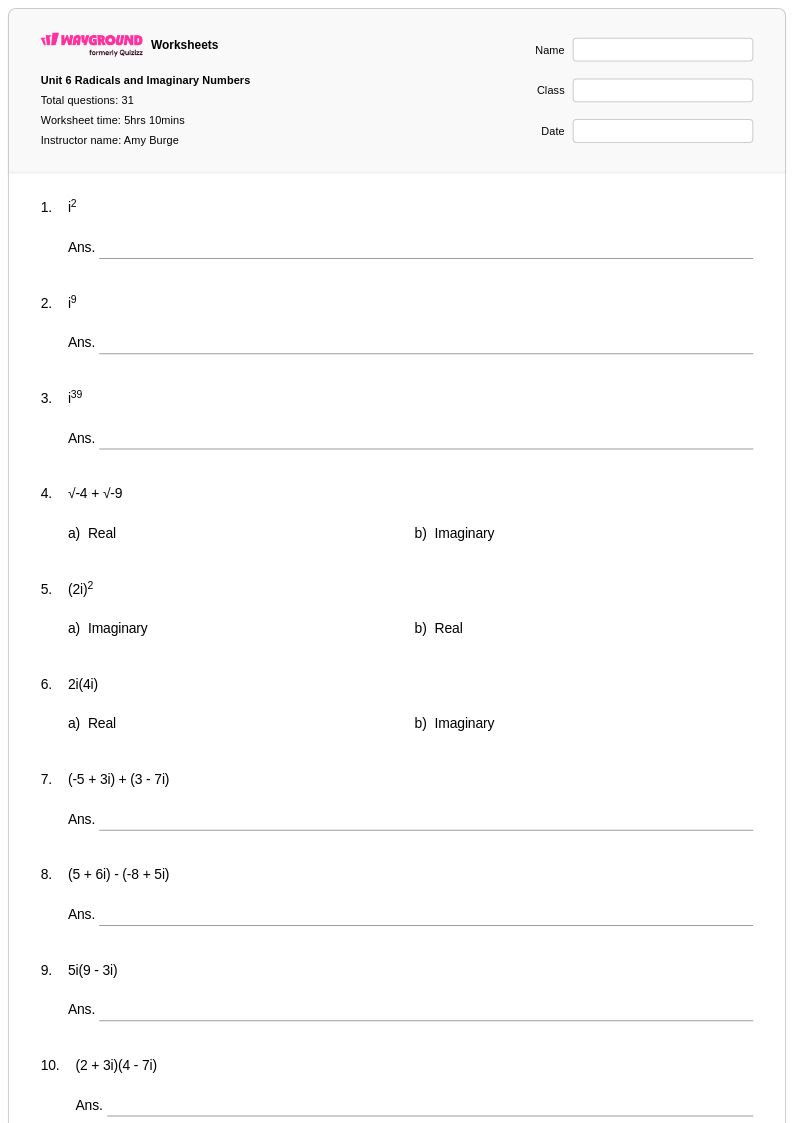
31 Q
9th - 12th
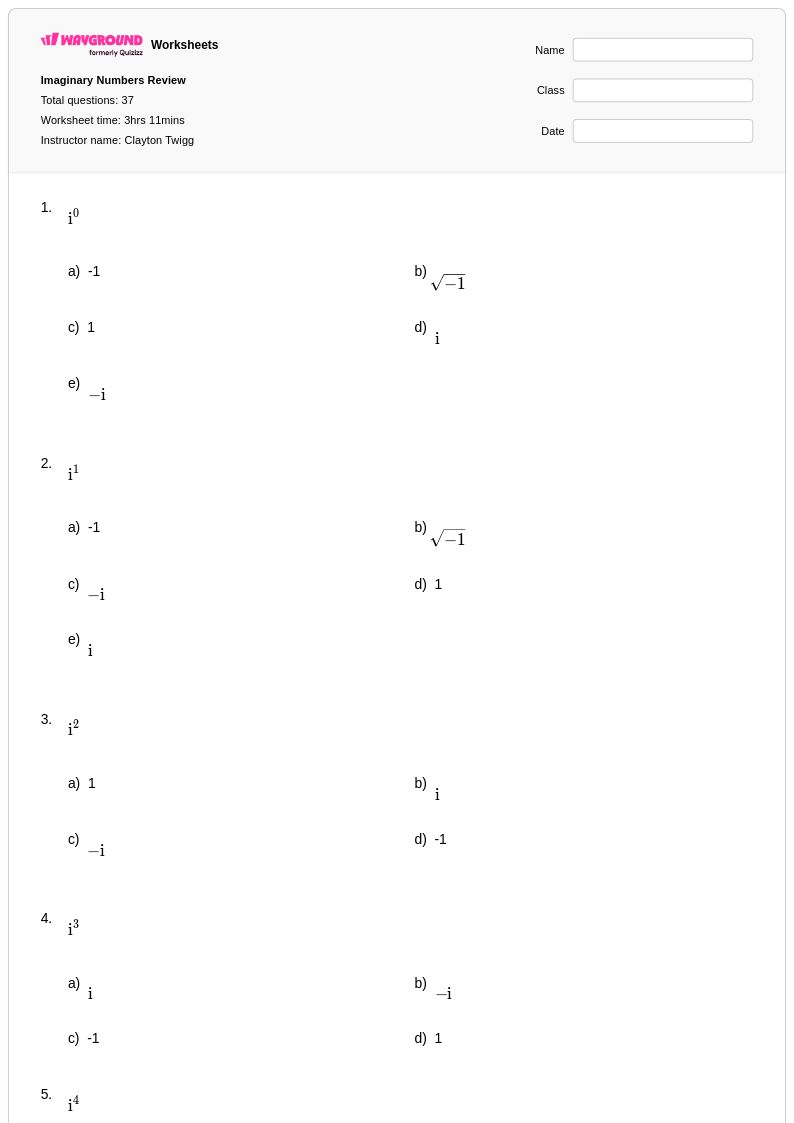
37 Q
10th
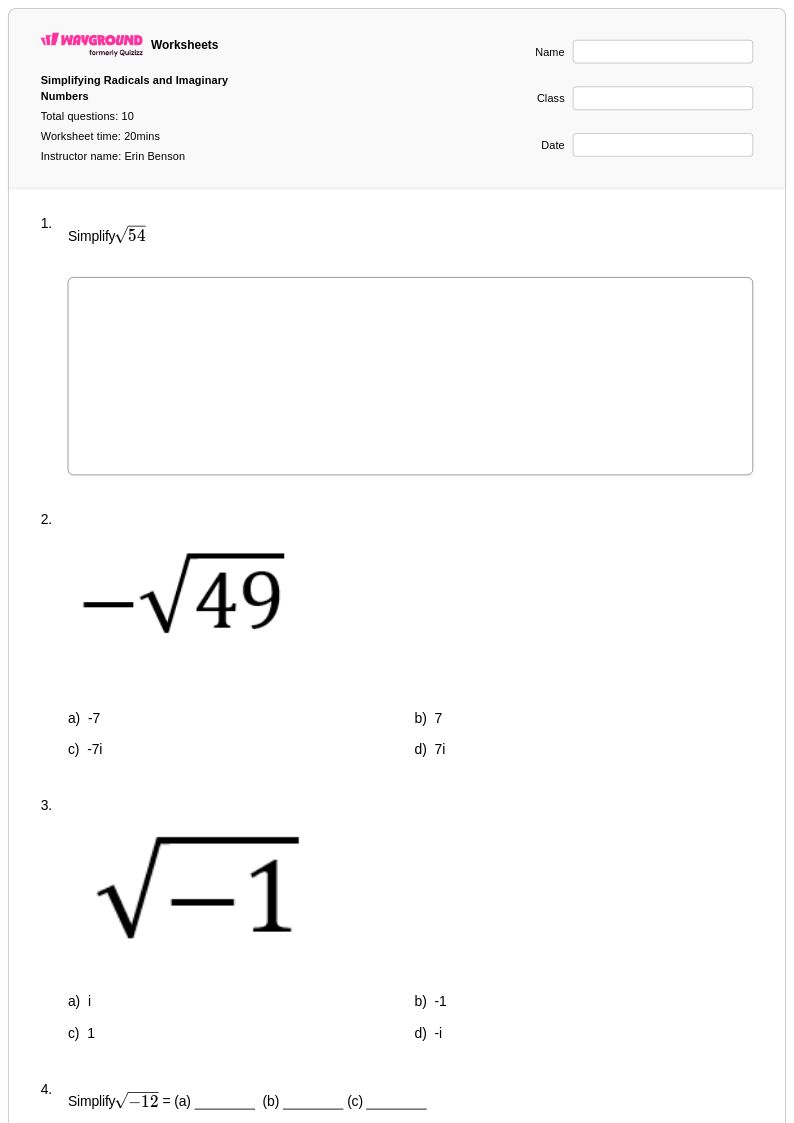
10 Q
10th
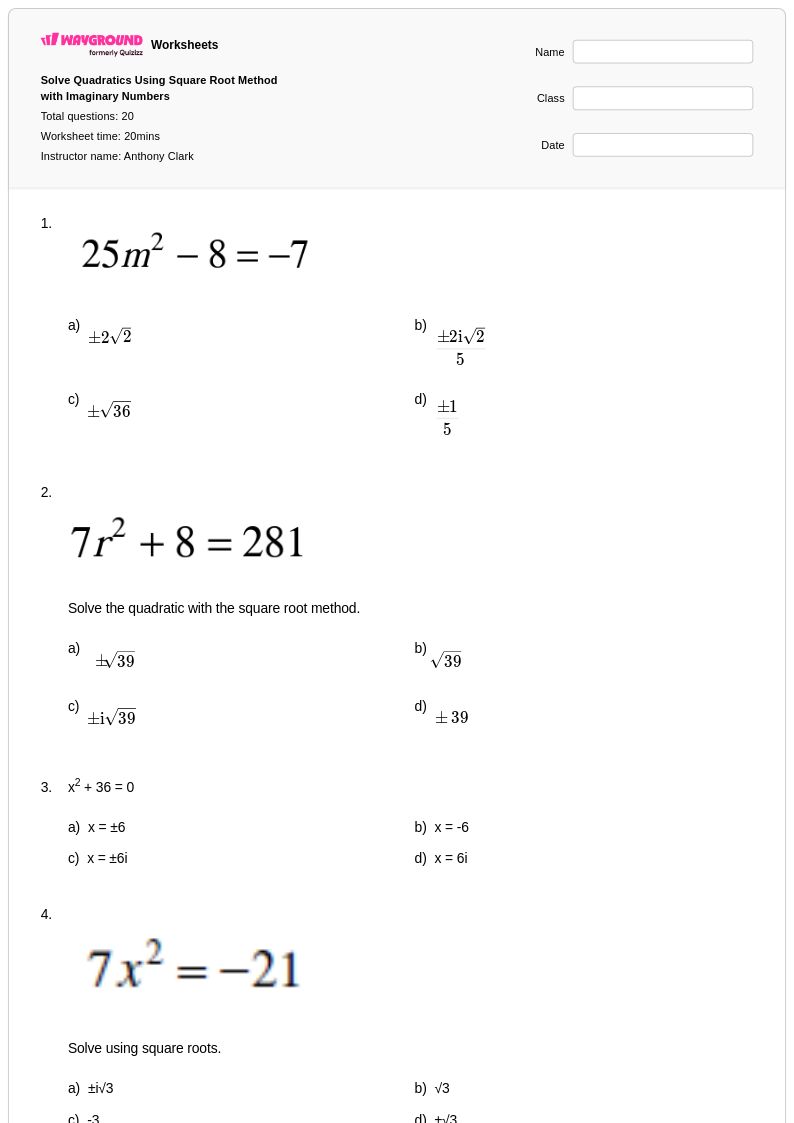
20 Q
10th - Uni
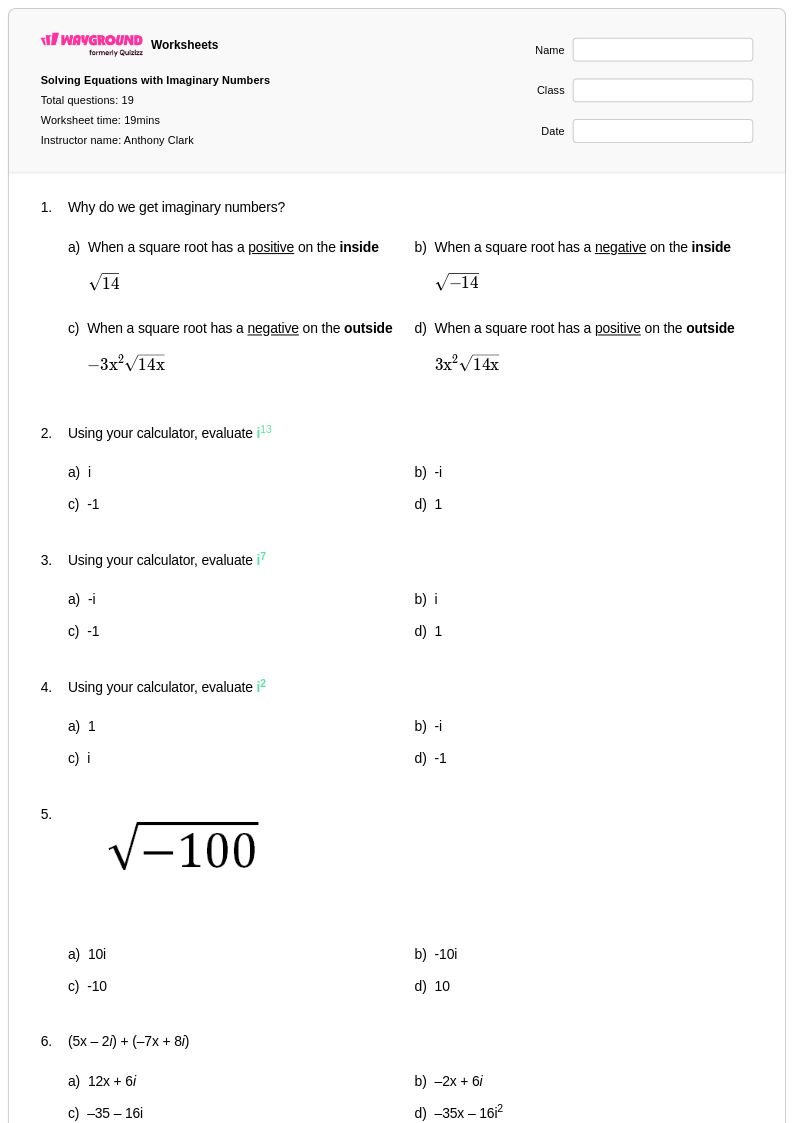
19 Q
10th - Uni
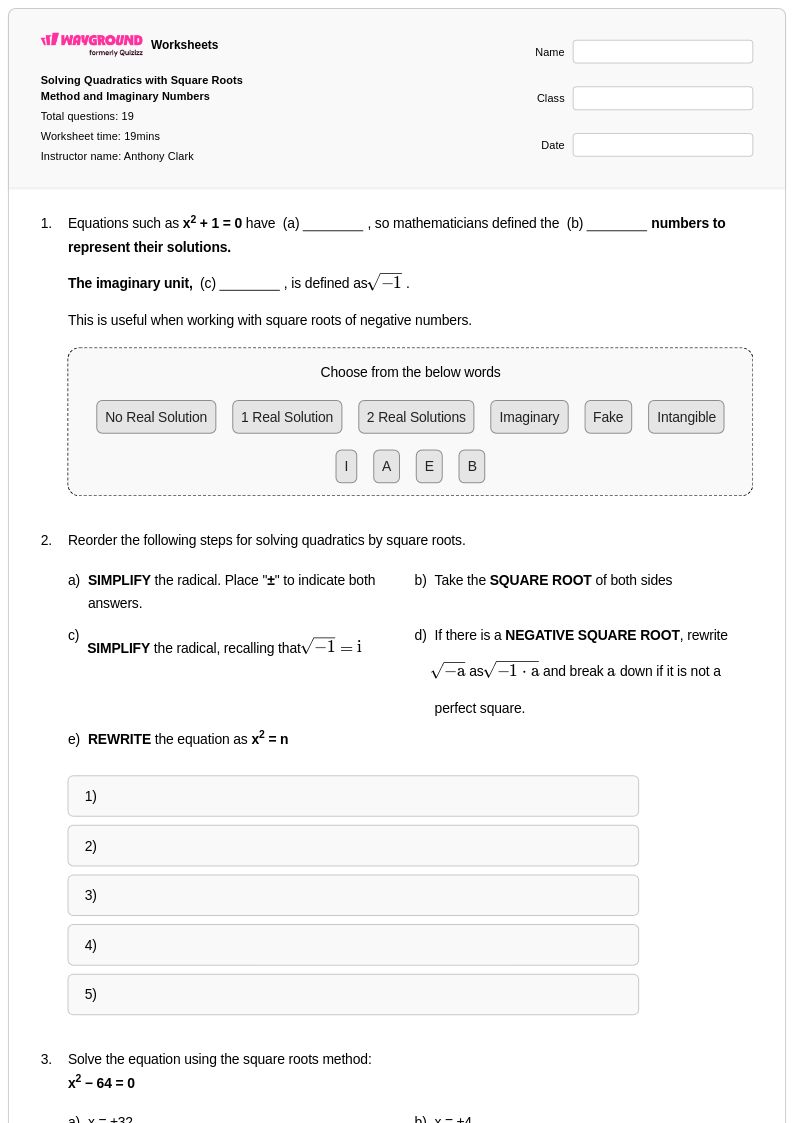
19 Q
10th - Uni
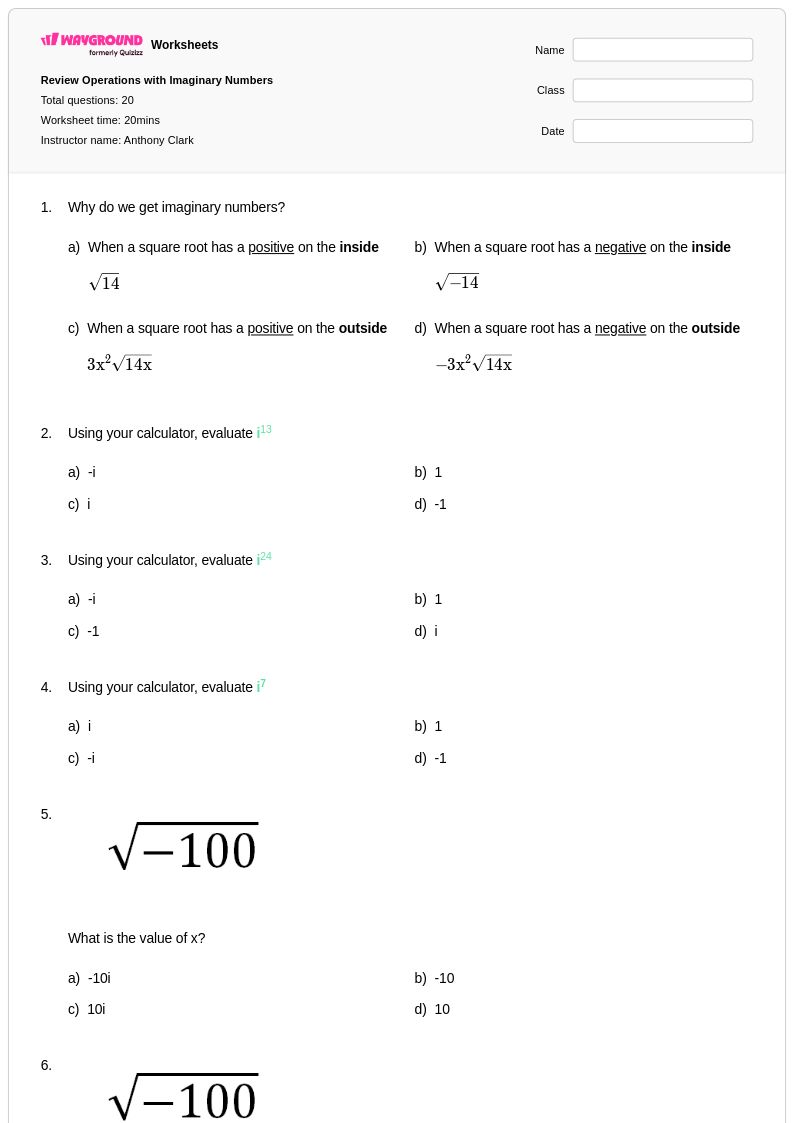
20 Q
11th - Uni
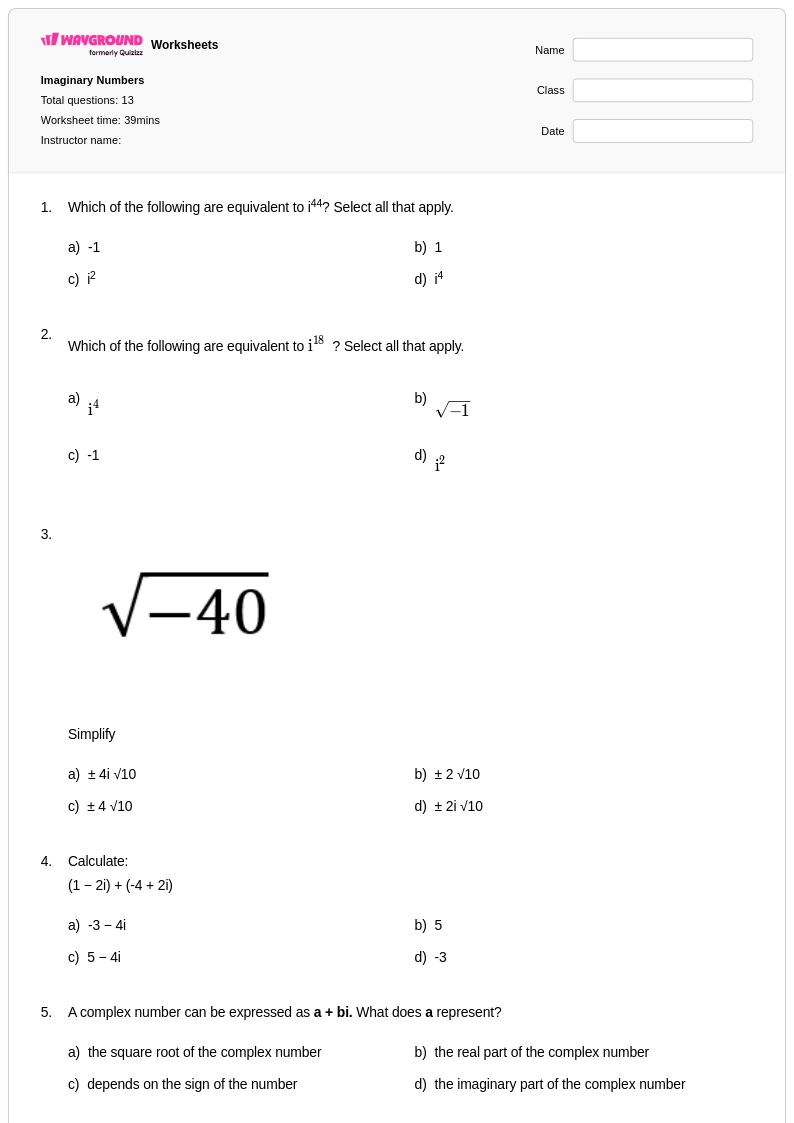
13 Q
9th - 12th
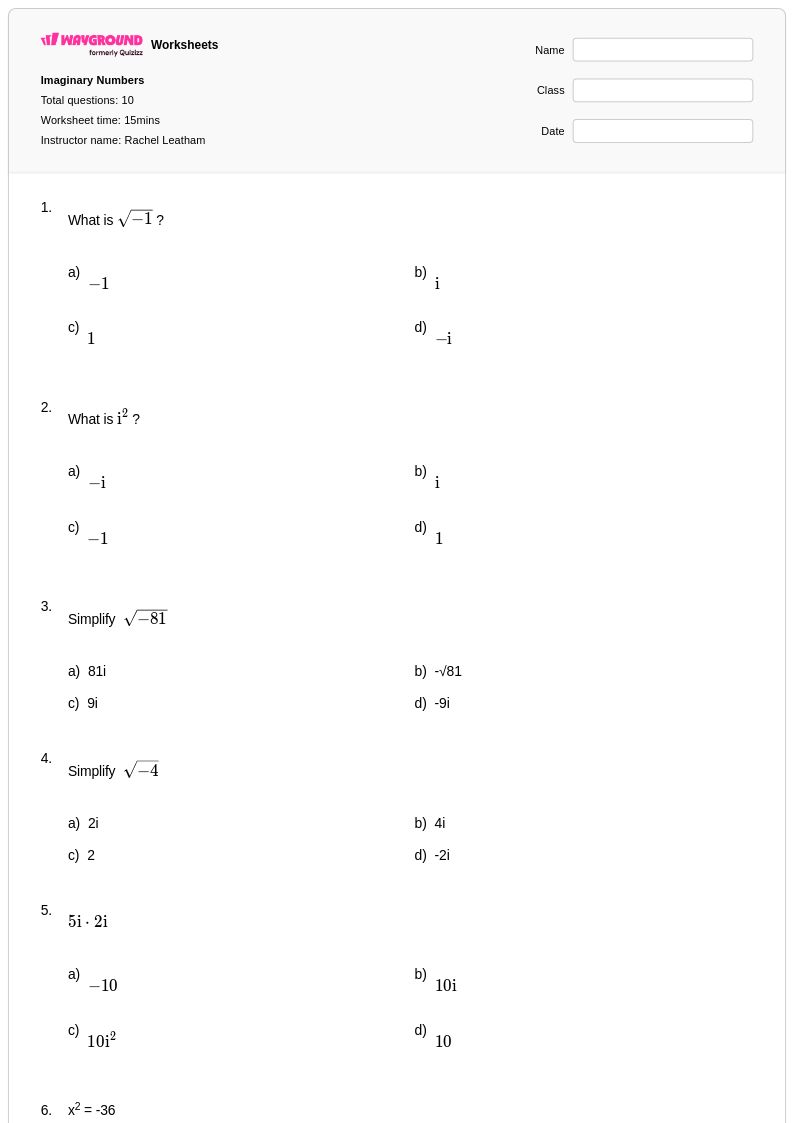
10 Q
9th - 12th
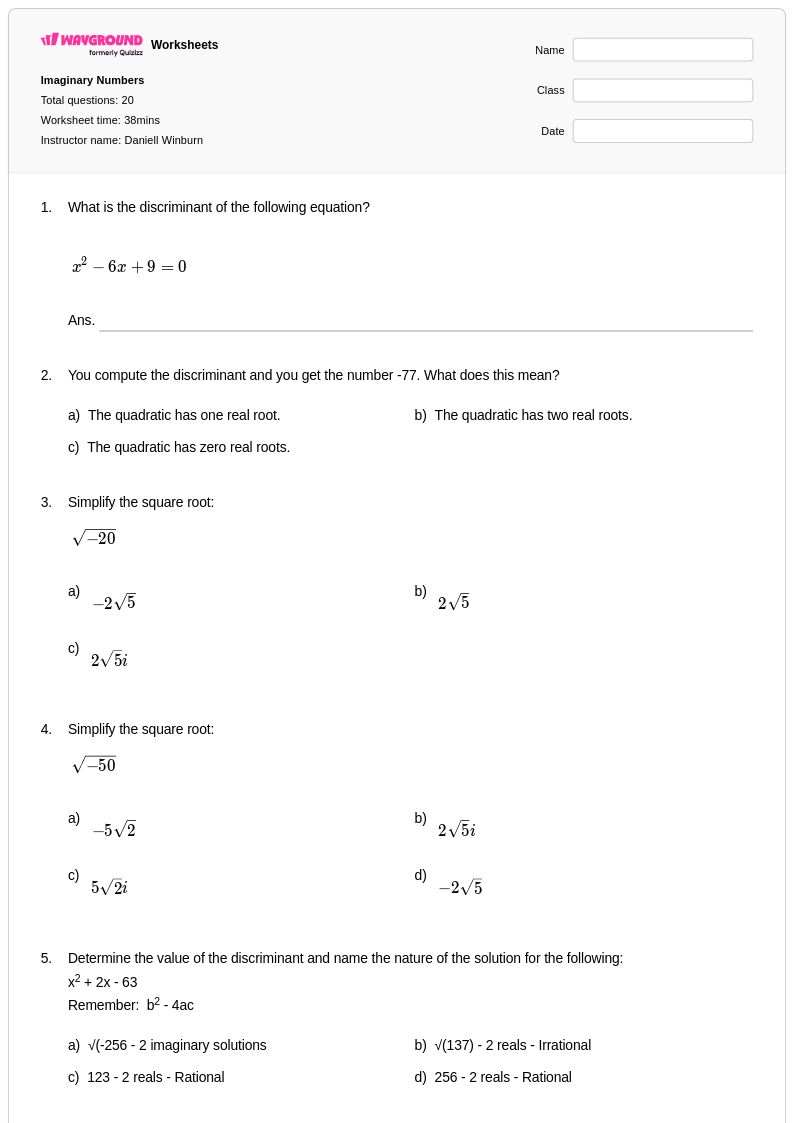
20 Q
10th - Uni
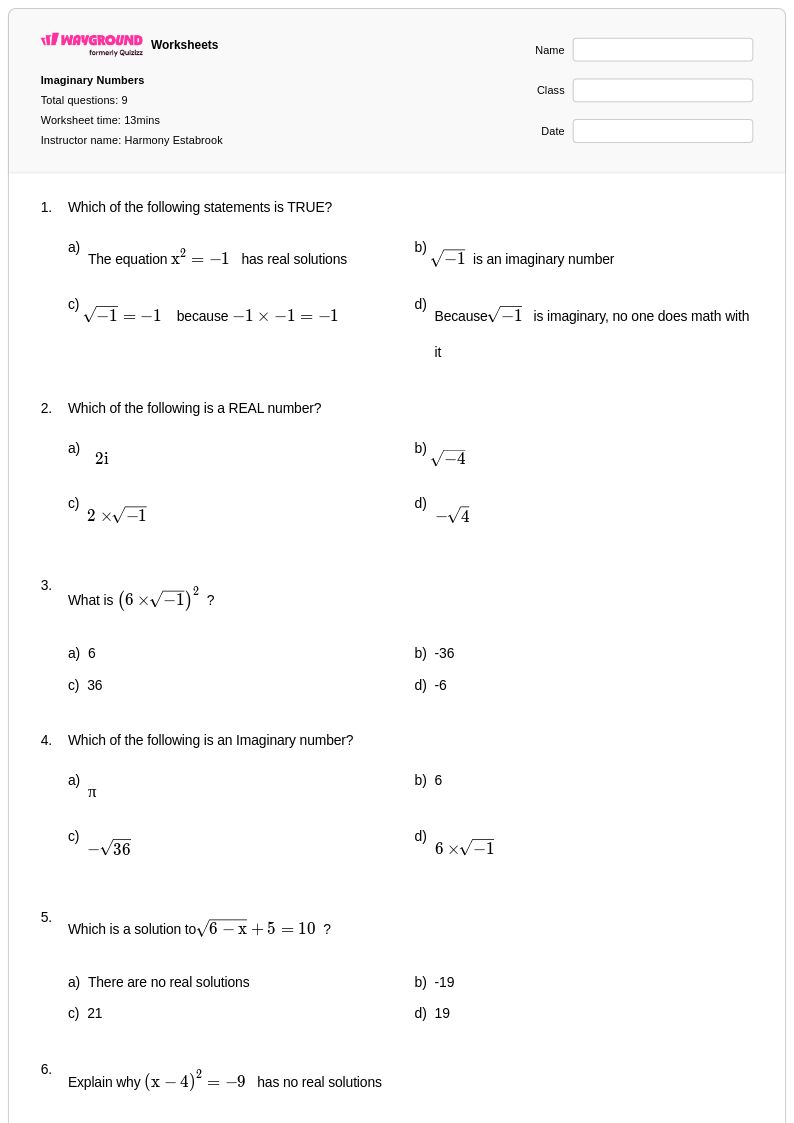
9 Q
11th - 12th
Explore Worksheets by Subjects
Explore printable Imaginary Numbers worksheets
Imaginary numbers worksheets available through Wayground (formerly Quizizz) provide comprehensive practice materials that help students master one of algebra's most challenging concepts. These carefully designed resources focus on building foundational understanding of the imaginary unit i, operations with complex numbers, and applications in algebraic problem-solving. Students work through practice problems that cover essential skills including simplifying powers of i, adding and subtracting complex numbers, multiplying complex conjugates, and graphing complex numbers on the coordinate plane. Each worksheet collection includes detailed answer keys that support independent learning and self-assessment, while the free printable format makes these resources accessible for classroom use, homework assignments, and targeted remediation sessions.
Wayground (formerly Quizizz) empowers mathematics educators with an extensive library of millions of teacher-created imaginary numbers worksheets that streamline lesson planning and differentiated instruction. The platform's robust search and filtering capabilities allow teachers to quickly locate materials aligned with specific curriculum standards and targeted to appropriate skill levels, ensuring that complex number concepts are introduced and reinforced systematically. Teachers can customize existing worksheets or create new ones to address individual student needs, supporting both remediation for struggling learners and enrichment opportunities for advanced students. Available in both digital and printable pdf formats, these versatile resources integrate seamlessly into traditional classroom instruction, hybrid learning environments, and independent study programs, giving educators the flexibility to provide consistent, high-quality practice with imaginary numbers across diverse teaching contexts.
FAQs
How do I introduce imaginary numbers for the first time?
What exercises best help students practice with imaginary numbers?
What is a common mistake students make with imaginary numbers?
How can I use this imaginary numbers worksheet in my class?
How do imaginary numbers fit into the high school math curriculum?
How can I support students who struggle with the abstract nature of complex numbers?