
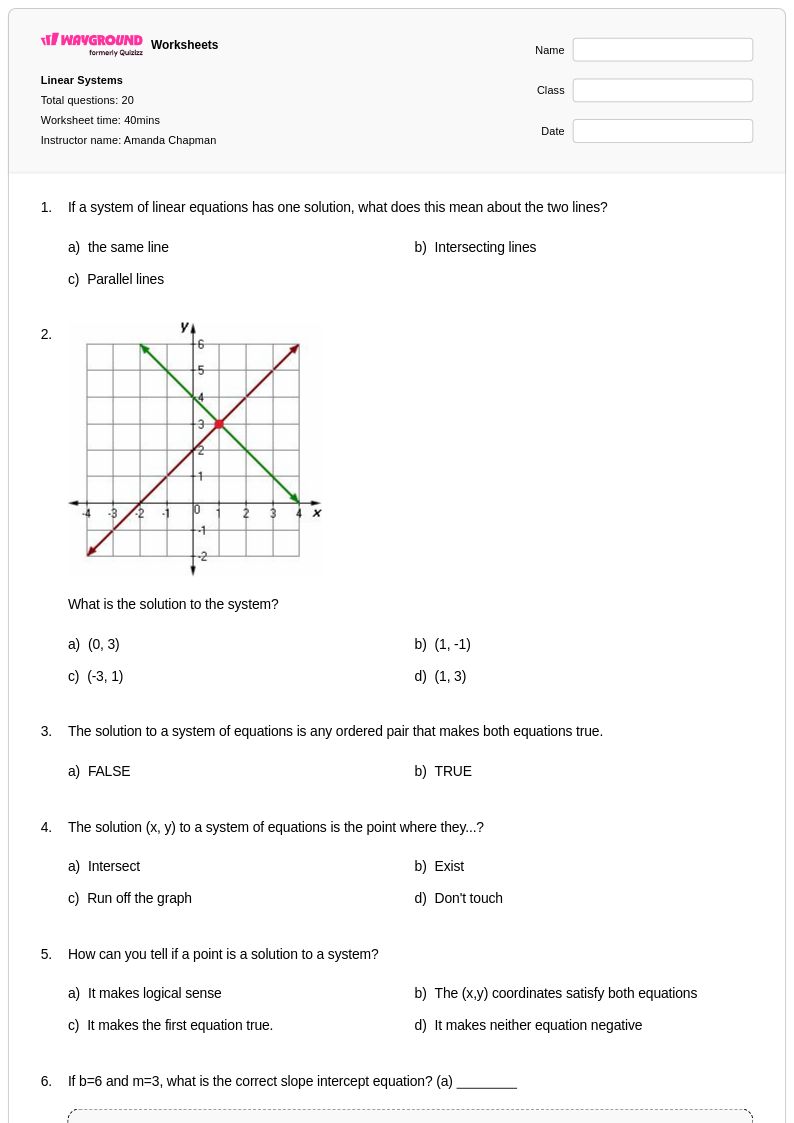
20 Q
8th
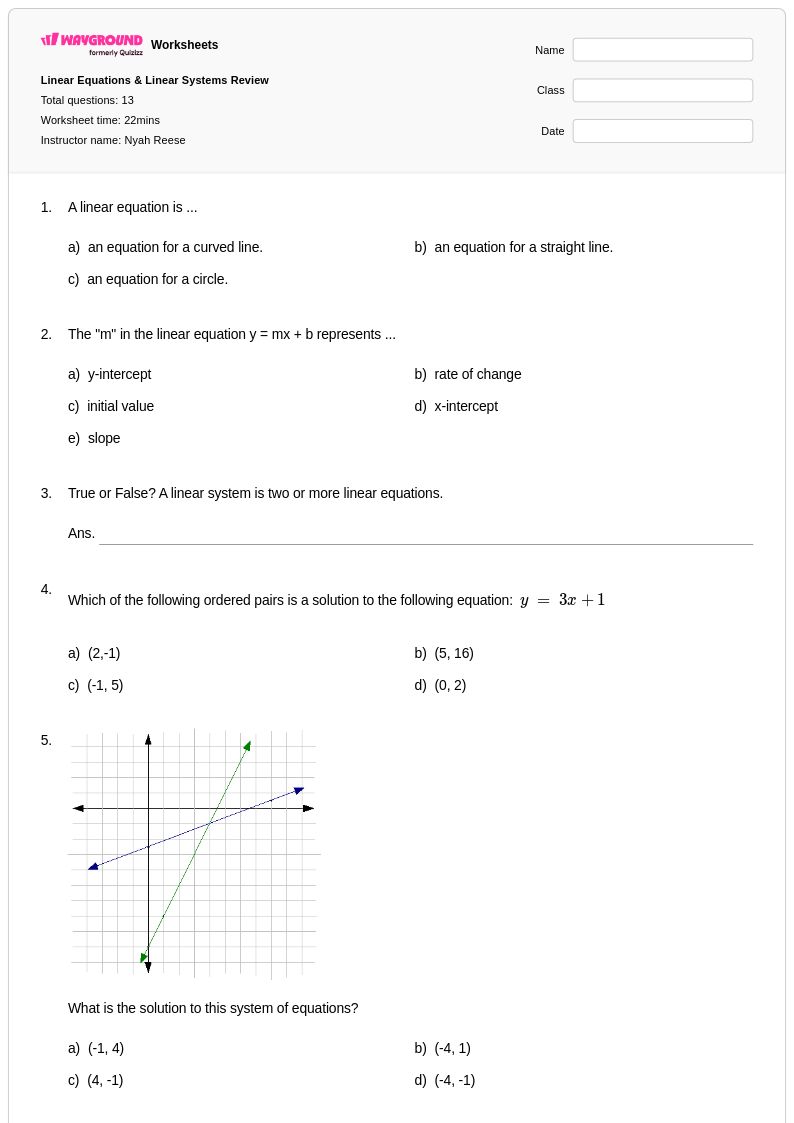
13 Q
8th
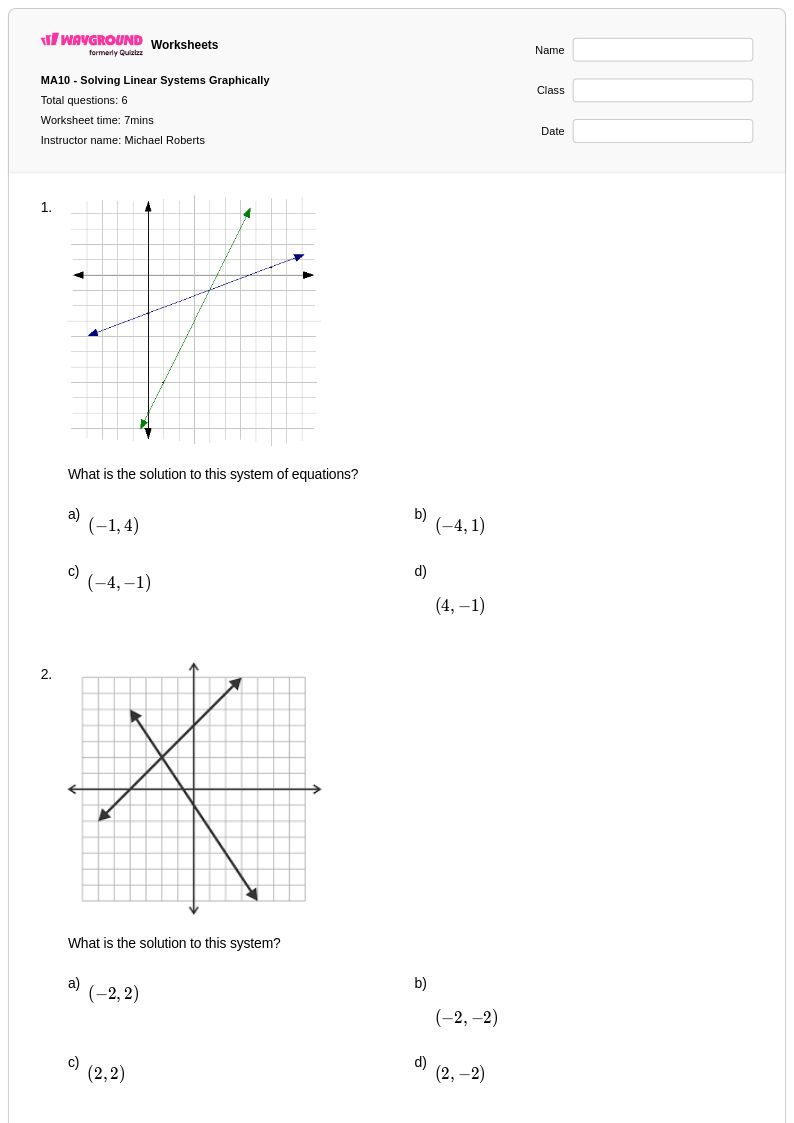
6 Q
10th
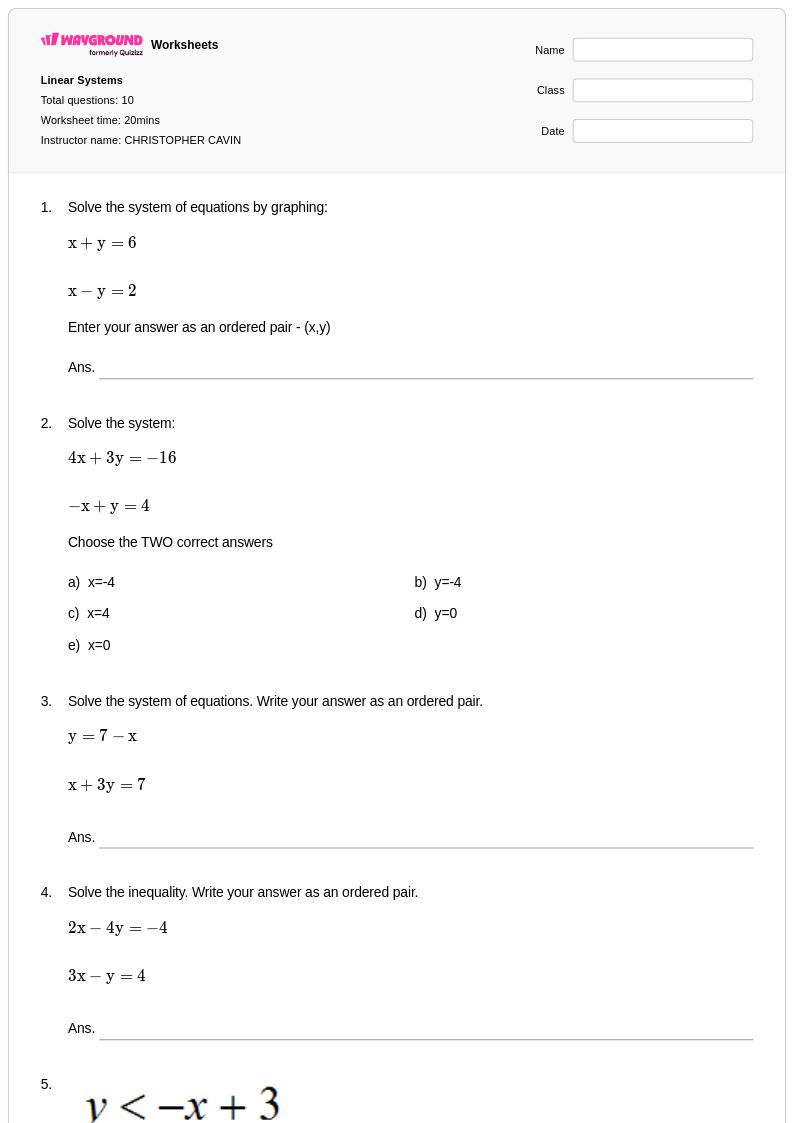
10 Q
11th
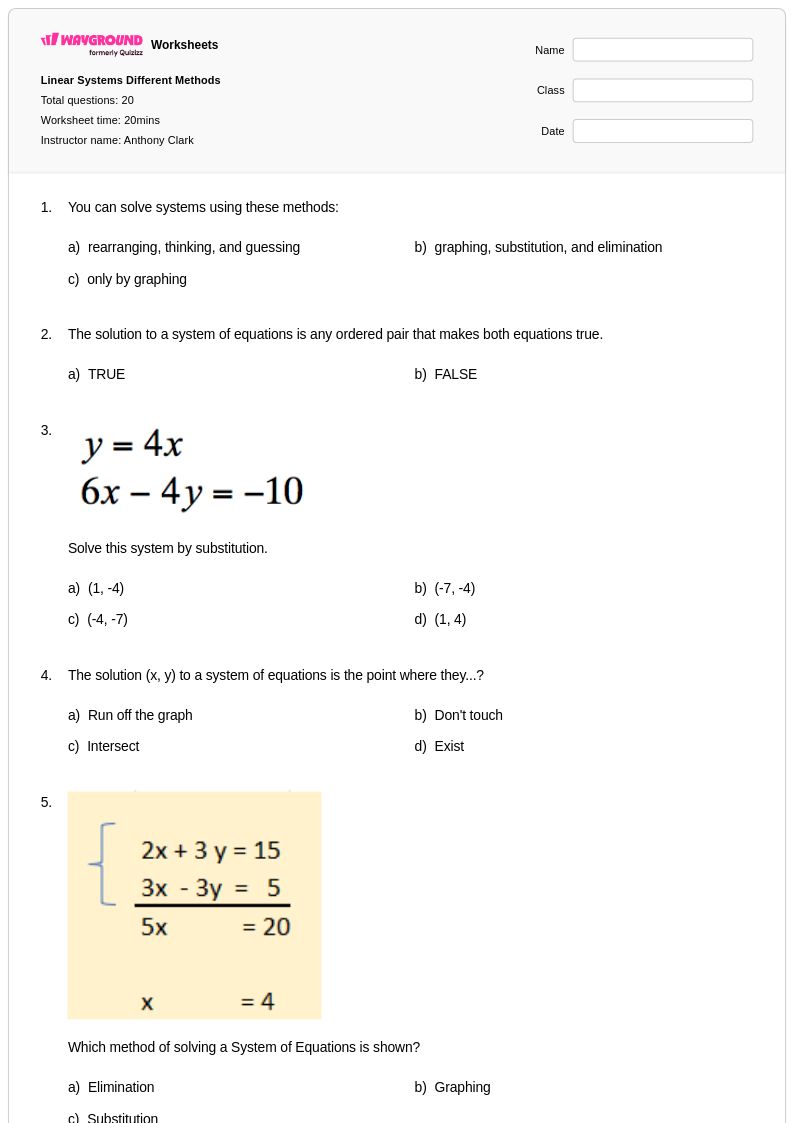
20 Q
8th - Uni
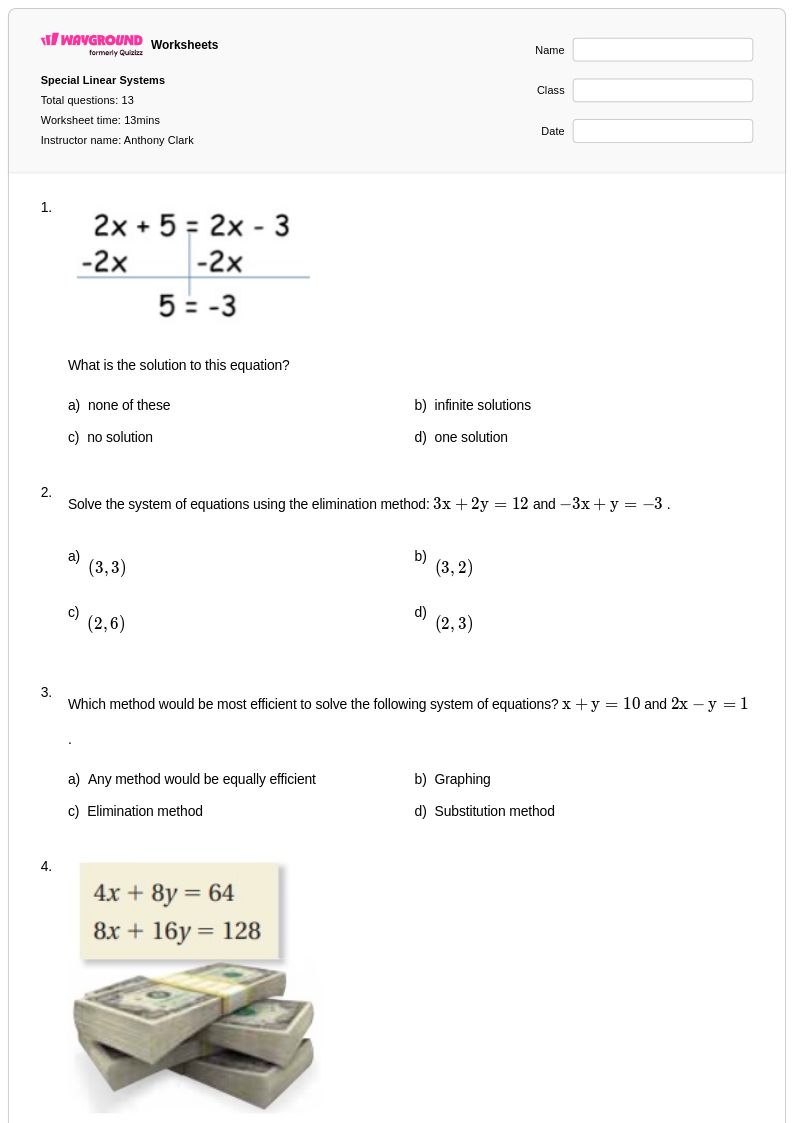
13 Q
8th - Uni
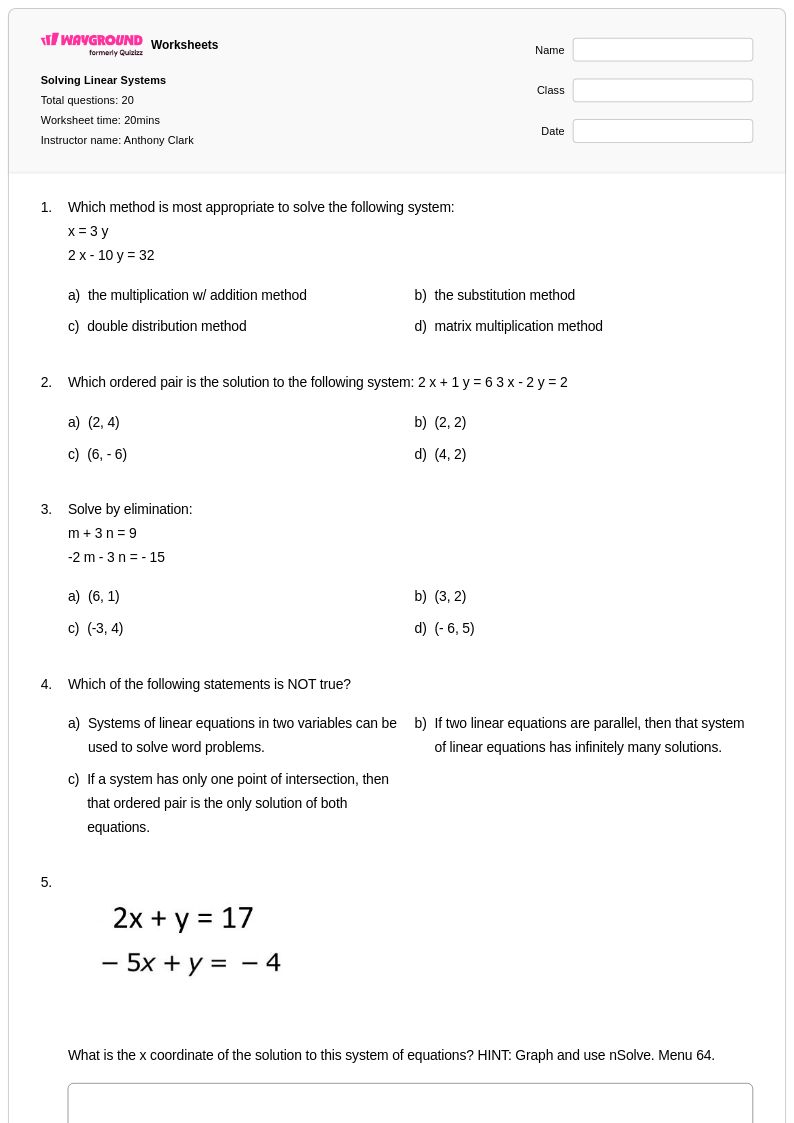
20 Q
9th - Uni
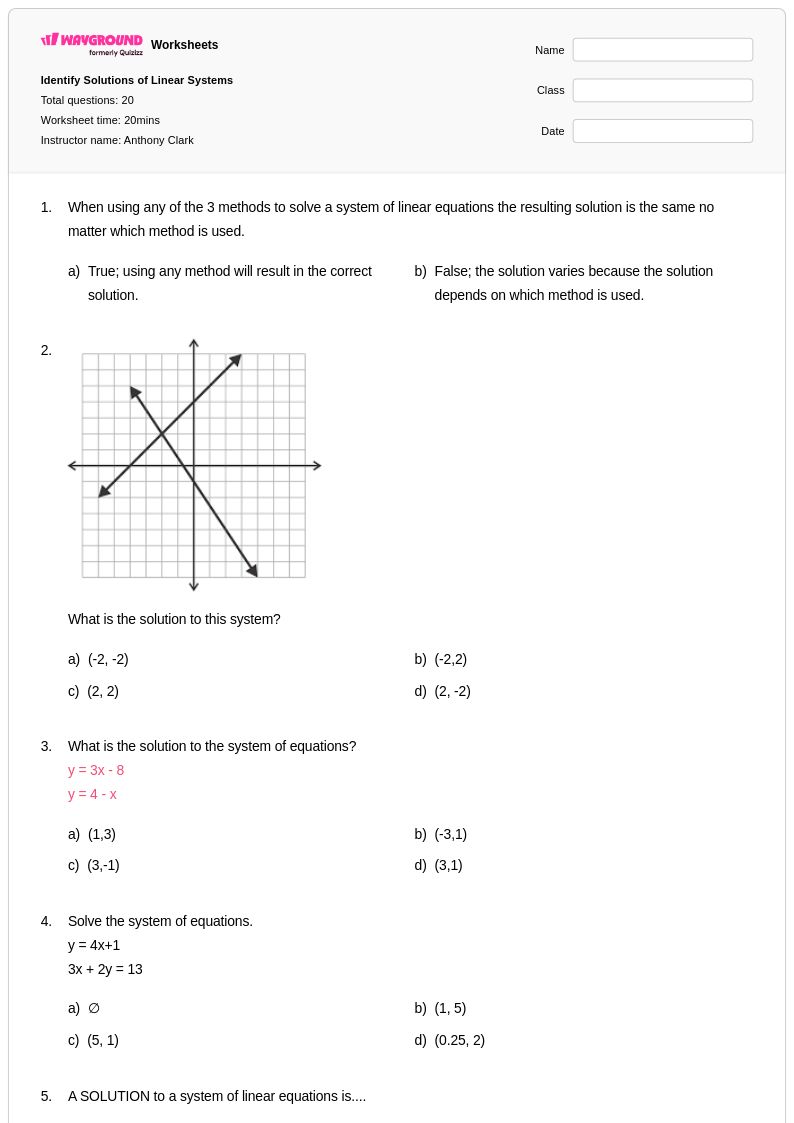
20 Q
9th - Uni
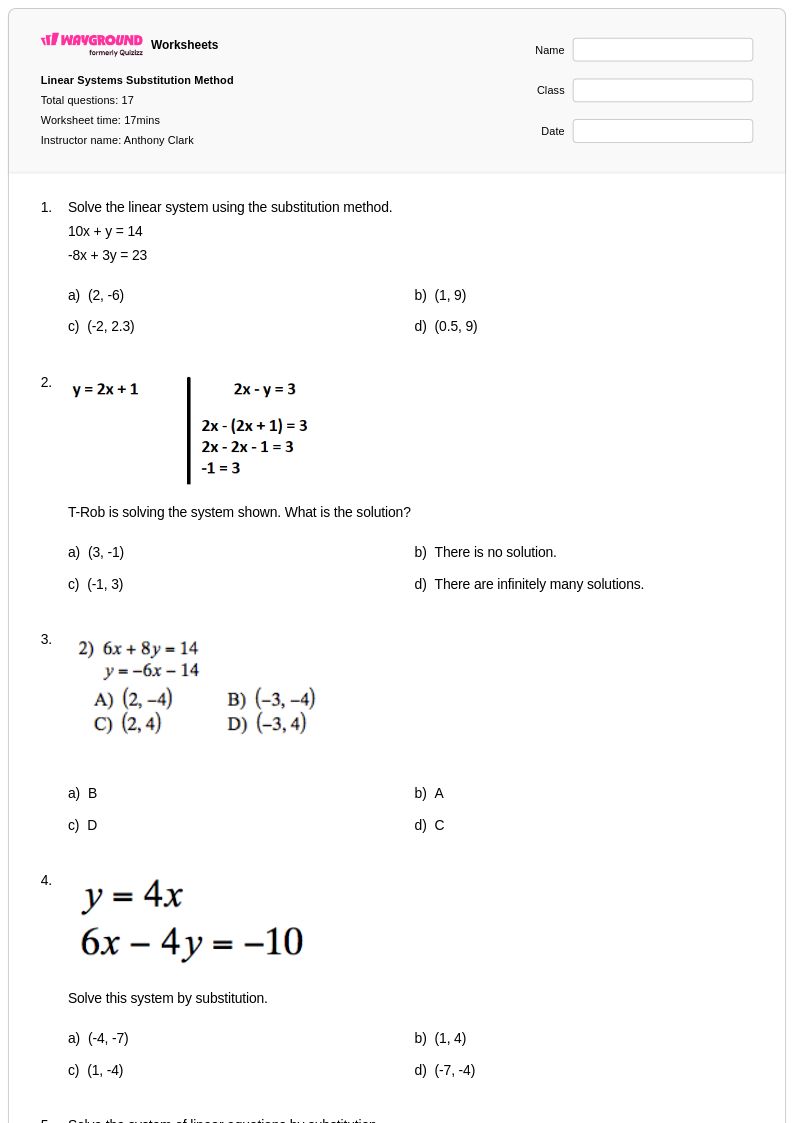
17 Q
9th - Uni
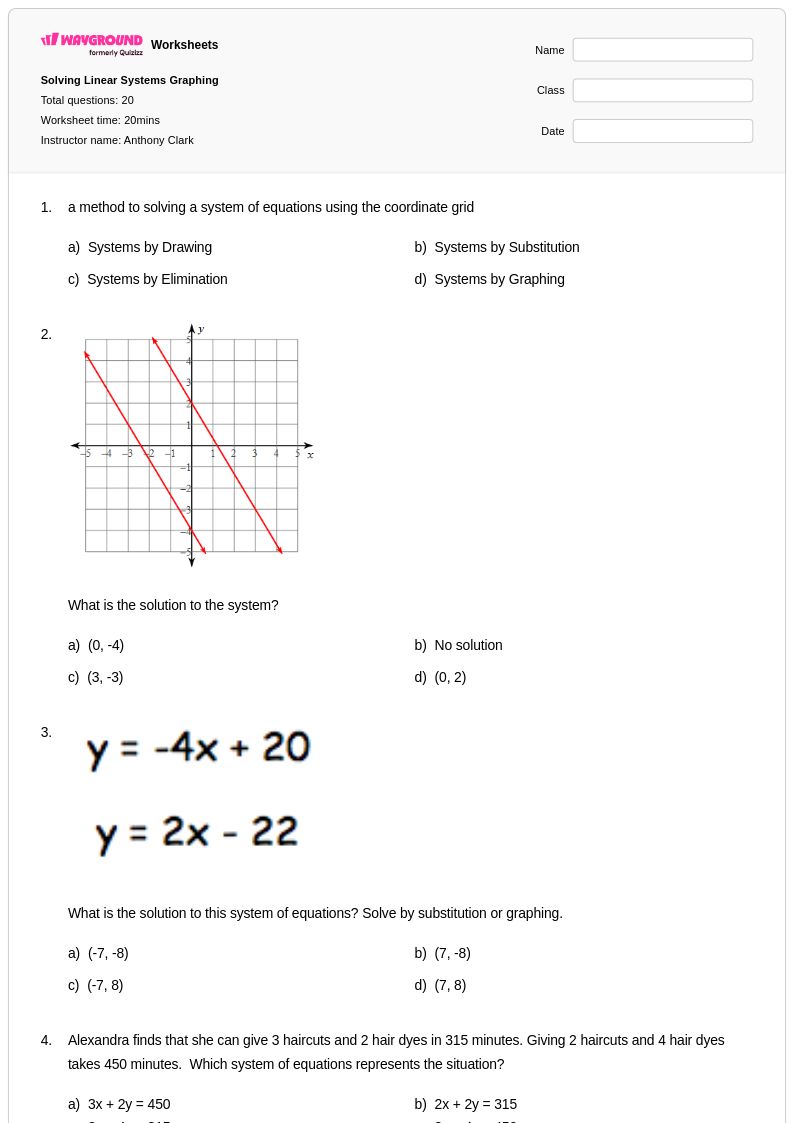
20 Q
9th - Uni
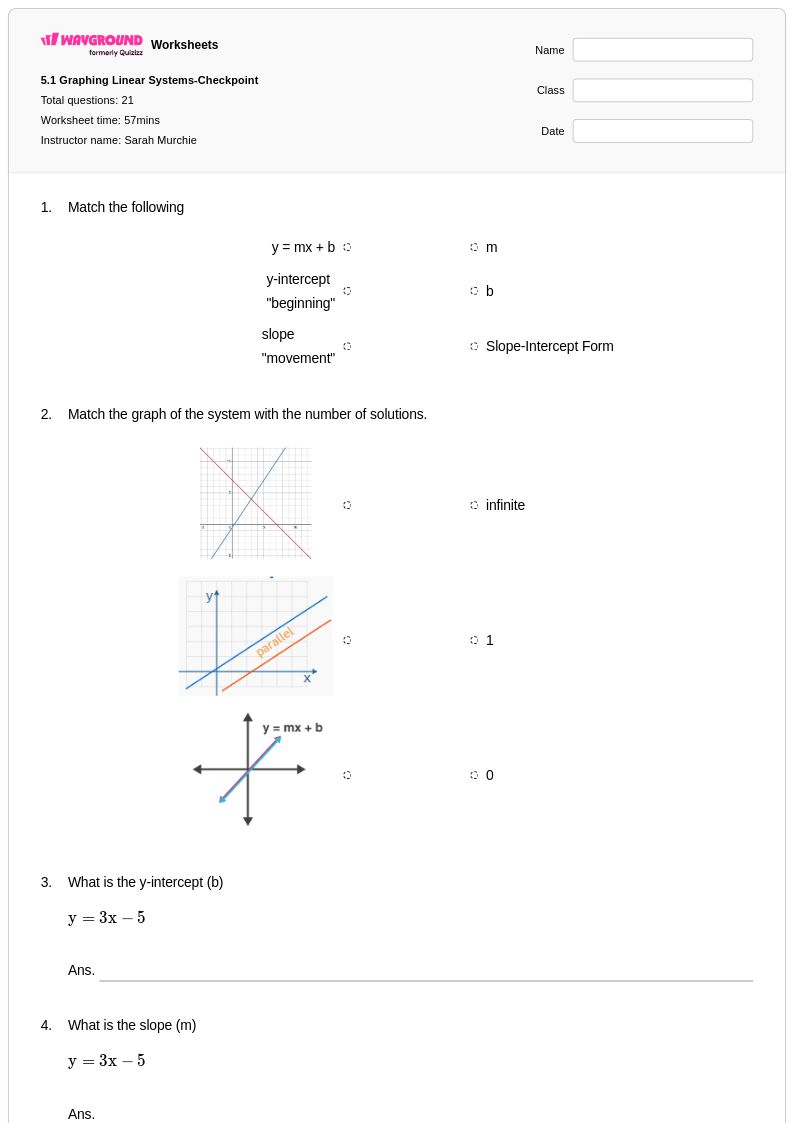
21 Q
9th - 12th
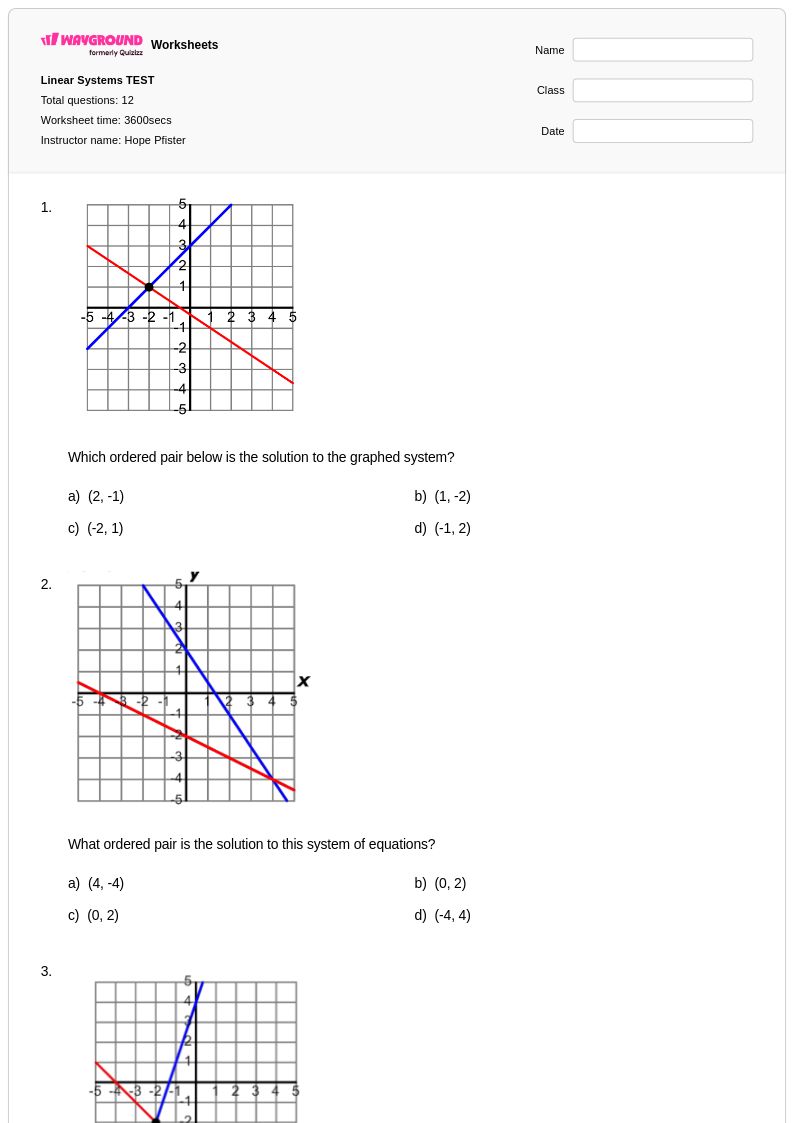
12 Q
8th
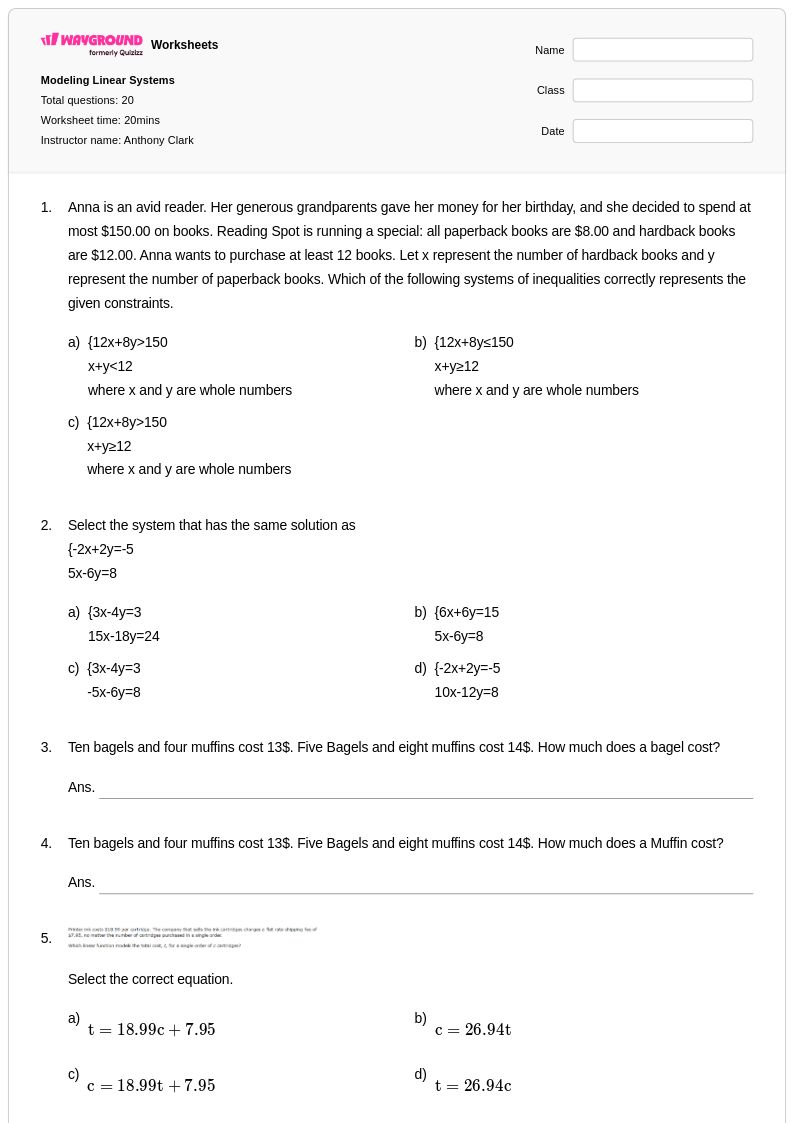
20 Q
9th - Uni
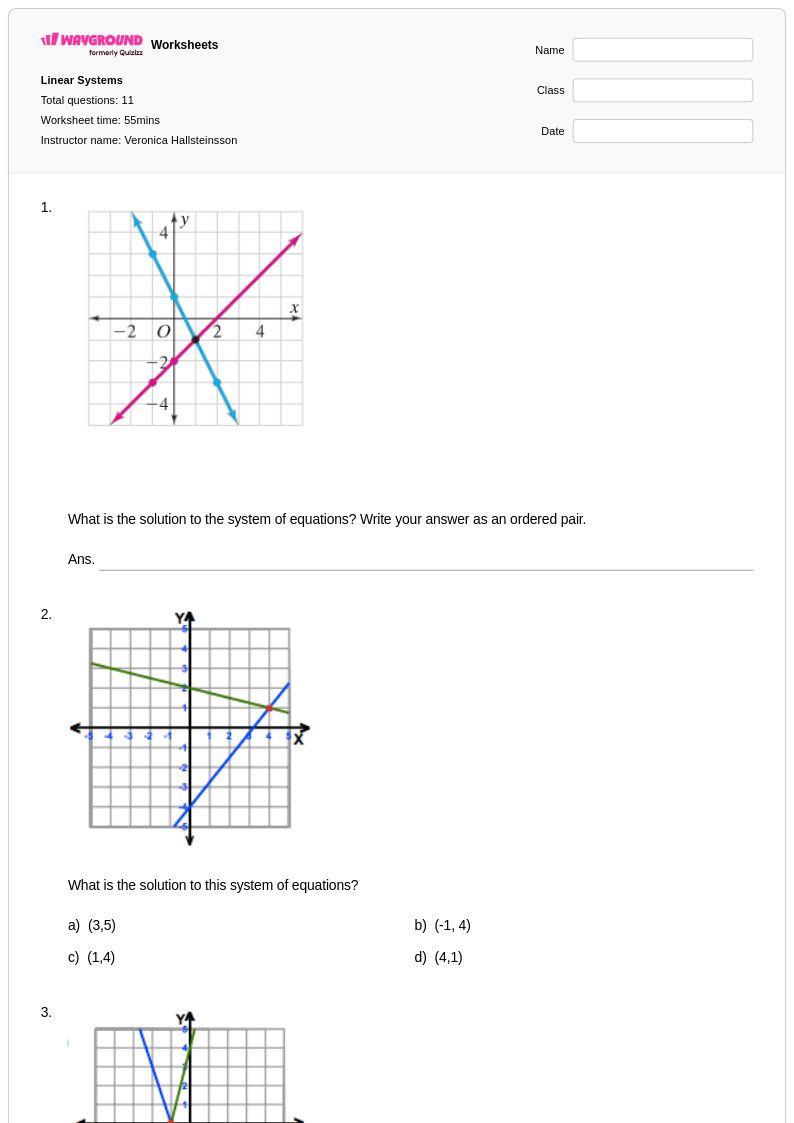
11 Q
KG - Uni
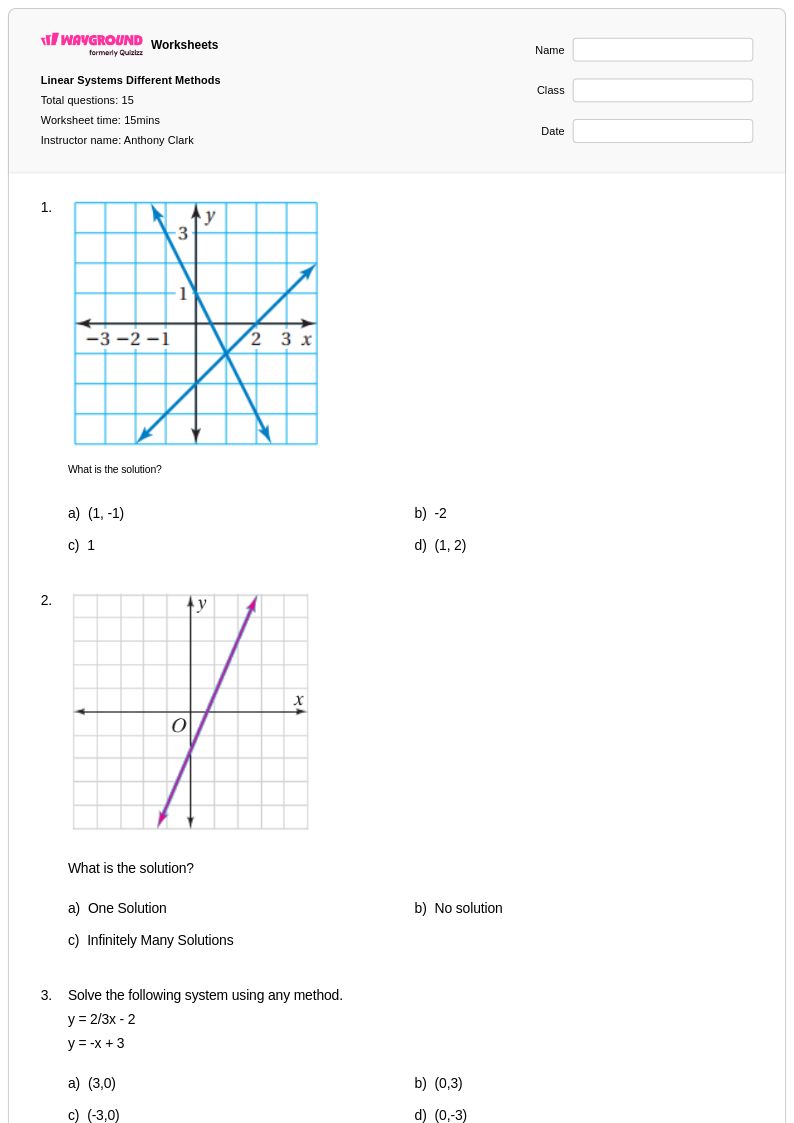
15 Q
8th - Uni
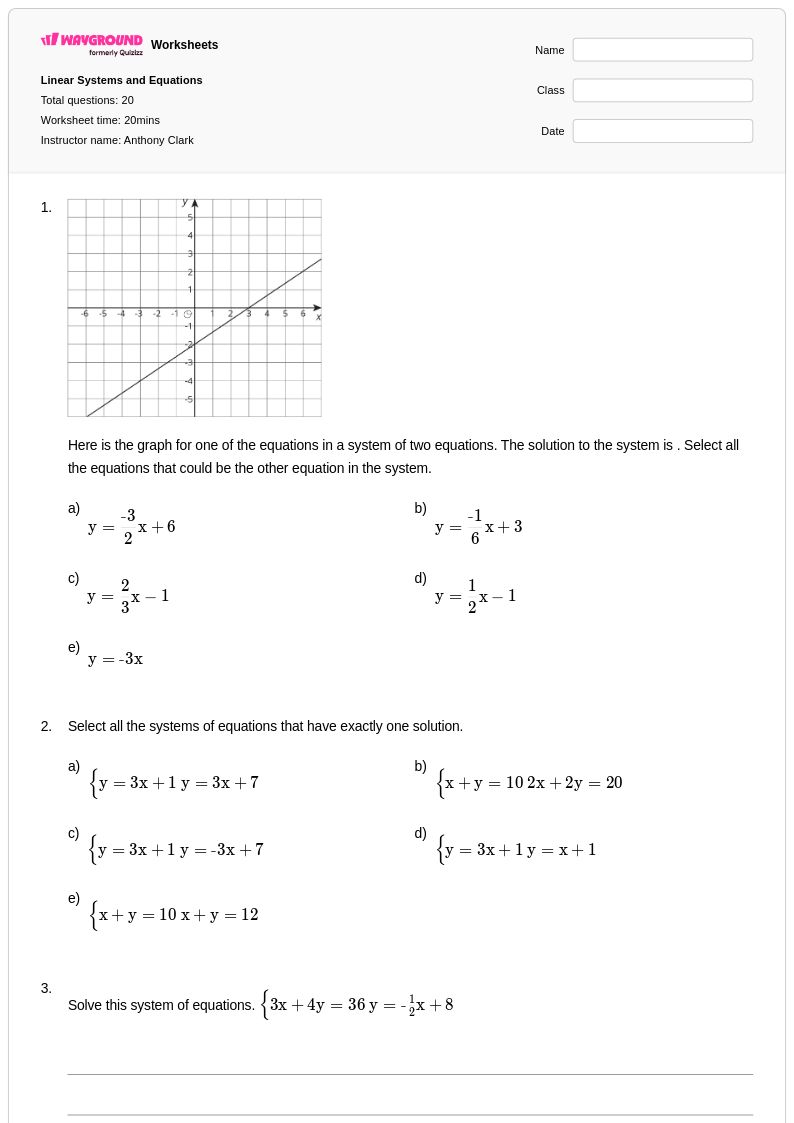
20 Q
6th - Uni
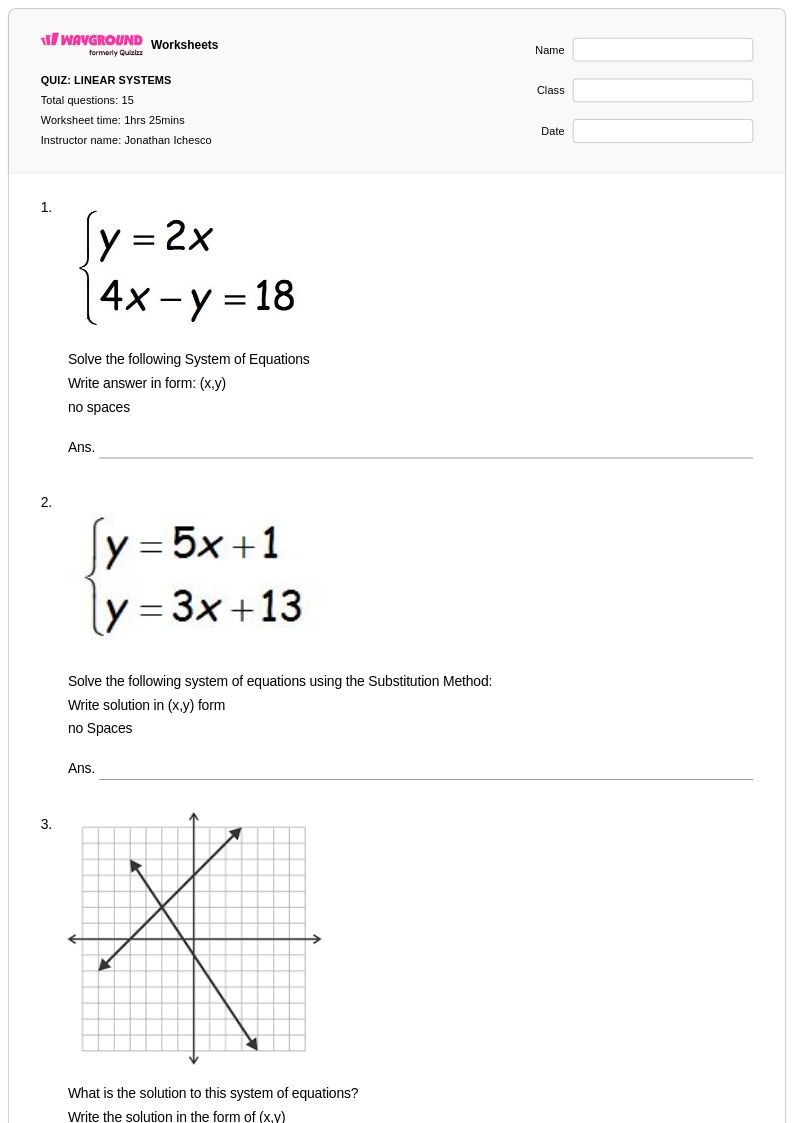
15 Q
8th - 12th
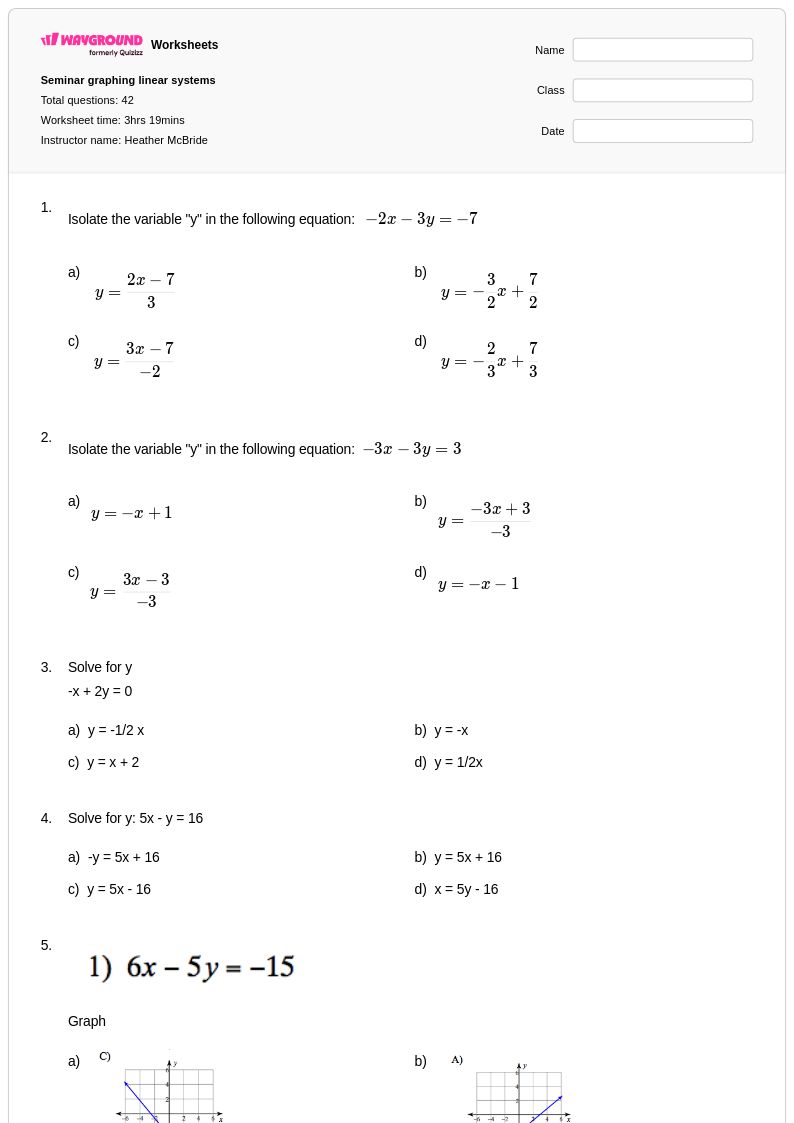
42 Q
8th

10 Q
9th - Uni
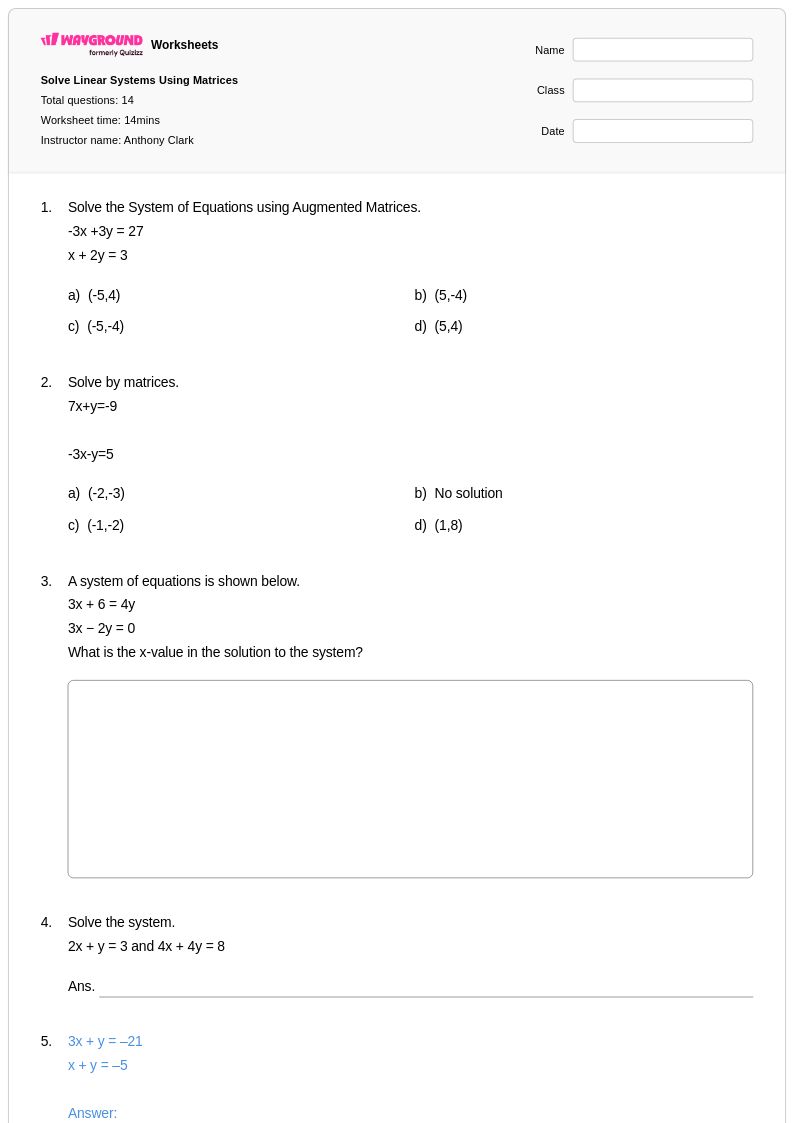
14 Q
9th - Uni
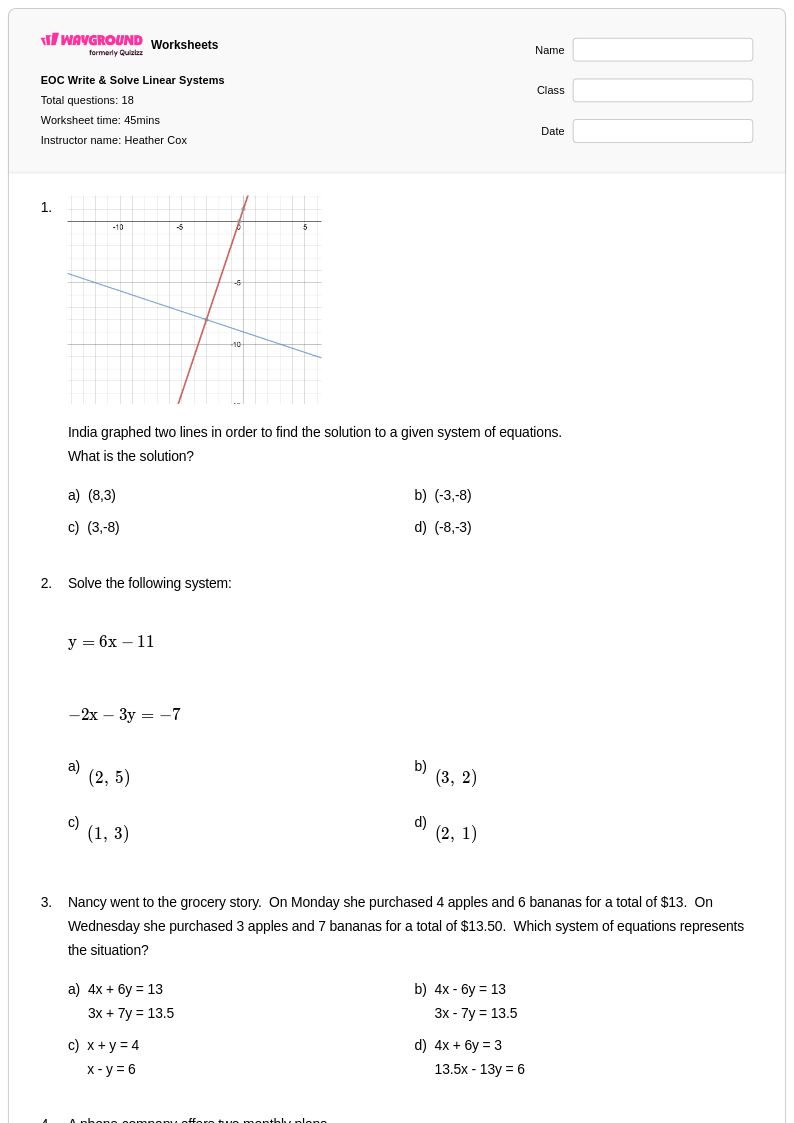
18 Q
9th

22 Q
12th
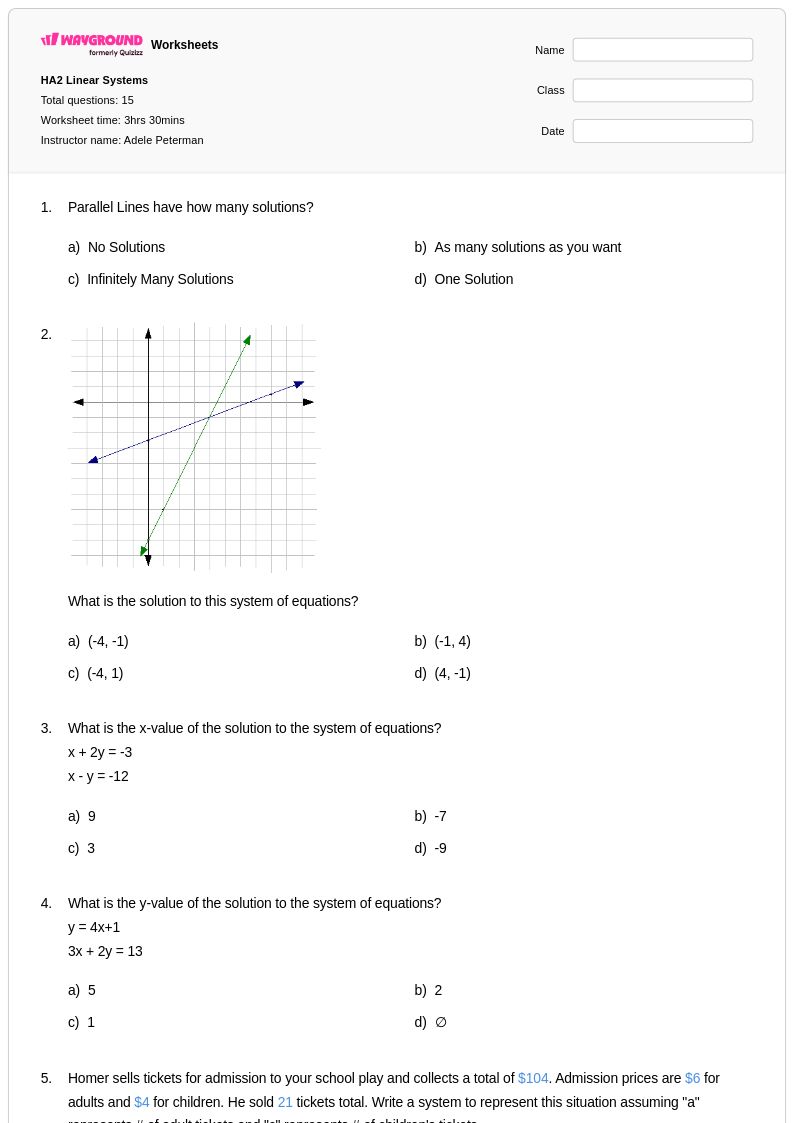
15 Q
9th - 12th
Explore Worksheets by Subjects
Explore printable Linear Systems worksheets
Linear systems worksheets available through Wayground (formerly Quizizz) provide comprehensive practice opportunities for students to master the fundamental concepts of solving systems of linear equations. These carefully designed educational resources strengthen critical algebraic skills including graphing linear equations, using substitution and elimination methods, and interpreting solutions in real-world contexts. The extensive collection features varied practice problems that progress from basic two-variable systems to more complex applications involving word problems and systems with no solution or infinite solutions. Teachers can access complete answer keys alongside each worksheet, and the materials are available as free printables in convenient pdf format, making classroom implementation seamless and cost-effective.
Wayground (formerly Quizizz) empowers educators with millions of teacher-created linear systems resources that can be easily searched and filtered to match specific learning objectives and skill levels. The platform's robust standards alignment ensures worksheets correspond to curriculum requirements, while built-in differentiation tools allow teachers to customize content for diverse learning needs and abilities. These flexible materials are available in both printable and digital formats, including downloadable pdfs, enabling seamless integration into any teaching environment. Whether used for initial skill development, targeted remediation, advanced enrichment, or ongoing practice, these comprehensive worksheet collections support effective lesson planning and help teachers provide students with the repeated exposure necessary to achieve mastery in solving linear systems.
FAQs
How do I teach the different methods for solving linear systems?
What types of practice problems are most effective for linear systems?
What are common student errors when solving systems of equations?
How can I use these linear systems worksheets in my class?
How do linear systems fit into the algebra curriculum?
How can I support students who struggle with solving linear systems?