
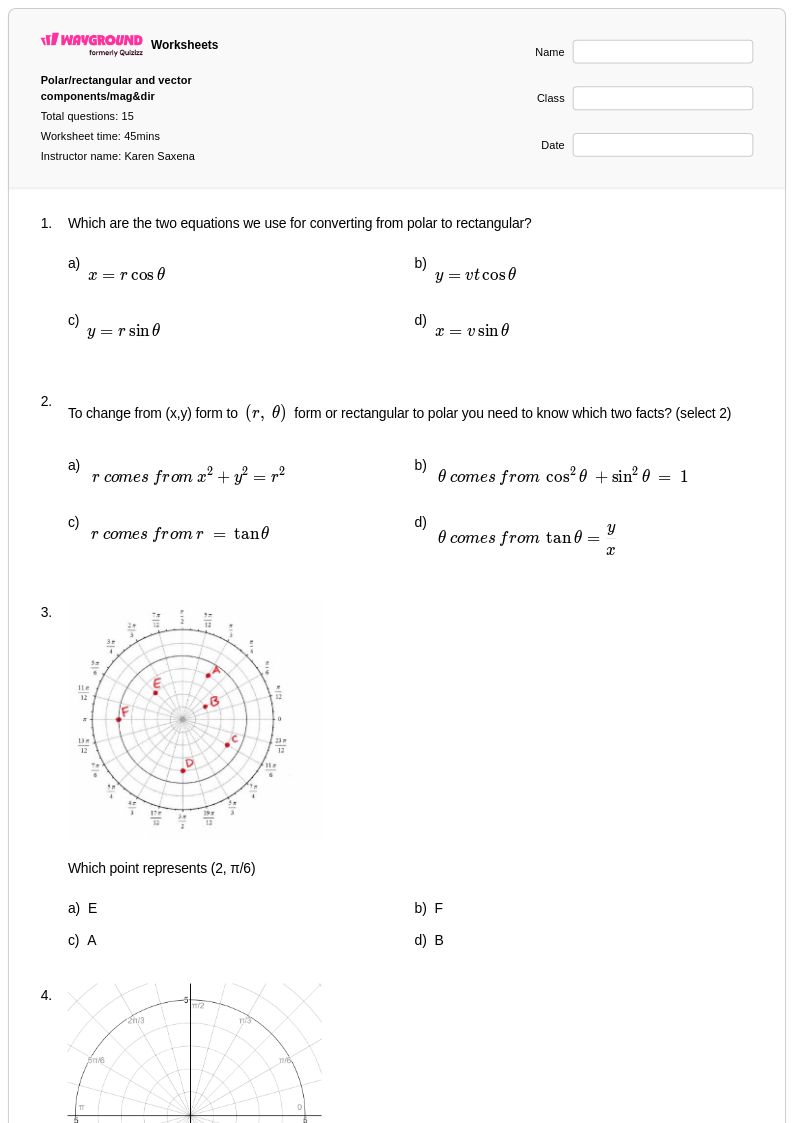
15 Q
11th
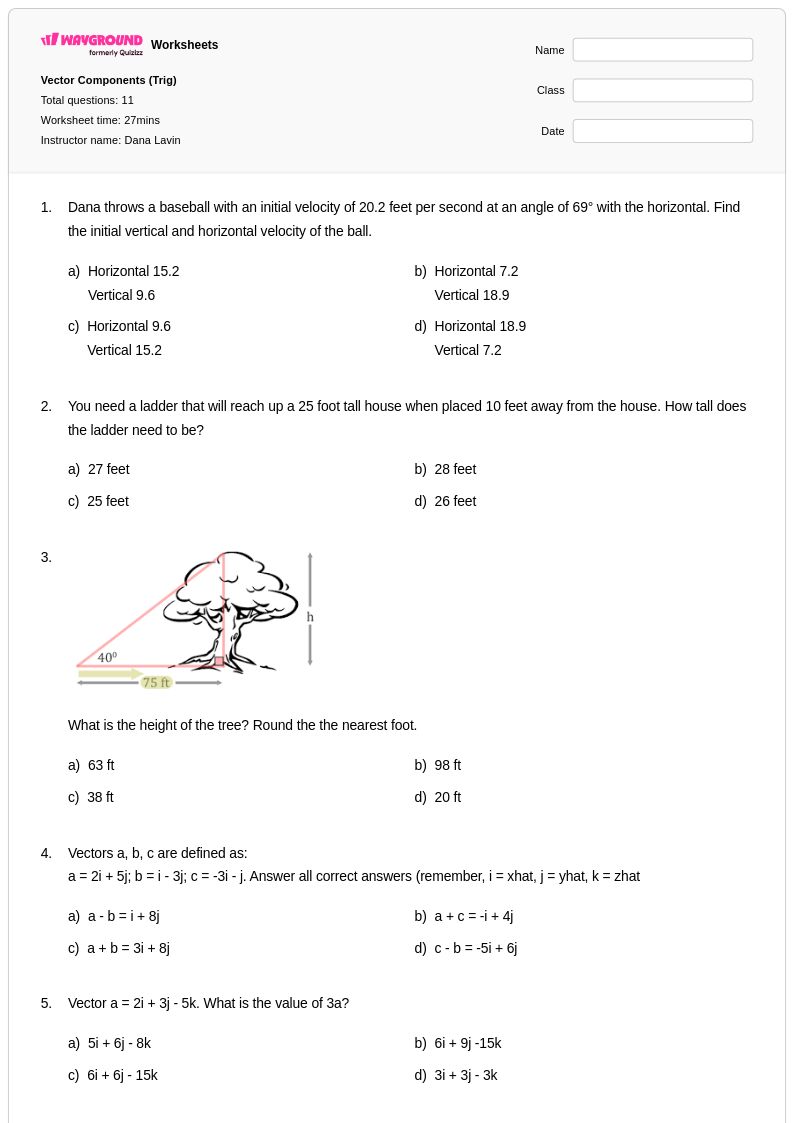
11 Q
9th - 12th
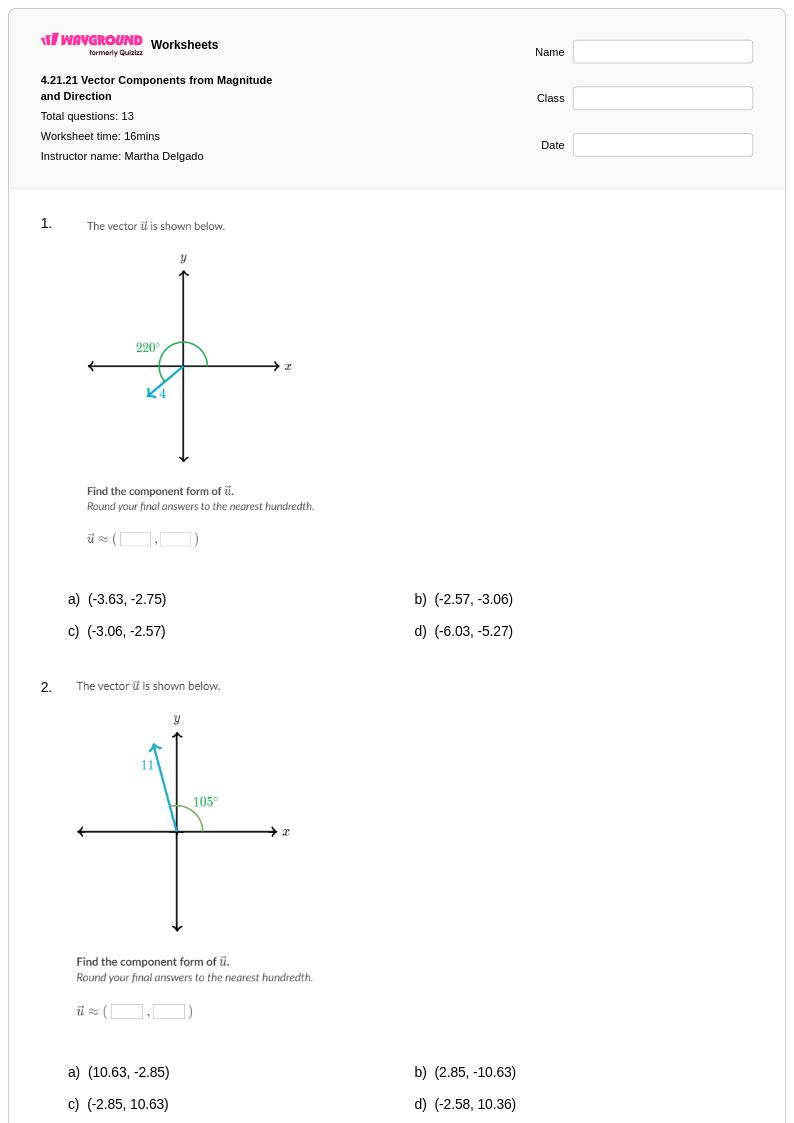
13 Q
11th - 12th
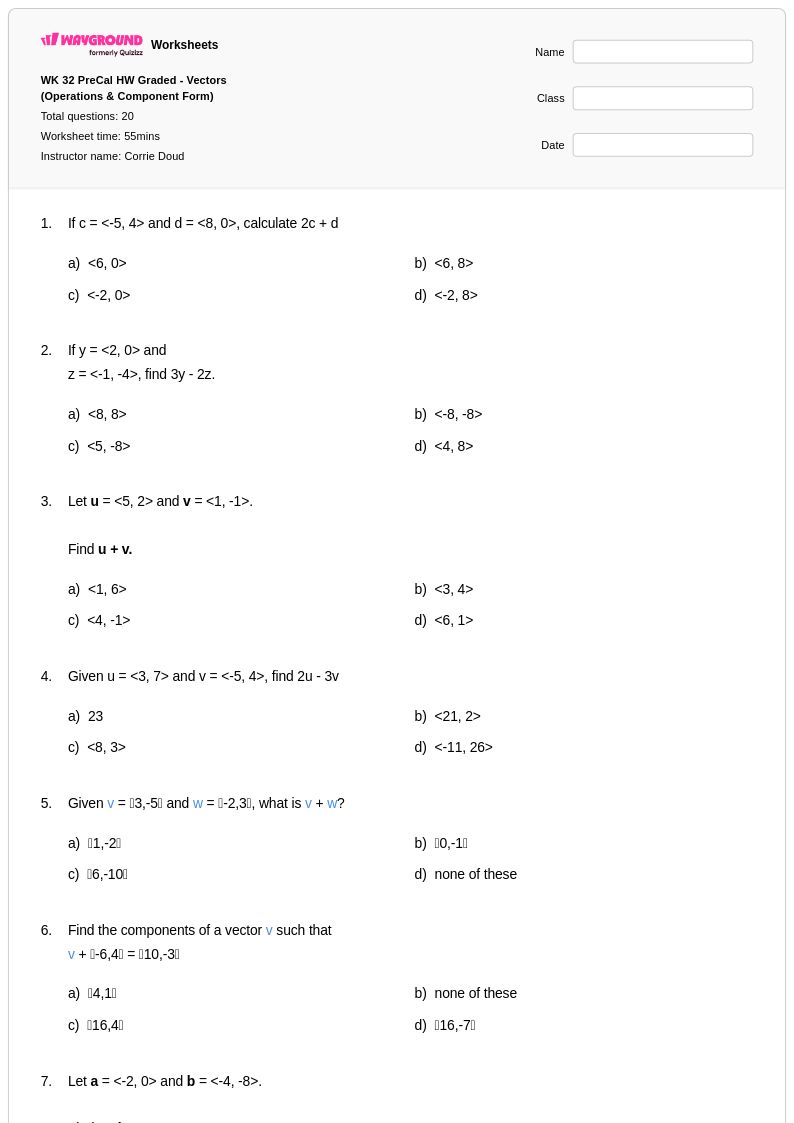
20 Q
9th - 12th
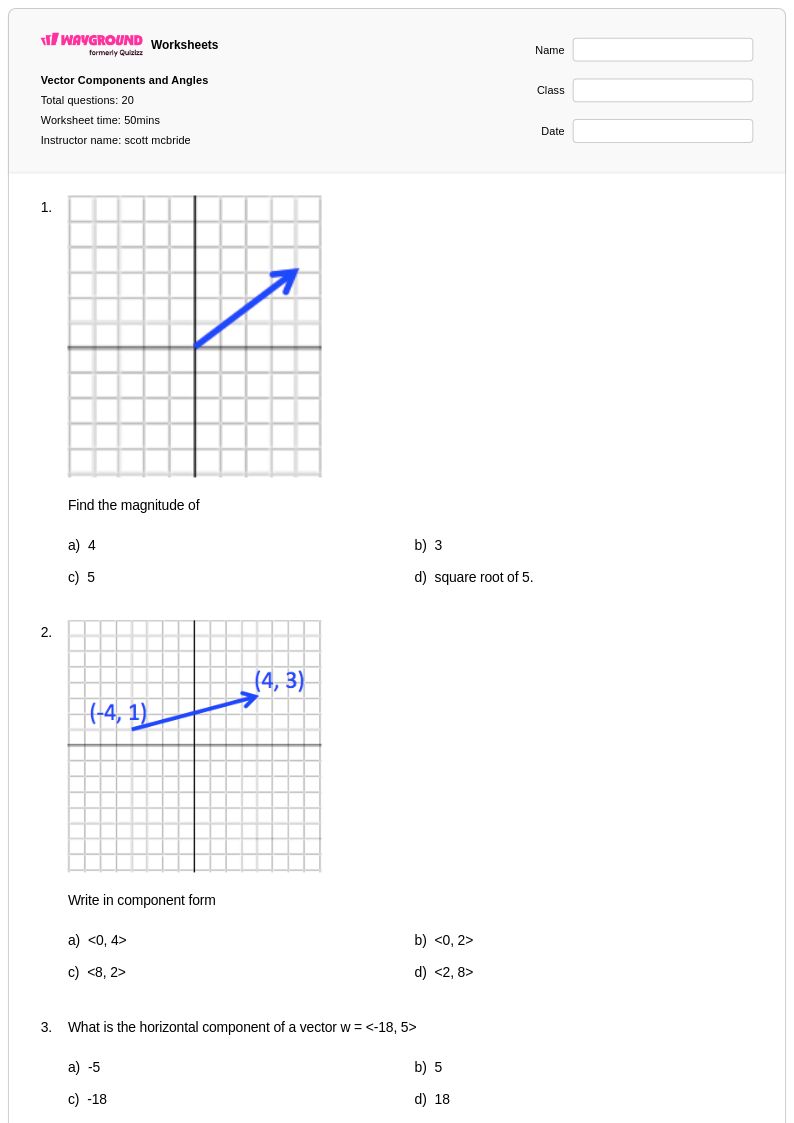
20 Q
12th
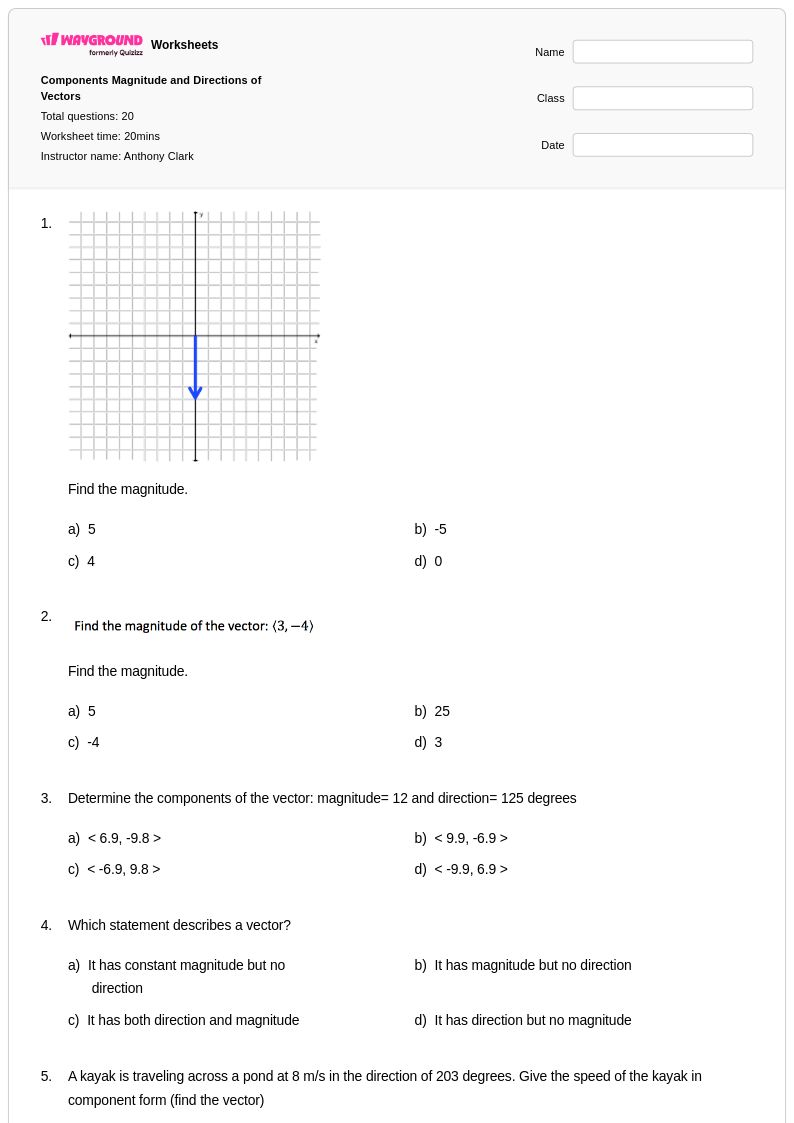
20 Q
11th - Uni
19 Q
9th - 12th
16 Q
10th - 12th
21 Q
10th - 12th
16 Q
9th - 12th
15 Q
11th - 12th
20 Q
11th
20 Q
9th - 12th
15 Q
11th
20 Q
10th
15 Q
11th - 12th
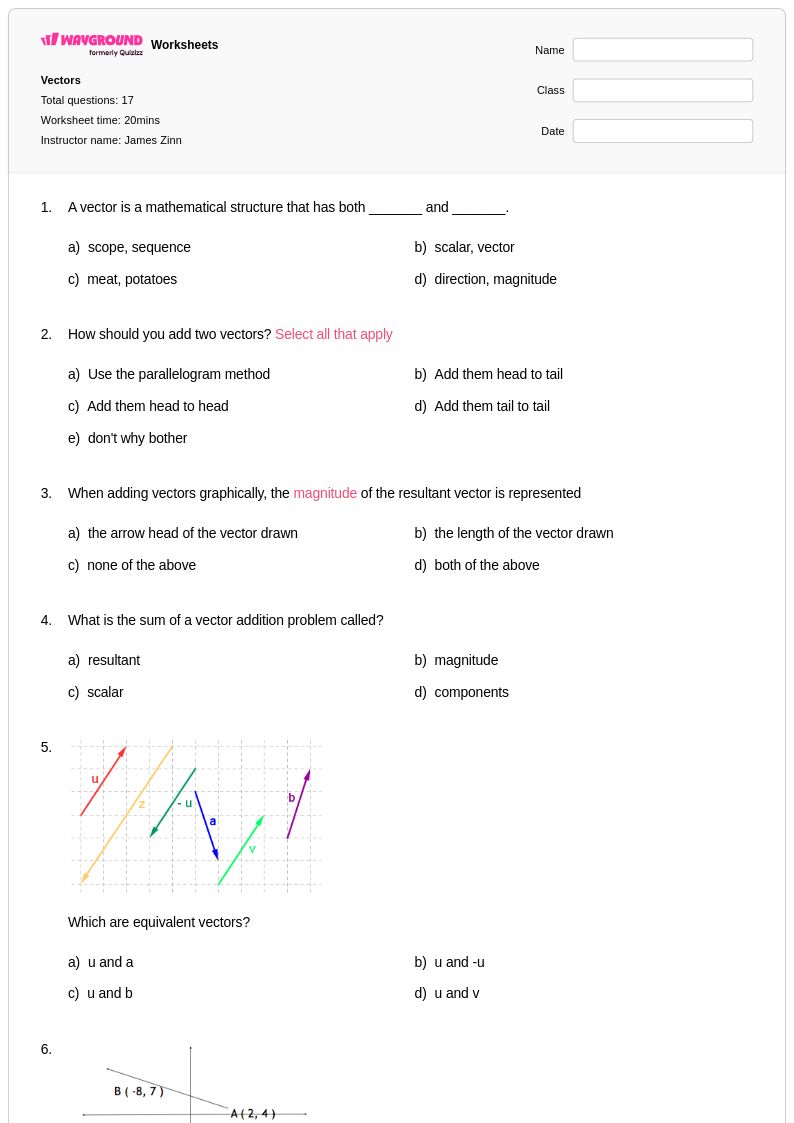
17 Q
9th - 12th
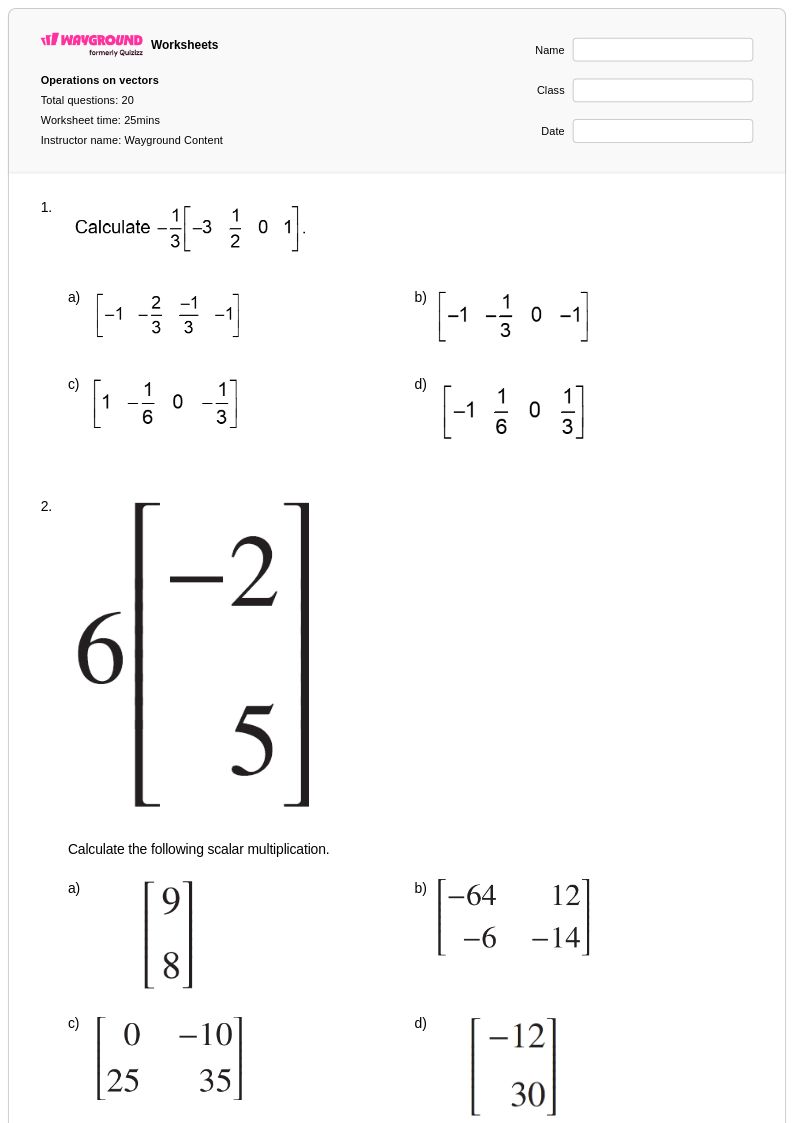
20 Q
9th - 12th
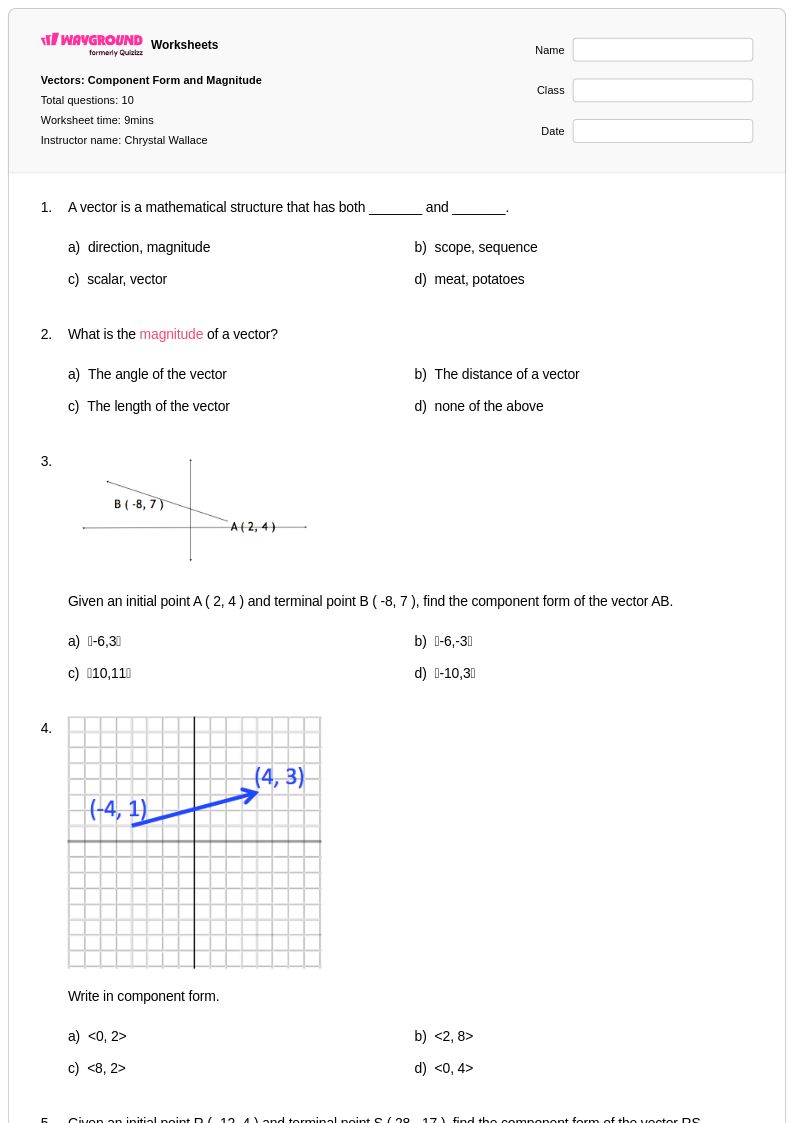
10 Q
9th - 12th
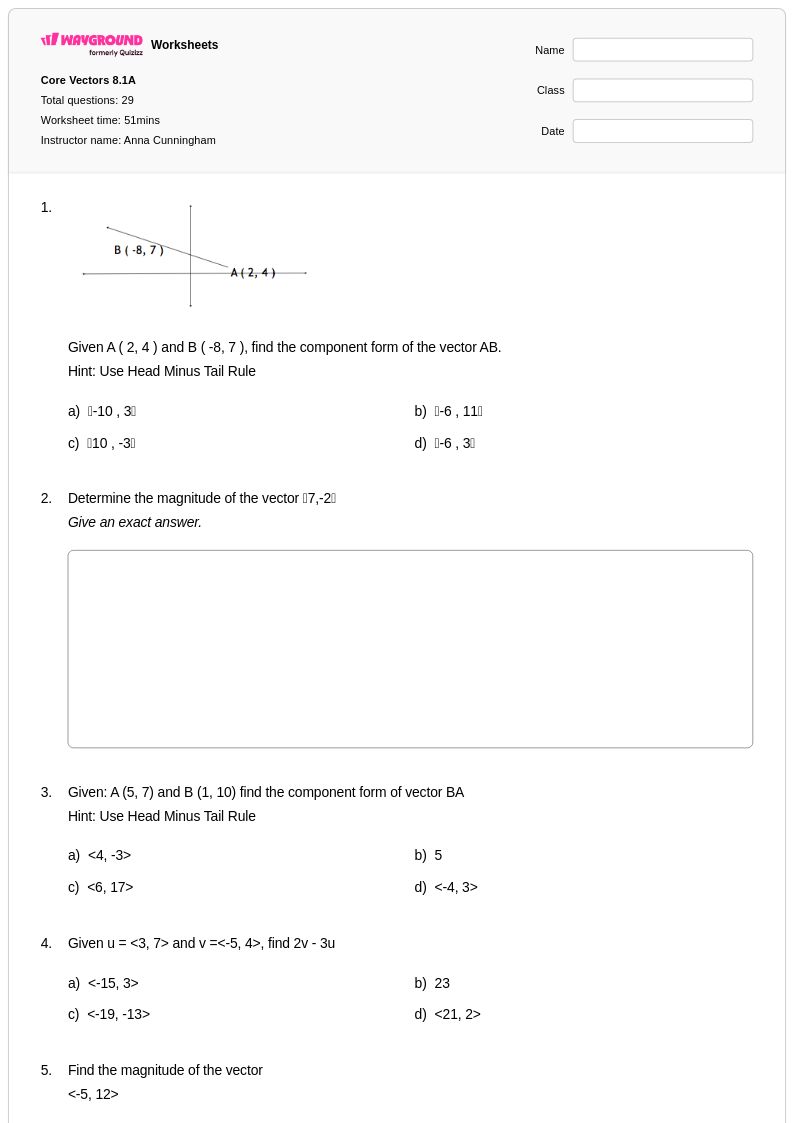
29 Q
10th - 12th
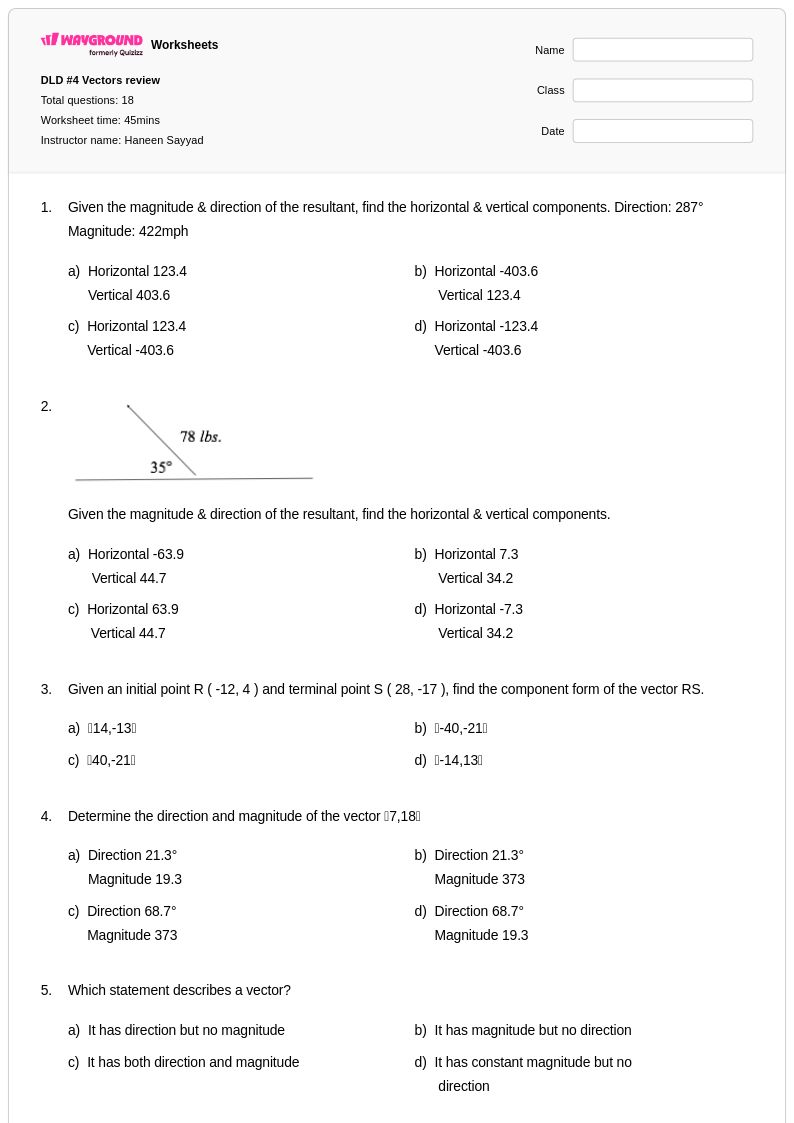
18 Q
10th - 12th
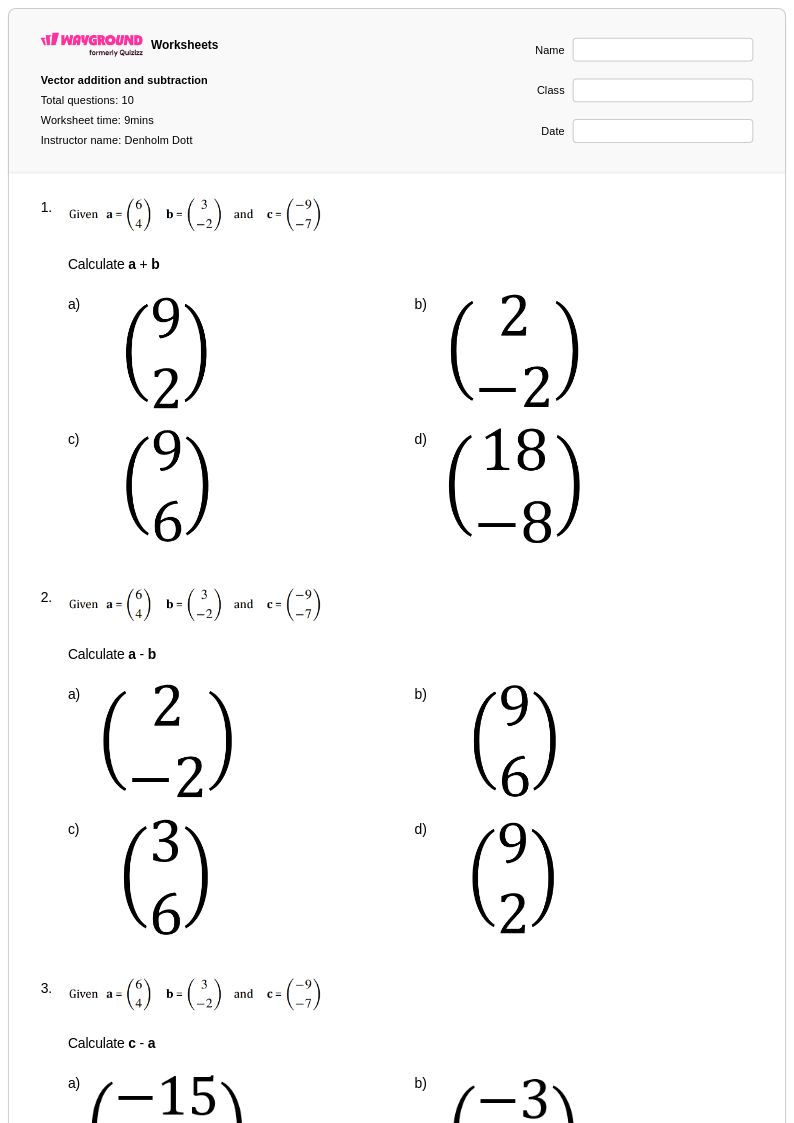
10 Q
10th
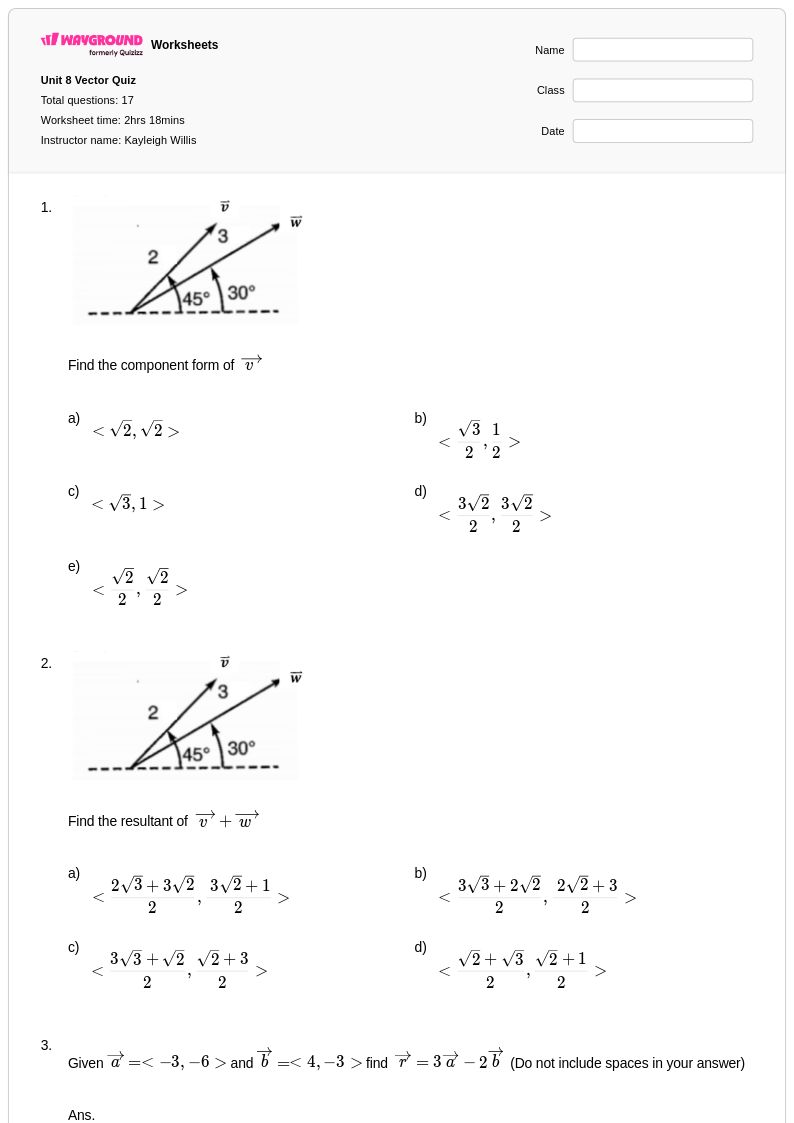
17 Q
9th - 12th
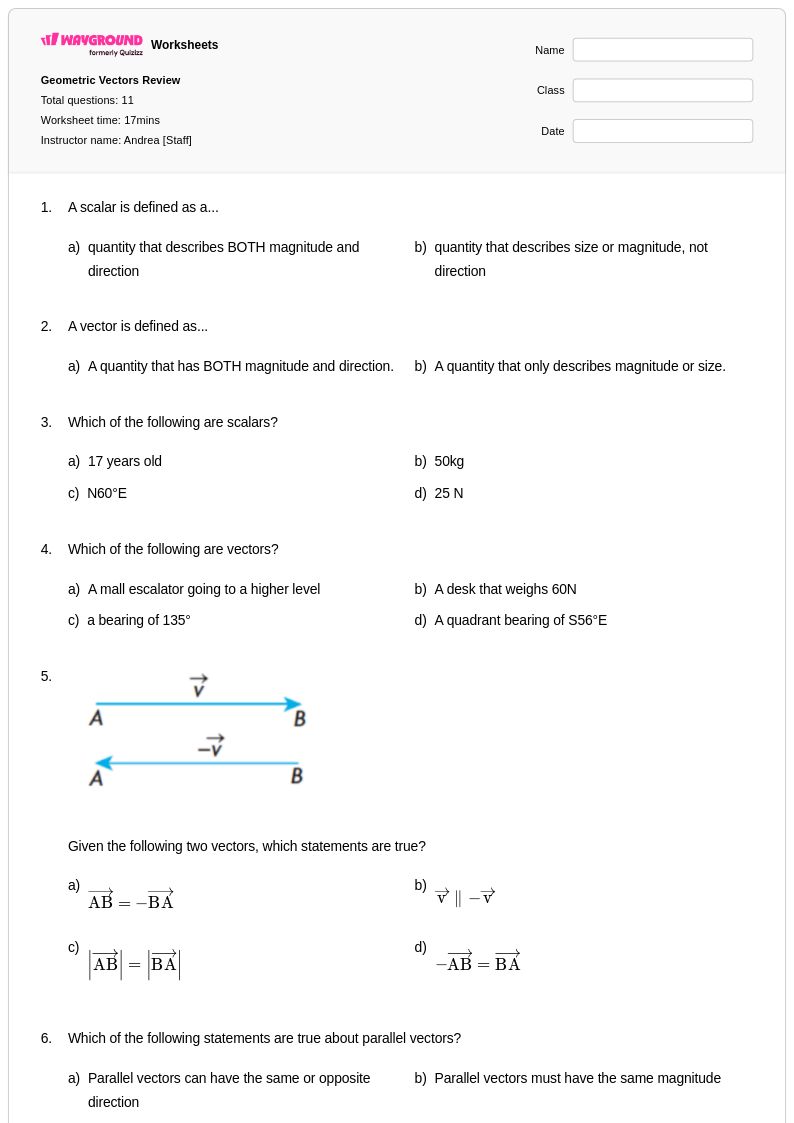
11 Q
12th
Explore Worksheets by Subjects
Explore printable Vector Components worksheets
Vector components worksheets available through Wayground (formerly Quizizz) provide comprehensive practice for students learning to decompose vectors into their horizontal and vertical components using trigonometric relationships. These mathematics worksheets strengthen essential skills including calculating x and y components using magnitude and direction angles, applying sine and cosine functions to resolve vectors, and understanding the geometric representation of vector components on coordinate planes. Students work through practice problems that range from basic component calculations to more complex scenarios involving multiple vectors and real-world applications. Each worksheet collection includes detailed answer keys and is available as free printables in pdf format, making it easy for educators to implement targeted vector component instruction and assessment.
Wayground (formerly Quizizz) supports mathematics teachers with millions of teacher-created vector component resources that feature robust search and filtering capabilities to locate materials perfectly suited to specific learning objectives and skill levels. The platform's differentiation tools enable educators to customize worksheets for diverse learners, while flexible formatting options provide both printable pdf versions for traditional classroom use and digital formats for interactive learning environments. These comprehensive collections align with mathematical standards and facilitate seamless lesson planning, targeted remediation for students struggling with trigonometric concepts, and enrichment opportunities for advanced learners ready to explore vector applications in physics and engineering contexts. Teachers can efficiently organize skill practice sessions, create formative assessments, and provide students with immediate feedback on their understanding of vector decomposition and component analysis.