
Recommended Topics for you
- Accounting Methods
- Amortization
- Balancing a Checkbook
- Balancing a Checking Account
- Budget Planning
- Business Math
- Calculating Overtime Pay
- Cash Flow
- Comparing Prices
- Comparison Shopping
- Compound and Continuous Interest
- Compound Interest
- Consumer Math
- Continuously Compounded Interest
- Credit Card Statements
- Deductions
- Depreciation
- Fixed and Variable Expenses
- Income and Expenses
- Income Calculation
- Money Management
- Net Pay
- Net Worth
- Profit and Loss
- Real Estate Math
- Reconciling Bank Statements
- Rent Calculation
- Resource Allocation
- Rule of 72
- Running Balance
- Sales Tax
- Saving Money
- Simple Interest
- Tax and Interest Deduction
- Tax and Tip Calculations
- Tax Calculation
- Tax Computation
- Tip, Tax, and Discount
- Understanding Paychecks
- Writing Checks
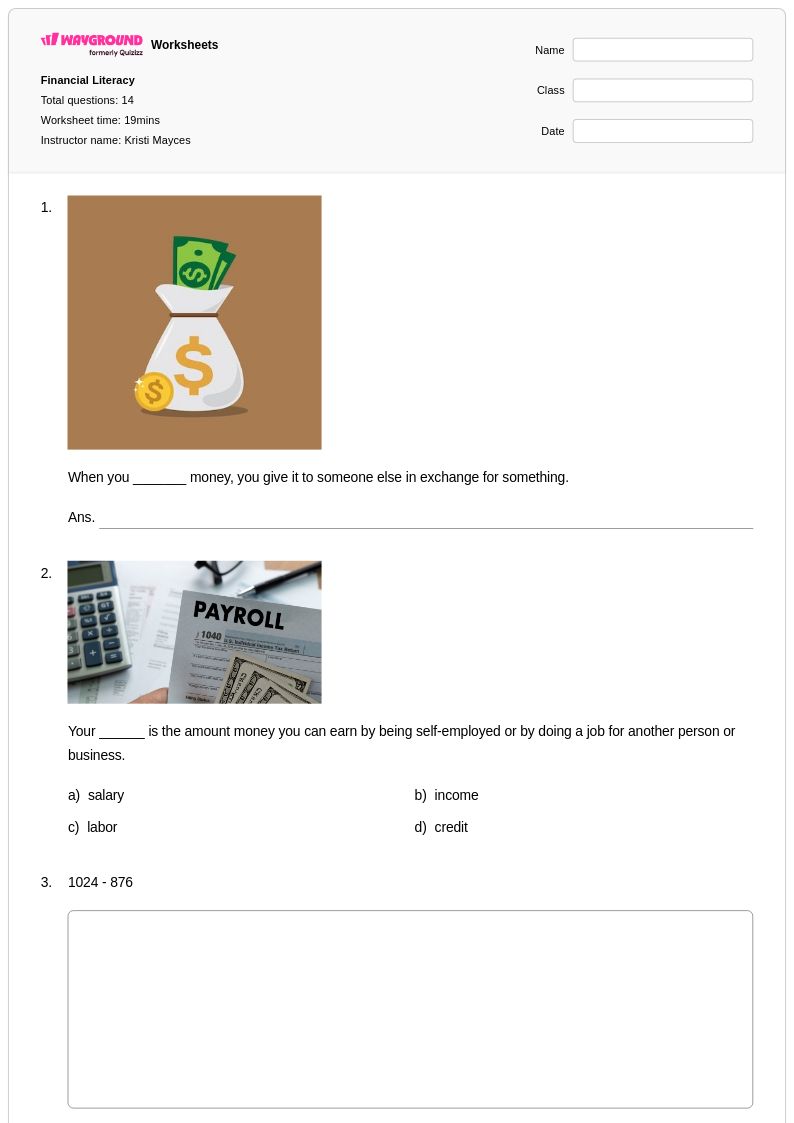
14 Q
3rd
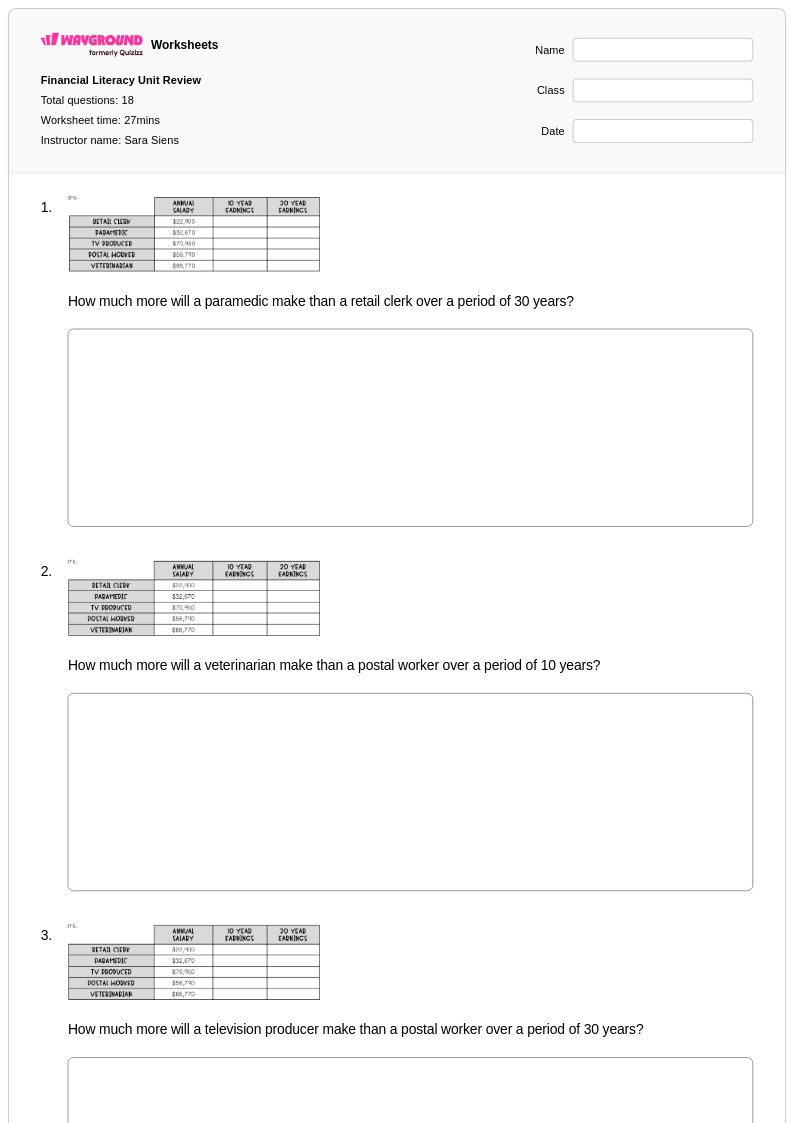
18 Q
6th
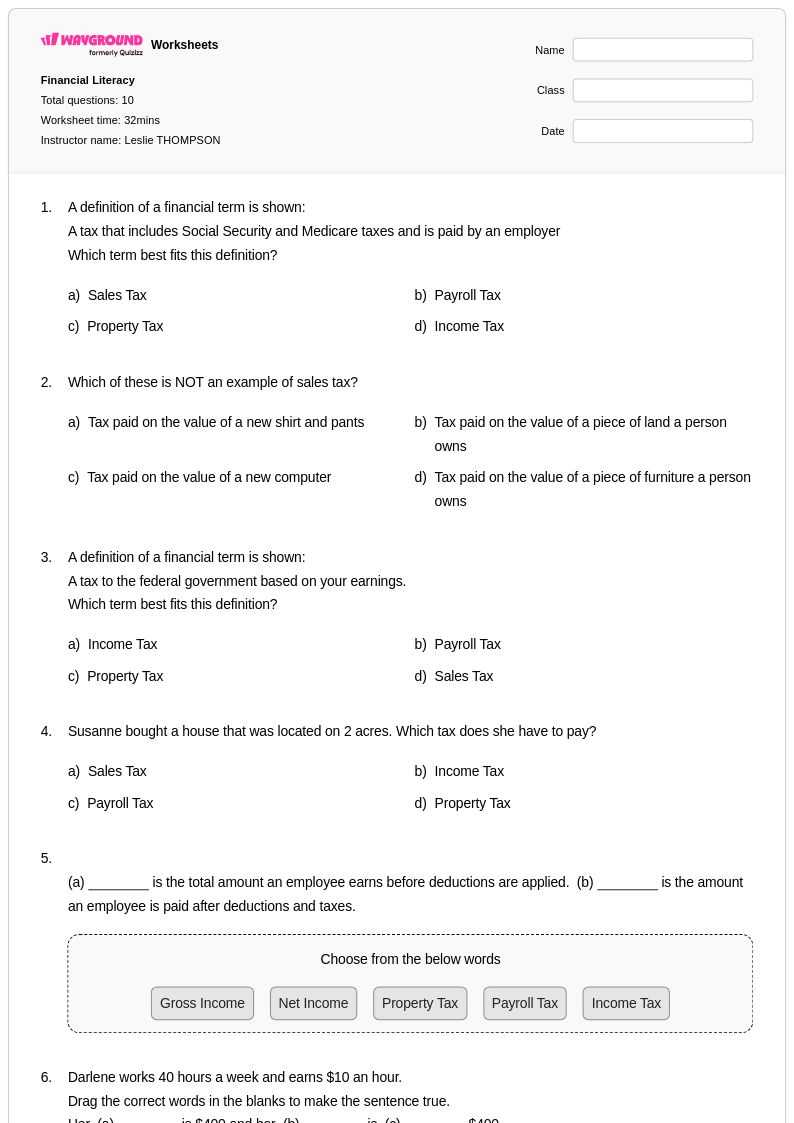
10 Q
5th
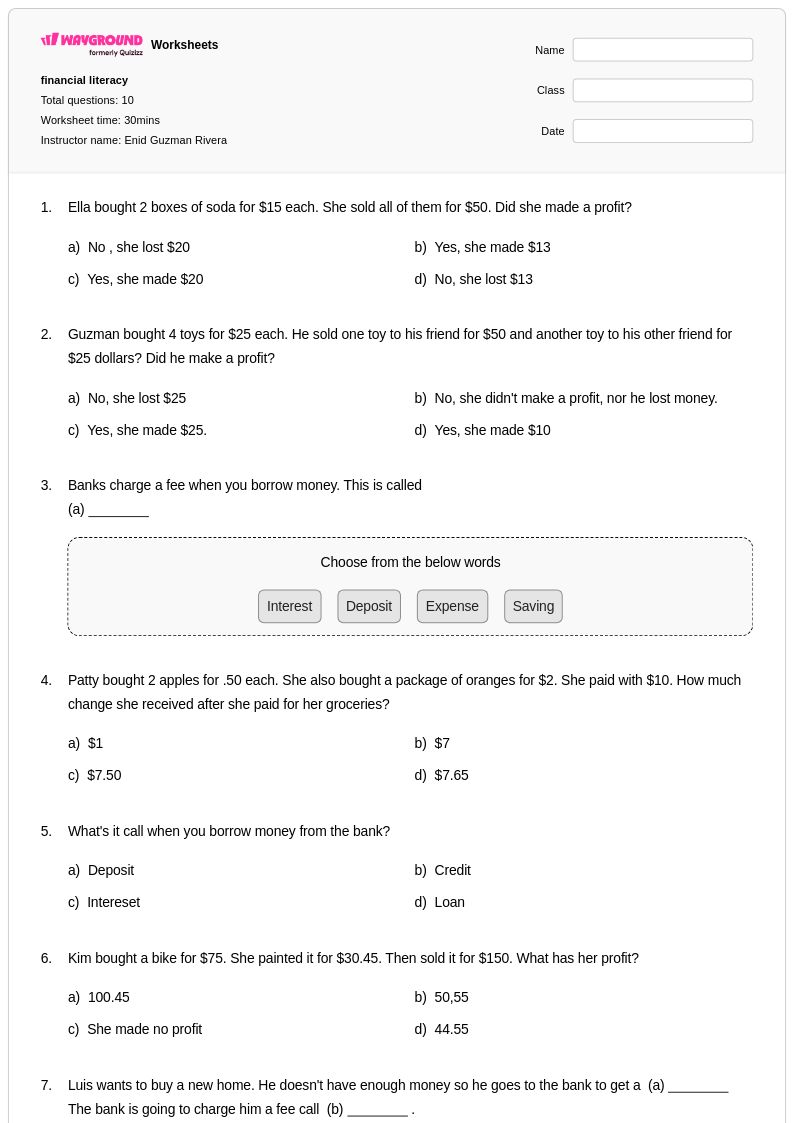
10 Q
4th
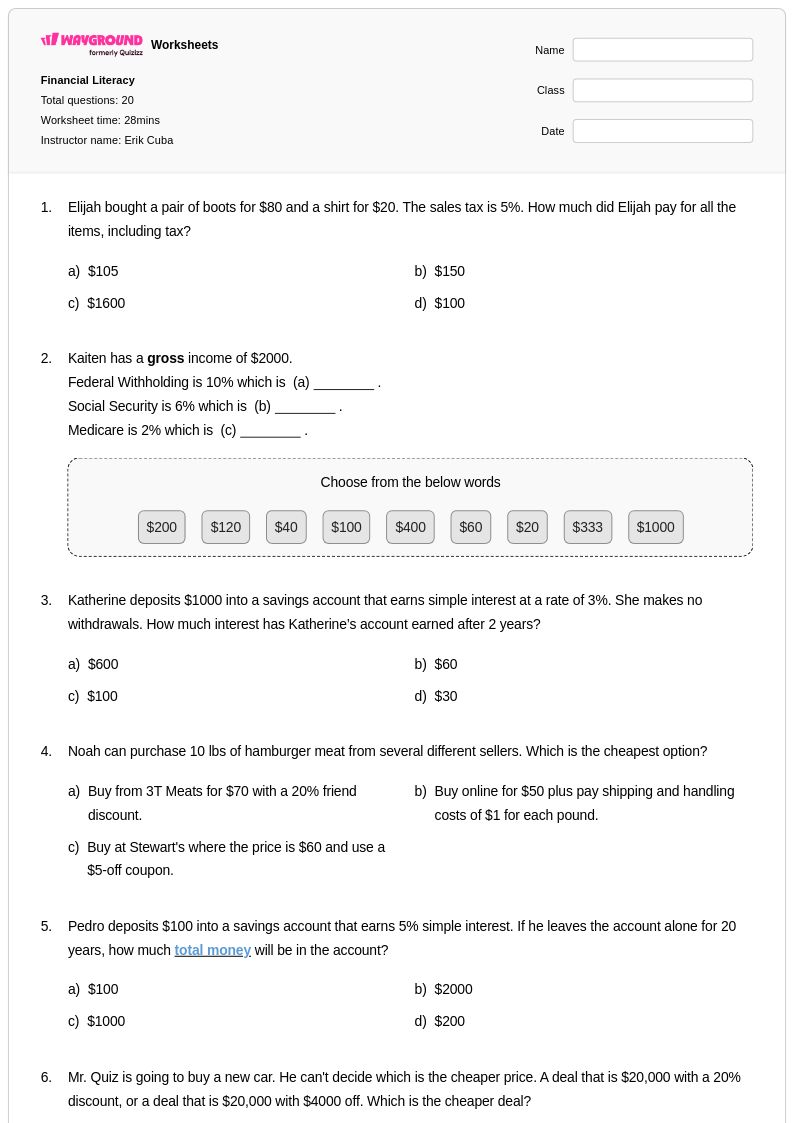
20 Q
7th
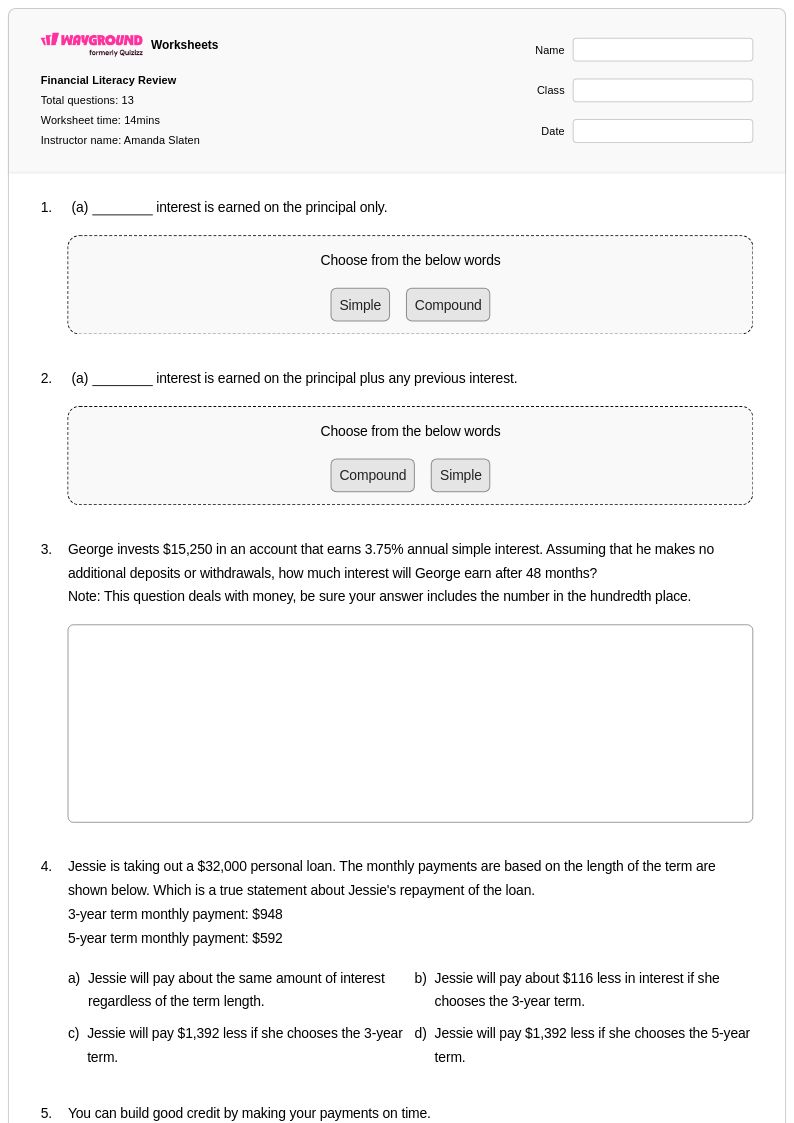
13 Q
8th
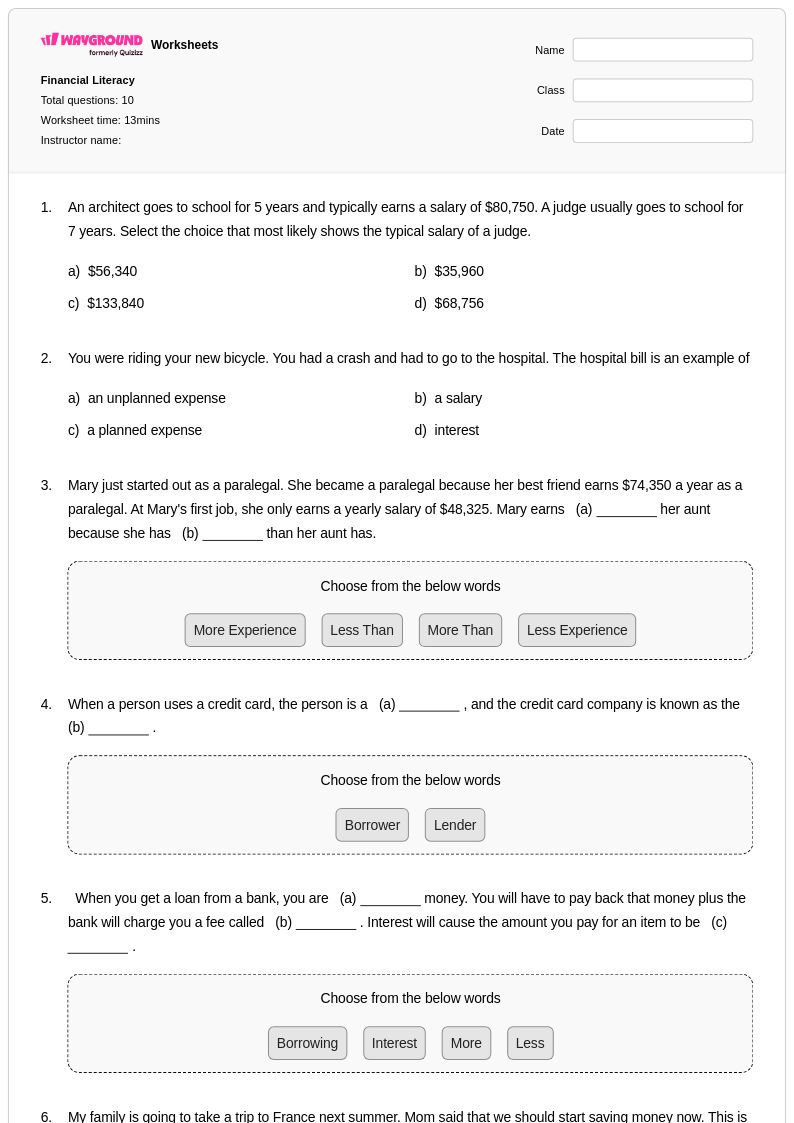
10 Q
3rd
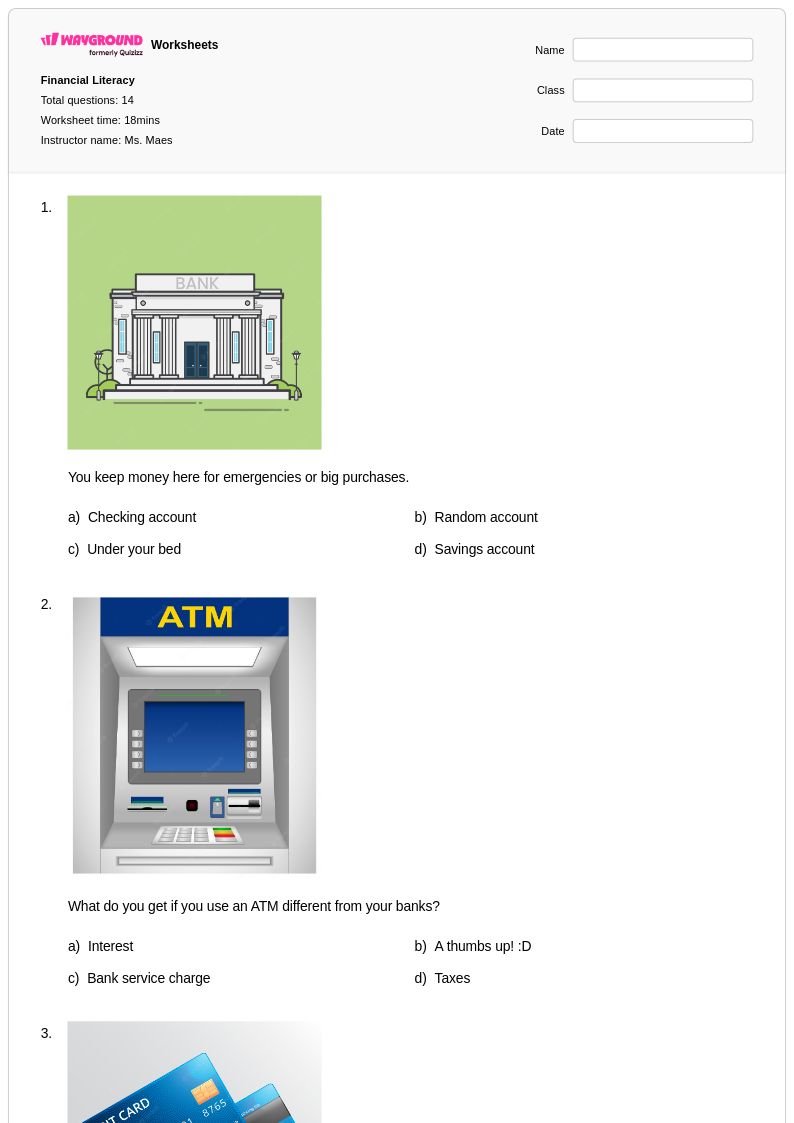
14 Q
2nd
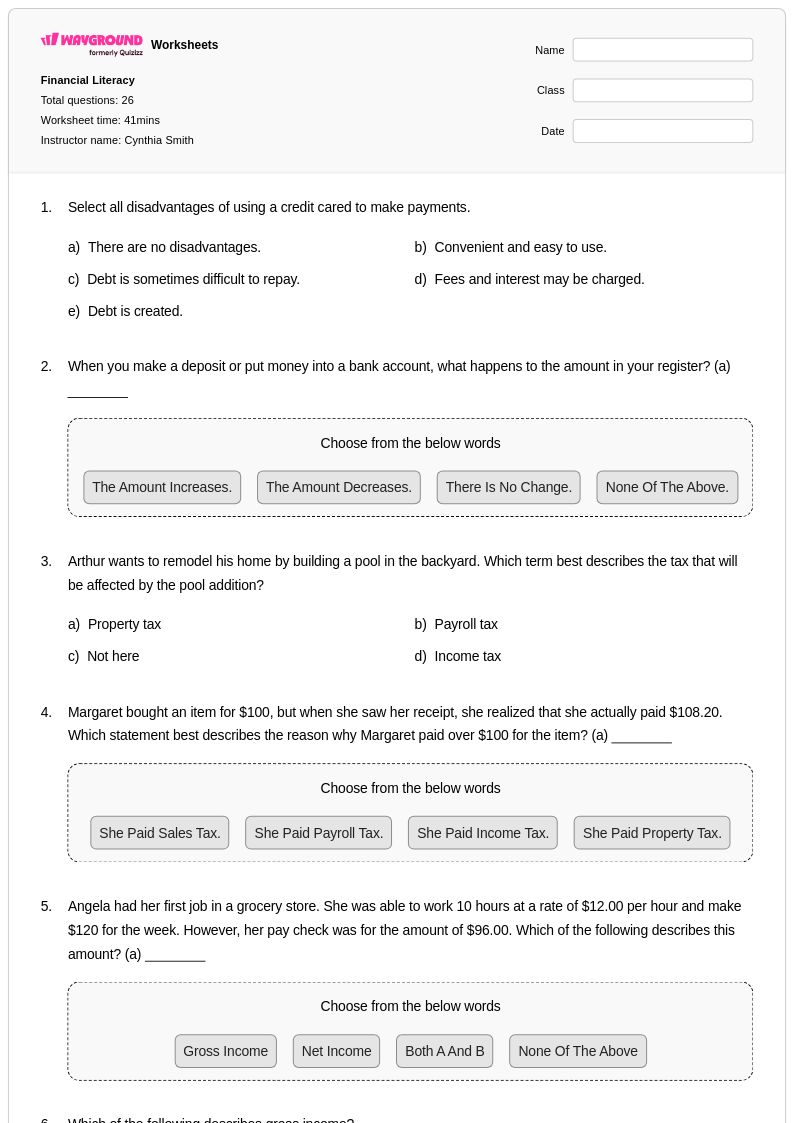
26 Q
5th
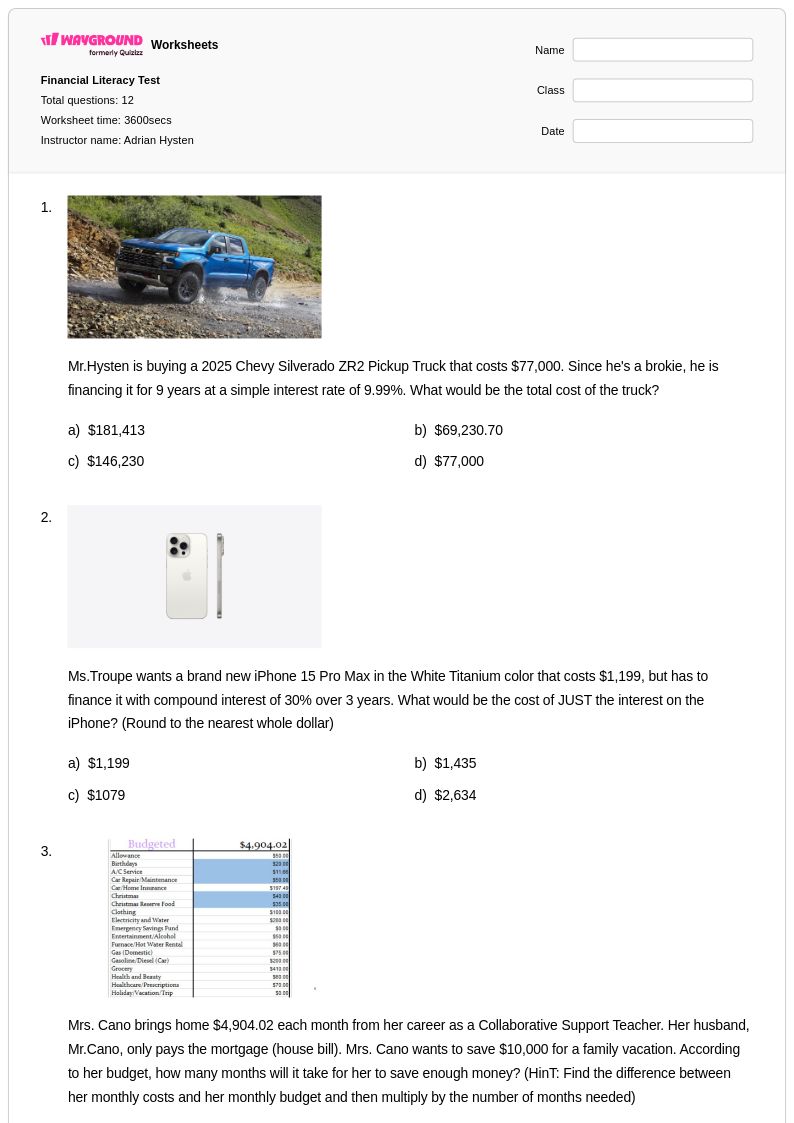
12 Q
8th
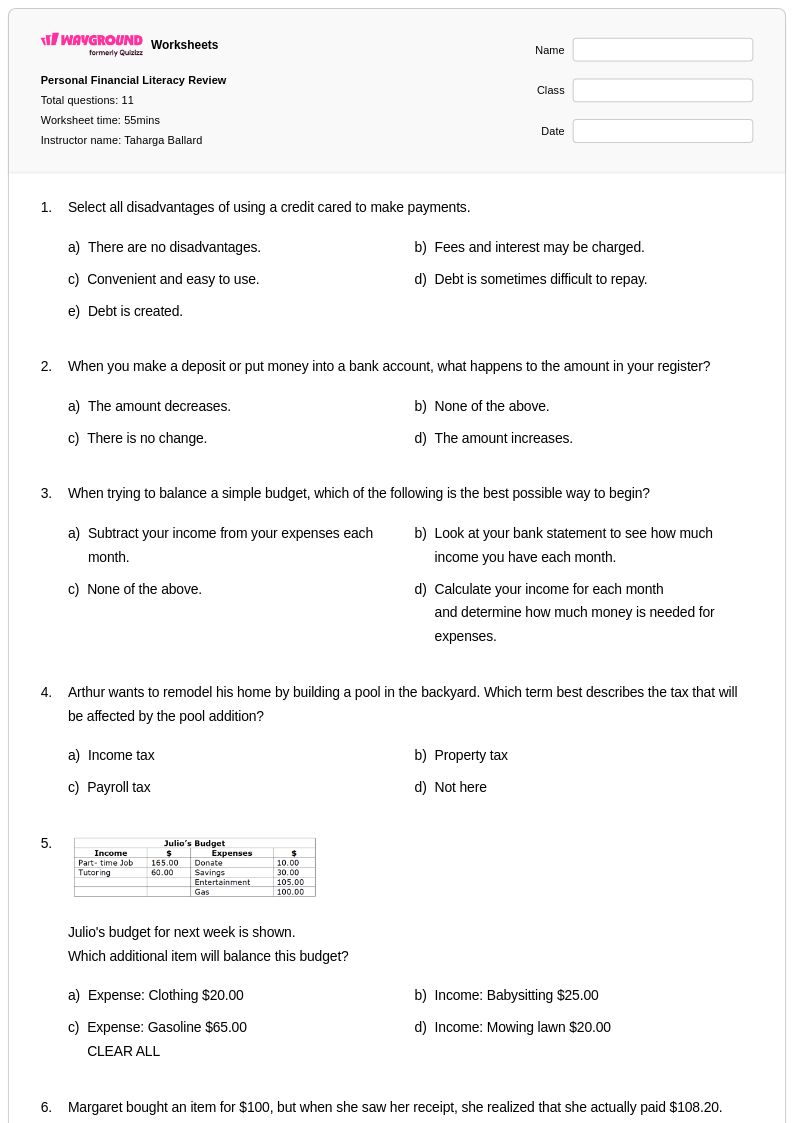
11 Q
5th
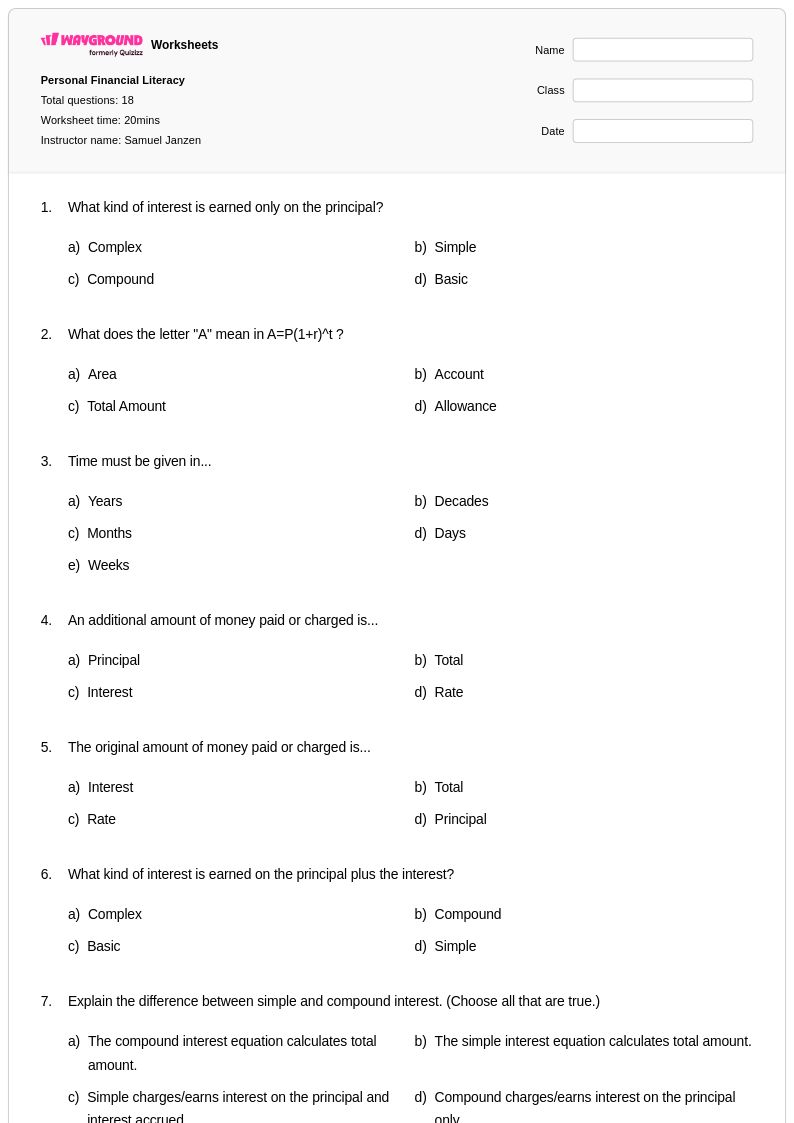
18 Q
8th
26 Q
5th
18 Q
7th
10 Q
6th
19 Q
6th
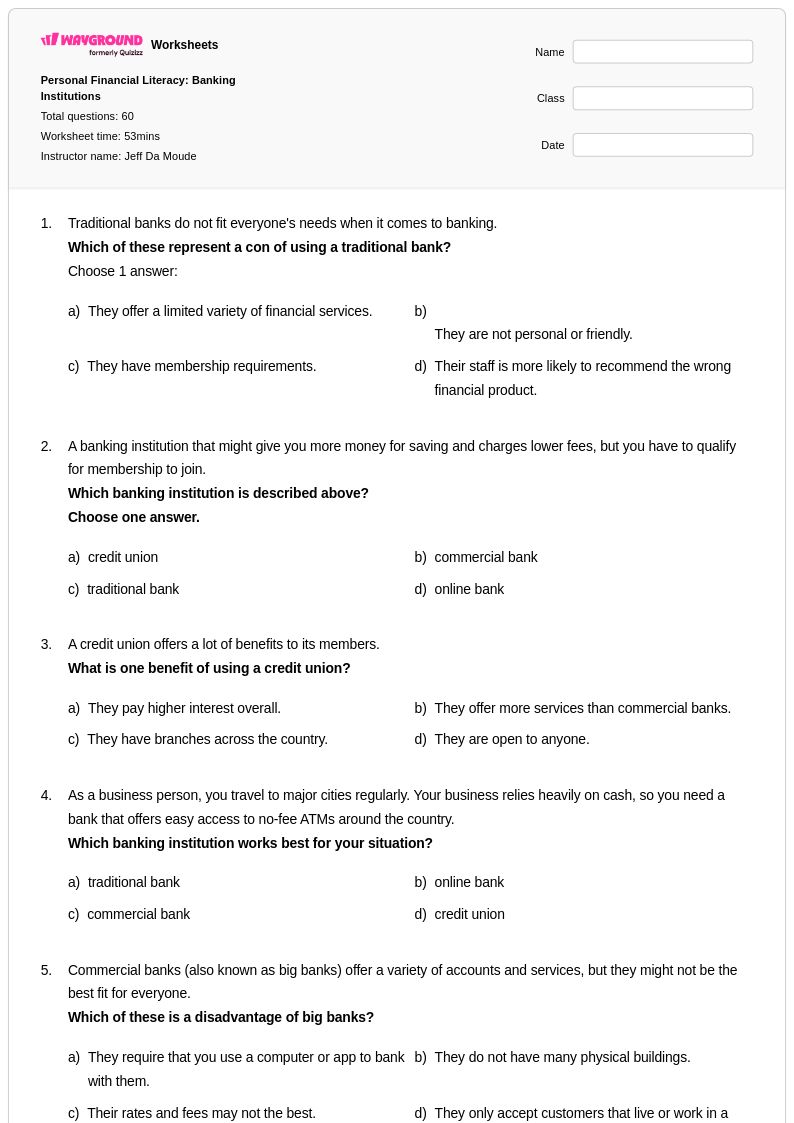
60 Q
9th - 12th
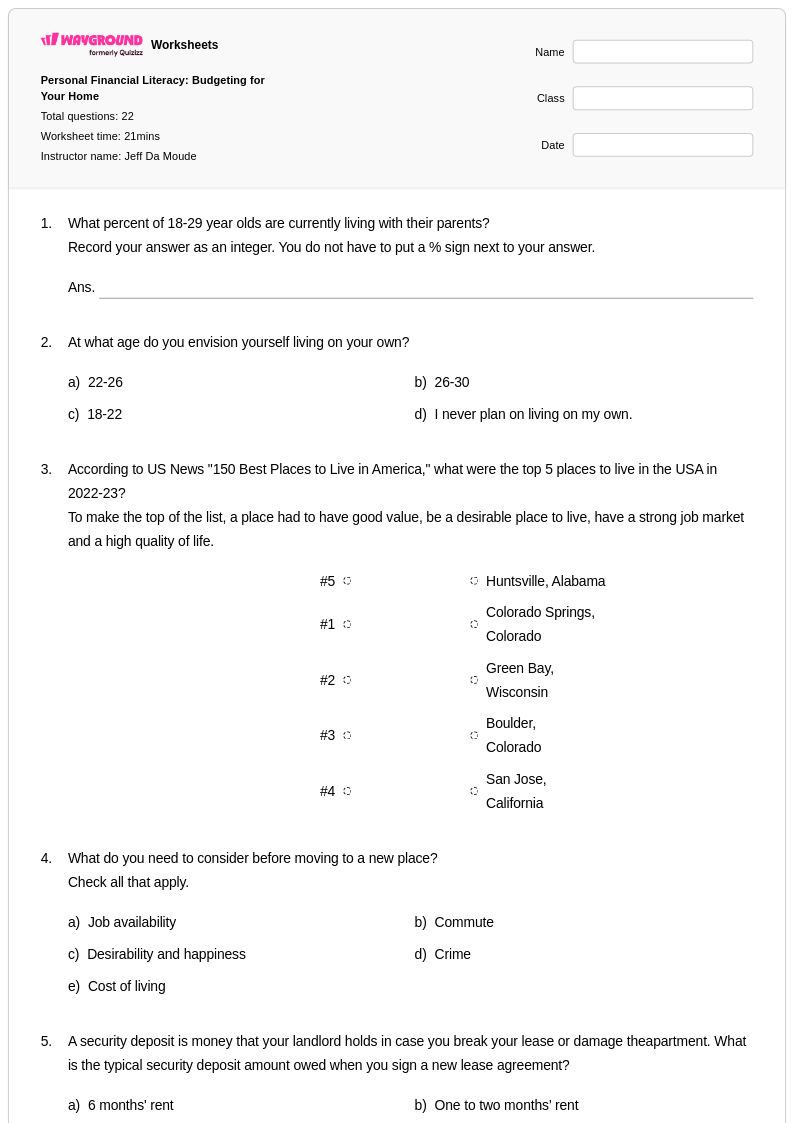
22 Q
9th - 12th
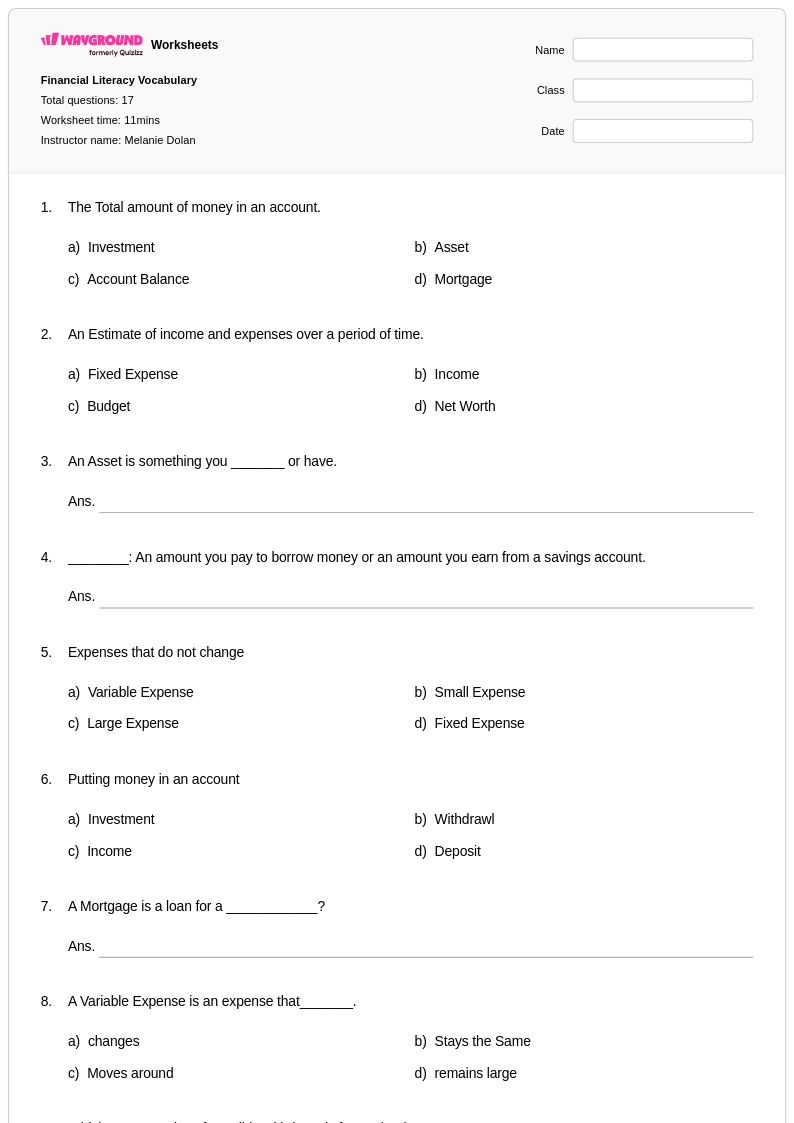
17 Q
8th
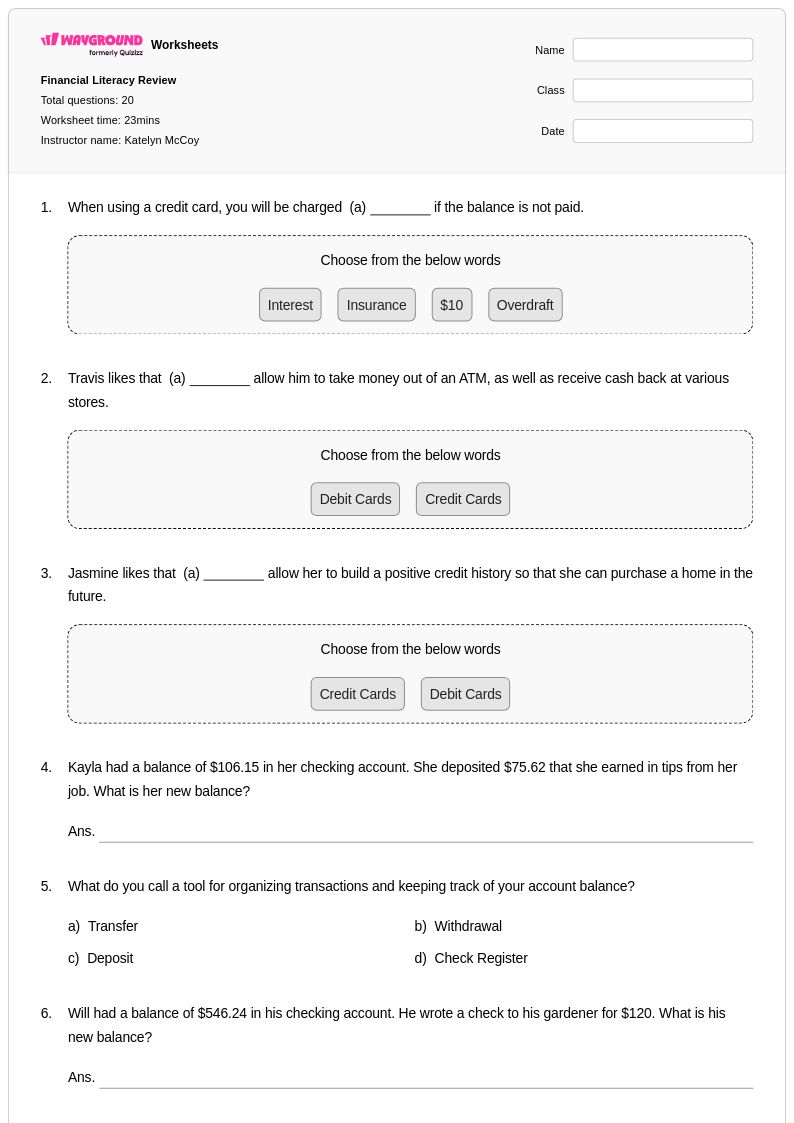
20 Q
6th
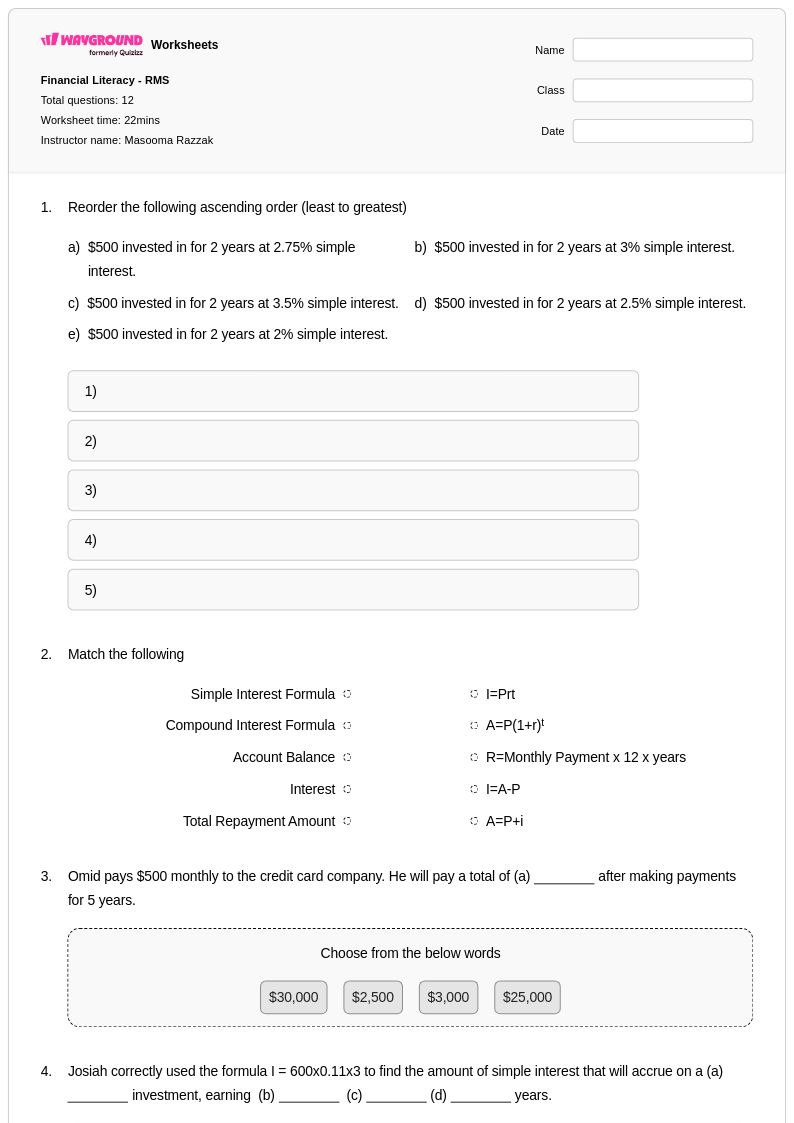
12 Q
9th - 10th
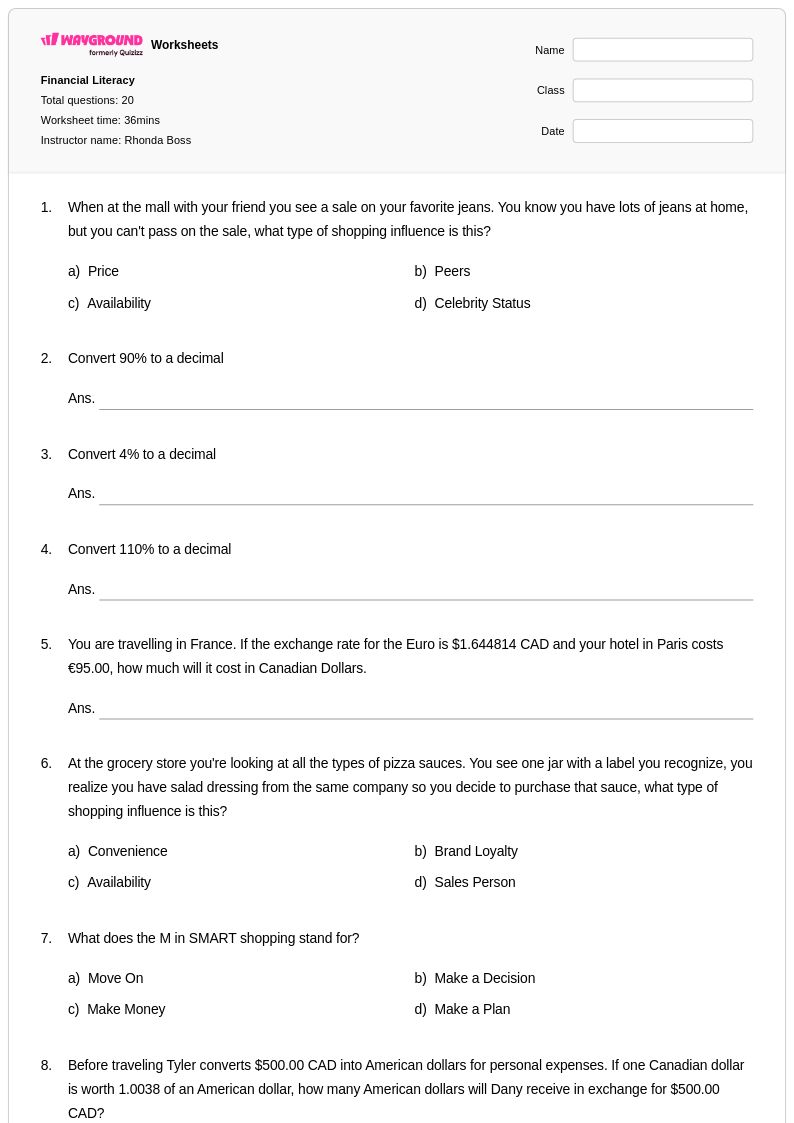
20 Q
6th - 8th
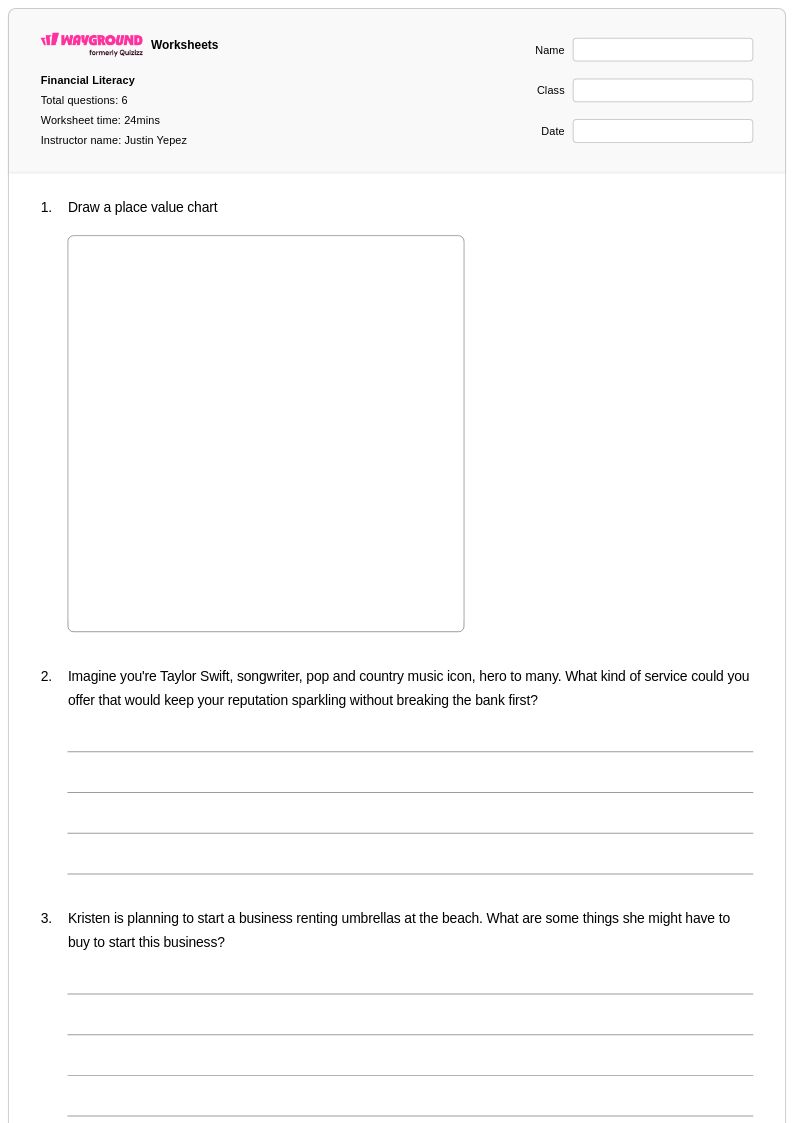
6 Q
5th
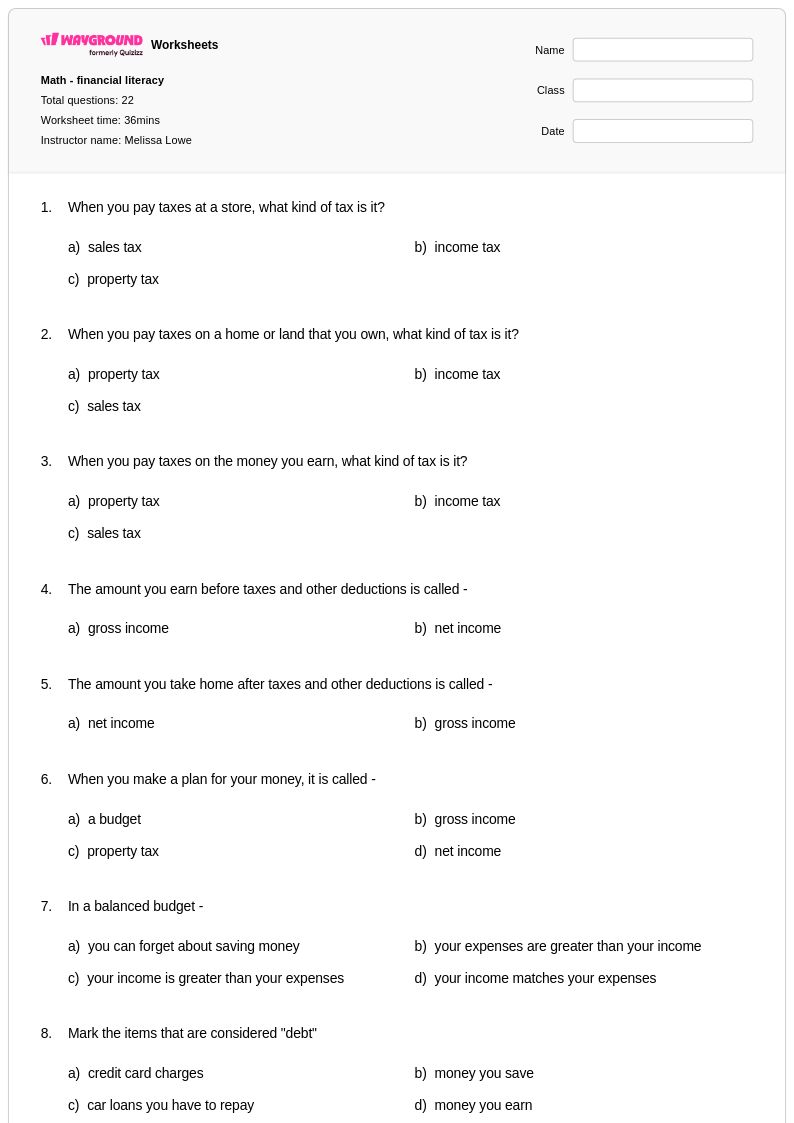
22 Q
5th
Explore Worksheets by Grade
Explore Financial Literacy Worksheets by Topics
- Accounting Methods
- Amortization
- Balancing a Checkbook
- Balancing a Checking Account
- Budget Planning
- Business Math
- Calculating Overtime Pay
- Cash Flow
- Comparing Prices
- Comparison Shopping
- Compound and Continuous Interest
- Compound Interest
- Consumer Math
- Continuously Compounded Interest
- Credit Card Statements
- Deductions
- Depreciation
- Fixed and Variable Expenses
- Income and Expenses
- Income Calculation
Explore Worksheets by Subjects
Explore printable Financial Literacy worksheets
Financial literacy worksheets available through Wayground (formerly Quizizz) provide comprehensive coverage of essential money management concepts that prepare students for real-world financial decision making. These expertly designed resources strengthen critical skills including budgeting, calculating interest rates, understanding credit and debt, analyzing investment options, and making informed purchasing decisions. Each worksheet collection includes detailed answer keys that support independent learning and self-assessment, while the free printable format ensures accessibility for diverse classroom environments. Students engage with practice problems that mirror authentic financial scenarios, from calculating mortgage payments and comparing insurance policies to understanding tax implications and retirement planning, building the mathematical foundations necessary for lifelong financial success.
Wayground (formerly Quizizz) empowers educators with millions of teacher-created financial literacy resources that streamline lesson planning and support differentiated instruction across varied skill levels. The platform's robust search and filtering capabilities allow teachers to quickly locate worksheets aligned with specific learning standards and educational objectives, whether focusing on basic percentage calculations for consumer math or advanced compound interest formulas for pre-college preparation. Flexible customization tools enable educators to modify existing materials for remediation or enrichment purposes, while the dual availability in both printable pdf format and interactive digital versions accommodates diverse teaching preferences and technology access. These comprehensive worksheet collections support systematic skill practice through scaffolded problem sets, helping teachers address individual learning needs while ensuring all students develop the quantitative reasoning abilities essential for informed financial citizenship.
FAQs
How do I teach financial literacy through real-world situations?
What exercises help students practice financial literacy?
What mistakes do students commonly make in financial literacy problems?
How can I use Wayground financial literacy worksheets in my classroom?
How does financial literacy fit into the Common Core math progression?
How can I differentiate financial literacy practice for mixed-ability classes?