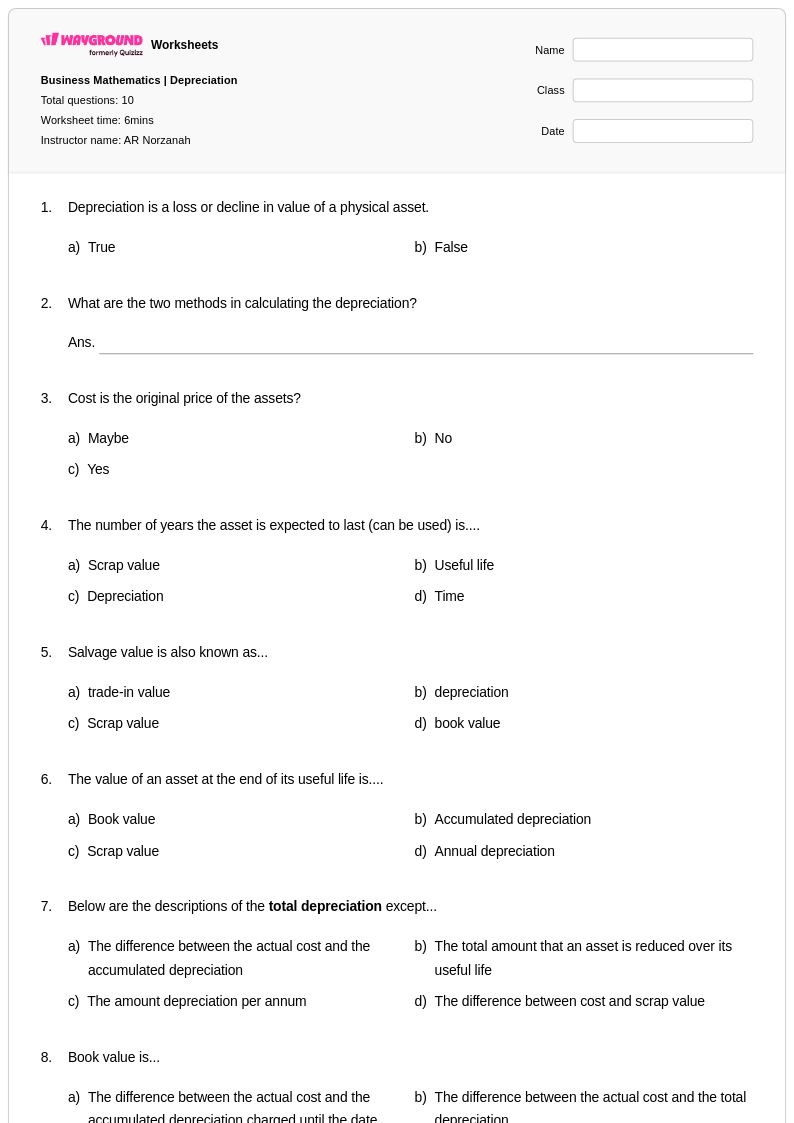
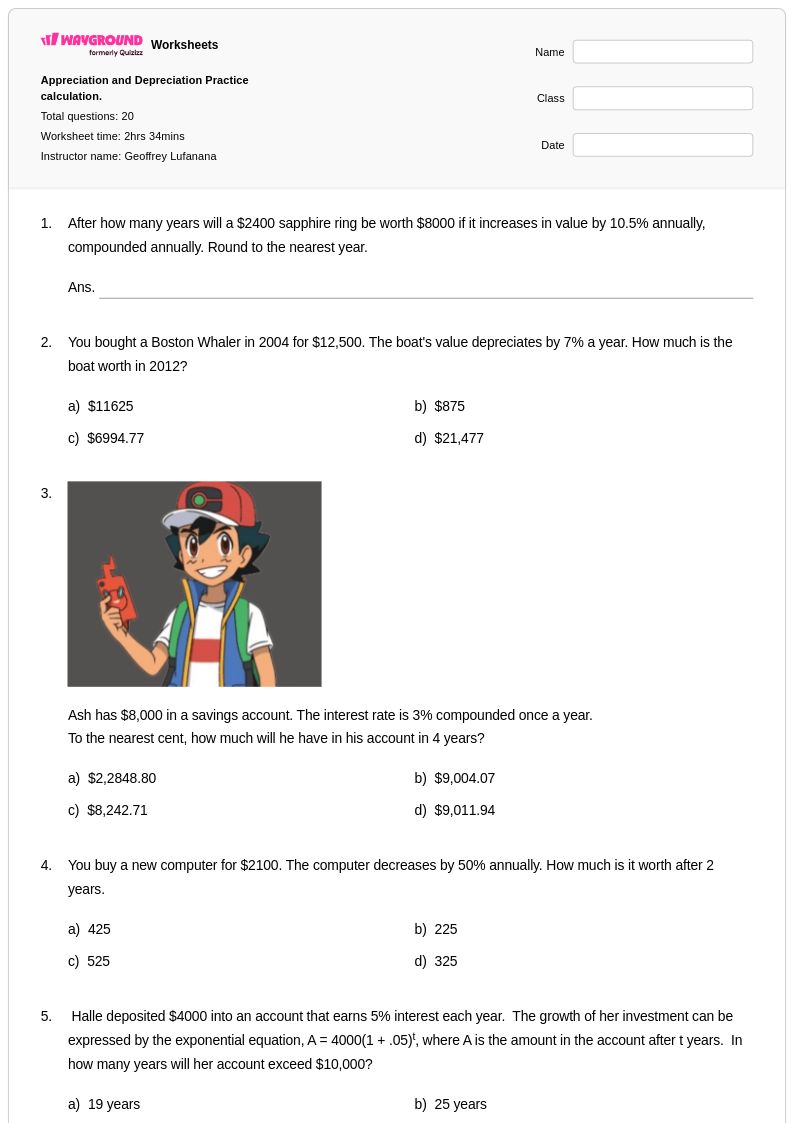
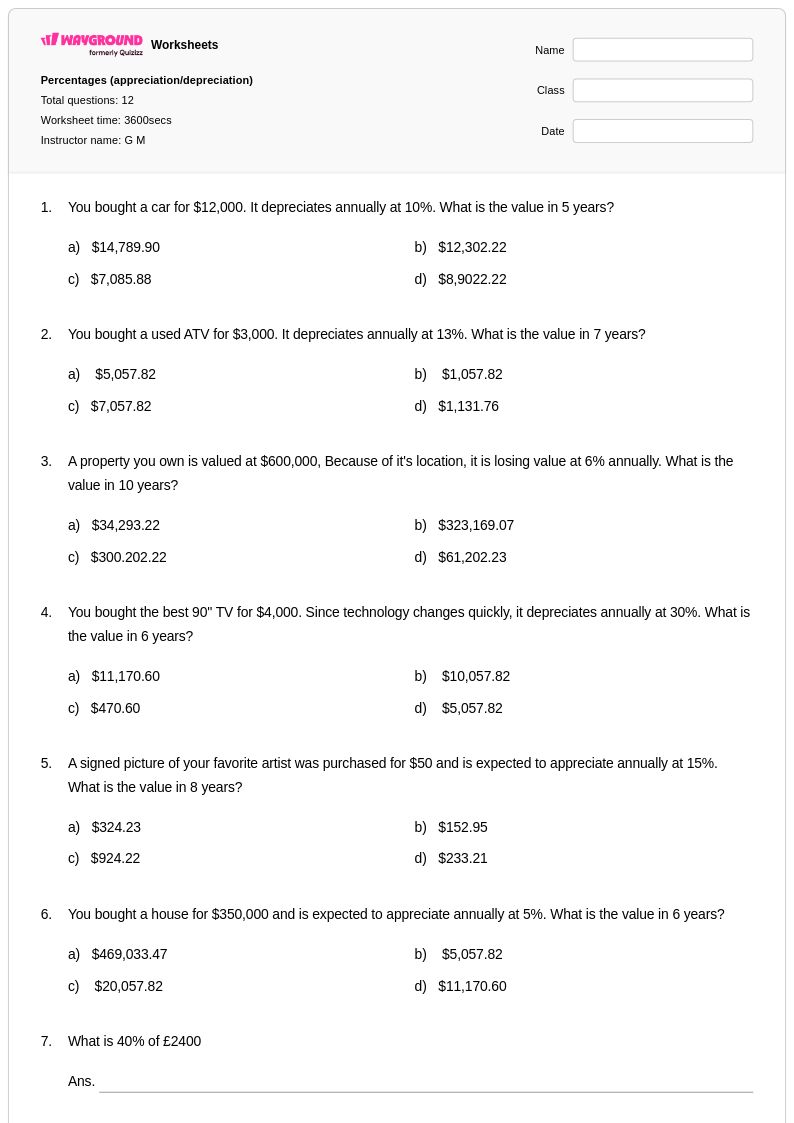
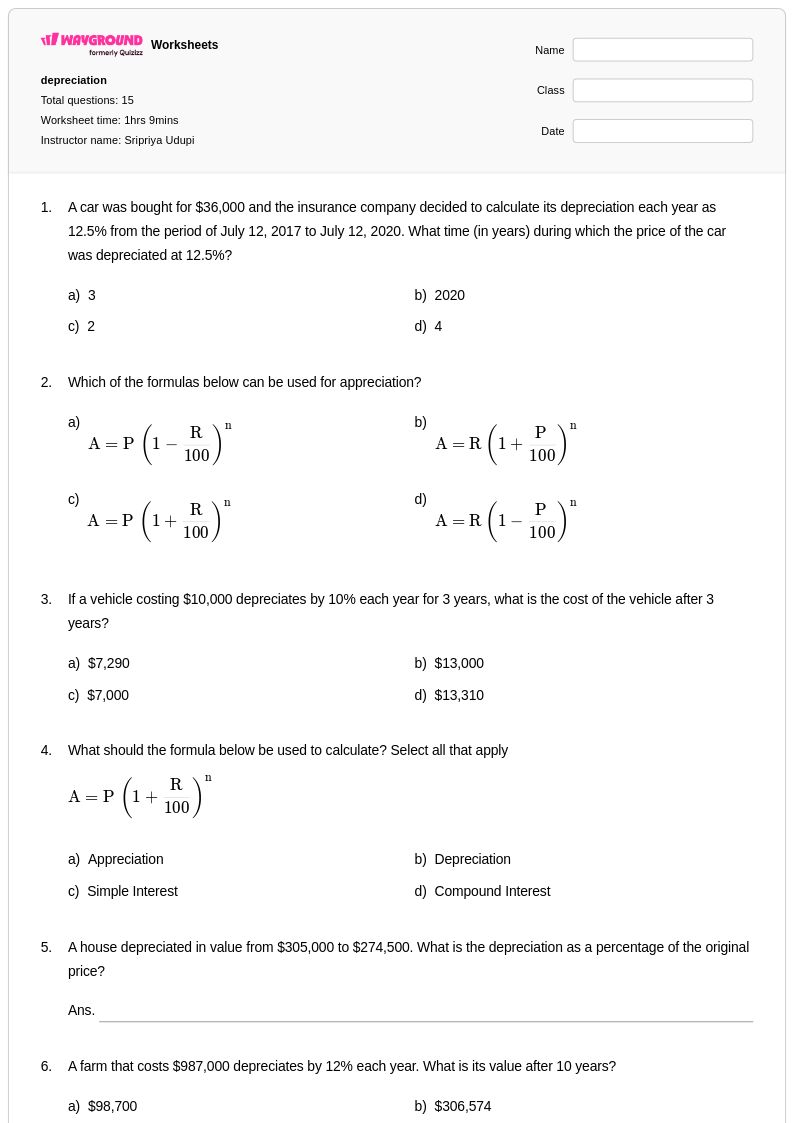
Free depreciation worksheets and printables help students master calculating asset value decline over time through engaging practice problems with complete answer keys available as downloadable PDFs.
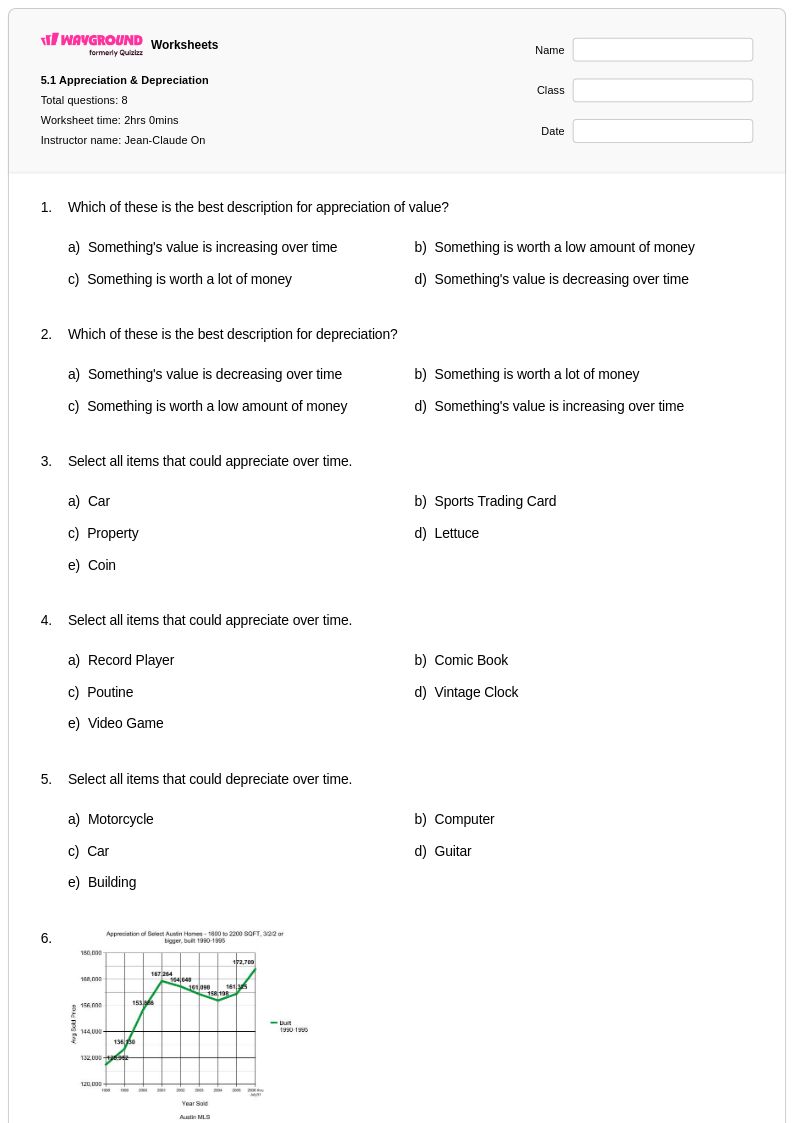
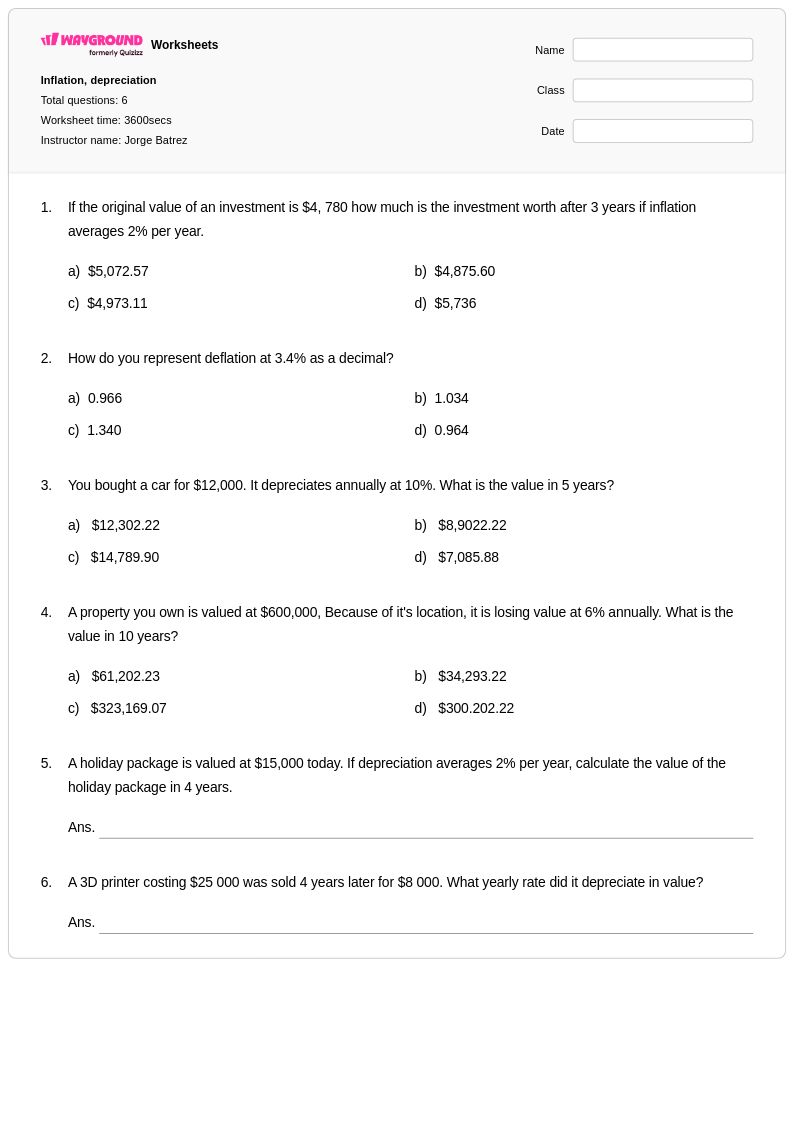
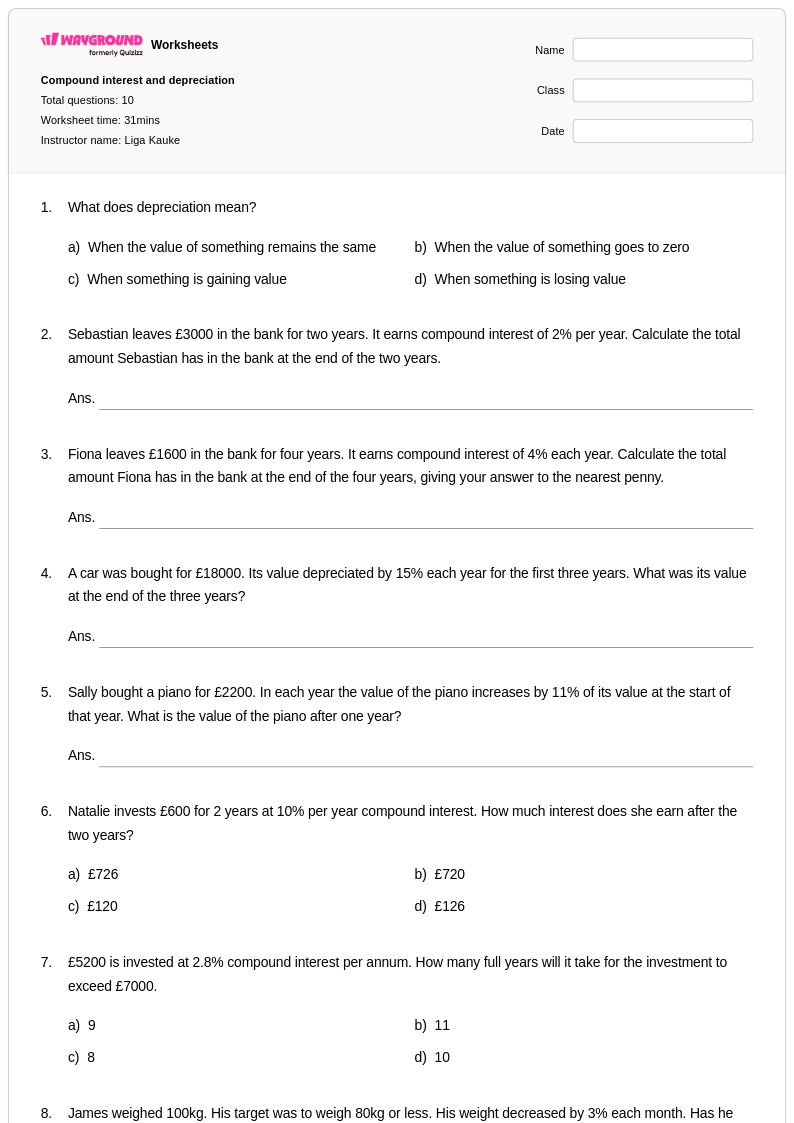
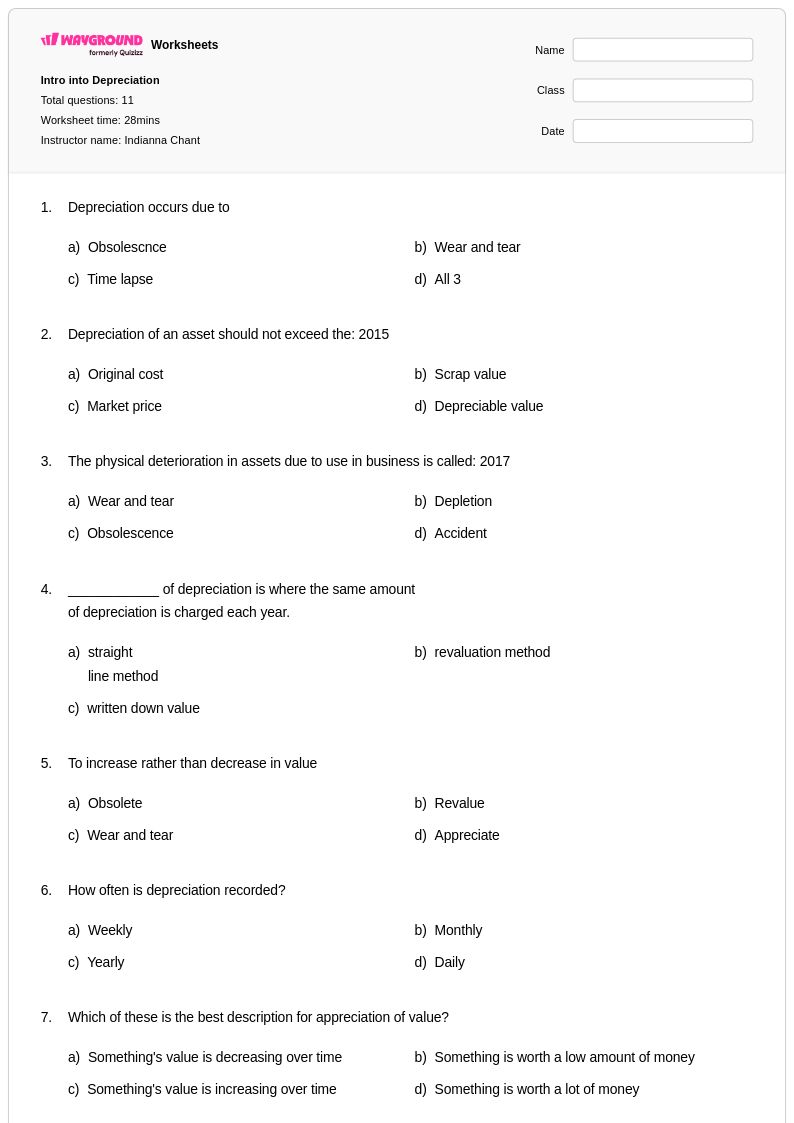
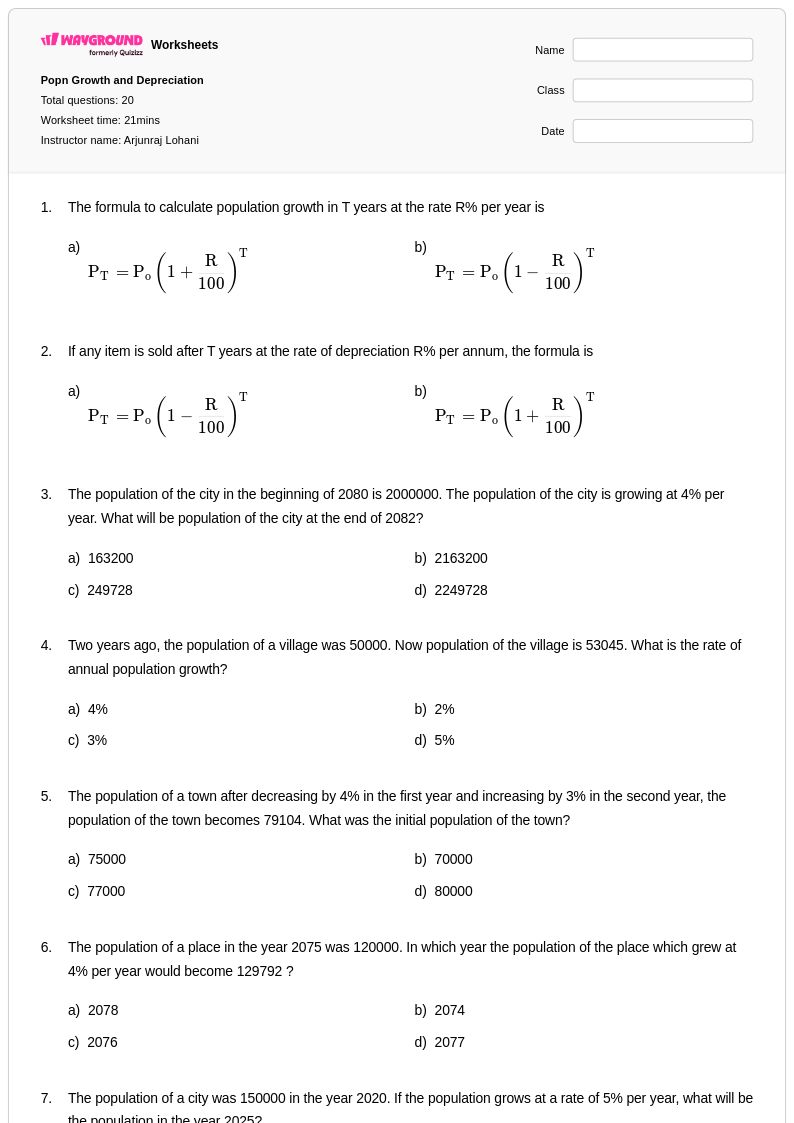
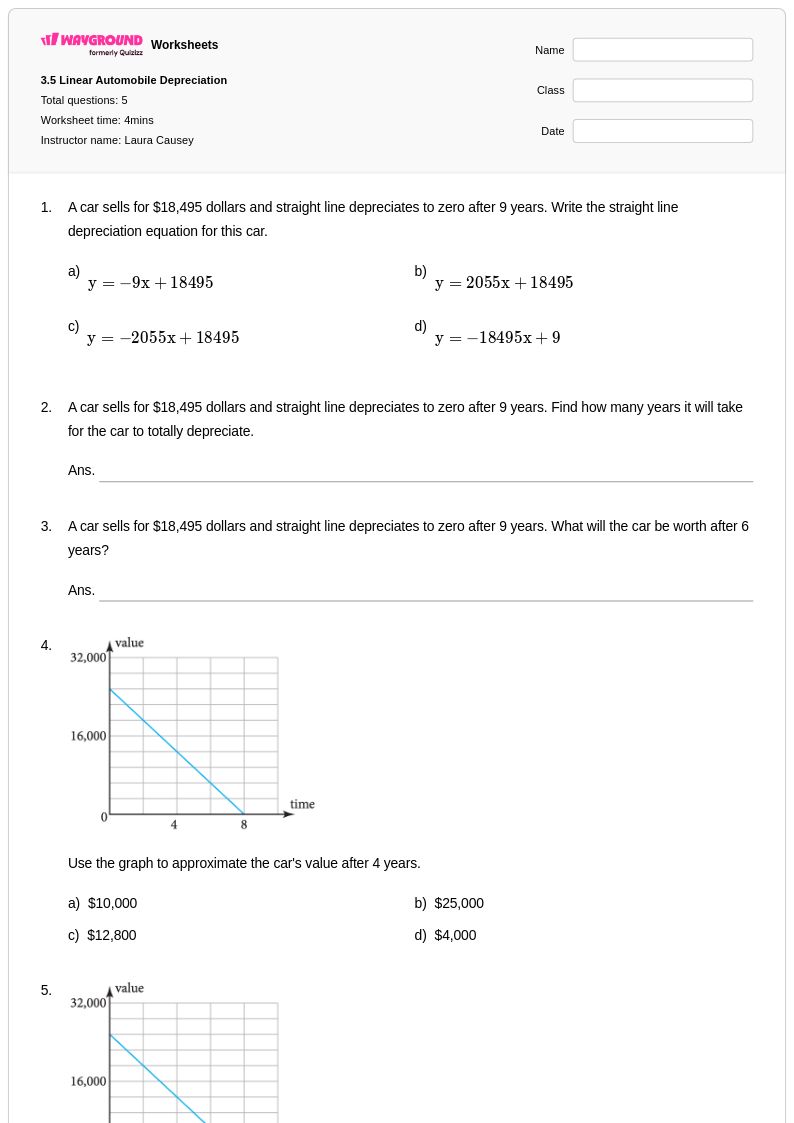
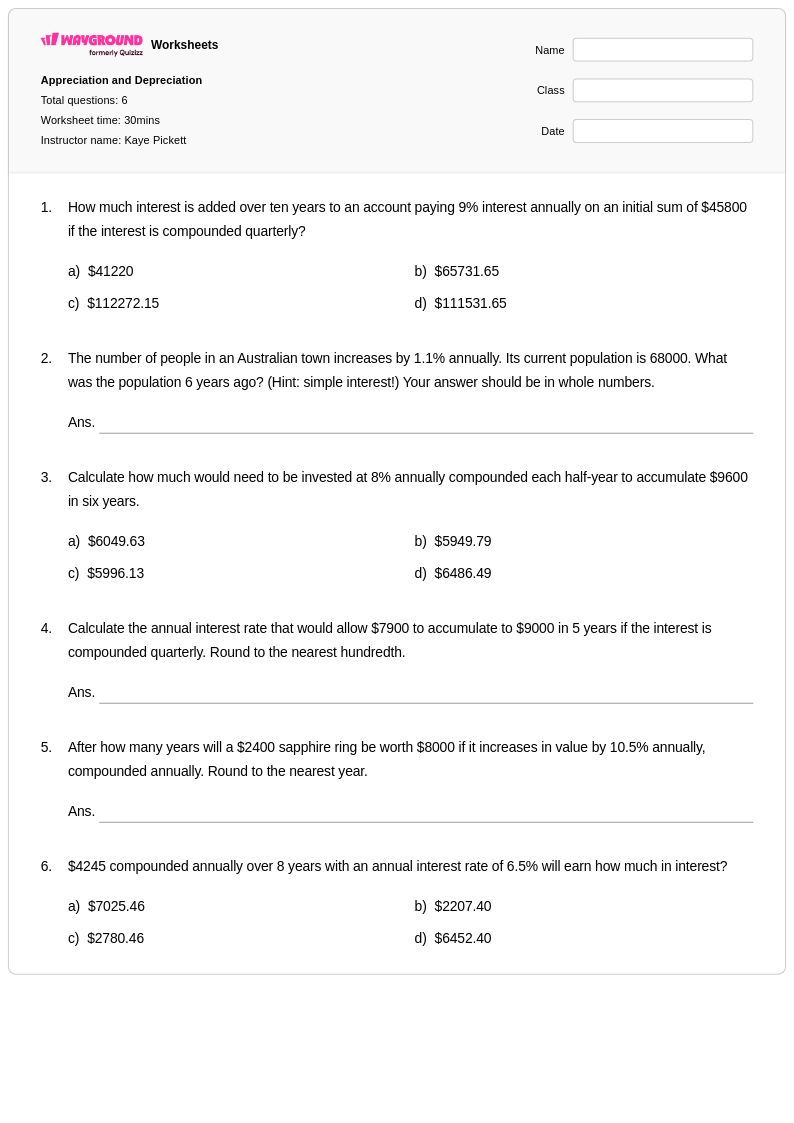
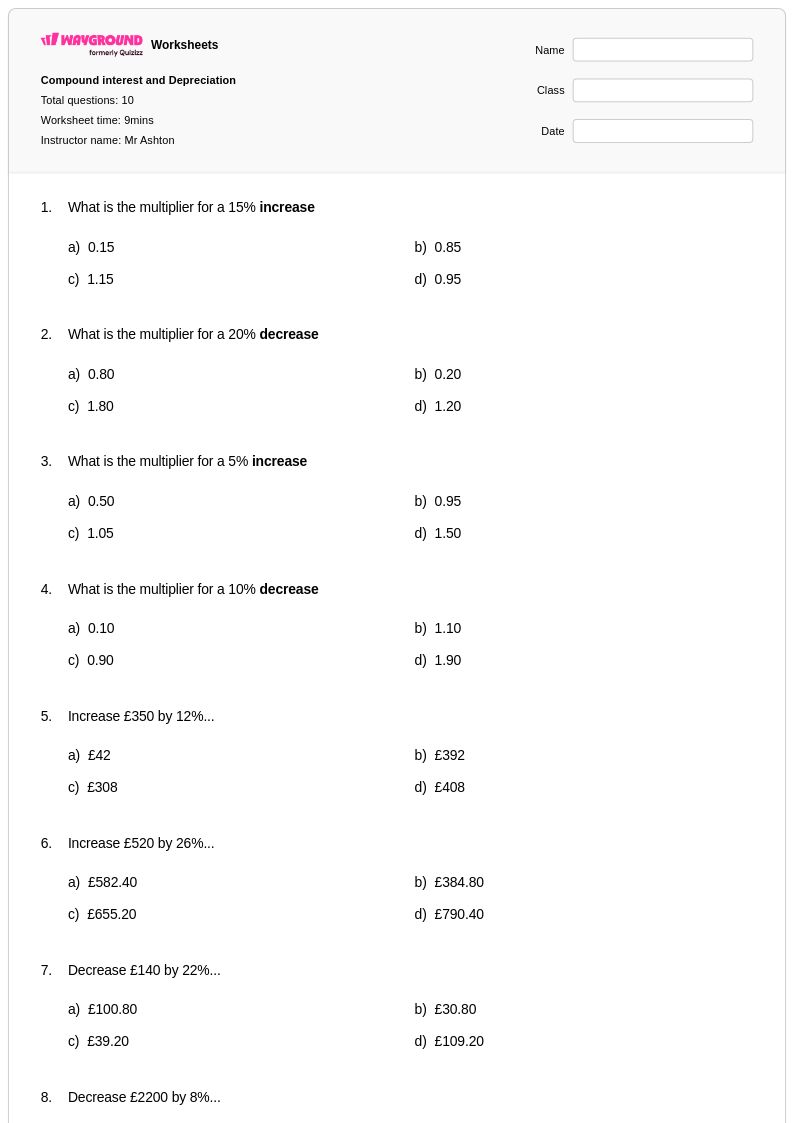
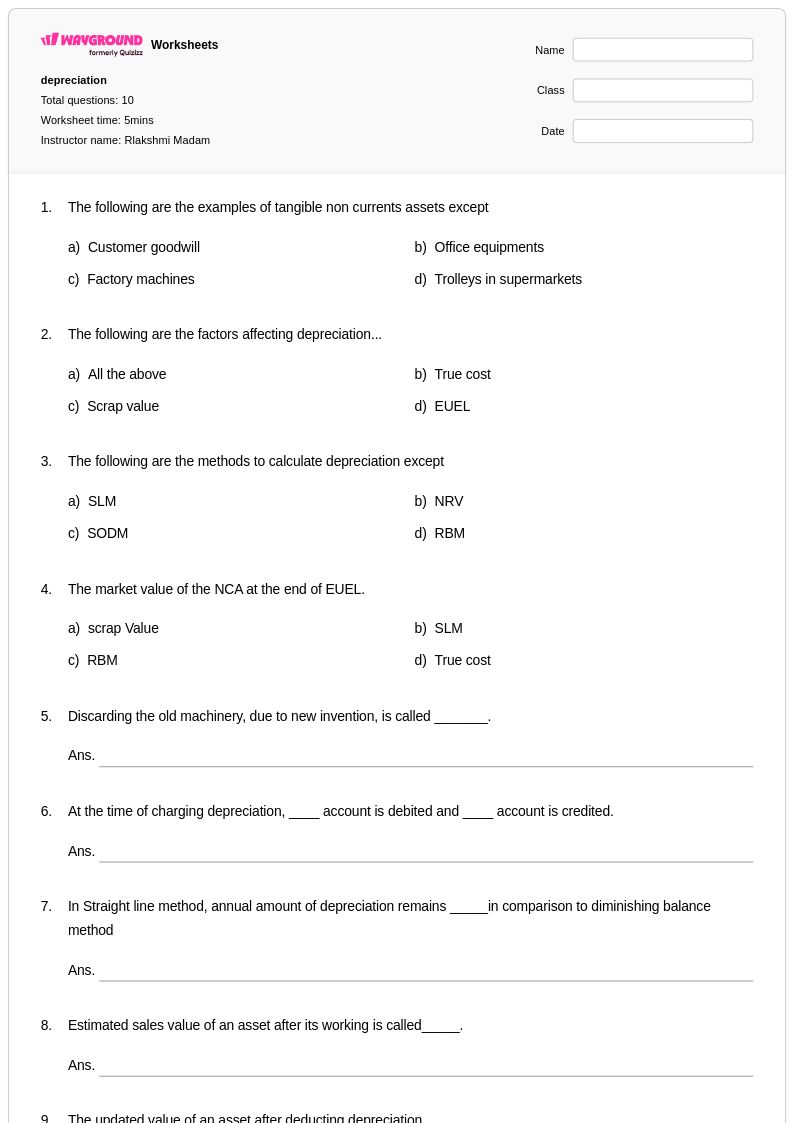
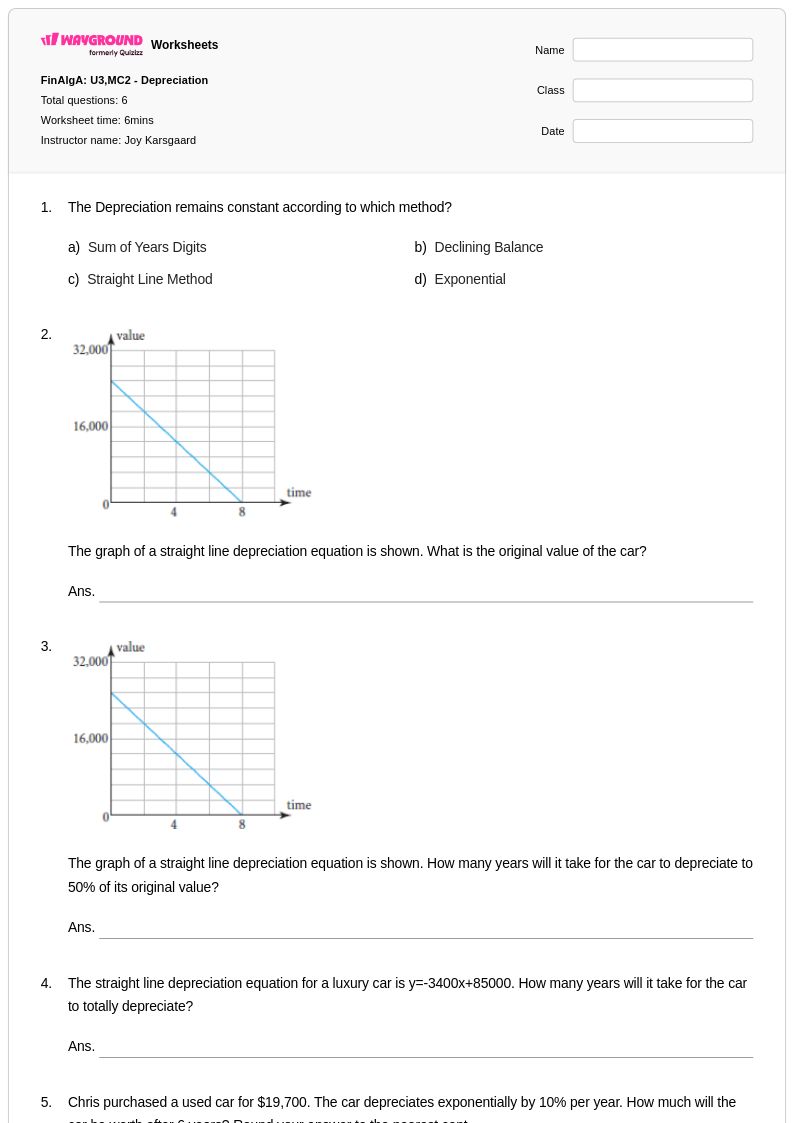
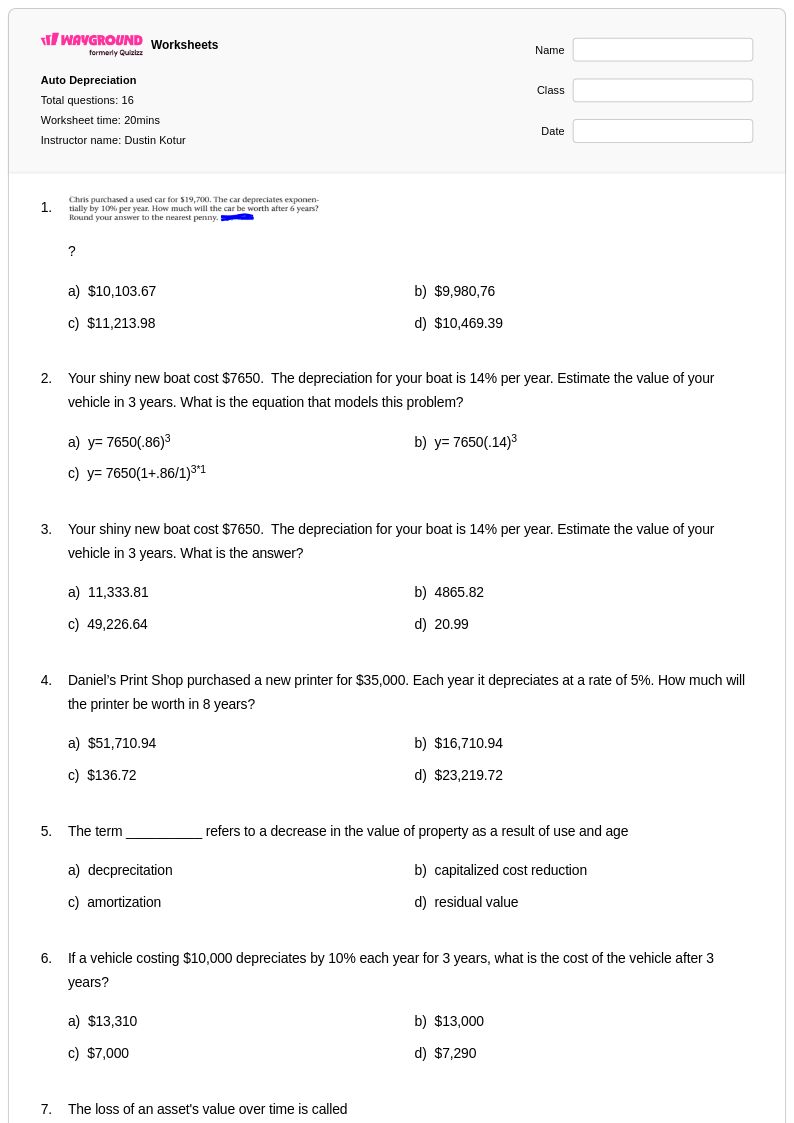
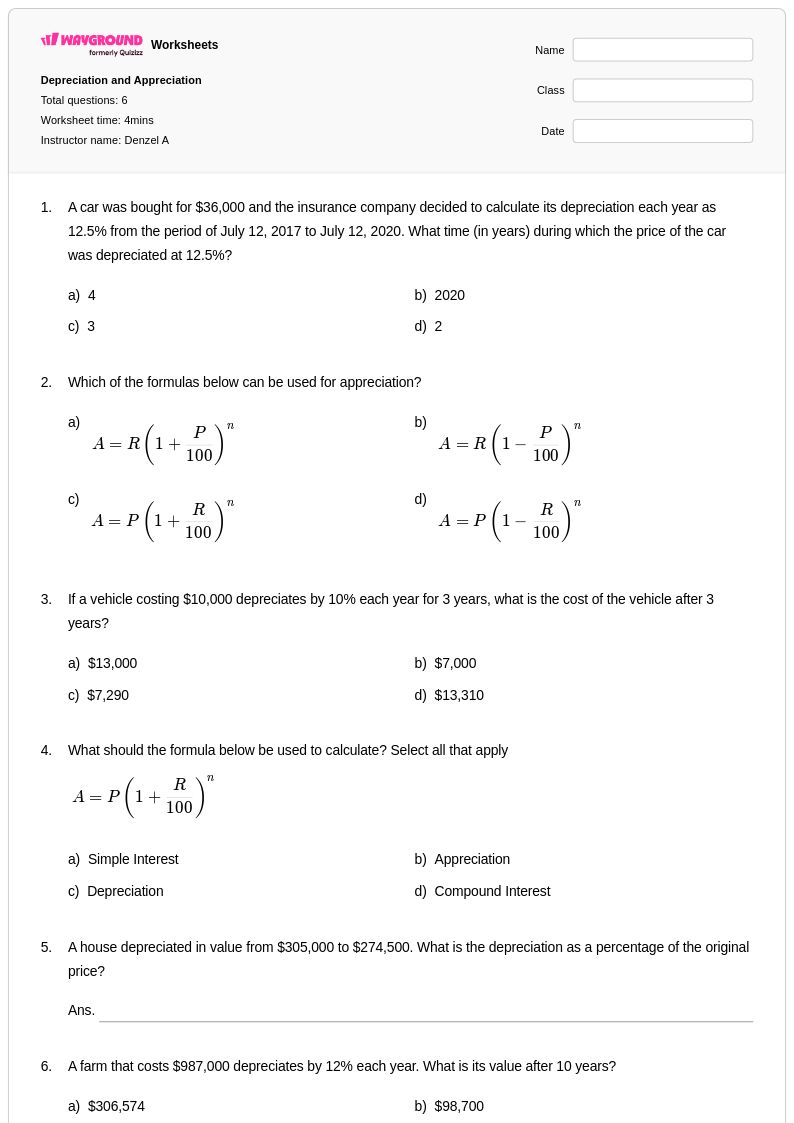
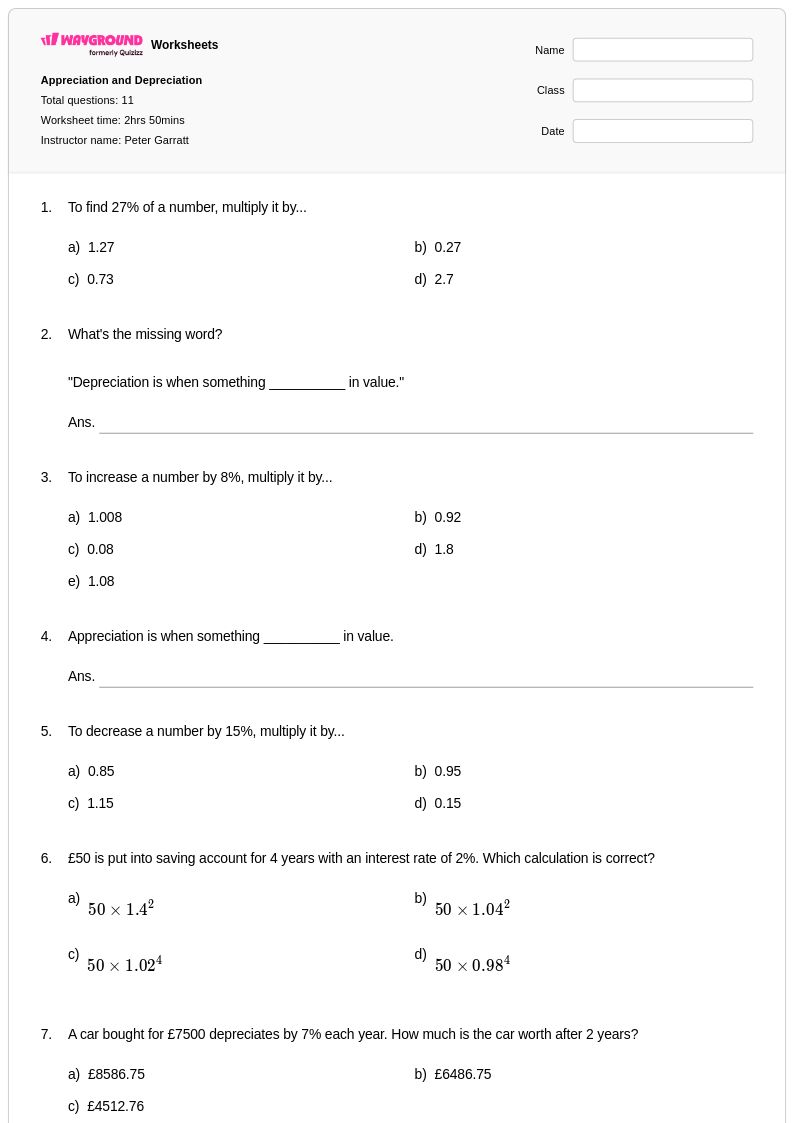
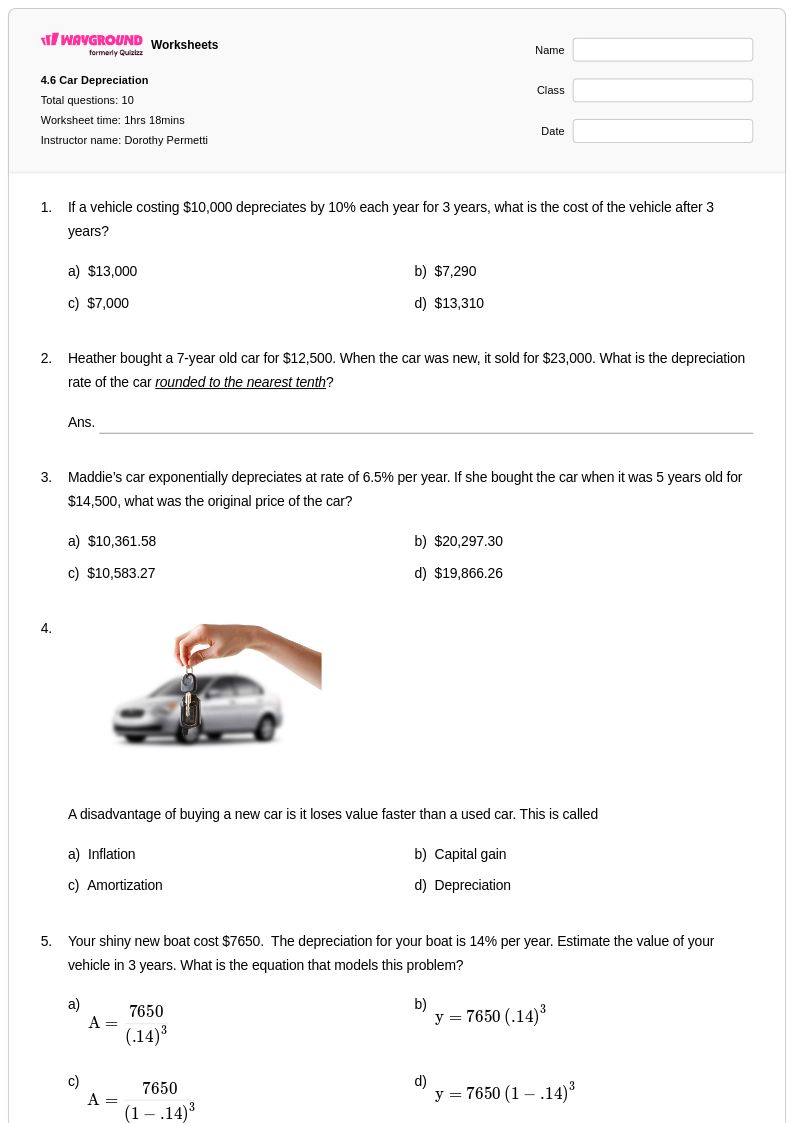
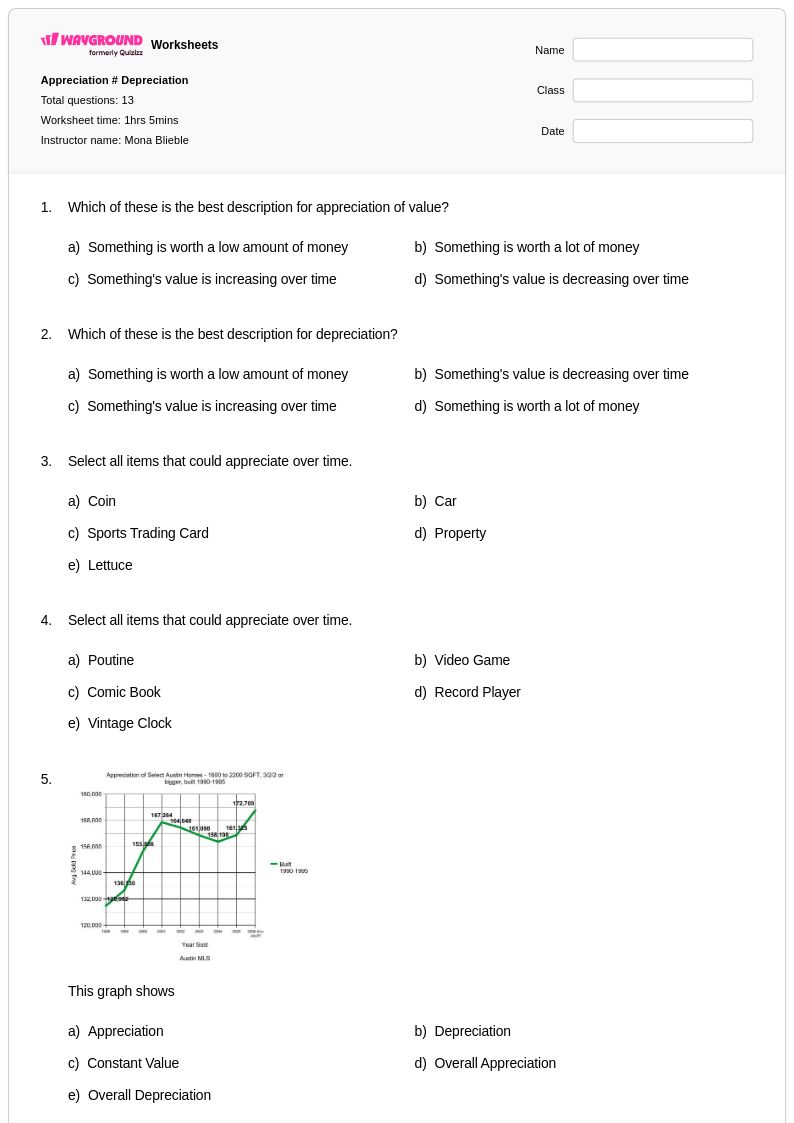
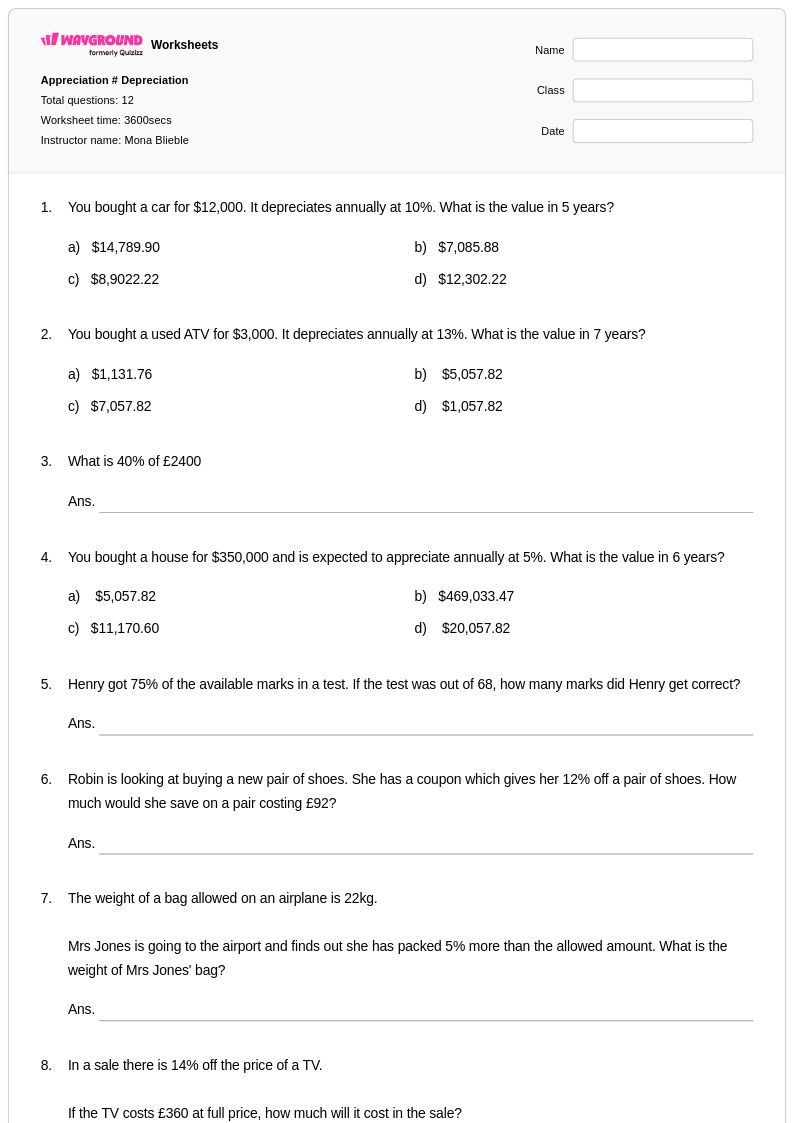
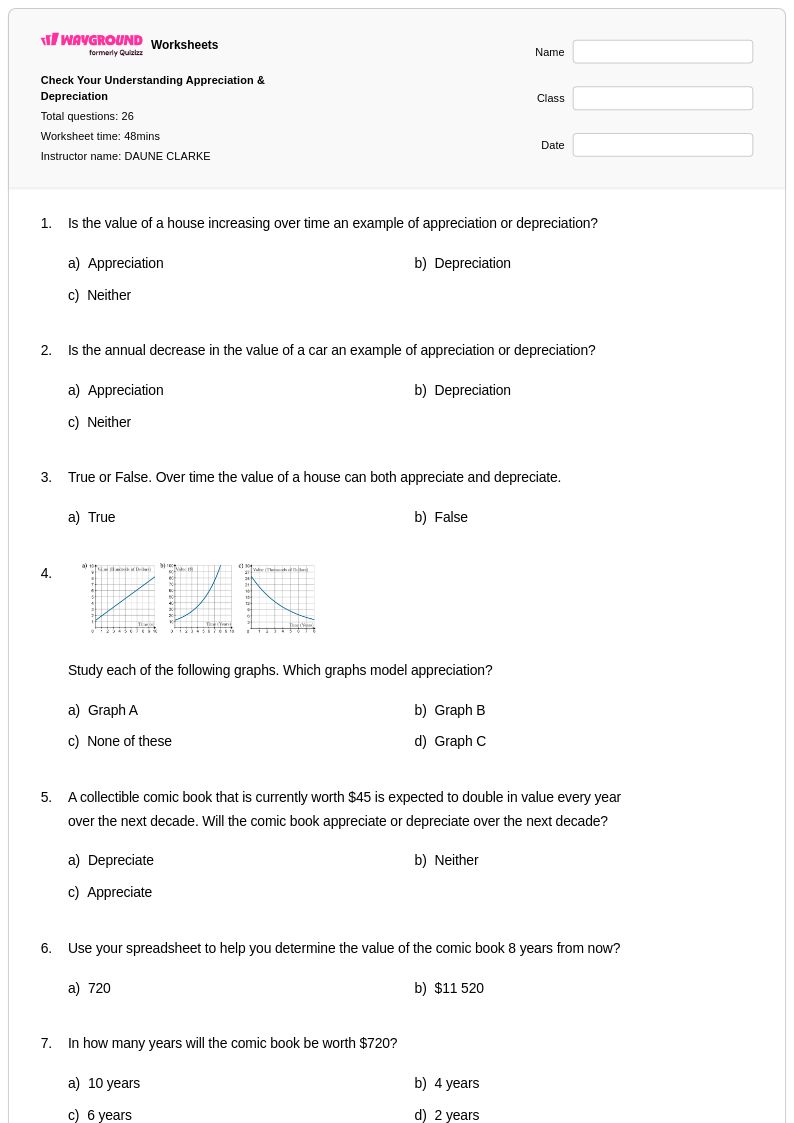
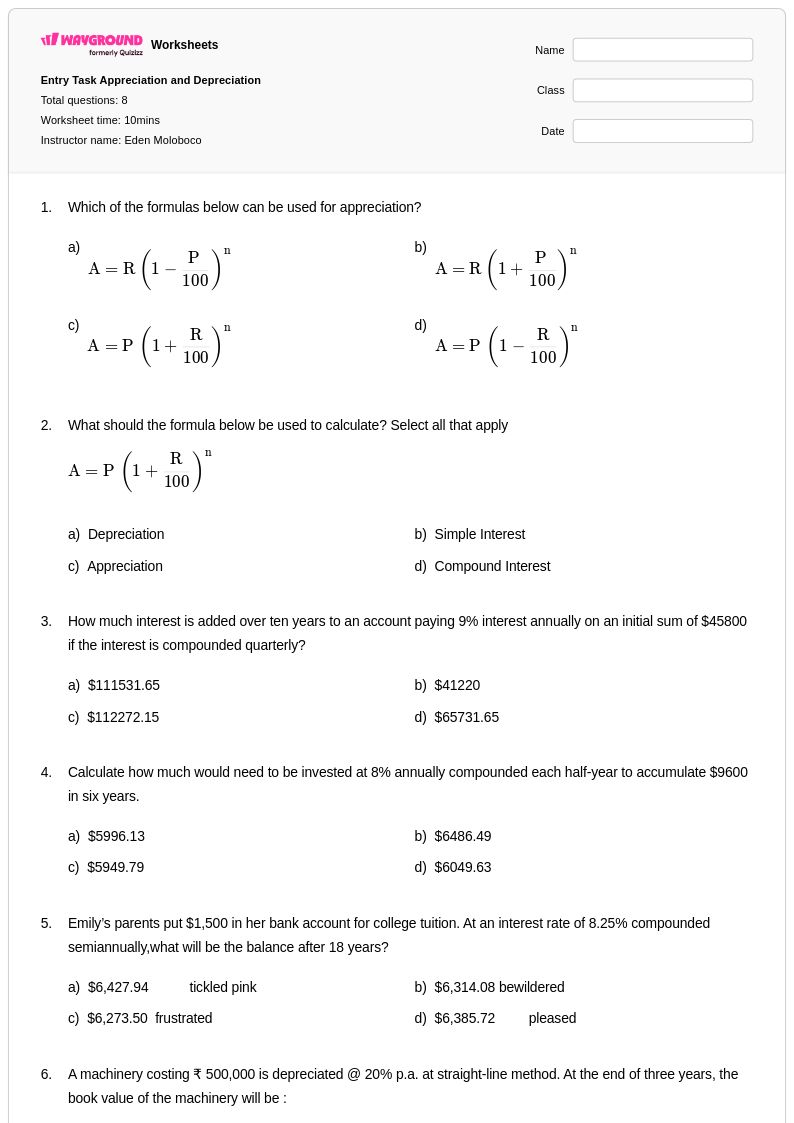
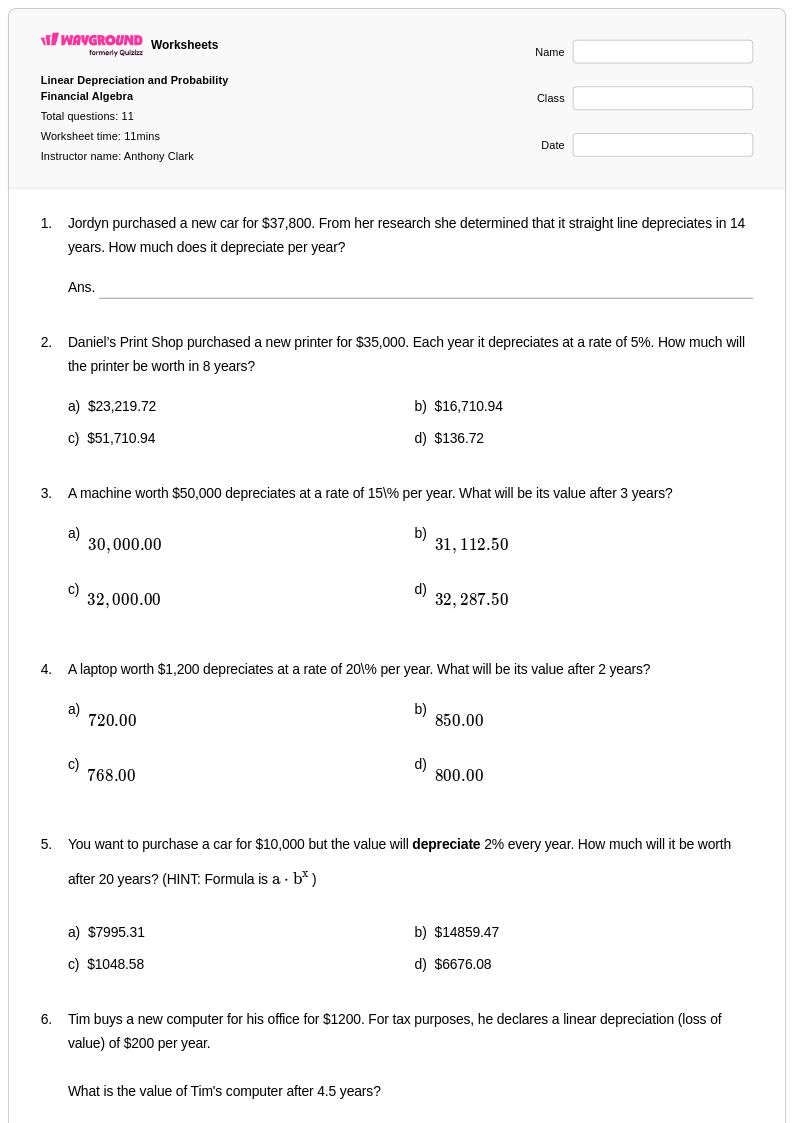
Depreciation worksheets available through Wayground (formerly Quizizz) provide comprehensive practice with this essential financial literacy concept that demonstrates how assets lose value over time. These carefully designed mathematical resources strengthen students' understanding of straight-line depreciation, declining balance methods, and sum-of-years digits calculations while building critical analytical skills needed for real-world financial decision making. Each worksheet collection includes detailed answer keys and step-by-step solutions that help students master the formulas and processes used to calculate asset depreciation across various scenarios, from vehicle purchases to business equipment investments. The free printable materials offer extensive practice problems that progress from basic depreciation calculations to complex multi-year scenarios, ensuring students develop both computational accuracy and conceptual understanding of how depreciation impacts personal and business finances.
Wayground (formerly Quizizz) empowers educators with access to millions of teacher-created depreciation resources that support diverse classroom needs and learning objectives. The platform's robust search and filtering capabilities allow teachers to quickly locate worksheets aligned with specific financial literacy standards while offering differentiation tools that accommodate various skill levels and learning styles. Teachers can seamlessly customize existing materials or create original content, with all resources available in both printable pdf format for traditional classroom use and interactive digital versions for technology-enhanced learning environments. These flexible features streamline lesson planning while providing targeted options for remediation, enrichment, and ongoing skill practice, enabling educators to effectively guide students through the complexities of depreciation calculations and their practical applications in personal finance and business contexts.
FAQs
How do I teach depreciation to students?
Start with a concrete example students already understand: a car. Ask them what a $20,000 car is worth after five years and why. That intuition, value declining over time, is the foundation. From there, introduce straight-line depreciation as the simplest model (equal loss each year), then contrast it with declining balance, where the asset loses more value early on. Grounding each method in a real asset type (vehicles for straight-line, business equipment for declining balance) helps students see why different methods exist rather than treating them as arbitrary formulas.
What exercises help students practice depreciation calculations?
The most effective practice moves from single-step to multi-year problems. Start with calculating one year of straight-line depreciation, then have students build out a full depreciation schedule over an asset's useful life — this forces them to track book value, accumulated depreciation, and salvage value together. Adding a comparison problem (same asset, two different methods) builds conceptual understanding alongside computational skill.
What mistakes do students commonly make with depreciation?
Three errors come up repeatedly. First, students forget to subtract salvage value before dividing in the straight-line formula, inflating the annual depreciation amount. Second, with declining balance, they apply the rate to the original cost instead of the current book value each year. Third, students often let book value drop below salvage value — they don't recognize that depreciation stops once book value reaches salvage. Catching these early, ideally by having students check their own schedules against an answer key, prevents the errors from becoming habits.
How do I use Wayground's depreciation worksheets in my class?
Each worksheet includes a complete answer key, so students can self-check after working through problems independently. For classes going paperless, you can host any worksheet as a digital quiz on Wayground — students submit answers online and get immediate feedback. If you prefer paper, download the printable PDF and distribute it in class; you can then grade submissions using the Wayground for Teachers app, which lets you scan or capture student work for quick turnaround.
How can I differentiate depreciation practice for mixed-ability classes?
Depreciation is a topic where the gap between struggling and advanced students tends to show up in multi-step problems. For students who need support, Wayground's Read Aloud accommodation helps those with reading difficulties access word problems independently, and reduced answer choices lowers the cognitive load on multiple-choice items so they can focus on the calculation itself. For layout adjustments, you can generate an alternate version of the same worksheet with wider font spacing or a dyslexia-friendly font, same problems, more accessible format, without creating a separate assignment for the rest of the class.
What grade level is depreciation typically taught?
Depreciation is most commonly introduced in grades 9 and 10 as part of financial literacy or business mathematics, where students first encounter straight-line methods. It deepens in grades 11 and 12 when students work with accelerated methods like declining balance and begin interpreting full depreciation schedules in business or accounting contexts.