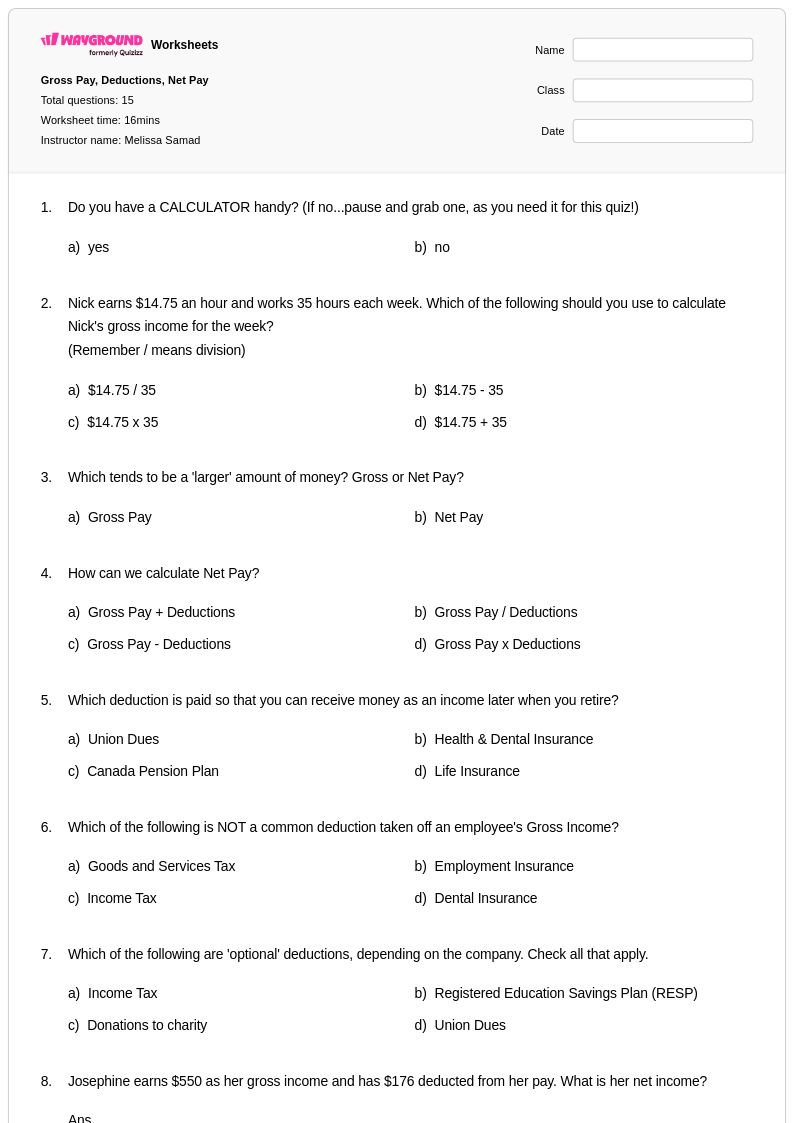
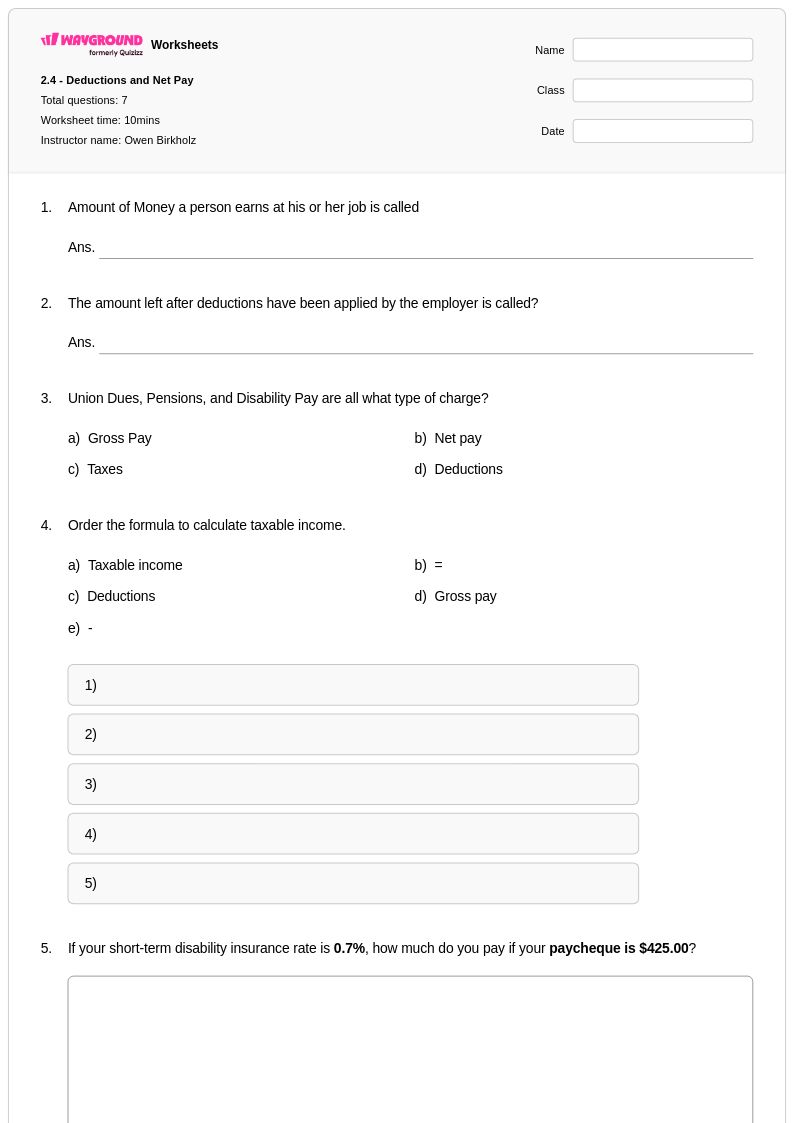
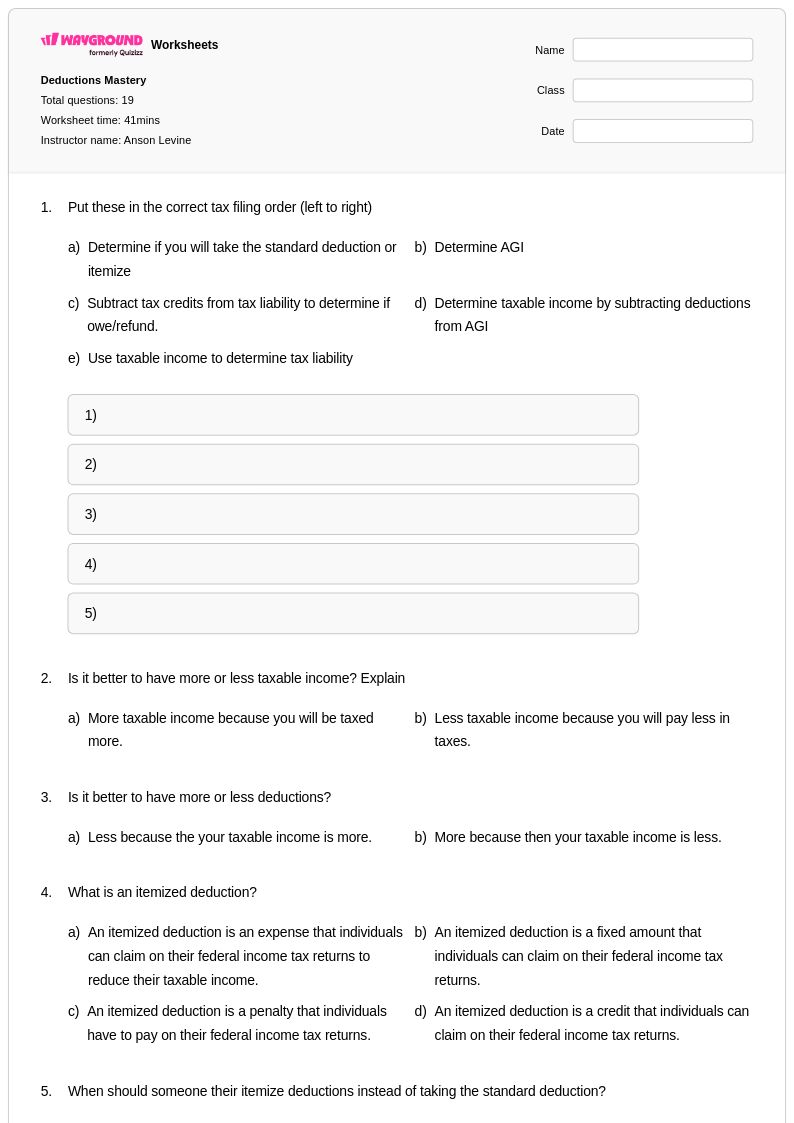
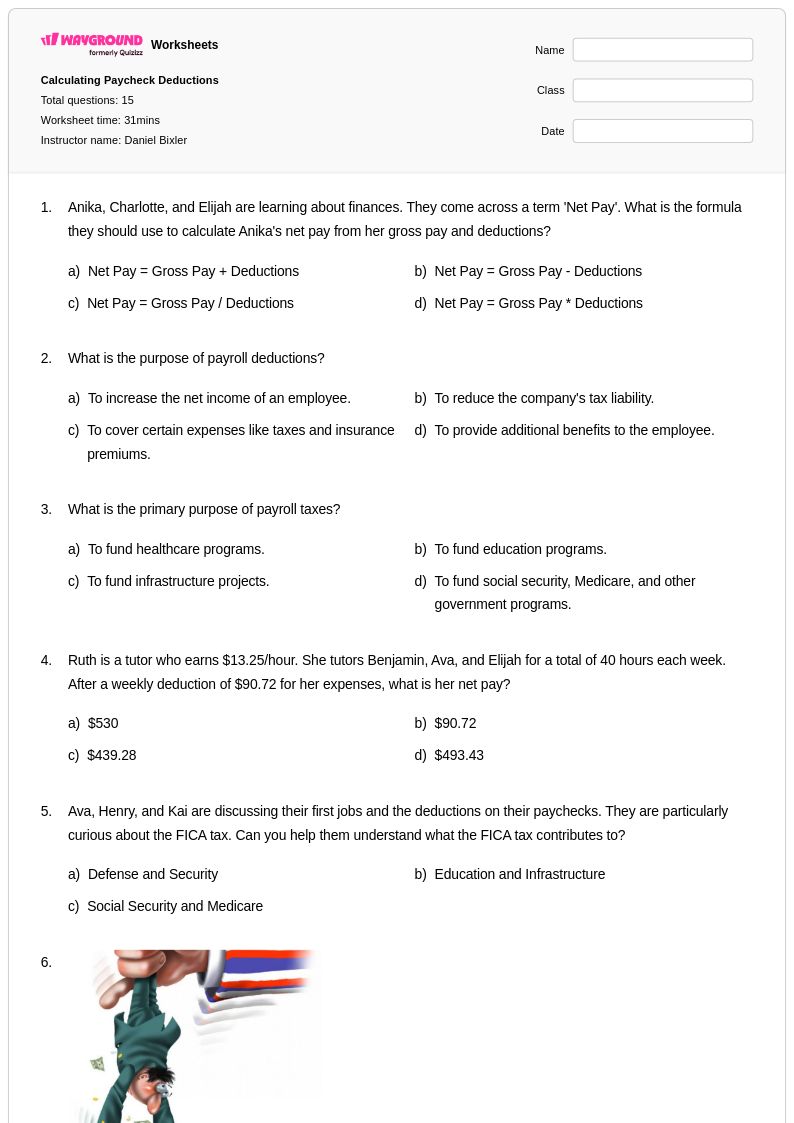
Free printable worksheets and practice problems help students master tax deductions, payroll withholdings, and other financial deductions through engaging PDF exercises with comprehensive answer keys from Wayground.
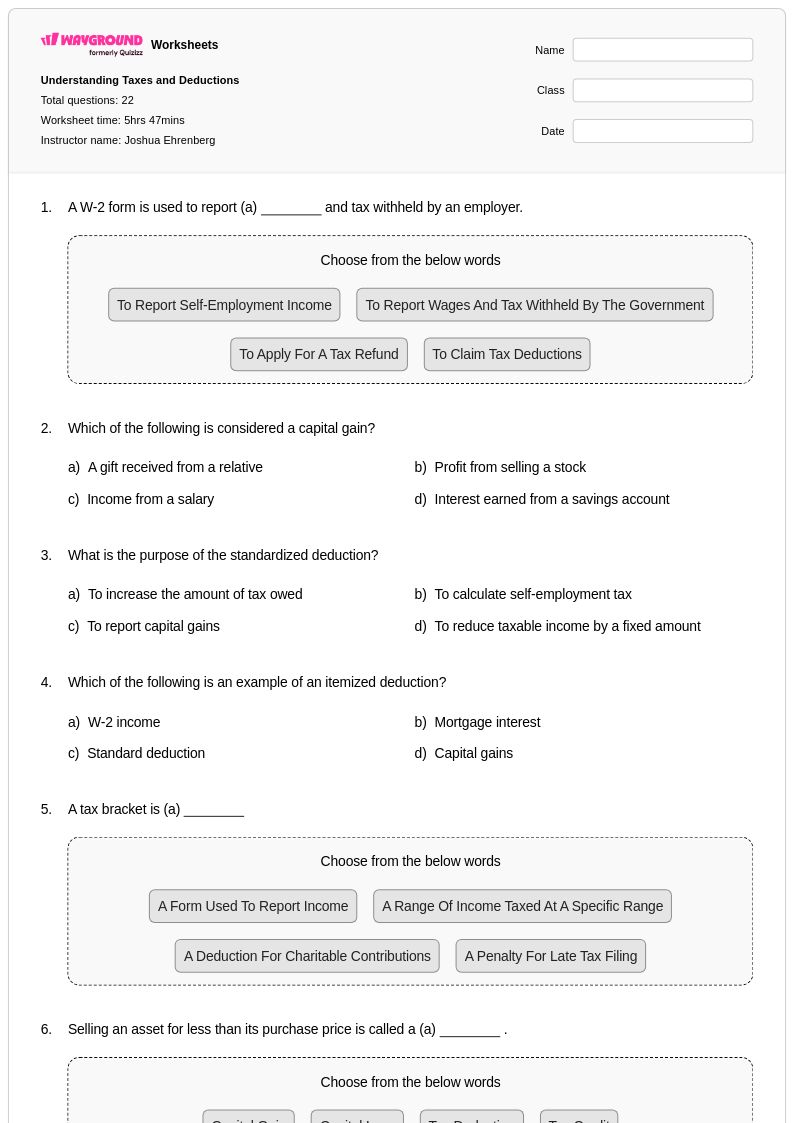
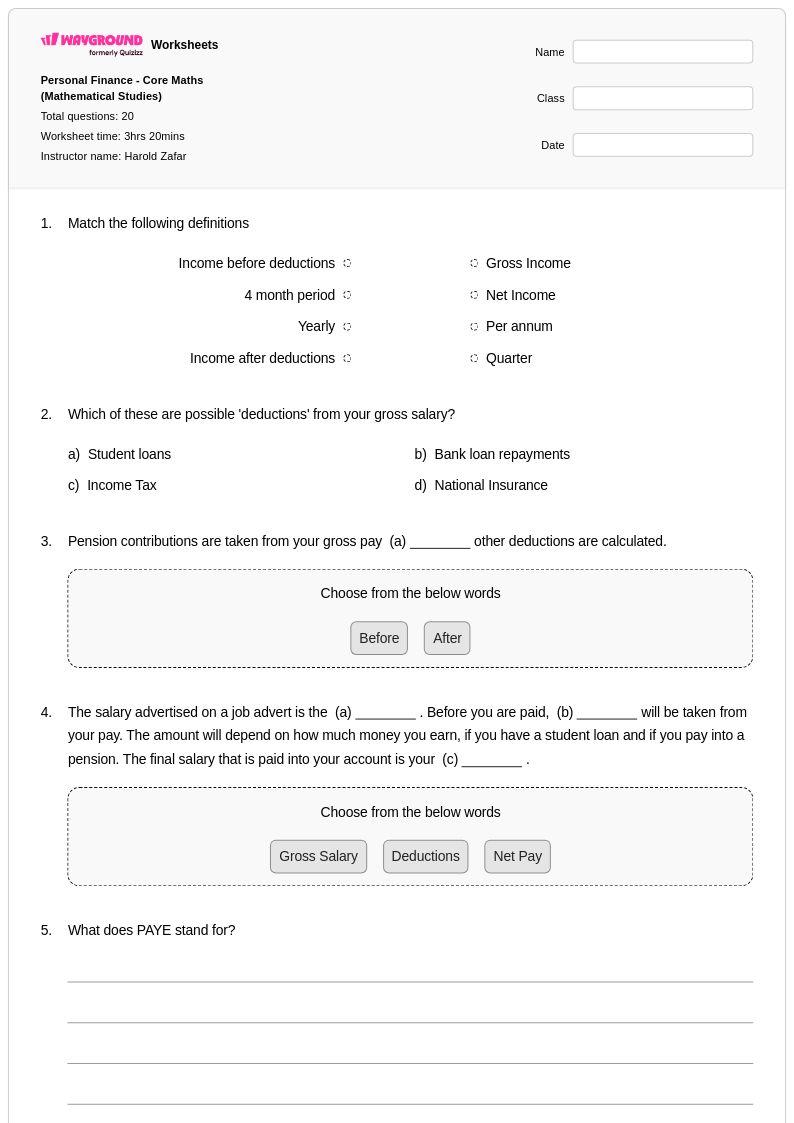
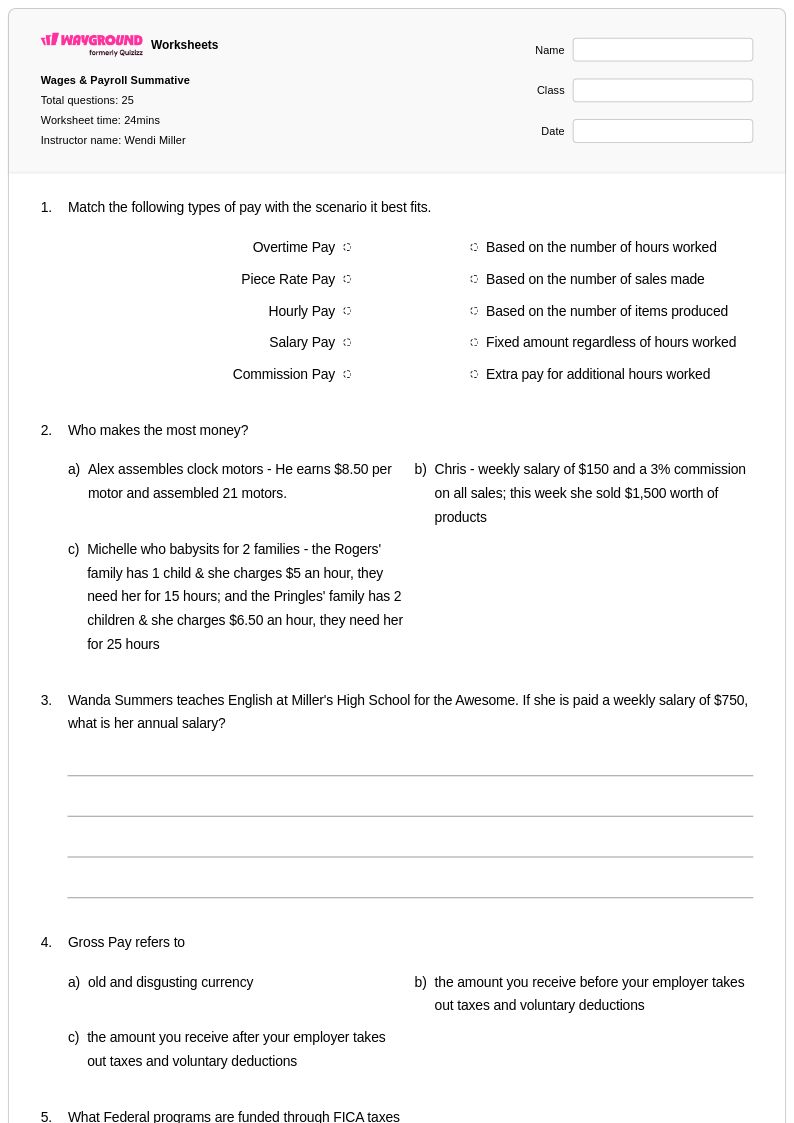
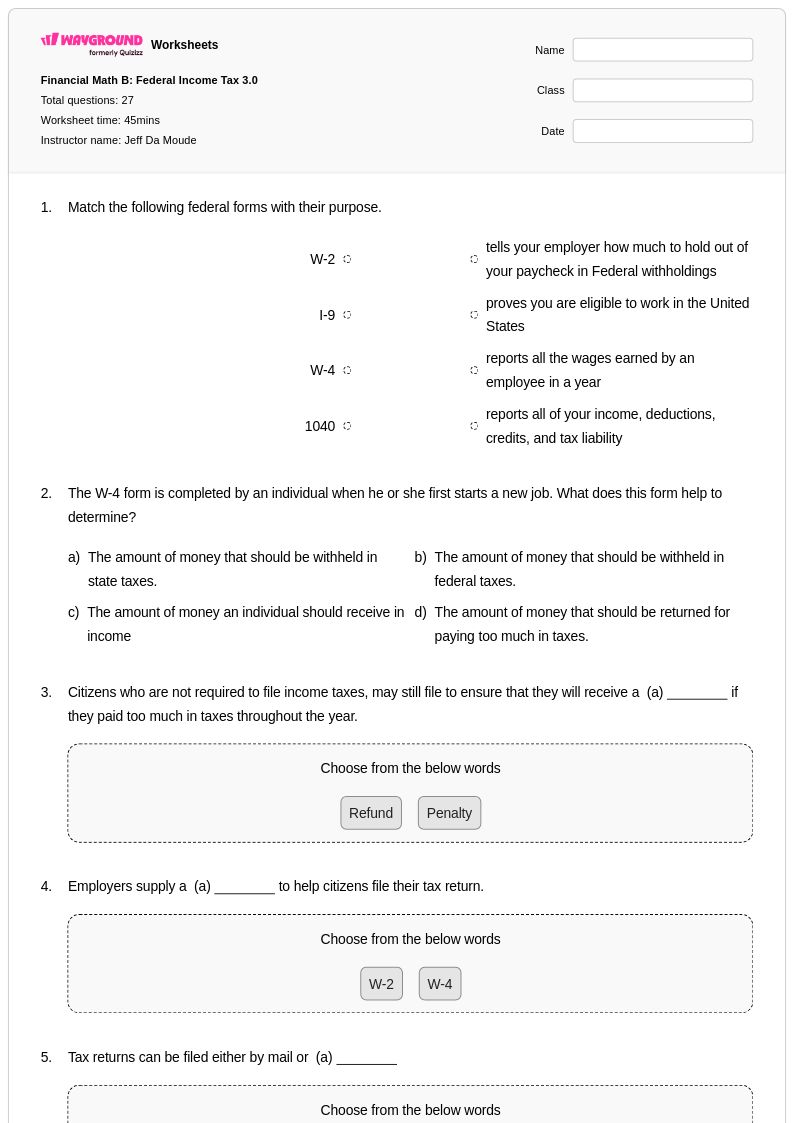
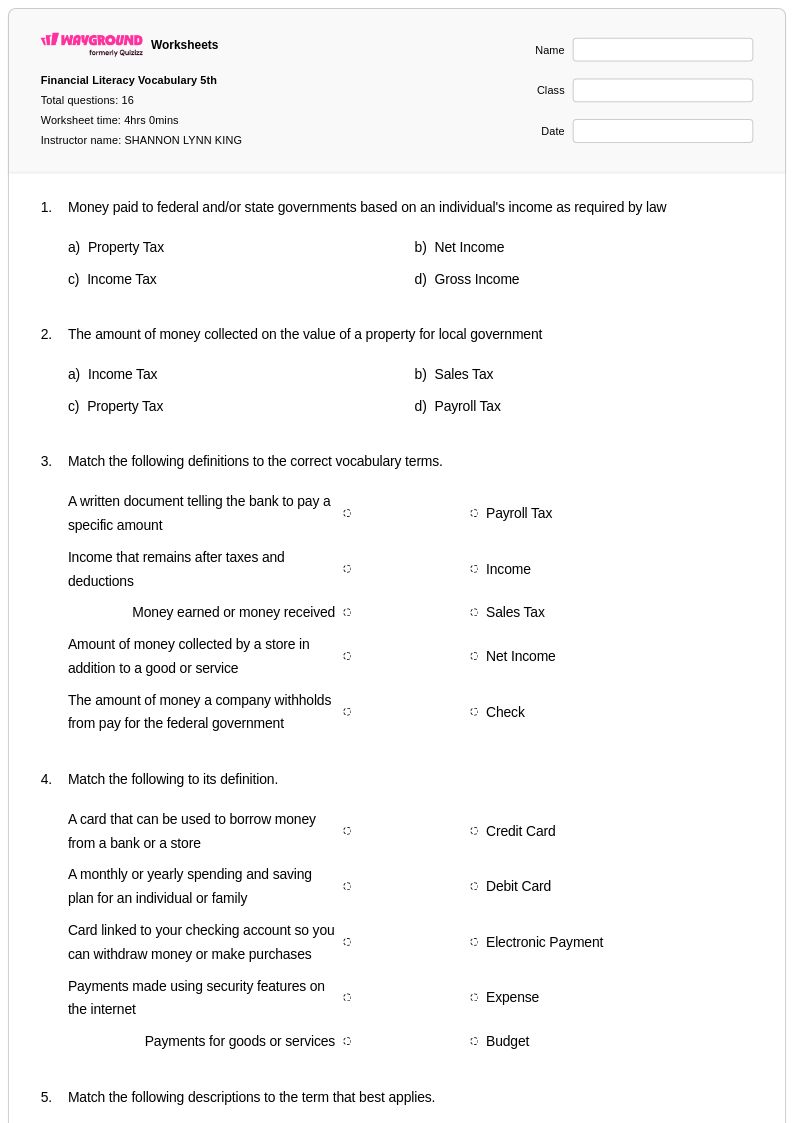
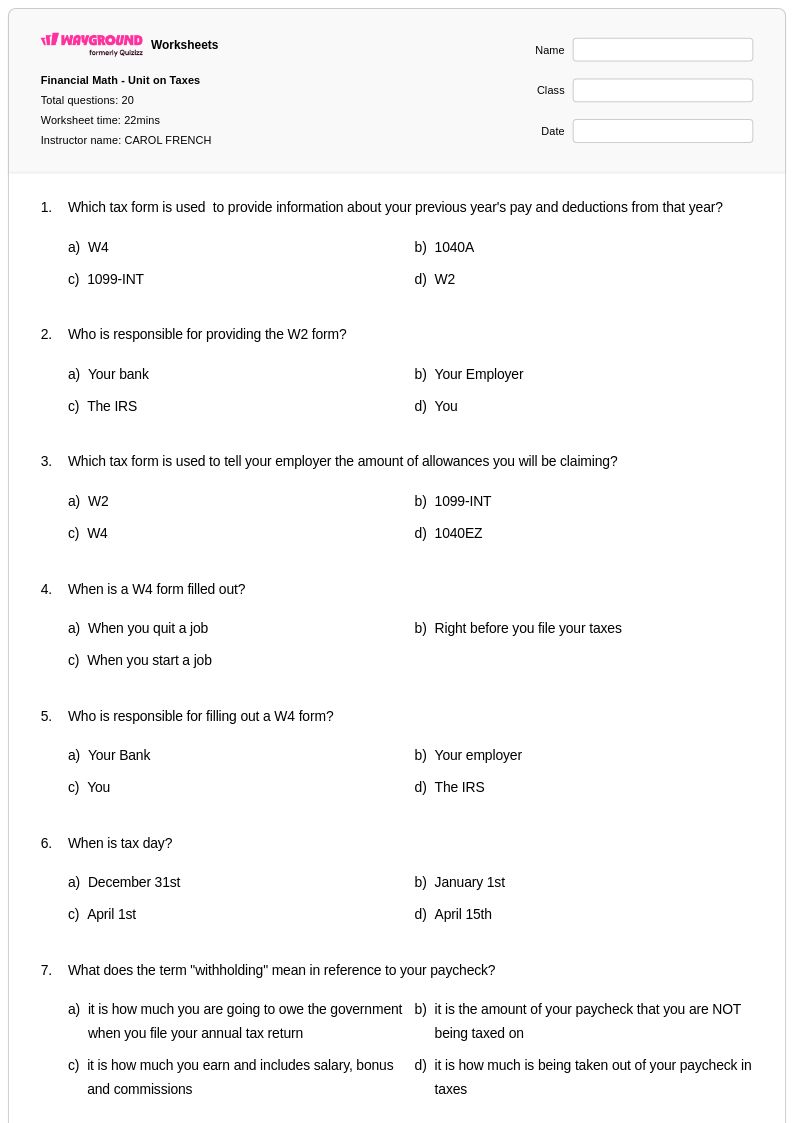
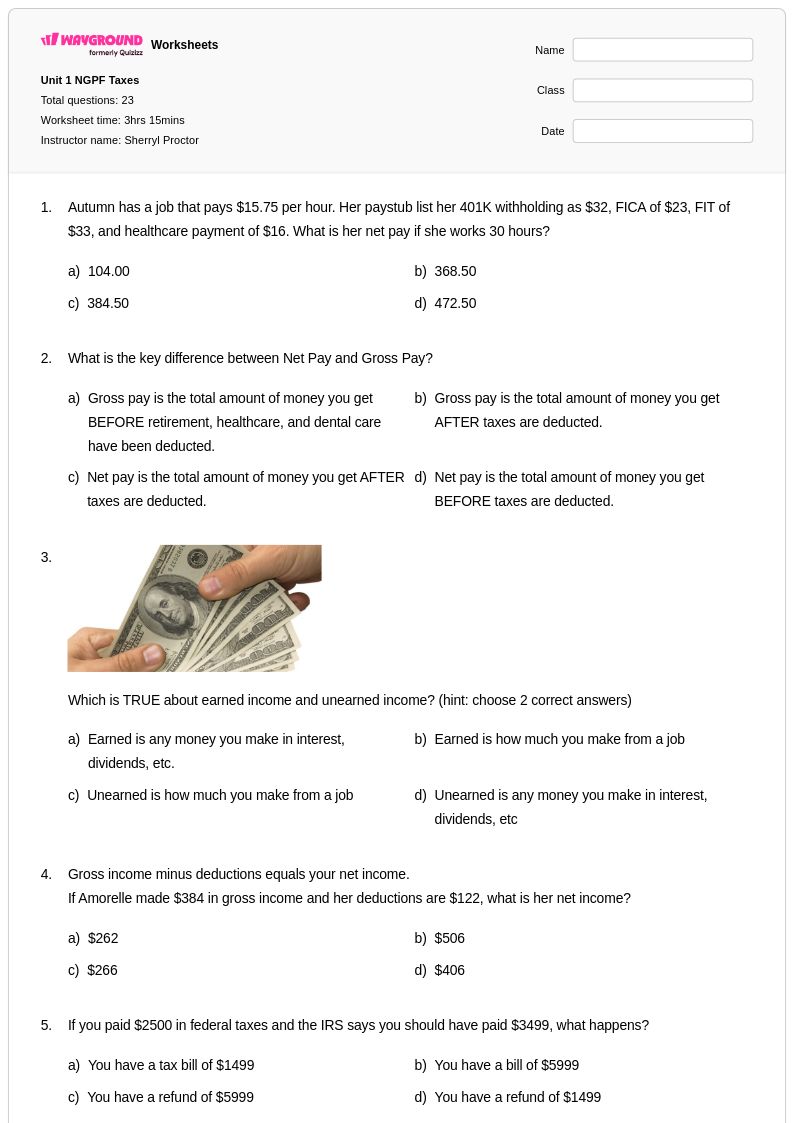
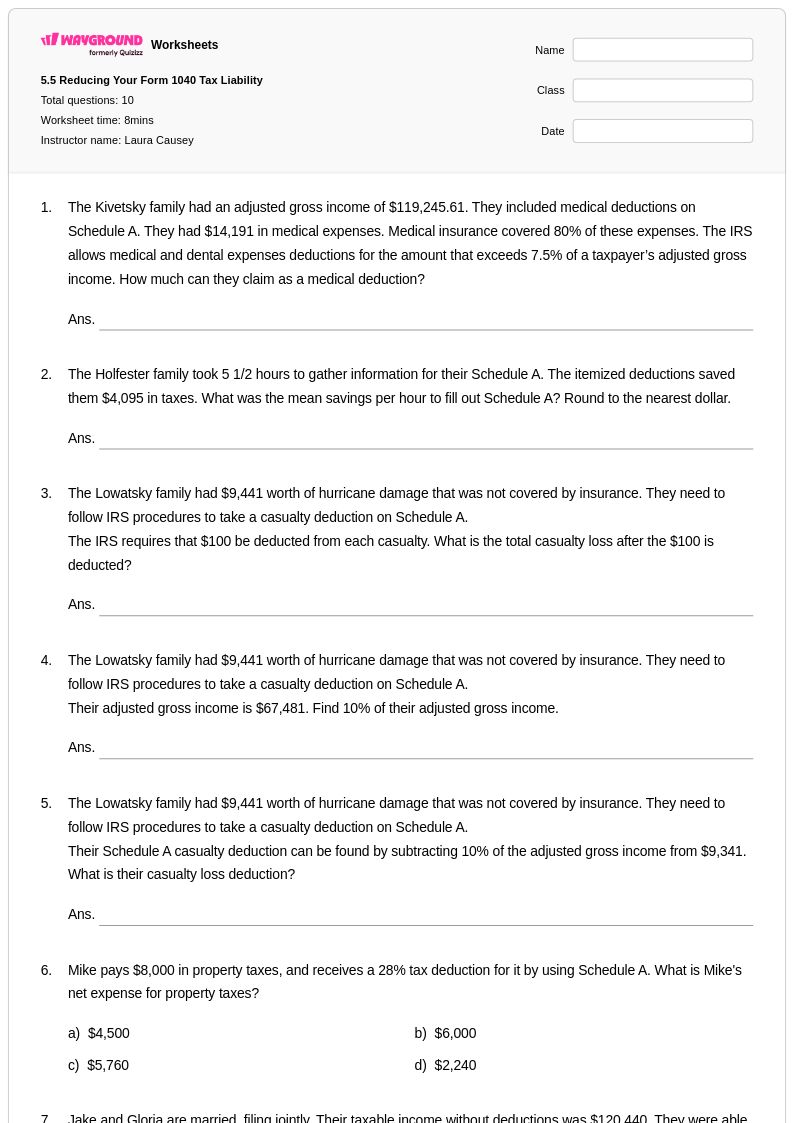
Deductions worksheets available through Wayground (formerly Quizizz) provide comprehensive practice materials that help students master the critical financial literacy skill of understanding various types of income reductions. These educational resources focus on teaching learners how to calculate and analyze different deductions including taxes, insurance premiums, retirement contributions, and other workplace withholdings from gross income. Students develop essential mathematical reasoning abilities while working through practice problems that mirror real-world payroll scenarios, building confidence in interpreting pay stubs and understanding net versus gross income calculations. The worksheets include detailed answer keys and are available as free printables in pdf format, making them accessible resources for reinforcing deduction concepts through structured problem-solving activities.
Wayground (formerly Quizizz) supports mathematics educators with an extensive collection of teacher-created deductions worksheets drawn from millions of available resources that can be easily located through robust search and filtering capabilities. Teachers benefit from standards-aligned materials that accommodate diverse learning needs through built-in differentiation tools and flexible customization options, allowing instructors to modify content difficulty and focus areas to match specific classroom requirements. These versatile resources are available in both printable and digital formats, including downloadable pdf versions, enabling seamless integration into various instructional settings whether for in-class practice, homework assignments, or assessment preparation. The comprehensive worksheet collection supports effective lesson planning while providing targeted materials for remediation, enrichment, and ongoing skill development in financial literacy concepts.
FAQs
How do I teach payroll deductions to students?
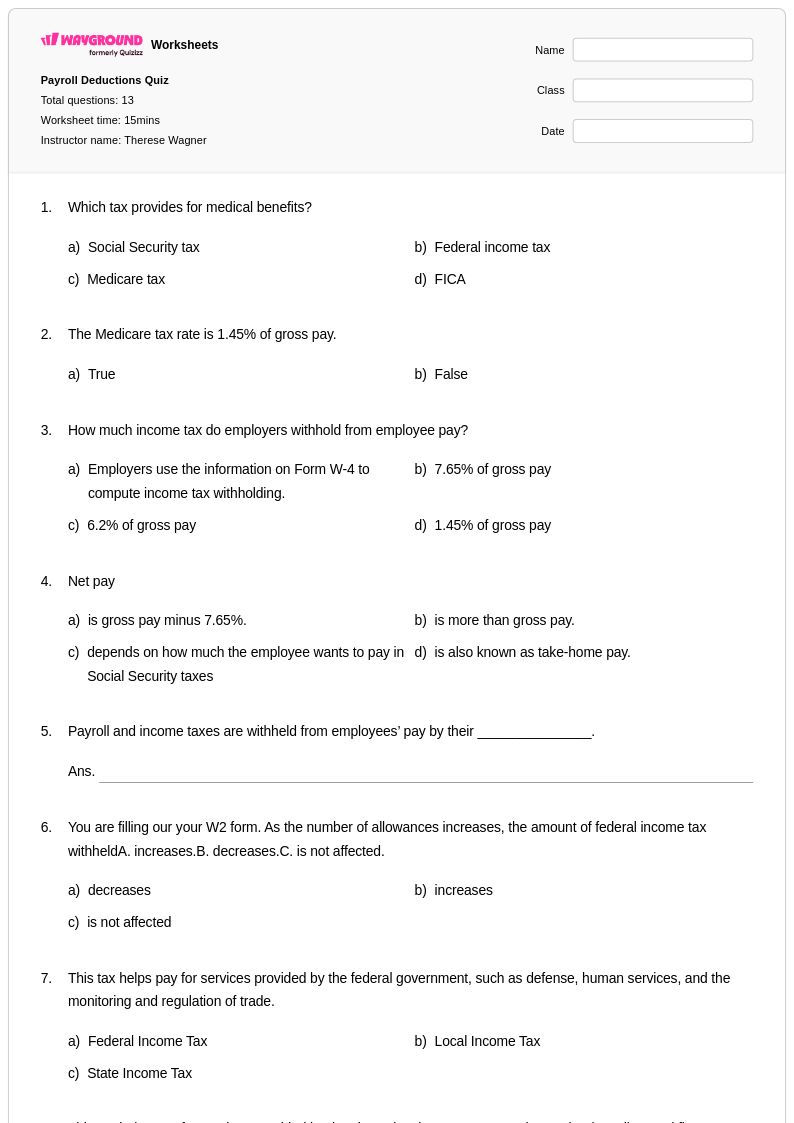
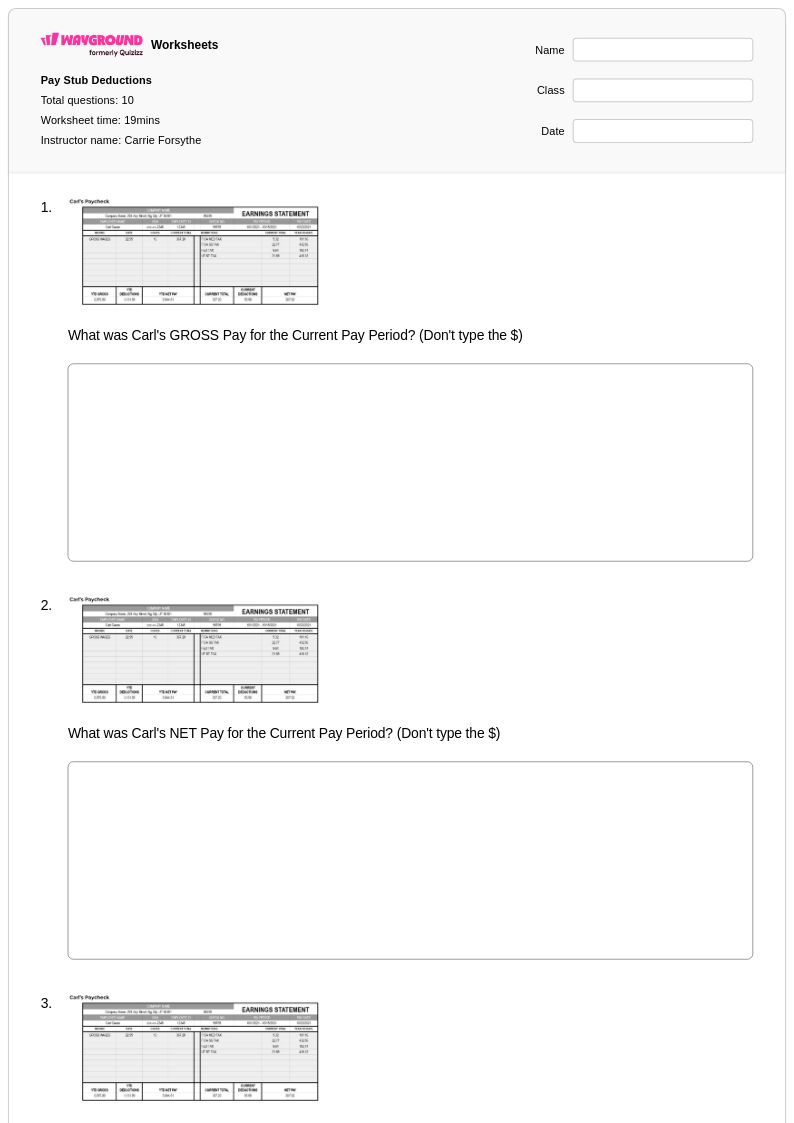
Start with a real or sample pay stub and ask two questions: what did you earn, and what did you actually take home? That gap, gross versus net, is the hook. From there, sort deductions into mandatory (federal and state taxes, Social Security, Medicare) and voluntary (health insurance, retirement contributions). Students grasp the concept faster when they see that some deductions are choices and some aren't. Once the categories click, move to calculation: given a gross wage and a set of deduction rates, what's the net pay?
What exercises help students practice calculating deductions?
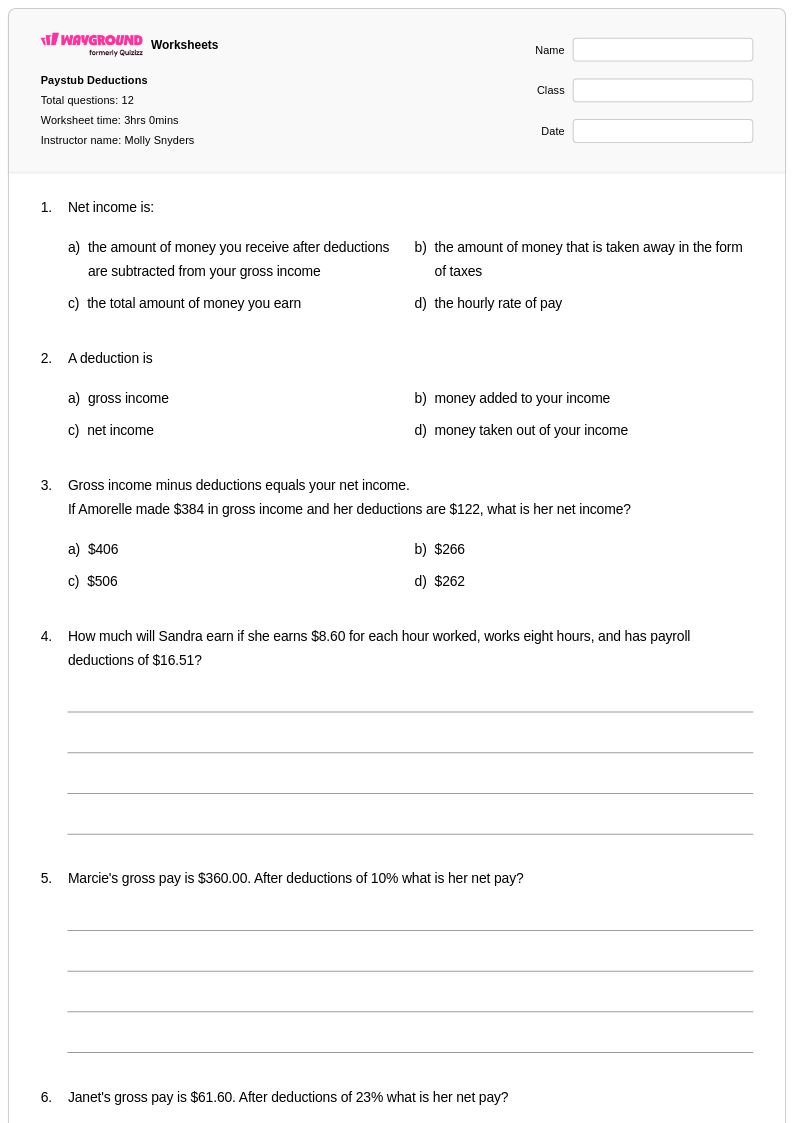
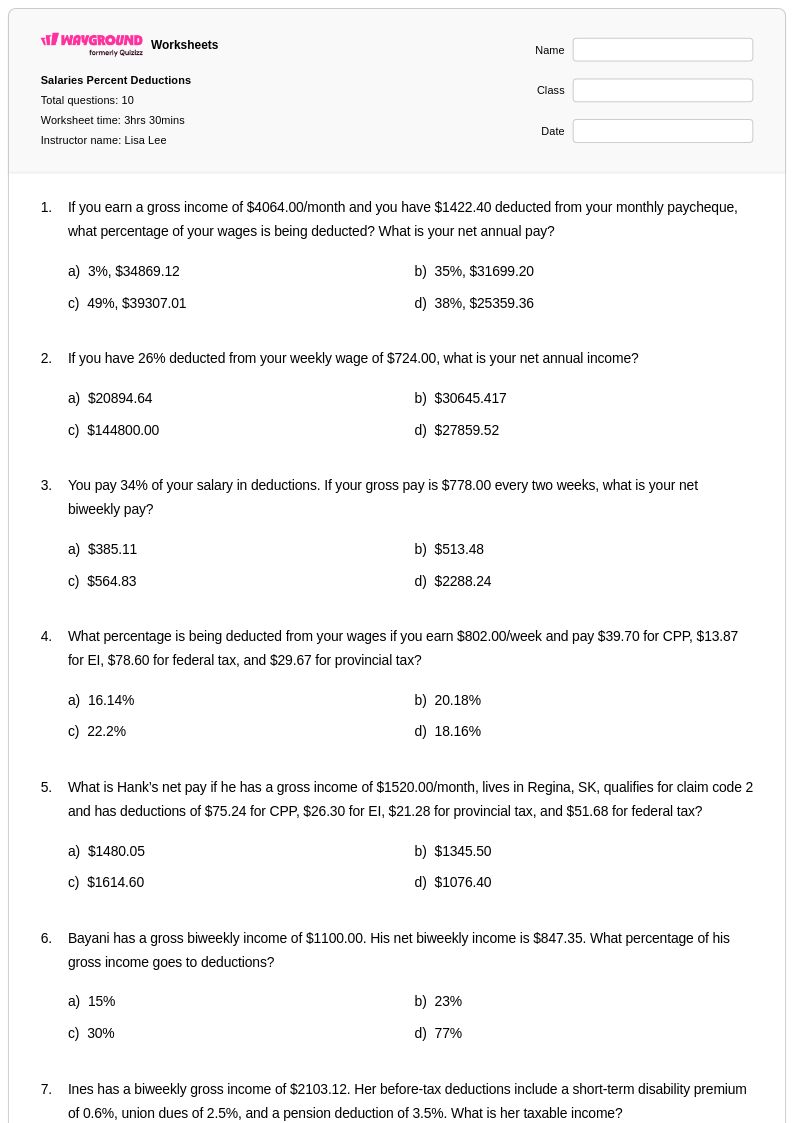
The most effective practice mirrors what students will encounter in real life. Pay stub interpretation problems, where students read a sample stub and answer questions about it, build recognition skills. Calculation problems that give a gross salary and a list of percentage-based deductions (e.g., 7.65% for FICA, 12% for health insurance) build procedural accuracy. A good progression moves from identifying deduction types, to calculating each one individually, to computing net pay from scratch.
What mistakes do students commonly make when calculating deductions?
Two errors come up constantly. First, students subtract a flat dollar amount when the deduction is actually percentage-based — they skip the multiplication step entirely. Second, they confuse gross and net income, sometimes applying a deduction rate to the net figure instead of gross. A quick diagnostic: give students a problem where gross pay, one flat deduction, and one percentage deduction are all present. Students who get it wrong almost always make one of these two errors, which tells you exactly where to reteach.
How do I use Wayground's deductions worksheets in my class?
You can run these worksheets as a digital quiz hosted on Wayground, students complete it on any device and results come back to you automatically, or download the PDF and assign it on paper. Every worksheet includes a complete answer key, so paper submissions are easy to review. If you go the printed route, the Wayground for Teachers app lets you scan or capture student work for grading without re-entering anything manually.
What grade level covers payroll deductions?
Payroll deductions typically appear in middle and high school financial literacy or math courses, most commonly in grades 6 through 9. Sixth and seventh graders are usually introduced to the concept of gross versus net pay, while eighth and ninth graders work with more complex scenarios involving percentage-based withholdings, multiple deduction types, and budgeting with take-home pay.
How can I differentiate deductions practice for mixed-ability classes?
For students who struggle with the percentage calculations, Wayground's reduced answer choices accommodation narrows the options they see, keeping the focus on the financial reasoning rather than the arithmetic. The Read Aloud feature helps students who have difficulty parsing the word-problem format common in pay stub scenarios. At the worksheet level, you can also generate a version with a larger font or dyslexia-friendly font for students who need it — same problems, adjusted presentation.
Is teaching payroll deductions aligned to Common Core math standards?
Yes. Common Core's middle school ratio and proportional reasoning progression is the direct foundation: students learn to apply percentages to real-world contexts, which is exactly what payroll deductions require. By grade 7, students are expected to solve multi-step percent problems, and deductions problems, calculate 6.2% of gross pay for Social Security, then subtract that along with other withholdings to find net pay, are a natural application. The topic also connects to the grade 7 and 8 emphasis on rational number operations in context.