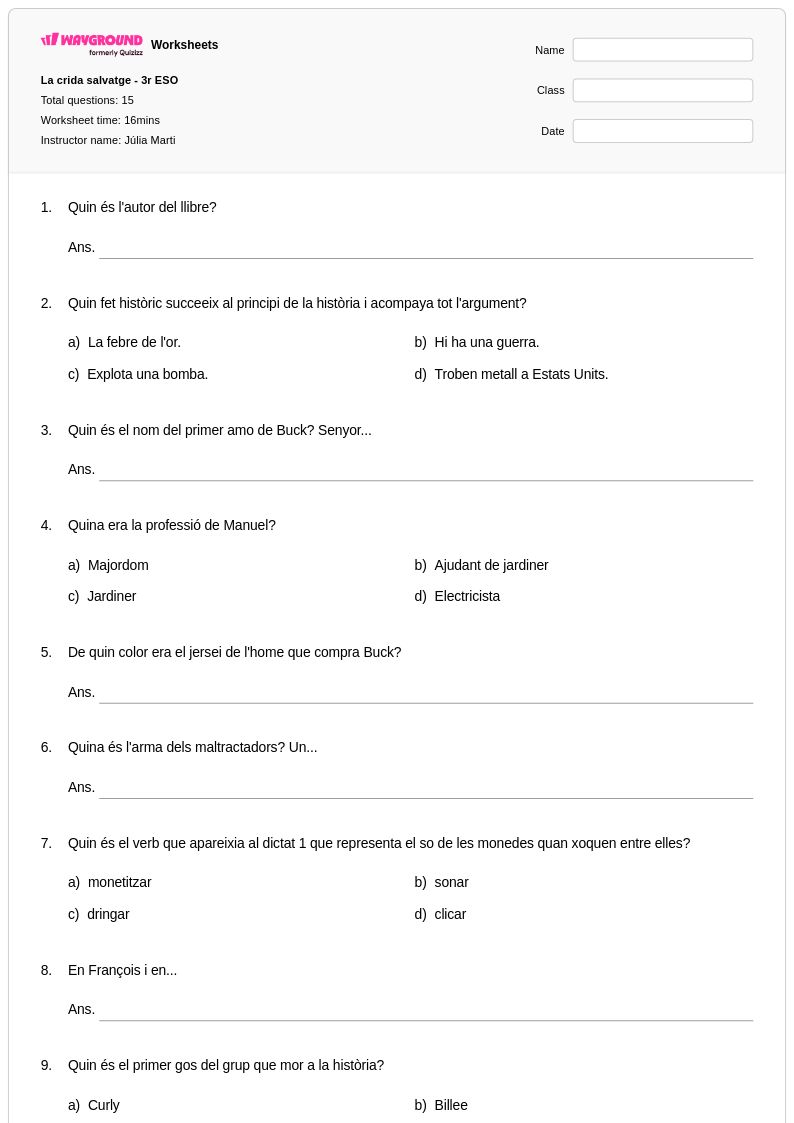
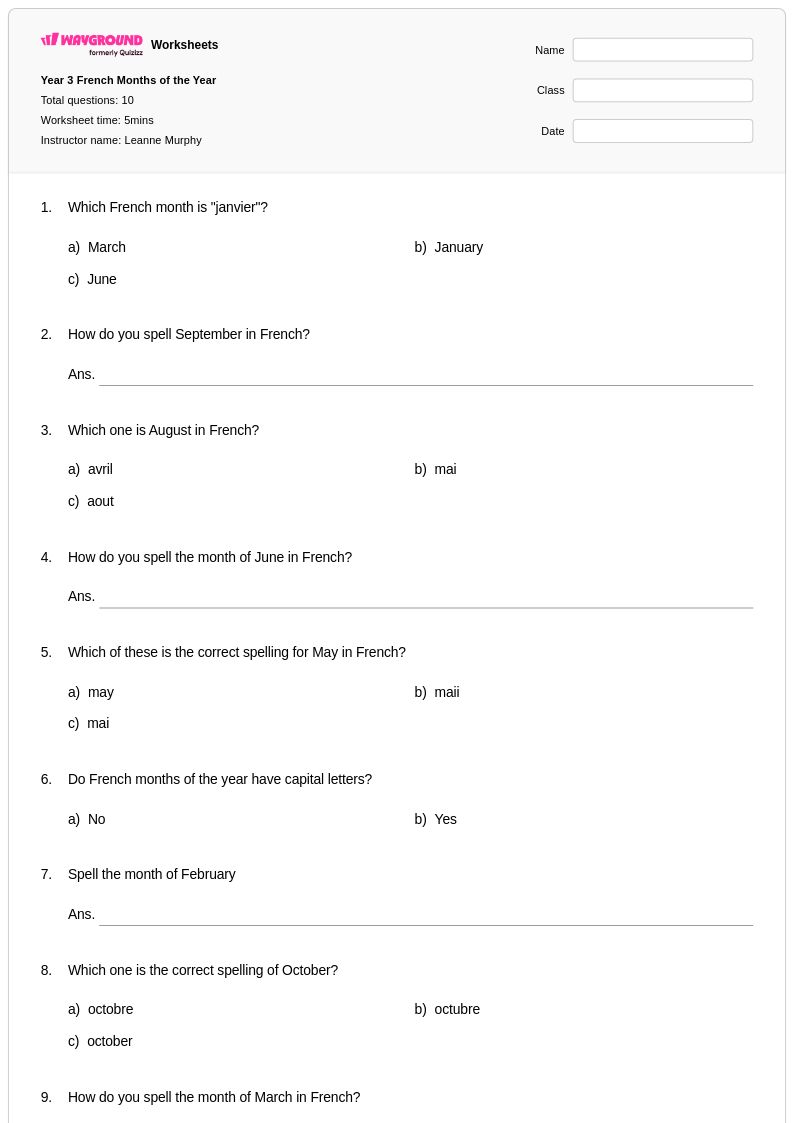
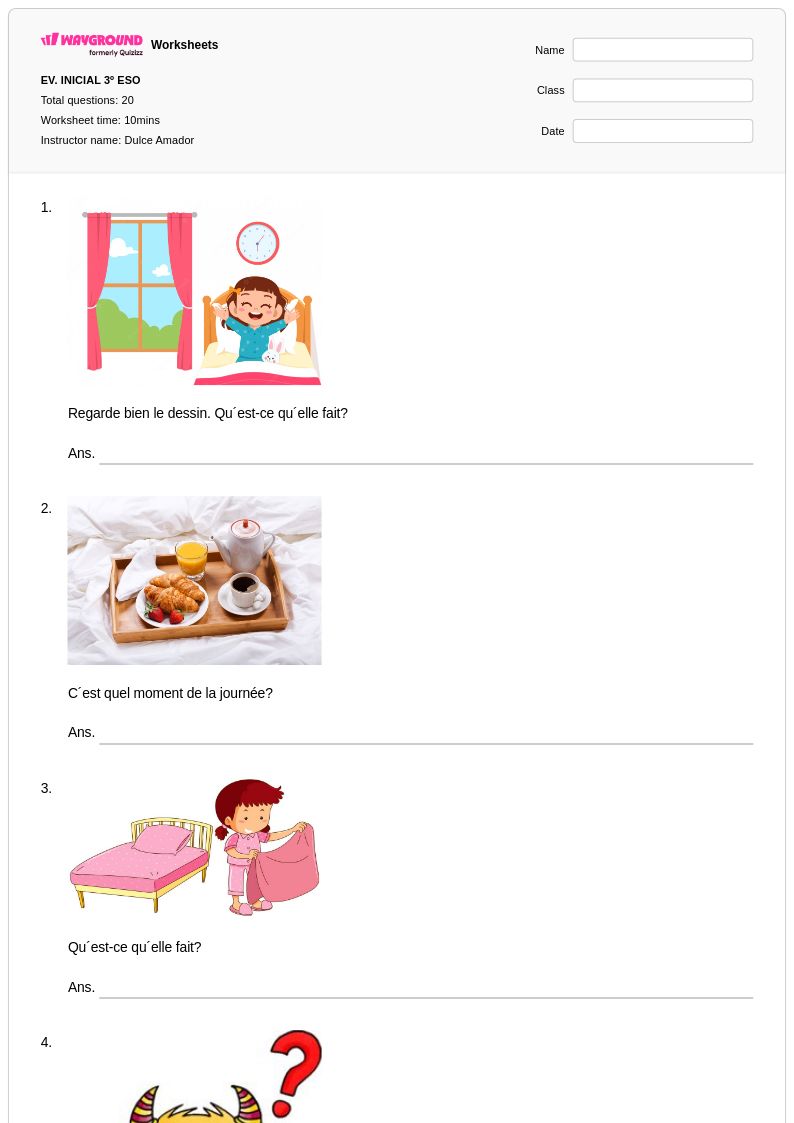
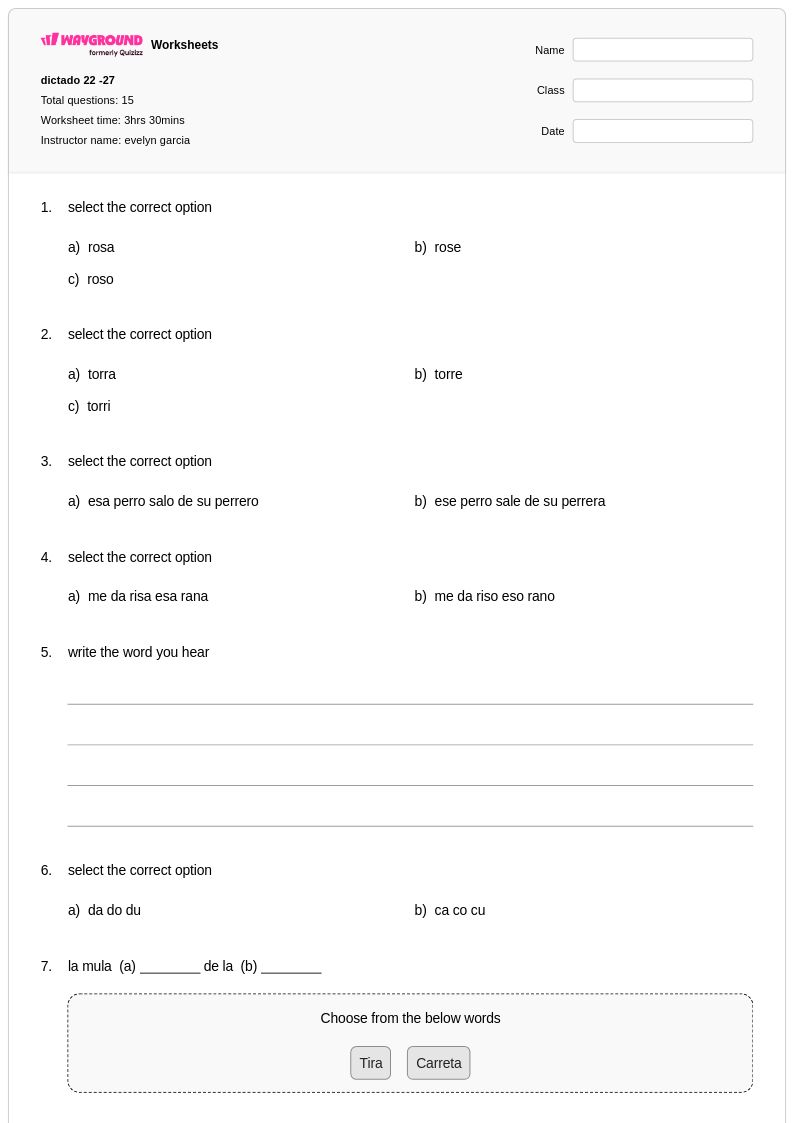
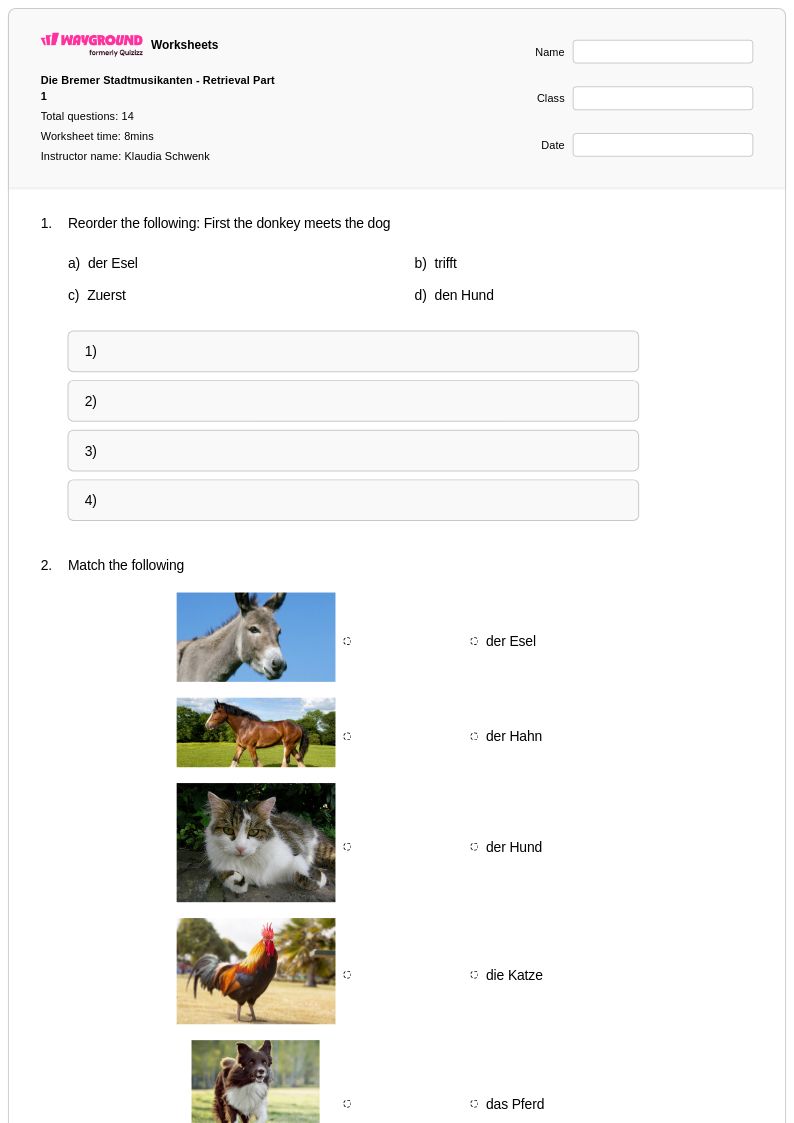
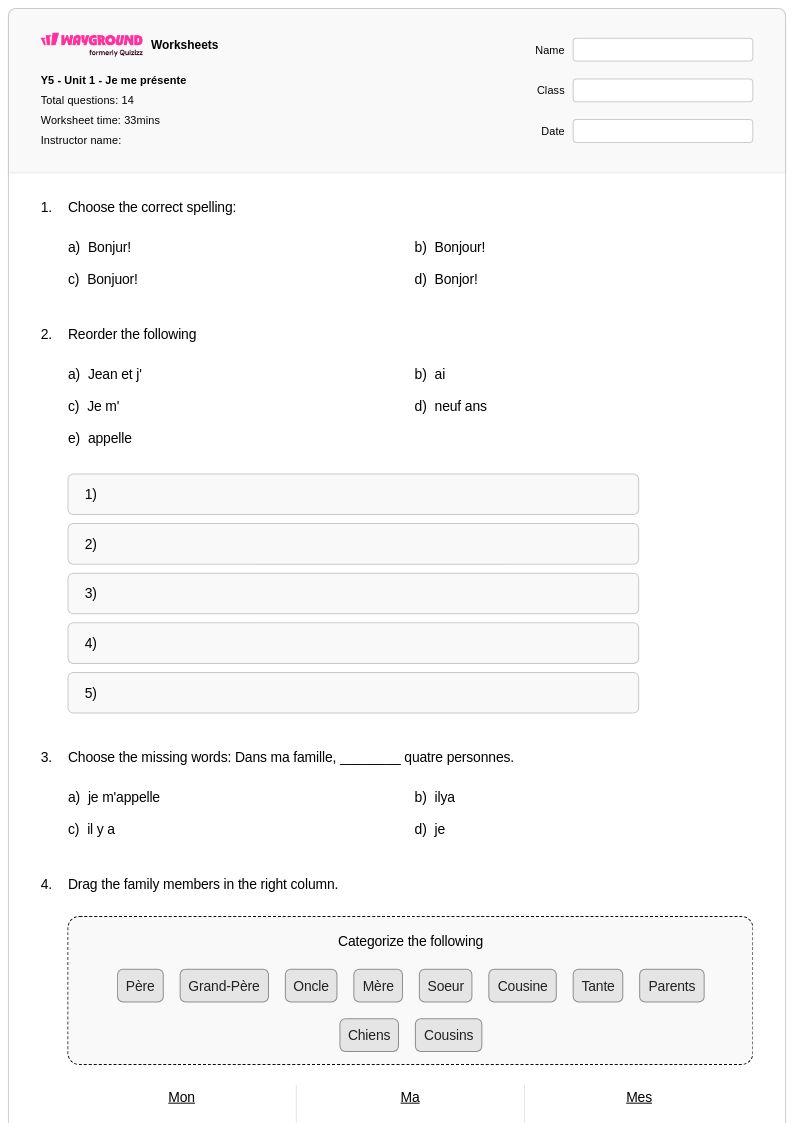
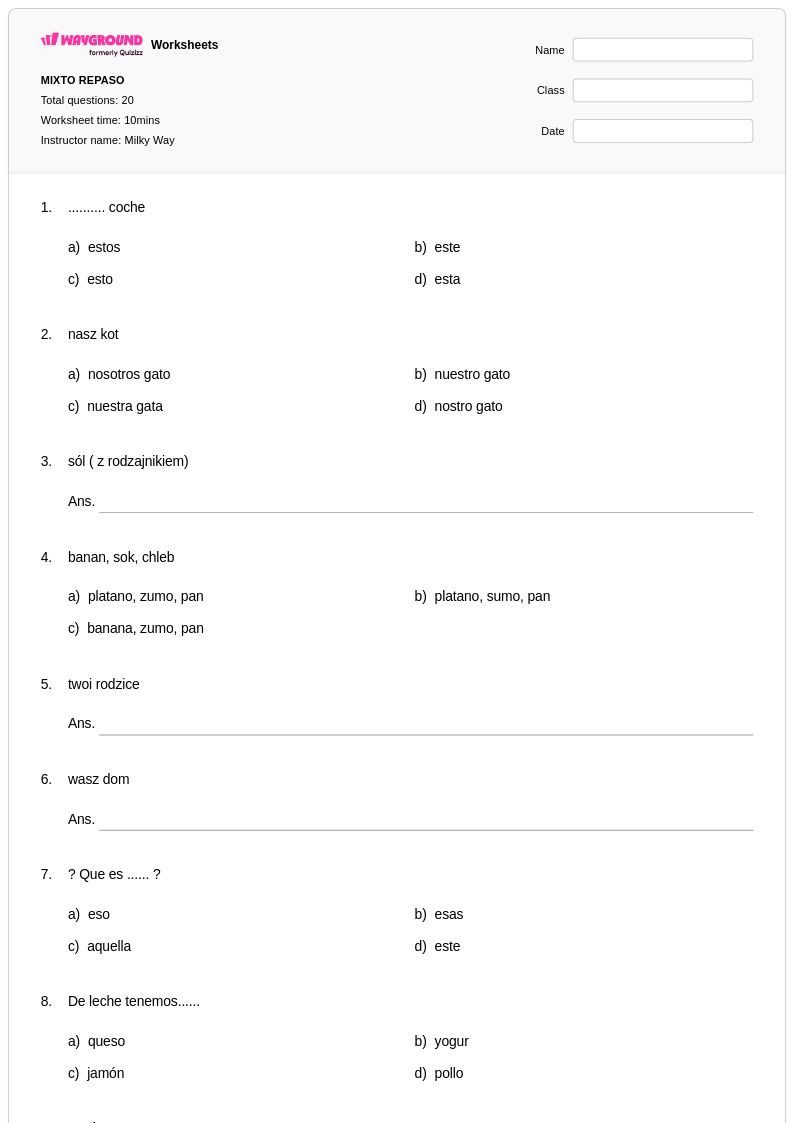
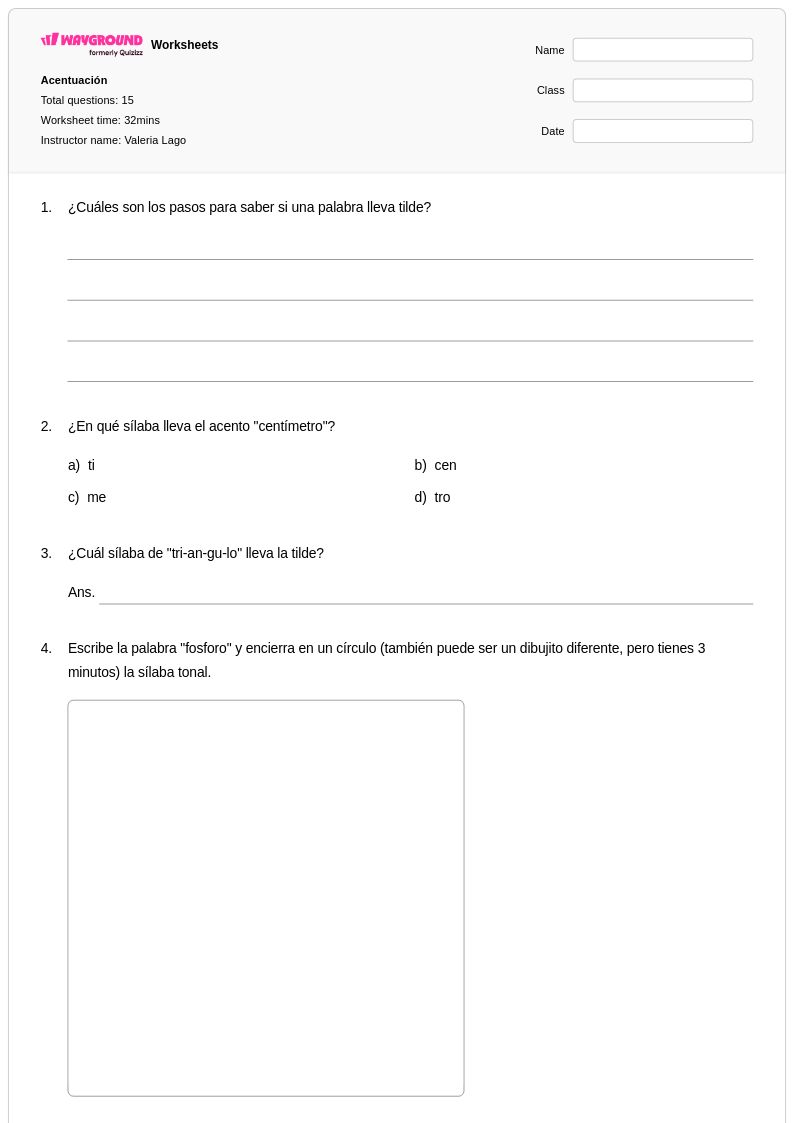
Year 3 ESL printables and free worksheets from Wayground help young learners develop English language skills through engaging practice problems and activities with comprehensive answer keys included.
Year 3 ESL worksheets available through Wayground (formerly Quizizz) provide essential foundational support for young English language learners developing their communication skills across listening, speaking, reading, and writing domains. These comprehensive printables target critical language acquisition milestones including basic vocabulary building, sentence structure recognition, phonics patterns, and conversational expressions that third-grade ESL students need to succeed in mainstream classroom environments. The practice problems systematically introduce age-appropriate academic language while reinforcing everyday communication skills, with each worksheet featuring clear instructions and accompanying answer keys that enable both independent study and guided instruction. These free resources address the unique challenges faced by elementary ESL learners, offering structured opportunities to practice English language conventions through engaging activities that build confidence and fluency simultaneously.
Wayground's extensive collection of teacher-created ESL resources empowers educators with millions of differentiated materials specifically designed to meet diverse proficiency levels within Year 3 classrooms. The platform's robust search and filtering capabilities allow teachers to quickly locate worksheets aligned with language learning standards and specific skill areas, whether targeting beginning, intermediate, or advanced ESL students. These customizable resources are available in both printable pdf formats for traditional classroom use and digital versions for technology-integrated learning environments, providing flexibility for various instructional settings. Teachers can seamlessly incorporate these worksheets into lesson planning for targeted skill practice, use them for remediation to address specific language gaps, or deploy them for enrichment activities that challenge more advanced learners, ensuring that every ESL student receives appropriate support tailored to their individual language development needs.
FAQs
How do I teach English language learners with different proficiency levels in the same classroom?
Differentiated instruction is essential when teaching mixed-proficiency ESL classrooms. Effective strategies include tiering tasks by complexity, using visual supports and sentence frames for newcomers, and providing academic vocabulary scaffolds for intermediate learners. Grouping students strategically for collaborative tasks also allows peers to model language use while giving advanced learners leadership roles that deepen their own comprehension.
What exercises help ESL students practice grammar and vocabulary?
ESL students benefit most from exercises that integrate vocabulary and grammar in context rather than in isolation. Effective practice activities include cloze passages, sentence-building tasks, word sorting, and error-correction exercises that mirror real academic language use. Structured writing prompts with sentence starters are especially useful for helping learners apply new grammar patterns before producing language independently.
What are the most common mistakes ESL students make with English grammar?
Common ESL grammar errors include misuse of articles (a, an, the), incorrect subject-verb agreement, confusion between simple past and present perfect tenses, and errors with prepositions that do not transfer logically from a student's native language. These patterns often reflect interference from L1 grammar structures, so identifying a student's first language can help teachers anticipate and address specific error types more precisely.
How can I assess English language learners without disadvantaging them on standard assessments?
When assessing ELL students, it is important to distinguish between language proficiency gaps and content knowledge gaps. Effective accommodations include extended time, simplified or clarified directions, reduced answer choices, and read-aloud support for written questions. On Wayground, teachers can assign accommodations such as extended time per question, read aloud, and reduced answer choices to individual students without other students being notified, making differentiated assessment seamless in a shared classroom environment.
How do I use ESL worksheets on Wayground in my classroom?
Wayground's ESL worksheets are available as printable PDFs for traditional classroom use and in digital formats for technology-integrated learning environments, including the option to host them as a quiz directly on Wayground. Teachers can assign worksheets to the whole class or to individual students, and each worksheet includes a complete answer key. Digital sessions also support built-in accommodations such as read aloud, extended time, and reduced answer choices, which can be configured per student from the Students or Classes tab.
How do I support newcomer ESL students who have very limited English proficiency?
Newcomer students benefit from highly visual materials, predictable routines, and tasks that allow for non-verbal or minimal-verbal responses before progressing to full written output. Using picture-based vocabulary worksheets, labeling activities, and sentence frame exercises builds foundational language while reducing the anxiety of total immersion. Gradually increasing text complexity as students demonstrate readiness ensures that newcomers develop confidence alongside academic English skills.