Free Printable Estimating Length Worksheets for Year 2
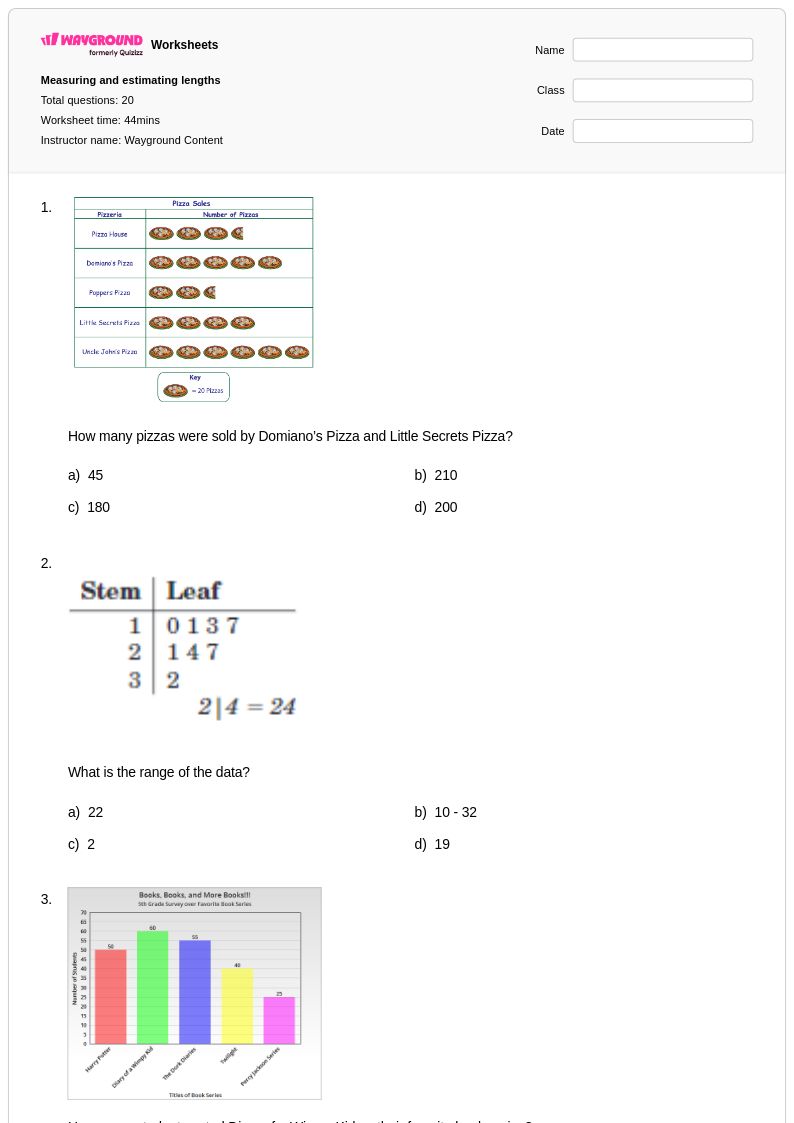
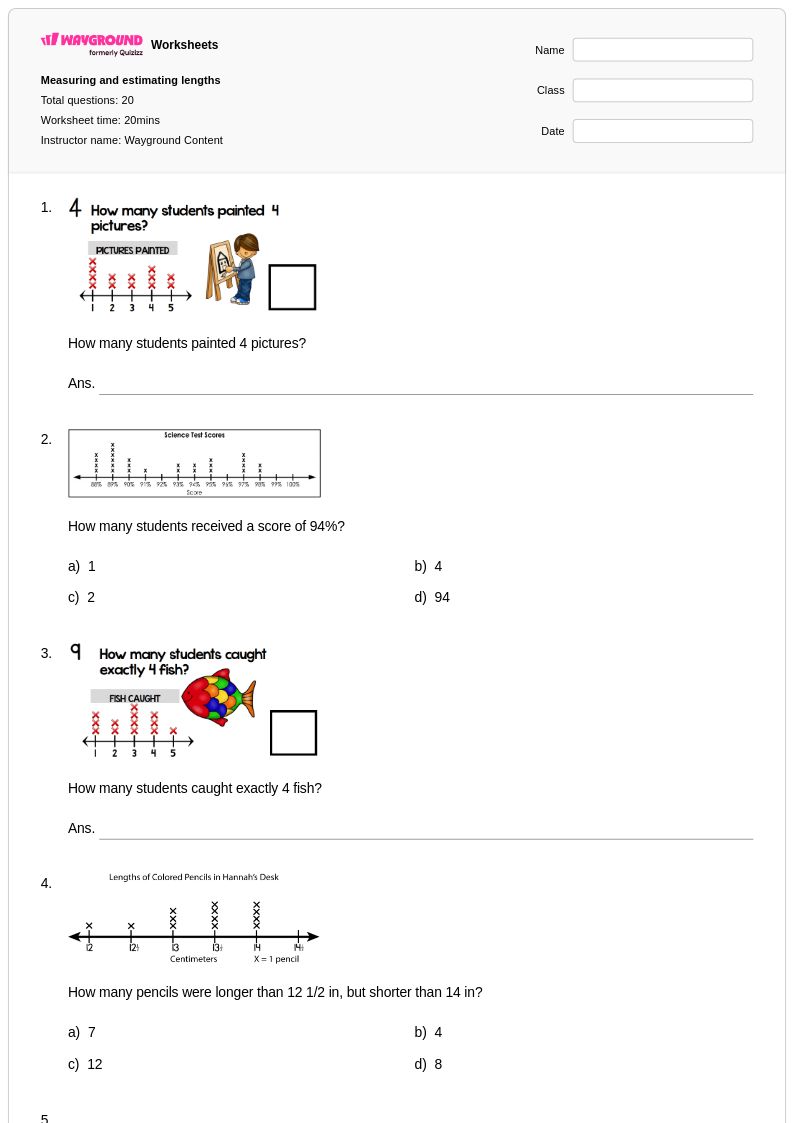
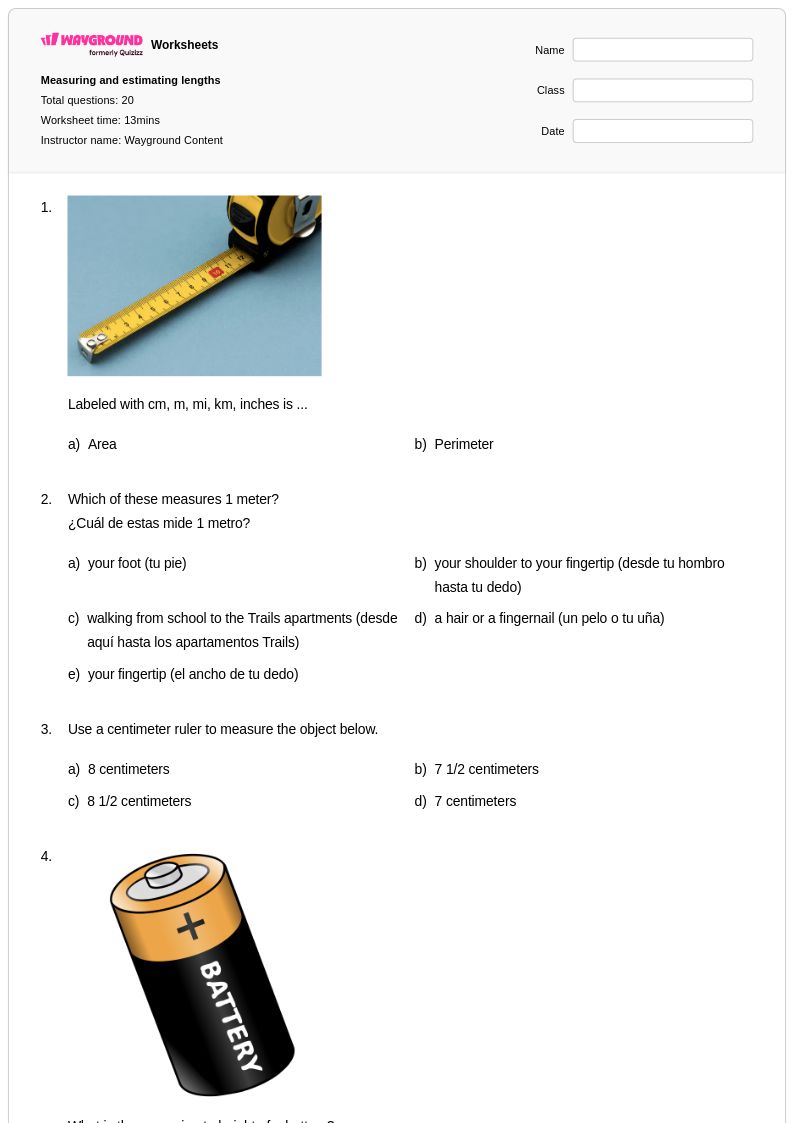
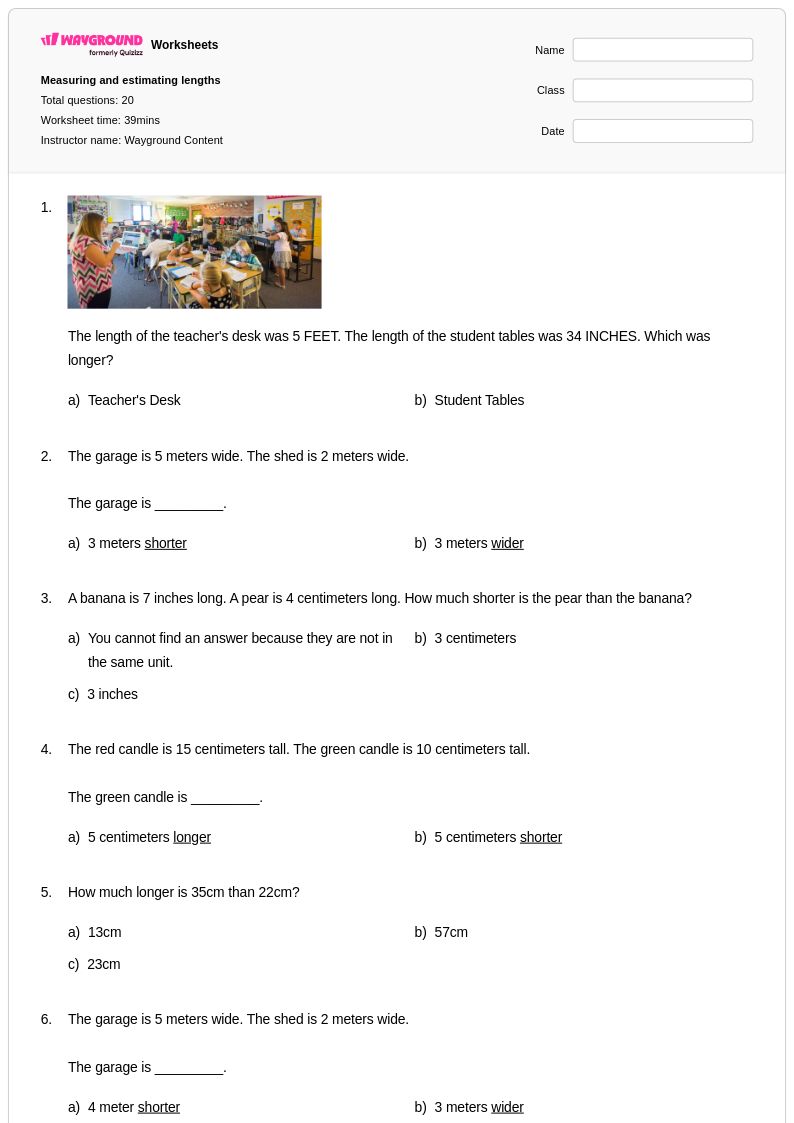
Year 2 estimating length worksheets help students develop measurement skills through engaging printables and practice problems that teach how to estimate distances and sizes, complete with answer keys and free PDF downloads.
Explore printable Estimating Length worksheets for Year 2
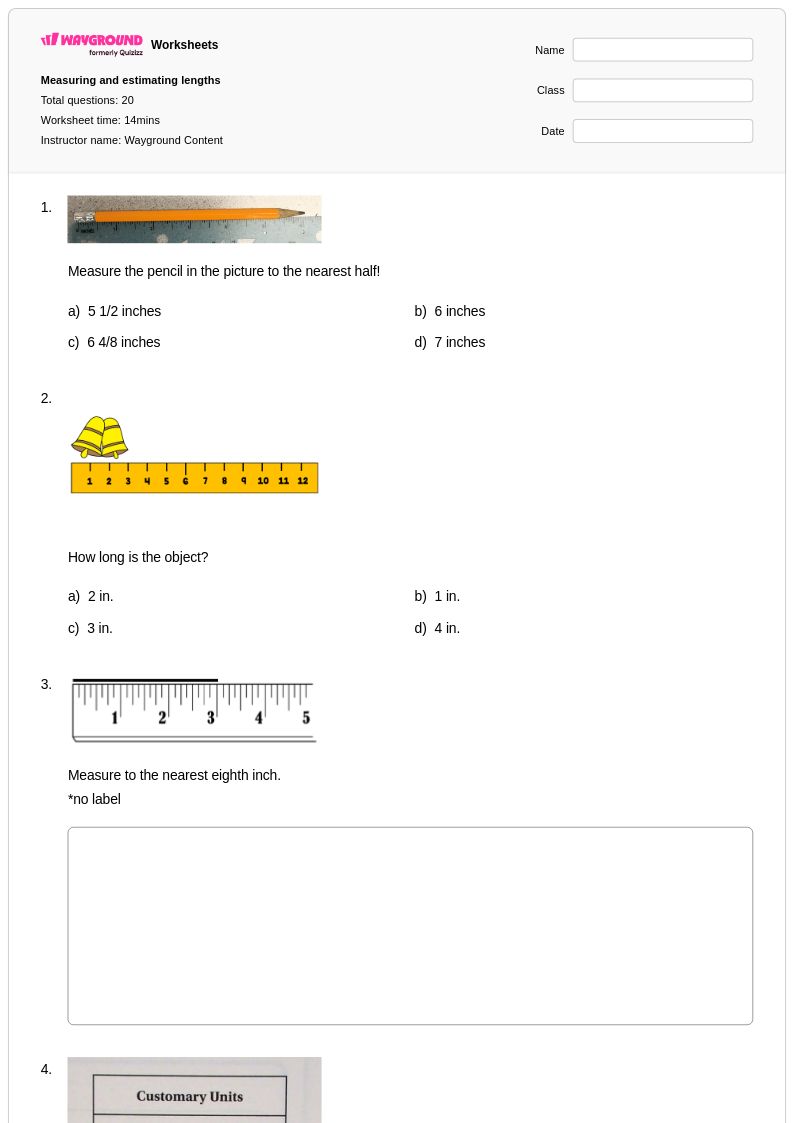
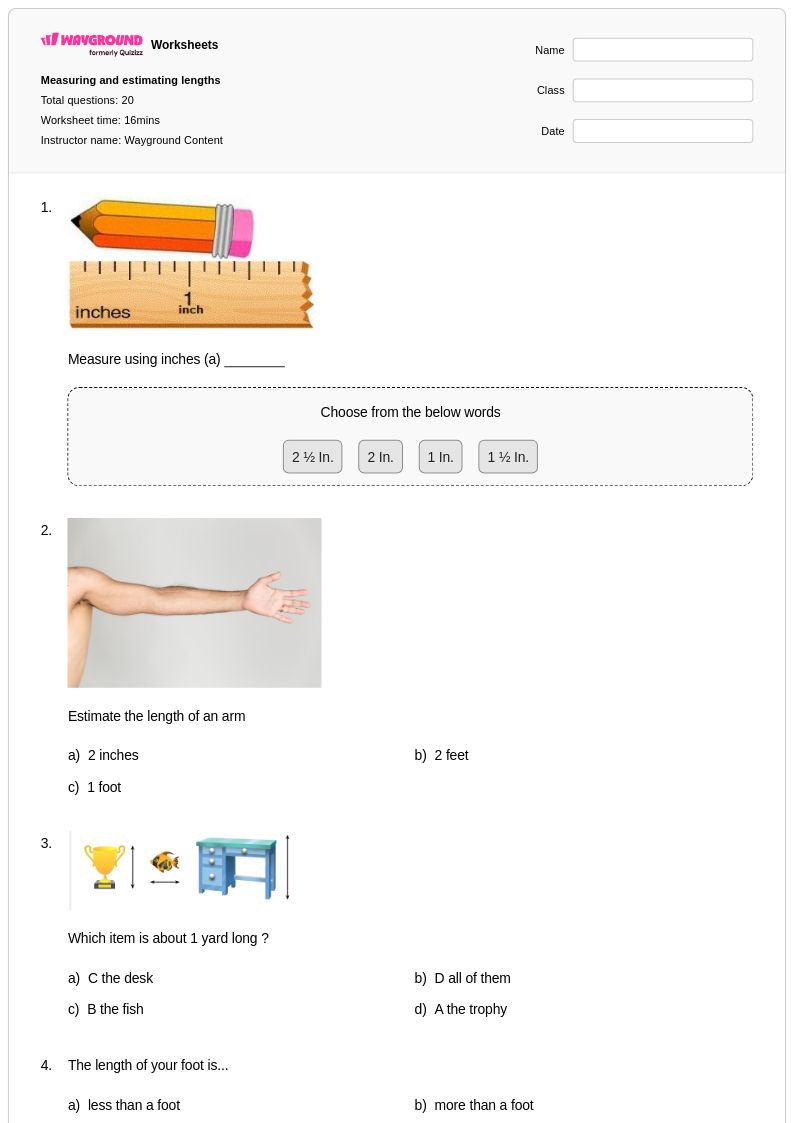
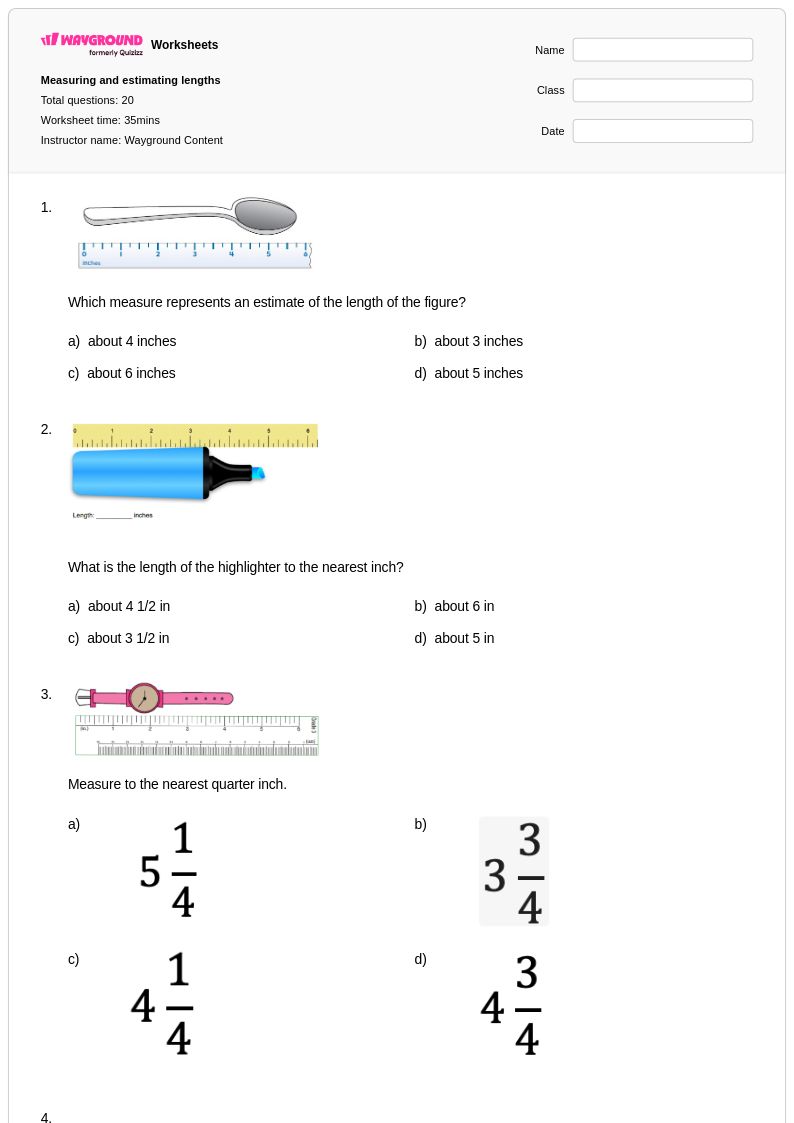
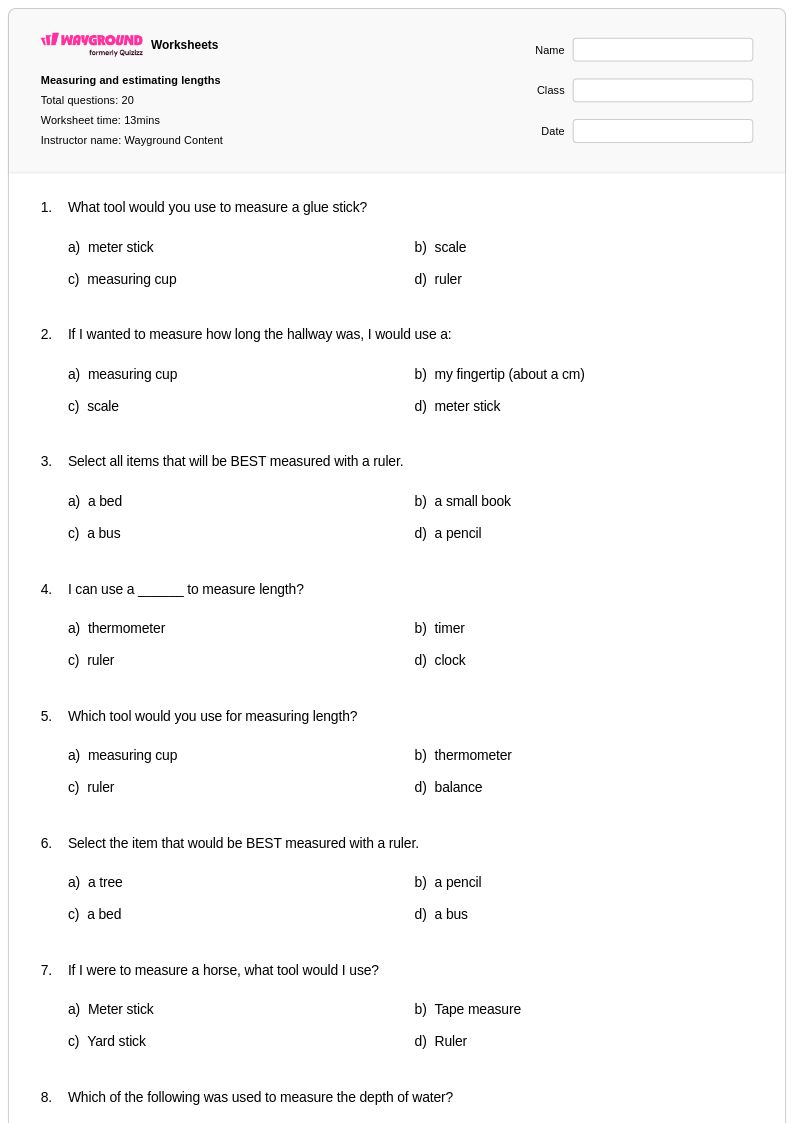
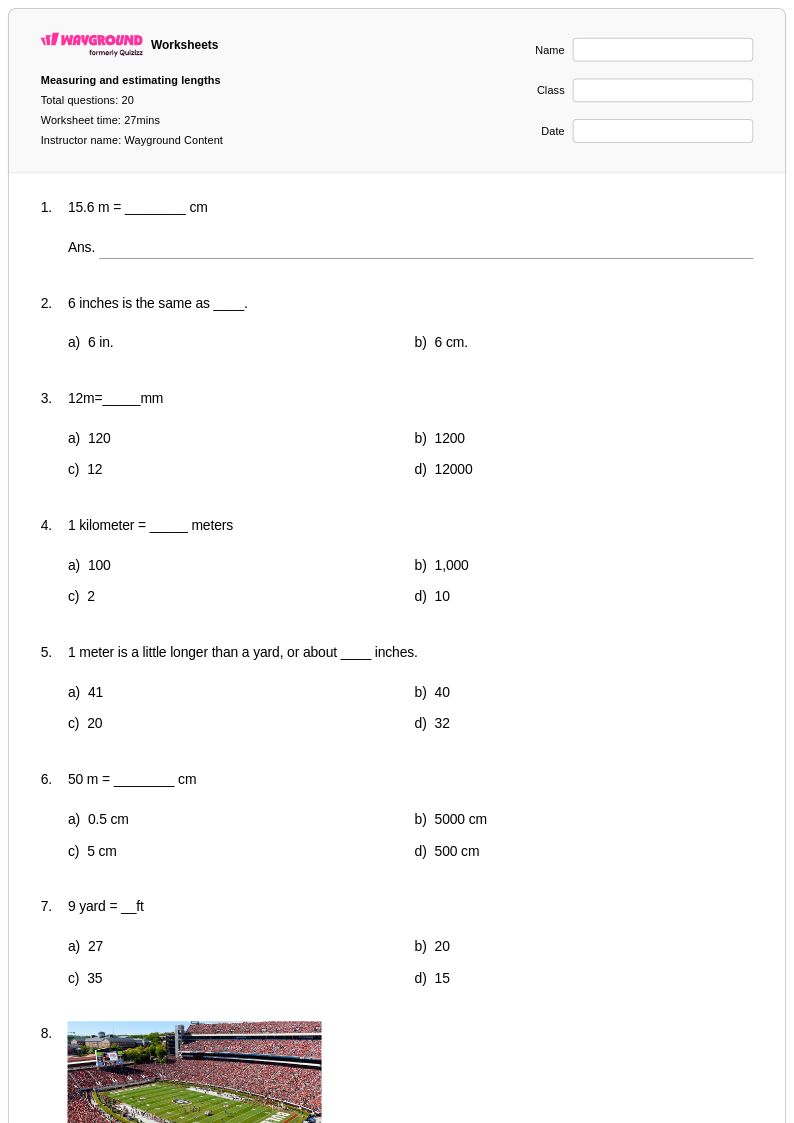
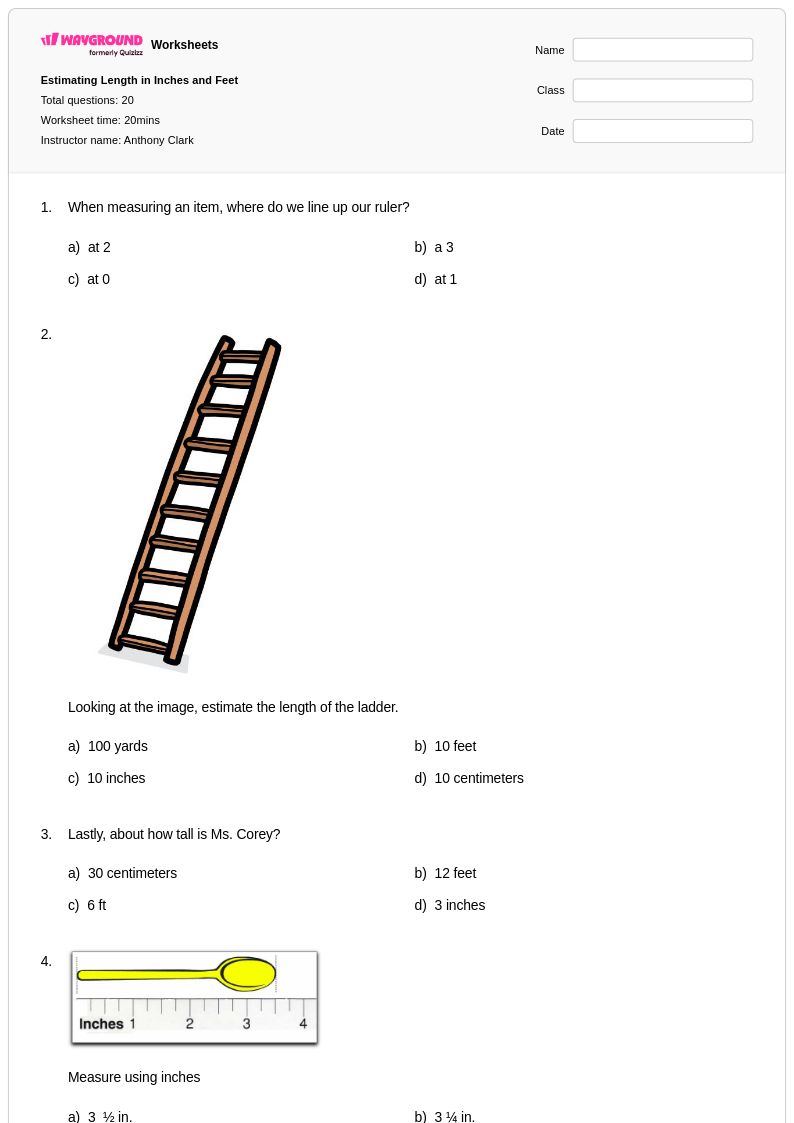
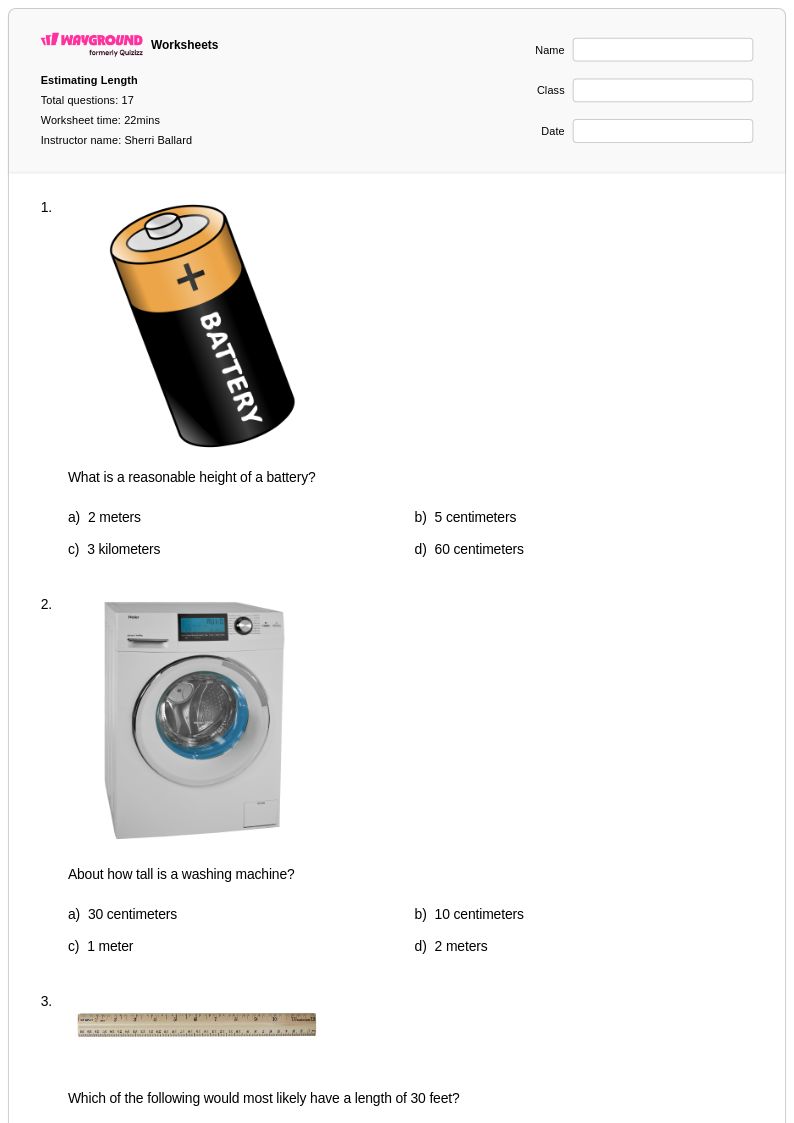
Estimating length worksheets for Year 2 students available through Wayground (formerly Quizizz) provide essential foundation-building exercises that develop spatial reasoning and measurement sense. These comprehensive printables guide young learners through systematic practice in making reasonable predictions about object lengths using both standard and non-standard units of measurement. Students engage with carefully designed practice problems that strengthen their ability to visually assess distances, compare relative sizes, and apply estimation strategies before measuring with rulers, paper clips, or other concrete manipulatives. Each worksheet collection includes detailed answer keys and free pdf downloads that support independent learning while building the critical thinking skills necessary for more advanced measurement concepts.
Wayground (formerly Quizizz) empowers teachers with access to millions of educator-created estimating length resources specifically designed for Year 2 mathematics instruction. The platform's robust search and filtering capabilities allow instructors to quickly locate worksheets aligned with curriculum standards while offering extensive differentiation tools to meet diverse learning needs within the classroom. Teachers can seamlessly customize existing materials or create original content, with flexible options for both printable pdf formats and interactive digital delivery that supports varied instructional approaches. These comprehensive worksheet collections facilitate strategic lesson planning, targeted remediation for struggling learners, enrichment opportunities for advanced students, and consistent skill practice that reinforces measurement estimation concepts throughout the academic year.
FAQs
How do I teach estimating length in second grade?
Second grade is the pivot point where students move from non-standard units to inches and centimeters. Anchor the transition with benchmarks tied to standard units: an inch is roughly the width of a thumb, a centimeter is about the width of a pinky fingernail. Once students have those reference points, estimation becomes a reasoning process rather than a guess — they ask 'how many thumb-widths?' before reaching for a ruler.
What exercises help second graders practice estimating length?
At this level, good practice includes: estimating the length of pictured objects in inches or centimeters before measuring, choosing the most reasonable estimate from a set of options (e.g., 'Is this book about 2 inches, 12 inches, or 3 feet?'), and comparing two objects by estimating which is closer to a given benchmark. The 'choose the reasonable estimate' format is especially useful because it forces students to eliminate clearly wrong answers through unit sense.
What errors do second graders make when estimating length?
The most persistent error is unit confusion — students apply the right number but the wrong unit, estimating a desk as '3 inches' instead of '3 feet.' This usually means they haven't internalized what an inch or a foot actually looks like in the real world. A second common mistake is estimating from the wrong end of an object in a picture, especially when the image isn't aligned to a clear baseline.
How do I use these Grade 2 estimating length worksheets?
Print the PDF for use alongside physical rulers or manipulatives — students estimate on paper, then measure to check, which reinforces the feedback loop that makes estimation practice stick. The complete answer key is included, so these work well as independent practice or math center activities. If you prefer digital delivery, you can host the same worksheet as a quiz on Wayground and review results as a class.
How does estimating length fit into the second-grade Common Core math progression?
Common Core introduces standard units of length in second grade — inches, feet, centimeters, and meters — and expects students to measure and estimate lengths using these units. The key progression step here is understanding that a larger unit produces a smaller count for the same object: a desk measured in feet gives a smaller number than the same desk measured in inches. Estimation practice directly supports that understanding by forcing students to think about unit size before committing to a number.
How can I support struggling and advanced second graders with the same length estimation worksheet?
For students who need more support, Wayground's reduced answer choices accommodation limits the options shown, helping them focus on eliminating unreasonable estimates rather than generating one from scratch. For the worksheet itself, wider font spacing and a larger font size can reduce visual clutter for students who find dense layouts distracting. Advanced students can work through the same problems with the default settings and move to extension problems without any disruption to the rest of the class.