Free Printable Expected Value Worksheets for Year 10
Free Year 10 expected value worksheets and printables help students master probability calculations through comprehensive practice problems, with detailed answer keys and PDF downloads available for effective mathematics learning.
Explore printable Expected Value worksheets for Year 10
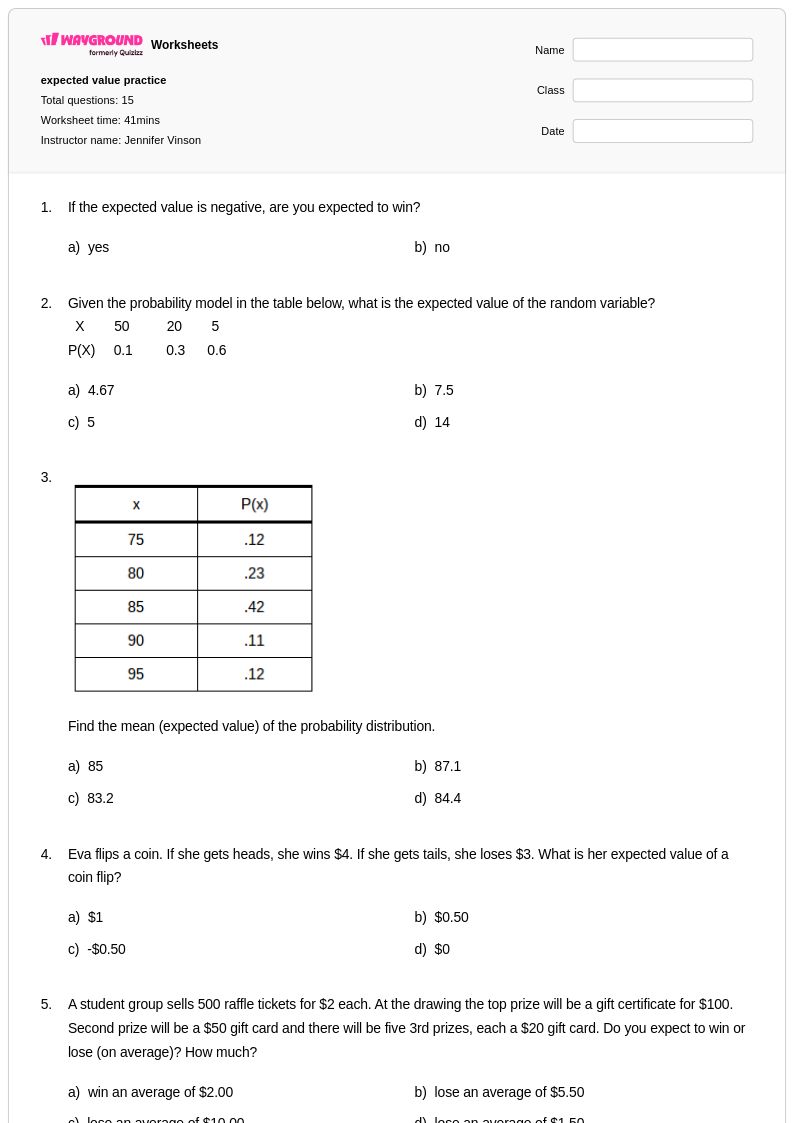
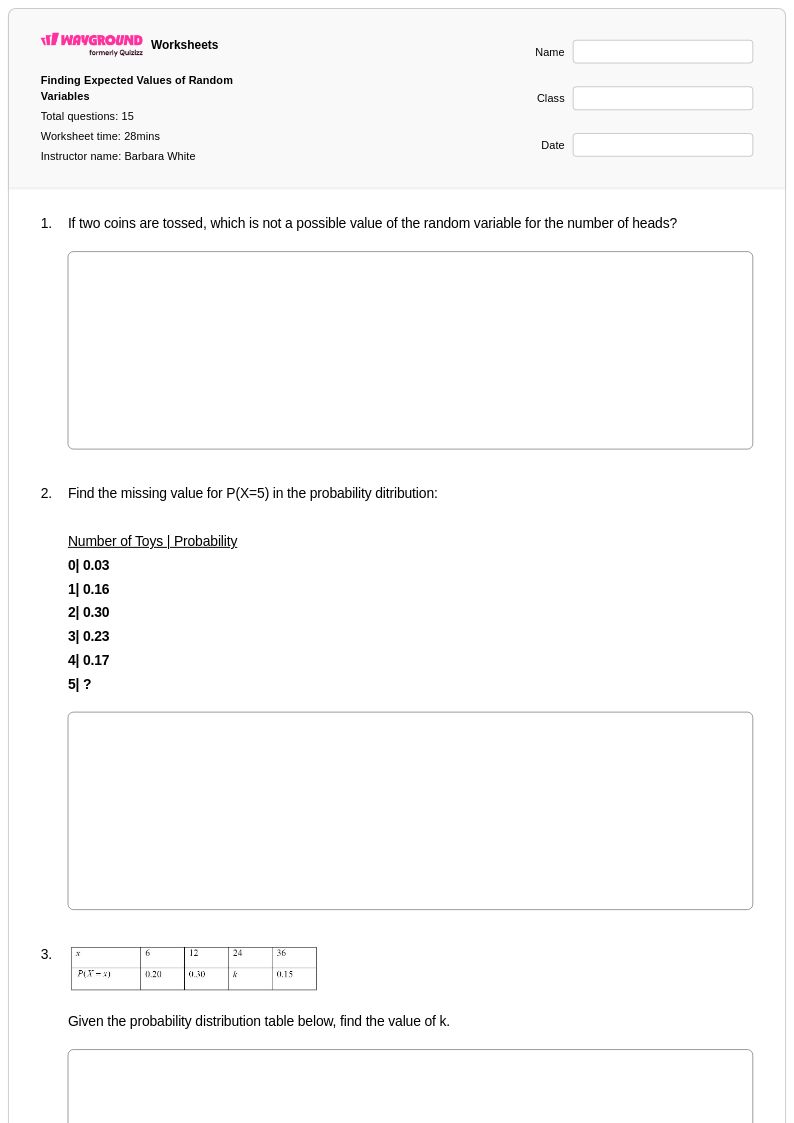
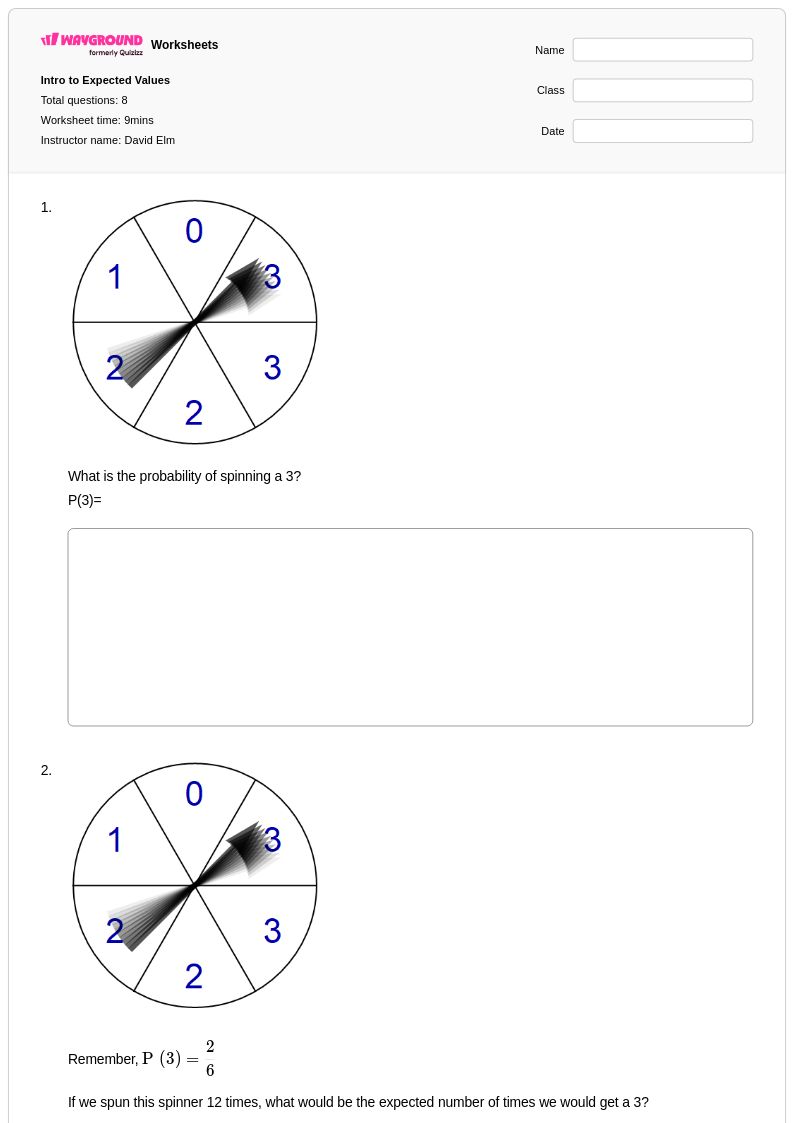
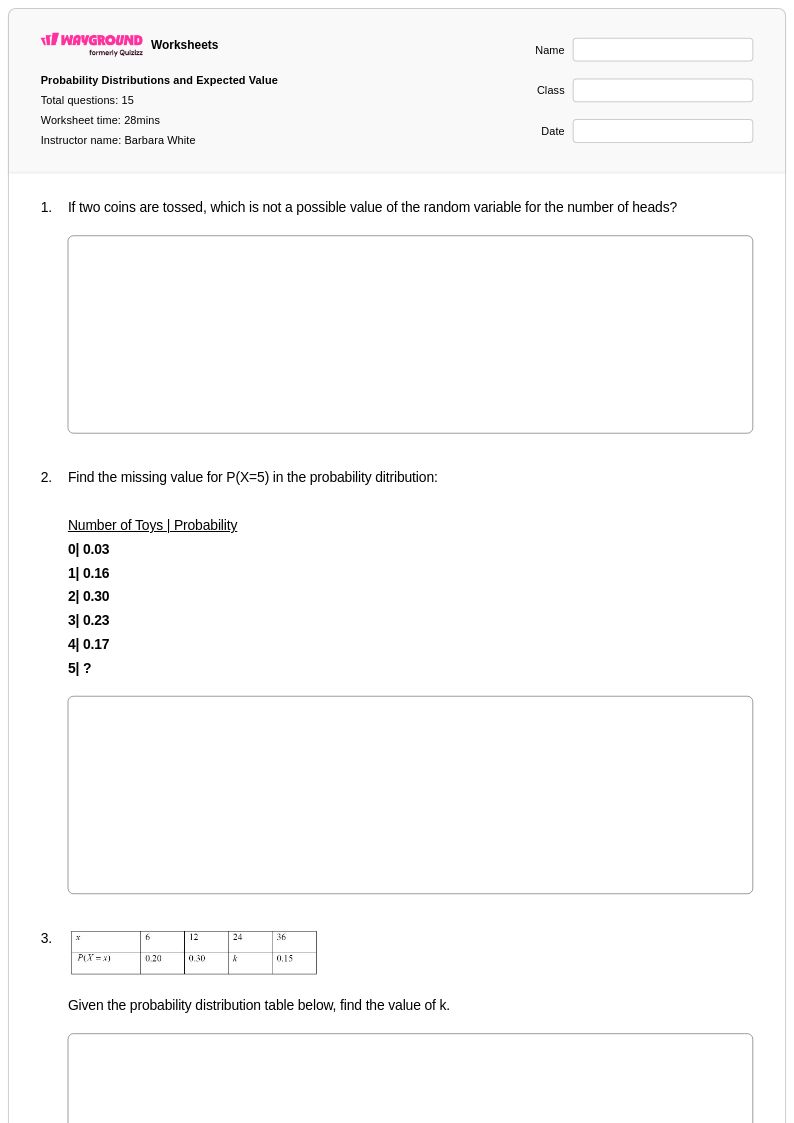
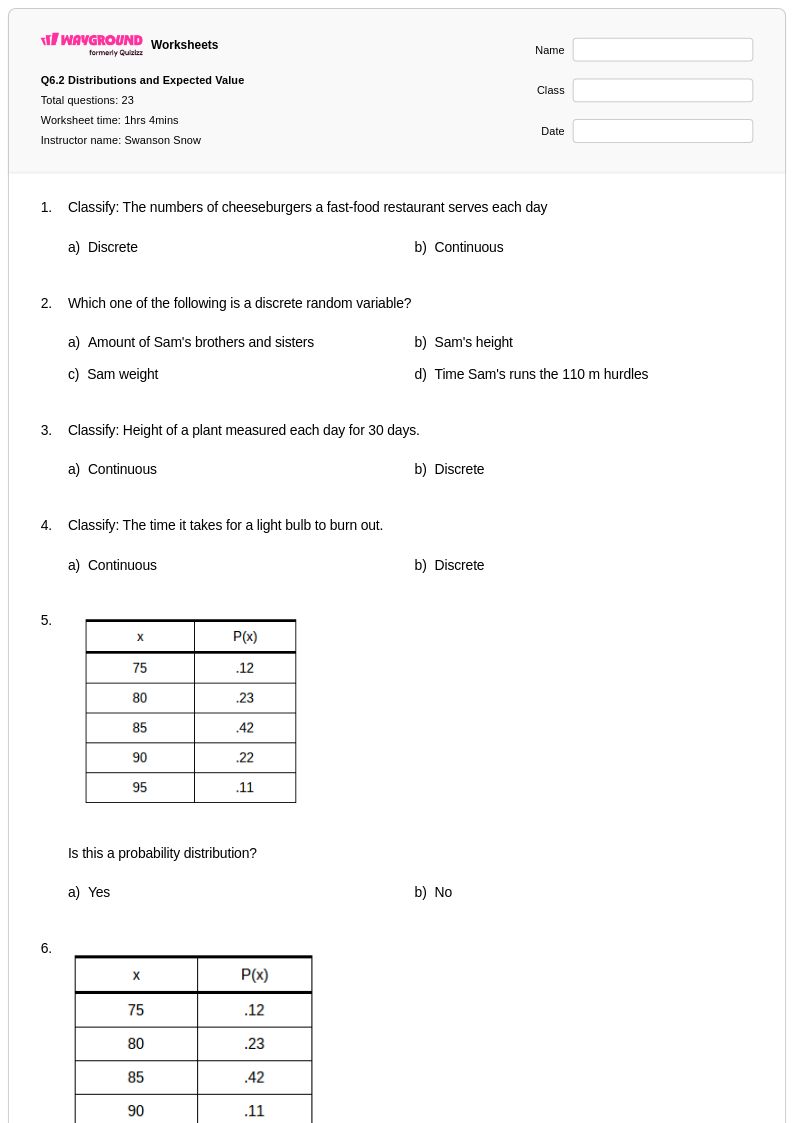
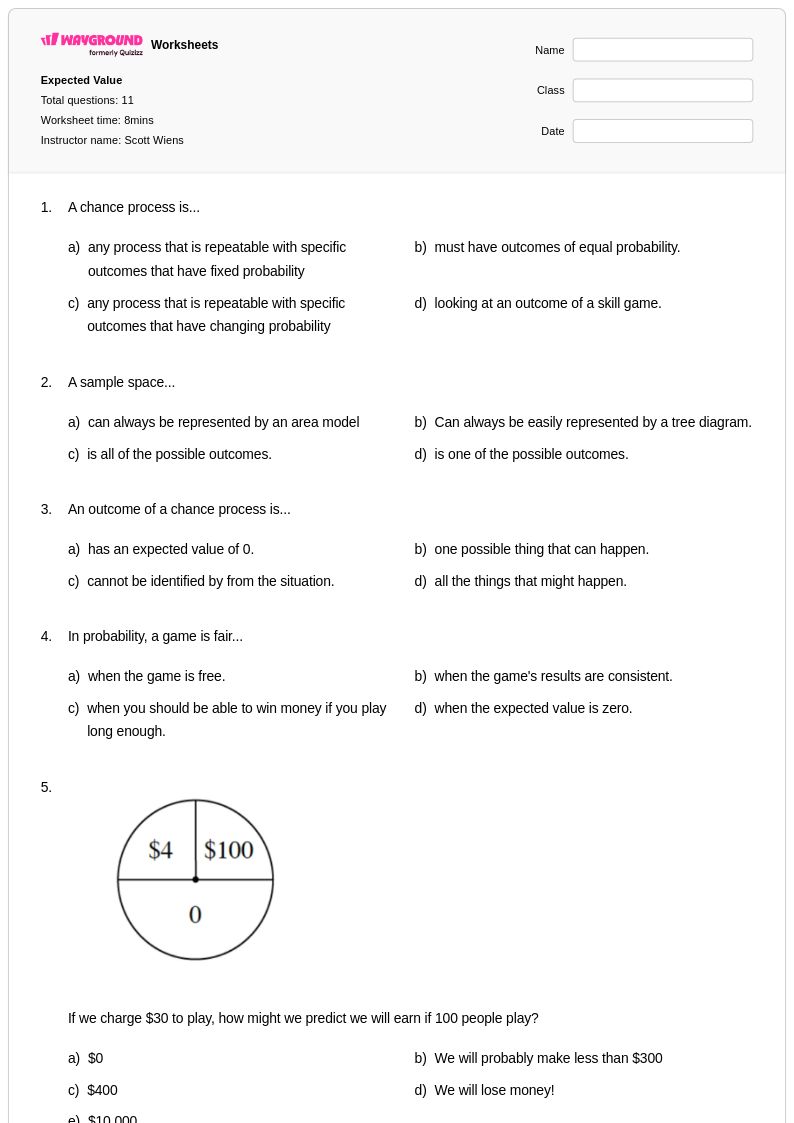
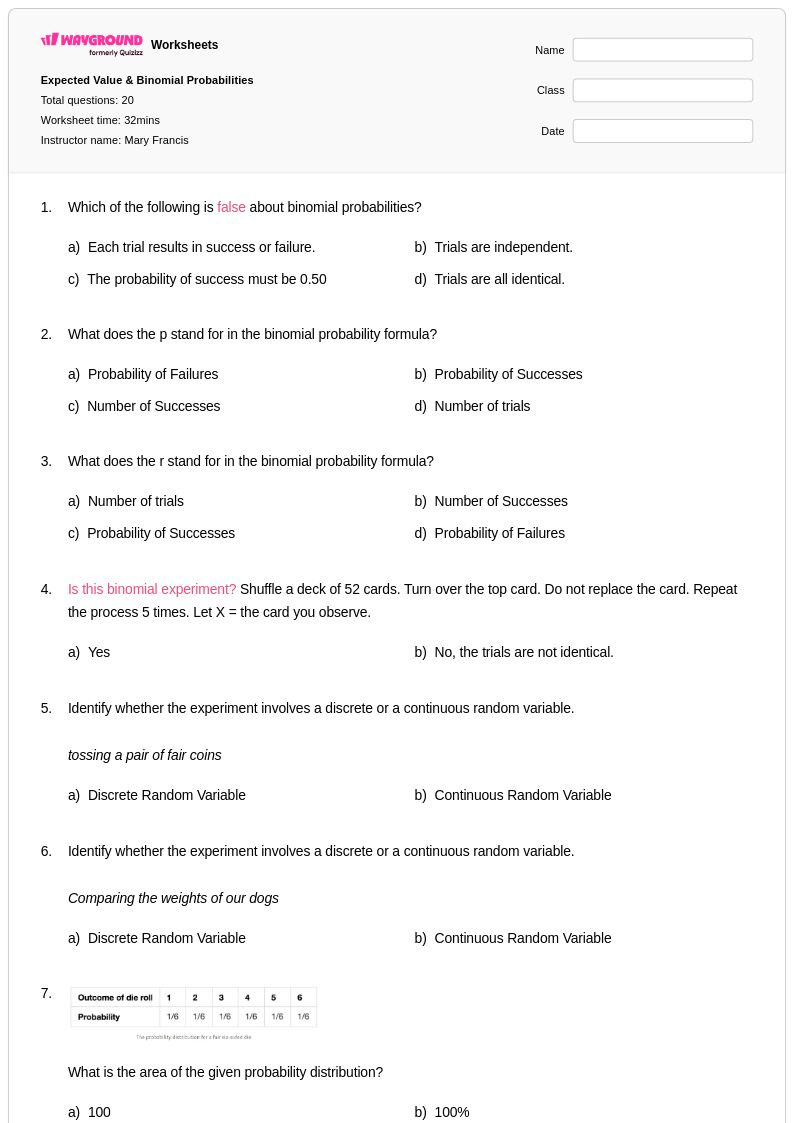
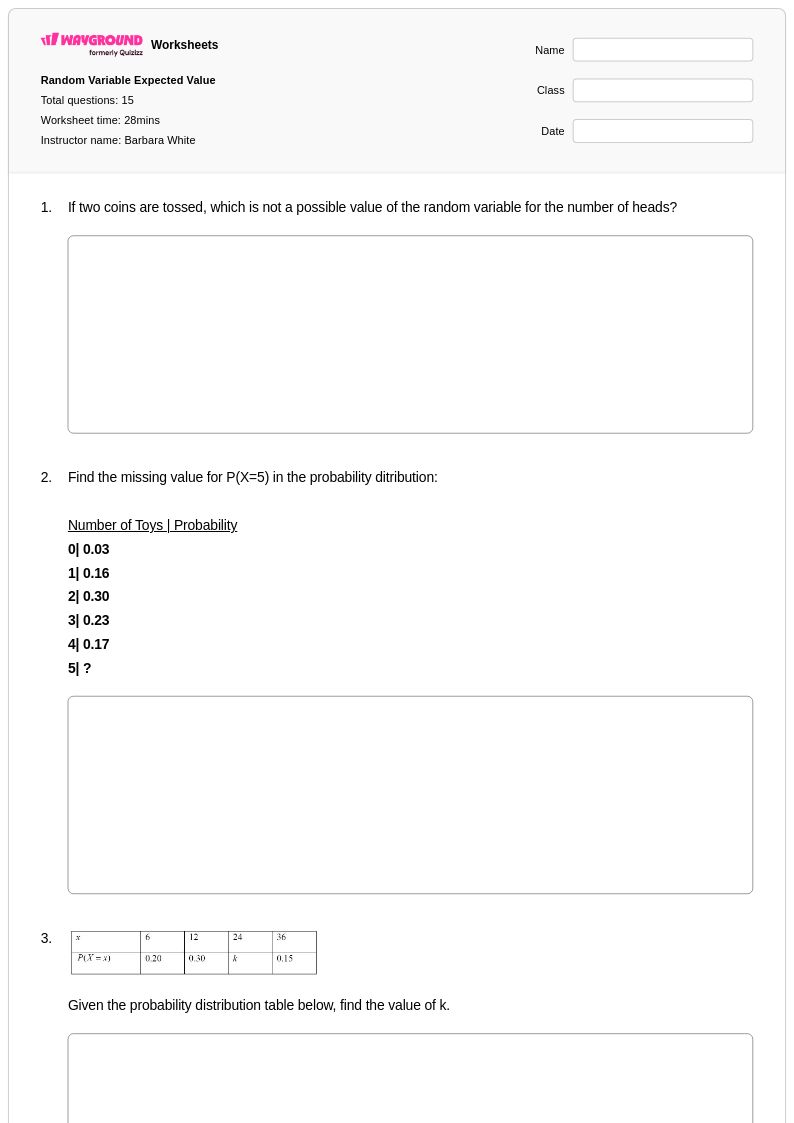
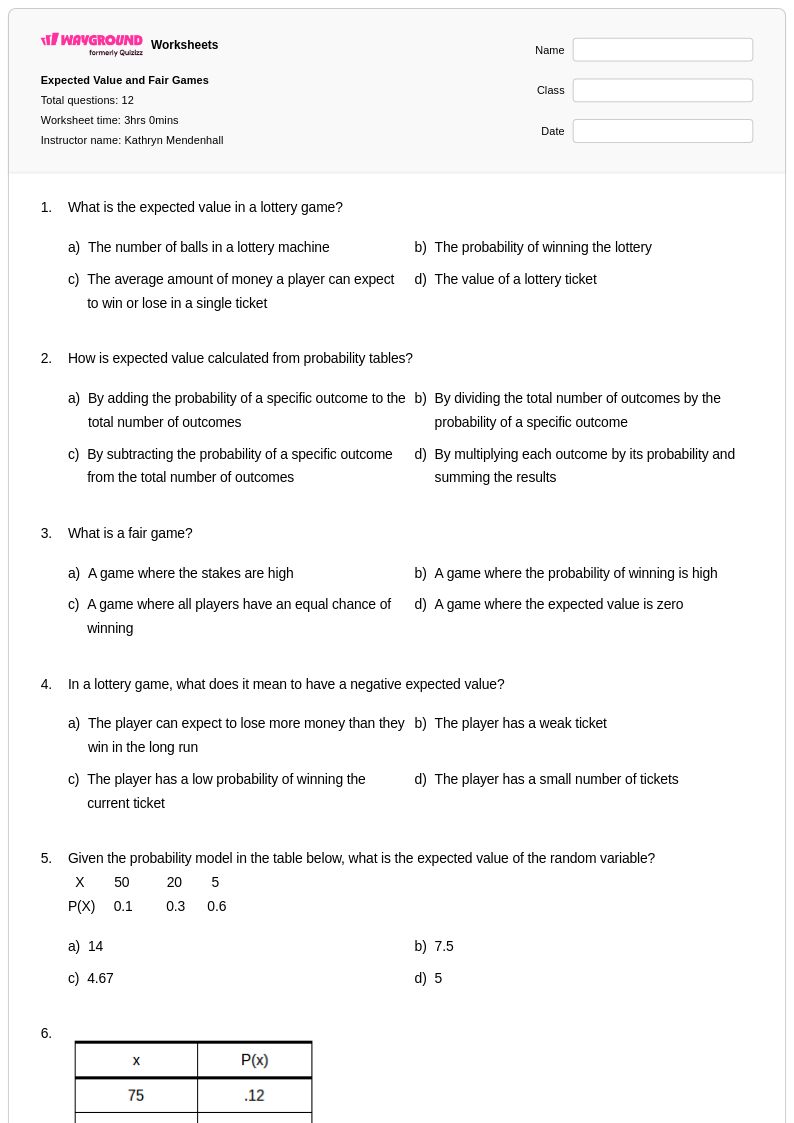
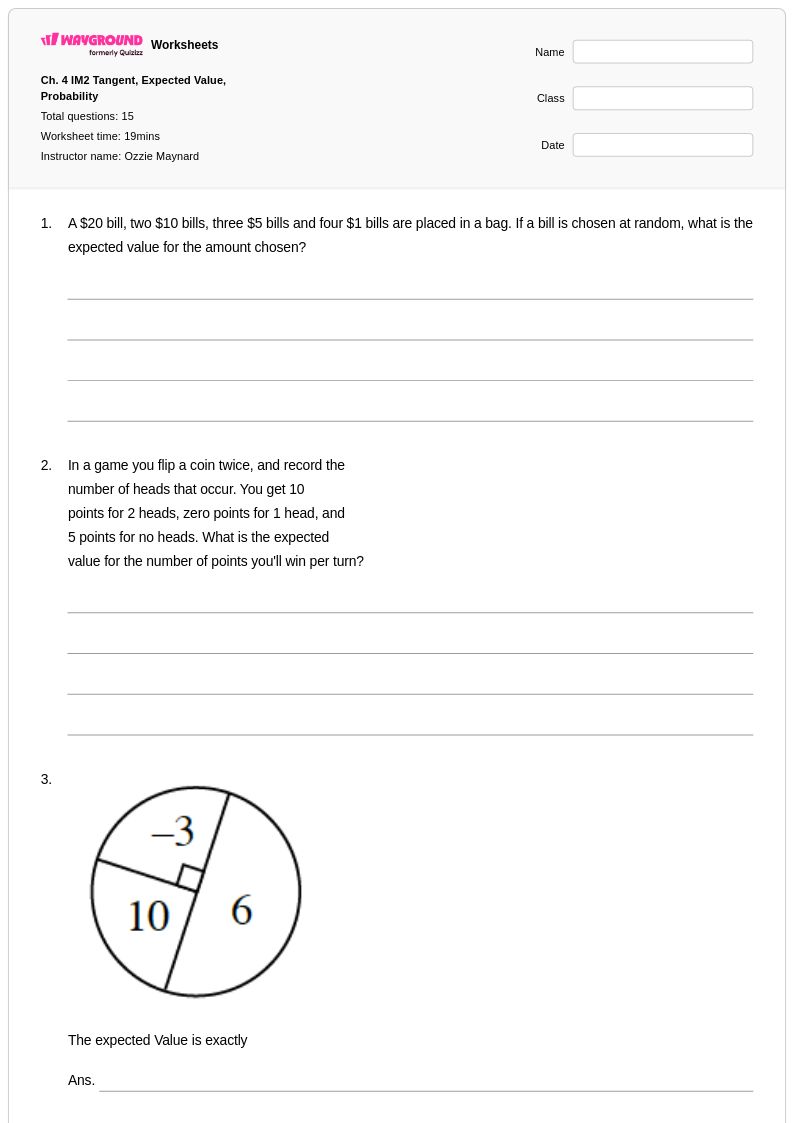
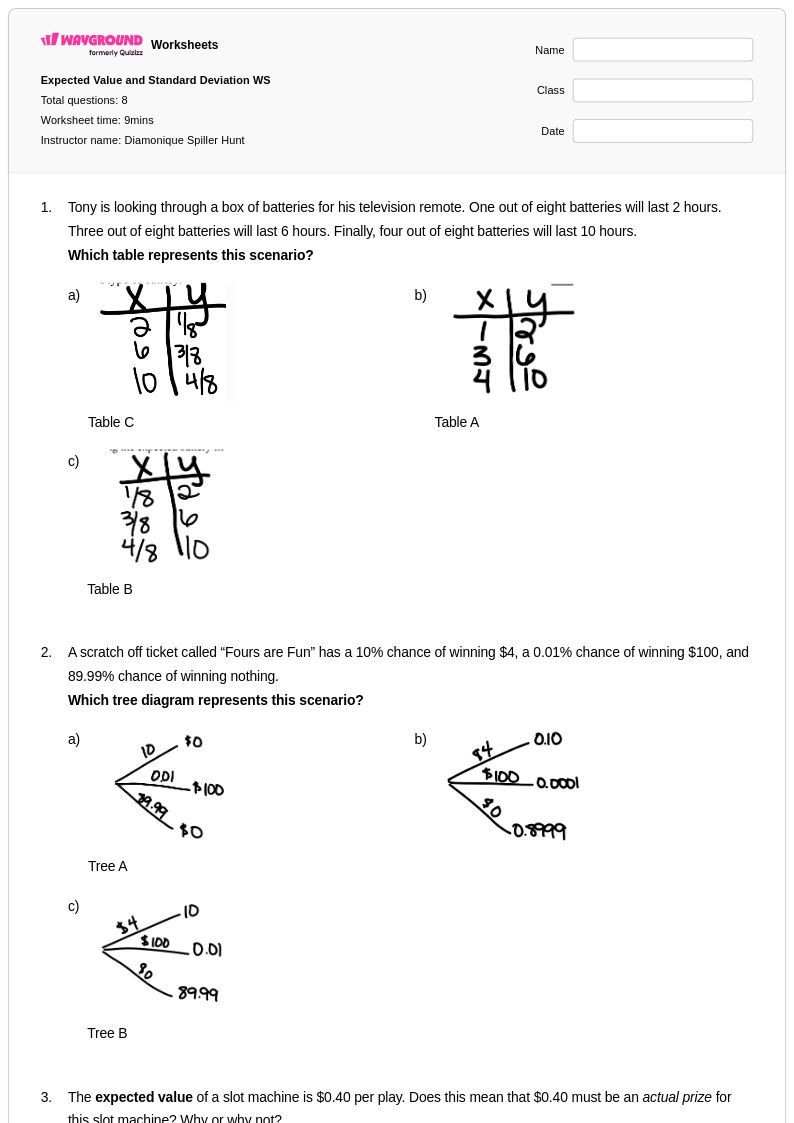
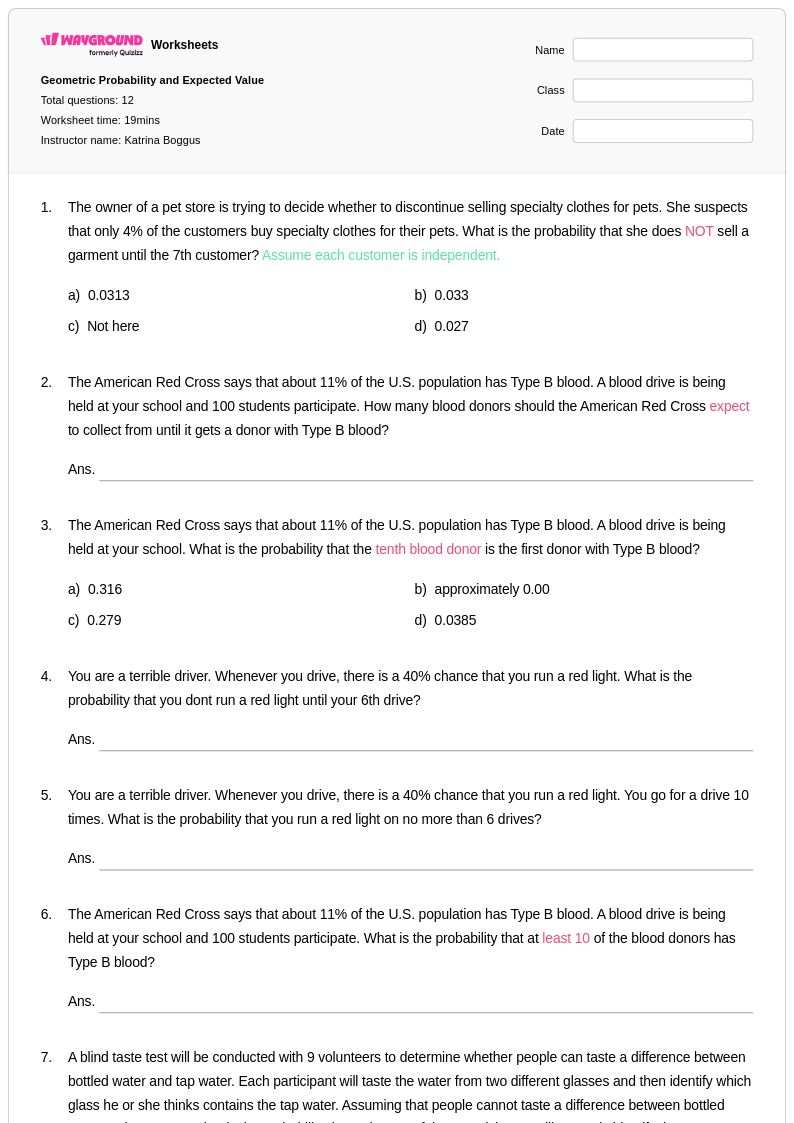
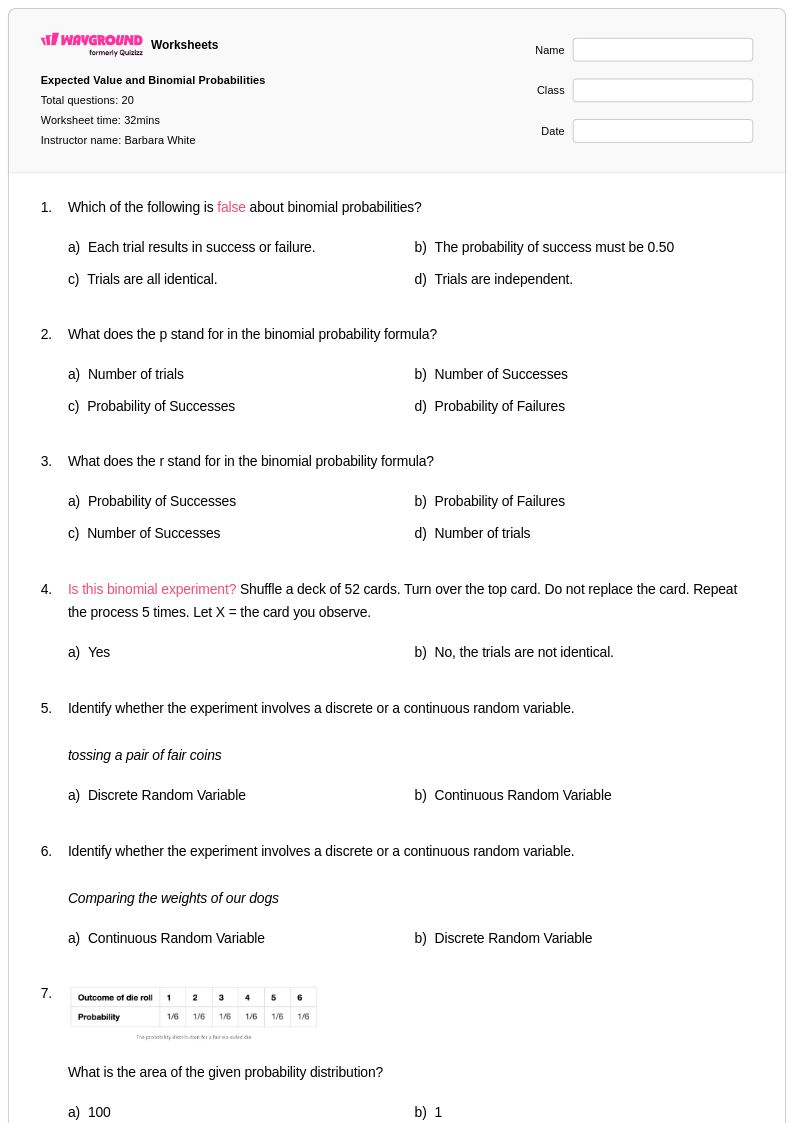
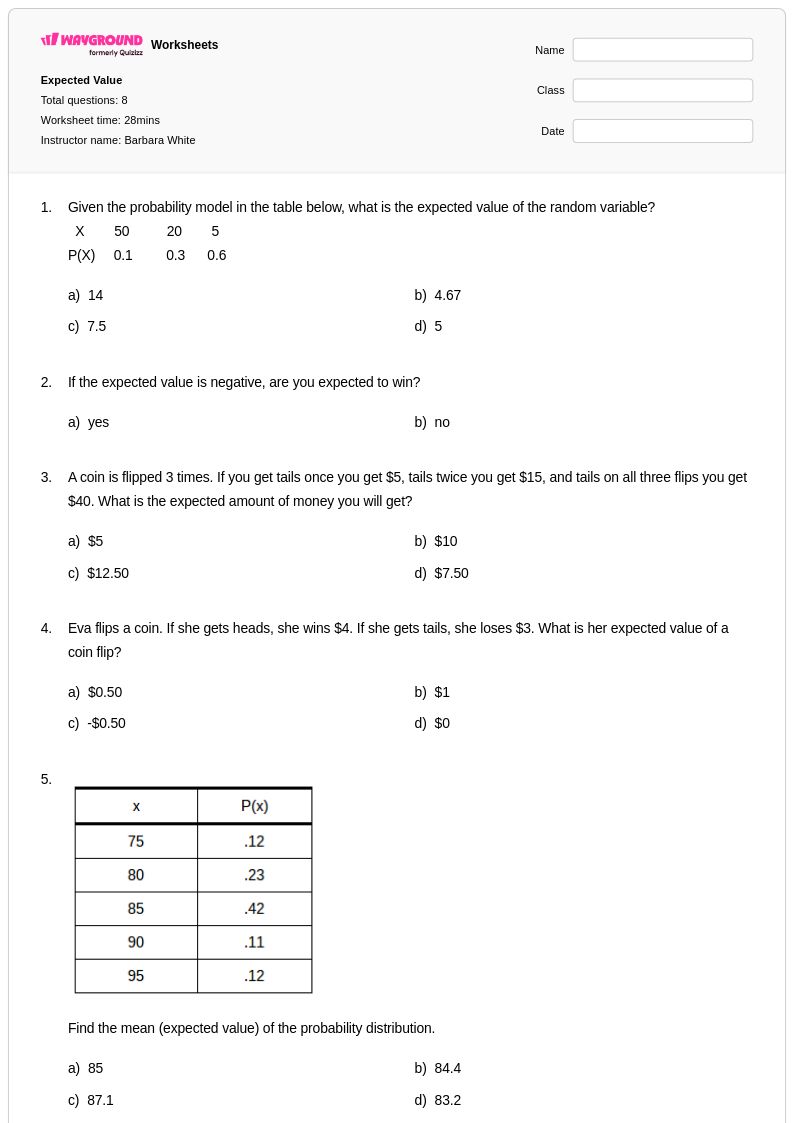
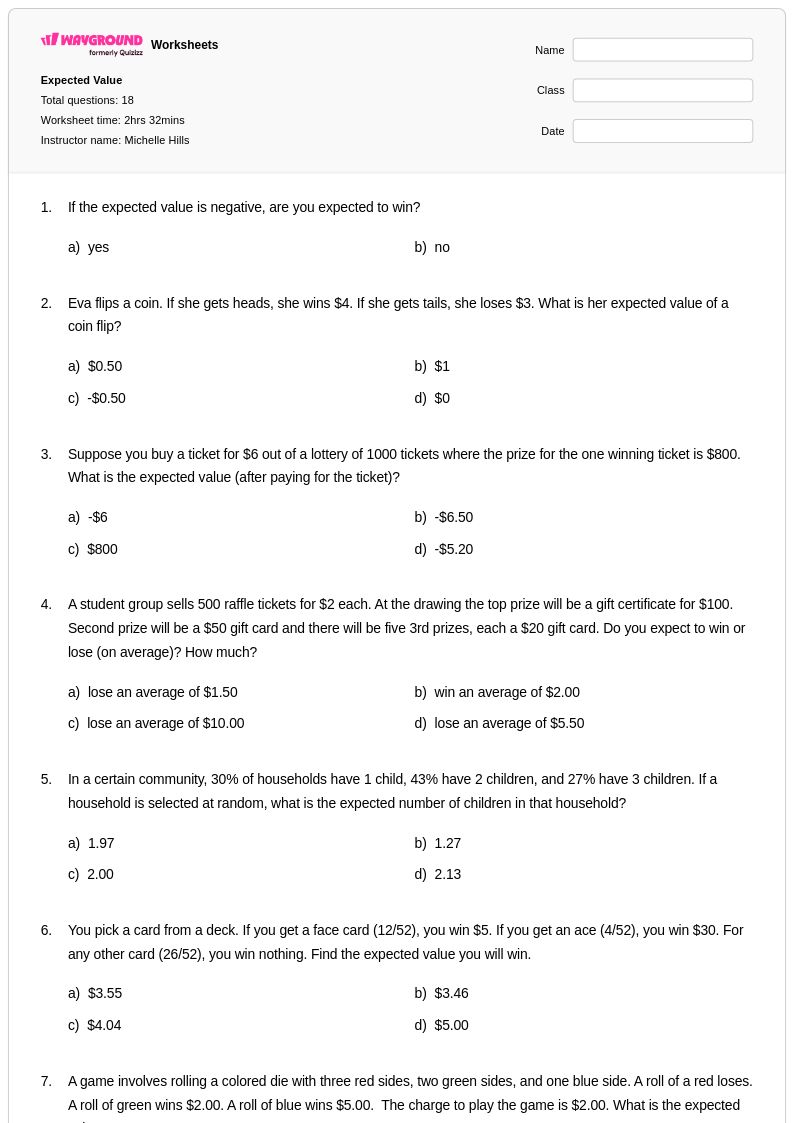
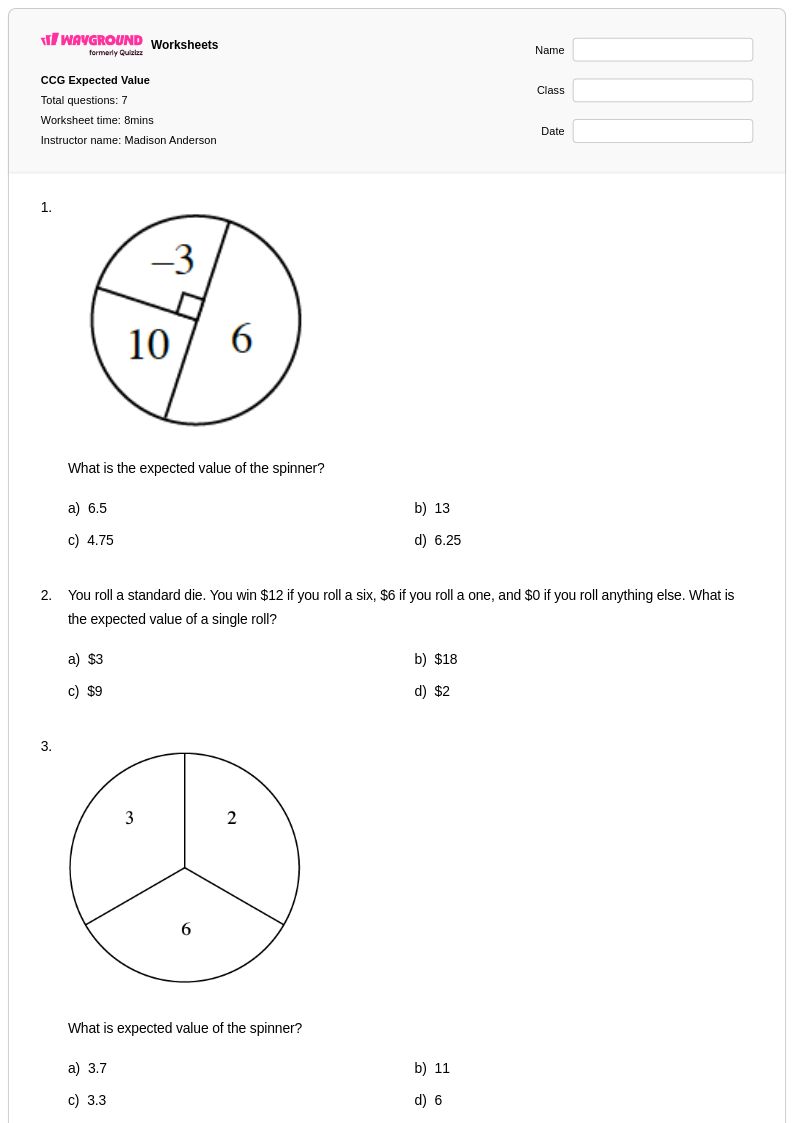
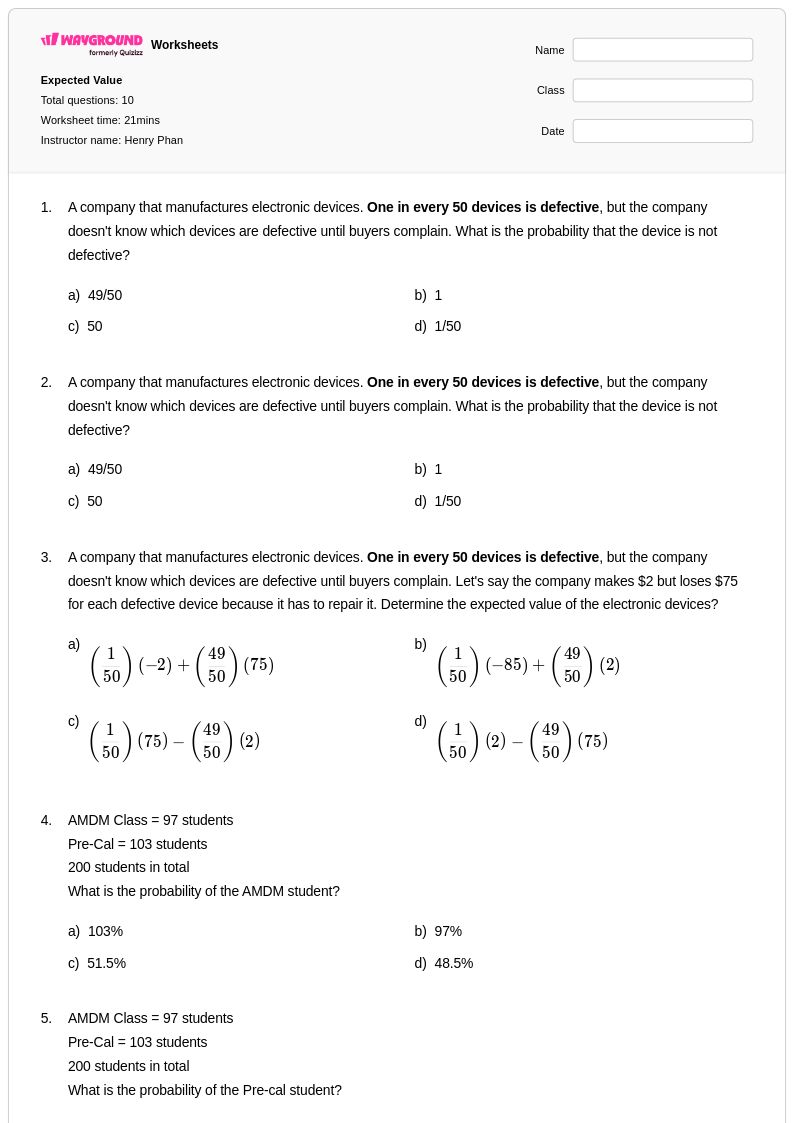
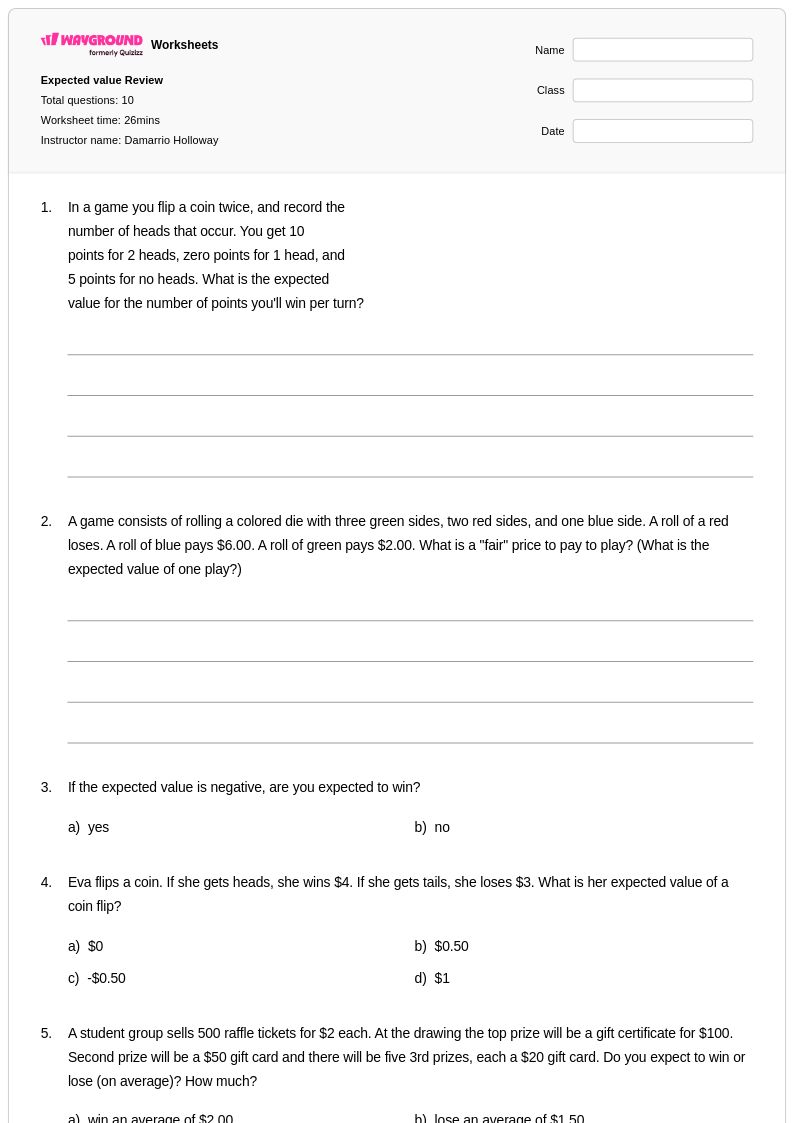
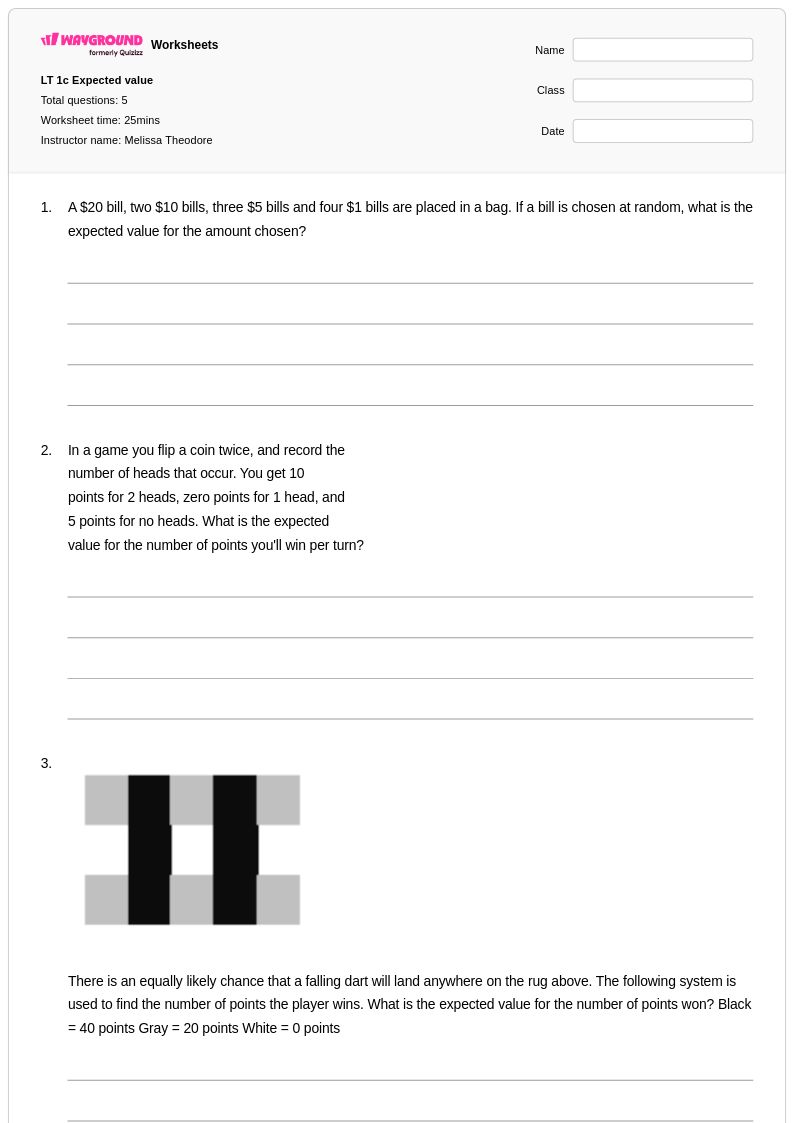
Expected value worksheets for Year 10 students available through Wayground (formerly Quizizz) provide comprehensive practice with this fundamental concept in probability and statistics. These educational resources help students master the calculation of expected values for discrete random variables, probability distributions, and real-world scenarios involving risk and decision-making. The worksheets strengthen critical analytical skills by guiding students through problems that require them to determine fair prices, evaluate games of chance, and make informed predictions based on probabilistic outcomes. Each worksheet collection includes detailed practice problems with corresponding answer keys, ensuring students can verify their understanding of weighted averages and probability calculations. These free printable resources offer systematic progression from basic expected value computations to more complex applications involving multiple variables and conditional probabilities.
Wayground (formerly Quizizz) supports mathematics educators with an extensive library of millions of teacher-created expected value worksheets specifically designed for Year 10 probability and statistics instruction. The platform's robust search and filtering capabilities allow teachers to quickly locate resources that align with curriculum standards and match their students' specific learning needs. These differentiation tools enable educators to customize worksheets for various skill levels, from foundational practice to advanced enrichment activities. Available in both printable pdf format and interactive digital versions, these worksheet collections facilitate flexible lesson planning and provide essential resources for targeted remediation and skill reinforcement. Teachers can efficiently organize practice sessions, homework assignments, and assessment preparation while ensuring students receive appropriate scaffolding in their development of expected value concepts and statistical reasoning abilities.
FAQs
How do I teach expected value in a 10th grade math class?
By Grade 10, students usually have enough probability background to move quickly past the basic formula and into interpretation. Spend less time on 'here's how to compute E(X)' and more on questions like: what does it mean that the expected value of this insurance policy is negative for the customer? Problems involving fair pricing — what entry fee makes a game fair? — are especially effective because they require students to set E(X) equal to zero and solve, connecting expected value to algebra they already know.
What types of expected value problems should 10th graders be working through?
Grade 10 students should be comfortable with: computing expected value from a probability distribution table, determining fair prices or break-even entry fees, comparing two options by their expected values, and interpreting a negative expected value in a real-world context. Problems involving discrete random variables with three to five outcomes are appropriate; full probability distributions and continuous variables can come later.
What misconceptions about expected value are common at the 10th grade level?
At this level, the calculation errors are mostly gone — the deeper misconception is interpreting expected value as a guaranteed outcome. Students will say 'the expected value is $2.50, so I'll win $2.50' rather than understanding it as a long-run average across many trials. A quick fix: ask them what happens on a single coin flip when the expected value is $0.50. That forces the distinction between a single trial and a long-run average.
How do I use Wayground's Grade 10 expected value worksheets?
You can assign these as digital quizzes on Wayground for immediate feedback, or download the printable PDF for in-class or homework use — both formats include a complete answer key. If you're going the paper route, the Wayground for Teachers app lets you scan student submissions for grading, which is handy when you're working through a full probability unit with multiple worksheet sets.
How does expected value fit into the Common Core high school statistics progression?
Common Core's high school Statistics and Probability standards build toward students being able to calculate and interpret the mean of a probability distribution — which is expected value. At Grade 10, this typically sits within a broader unit on probability distributions, where students move from listing outcomes and assigning probabilities to summarizing a distribution with a single number. The next step in the progression is variance and standard deviation, which measure spread around that expected value.
Can I differentiate expected value worksheets for mixed-ability 10th graders?
Yes. For students who need more support, Wayground lets you reduce the number of answer choices shown, which helps when students are still building confidence with multi-step probability calculations. At the worksheet level, you can increase font size or apply wider spacing to make probability tables — which can look cluttered at default formatting — easier to read. Advanced students can be directed to problems involving decision-making under uncertainty or comparing distributions, which extend the same concept without requiring a separate worksheet.