
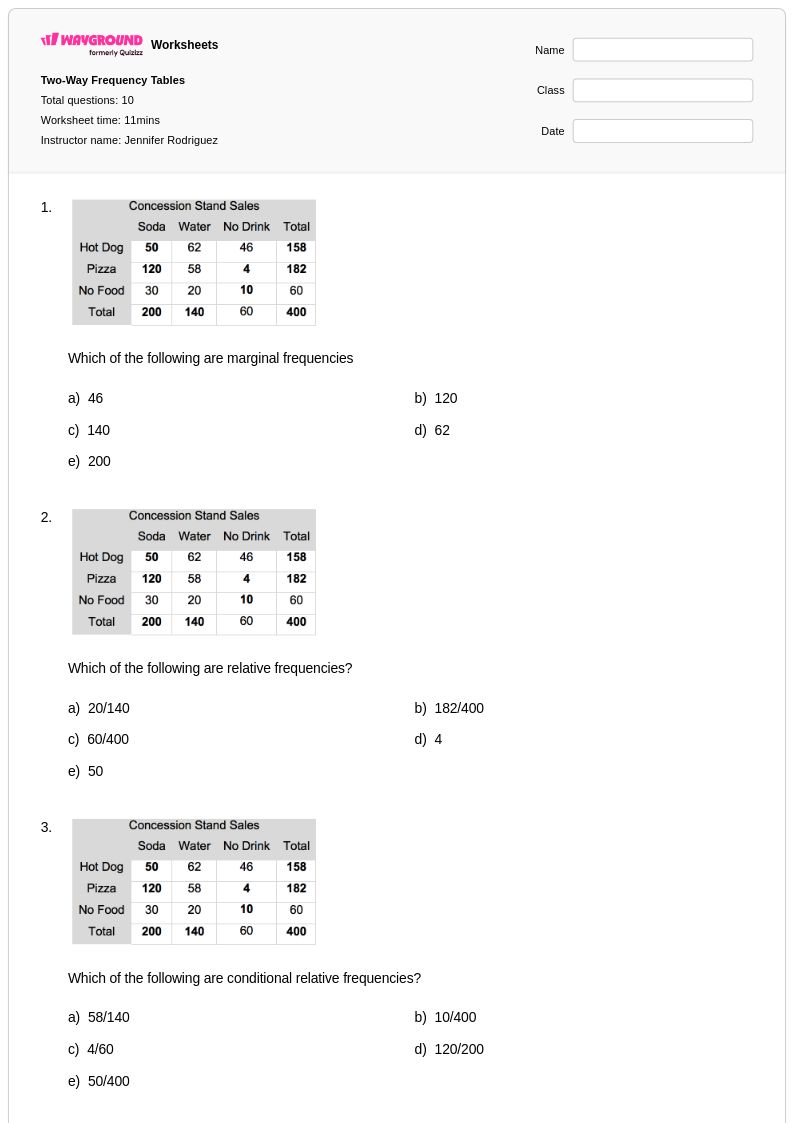
10 Q
9th - 10th
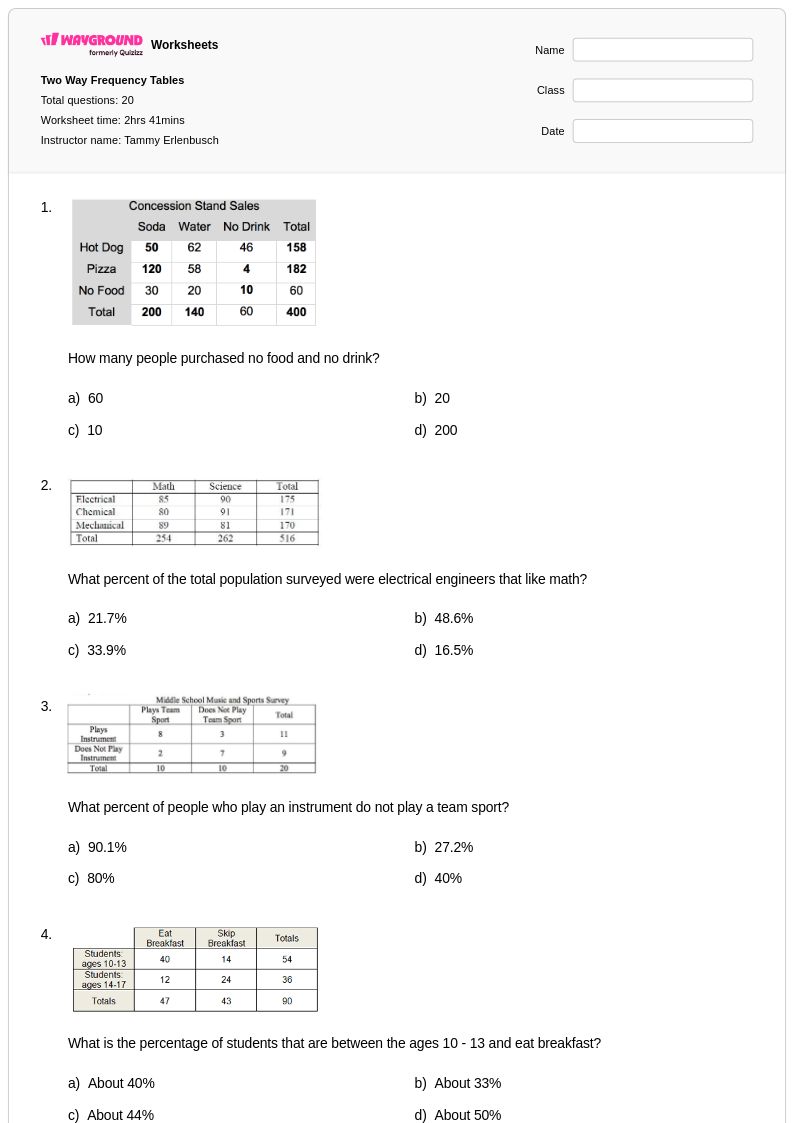
20 Q
9th - 10th
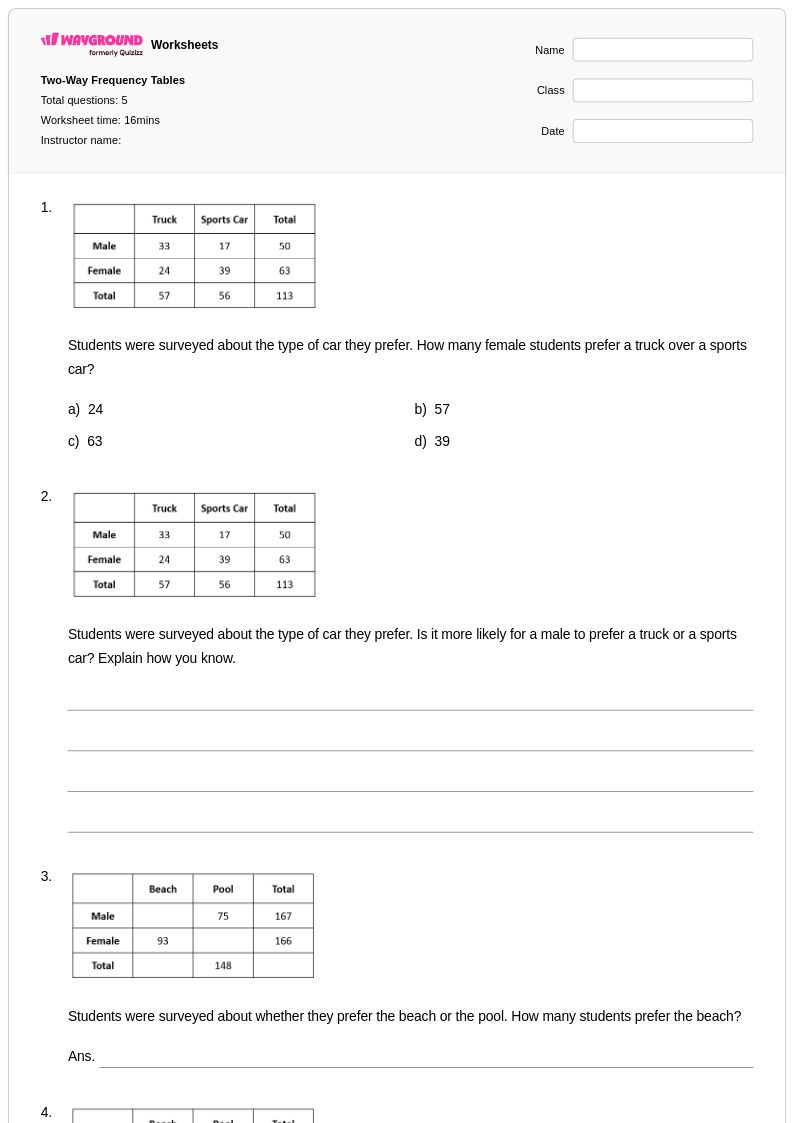
5 Q
9th - 12th
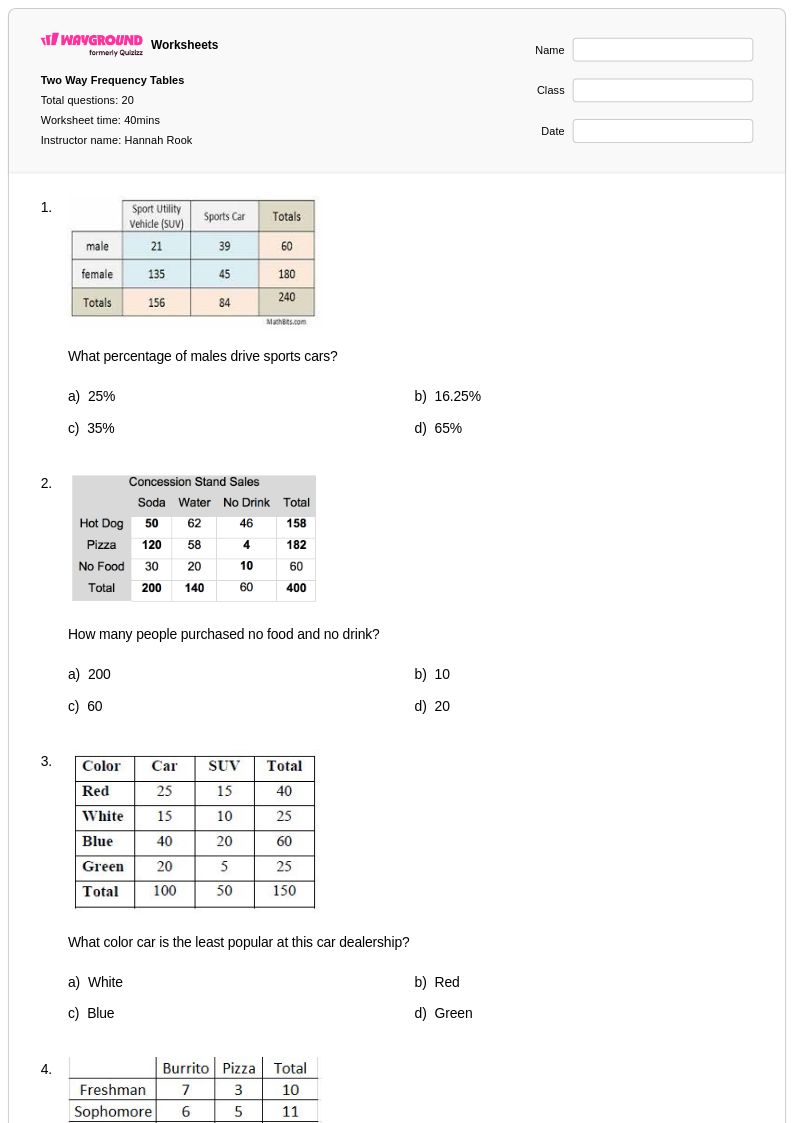
20 Q
7th - 10th
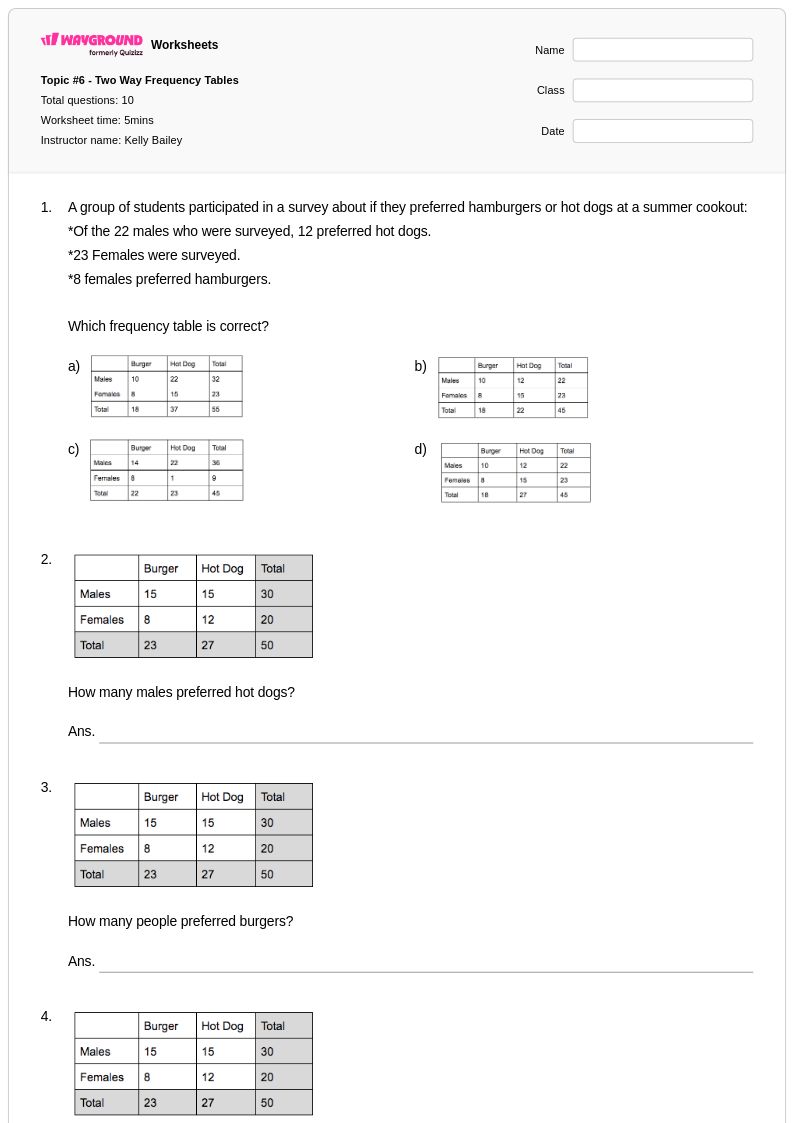
10 Q
9th - 11th
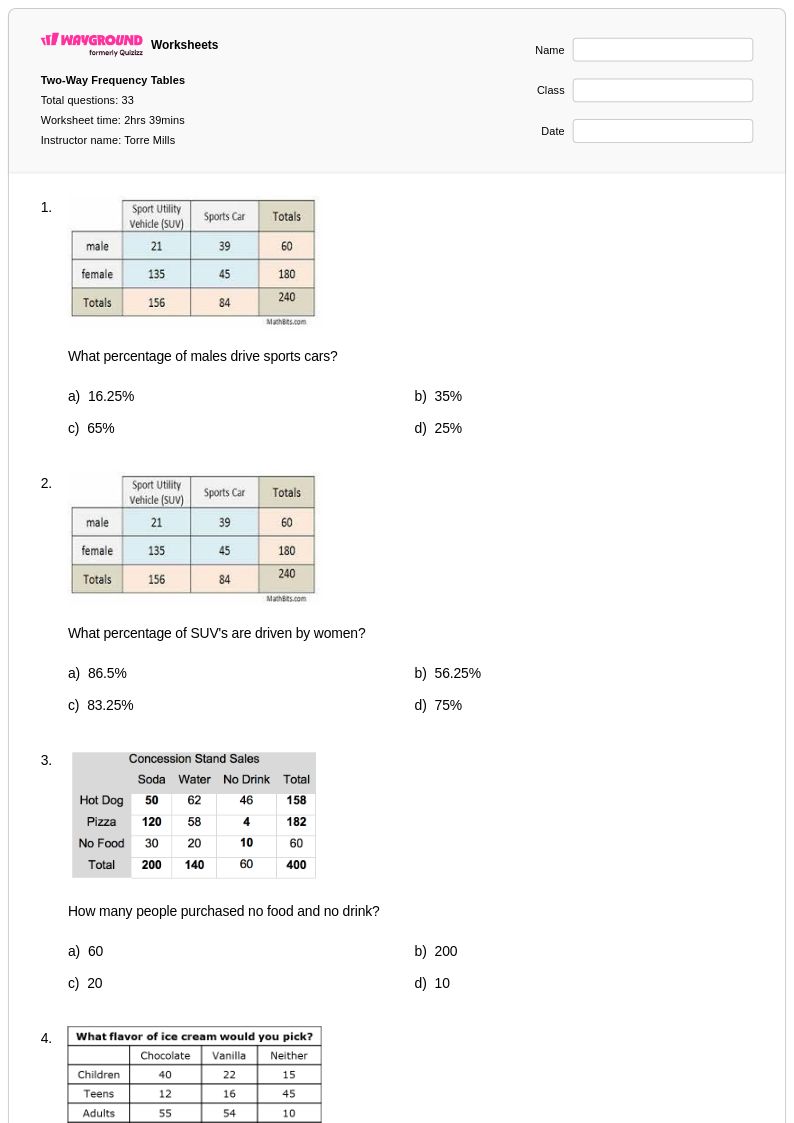
33 Q
9th - 12th
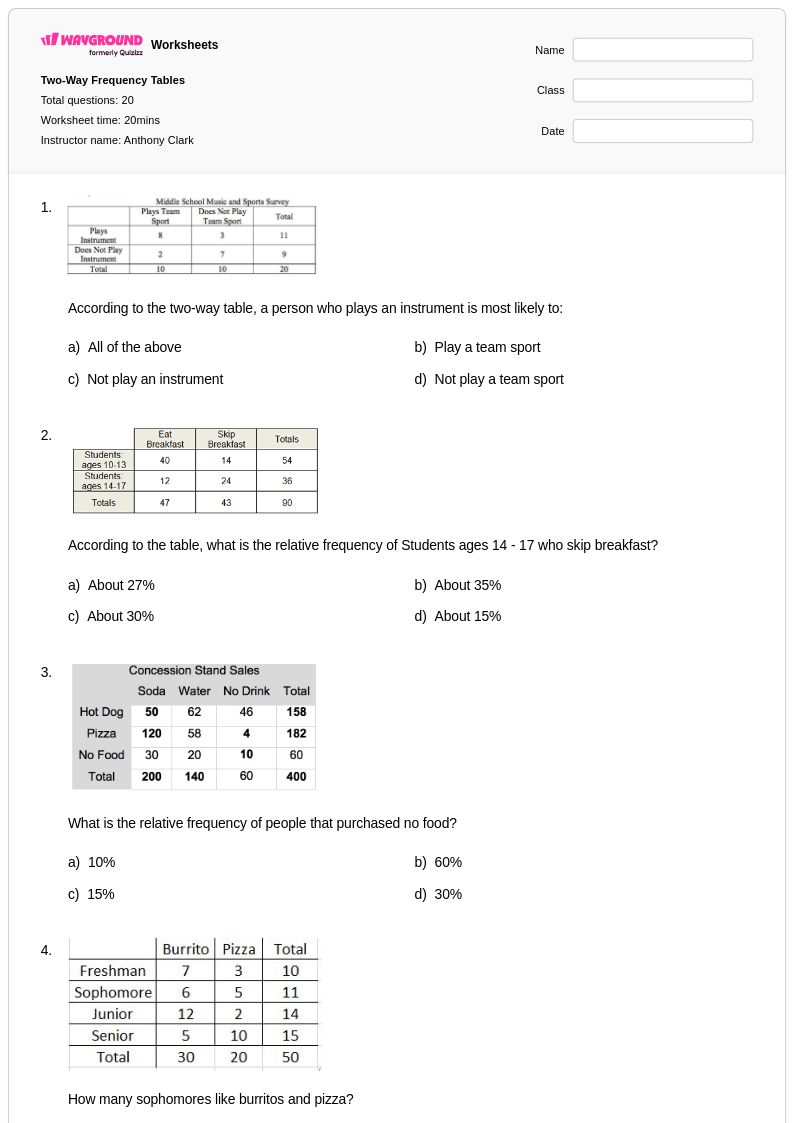
20 Q
9th - Uni
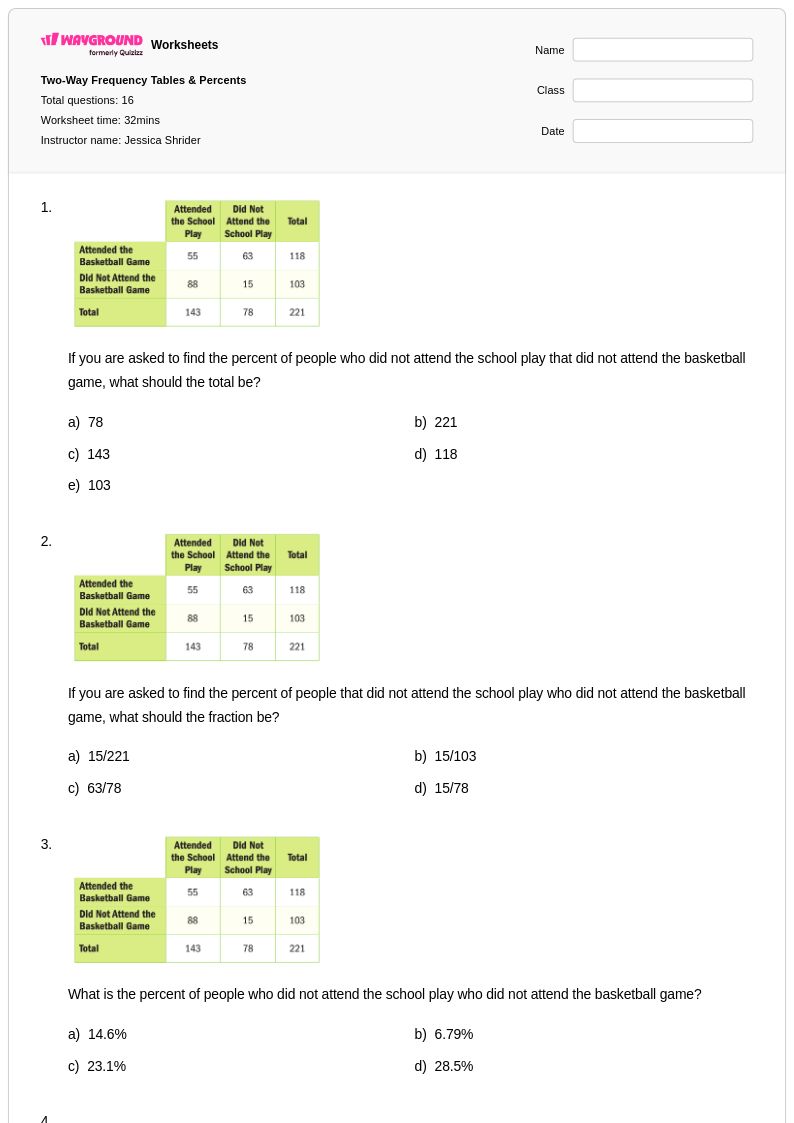
16 Q
9th - 12th
15 Q
9th - Uni
12 Q
9th - 12th
10 Q
9th - Uni
10 Q
9th - 12th
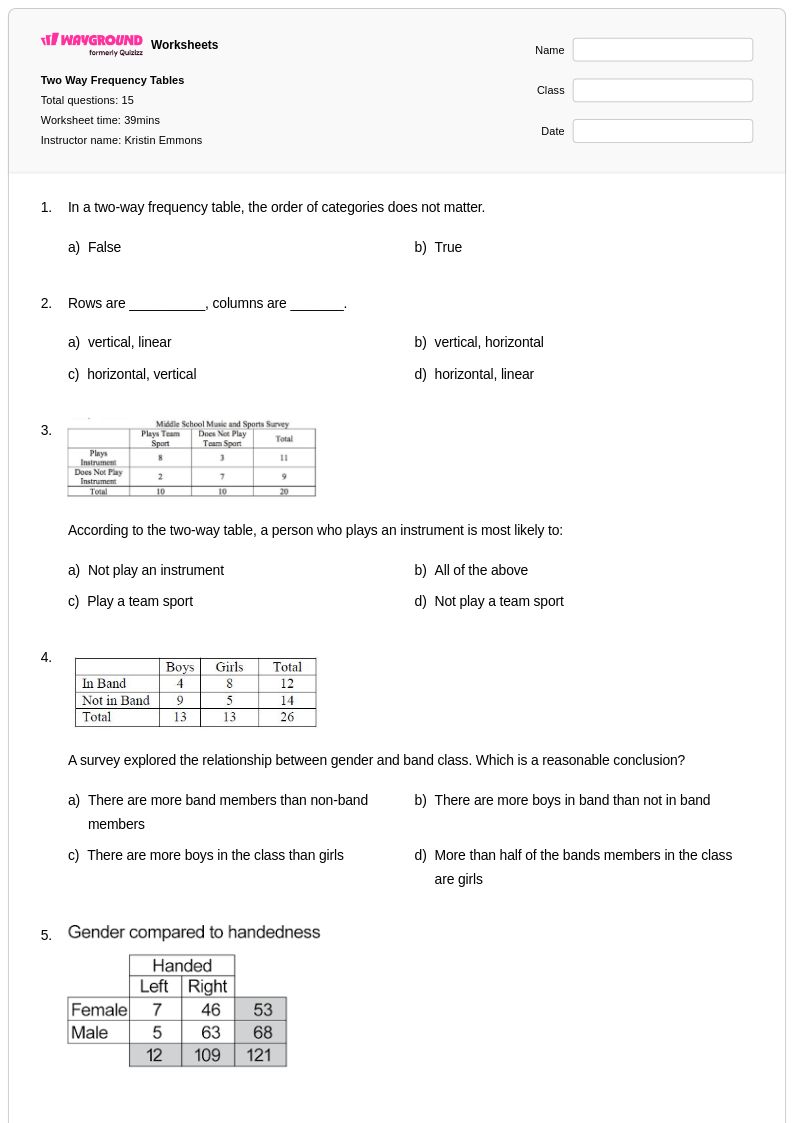
15 Q
8th - 10th
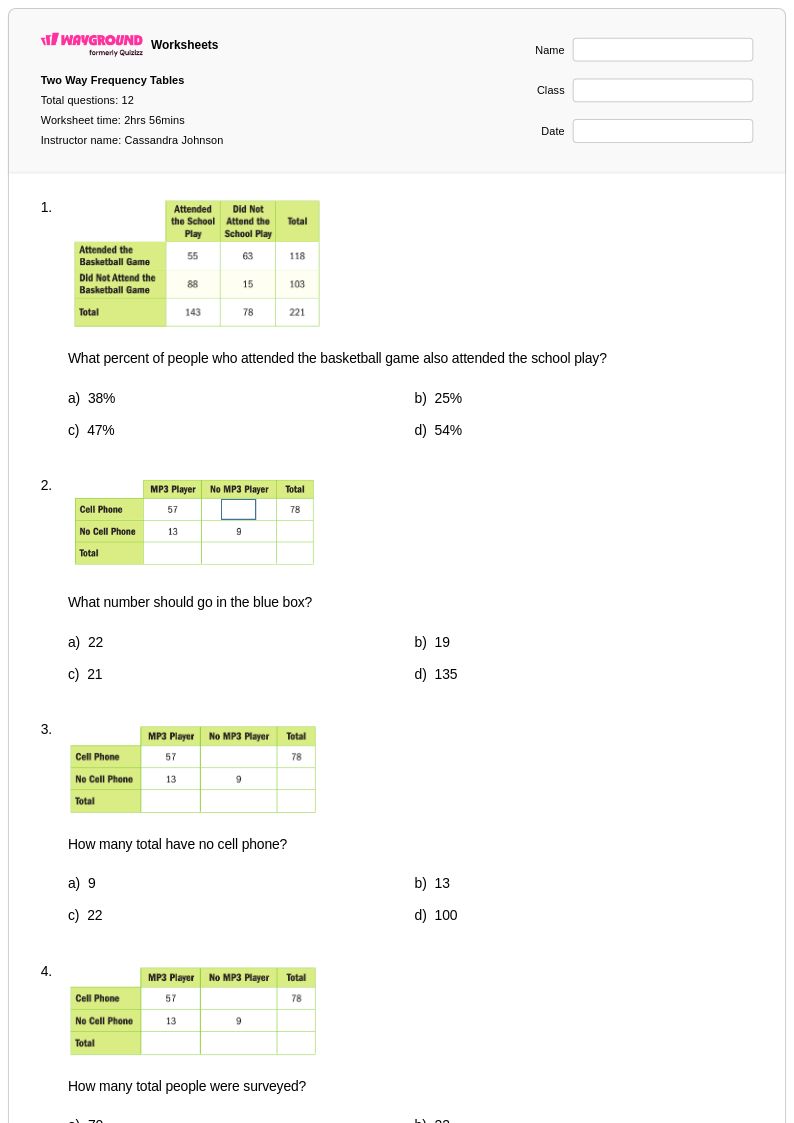
12 Q
10th
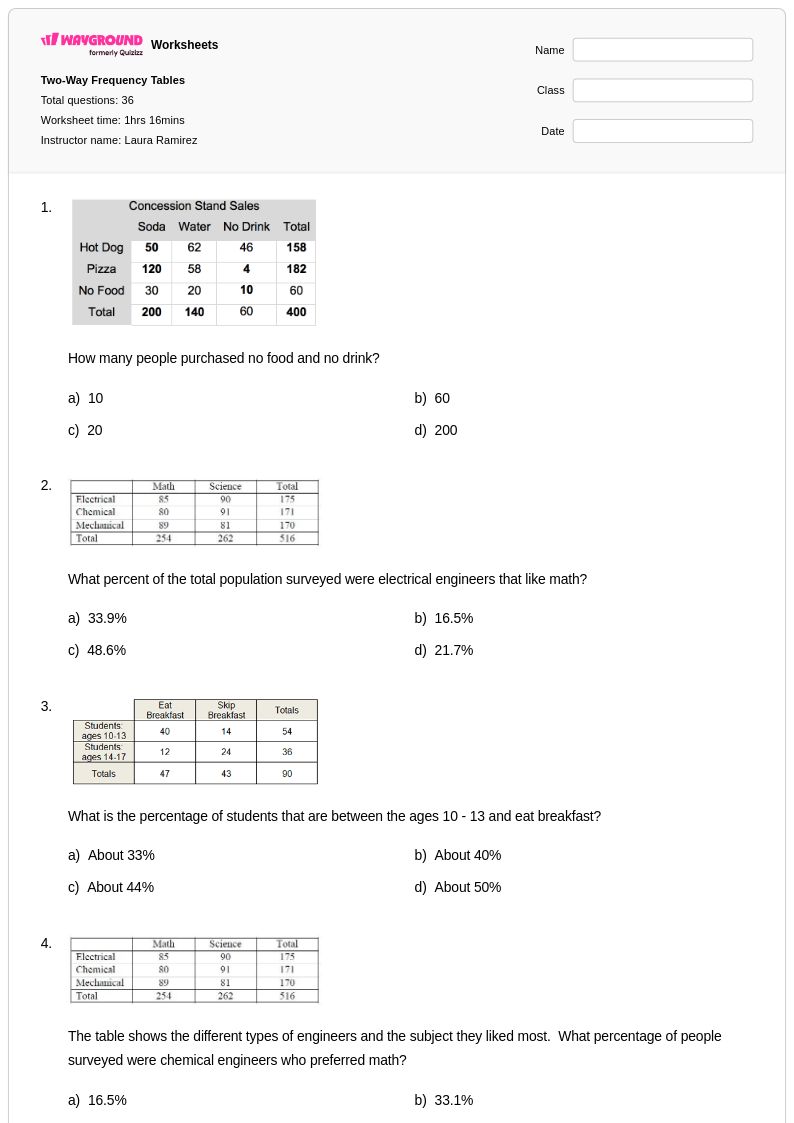
36 Q
9th - 12th
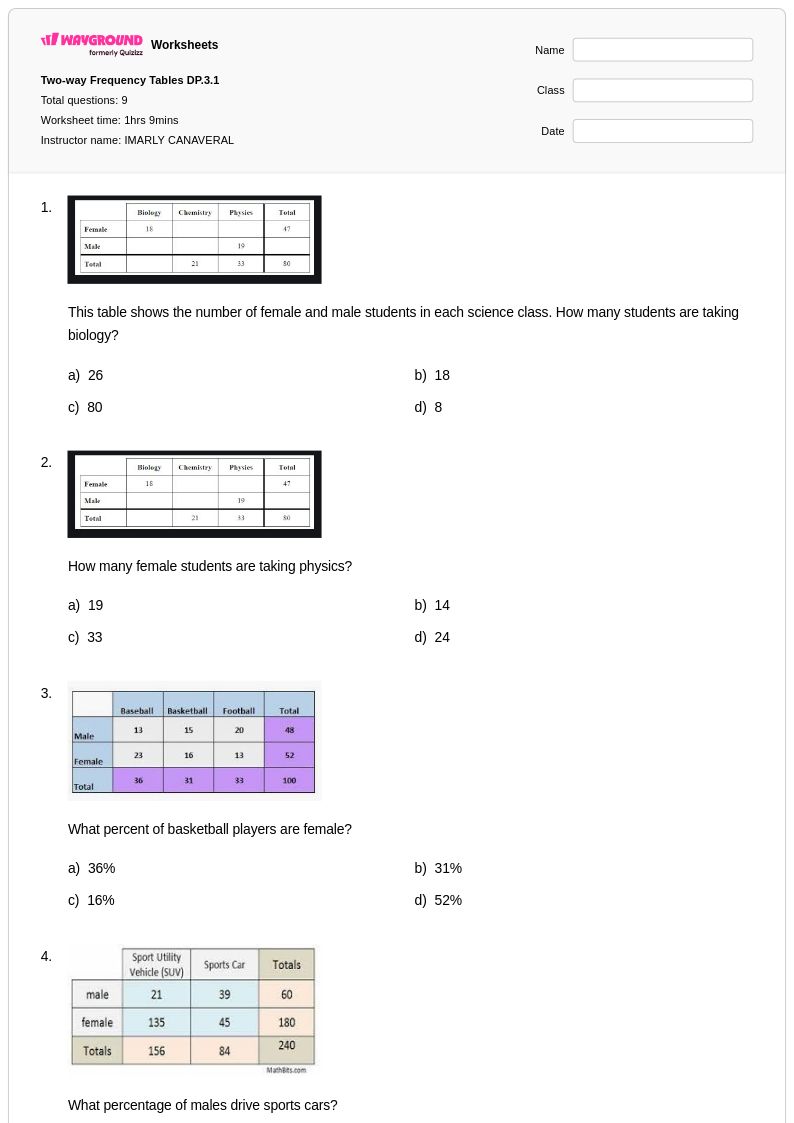
9 Q
9th - 12th
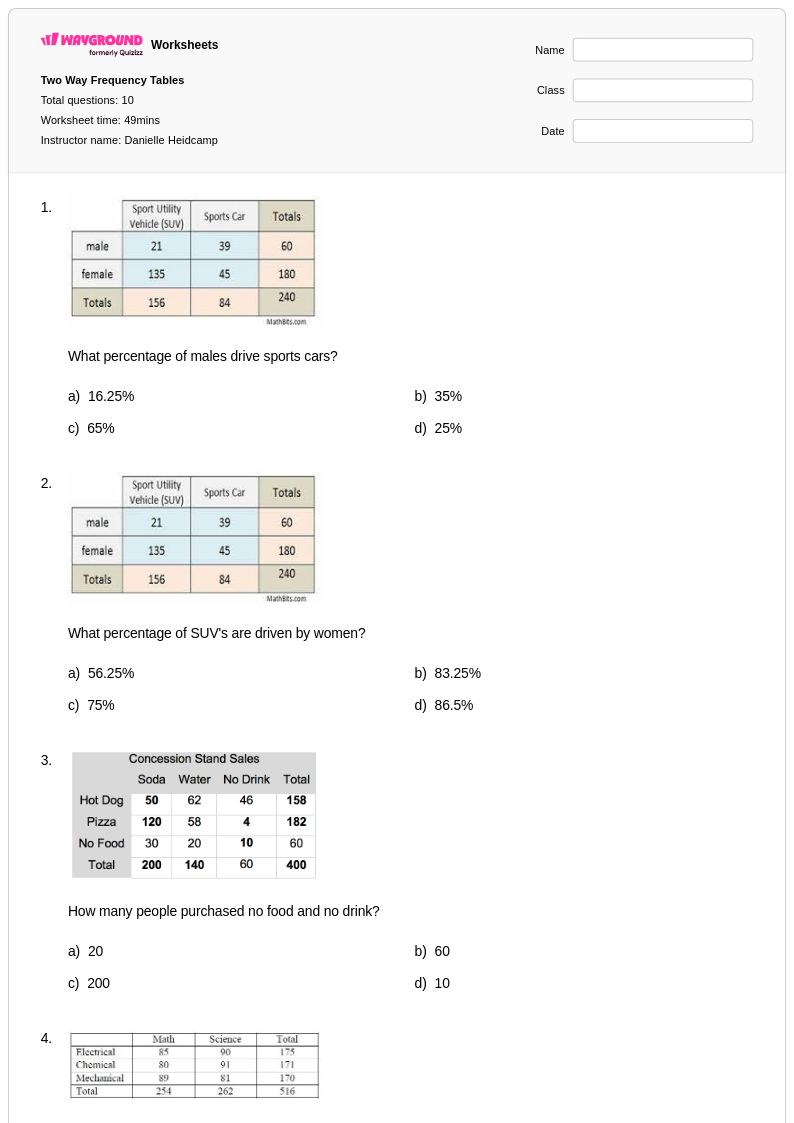
10 Q
9th - 12th
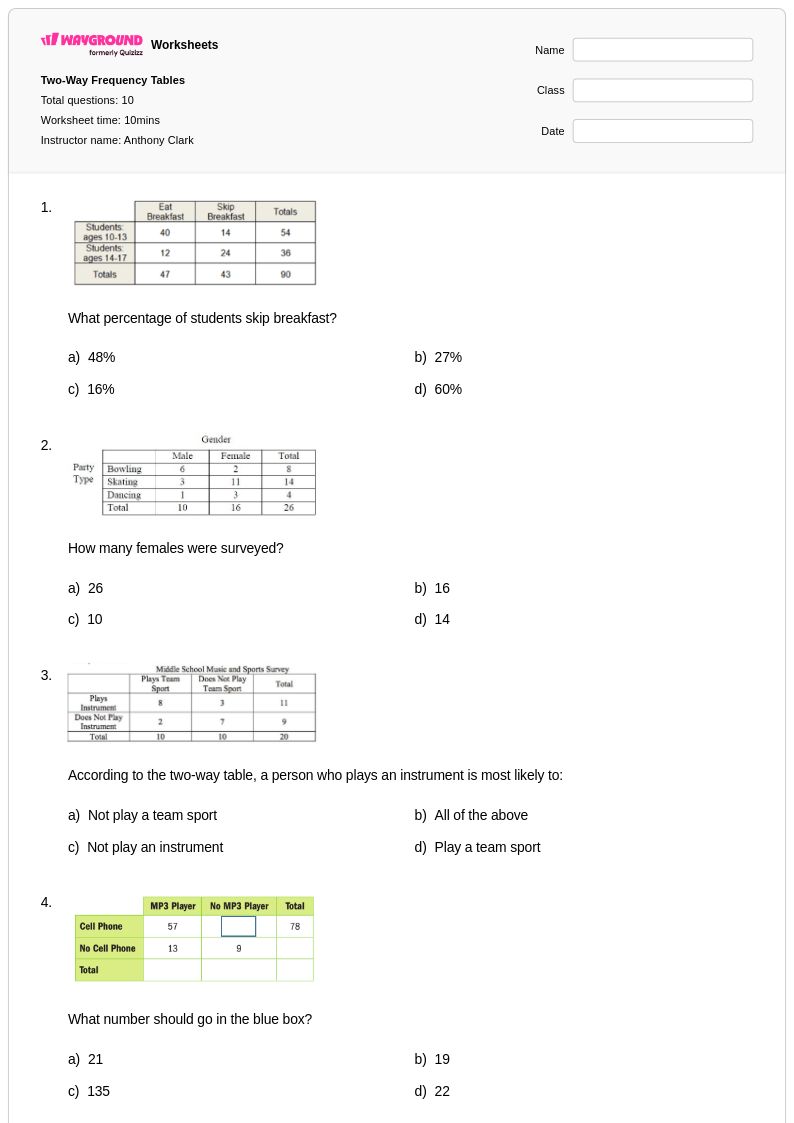
10 Q
9th - Uni
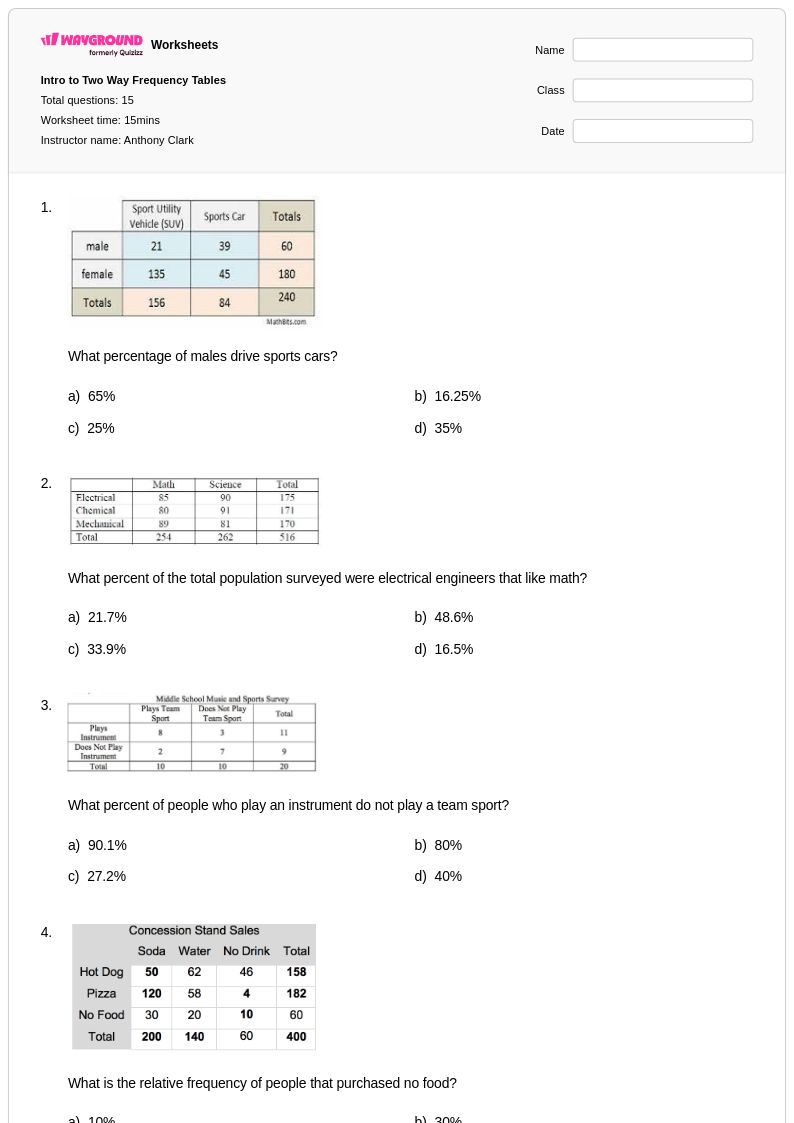
15 Q
9th - Uni
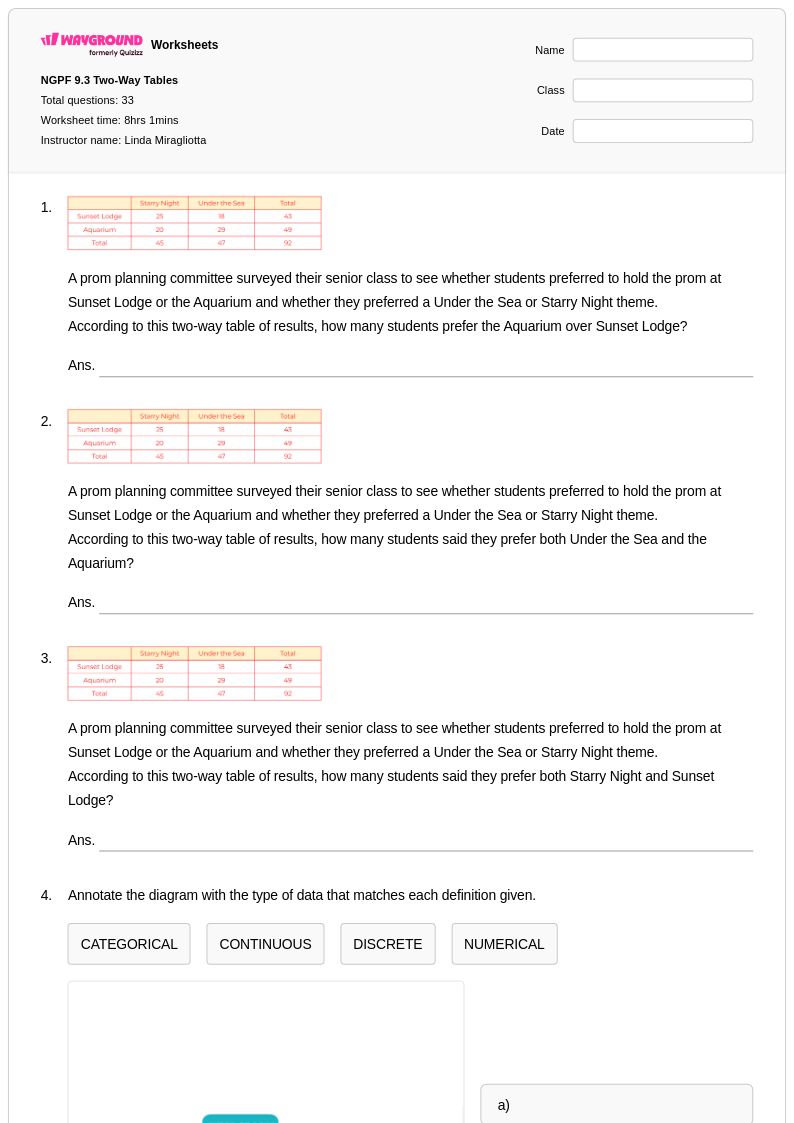
33 Q
9th - 12th
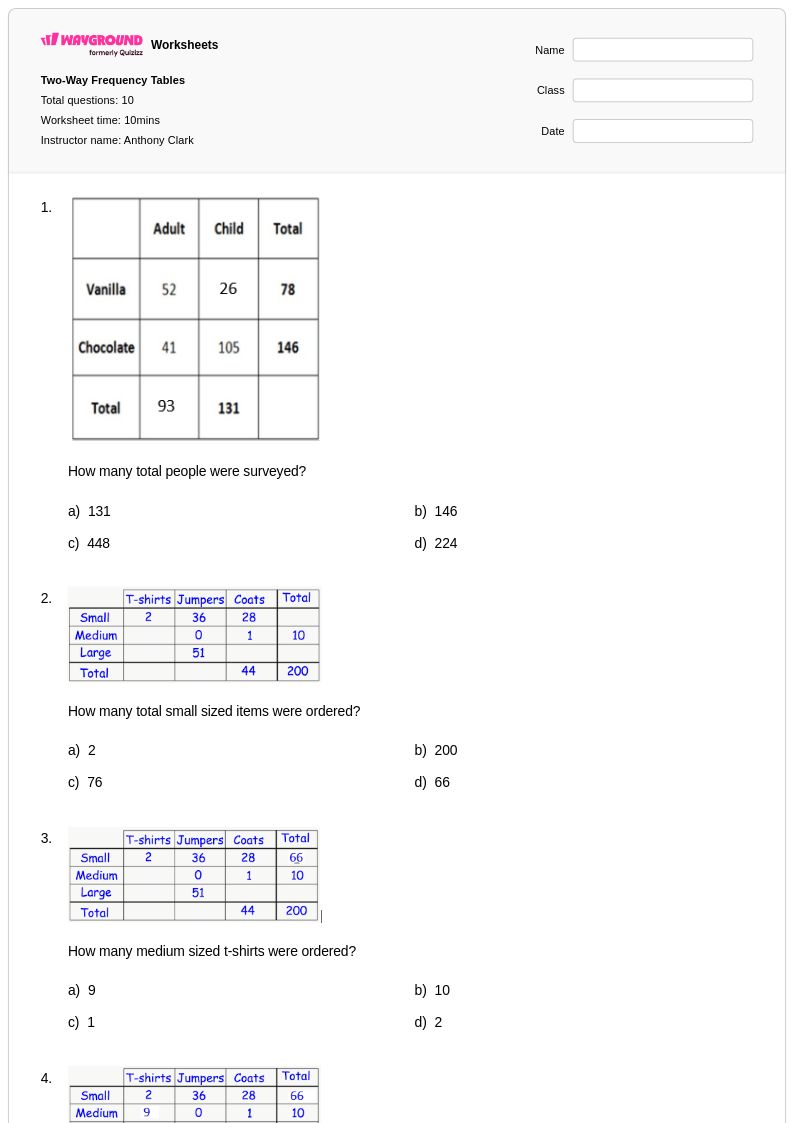
10 Q
9th - Uni
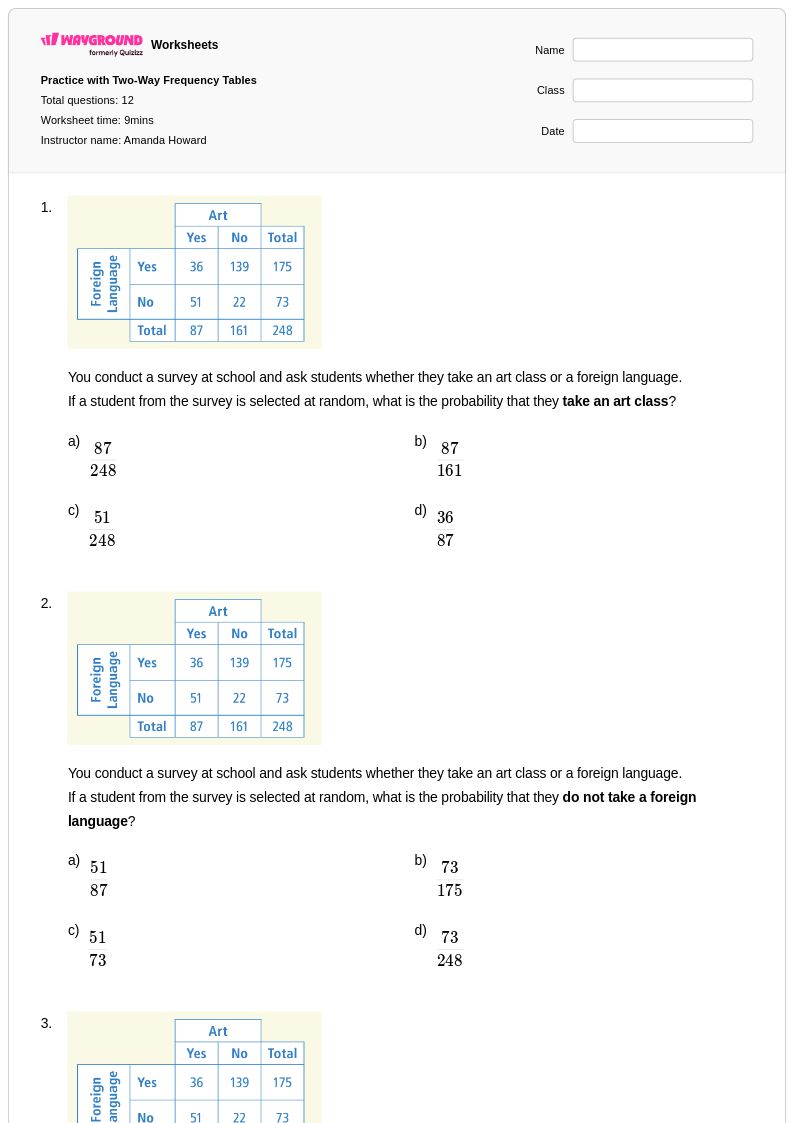
12 Q
9th - 12th
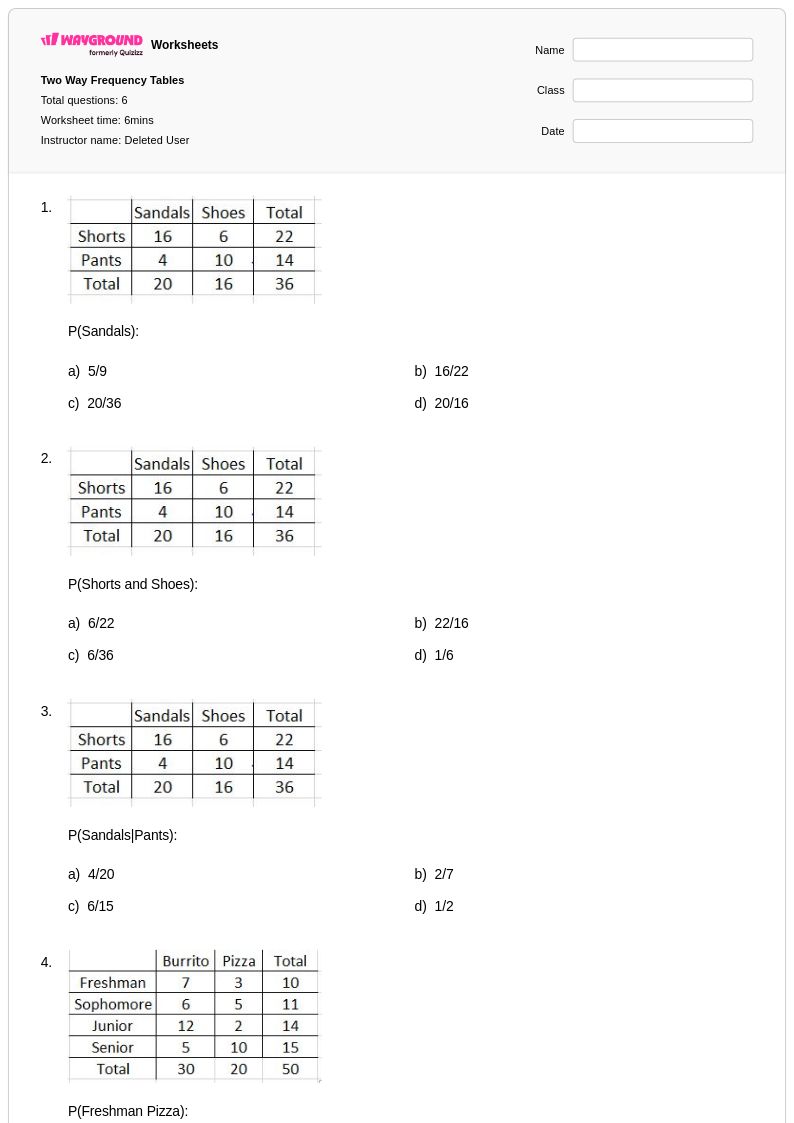
6 Q
8th - Uni
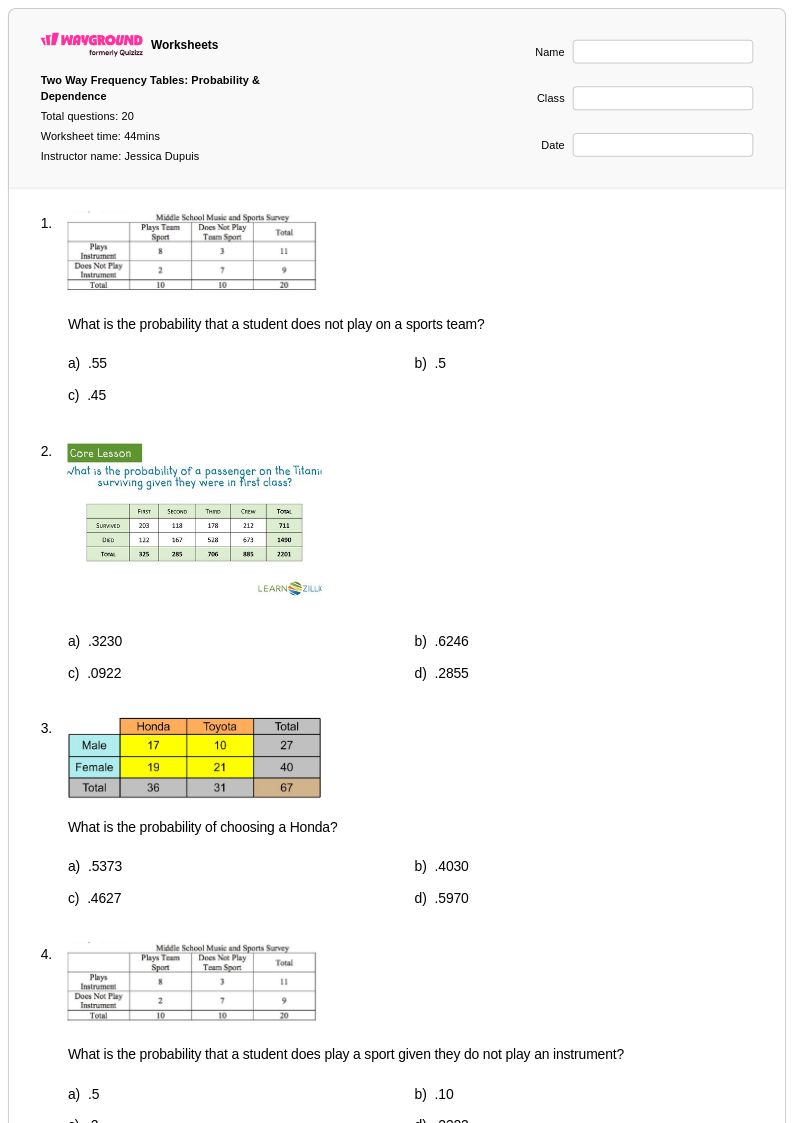
20 Q
9th - 12th
Explore Other Subject Worksheets for year 10
Explore printable Two-way Frequency Tables worksheets for Year 10
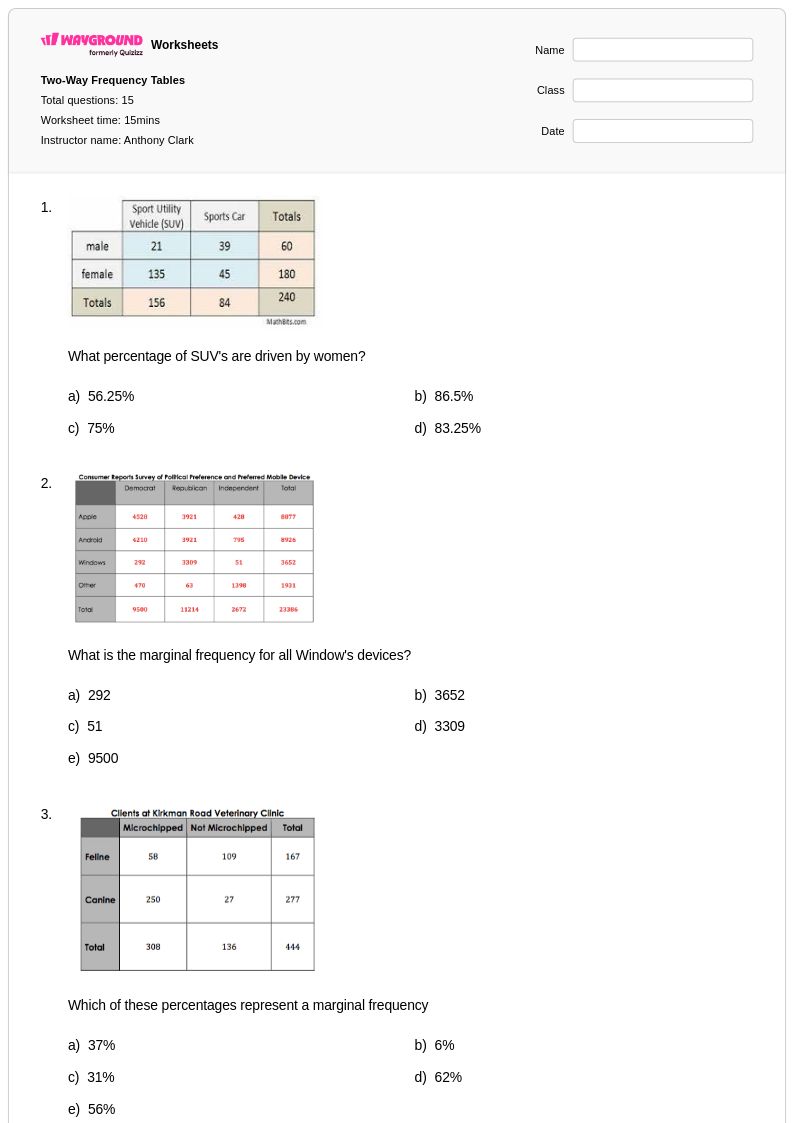
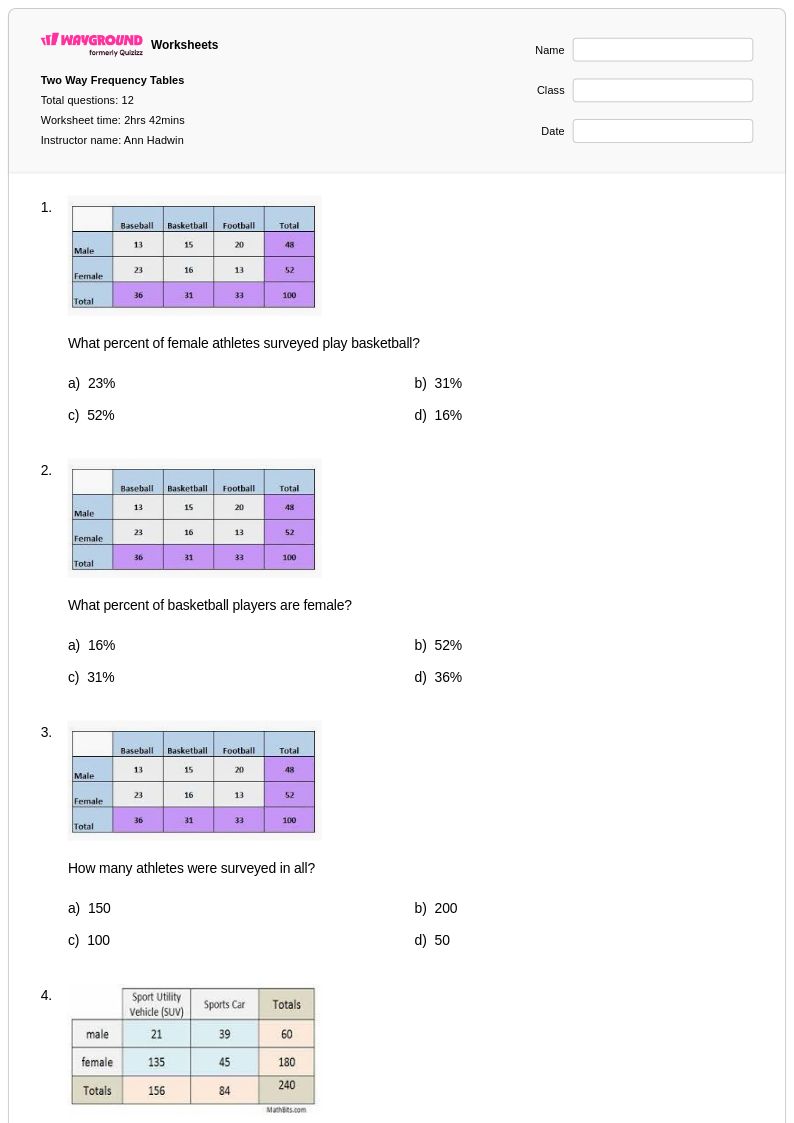
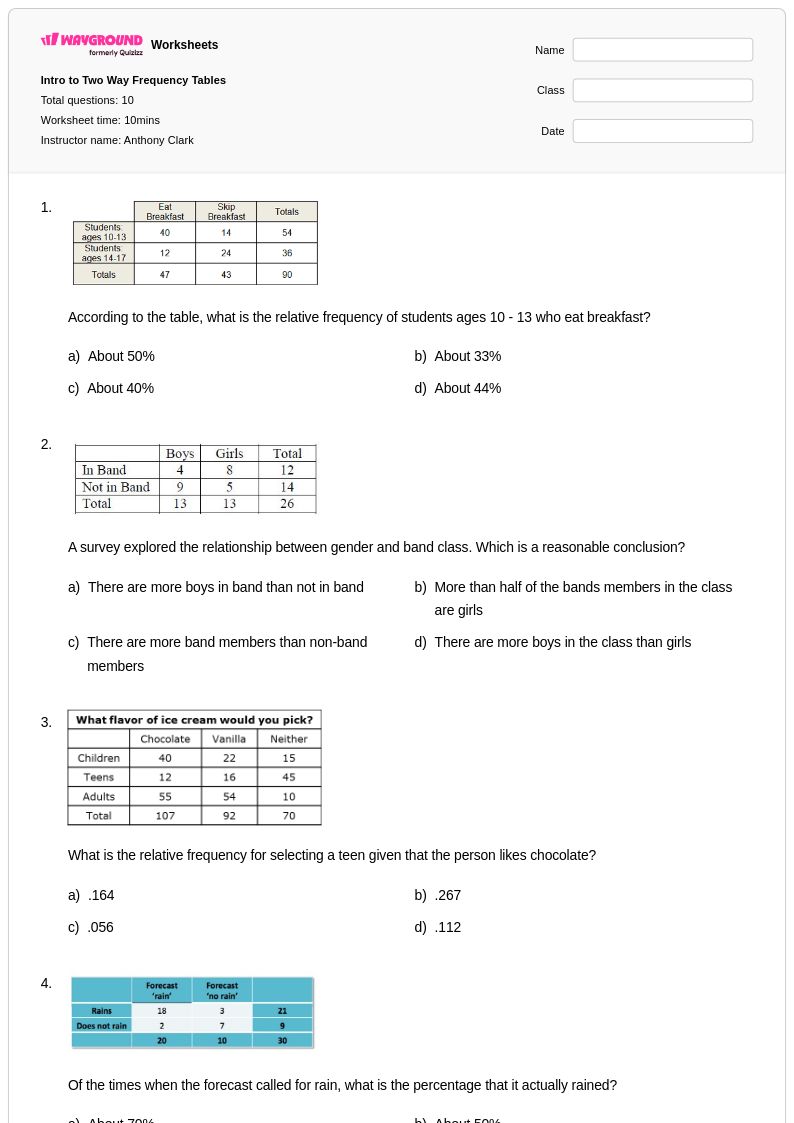
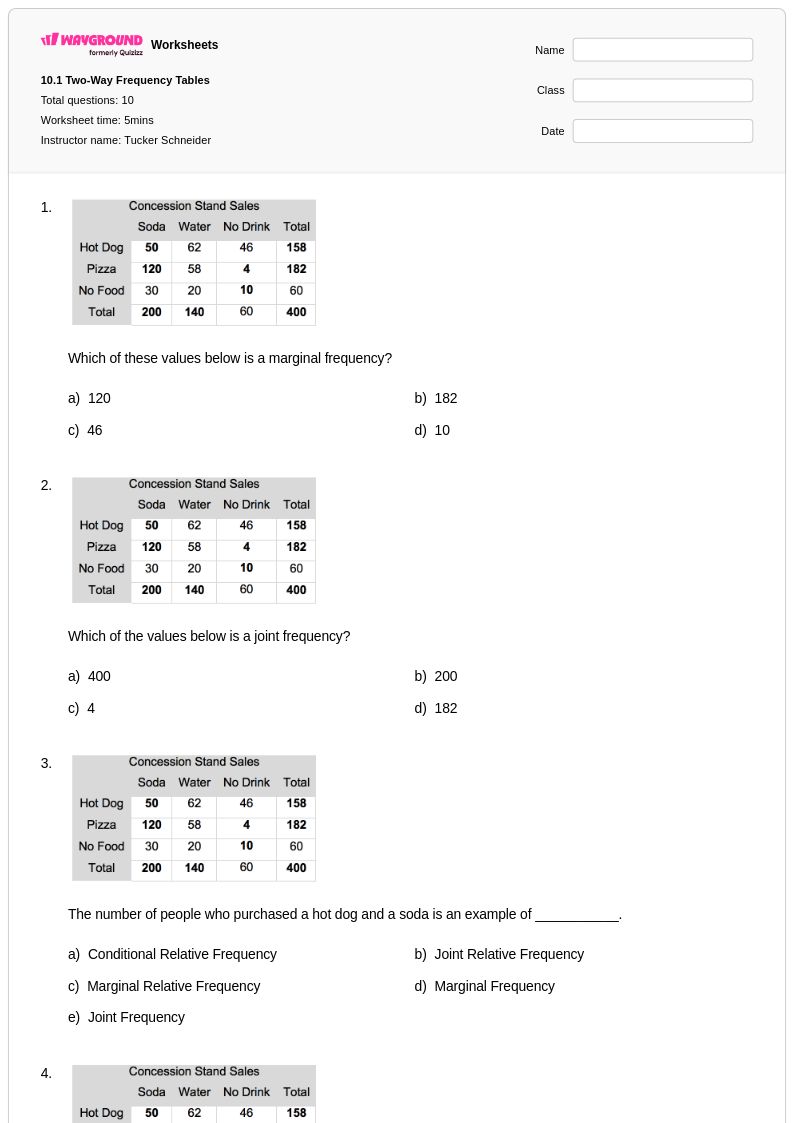
Two-way frequency tables represent a fundamental component of Year 10 probability and statistics curriculum, providing students with essential tools for organizing and analyzing categorical data relationships. Wayground's comprehensive collection of two-way frequency tables worksheets offers students systematic practice in constructing tables, calculating joint and marginal frequencies, and interpreting data patterns across multiple variables. These printable resources strengthen critical analytical skills including data organization, percentage calculations, conditional probability concepts, and statistical reasoning. Each worksheet comes complete with an answer key and focuses on real-world scenarios that help students understand how two categorical variables interact, making these free practice problems invaluable for building statistical literacy and preparing students for advanced probability concepts.
Wayground's extensive library contains millions of teacher-created resources specifically designed to support educators in delivering effective two-way frequency tables instruction for Year 10 mathematics courses. The platform's robust search and filtering capabilities enable teachers to quickly locate worksheets that align with specific curriculum standards while offering differentiation tools to accommodate diverse learning needs within the classroom. Teachers can easily customize these digital and pdf materials for targeted skill practice, remediation sessions, or enrichment activities, ensuring that every student receives appropriate challenge levels. The flexible format options allow seamless integration into both traditional and digital learning environments, empowering educators to efficiently plan lessons, assess student understanding, and provide meaningful practice opportunities that reinforce statistical concepts and analytical thinking skills.