
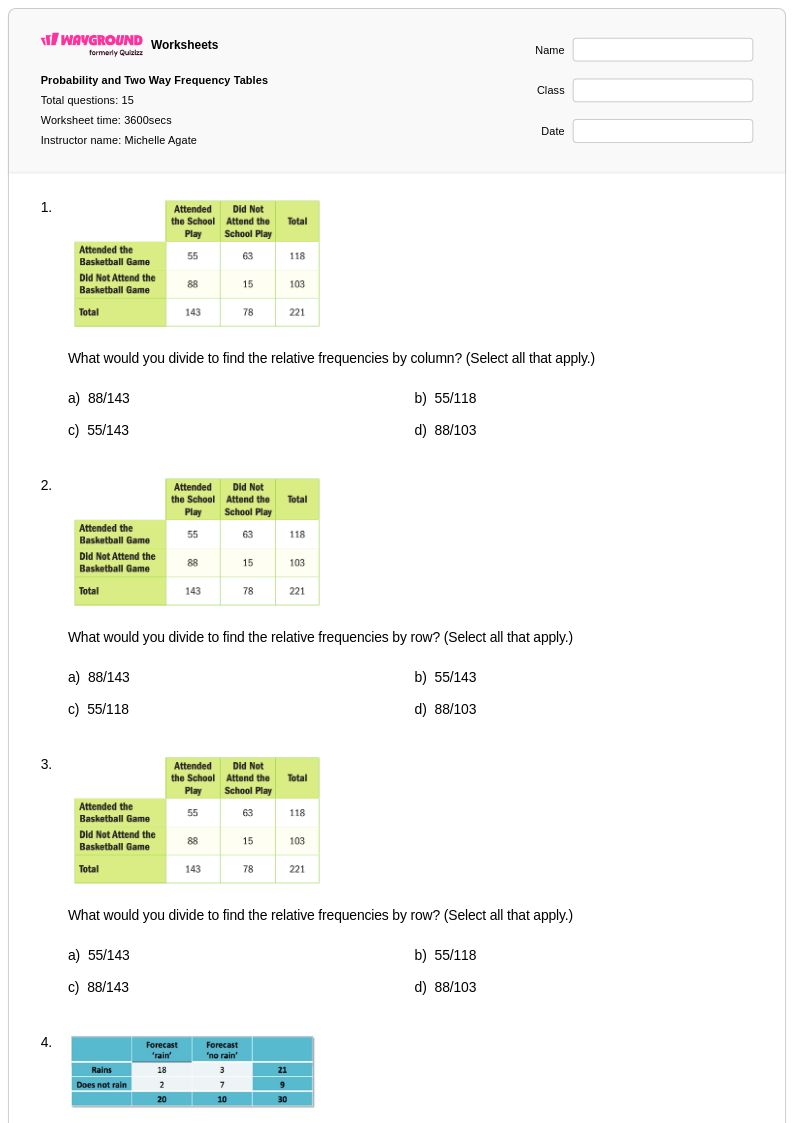
15 Q
6th - 8th
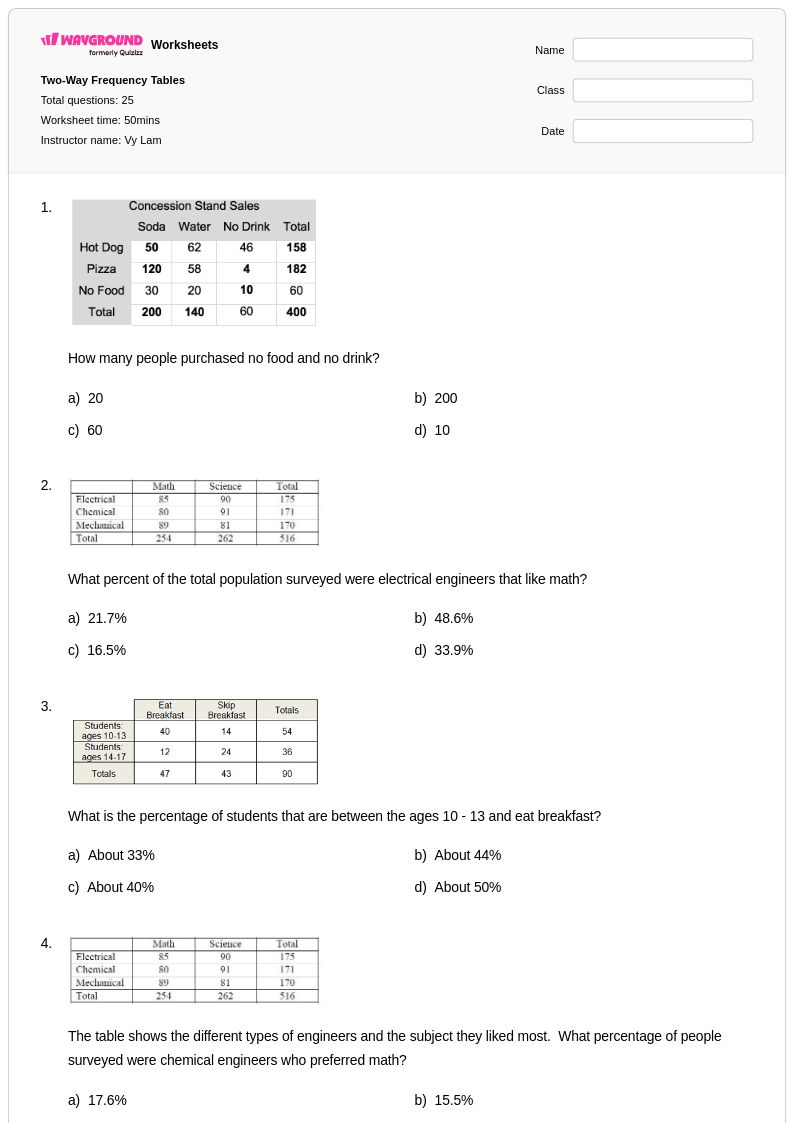
25 Q
6th - 8th
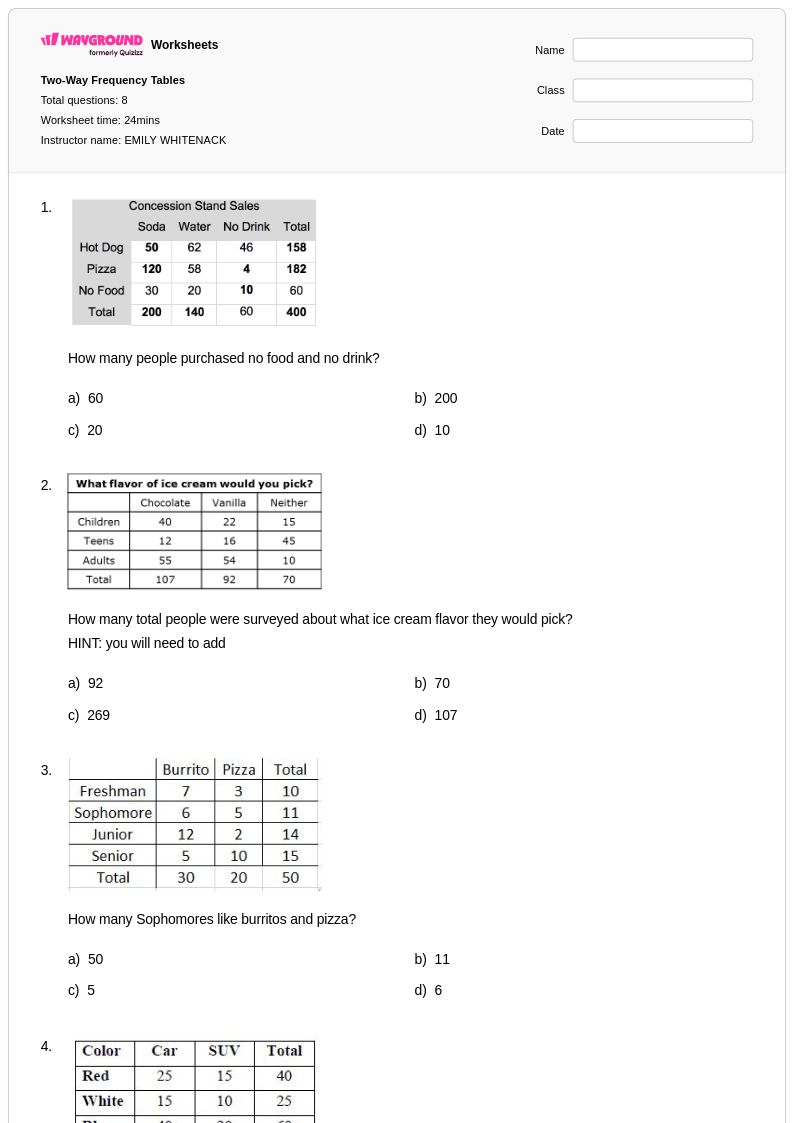
8 Q
6th - 8th
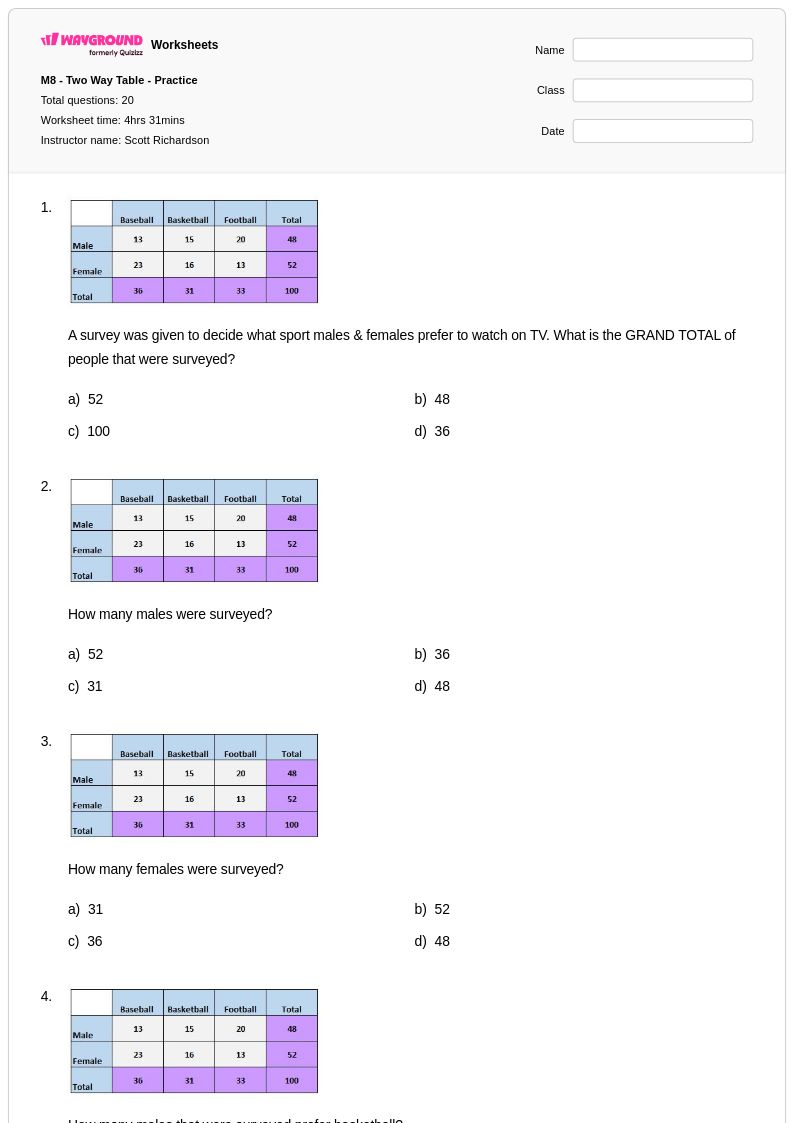
20 Q
6th - 8th
18 Q
6th - 12th
20 Q
6th - 8th
11 Q
6th
6 Q
6th - 9th
15 Q
6th - Uni
20 Q
5th - Uni
10 Q
5th - Uni
13 Q
5th - Uni
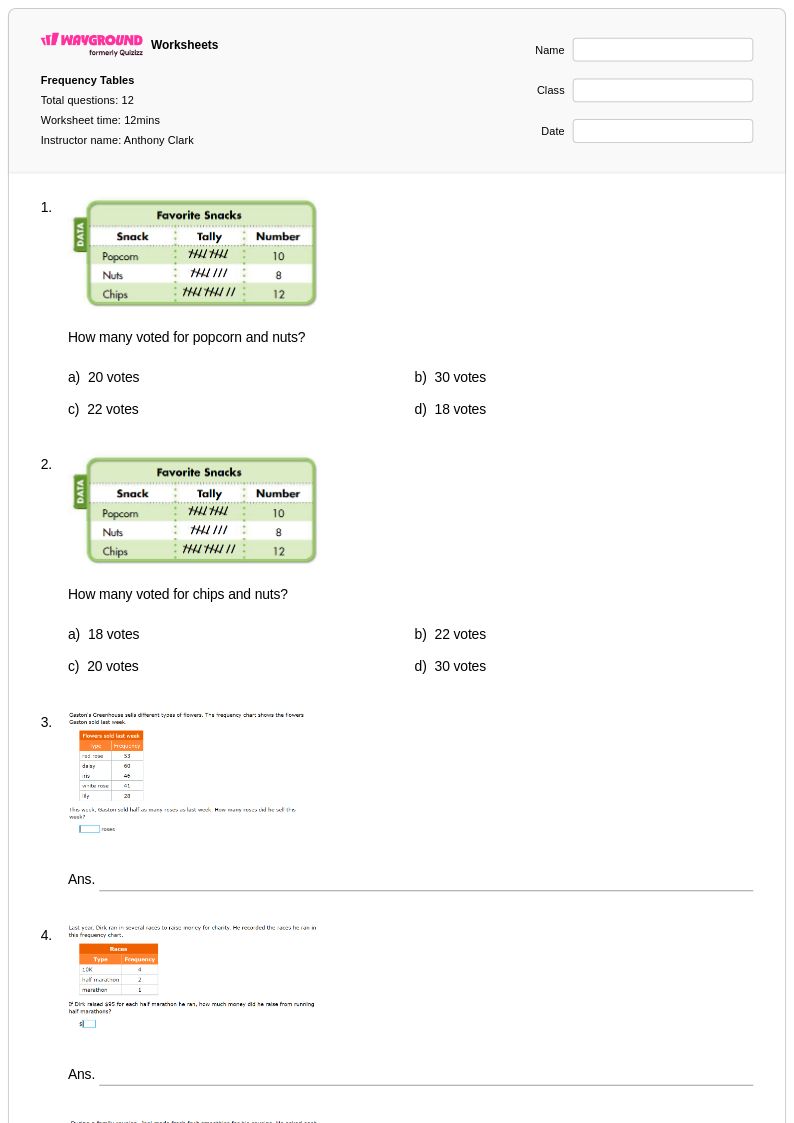
12 Q
5th - Uni
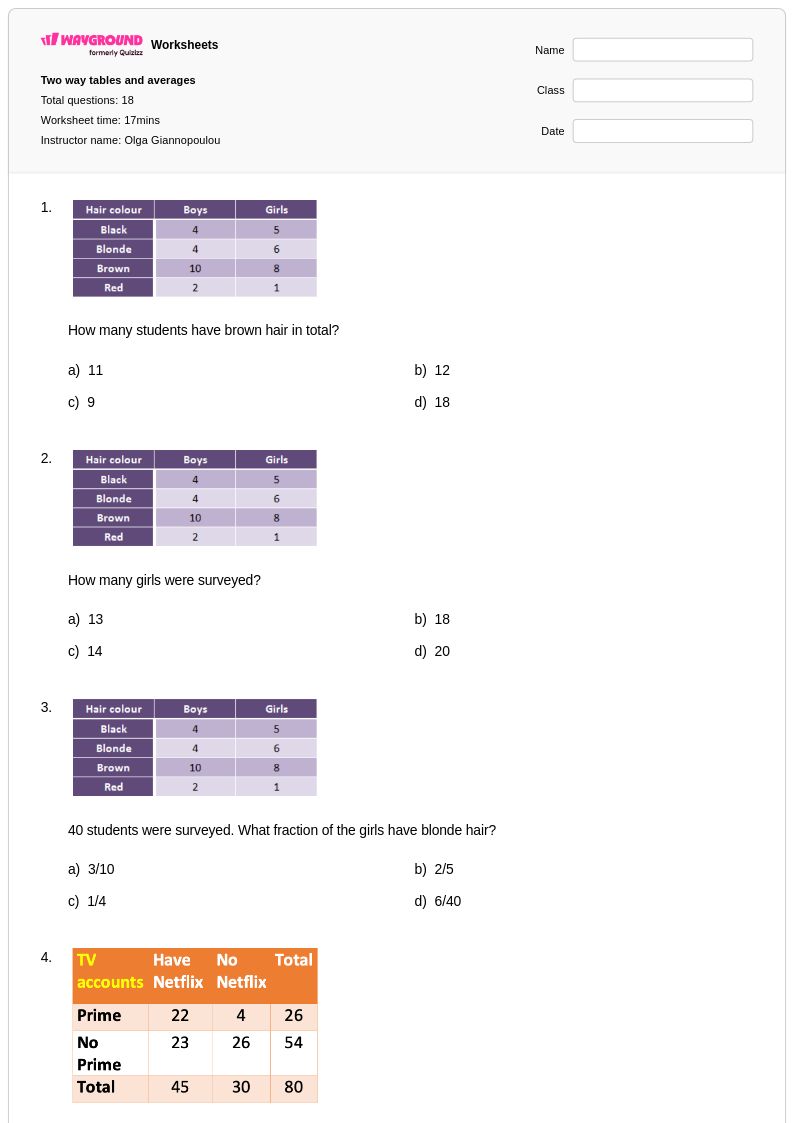
18 Q
6th - 7th
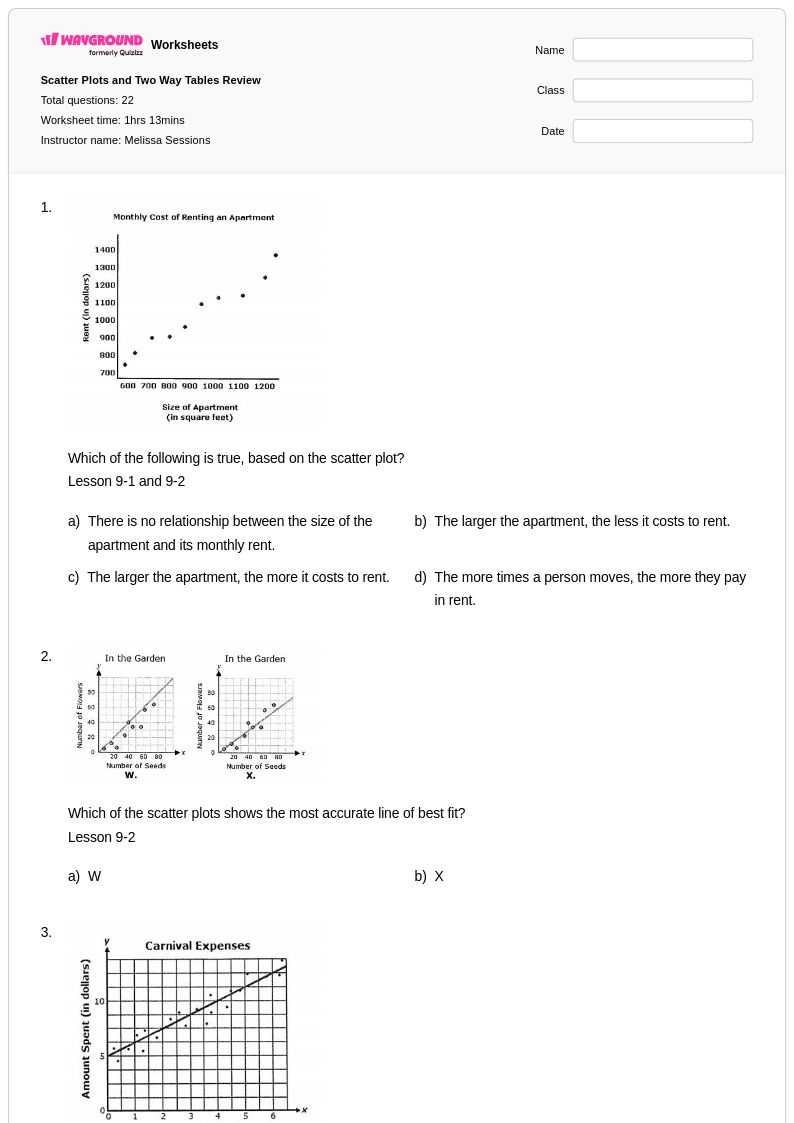
18 Q
6th - 8th
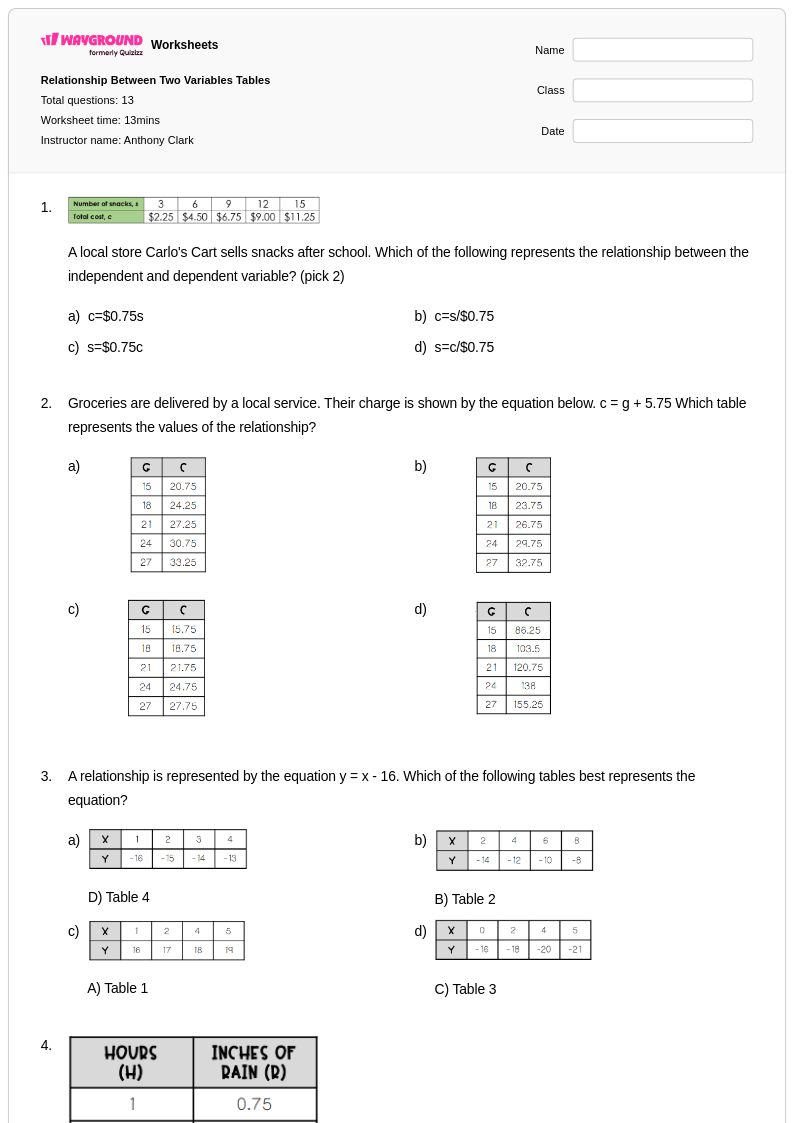
13 Q
6th - Uni
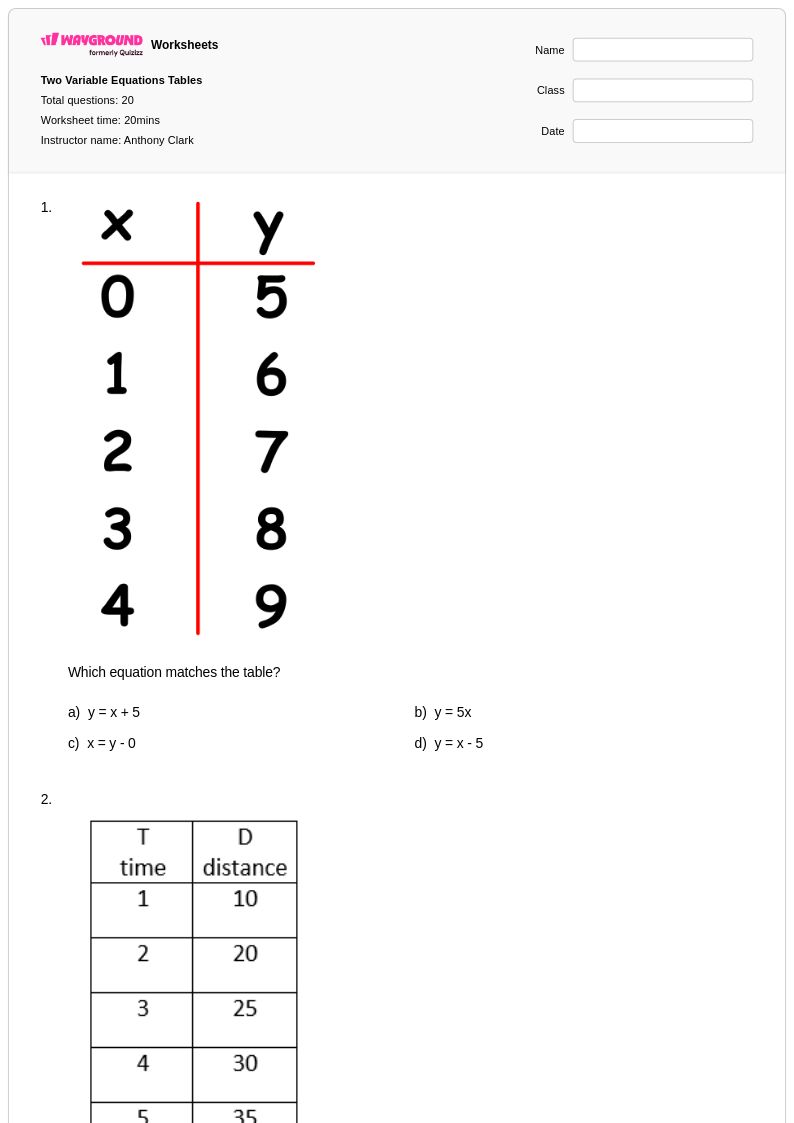
20 Q
6th - Uni
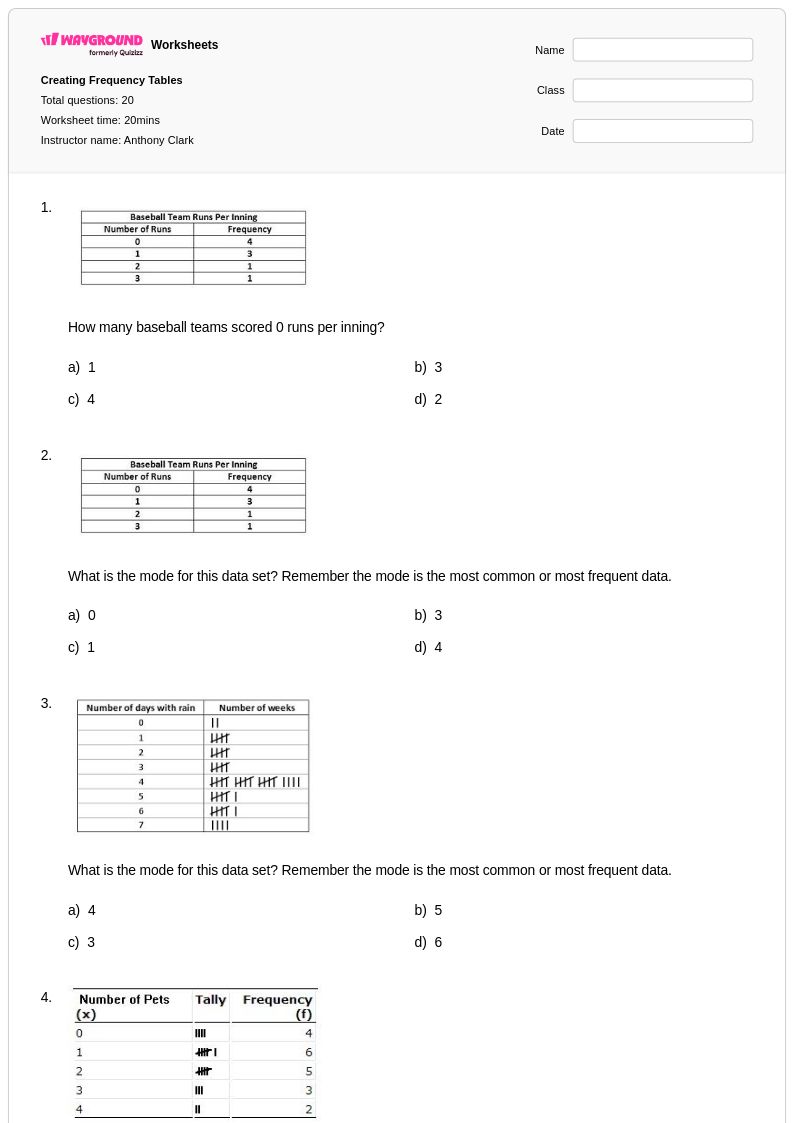
20 Q
5th - Uni
14 Q
6th
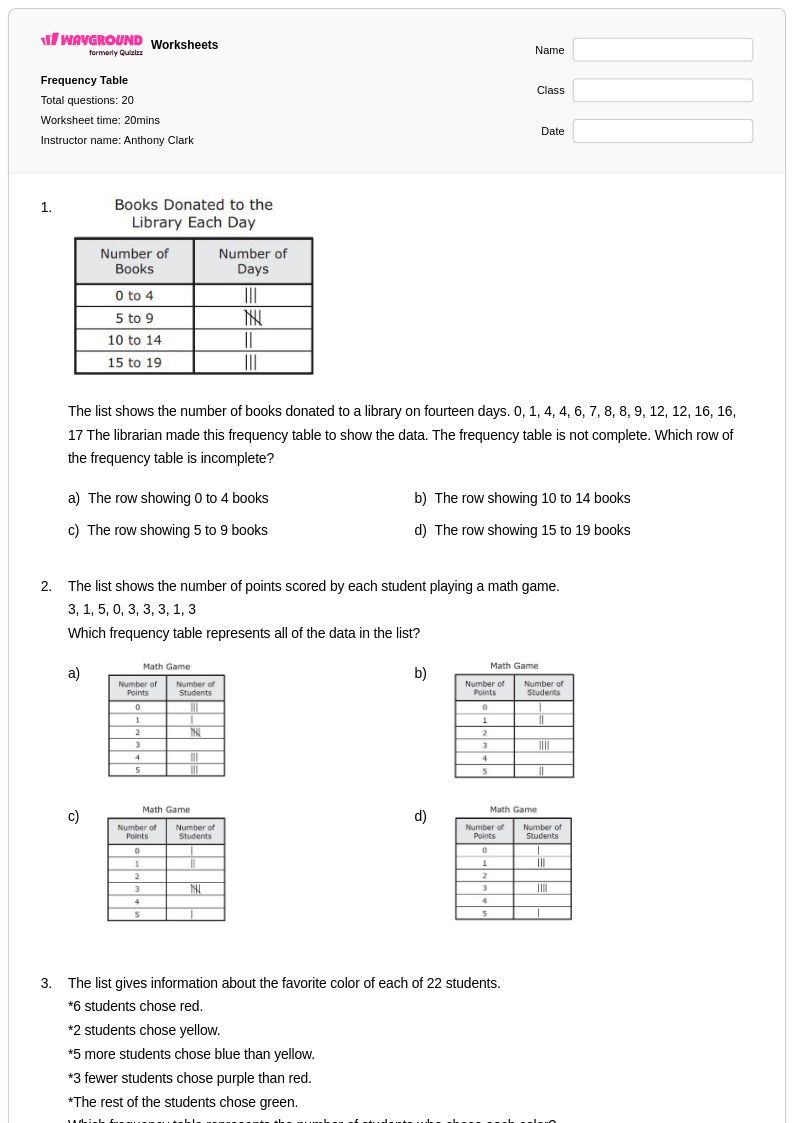
20 Q
4th - Uni
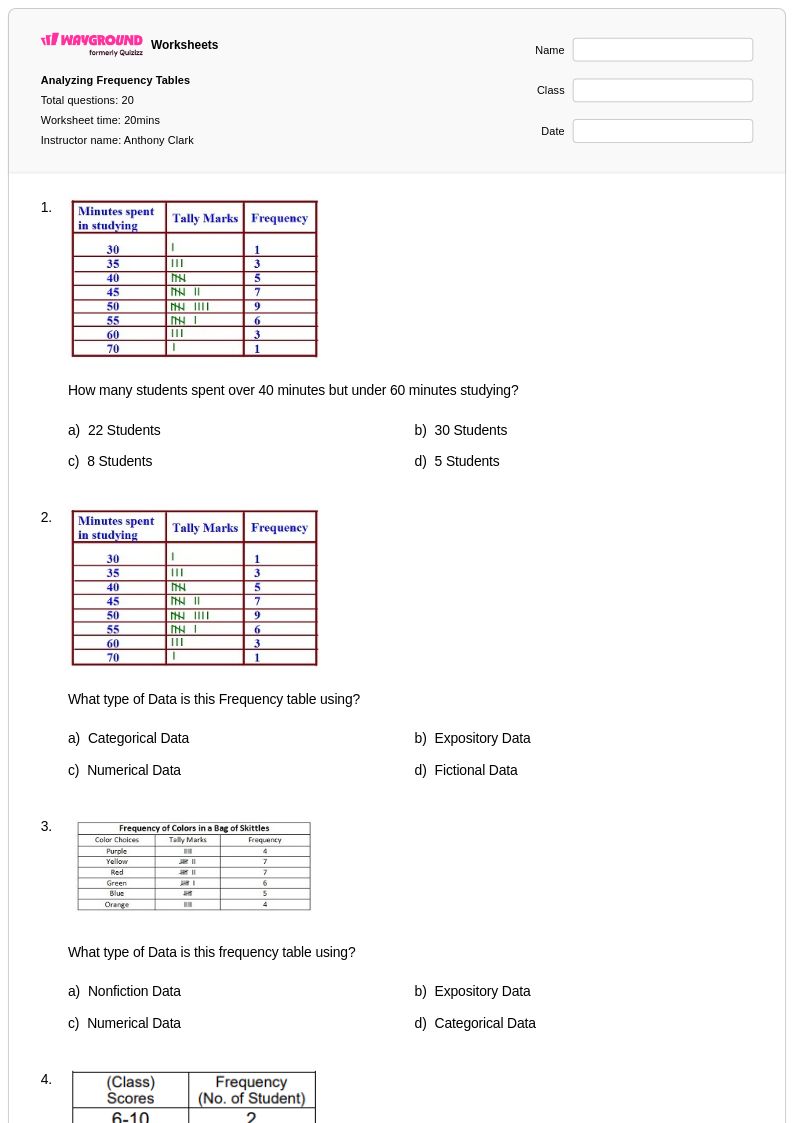
20 Q
5th - Uni
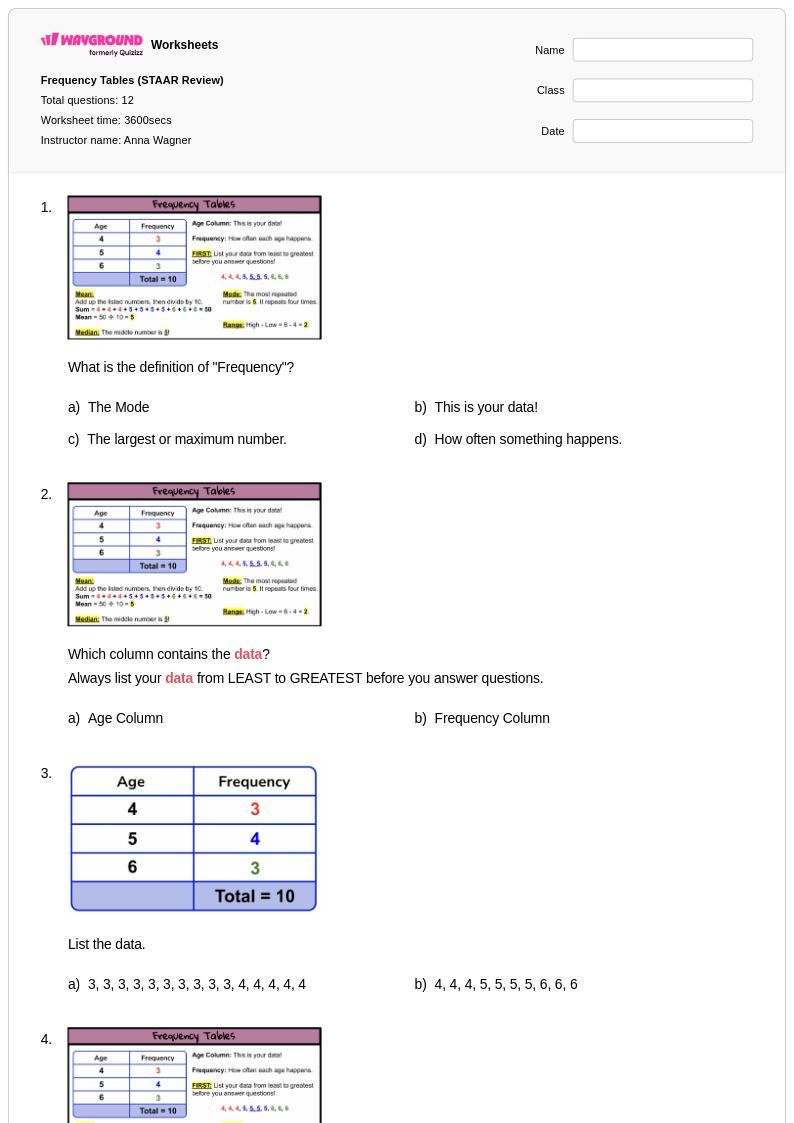
12 Q
6th - 8th
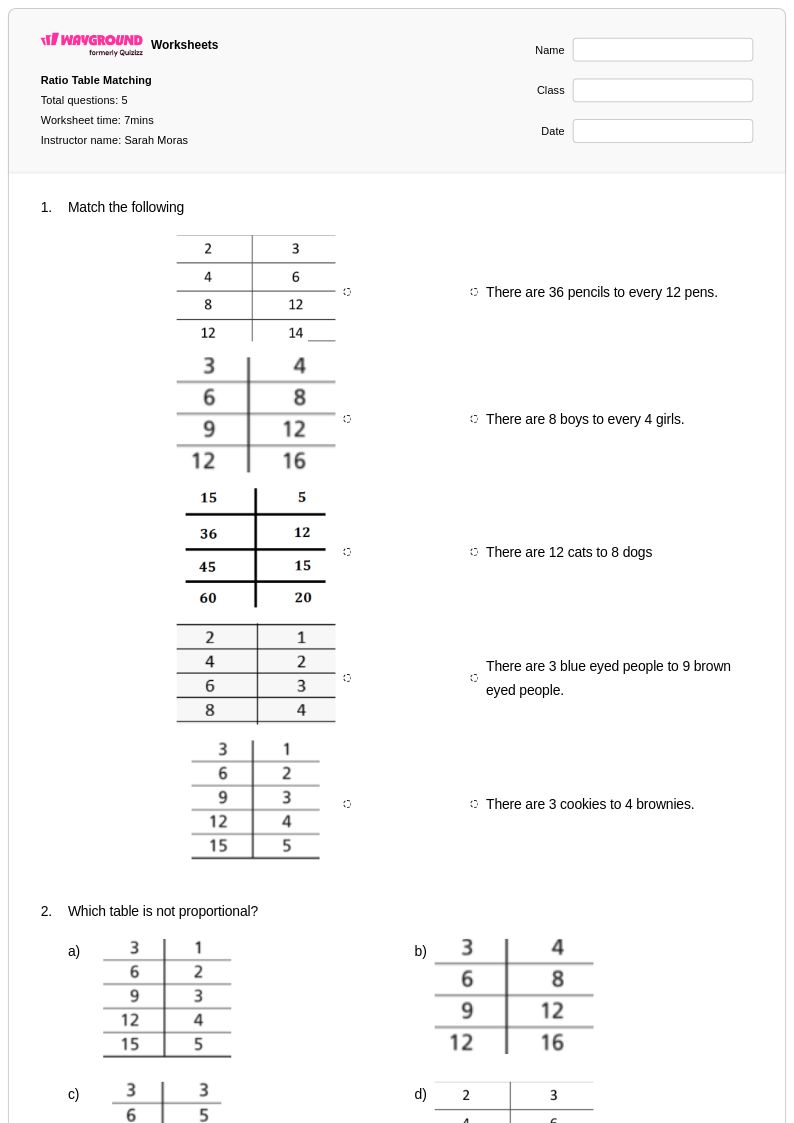
5 Q
6th

14 Q
6th - Uni
Explore Other Subject Worksheets for year 6
Explore printable Two-way Frequency Tables worksheets for Year 6
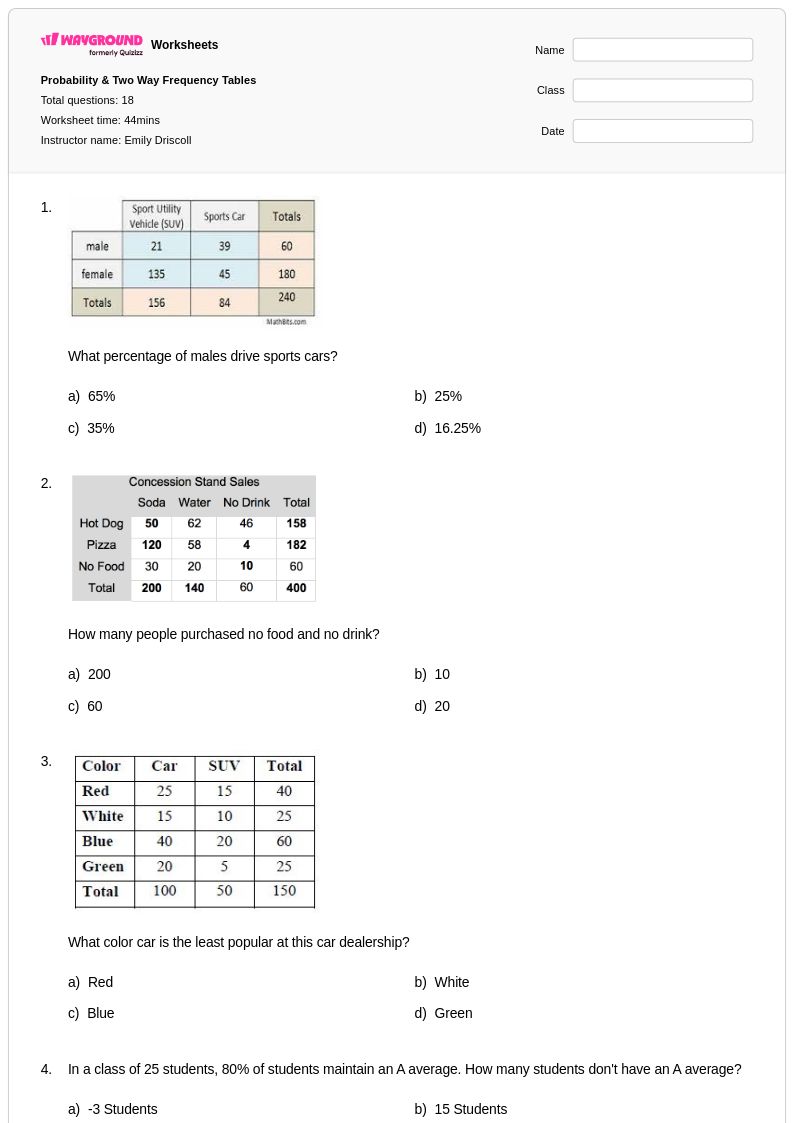
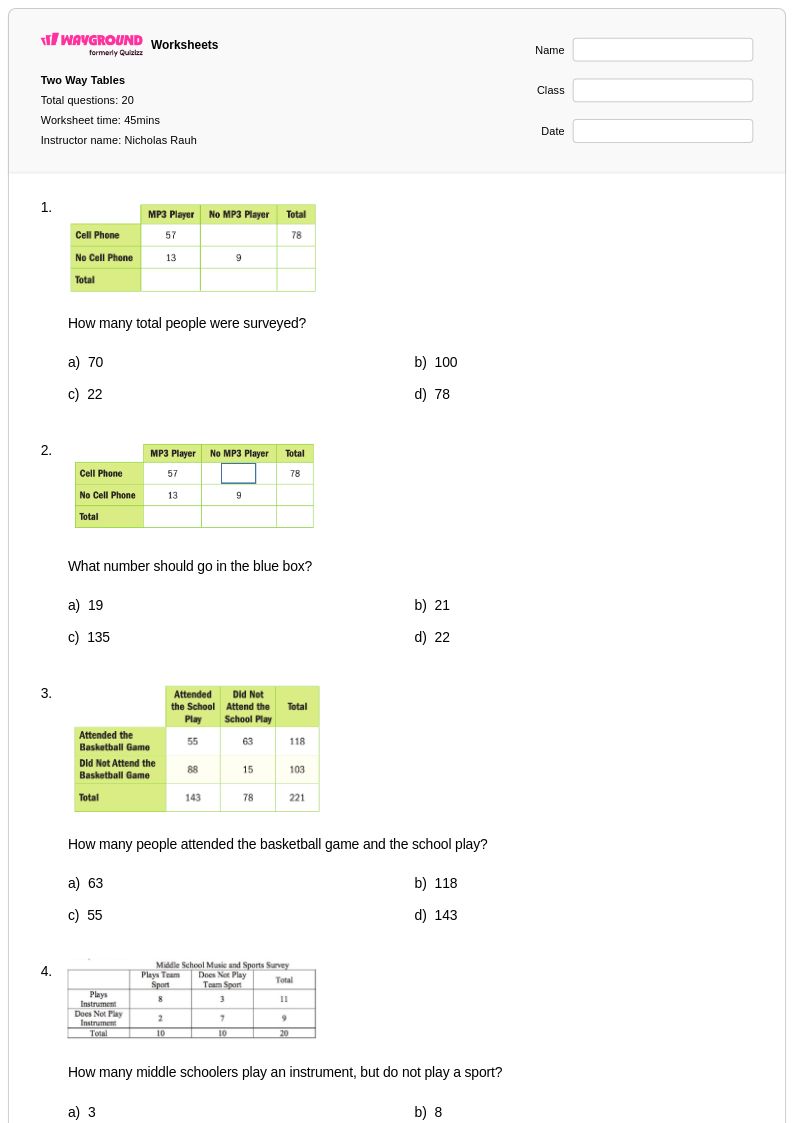
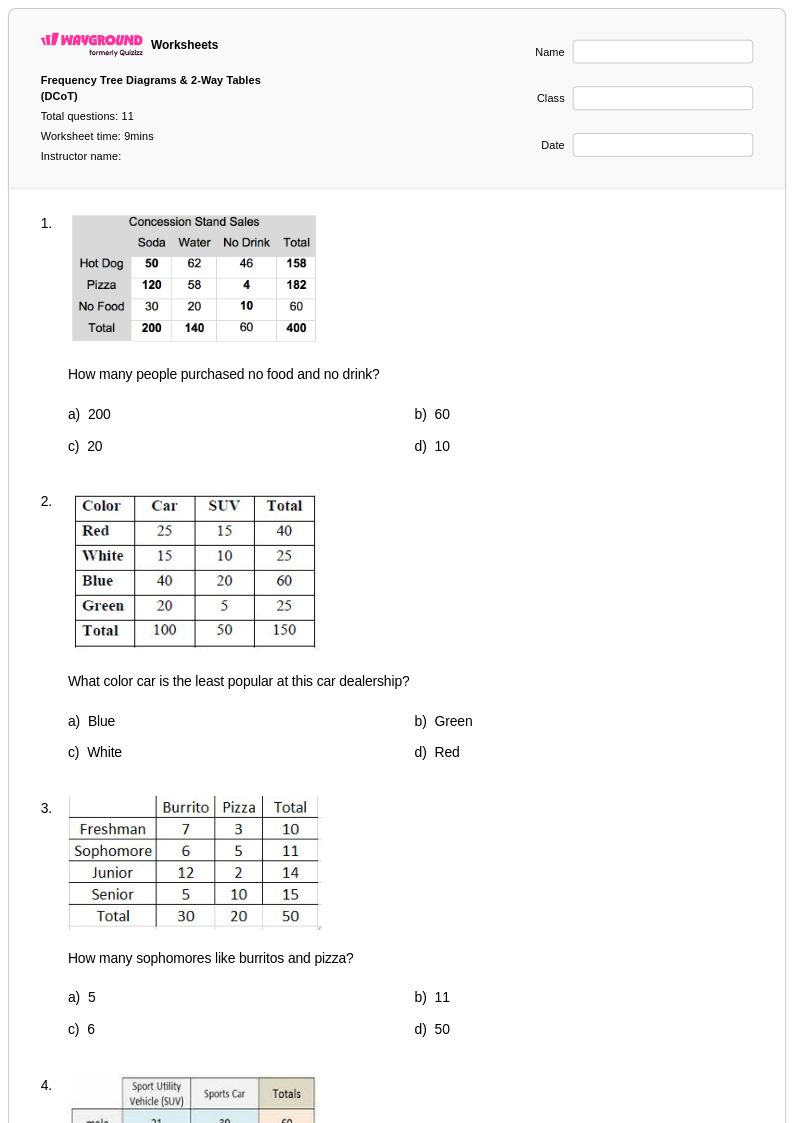
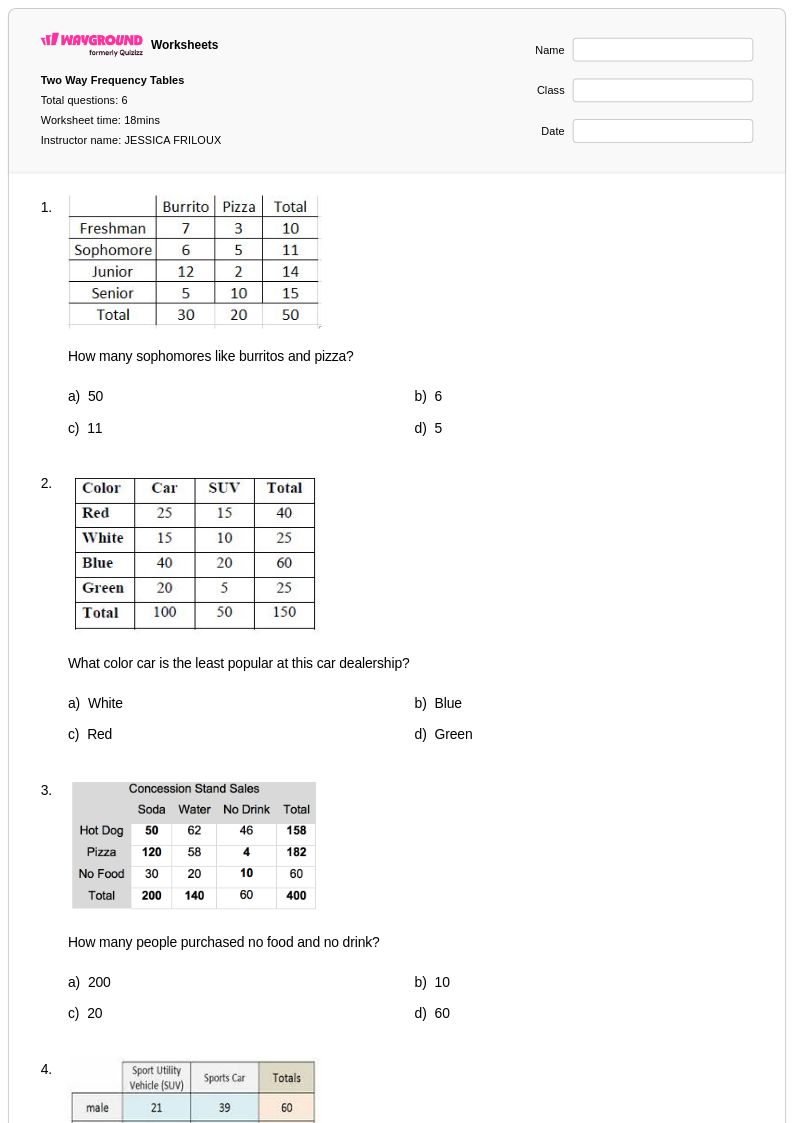
Two-way frequency tables represent a fundamental concept in Year 6 probability and statistics that helps students organize and analyze categorical data relationships. Wayground's comprehensive collection of two-way frequency tables worksheets provides students with structured practice problems that develop their ability to create, read, and interpret these essential data displays. These carefully designed printables guide learners through the process of categorizing information using rows and columns, calculating marginal frequencies, and drawing meaningful conclusions from organized data sets. Each worksheet comes with a detailed answer key that supports both independent study and classroom instruction, while the free pdf format ensures easy access for teachers seeking quality practice materials that reinforce statistical reasoning skills.
Wayground, formerly Quizizz, empowers educators with millions of teacher-created resources specifically designed for two-way frequency tables instruction at the Year 6 level. The platform's advanced search and filtering capabilities allow teachers to quickly locate worksheets that align with specific learning standards and match their students' diverse skill levels. These differentiation tools enable seamless customization of practice materials, whether educators need basic introduction exercises or more challenging enrichment activities. Available in both printable pdf and interactive digital formats, these resources support flexible lesson planning and provide targeted remediation opportunities that help students master the critical skills of data organization and statistical analysis through consistent, meaningful practice.