Free Printable Experimental Probability Worksheets for Year 6
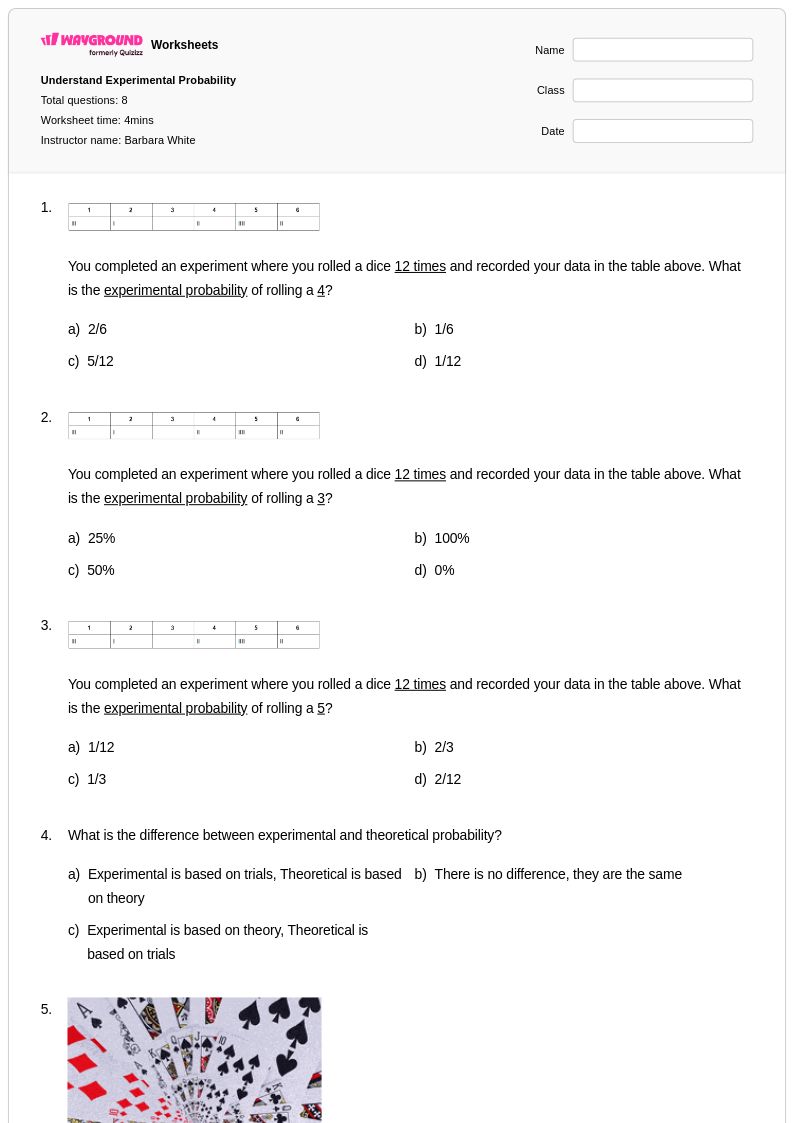
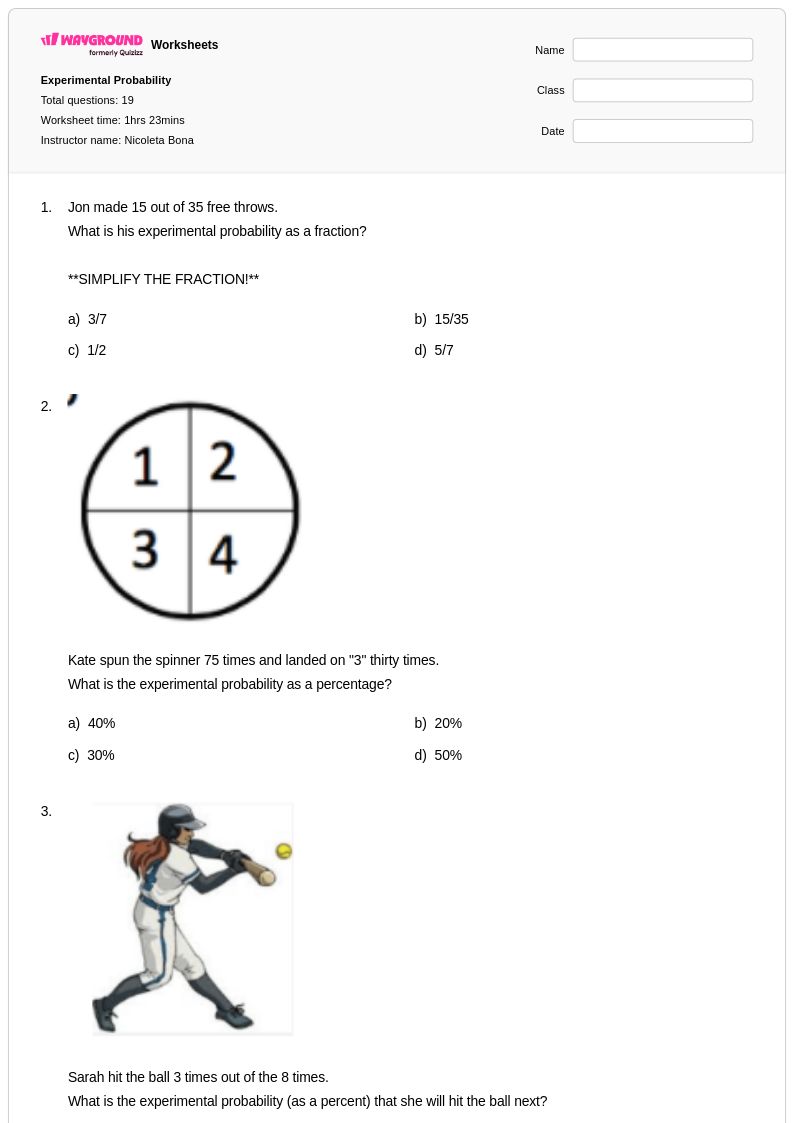
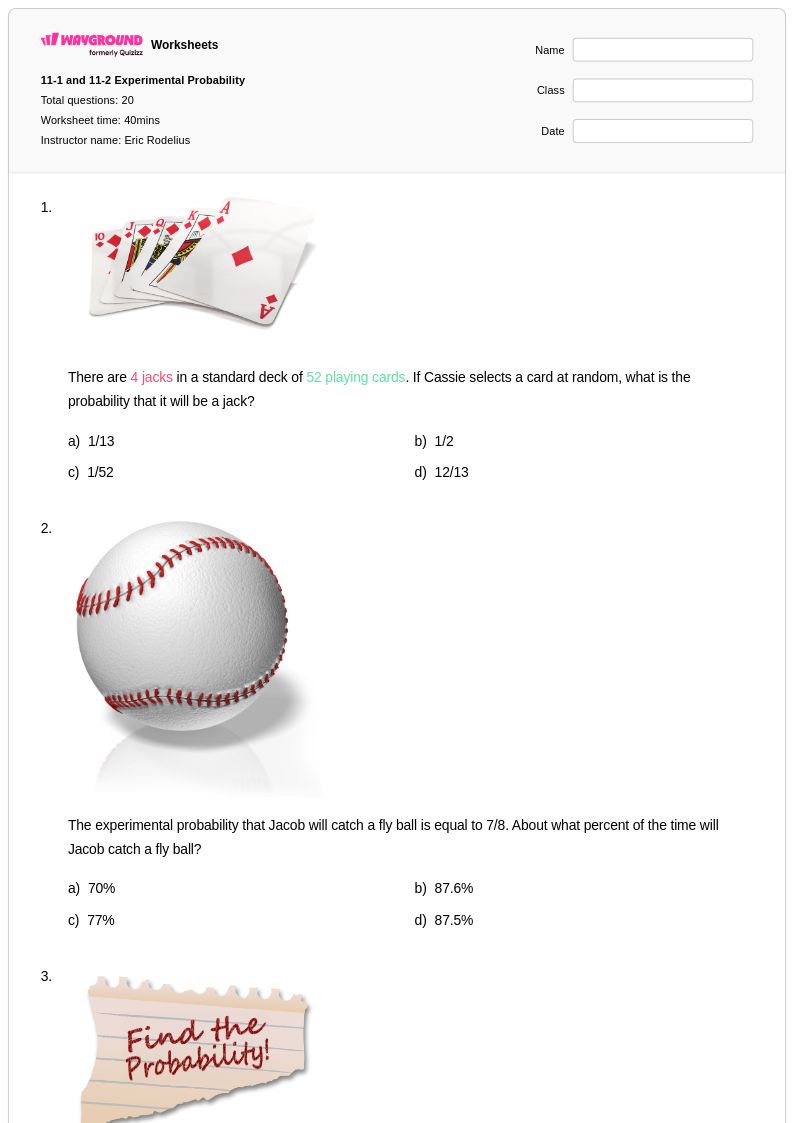
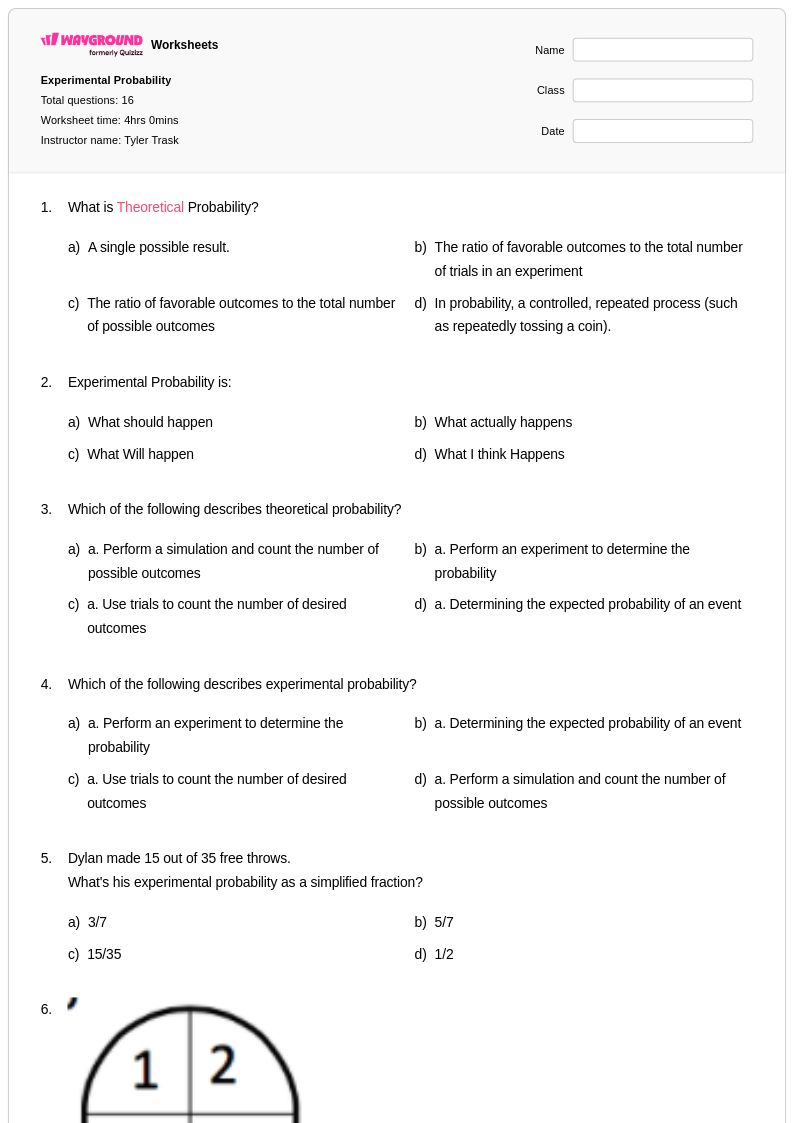
Wayground's free Year 6 experimental probability worksheets provide printable PDF practice problems with answer keys to help students master collecting data, conducting experiments, and calculating probability through hands-on statistical activities.
Explore printable Experimental Probability worksheets for Year 6
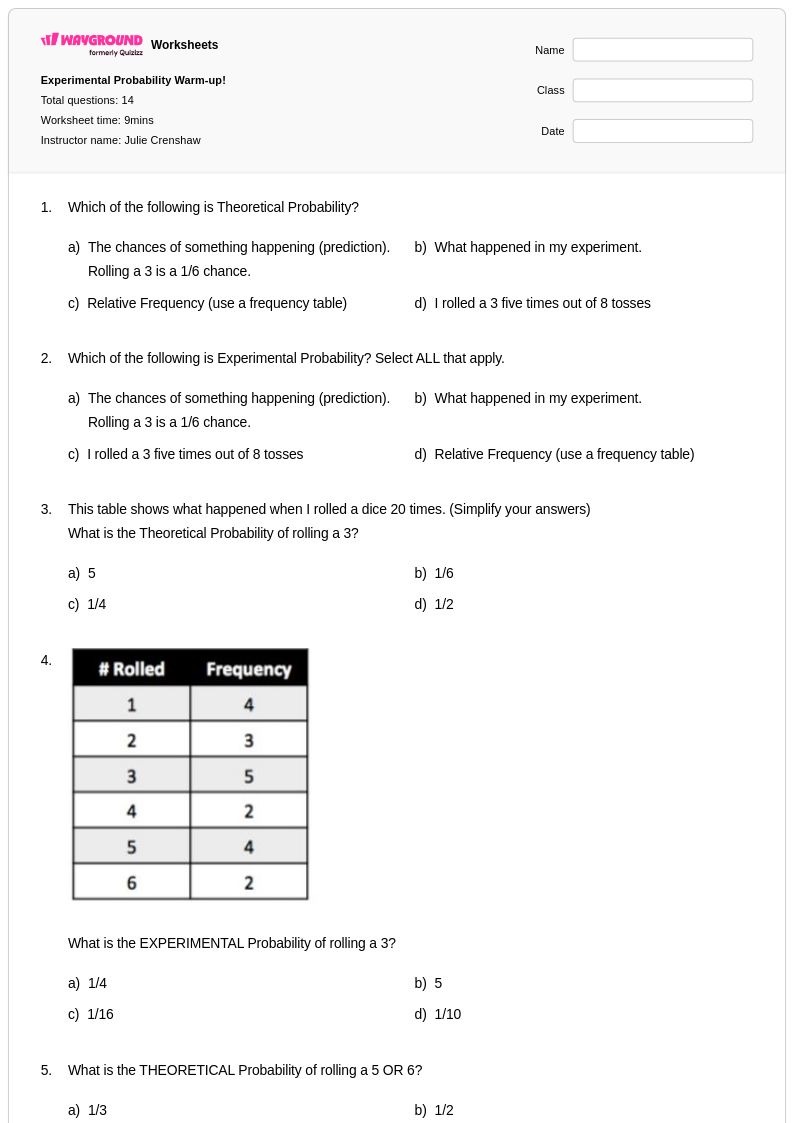
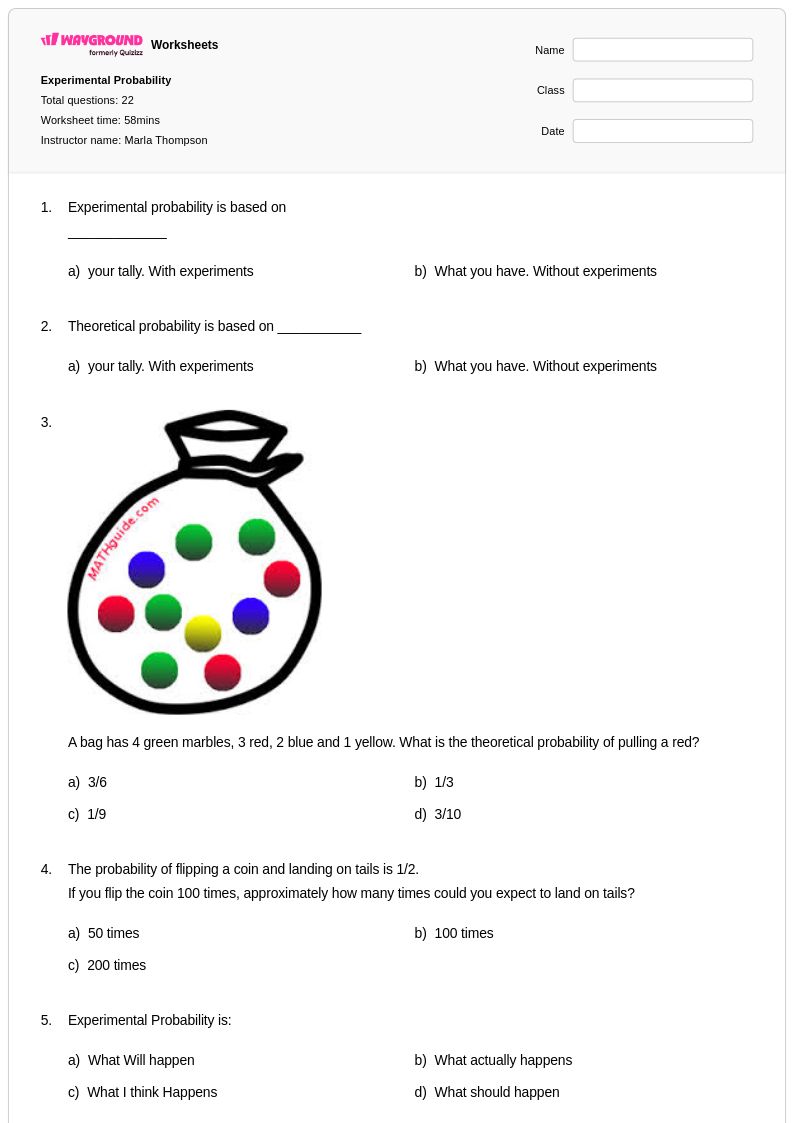
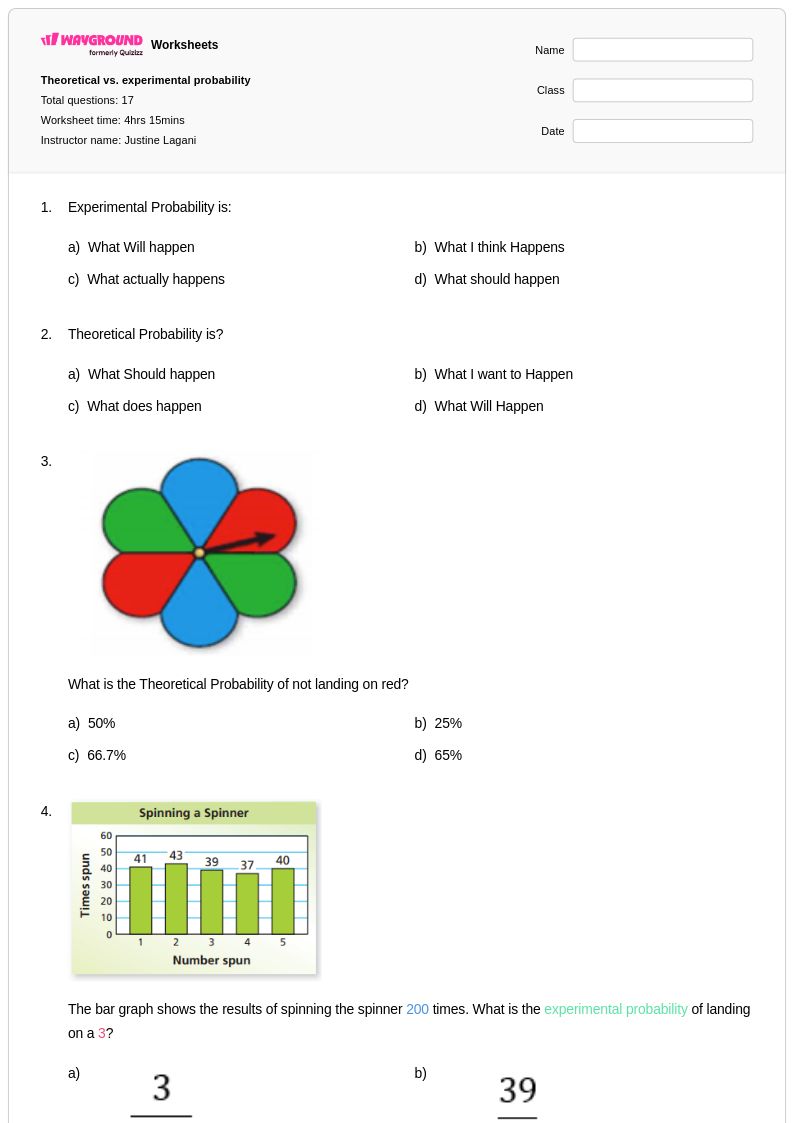
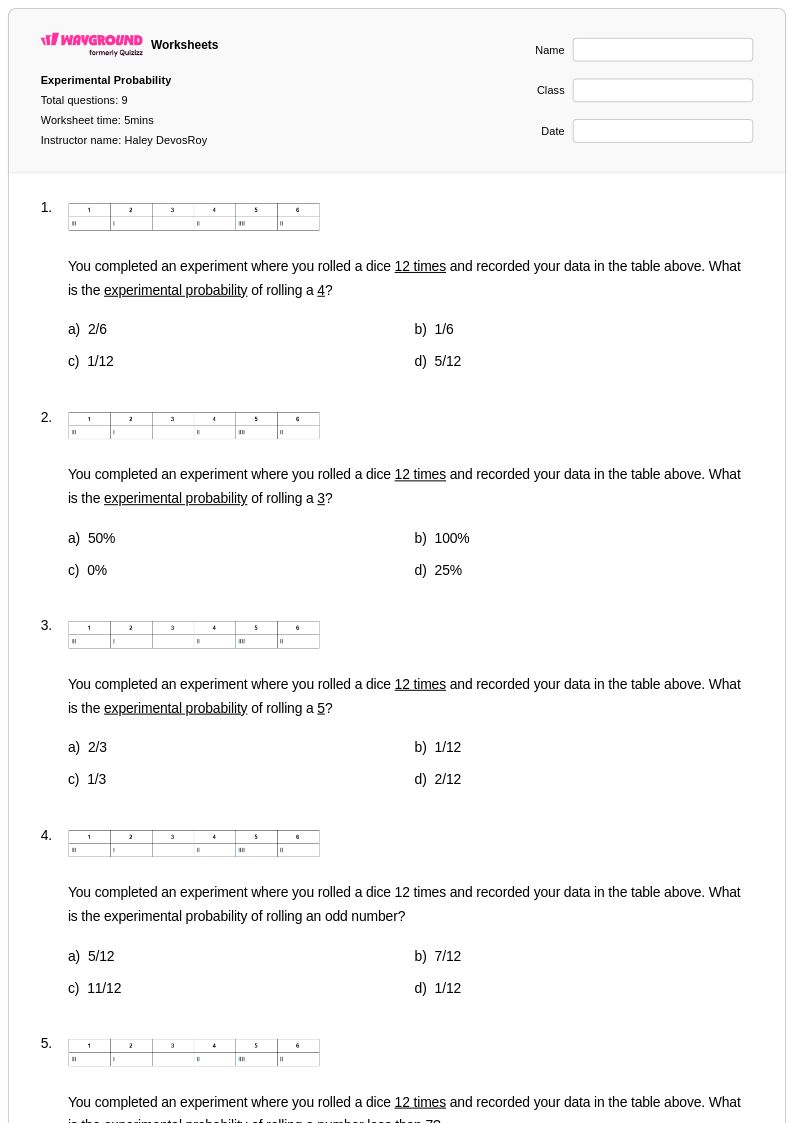
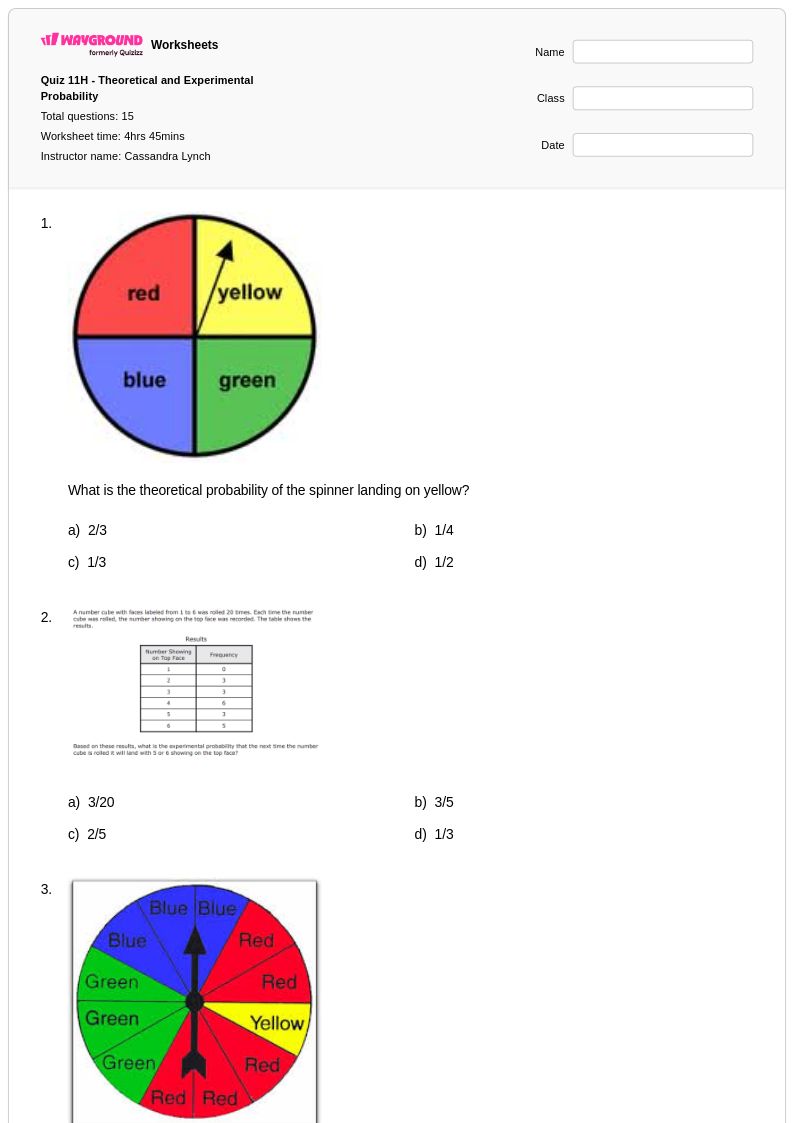
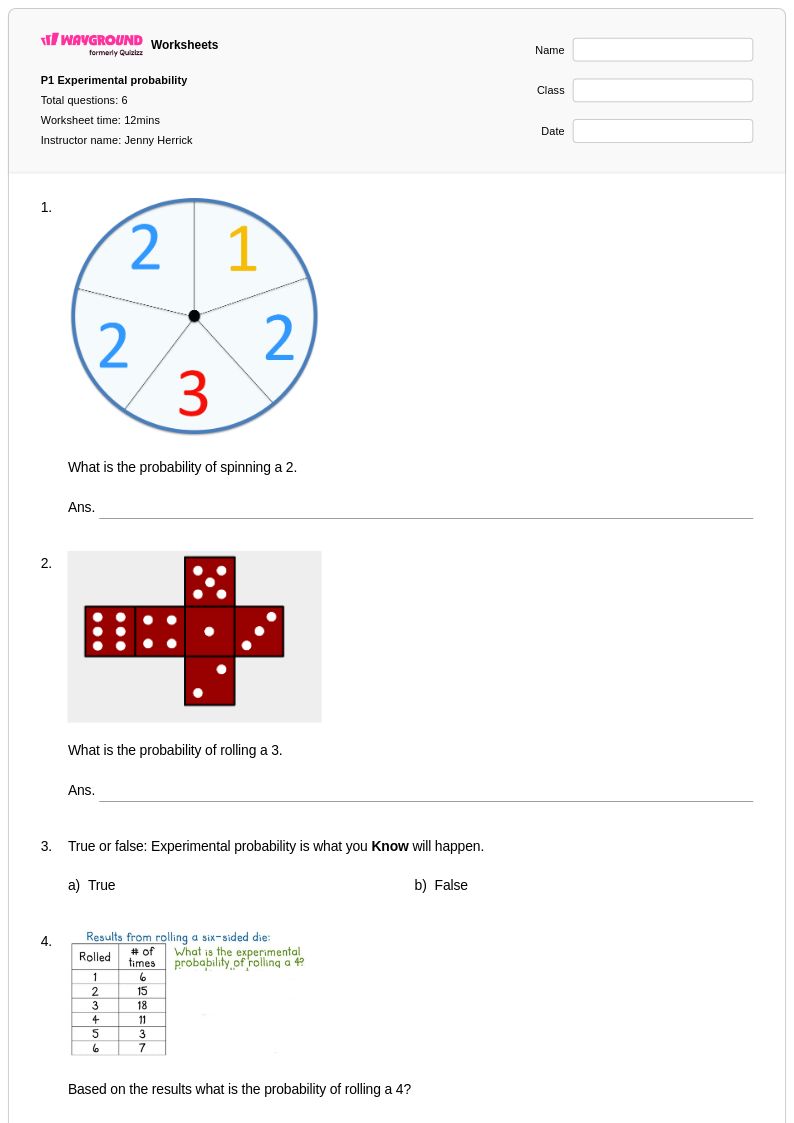
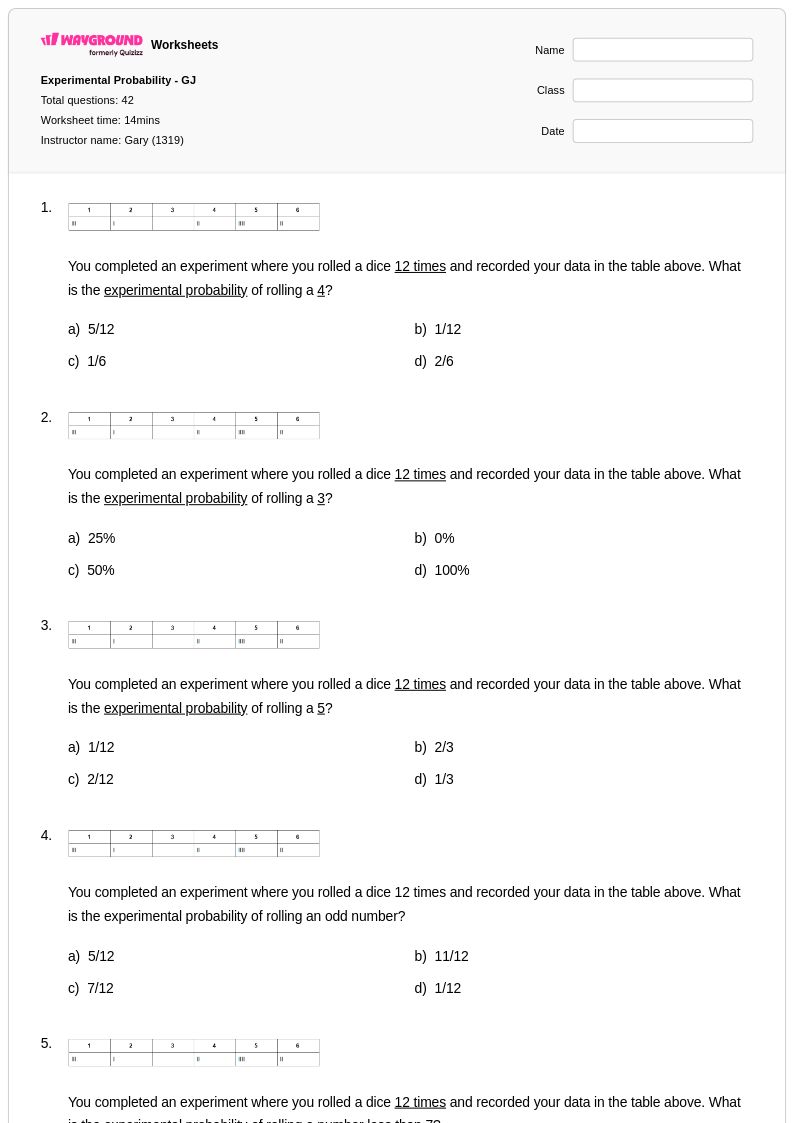
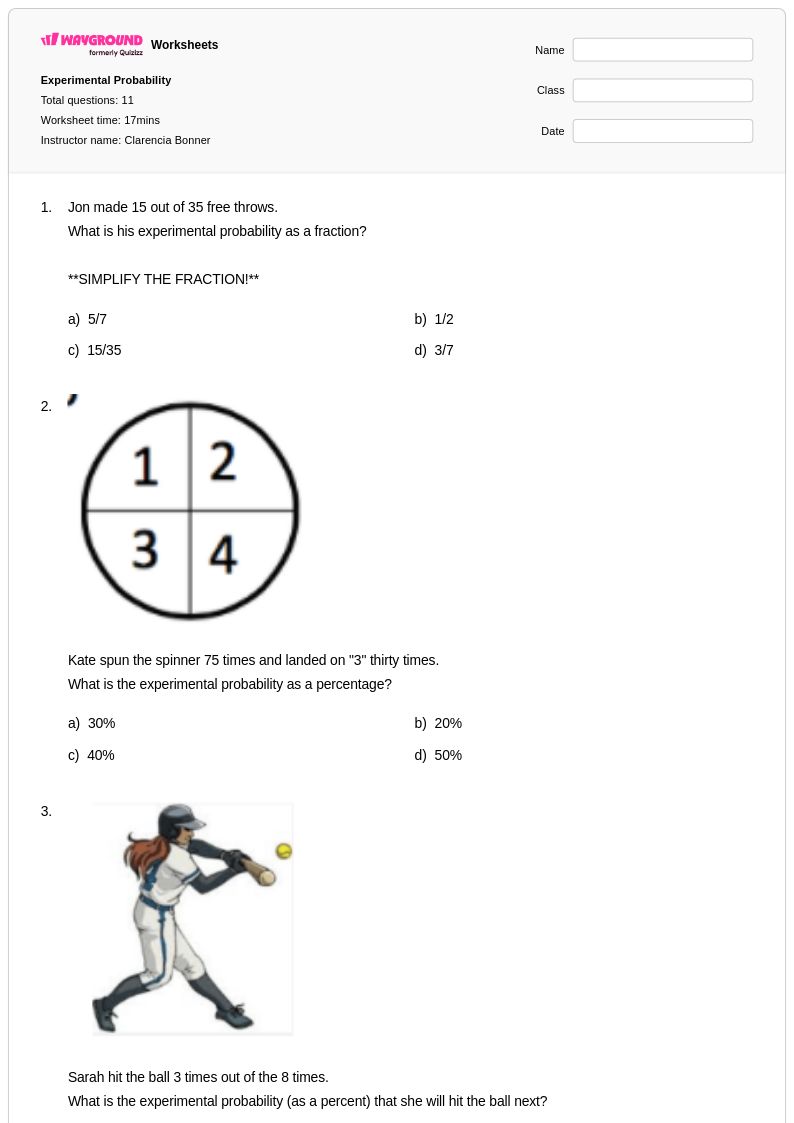
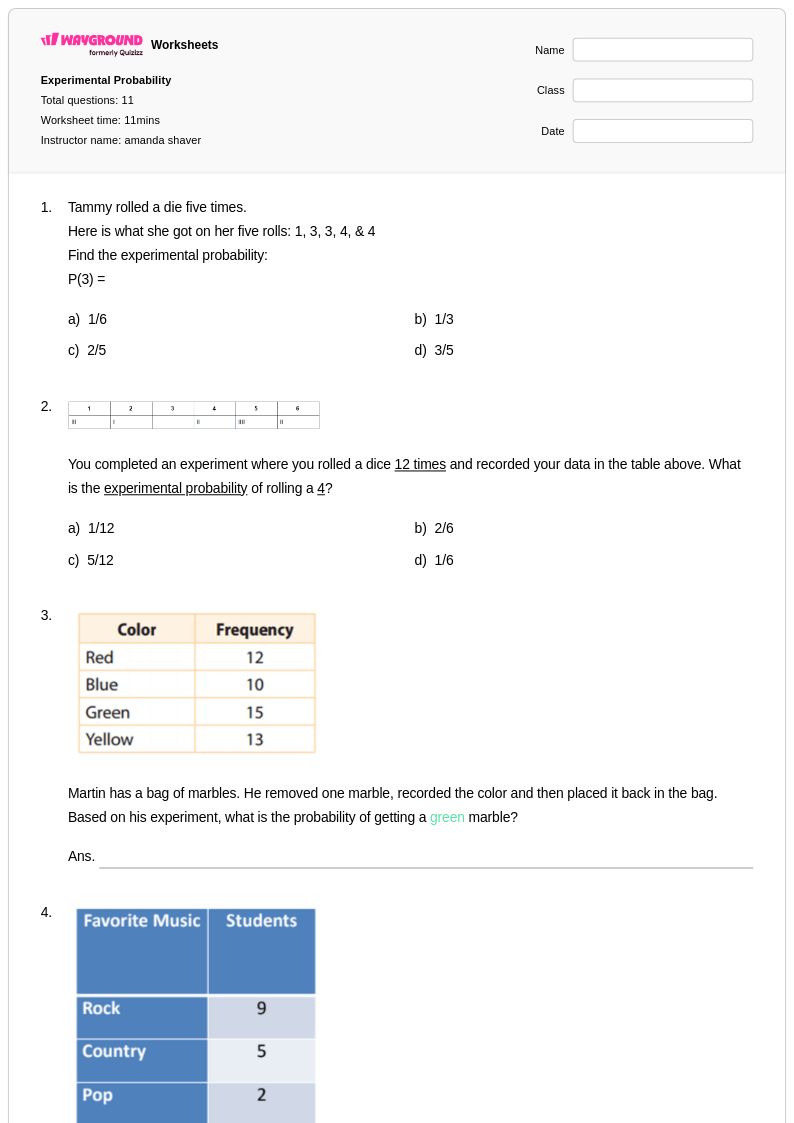
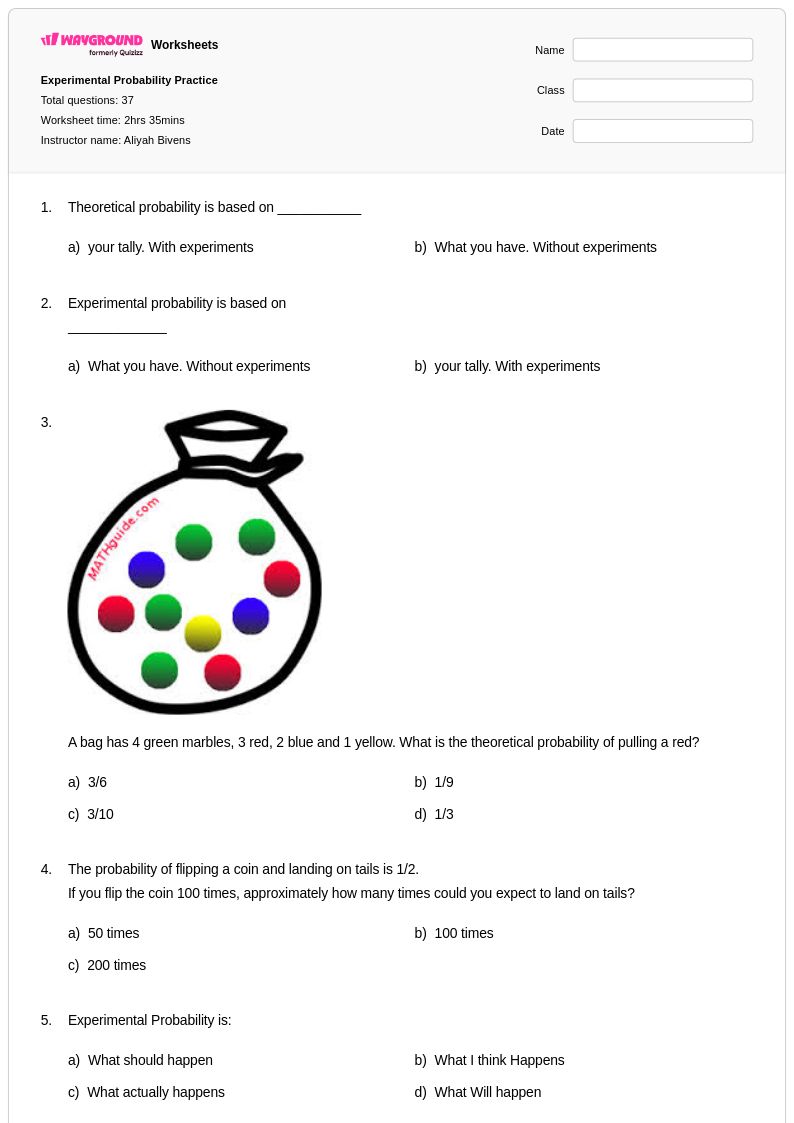
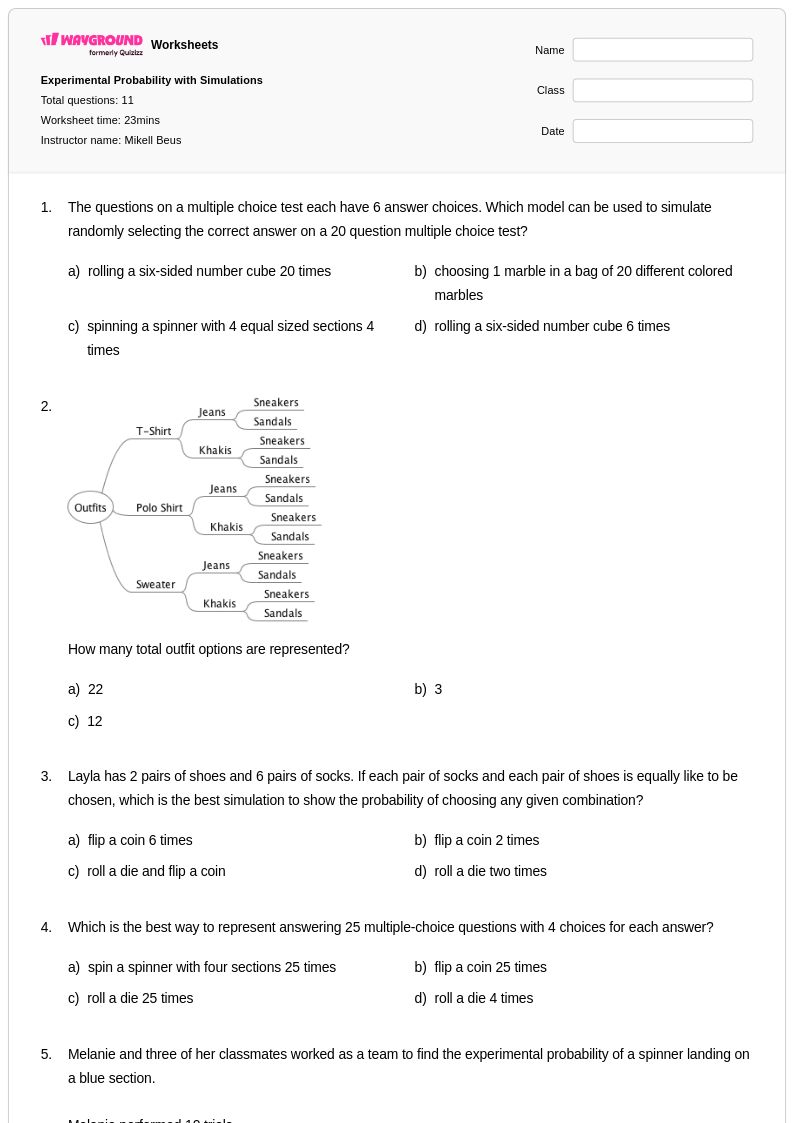
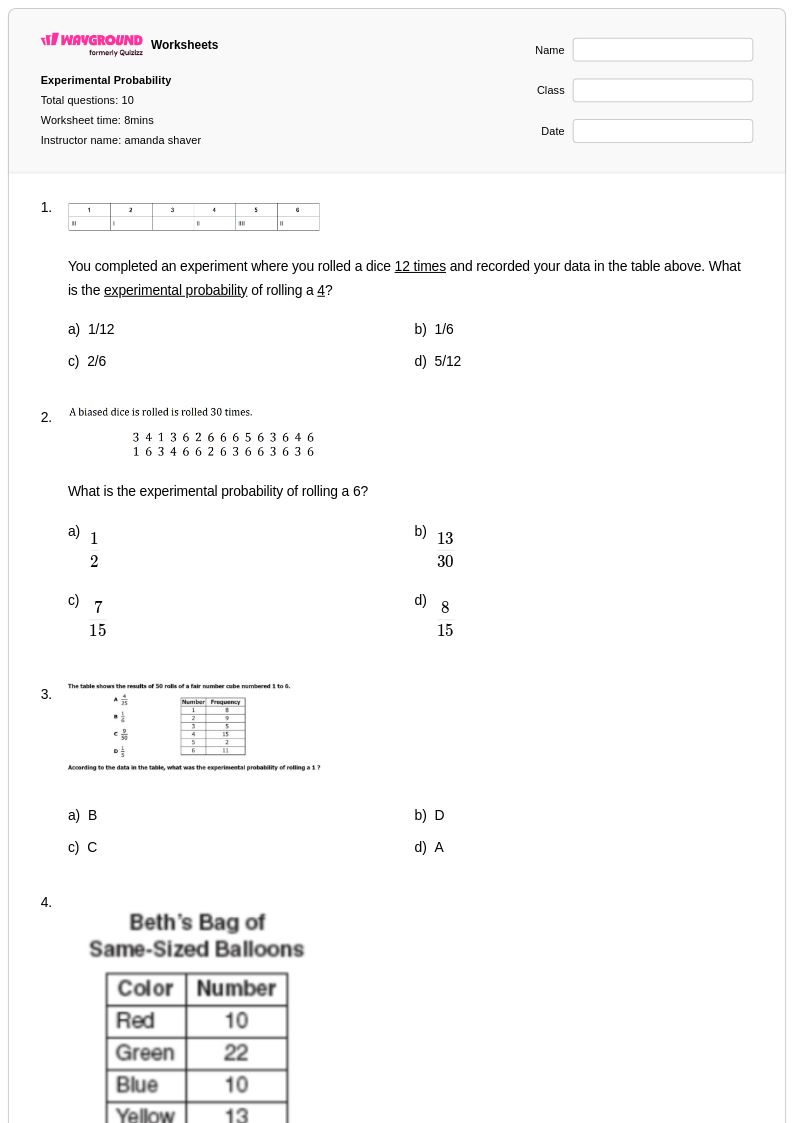
Experimental probability worksheets for Year 6 students available through Wayground (formerly Quizizz) provide comprehensive practice in understanding how theoretical predictions compare to actual experimental outcomes. These carefully designed resources help students develop critical statistical reasoning skills by engaging with hands-on probability experiments involving dice rolls, coin flips, spinner activities, and drawing from bags of colored objects. Each worksheet collection includes detailed answer keys and step-by-step solutions that guide students through the process of collecting data, calculating experimental probability ratios, and analyzing how results change with increased trial numbers. The free printable materials and pdf resources offer extensive practice problems that strengthen students' ability to interpret data patterns, make predictions based on experimental evidence, and understand the relationship between sample size and accuracy of probability estimates.
Wayground (formerly Quizizz) supports mathematics educators with millions of teacher-created experimental probability resources specifically aligned to Year 6 learning standards and curriculum requirements. The platform's advanced search and filtering capabilities enable teachers to quickly locate worksheets that match their specific instructional needs, whether focusing on simple probability experiments or more complex comparative analysis activities. These differentiation tools allow educators to customize content difficulty levels, ensuring appropriate challenge for diverse learners while maintaining rigorous mathematical standards. Available in both printable and digital formats including downloadable pdf files, these worksheet collections streamline lesson planning and provide flexible options for classroom instruction, homework assignments, remediation support, and enrichment activities that deepen students' understanding of experimental probability concepts and statistical thinking skills.
FAQs
How do I teach experimental probability to 6th graders?
Sixth graders need to see that probability isn't just a fraction on paper — it comes from real trials. A good entry point is a class-wide coin flip: everyone flips ten times, you pool the results on the board, and students calculate the experimental probability from the combined data. Then ask why the class total is closer to 50% than any individual's ten flips. That conversation — more trials, more reliable results — is the conceptual core of experimental probability at this grade level.
What exercises help 6th graders practice experimental probability?
At grade 6, the best practice problems walk students through the full cycle: conduct or read about a trial, record outcomes in a frequency table, and calculate the experimental probability ratio. Spinners and colored-object draws work especially well because students can visualize the sample space before they start. Problems that then ask students to compare their experimental result to the theoretical probability — and explain why they might differ — are where the real learning happens at this level.
What mistakes do 6th graders commonly make with experimental probability?
The most common error is flipping the ratio — writing total trials in the numerator and favorable outcomes in the denominator. It's a mechanical mistake, but it signals that students haven't internalized what the ratio represents. A second issue: students often assume their experimental result should exactly match the theoretical probability, and they think they made an error when it doesn't. Normalizing that gap — and explaining that it shrinks with more trials — is worth addressing directly before students start calculating.
How do I use Wayground's Grade 6 experimental probability worksheets?
The worksheets come with full answer keys, so they're ready to use for in-class practice or homework without extra prep. For a paperless classroom, host the worksheet as a digital quiz on Wayground — students submit responses online and you see results immediately. If you're working in a low-device environment or want offline practice, print the PDF and assign it on paper; the Wayground for Teachers app lets you scan completed worksheets for grading without manual data entry.
Is experimental probability part of the 6th grade Common Core math curriculum?
Experimental probability enters the Common Core progression in the middle grades statistics and probability domain. At grade 6, students are building the data literacy — organizing outcomes, reading frequency tables, interpreting ratios — that makes experimental probability meaningful. The explicit work of running trials, calculating experimental probability, and comparing it to theoretical predictions is centered in grades 6 and 7, making this a foundational topic that feeds directly into the more formal probability work students encounter in grade 7.
How can I support struggling 6th graders with experimental probability?
For students who find the word problems dense, the Read Aloud accommodation in Wayground reads questions aloud so they can focus on the math rather than decoding the text. Reducing answer choices helps students who get overwhelmed by options before they've worked through the problem. At the worksheet level, bumping up the font size or applying wider line spacing can make a real difference for students who lose their place in multi-step problems — small layout changes that take seconds to apply.