Free Printable Experimental Probability Worksheets for Year 7
Year 7 experimental probability worksheets and printables help students master hands-on data collection and analysis through engaging practice problems with comprehensive answer keys available as free PDF downloads.
Explore printable Experimental Probability worksheets for Year 7
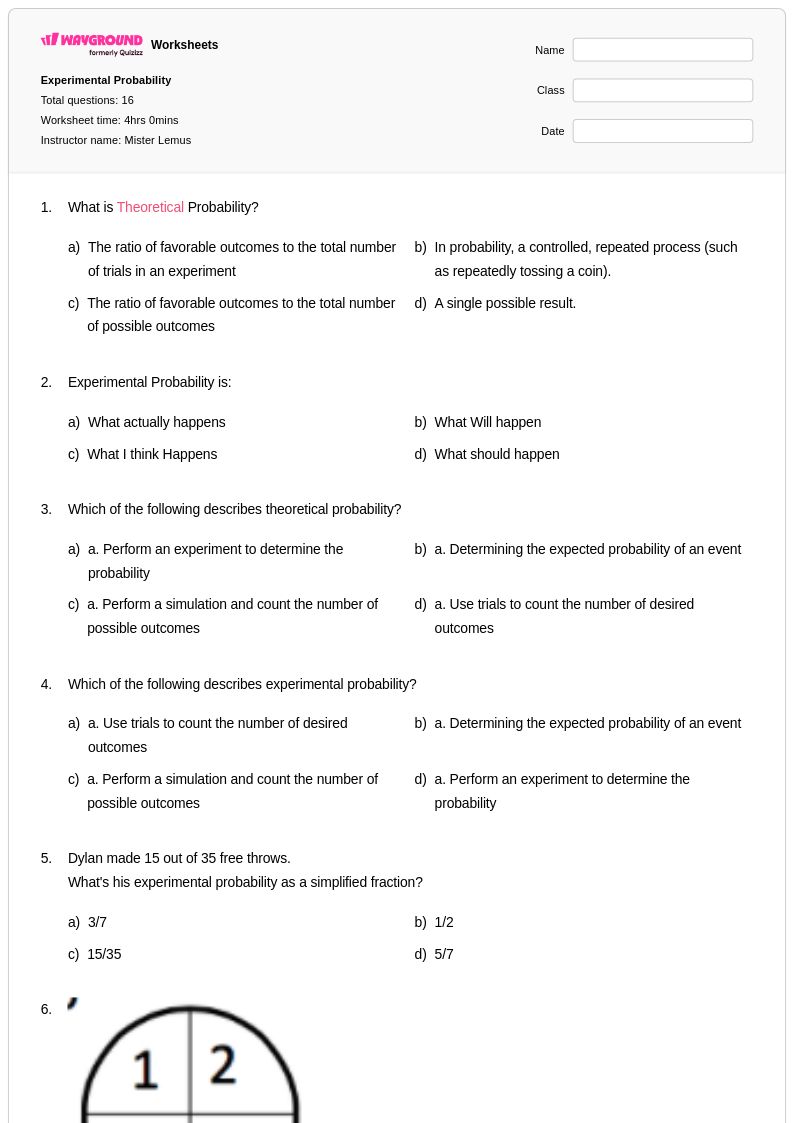
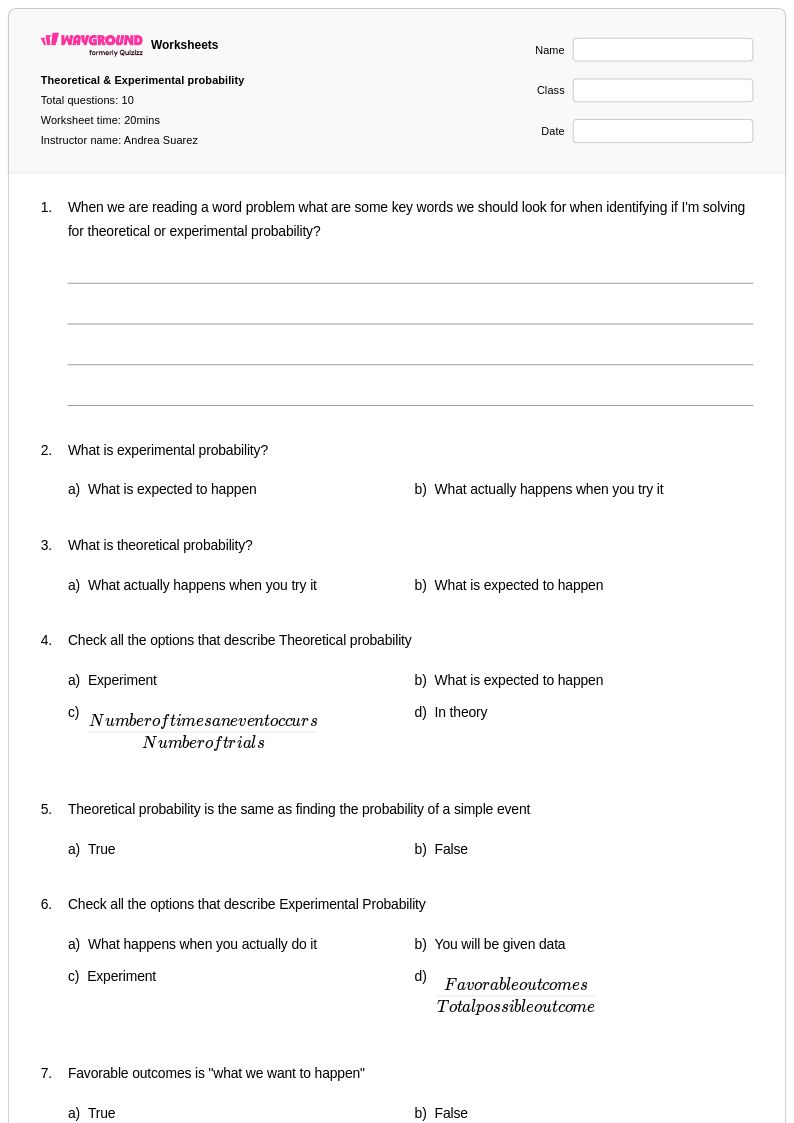
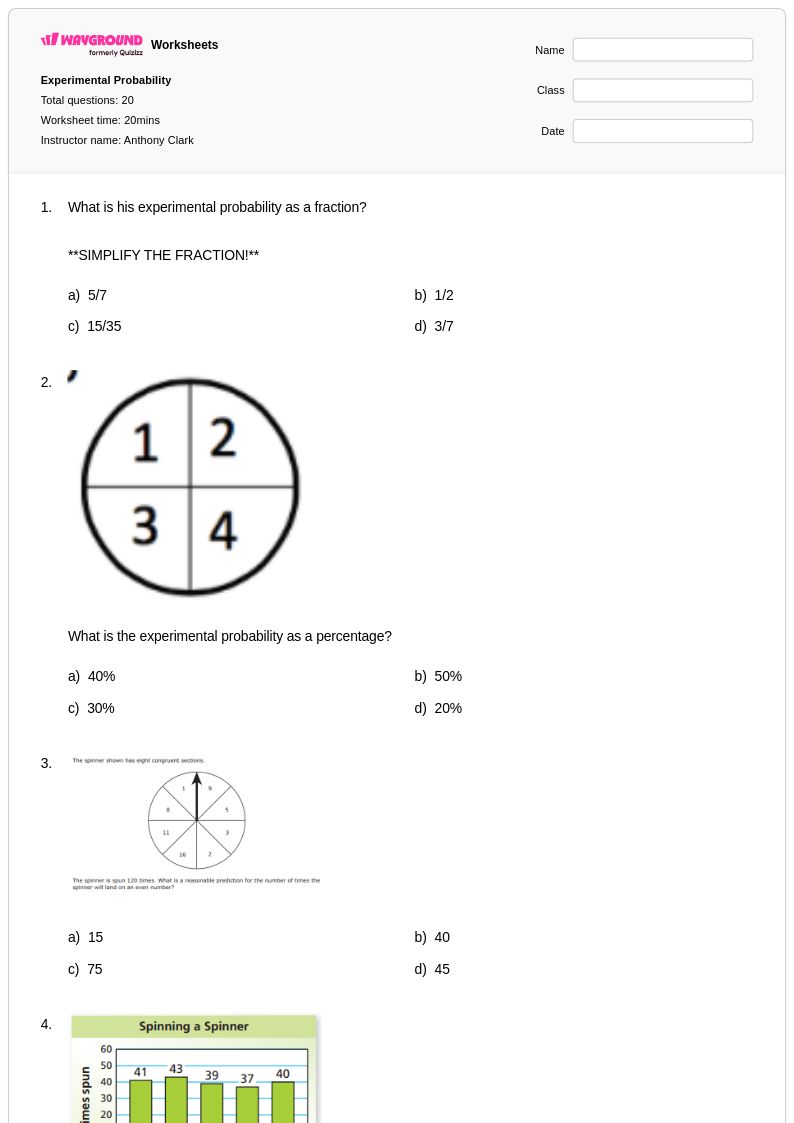
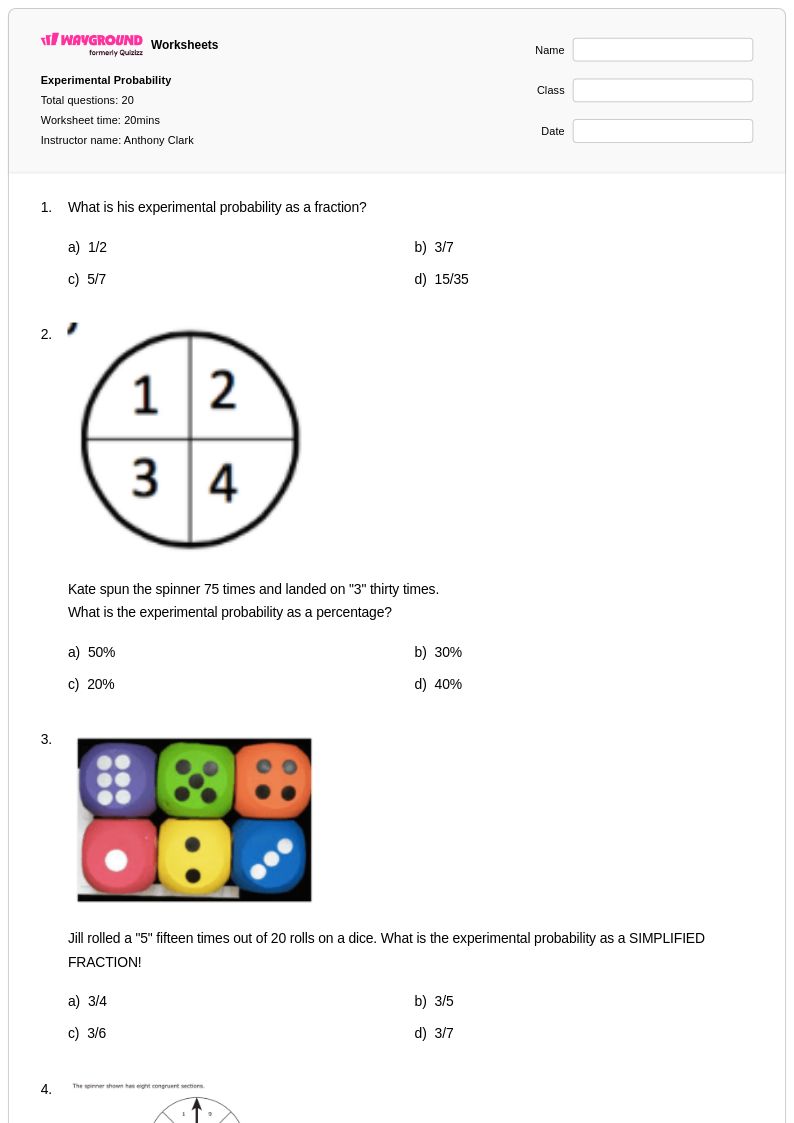
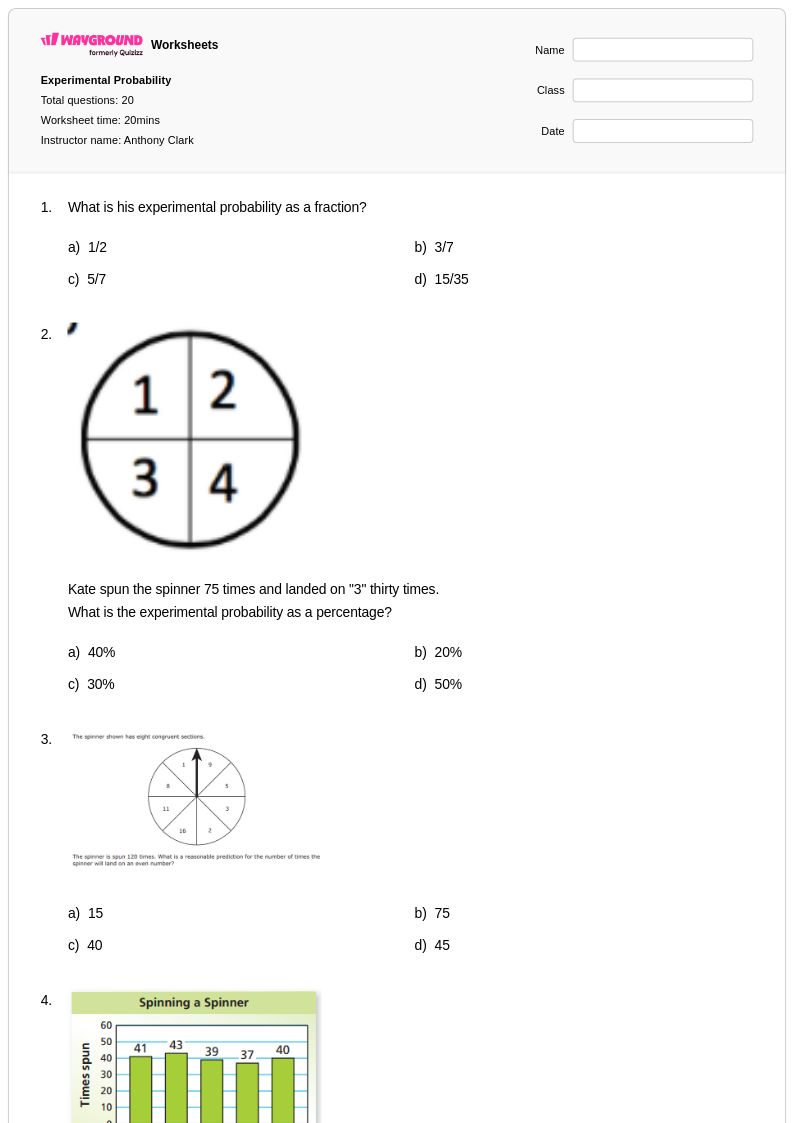
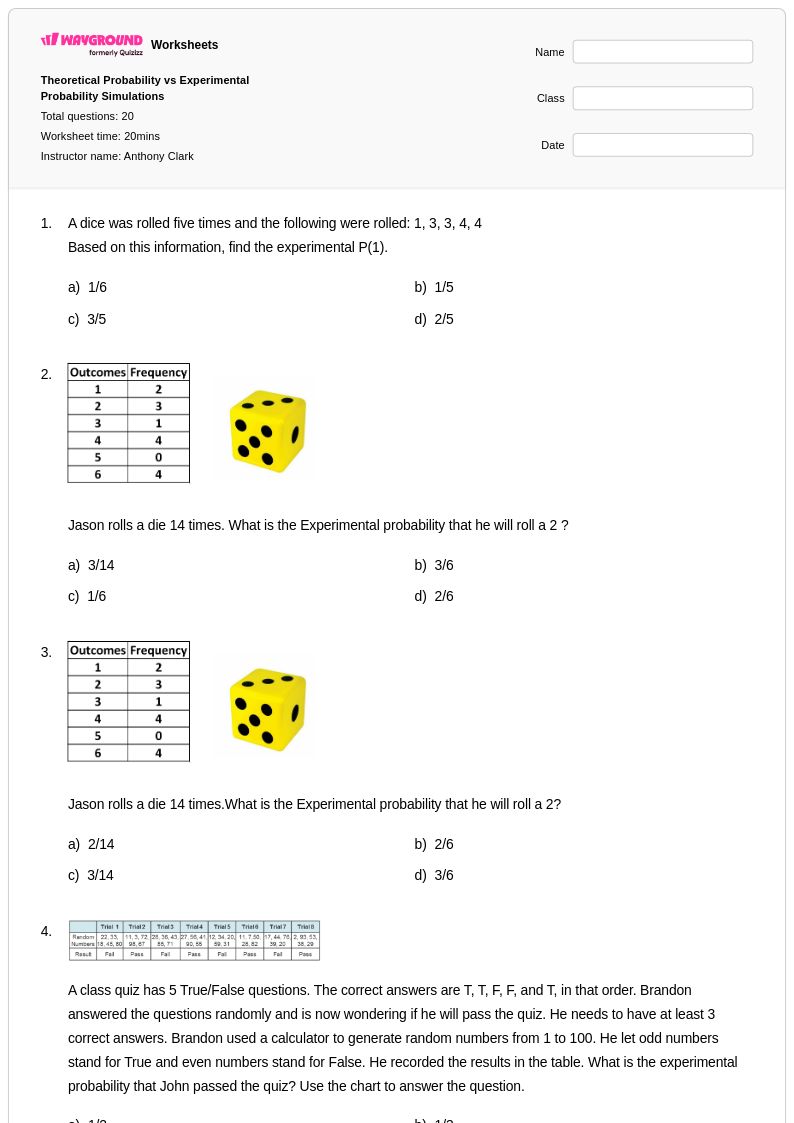
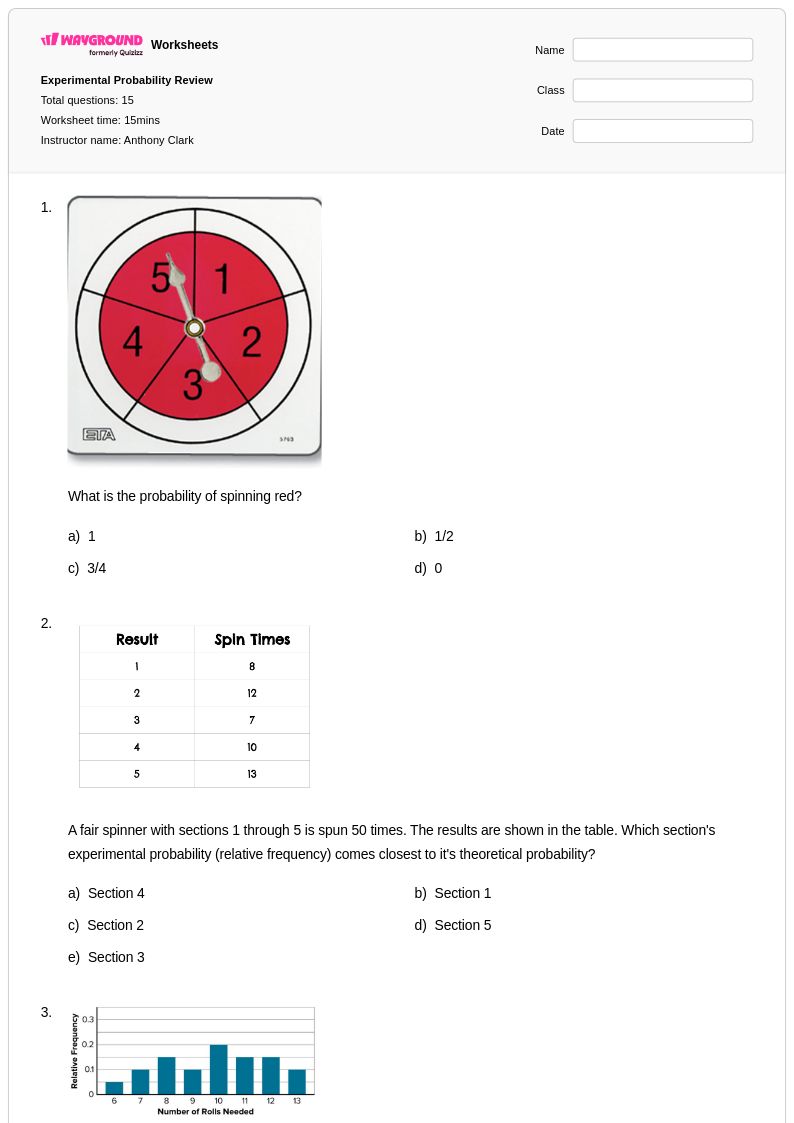
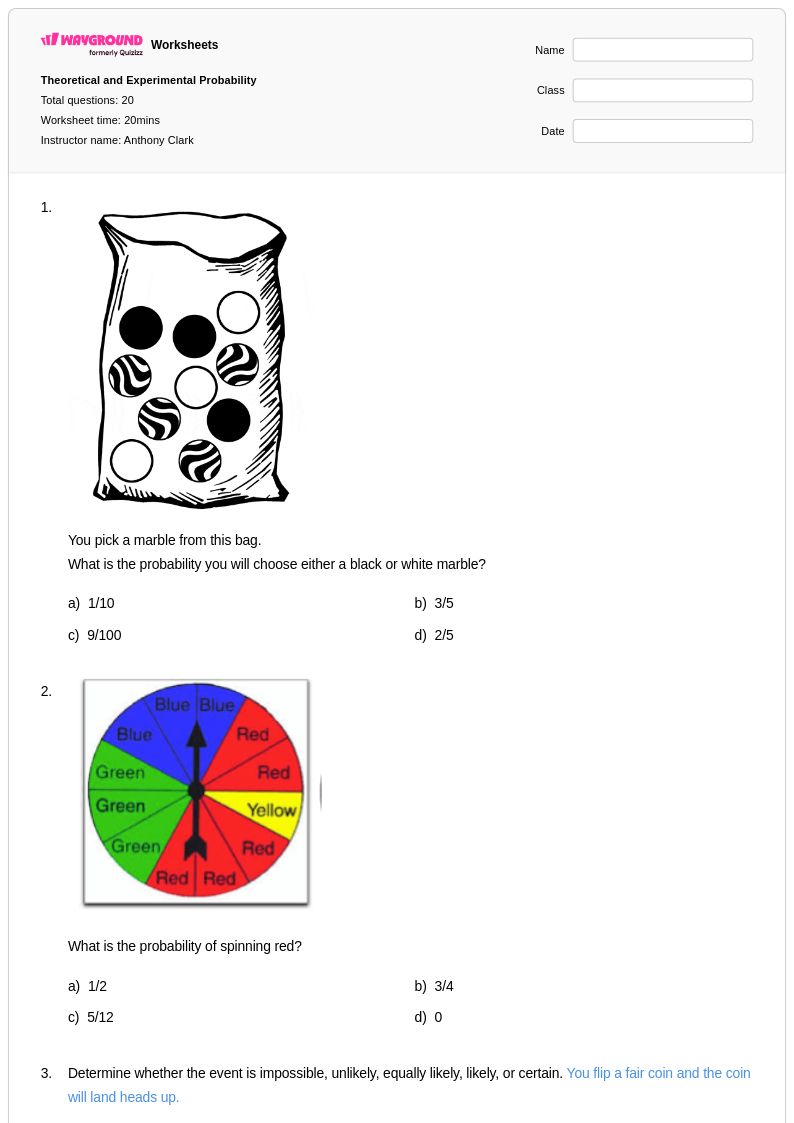
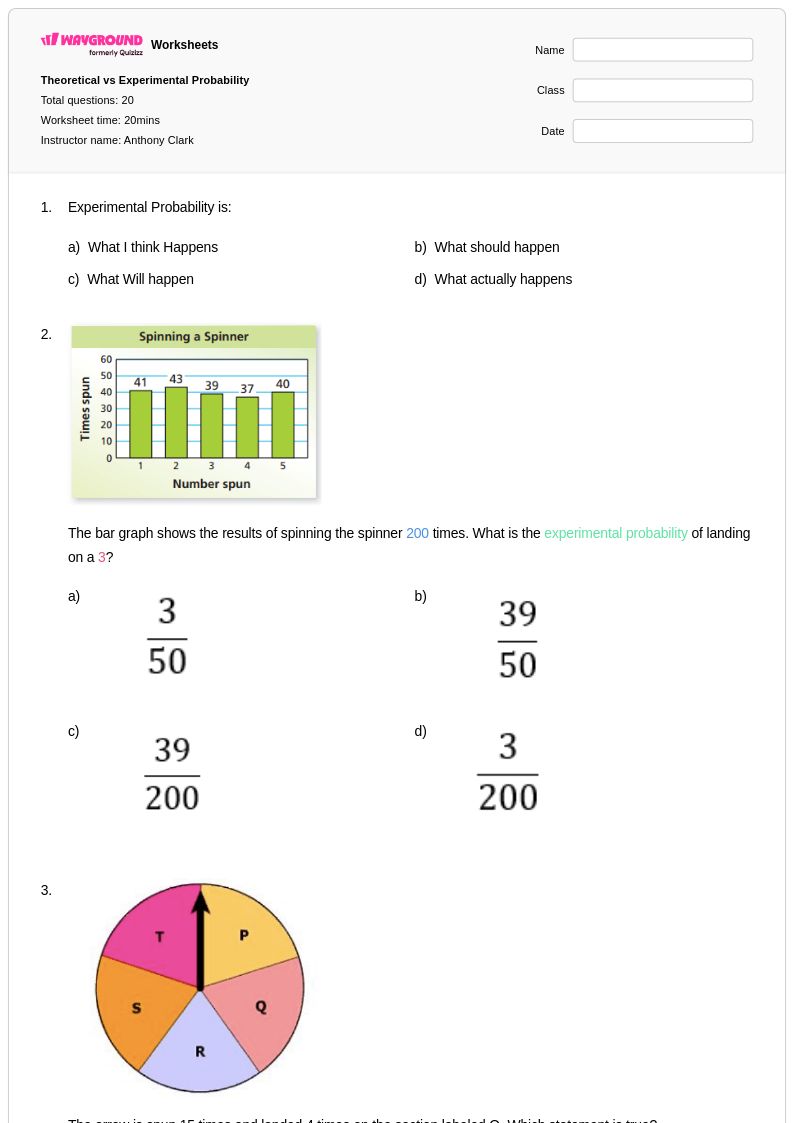
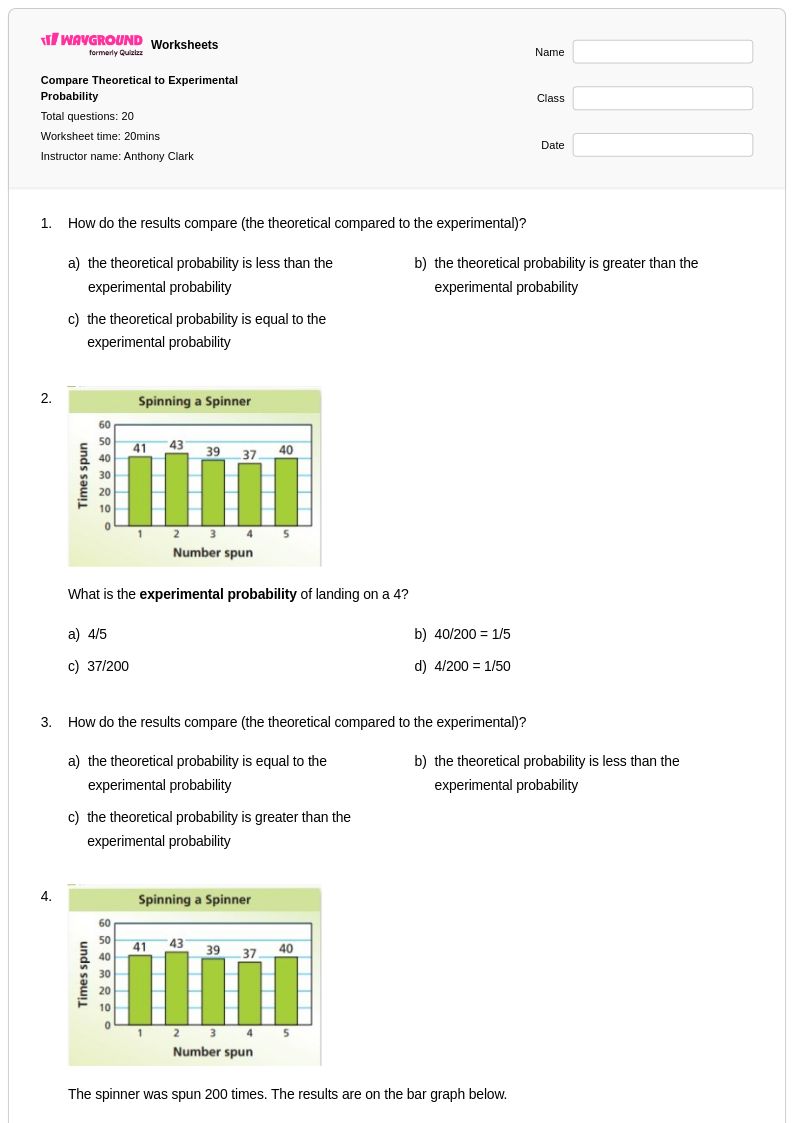
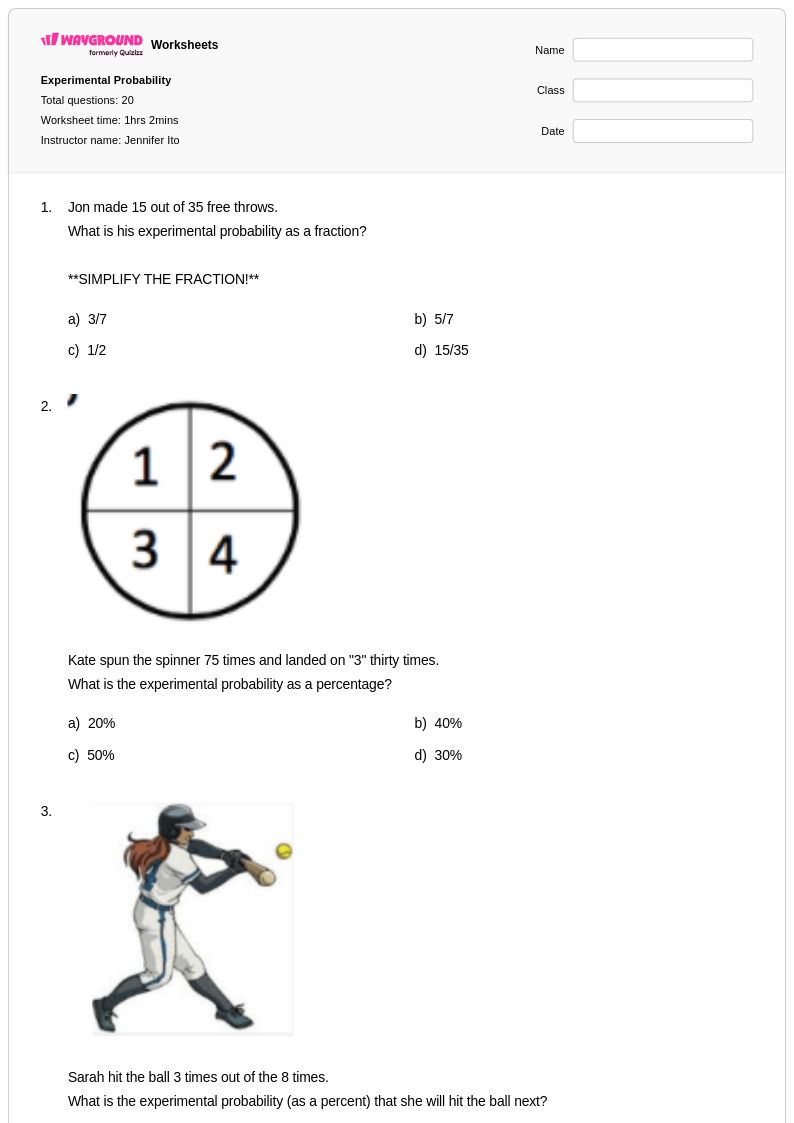
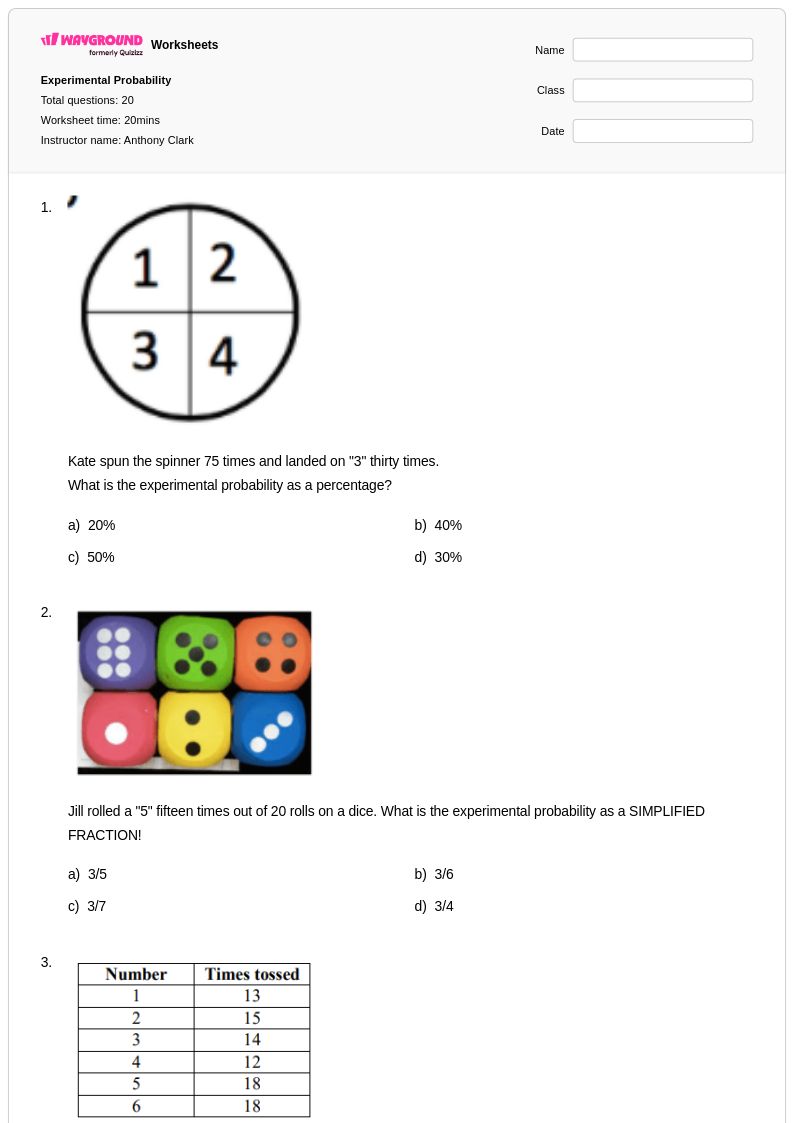
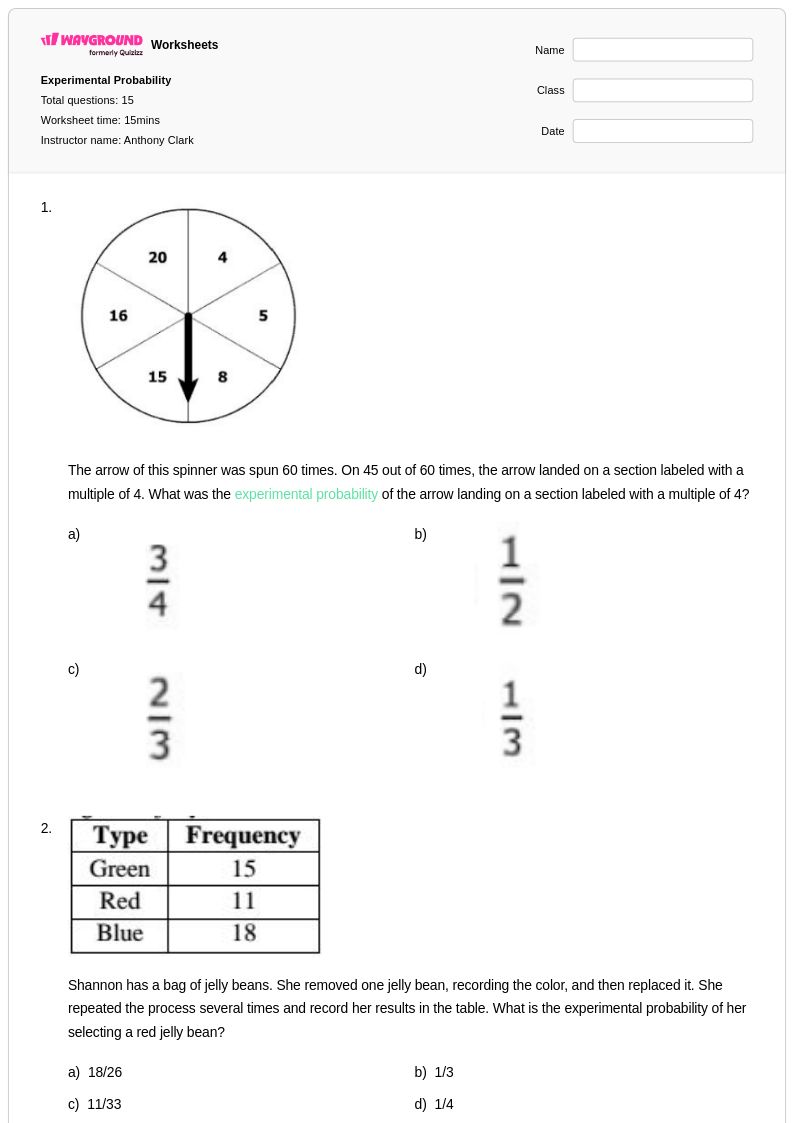
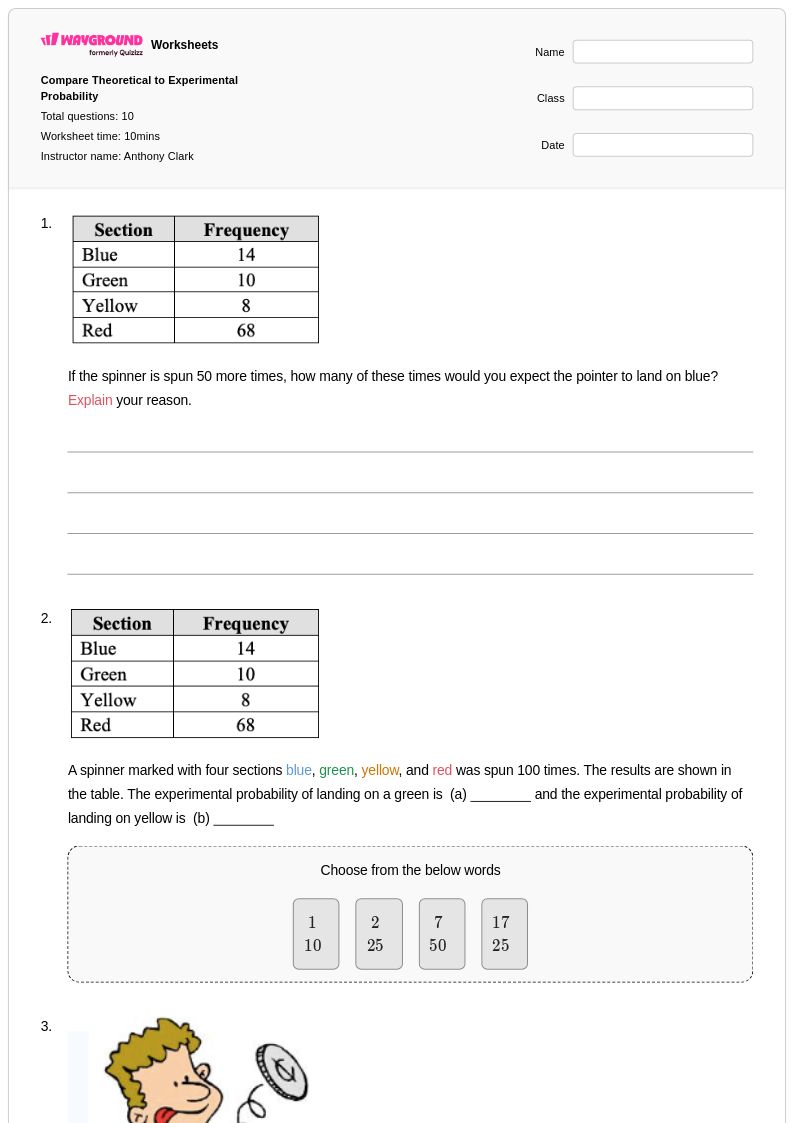
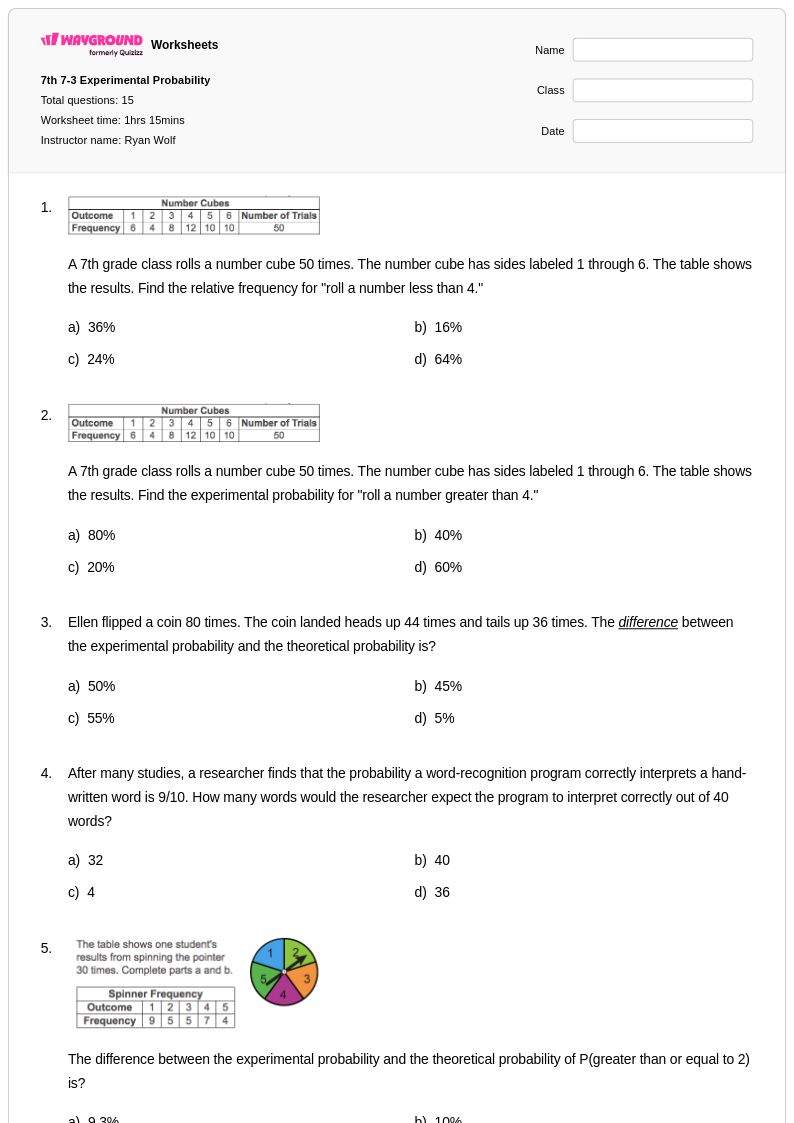
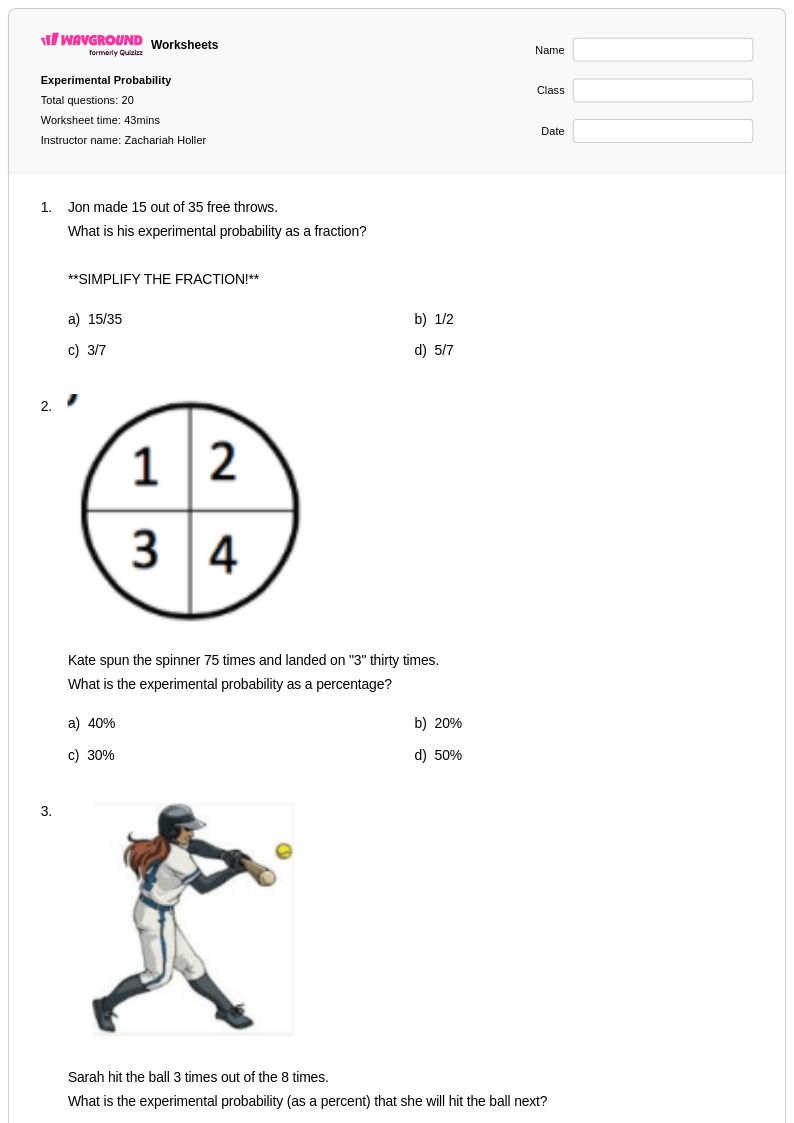
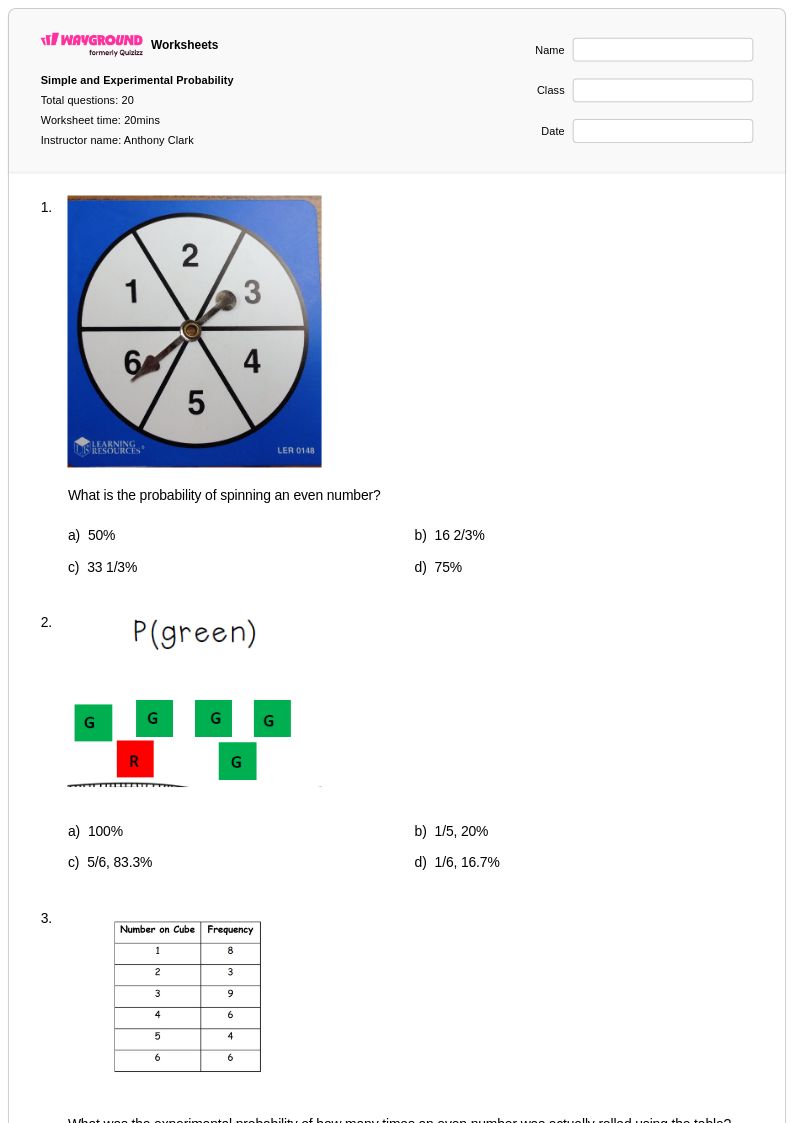
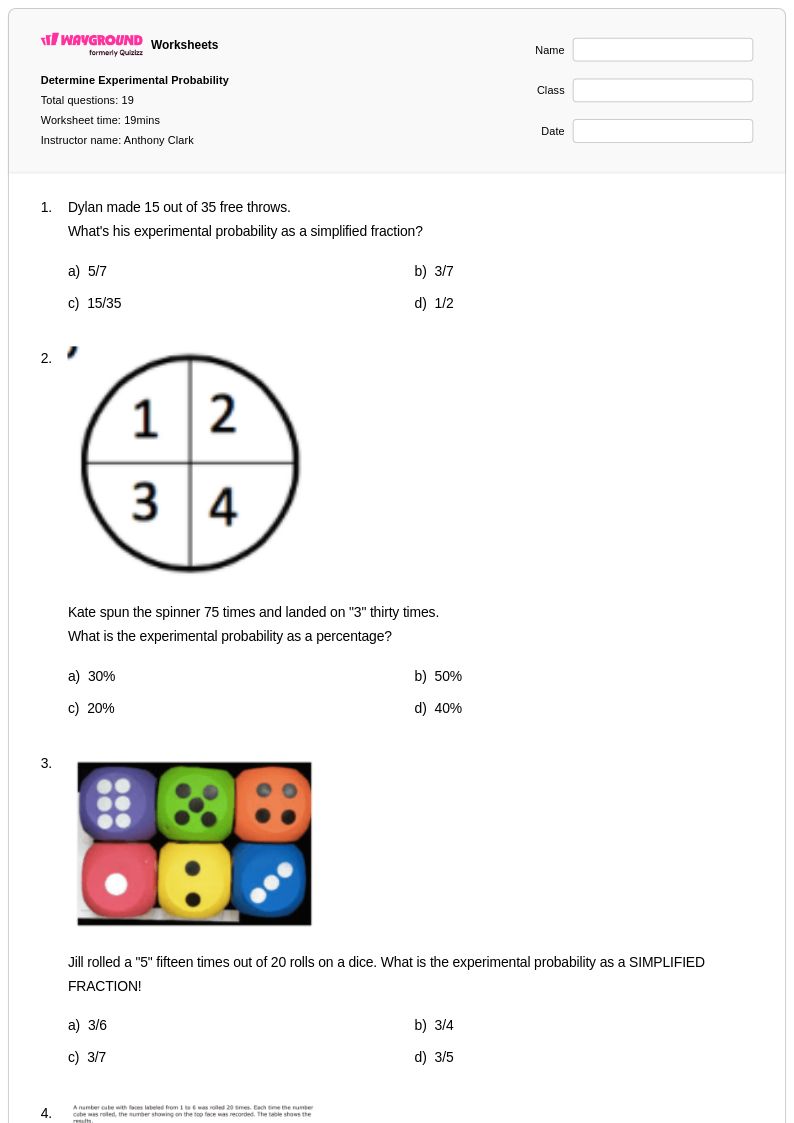
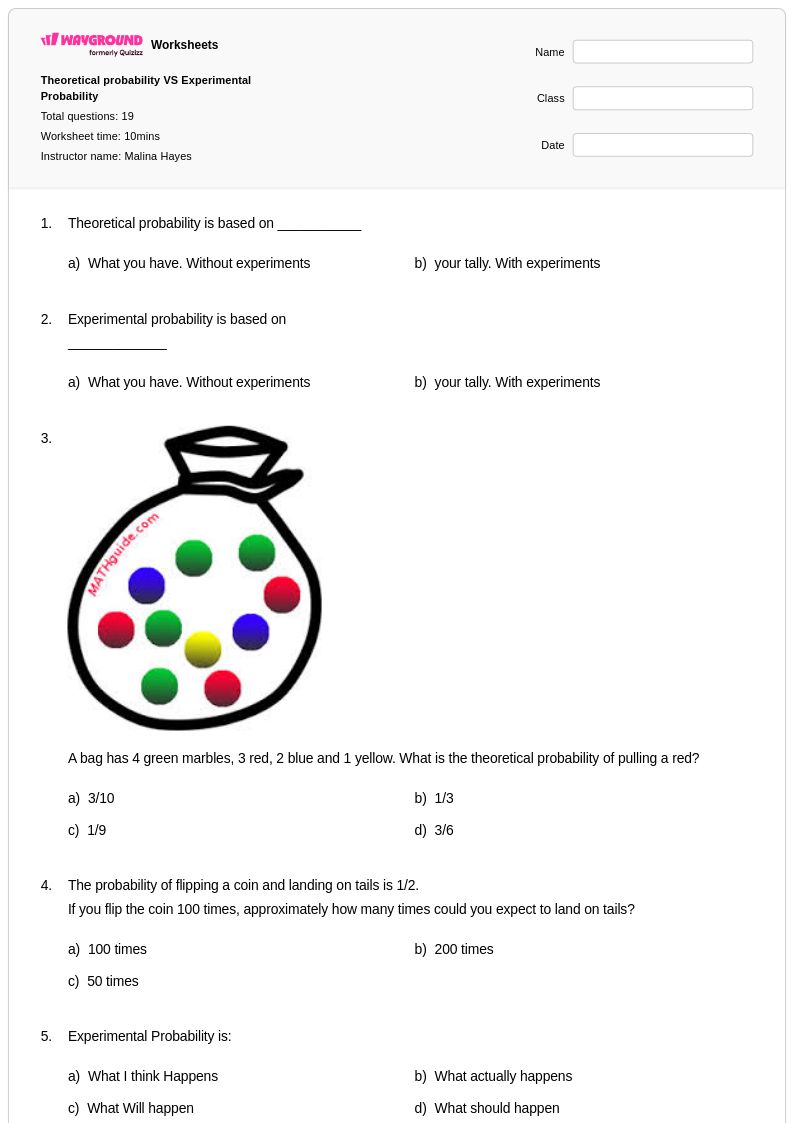
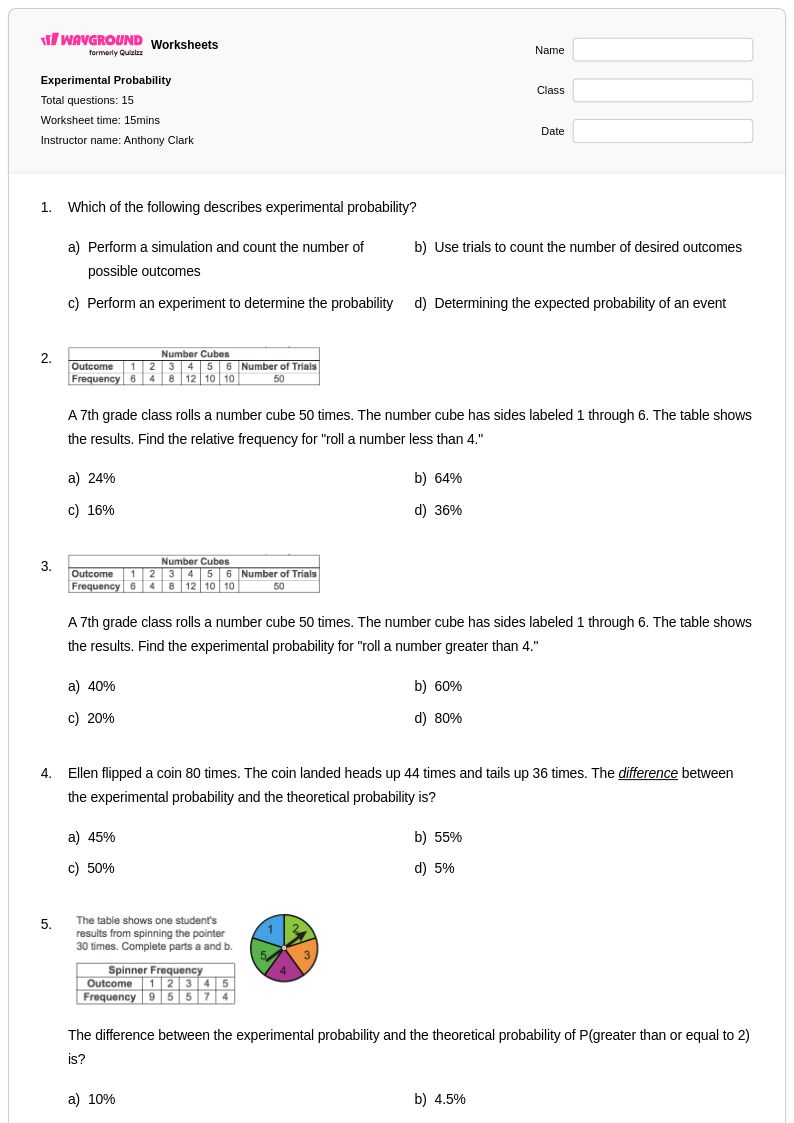
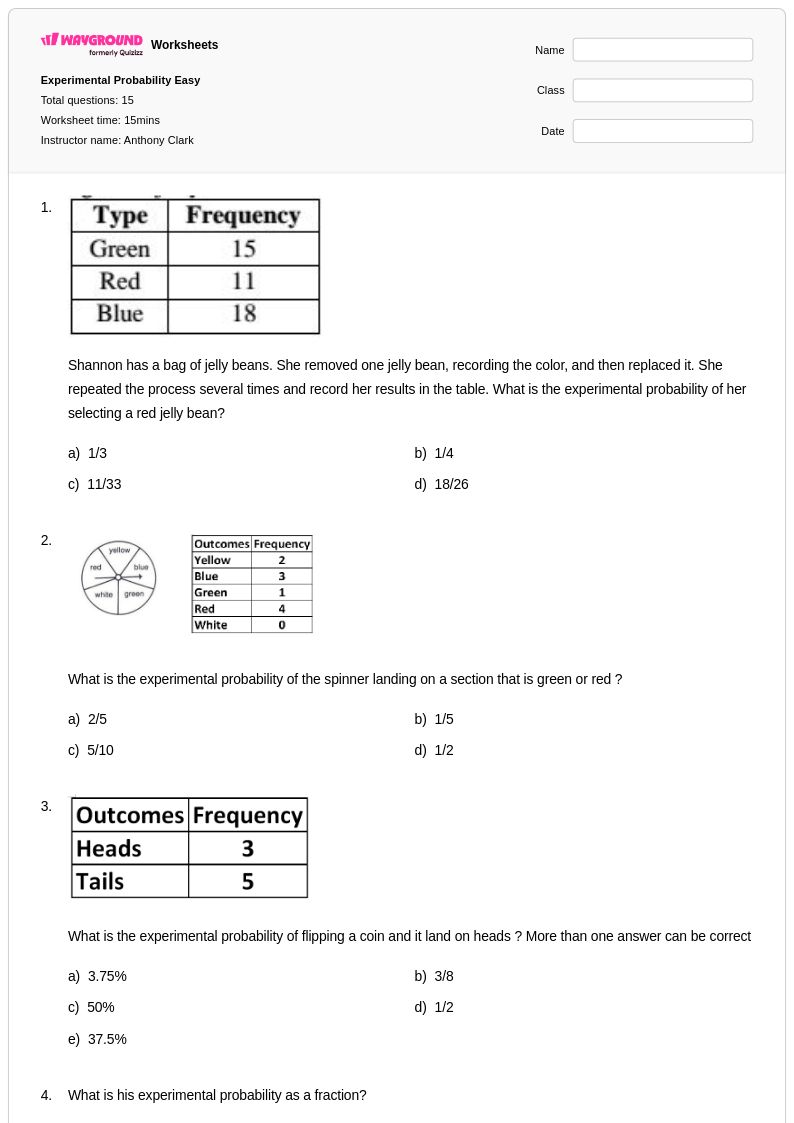
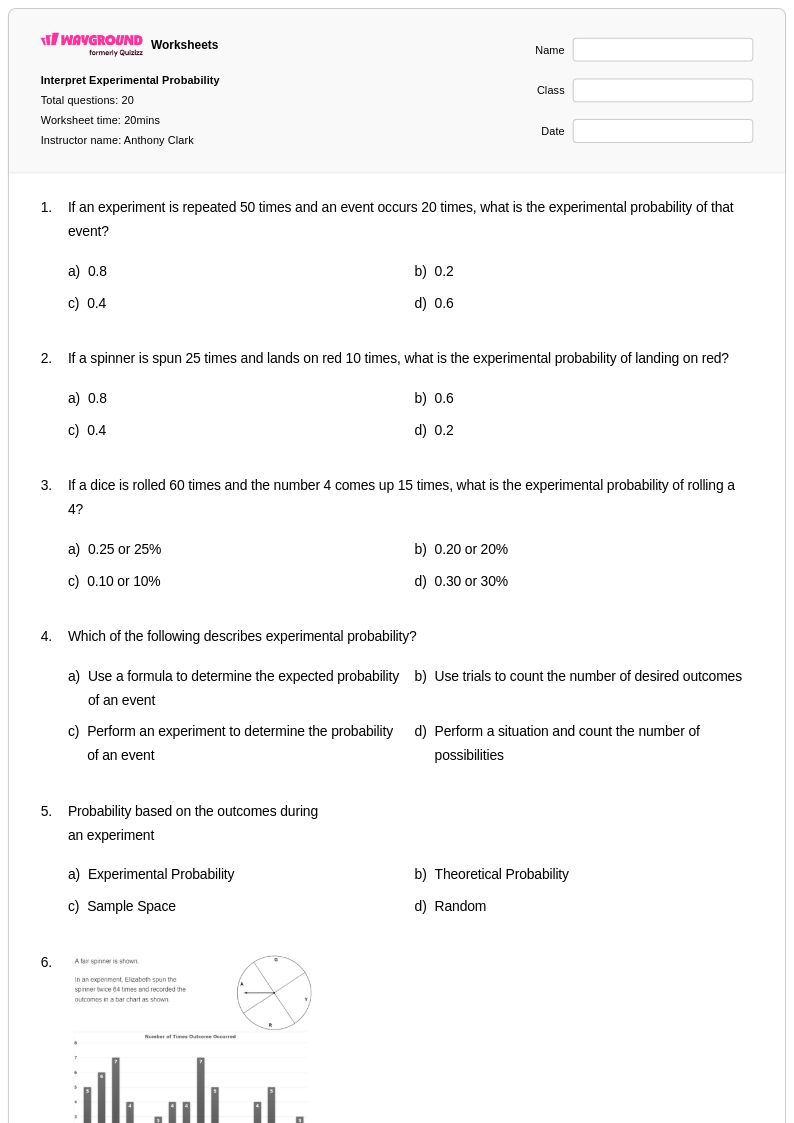
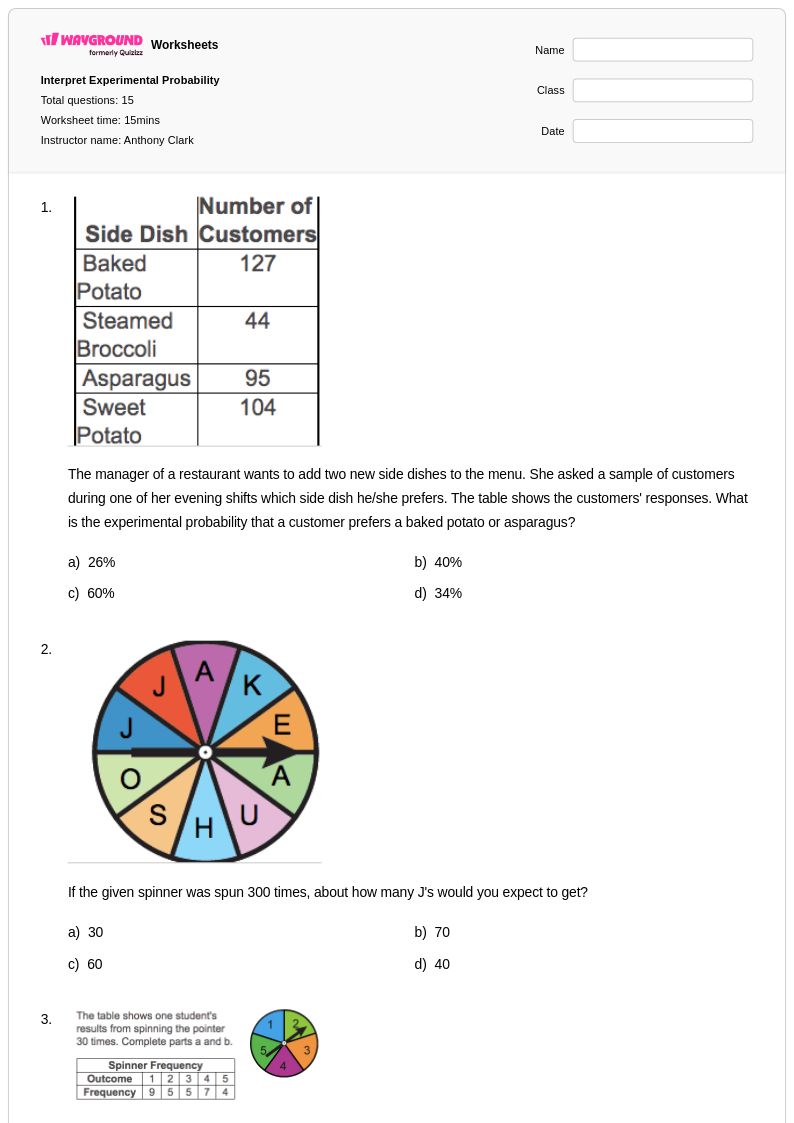
Experimental probability worksheets for Year 7 students provide essential practice in understanding how real-world data collection differs from theoretical predictions. These comprehensive worksheet collections available through Wayground (formerly Quizizz) help students develop critical thinking skills by conducting experiments, recording outcomes, and calculating probabilities based on actual results rather than mathematical predictions alone. Students work through engaging practice problems that involve flipping coins, rolling dice, spinning spinners, and drawing from containers to collect data and determine experimental probability ratios. Each worksheet comes with a detailed answer key and is available as a free printable pdf, allowing students to compare their experimental findings with expected theoretical outcomes while building foundational statistical reasoning skills.
Wayground (formerly Quizizz) empowers mathematics teachers with millions of teacher-created experimental probability resources that streamline lesson planning and support differentiated instruction for Year 7 classrooms. The platform's robust search and filtering capabilities help educators quickly locate worksheets aligned with specific mathematics standards, while customization tools allow teachers to modify content difficulty and focus areas to meet individual student needs. These versatile worksheet collections are available in both printable pdf format and interactive digital versions, making them ideal for in-class activities, homework assignments, remediation sessions, and enrichment opportunities. Teachers can efficiently track student progress through hands-on probability experiments while building the statistical literacy skills students need for advanced mathematics courses and real-world problem solving.
FAQs
How do I teach experimental probability to 7th graders?
By grade 7, students should move beyond just calculating a ratio and start reasoning about why experimental and theoretical probability diverge. A useful structure: have students run a small number of trials, record the experimental probability, then double the trials and recalculate. Watching the experimental value shift — and usually move closer to the theoretical — makes the relationship between sample size and reliability concrete. From there, you can push into comparing results across groups and discussing what counts as a 'fair' experiment.
What exercises help 7th graders practice experimental probability?
Grade 7 practice should go beyond single-experiment calculations. Good problems ask students to compare experimental results across different trial counts, explain discrepancies between experimental and theoretical probability, and make predictions about what would happen with more trials. Dice and spinner problems work well at this level because the theoretical probability is easy to calculate, which keeps the focus on analyzing the experimental data rather than setting up the problem.
What mistakes do 7th graders commonly make with experimental probability?
At grade 7, the ratio mechanics are usually solid, but students struggle with interpretation. The most common error is concluding that an experiment was 'wrong' because the experimental probability didn't match the theoretical value. A related mistake: students treat a small-sample result as definitive, not recognizing that ten trials tells you very little. Both errors point to the same gap — students haven't yet internalized that experimental probability is an estimate that improves with more data.
How do I use Wayground's Grade 7 experimental probability worksheets?
Every worksheet includes a complete answer key, so you can use them for independent practice, partner work, or homework without additional prep. Assign them digitally through Wayground to collect student responses automatically, or print the PDF for paper-based practice — useful for days when devices aren't available or you want students working without a screen. Either way, the same problems, the same answer key.
How does experimental probability fit into the 7th grade Common Core math progression?
Grade 7 is where Common Core places the most concentrated probability work. Students are expected to understand probability as a long-run relative frequency, which means experimental probability isn't just a calculation exercise — it's the empirical foundation for everything else. At this grade, students move from predicting outcomes to running experiments, comparing experimental results to theoretical predictions, and using probability models to explain real-world situations. Experimental probability worksheets at grade 7 sit at the center of that progression, not the edges.
How can I differentiate experimental probability practice for my 7th grade class?
For students who need more support, Wayground's reduced answer choices accommodation narrows the options on multiple-choice questions so they can focus on reasoning through the probability rather than managing a long list of choices. For English language learners, you can translate the worksheet directly in Wayground without altering the math content. For students ready for more challenge, look for problems that ask them to design their own experiment and predict outcomes before running trials — that reversal pushes the thinking in a different direction.