Free Printable Experimental Probability Worksheets for Year 9
Year 9 experimental probability worksheets from Wayground help students master hands-on probability concepts through engaging practice problems, free printables, and comprehensive answer keys for effective learning.
Explore printable Experimental Probability worksheets for Year 9
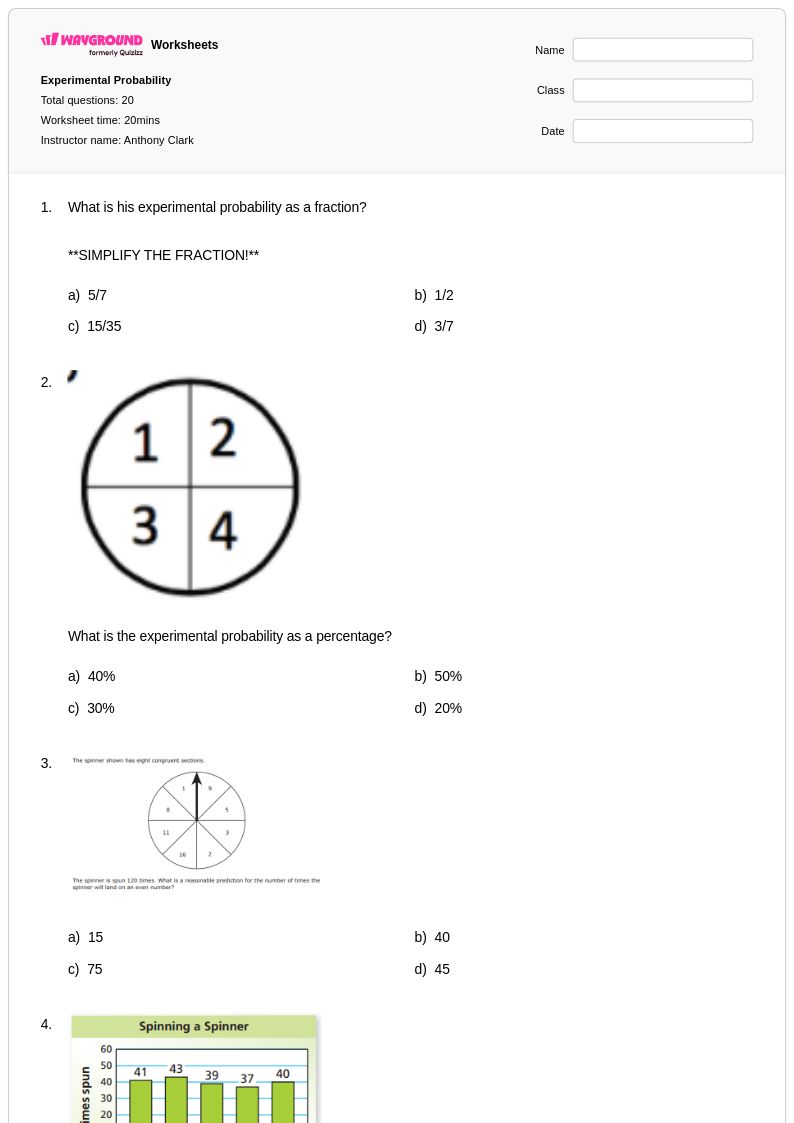
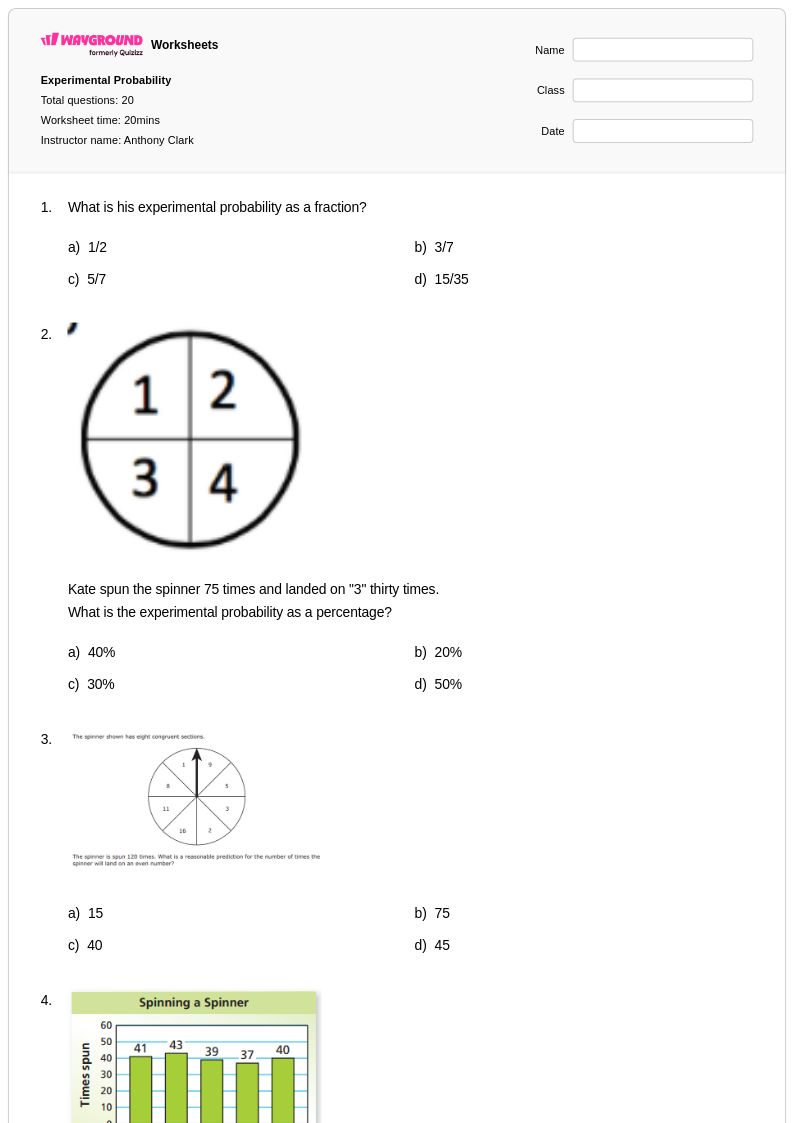
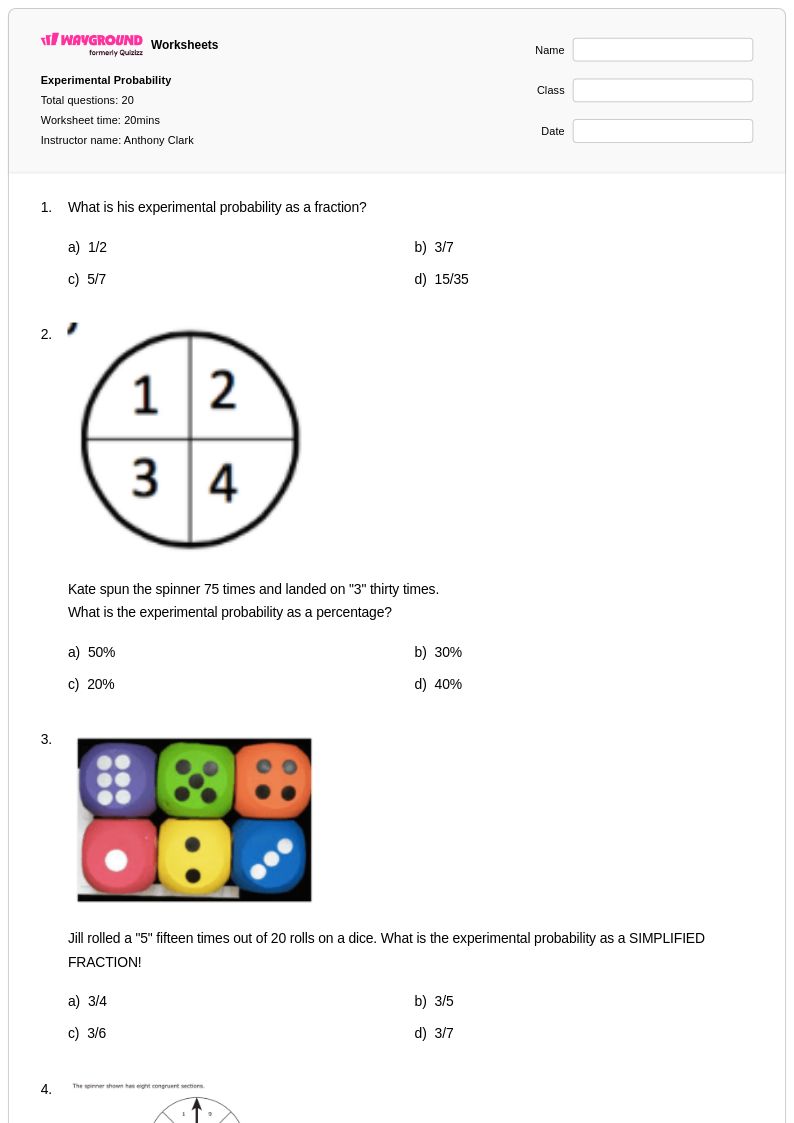
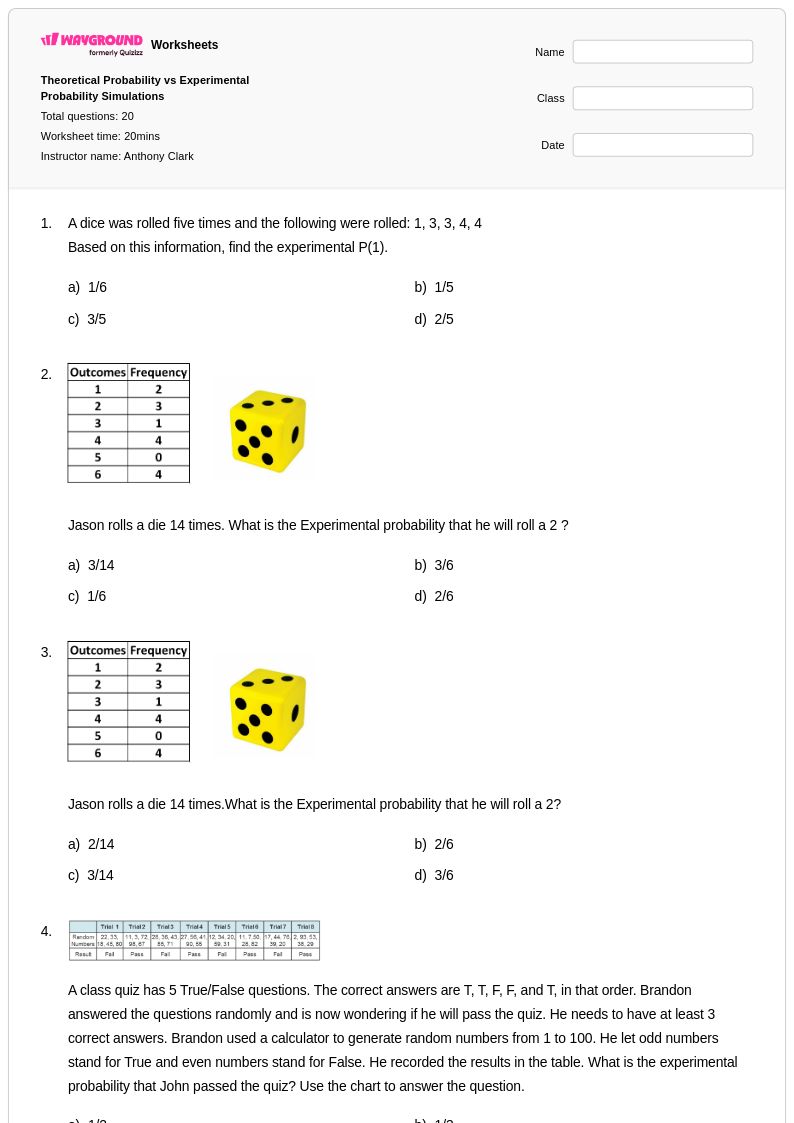
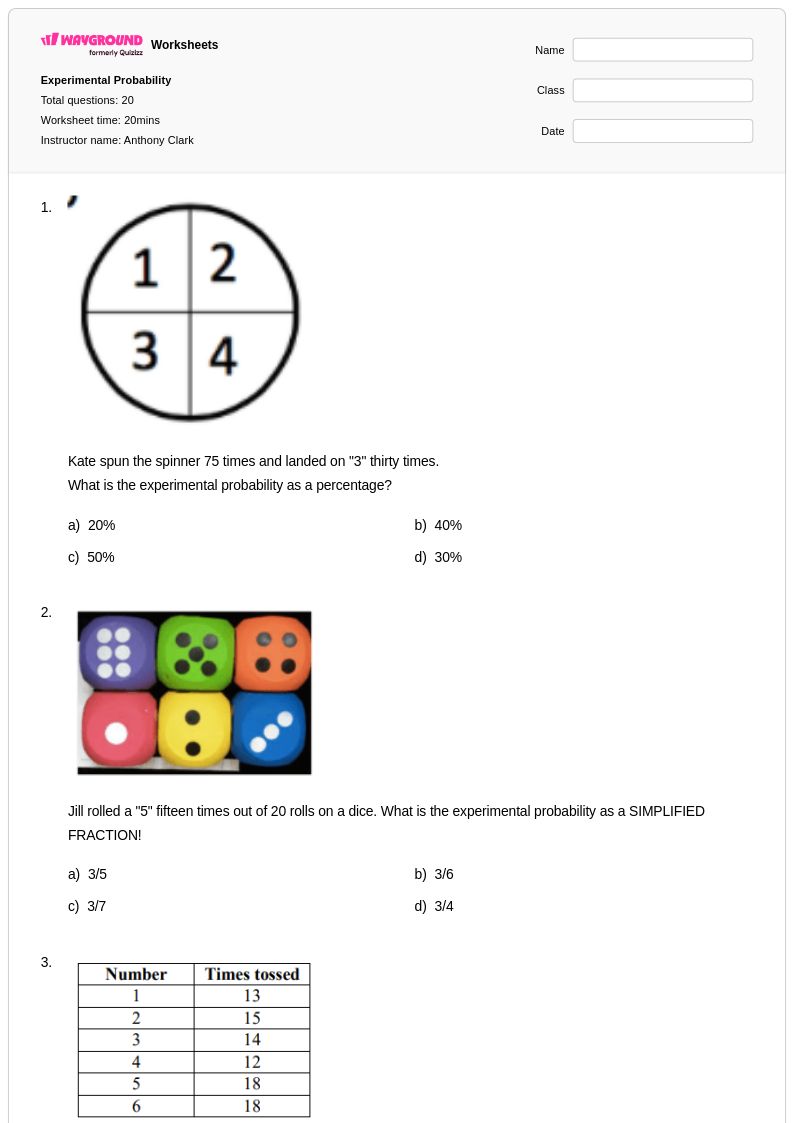
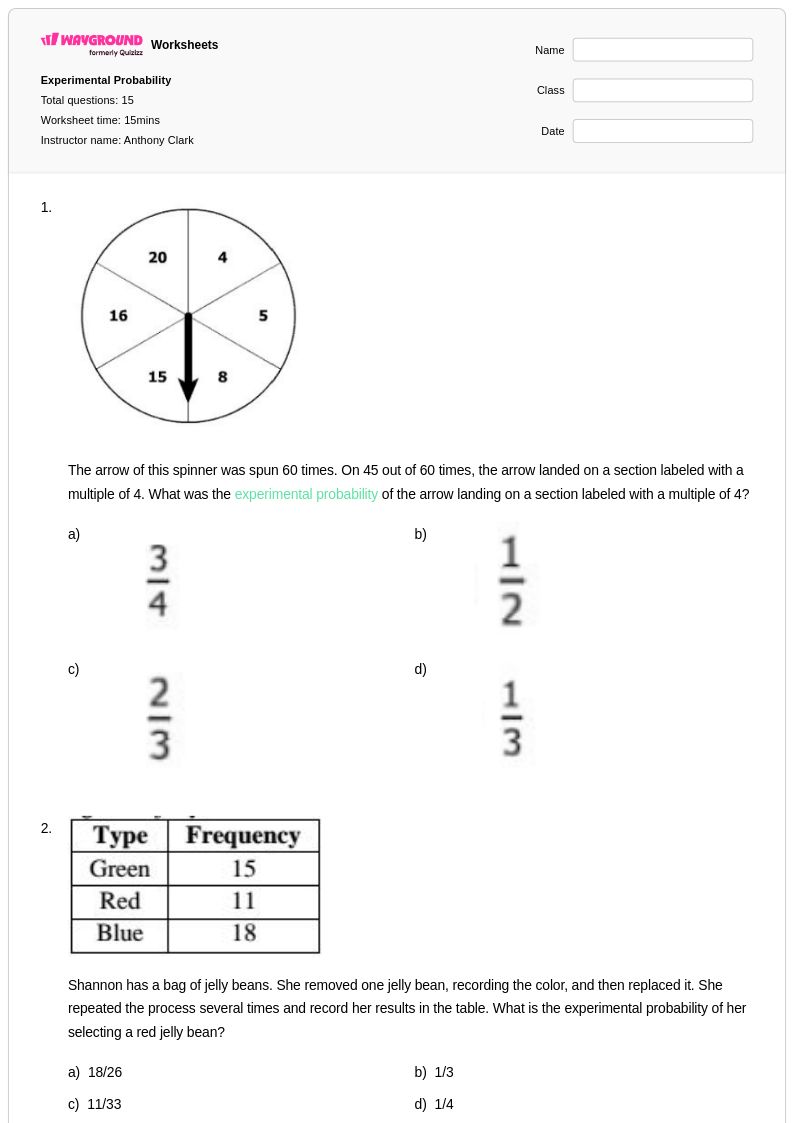
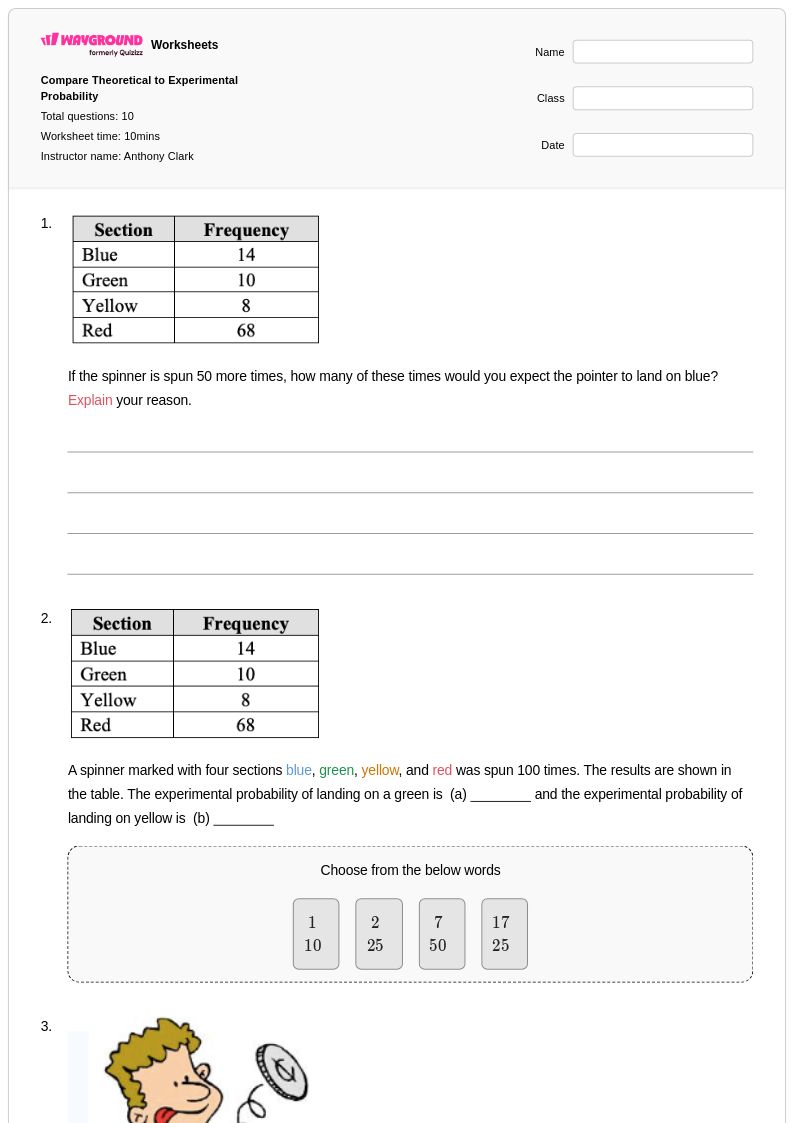
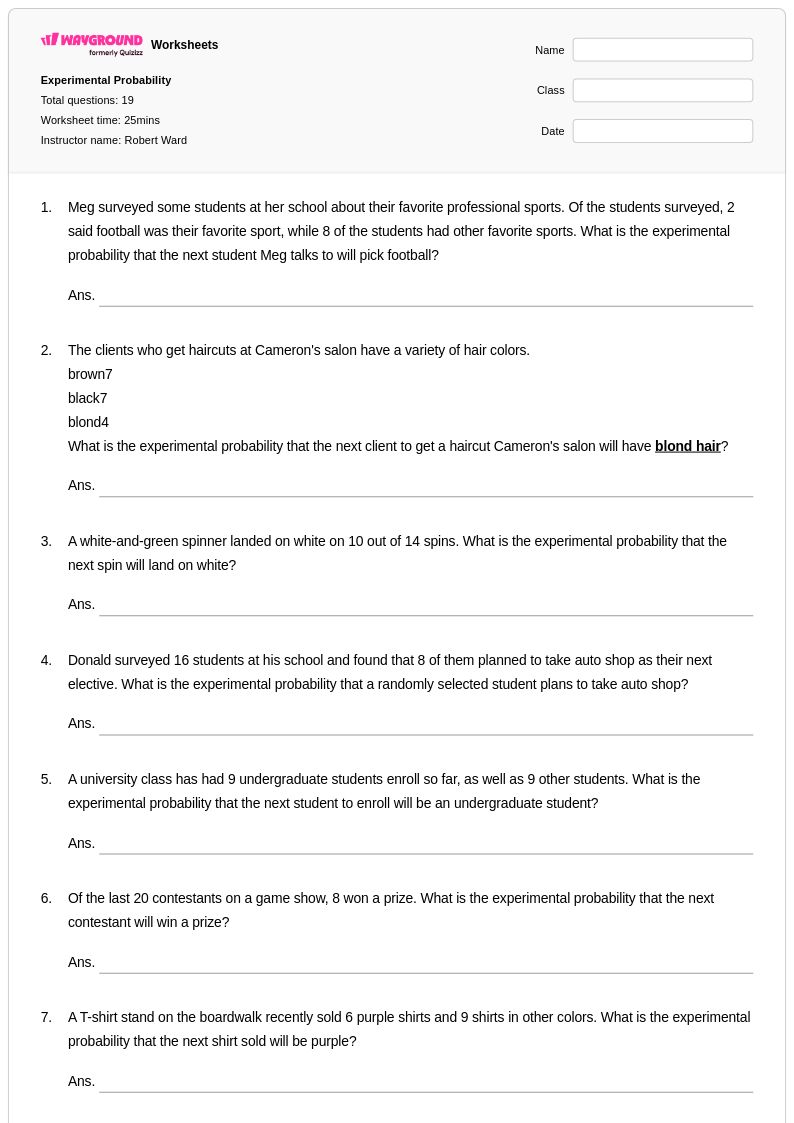
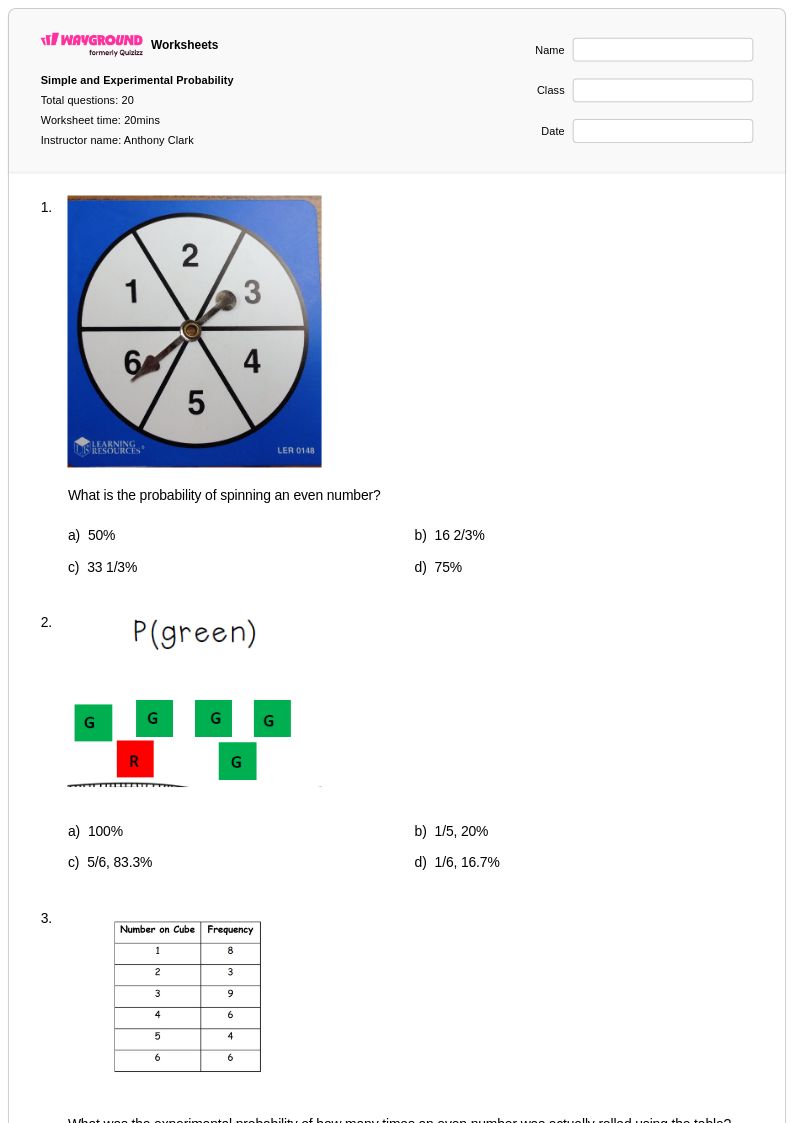
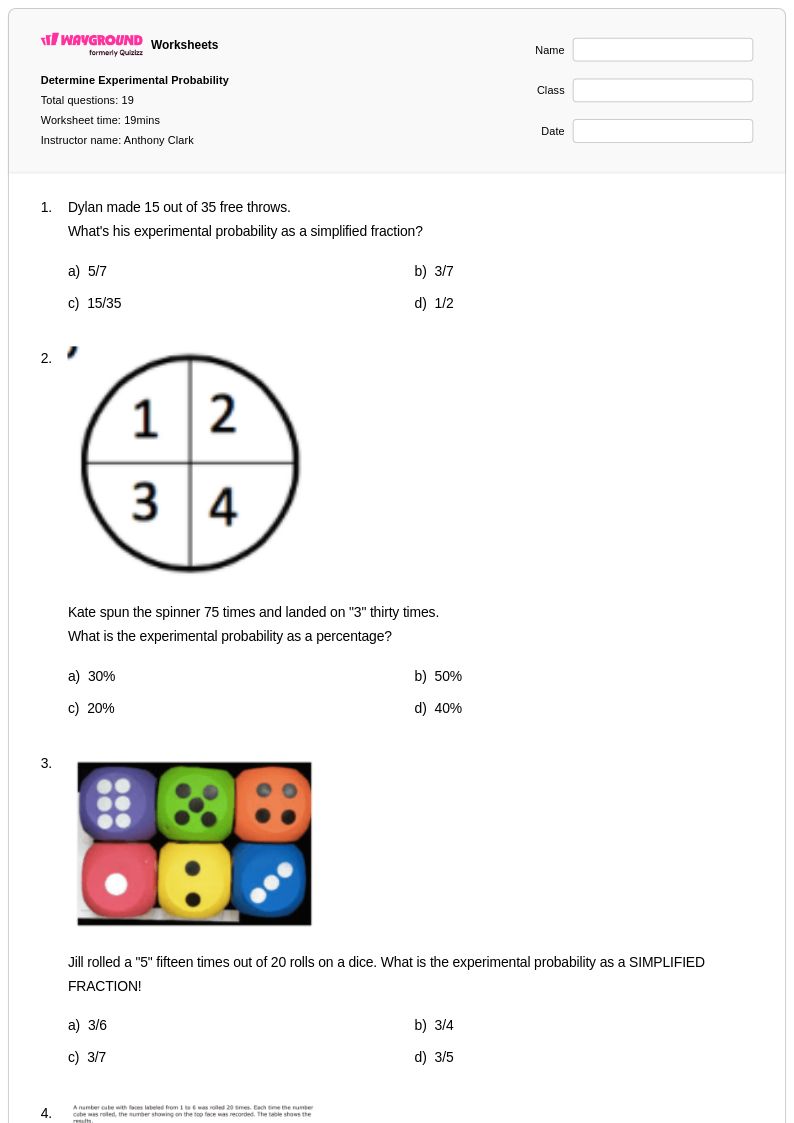
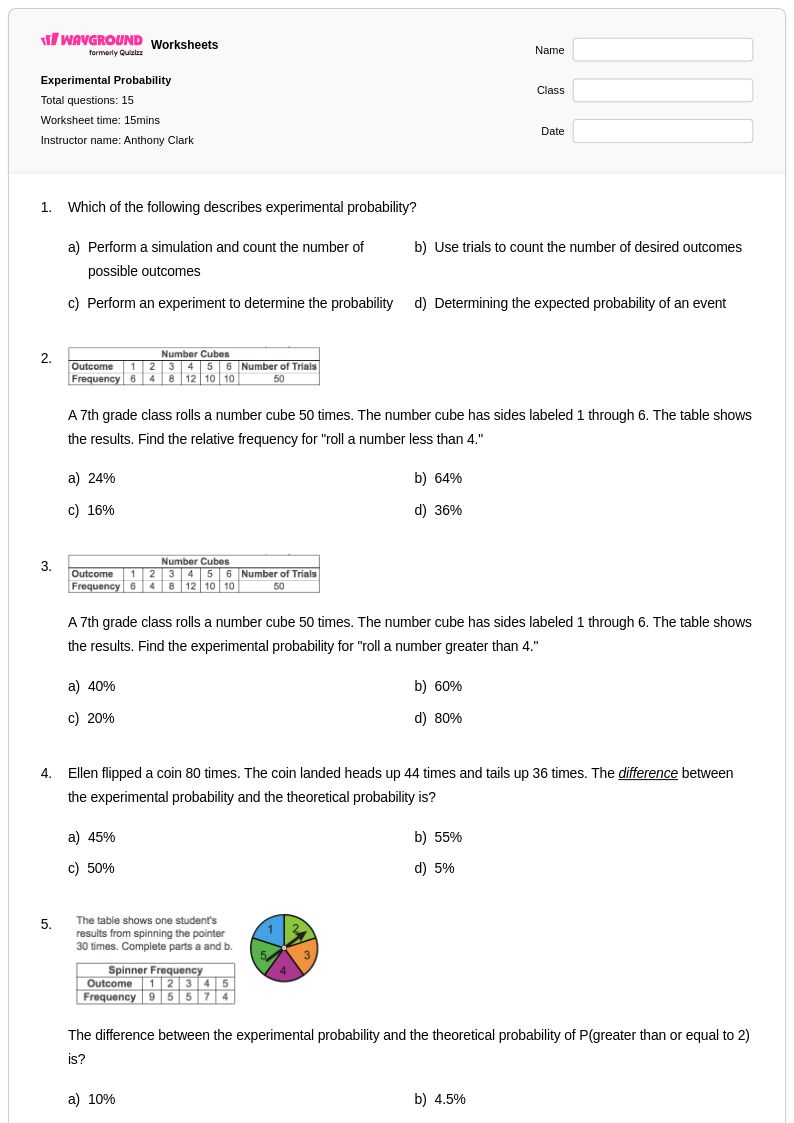
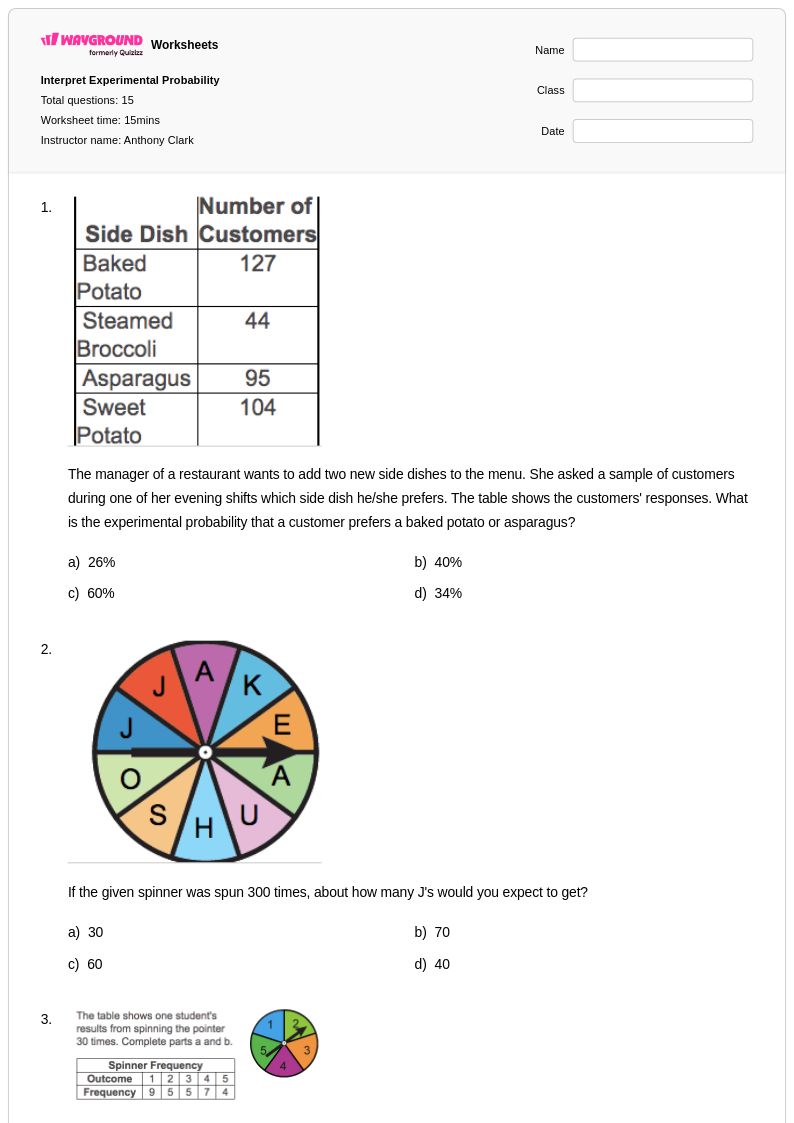
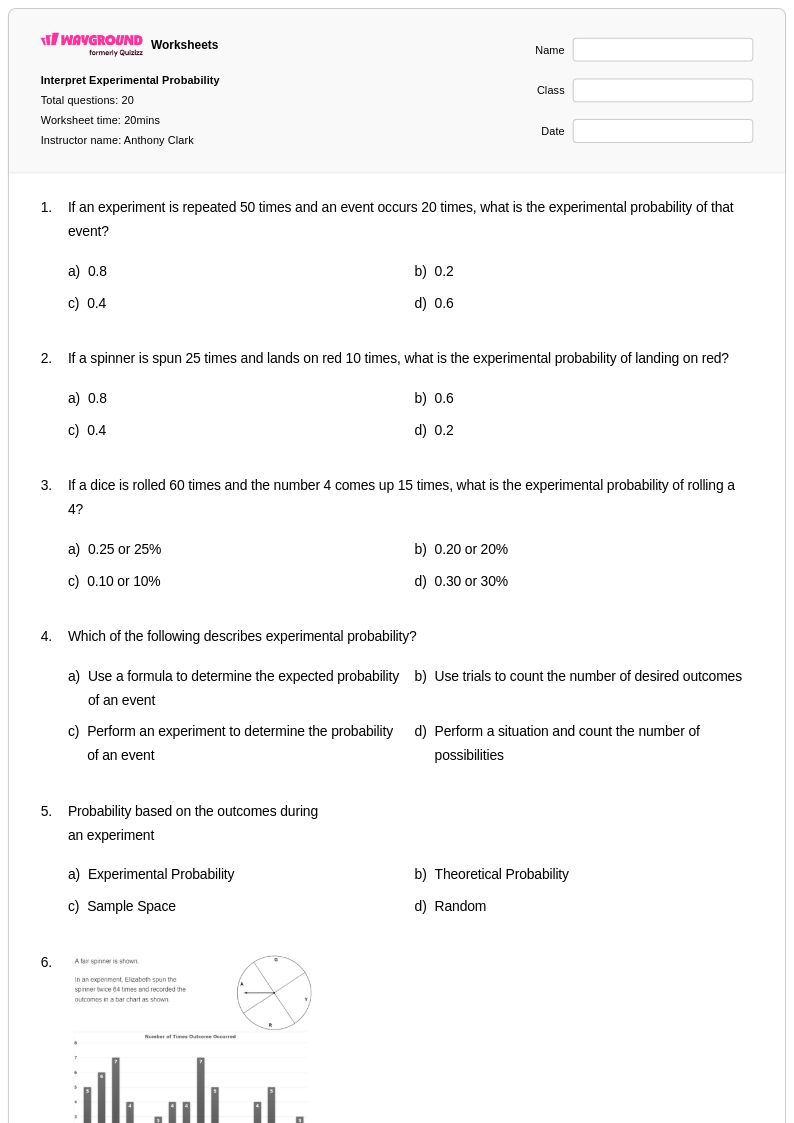
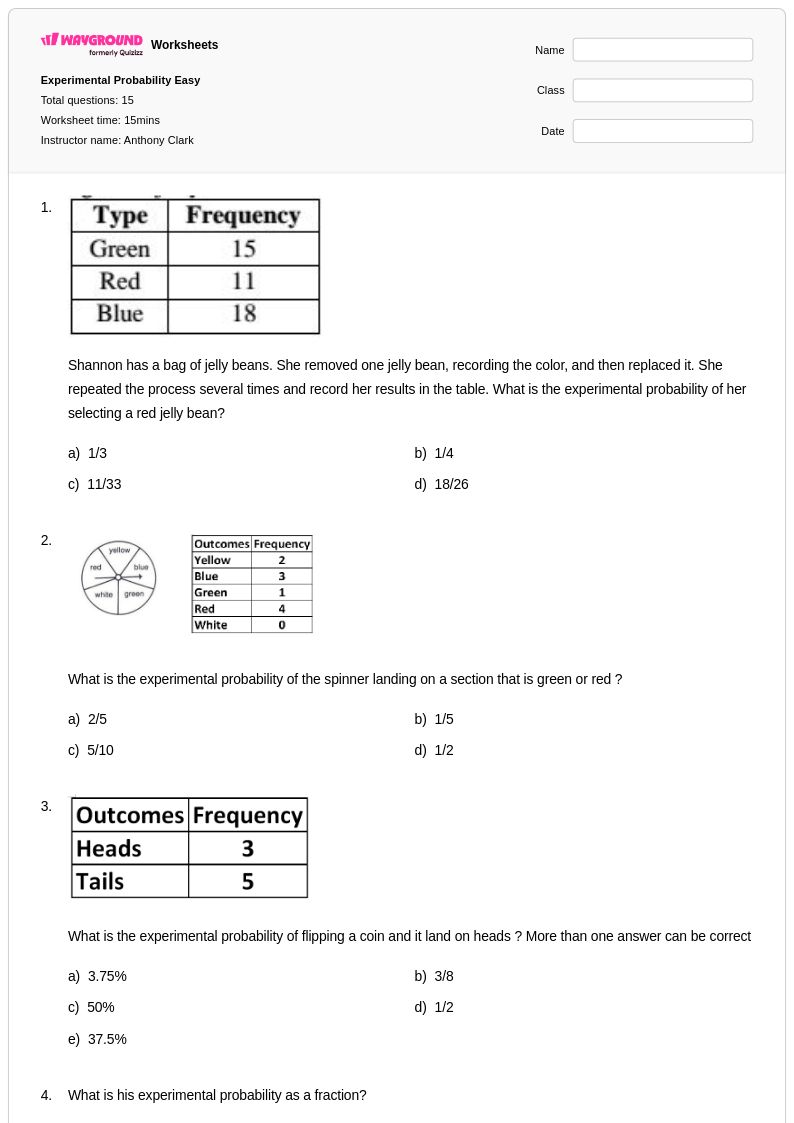
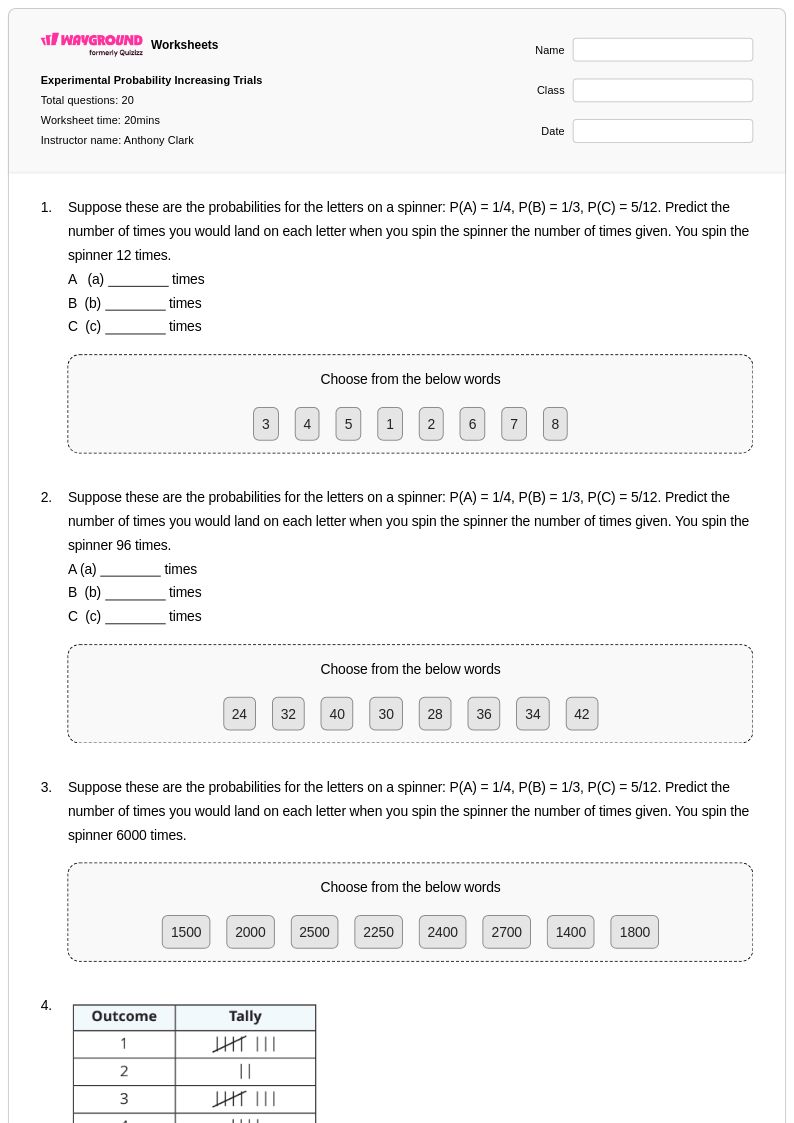
Experimental probability worksheets for Year 9 students available through Wayground (formerly Quizizz) provide comprehensive practice in collecting data through hands-on experiments and calculating probabilities based on actual outcomes rather than theoretical predictions. These carefully designed practice problems strengthen students' understanding of how experimental results can differ from theoretical expectations, teaching them to conduct probability experiments using dice, coins, spinners, and other manipulatives while recording and analyzing their findings. The worksheets include detailed answer keys that guide students through the process of comparing experimental probability to theoretical probability, calculating relative frequency, and understanding how sample size affects the accuracy of experimental results. These free printables offer structured practice in organizing data tables, creating frequency distributions, and interpreting probability as a ratio of favorable outcomes to total trials conducted.
Wayground (formerly Quizizz) supports mathematics educators with millions of teacher-created experimental probability resources that can be easily searched and filtered by specific Year 9 learning objectives and curriculum standards. Teachers benefit from robust differentiation tools that allow them to modify worksheet difficulty levels, customize practice problems to match their students' needs, and access both printable pdf formats for traditional classroom use and digital versions for online learning environments. The platform's extensive collection enables educators to efficiently plan lessons that progress from simple experimental probability concepts to more complex applications, while providing targeted practice for remediation and enrichment activities. These comprehensive worksheet collections streamline the process of finding age-appropriate experimental probability exercises that align with ninth-grade mathematics standards, allowing teachers to focus on instruction while ensuring students receive adequate skill practice through varied problem types and real-world probability scenarios.
FAQs
How do I teach experimental probability to 9th graders?
At grade 9, experimental probability should be framed within the broader context of statistical reasoning. Students at this level are ready to work with relative frequency distributions, not just single-experiment ratios. A strong approach: give students a data set from a real or realistic scenario — survey results, quality control samples, sports statistics — and ask them to calculate experimental probabilities, build a frequency distribution, and then evaluate how much confidence they'd place in the results given the sample size. The emphasis shifts from 'how do you calculate it' to 'what does it actually tell you.'
What exercises help 9th graders practice experimental probability?
Grade 9 practice should include problems that require students to calculate relative frequency from raw data, compare experimental probability across different sample sizes, and interpret what a given probability estimate means in context. Problems involving frequency distributions and data tables — rather than simple coin-flip simulations — are more appropriate at this level. Strong problems also ask students to identify the limitations of an experimental result: what would need to change for the estimate to be more reliable?
What mistakes do 9th graders commonly make with experimental probability?
At grade 9, the calculation errors are usually minor — the bigger problem is interpretive. Students frequently treat experimental probability as exact rather than as an estimate with inherent variability. They also struggle to connect sample size to reliability in a quantitative way, knowing vaguely that 'more trials is better' without being able to explain why a result from 500 trials is more trustworthy than one from 20. A third issue: students confuse relative frequency with probability in a theoretical sense, especially when working with continuous data.
How do I use Wayground's Grade 9 experimental probability worksheets?
The worksheets include complete answer keys and are available in both printable and digital formats. Assign them as digital quizzes on Wayground for automatic response collection, or download the PDF for paper-based practice — a good option for schools managing screen time or working in low-device settings. The same content works either way, and the answer key is included regardless of format.
How does experimental probability fit into the 9th grade math curriculum?
In grade 9, experimental probability typically appears within an introductory statistics or data analysis unit, often as a bridge between descriptive statistics and formal probability theory. Students are expected to understand relative frequency as an empirical estimate of probability and to recognize that this estimate converges toward the theoretical value as sample size increases. This sets up the conceptual foundation for later work in probability distributions and statistical inference — experimental probability at grade 9 is less about running trials and more about interpreting what trial-based data can and cannot tell you.
How can I differentiate experimental probability practice for 9th graders with different skill levels?
For students who need support with the language-heavy data interpretation problems common at this level, Wayground's Read Aloud accommodation reads questions aloud so they can focus on the statistical reasoning. For students who are ready to go further, look for problems that ask them to design a sampling procedure and justify their sample size choice — that moves the work from calculation into genuine statistical thinking. At the worksheet level, Wayground's translation feature lets you serve the same rigorous content to English language learners in their home language.