
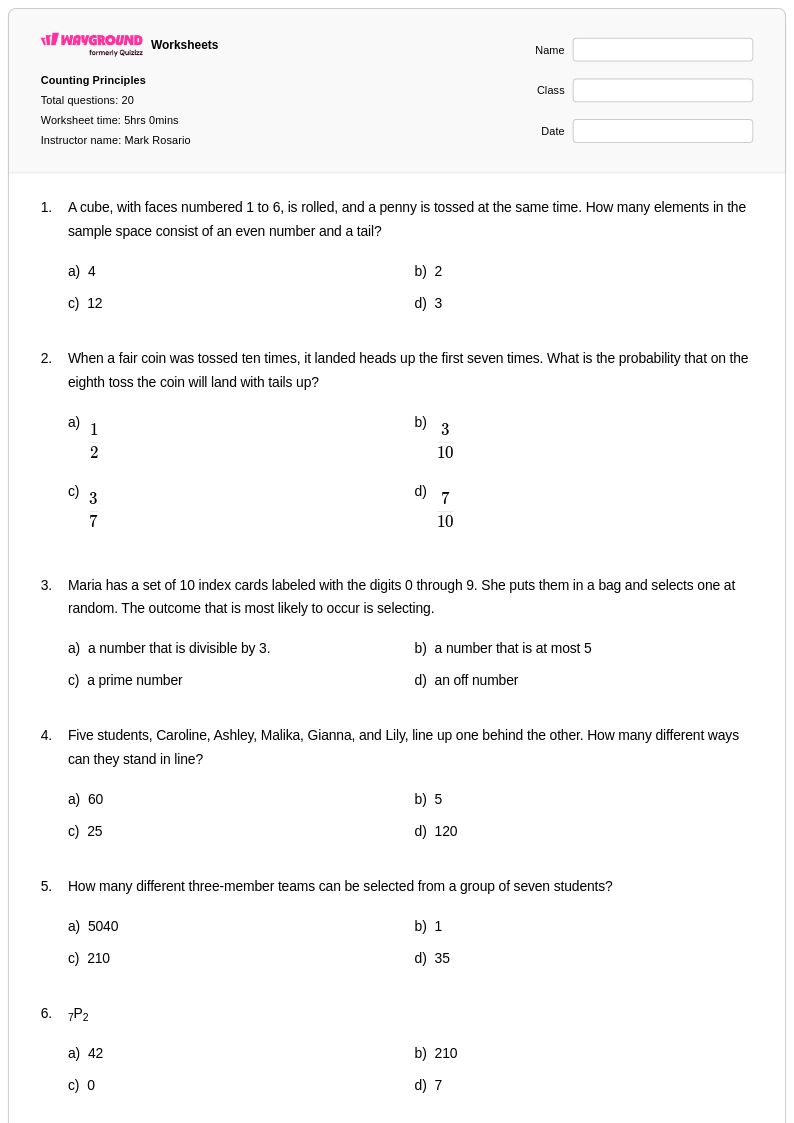
20 Q
9th
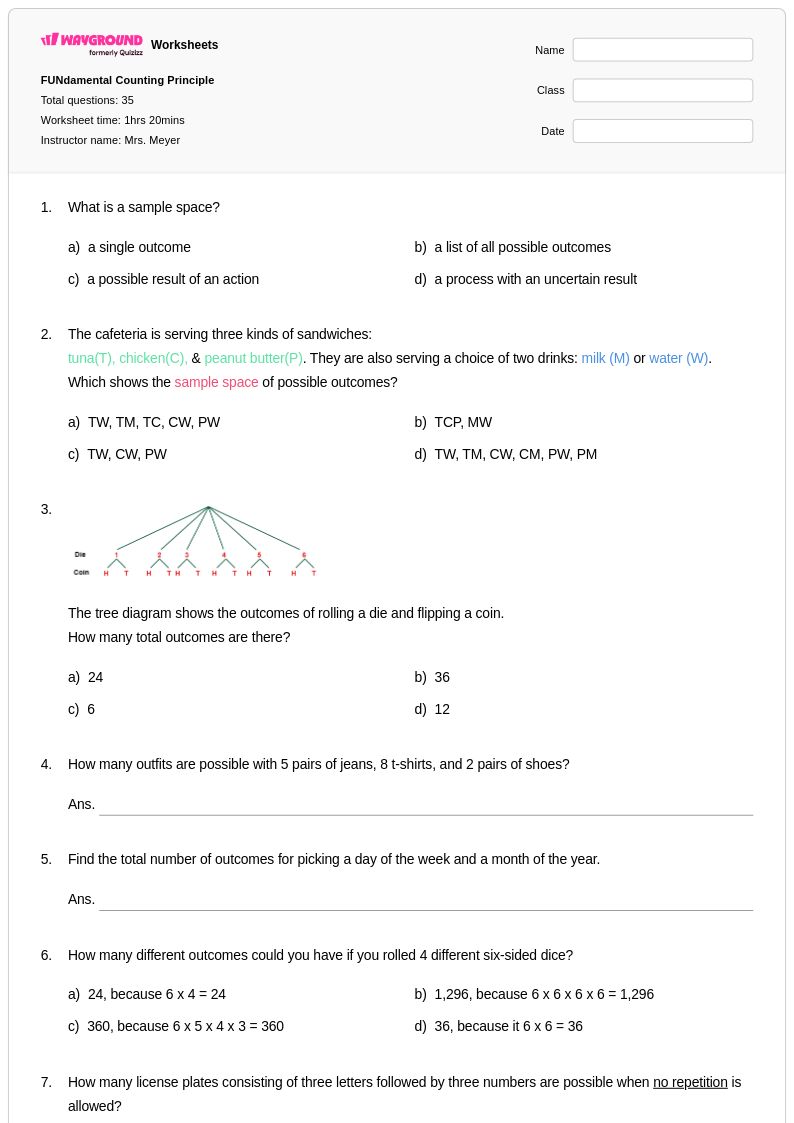
35 Q
9th
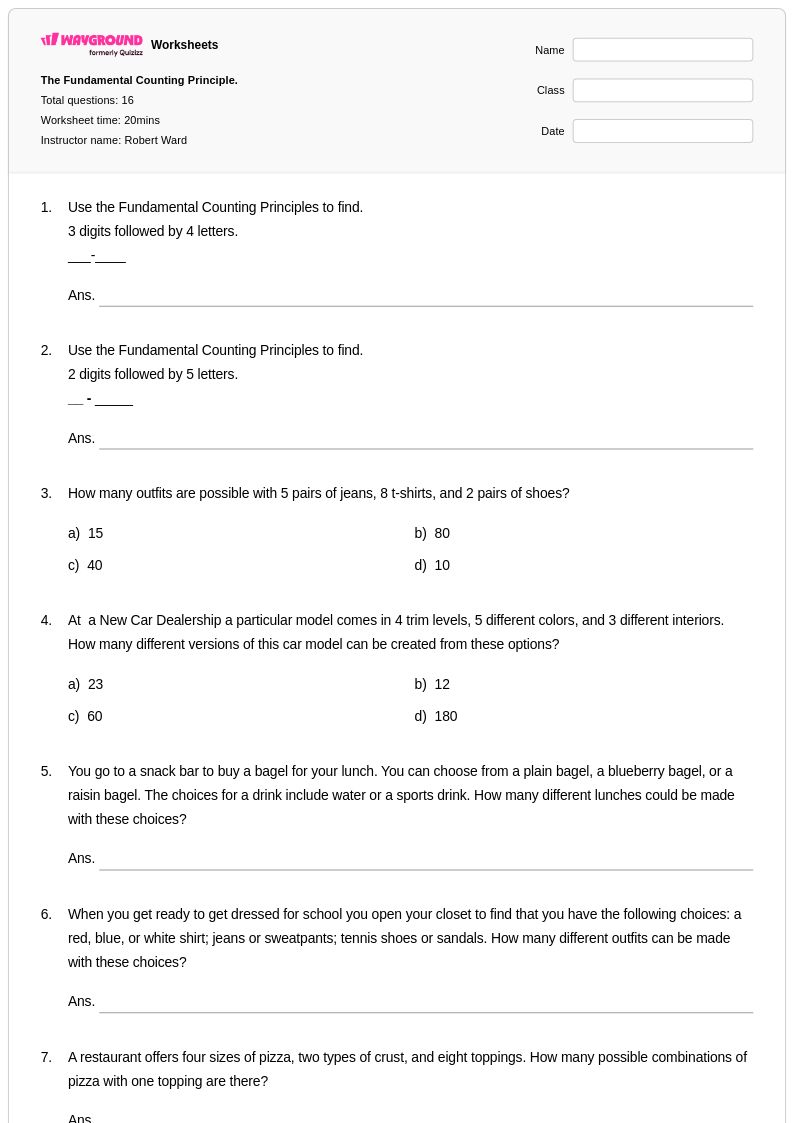
16 Q
9th - 12th
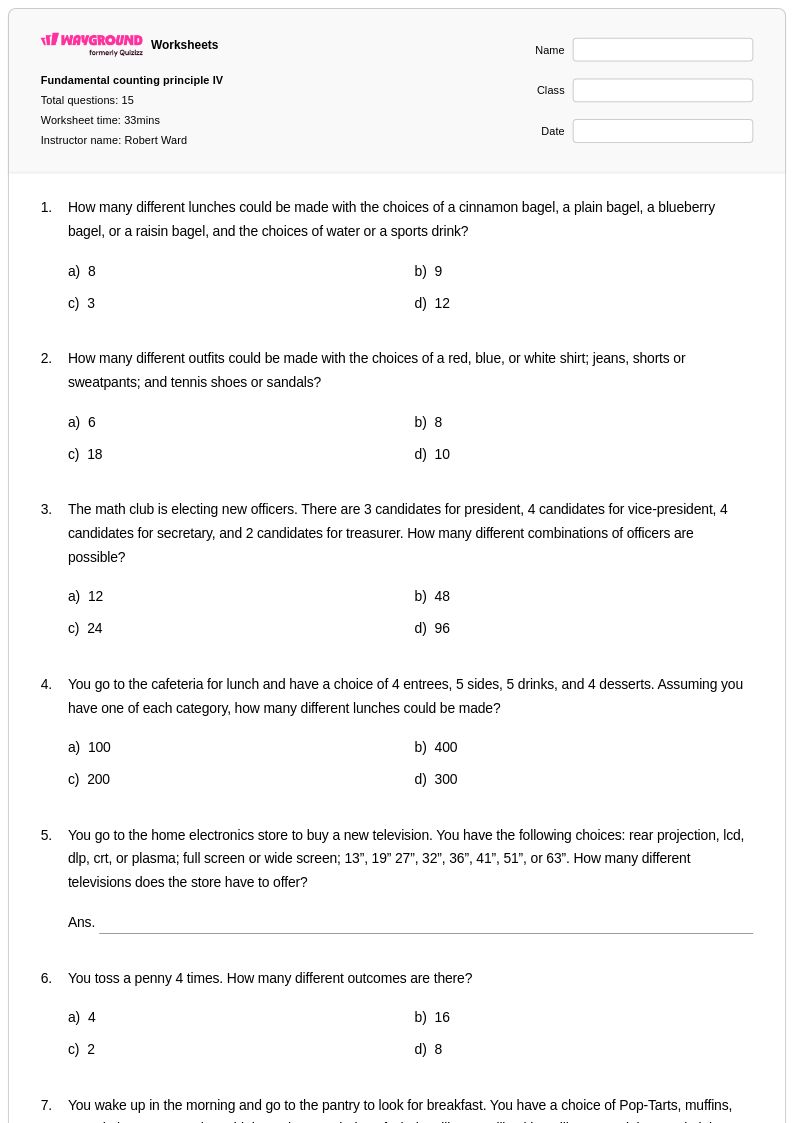
15 Q
9th - 12th
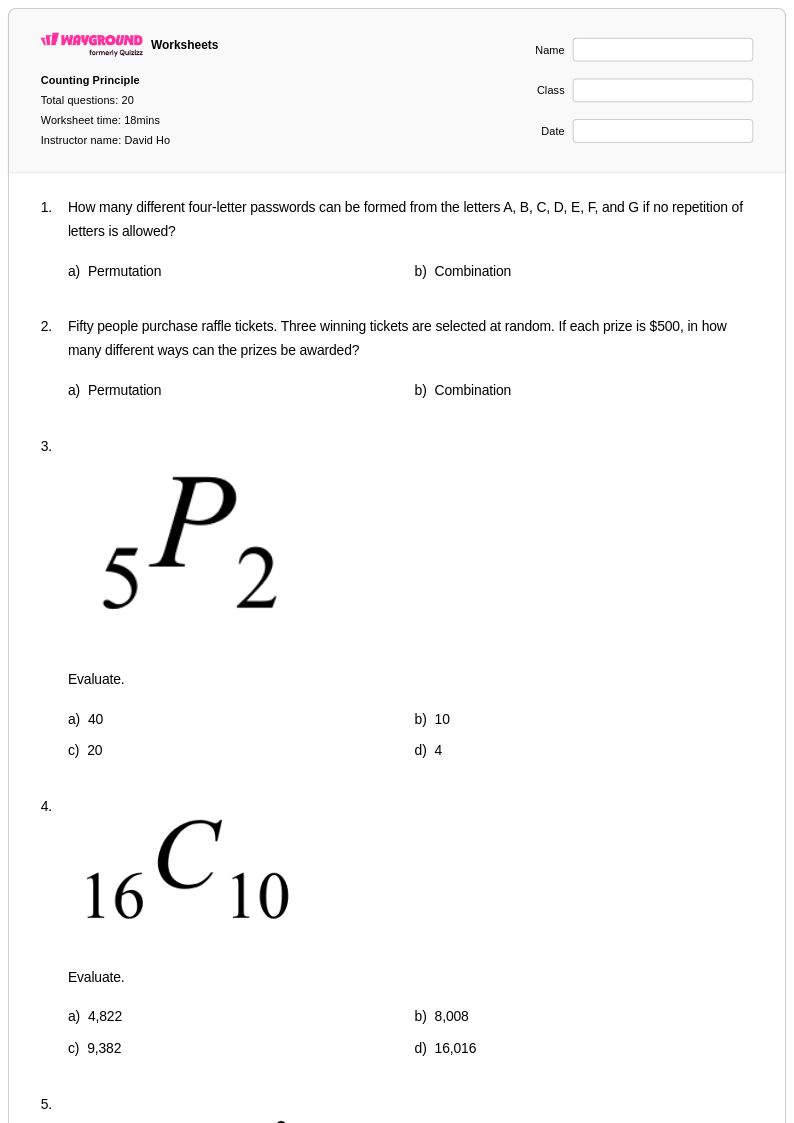
20 Q
9th - 12th
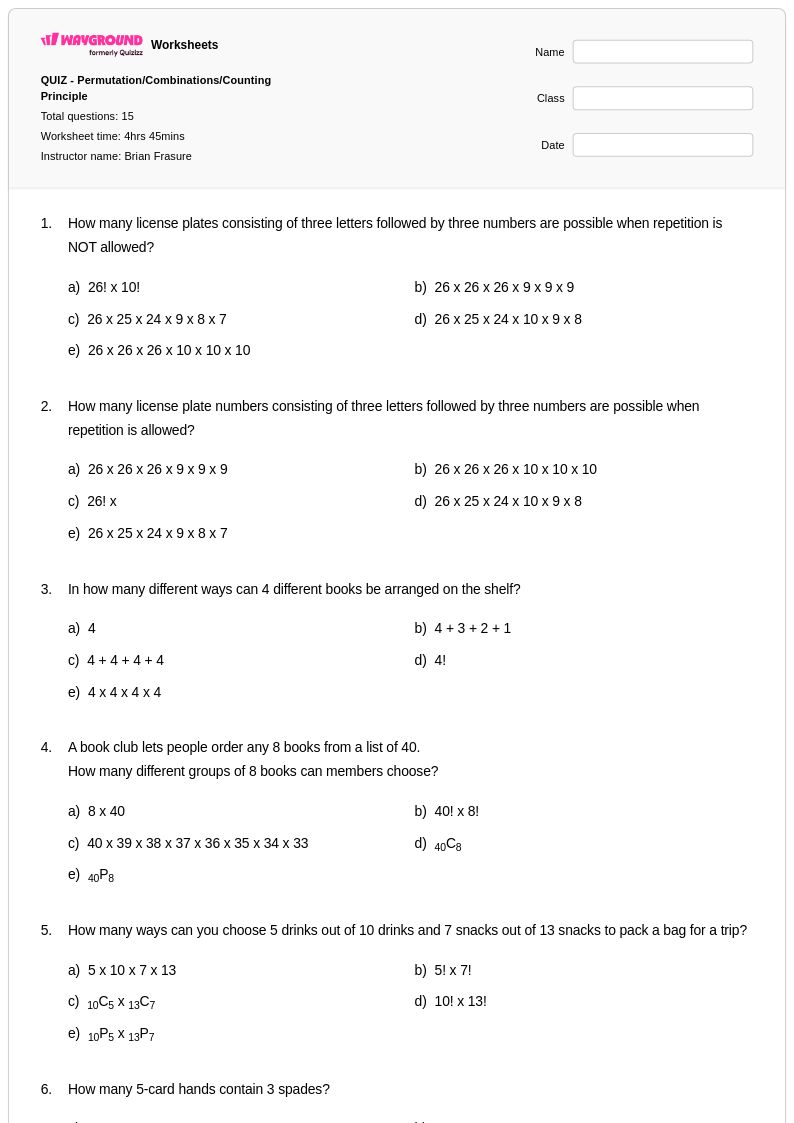
15 Q
9th - 12th
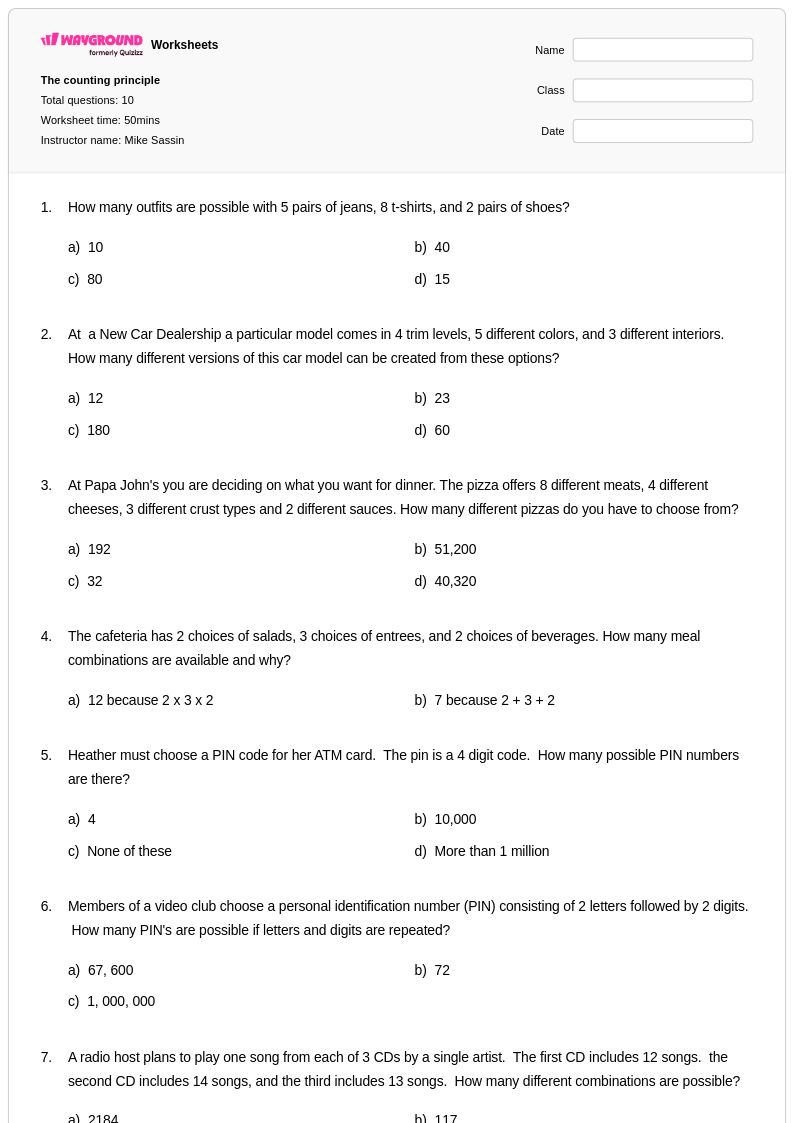
10 Q
8th - 10th
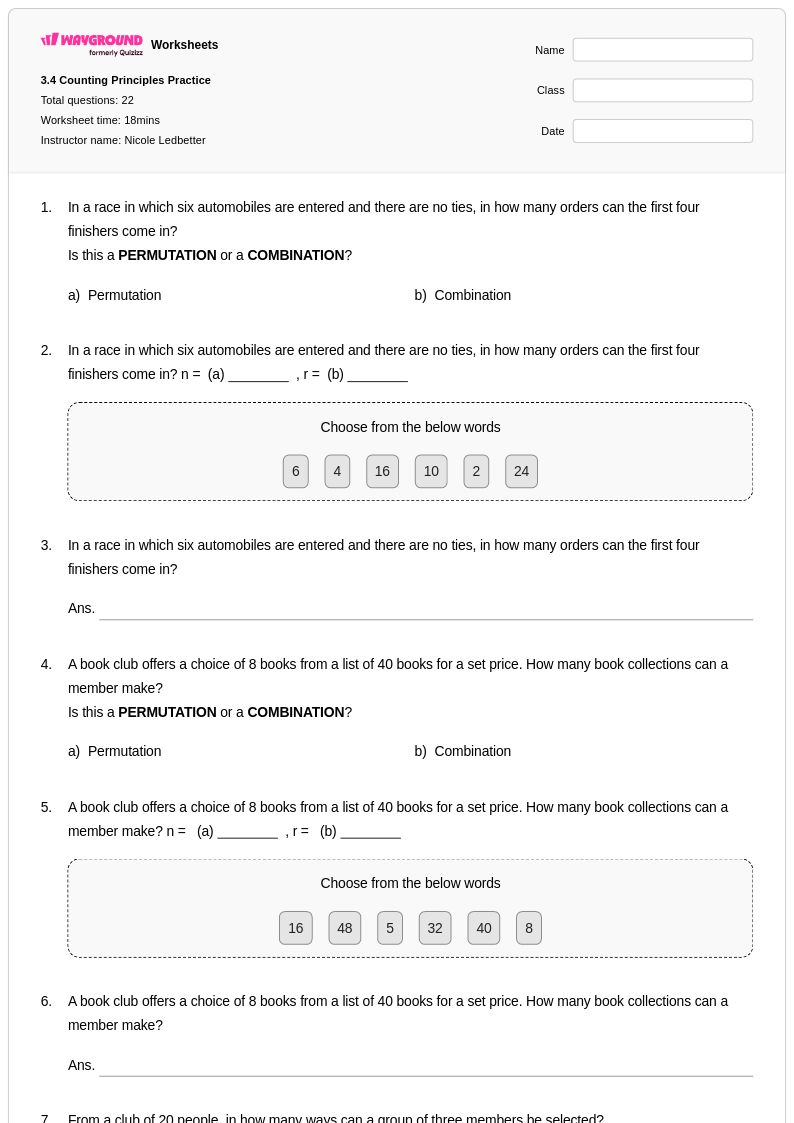
22 Q
9th - 12th
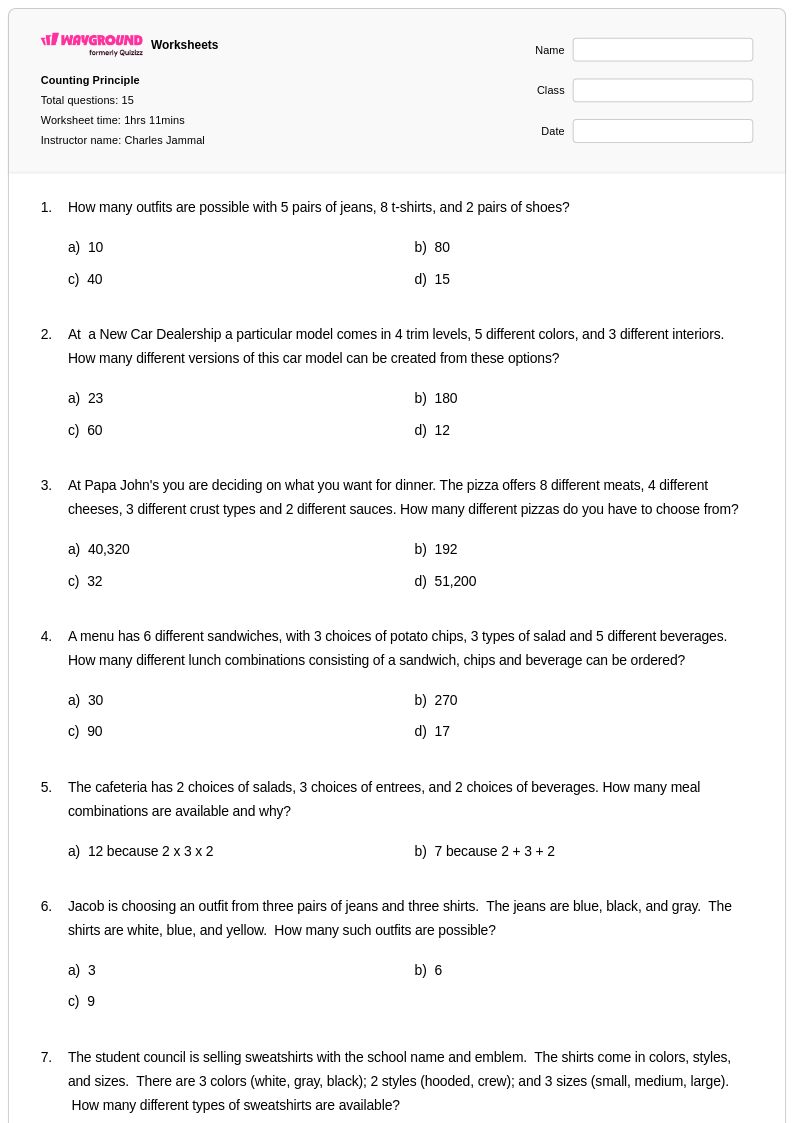
15 Q
9th - 12th
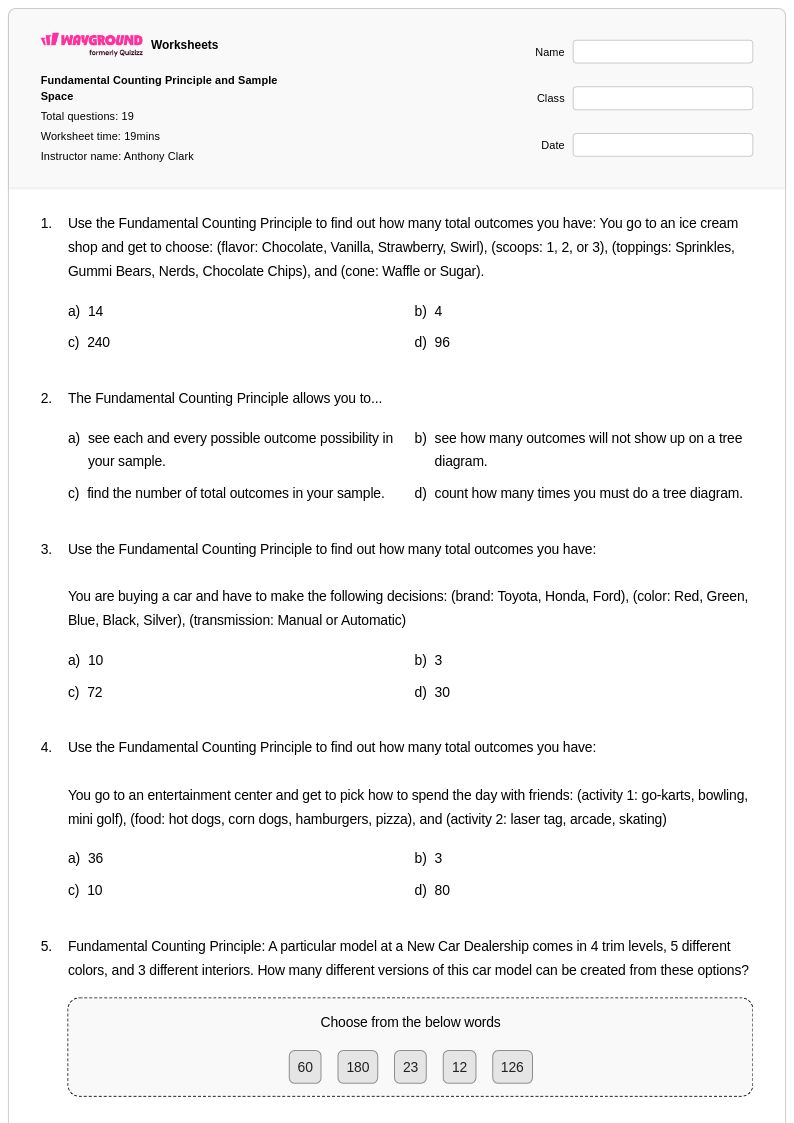
19 Q
7th - Uni
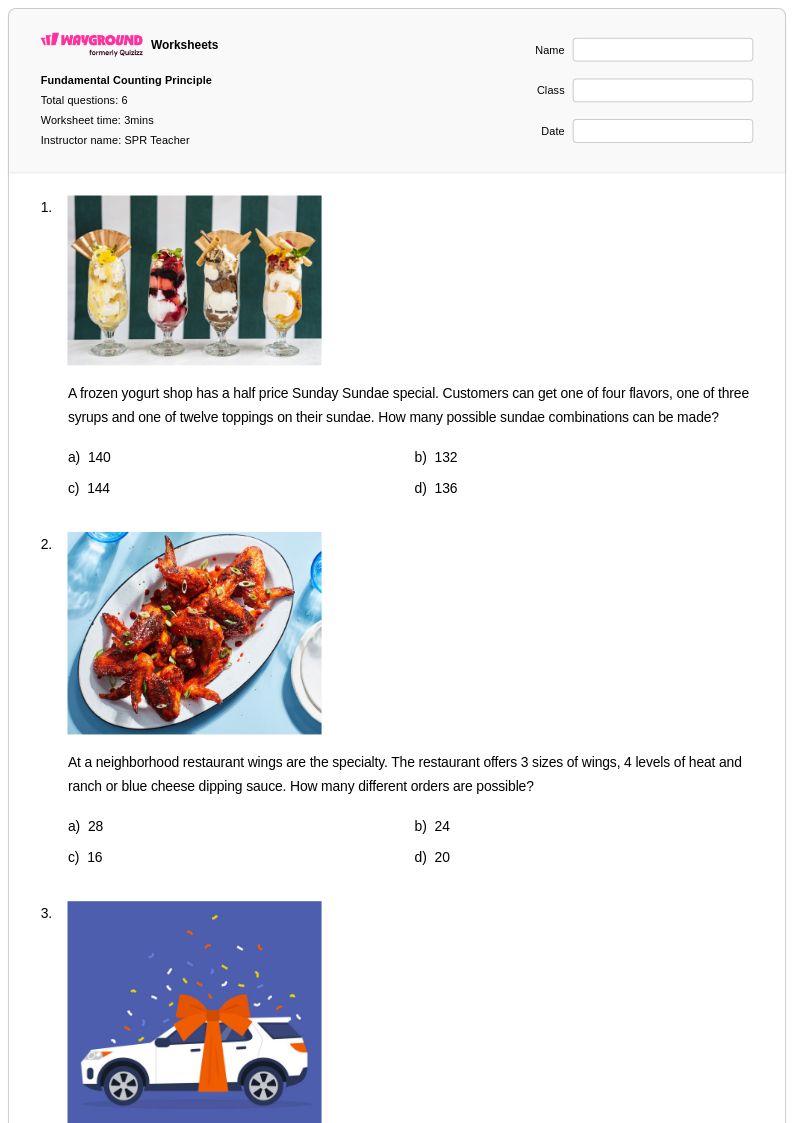
6 Q
8th - 11th
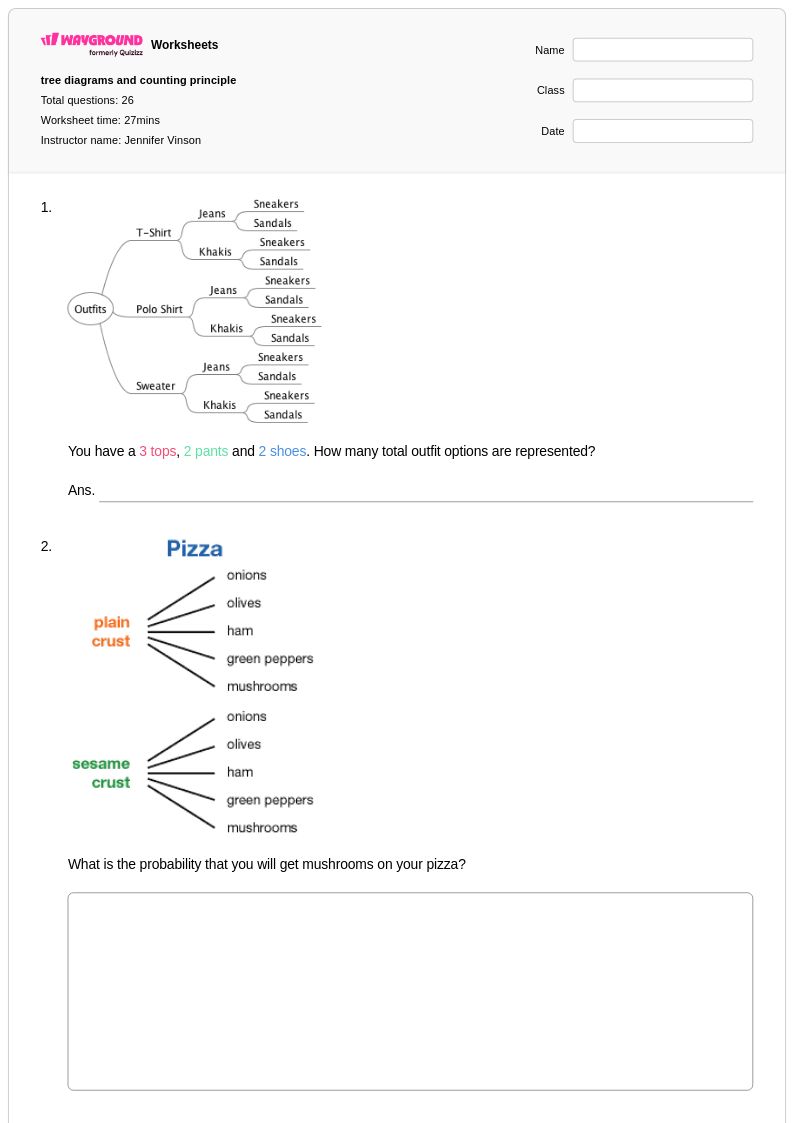
26 Q
9th - 12th
15 Q
7th - Uni
30 Q
9th - 12th
25 Q
9th - 12th
25 Q
9th - 12th
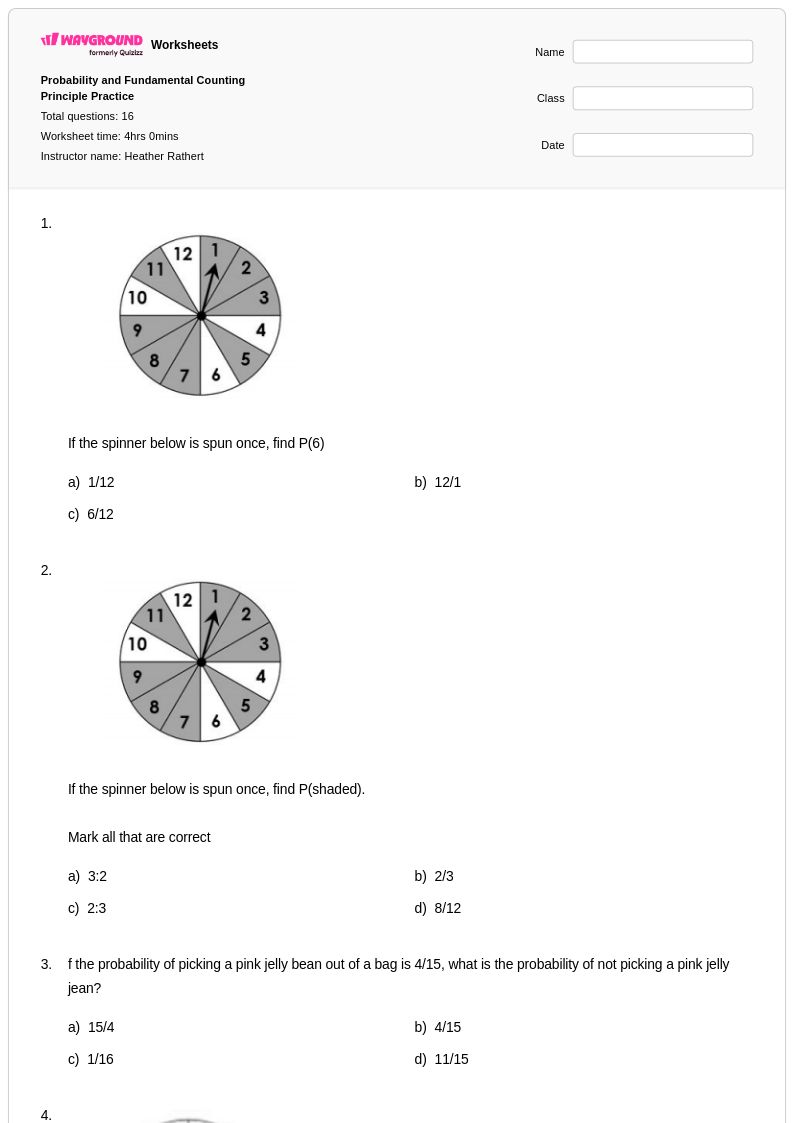
16 Q
9th - 12th
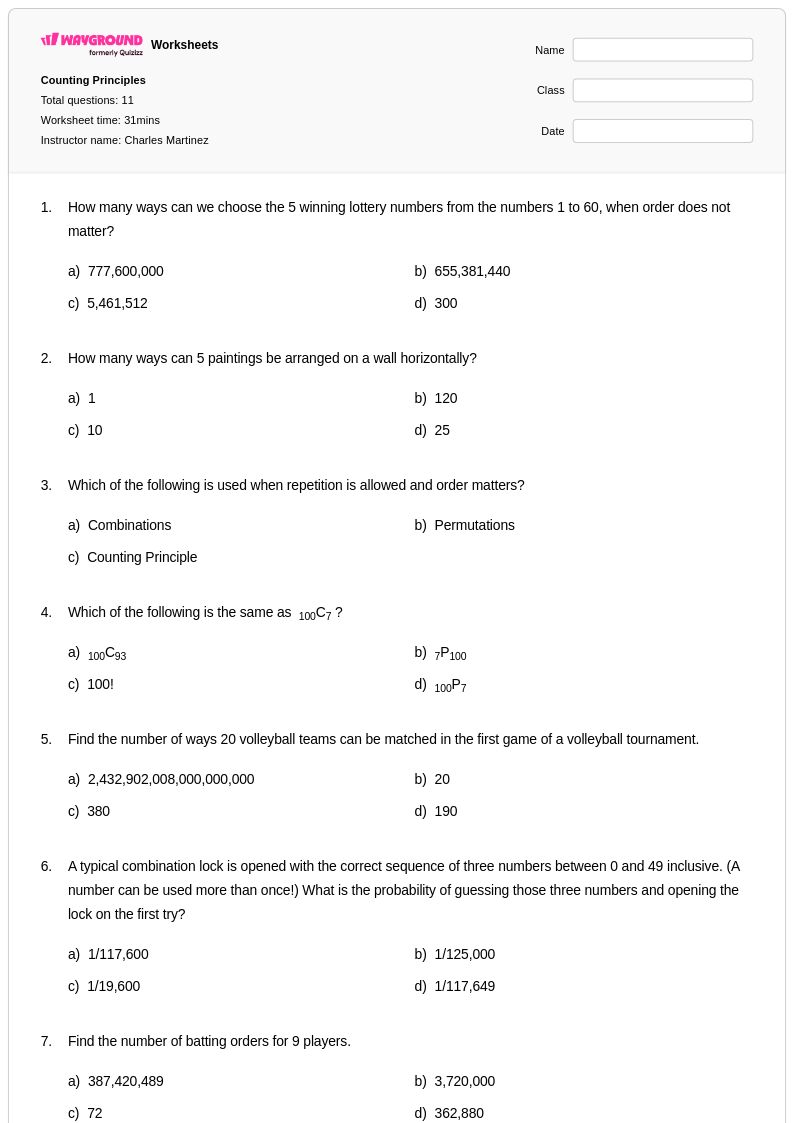
11 Q
9th - 12th
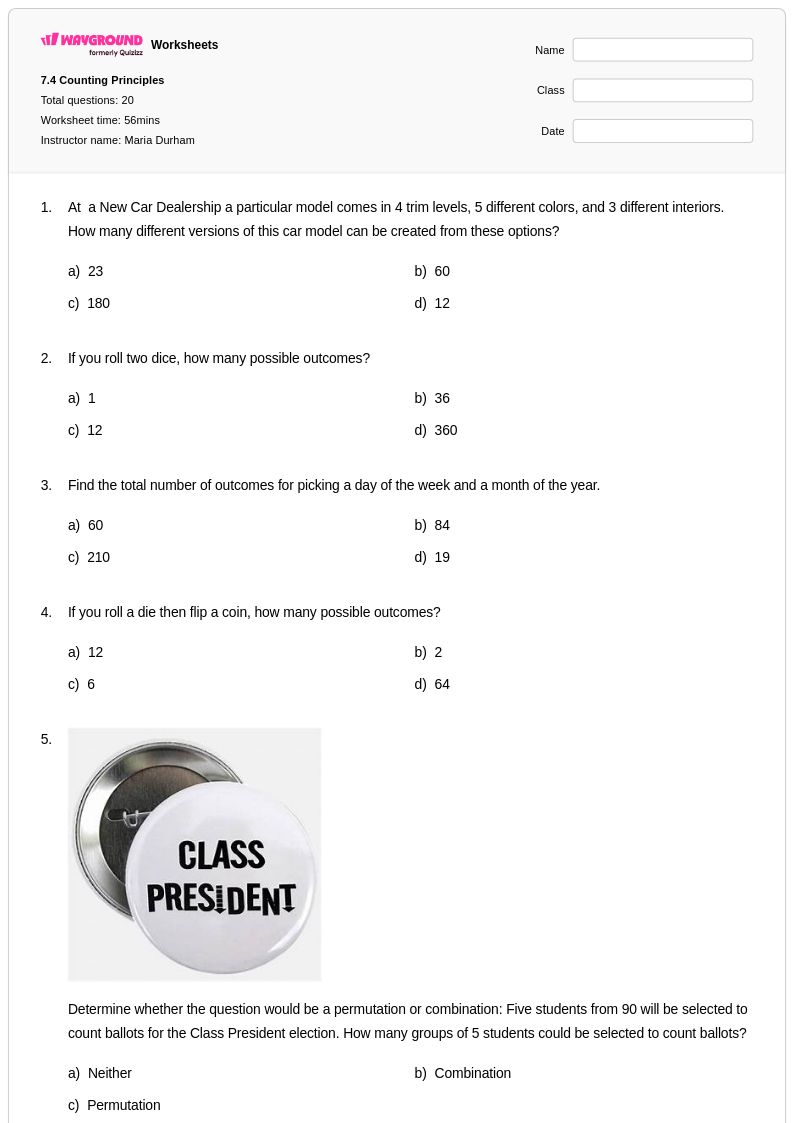
20 Q
9th - 12th
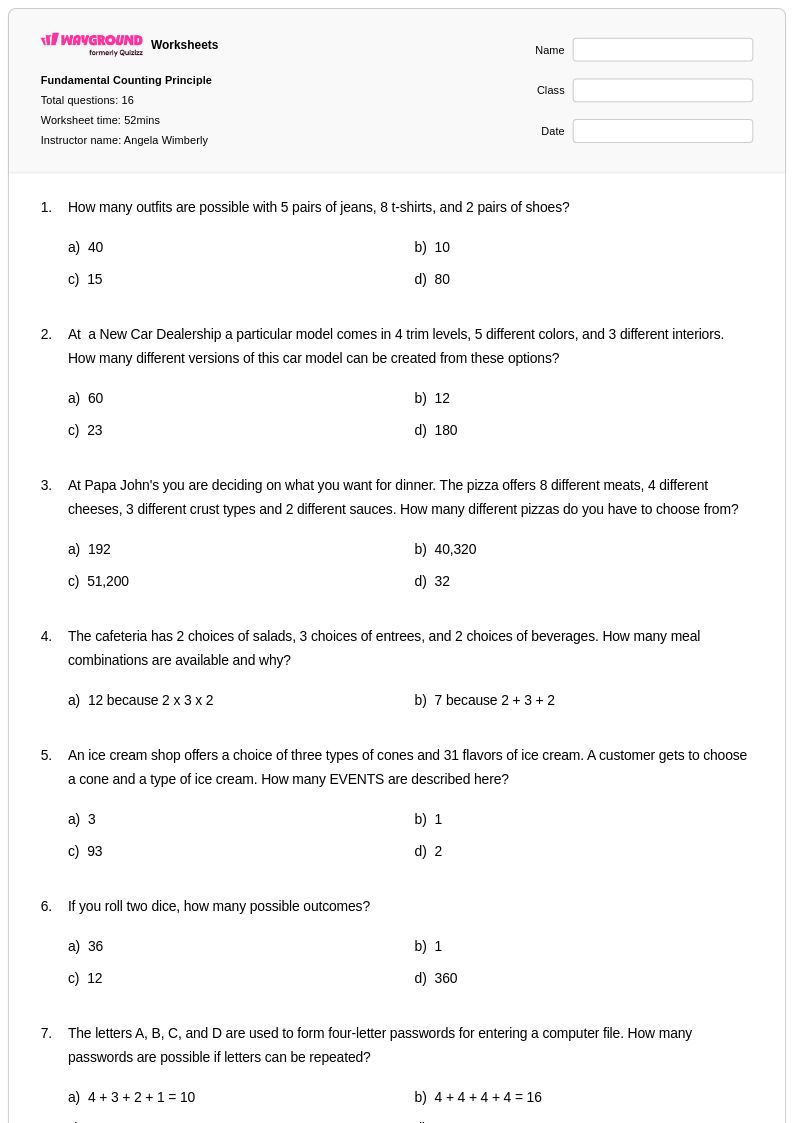
16 Q
9th - 11th
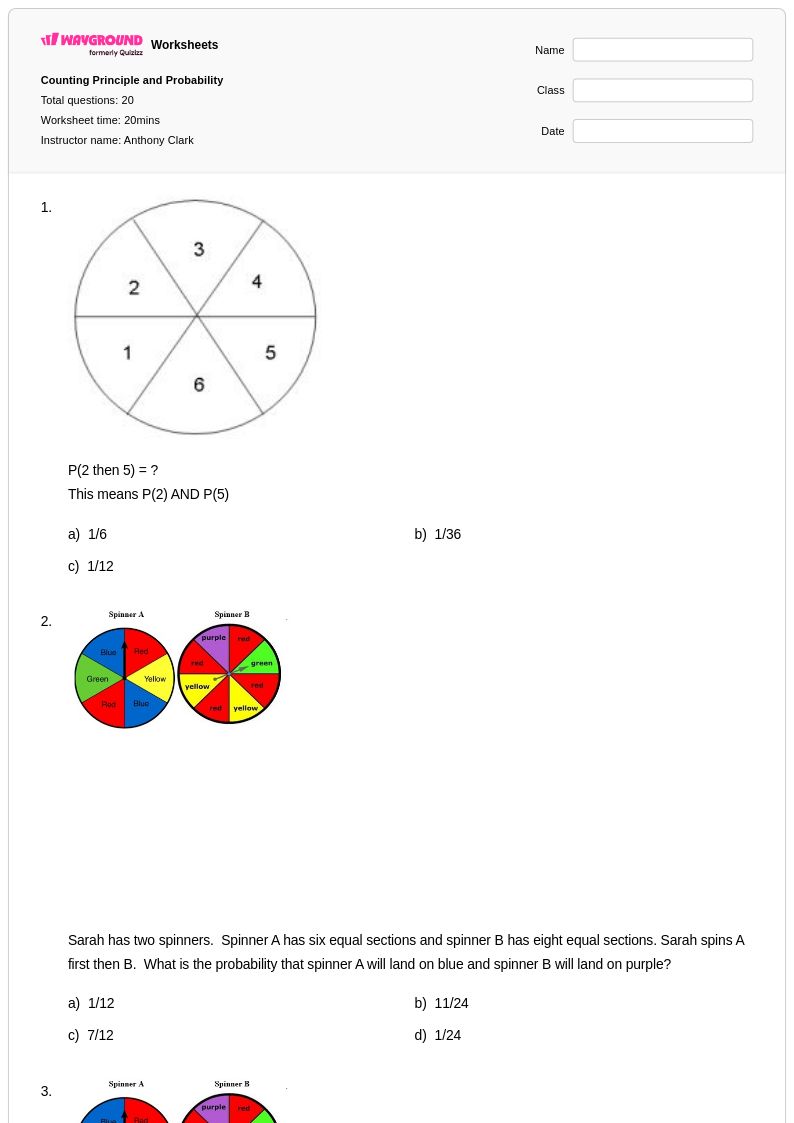
20 Q
7th - Uni
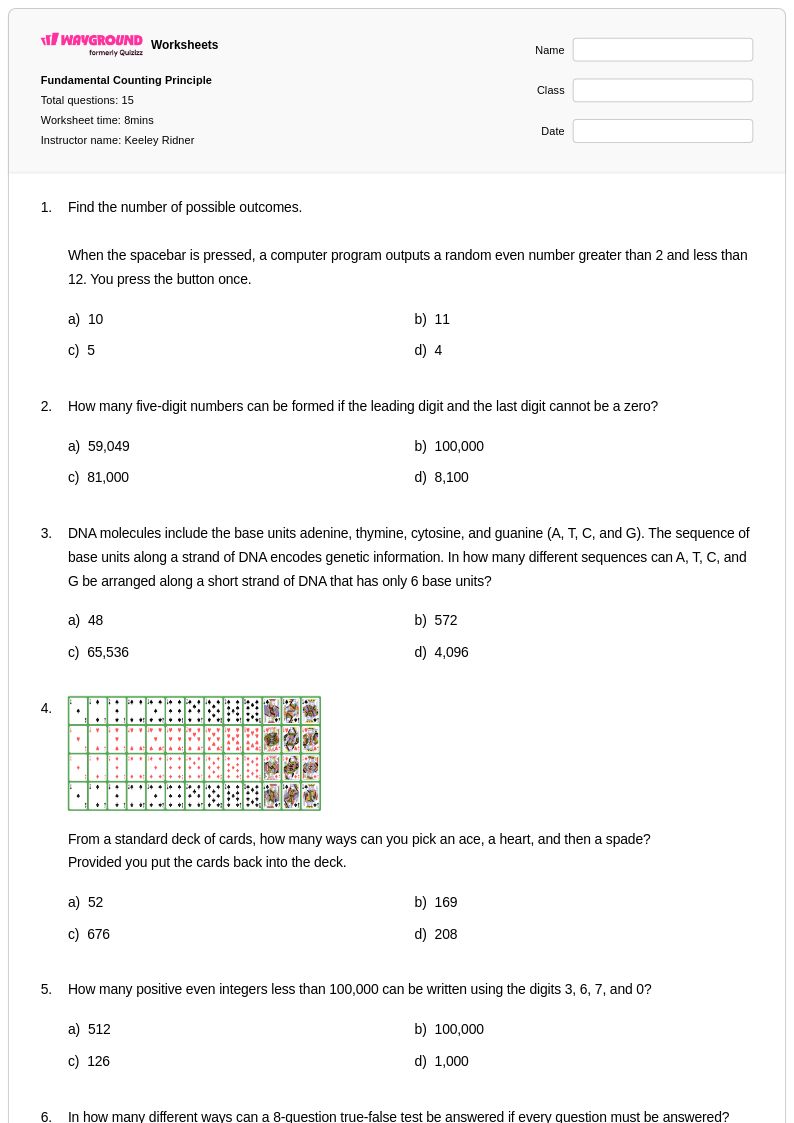
15 Q
9th - 12th
10 Q
8th - 12th
15 Q
9th - 12th
Explore Other Subject Worksheets for year 9
Explore printable Counting Principle worksheets for Year 9
Year 9 counting principle worksheets available through Wayground (formerly Quizizz) provide comprehensive practice with fundamental and multiplicative counting methods that form the foundation of probability and statistics. These expertly designed resources strengthen students' ability to systematically count outcomes using tree diagrams, the fundamental counting principle, and multi-step multiplication techniques essential for advanced statistical analysis. Each worksheet collection includes detailed answer keys and step-by-step solutions that help students master complex counting scenarios, from simple arrangements to sophisticated permutation problems. The free printable materials feature carefully scaffolded practice problems that progress from basic two-step counting situations to intricate multi-variable scenarios, ensuring students develop both computational accuracy and conceptual understanding of counting methodologies used throughout probability theory.
Wayground (formerly Quizizz) empowers mathematics educators with millions of teacher-created counting principle resources that streamline lesson planning and provide targeted skill practice for Year 9 students. The platform's robust search and filtering capabilities allow teachers to quickly locate worksheets aligned with specific curriculum standards, while advanced differentiation tools enable customization based on individual student needs and learning objectives. These comprehensive worksheet collections are available in both printable pdf formats for traditional classroom use and digital formats for interactive learning environments, supporting flexible implementation across diverse teaching contexts. Teachers can efficiently identify materials for remediation of foundational counting concepts, enrichment activities for advanced learners, and systematic skill practice that bridges elementary counting methods with more sophisticated probability and statistics topics encountered in higher-level mathematics courses.
FAQs
How do I teach the counting principle to Grade 9 students?
What counting principle exercises are useful for Grade 9?
What mistakes do Grade 9 students make with the counting principle?
How can I use Grade 9 counting principle worksheets on Wayground?
How does the counting principle fit into the high school Common Core curriculum?
How can I differentiate counting principle practice in Grade 9?
What grade do students learn the counting principle?