Free Printable Finding Average Worksheets for Year 6
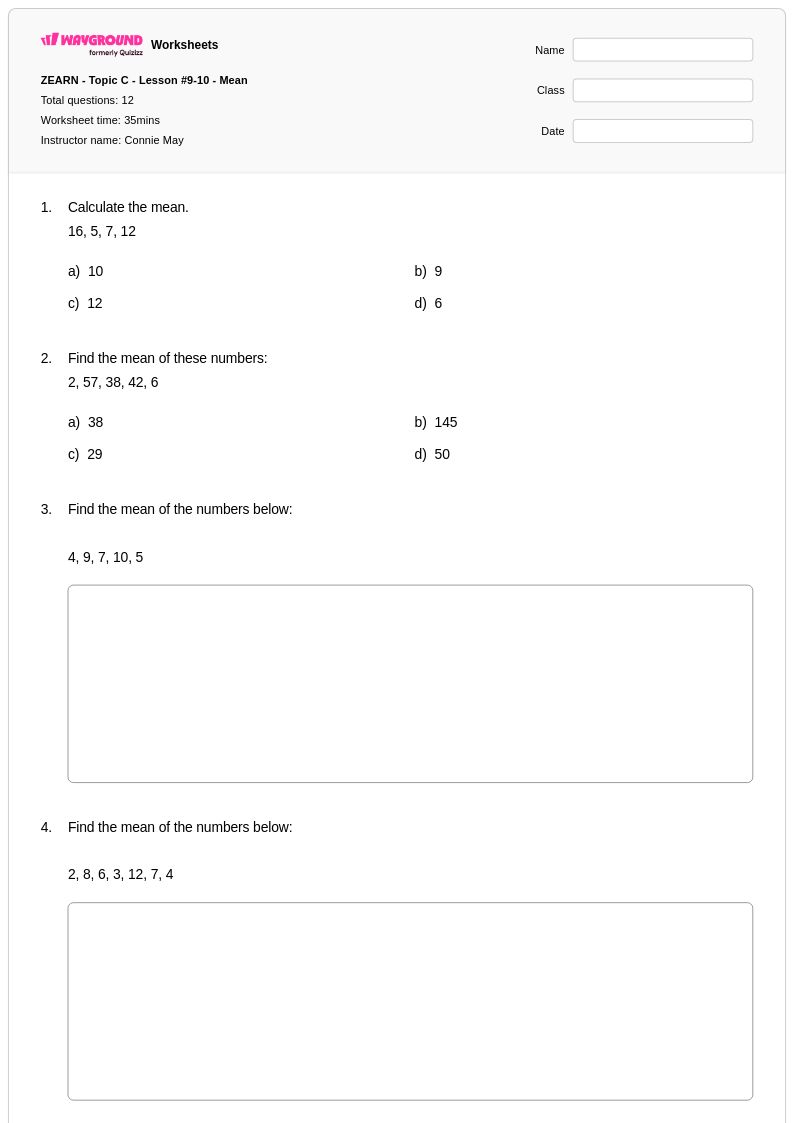
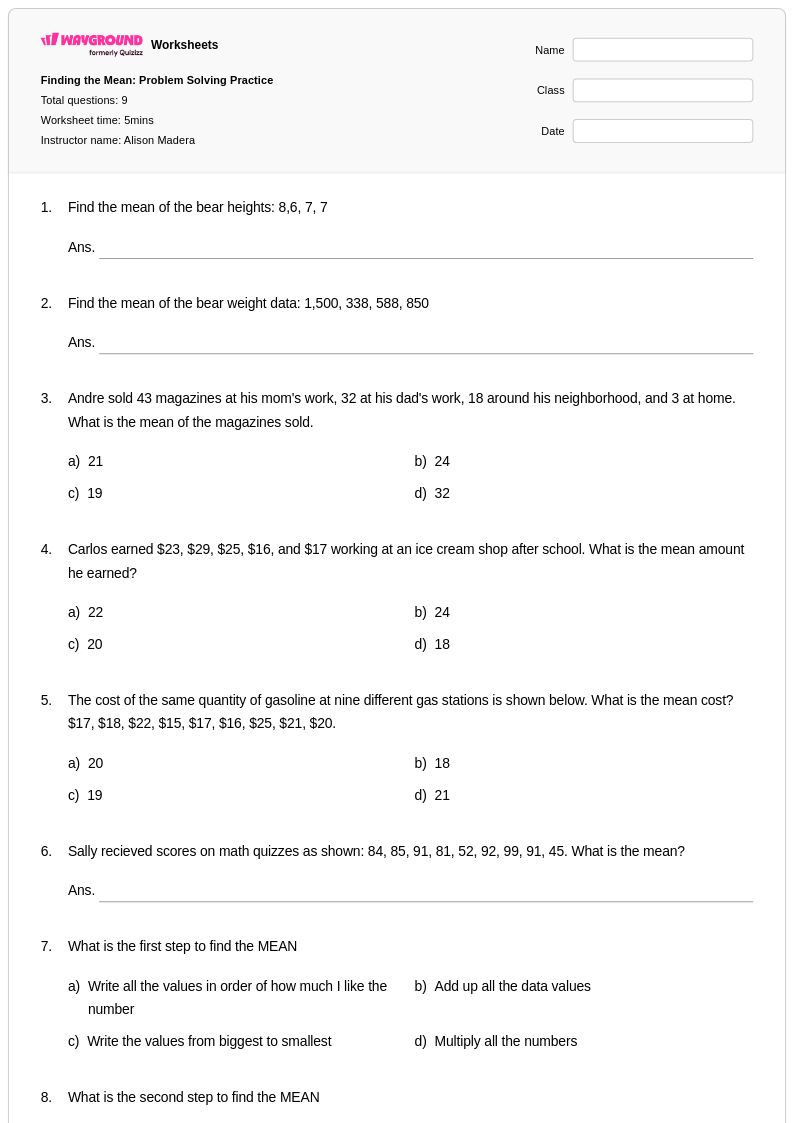
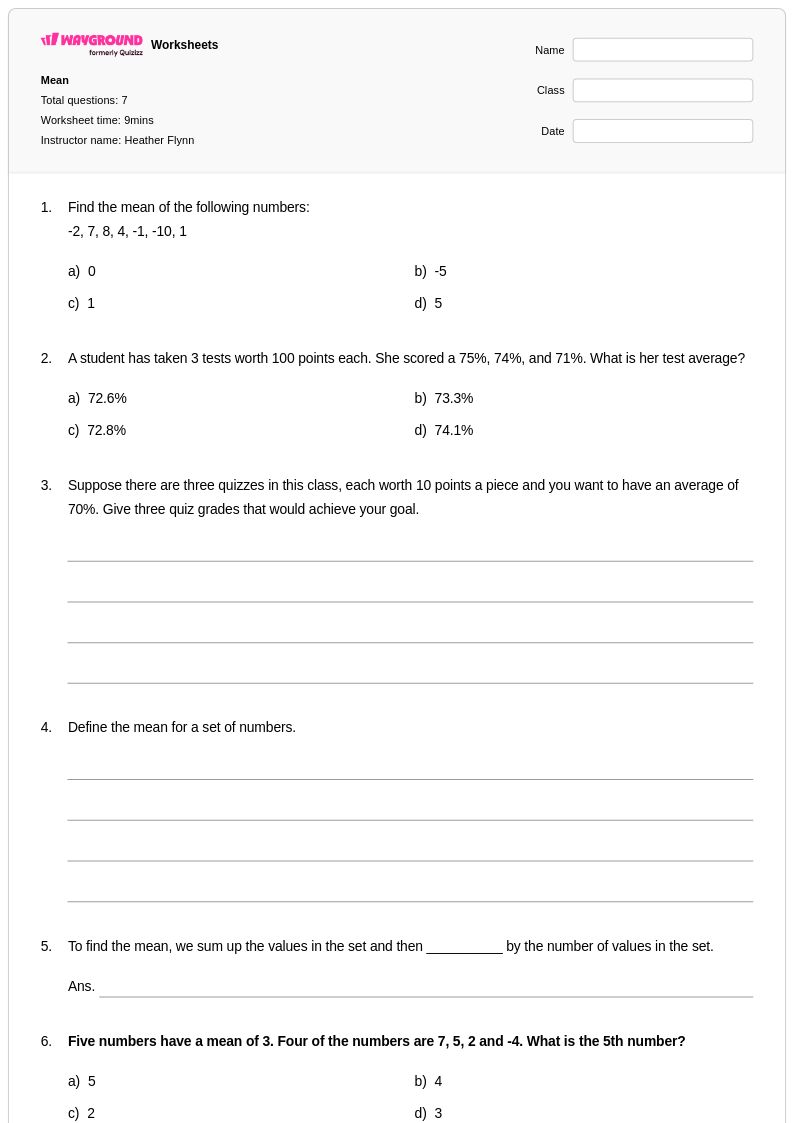
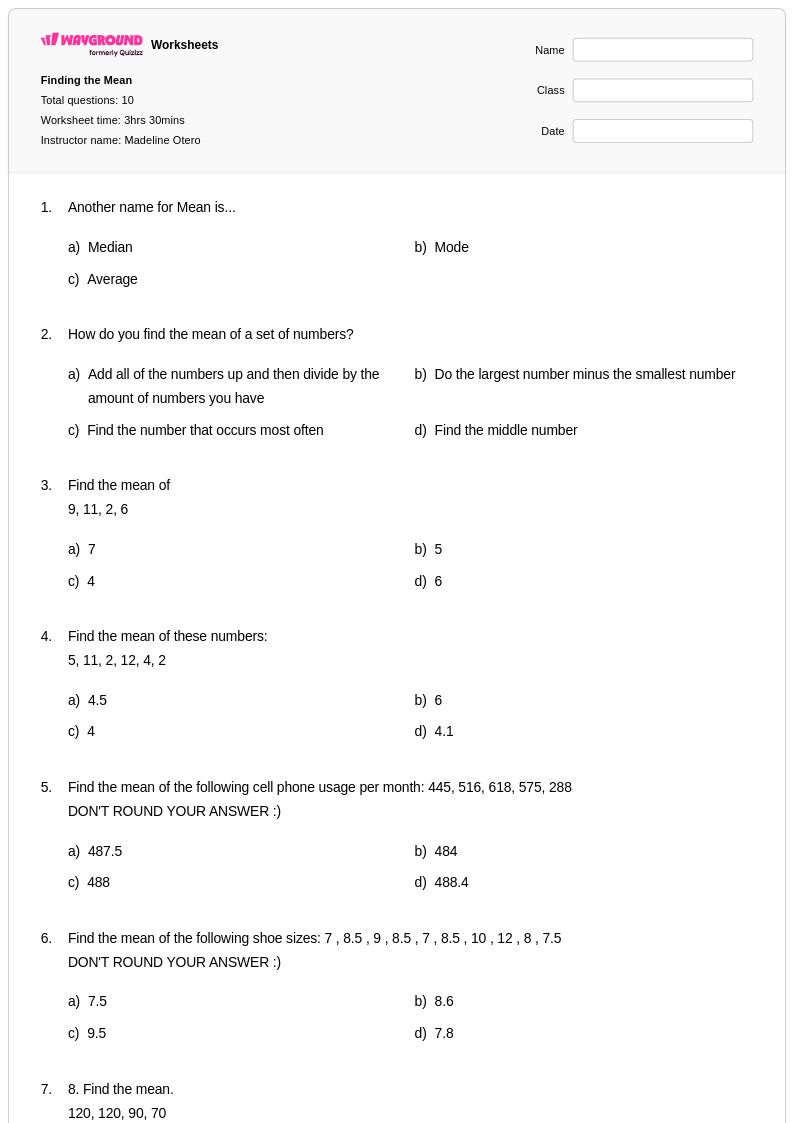
Year 6 finding average worksheets help students master calculating mean values through engaging practice problems, featuring free printable PDFs with comprehensive answer keys for effective mathematics learning.
Explore printable Finding Average worksheets for Year 6
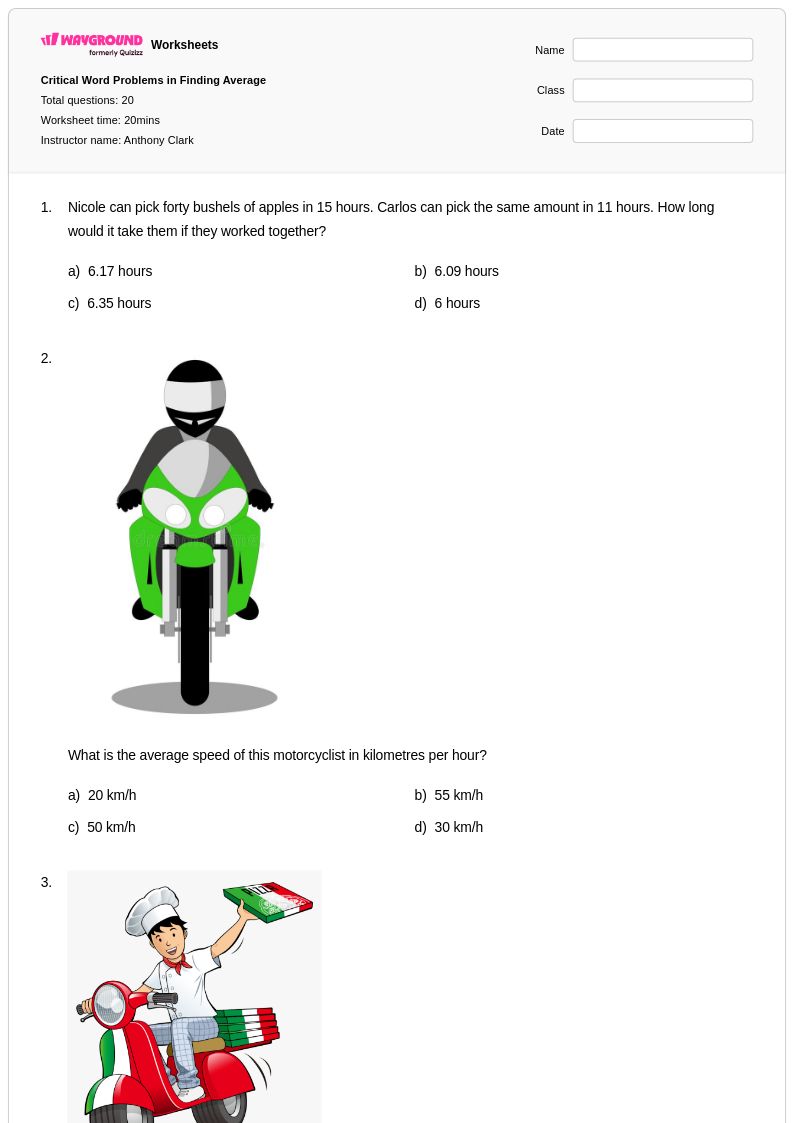
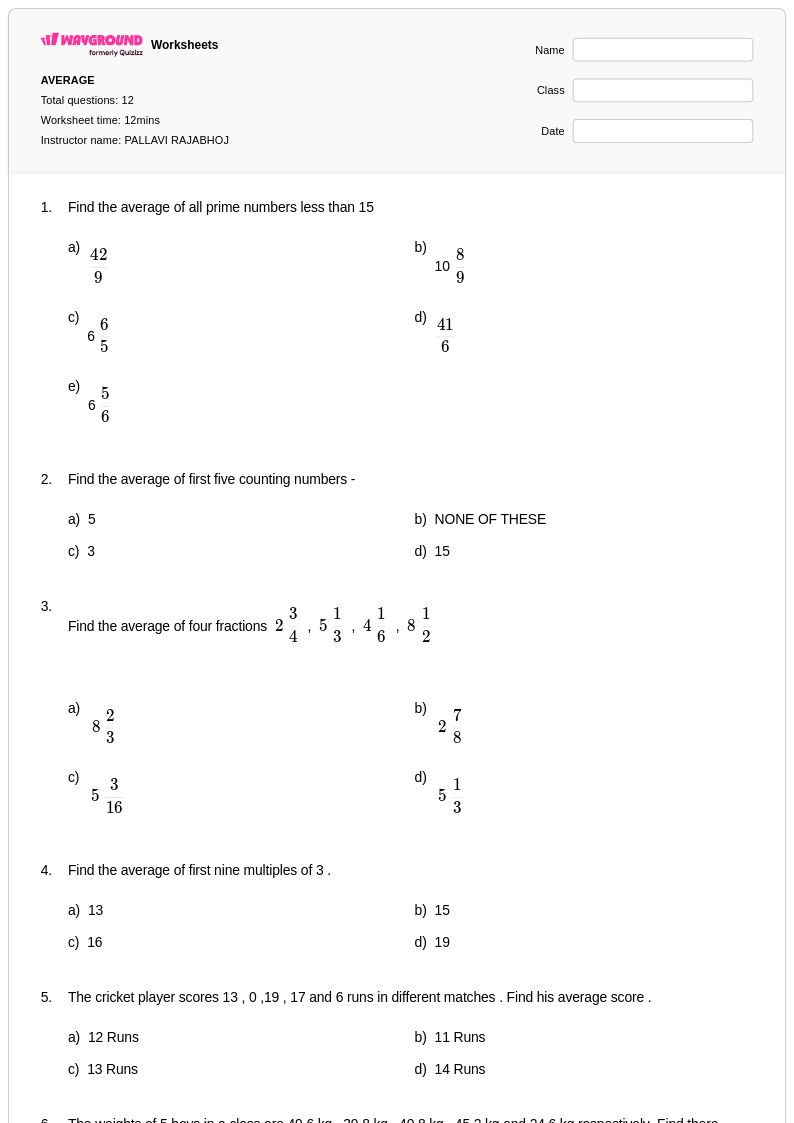
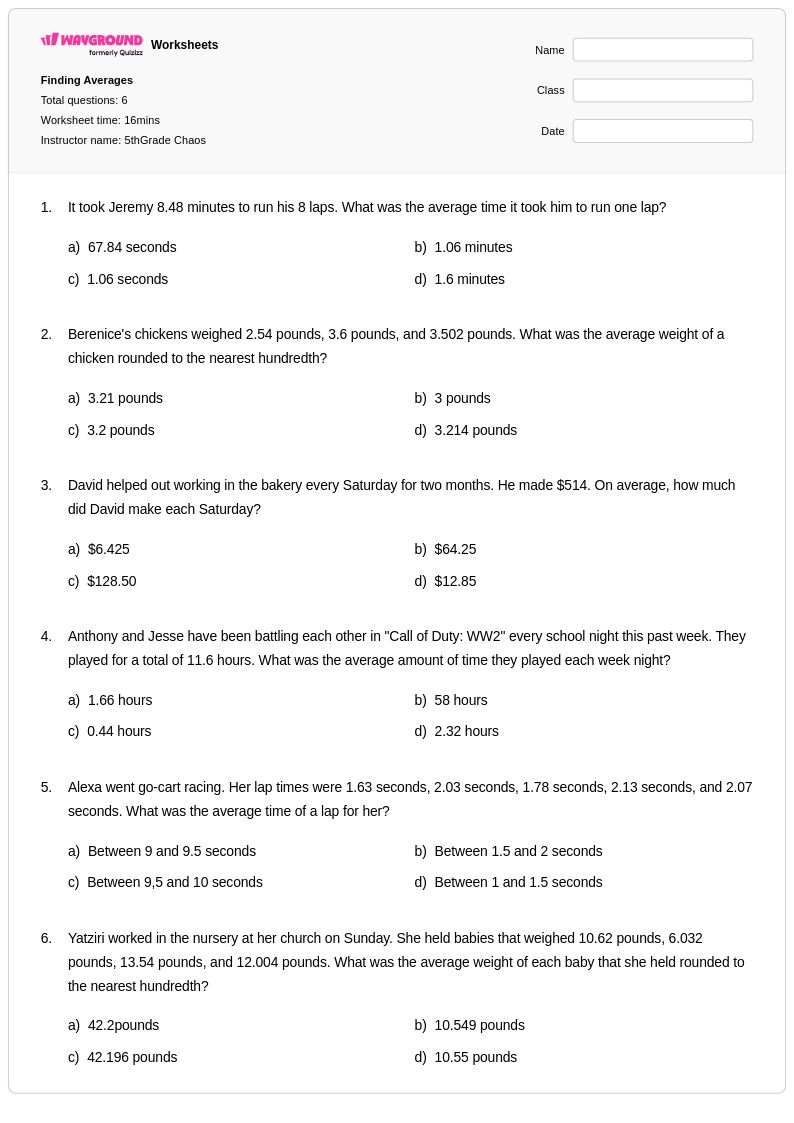
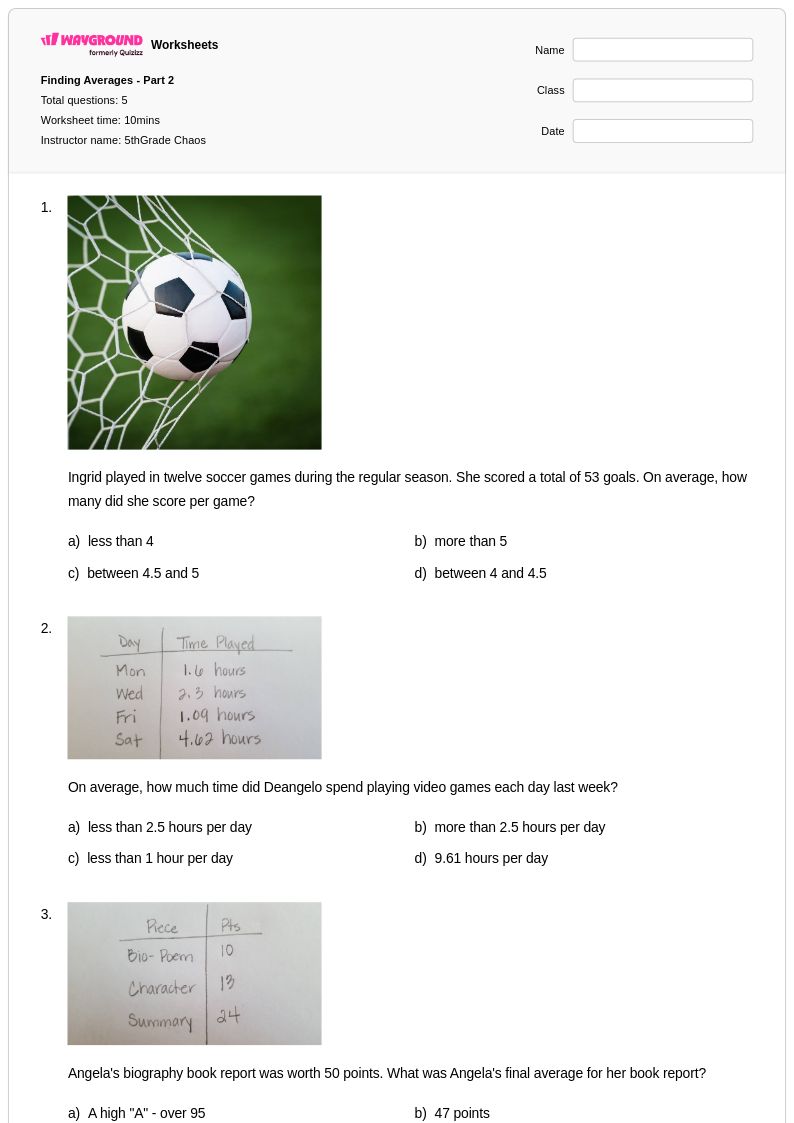
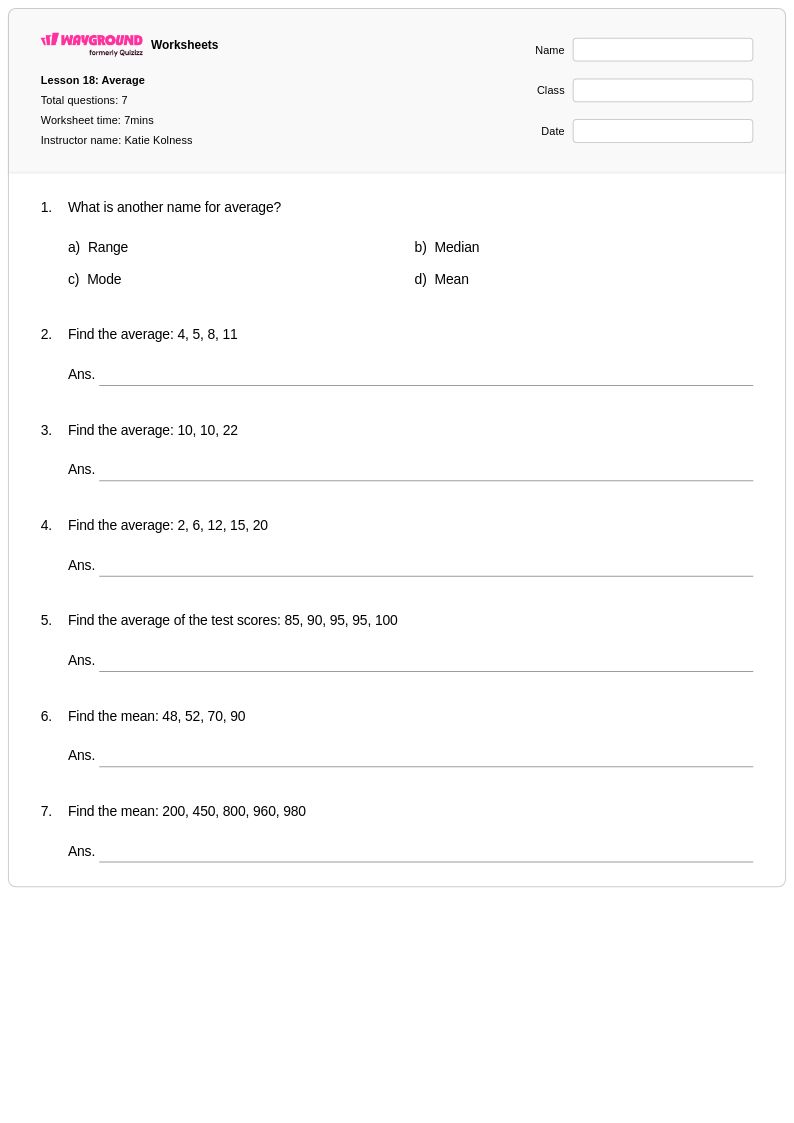
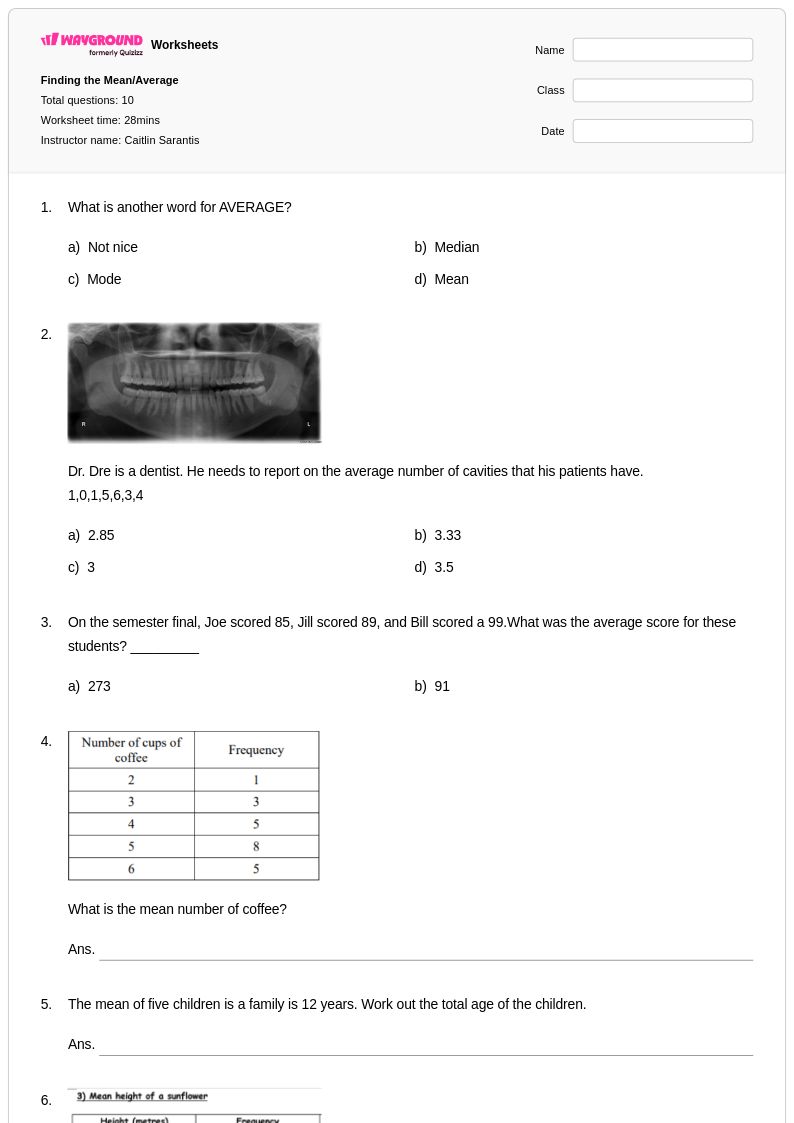
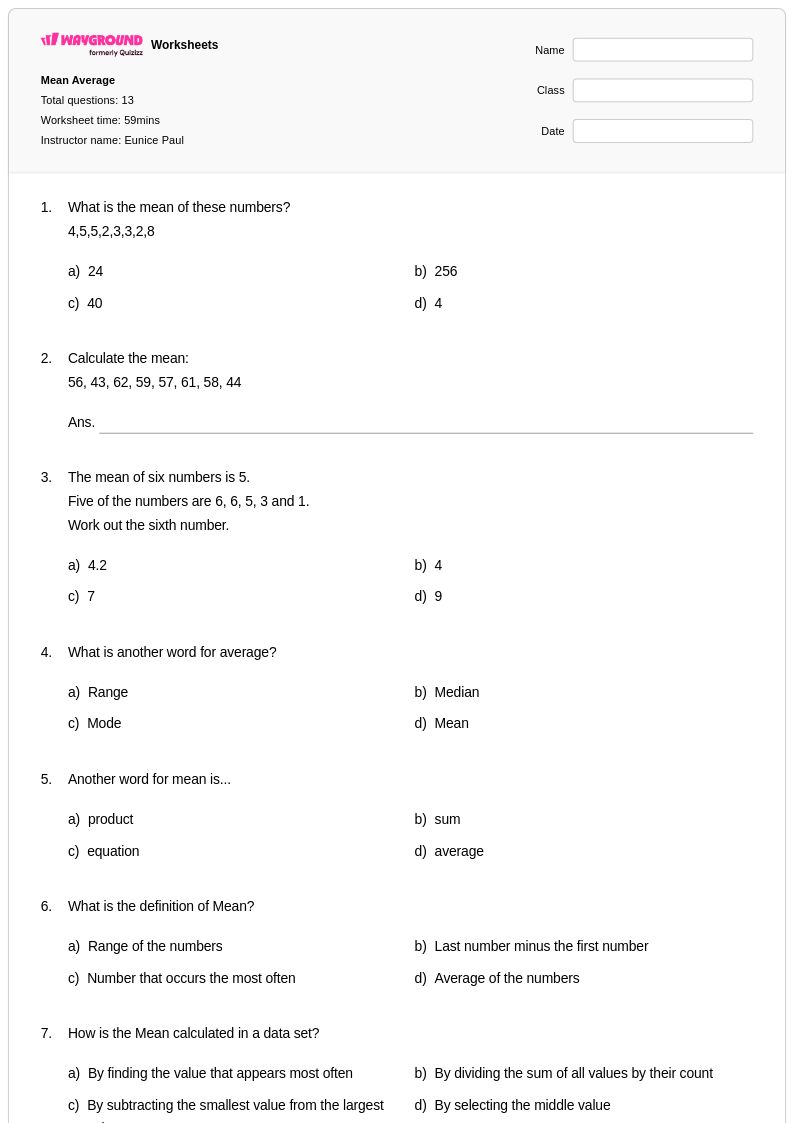
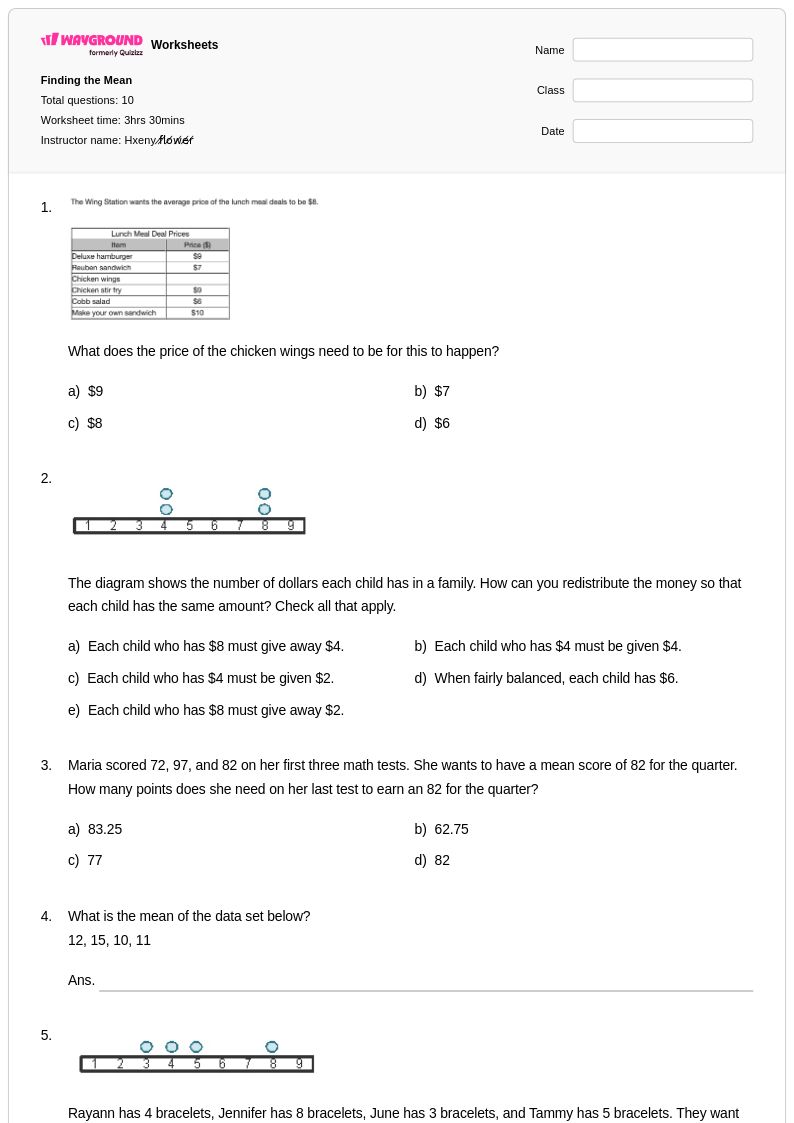
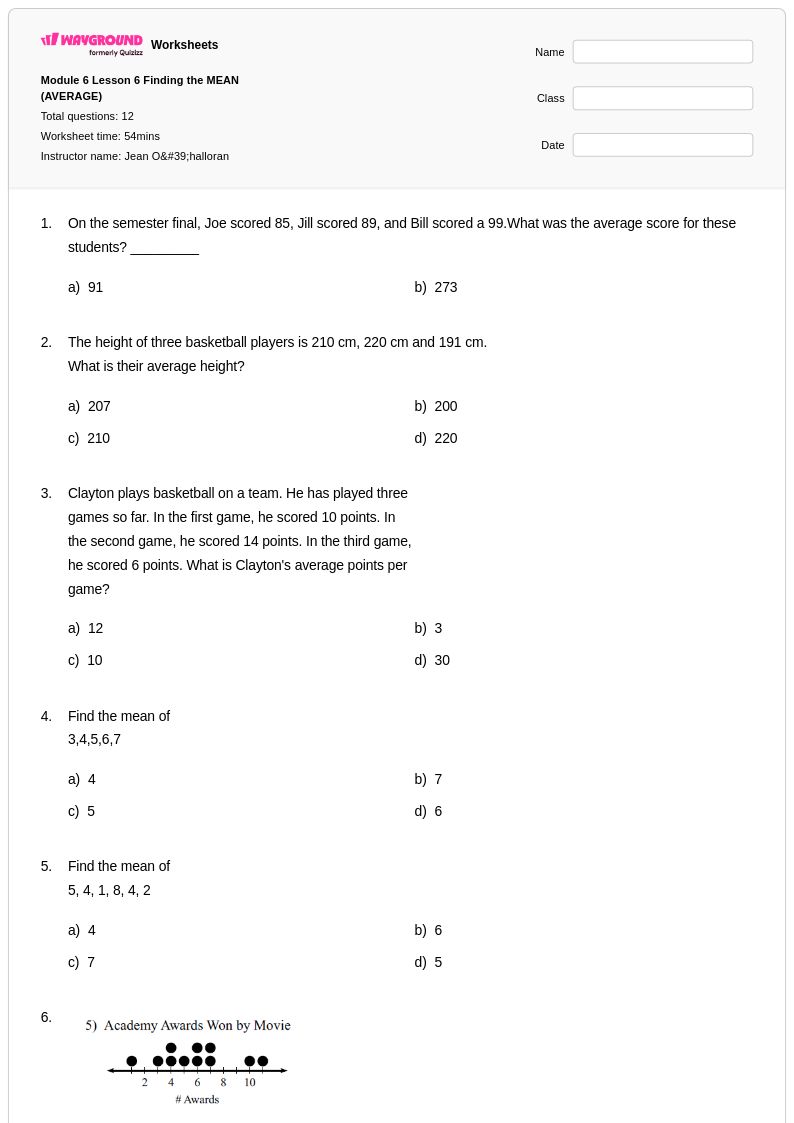
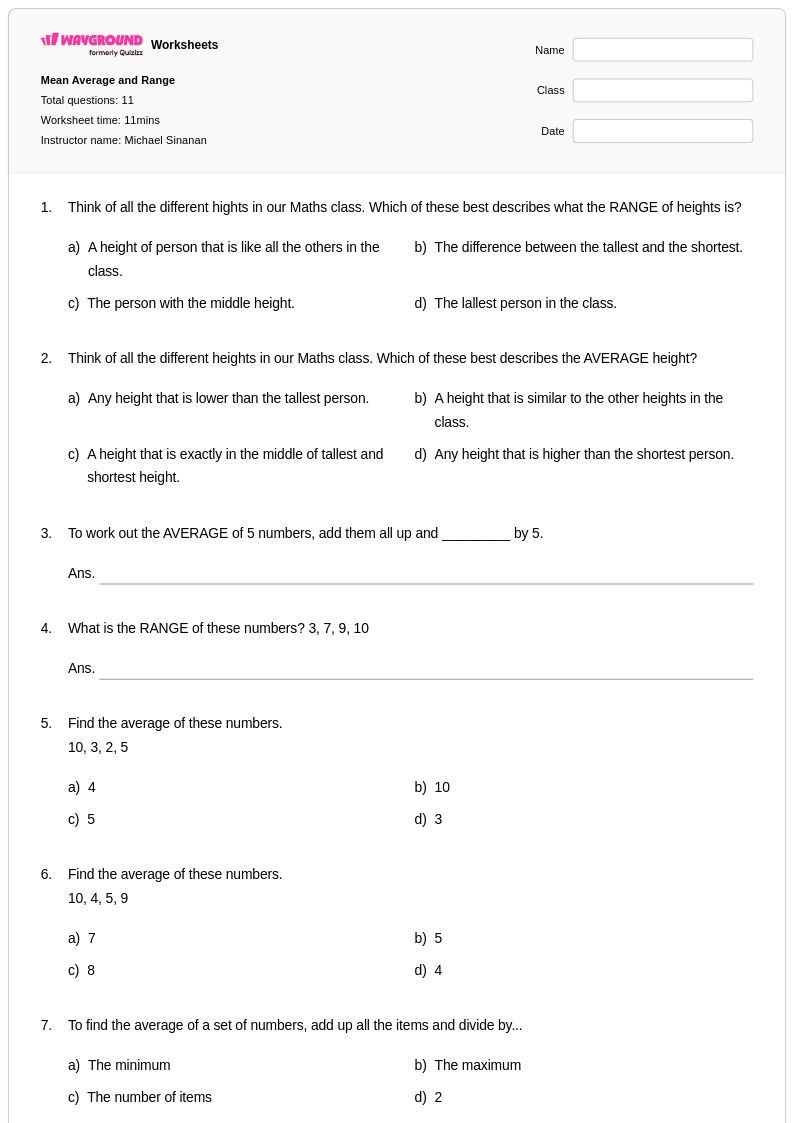
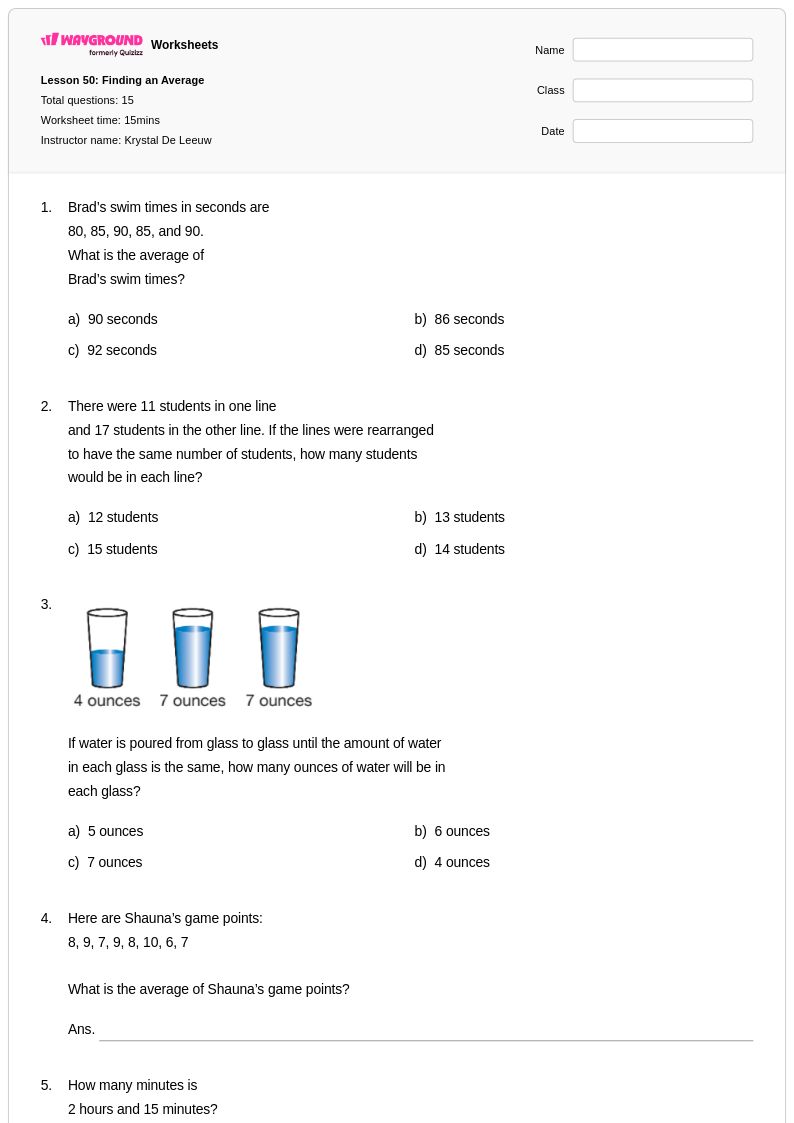
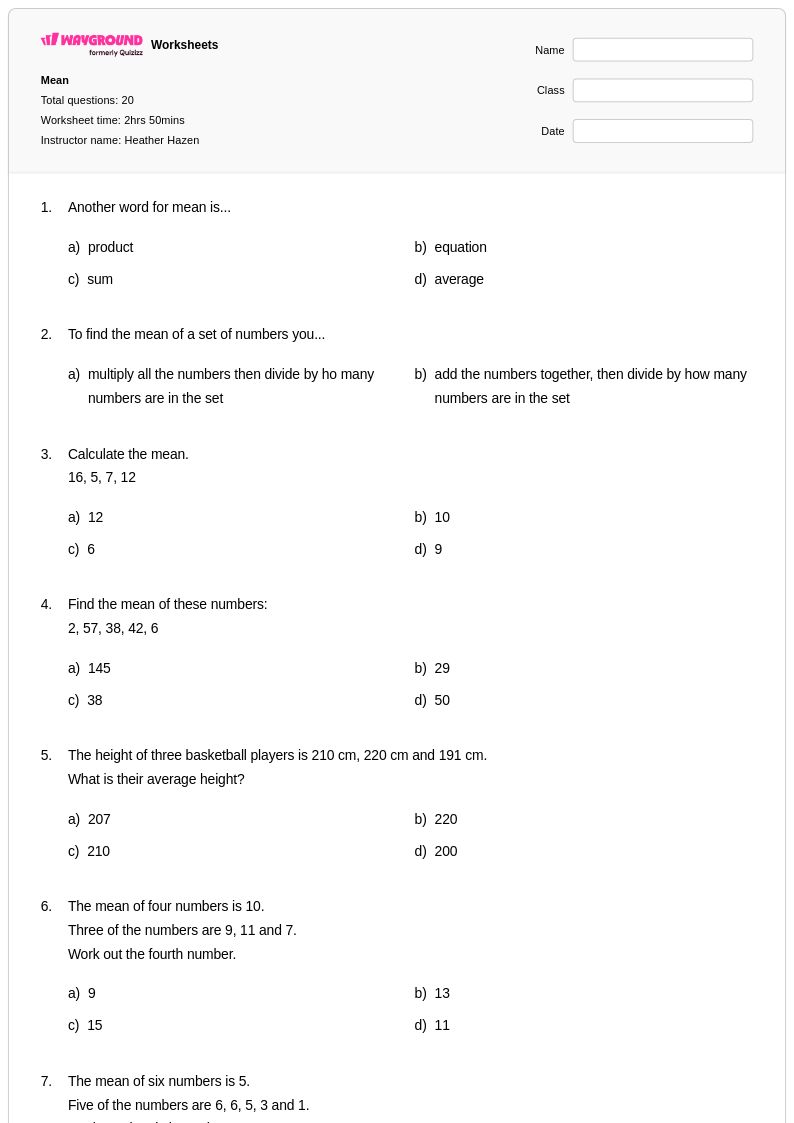
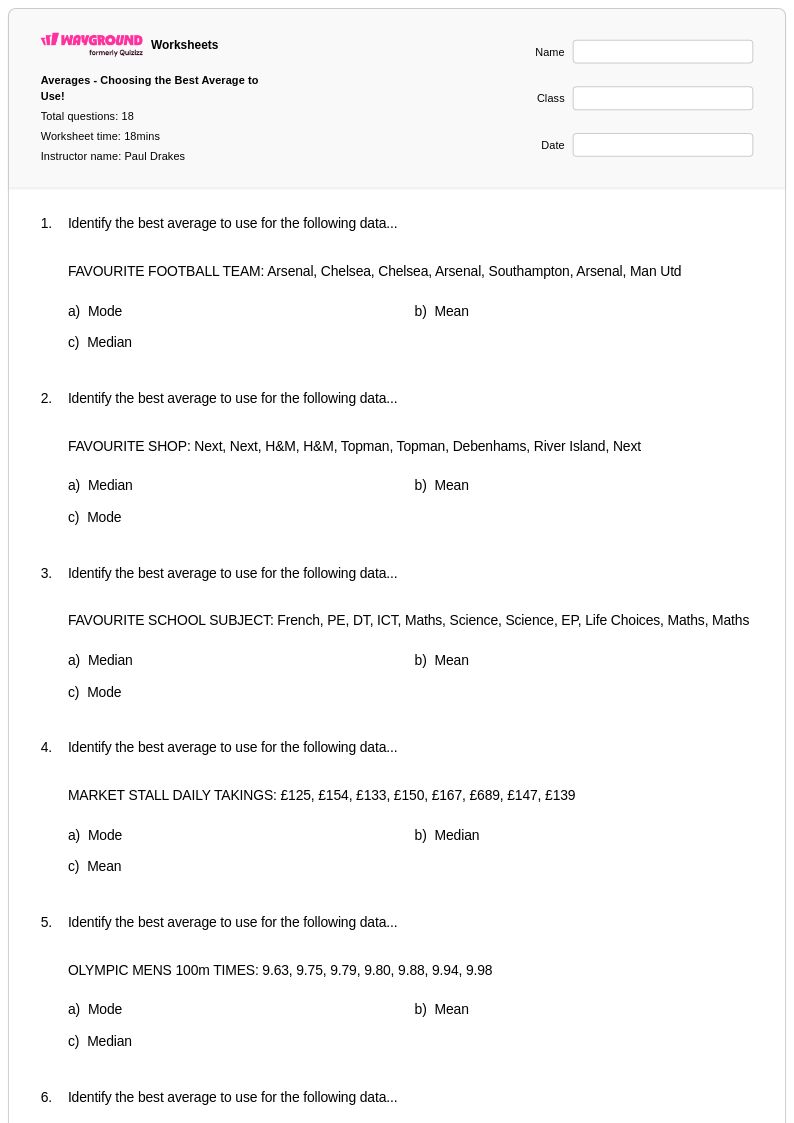
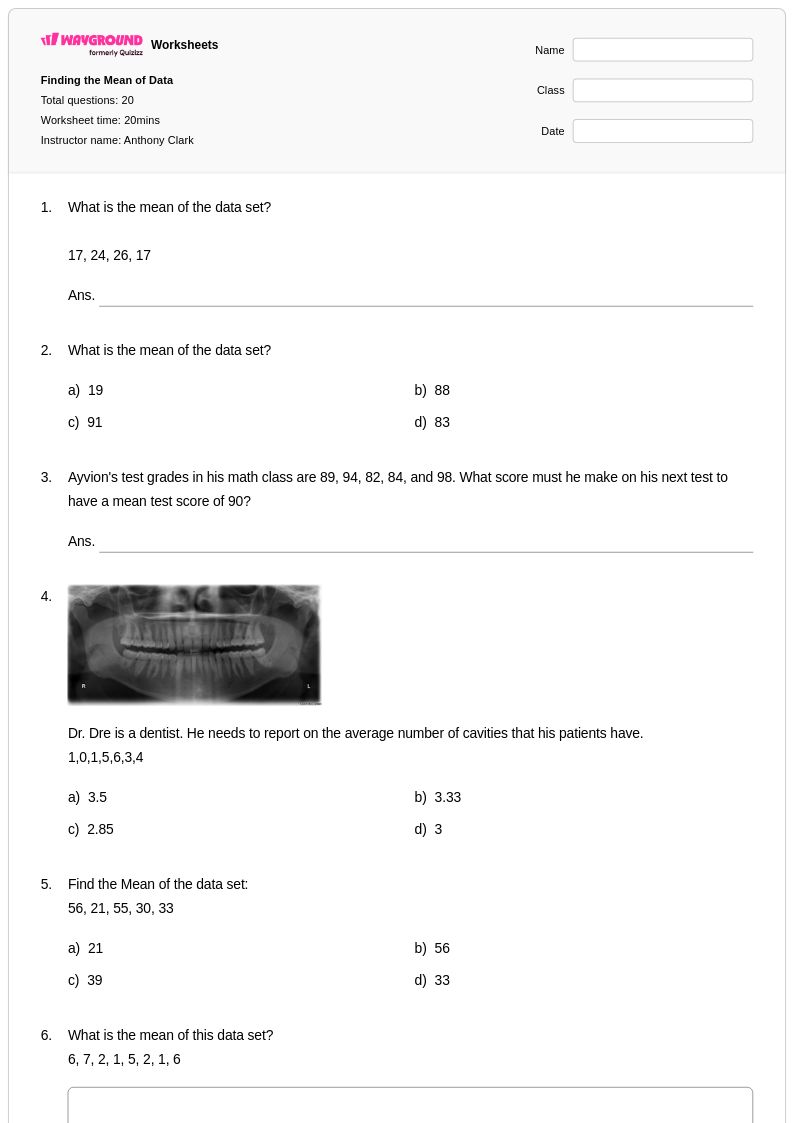
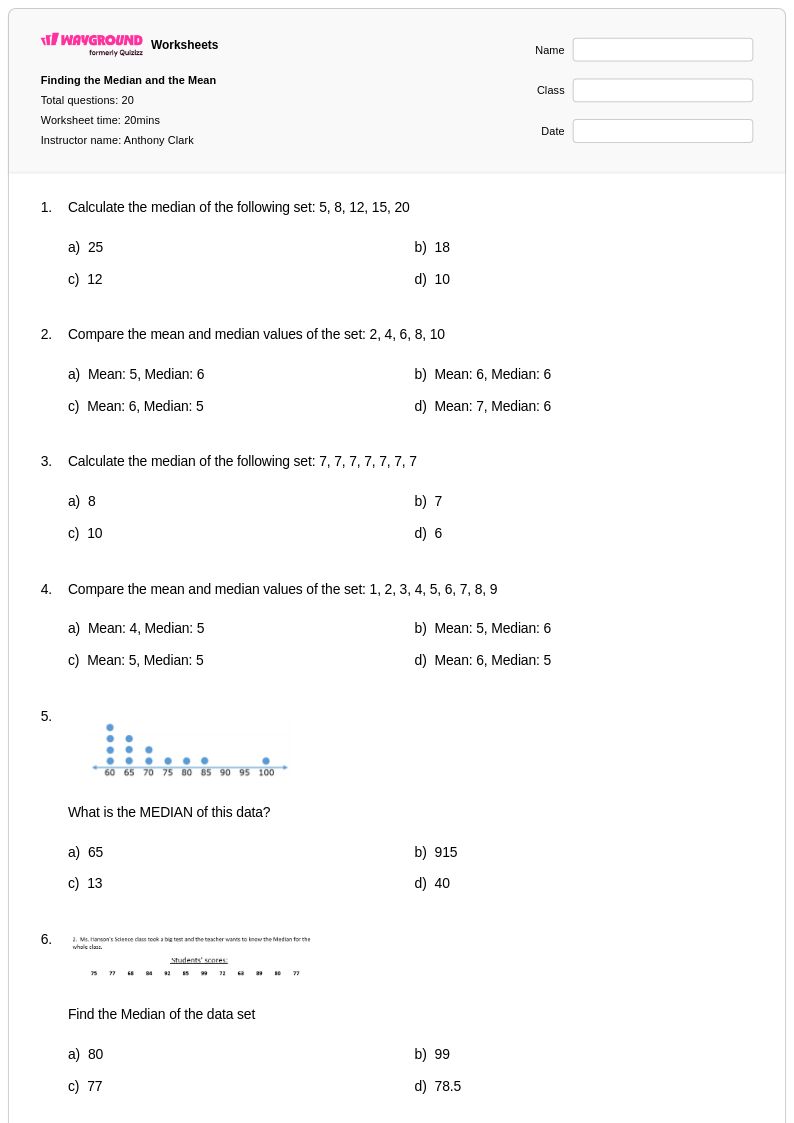
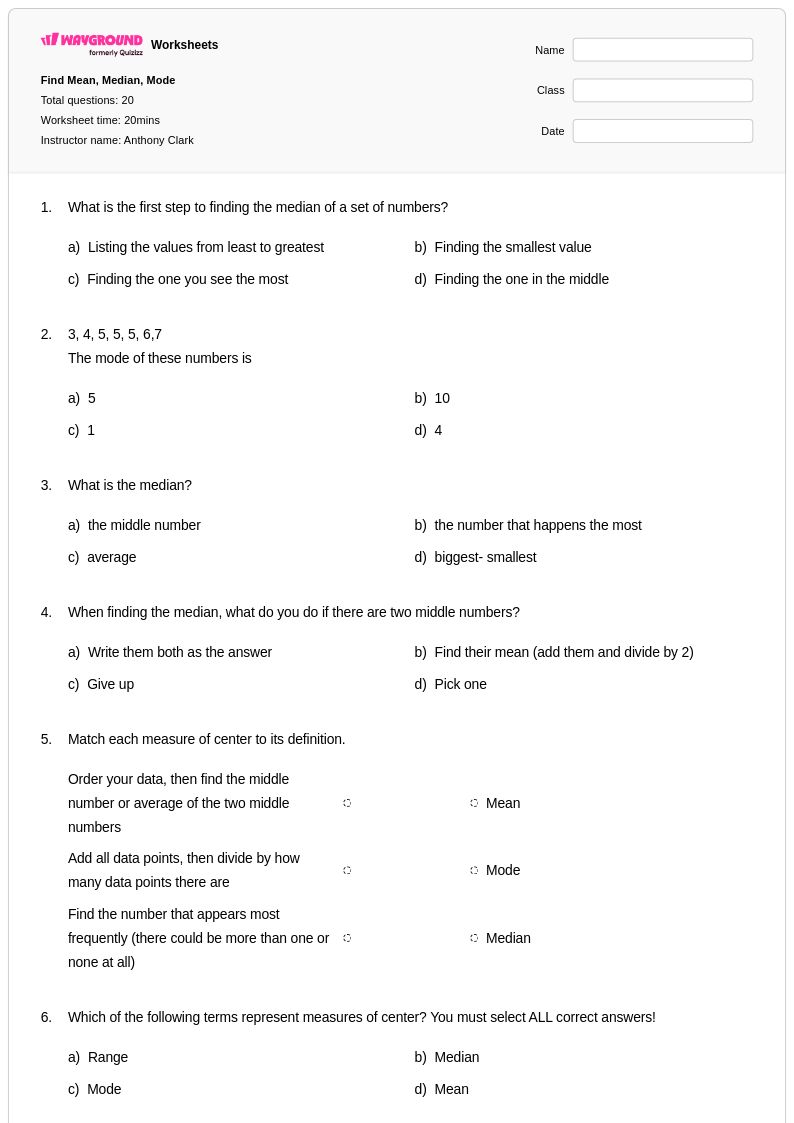
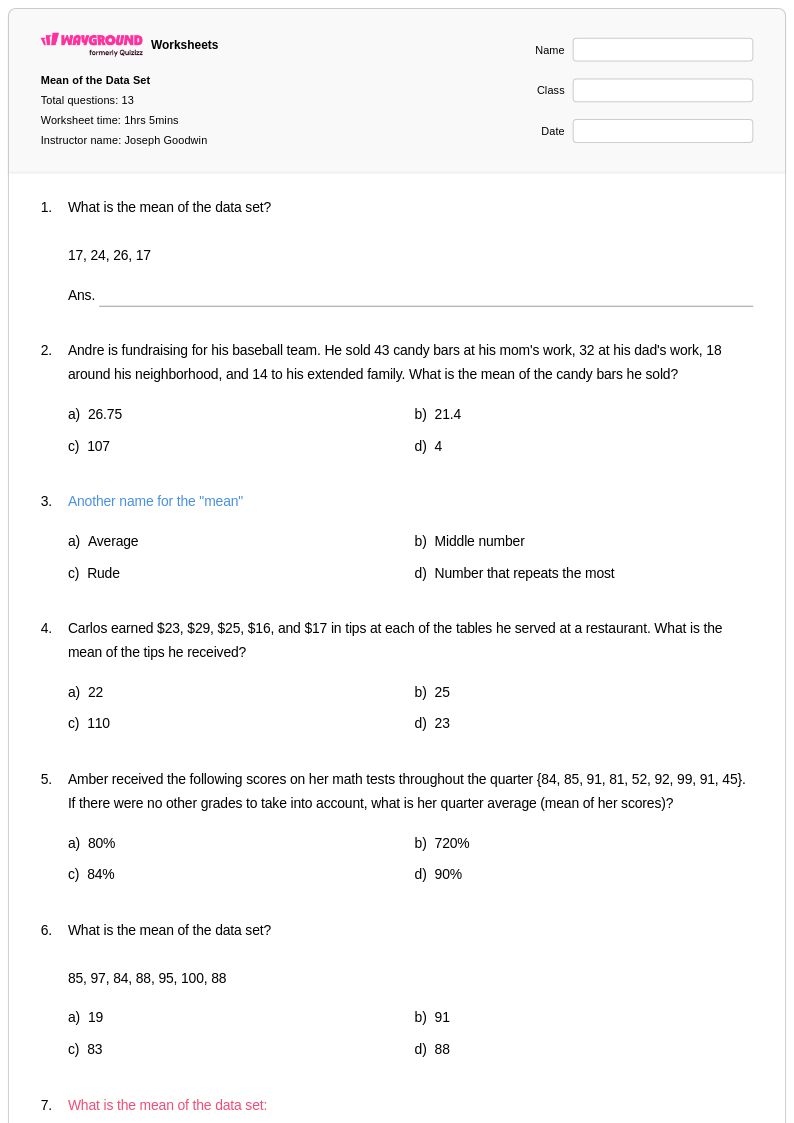
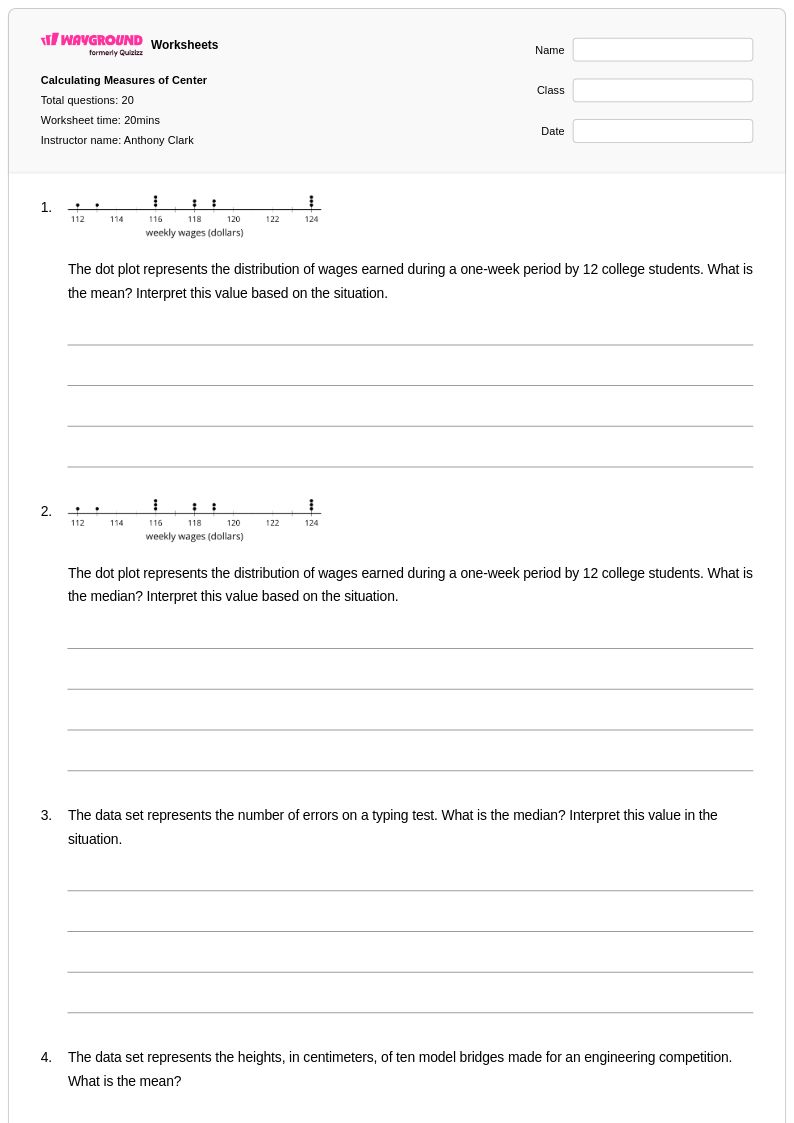
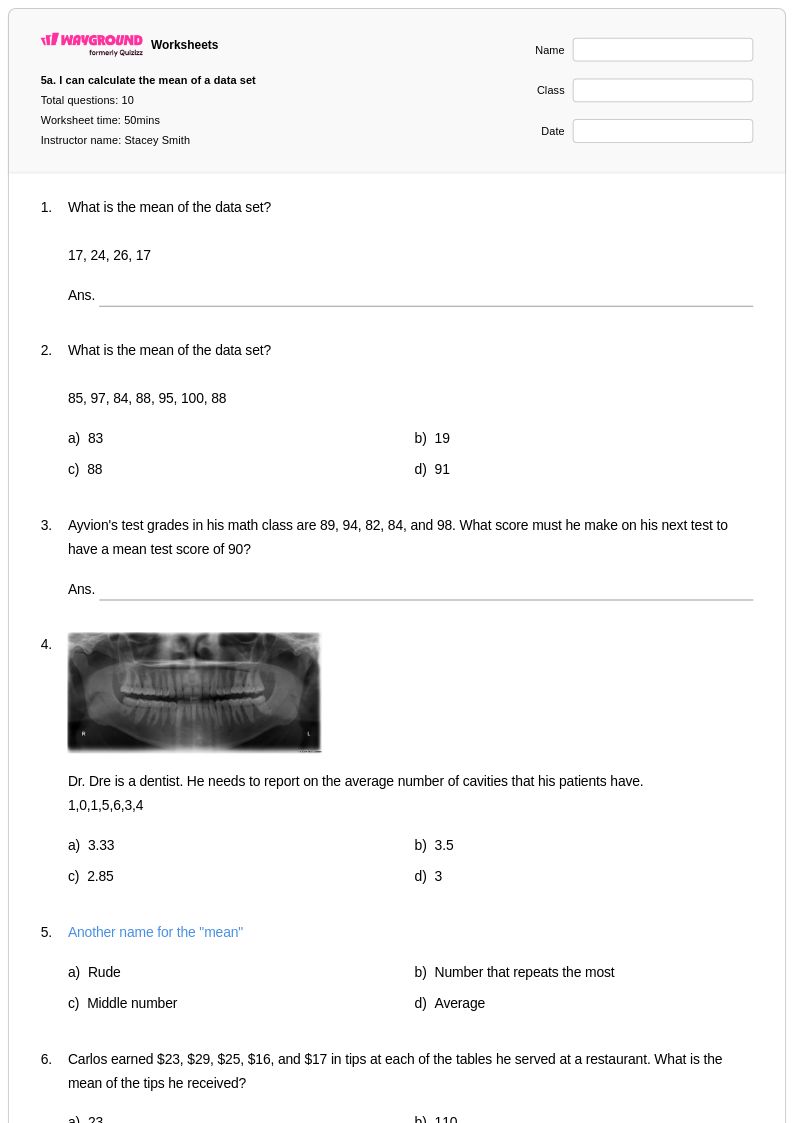
Finding average worksheets for Year 6 students provide essential practice in calculating mean values, a fundamental concept that bridges basic arithmetic and more advanced statistical thinking. These comprehensive worksheets available through Wayground (formerly Quizizz) help students master the process of adding data sets and dividing by the number of values, while developing critical analytical skills needed for interpreting numerical information. Students work through carefully structured practice problems that progress from simple whole number averages to more complex scenarios involving decimals and mixed data types, with each worksheet including a complete answer key to support independent learning and self-assessment. The free printables cover real-world applications such as finding average test scores, temperatures, and measurements, ensuring students understand both the mathematical procedure and practical significance of mean calculations in everyday contexts.
Wayground (formerly Quizizz) empowers educators with millions of teacher-created resources specifically designed for Year 6 mathematics instruction, featuring robust search and filtering capabilities that help teachers quickly locate worksheets aligned with their curriculum standards and learning objectives. The platform's differentiation tools allow instructors to customize finding average worksheets based on individual student needs, whether providing additional scaffolding for struggling learners or presenting enrichment challenges for advanced students. Teachers can access these resources in both printable PDF formats for traditional classroom use and digital formats for technology-integrated instruction, making lesson planning more efficient while supporting diverse teaching environments. This flexibility proves invaluable for targeted skill practice, remediation sessions, and enrichment activities, enabling educators to address varying proficiency levels within their classrooms while maintaining consistent focus on developing students' understanding of central tendency concepts.
FAQs
How do I teach finding averages (mean) in Grade 6?
Grade 6 is where mean becomes a formal statistical concept, not just a calculation trick, so instruction should go beyond the algorithm. Start by having students compute the mean of a small data set, then ask: does this number actually represent the data well? Introduce a data set with an outlier and show how the mean shifts — this is the moment students start thinking statistically rather than just arithmetically. From there, comparing mean to median gives them a reason to care about which measure of center to use and when.
What practice problems are most valuable for Grade 6 students learning averages?
Three problem types do the most work at this level: computing the mean of data sets that include decimals or larger whole numbers; finding a missing value when the mean and all other values are given; and interpreting whether the mean is a good summary of a given data set (especially when an outlier is present). That third type is often skipped in worksheet practice but is exactly what Grade 6 standards expect — students should be able to critique a statistic, not just produce one.
What mistakes do Grade 6 students commonly make with mean calculations?
At this level, conceptual errors are more telling than arithmetic ones. Students frequently confuse mean with median, especially when a data set is nearly symmetric. On missing-value problems, a common error is averaging the known values rather than setting up the equation from the definition of mean. And when decimals are involved, students often round intermediate steps, which compounds into a wrong final answer — emphasizing that they should carry the full decimal through the division step fixes this quickly.
How do Wayground's Grade 6 average worksheets work?
Each worksheet is available as a printable PDF or as a digital quiz on Wayground. Assign it digitally for self-paced practice with built-in answer checking, or print it for paper-based work — every worksheet includes a complete answer key either way. For grading printed submissions, the Wayground for Teachers app lets you scan student work directly rather than scoring by hand.
Is finding the mean aligned to Grade 6 Common Core standards?
Yes. Common Core formally introduces mean as a measure of center in Grade 6, where students are expected to summarize numerical data sets, recognize that the mean represents a balance point of the distribution, and choose between mean and median based on the shape of the data. This is a significant conceptual step up from earlier grades, where students may have computed averages informally — Grade 6 is where the statistical reasoning behind the calculation becomes the explicit learning target.
How can I differentiate mean practice for my Grade 6 class?
For students still building decimal fluency, Wayground's Reduced Answer Choices accommodation narrows the options on multiple-choice problems so they can focus on the statistical reasoning rather than getting lost in arithmetic. For students ready to go deeper, problems involving outliers or missing values push beyond procedural practice into genuine analysis. Wayground also lets you translate a worksheet into another language for English learners — useful in Grade 6 where the word problems become more complex and language can obscure math understanding.