
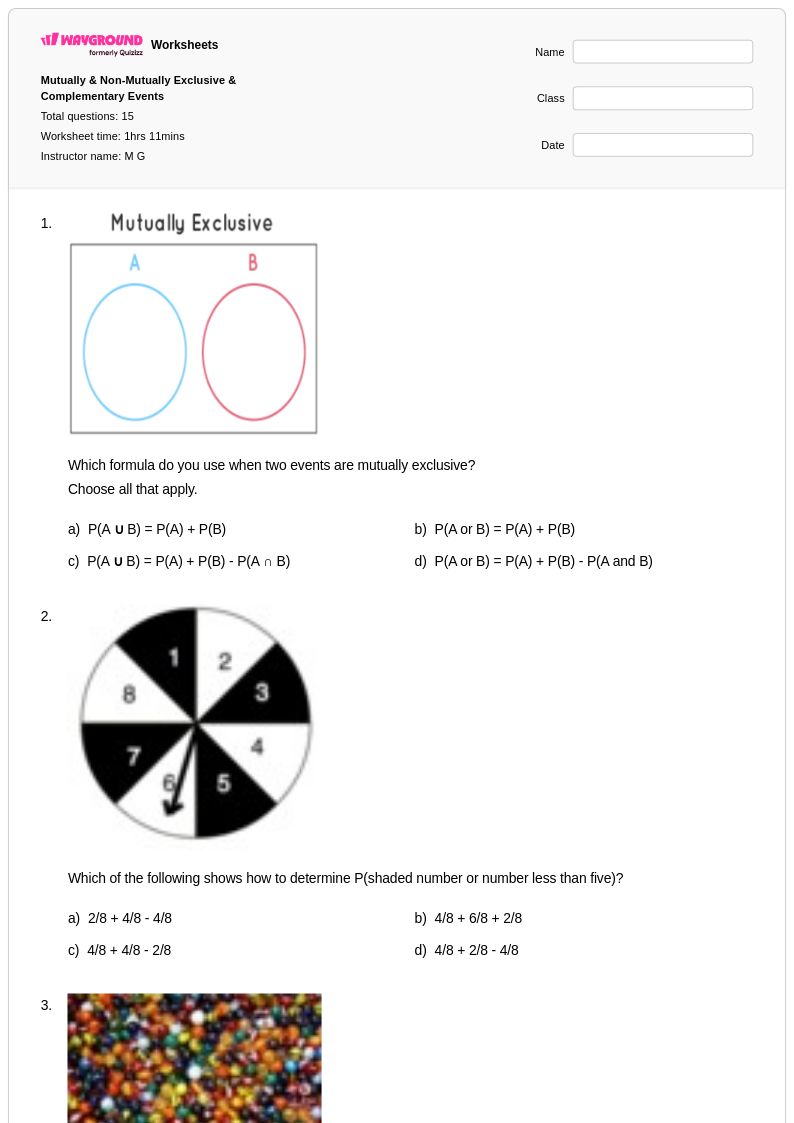
15 Q
6th - 8th
21 Q
6th
20 Q
6th - 10th
20 Q
6th - 12th
26 Q
6th - 8th
10 Q
6th - 8th
10 Q
6th
20 Q
6th - 9th
15 Q
6th - Uni
25 Q
6th - 12th
20 Q
6th - 12th
20 Q
6th - 12th
7 Q
5th - 10th
11 Q
1st - 12th
8 Q
6th - 8th
8 Q
6th - 8th
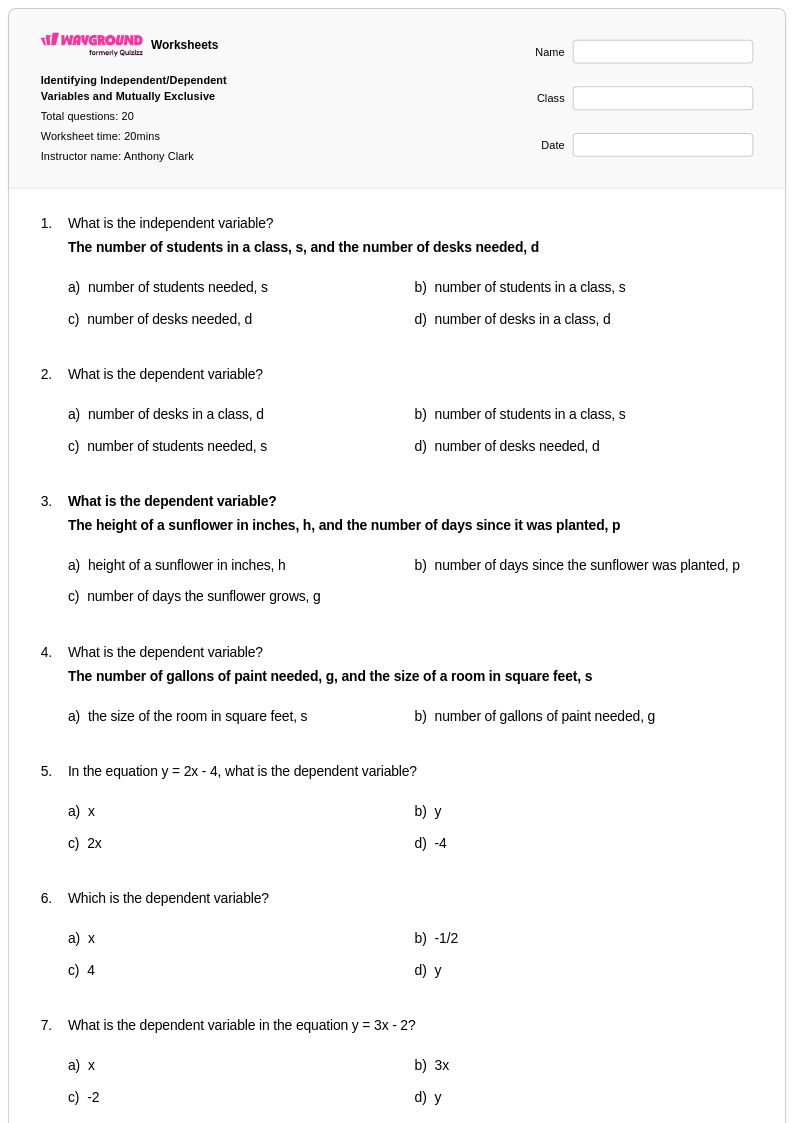
20 Q
6th - Uni
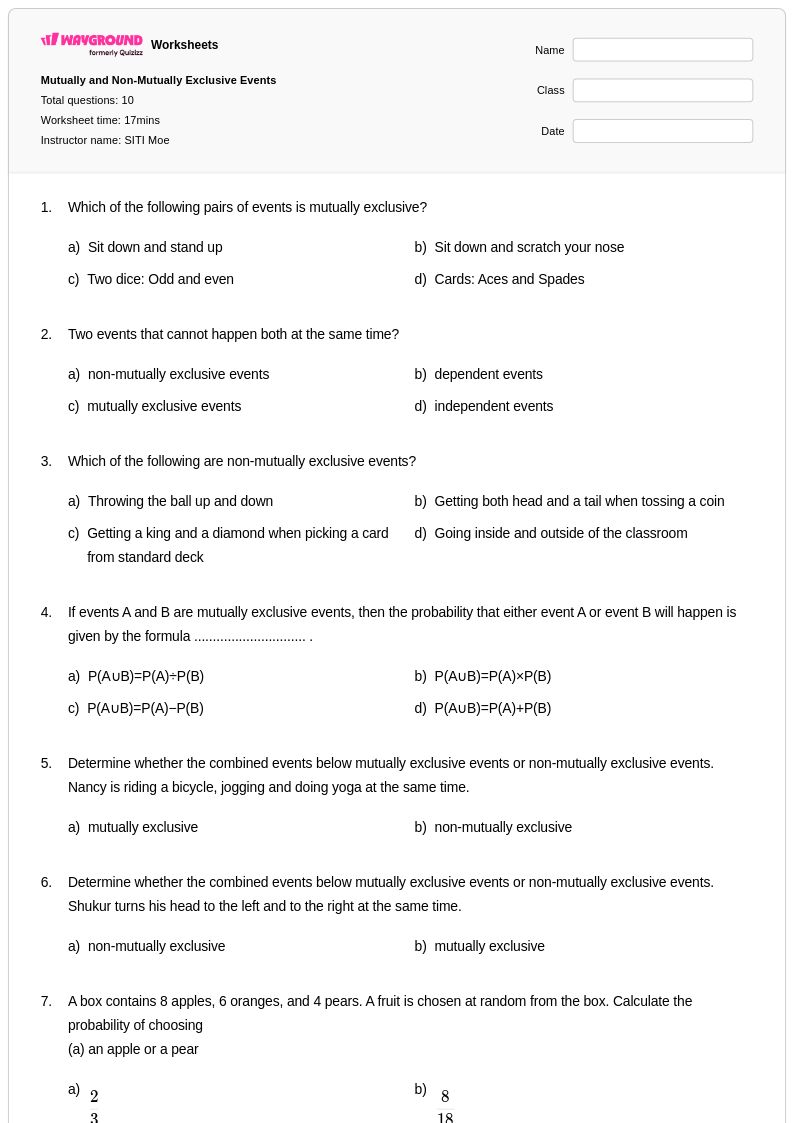
10 Q
5th - 6th
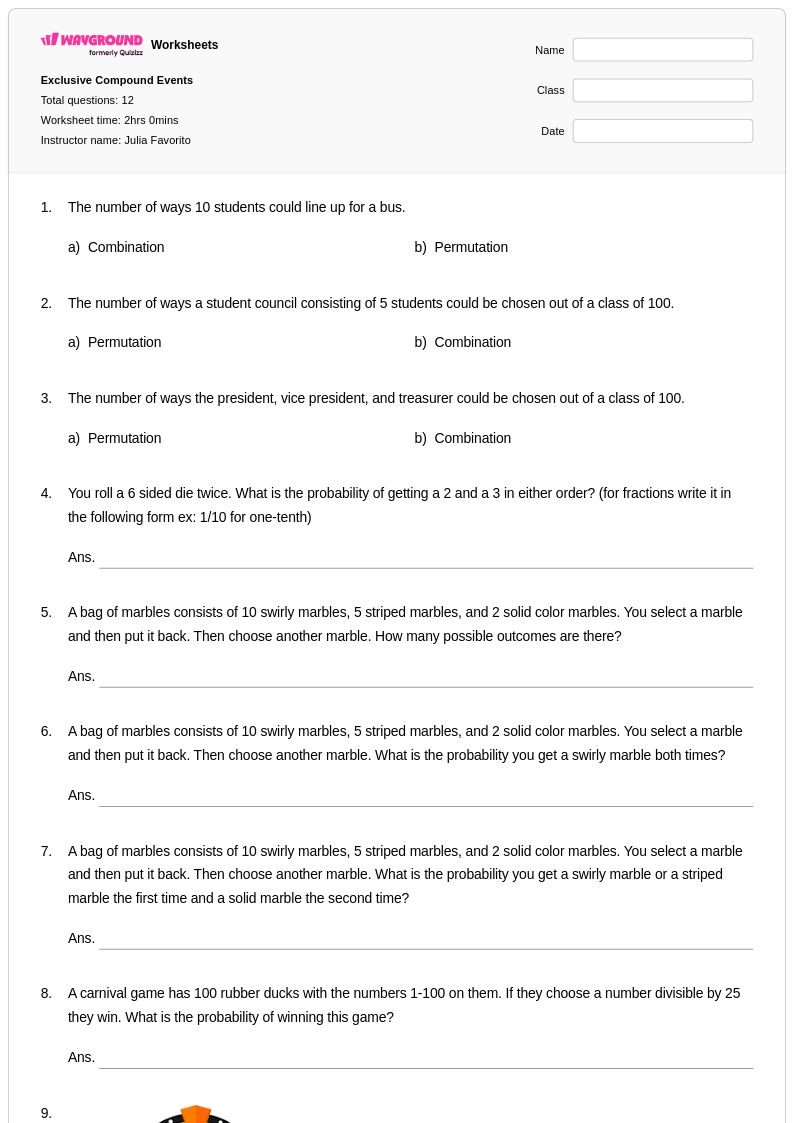
12 Q
6th - 7th
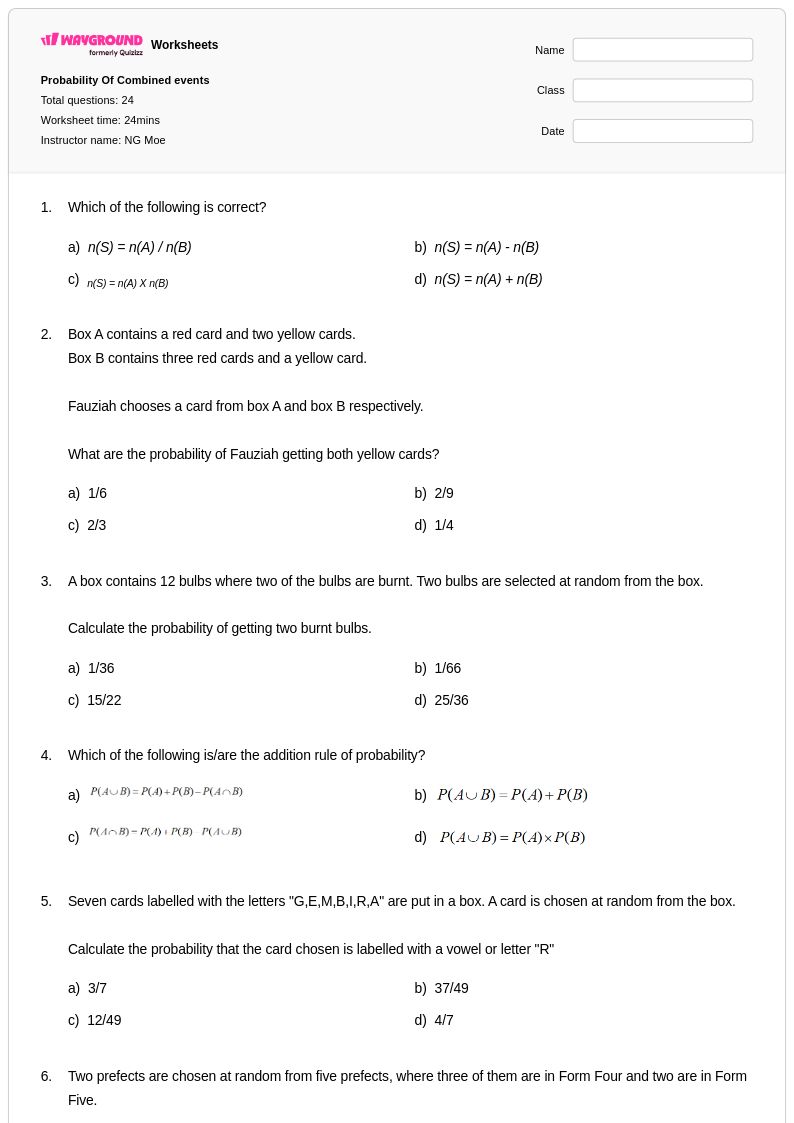
24 Q
1st - 12th
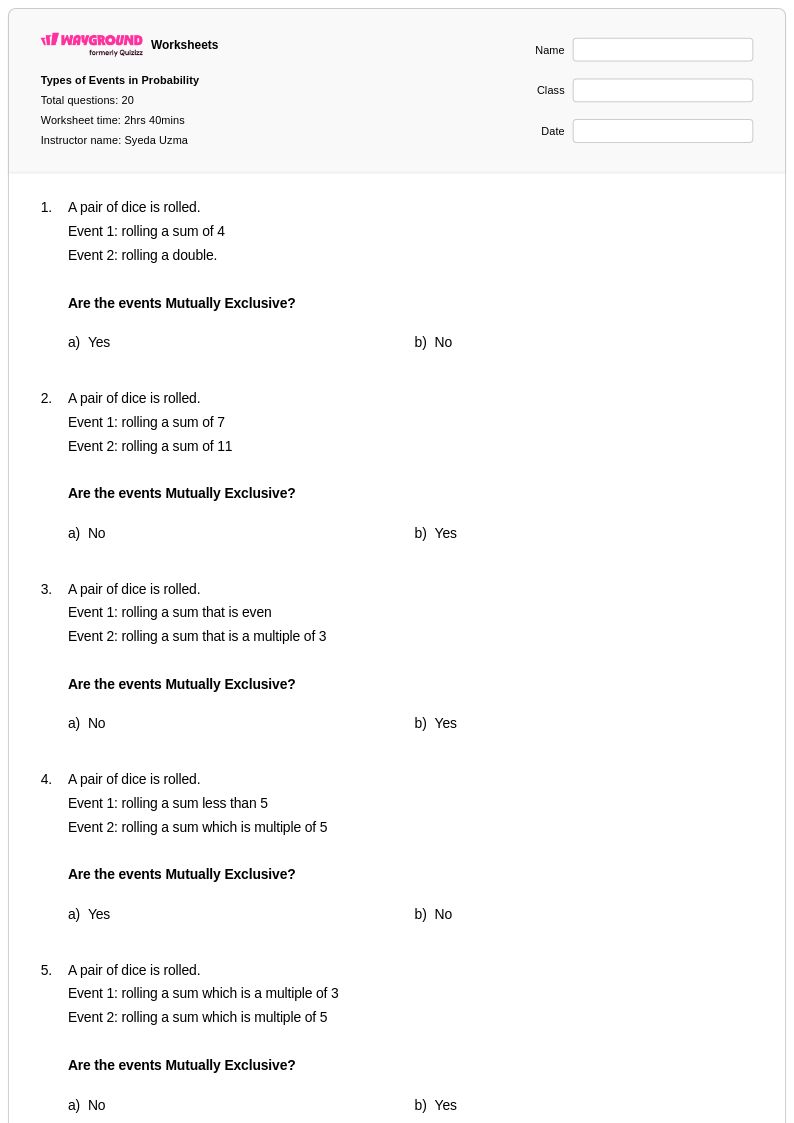
20 Q
6th - 12th
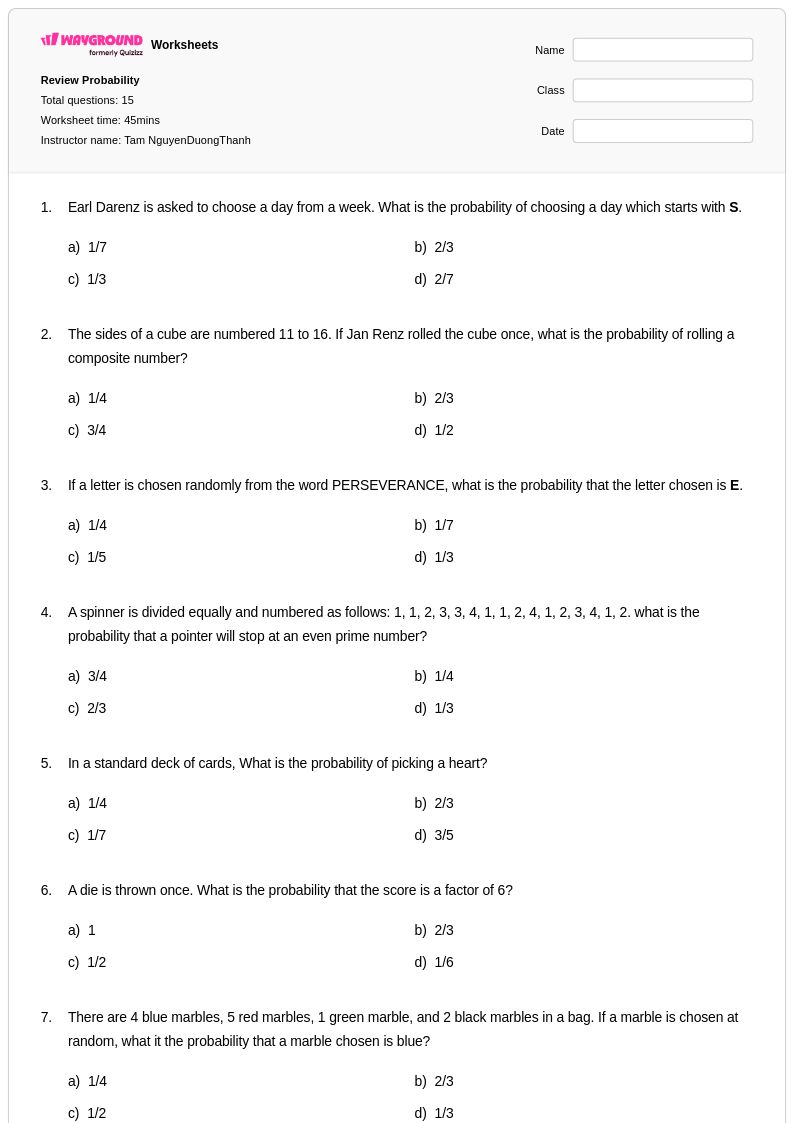
15 Q
6th - 8th
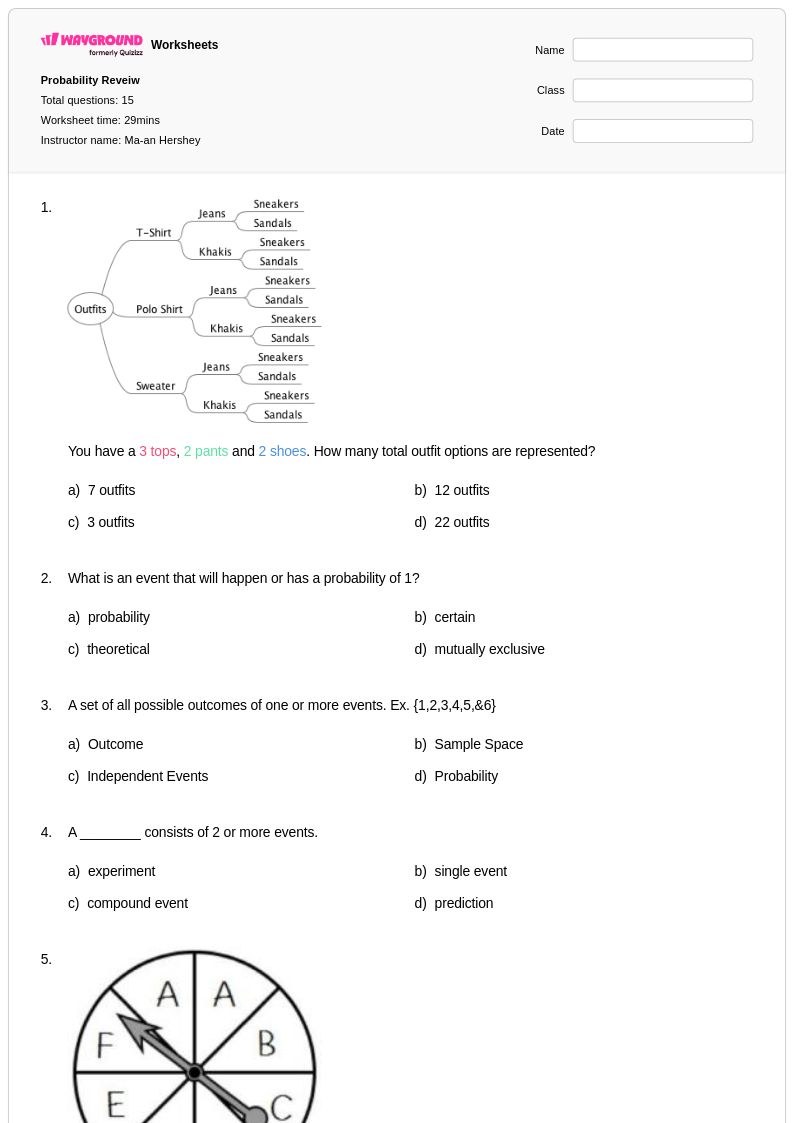
15 Q
6th - 8th
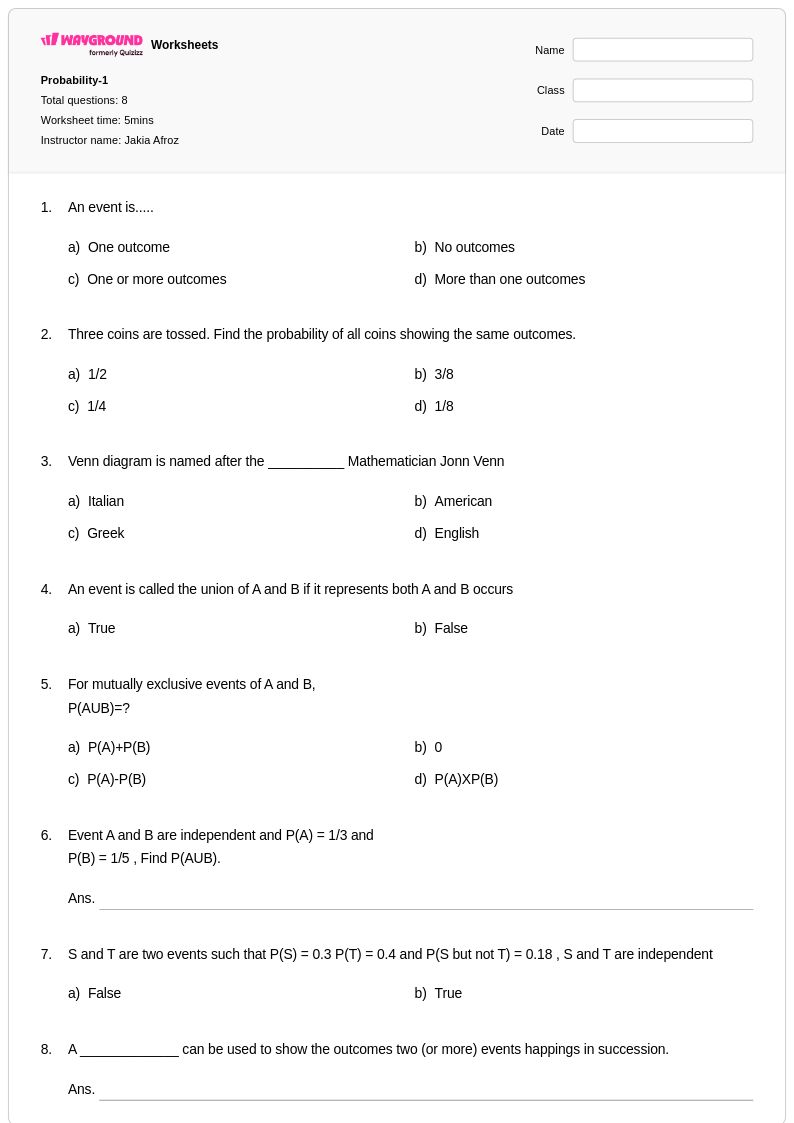
8 Q
5th - 12th
Explore Mutually Exclusive Events Worksheets by Grades
Explore Other Subject Worksheets for year 6
Explore printable Mutually Exclusive Events worksheets for Year 6
Mutually exclusive events worksheets for Year 6 students available through Wayground (formerly Quizizz) provide comprehensive practice in understanding probability concepts where two or more events cannot occur simultaneously. These educational resources strengthen students' ability to identify mutually exclusive scenarios, calculate probabilities of non-overlapping outcomes, and apply fundamental probability rules through engaging practice problems. Each worksheet collection includes detailed answer keys and free printable pdf formats, allowing students to work through real-world examples such as rolling dice, drawing cards, or selecting items from containers where outcomes cannot happen at the same time, building essential mathematical reasoning skills that form the foundation for advanced statistical concepts.
Wayground (formerly Quizizz) empowers educators with millions of teacher-created mutually exclusive events worksheets, featuring robust search and filtering capabilities that align with curriculum standards and grade-level expectations. Teachers can easily differentiate instruction by accessing customizable resources that accommodate varying skill levels, from introductory probability concepts to more complex multi-event scenarios, all available in both printable and digital pdf formats for seamless classroom integration. These comprehensive worksheet collections support effective lesson planning by providing immediate access to varied practice opportunities, enabling targeted remediation for struggling learners, offering enrichment activities for advanced students, and delivering consistent skill practice that reinforces understanding of probability fundamentals through systematic, scaffolded learning experiences.
FAQs
What do 6th graders learn about mutually exclusive events?
How can I introduce mutually exclusive events to my 6th grade class?
What kind of practice problems are best for 6th graders on this topic?
What's a common sticking point for 6th graders with this concept?
How can I assign this Grade 6 worksheet?
How does this topic align with 6th grade math standards?