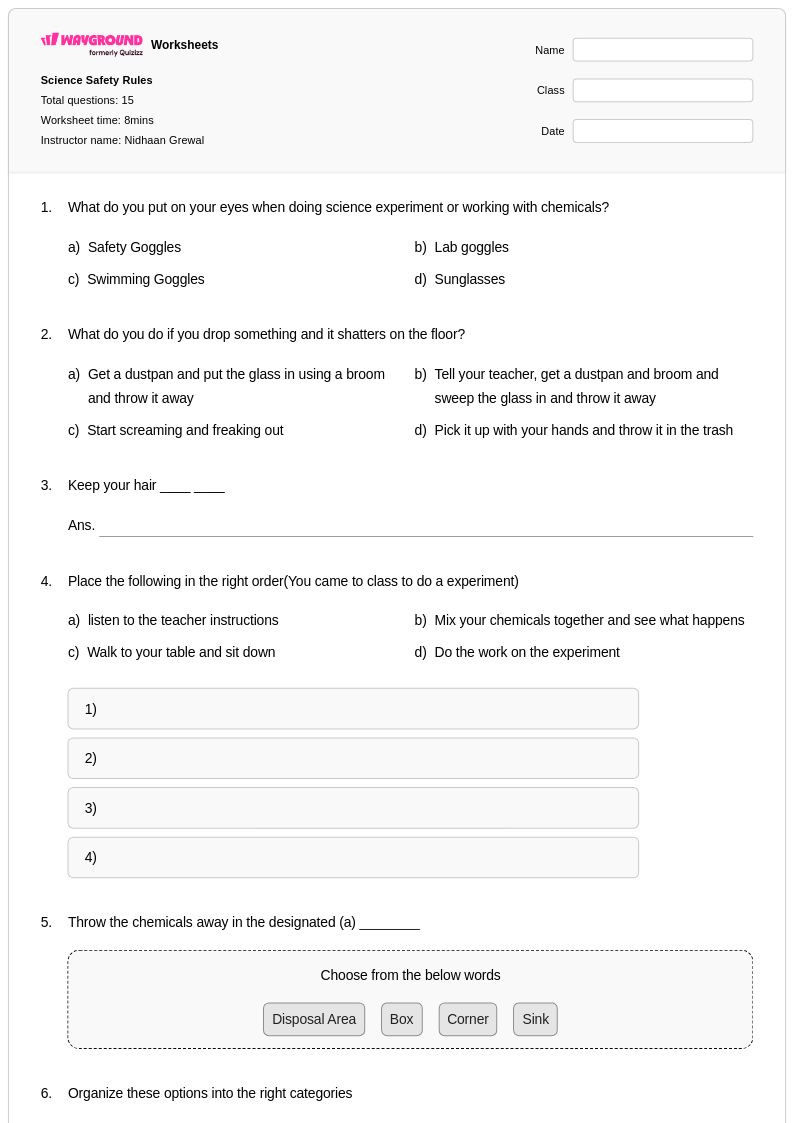
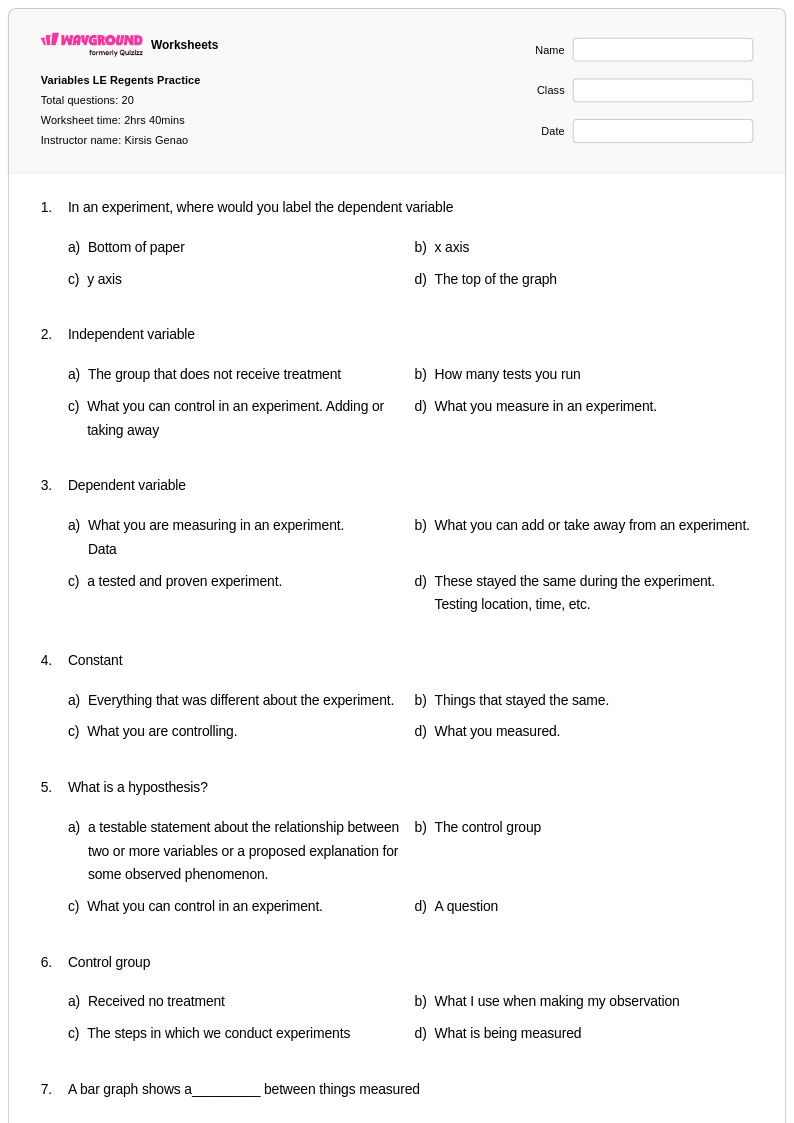
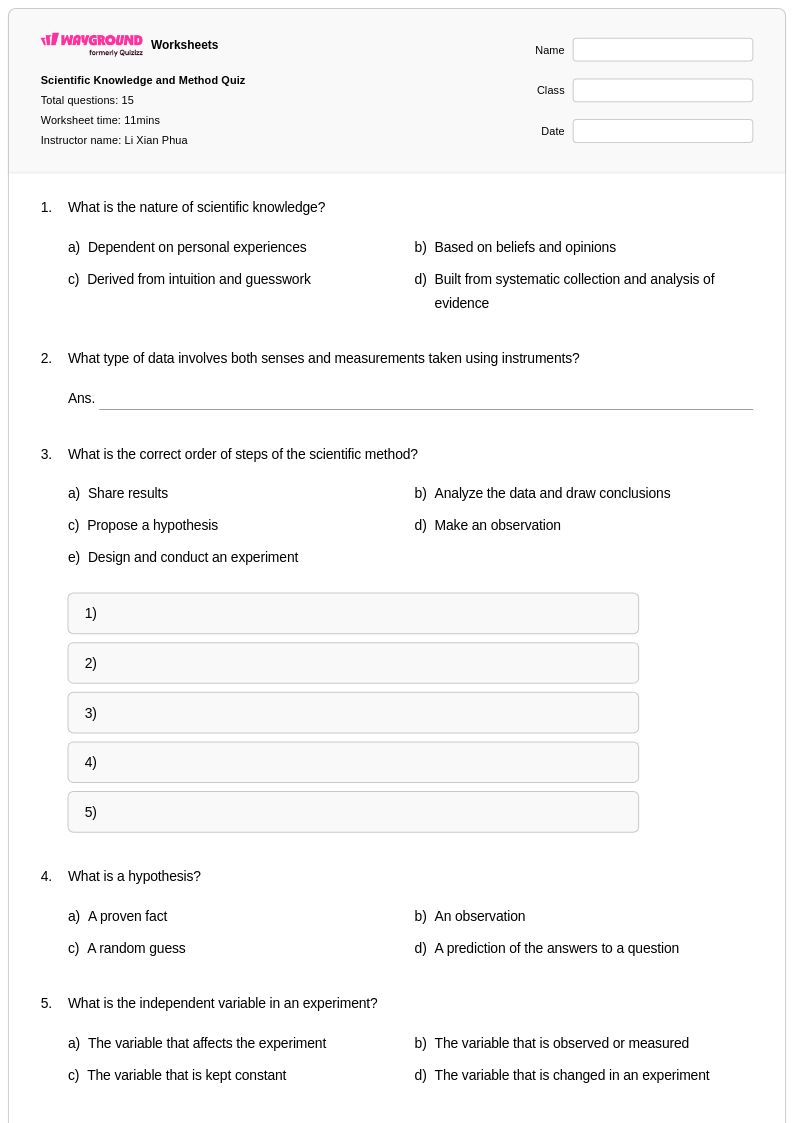
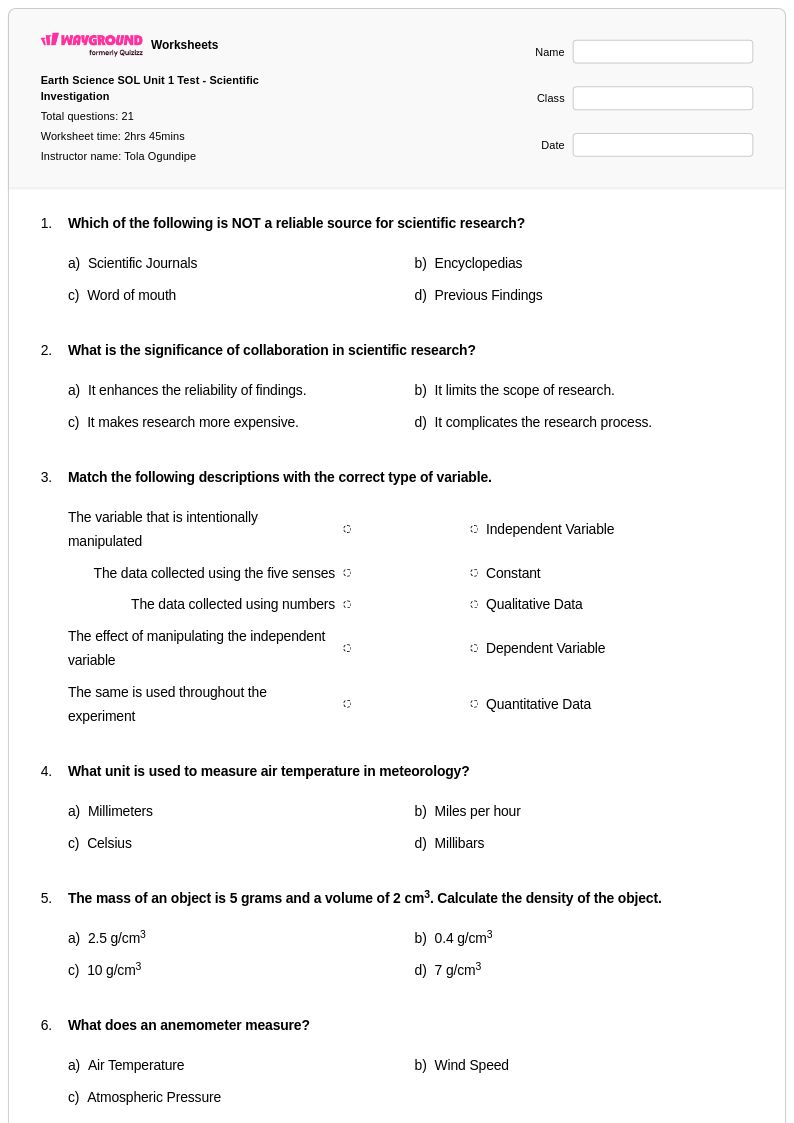
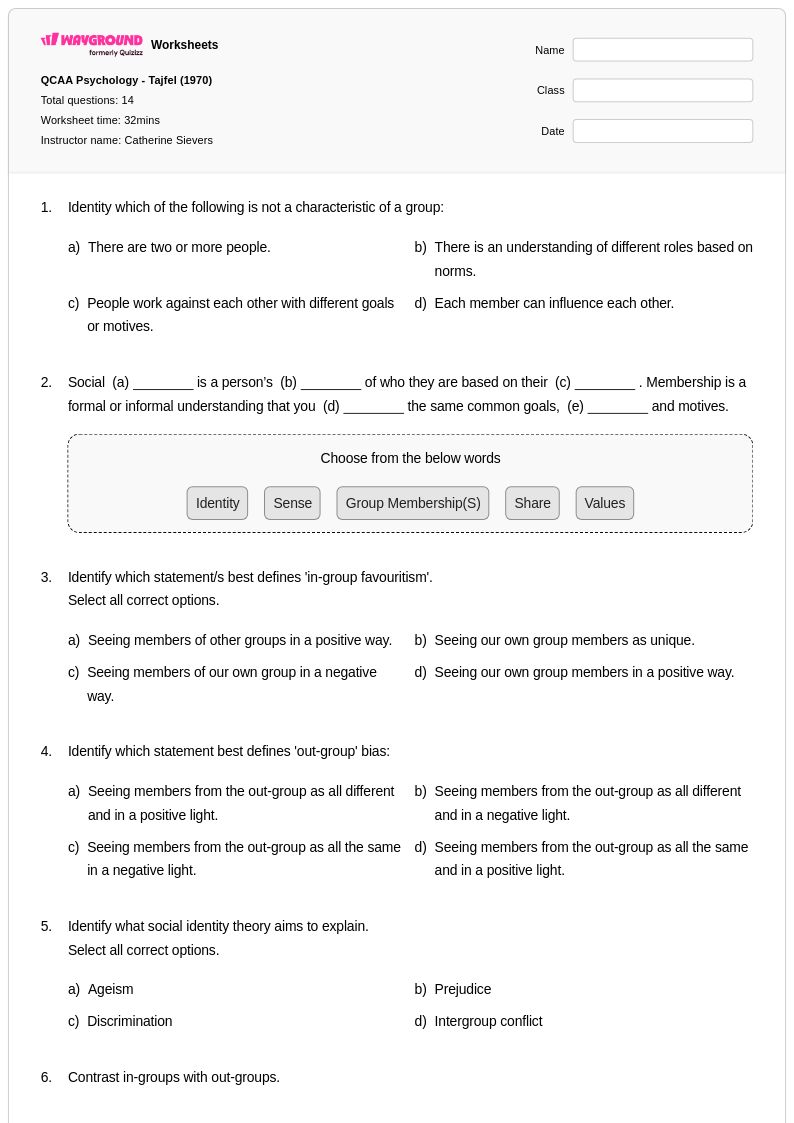
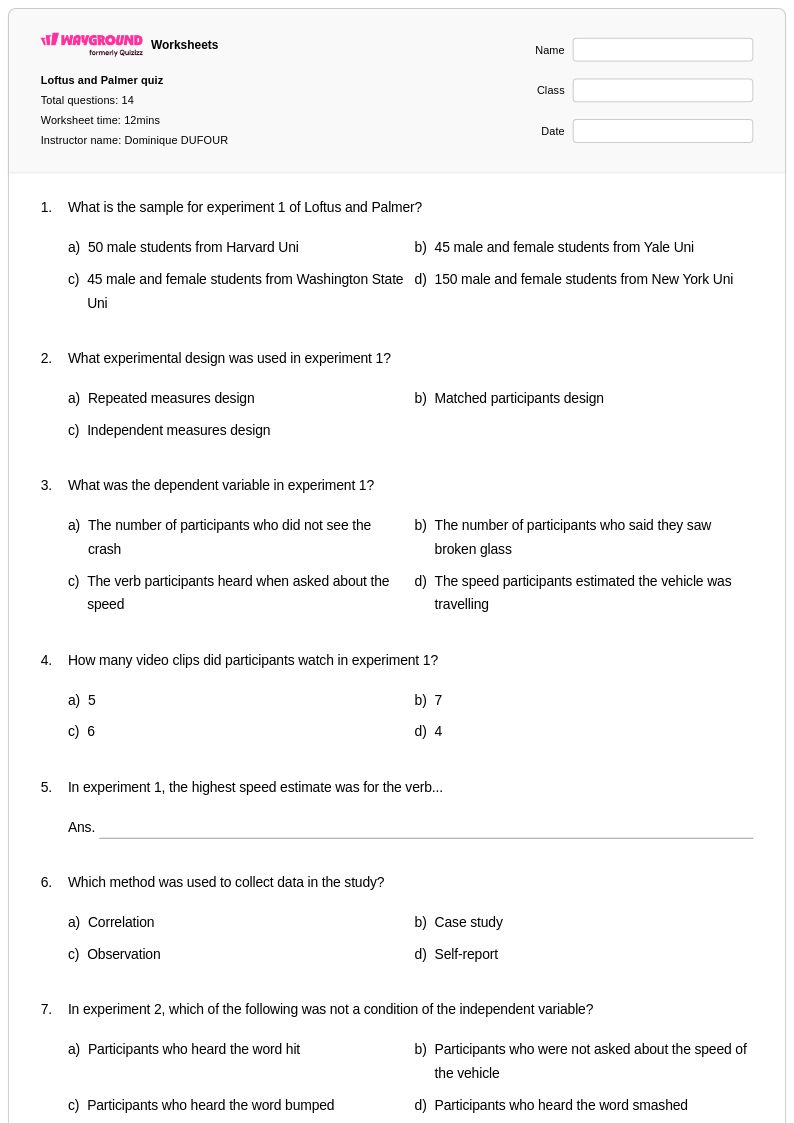
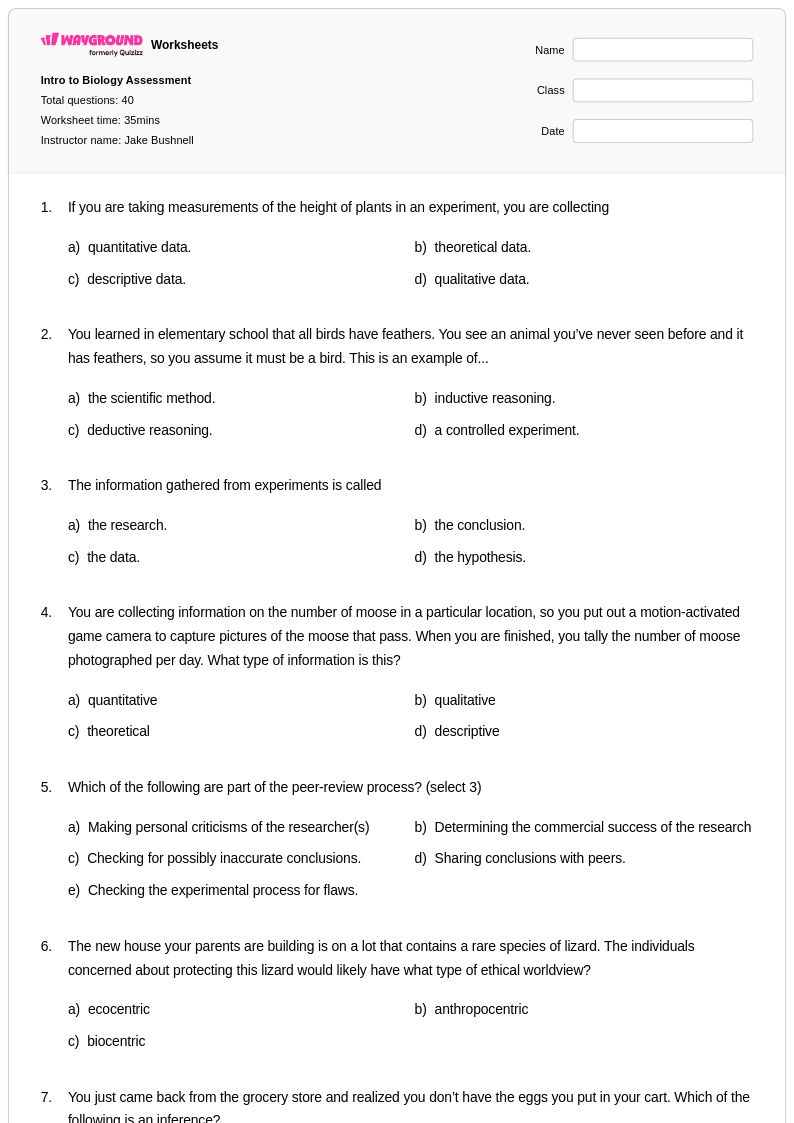
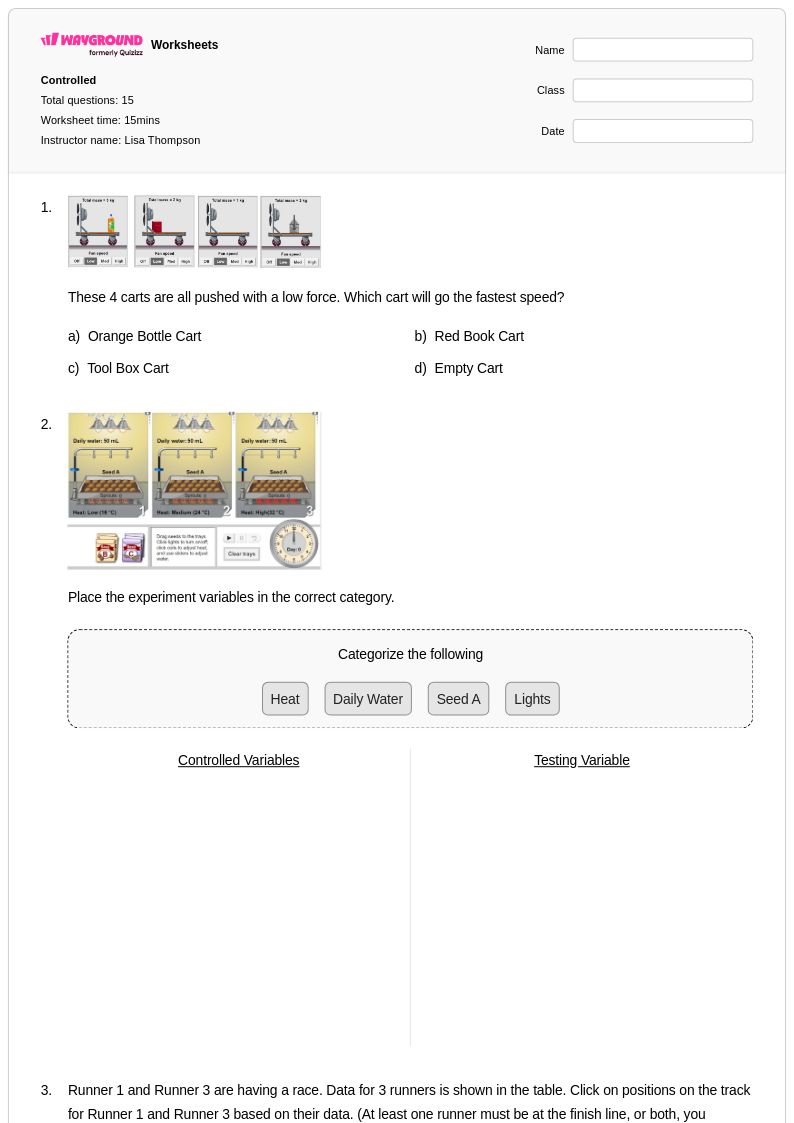
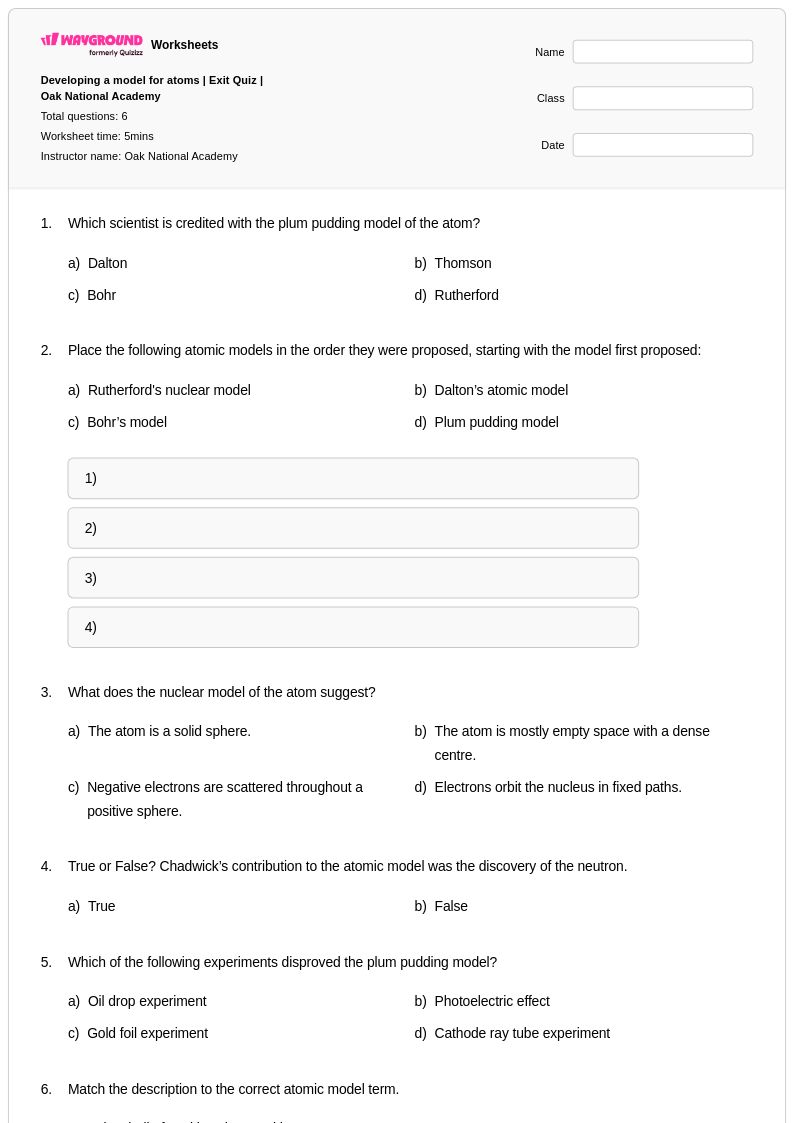
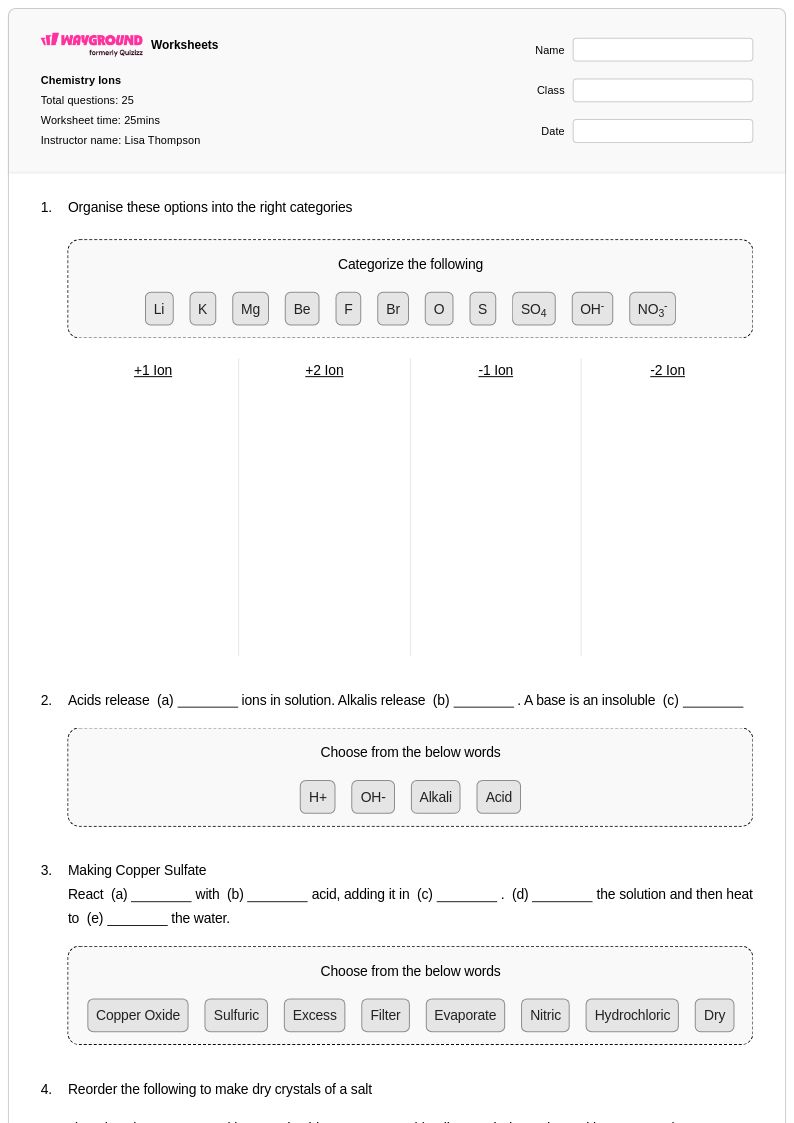
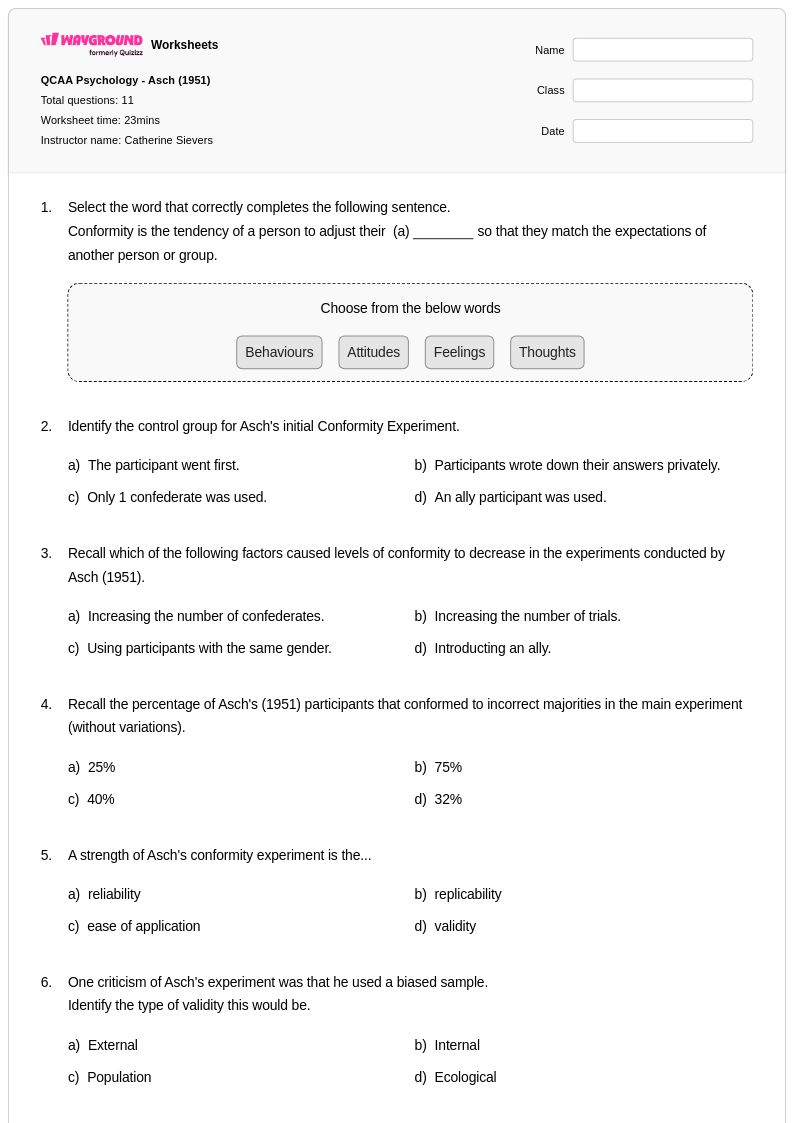
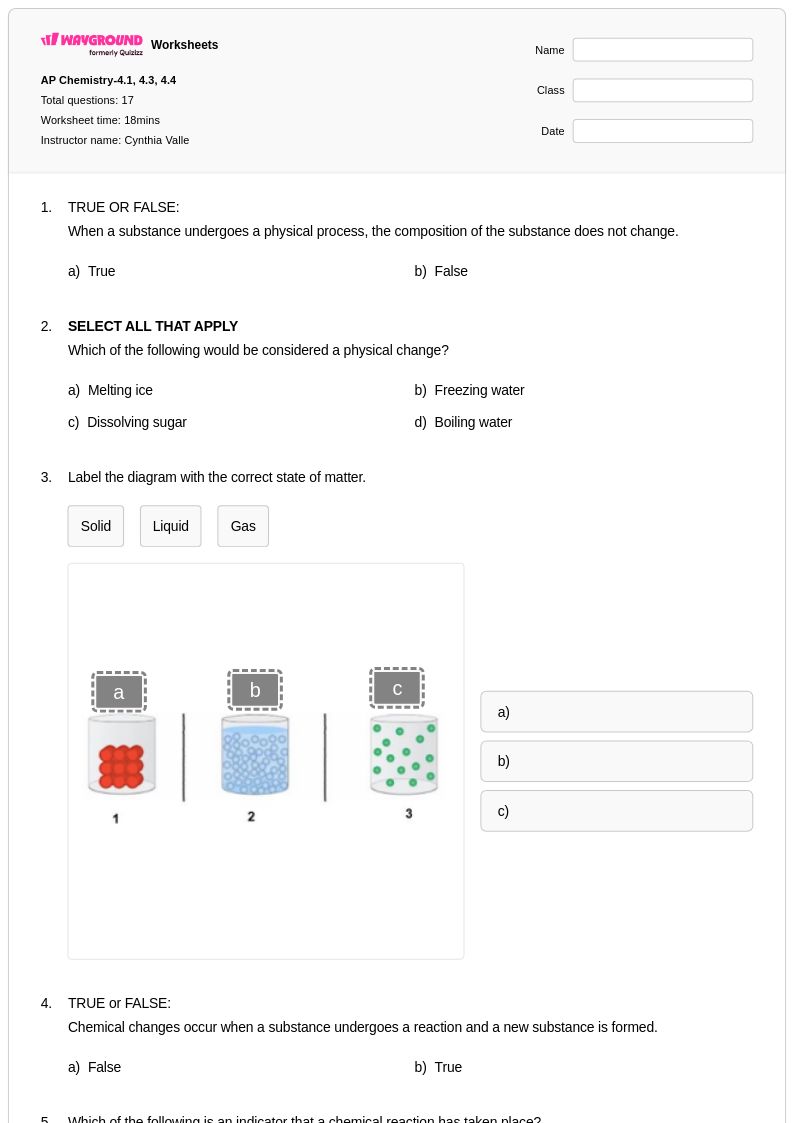
Enhance Year 12 students' experimental skills with Wayground's comprehensive collection of free science worksheets, featuring printable PDFs with practice problems and answer keys to master engineering and science practices through hands-on learning.
Explore printable Experiment worksheets for Year 12
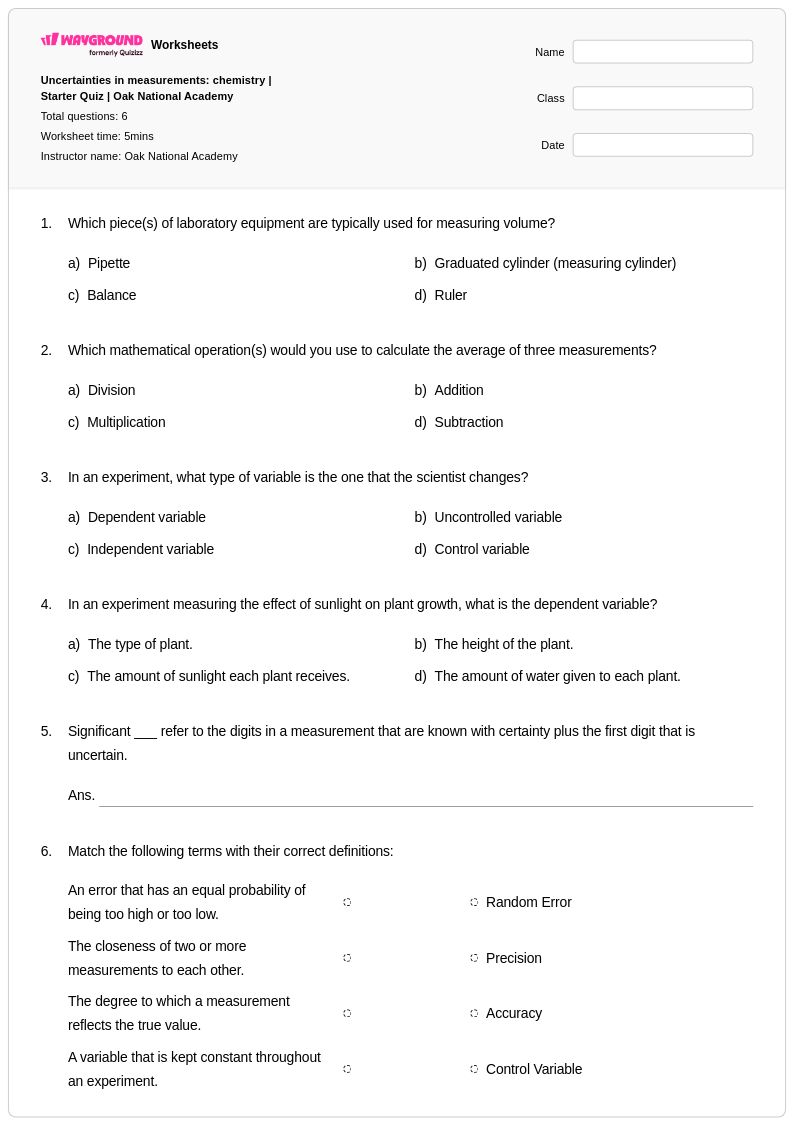
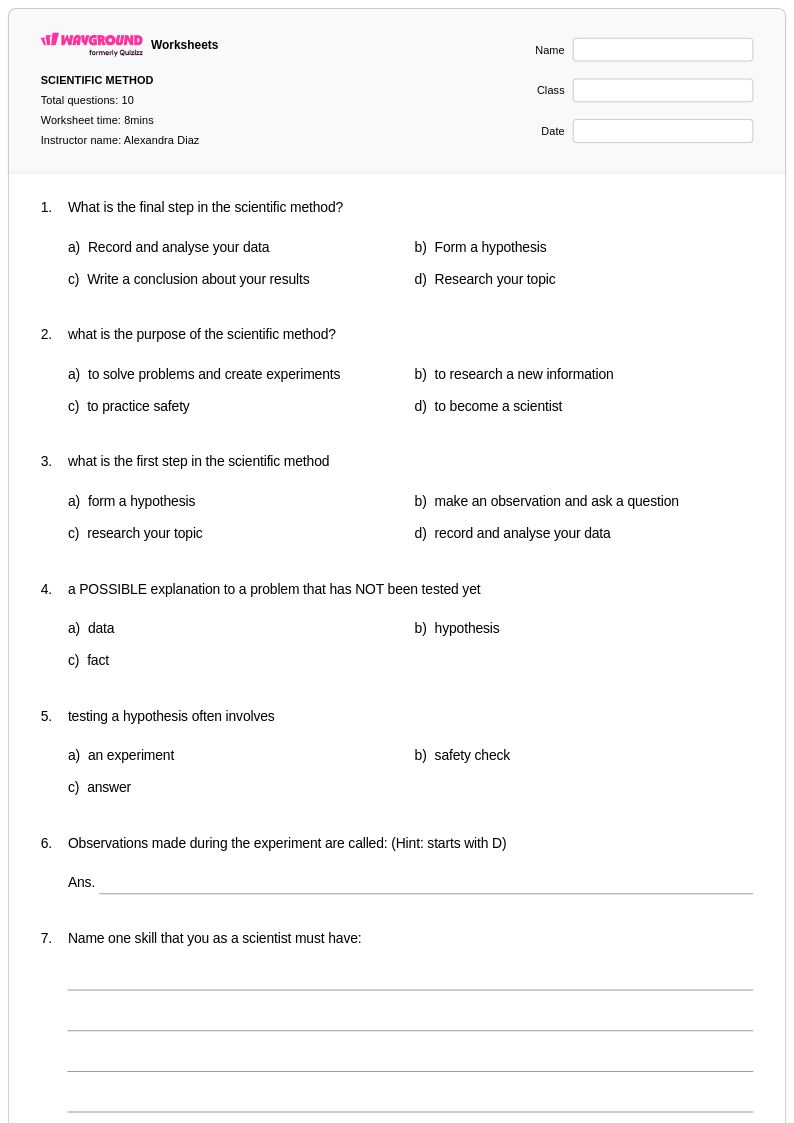
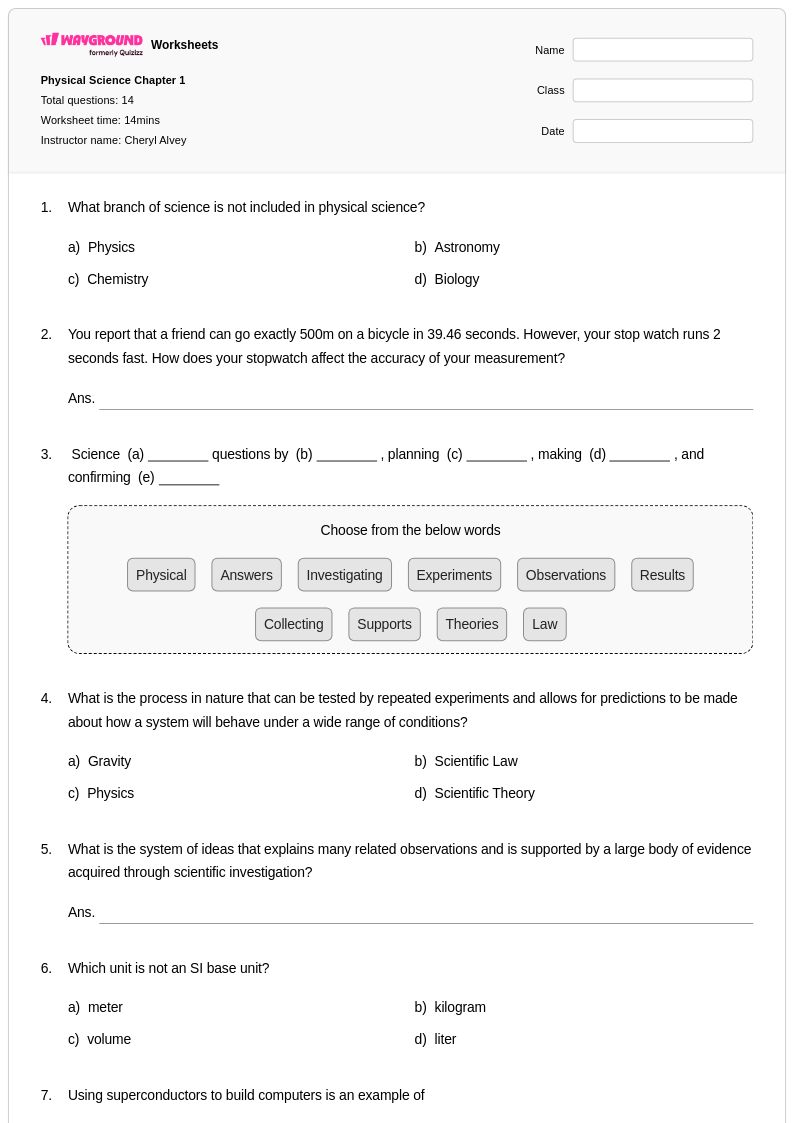
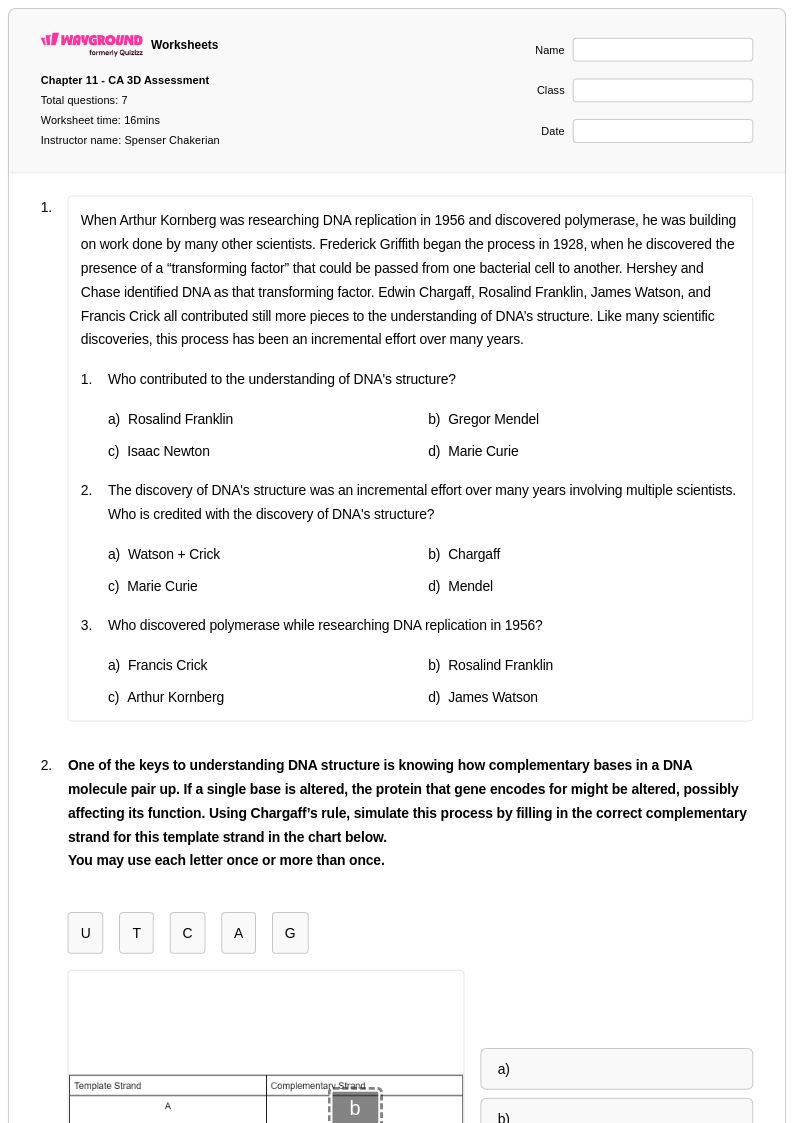
Year 12 experiment worksheets available through Wayground (formerly Quizizz) provide advanced students with comprehensive opportunities to master the rigorous scientific methodology required at the senior high school level. These expertly crafted resources focus on developing critical experimental design skills, including hypothesis formation, variable identification and control, data collection protocols, statistical analysis techniques, and evidence-based conclusion drawing. Students engage with complex practice problems that mirror real-world scientific investigations across multiple disciplines, strengthening their ability to plan controlled experiments, interpret quantitative results, and evaluate experimental validity. Each worksheet includes detailed answer keys that guide students through proper experimental reasoning, while the free printable format ensures accessibility for both classroom instruction and independent study, supporting the development of scientific literacy essential for college-level coursework and research.
Wayground (formerly Quizizz) empowers educators with an extensive collection of millions of teacher-created experiment worksheets specifically designed to meet the demanding academic standards of Year 12 science education. The platform's robust search and filtering capabilities allow teachers to quickly locate resources aligned with specific curriculum standards and learning objectives, while differentiation tools enable seamless customization to accommodate diverse student needs and ability levels. These experiment worksheets are available in both digital and printable PDF formats, providing maximum flexibility for lesson planning, targeted remediation of experimental design concepts, and enrichment activities for advanced learners. Teachers can efficiently modify content, create varied practice opportunities, and implement formative assessments that strengthen students' experimental reasoning skills, ensuring comprehensive preparation for advanced scientific study and standardized testing requirements.
FAQs
How do I teach experimental design to students?
Effective experimental design instruction begins with teaching students the components of the scientific method in sequence: forming a testable hypothesis, identifying independent and dependent variables, designing controlled investigations, collecting data, and drawing evidence-based conclusions. Using worked examples and guided practice helps students internalize each step before applying it independently. Anchoring lessons in real-world scenarios increases engagement and helps students see why controlled experimentation matters.
What exercises help students practice identifying variables in an experiment?
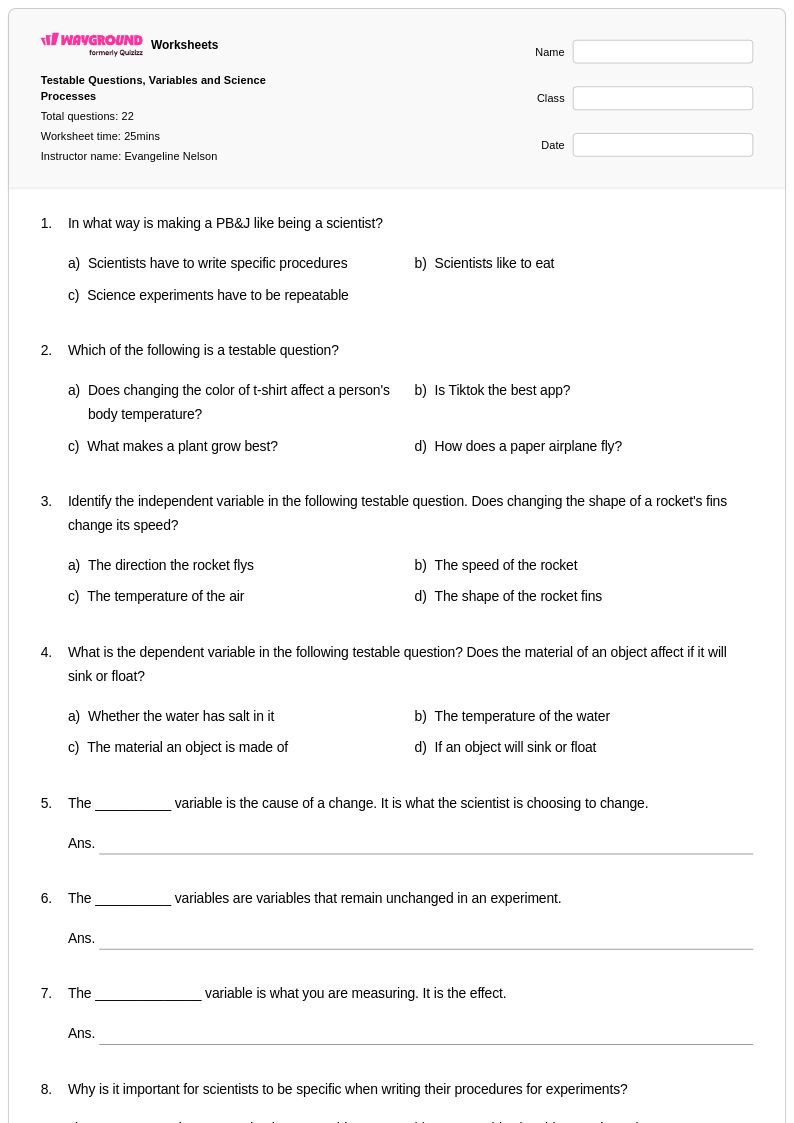
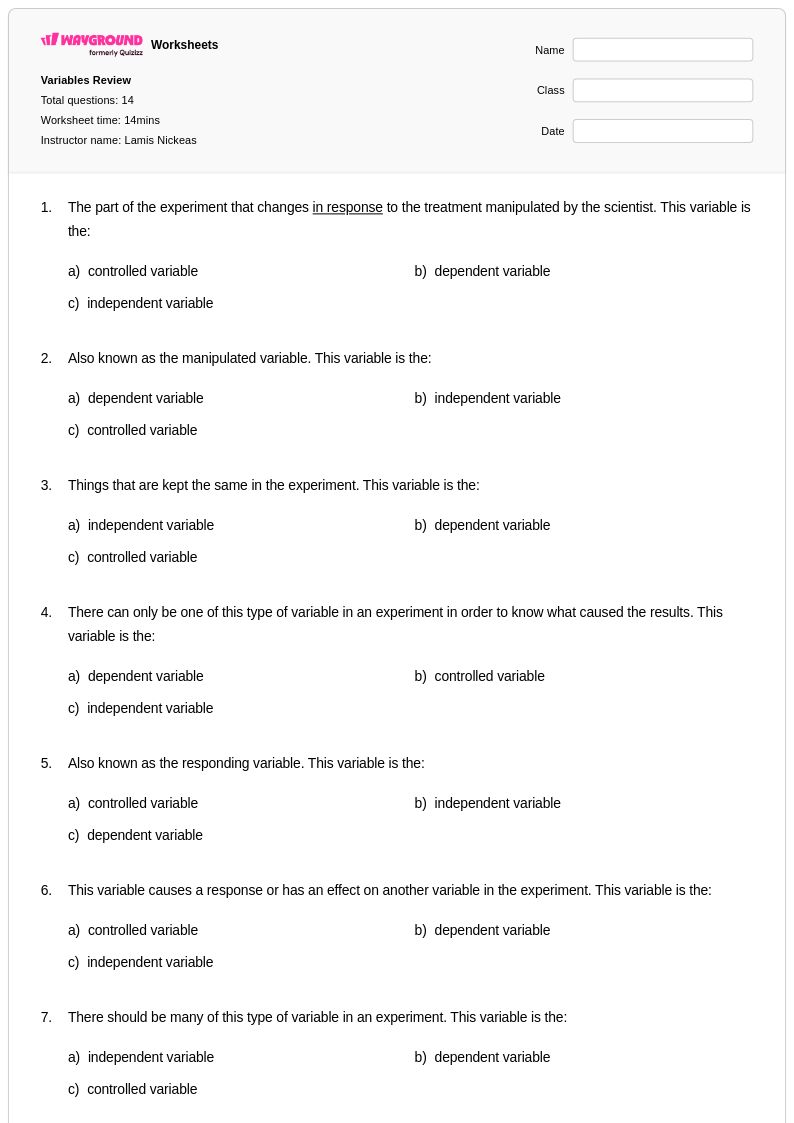
Practice exercises that present brief experiment scenarios and ask students to label the independent variable, dependent variable, and controlled variables are among the most effective for building this skill. Requiring students to justify their choices in writing deepens understanding beyond surface-level identification. Progressing from simple, single-variable experiments to more complex multi-variable designs helps students develop flexible thinking about experimental structure.
What mistakes do students commonly make when designing or analyzing experiments?
One of the most common errors is confusing the independent and dependent variables, particularly when the experimental setup is described in non-standard language. Students also frequently fail to account for control variables, which leads to flawed conclusions about cause and effect. Another persistent misconception is treating correlation as causation when interpreting experimental results, which requires explicit instruction and repeated exposure to counterexamples.
How can I assess whether students understand the scientific method?
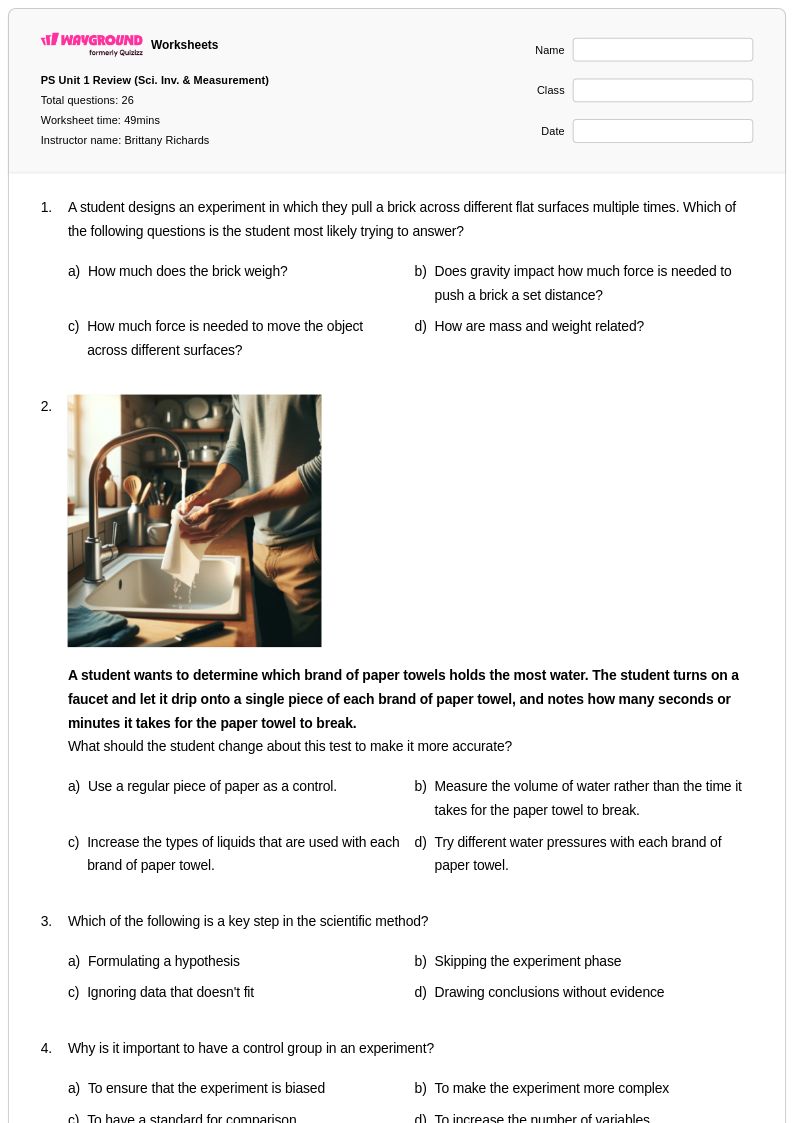
Assessing scientific method understanding is most reliable when students are asked to evaluate an unfamiliar experiment rather than recall definitions, because this requires them to apply conceptual knowledge rather than memorize terms. Tasks that ask students to identify flaws in experimental design, suggest improvements, or interpret data tables reveal whether understanding is surface-level or transferable. Answer-key-supported worksheets that include targeted feedback prompts can help teachers identify specific gaps in student reasoning.
How do I use Wayground's experiment worksheets in my classroom?
Wayground's experiment worksheets are available as printable PDFs for traditional classroom use and in digital formats for technology-integrated environments, giving teachers flexibility depending on their setup. Teachers can also host worksheets as a quiz directly on Wayground, which supports interactive digital delivery. Each worksheet includes a detailed answer key, making them practical for independent practice, homework, guided lessons, or formative assessment without requiring additional preparation.
How can I differentiate experiment worksheets for students at different skill levels?
Differentiation can be achieved by selecting worksheets that vary in complexity, from basic variable identification tasks for developing learners to multi-step experimental analysis for advanced students. On Wayground, teachers can apply individual student accommodations such as read aloud, reduced answer choices, and extended time, which are particularly useful for students with learning differences or language barriers. These settings are saved per student and can be applied across future sessions without disrupting the experience of other learners.