Free Printable Experimental Design Worksheets for Year 8
Year 8 experimental design worksheets and printables help students master scientific methodology through hands-on practice problems covering hypothesis formation, variable identification, and data analysis with comprehensive answer keys.
Explore printable Experimental Design worksheets for Year 8
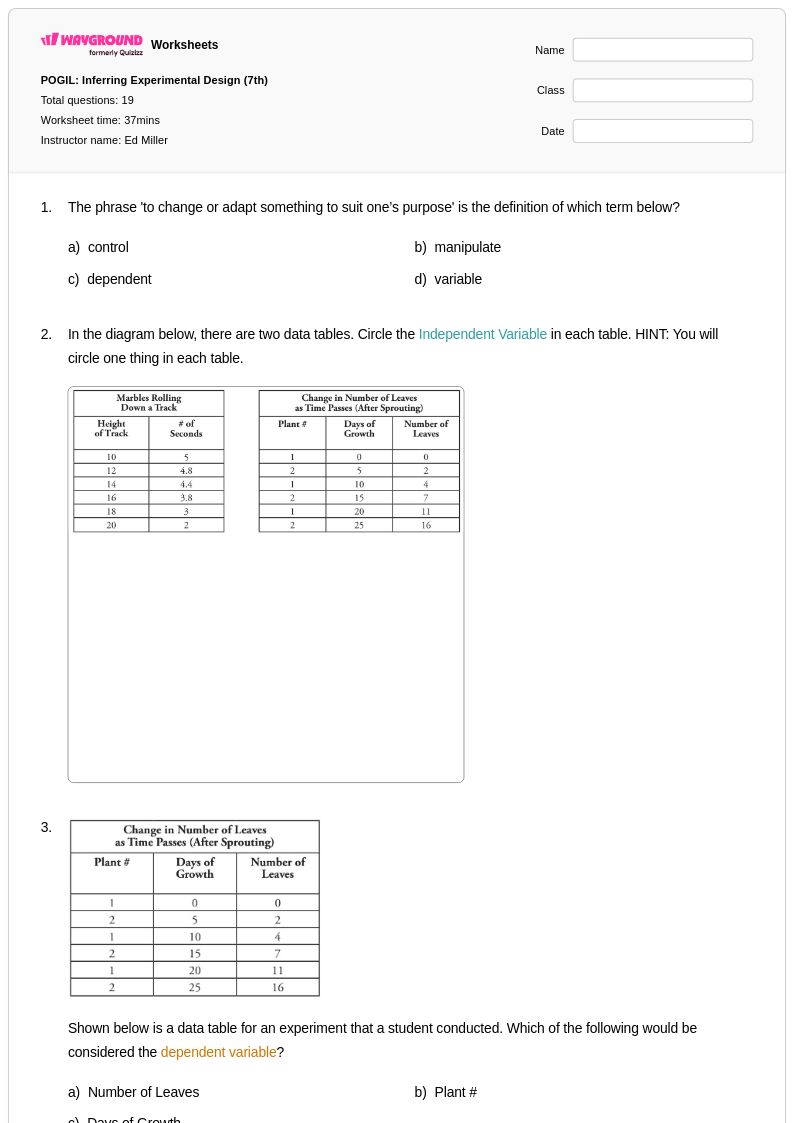
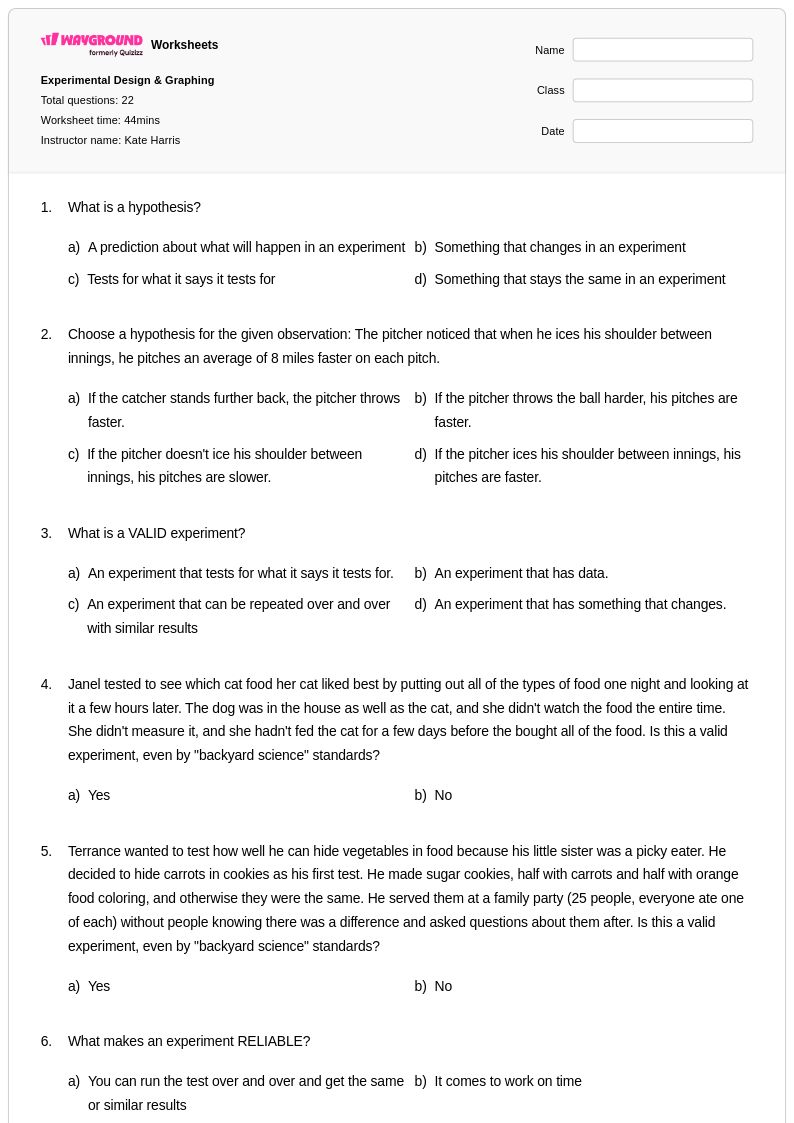
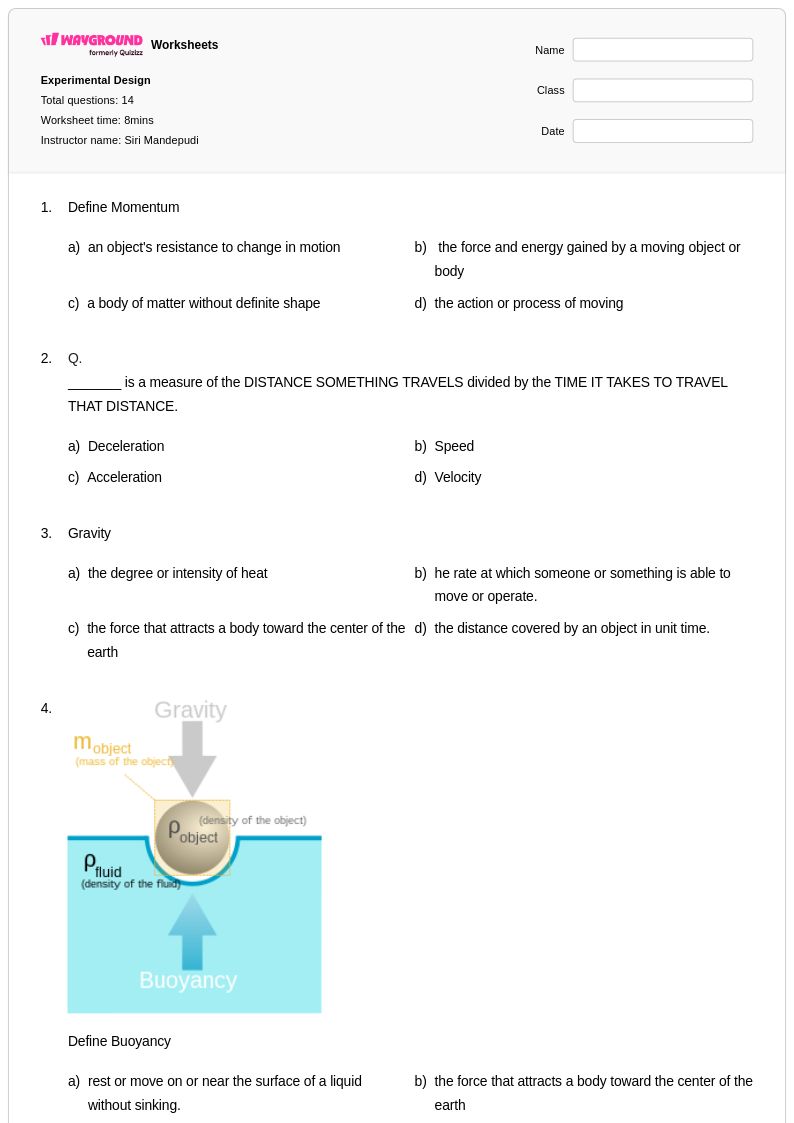
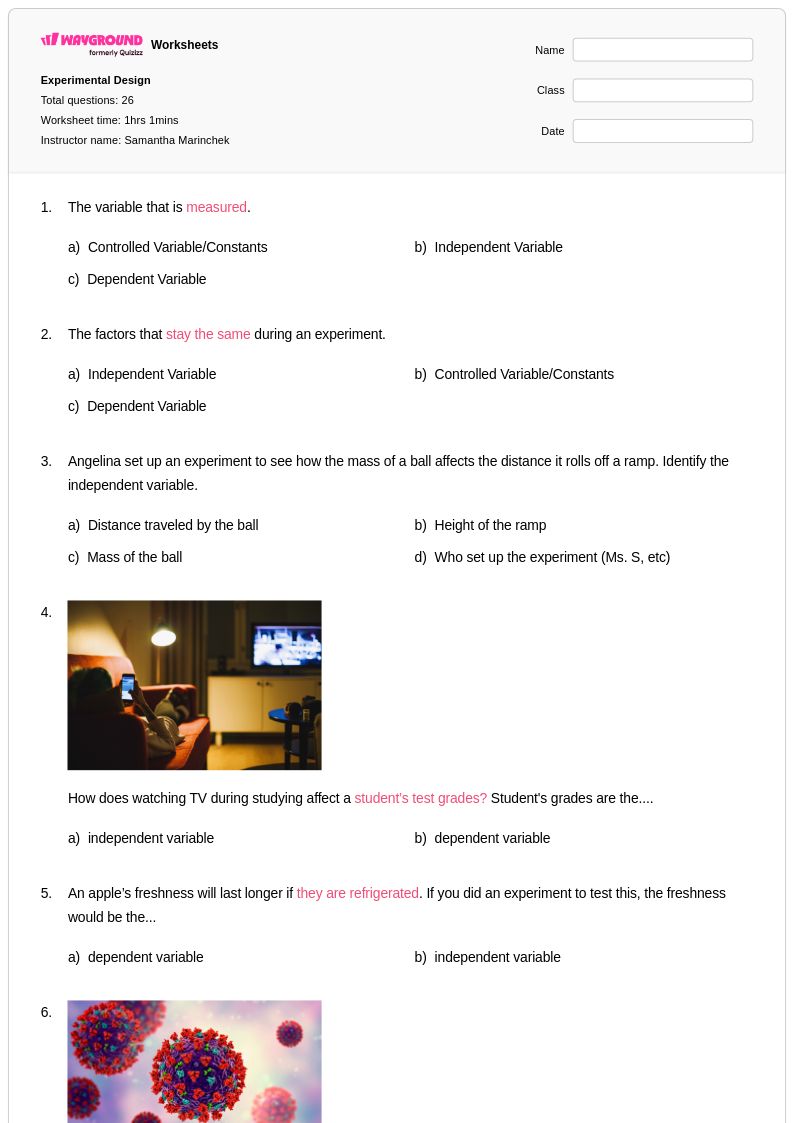
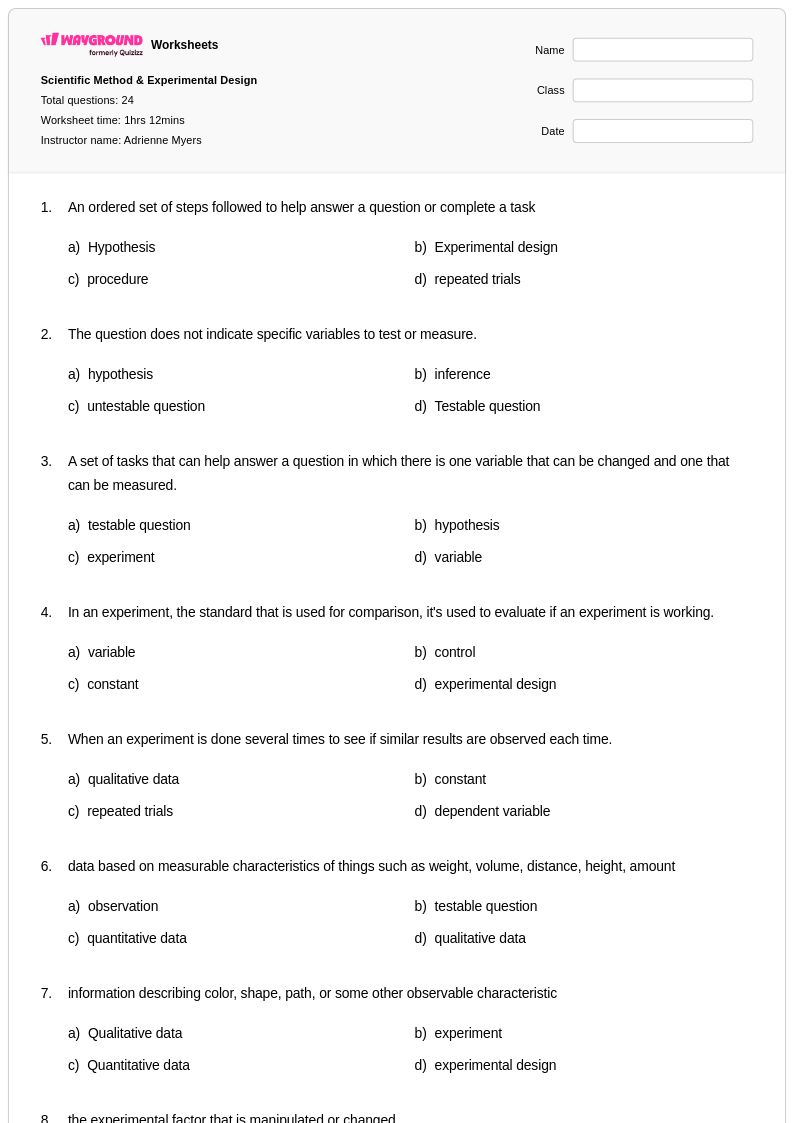
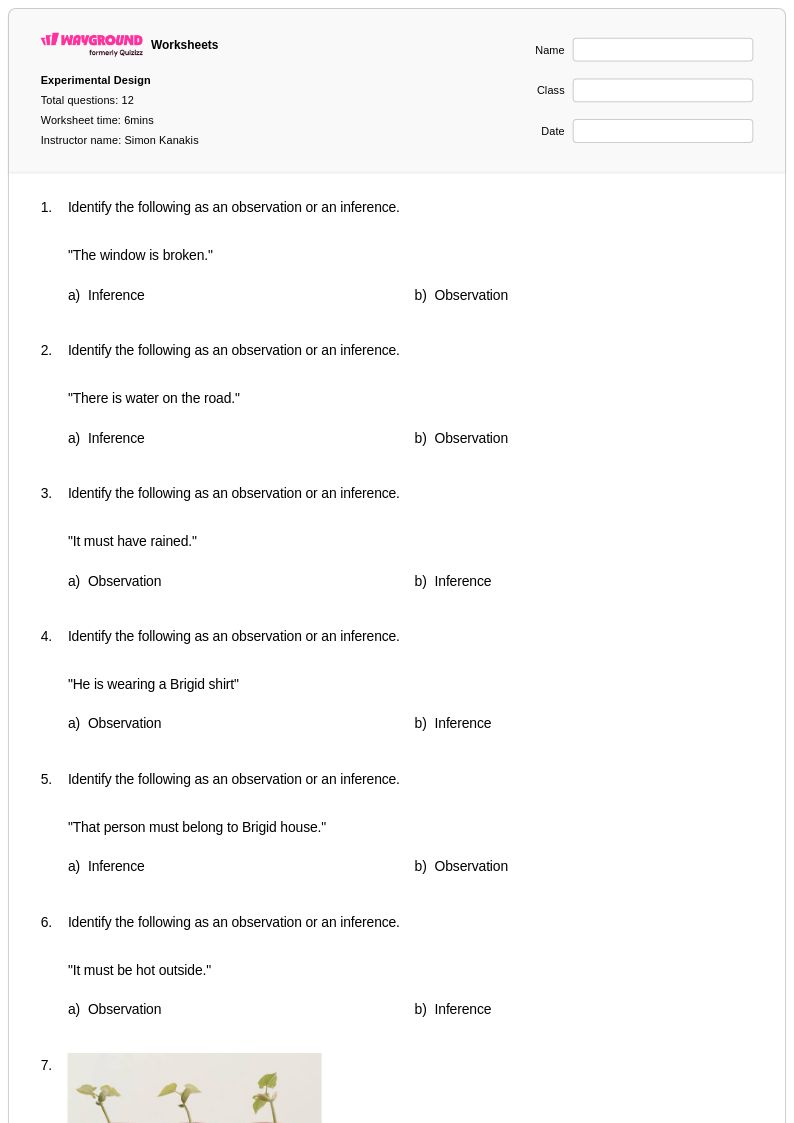
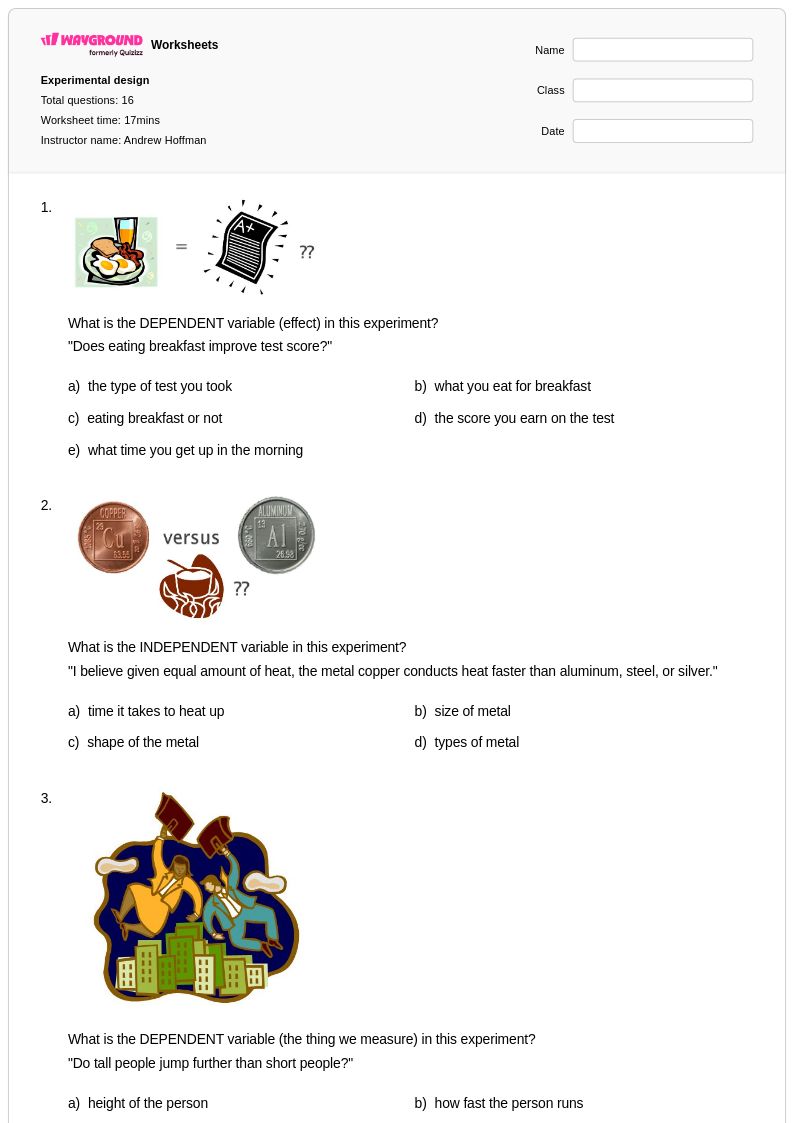
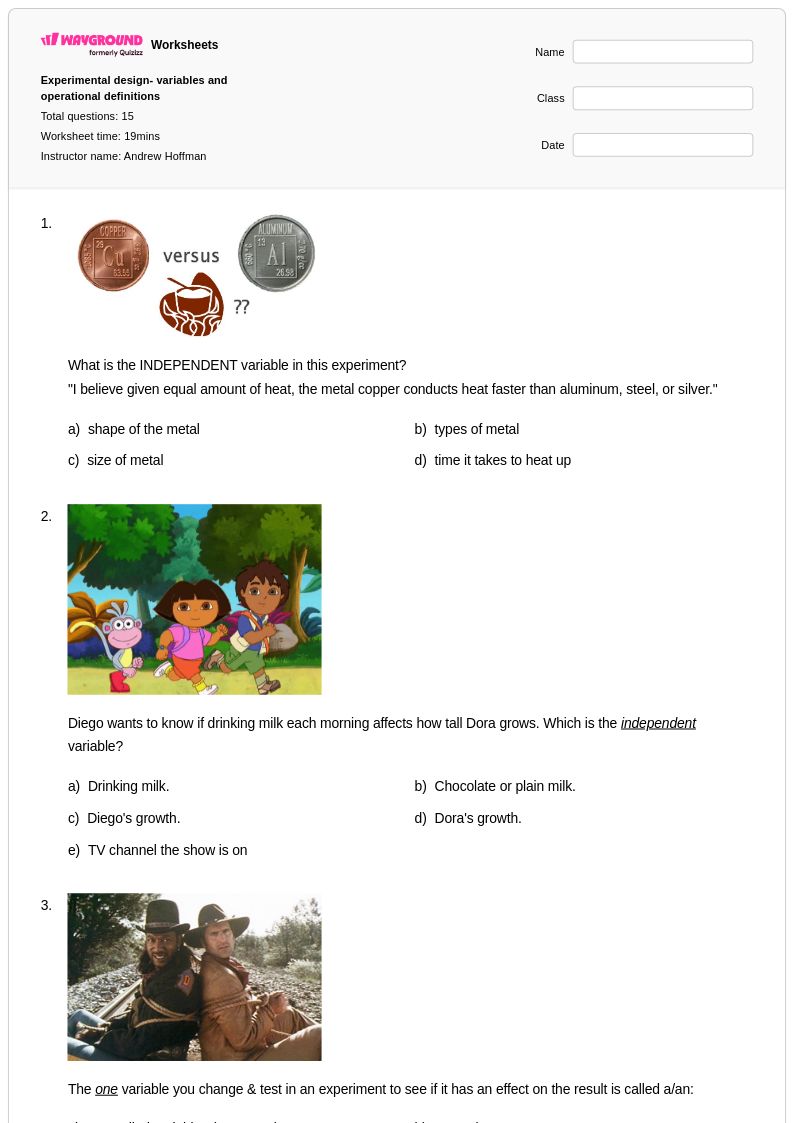
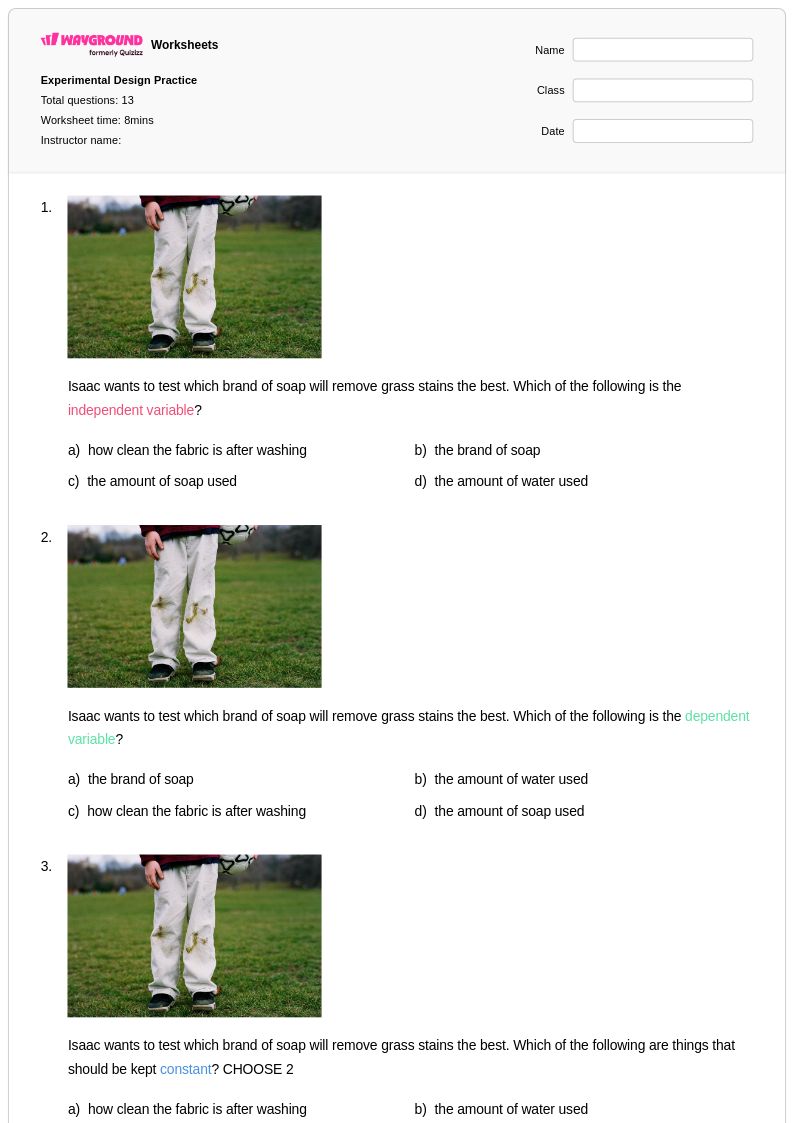
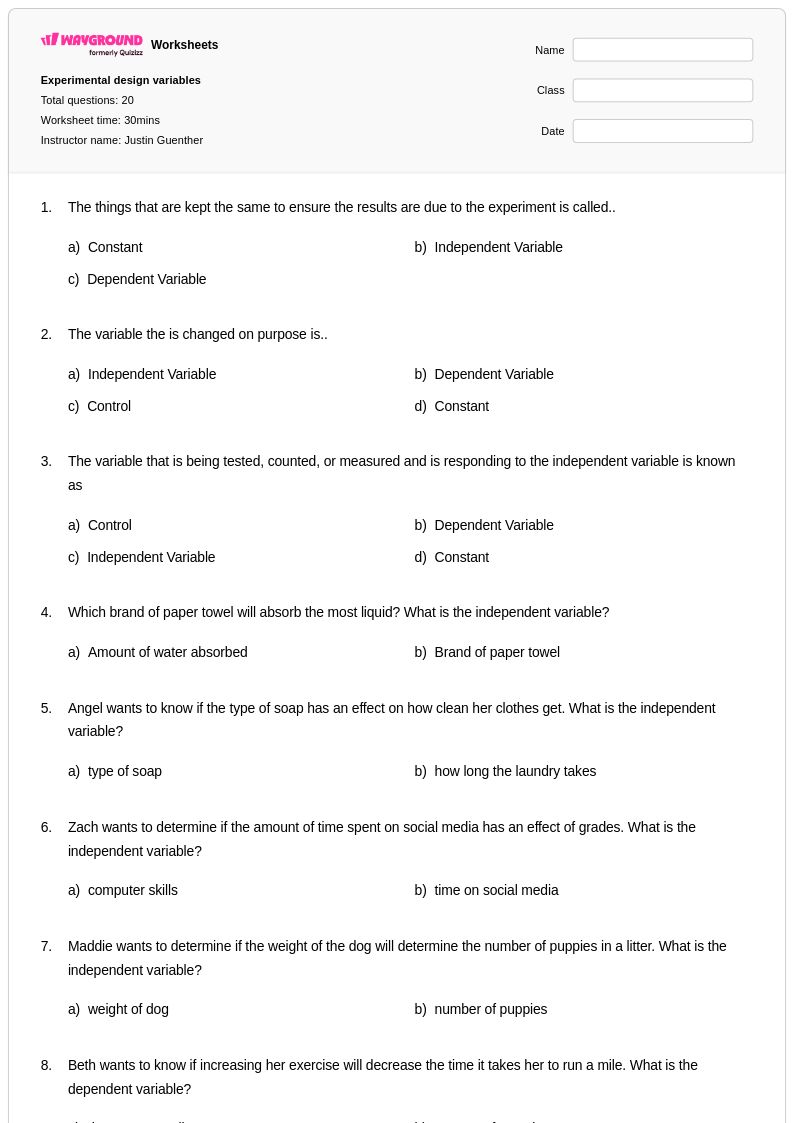
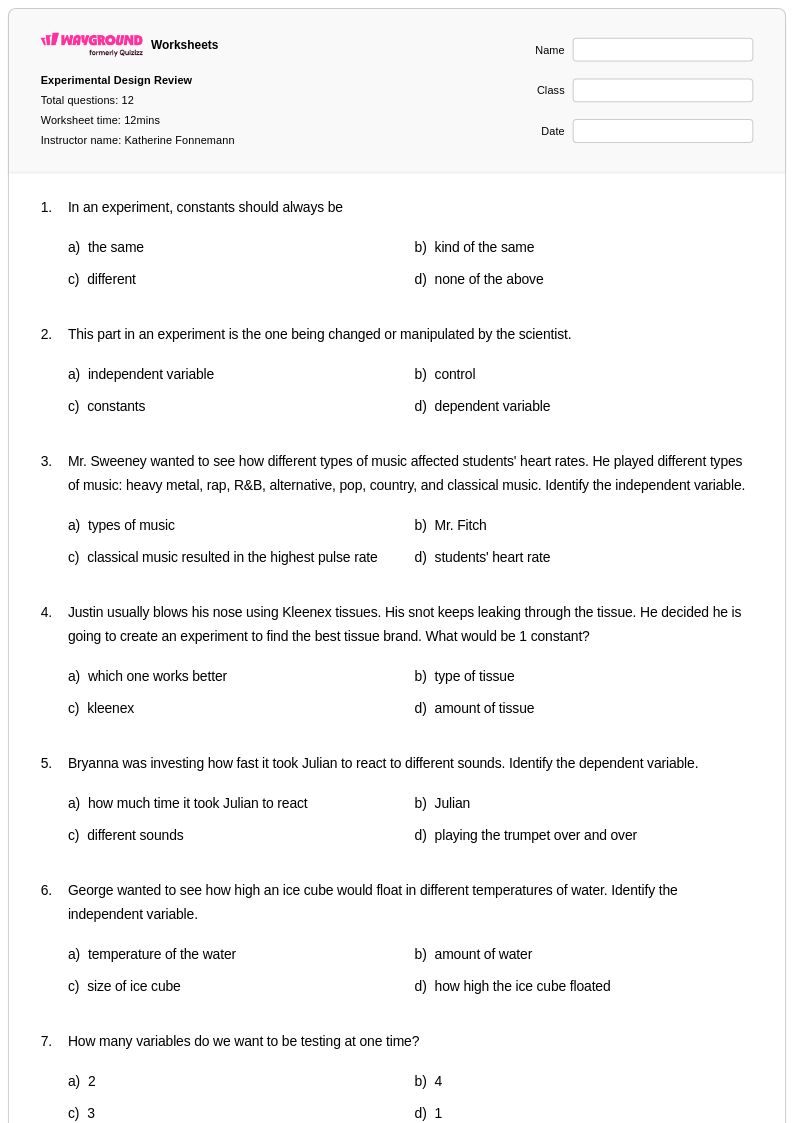
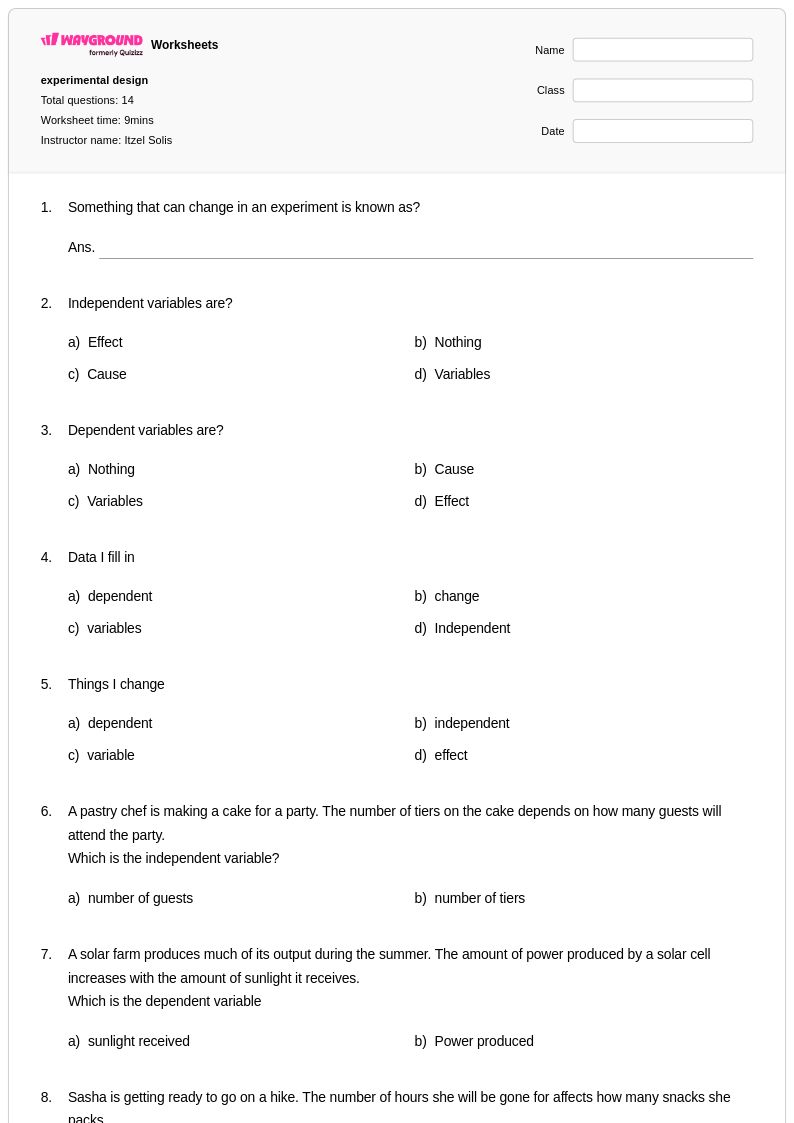
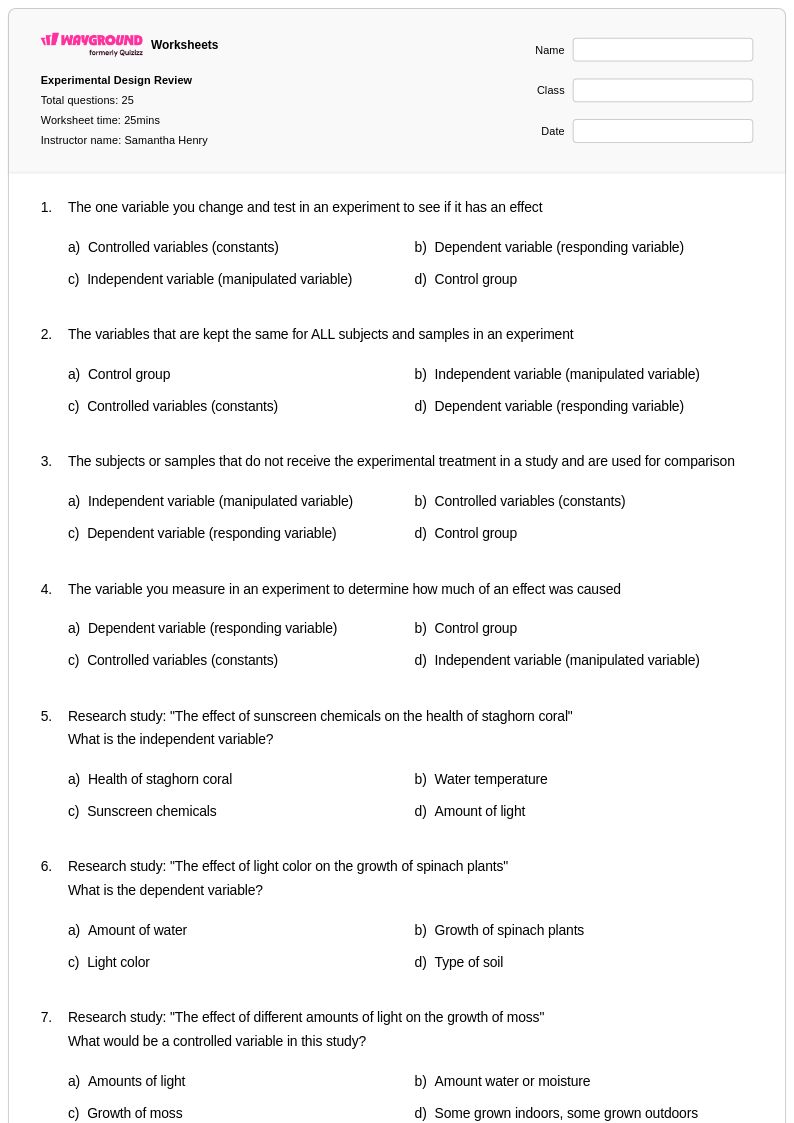
Experimental design worksheets for Year 8 students available through Wayground (formerly Quizizz) provide comprehensive practice in the fundamental scientific methodology that forms the backbone of rigorous scientific inquiry. These carefully crafted educational resources guide eighth-grade students through the essential components of experimental design, including hypothesis formation, variable identification and control, data collection planning, and result interpretation. Students develop critical thinking skills as they work through practice problems that challenge them to design fair tests, recognize potential sources of error, and understand the importance of controlled conditions in scientific investigations. Each worksheet comes with a detailed answer key to support both independent learning and classroom instruction, and teachers can access these materials as free printables in convenient PDF format for seamless integration into their science curriculum.
Wayground's extensive collection of teacher-created experimental design resources offers educators unprecedented flexibility in supporting their Year 8 science instruction with millions of high-quality materials at their fingertips. The platform's robust search and filtering capabilities allow teachers to quickly locate worksheets that align with specific learning standards and match their students' varying ability levels, while built-in differentiation tools enable customization of content complexity and presentation format. Whether delivered as traditional printable worksheets or interactive digital assignments, these resources support diverse instructional needs from initial skill introduction to targeted remediation and advanced enrichment activities. Teachers can confidently rely on the platform's comprehensive PDF library and customizable features to create engaging learning experiences that strengthen students' understanding of scientific methodology while building the analytical skills essential for success in advanced science coursework.
FAQs
How do I teach experimental design to students?
Effective experimental design instruction begins with breaking the scientific method into discrete, teachable components: forming a testable question, writing a hypothesis, identifying independent and dependent variables, controlling extraneous variables, and planning data collection. Teachers typically scaffold this process by first modeling a complete experiment design, then guiding students through partial designs before asking them to create their own. Connecting each step to a concrete, familiar context (such as testing which brand of paper towel absorbs more water) helps students understand why each component matters before they apply it abstractly.
What are the most common mistakes students make with experimental design?
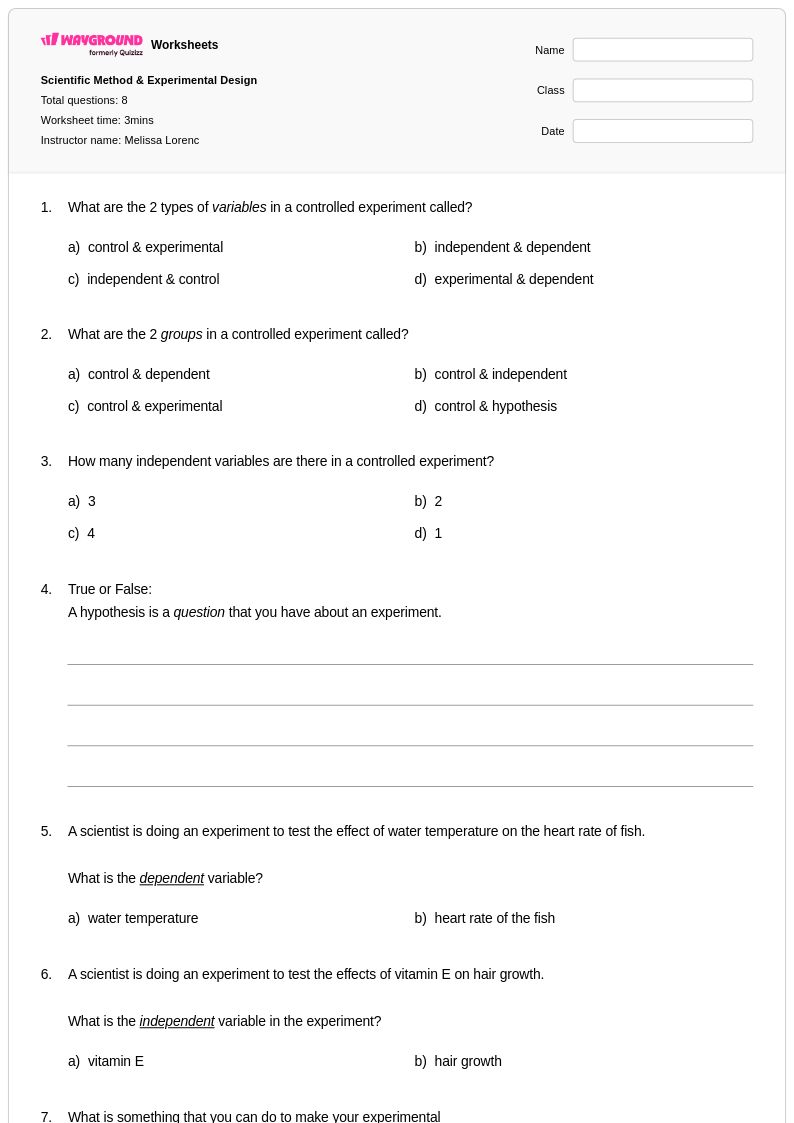
The most persistent errors involve variables: students frequently confuse independent and dependent variables, fail to identify all controlled variables, or design experiments that change more than one variable at a time, making results uninterpretable. A second common misconception is writing hypotheses as questions rather than as testable, directional predictions. Students also often overlook the need for repeated trials, which undermines the reliability of their data and is a key concept to address explicitly during instruction.
What exercises help students practice identifying variables in an experiment?
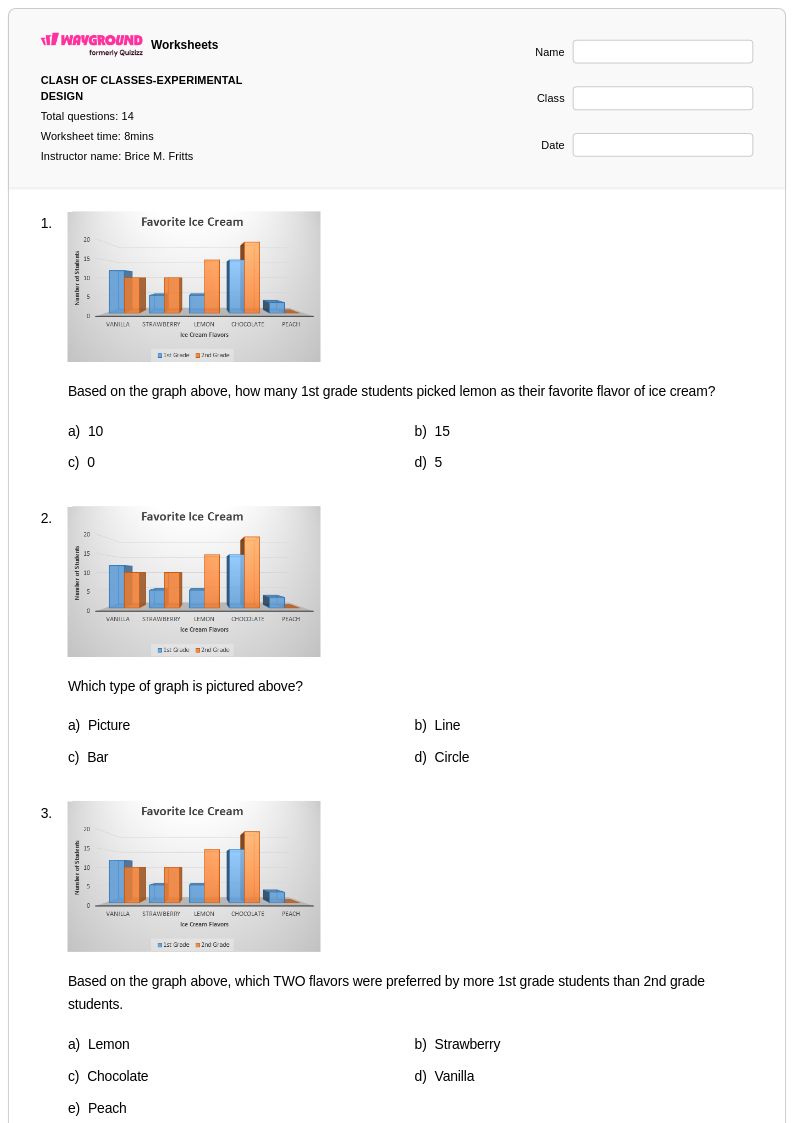
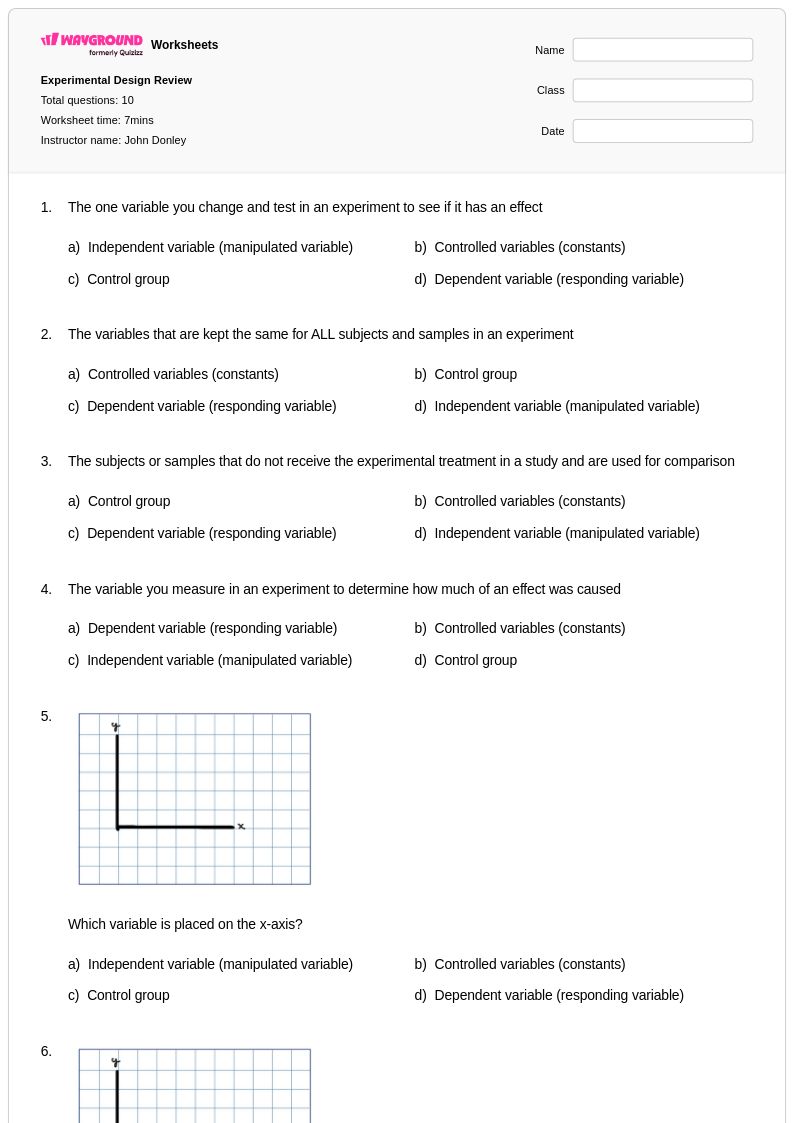
Scenario-based practice problems are among the most effective tools for building variable identification skills. Presenting students with a brief experiment description and asking them to label the independent variable, dependent variable, and at least three controlled variables forces active engagement with each concept. Gradually increasing scenario complexity, from simple one-variable setups to multi-condition experiments, helps students build fluency before they are asked to design original investigations.
How can I use experimental design worksheets to prepare students for science assessments?
Experimental design is a high-frequency component of standardized science assessments, where students must read a scenario and answer questions about hypothesis formation, variable identification, and validity of conclusions. Using worksheets that mirror this format, including short passages followed by targeted questions, builds both content knowledge and test-taking familiarity. Regular low-stakes practice with answer keys also allows students to self-correct and identify persistent gaps before formal assessment.
How do I use Wayground's experimental design worksheets in my classroom?
Wayground's experimental design worksheets are available as printable PDFs for traditional classroom use and in digital formats for technology-integrated or hybrid learning environments, and can also be hosted as an interactive quiz directly on Wayground. Teachers can search and filter the collection to find resources matched to specific skills, such as hypothesis writing or variable control, and apply student-level accommodations including read aloud, extended time, and reduced answer choices to support diverse learners. All worksheets include detailed answer keys, making them practical for independent practice, guided instruction, or remediation.
How do I differentiate experimental design instruction for students at different skill levels?
Differentiation in experimental design often means adjusting how much structure students receive: struggling learners benefit from partially completed templates where they fill in variables or revise a flawed hypothesis, while advanced students can be challenged to design original multi-variable investigations and evaluate the validity of peer designs. On Wayground, teachers can modify content complexity and scaffold learning for diverse student populations, and individual accommodations such as read aloud or reduced answer choices can be assigned to specific students without disrupting the rest of the class.