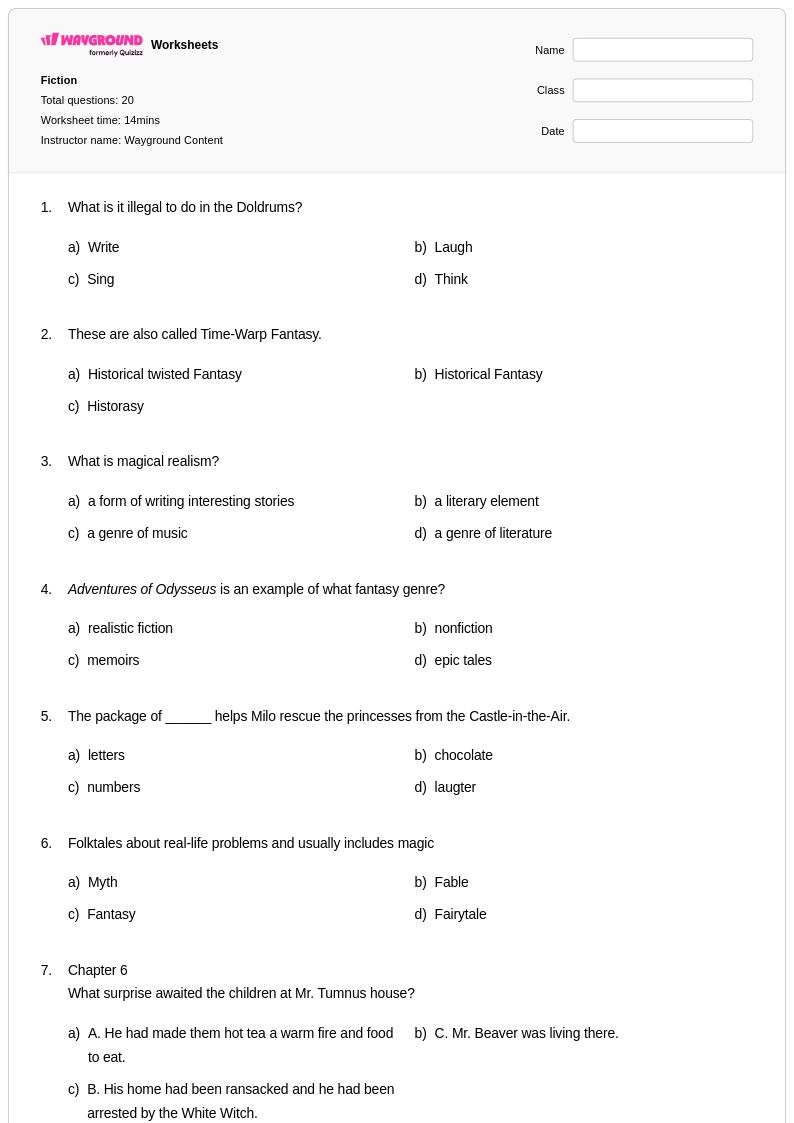
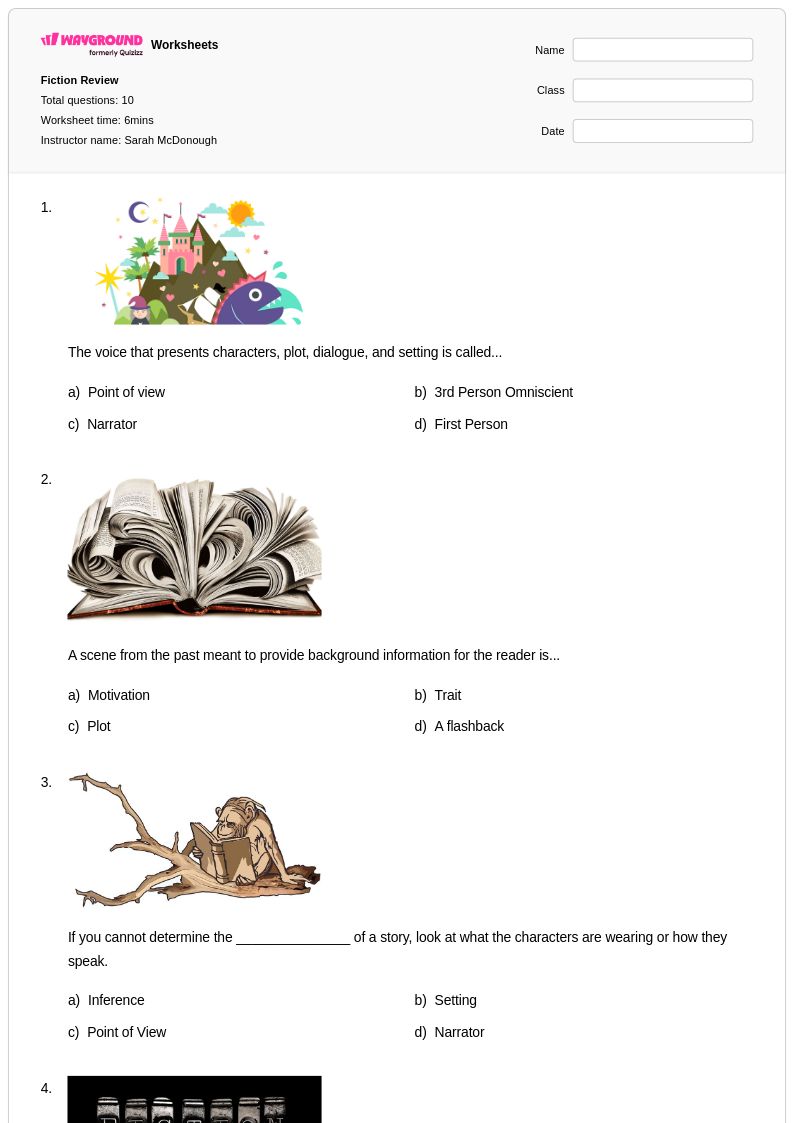
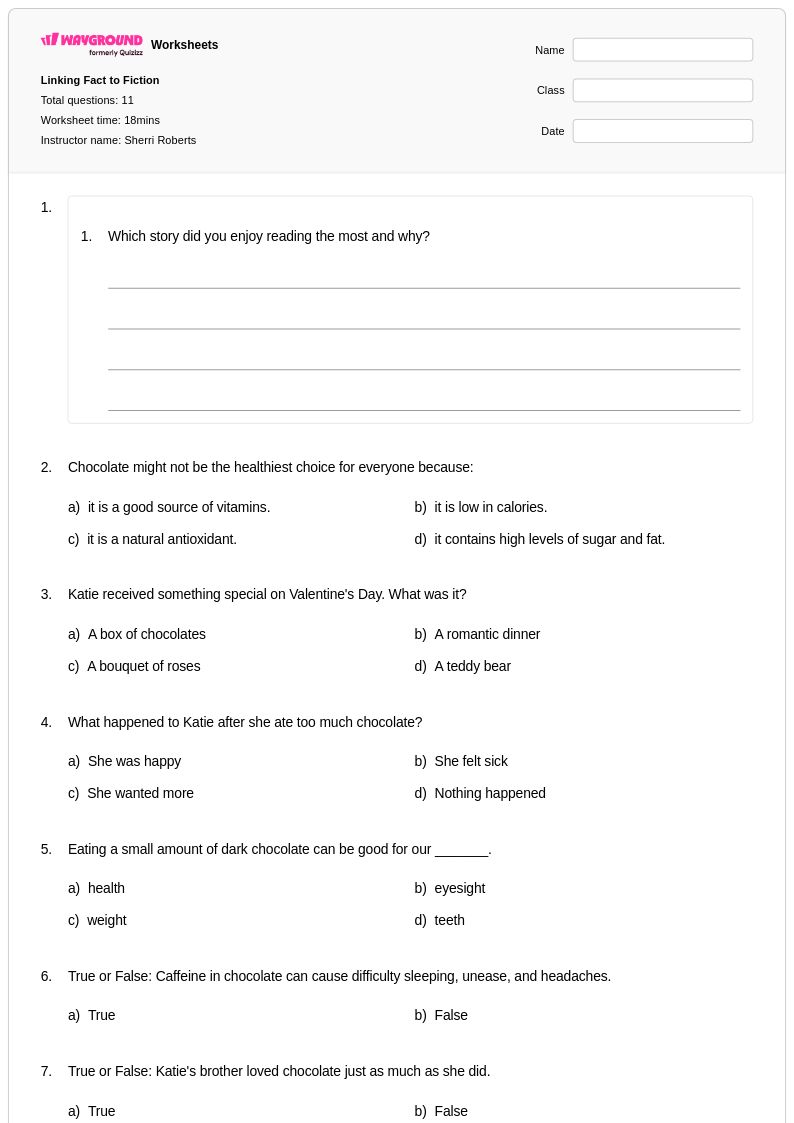
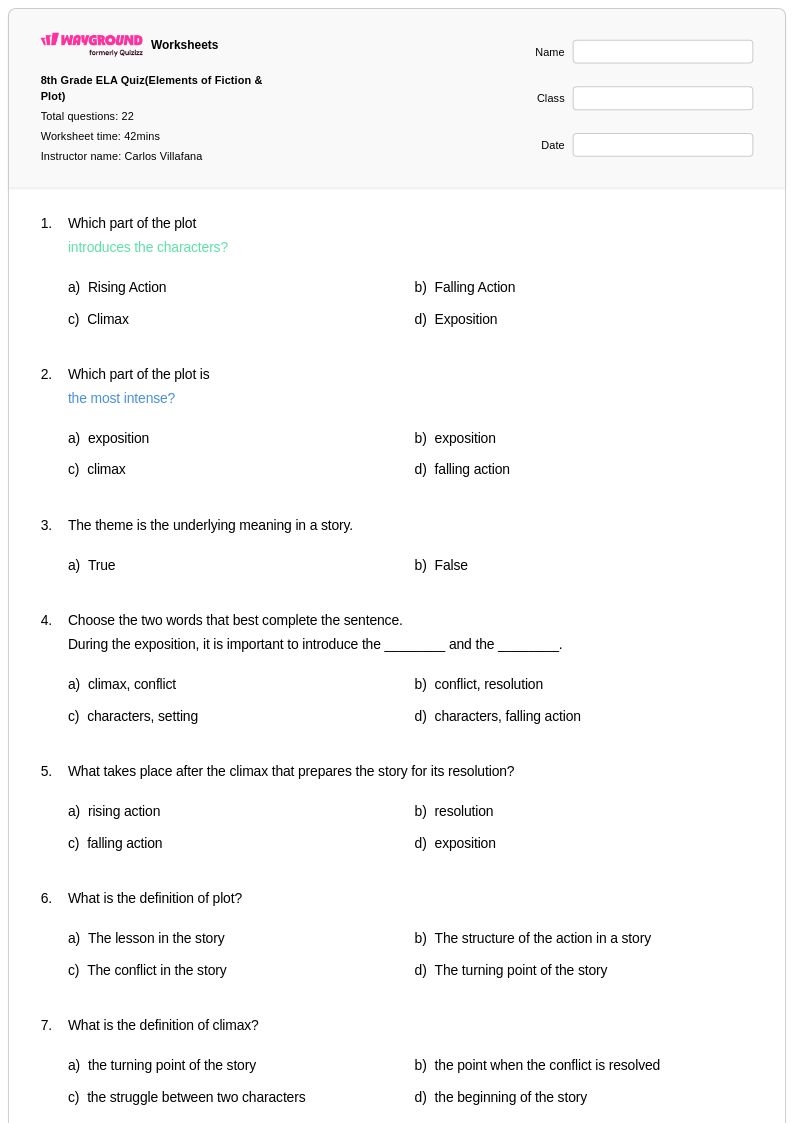
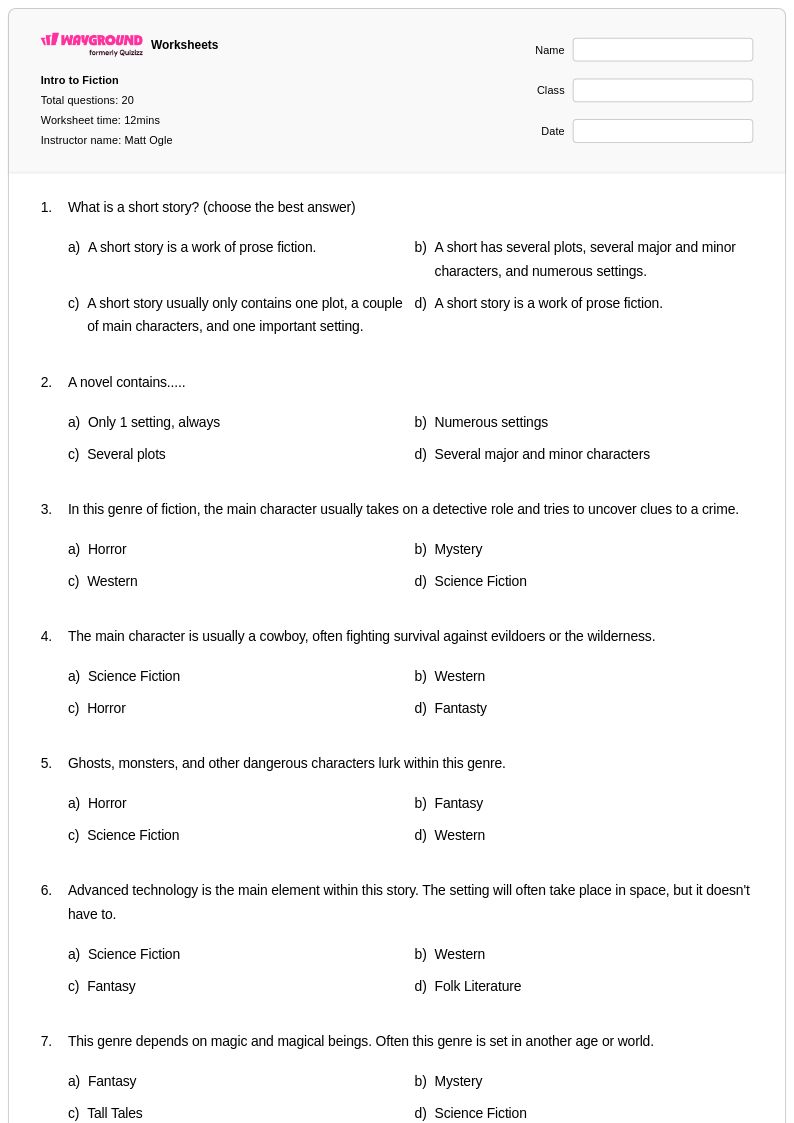
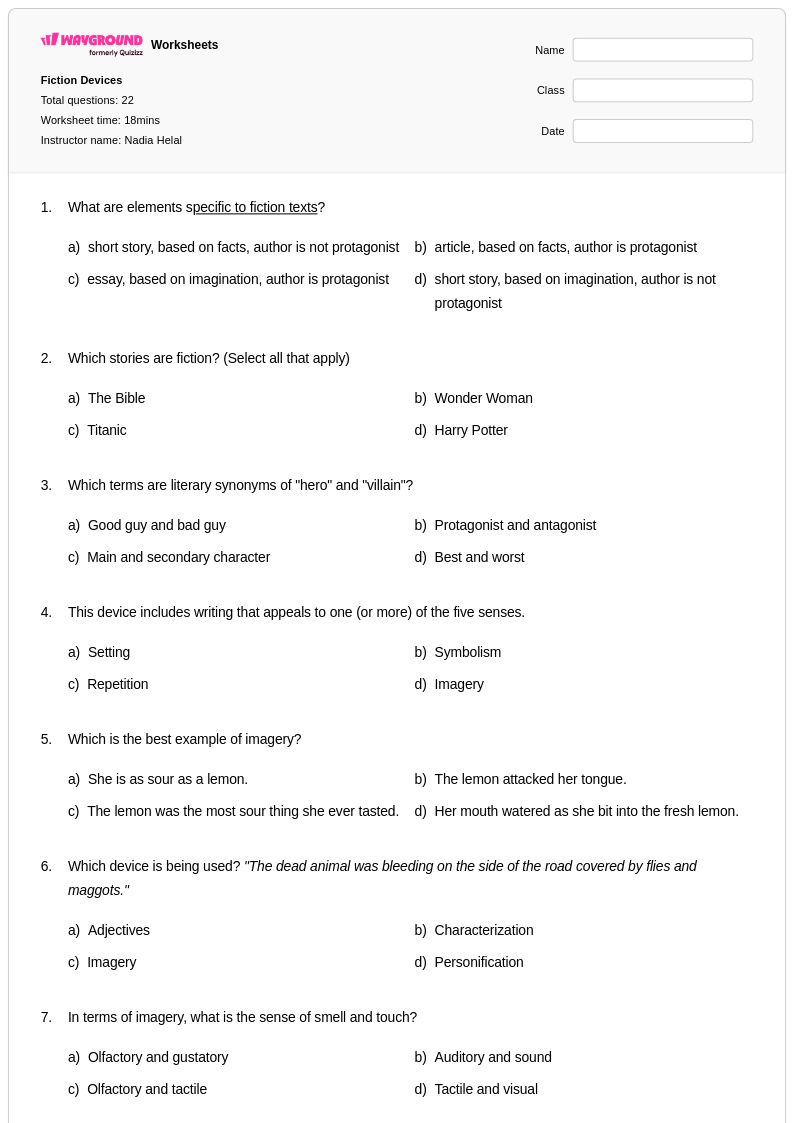
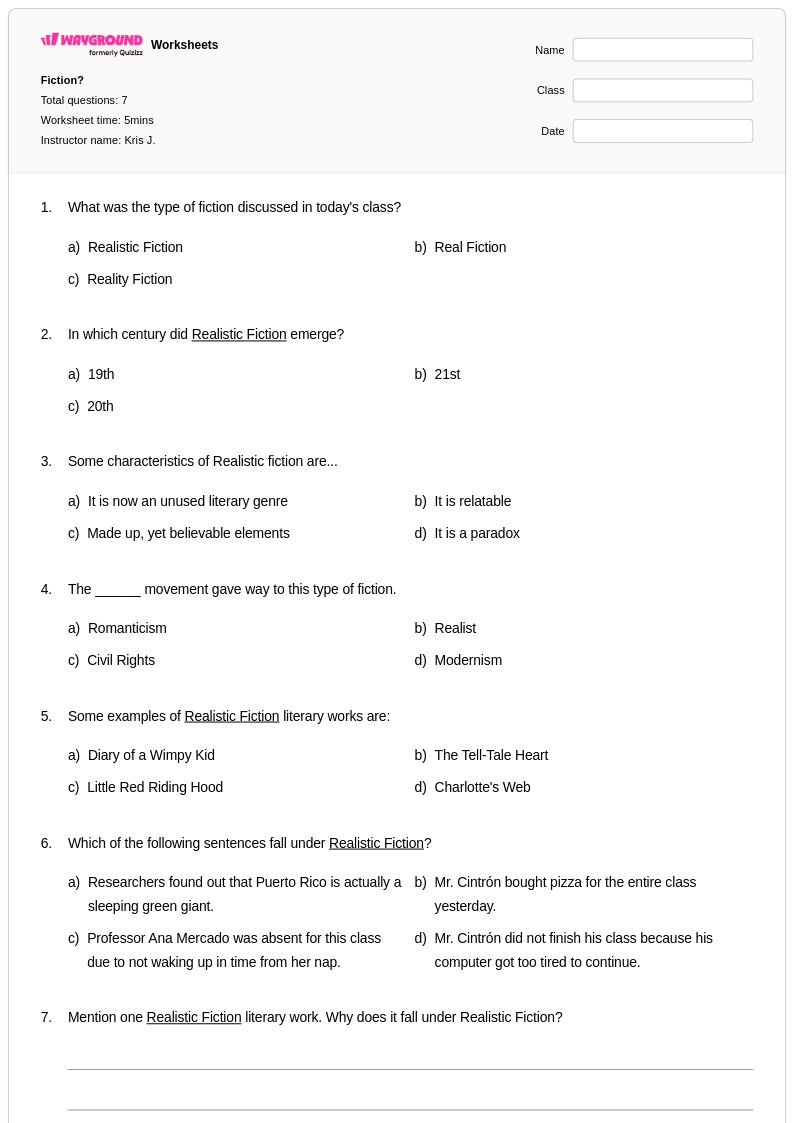
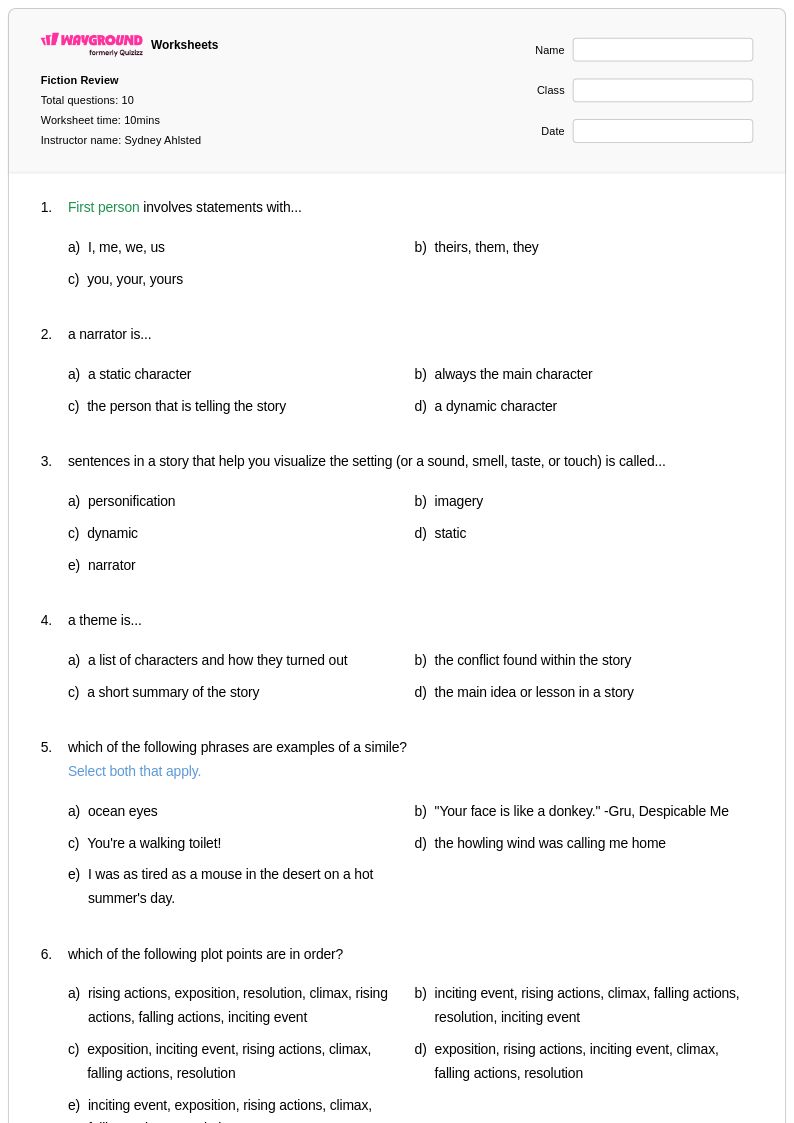
Year 8 fiction worksheets from Wayground help students analyze literary elements, character development, and narrative techniques through engaging printables, practice problems, and comprehensive answer keys.
Fiction worksheets for Year 8 students available through Wayground (formerly Quizizz) provide comprehensive practice in analyzing and understanding the fundamental elements of fictional literature. These carefully crafted resources help eighth-grade students develop critical reading skills by examining character development, plot structure, setting, theme, and literary devices commonly found in novels, short stories, and other fictional works. The worksheets include diverse practice problems that challenge students to identify narrative techniques, analyze character motivations, and interpret symbolic meaning within fictional texts. Each resource comes with detailed answer keys that support both independent learning and classroom instruction, while the free printable format ensures accessibility for all educators seeking to strengthen their students' fiction analysis capabilities.
Wayground's extensive collection of fiction worksheets draws from millions of teacher-created resources, offering educators powerful search and filtering tools to locate materials perfectly suited to their Year 8 curriculum needs. The platform's standards-aligned content supports differentiated instruction through customizable features that allow teachers to modify worksheets for various skill levels, ensuring both remediation for struggling readers and enrichment opportunities for advanced students. Available in both printable PDF format and interactive digital versions, these fiction analysis resources seamlessly integrate into lesson planning and provide flexible options for homework assignments, in-class activities, and assessment preparation. Teachers can efficiently target specific fiction reading skills while accessing a vast library of high-quality materials that support comprehensive literary education and help students build confidence in analyzing complex fictional texts.
FAQs
How do I teach fiction elements to students who struggle with literary analysis?
Start by grounding students in the concrete building blocks of fiction: character, setting, plot, conflict, and theme. Use anchor texts students already know to model how each element functions before applying those skills to new reading. Gradually release responsibility by moving from guided annotation to independent analysis, prompting students to cite specific textual evidence for each claim they make about a story's structure or characters.
What exercises help students practice identifying narrative elements in fiction?
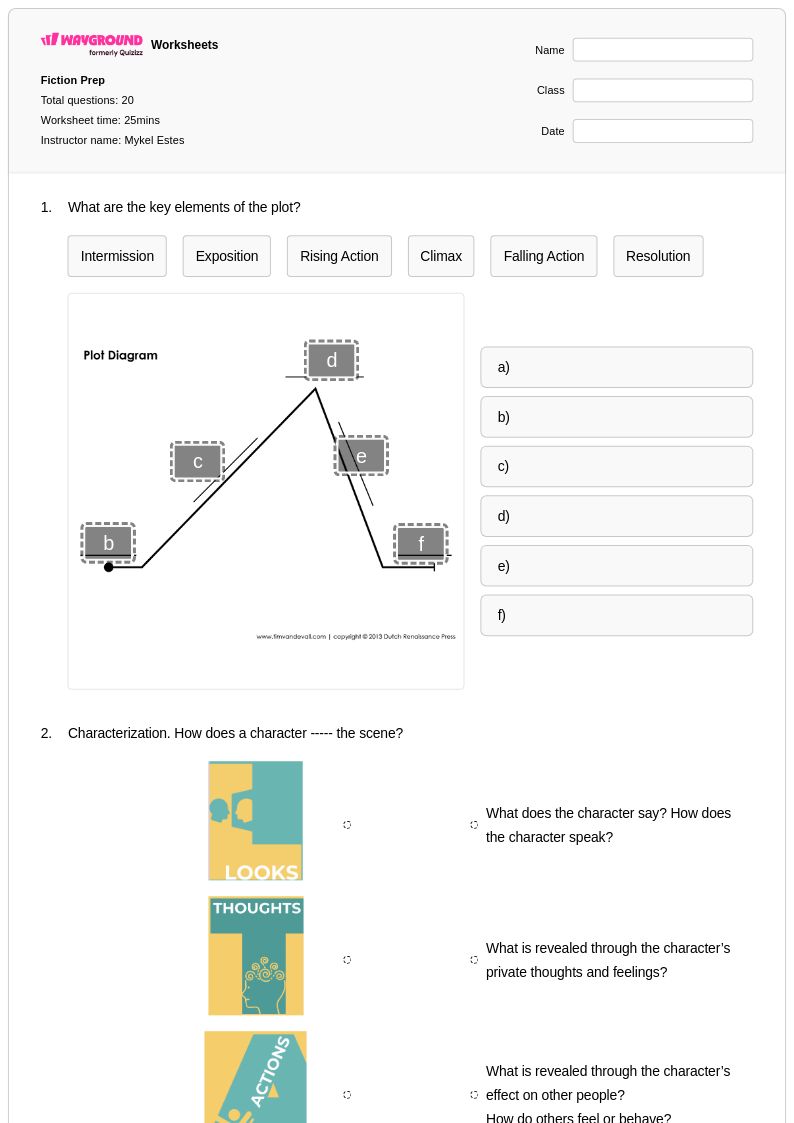
Effective practice exercises include story-mapping activities where students diagram plot structure using the exposition, rising action, climax, falling action, and resolution framework, as well as character analysis tasks that ask students to track how a character changes across a text. Comparison prompts that ask students to contrast two characters' motivations or evaluate how setting shapes conflict build the analytical depth required for literary essays and standardized assessments.
What mistakes do students commonly make when analyzing fiction?
The most frequent errors include summarizing plot instead of analyzing it, treating theme as a single word rather than a complete arguable statement, and confusing character traits with character motivations. Students also tend to identify literary devices in isolation without explaining the effect those devices have on meaning or tone. Targeted practice that explicitly requires students to move from identification to interpretation helps correct these patterns over time.
How can I differentiate fiction worksheets for students at different reading levels?
Differentiation for fiction instruction can involve adjusting the complexity of the source text, the depth of the analytical prompt, or the scaffolding provided. On Wayground, teachers can apply student-level accommodations such as Read Aloud, which delivers audio support for students who need it, and reduced answer choices to lower cognitive load for selected students, while the rest of the class receives standard settings without any disruption to the workflow.
How do I use Wayground's fiction worksheets in my classroom?
Wayground's fiction worksheets are available as printable PDFs for traditional classroom use and in digital formats for technology-integrated or remote learning environments, and teachers can also host them as a quiz directly on Wayground. Each worksheet includes a complete answer key, making them practical for independent practice, small-group work, or homework assignments without additional prep on the teacher's part.
How do I help students understand theme in fiction versus just plot?
Students often conflate theme with topic, writing 'the theme is friendship' rather than articulating an arguable statement about what the text says about friendship. Teach students to ask 'What does this story argue about that topic?' and require answers in full sentences such as 'True friendship requires honesty even when it is difficult.' Providing sentence stems and then gradually removing them helps students internalize the difference between describing what happened and interpreting what it means.