Free Printable Final Consonant Clusters Worksheets for Year 1
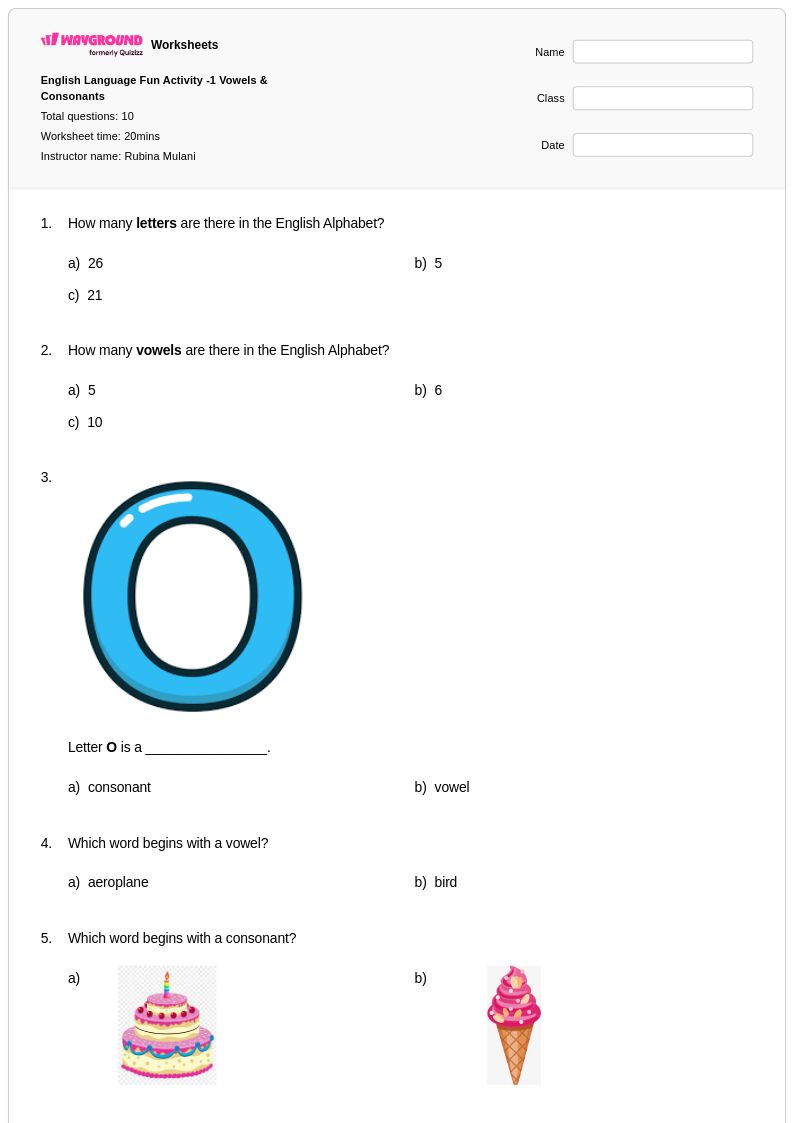
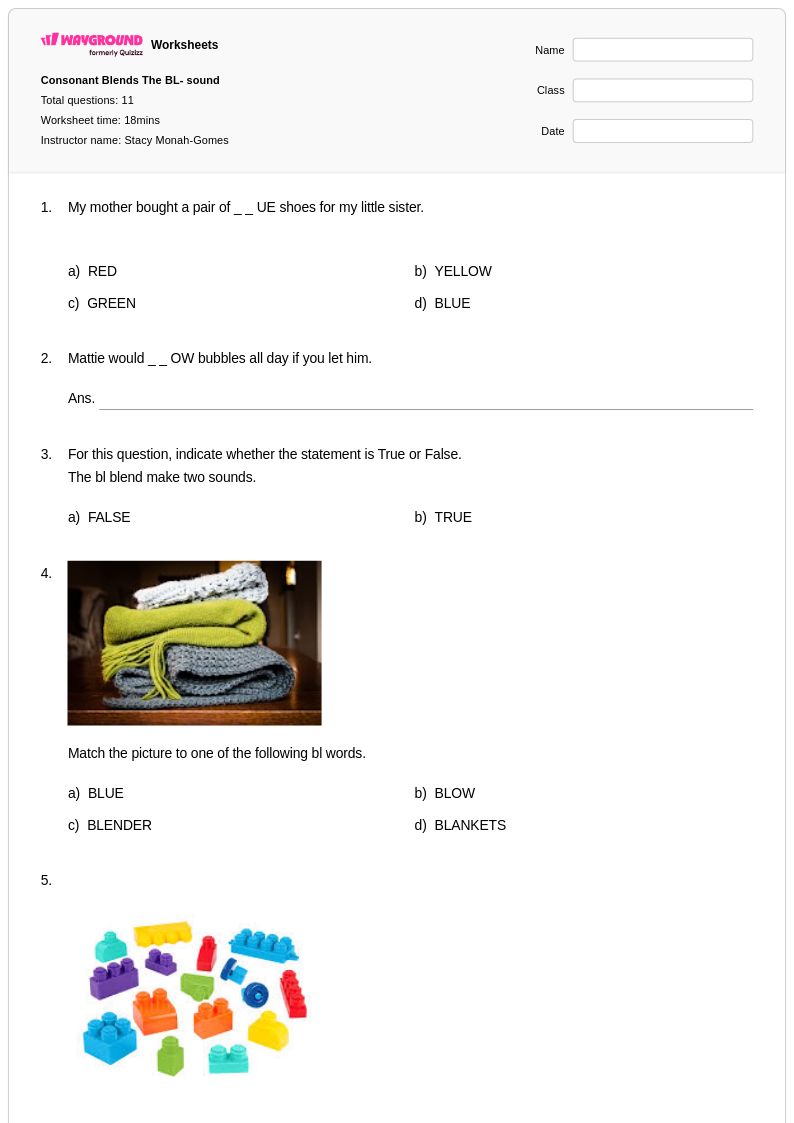
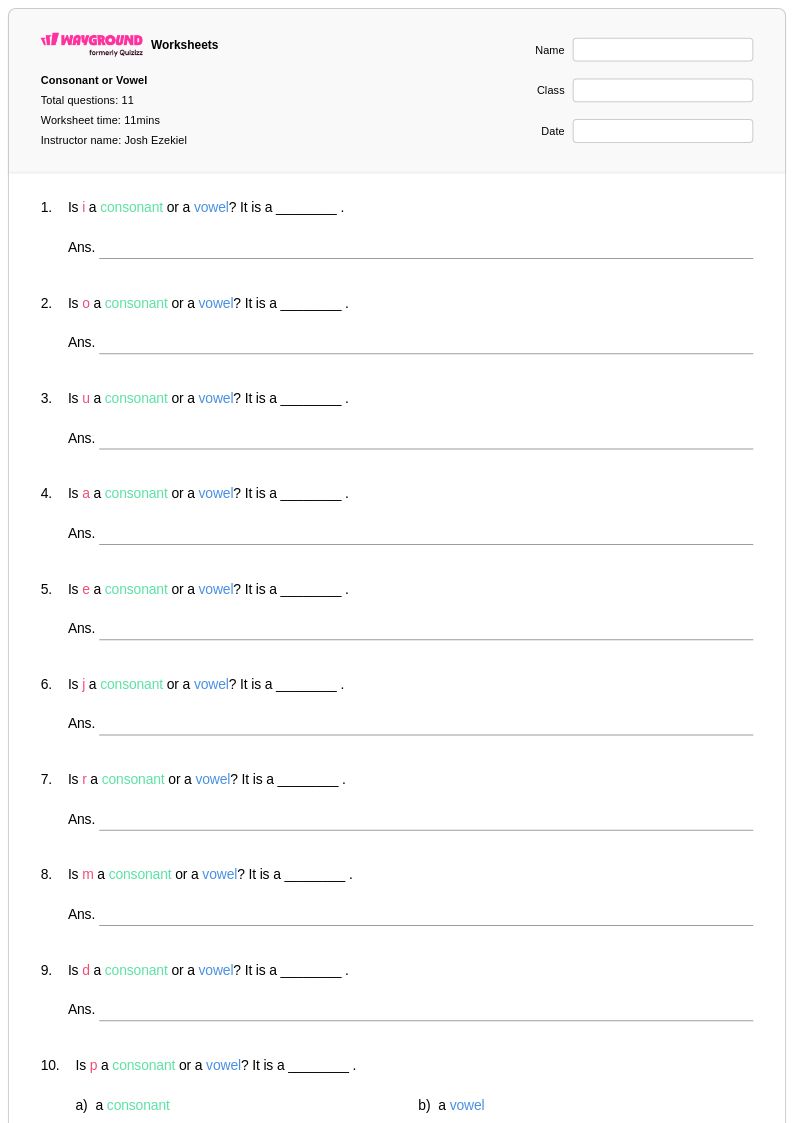
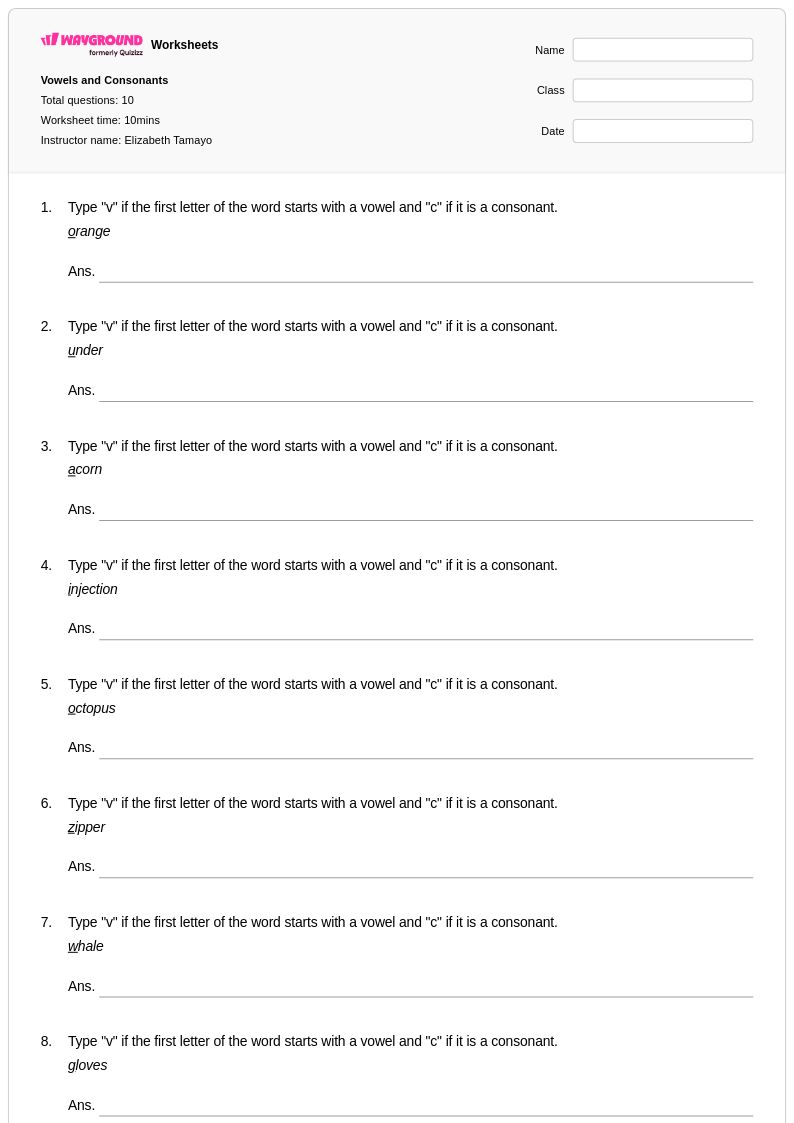
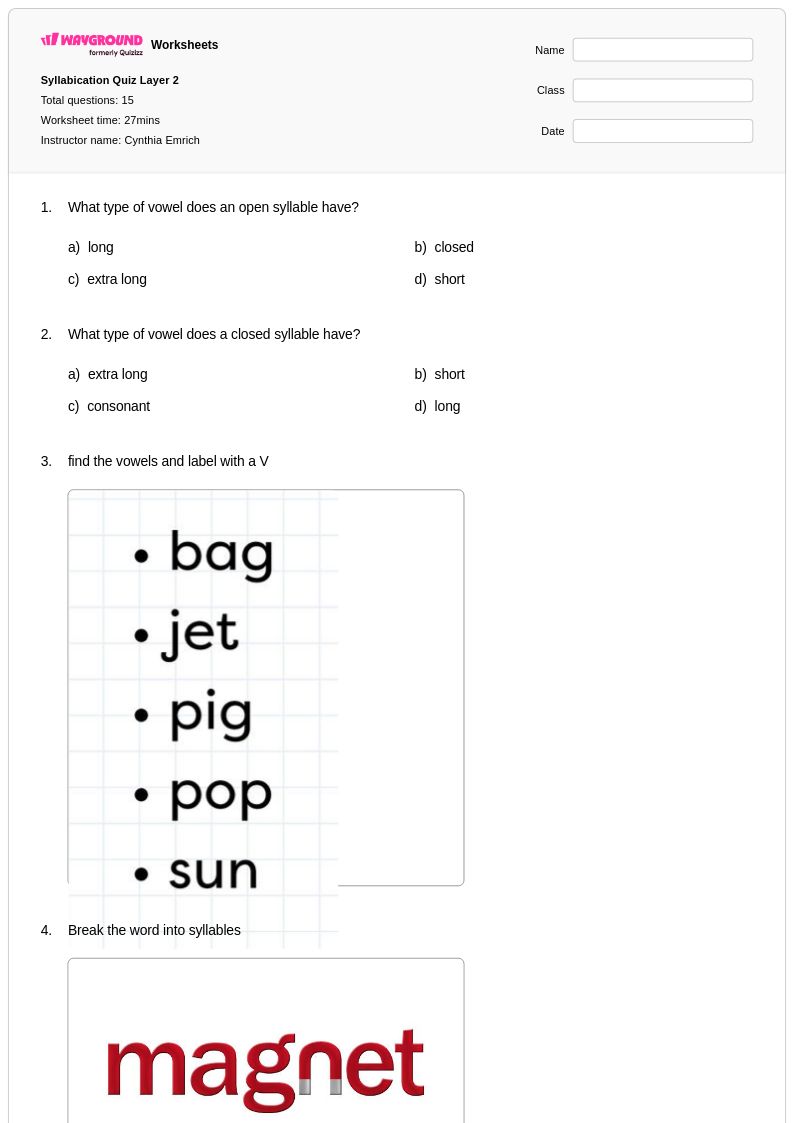
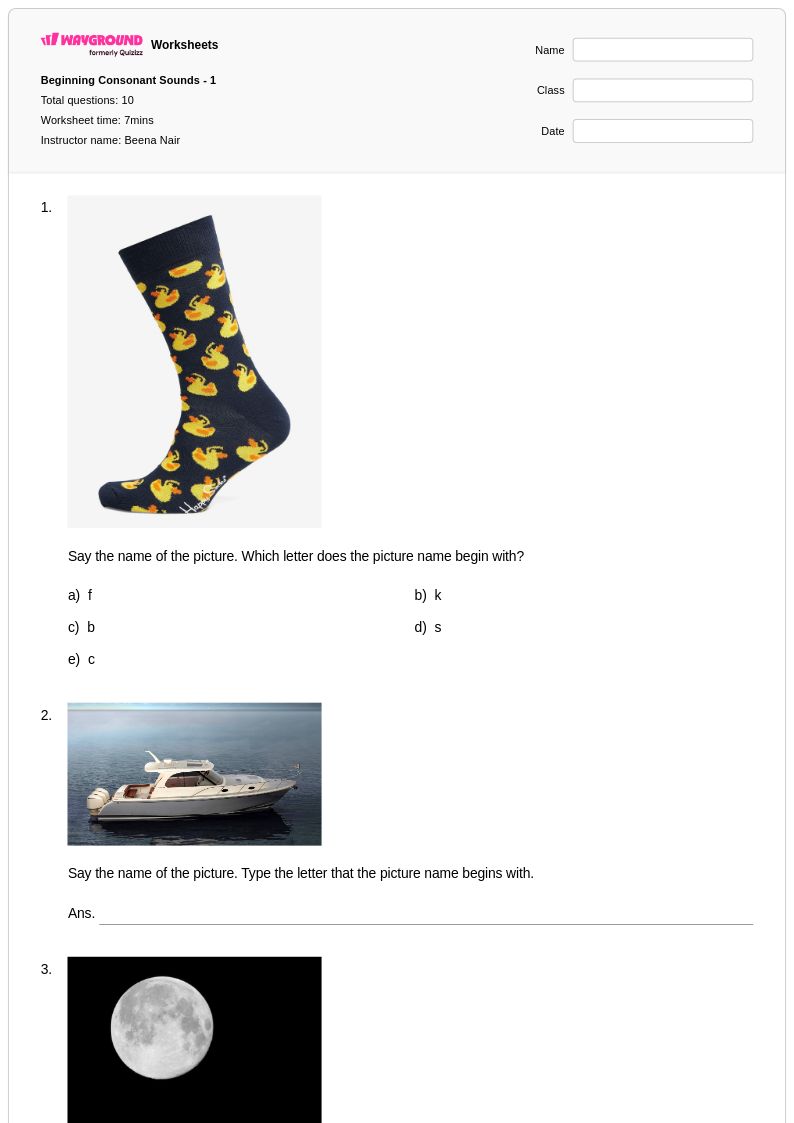
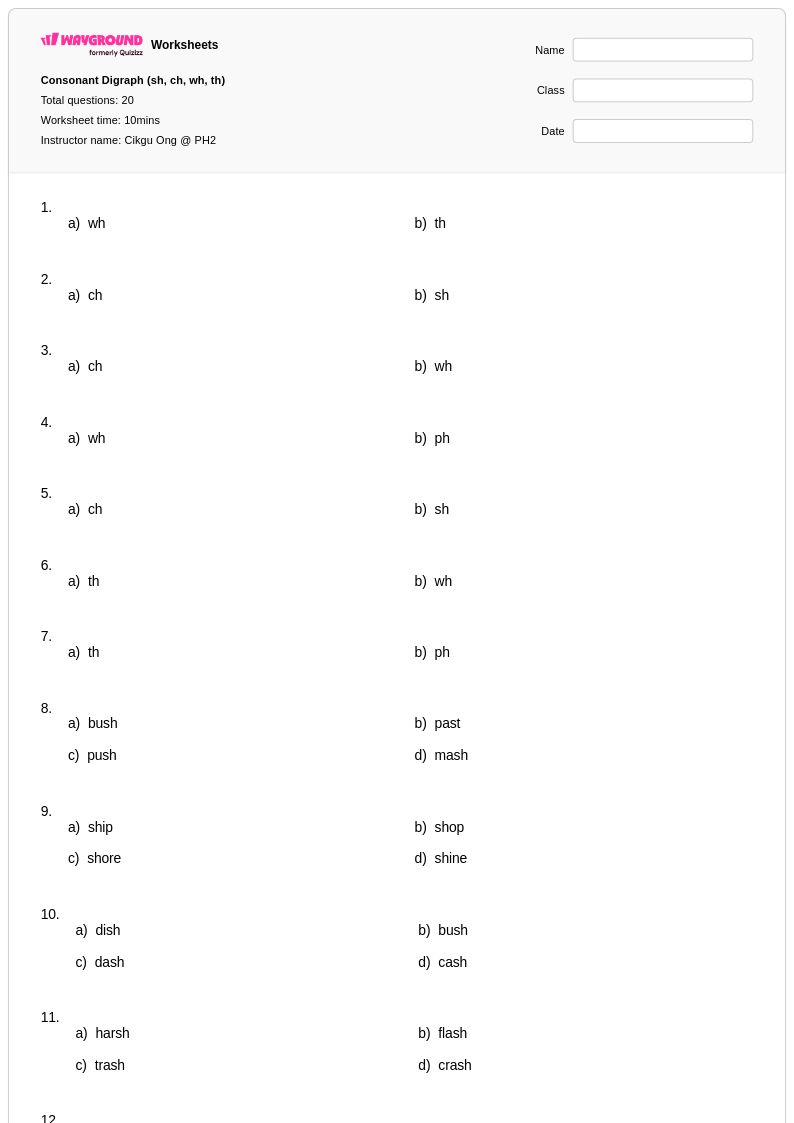
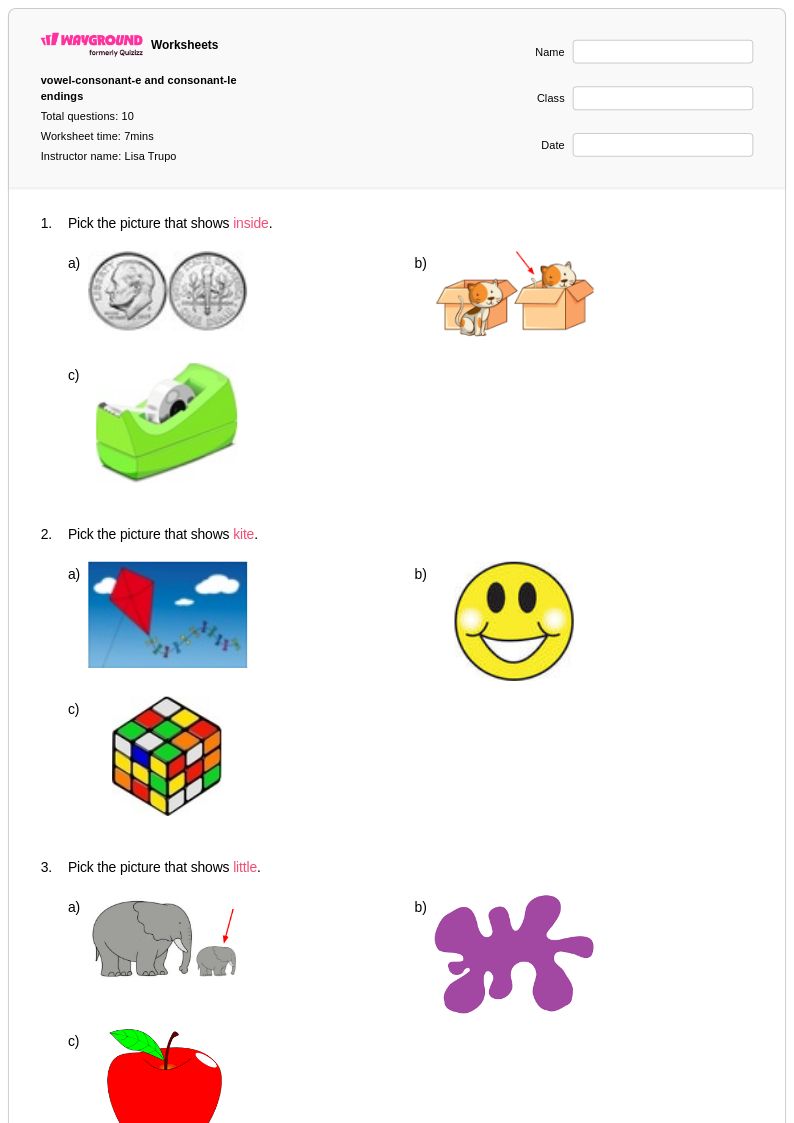
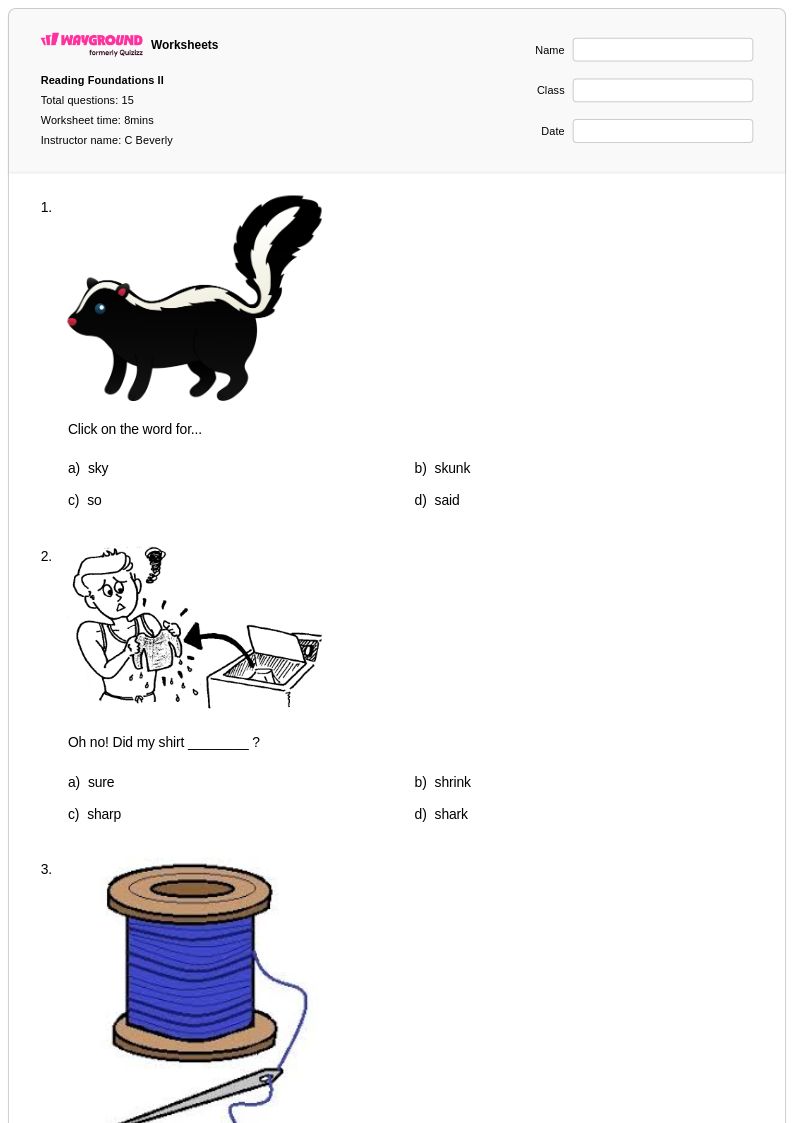
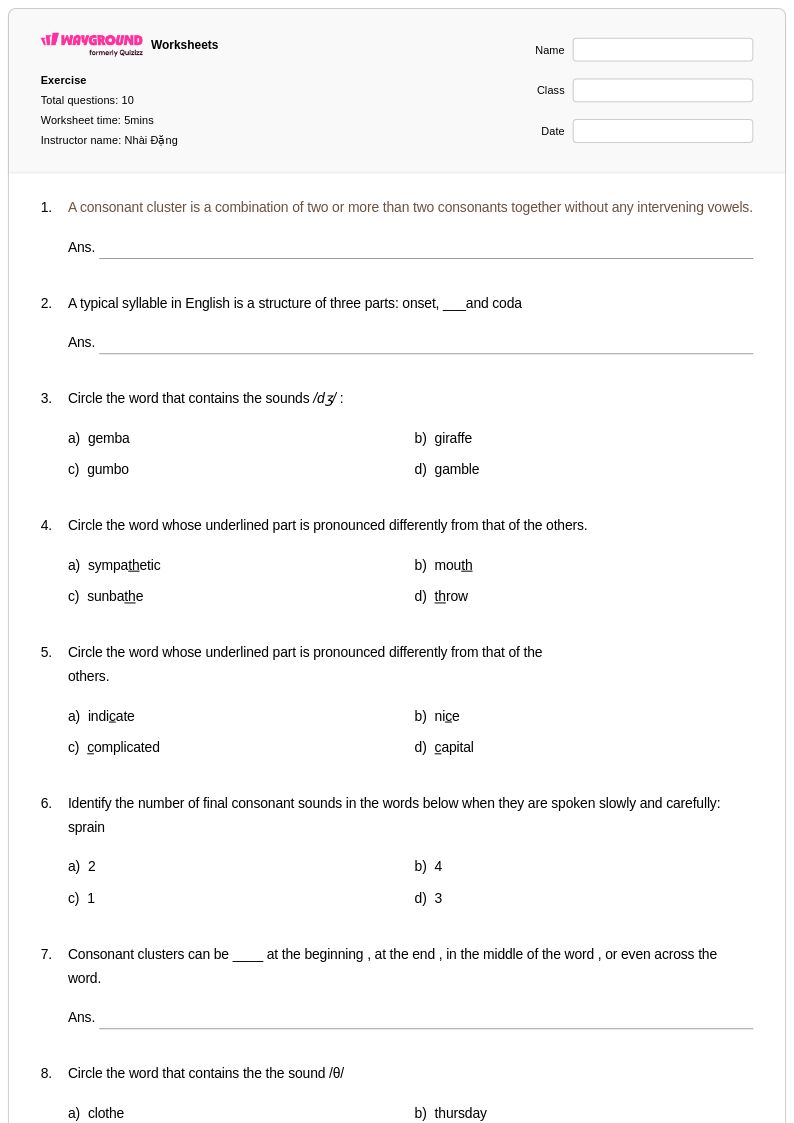
Wayground's Year 1 final consonant clusters worksheets provide printable practice problems and answer keys to help young learners master ending sound combinations like -st, -nd, and -mp through engaging phonics activities.
Explore printable Final Consonant Clusters worksheets for Year 1
Final consonant clusters worksheets for Year 1 students available through Wayground (formerly Quizizz) provide essential phonics instruction that helps young learners master the challenging skill of blending consonant sounds at the end of words. These comprehensive printables focus on common ending clusters such as -st, -nd, -nt, -mp, -nk, and -ng, giving first graders systematic practice in recognizing and pronouncing these sound combinations within familiar vocabulary. Each worksheet includes carefully scaffolded practice problems that progress from simple identification exercises to more complex word building activities, with answer keys provided to support both independent learning and guided instruction. The free pdf resources strengthen students' decoding abilities, spelling accuracy, and reading fluency by reinforcing the connection between letter patterns and their corresponding sounds in words like "jump," "hand," "bent," and "sing."
Wayground's extensive collection of final consonant cluster worksheets draws from millions of teacher-created resources, offering educators powerful search and filtering capabilities to locate materials perfectly suited to their Year 1 phonics curriculum needs. The platform's standards alignment features ensure that selected worksheets support specific learning objectives, while built-in differentiation tools allow teachers to customize content for varying skill levels within their classrooms. These versatile resources are available in both printable and digital pdf formats, making them ideal for whole-group instruction, small-group remediation, individual enrichment activities, and homework assignments. Teachers can efficiently plan phonics lessons, provide targeted skill practice for struggling readers, and offer additional challenges for advanced students, all while maintaining consistency in their final consonant cluster instruction across different learning environments.
FAQs
How do I teach final consonant clusters to early readers?
Start by introducing one cluster pattern at a time, such as -st or -nd, before moving on to less common endings like -mp or -lk. Use word sorting activities where students group words by their ending cluster, then build to reading and writing those words in context. Explicit, systematic phonics instruction works best here: model the blending process aloud, then have students practice with immediate feedback. Connecting each cluster to high-frequency words students already recognize helps anchor new patterns to existing knowledge.
What exercises help students practice final consonant clusters?
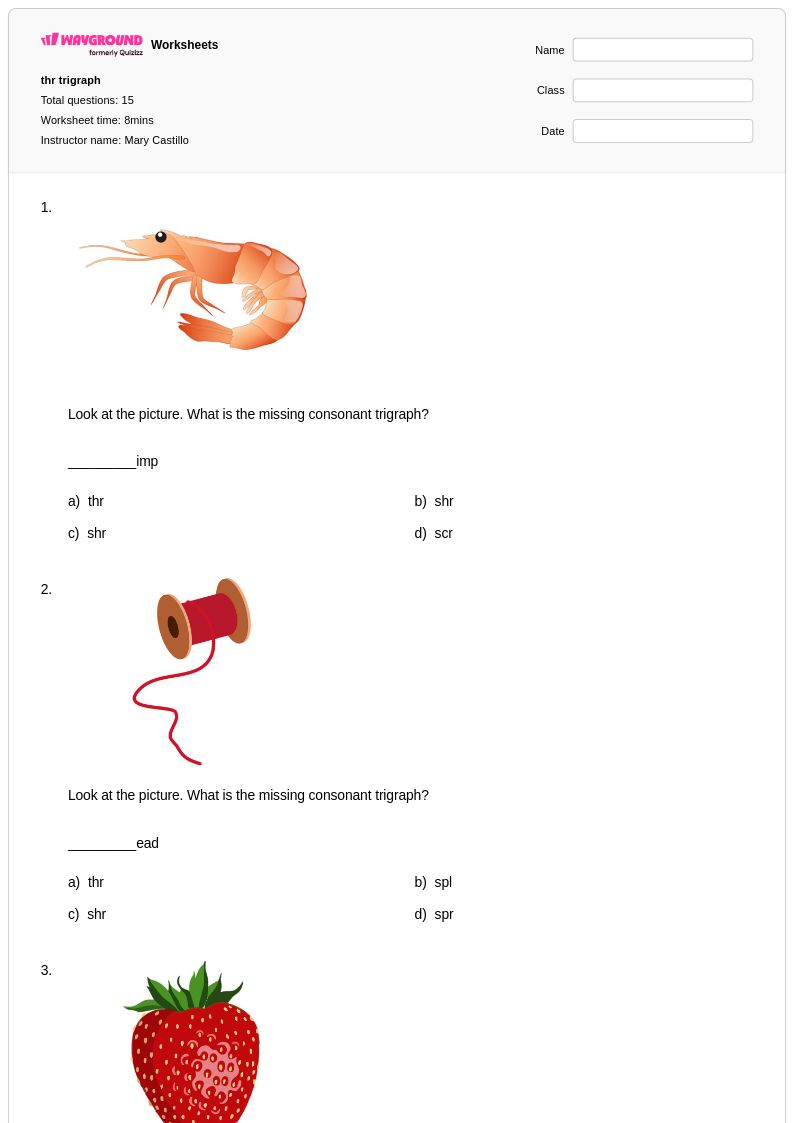
Effective practice exercises include word completion tasks where students fill in the missing final cluster, sorting activities that group words by ending pattern, and dictation exercises that require students to apply spelling rules under mild pressure. Progressing from identification tasks to production tasks, such as writing original sentences using target cluster words, builds both decoding and encoding skills. Worksheets that systematically sequence these exercise types ensure students develop mastery rather than surface familiarity.
What mistakes do students commonly make with final consonant clusters?
The most common error is dropping one consonant from the cluster, such as spelling 'fast' as 'fas' or 'hand' as 'han,' especially when writing from dictation. Students also frequently reverse the order of consonants in clusters like -sk or -ks, or confuse visually similar endings such as -nd and -nt. In reading, students may skip the final cluster entirely and guess the word from context, which masks the underlying decoding gap. Targeted practice that isolates specific cluster patterns helps surface and correct these error patterns before they become habitual.
How can I differentiate final consonant cluster instruction for students at different skill levels?
For struggling readers, focus on the most common and phonetically regular clusters first, such as -st, -nd, and -mp, using fewer answer choices to reduce cognitive load. For more advanced learners, introduce less predictable clusters and require students to apply patterns in original writing. On Wayground, teachers can assign accommodations such as reduced answer choices or read-aloud support to individual students, while the rest of the class works with default settings, allowing one resource to serve a range of skill levels without singling anyone out.
How do I use Wayground's final consonant clusters worksheets in my classroom?
Wayground's final consonant clusters worksheets are available as free printable PDFs for traditional classroom use and in digital formats for technology-integrated environments, including the option to host them as an interactive quiz on Wayground. Teachers can assign digital versions for independent practice, use printables during small-group instruction, or project exercises for whole-class review. Each worksheet includes a complete answer key, making it straightforward to check work or hand off to students for self-correction.
At what reading level should students be introduced to final consonant clusters?
Final consonant clusters are typically introduced after students have mastered individual consonant sounds and basic CVC word patterns, generally in kindergarten through second grade. Students who can reliably decode short vowel words are ready to begin blending two-consonant endings. However, some clusters such as -st and -nd appear in high-frequency words early, so brief exposure can begin before full systematic instruction is in place.