Free Printable Fitness and Wellness Worksheets for Year 4
Year 4 fitness and wellness free worksheets and printables help students learn healthy habits, physical activity benefits, and body systems through engaging practice problems with comprehensive answer keys.
Explore printable Fitness and Wellness worksheets for Year 4
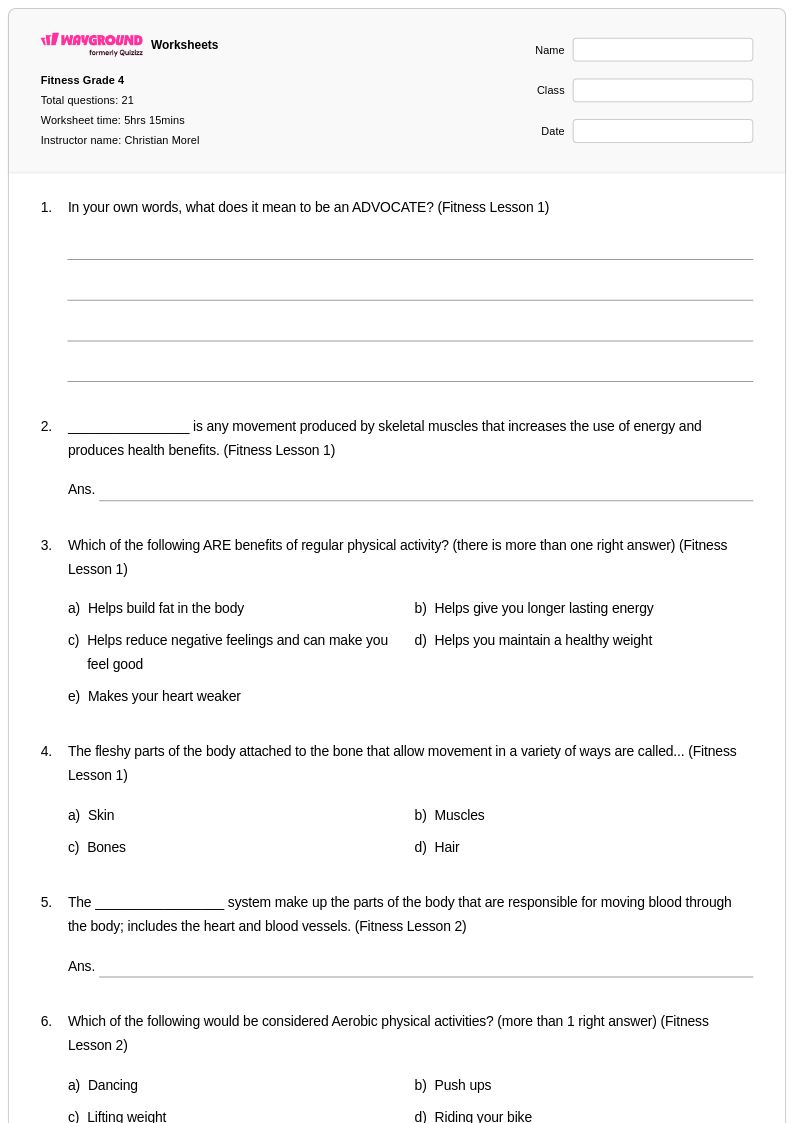
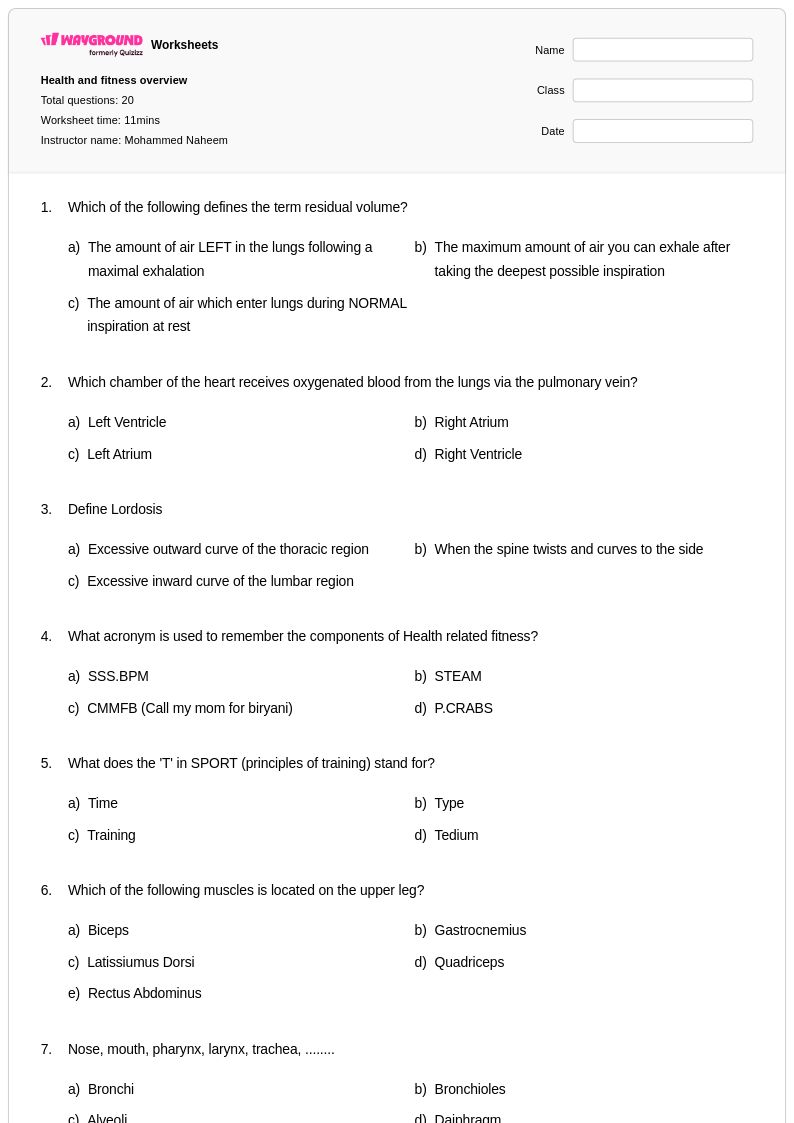
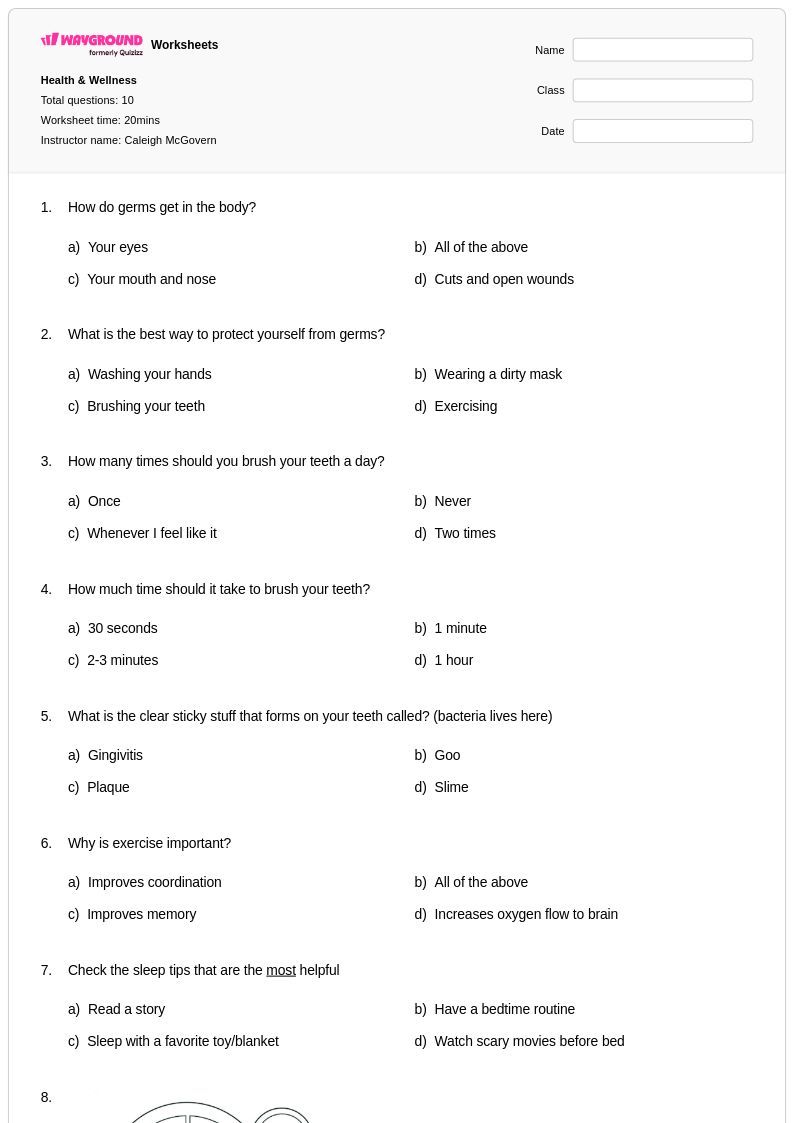
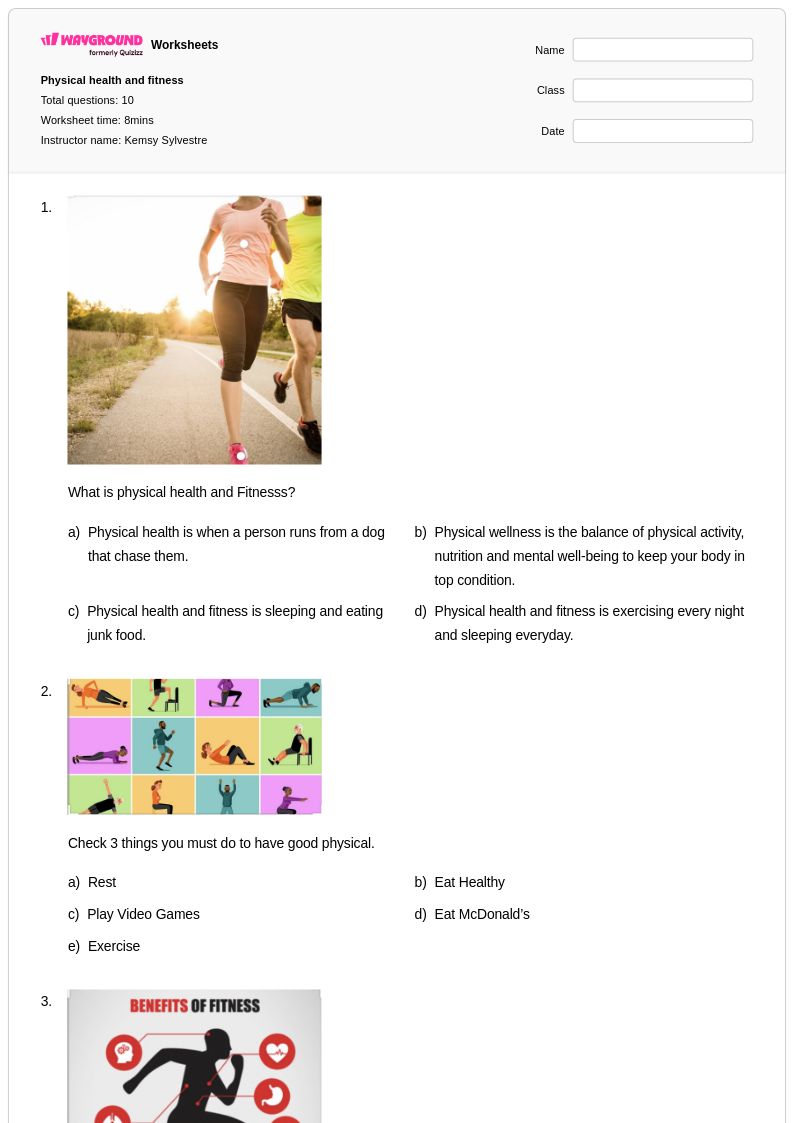
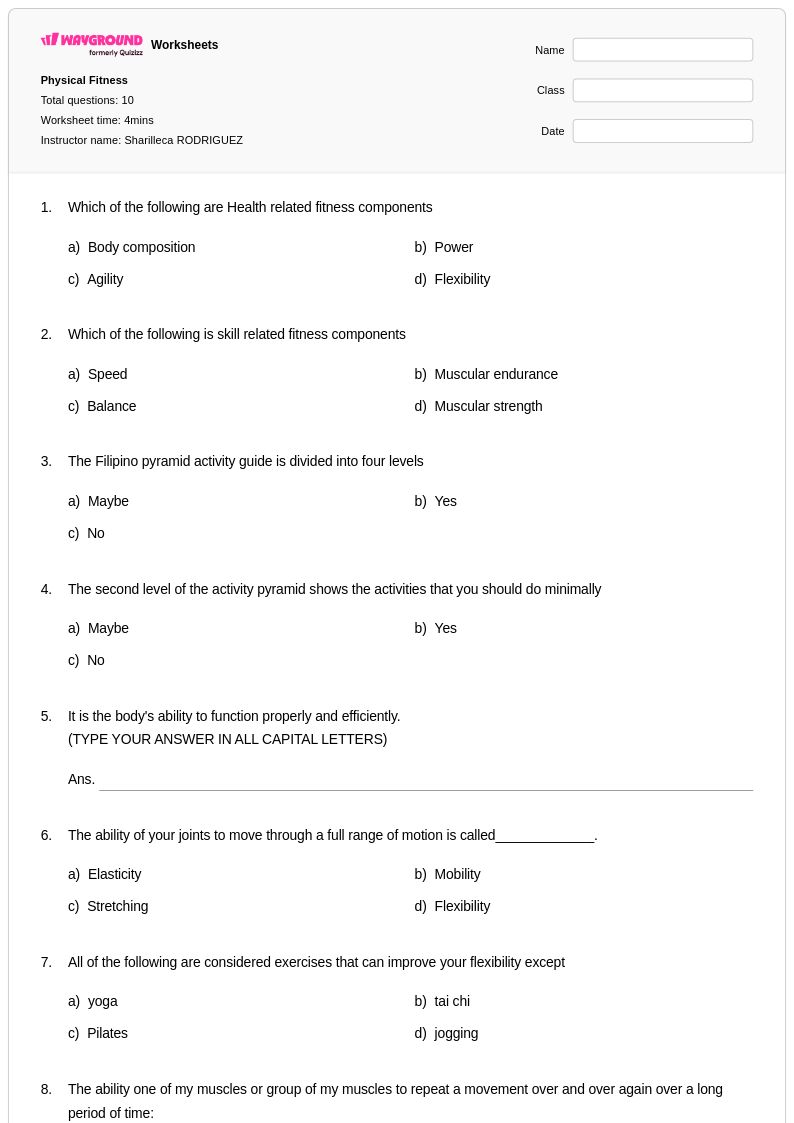
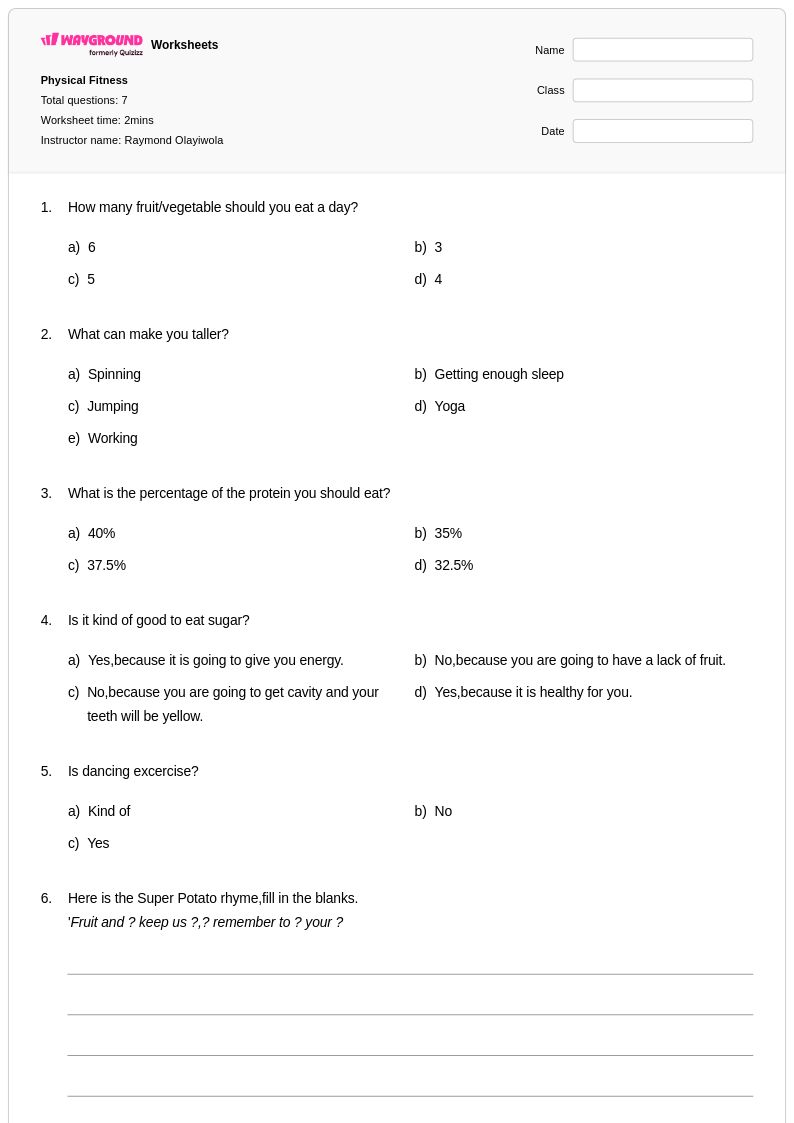
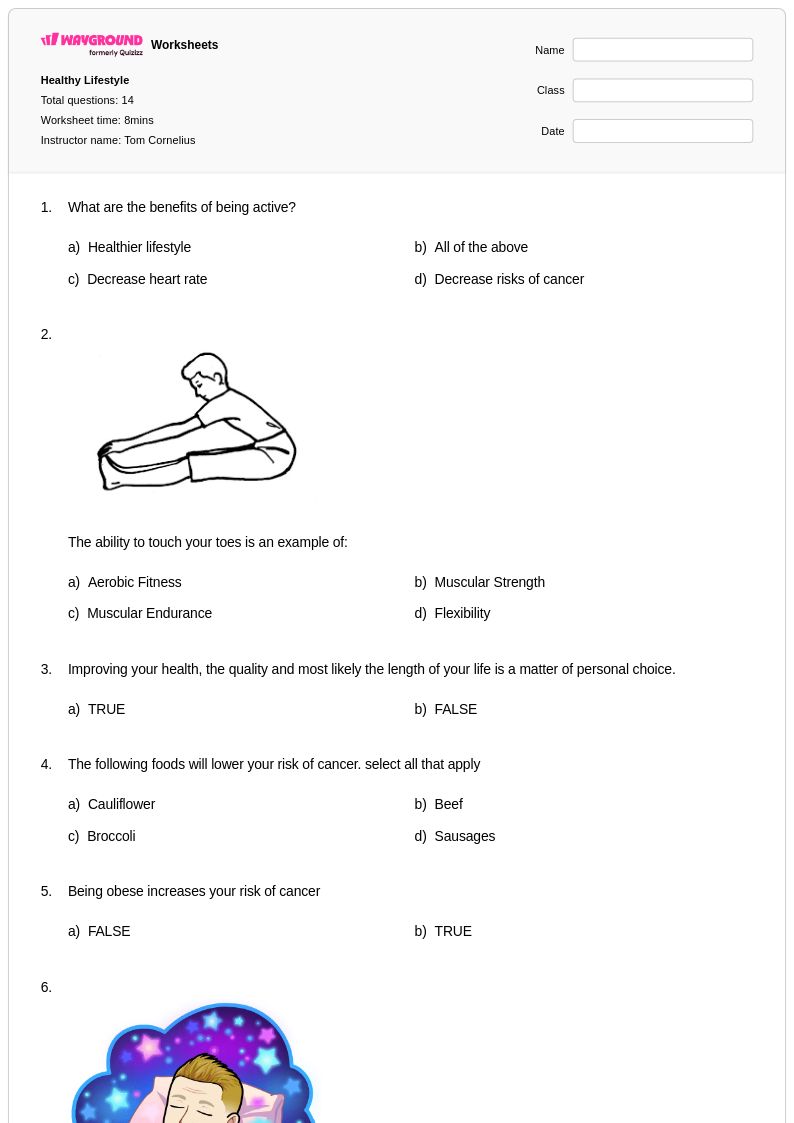
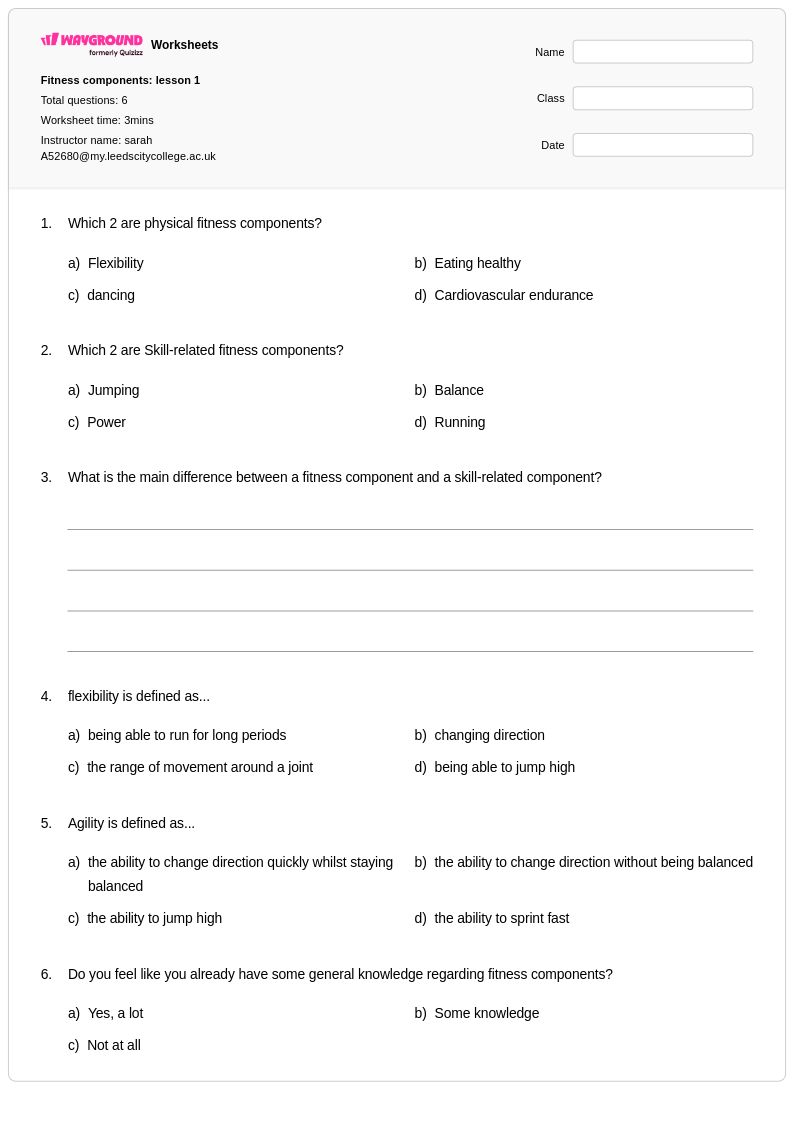
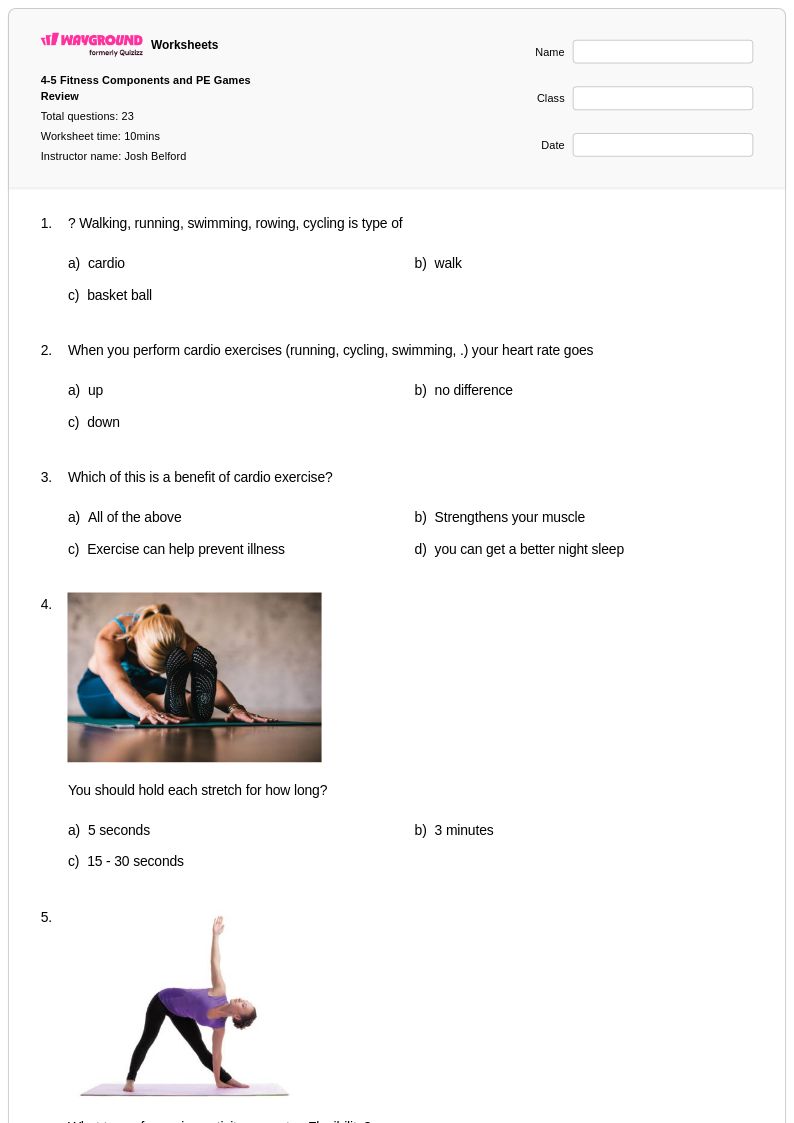
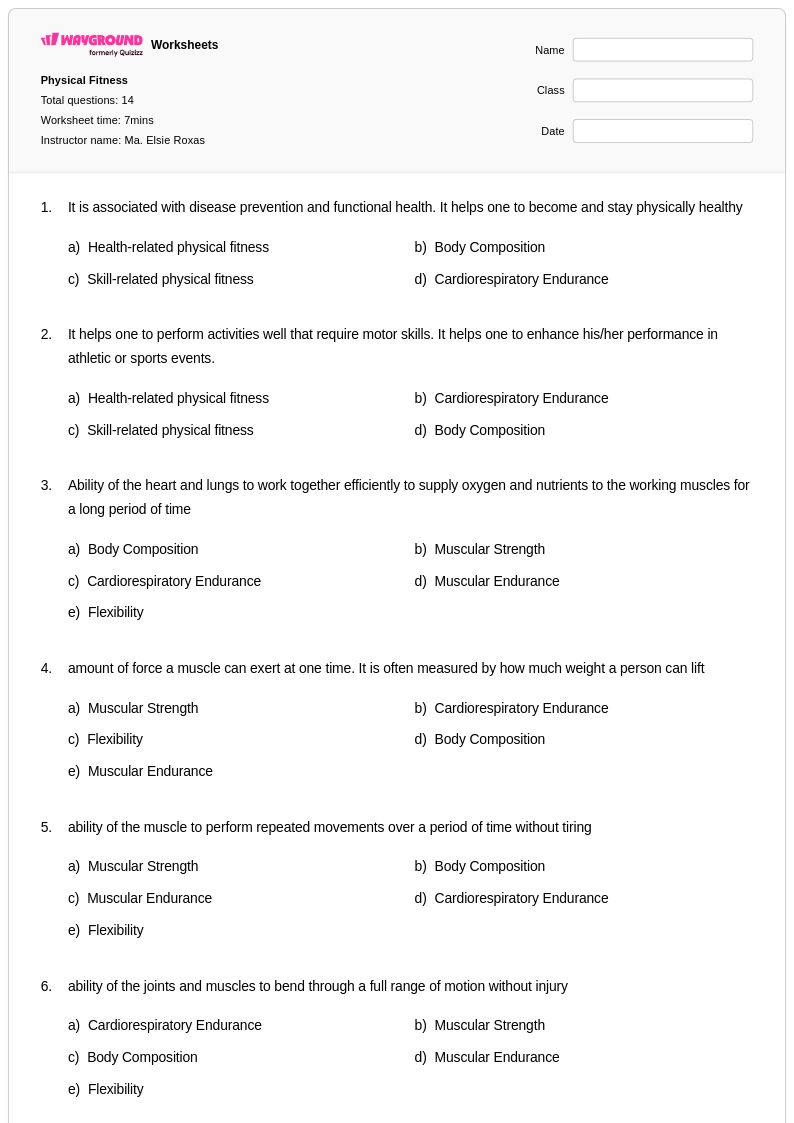
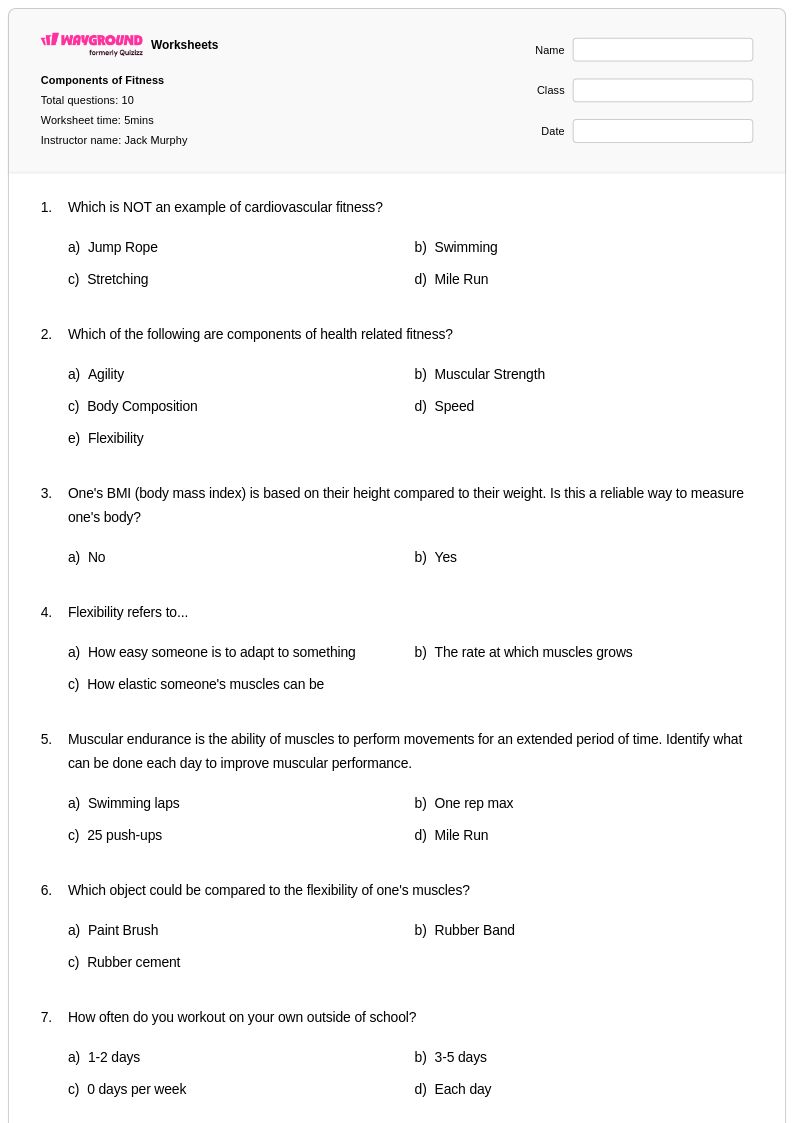
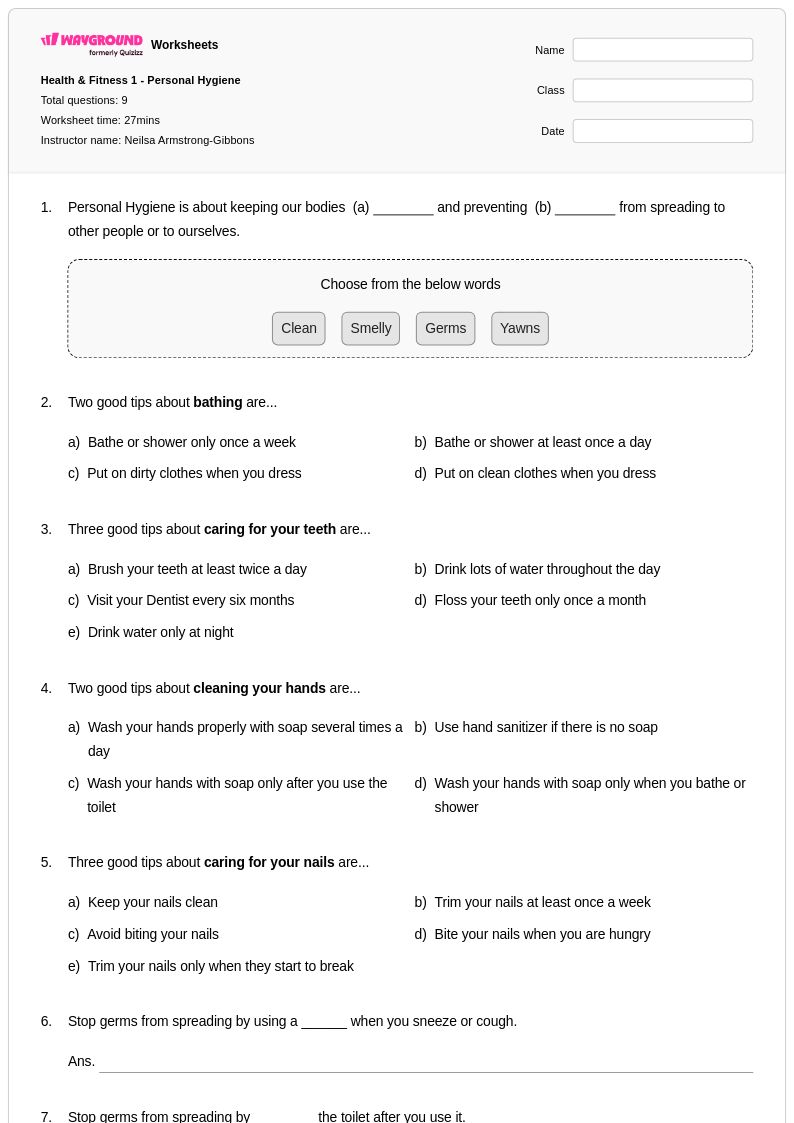
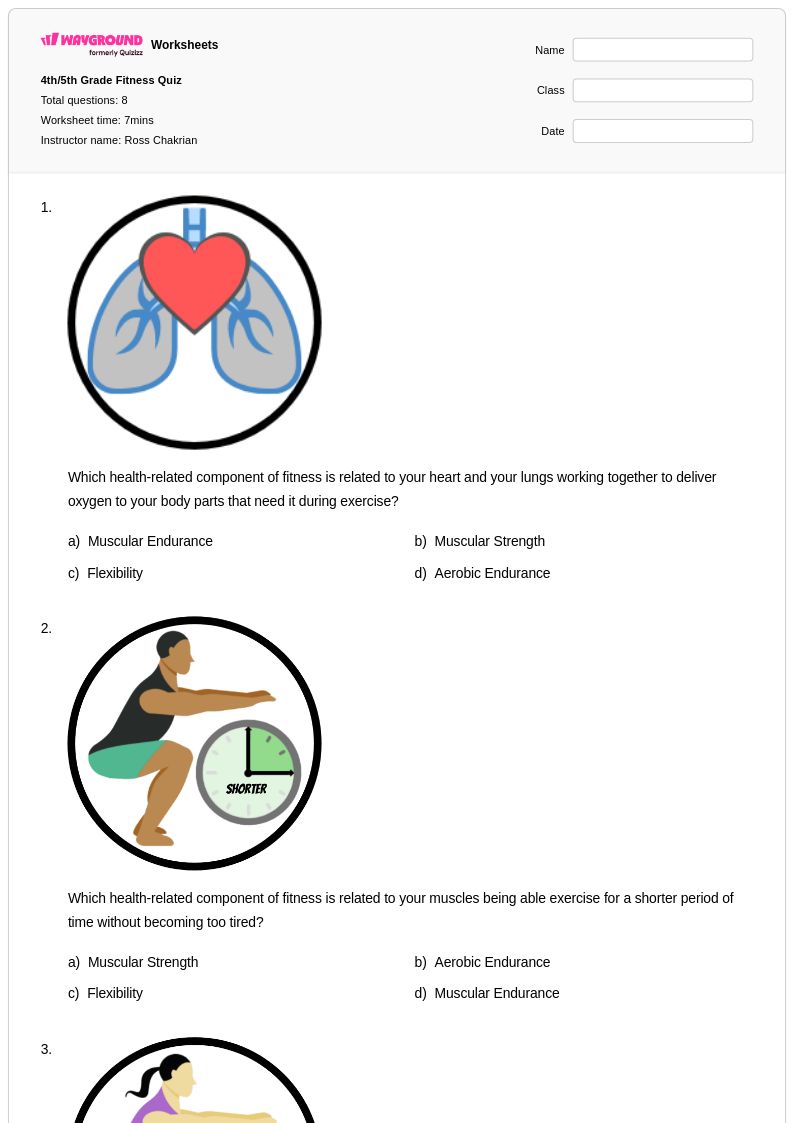
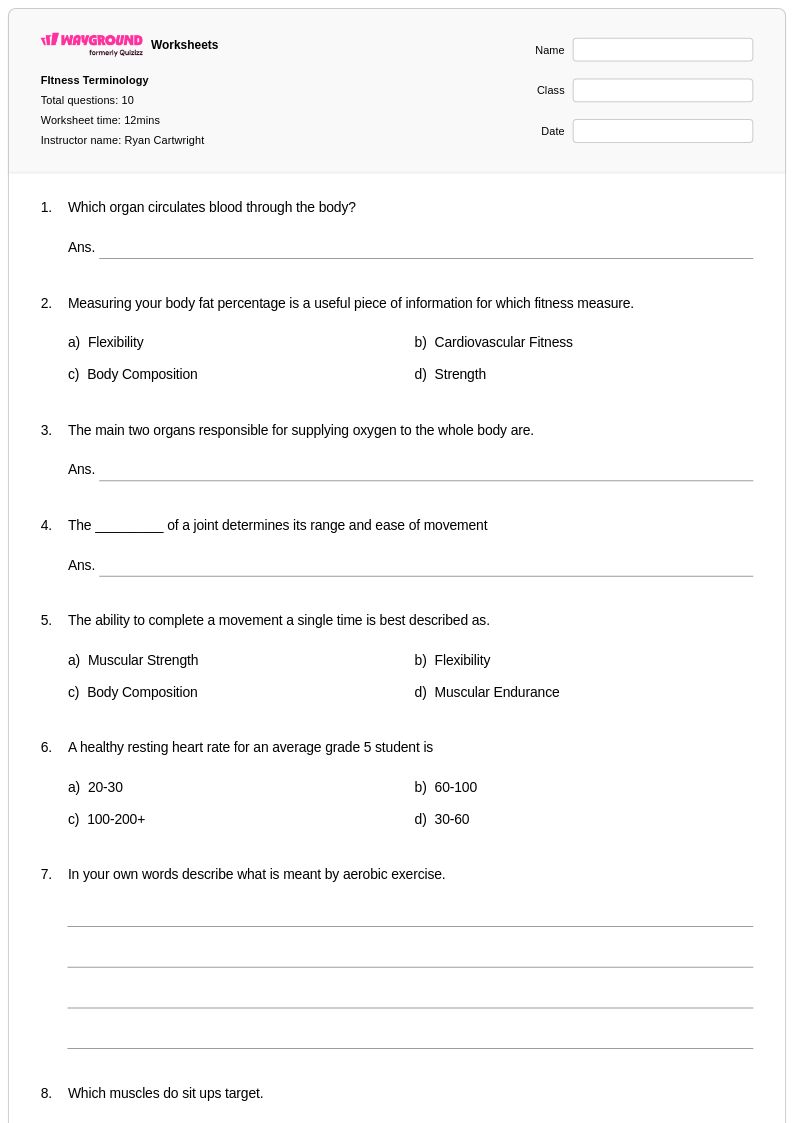
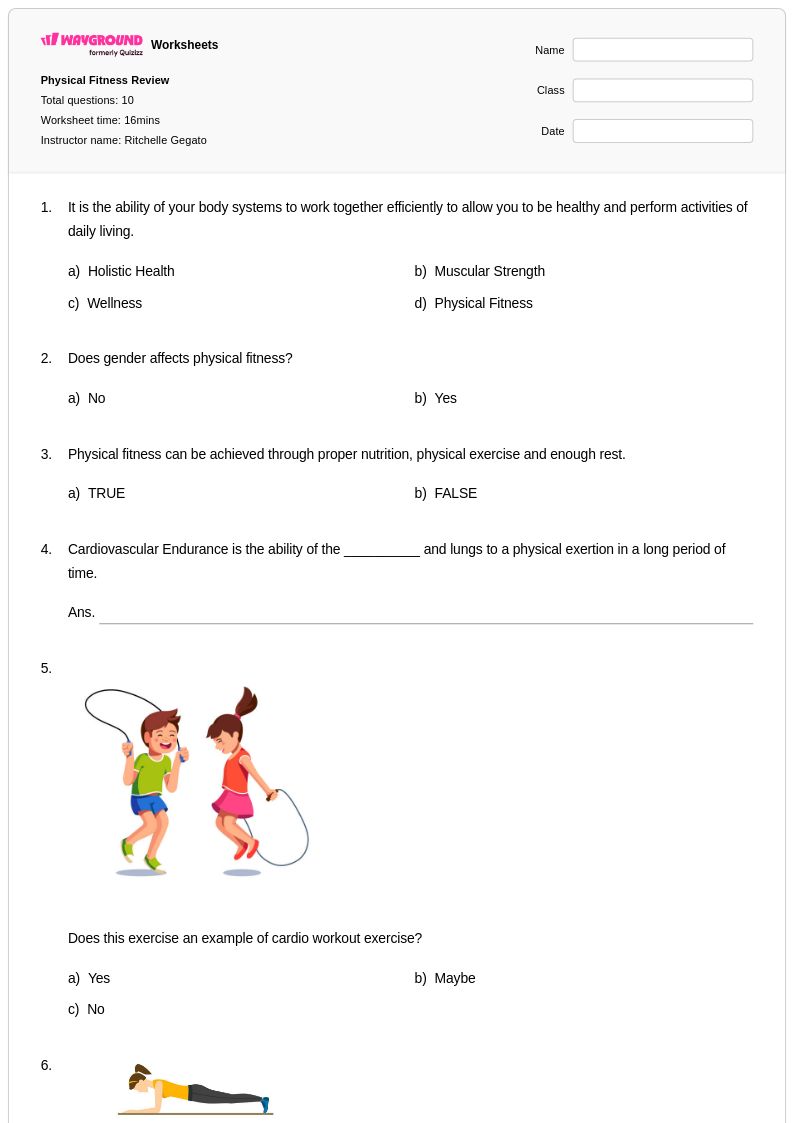
Fitness and Wellness worksheets for Year 4 students through Wayground (formerly Quizizz) provide comprehensive resources that help young learners develop essential knowledge about maintaining healthy lifestyles and understanding their bodies. These educational materials strengthen critical skills including identifying components of physical fitness, recognizing the importance of regular exercise, understanding basic nutrition principles, and developing personal wellness goals. Students engage with practice problems that cover topics such as heart rate monitoring, muscle groups, healthy food choices, and the benefits of different types of physical activities. The collection includes free printables with detailed answer keys, making it easy for educators to assess student understanding and provide immediate feedback on concepts ranging from flexibility and strength training to stress management and sleep hygiene.
Wayground (formerly Quizizz) supports Physical Education teachers with millions of teacher-created Fitness and Wellness resources that can be easily searched and filtered to match specific classroom needs and learning objectives. The platform offers robust differentiation tools that allow educators to customize worksheets for various skill levels, ensuring that all Year 4 students can access age-appropriate content about personal health and fitness concepts. These materials are available in both printable pdf formats and interactive digital versions, providing flexibility for different teaching environments and learning preferences. Teachers can efficiently plan comprehensive wellness units, create targeted remediation activities for students who need additional support with health concepts, and develop enrichment opportunities that challenge advanced learners to explore deeper connections between physical activity, nutrition, and overall well-being.
FAQs
How do I teach fitness and wellness concepts in a meaningful way?
Effective fitness and wellness instruction connects physical activity to real-life outcomes students can observe and measure. Start with foundational concepts like the FITT principle, heart rate monitoring, and body composition before moving into lifestyle planning and goal setting. Incorporating reflection activities alongside movement helps students internalize the connection between daily habits and long-term health, making the content personally relevant rather than abstract.
What worksheets help students practice fitness and wellness skills?
Worksheets that ask students to apply the FITT principle to their own routines, analyze nutrition labels, or build a personal wellness plan are especially effective for skill practice in this subject. Exercises covering cardiovascular health, injury prevention strategies, and stress management give students structured opportunities to engage with wellness concepts in a practical, self-directed way. These practice formats reinforce core vocabulary while building the critical thinking skills students need to make evidence-based health decisions.
What mistakes do students commonly make when learning about fitness and wellness?
One of the most common misconceptions is that fitness refers only to physical appearance or athletic performance, rather than a multi-dimensional picture of health that includes mental wellness, nutrition, and stress management. Students also frequently confuse exercise frequency with intensity, leading to inaccurate FITT principle applications. Addressing these errors early with targeted practice helps students develop more accurate, holistic frameworks for personal wellness planning.
How can I use fitness and wellness worksheets for students with different needs?
Fitness and wellness worksheets on Wayground are available as both printable PDFs and in digital formats, making them adaptable for traditional classrooms, remote learning, and blended environments. When hosting worksheets as a digital quiz on Wayground, teachers can apply individual student accommodations including extended time, read-aloud support, and reduced answer choices to ensure all learners can access the content equitably. These settings are saved per student and carry over to future sessions, reducing setup time for ongoing differentiation.
How do I address stress management and mindfulness in a physical education or wellness class?
Stress management and mindfulness are best introduced as structured, evidence-based skills rather than optional add-ons to physical fitness content. Worksheets that guide students through identifying stress triggers, practicing breathing techniques, and reflecting on emotional well-being create a concrete entry point for these topics. Pairing mindfulness activities with discussion or journaling helps students recognize the direct relationship between mental health and physical performance.
How do I assess student understanding of personal fitness and wellness planning?
Effective assessment in fitness and wellness goes beyond multiple-choice recall and should include tasks where students create, evaluate, or justify a personal fitness or nutrition plan. Common indicators of deeper understanding include students accurately applying the FITT principle, identifying appropriate heart rate zones, and explaining how lifestyle habits affect long-term wellness outcomes. Worksheets with complete answer keys allow teachers to quickly identify gaps in reasoning and target remediation before moving to more complex planning skills.