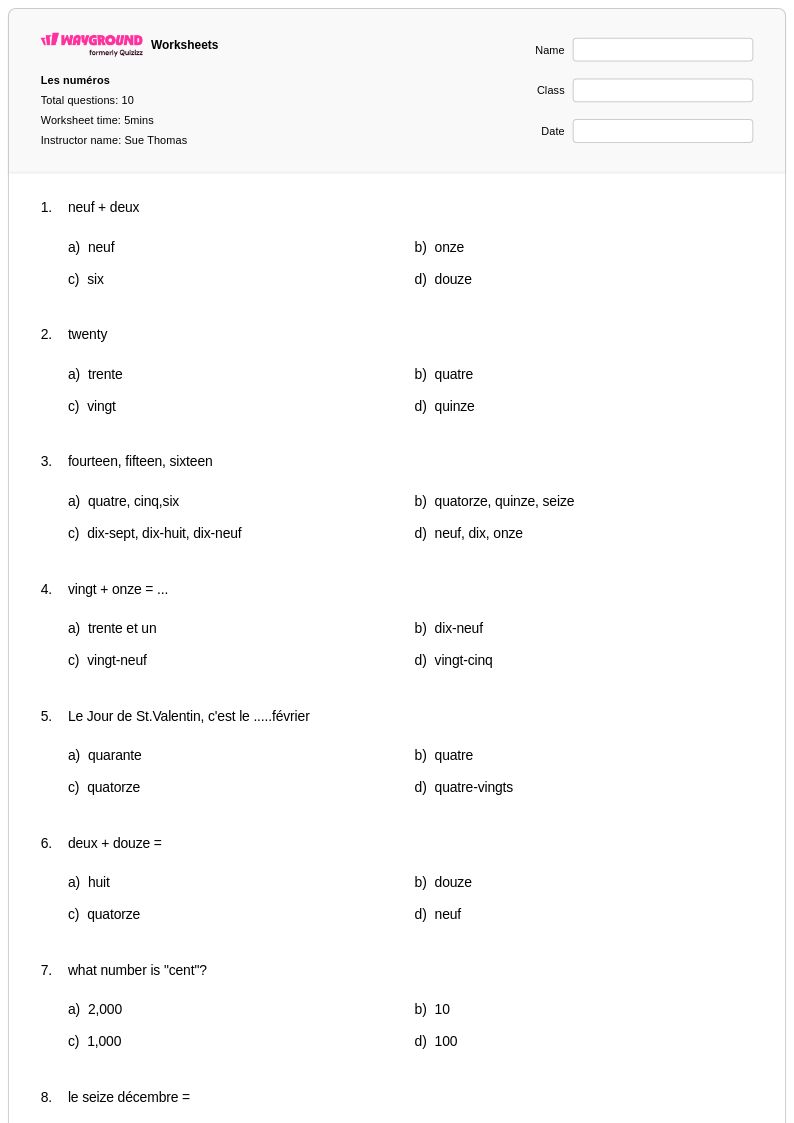
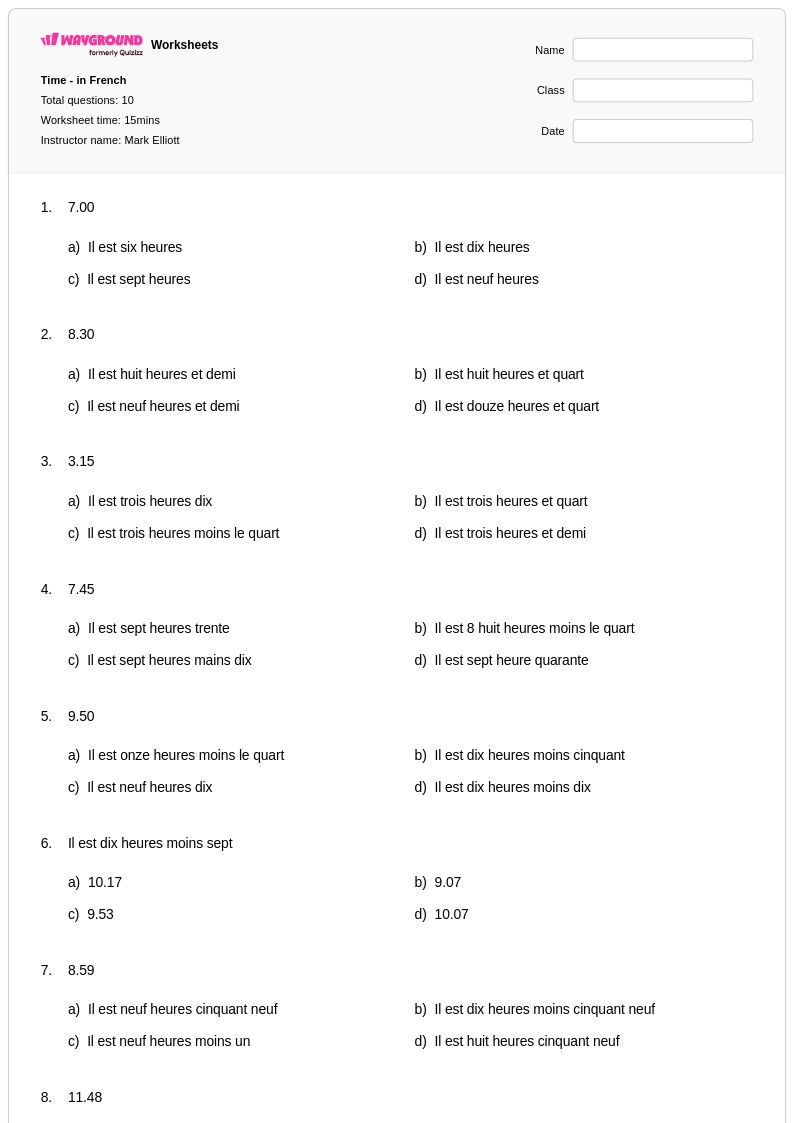
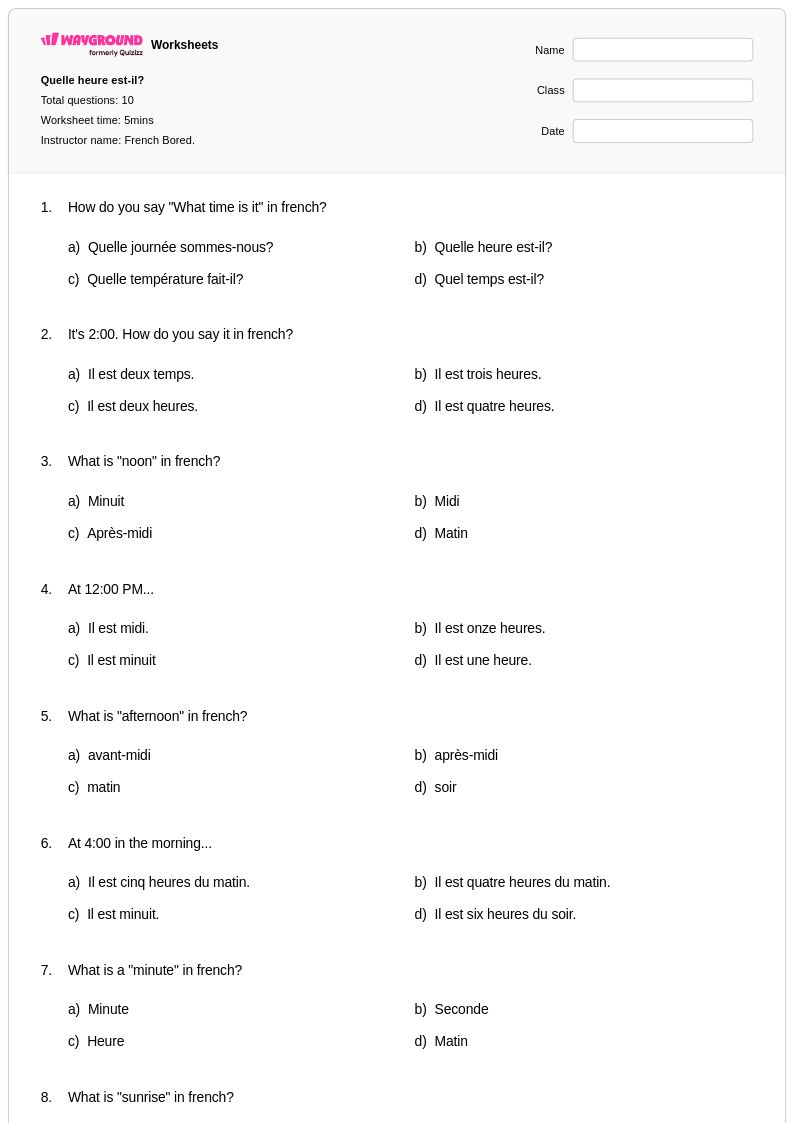
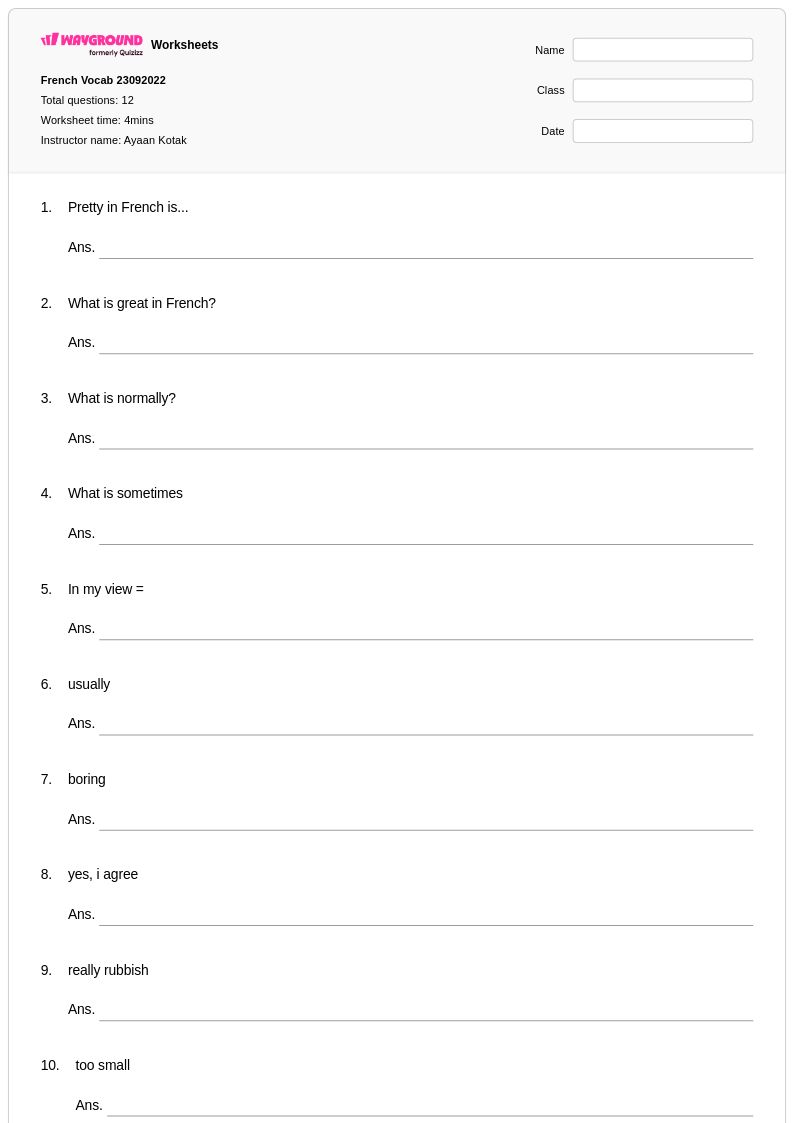
Free Year 1 French worksheets and printables help young learners build foundational language skills through engaging practice problems, interactive exercises, and comprehensive answer keys available as downloadable PDFs.
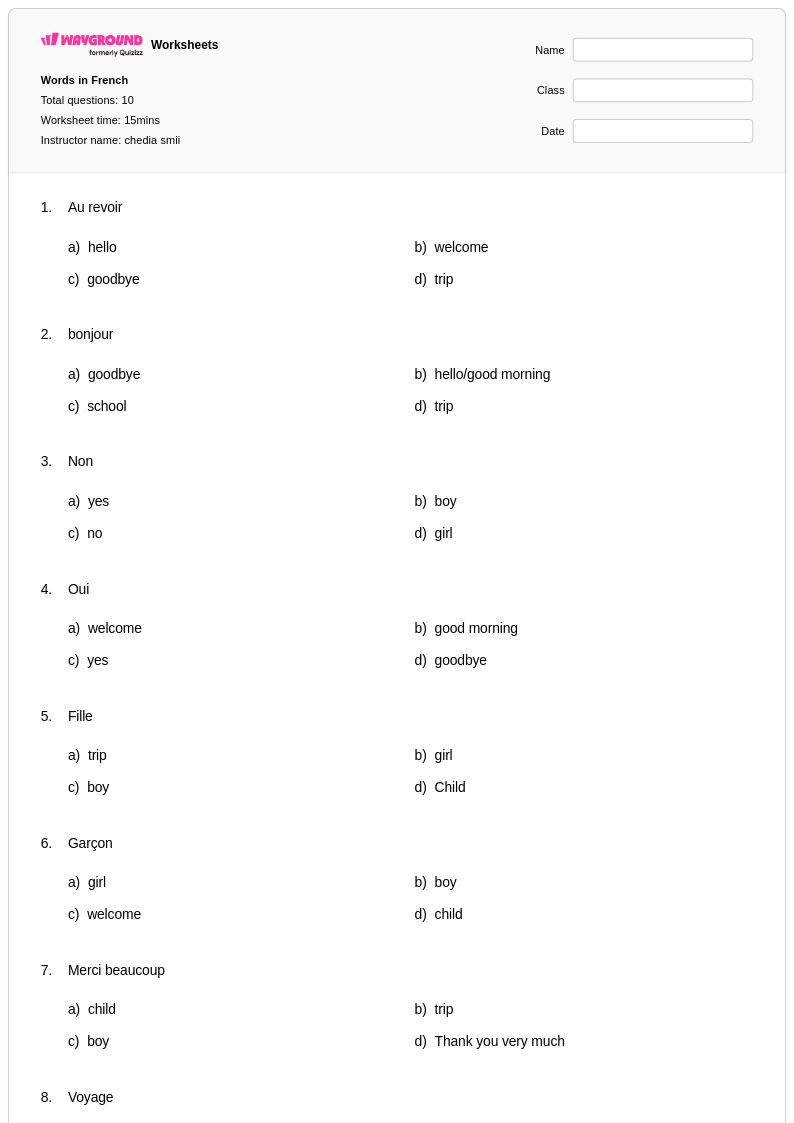
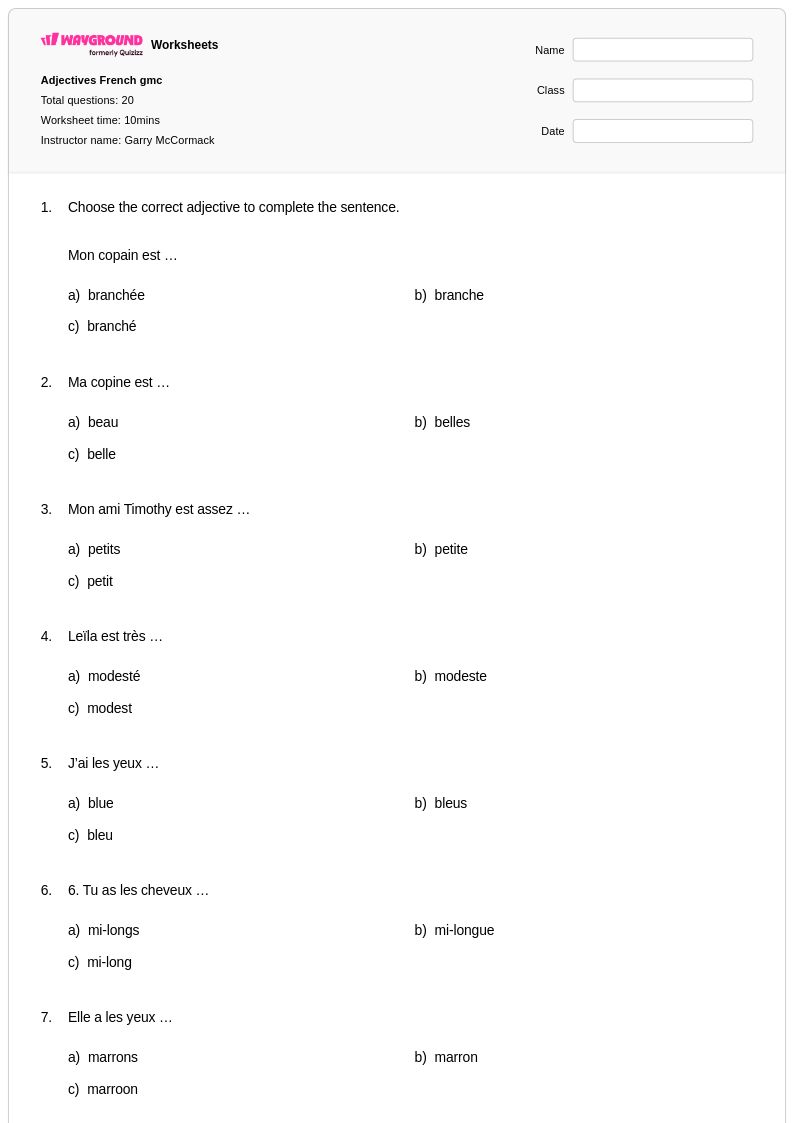
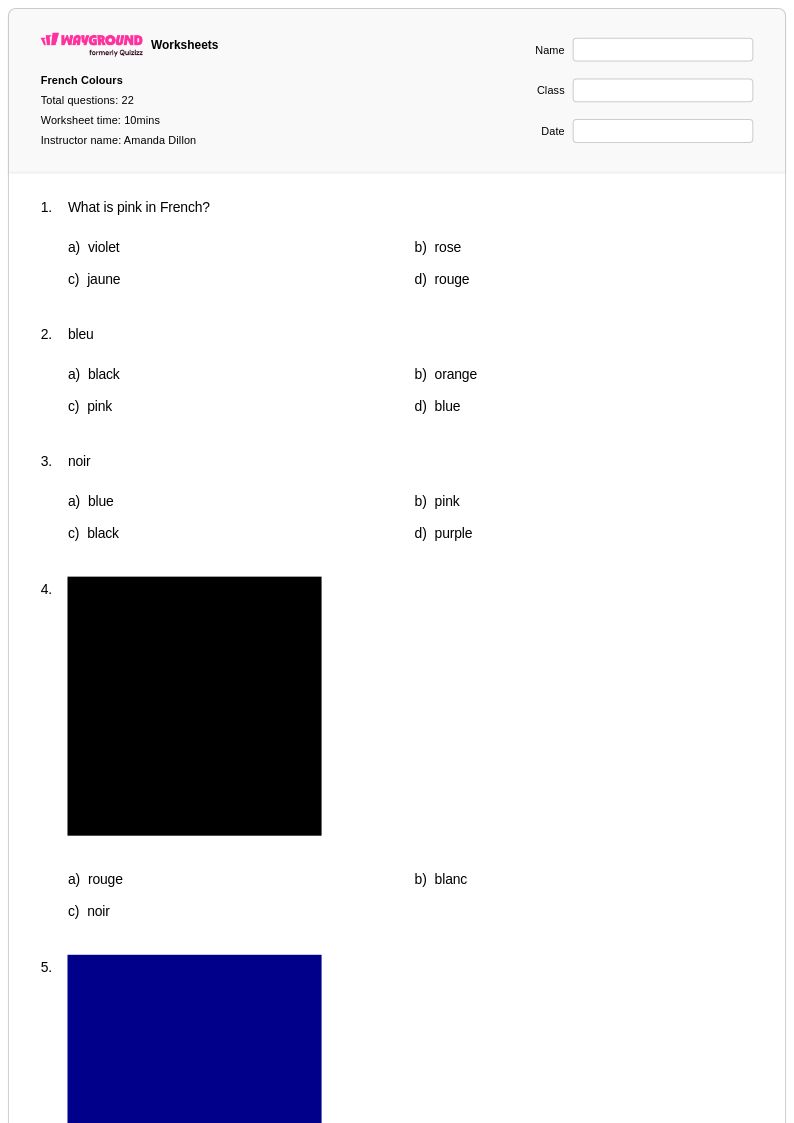
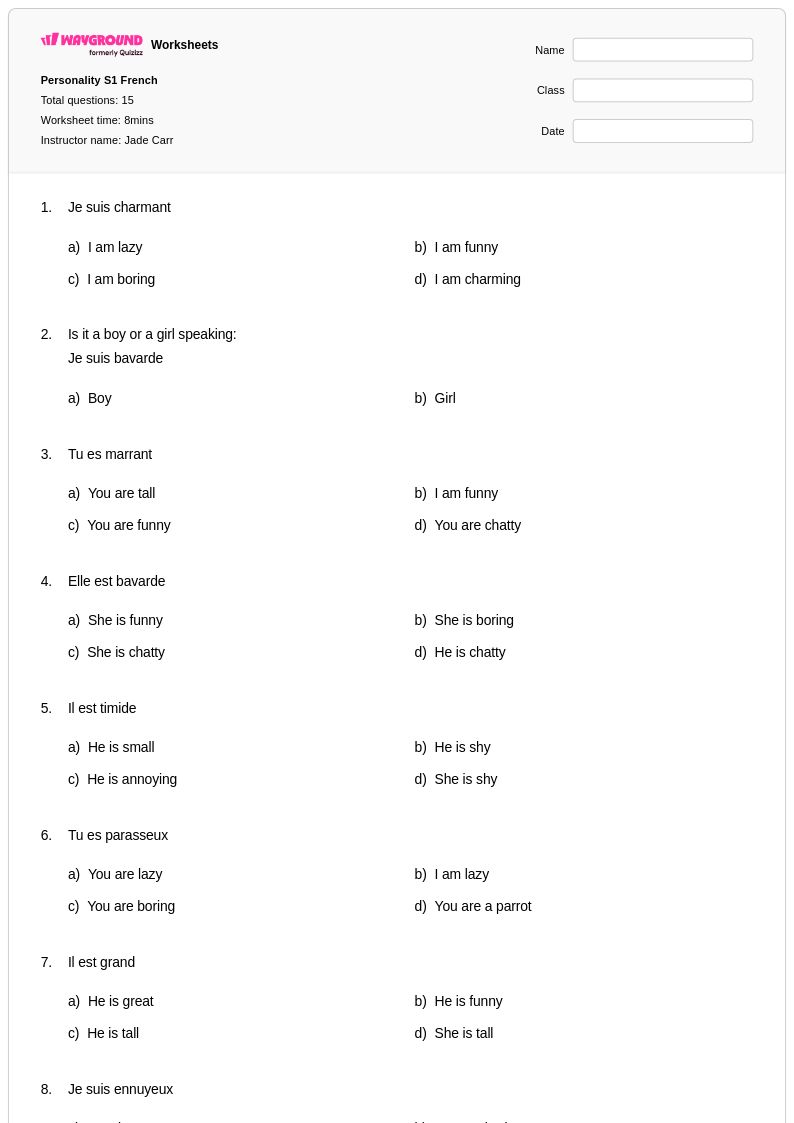
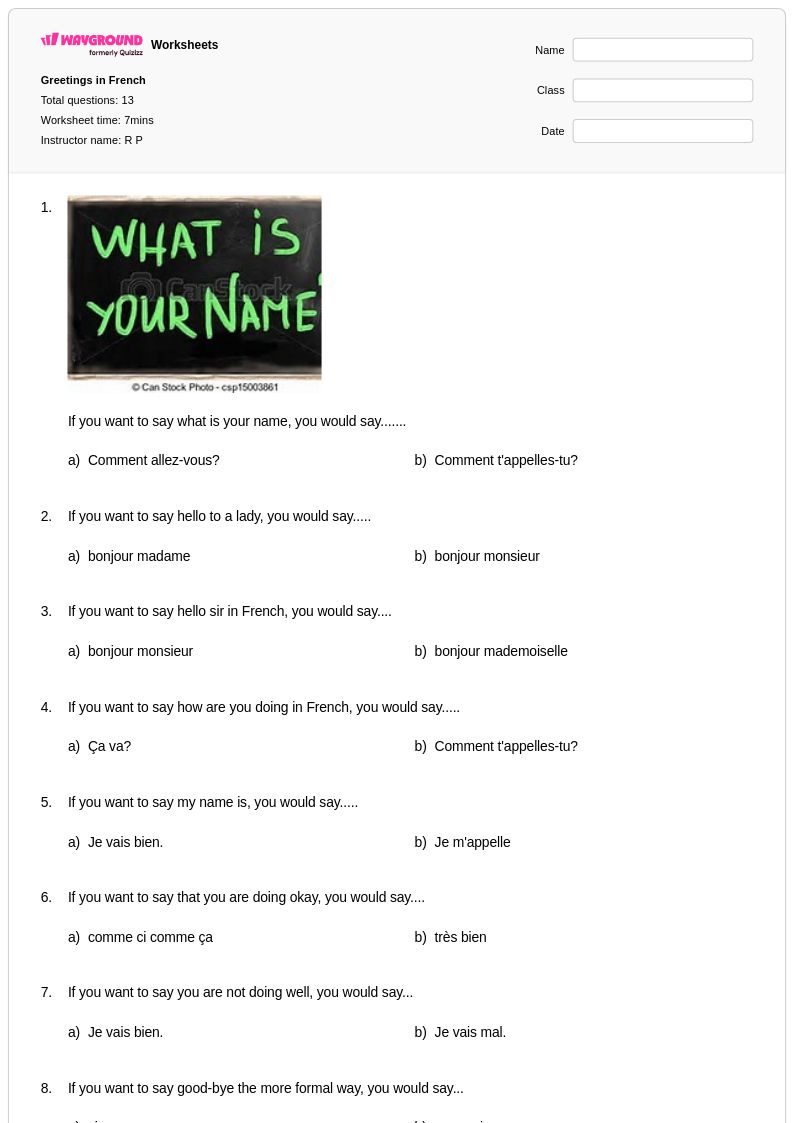
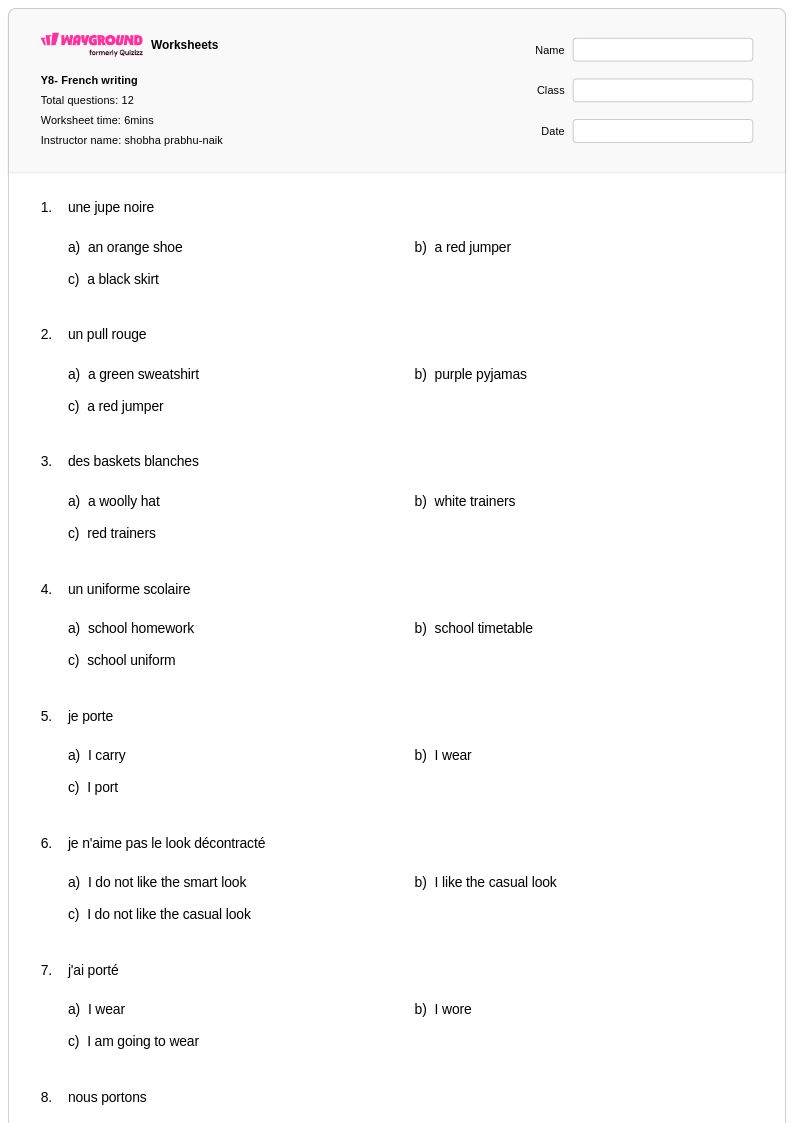
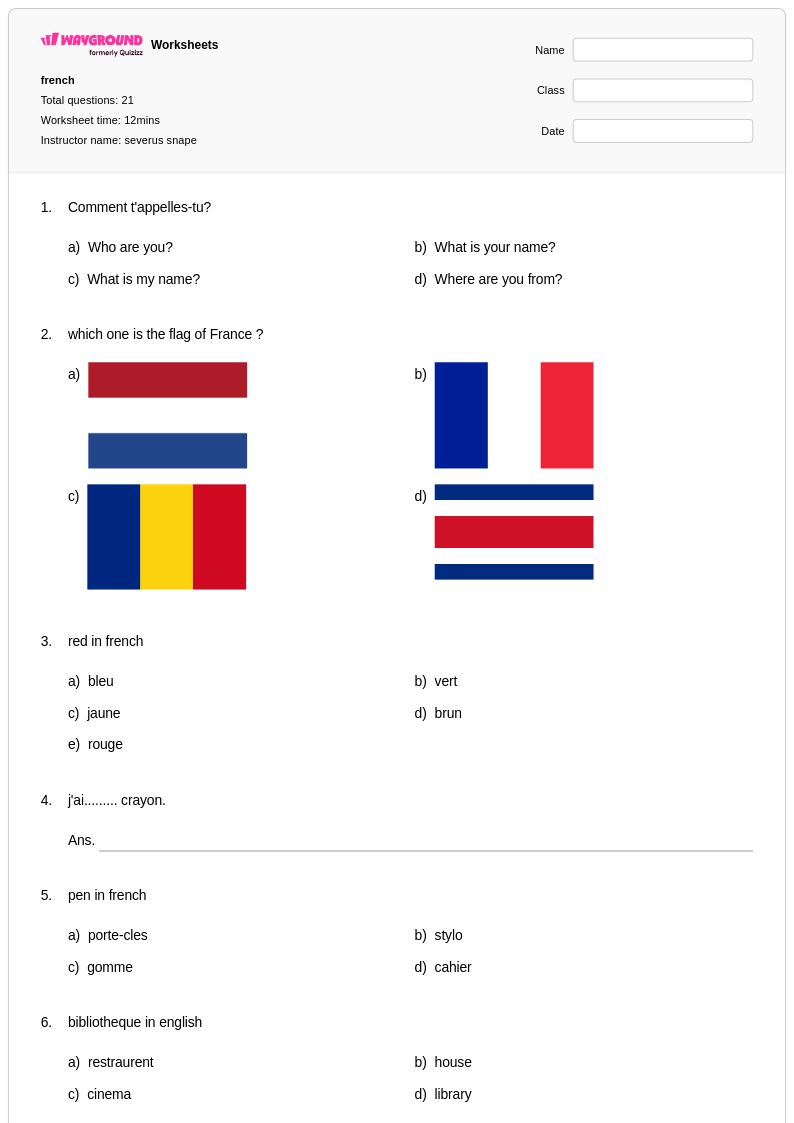
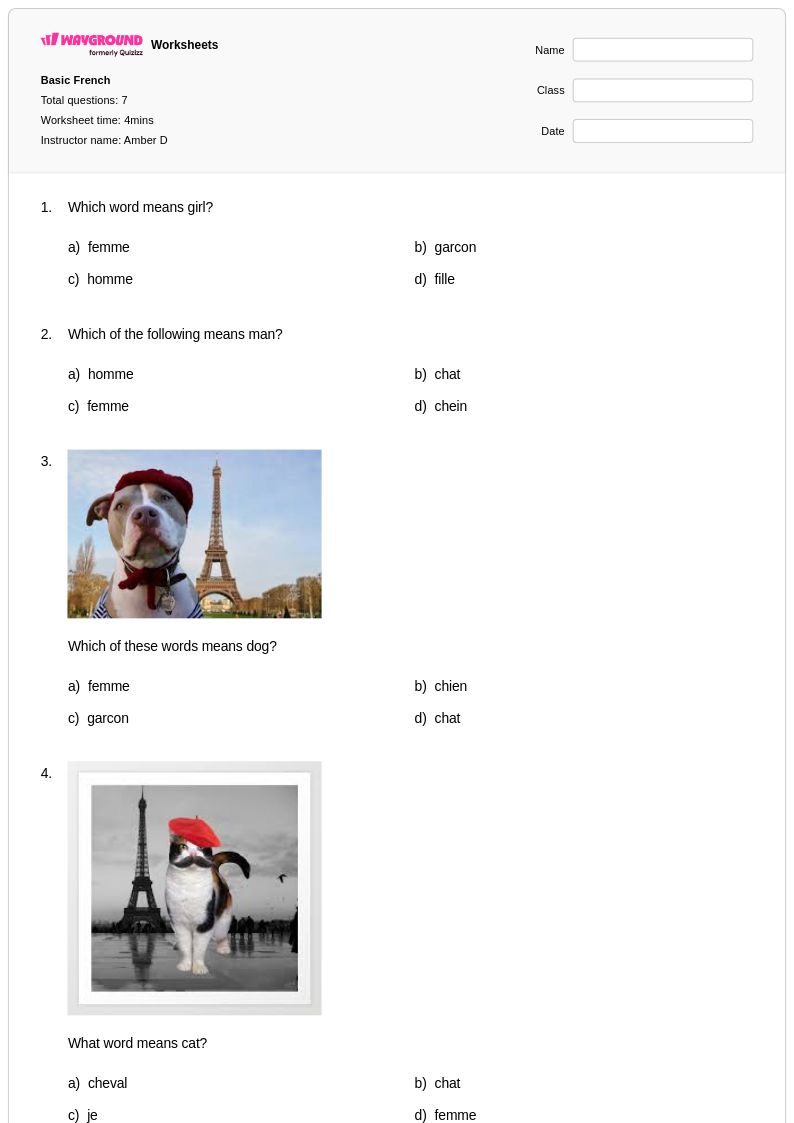
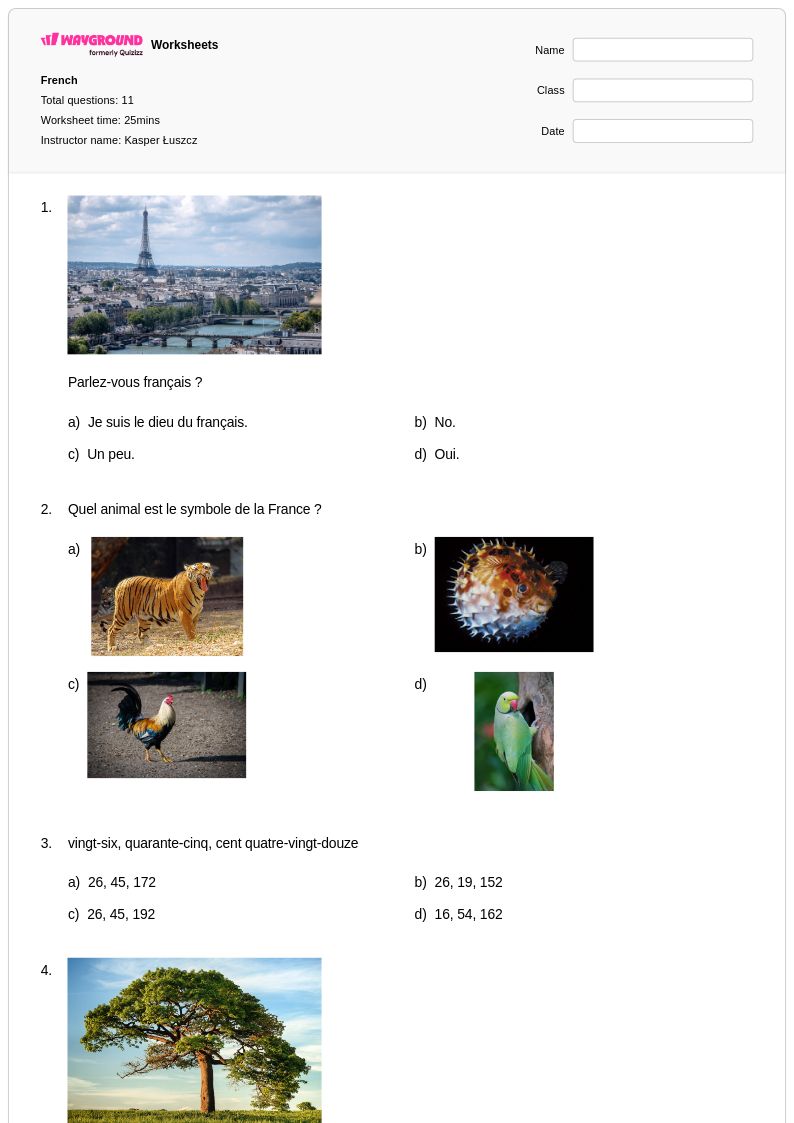
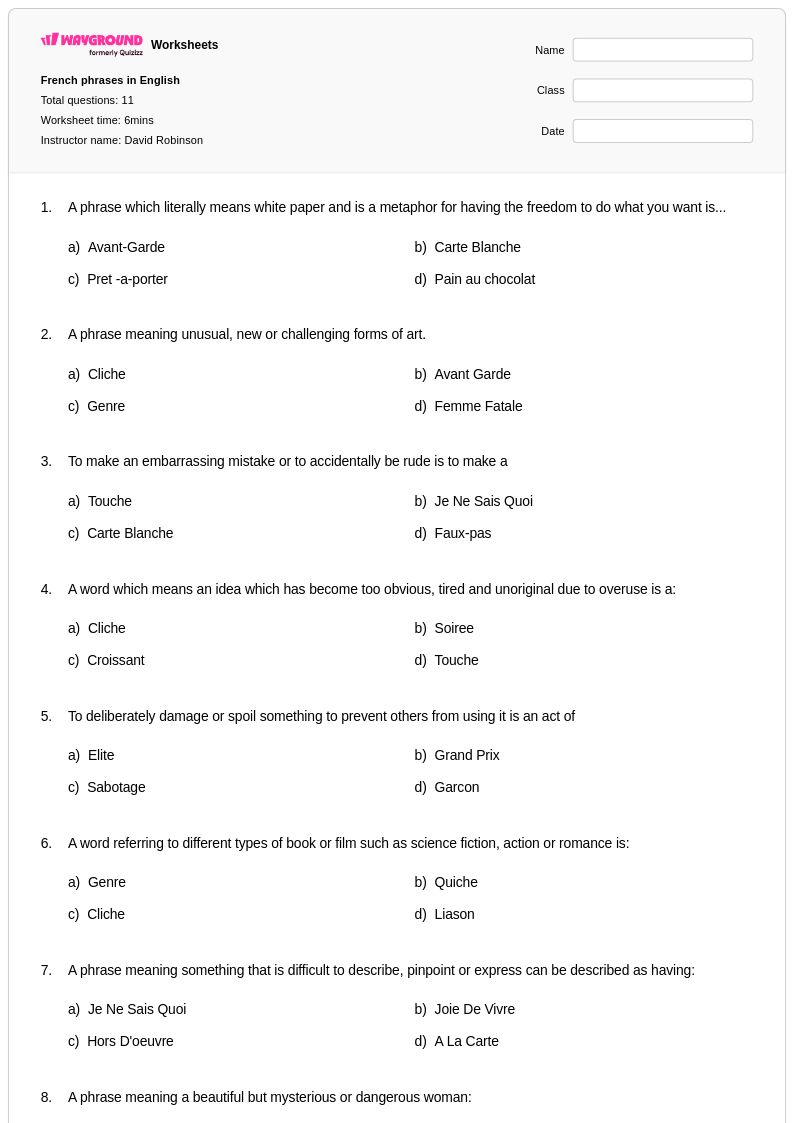
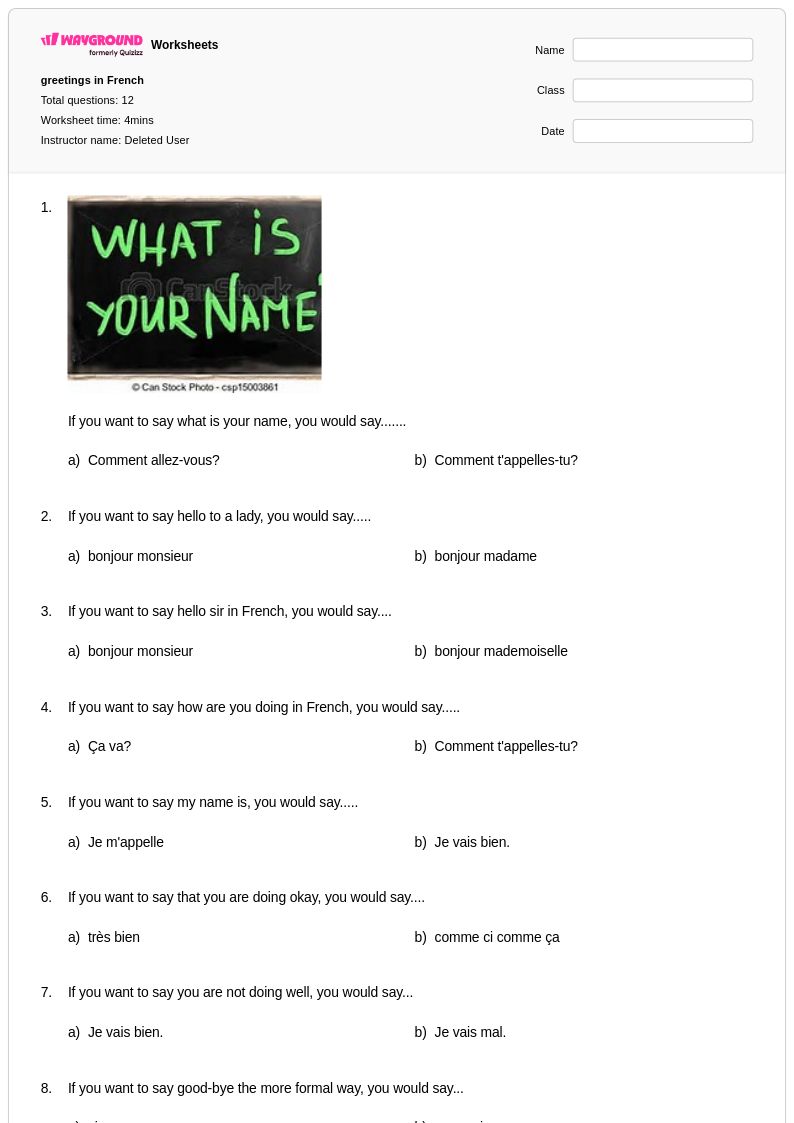
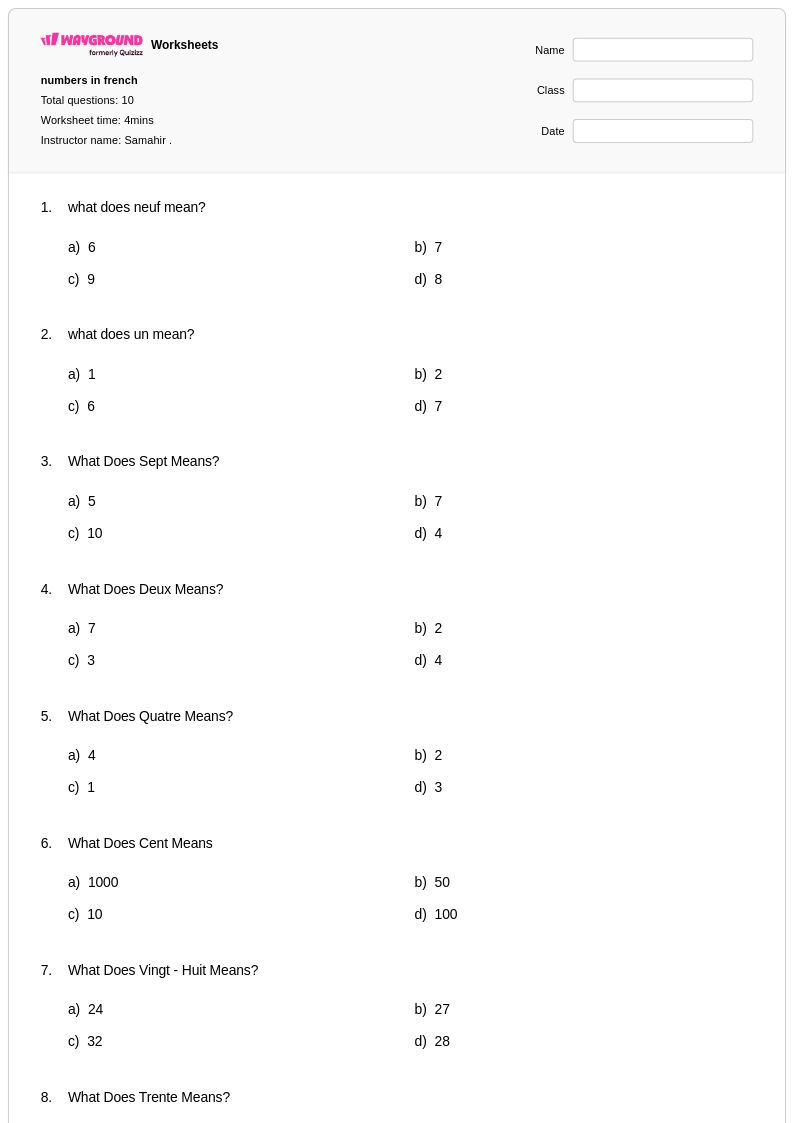
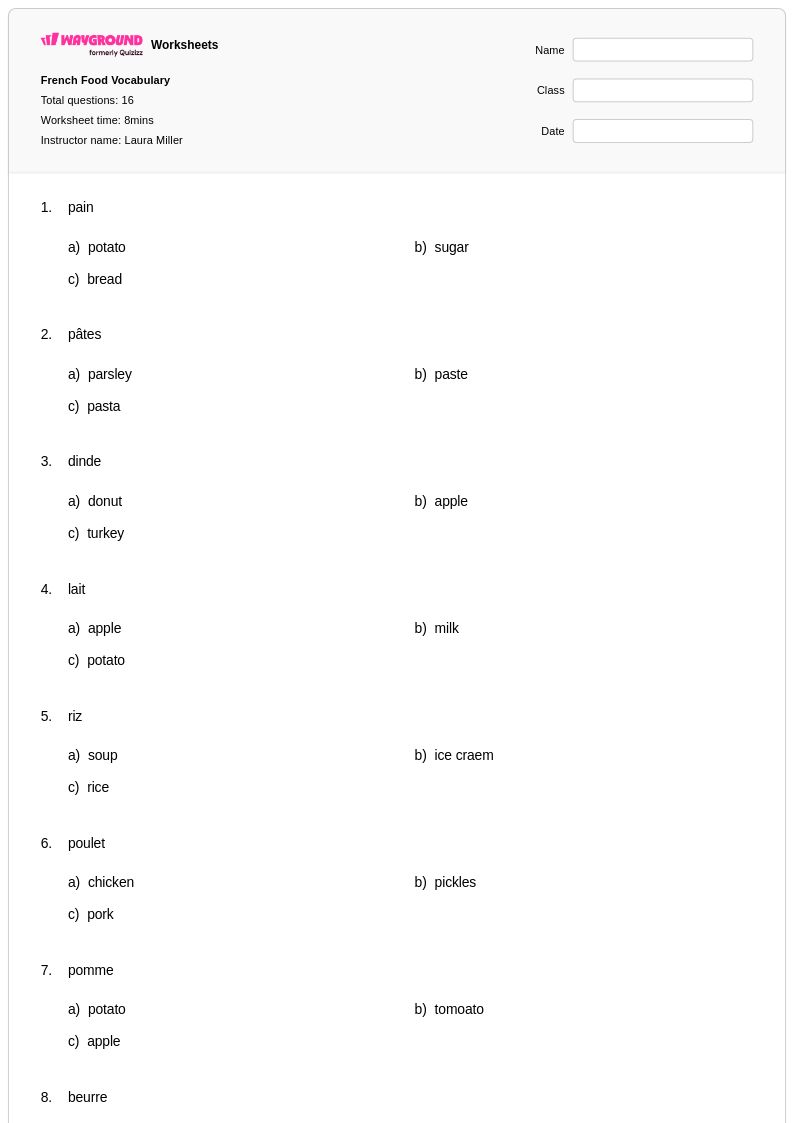
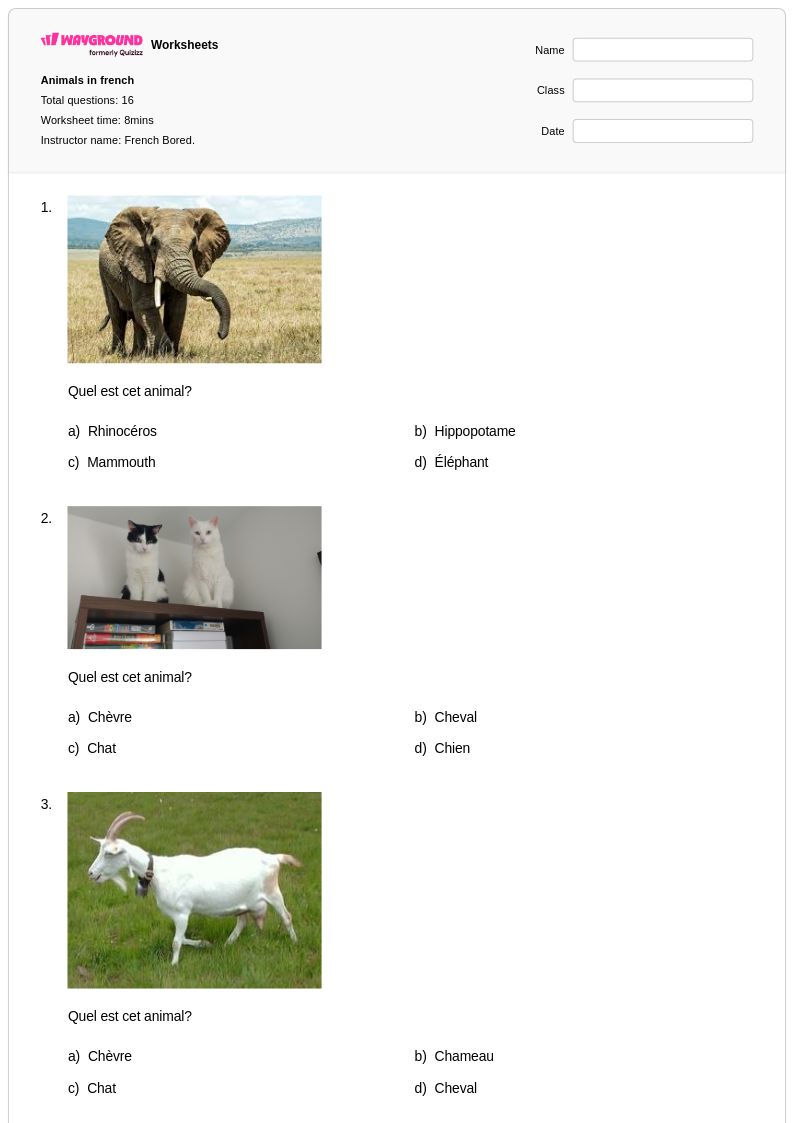
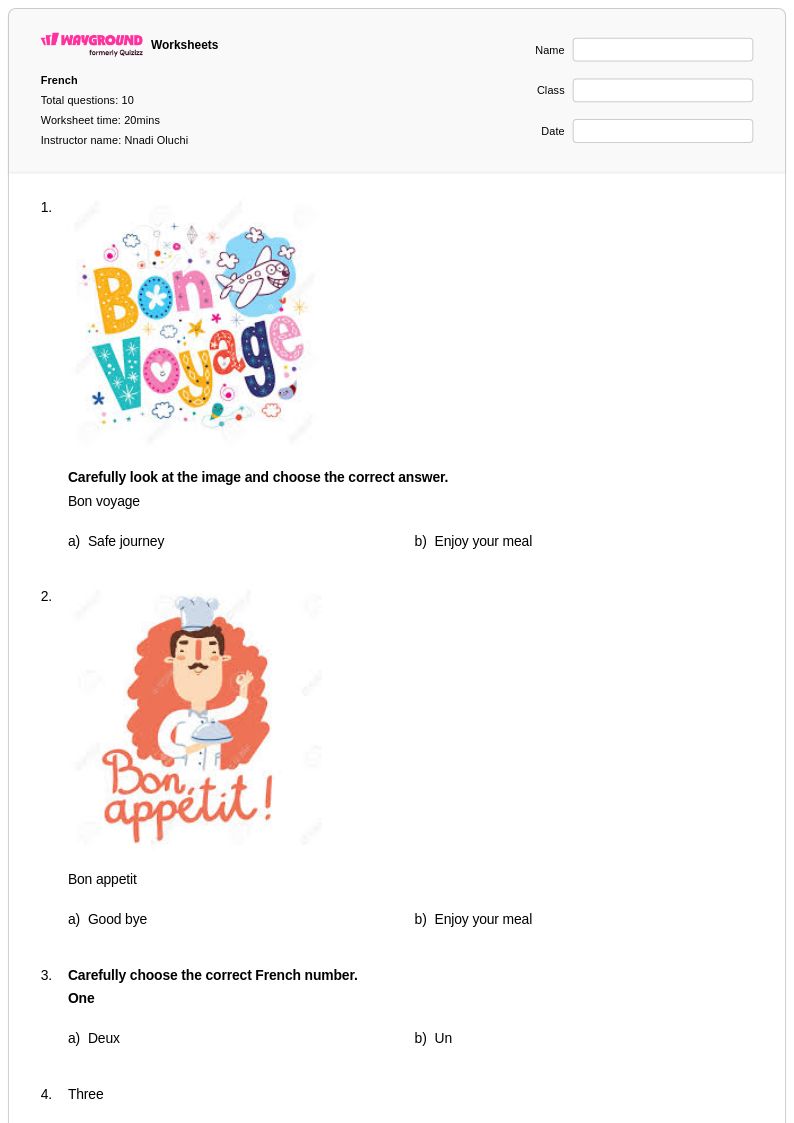
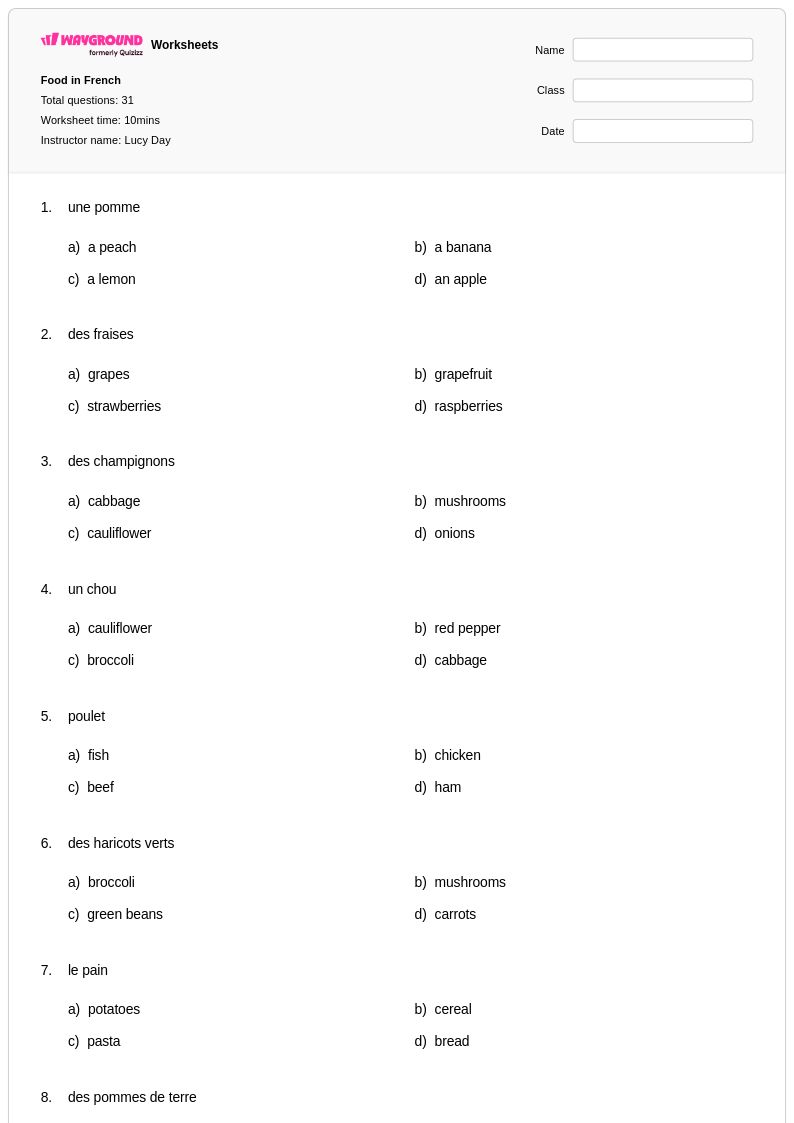
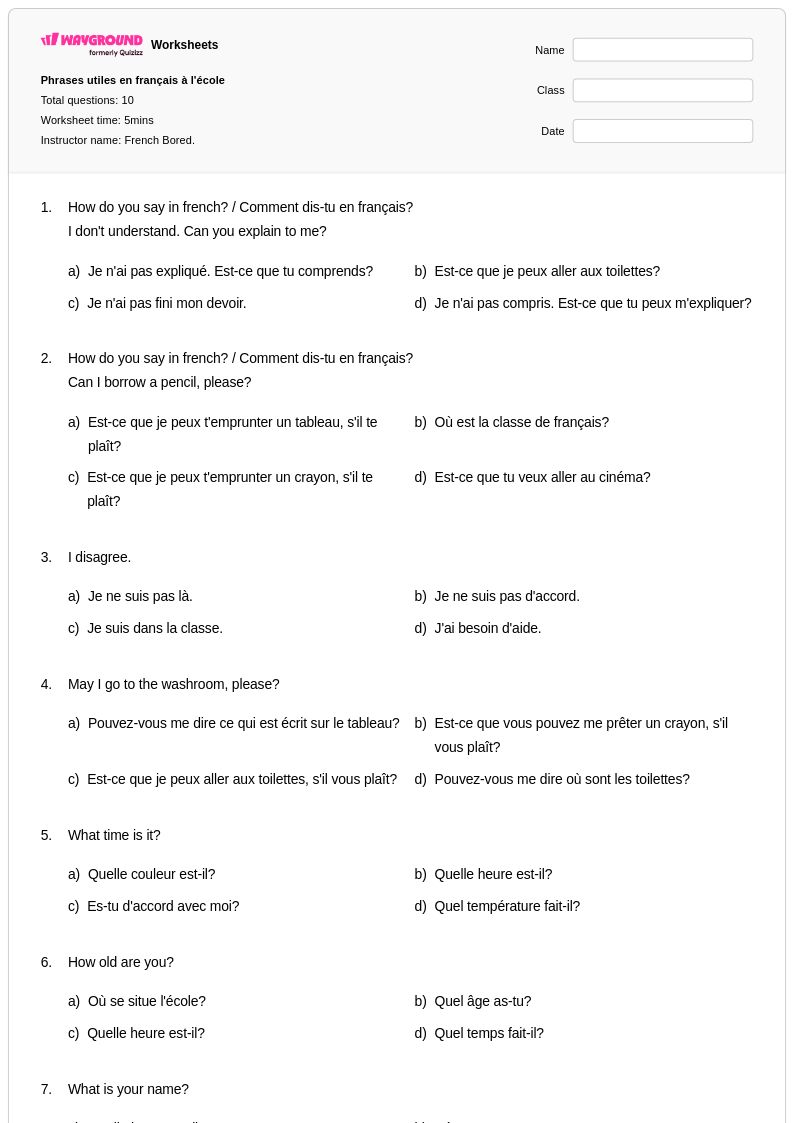
French worksheets for Year 1 students available through Wayground (formerly Quizizz) provide a comprehensive foundation for young learners beginning their journey into the French language. These carefully designed educational resources focus on essential introductory concepts including basic vocabulary, simple greetings, numbers, colors, and fundamental pronunciation skills that are age-appropriate for first-grade students. Each worksheet strengthens core language acquisition abilities through engaging visual exercises, interactive activities, and systematic practice problems that help children develop confidence in understanding and using basic French words and phrases. Teachers can access complete answer keys for efficient grading and assessment, while the free printables offer convenient pdf formats that support both classroom instruction and at-home practice, ensuring students receive consistent exposure to French language fundamentals.
Wayground (formerly Quizizz) empowers educators with an extensive collection of teacher-created French resources specifically tailored for Year 1 learners, drawing from millions of high-quality worksheets developed by experienced language instructors worldwide. The platform's robust search and filtering capabilities allow teachers to quickly locate materials that align with curriculum standards and match their specific instructional objectives for beginning French language learners. Advanced differentiation tools enable educators to customize worksheets based on individual student needs, supporting both remediation for struggling learners and enrichment opportunities for advanced students. Available in both printable and digital formats, including downloadable pdf versions, these flexible resources streamline lesson planning while providing effective tools for skill practice, formative assessment, and reinforcement of fundamental French language concepts essential for Year 1 success.
FAQs
How do I teach French vocabulary and grammar effectively in the classroom?
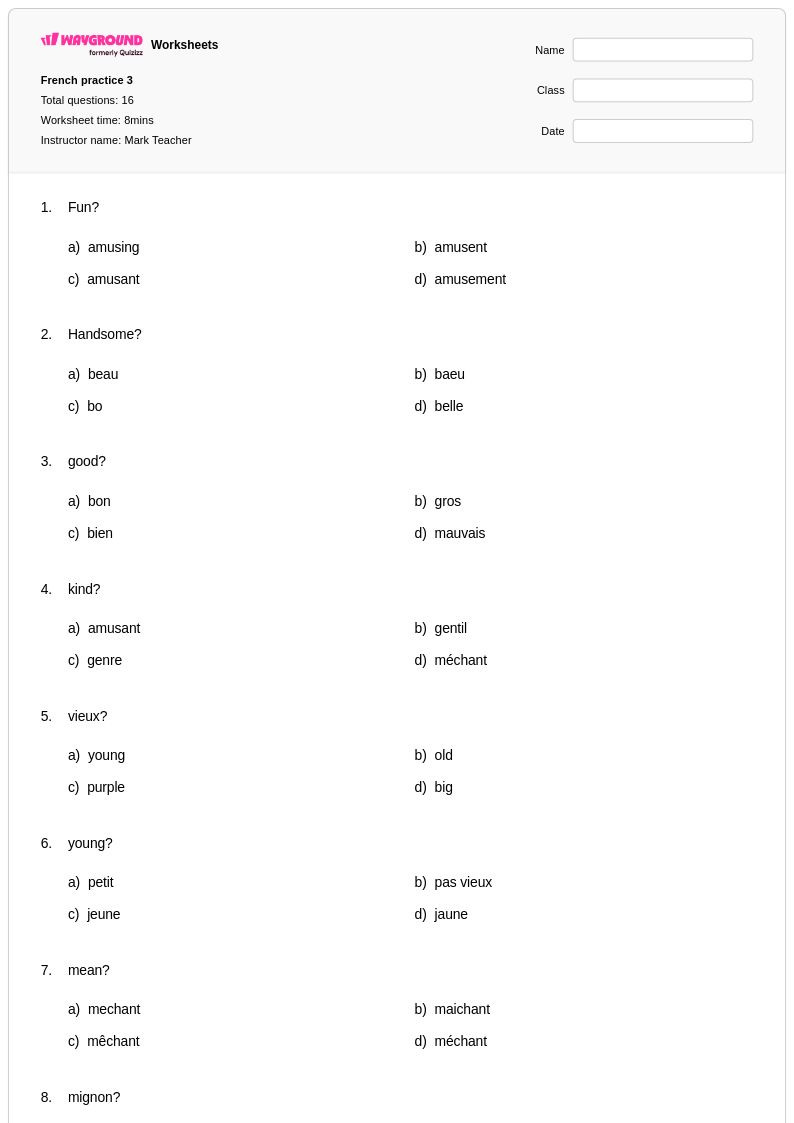
Effective French instruction builds vocabulary and grammar in tandem rather than in isolation. Teachers see stronger retention when new vocabulary is introduced in context, such as through short dialogues or reading passages, and then reinforced with targeted grammar exercises like verb conjugation drills and sentence construction tasks. Scaffolding lessons from foundational concepts, such as present-tense regular verbs, toward more complex structures like the subjunctive helps students build confidence progressively. Incorporating cultural context alongside language instruction also deepens engagement and authentic comprehension.
What types of exercises help students practice French verb conjugations?
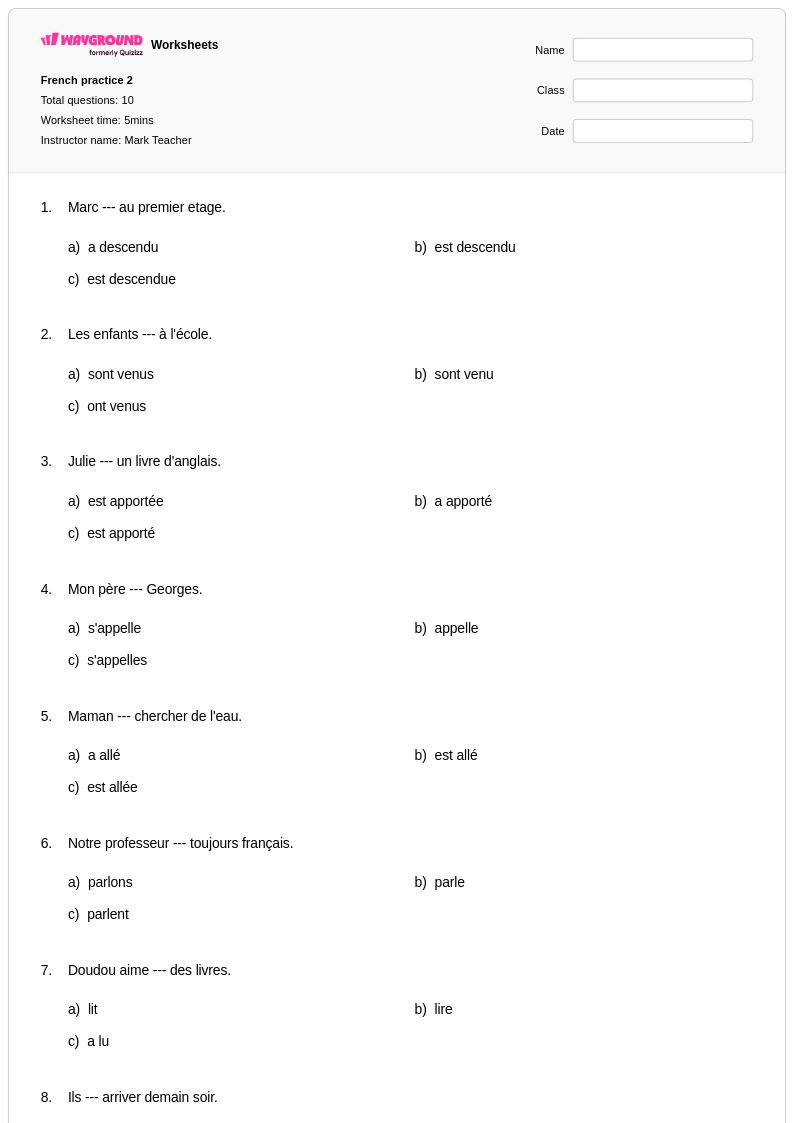
Verb conjugation practice is most effective when it combines recognition and production tasks. Fill-in-the-blank sentences, verb tables for targeted tenses, and sentence rewriting exercises that require students to change subject or tense all reinforce conjugation patterns. Short translation tasks and cloze passages that embed conjugated verbs in natural context help students move beyond rote memorization toward functional use. Regular, low-stakes practice across multiple formats builds automaticity, which is essential for fluent spoken and written French.
What are the most common mistakes students make when learning French grammar?
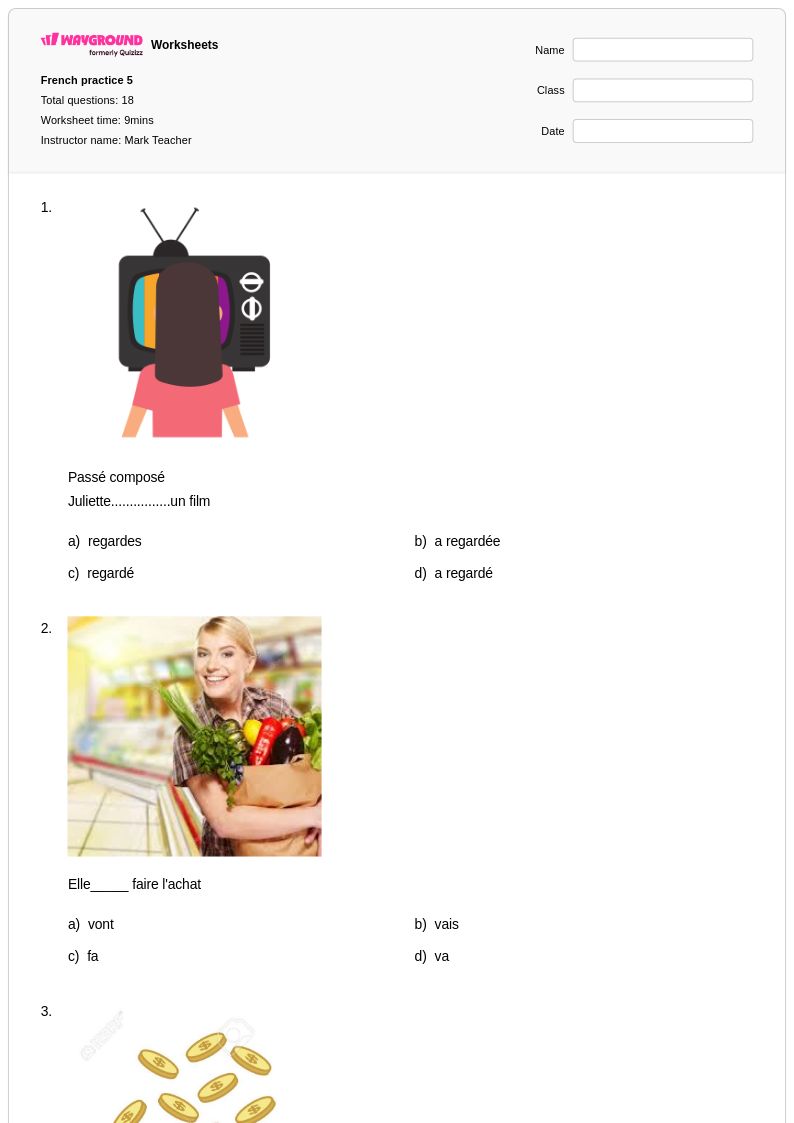
One of the most persistent errors in French grammar is gender agreement, where students fail to match adjective endings and articles to the noun's grammatical gender. Students also frequently misuse verb tenses, particularly confusing the passé composé with the imparfait, applying one where the other is required. Omitting or misplacing negation particles, such as 'ne...pas', is another common pattern, as is incorrect pronoun placement in sentences with object pronouns. Identifying these error patterns early and addressing them with targeted practice prevents them from becoming entrenched habits.
How can I use French worksheets to support students at different proficiency levels?
French worksheets can be differentiated by adjusting task complexity within the same topic, for example, offering word banks or sentence starters for beginner learners while requiring open-ended production from more advanced students. Separating receptive tasks, such as matching and multiple choice, from productive tasks like writing and translation allows teachers to assign work appropriate to each proficiency level. On Wayground, teachers can apply accommodations such as reduced answer choices or read-aloud support to individual students, making it possible to run a single assignment across a mixed-proficiency class while still meeting each learner's needs.
How do I use Wayground's French worksheets in my class?
Wayground's French worksheets are available as printable PDFs for traditional classroom use and in digital formats for technology-integrated environments, giving teachers flexibility regardless of their setup. Teachers can assign digital worksheets directly to students or host them as a quiz on Wayground for real-time engagement. Each worksheet includes an answer key, which supports both teacher-led correction and independent student self-assessment. The platform's search and filtering tools allow teachers to quickly locate materials aligned to specific learning objectives or proficiency levels.
How do I assess student progress in French language skills?
Assessing French proficiency requires evaluating across multiple domains, including reading comprehension, writing accuracy, vocabulary knowledge, and grammar command. Formative assessments such as short translation checks, sentence correction tasks, and vocabulary quizzes provide frequent low-stakes data on where students are struggling. Tracking recurring error patterns, particularly in verb tense usage and gender agreement, helps teachers identify whether gaps are conceptual or procedural and informs targeted reteaching. Answer keys included with structured worksheets also allow students to self-assess and build metacognitive awareness of their own progress.