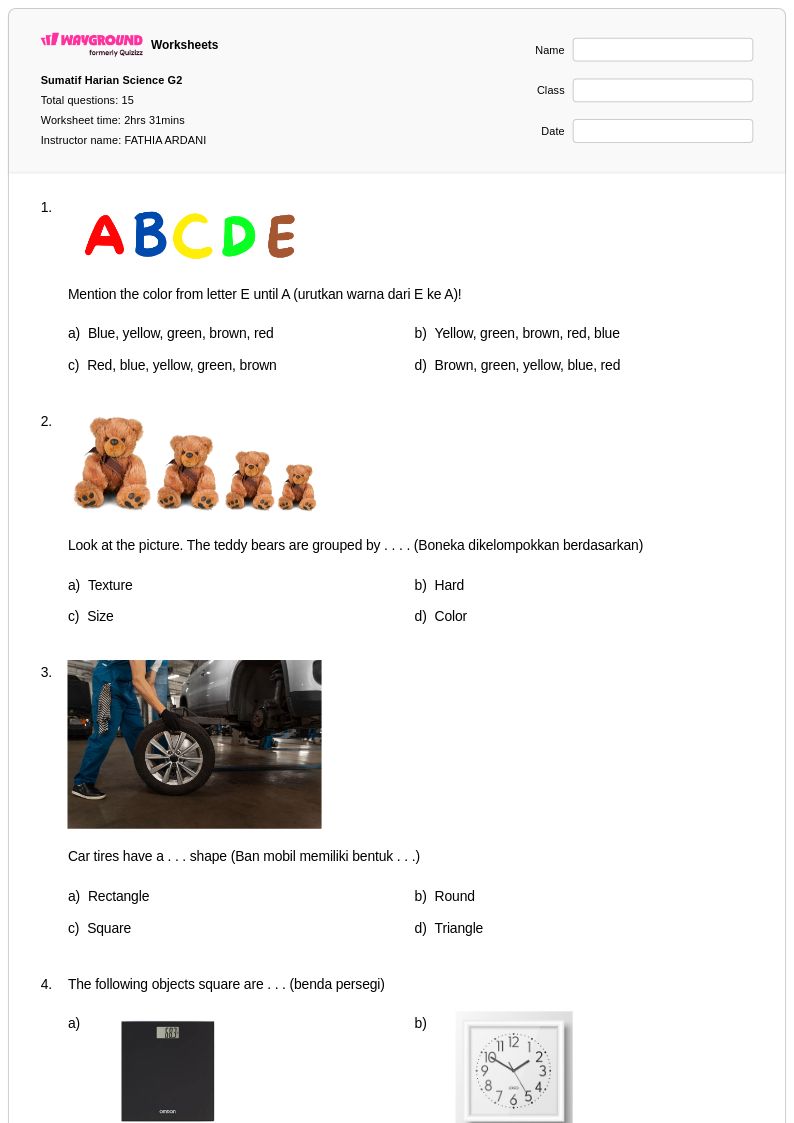
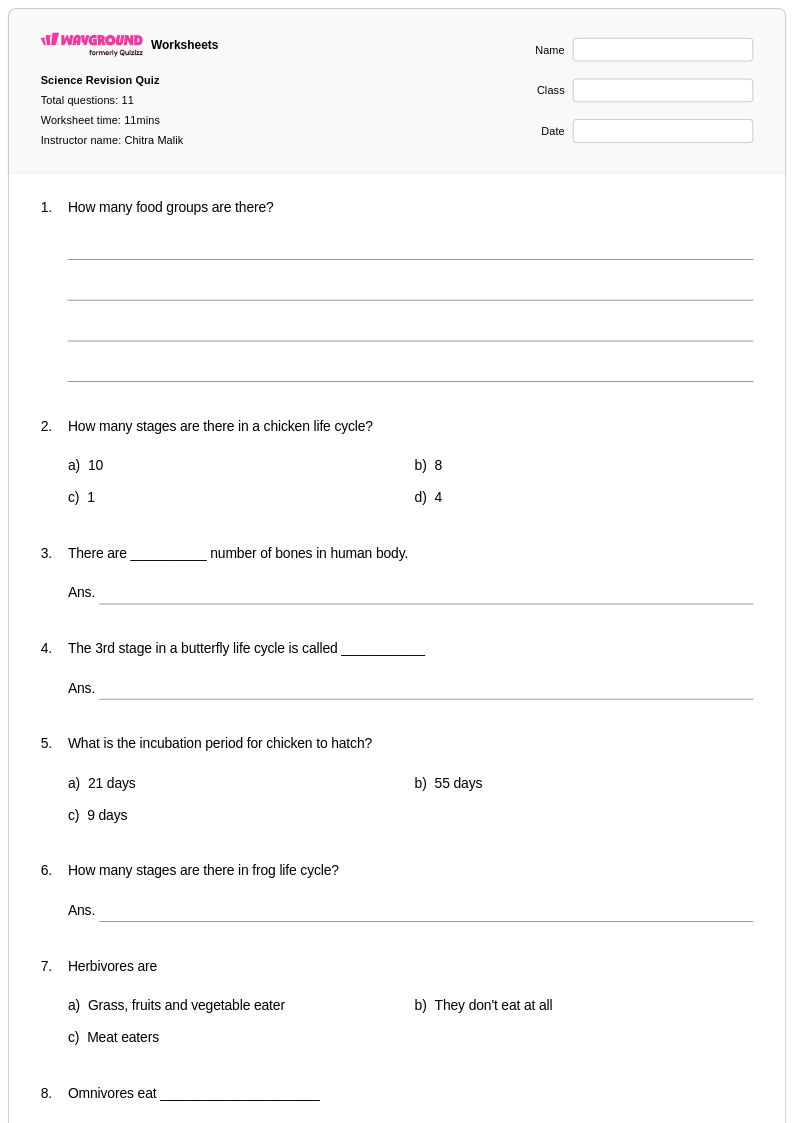
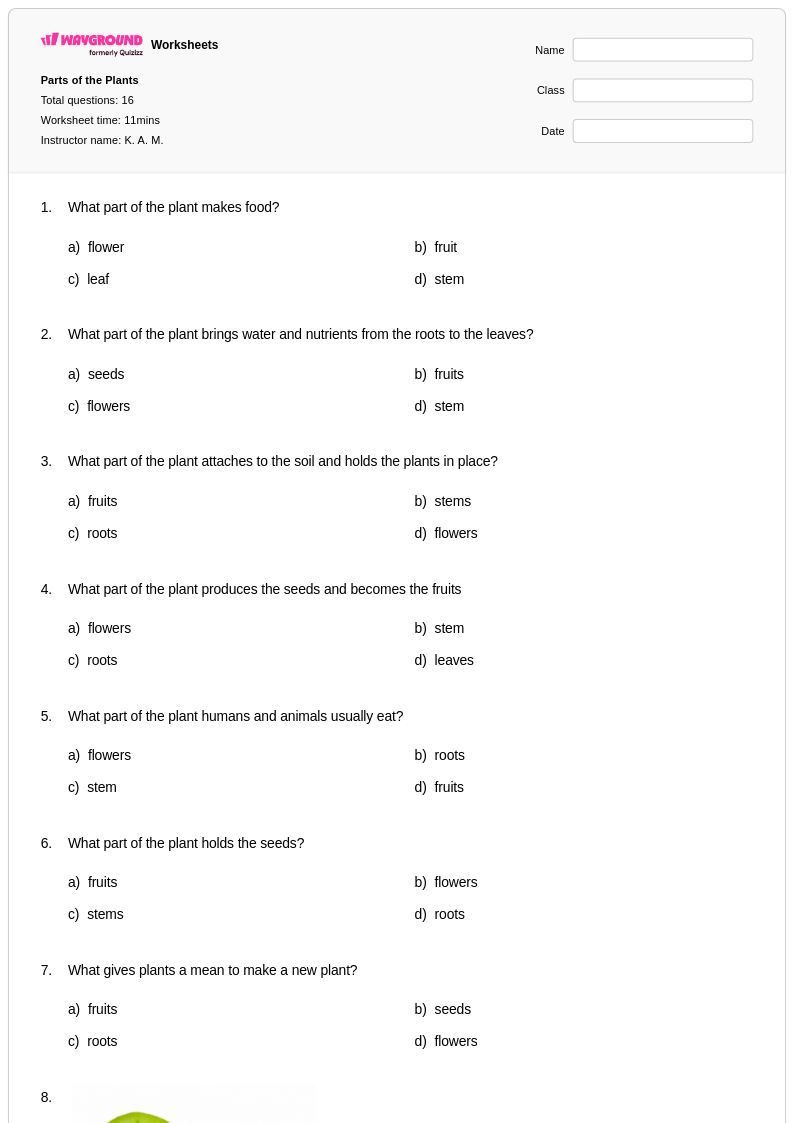
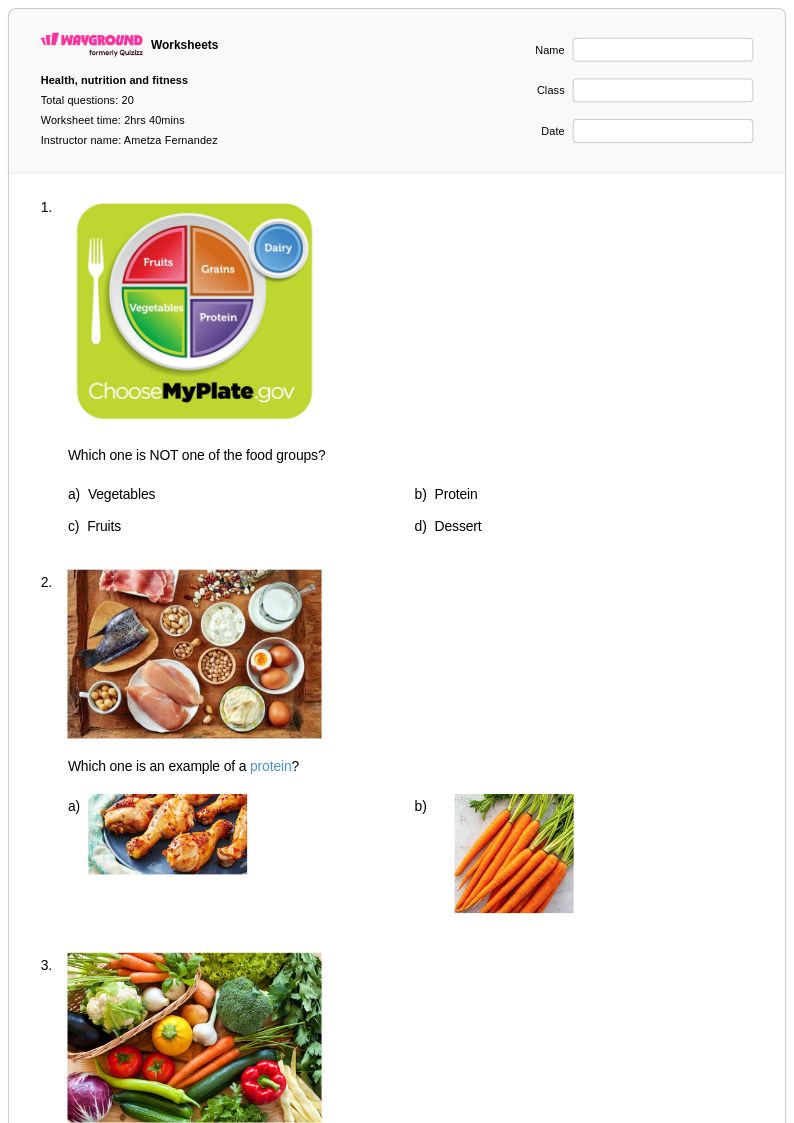
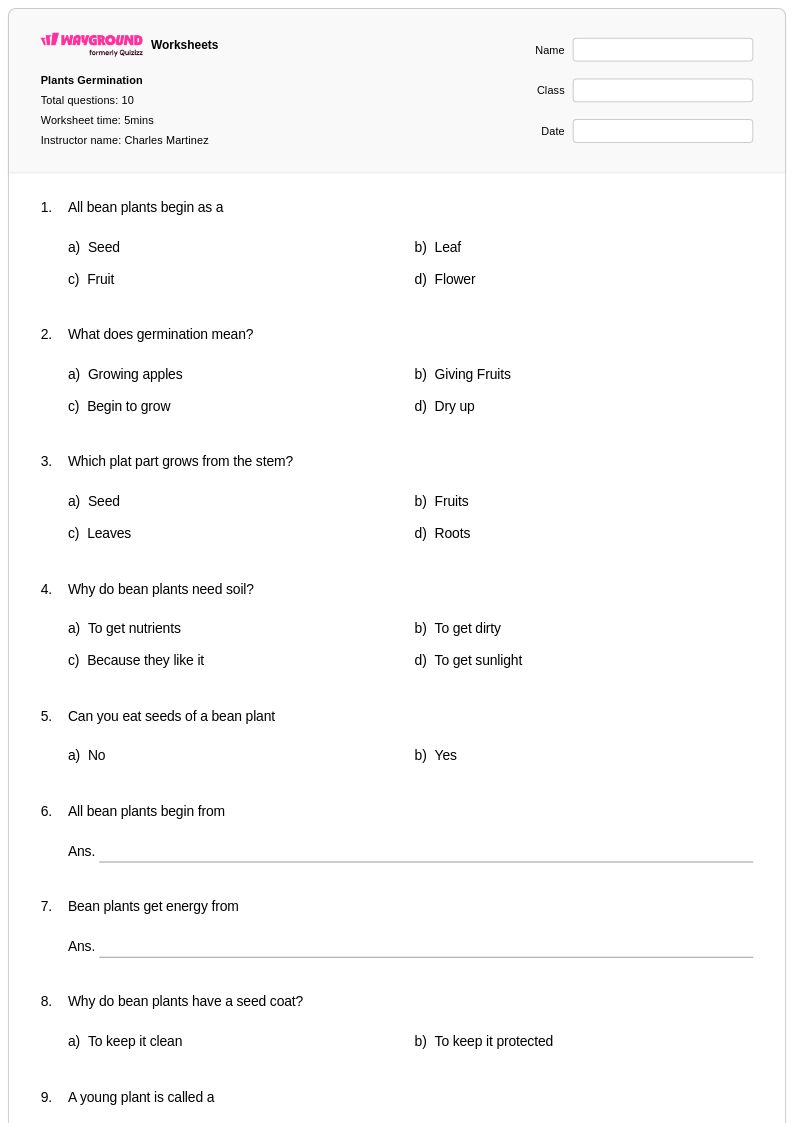
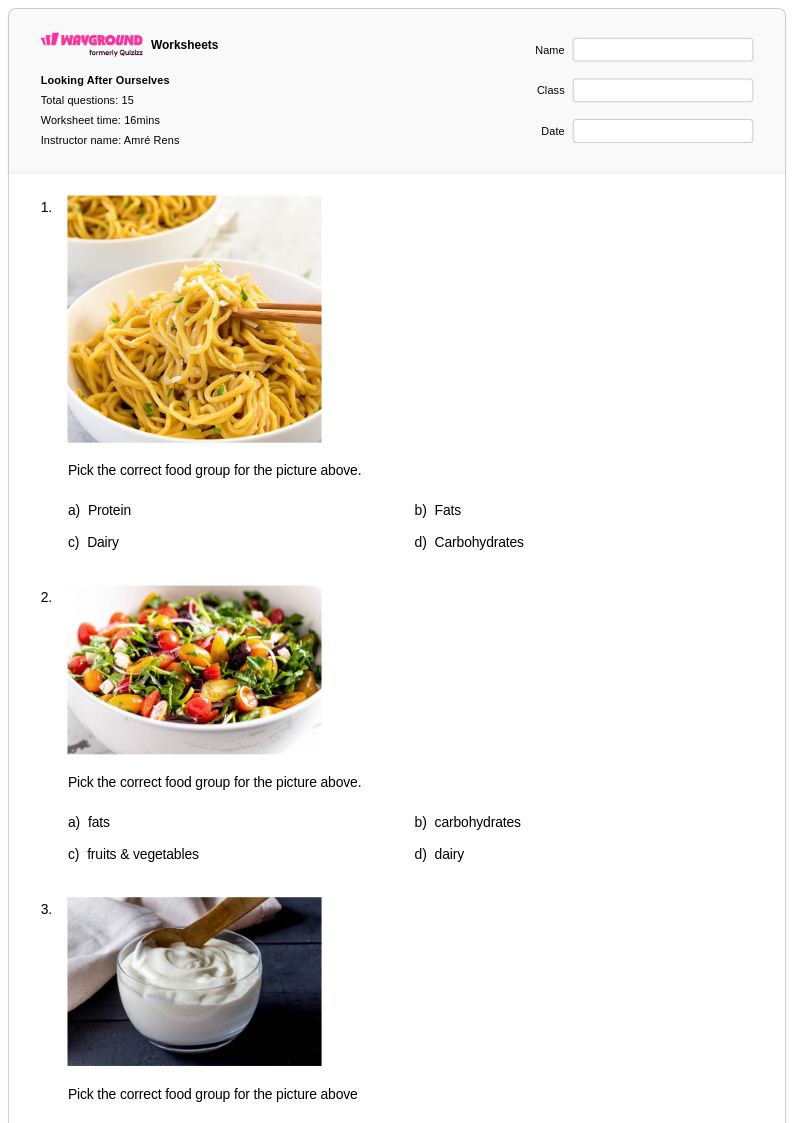
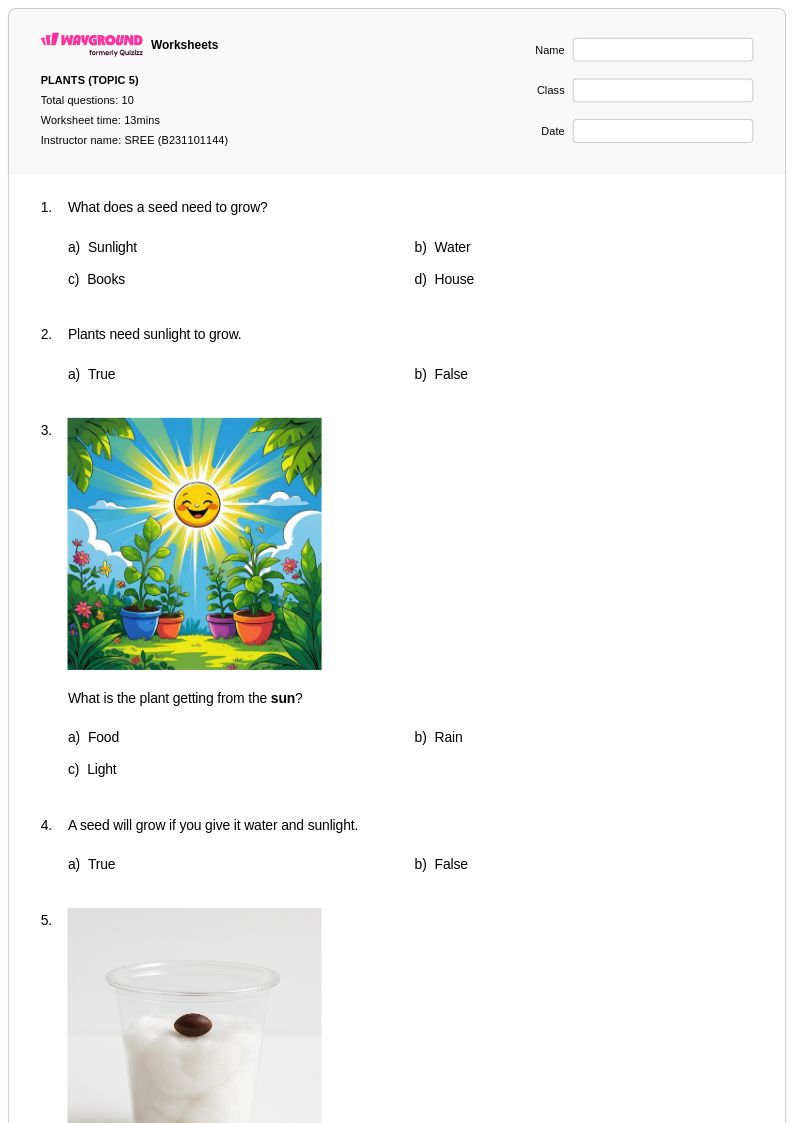
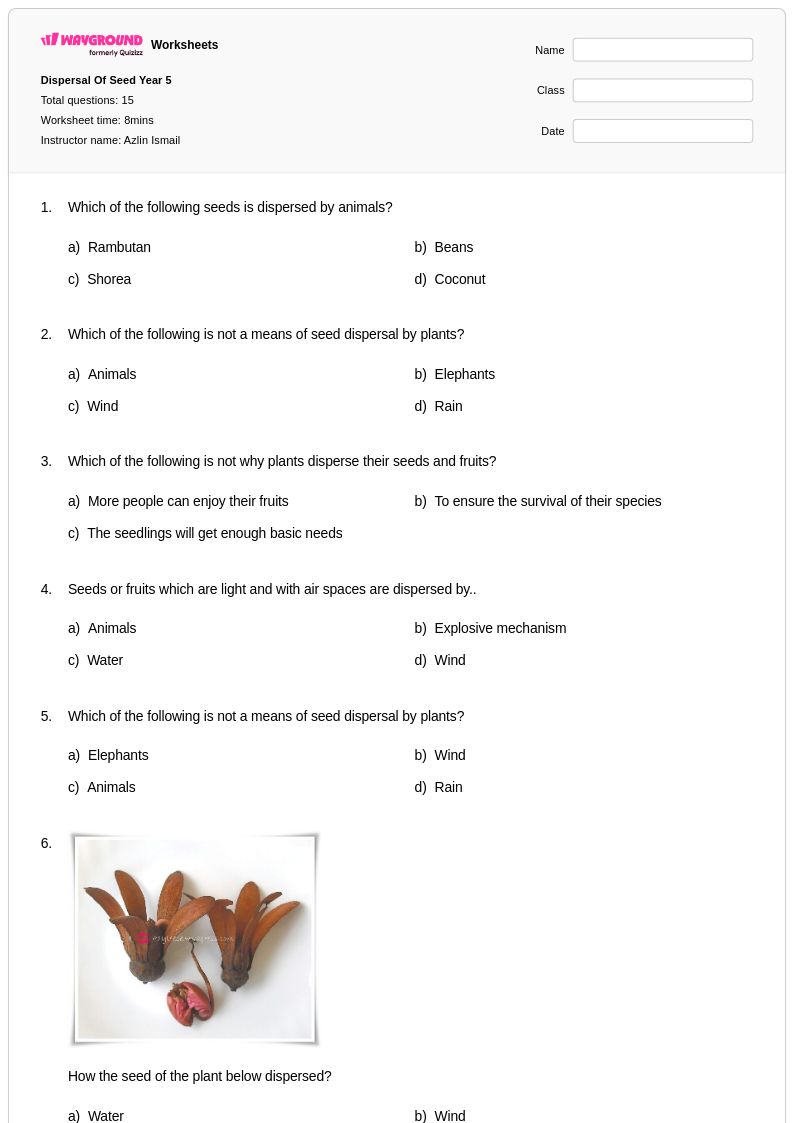
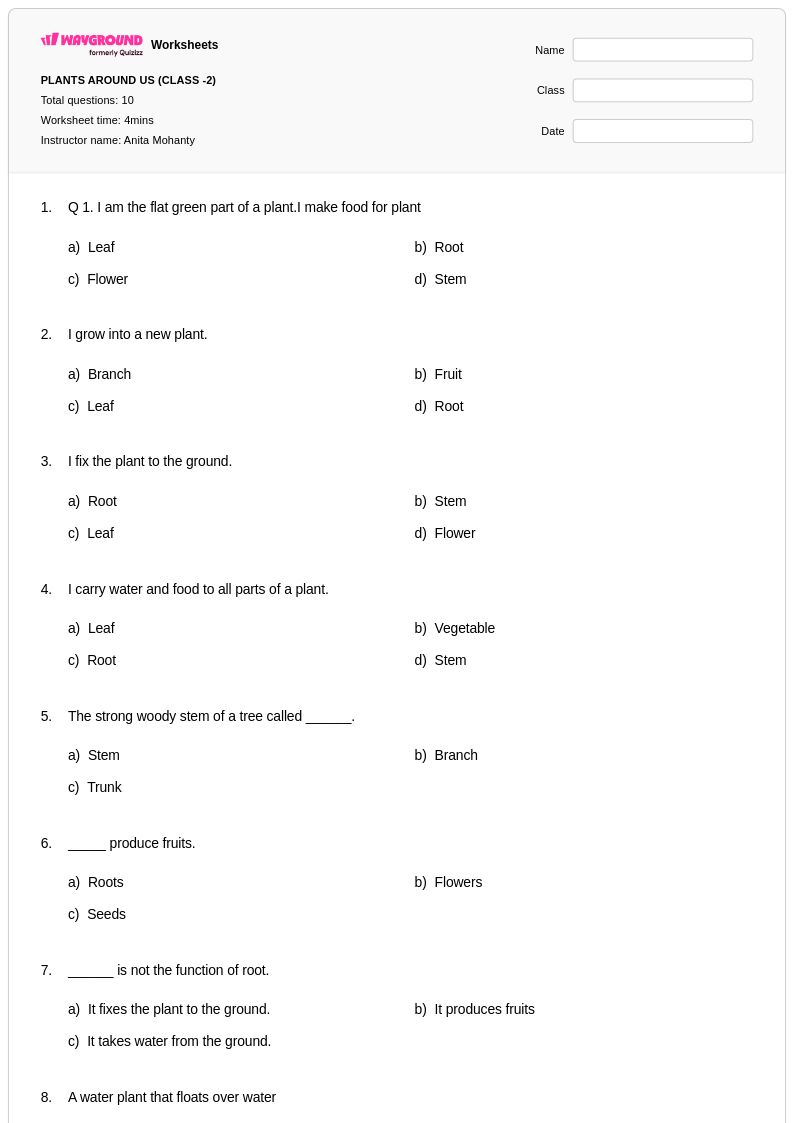
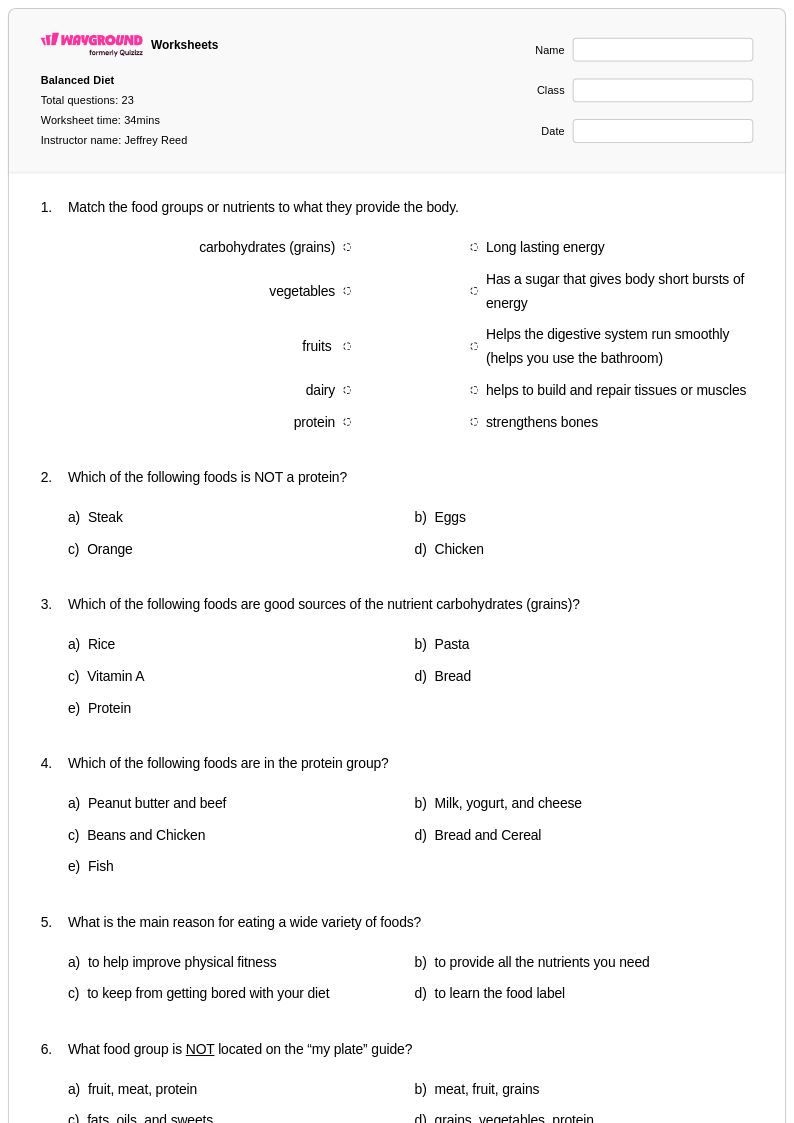
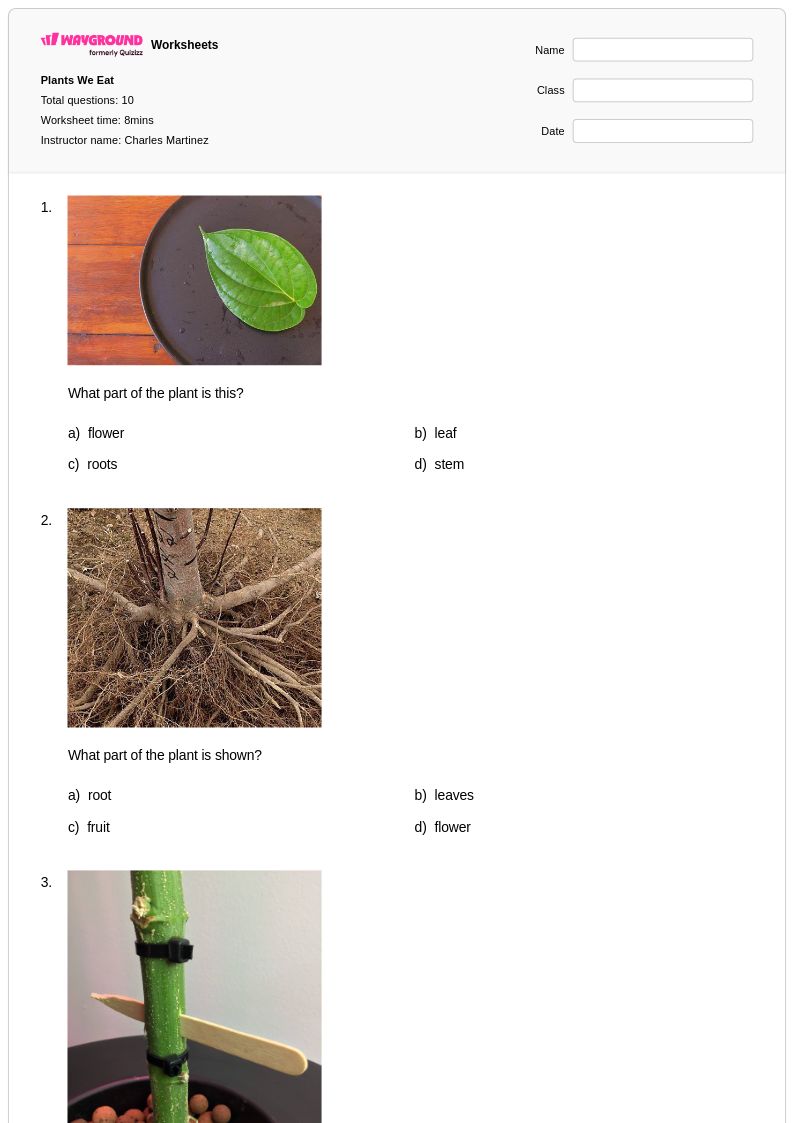
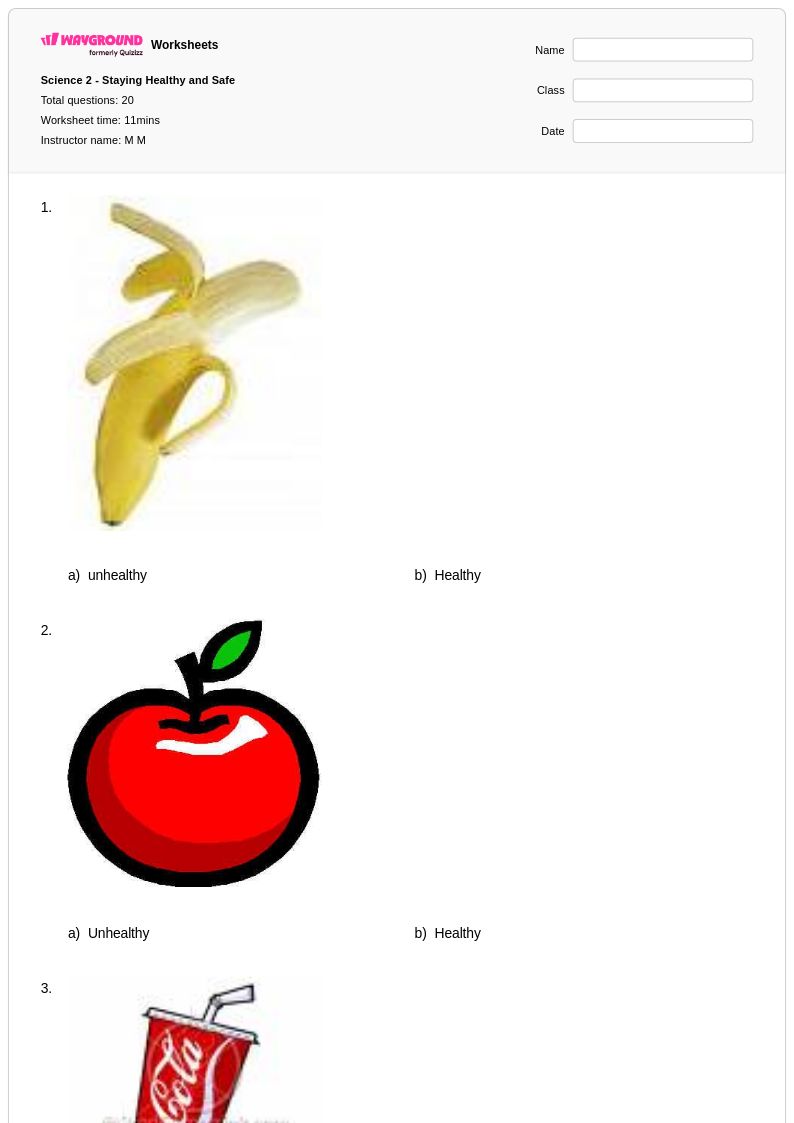
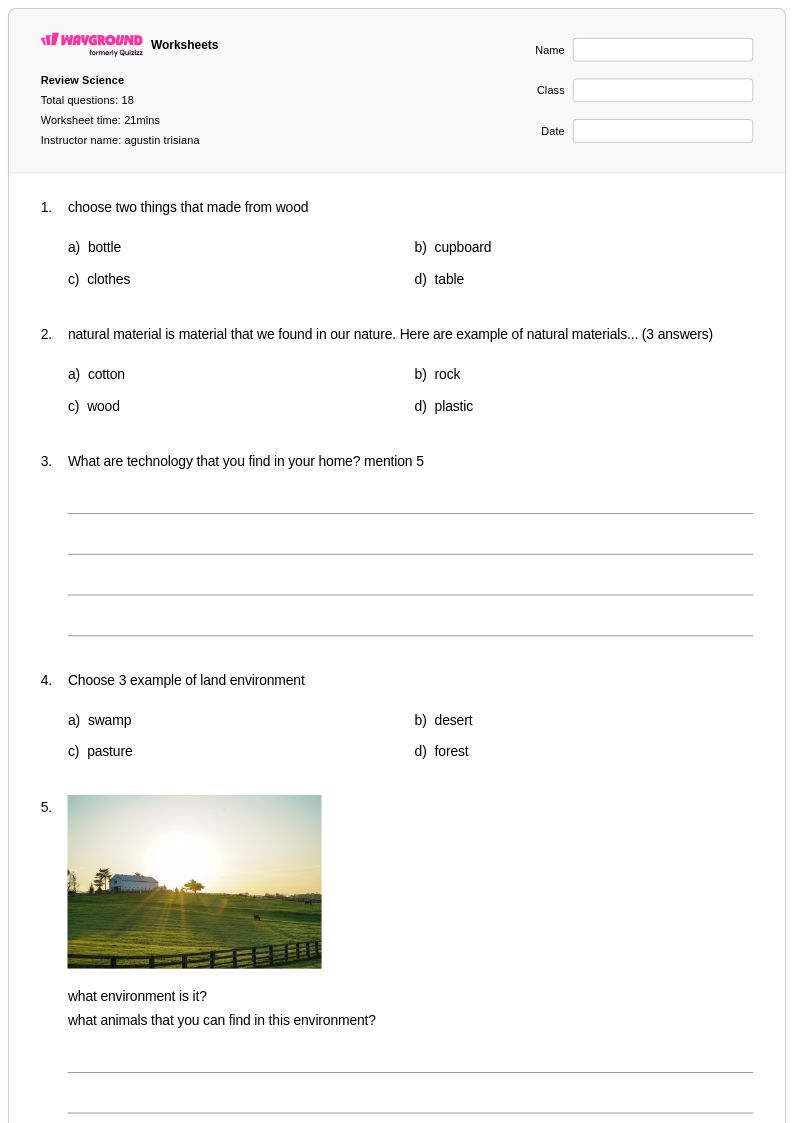
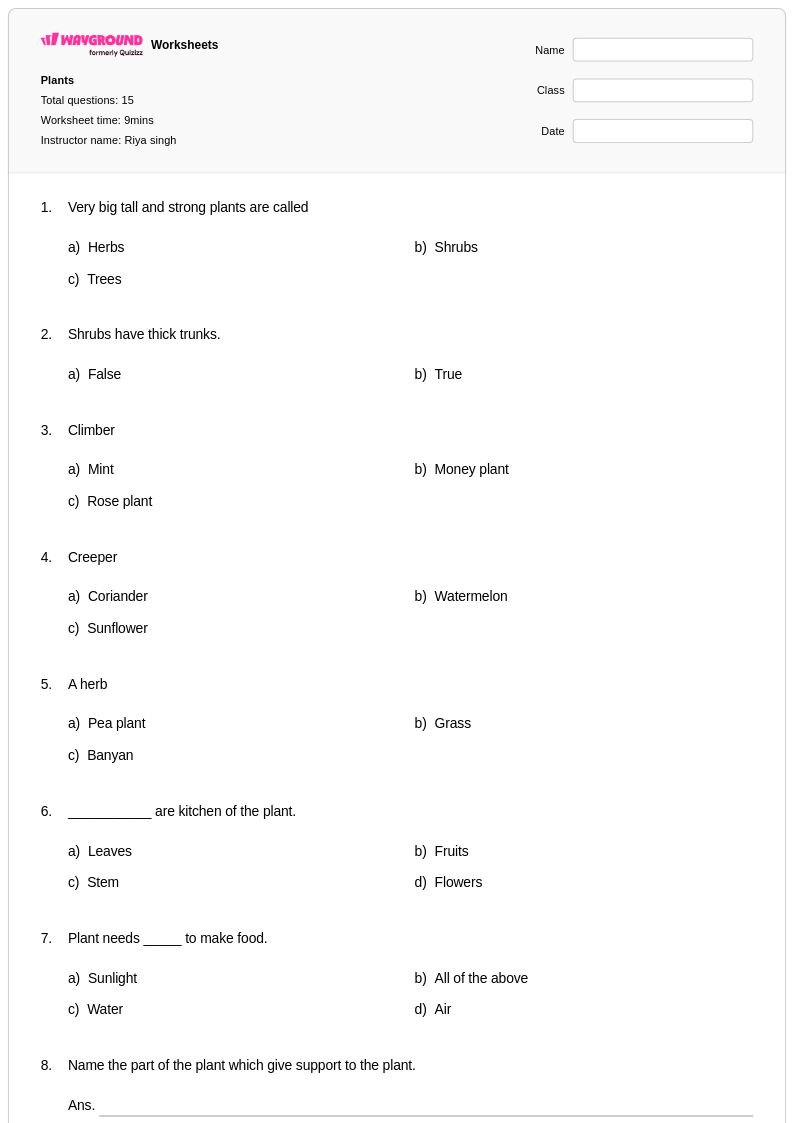
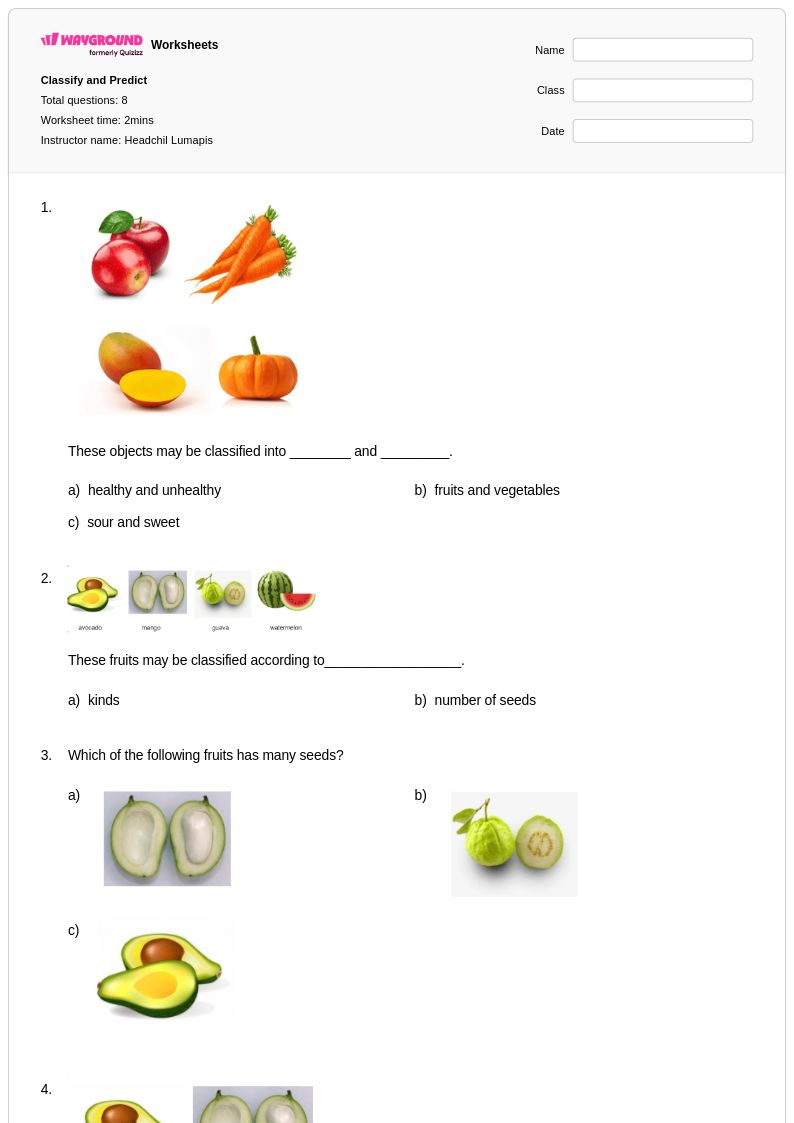
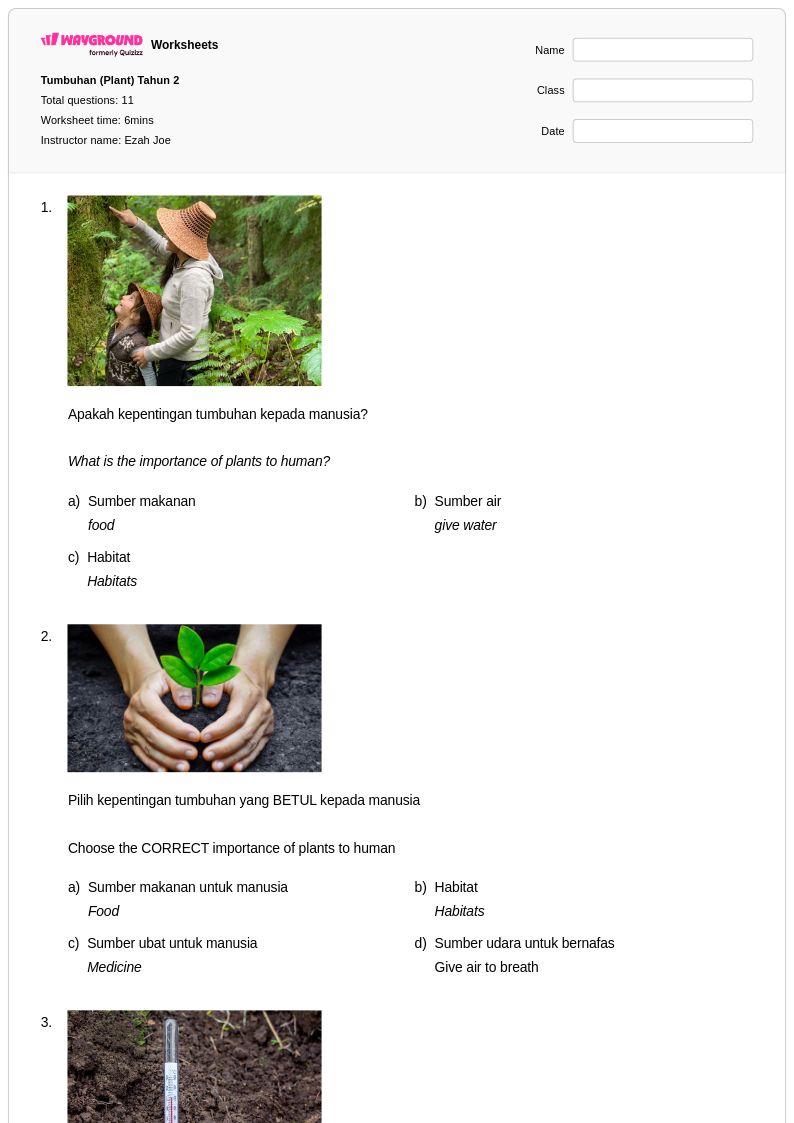
Year 2 Biology worksheets and printables help young students explore and identify different types of fruits through engaging practice problems, with free PDF downloads and answer keys available.
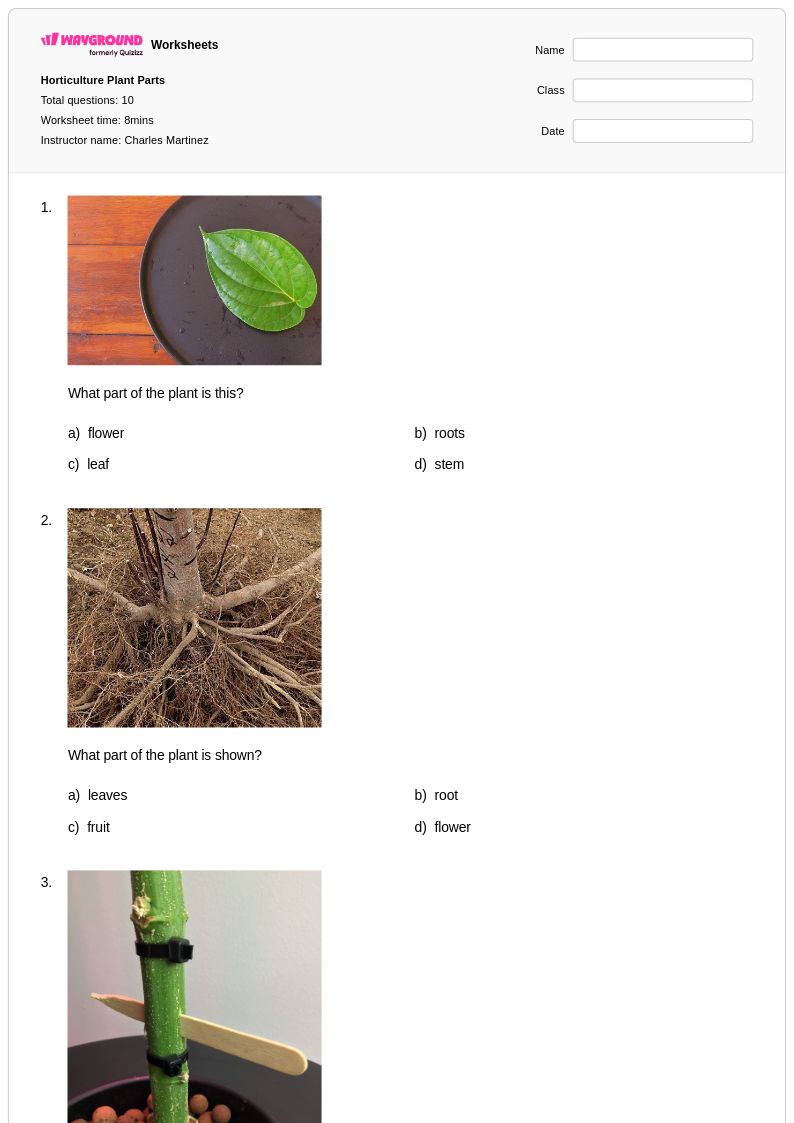
Fruits worksheets for Year 2 students available through Wayground (formerly Quizizz) provide young learners with engaging opportunities to explore the botanical world around them while developing foundational scientific observation and classification skills. These carefully designed educational resources help second-grade students identify different types of fruits, understand their basic characteristics, and recognize the role fruits play in plant life cycles and human nutrition. The worksheets strengthen critical thinking abilities through hands-on practice problems that encourage students to compare and contrast various fruits based on size, color, texture, and taste, while comprehensive answer keys allow for immediate feedback and self-assessment. Teachers can access these free printable materials in convenient pdf format, making them ideal for both classroom instruction and take-home assignments that reinforce essential biology concepts.
Wayground (formerly Quizizz) empowers educators with an extensive collection of millions of teacher-created fruit-focused worksheets specifically tailored for Year 2 biology instruction, featuring robust search and filtering capabilities that allow quick identification of materials aligned with specific learning standards and curriculum requirements. The platform's sophisticated differentiation tools enable teachers to customize worksheet difficulty levels and content focus areas, ensuring that every student receives appropriately challenging material whether they need additional practice with basic fruit identification or are ready for more advanced concepts about plant reproduction and seed dispersal. These versatile resources are available in both printable and digital formats, providing flexibility for diverse classroom environments while supporting comprehensive lesson planning, targeted skill remediation, academic enrichment activities, and systematic practice of scientific vocabulary and concepts related to fruits and plant biology.
FAQs
How do I teach fruit classification to students?
Start by distinguishing between botanical and culinary definitions of fruit, since students often conflate the two. From there, introduce the major classification categories: simple, aggregate, and multiple fruits, followed by the dry versus fleshy distinction. Using real specimens or labeled diagrams alongside direct instruction helps students connect vocabulary to observable structures before applying those terms in practice problems.
What are the best exercises for students to practice identifying fruit types?
Labeling diagrams of fruit anatomy, sorting activities that categorize fruits as simple, aggregate, or multiple, and matching exercises connecting fruit types to their seed dispersal mechanisms are all high-value practice formats. These exercises reinforce both scientific vocabulary and conceptual understanding of how fruit structure relates to plant reproduction. Worksheets that move from identification to short-answer explanation push students toward deeper botanical reasoning.
What misconceptions do students commonly have about fruits in plant biology?
The most persistent misconception is that 'fruit' means the same thing in everyday language as it does in botany — students are often surprised that tomatoes, cucumbers, and pea pods are botanical fruits. Students also frequently confuse the ovary wall with the seed, misunderstanding which part of the fruit develops from which floral structure. Targeted practice that traces fruit development from pollination through fertilization to mature fruit structure directly addresses these gaps.
How do fruits function in plant reproduction, and how do I explain this to students?
Fruits develop from the fertilized ovary of a flower and serve as the primary vehicle for seed dispersal, which is what makes them central to plant reproduction cycles. Teaching students to connect fruit structure to dispersal strategy — fleshy fruits attracting animals, winged fruits relying on wind, hooked fruits attaching to fur — makes the evolutionary logic concrete and memorable. Framing fruits as adaptations rather than just food sources shifts students from passive recognition to biological reasoning.
How can I use Wayground's fruits worksheets in my classroom?
Wayground's fruits worksheets are available as printable PDFs for traditional classroom use and in digital formats for technology-integrated learning environments, so they work whether students are at desks or on devices. Teachers can also host the worksheets as a live quiz directly on Wayground, which adds an interactive layer to practice. Each worksheet includes a complete answer key, reducing prep time and making them ready to use for instruction, independent practice, or review.
How can I differentiate fruits worksheets for students at different ability levels?
For students who need additional support, Wayground offers accommodation tools including read-aloud functionality for text-heavy botanical content, reduced answer choices to lower cognitive load on identification questions, and extended time settings configurable per student. These accommodations can be assigned individually so that advanced students receive standard materials while others receive tailored support, with no disruption to the rest of the class. This makes it practical to run a single worksheet activity across a mixed-ability group without creating separate versions.