
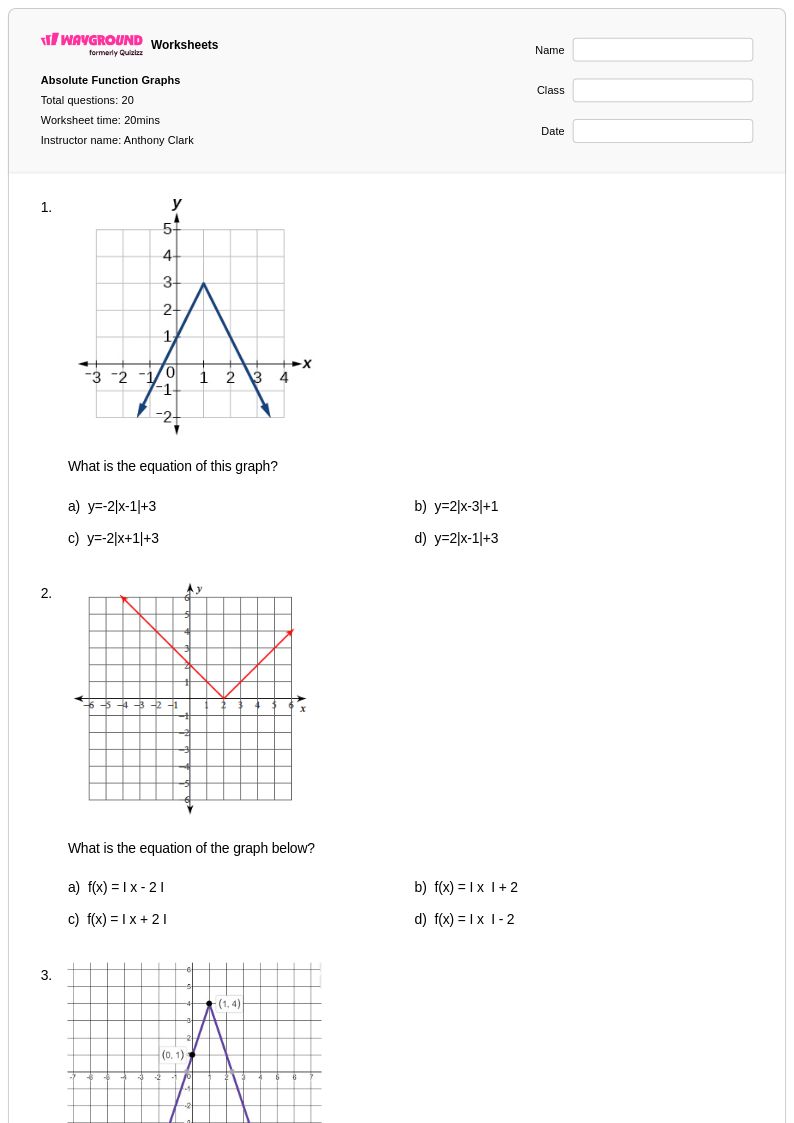
20 Q
10th - Uni
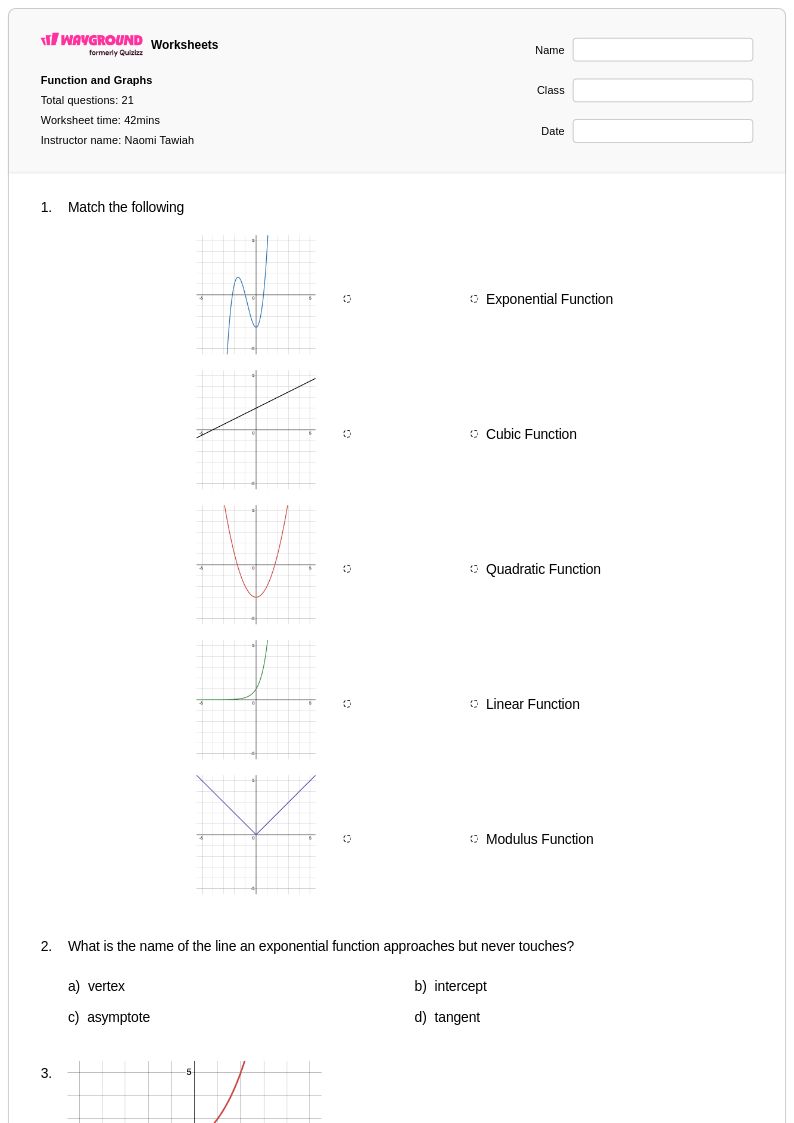
21 Q
9th - 12th
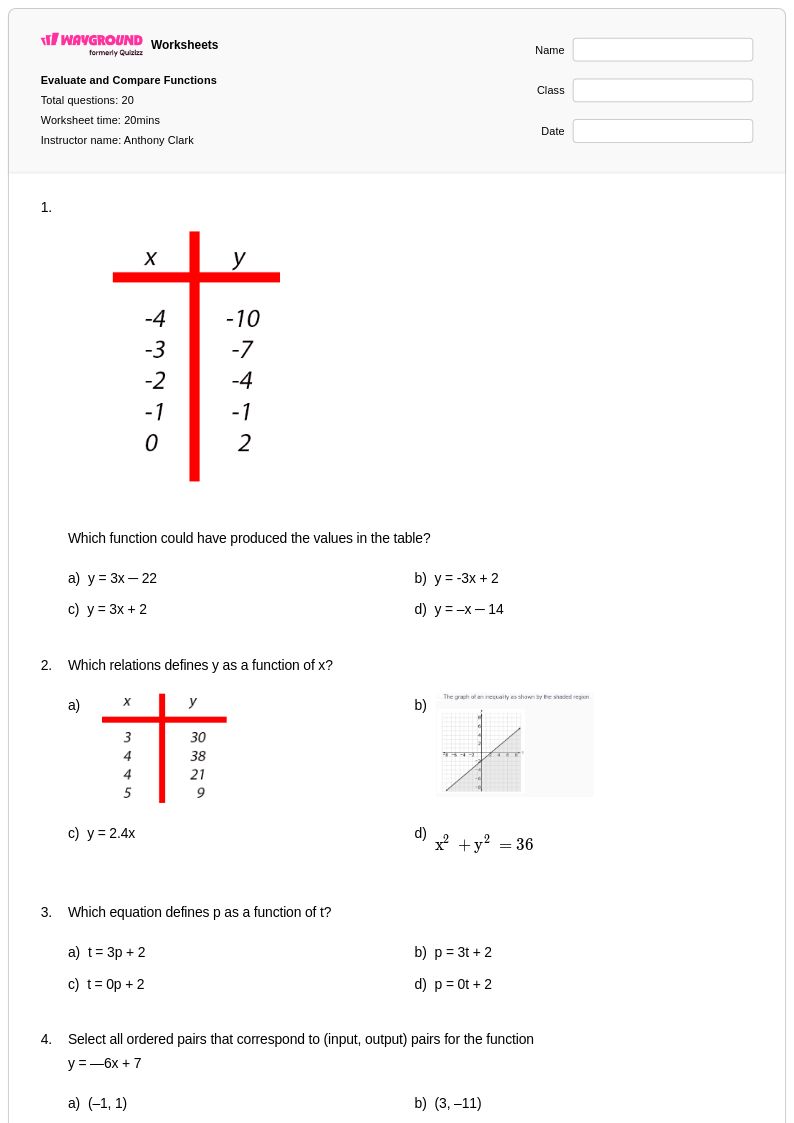
20 Q
8th - Uni
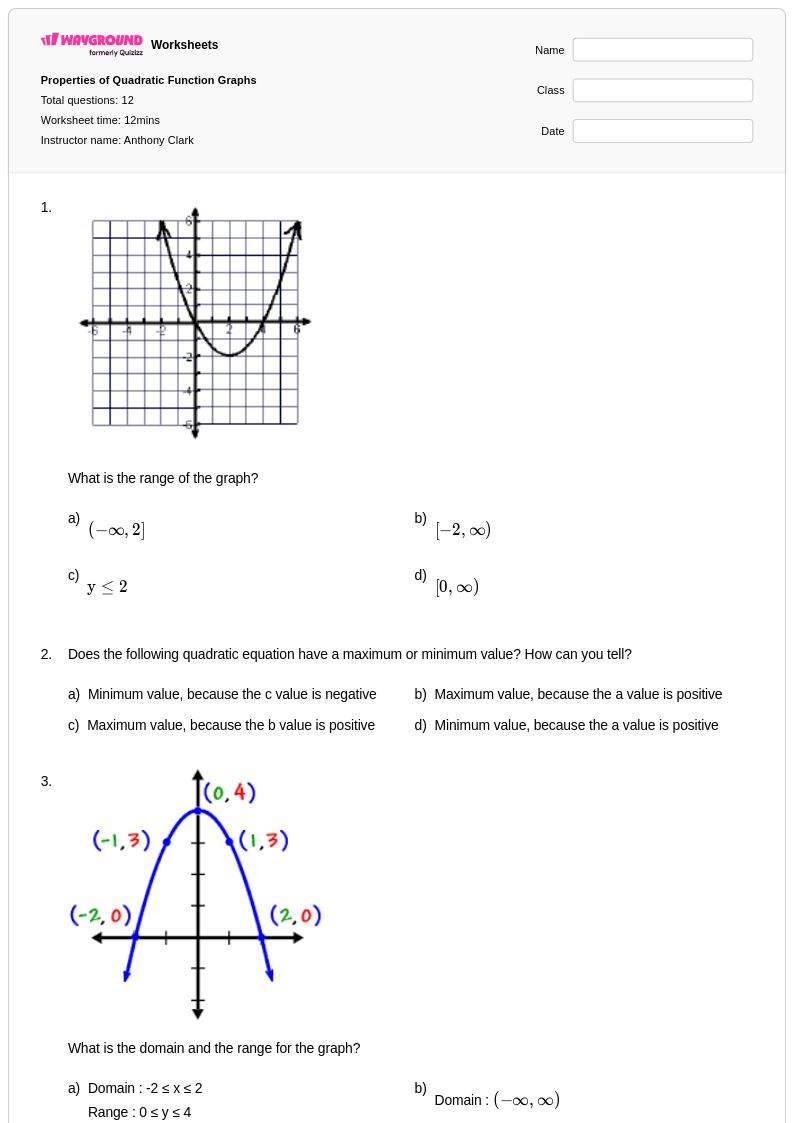
12 Q
9th - Uni
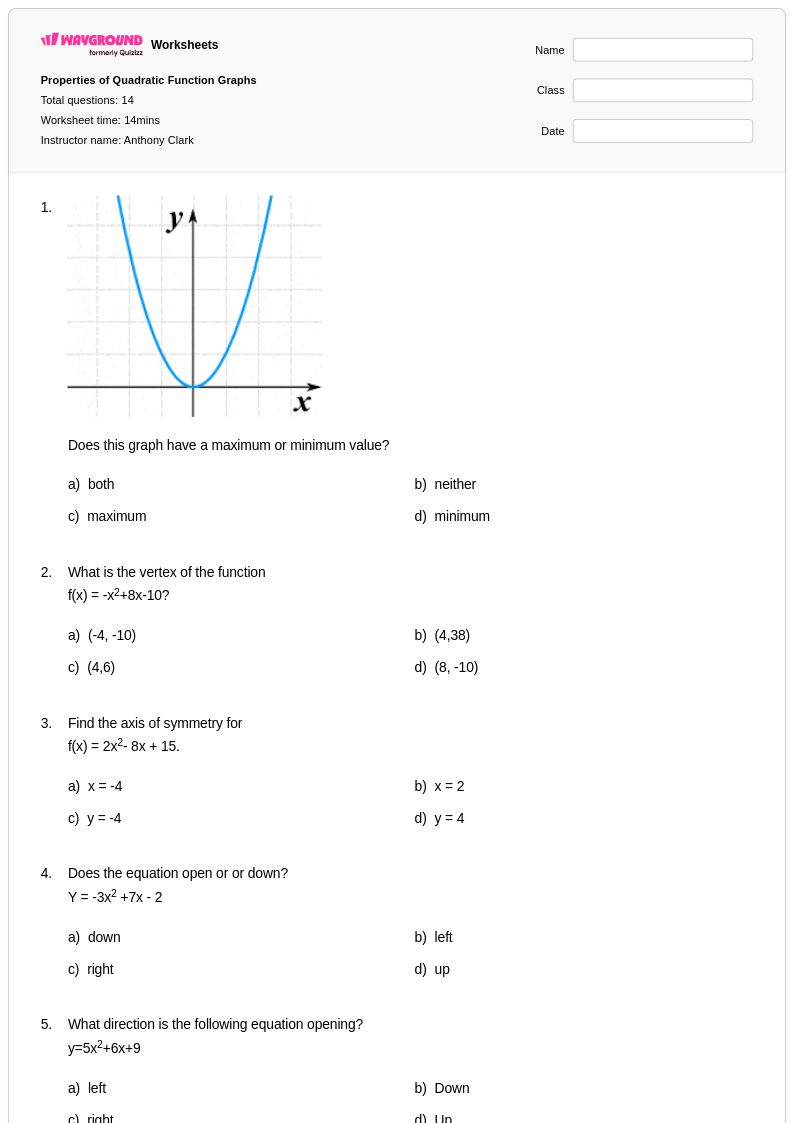
14 Q
9th - Uni
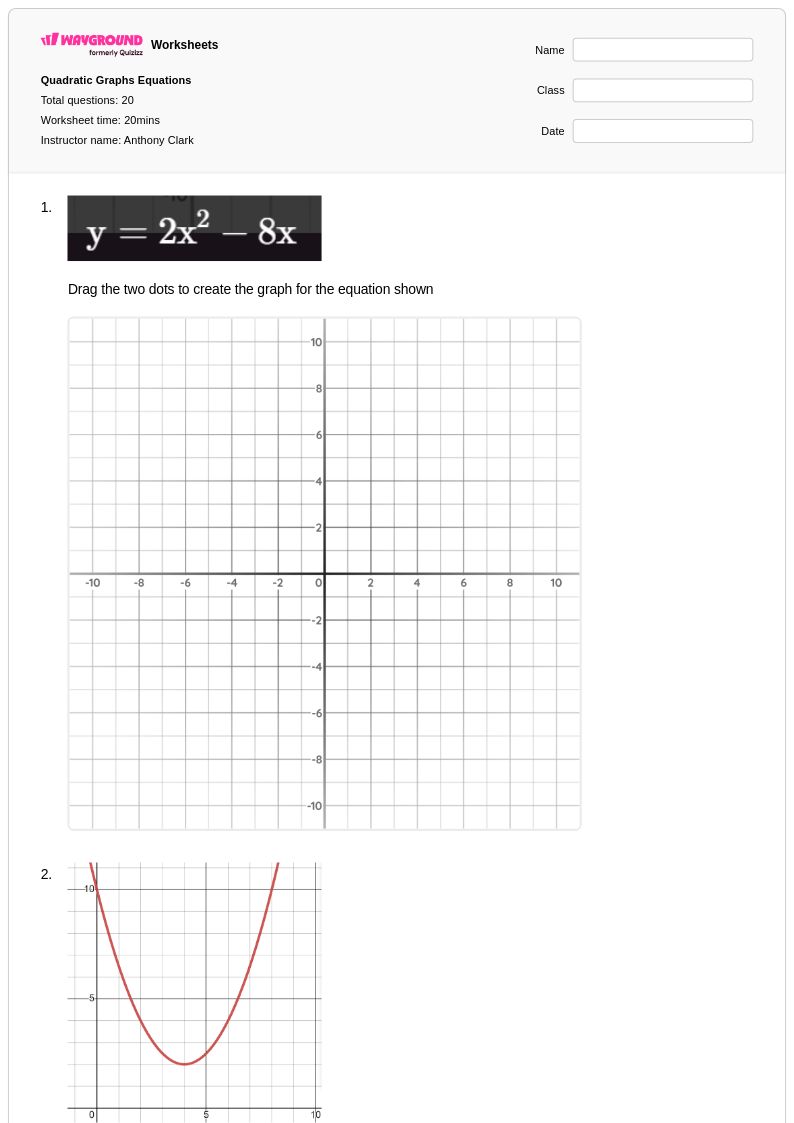
20 Q
9th - Uni

15 Q
11th
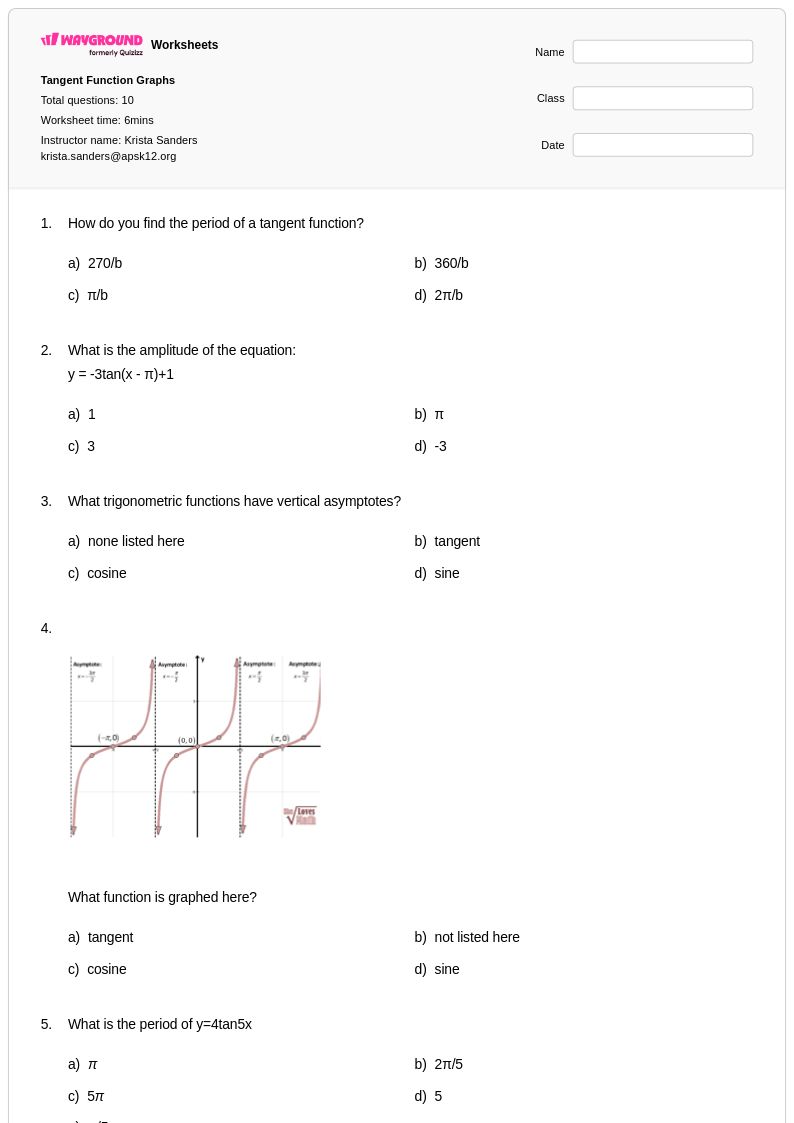
10 Q
10th - 12th
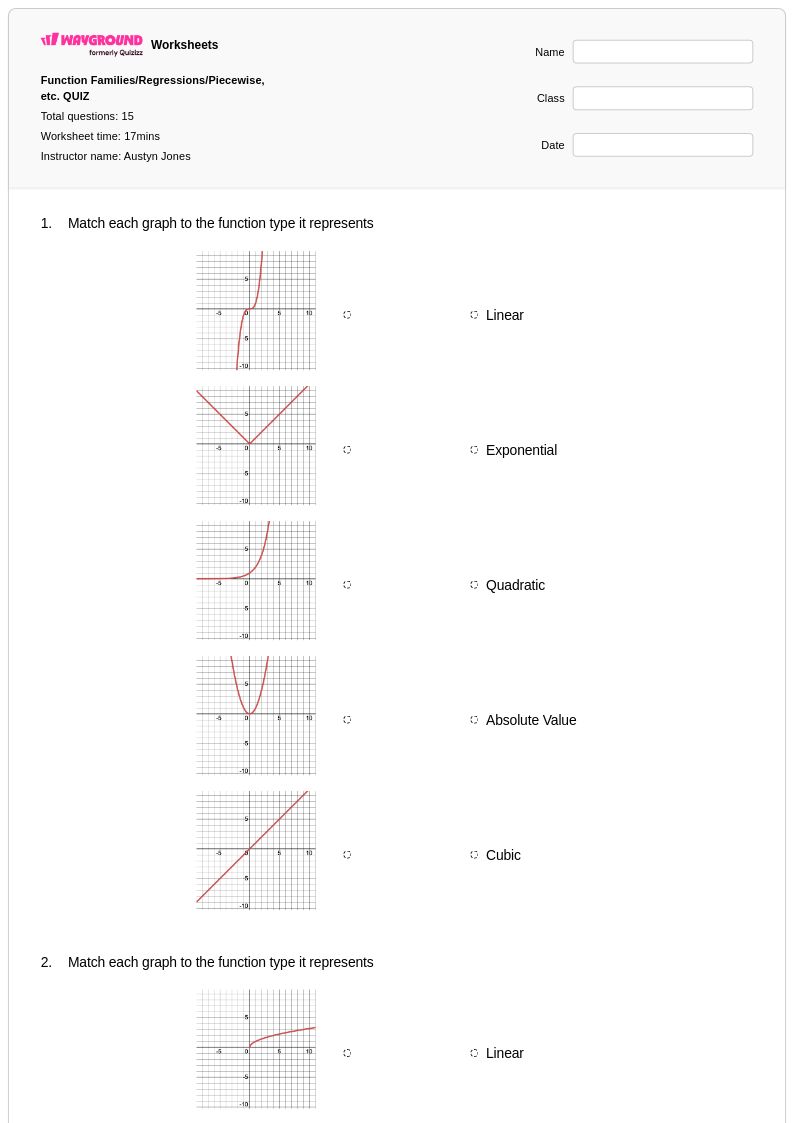
15 Q
9th - 12th
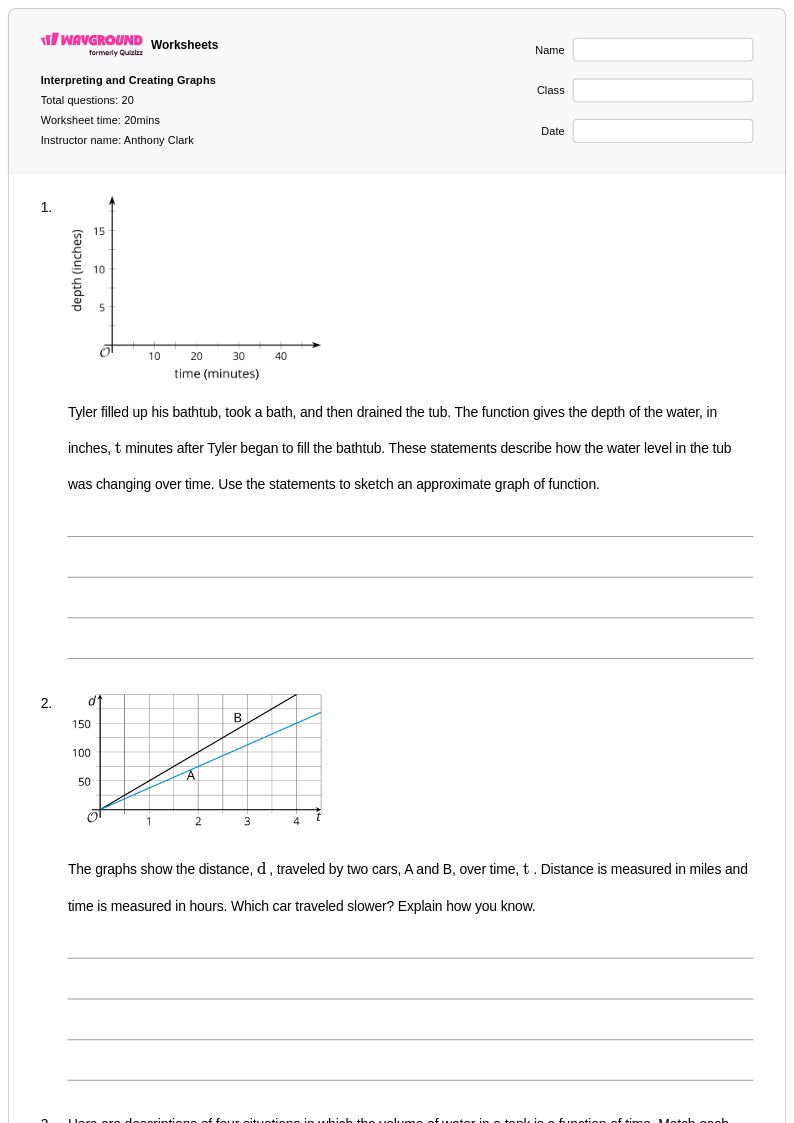
20 Q
6th - Uni
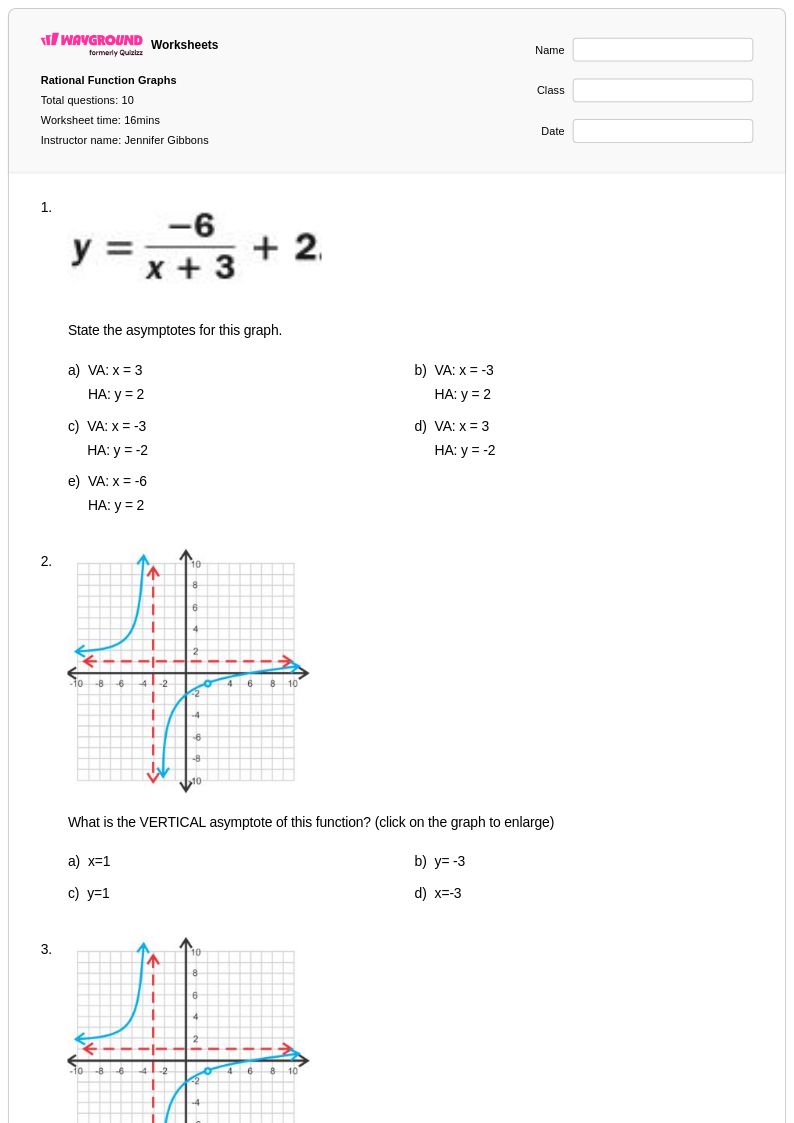
10 Q
11th
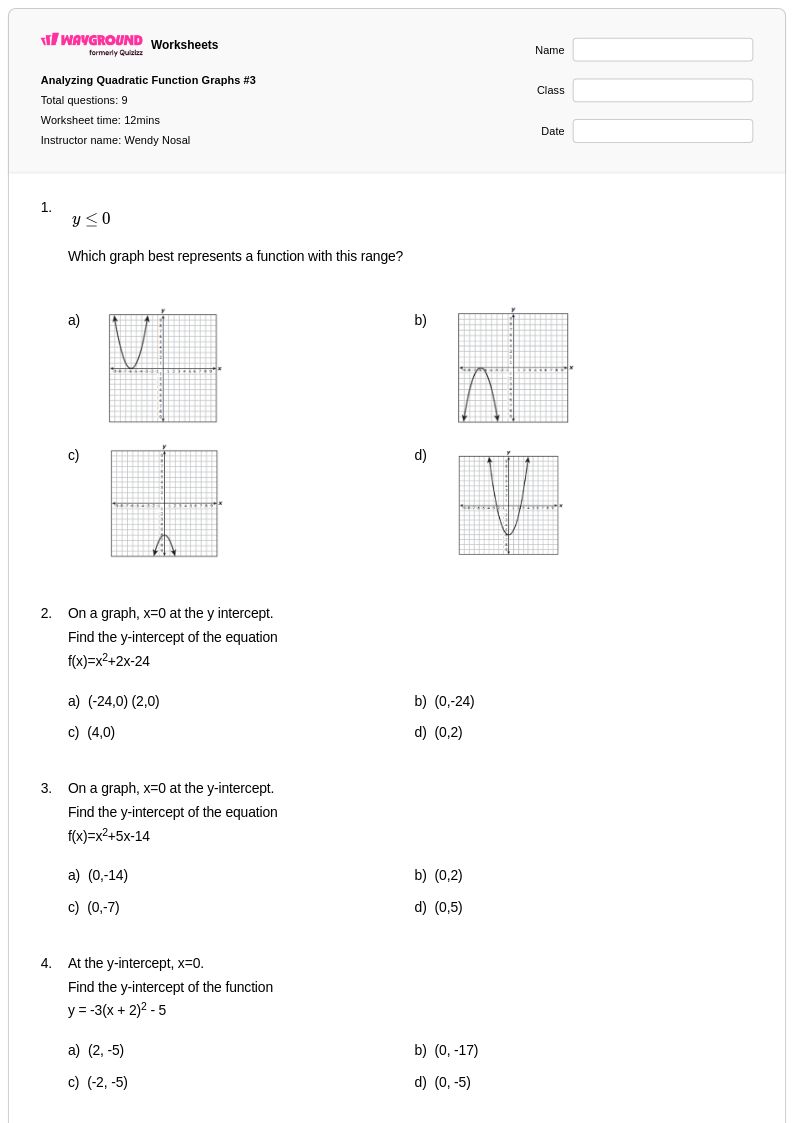
9 Q
10th - 12th
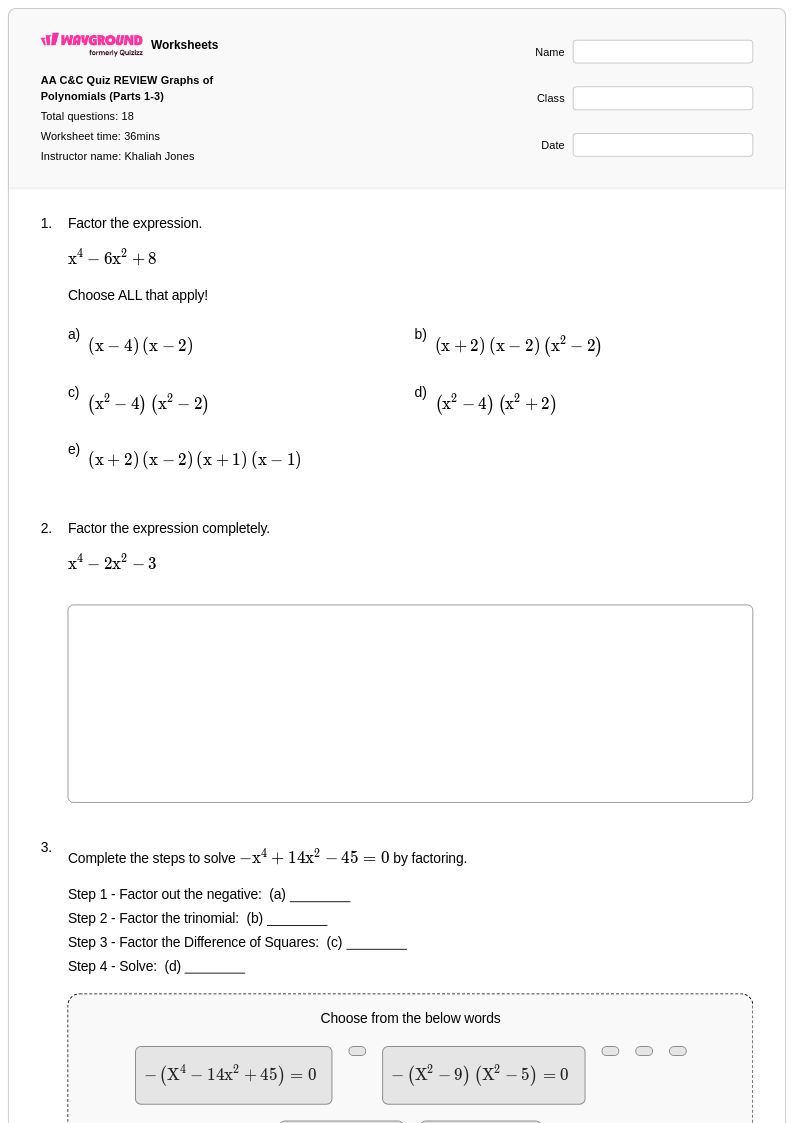
18 Q
11th
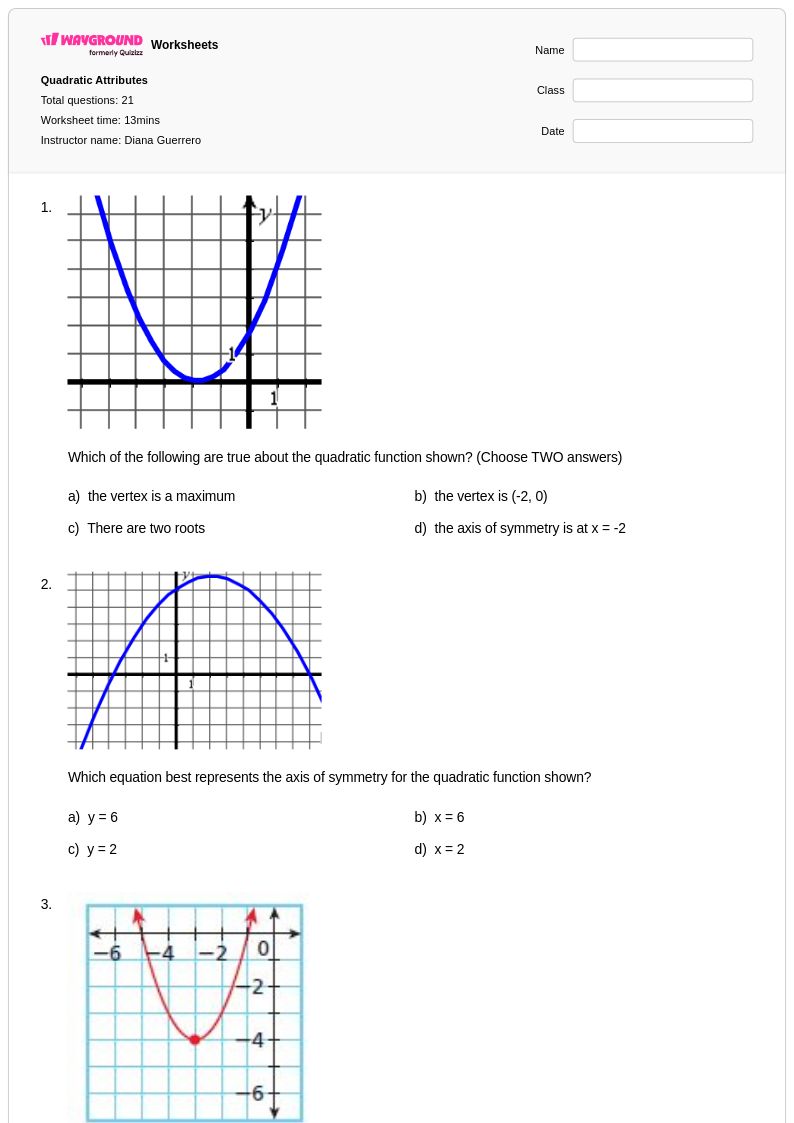
21 Q
9th - 12th
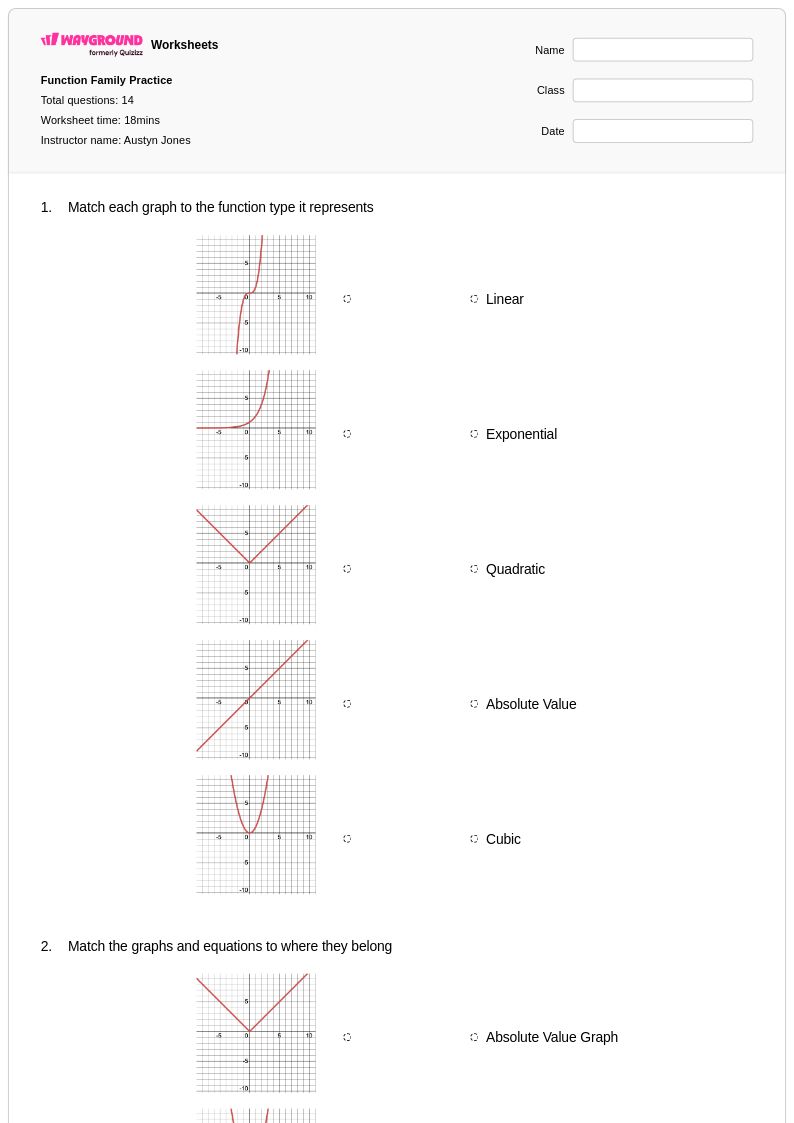
14 Q
9th - 12th
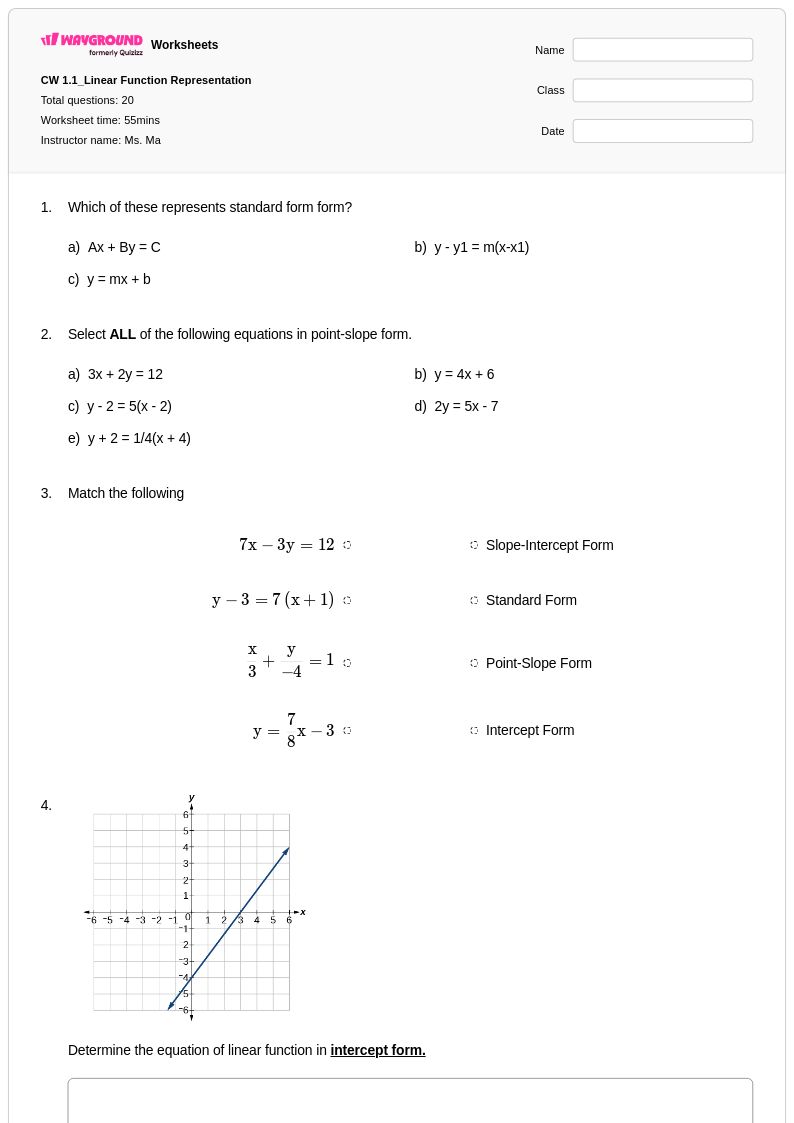
20 Q
9th - 12th
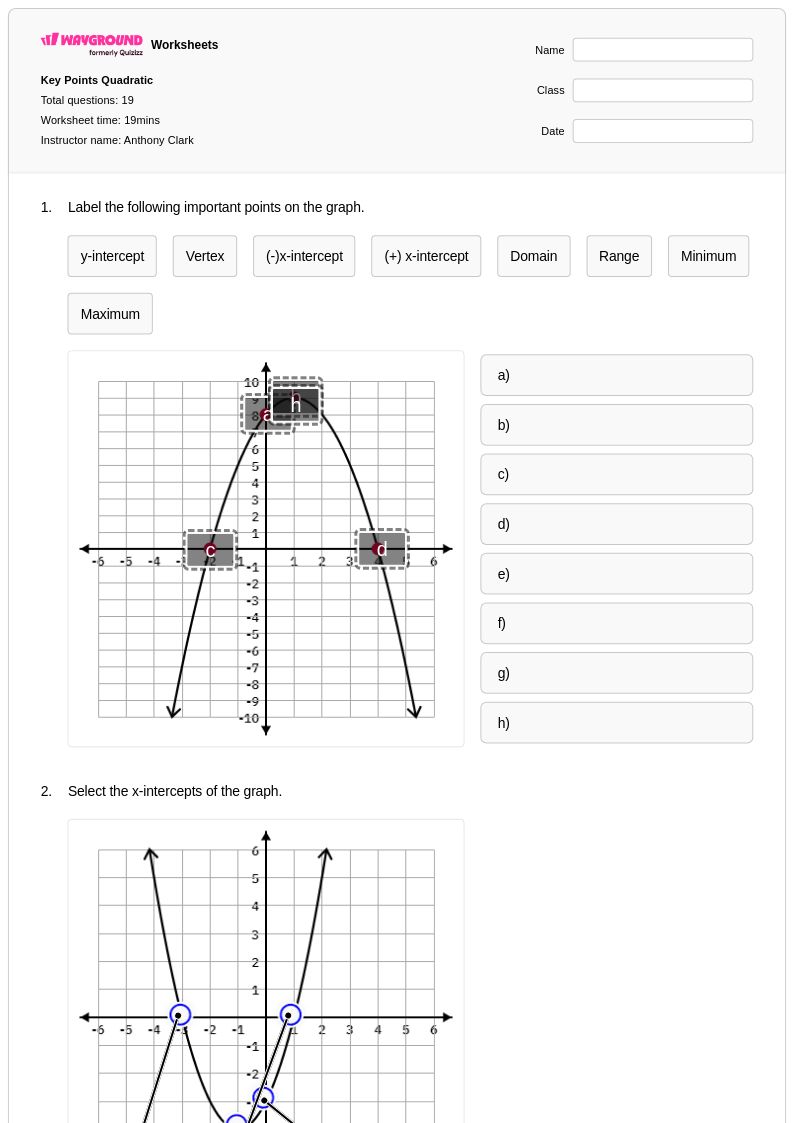
19 Q
9th - Uni
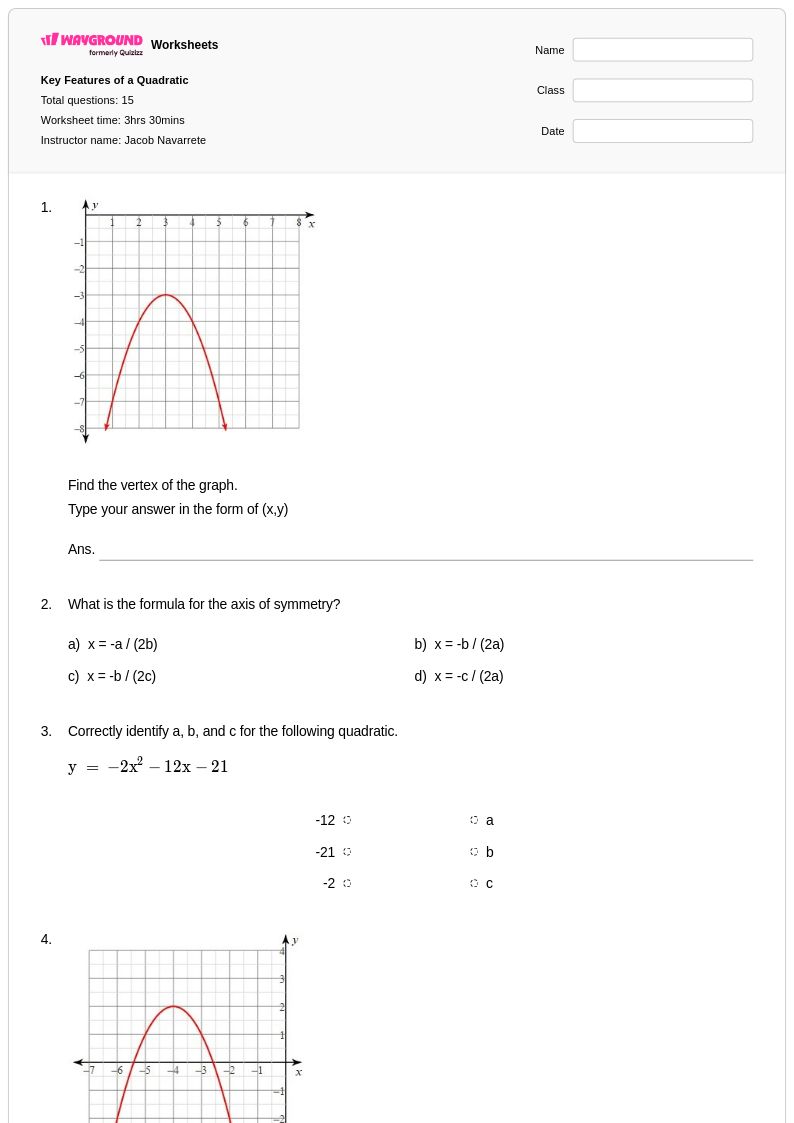
15 Q
9th - 12th
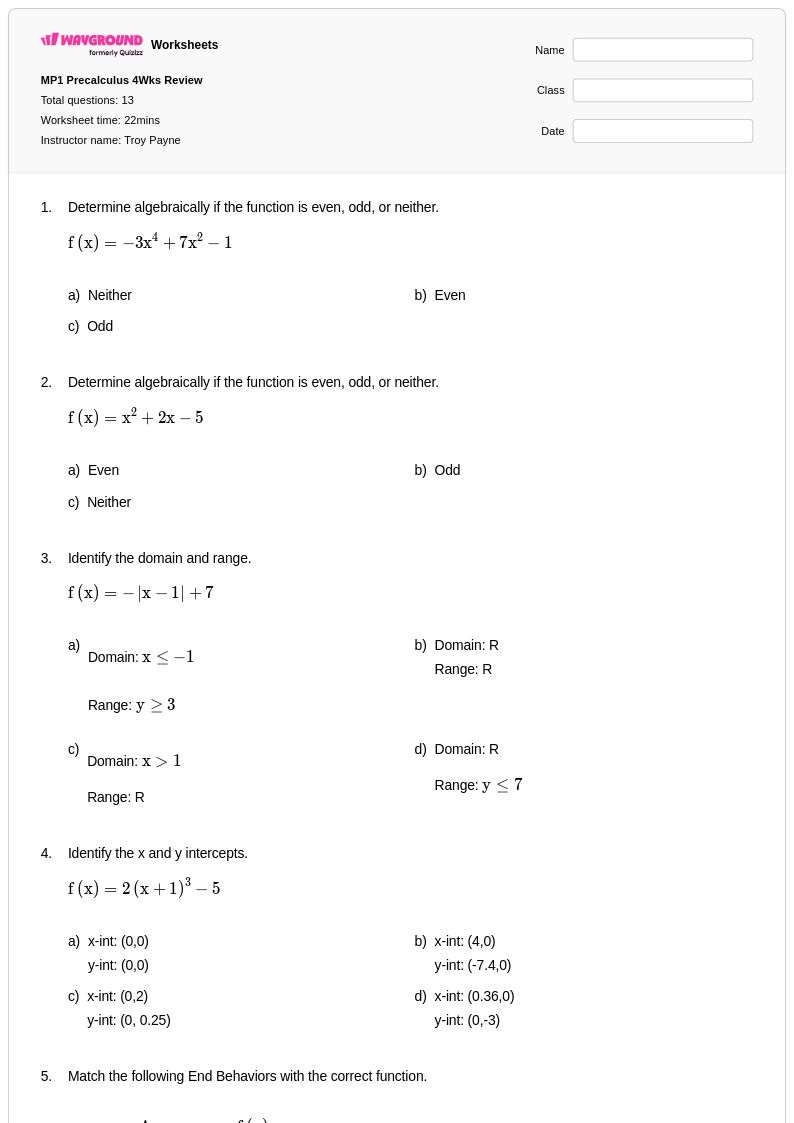
13 Q
11th
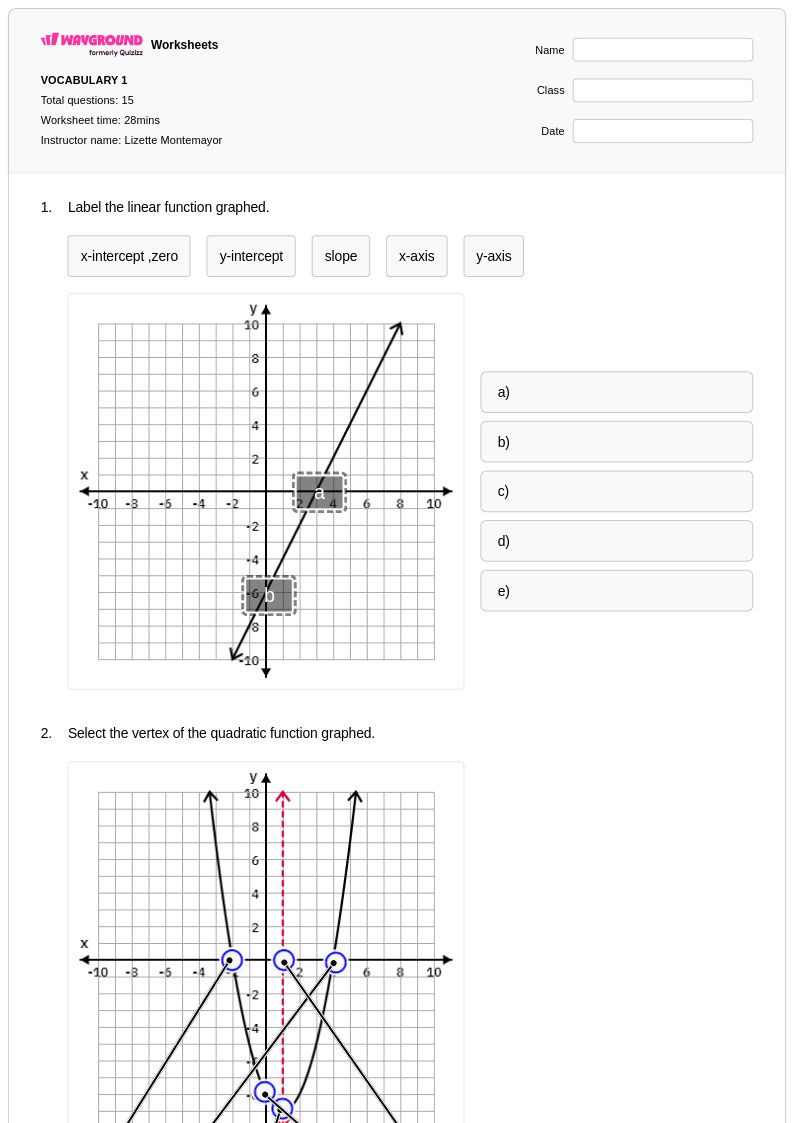
15 Q
9th - 12th
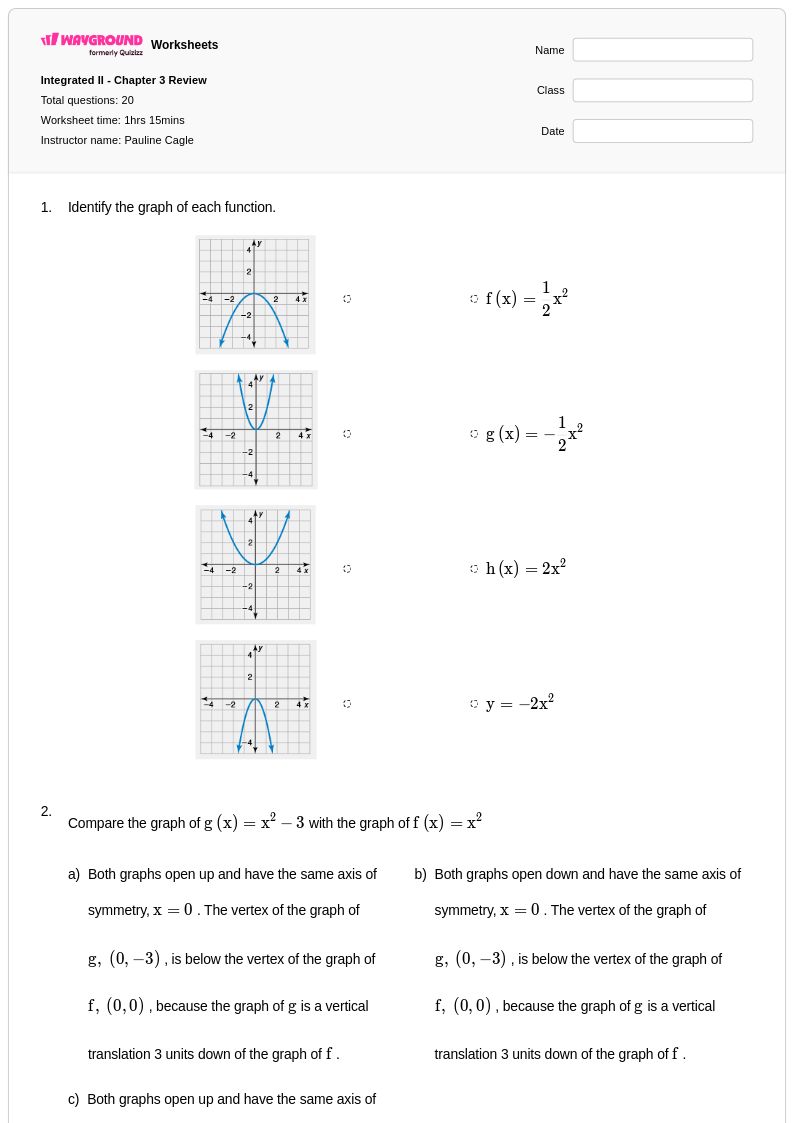
20 Q
9th - 12th
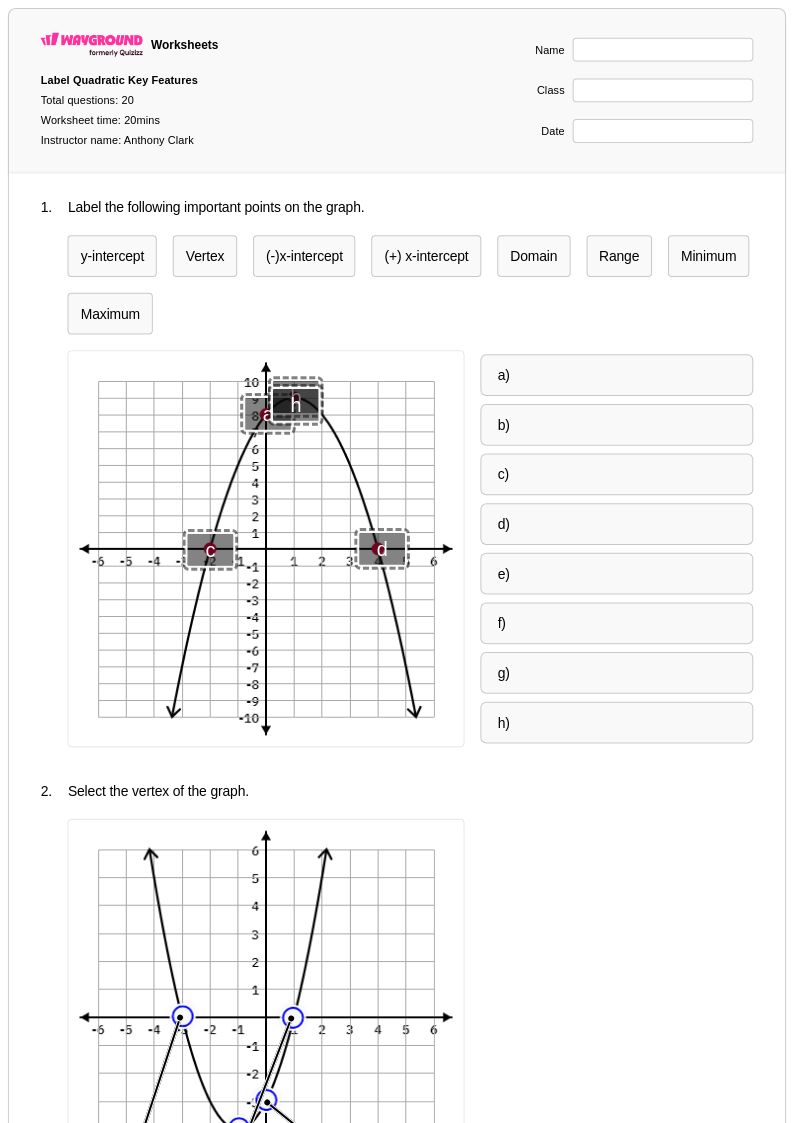
20 Q
9th - Uni
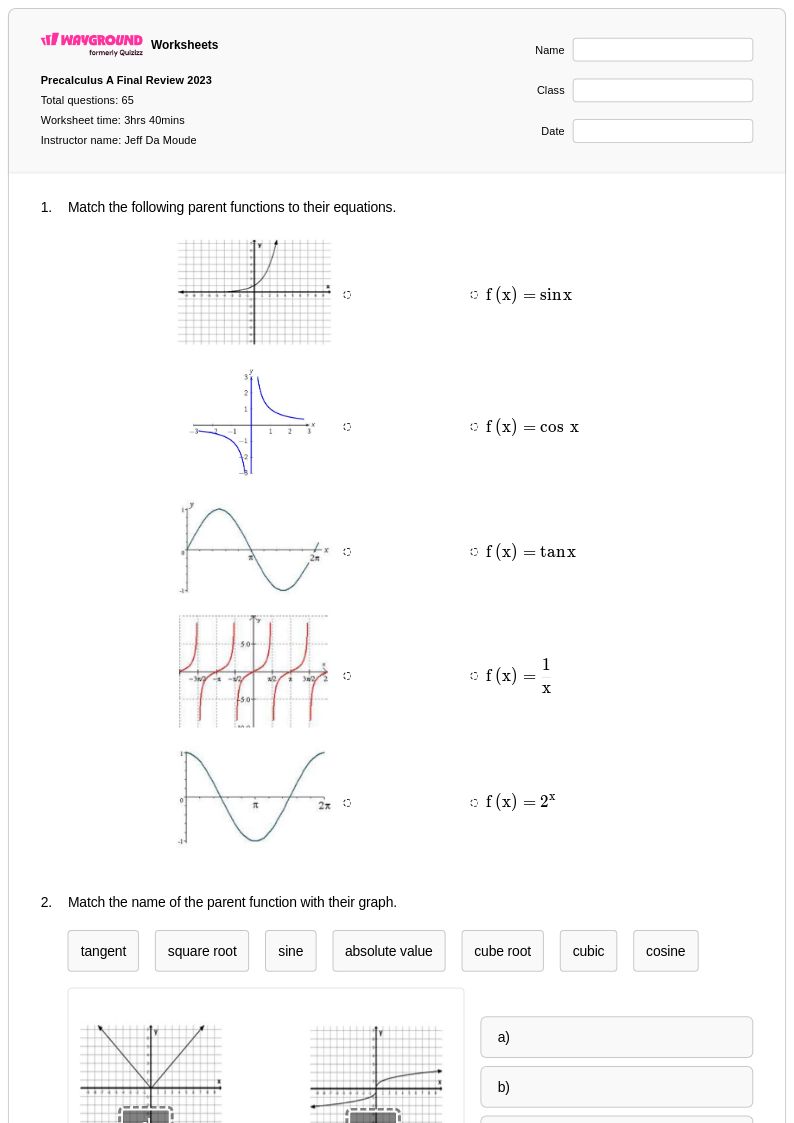
65 Q
9th - 12th
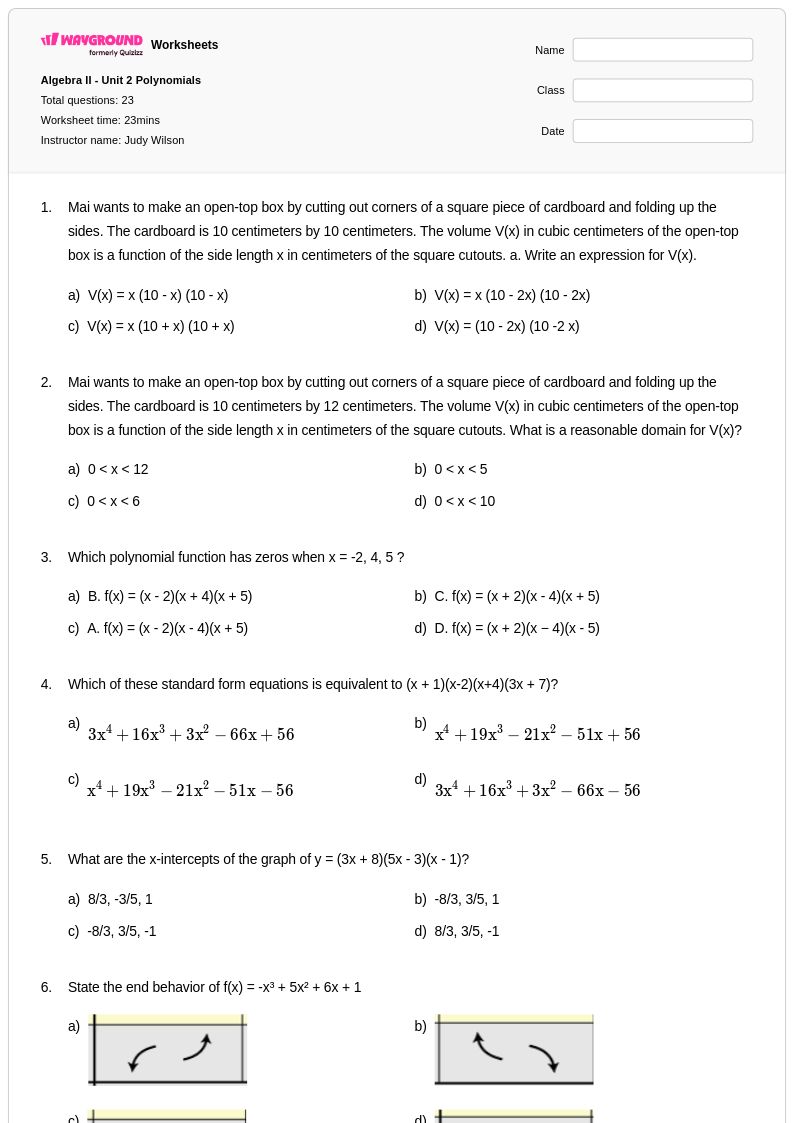
23 Q
11th
Explore Other Subject Worksheets for year 11
Explore printable Function Graphs worksheets for Year 11
Function graphs represent a cornerstone of Year 11 mathematics education, providing students with essential visual literacy skills needed to interpret and analyze mathematical relationships. Wayground's comprehensive collection of function graphs worksheets offers educators access to meticulously crafted practice problems that guide students through plotting linear, quadratic, exponential, and logarithmic functions while developing critical skills in domain and range identification, intercept analysis, and transformation recognition. These free printable resources include detailed answer keys that enable both independent study and structured classroom instruction, with pdf formats ensuring consistent formatting across different devices and printing scenarios. Students strengthen their ability to translate between algebraic expressions and visual representations through systematic practice with coordinate plane plotting, asymptote identification, and function behavior analysis.
Wayground's extensive library supports mathematics educators with millions of teacher-created resources specifically designed for function graphs instruction at the Year 11 level. The platform's robust search and filtering capabilities allow teachers to locate worksheets aligned with specific curriculum standards while accommodating diverse learning needs through differentiation tools that adjust complexity levels and problem types. These customizable resources are available in both printable pdf formats for traditional paper-based instruction and digital formats for technology-integrated classrooms, providing flexibility for lesson planning across various teaching environments. Teachers utilize these comprehensive collections for targeted skill practice, remediation of conceptual gaps, and enrichment activities that challenge advanced learners, while the standardized formatting and consistent mathematical notation ensure seamless integration into existing curriculum frameworks and assessment strategies.
FAQs
How should I introduce logarithmic function graphs?
What kinds of practice reinforce 11th-grade function graphing skills?
Where do 11th graders get stuck with advanced function graphs?
How can I use this worksheet for my 11th-grade math class?
What new function graph concepts are introduced in 11th grade?
What math courses use these Grade 11 function graph worksheets?