
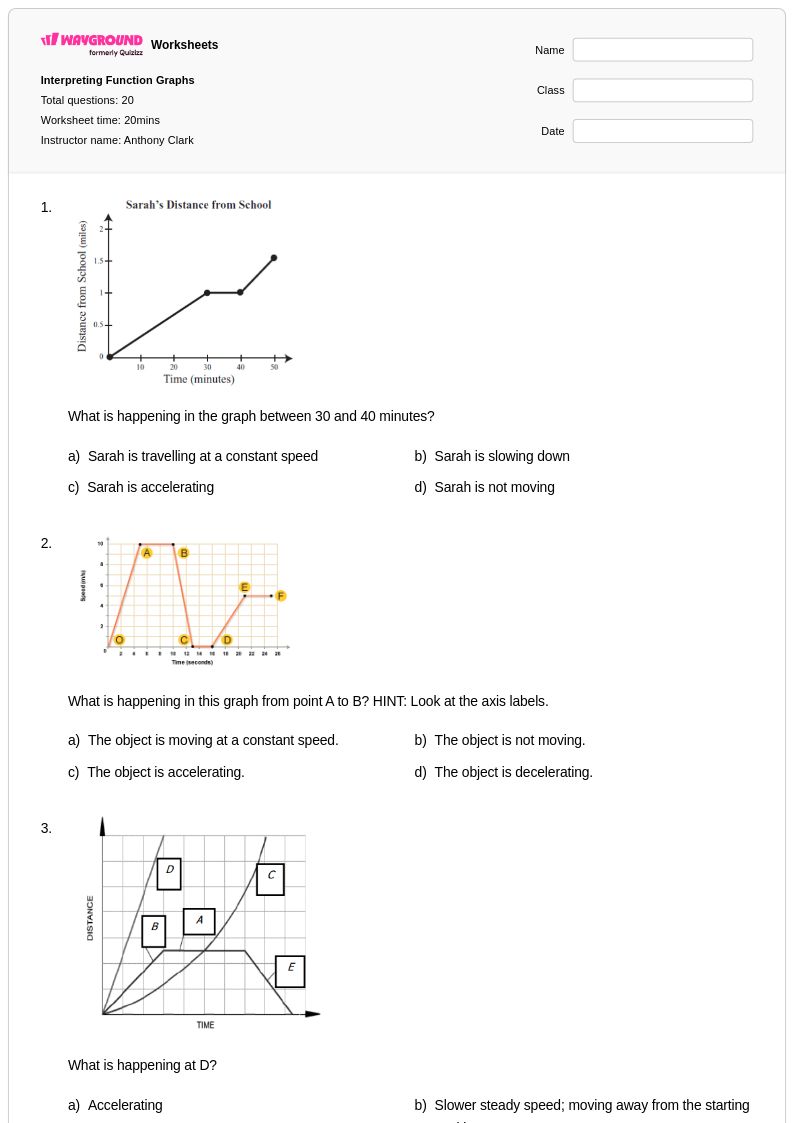
20 Q
8th - Uni
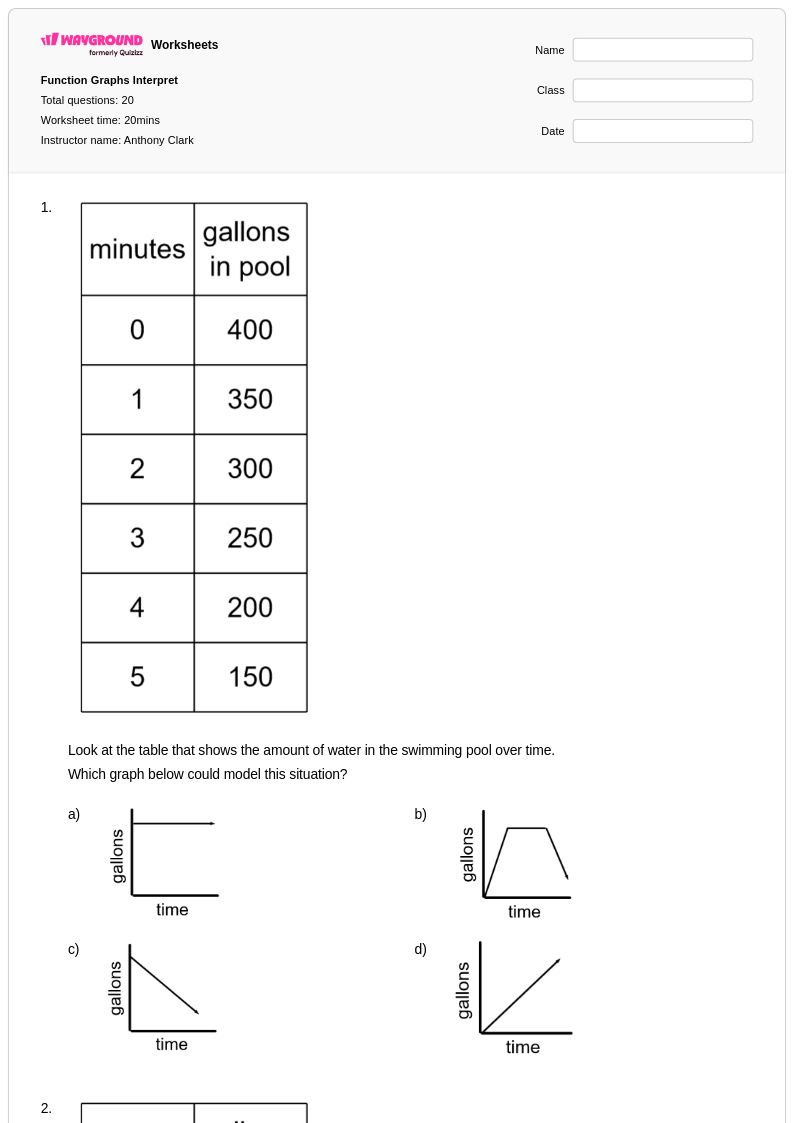
20 Q
8th - Uni
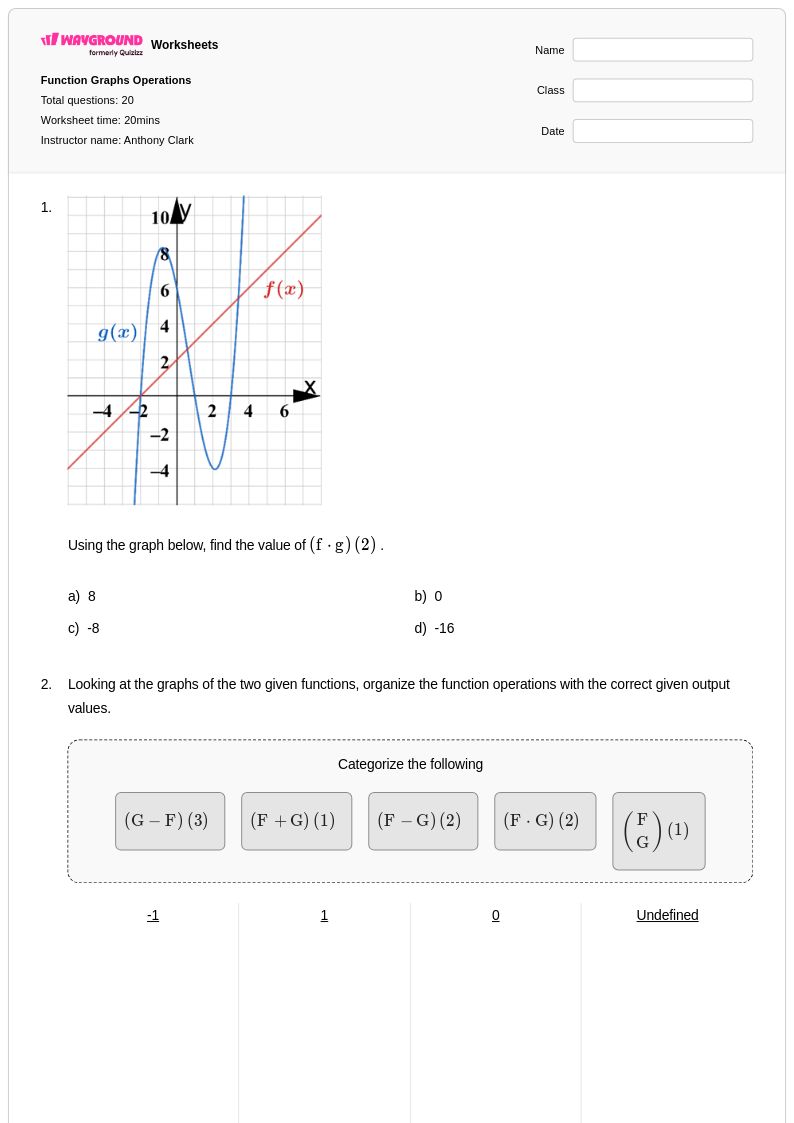
20 Q
11th - Uni
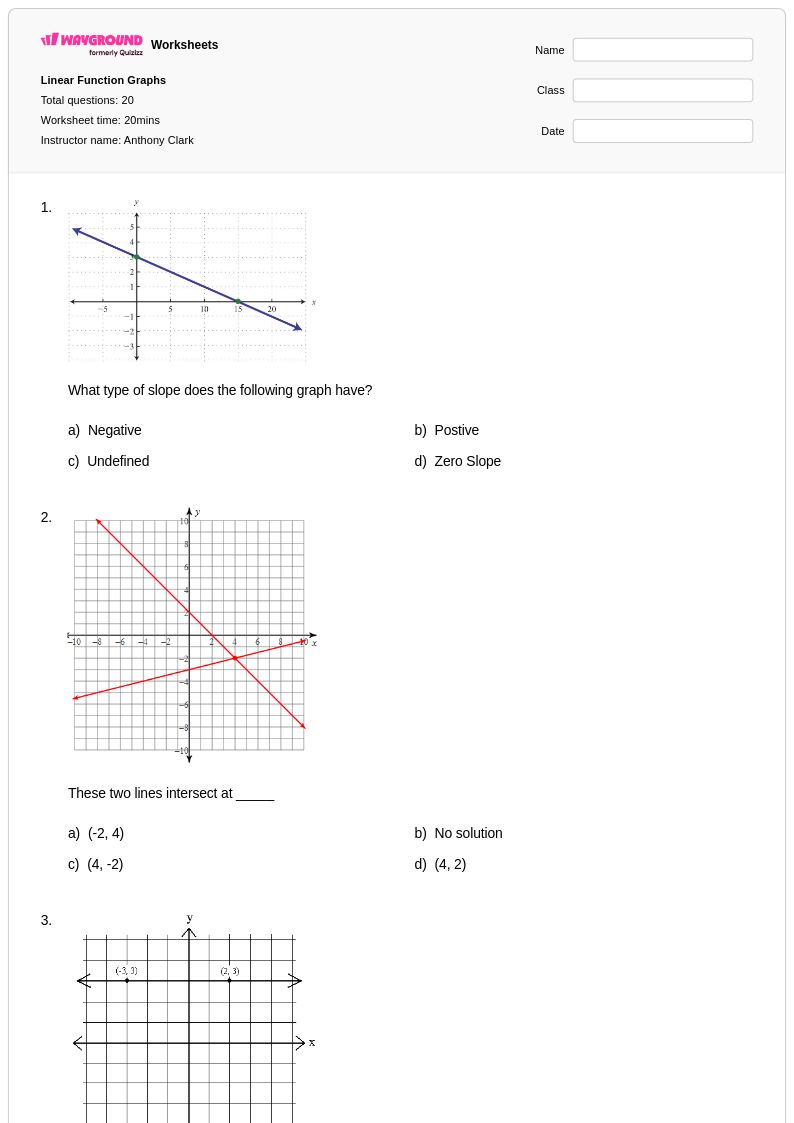
20 Q
9th - Uni
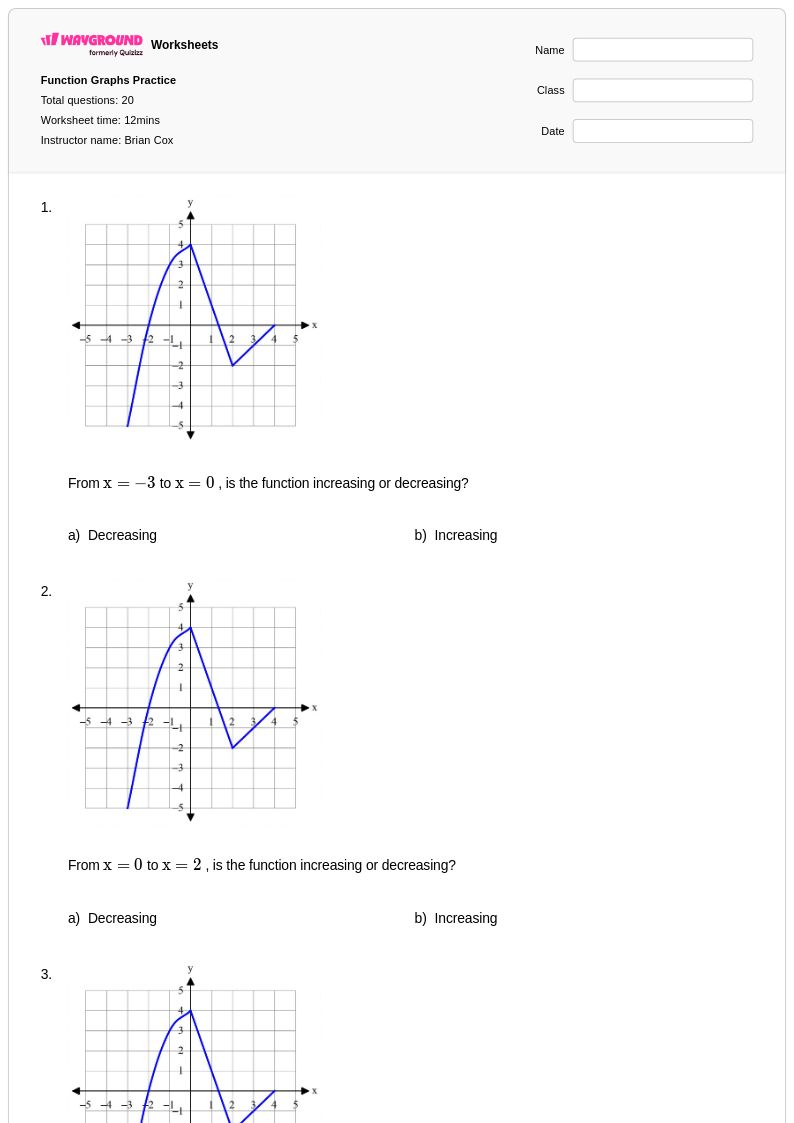
20 Q
8th
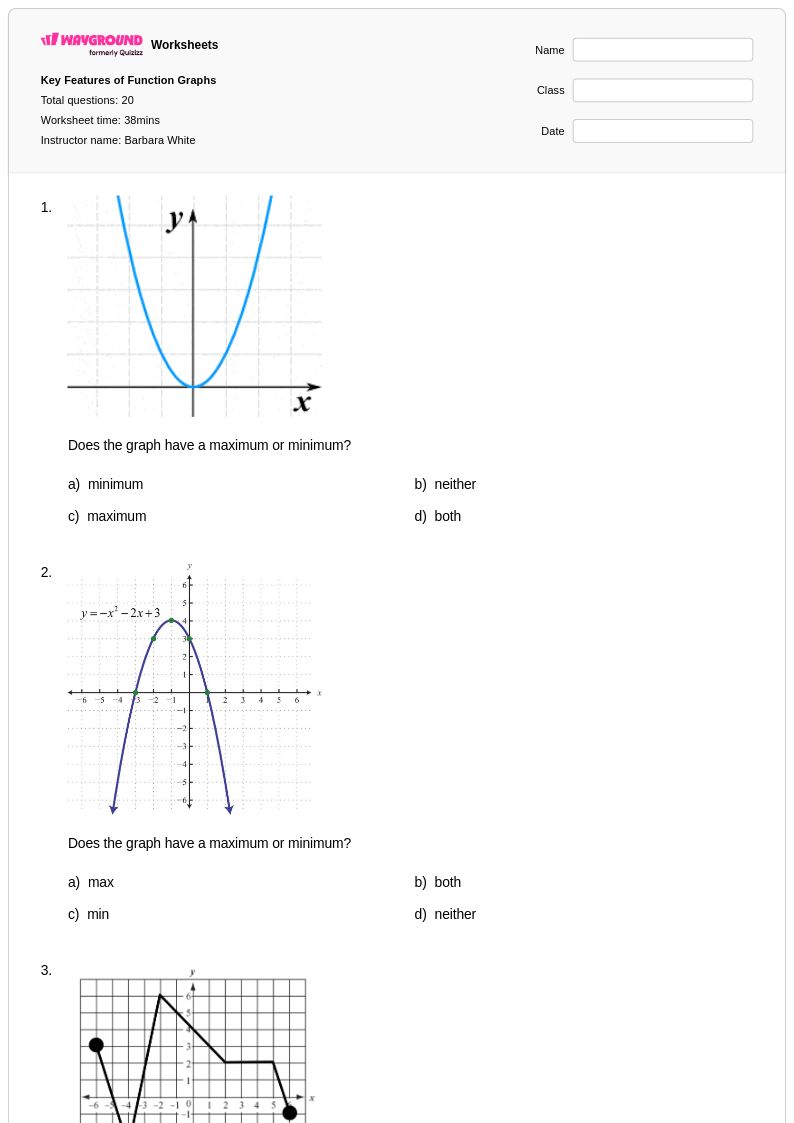
20 Q
9th

10 Q
12th
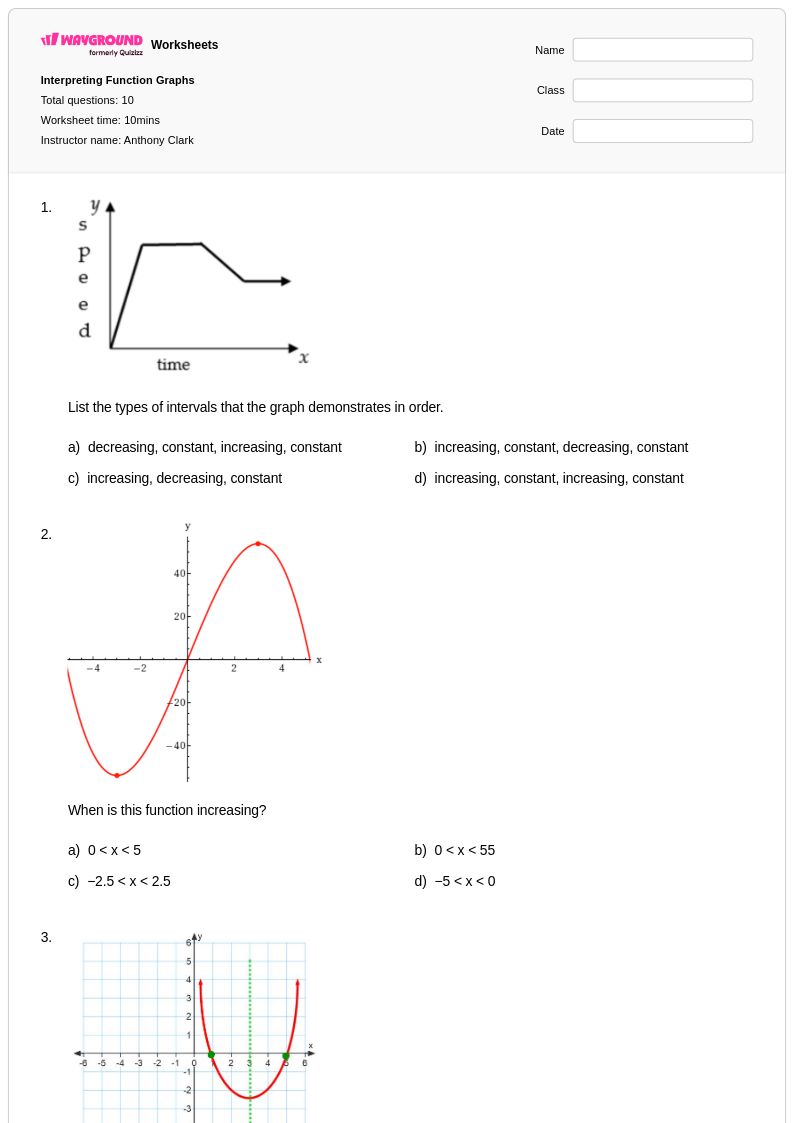
10 Q
9th - Uni
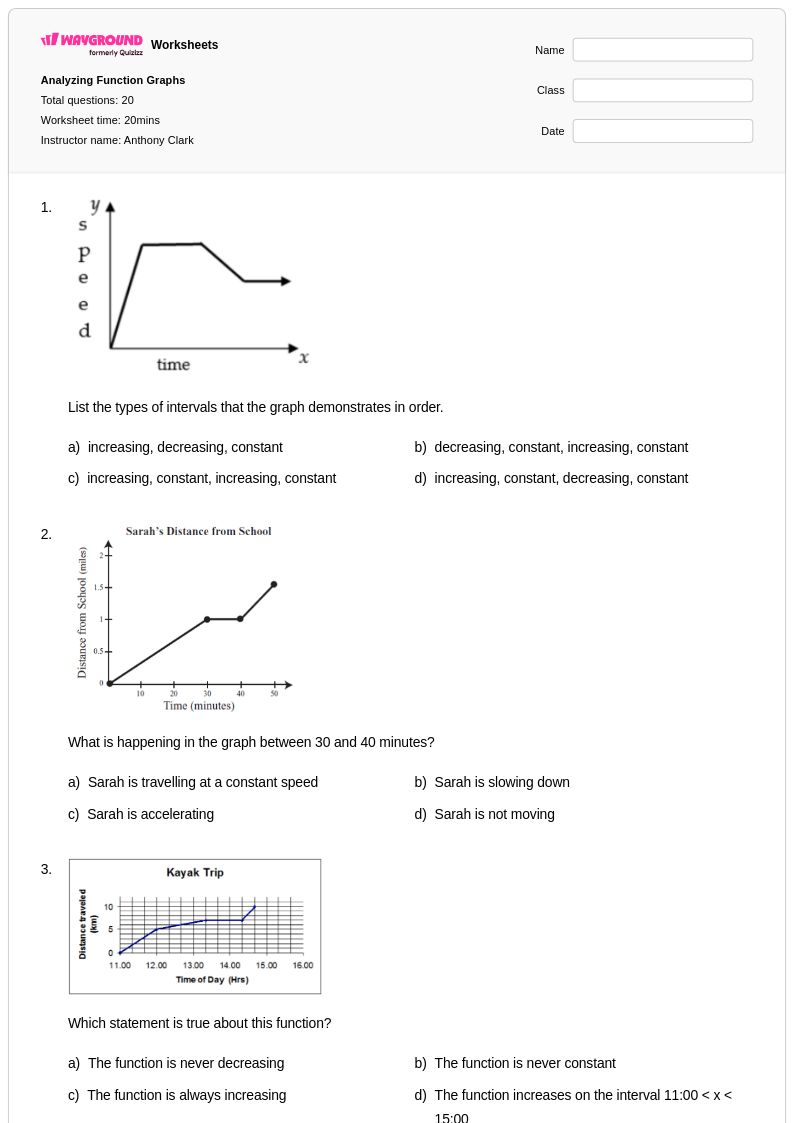
20 Q
10th - Uni
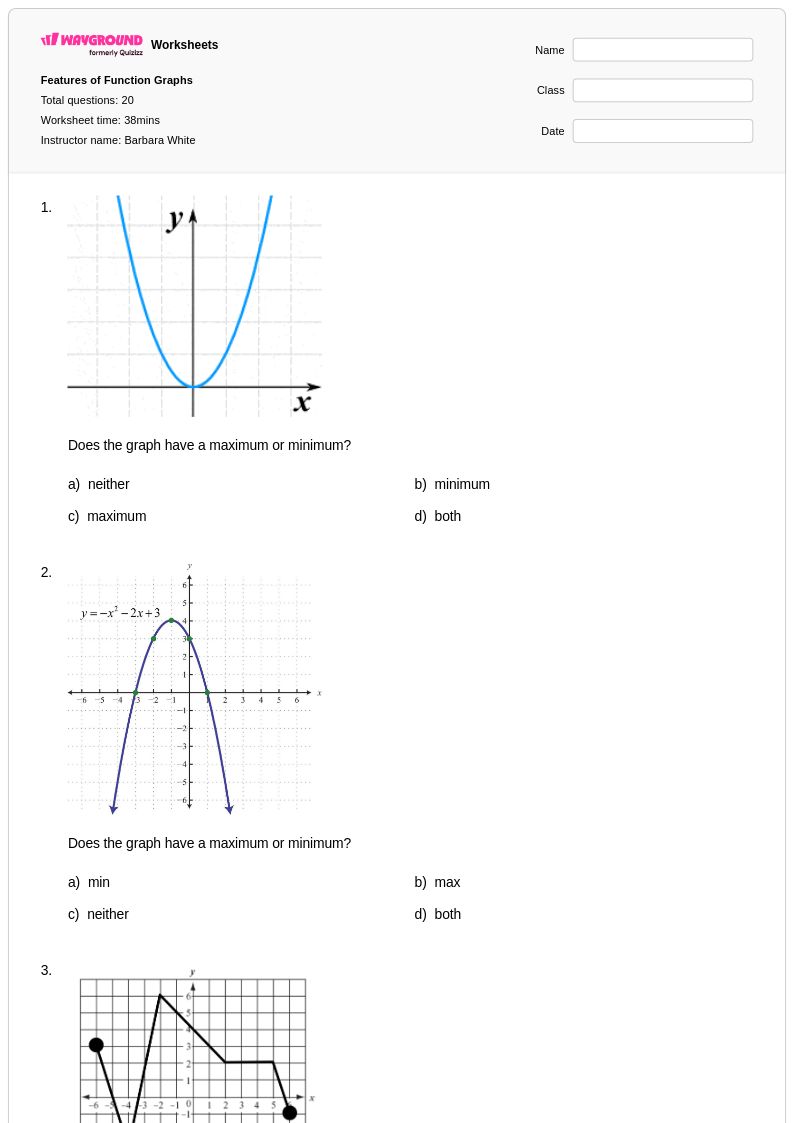
20 Q
9th
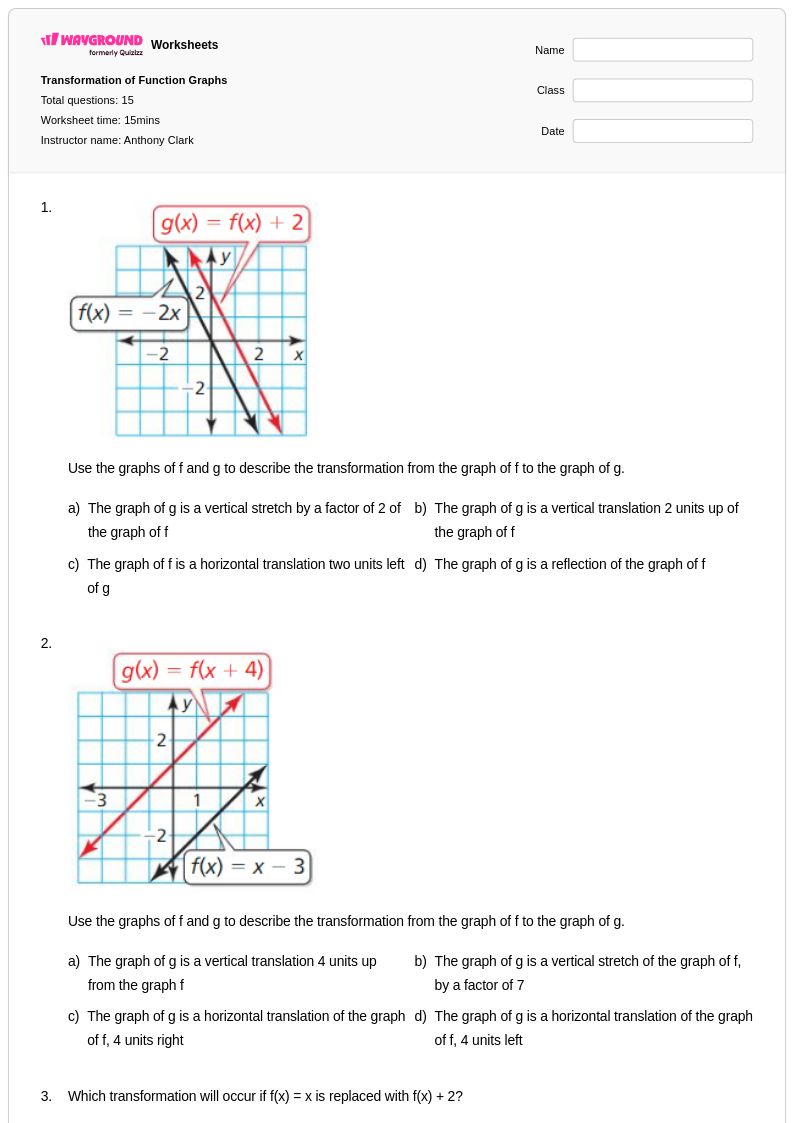
15 Q
11th - Uni
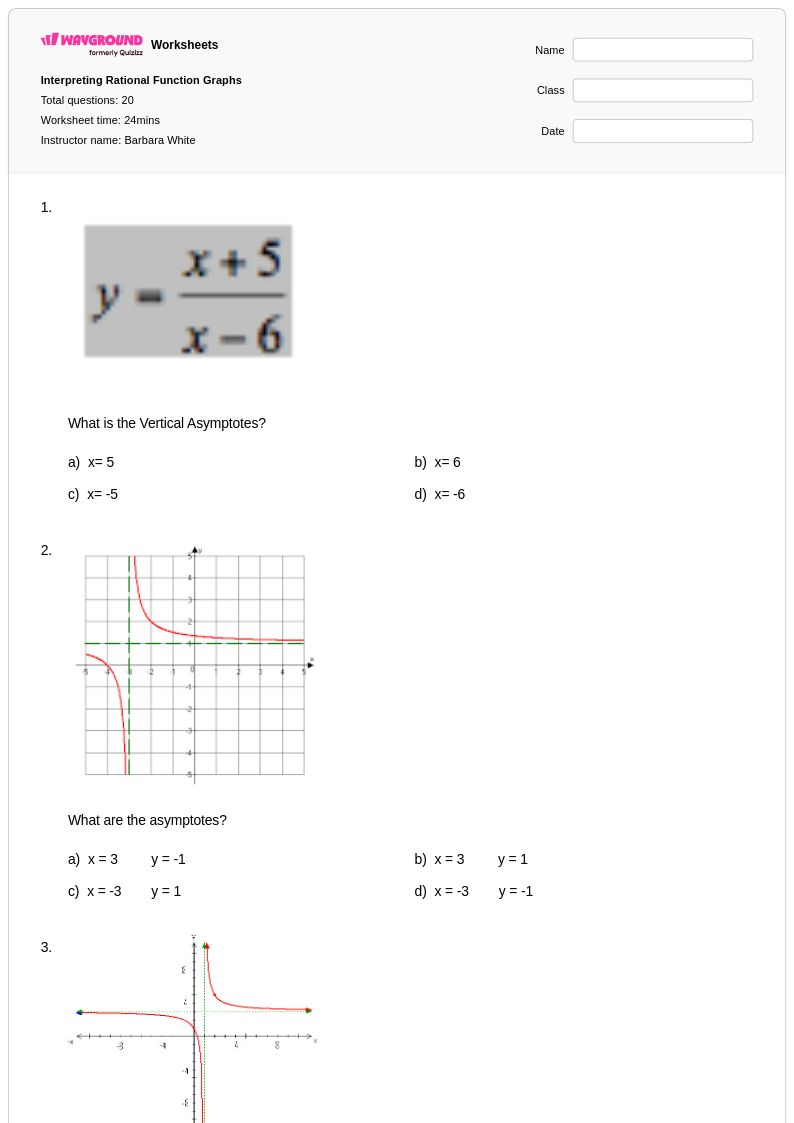
20 Q
9th - 11th
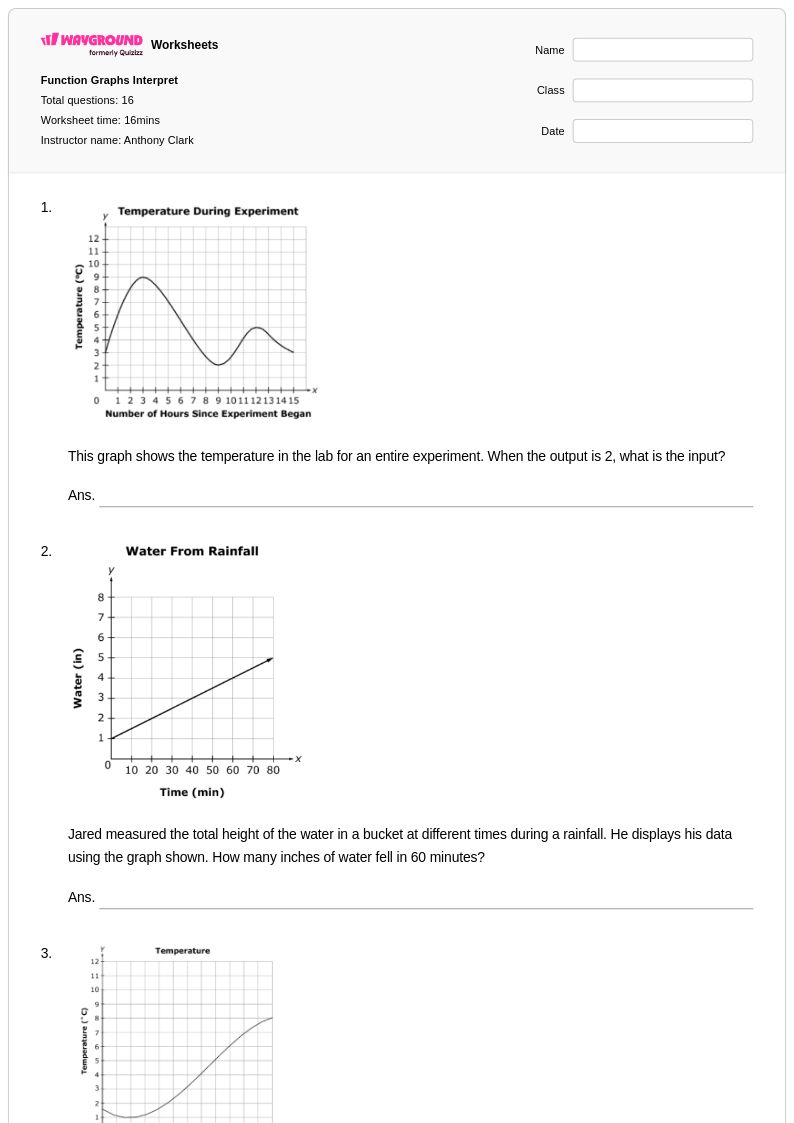
16 Q
8th - Uni
19 Q
9th - Uni
13 Q
8th
14 Q
9th - 12th
15 Q
8th - Uni
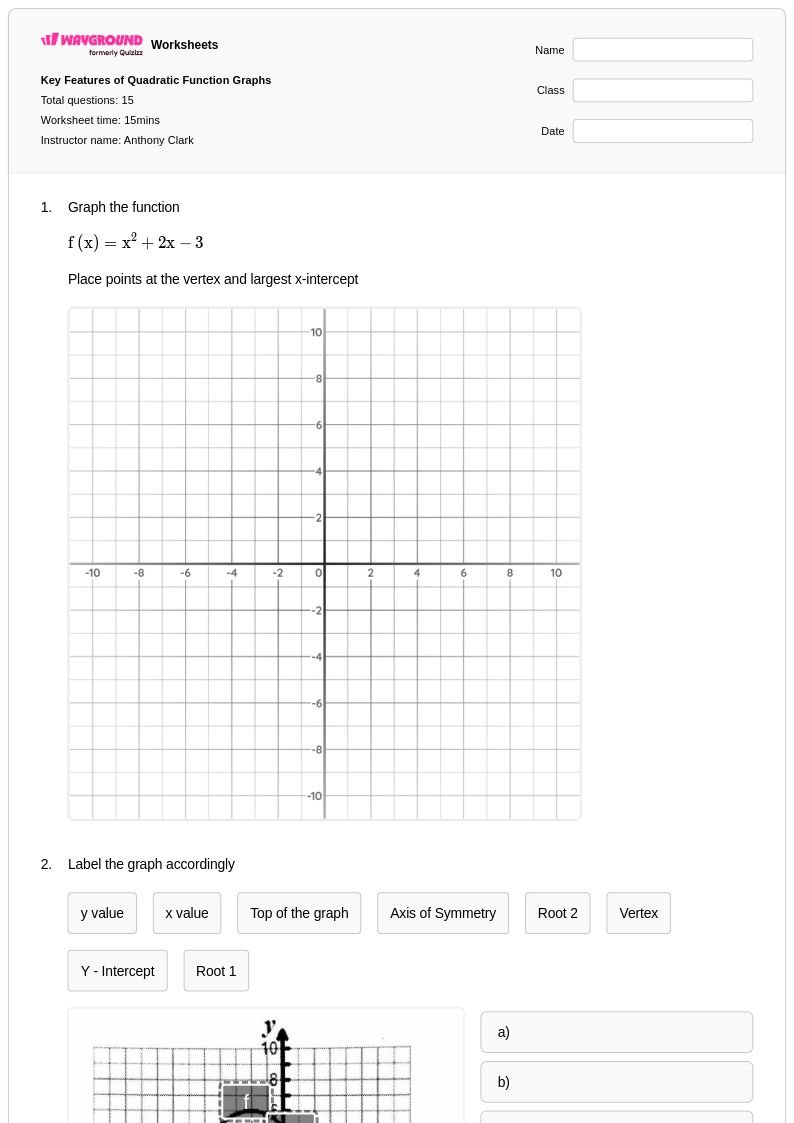
15 Q
9th - Uni
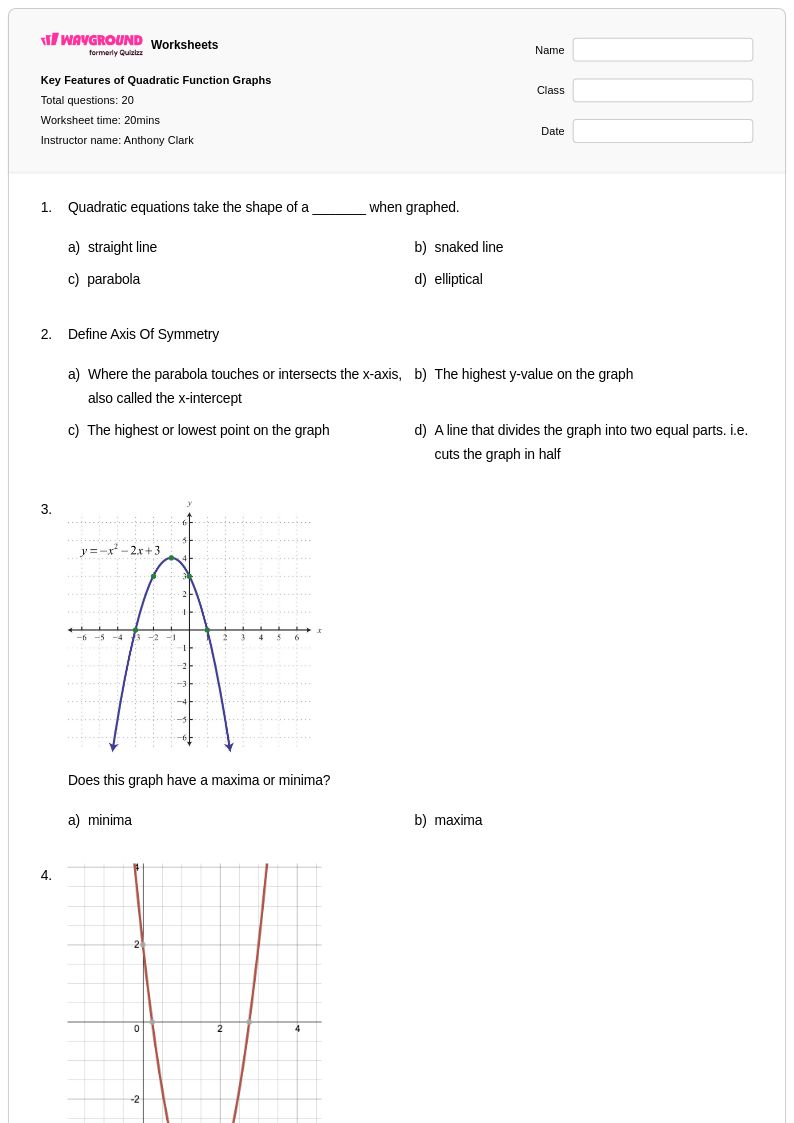
20 Q
9th - Uni
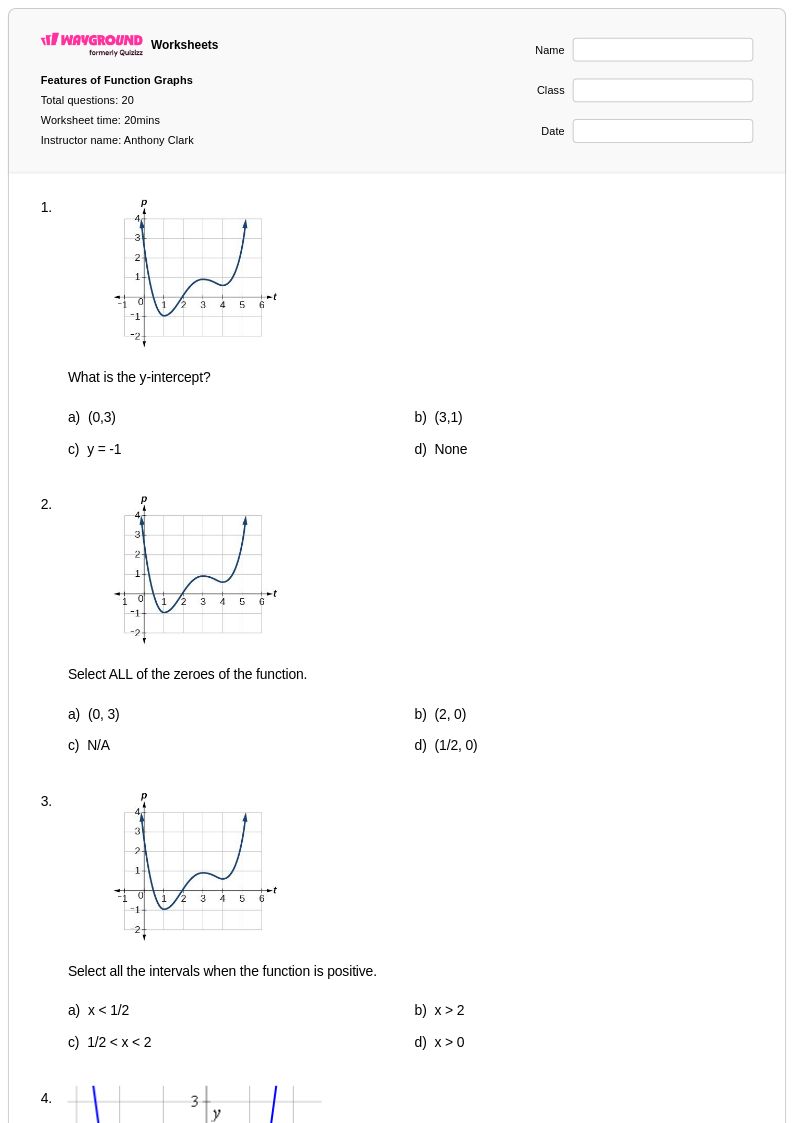
20 Q
9th - Uni
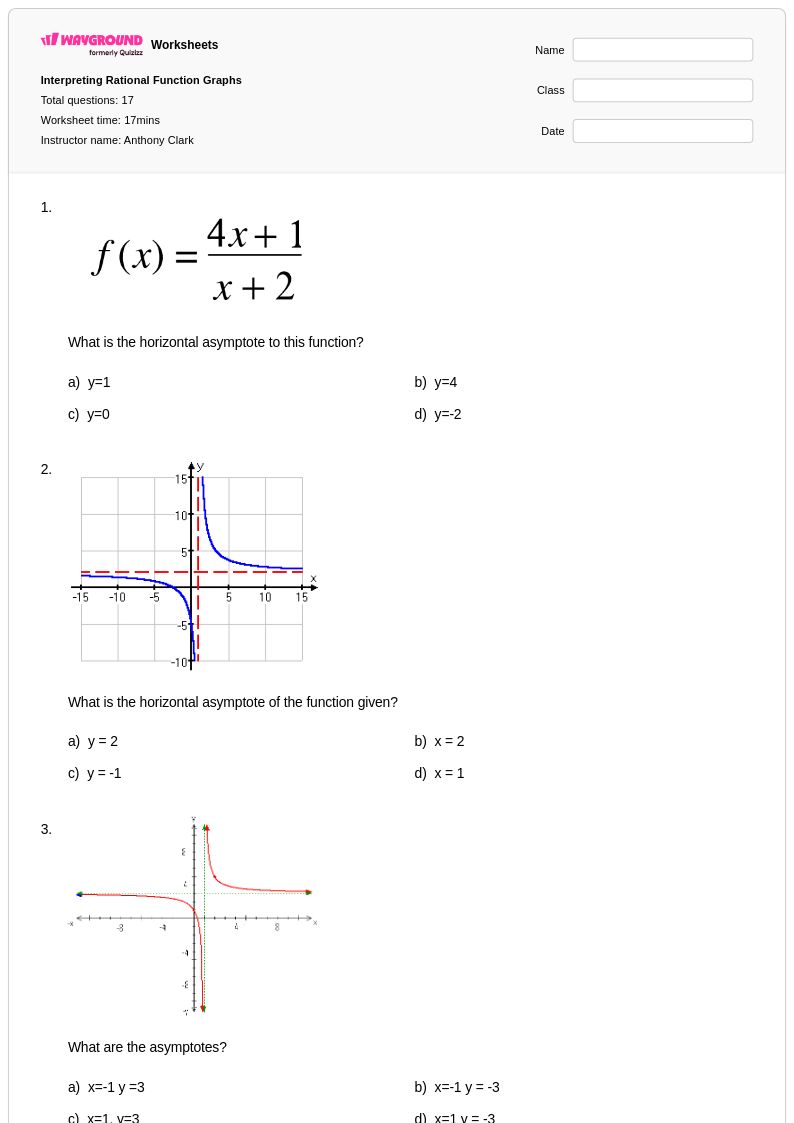
17 Q
9th - Uni
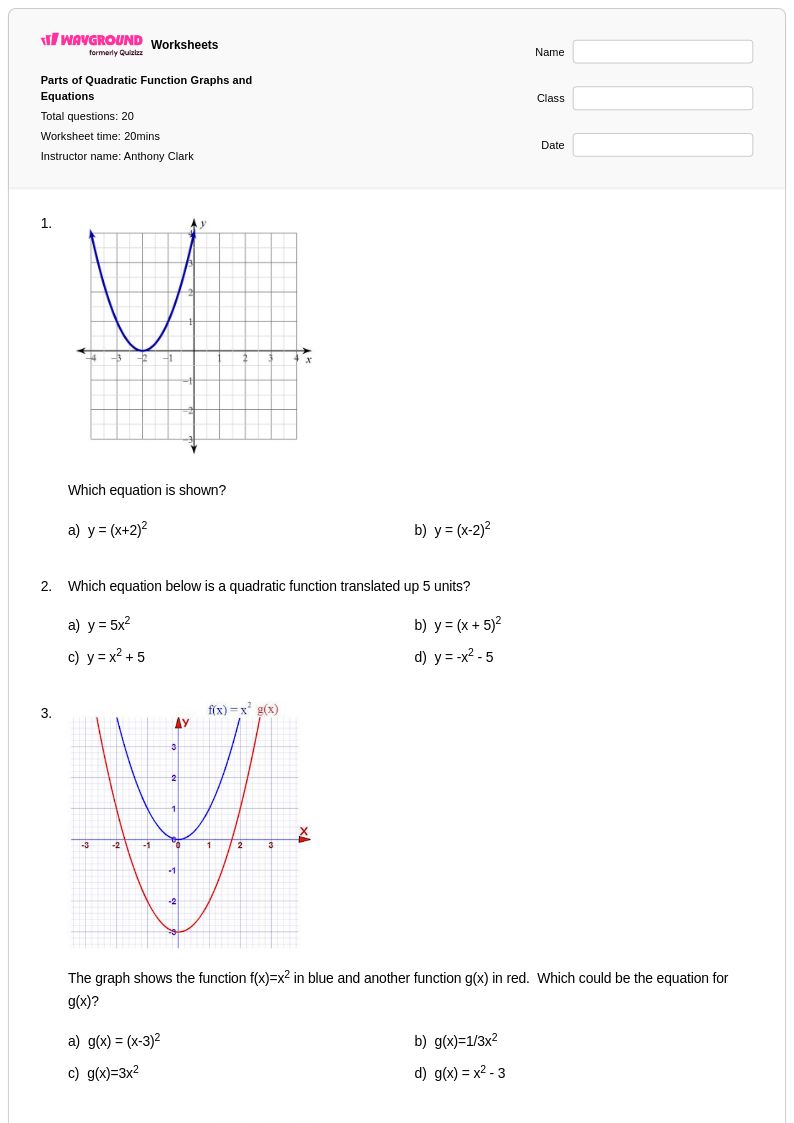
20 Q
9th - Uni
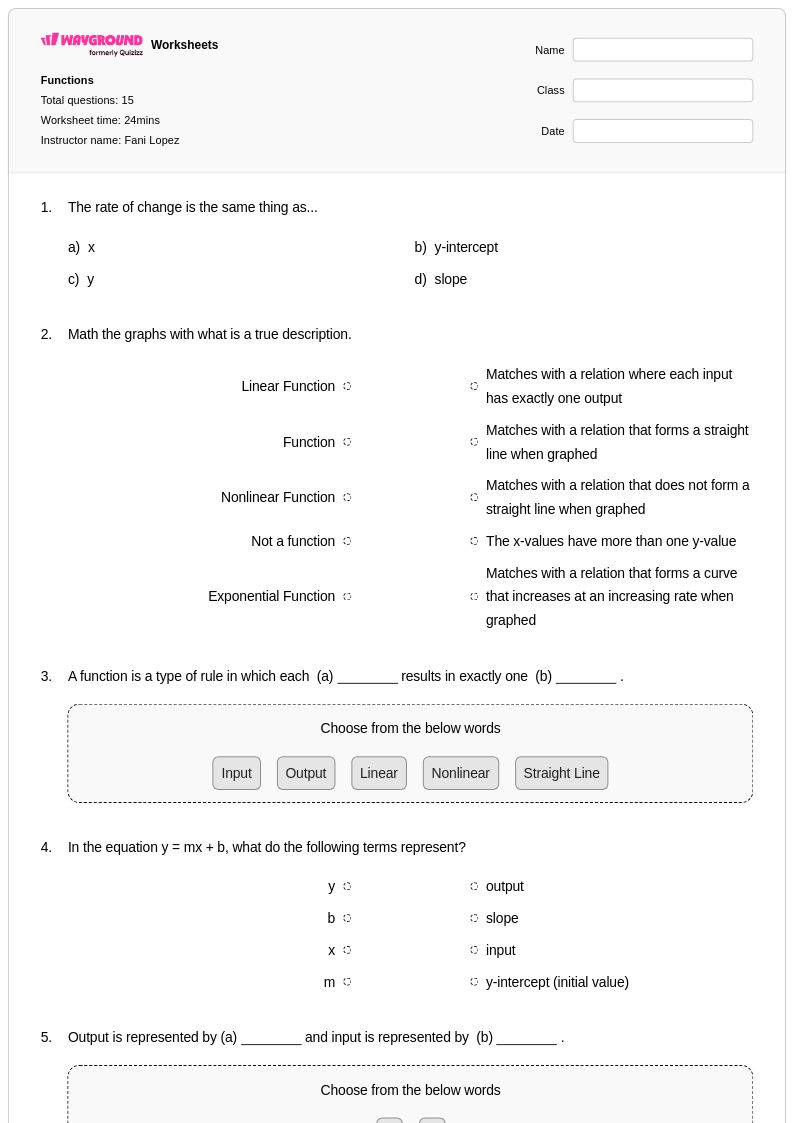
15 Q
8th
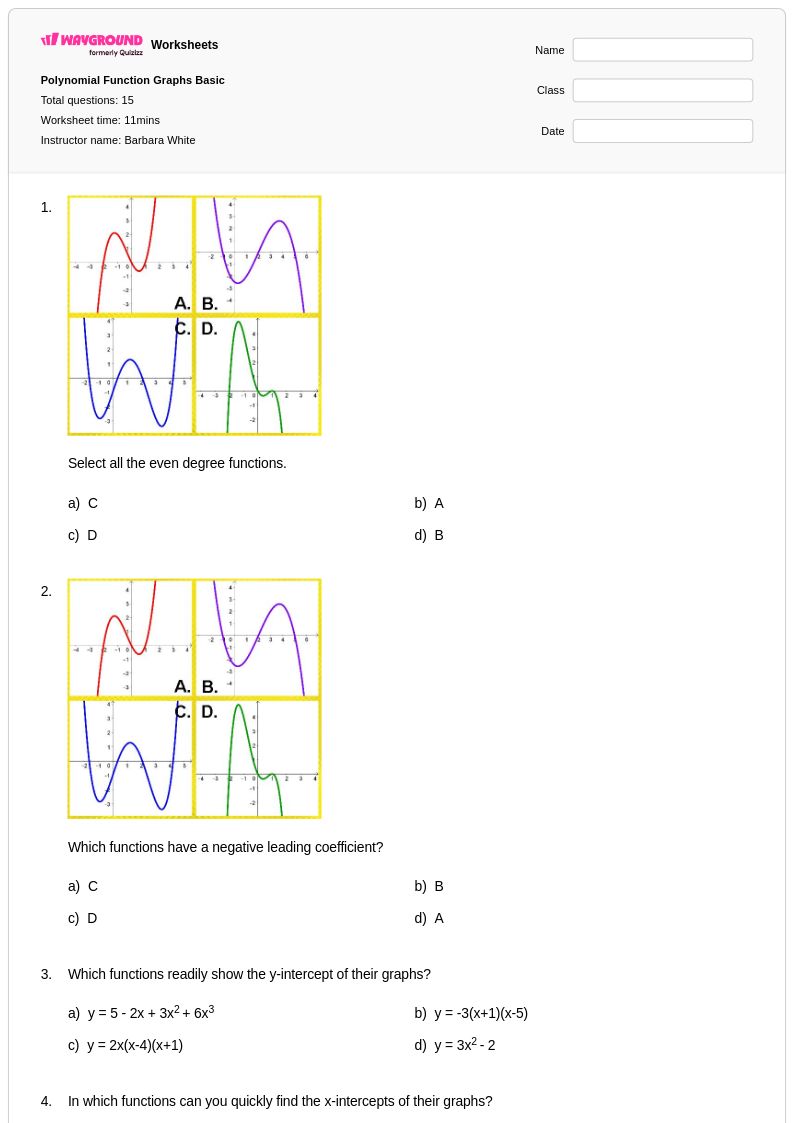
15 Q
10th
Explore Worksheets by Subjects
Explore printable Function Graphs worksheets
Function graphs worksheets available through Wayground (formerly Quizizz) provide comprehensive practice opportunities for students to master the visual representation and interpretation of mathematical functions. These expertly designed resources strengthen critical skills including plotting coordinate points, identifying domain and range, analyzing function behavior, and interpreting key features such as intercepts, asymptotes, and transformations. Students work through carefully structured practice problems that progress from basic linear functions to more complex polynomial, exponential, and trigonometric graphs, with each worksheet including a detailed answer key to support independent learning. The collection offers free printable pdf resources that cover essential graphing techniques, helping students develop both computational accuracy and conceptual understanding of how algebraic expressions translate into visual representations.
Wayground (formerly Quizizz) empowers educators with millions of teacher-created function graphs worksheets that feature robust search and filtering capabilities, enabling quick access to materials aligned with specific curriculum standards and learning objectives. Teachers can easily differentiate instruction by selecting from worksheets with varying complexity levels, customize existing resources to match their classroom needs, and access materials in both printable and digital pdf formats for flexible implementation. These comprehensive tools support effective lesson planning by providing ready-made resources for skill practice, targeted remediation for struggling learners, and enrichment opportunities for advanced students, while the extensive collection ensures educators can find appropriate materials for introducing new concepts, reinforcing previously taught skills, or conducting formative assessments of student understanding.
FAQs
How do I introduce the concept of function graphs to my students?
What types of exercises help students practice graphing functions?
What are common student mistakes when graphing functions?
How can I use this function graphs worksheet in my classroom?
How do function graphs fit into the Common Core math curriculum?
How can I support struggling students with function graphs?