
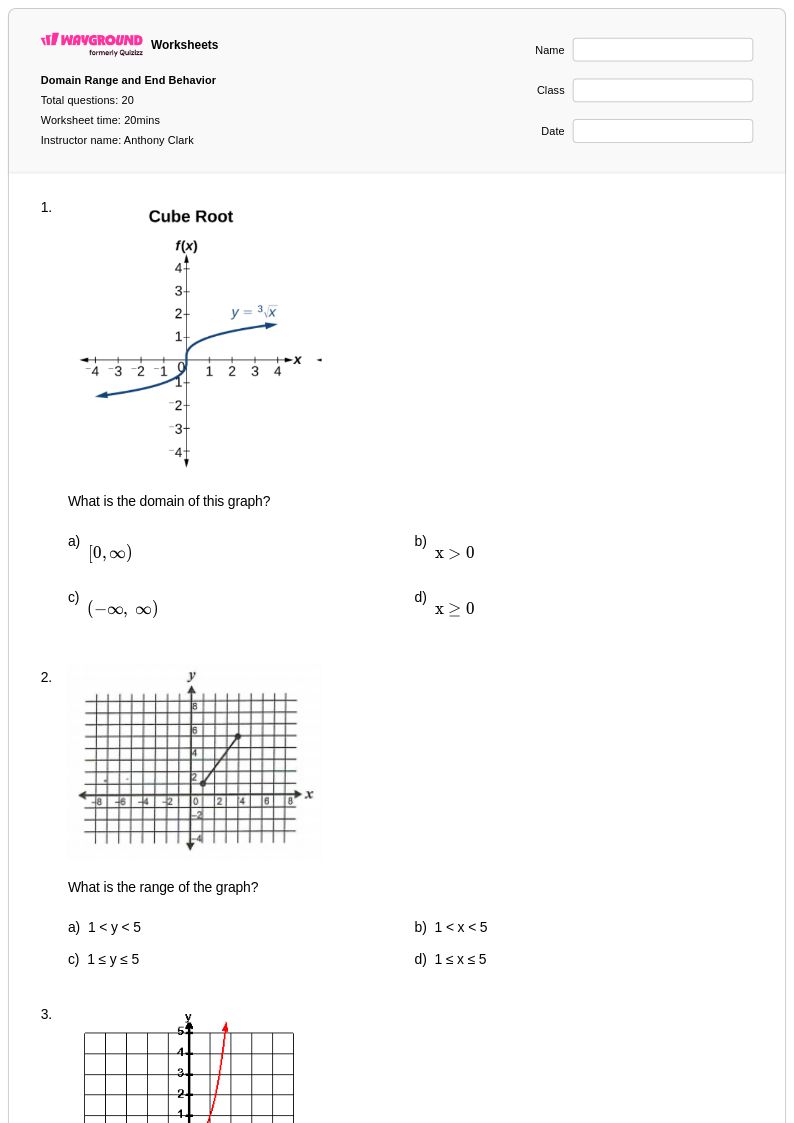
20 Q
10th - Uni
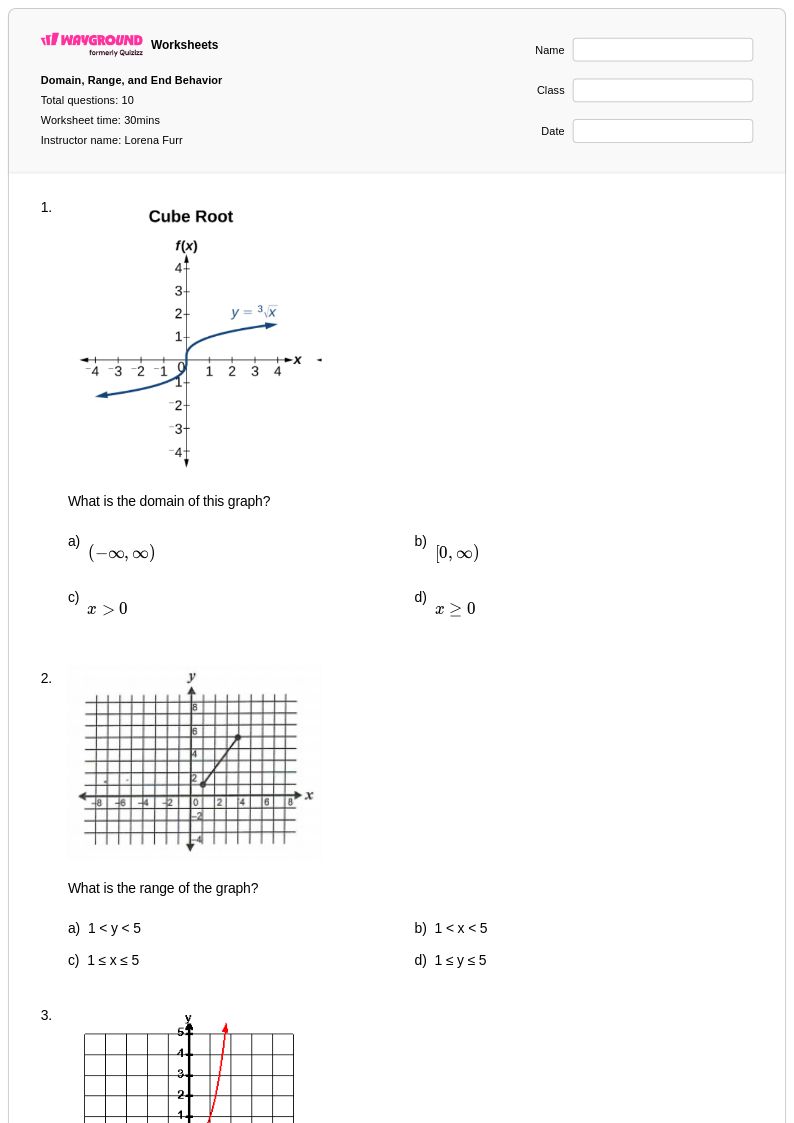
10 Q
9th - 12th
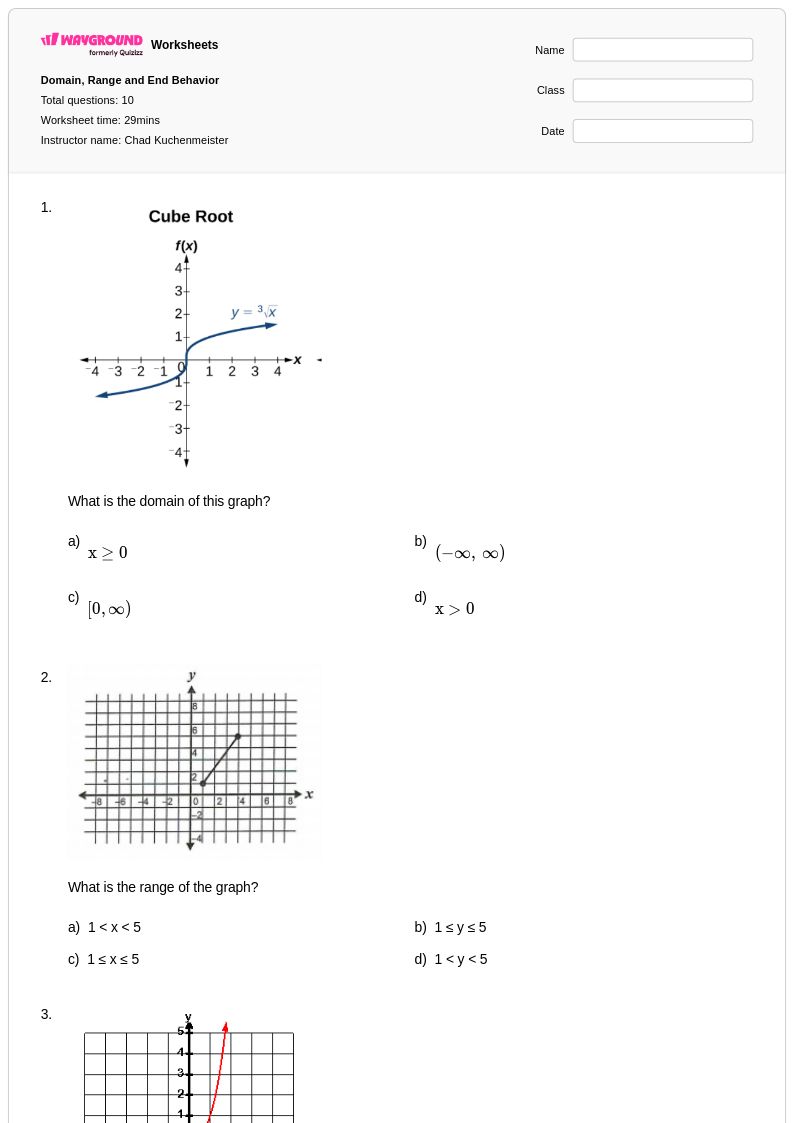
10 Q
9th - 12th
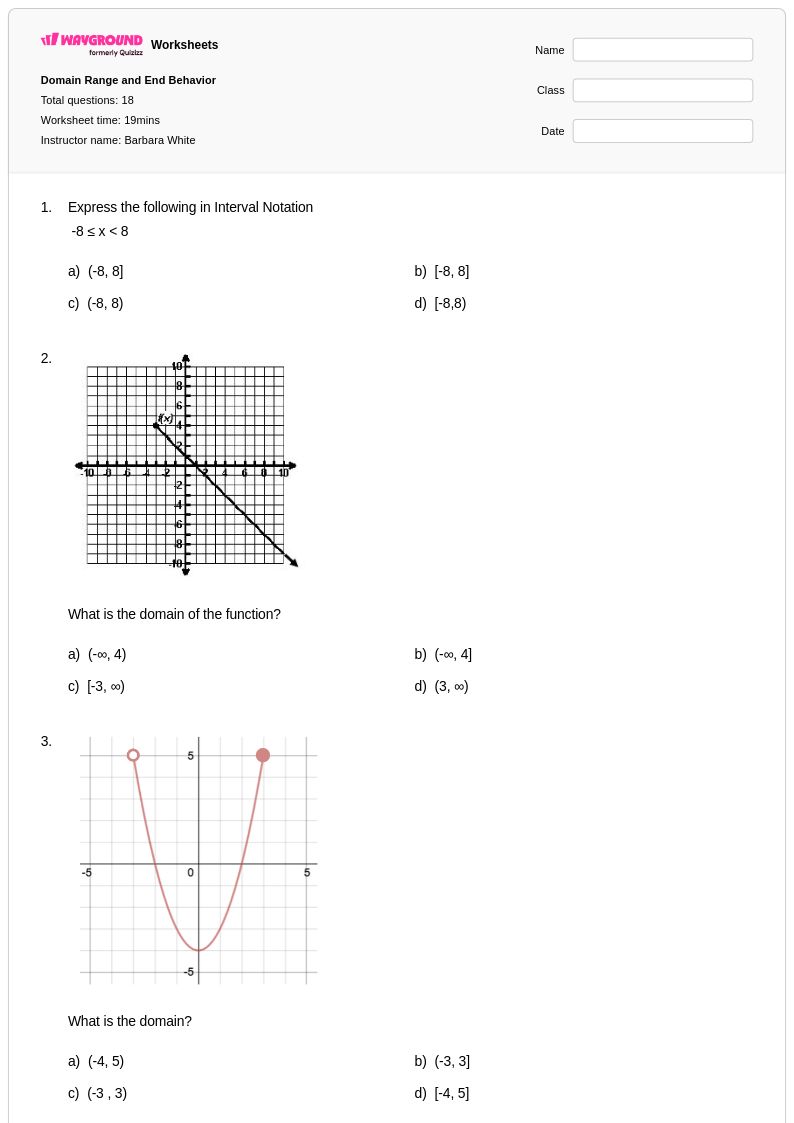
18 Q
11th
26 Q
9th - 10th
15 Q
10th - Uni
20 Q
9th - Uni
26 Q
9th - 10th
9 Q
10th - Uni
20 Q
10th - Uni
18 Q
11th
26 Q
9th - 10th
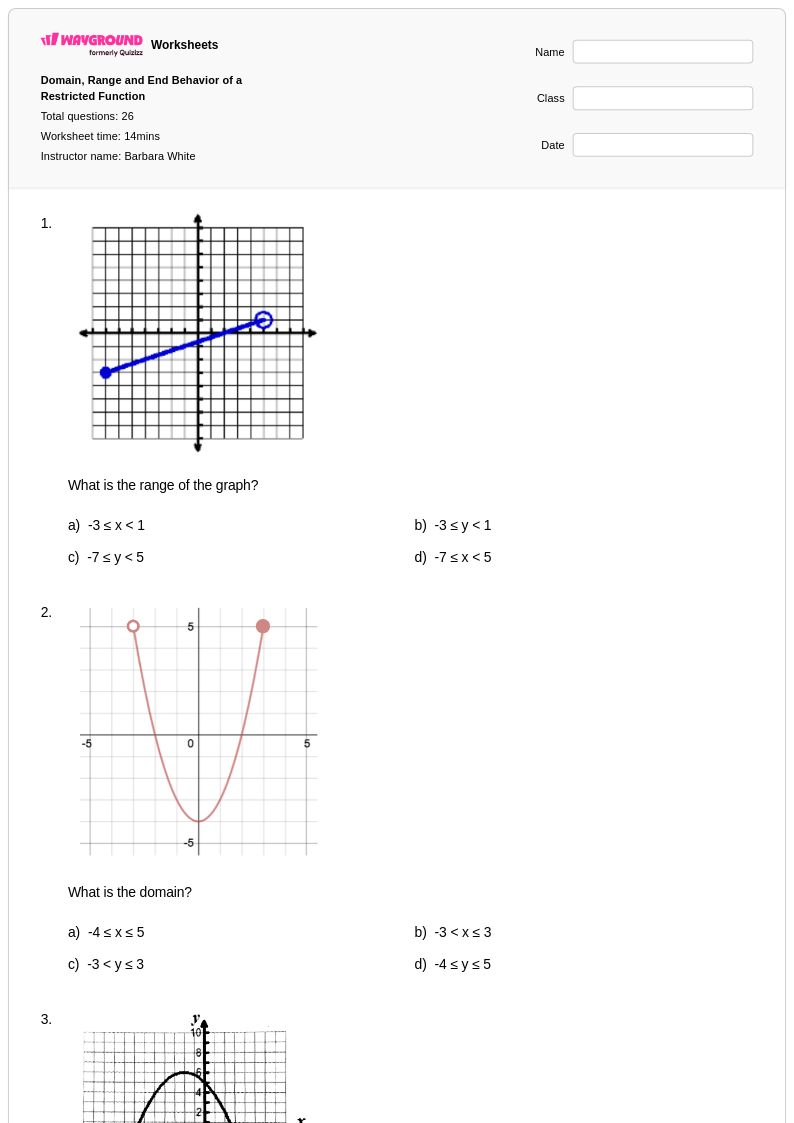
26 Q
9th - 10th
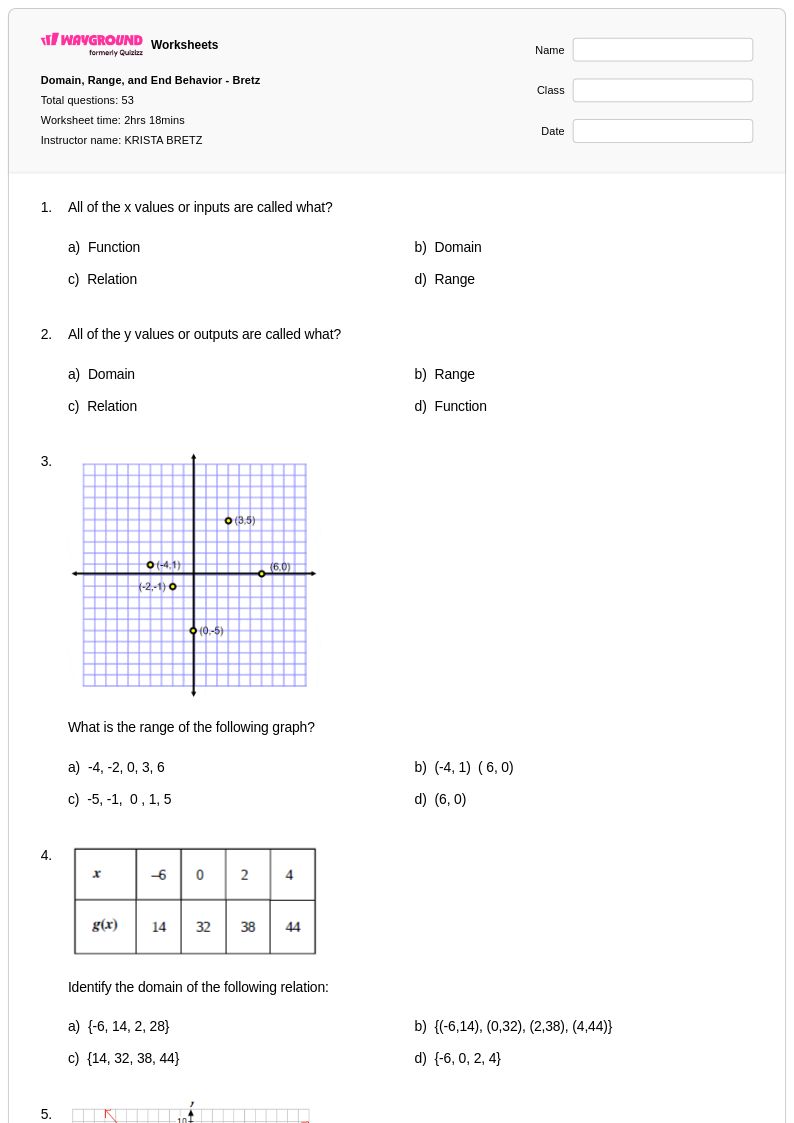
53 Q
8th - 10th
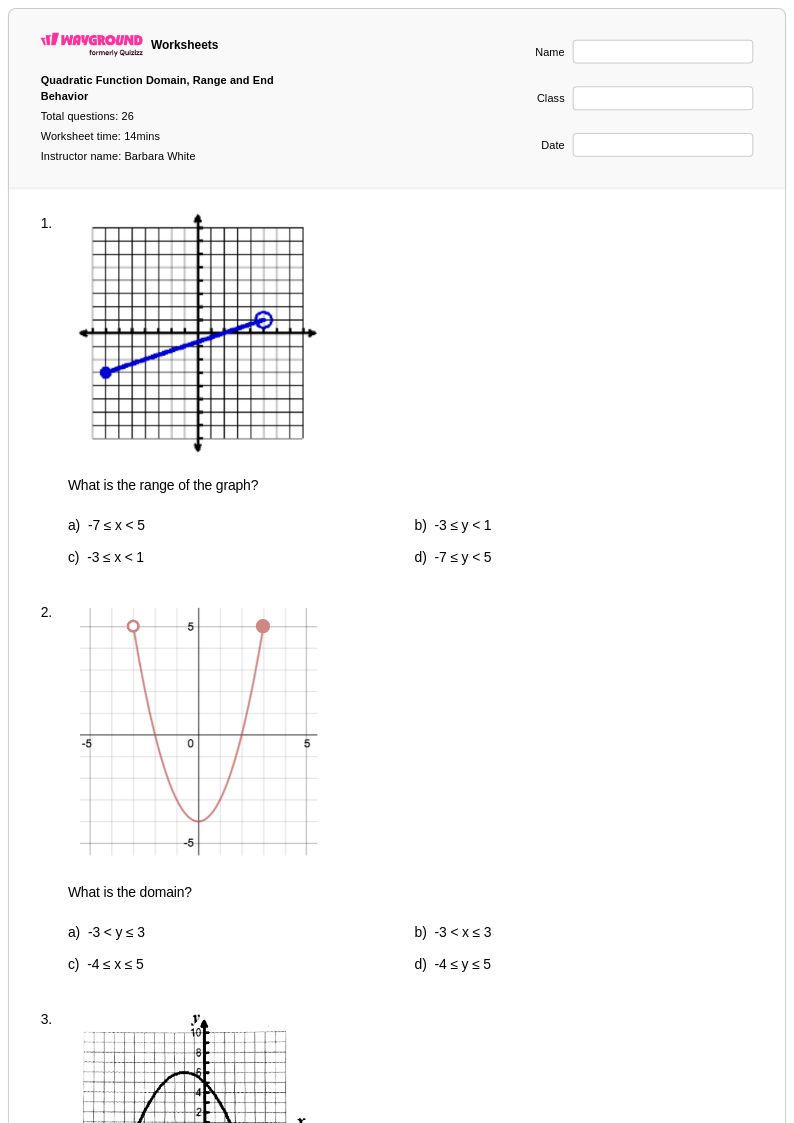
26 Q
9th - 10th
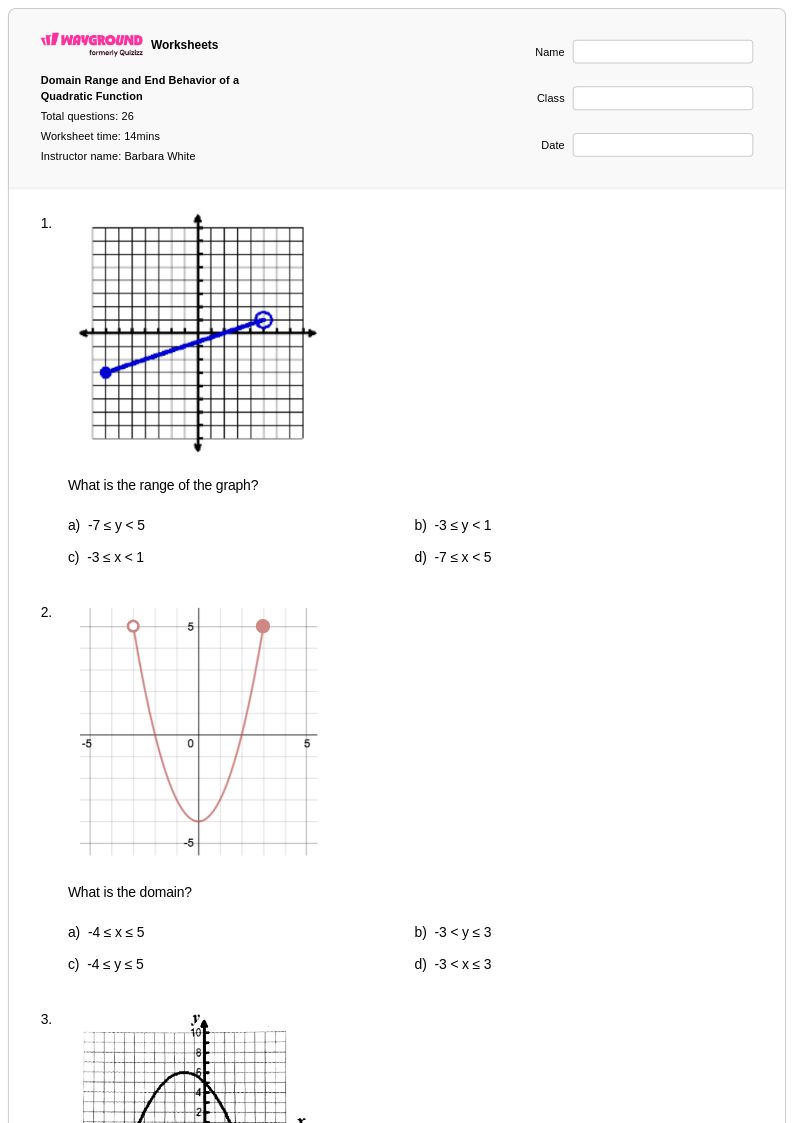
26 Q
9th - 10th
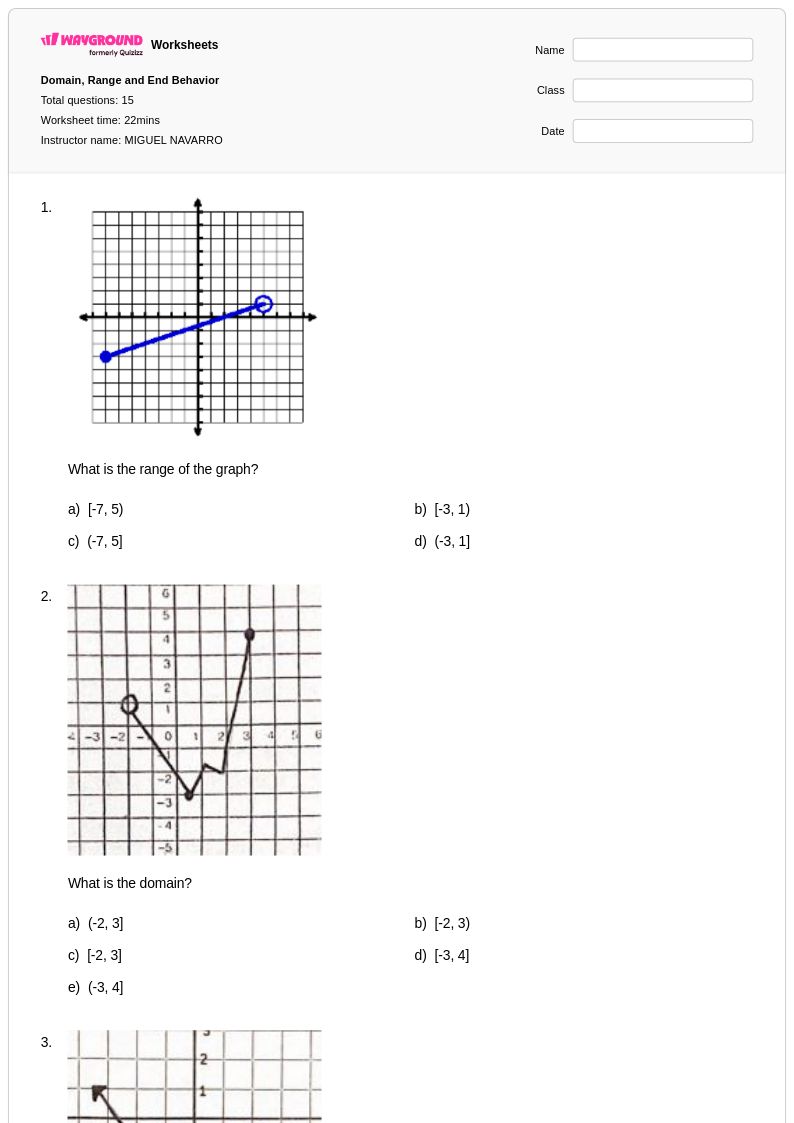
15 Q
11th
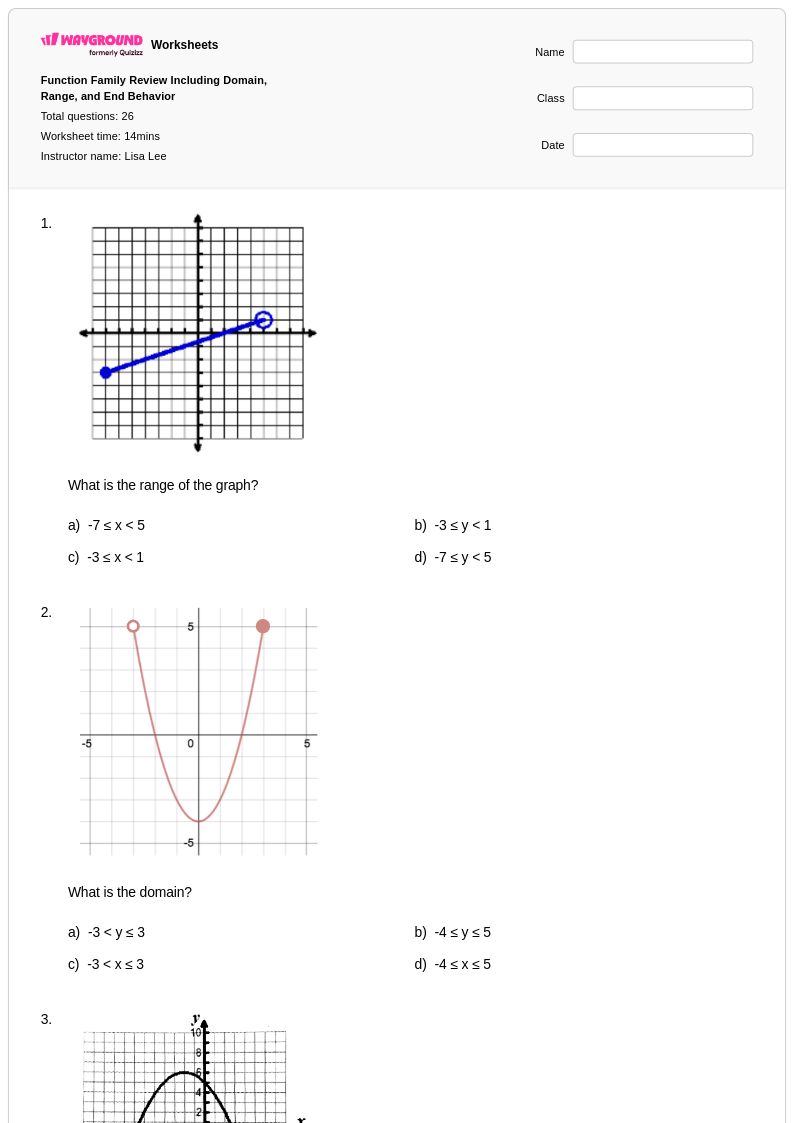
26 Q
9th - 10th
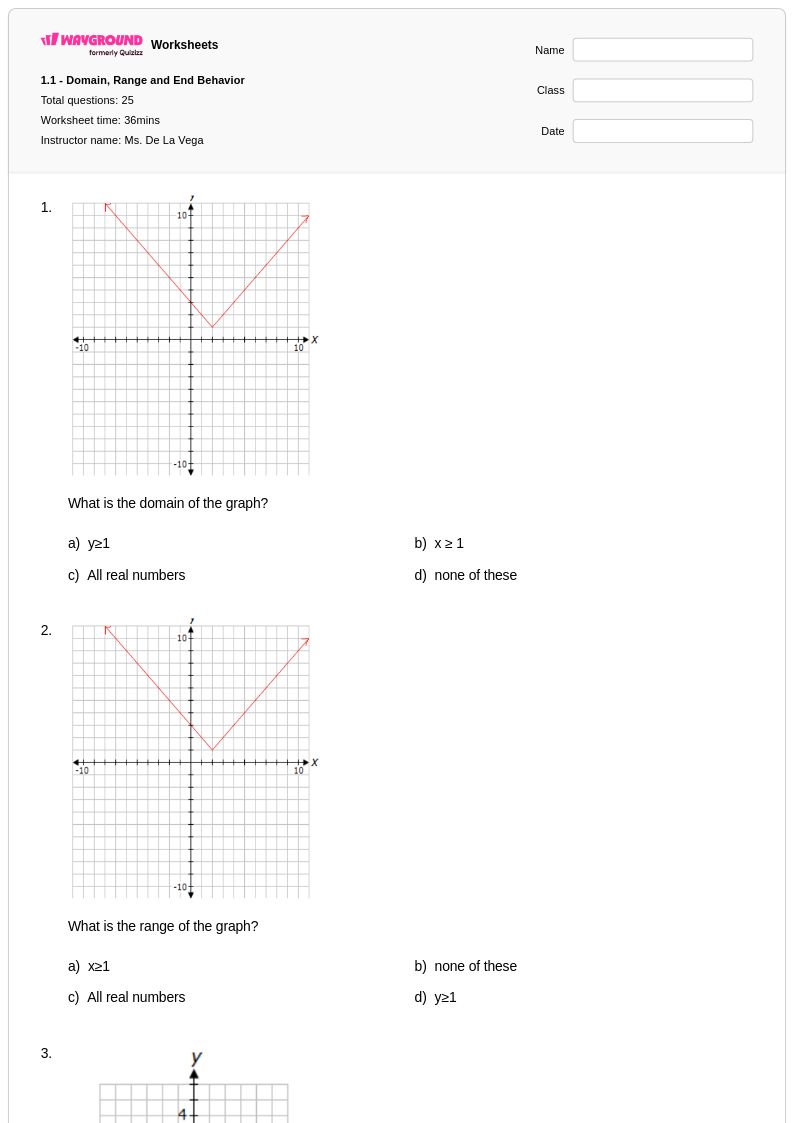
25 Q
9th - 10th
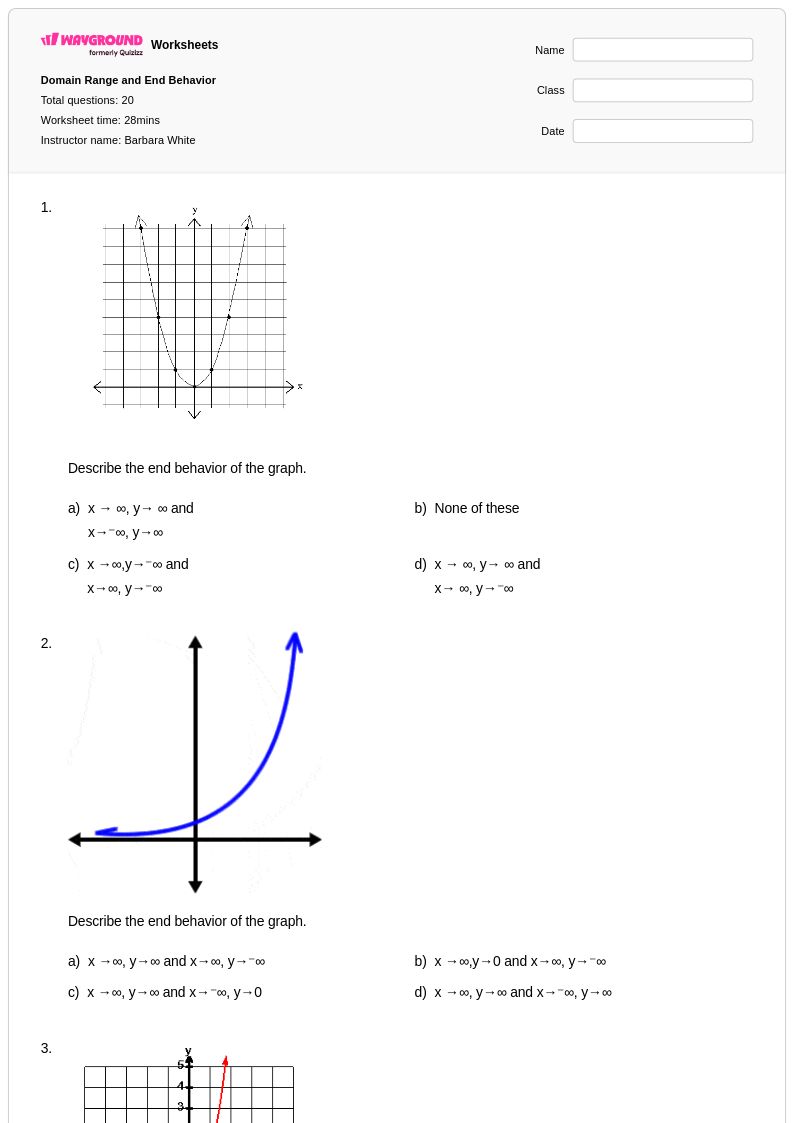
20 Q
10th
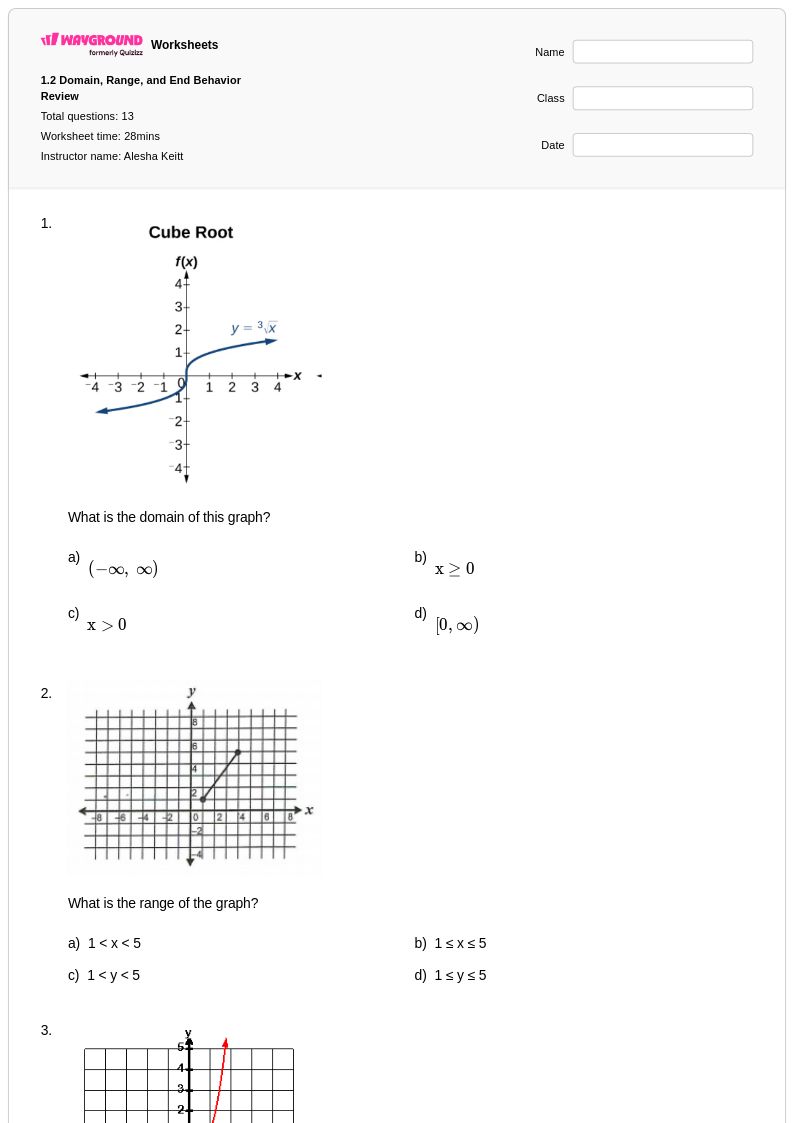
13 Q
9th
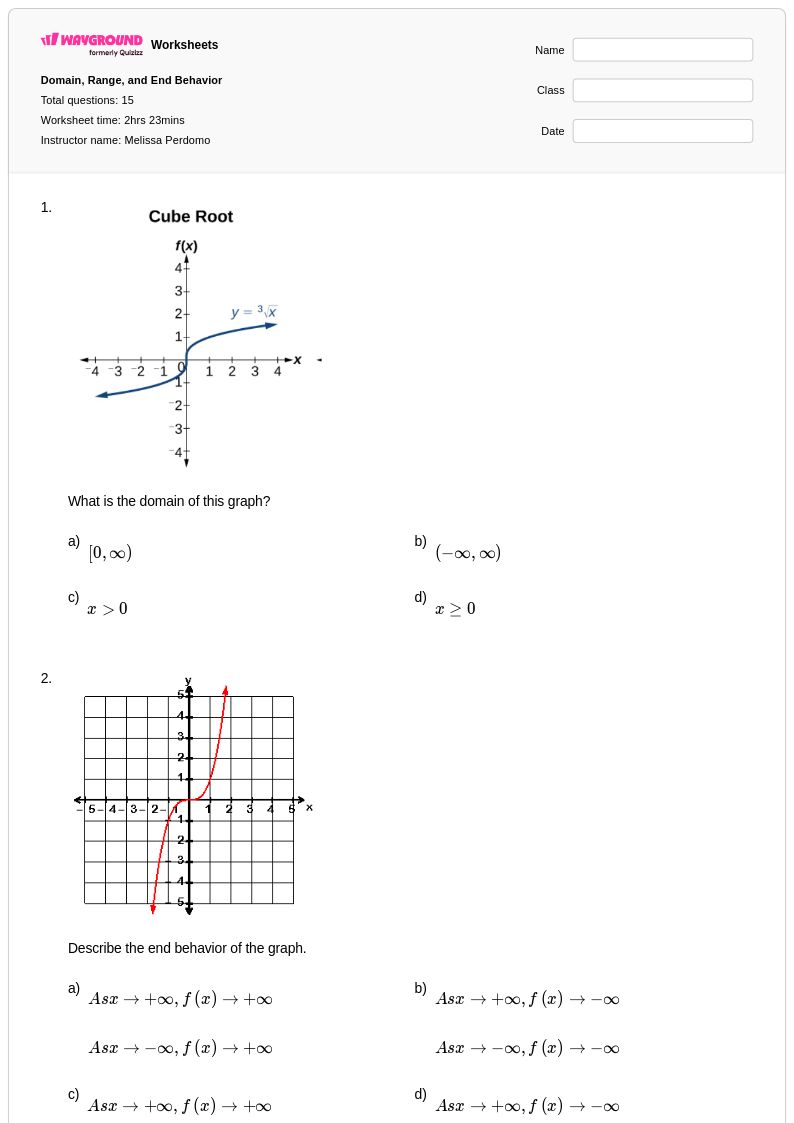
15 Q
9th - 11th
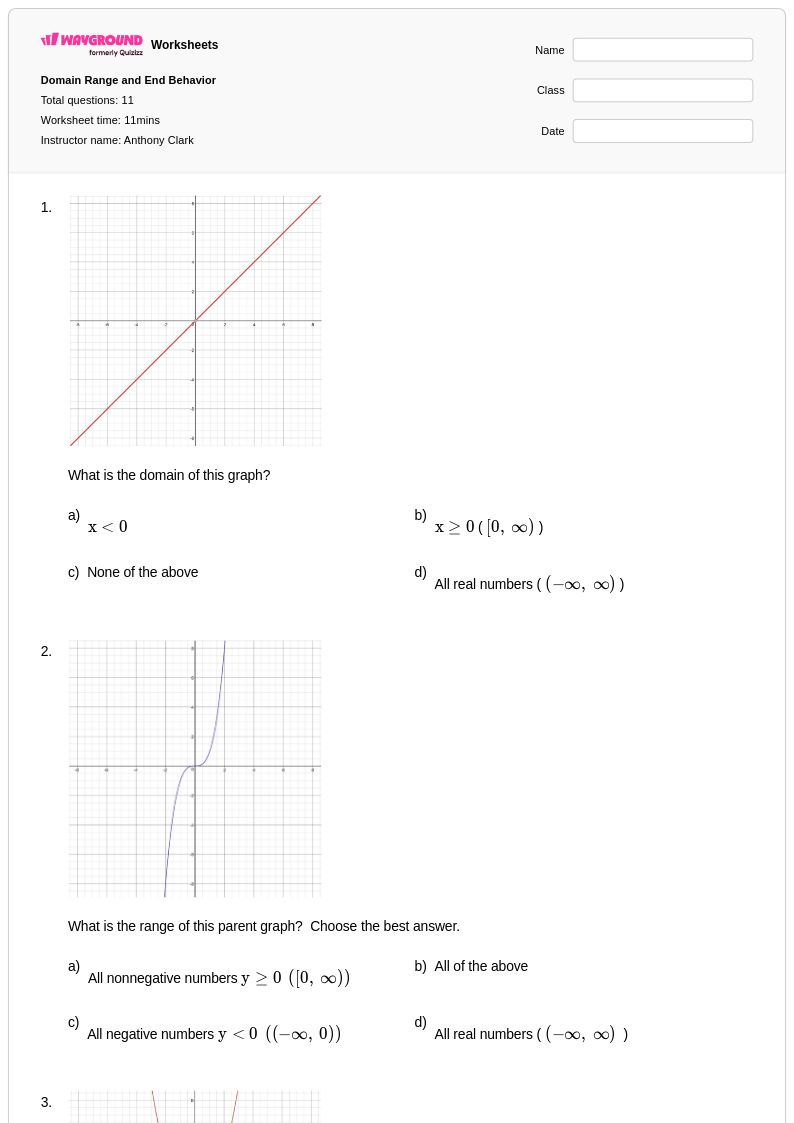
11 Q
10th - Uni
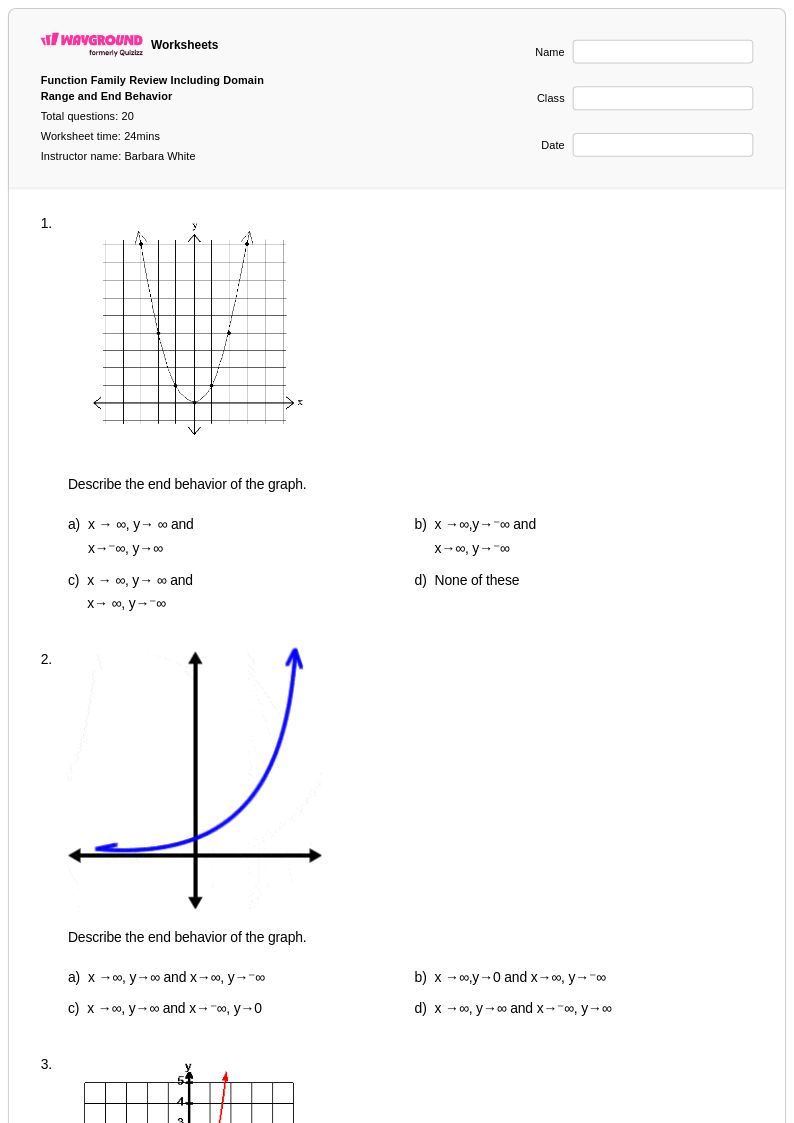
20 Q
10th
Explore Worksheets by Subjects
Explore printable Domain, Range, and End Behavior worksheets
Domain, range, and end behavior worksheets available through Wayground (formerly Quizizz) provide comprehensive practice opportunities for students to master these fundamental concepts in function analysis. These expertly crafted resources strengthen critical mathematical skills including identifying input and output values of functions, determining restrictions on domain sets, analyzing range limitations, and interpreting the long-term behavior of functions as they approach positive and negative infinity. The worksheet collections feature diverse problem types ranging from basic domain identification with rational and radical functions to complex end behavior analysis of polynomial and exponential functions, complete with detailed answer keys that support both independent study and classroom instruction. Students benefit from free printable pdf formats that allow for flexible practice sessions, while the comprehensive practice problems progress systematically from foundational concepts to advanced applications.
Wayground (formerly Quizizz) empowers mathematics educators with an extensive library of millions of teacher-created resources specifically designed to support domain, range, and end behavior instruction across multiple learning contexts. The platform's robust search and filtering capabilities enable teachers to quickly locate worksheets aligned with specific curriculum standards, while built-in differentiation tools allow for seamless customization based on individual student needs and skill levels. These versatile resources are available in both printable and digital pdf formats, providing maximum flexibility for classroom instruction, homework assignments, remediation sessions, and enrichment activities. Teachers can efficiently plan comprehensive lesson sequences, target specific skill gaps through focused practice problems, and support diverse learners with appropriately scaffolded materials that reinforce essential function analysis concepts through systematic, progressive skill development.
FAQs
How do I teach domain, range, and end behavior?
What exercises help students practice domain, range, and end behavior?
What mistakes do students commonly make with domain and range?
How do I use these domain, range, and end behavior worksheets in my class?
How does Common Core sequence domain, range, and end behavior?
How can I differentiate domain, range, and end behavior practice for mixed-ability classes?
What grade level covers domain, range, and end behavior?