
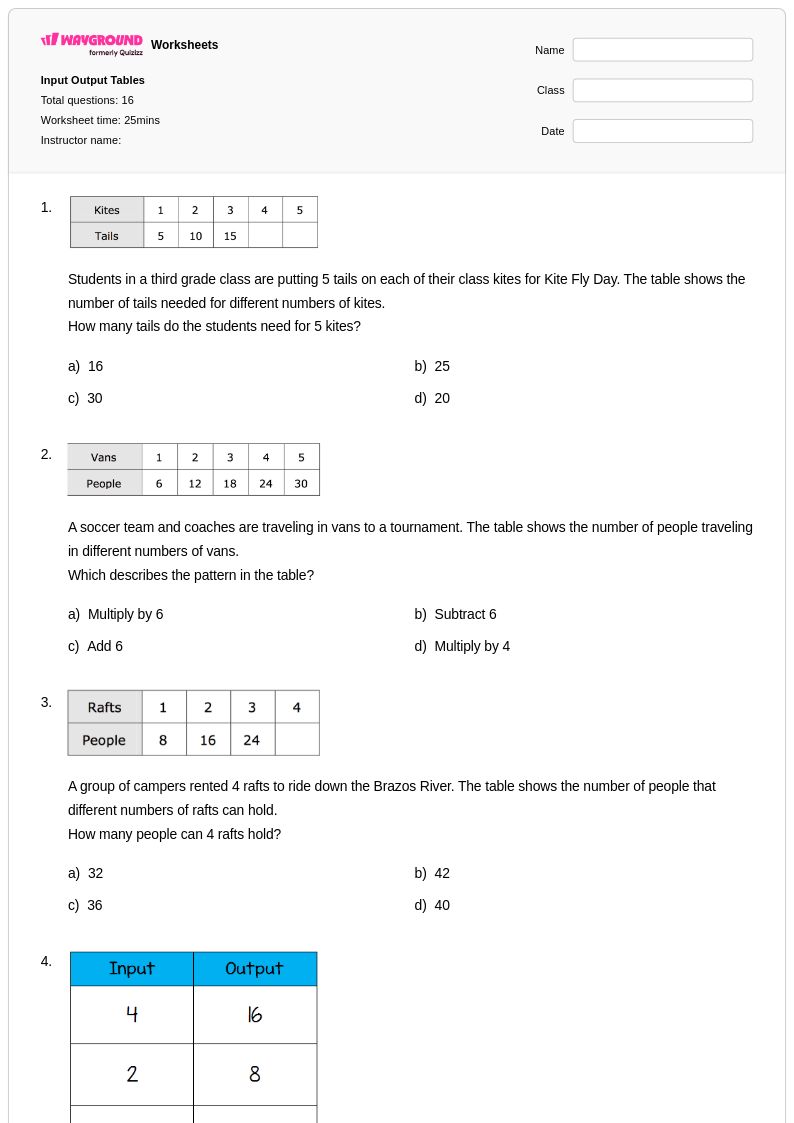
16 Q
3rd
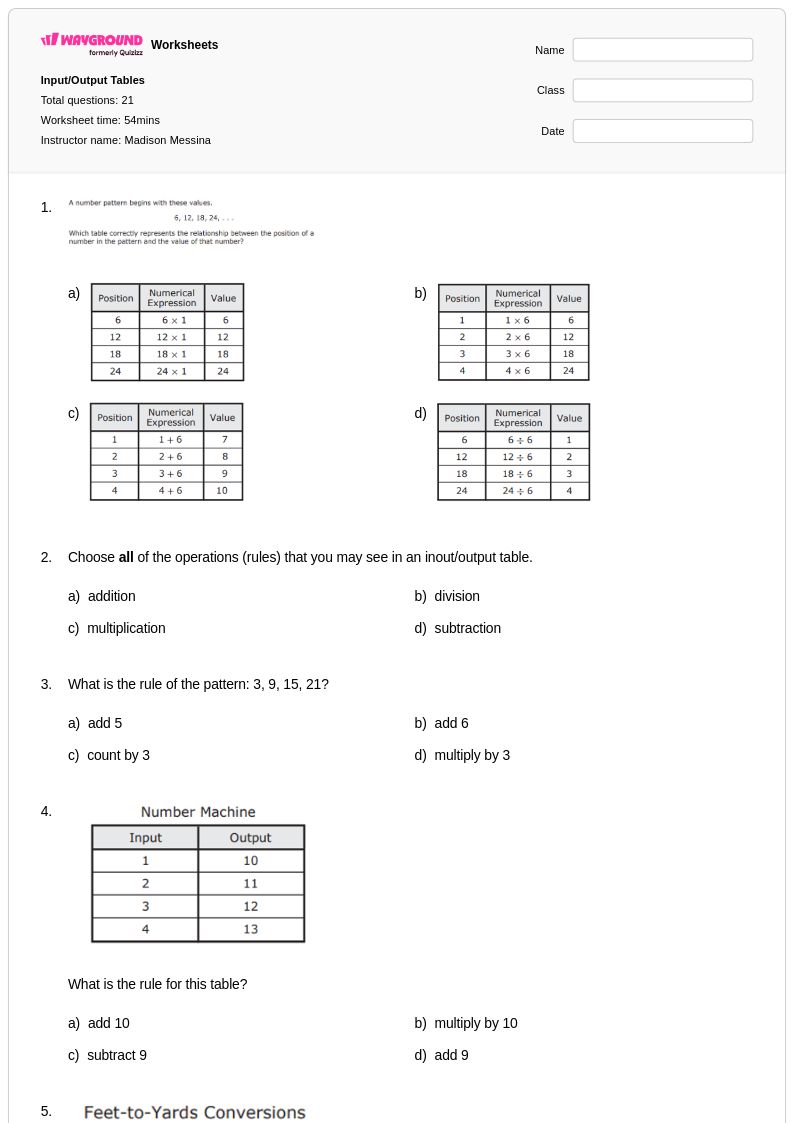
21 Q
4th
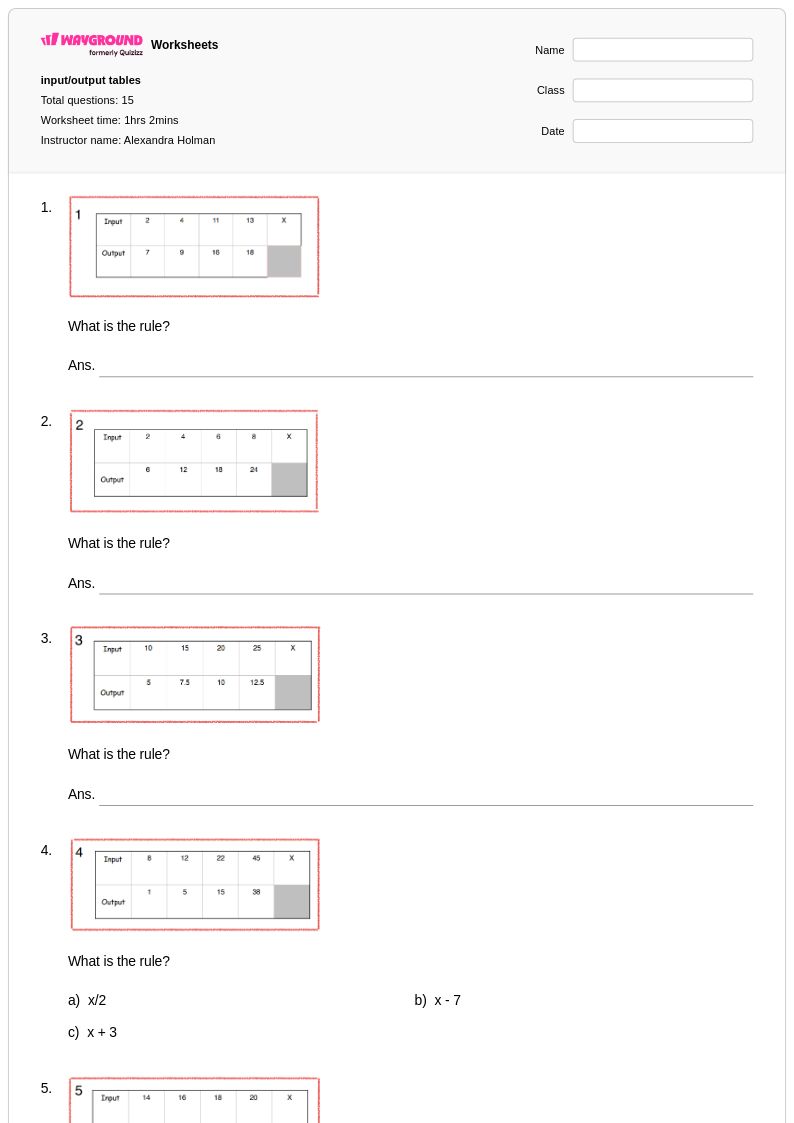
15 Q
6th
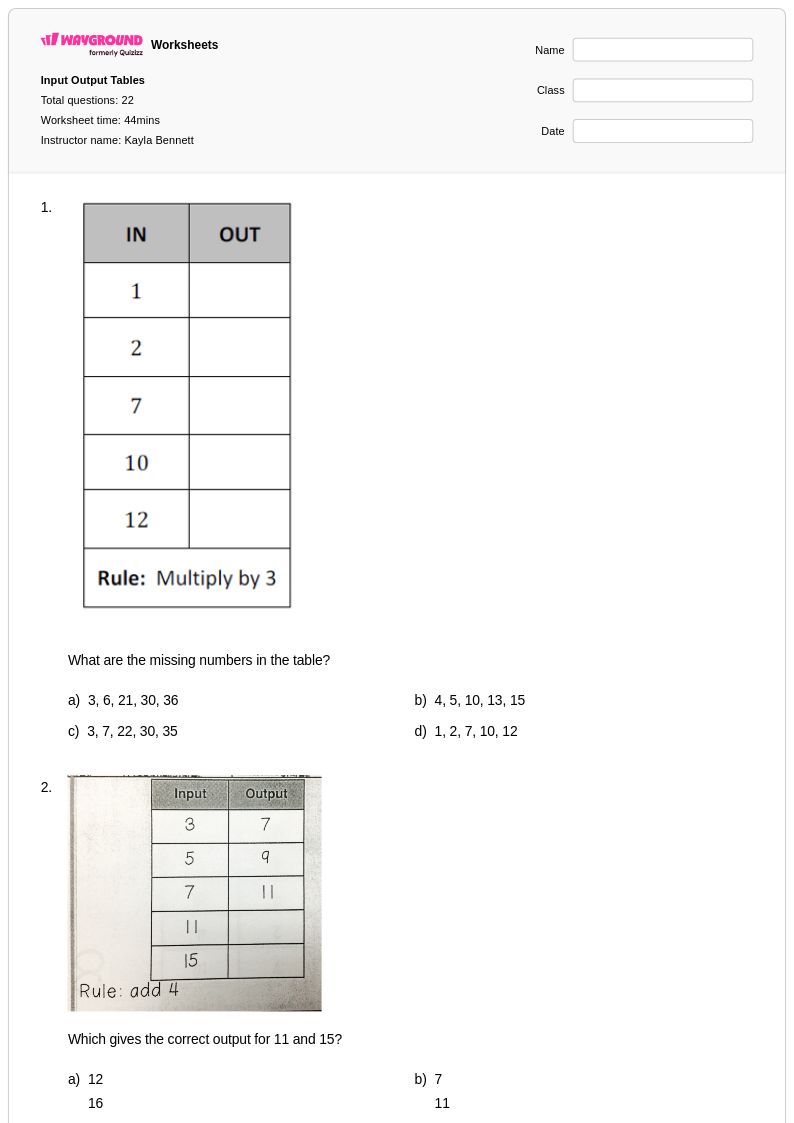
22 Q
5th
10 Q
4th
12 Q
4th
20 Q
4th - Uni
20 Q
4th - Uni
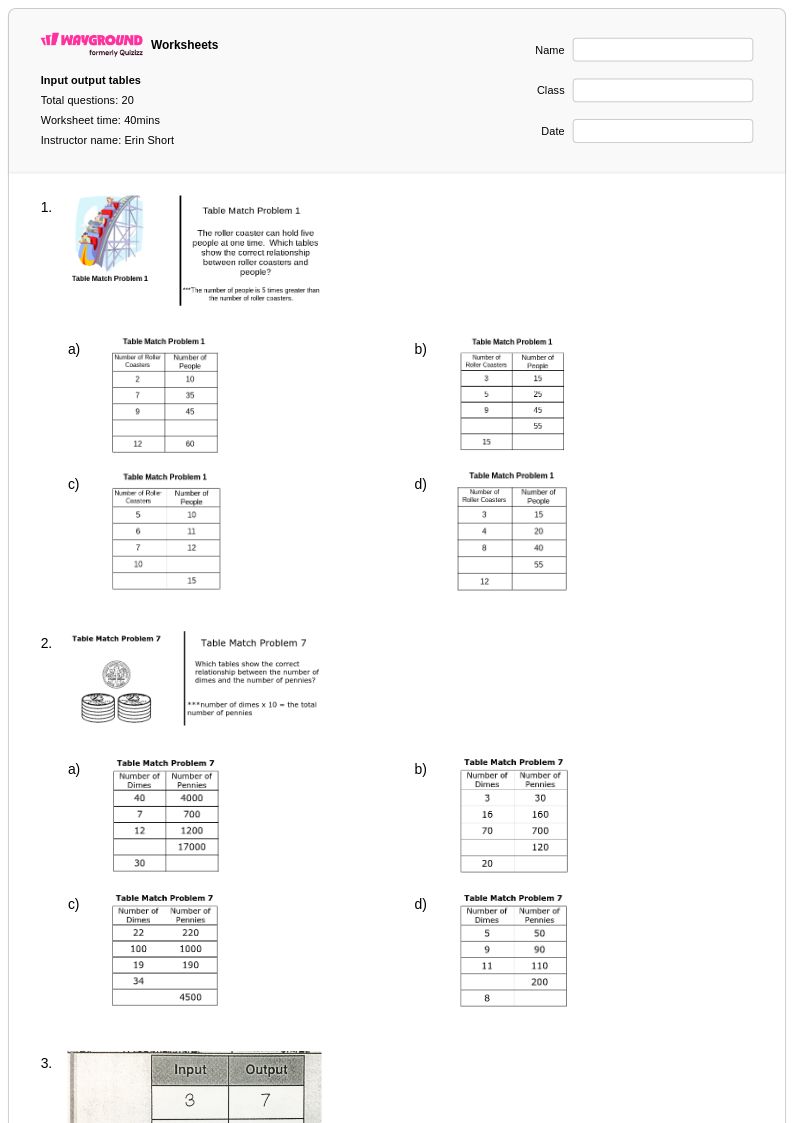
20 Q
3rd
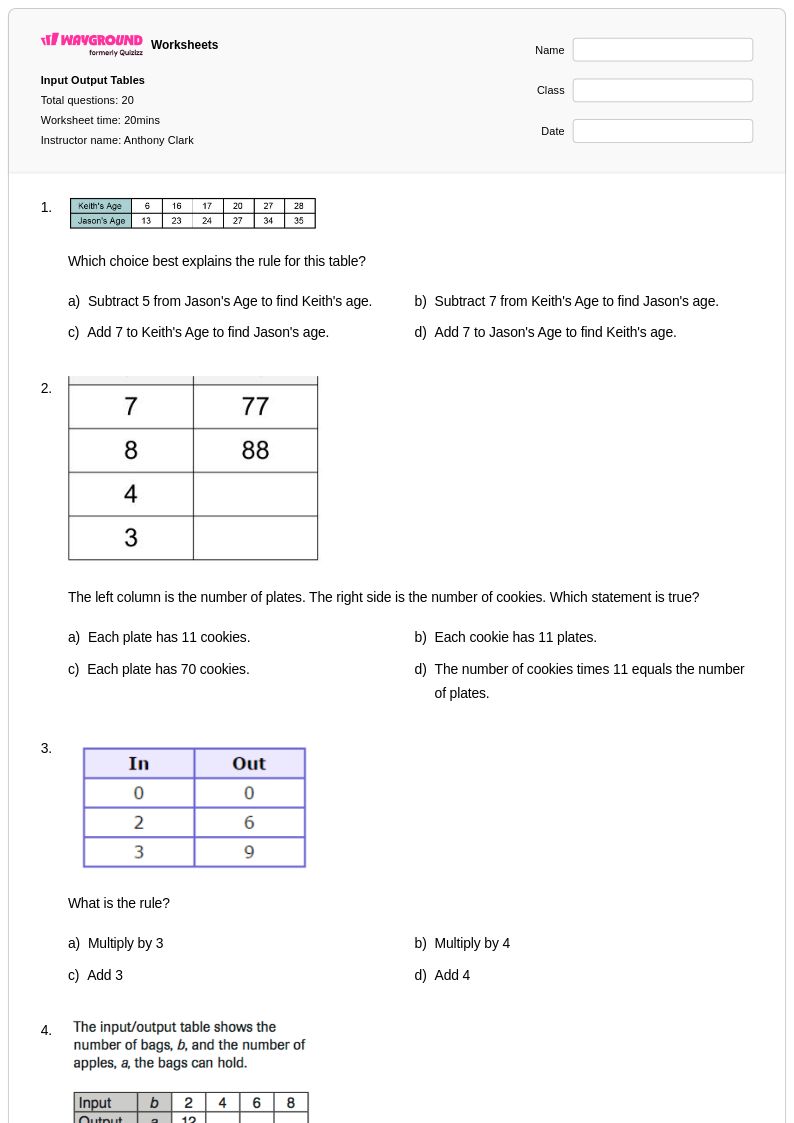
20 Q
4th - Uni
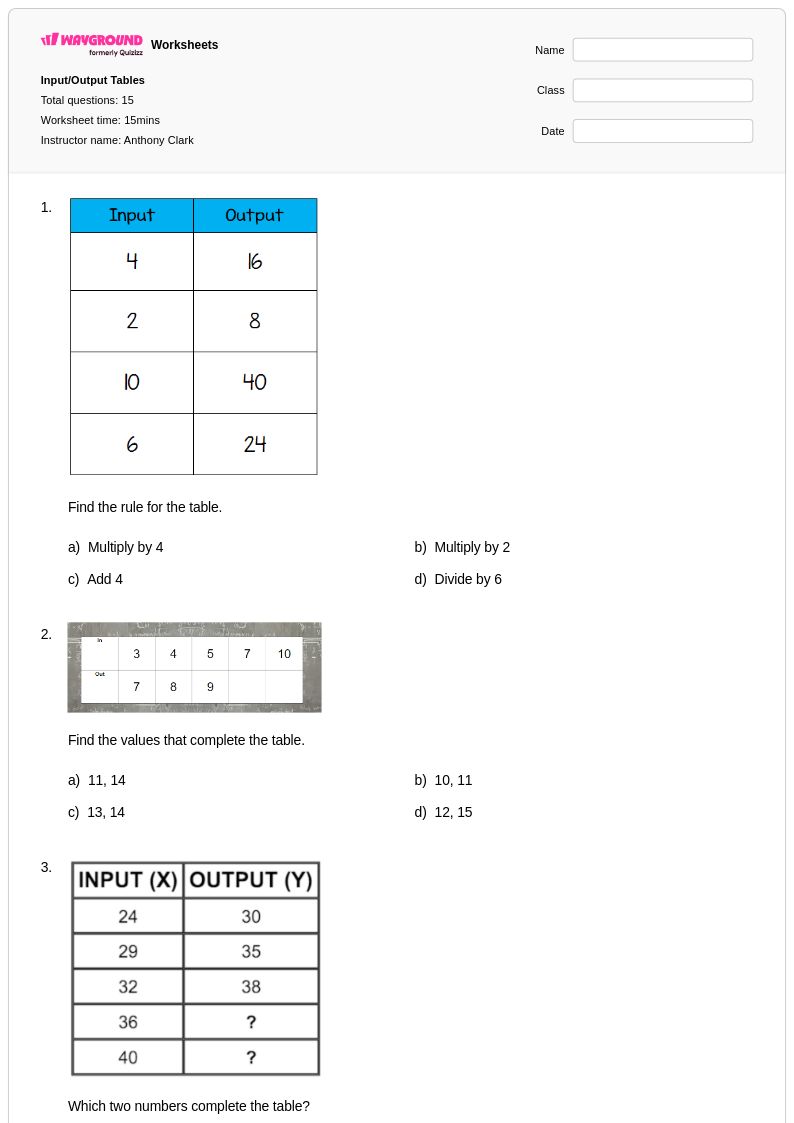
15 Q
4th - Uni
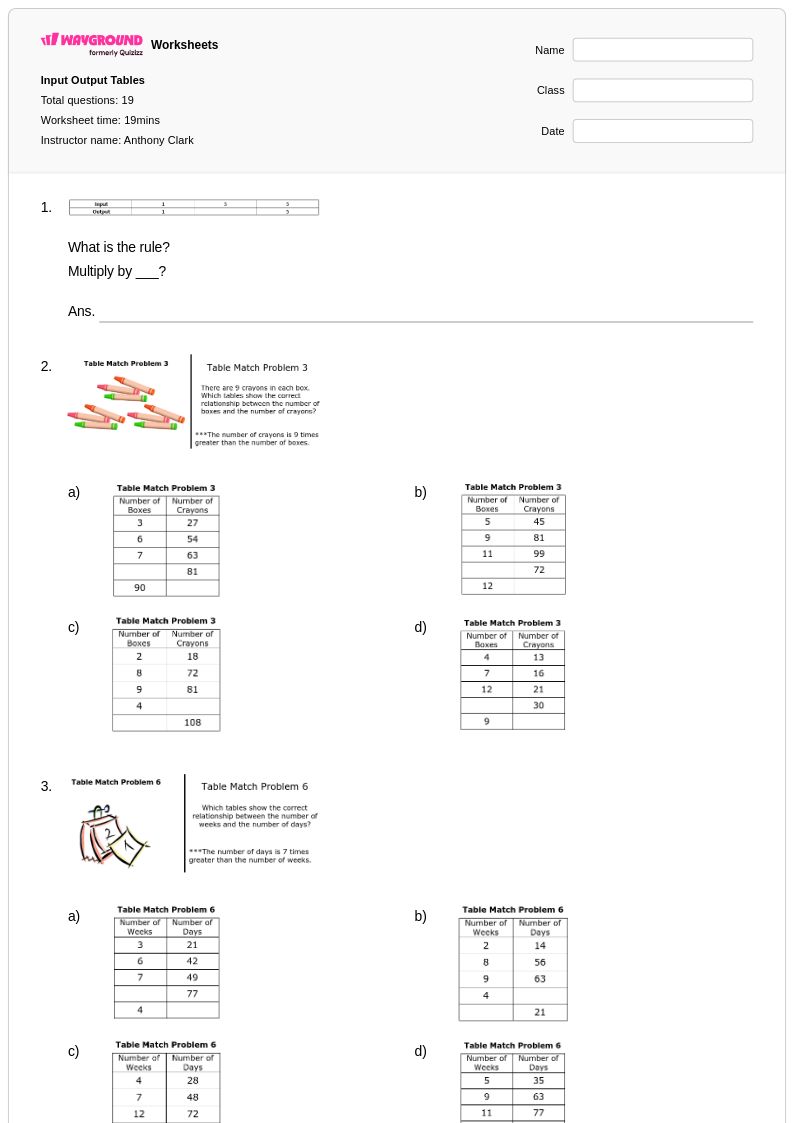
19 Q
4th - Uni
19 Q
4th - Uni
20 Q
4th - Uni
20 Q
5th
20 Q
4th
20 Q
4th - Uni
15 Q
4th - Uni
16 Q
7th
20 Q
4th
10 Q
3rd
15 Q
4th - Uni
15 Q
4th - Uni

16 Q
1st
Explore Worksheets by Subjects
Explore printable Input Output Tables worksheets
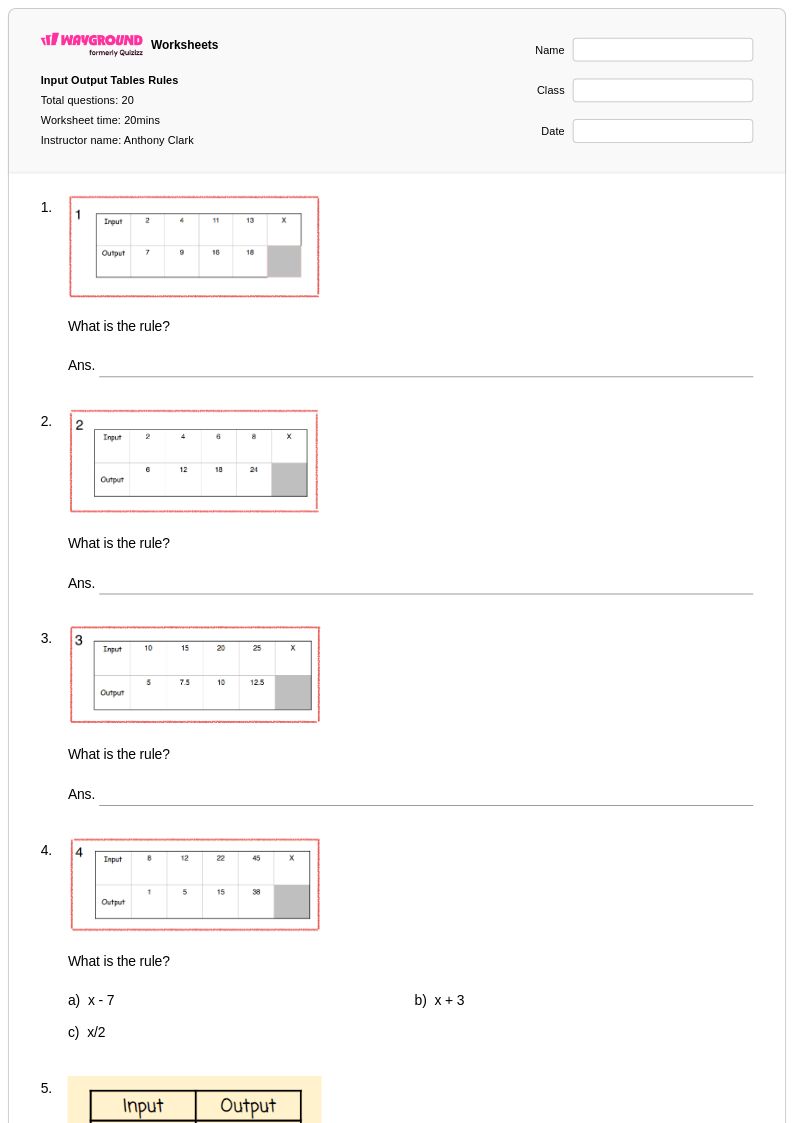
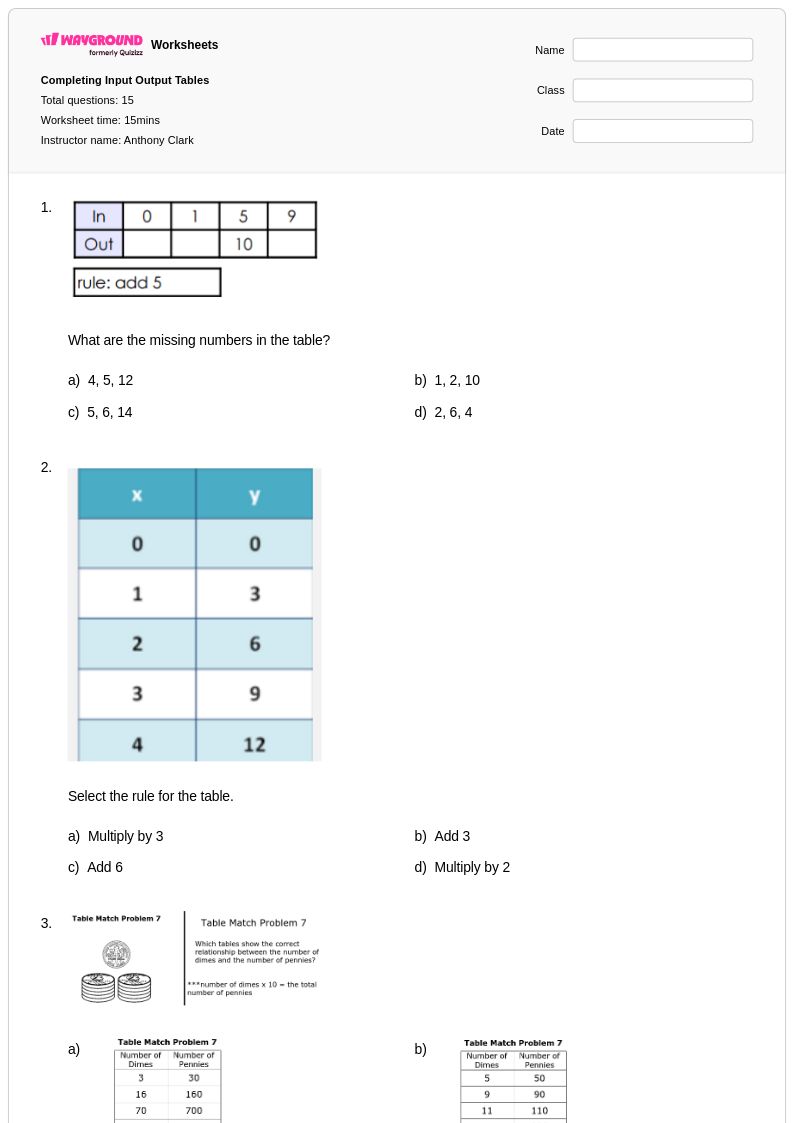
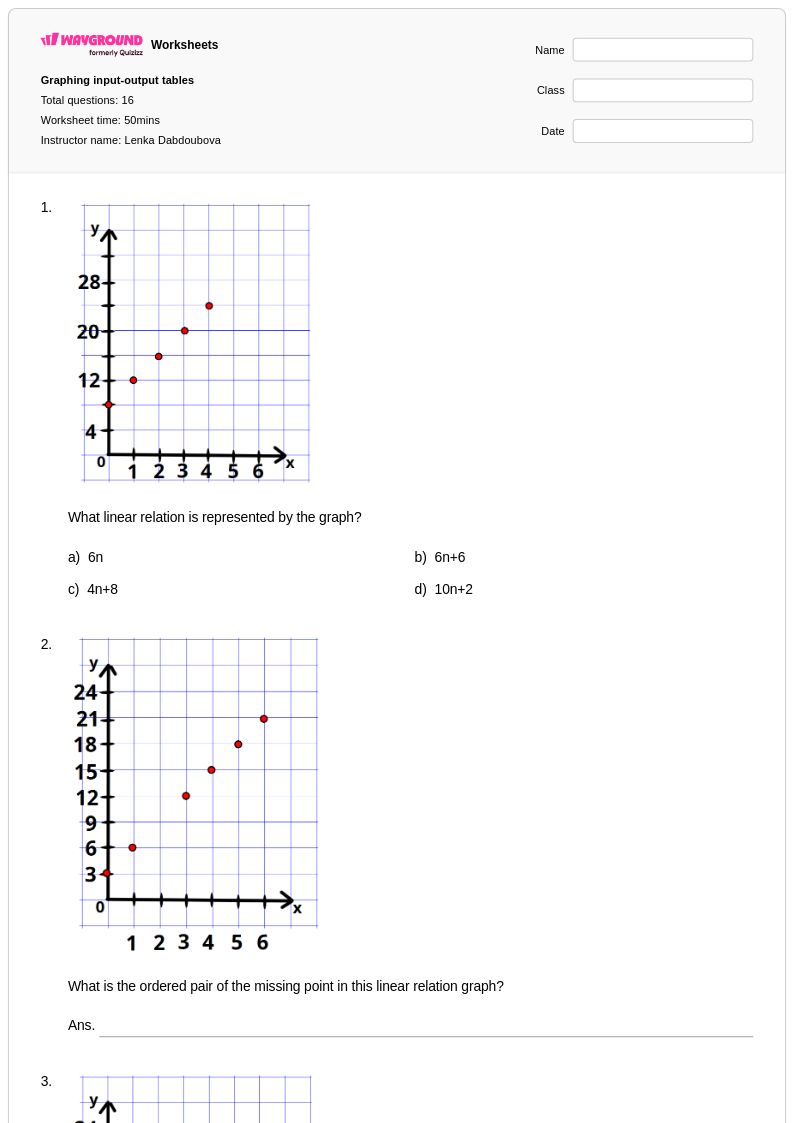
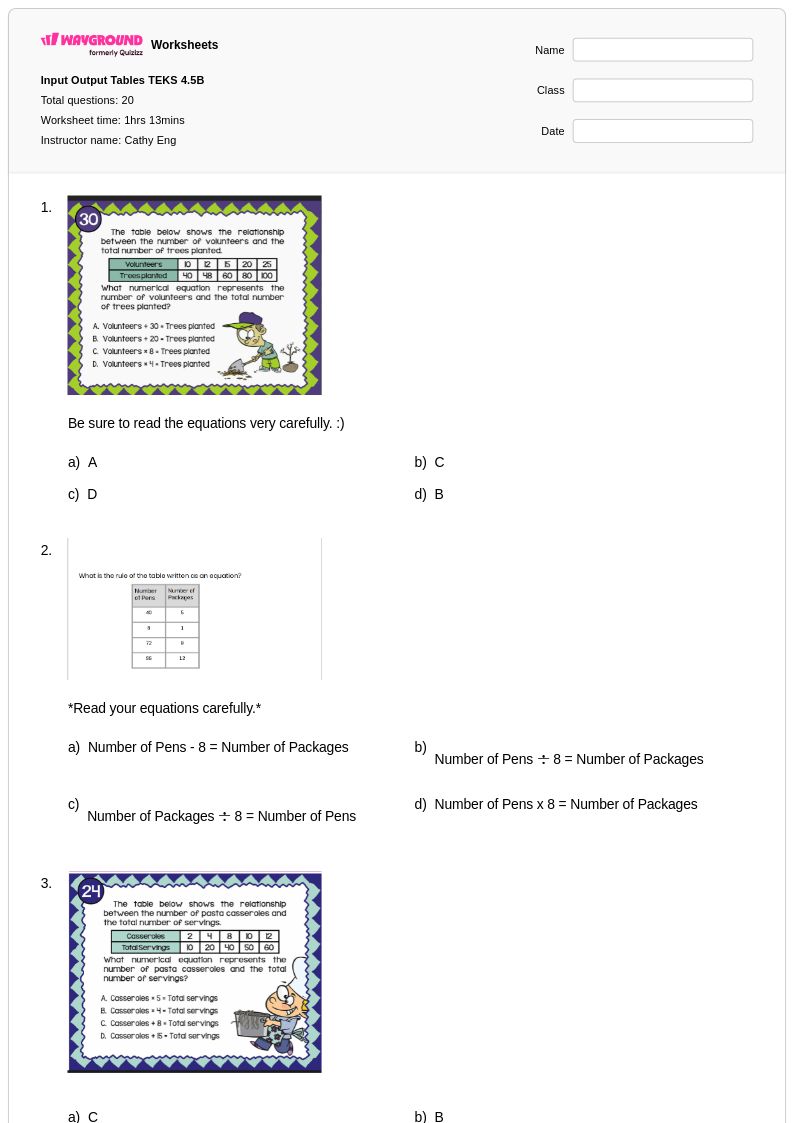
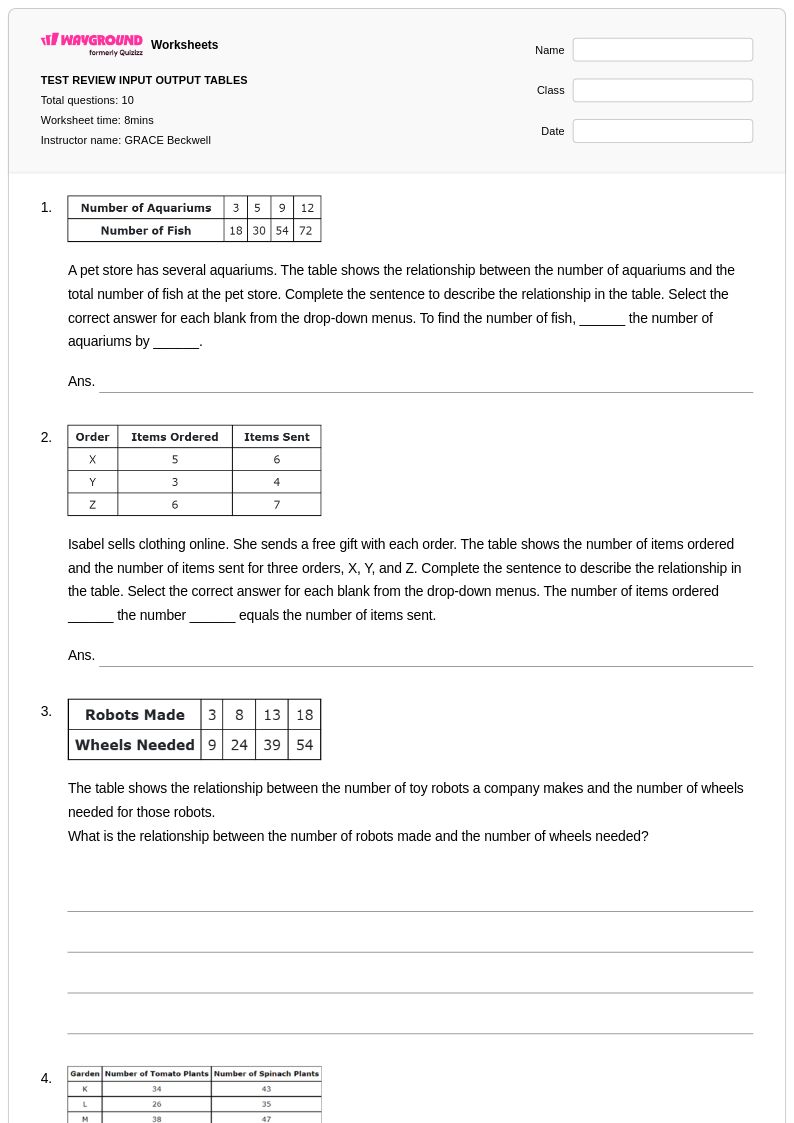
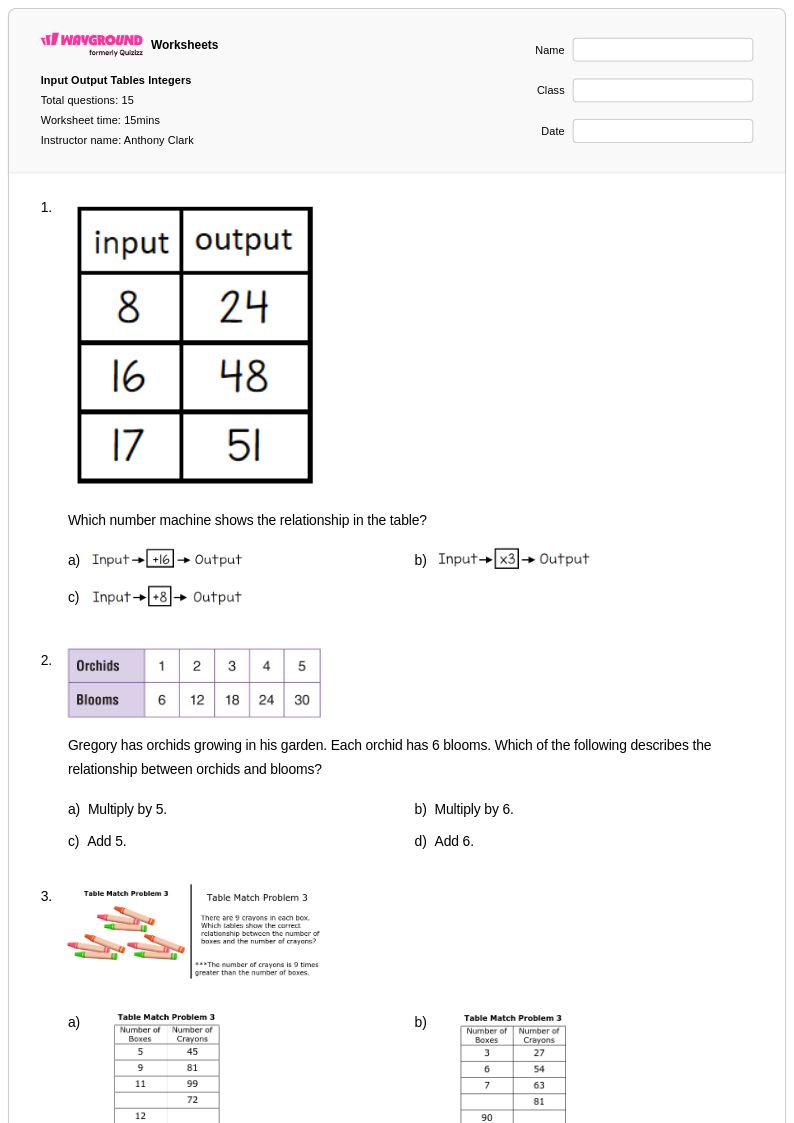
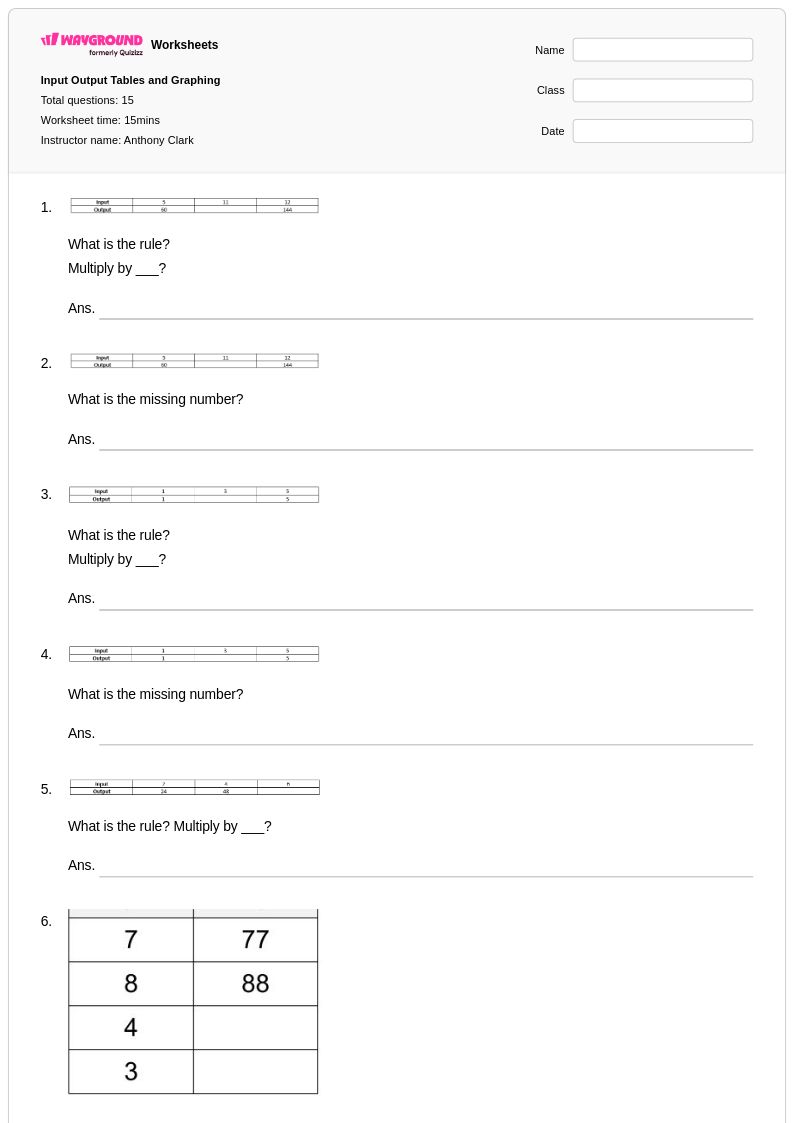
Input output tables serve as fundamental tools in mathematics for understanding function relationships and developing algebraic thinking skills. These worksheets available through Wayground (formerly Quizizz) provide structured practice problems that help students recognize patterns, identify rules, and establish connections between independent and dependent variables. Students work systematically through tables where they must determine missing input or output values, write function rules, and analyze mathematical relationships. The comprehensive collection includes free printables with complete answer keys, allowing educators to implement immediate feedback and assessment. These practice materials strengthen critical reasoning abilities as students learn to identify linear and nonlinear patterns, write algebraic expressions, and understand how changes in input values affect corresponding outputs in mathematical functions.
Wayground (formerly Quizizz) supports mathematics educators with millions of teacher-created input output table resources that streamline lesson planning and differentiated instruction. The platform's robust search and filtering capabilities enable teachers to locate worksheets aligned with specific mathematical standards and learning objectives, whether for initial concept introduction, skill reinforcement, or advanced enrichment activities. These customizable materials are available in both printable pdf format and interactive digital versions, allowing seamless integration into classroom instruction and remote learning environments. Teachers can modify difficulty levels, adjust problem types, and create targeted remediation activities that address individual student needs. The extensive collection facilitates comprehensive skill practice across various function types and complexity levels, empowering educators to provide consistent, high-quality mathematical experiences that build conceptual understanding and procedural fluency with function operations.
FAQs
How do I introduce input-output tables to my students?
What types of problems do these worksheets include for practicing input-output tables?
What are common mistakes students make with input-output tables?
How can I use this input-output tables worksheet in my class?
How do input-output tables fit into the Common Core math standards?
How can I support students who are struggling to find the rule in a function table?